Highway Food in Korea: Breakfast at Gimje Rest Stop
Table of Contents
13 items
From Daejeon to Sinan: breakfast on the Saemangeum-Pohang Expressway
On 4 May 2026, I was driving from Daejeon down to Sinan with my wife for a little trip. About an hour and a half after leaving, the hunger started to kick in. We were cruising along the Saemangeum-Pohang Expressway when I spotted the sign for Gimje Rest Stop, so I pulled straight in. I was explaining to my wife, who isn’t Korean, what Korean highway rest stops are like, and the first thing that stood out was how new the building looked.
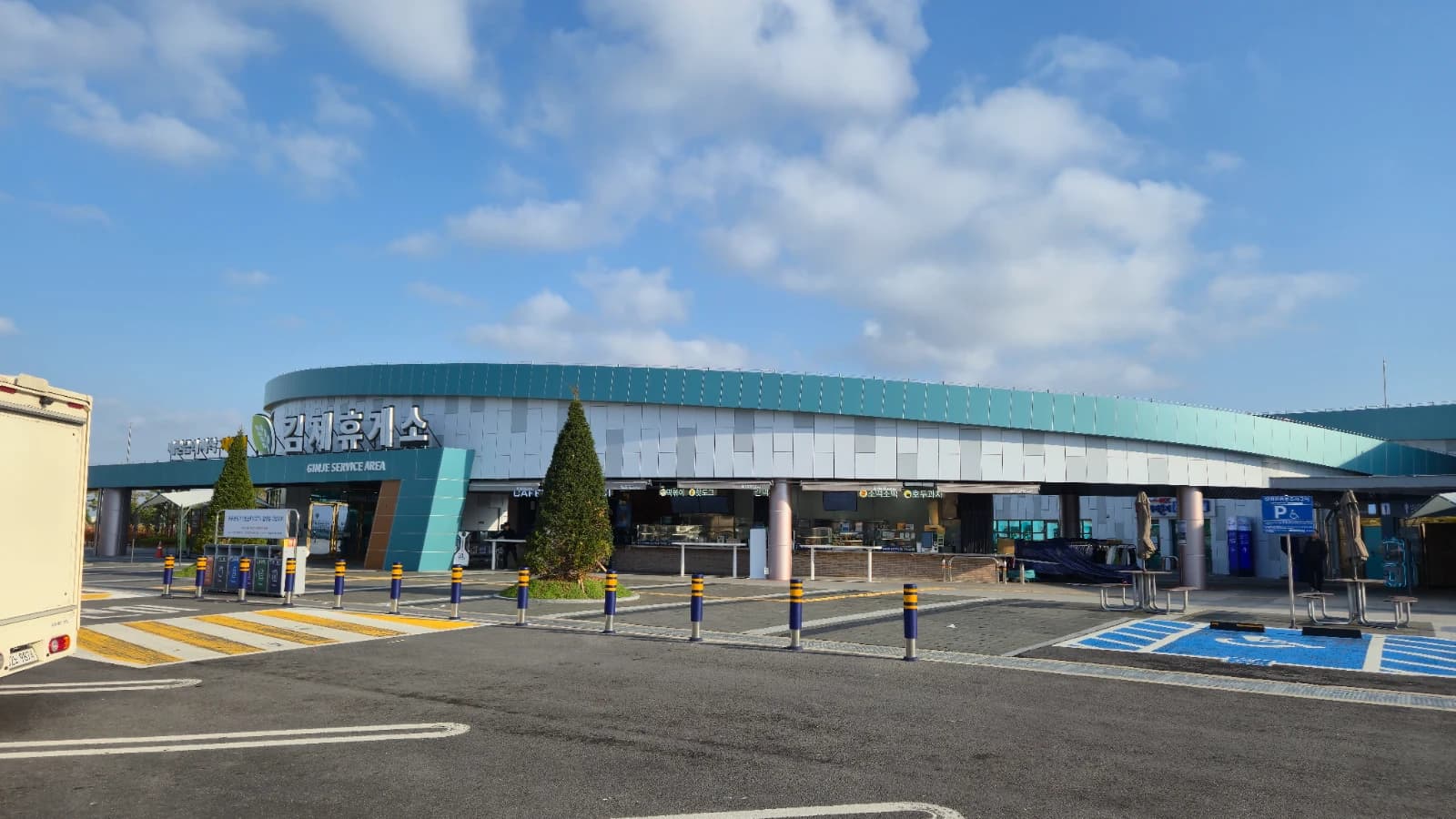
First impression of Gimje Rest Stop
Gimje Rest Stop is a newly built service area on the Saemangeum-Pohang Expressway. The roof has a soft, rounded curve, and apparently the design is based on a rice grain or rice seed from the Gimje region. Gimje is known as a rice-producing area, so that symbol makes sense. The car park was split into passenger car and truck areas, and because it was around 7 am there were heaps of empty spaces. The asphalt was jet black and the painted parking lines were still bright, so it definitely felt freshly finished.
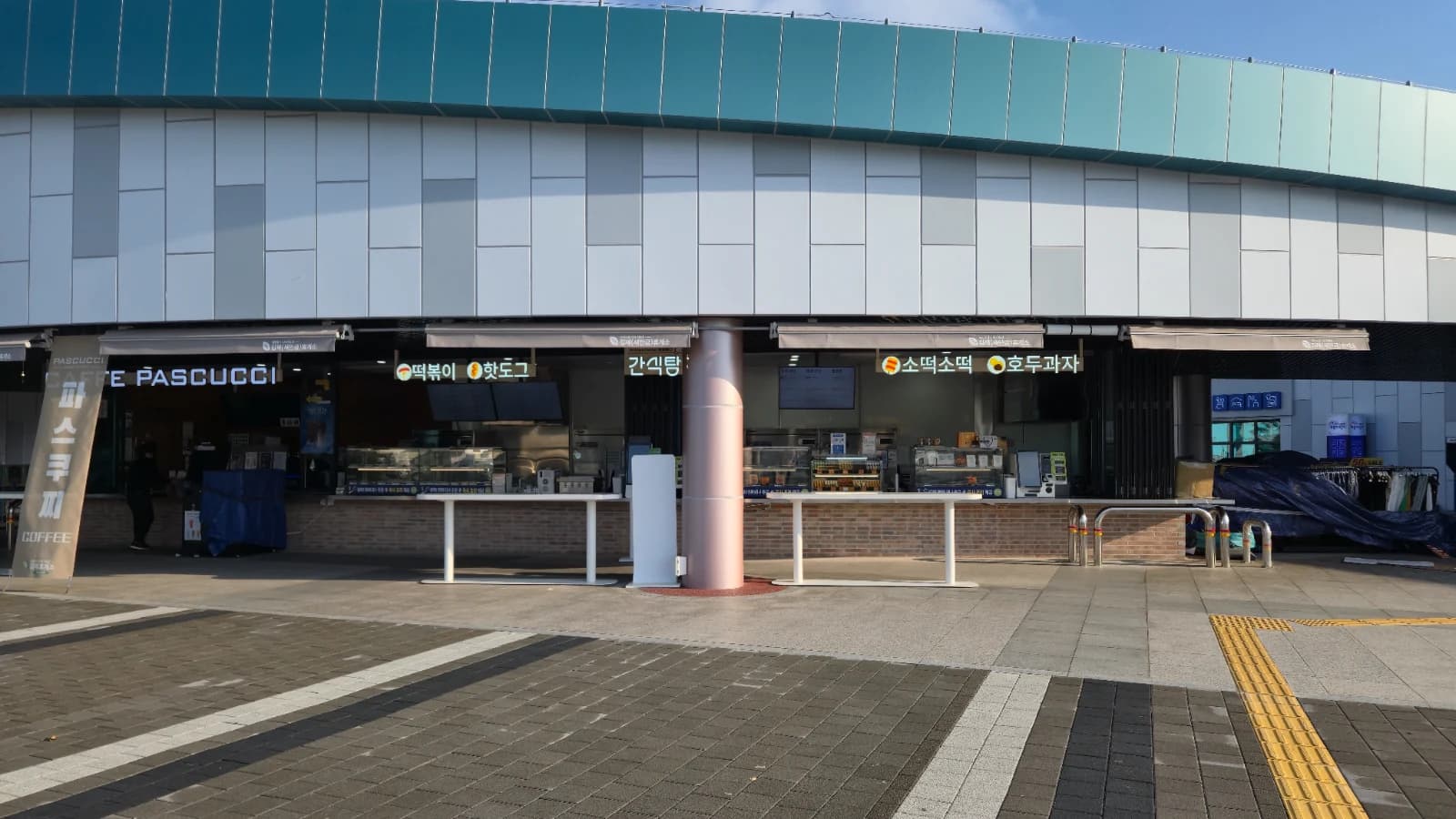
Fresh snack stalls outside the building
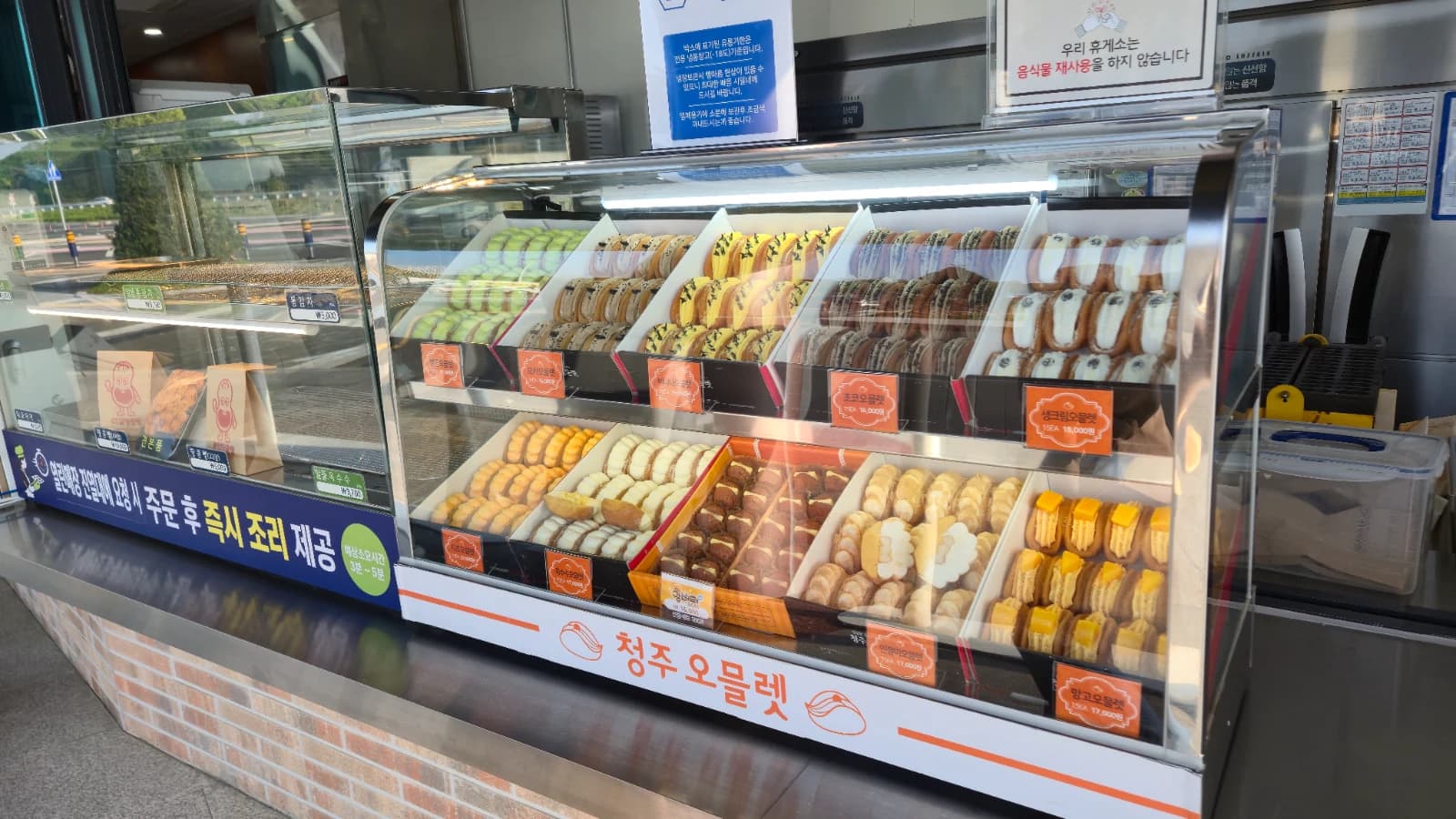
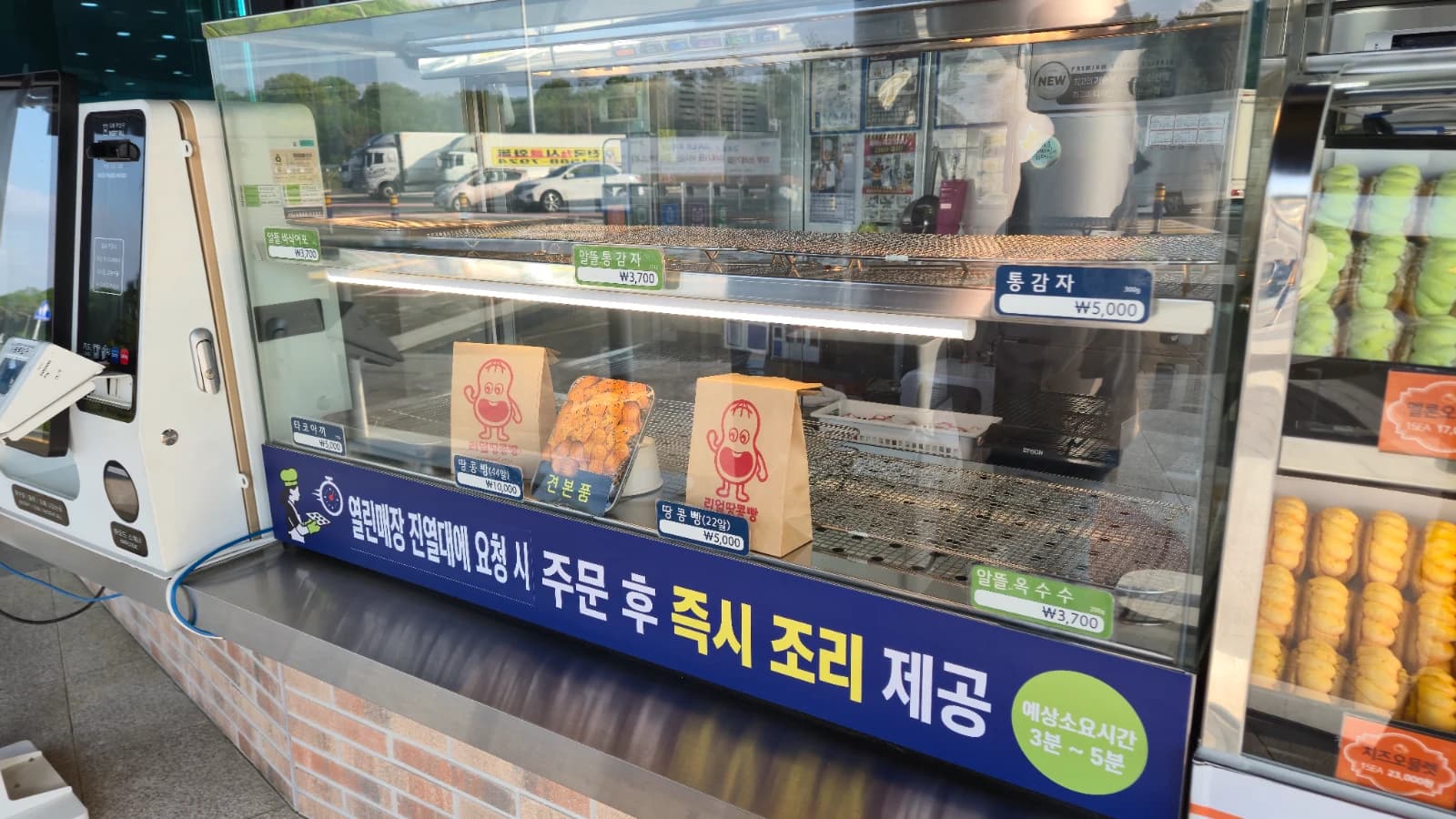
On both sides of the entrance, there were rows of stalls selling quick snacks cooked on the spot. Most Korean highway rest stops are set up like this: before you even go inside, you can grab something simple out the front. These were the items and prices I saw at Gimje Rest Stop in May 2026: hot dogs 3,000–4,500 won, about A$3.50–A$5.20, sotteok-sotteok 3,500–4,500 won, about A$4.00–A$5.20, walnut cakes 3,000–5,000 won, about A$3.50–A$5.80, eomuk skewers 1,000–2,000 won, about A$1.20–A$2.30, baby potatoes 3,000–4,000 won, about A$3.50–A$4.60, flame-grilled squid 5,000–8,000 won, about A$5.80–A$9.20, and tteokbokki 4,000–5,000 won, about A$4.60–A$5.80. Eomuk is a cooked fish cake made from ground fish paste, while sotteok-sotteok is a skewer that alternates sausage and chewy rice cake.
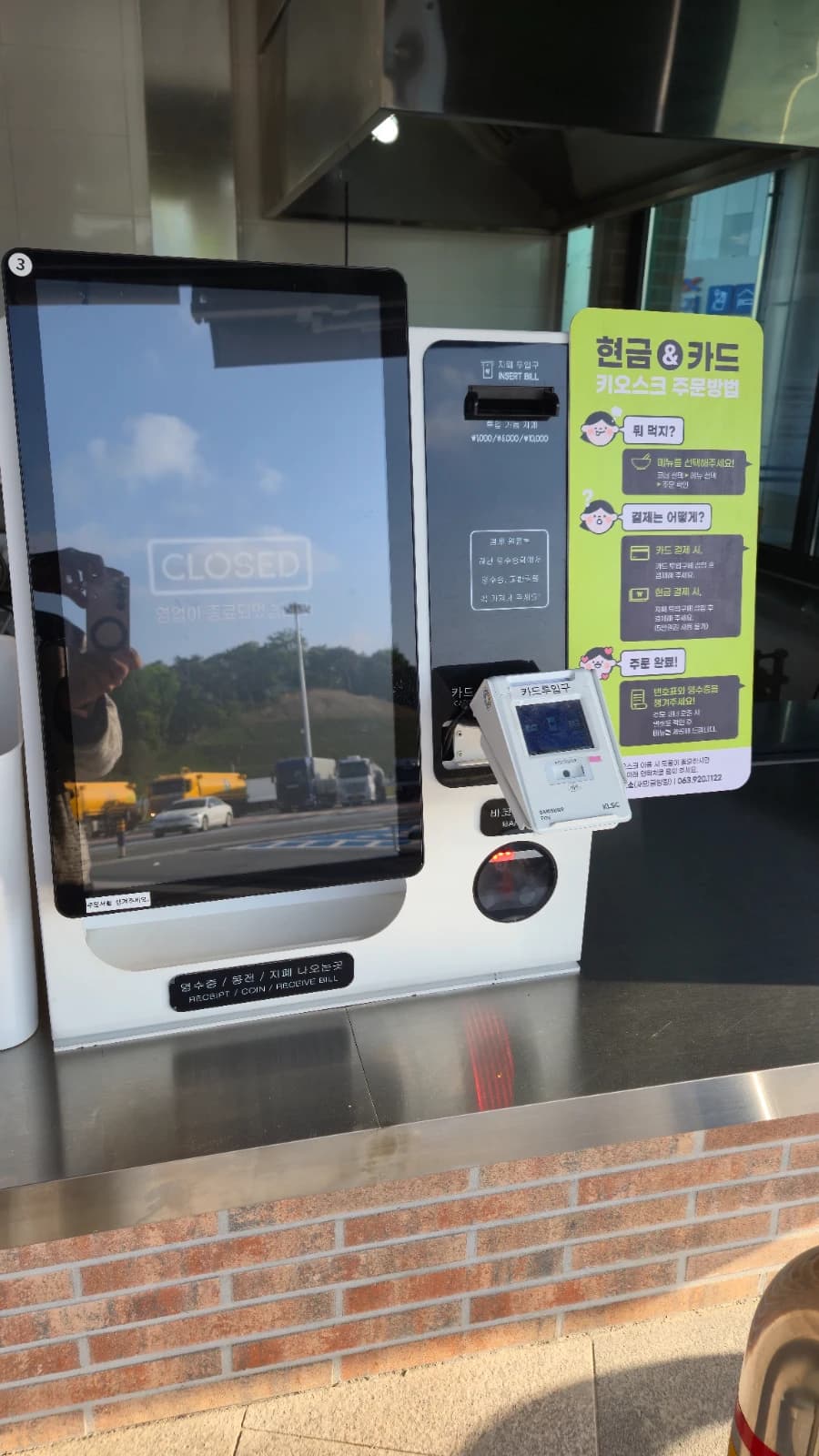
There was also a bakery stall called Cheongju Omelet on one side. If you order there, they cook it fresh and it comes out in about 3 to 5 minutes. A whole potato was 5,000 won, about A$5.80, and the corn snack was around 3,700 won, about A$4.30. We were planning to have a proper breakfast in the food court, though, so we just had a look and kept moving.
Inside the building: café, convenience store and kiosks
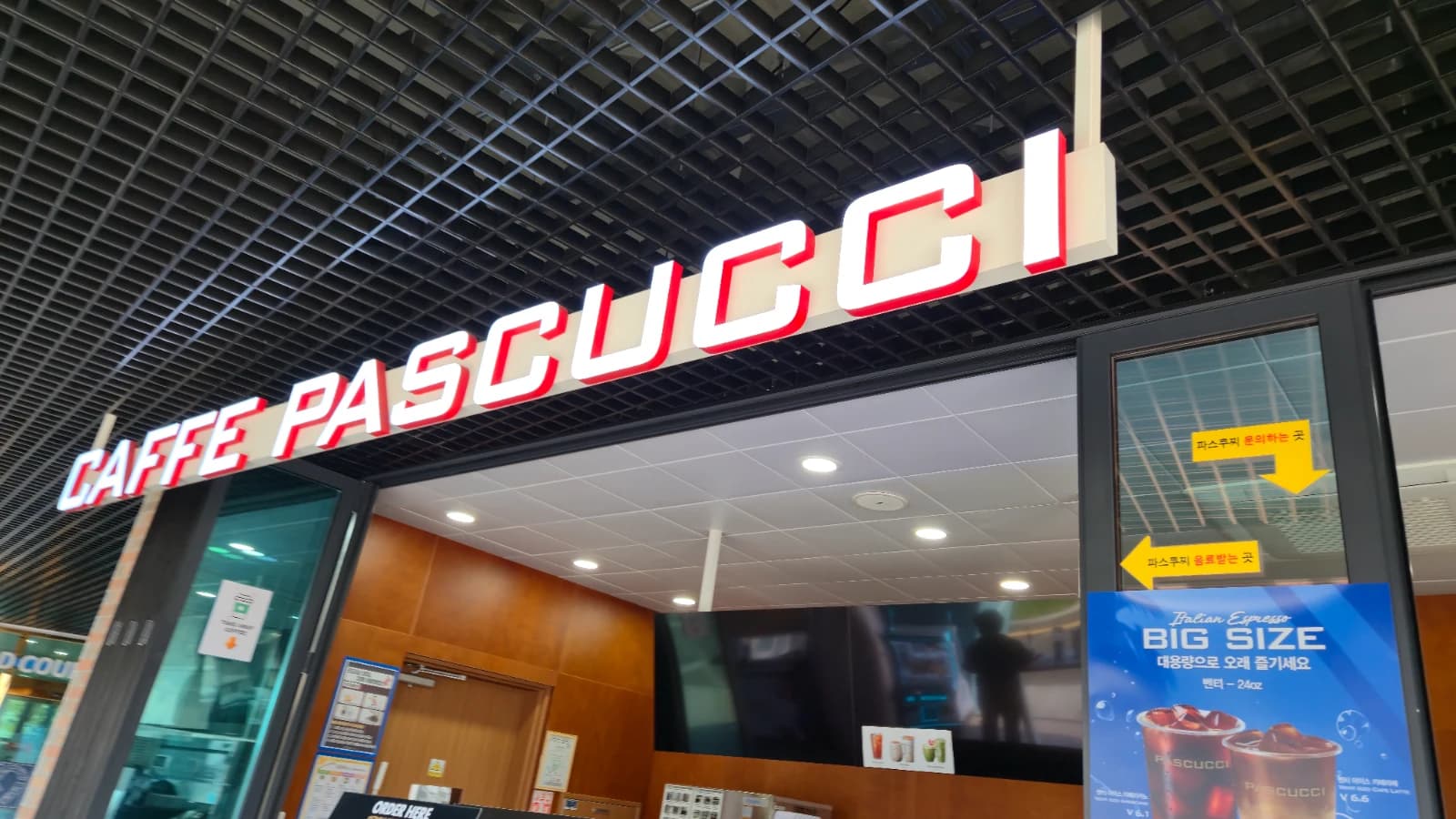
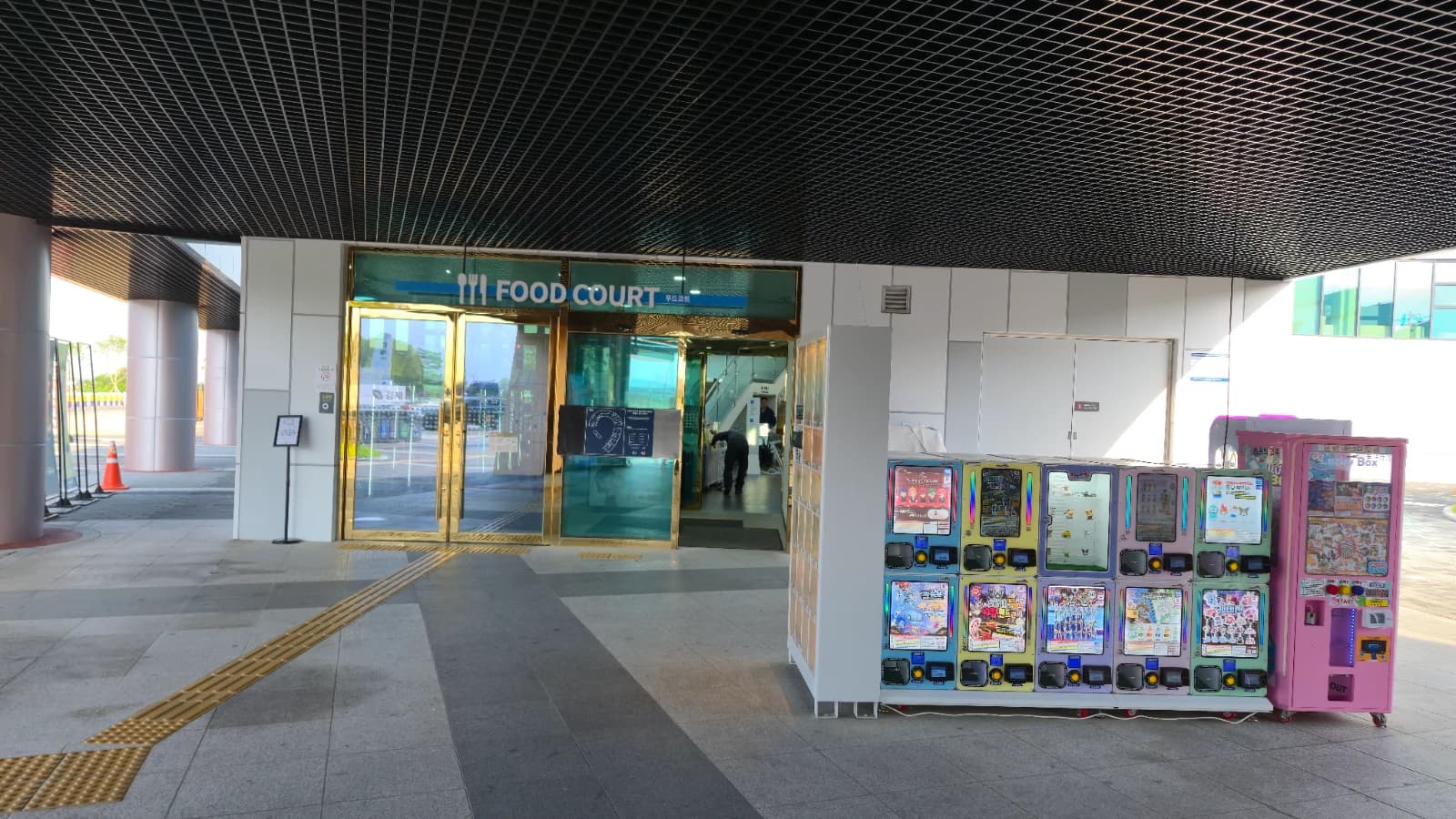
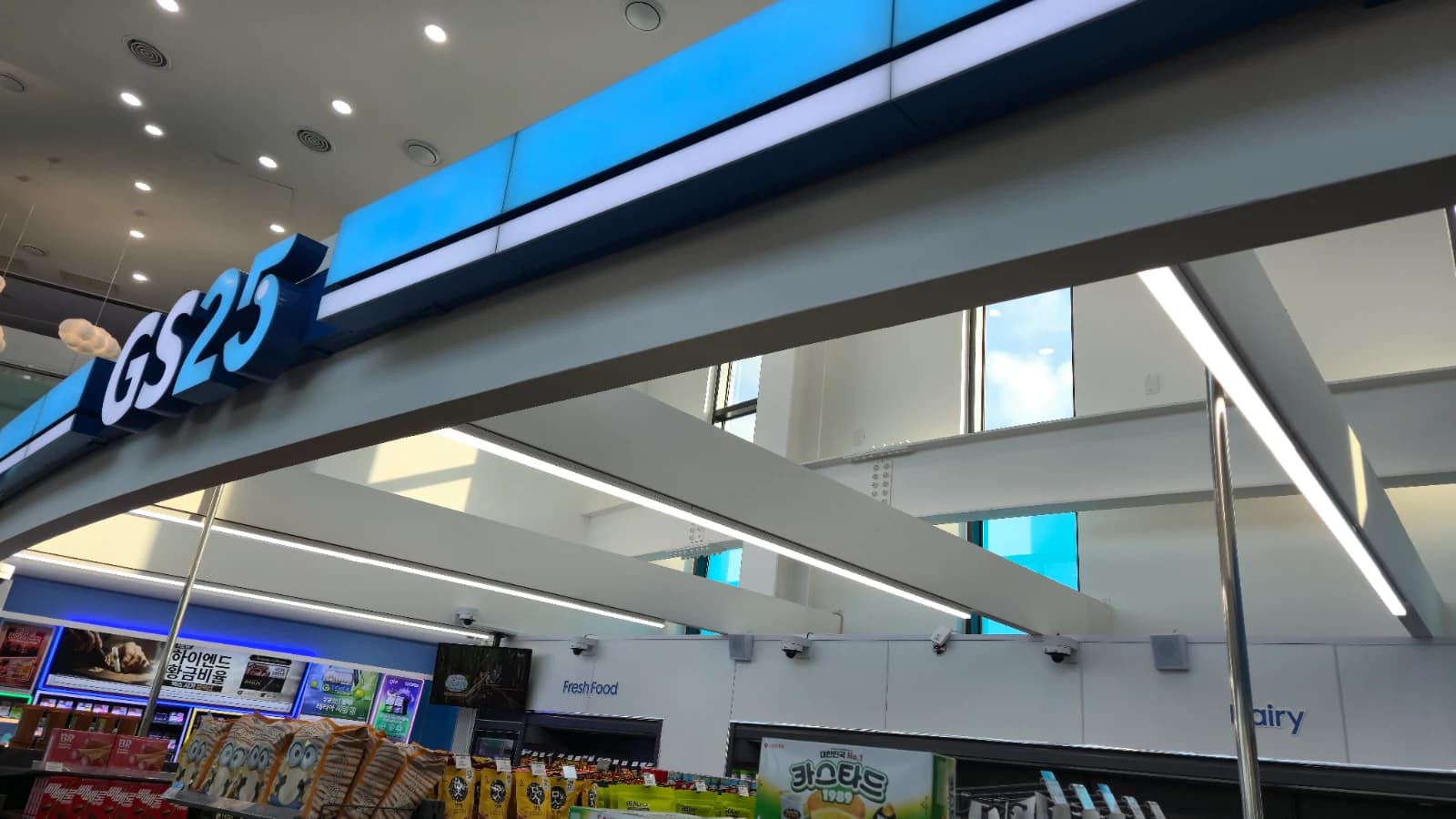
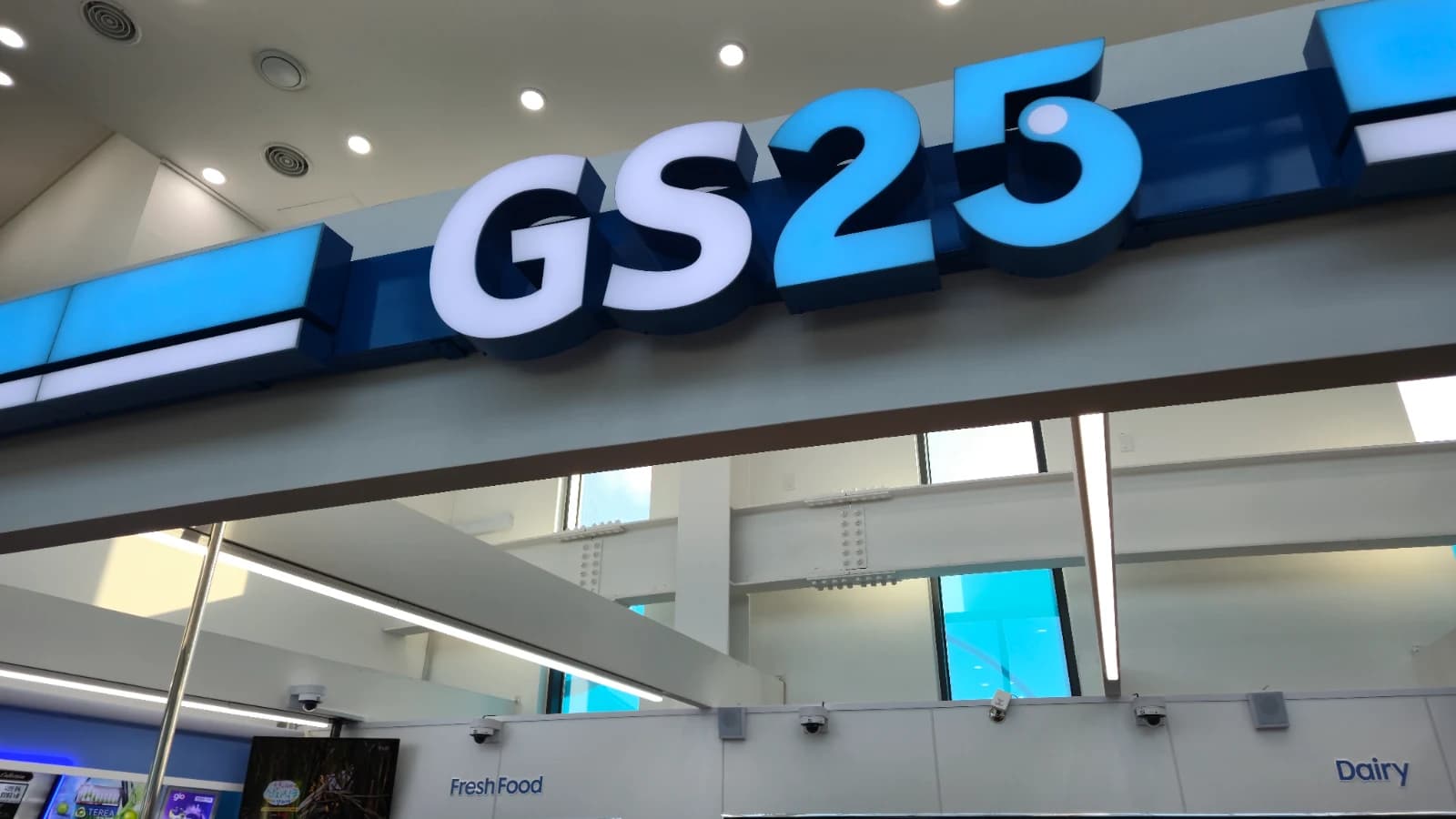
Once you walk inside, Pascucci café sits on the left. Their venti size uses a 24-ounce cup, roughly 710 ml, but we skipped it at that point. Across the way there was a GS25 convenience store where you could pick up drinks or quick snacks. If you follow the corridor further in, you reach the food court and the ordering kiosks.
Most Korean highway rest stops now use these self-ordering machines. You tap the screen, choose your meal, pay by card, and it prints a ticket number. The important bit is that cash is not accepted; it is card only. If a food counter has closed or has not opened yet, the kiosk screen shows “closed”, so it is worth checking the screen before you start choosing.
Ramen machine and self-serve gukbap machine
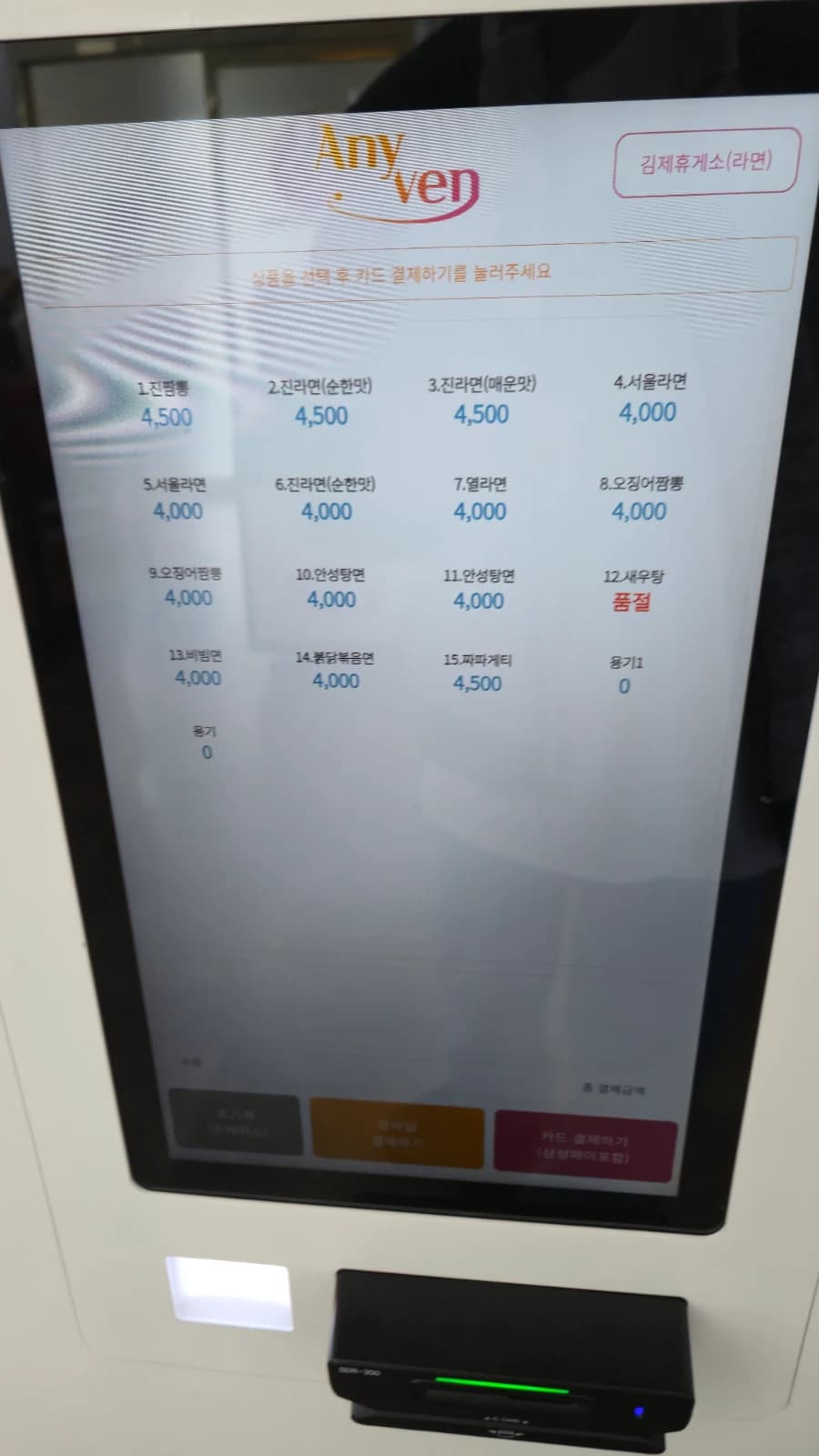
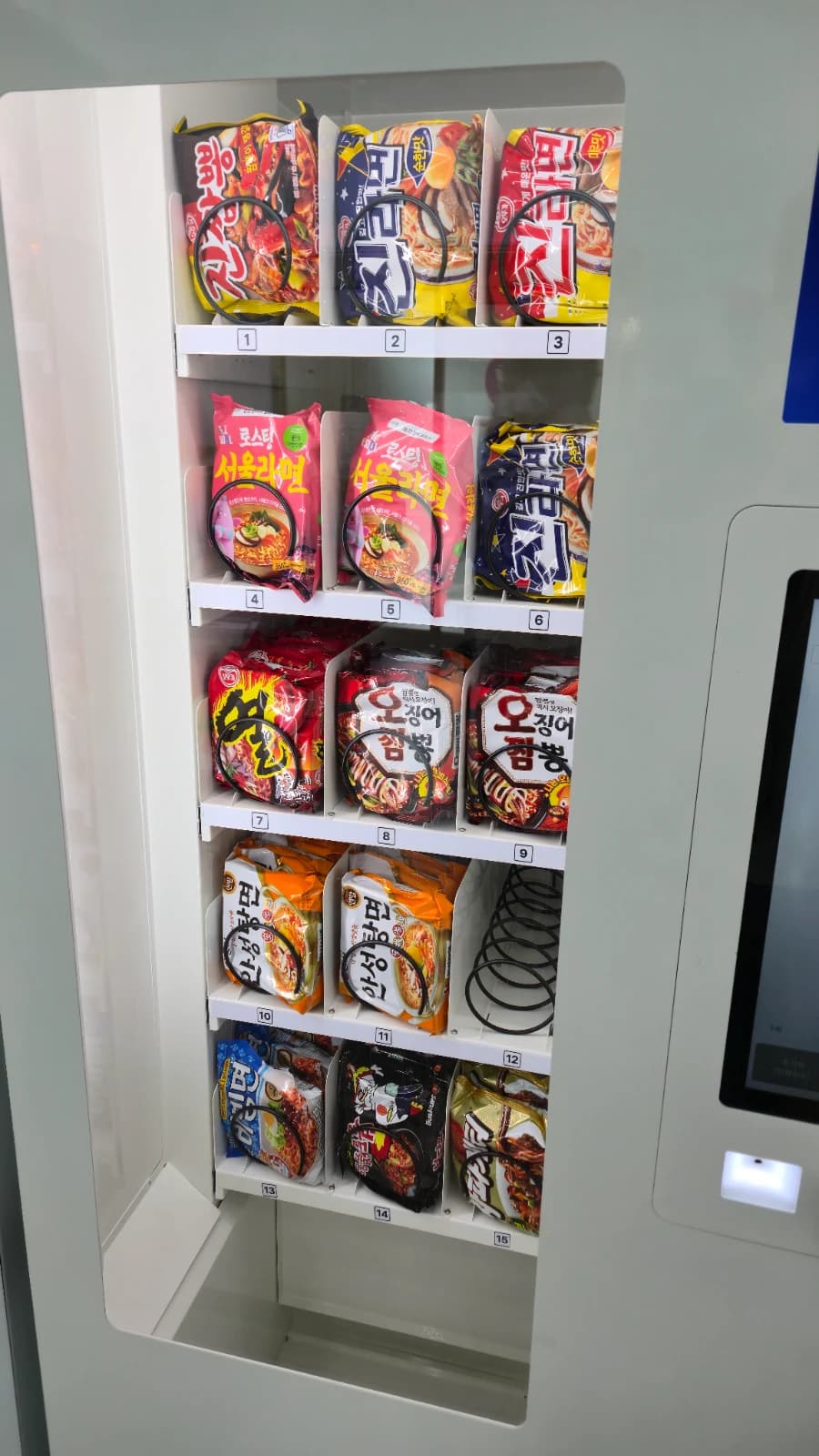
Next to the food court there was an unmanned ramen machine. It dispenses hot water as well, so you can cook your noodles yourself without staff helping. Looking at the menu and prices in May 2026, including the container, it had Jin Jjamppong 4,500 won, Jin Ramen mild or spicy 4,500 won, Seoul Ramen 4,000 won, Yeol Ramen 4,000 won, Squid Jjamppong 4,500 won, Ansungtangmyun 4,000 won, Bibimmyun 4,000 won, rice noodle bokkeummyun 4,500 won, and Chapagetti 4,500 won. Saewootang was sold out. If you buy the same instant ramen from a convenience store, it is usually 1,500–2,000 won, about A$1.70–A$2.30, so the machine price clearly includes the bowl and hot water. It feels about 2 to 3 times more expensive.
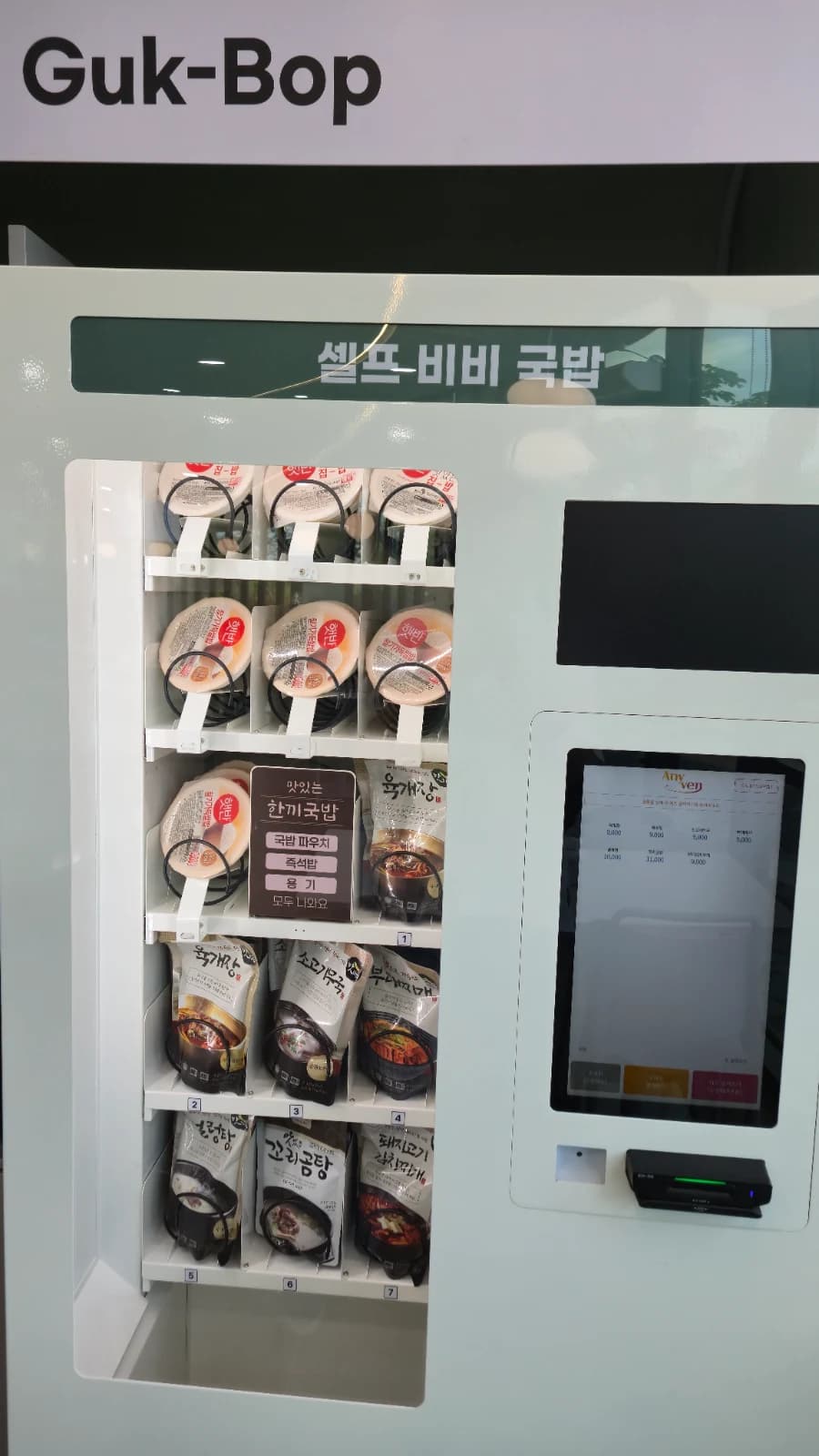
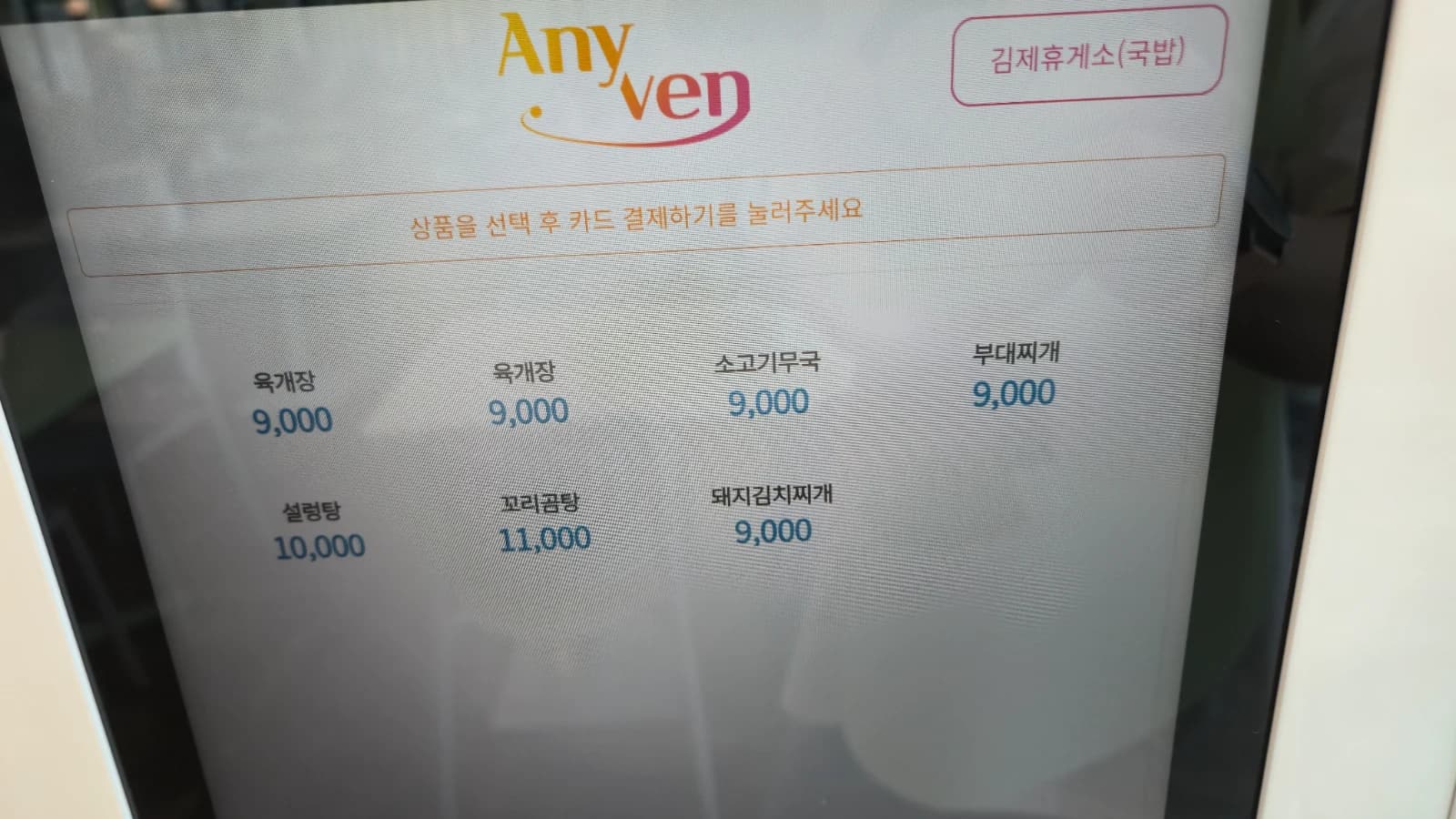
Right beside the ramen machine there was also a self-serve gukbap machine. Gukbap is a Korean dish where rice is eaten in a hot soup or broth. This machine was selling items like yukgaejang for 9,000 won, seolleongtang for 10,000 won and oxtail gomtang for 11,000 won, roughly A$10.40, A$11.50 and A$12.70. Honestly, for something not cooked by a staff member, the price felt a bit steep. Some items were similar to, or even more expensive than, the proper food court meals, and that part was a bit disappointing.
Ordering breakfast at the food court
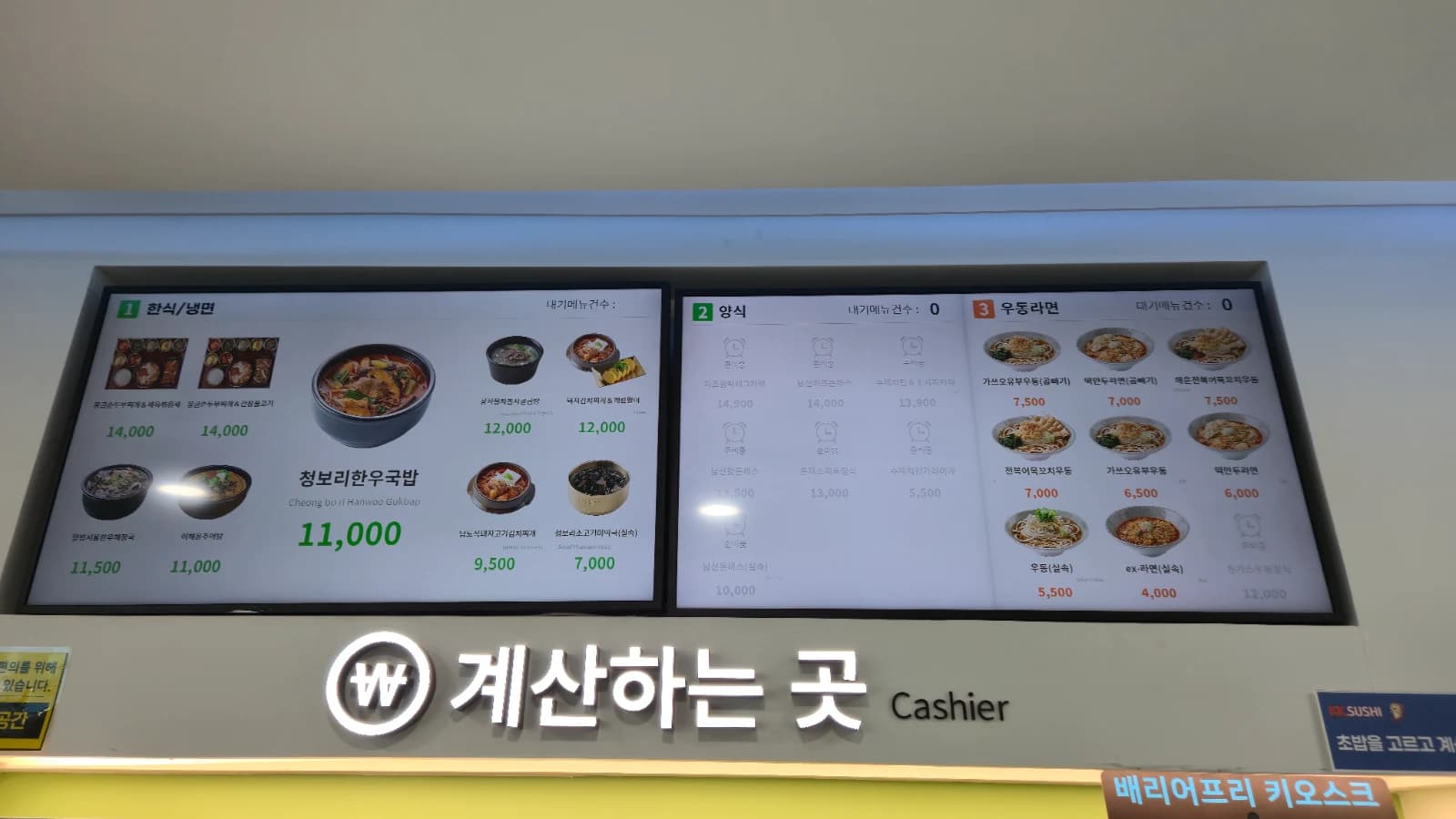
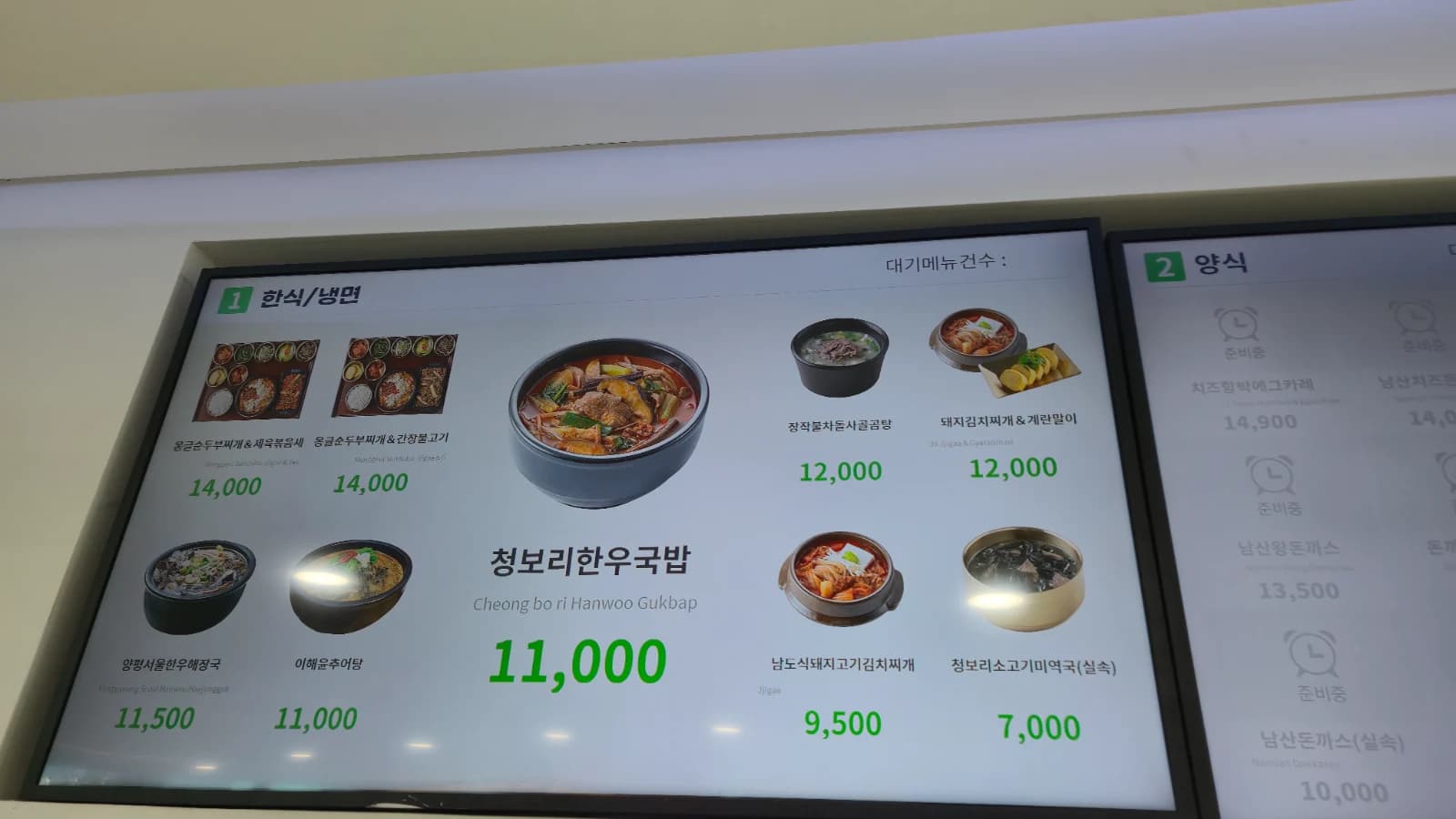
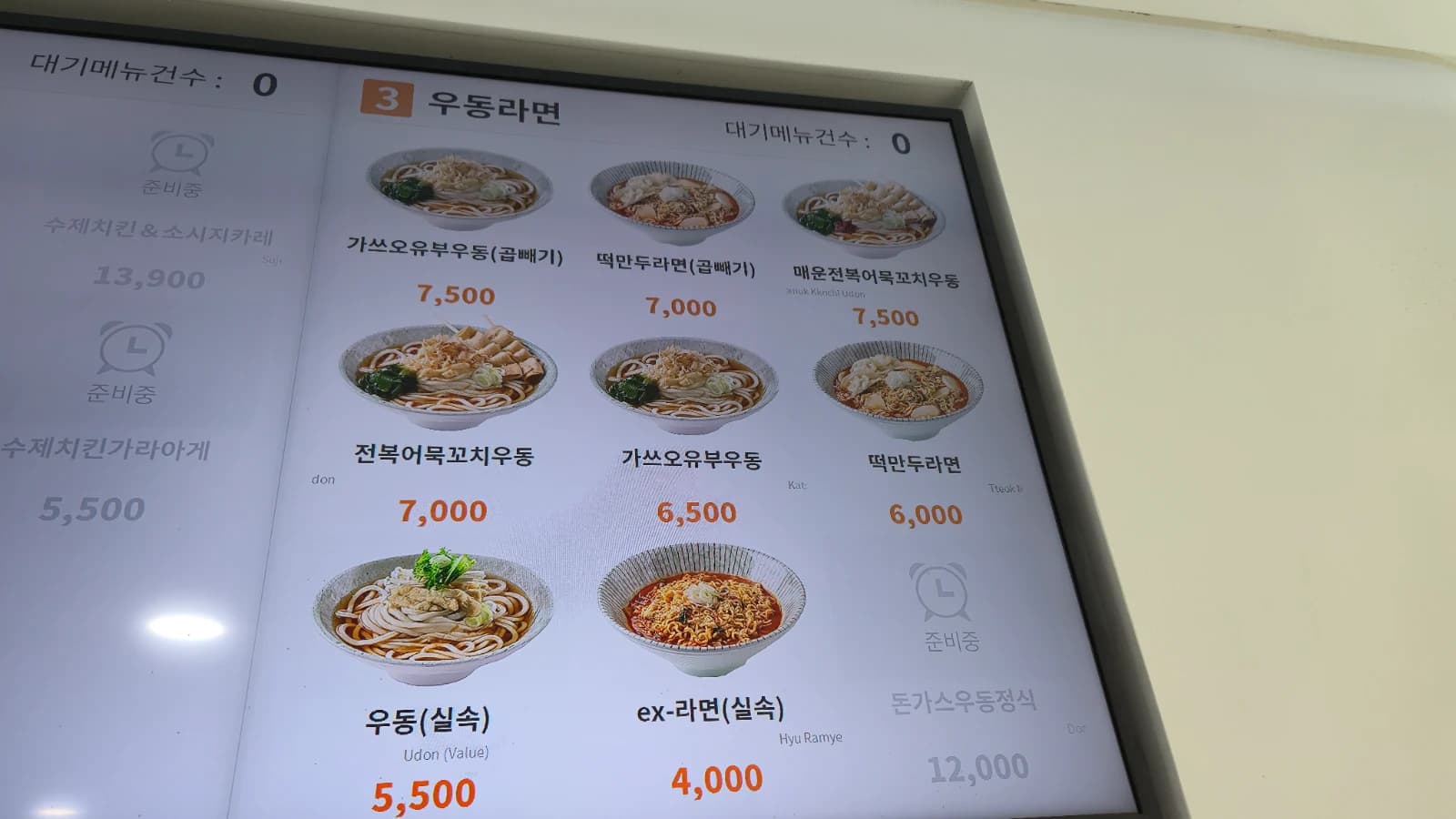
The food court was divided into Korean food, udon and ramen, and Western-style meals. On the Korean side, I saw cheongbori hanwoo gukbap for 11,000 won, Okgol sundubu jjigae for 14,000 won, and Namdo-style pork kimchi jjigae for 9,500 won. In the udon and ramen section, there were options like katsuo yubu udon for 7,500 won, budget udon for 5,500 won, and a pork cutlet udon set for 12,000 won. Overall, the prices sat between 5,500 and 14,000 won, about A$6.30–A$16.10. Food at Korean highway rest stops tends to be pricier than a regular city restaurant, so this was more or less what I expected.
The catch was that because it was around 7 am, not every menu item was available. Quite a few counters were still getting ready, so the choices were much more limited. Udon is one of those basic menu items you can usually order 24 hours at Korean highway service areas, so it was available even then. Chueotang was also open, luckily. The kimchi jjigae side seemed possible too, but beyond that, the options were pretty restricted. My wife and I stood in front of the menu board for a while, and in the end she chose chueotang while I chose udon.
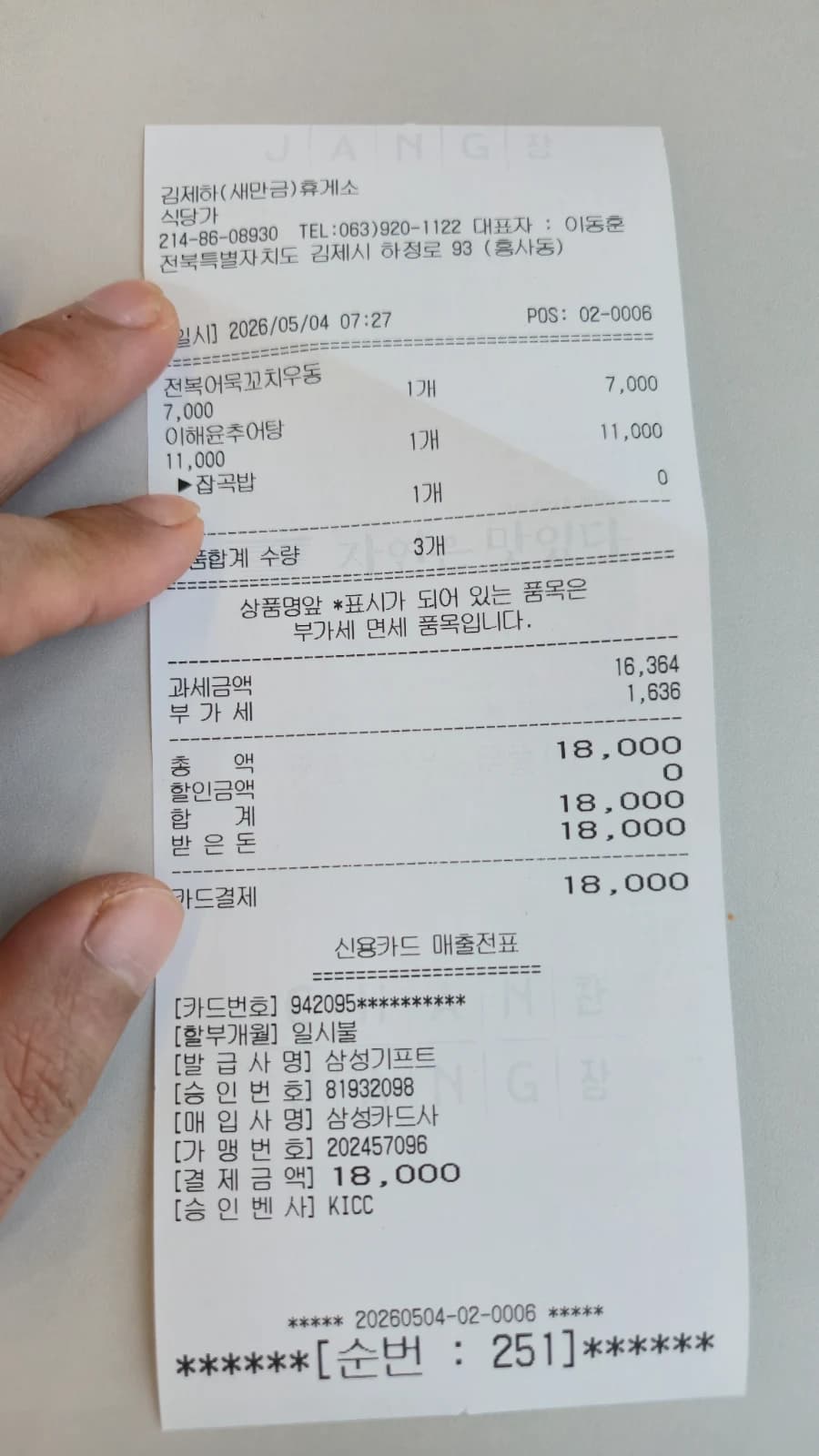
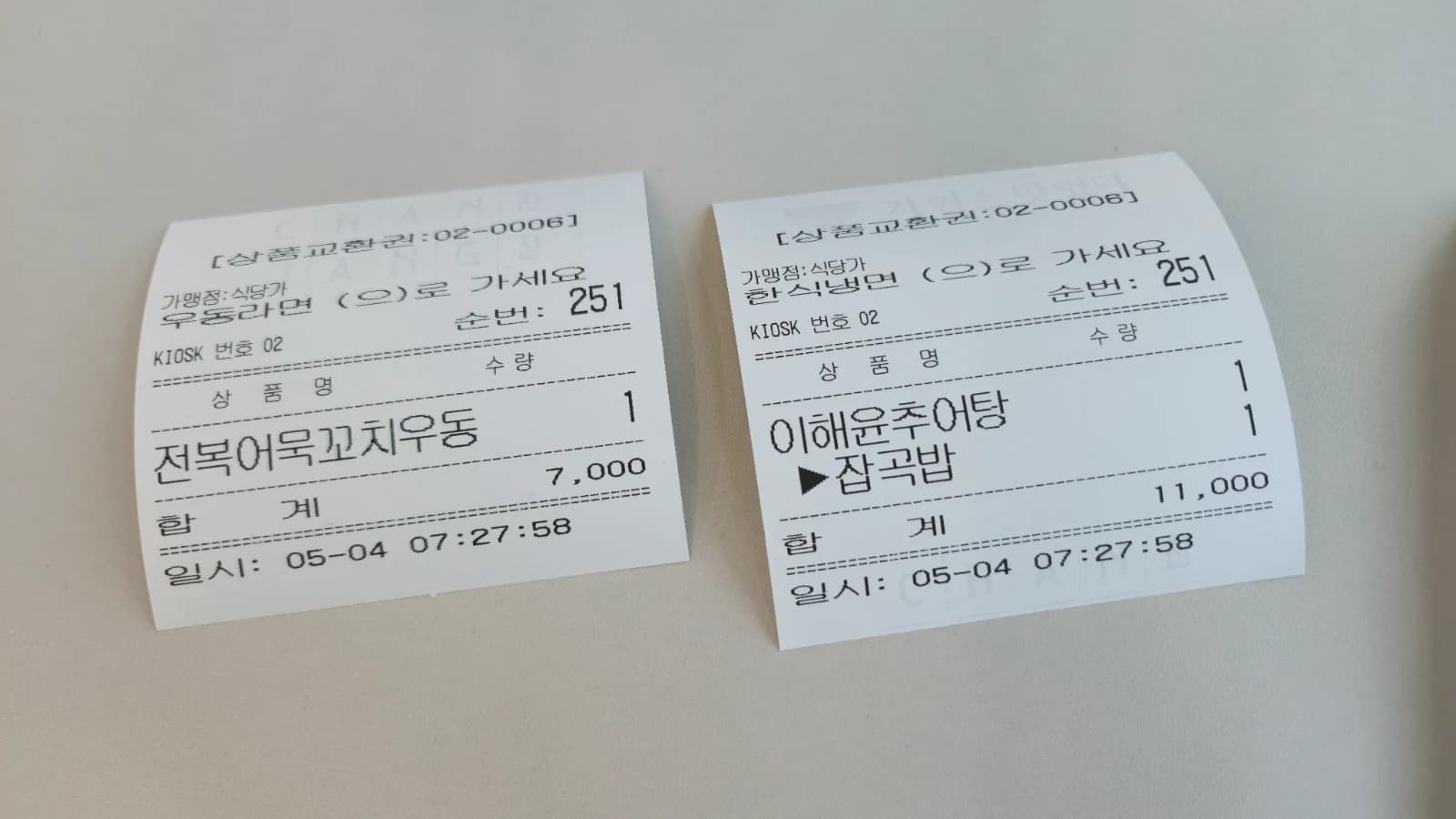
At the kiosk, we paid for abalone eomuk skewer udon for 7,000 won and Lee Hae-yoon chueotang for 11,000 won, including multigrain rice, for a total of 18,000 won, about A$20.70. It was 7:27 am. Once payment is done, a receipt with a ticket number prints out, and you wait in front of the relevant counter until your number is called. But while I went to the toilet, my wife swapped the dishes around. When I came back, the chueotang was at my seat and the udon was at hers. No choice then — chueotang it was.
Abalone eomuk skewer udon and Lee Hae-yoon chueotang
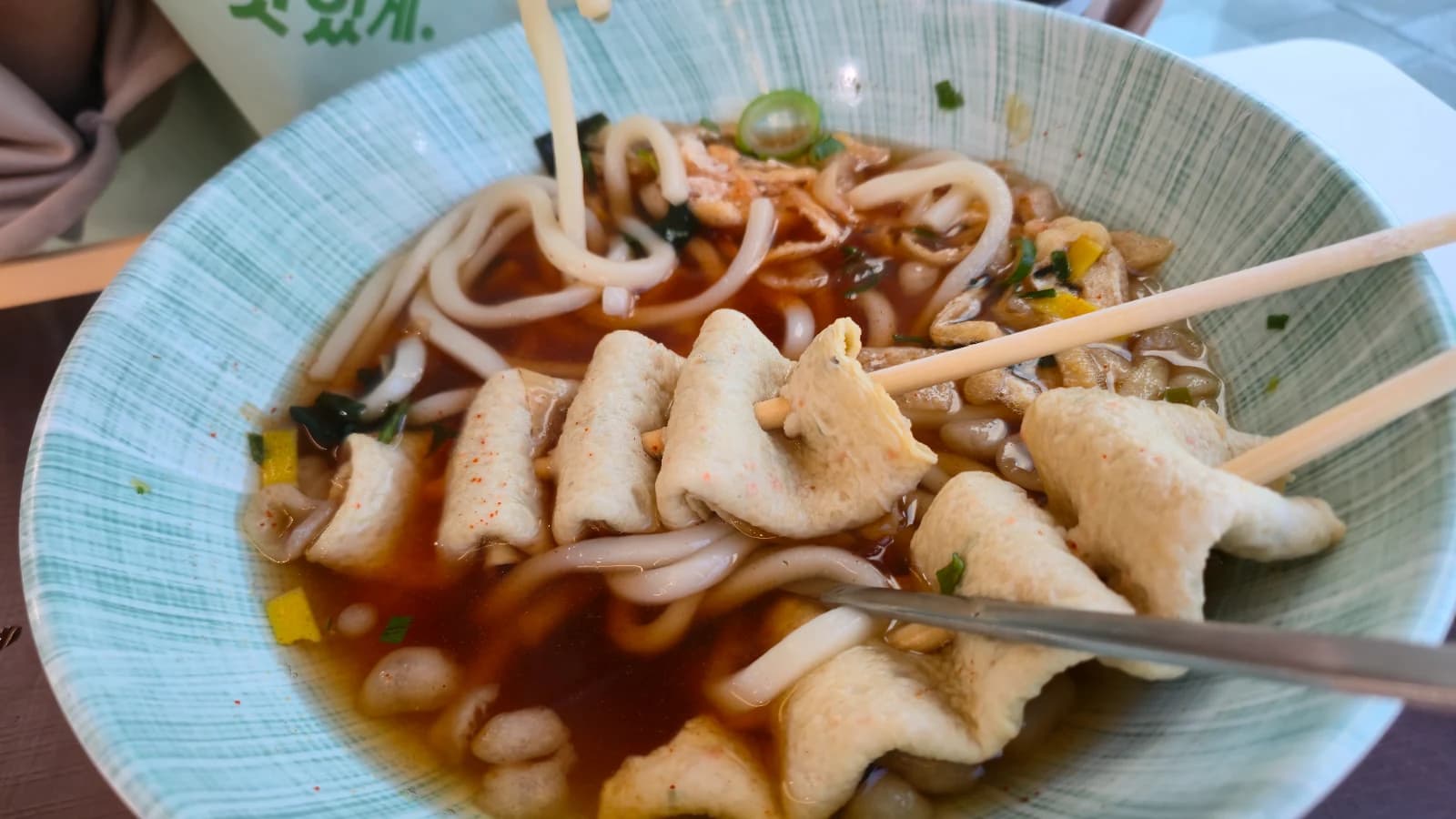
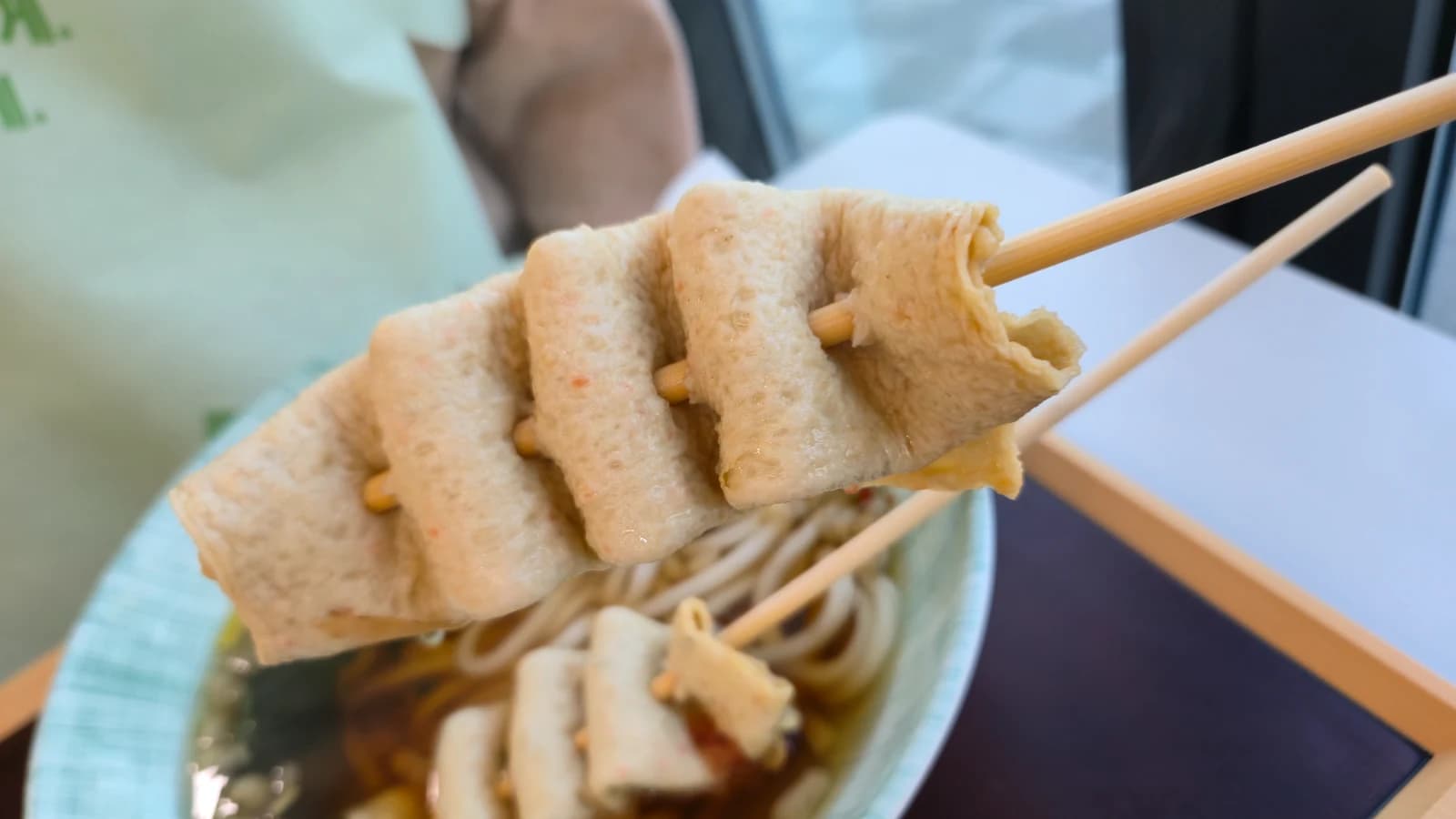
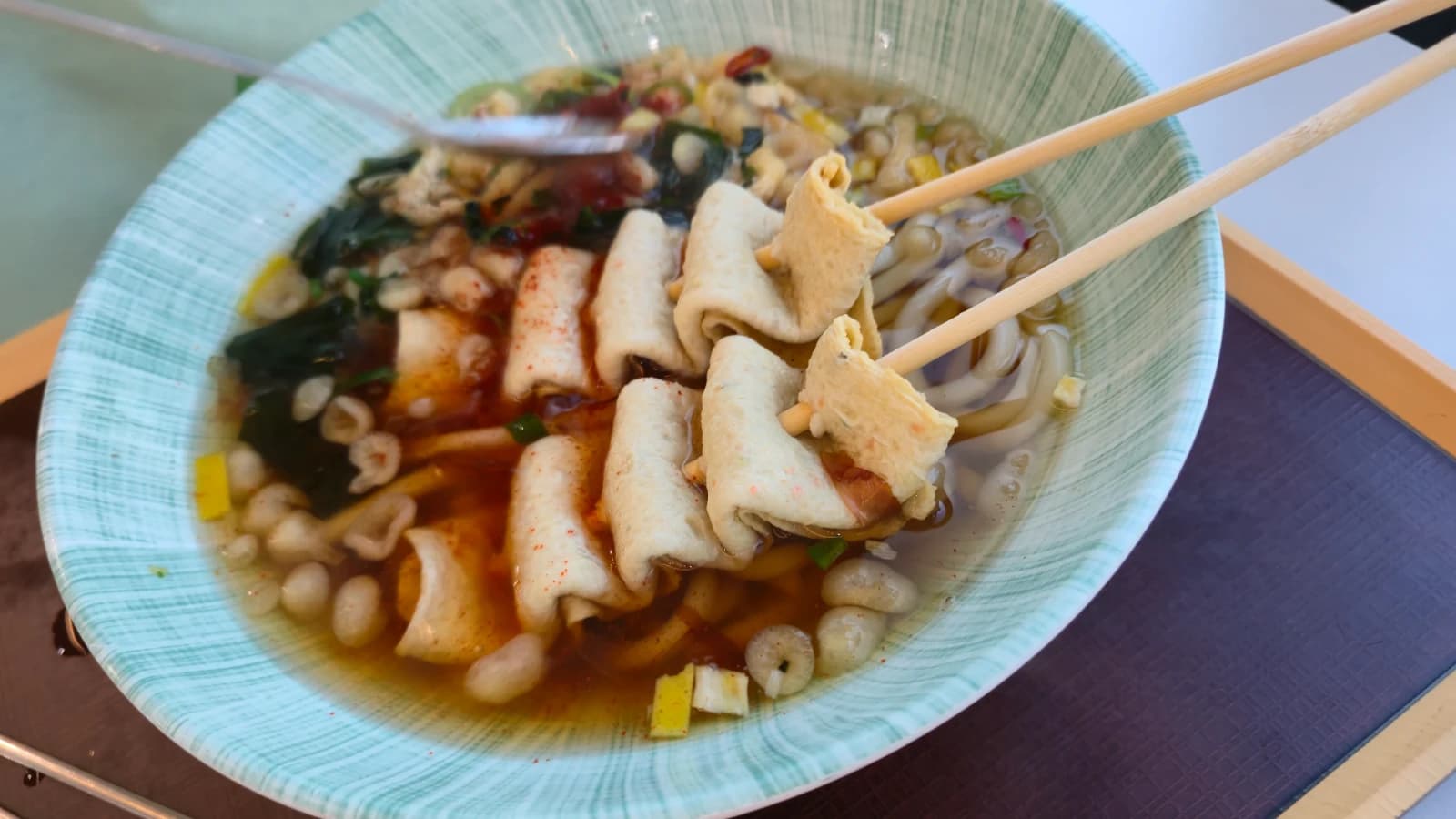
The abalone eomuk skewer udon came with clear broth, udon noodles, an eomuk skewer and a few pieces of abalone on top. The serving size was fine, and for 7,000 won, about A$8.10, I did not have any major complaints. Still, considering “abalone” was in the name, the actual amount of abalone was tiny. That bit was a shame.
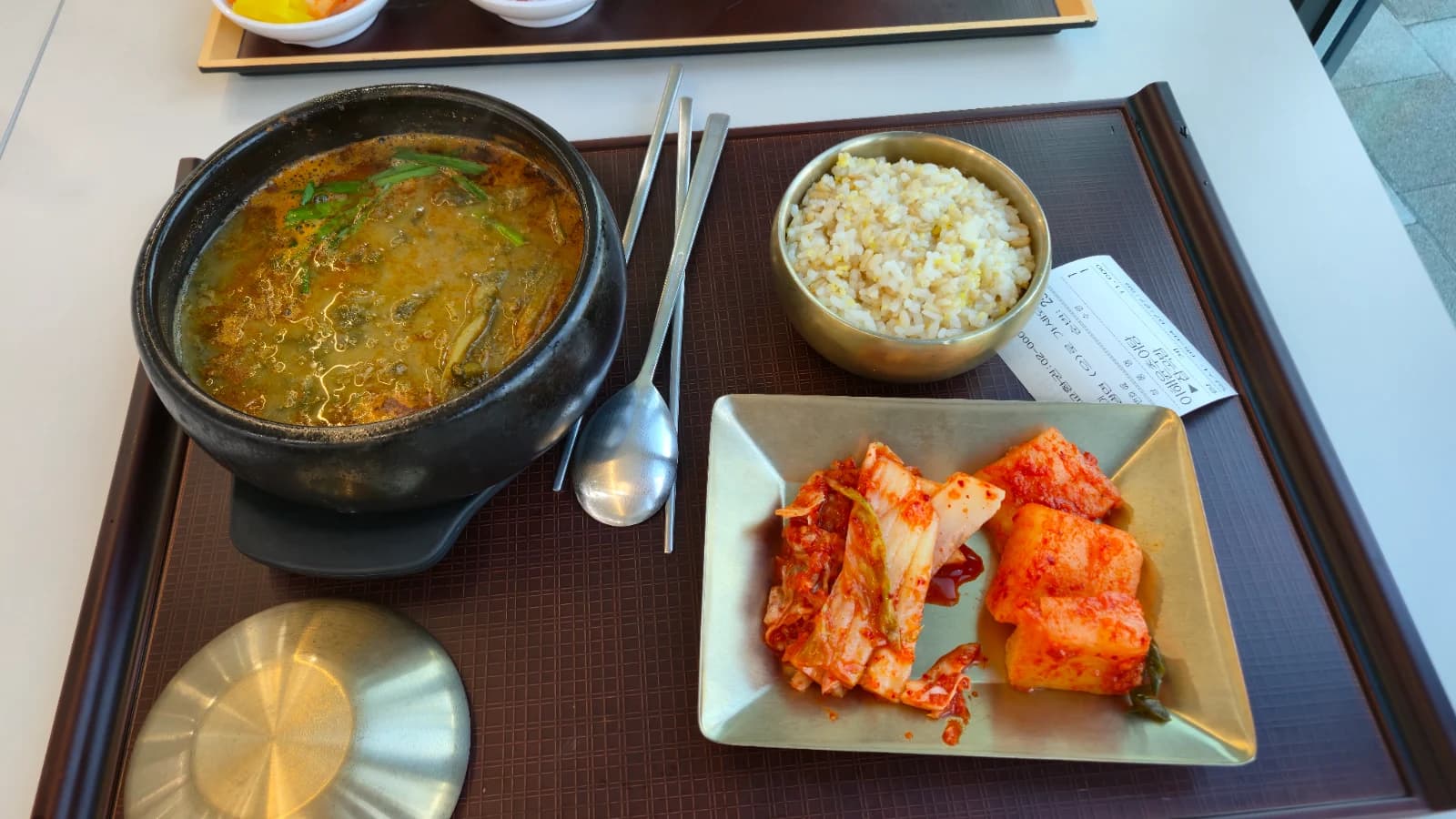
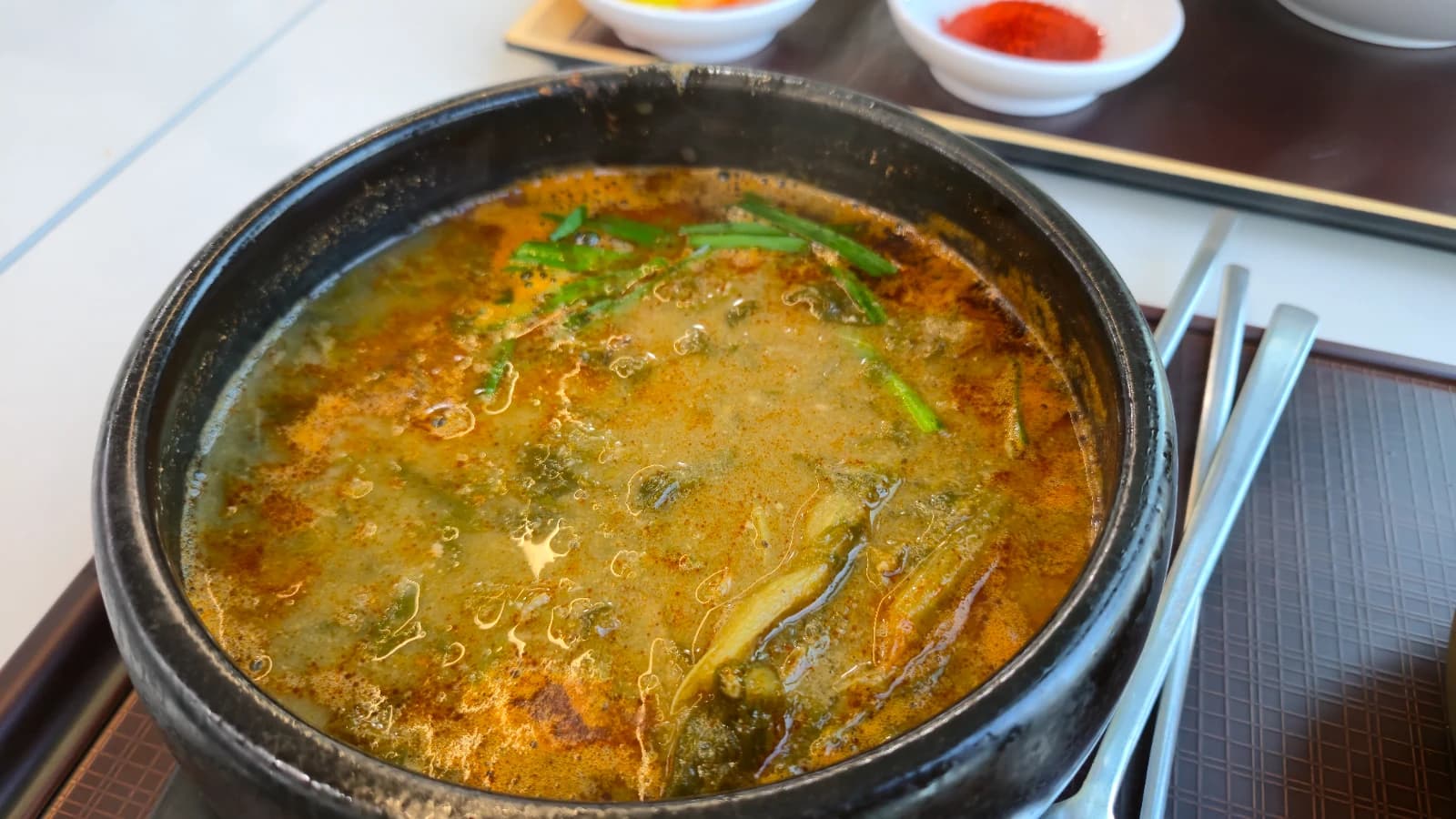
Chueotang is a traditional Korean soup made by grinding loach, a small freshwater fish, into the broth. It is usually thick, earthy and savoury. The Lee Hae-yoon chueotang I had that morning, though, was fairly mild overall. The flavour was not very strong, and for 11,000 won, about A$12.70, the overall set-up did not feel particularly special.
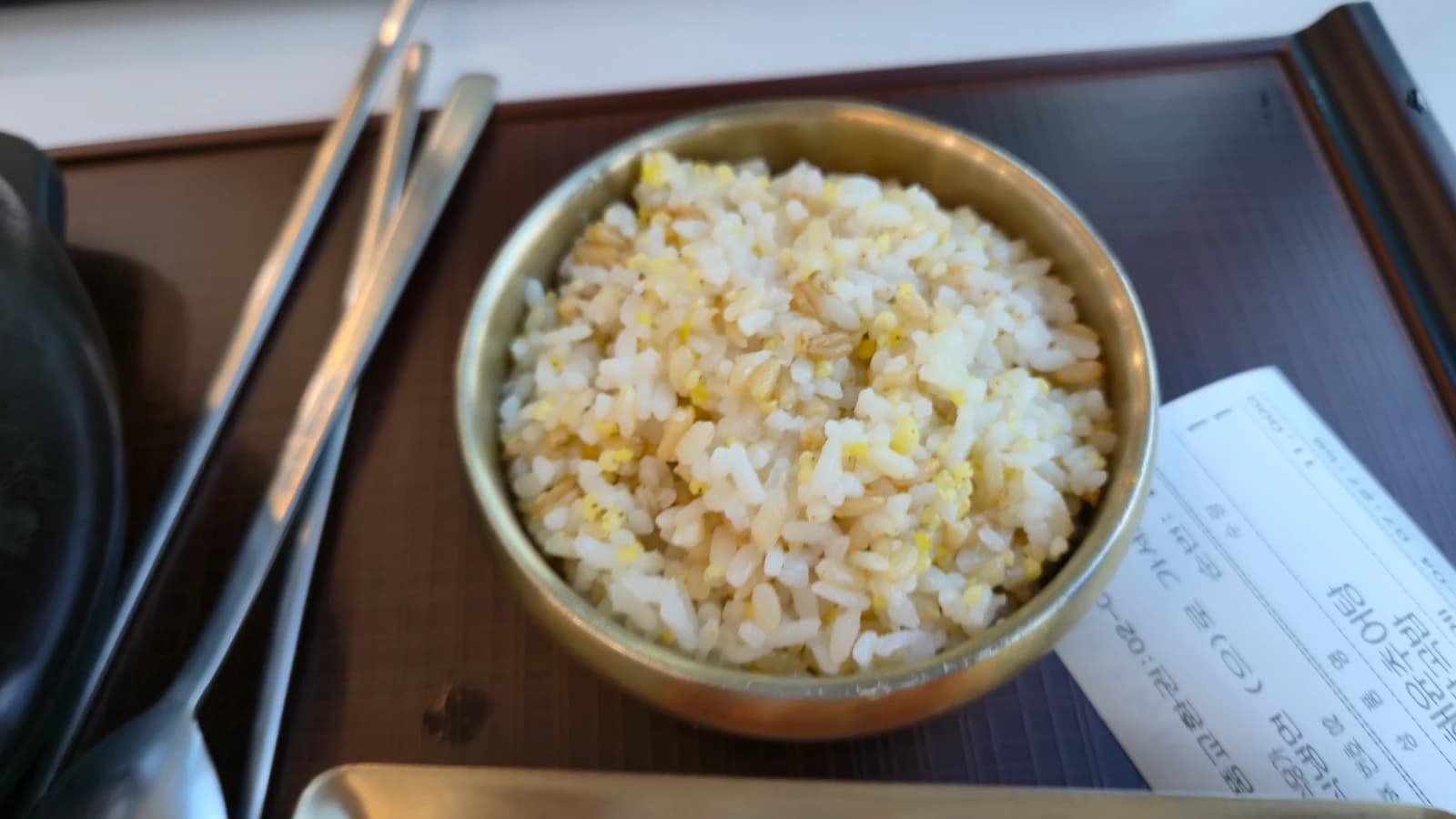
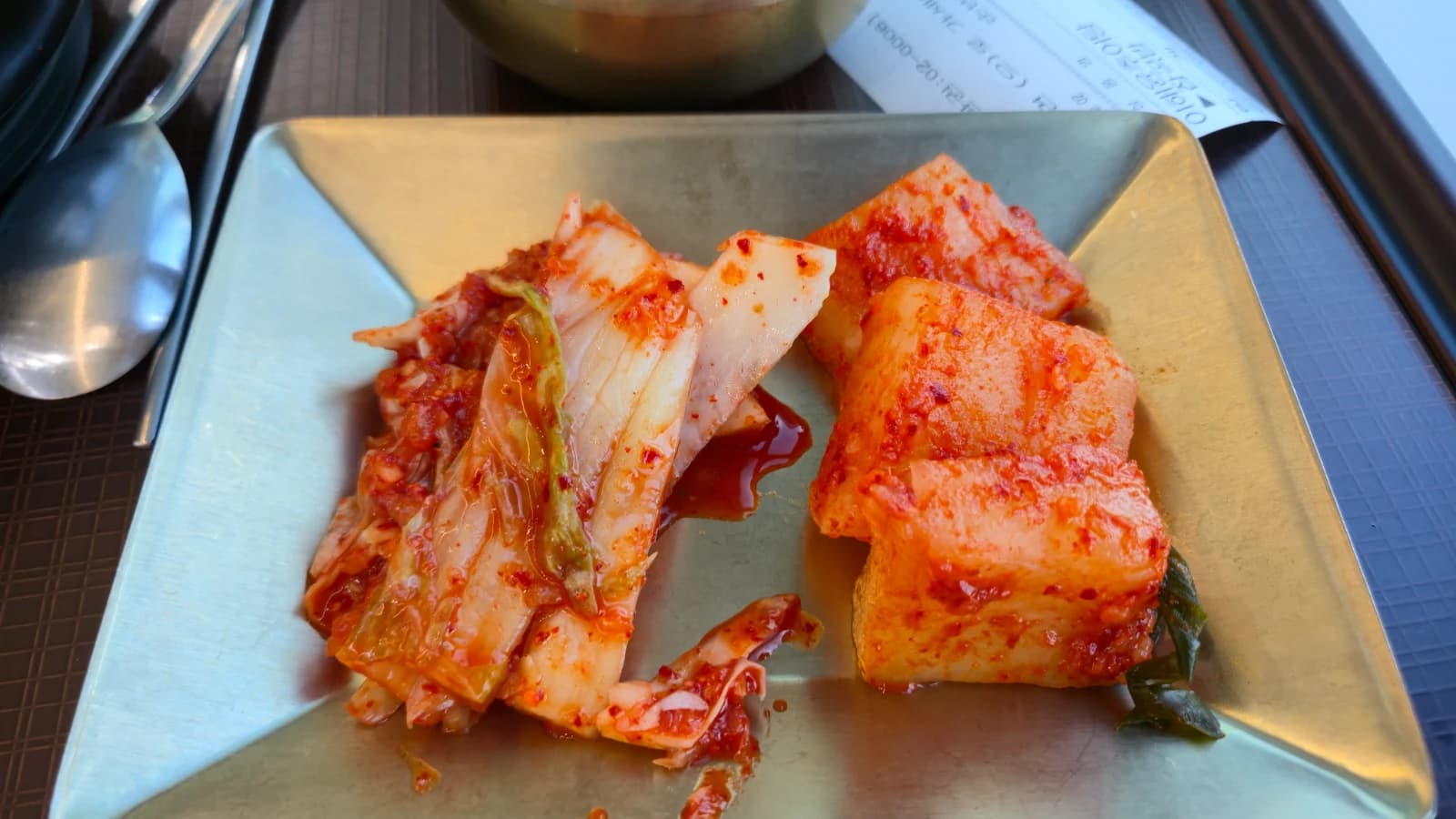
The multigrain rice on the side was made with white rice mixed with barley, beans and sorghum, and in Korea it is generally seen as a healthier option. The side dishes were baechu kimchi and kkakdugi. Kkakdugi is cubed radish kimchi seasoned with red chilli powder, and it works well with soup dishes because it cuts through any heaviness. Both were basic side dishes, so there was no extra charge.
After eating: self-return trays and water station
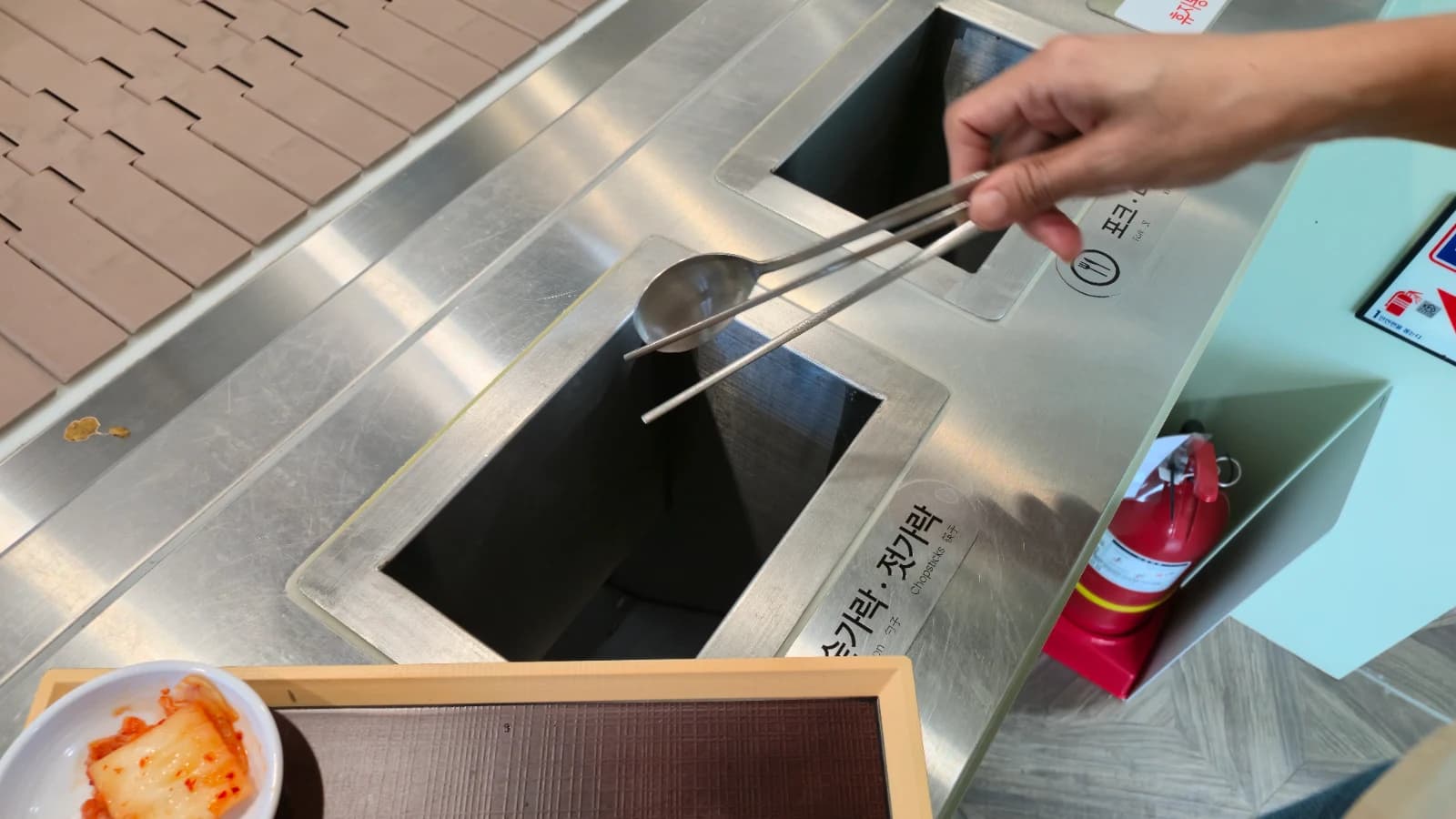
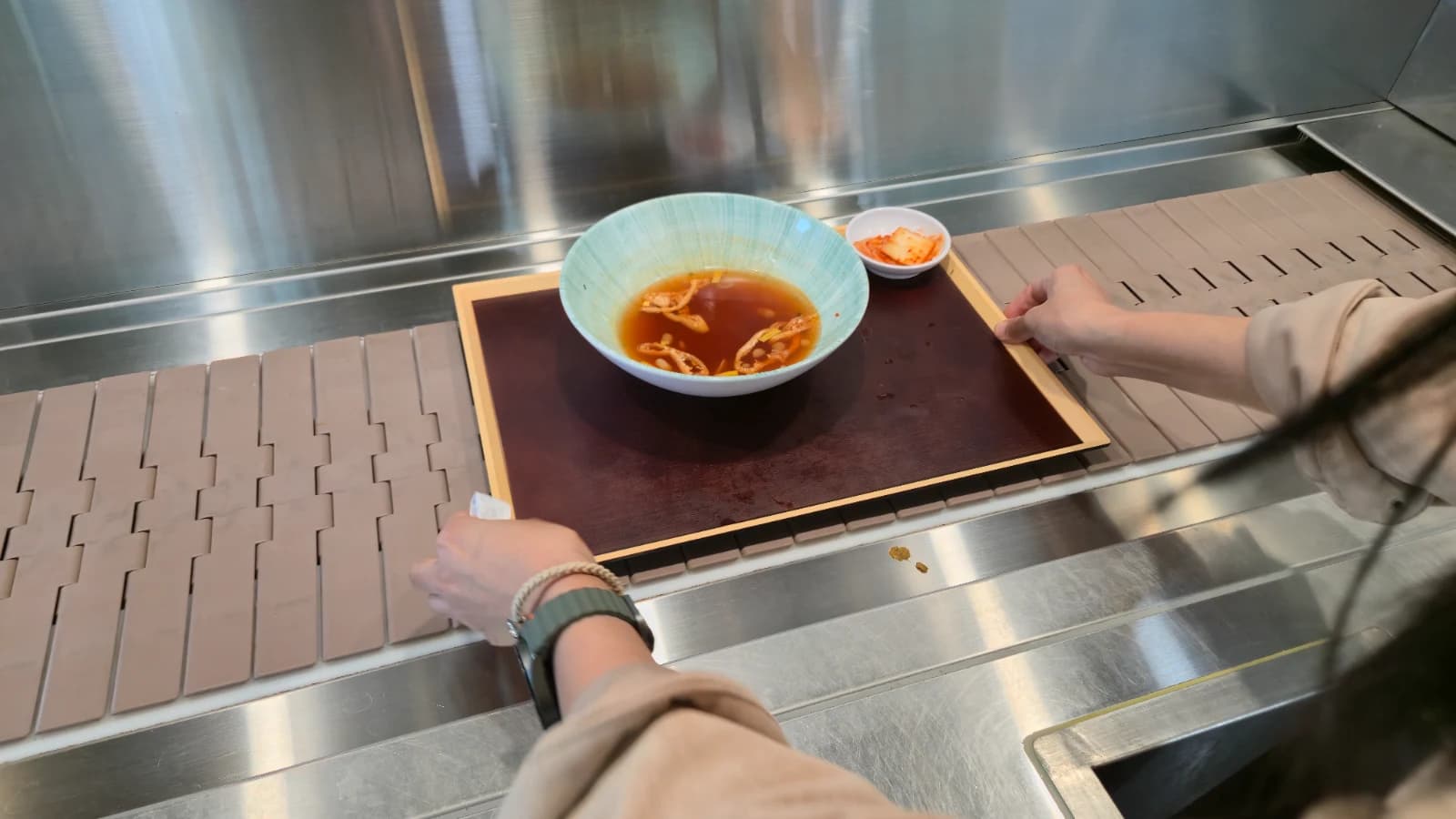
At Korean highway rest stop food courts, once you finish eating you return your dishes yourself. Spoons and chopsticks go in a separate cutlery return area, while bowls and trays go to the food return section. In self-service spaces, cleaning up after yourself is just the normal thing to do in Korea.
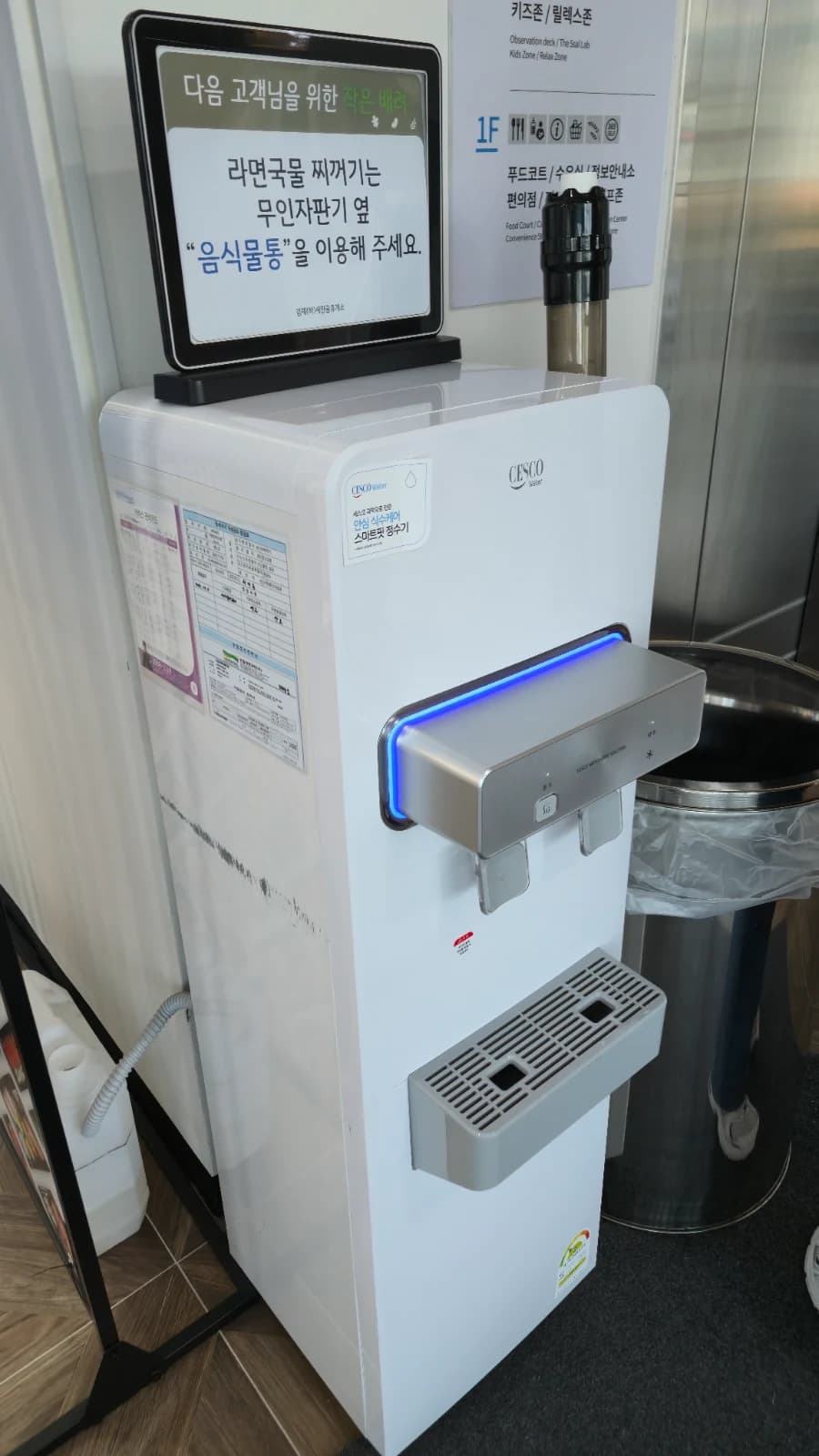
There was a free water dispenser nearby, so you could drink water freely, and there was also a dedicated container for pouring out leftover ramen broth. My wife said it was “clean and nice”. Maybe because the building was new, but the return area and water station were both really tidy.
A vanilla latte at Sagwadang café
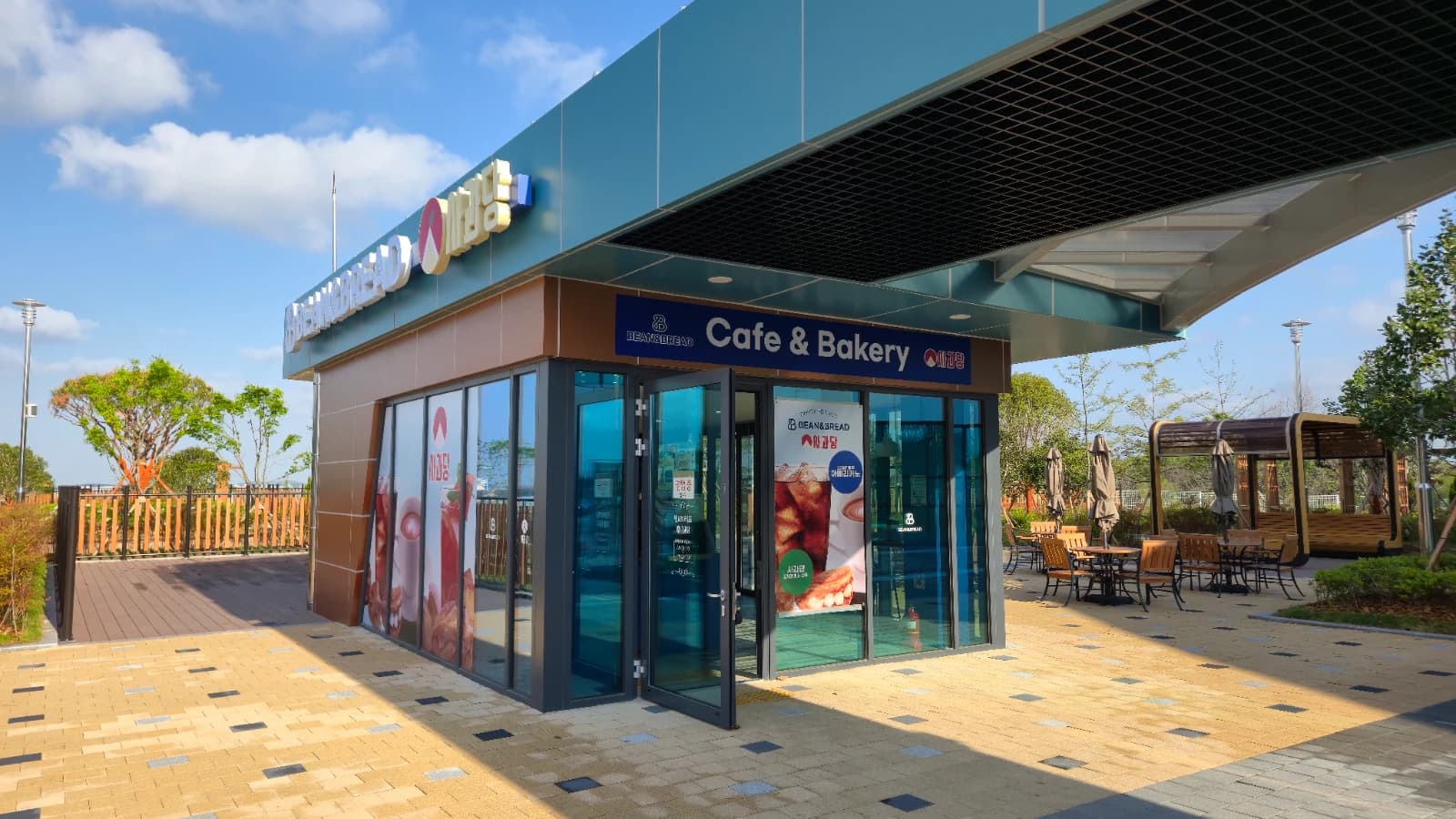
After breakfast, we went outside for a coffee and found a café called Sagwadang. It is a small café near the exit side of Gimje Rest Stop, and the hand-written style lettering on the sign caught my eye. As the name suggests, Sagwadang sells desserts made mainly with apples. Apple pie seemed to be the signature item. I only planned to get coffee, but once I saw the menu, I started thinking twice.
Having a look at the bread inside the café
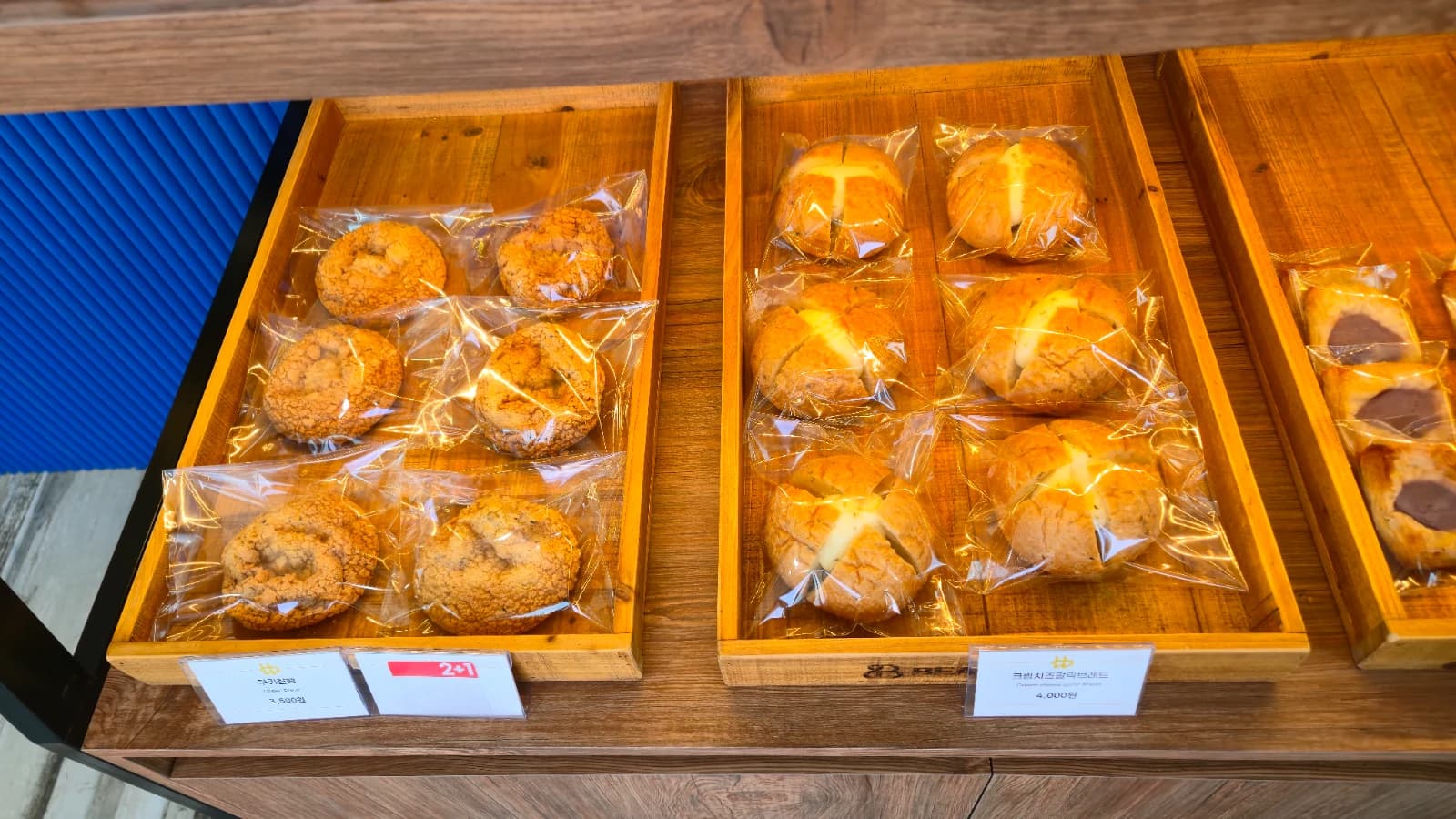
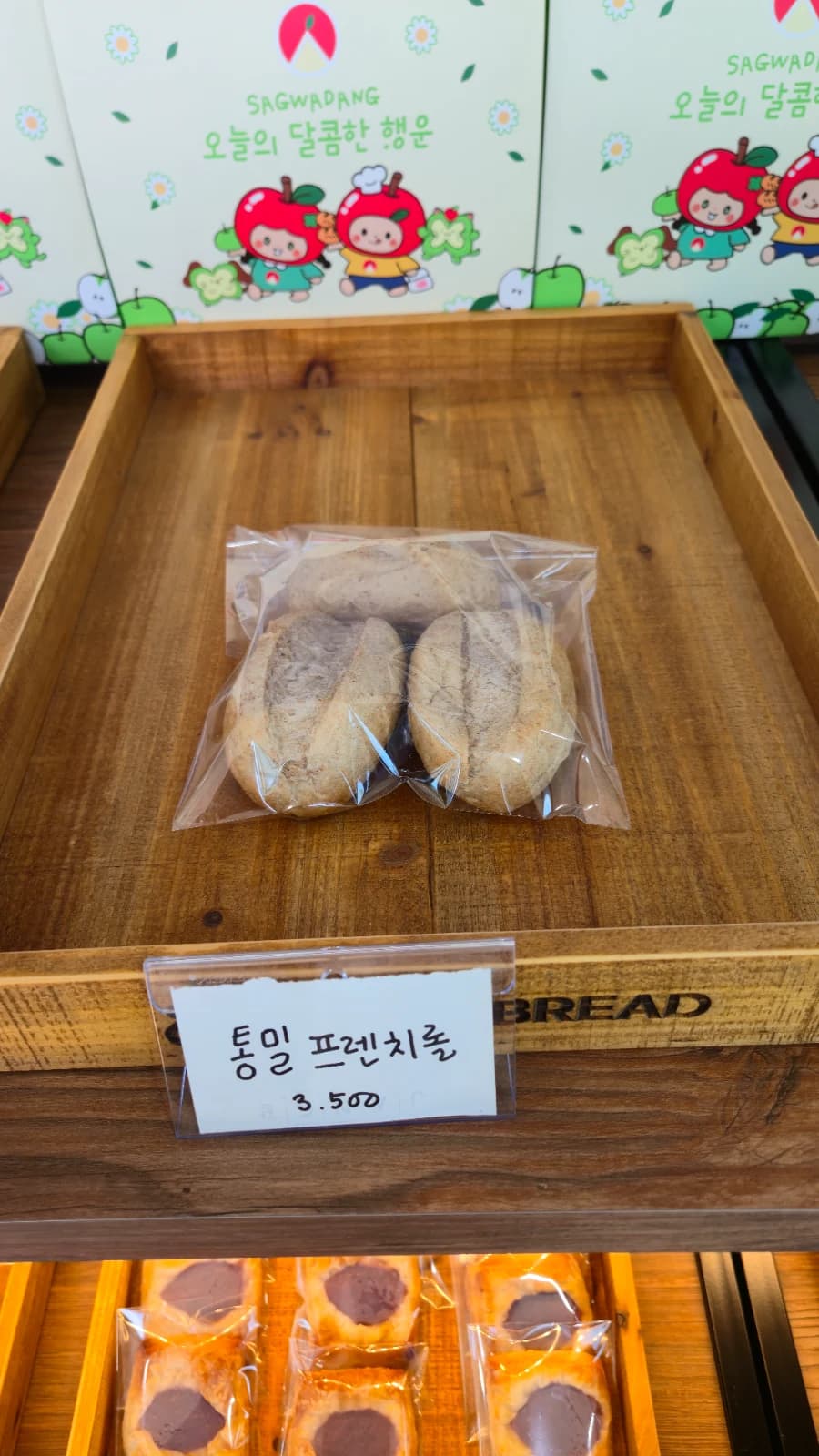
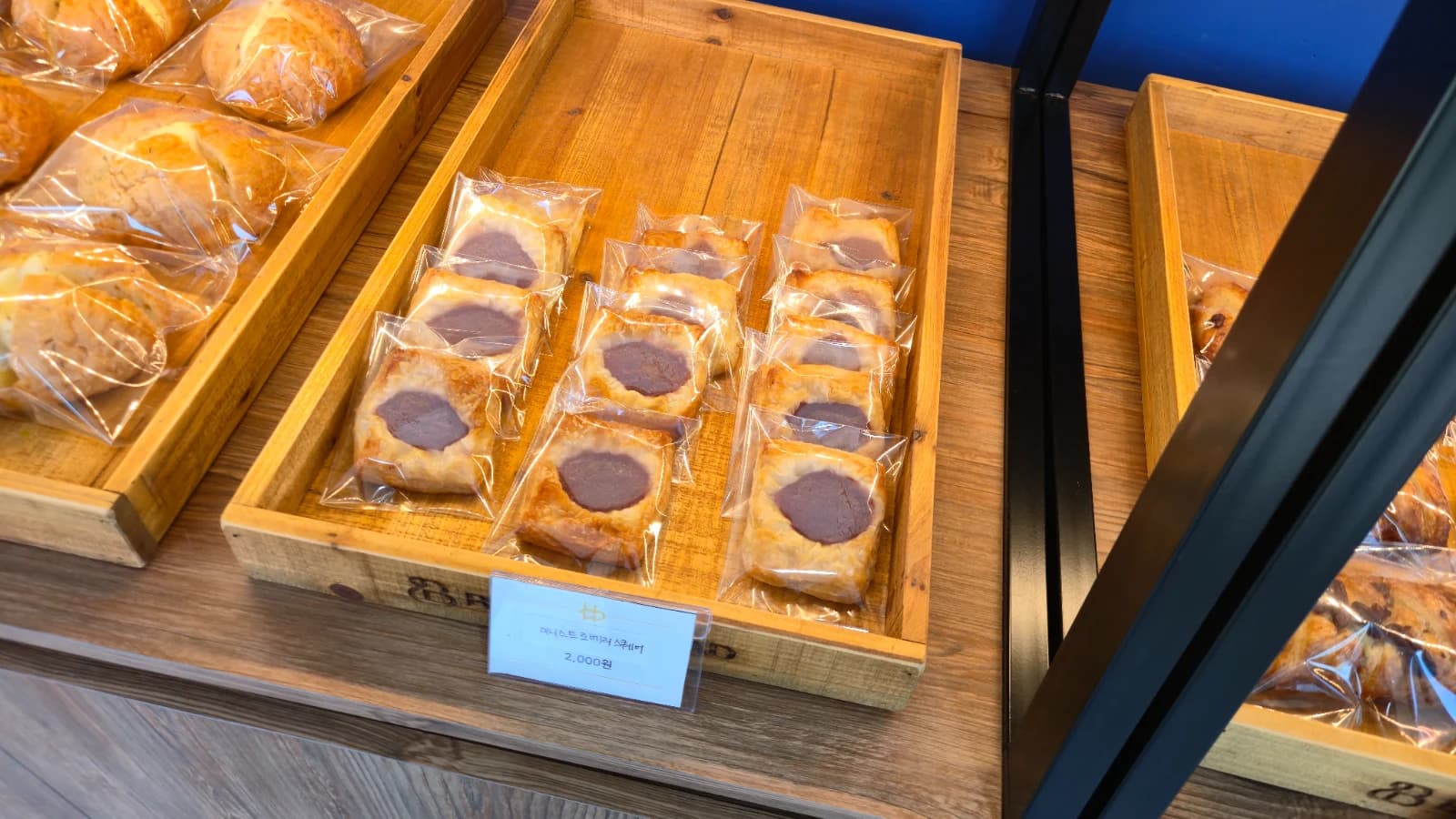
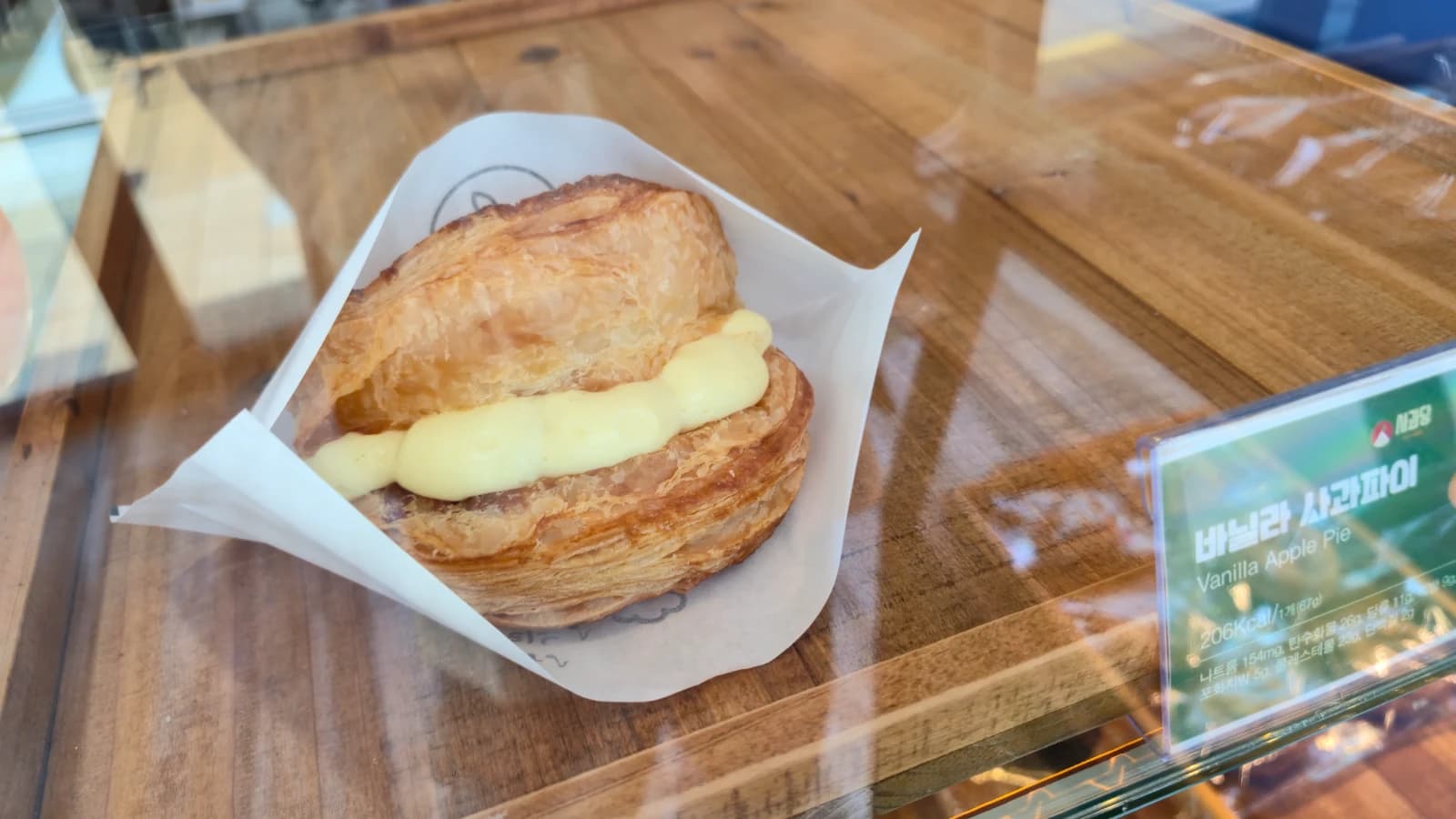
Inside the café, individually wrapped breads were laid out on wooden trays. One side was full of soboro-style breads, and next to them I saw a round chocolate bread with a cross cut on top. Soboro is a Korean bakery bread with a crunchy topping made from butter, sugar and flour. The wholemeal French roll was 3,500 won, about A$4.00, but only two were left. The mini stone rye apple pie was 2,000 won, about A$2.30, and had a purple red-bean paste topping. The vanilla apple pie was also 2,000 won, with thick vanilla cream tucked between croissant-style pastry, and the nutrition label said 206 calories. I briefly considered buying bread, but I was already full from breakfast at the food court, so I just ordered a drink.
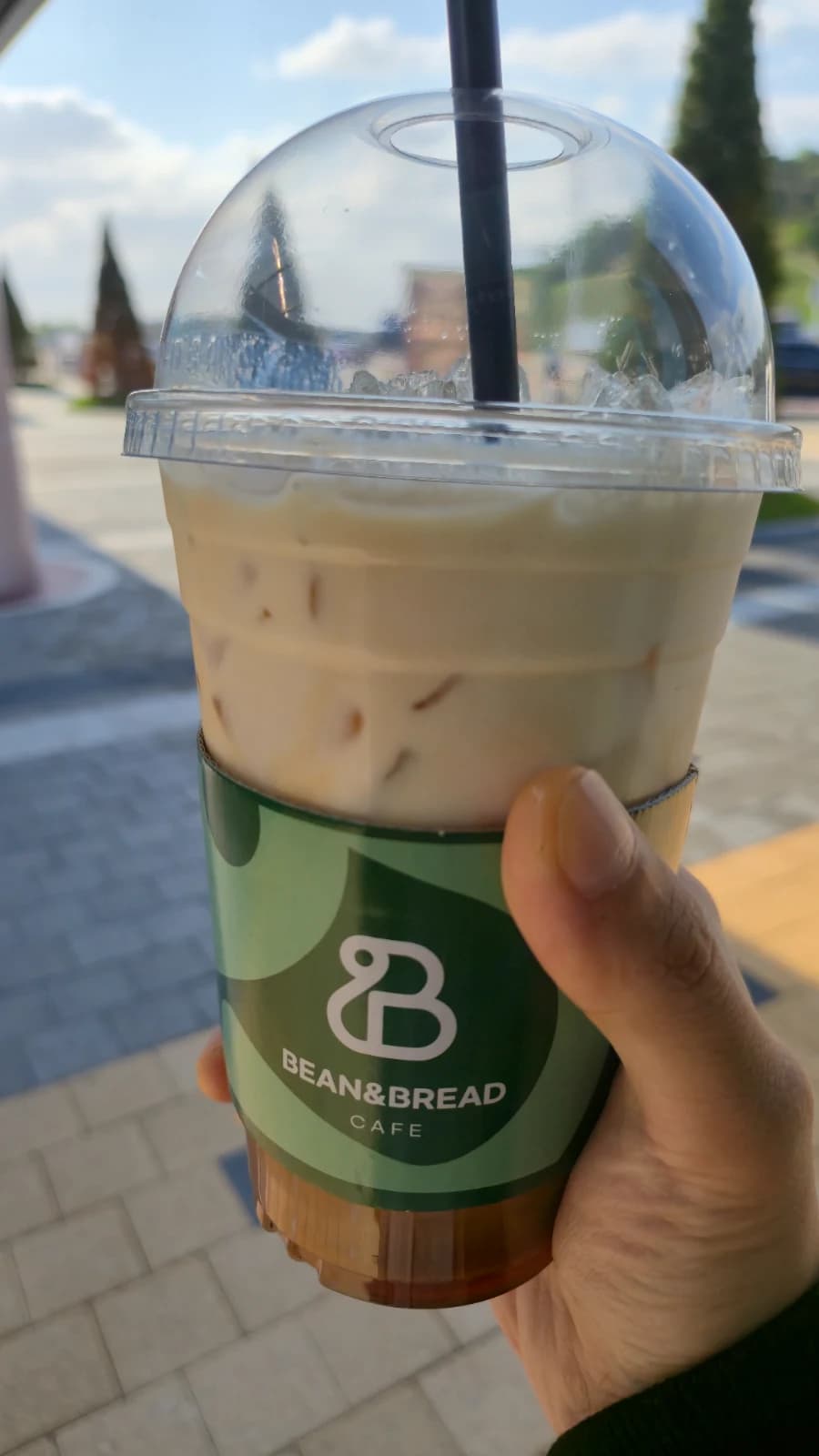
I ordered an iced vanilla latte. I do not remember the exact price. The cup had a green sleeve printed with the “Bean and Bread Cafe” logo, so Sagwadang seemed to be operating under that brand. The milk layer sat on top and the dark espresso layer was below, so I took a photo before mixing it. Taste-wise, it was a perfectly normal vanilla latte.
Outdoor park and terrace at the rest stop
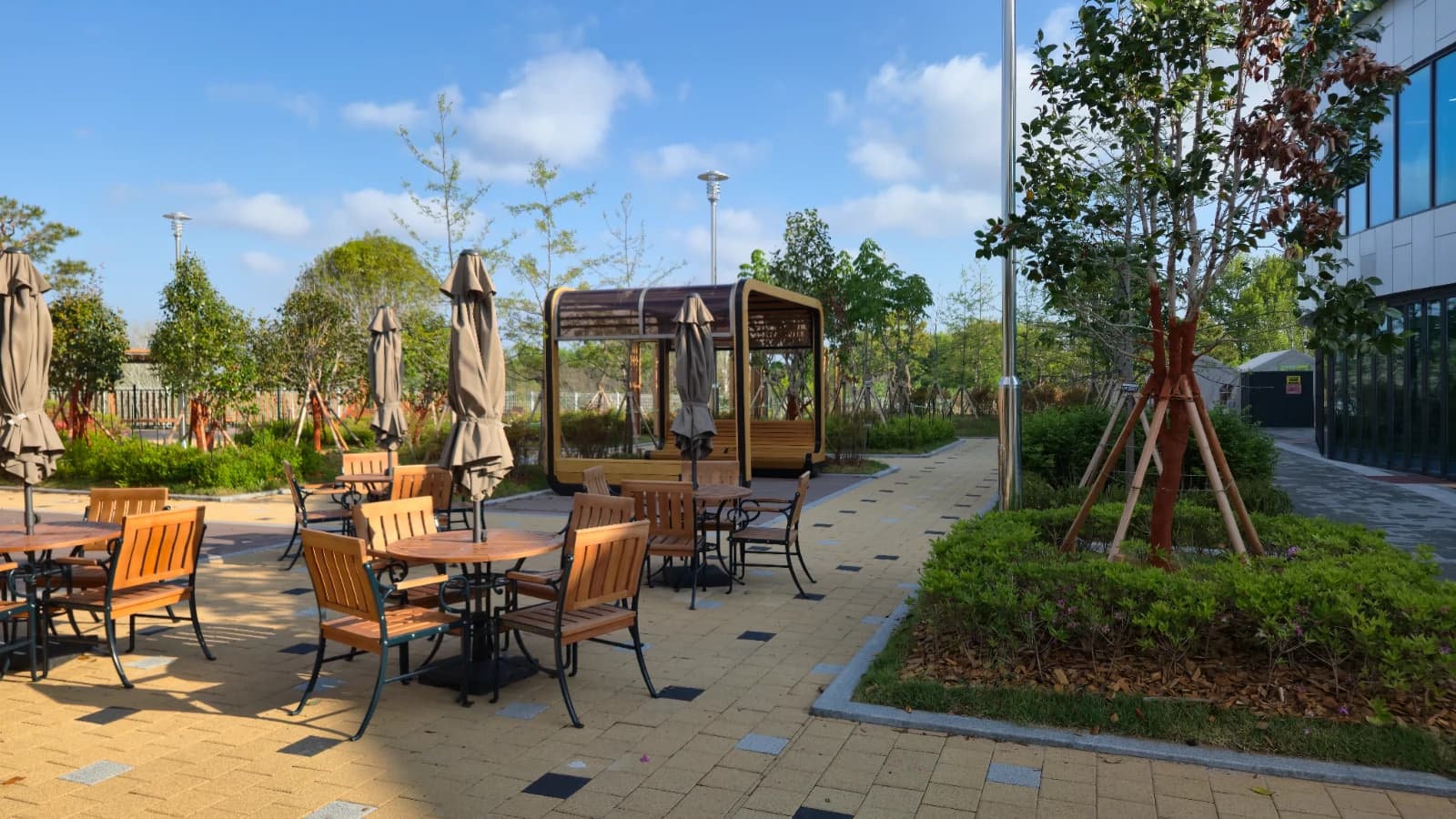
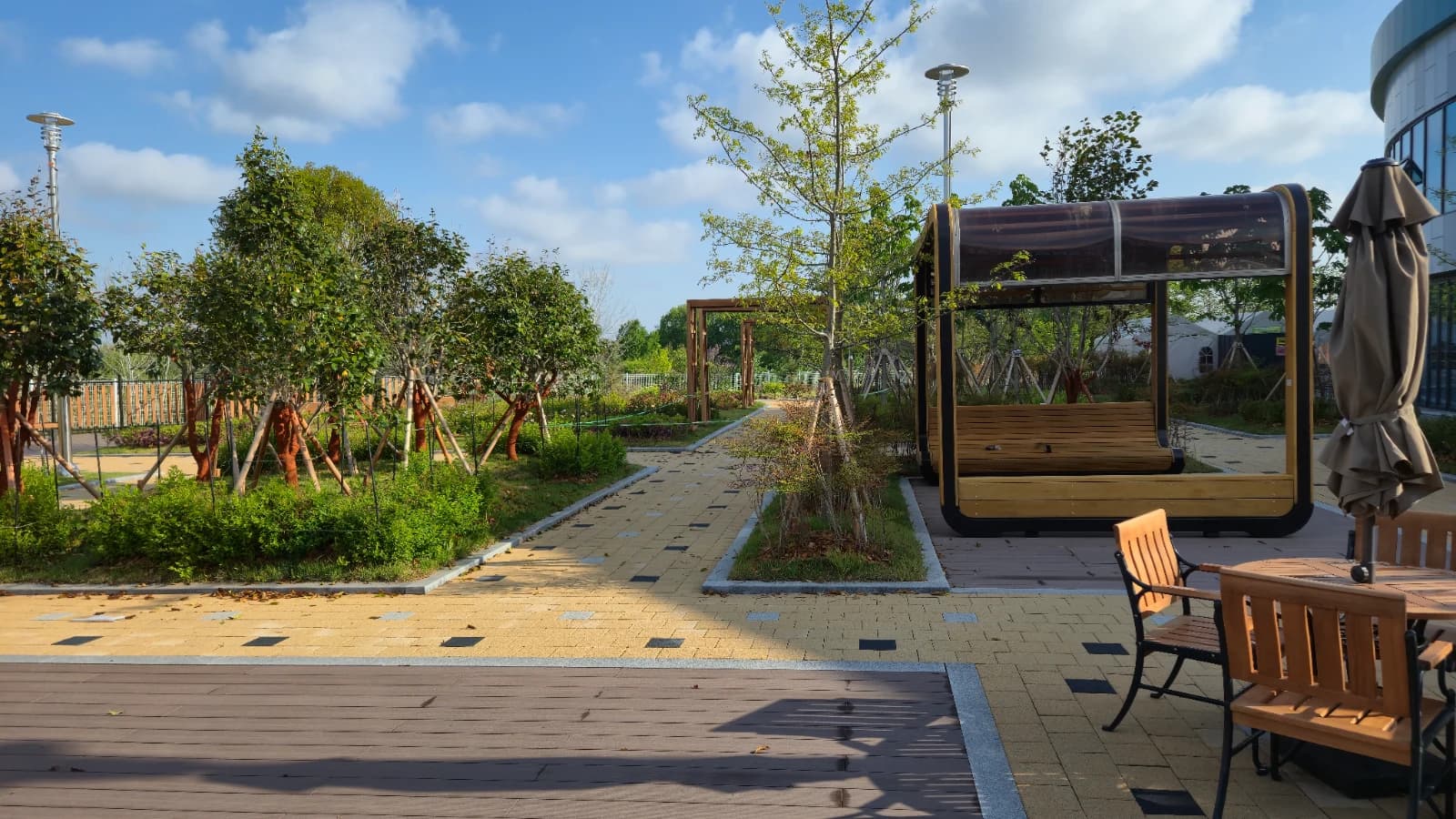
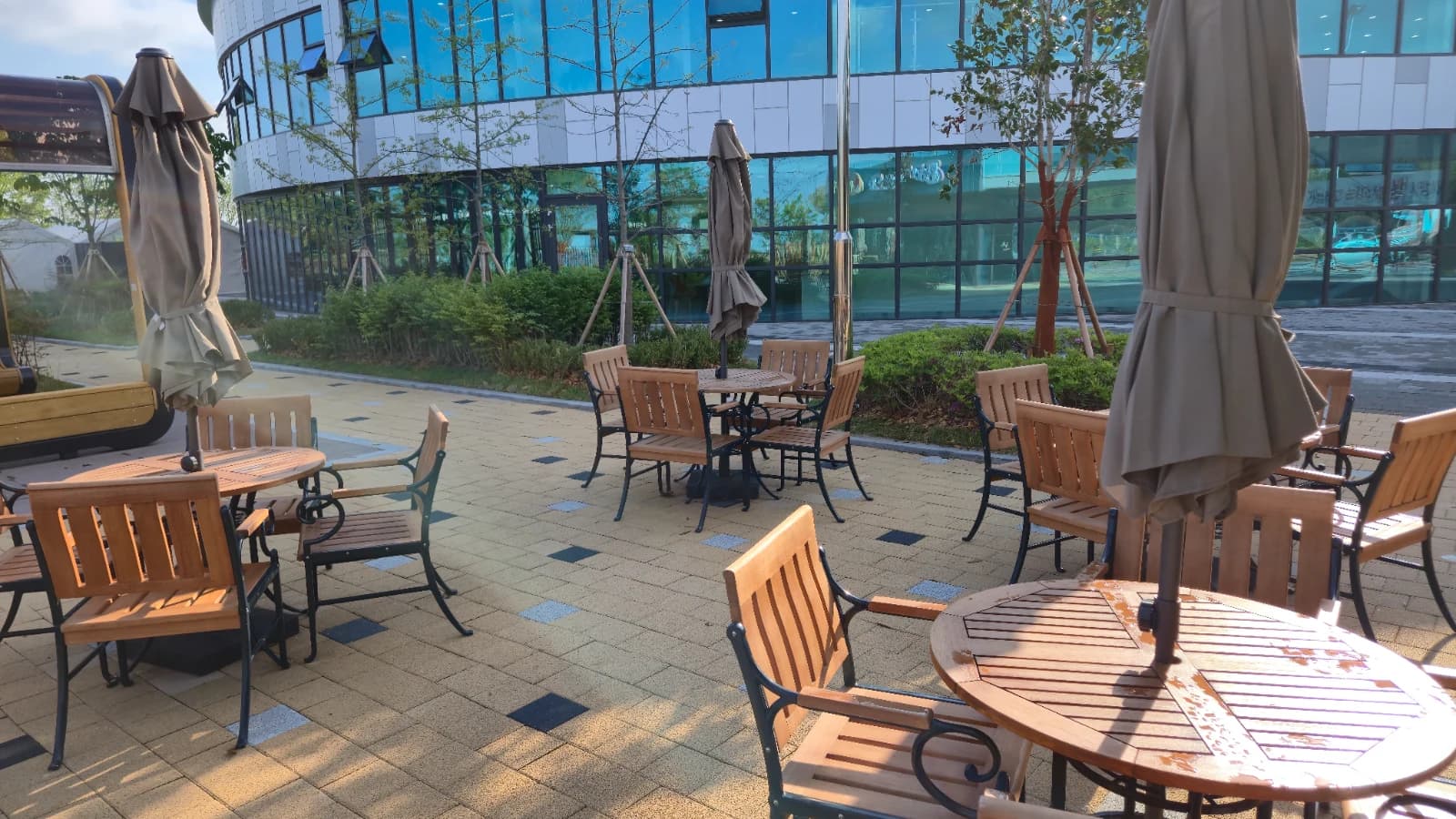
There were outdoor tables in front of the café, and behind them was a walking path with a small landscaped park. With wooden benches, parasols and even a semi-circular shelter with a glass roof, it felt more like a café garden than a highway rest stop. The trees were still young and tied to support stakes, so you could tell the place had not been open for long.
These days, newly built Korean highway rest stops seem to put quite a bit of effort into landscaping. They are becoming more than places where you just park the car and duck into the toilet; they are turning into spaces where you can actually take a short breather. Of course, not every rest stop is like this. Older routes still have ageing facilities, and some places are under renovation. But many of the newer expressway rest areas are around this level now.
I sat there for a little while with my vanilla latte. The cool breeze and gentle early-May sun made it a bit hard to leave. My wife started nudging me to get going, so I got up.
Walking around the car park
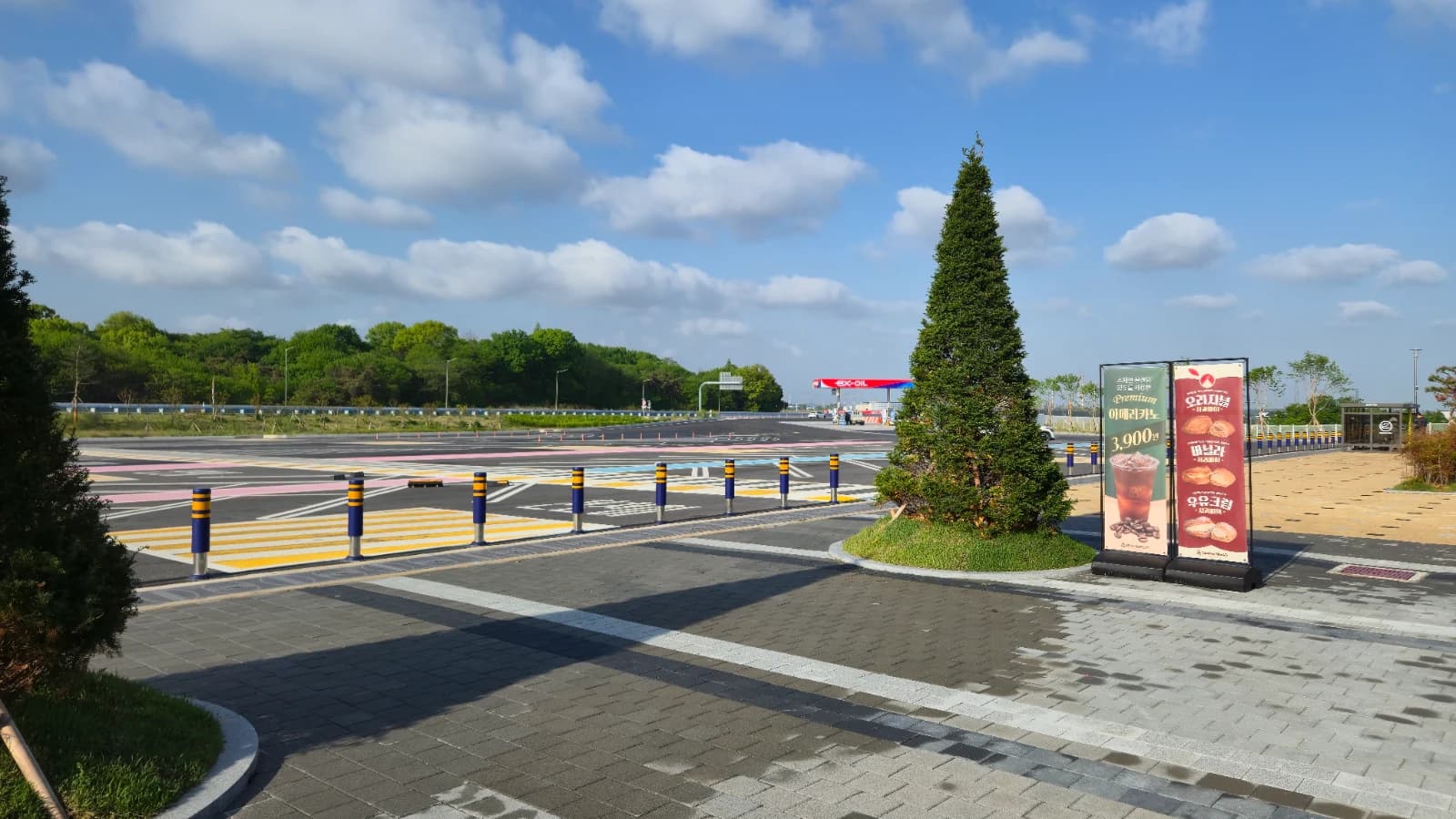
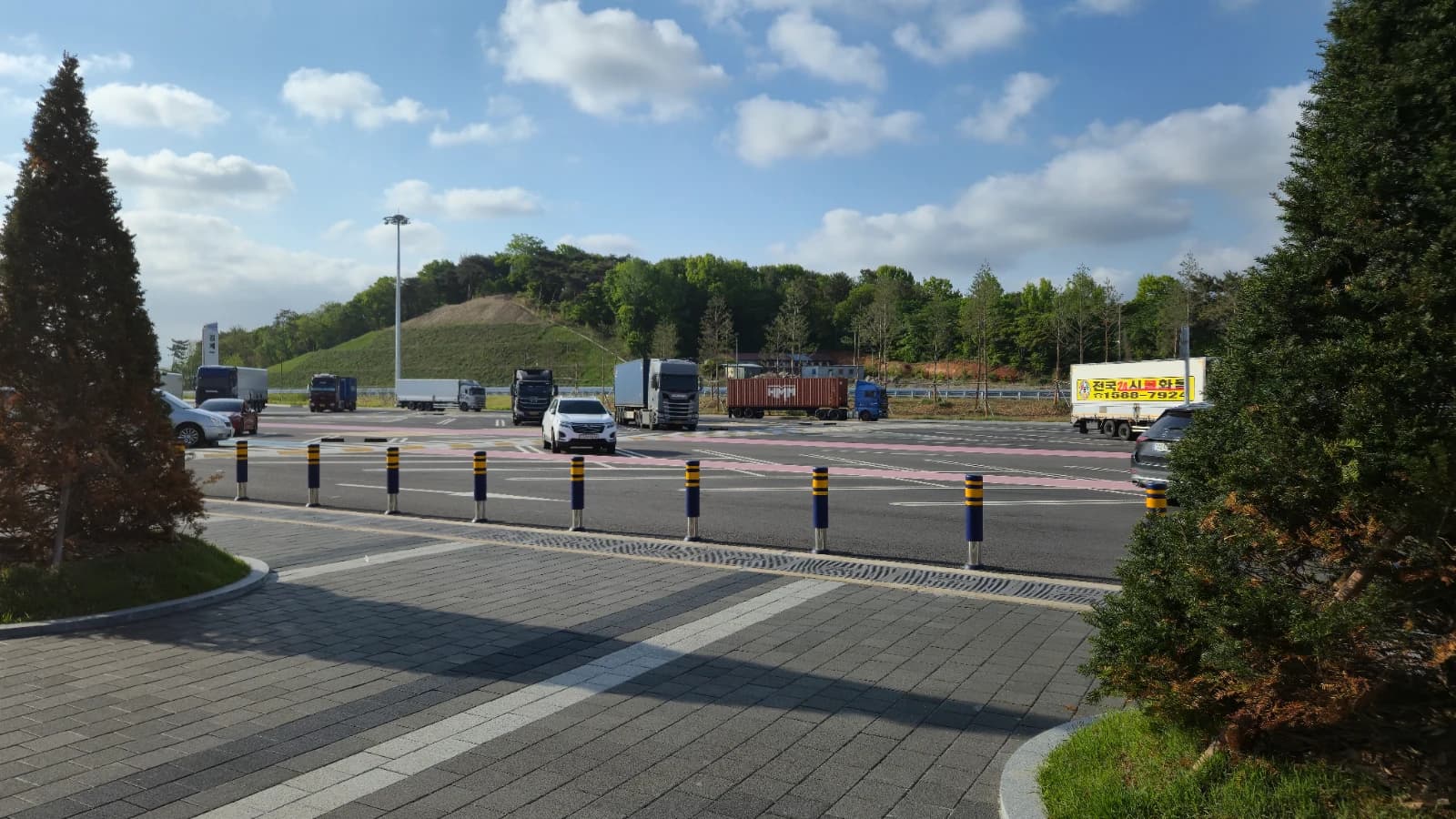
The car park is quite spacious compared with the size of the building. On one side there was a Sagwadang coffee banner, and behind it I could see the roof of the petrol station. A line of large trucks was parked in the truck area, but the passenger car area still had plenty of empty spaces. Modern Korean highway rest stops tend to allow generous parking space, so there is less stress even during holidays or long weekends. The building also sits near the middle of the car park, which means you do not have to walk far no matter where you park.
Leaving Gimje Rest Stop
After breakfast and coffee, we ended up spending about 40 minutes at Gimje Rest Stop. Since the Saemangeum-Pohang Expressway is still fairly new, the facilities were clean and comfortable, but there were a few things I was not fully happy with. Food court prices were generally on the high side, and the self-serve ramen and gukbap machines bothered me a bit because they cost about the same as, or even more than, some proper food court meals despite not being cooked by staff. The morning menu restrictions also made it harder to choose freely.
Still, the cleanliness of a new building, the outdoor park and terrace seating, and the range of breads at Sagwadang are things you do not always get at older rest stops. Gimje Rest Stop showed how Korean highway rest stops are shifting from simple mid-drive stopovers into places where you can properly pause and rest. We still had a long way to go to Sinan, so we could not sit around for too long. I threw the empty latte cup in the bin and got back onto the expressway.