
Yakisoba Buldak Noodles Honest Review | Spice Level & Taste Test
Inhloko Yamasigaba
tintfo 13
Last time I was at Lotte Mart picking up the 4-Cheese Buldak, something else caught my eye. Right next to it was this 'Yakisoba Buldak' with Japanese packaging that just screamed for attention. This legendary noodle that was once a must-buy on Japan trips, then got reverse-imported to Korea due to popular demand - I couldn't just walk past it when I saw it in person.
So I sneakily added it to my cart along with the 4-Cheese. The combo of salty-savory yakisoba and fiery buldak had me super curious, so I cooked it up right away. Here's my honest review!
Japanese Vibes in the Packaging
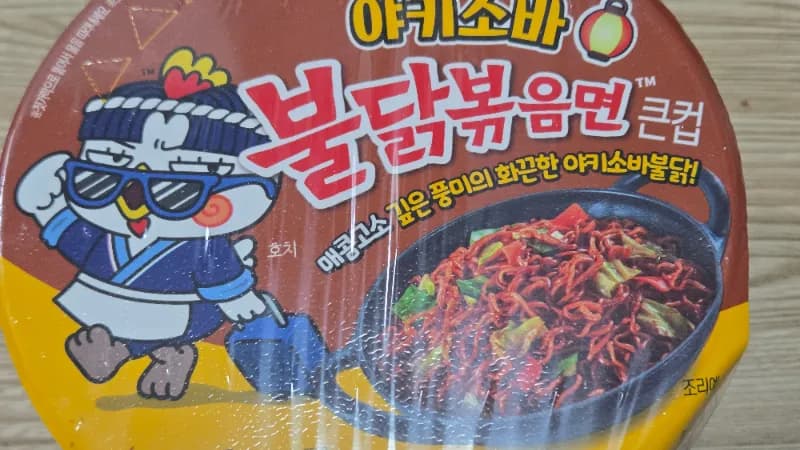
The packaging is giving full Japanese vibes. The Buldak mascot Hochi is dressed in traditional Japanese festival gear with sunglasses - pretty hip! There's text about "spicy savory deep flavor," and I honestly couldn't imagine how yakisoba's salty-savory sauce would mix with Buldak's heat. The cooking example photo looks pretty thick and hearty, so let's see if it can win over my taste buds.
Convenient Water Drain System
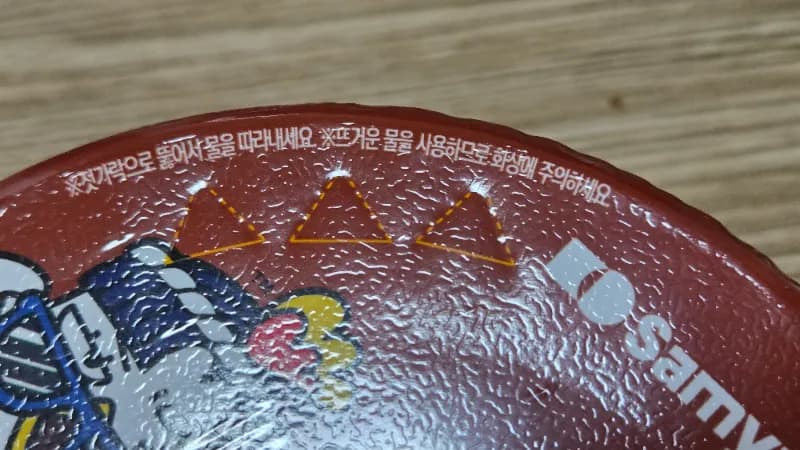
There's a triangular marking on the lid for draining water. If you've eaten instant noodles before, you know they've been using this chopstick-poke system for stir-fry noodles for years now. Gone are the days of nervously tilting the lid slightly, praying noodles won't spill everywhere while draining water. This might seem minor, but being able to drain just the water without sacrificing a single noodle strand is genuinely convenient. I remember back in the day losing like 30-40% of my noodles to the sink when draining water the old way.
Nutrition Facts and Sodium Check
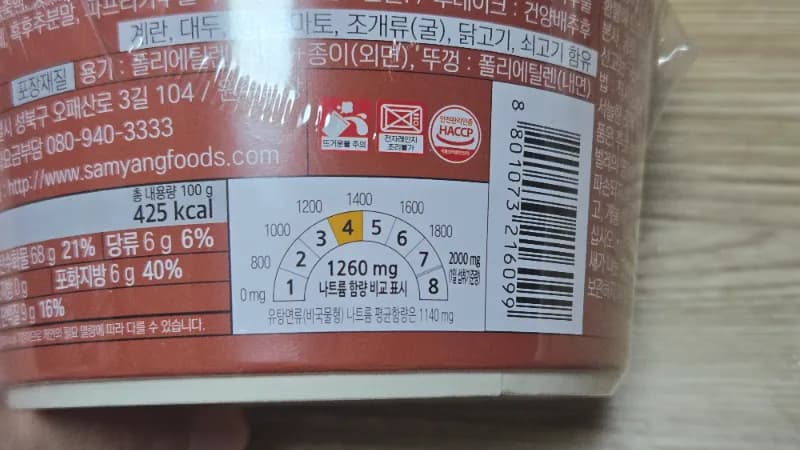
Korean instant noodles these days always have these graphs on the side. With more health-conscious consumers, the food industry has made showing sodium content at a glance a must-have trend. Walk through any mart aisle and you'll see this labeling on pretty much every instant noodle package.
This product has 1260mg of sodium, which puts it at level 4 out of 8 total levels. The average for non-soup fried noodles is 1140mg, so this is slightly higher. Makes sense since yakisoba needs that salty-savory umami flavor, so the extra sodium is probably necessary. Good to keep in mind if you're watching your salt intake.
Simple Cooking Instructions
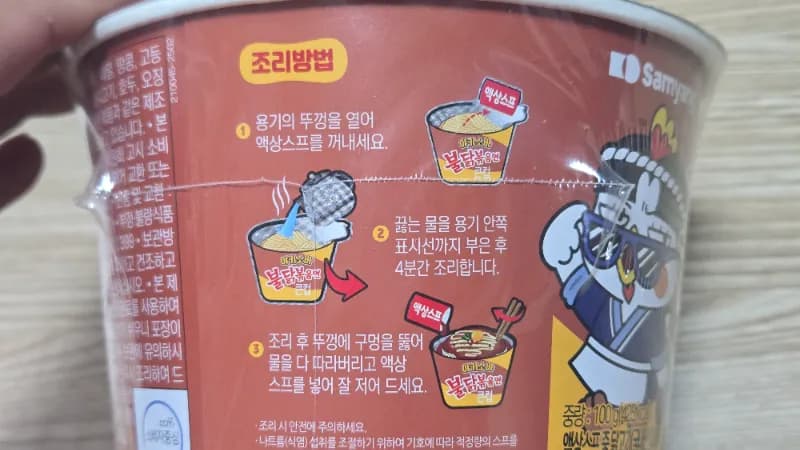
The side panel has Hochi explaining the cooking method. It's super simple: open the lid, take out the liquid sauce, pour boiling water, wait 4 minutes. Then poke holes in the lid to drain all the water and mix in the sauce. Unlike the 4-Cheese Buldak I tried last time (which was microwave-style with no draining), this follows the classic stir-fry noodle method. It specifically says to drain "all" the water - makes sense since leftover water would dilute the sauce flavor, so you gotta be bold and drain it completely.
Ingredient Check for Global Readers
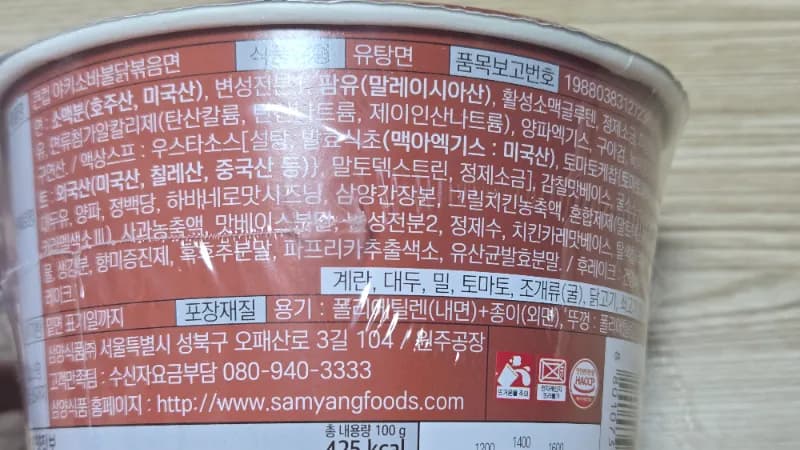
Looking at the ingredient list, it contains eggs, soybeans, wheat, tomatoes, chicken, and beef. Important point: no pork, but it does contain beef.
Since the Hi-JSB blog gets translated into multiple languages and read worldwide, I wanted to highlight this for readers who need to check ingredients for religious or cultural reasons. Hindu readers who don't consume beef should avoid this, while those who avoid pork can note that it's not listed in the ingredients.
Simple Contents
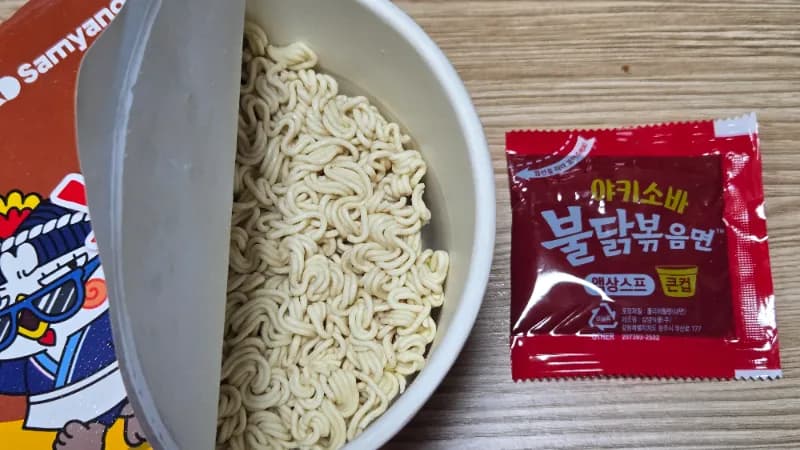
Opening the lid reveals a super simple setup - just noodles and one liquid sauce packet. Usually the specialty series like Carbonara or Cheese Buldak have separate powder packets you need to mix, but this one goes with just liquid sauce. What's important is this isn't the original Buldak sauce but a special "Yakisoba Buldak" formula. They've packed both yakisoba flavor and Buldak heat into this one packet, which is actually nice and clean without having to mess with multiple powders.
1. Adding Boiling Water
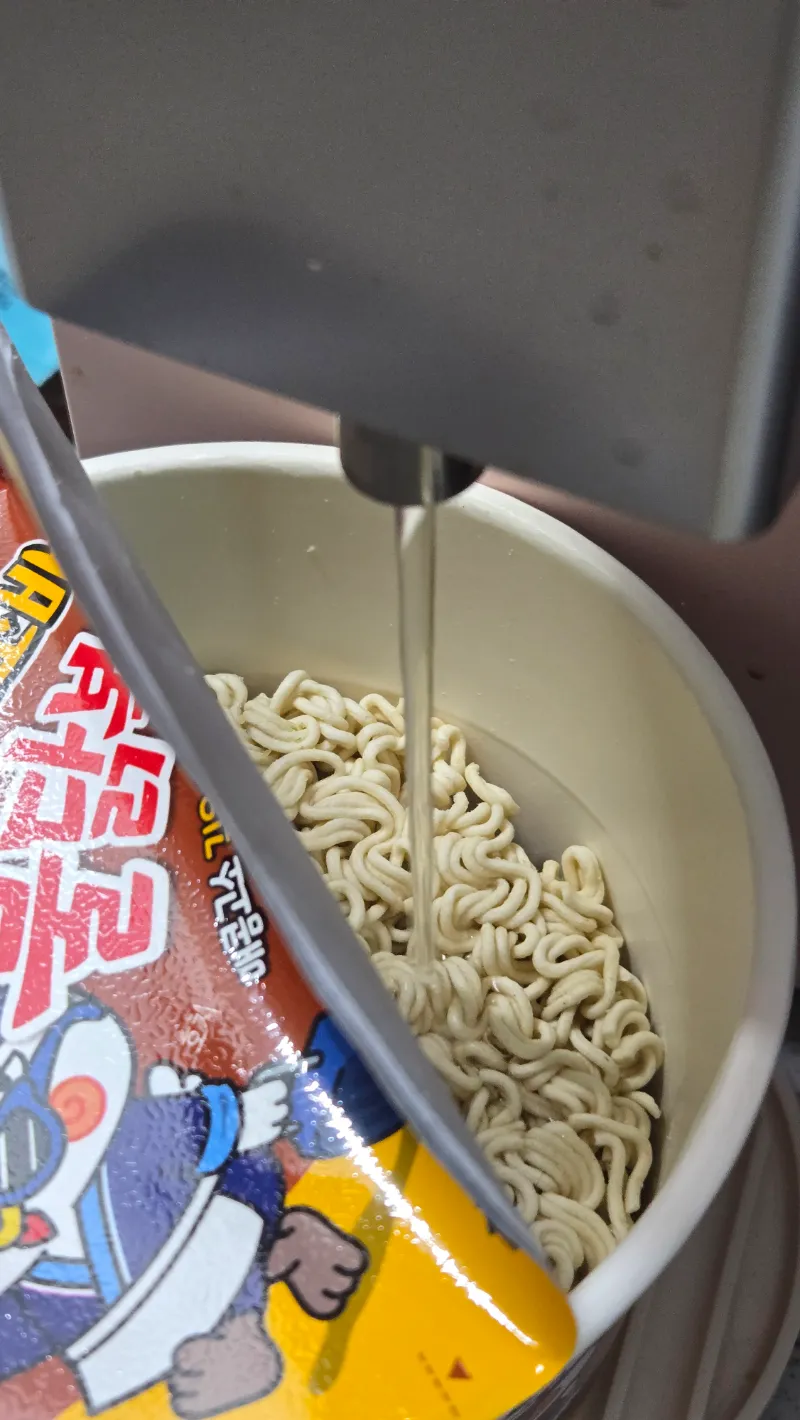
I got hot water from the dispenser and poured it generously up to the inner fill line. Now cover it well and wait 4 minutes with anticipation for the noodles to cook properly.
2. Draining Water (Important Tip)
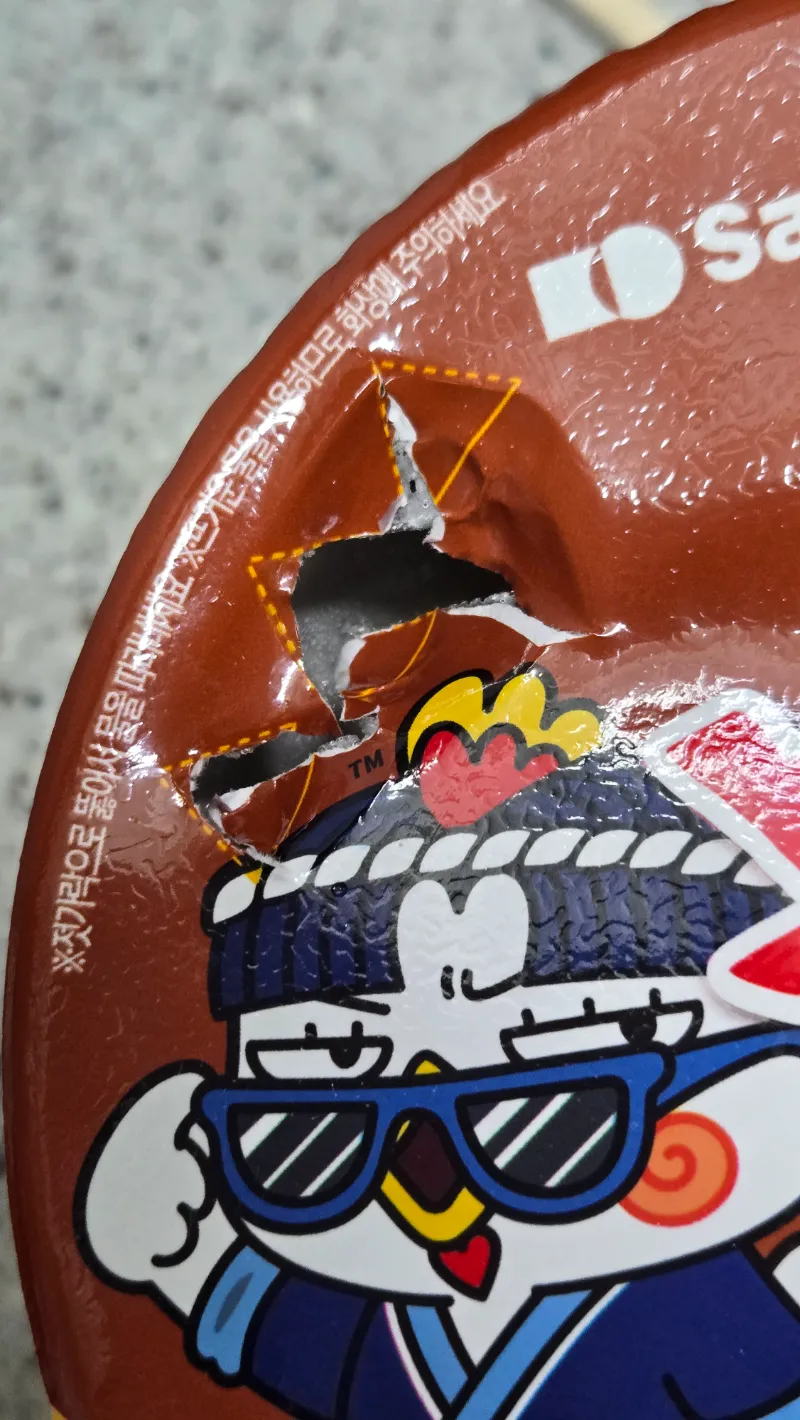
After 4 minutes when the noodles are properly cooked, time to drain the water. Here's an important tip: don't gently poke the triangular marking on the lid with chopsticks - go bold and make a decent-sized hole. If you follow instructions and make a tiny poke, the water drains so slowly you'll be there all day. When you're hungry and watching water trickle out drop by drop, it's maddening. Make it big enough that noodles won't escape but water flows freely - much better for your sanity.
3. Right After Adding Sauce
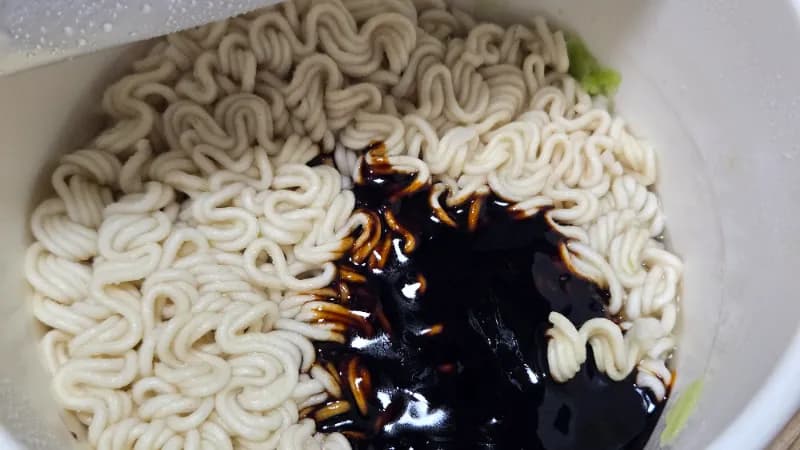
After draining all the water and adding just the sauce. Honestly, the visuals are a bit sparse, right? Not many visible ingredients either - guess that's the limitation of cup noodle quality.
4. After Mixing
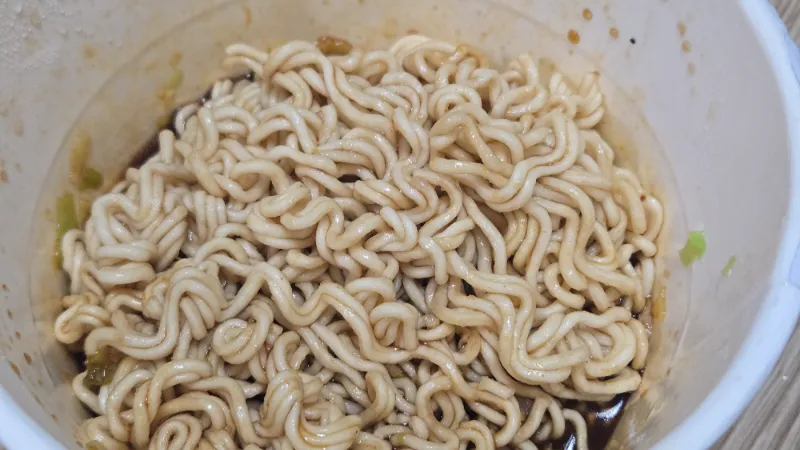
After mixing thoroughly, the red Buldak color is nowhere to be seen - just brown tones. Looking at the color alone, it doesn't look spicy at all, which could easily fool you.
5. Noodle Texture and Gloss
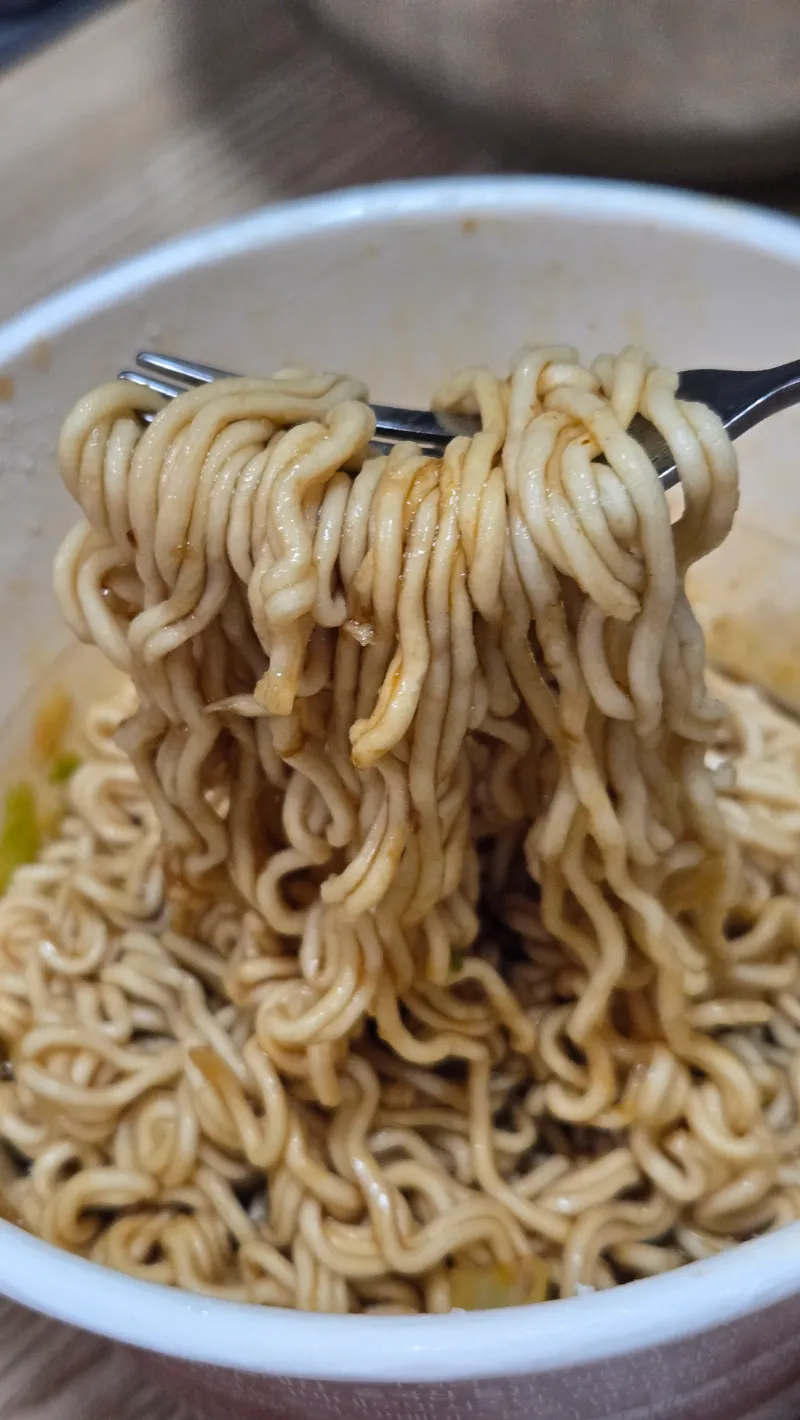
Lifting up a generous chopstick-full, the yakisoba sauce is nicely coated between all the noodle strands. The glossy sheen shows the sauce coating power is legit. Looks like regular soy sauce noodles on the surface, but wondering if Buldak's signature heat is hiding inside - time to taste it with half nerves, half excitement.
Yakisoba Buldak Taste Evaluation
Tasting it, you can definitely tell they tried to match authentic Japanese style. They really nailed yakisoba's characteristic sweet-salty flavor profile.
But I kept tilting my head while eating because I barely felt any heat at all. Like, "Is this really Buldak noodles?" The Buldak series should have that mouth-hitting spice as a baseline, but this was genuinely mild. Probably designed with Japanese consumers who aren't used to spicy food in mind, balanced for mass appeal so anyone can enjoy it comfortably.
It completely shattered my assumption that "Buldak = definitely spicy." But honestly, the biggest disappointment was the lack of "unique character." Not that it tasted bad, but it reminded me a lot of other yakisoba cup noodles you'd find at Japanese convenience stores. I wish there was more of that distinctive Buldak brand kick to differentiate it.
Final Verdict
Overall, Yakisoba Buldak focuses more on yakisoba's inherent sweet-salty charm than intense heat. For those who've been hesitant to try Buldak because of its killer spice level, this would actually be an excellent entry point. On the flip side, if you were expecting that stress-relieving fiery kick like I was, you might find it a bit bland. In that case, I'd recommend adding some mayo for extra richness or sprinkling on some red pepper flakes.
It's definitely appealing enough as an occasional novelty when you're craving something different. I've still got plenty of other noodles from my Lotte Mart haul to try, so stay tuned to see what I tackle next!