
Seasonal Fruit Prices at a Korean Market — 12 Fruits Compared
Table of Contents
15 items
Buying Seasonal Fruit at a Korean Traditional Market — Spring 2026 Wholesale Market Visit
This was my first time really exploring the fruit section of a Korean traditional market. In early April 2026, my wife and I headed out early in the morning to the local wholesale produce market in Daejeon, a major city about an hour and a half south of Seoul. If you've ever been curious about fresh fruit prices in Korea or what Korean market culture actually looks like, I think you'll find this pretty useful. I'm breaking down which seasonal fruits are available right now, whether the market is actually cheaper than grocery stores, and everything I learned from walking the aisles myself.
Today's post is all about fruit. I'll cover vegetables and seafood in a separate post.
The Morning Market Is a War Zone

Korean wholesale produce markets are best visited early in the morning — that's when you get the best prices. Fruit here is noticeably cheaper than at grocery stores, but the catch is that the morning hours are absolute chaos with delivery trucks constantly coming and going. Shipping vehicles never stop moving. Parking is a nightmare, and you need to watch both directions while walking. I lost count of how many times I told my wife to hold my hand and stay close.
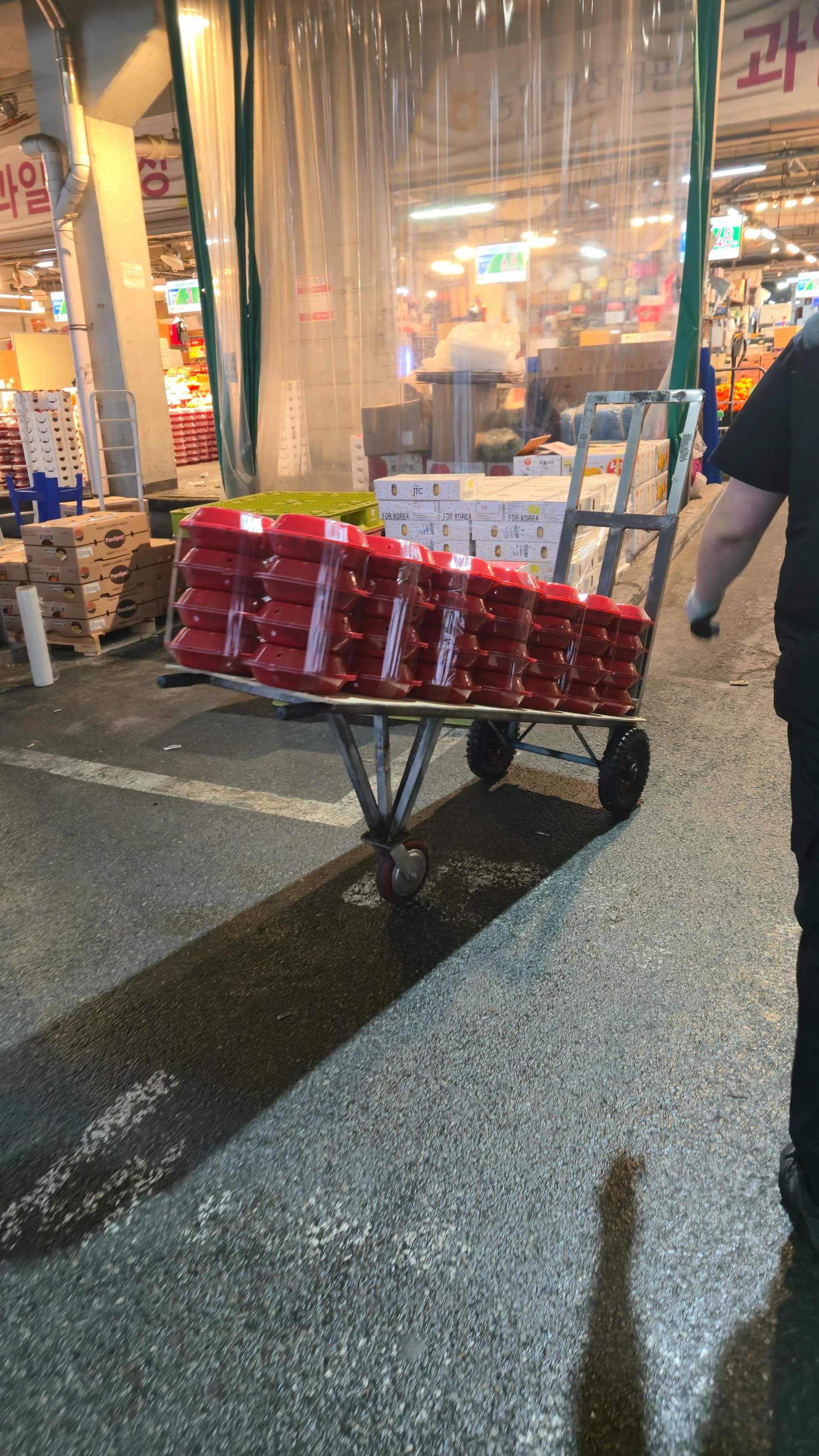
The second we stepped inside the entrance, a cart loaded with red packaging crates zoomed right past us. At this hour, regular shoppers are outnumbered by vendors buying in bulk. People who run small grocery stores and convenience shops nearby come here to stock up at wholesale prices and resell at their own stores. So the morning market is buzzing with working people before casual shoppers even show up.
Korean Apples — Rough on the Outside, Incredible on the Inside
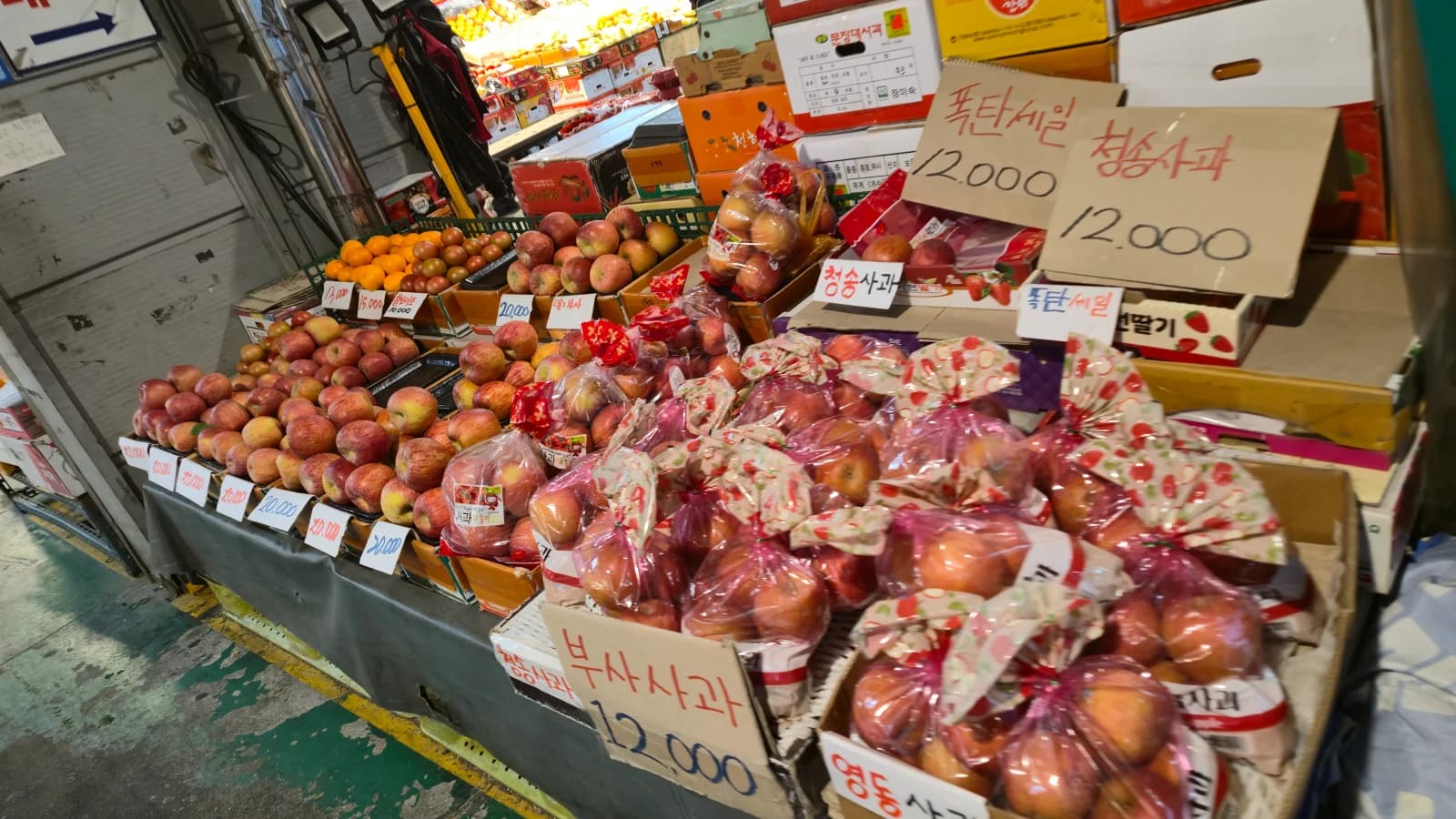
Apples are the first thing you see when you walk into the market. They're stacked in bags sorted by growing region — Cheongsong, Fuji variety, Yeongdong — and at about $8.50 a bag, they're definitely cheaper than what you'd pay at a Korean grocery chain. Korean apples don't look pretty, honestly. They're nothing like the shiny, polished apples you'd find at an American supermarket. That glossy look on imported apples comes from a food-grade wax coating, and most Korean apples just skip that step entirely.
But take one bite through the skin and you get this satisfying crunch followed by a burst of juice — and that's the real deal. Fuji apples here typically hit around 14 to 15 Brix on the sweetness scale, and premium varieties like Gamhong can go up to 17 Brix. Korea's top apple-growing regions sit at high elevations where the day-to-night temperature swing exceeds 23°F (13°C), which produces denser flesh and higher sugar content. I once had a shiny, waxy apple overseas that turned out mealy and dry inside, and that's when I really started appreciating Korean apples. Think of it like the difference between a grocery store tomato and one from a farmers market — the ugly one just tastes better.
Chamoe — A Fruit You Can Only Get in Korea
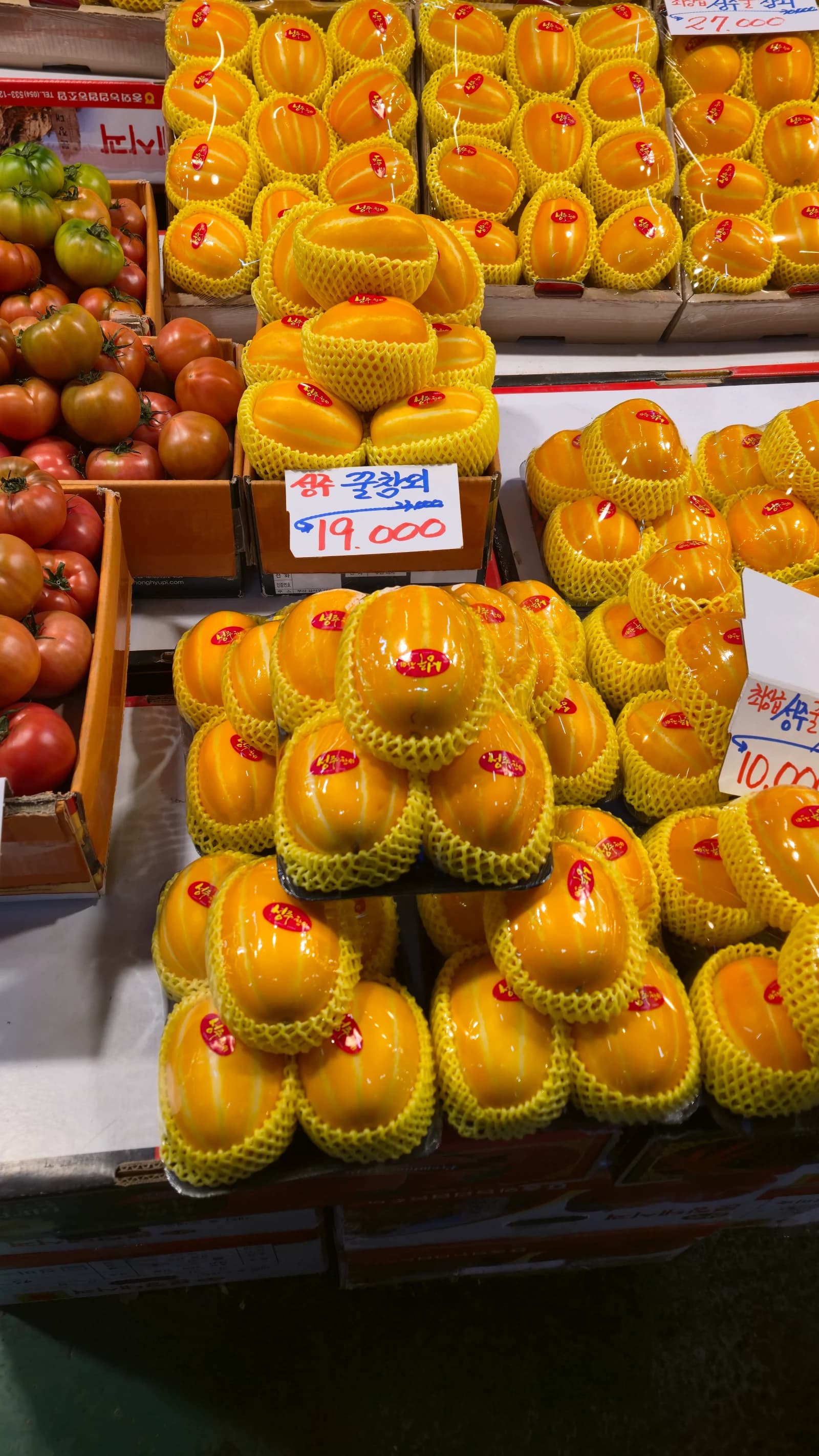
Right next to the apples, bright yellow chamoe melons were piled high. Chamoe — also known as Korean melon — actually originated in Africa, traveled through India, and eventually made its way to East Asia. But today, Korea is essentially the only country that still cultivates it commercially. China and Japan used to grow them, but production has almost completely disappeared there. Its English name is literally Korean melon — that's how exclusively Korean this fruit has become. A full bag was about $13.50, with smaller bags going for around $7. It's sweet with a crisp, crunchy bite that's totally unique — once you try it, it's hard to forget.
The Spring Fruit Market Scene
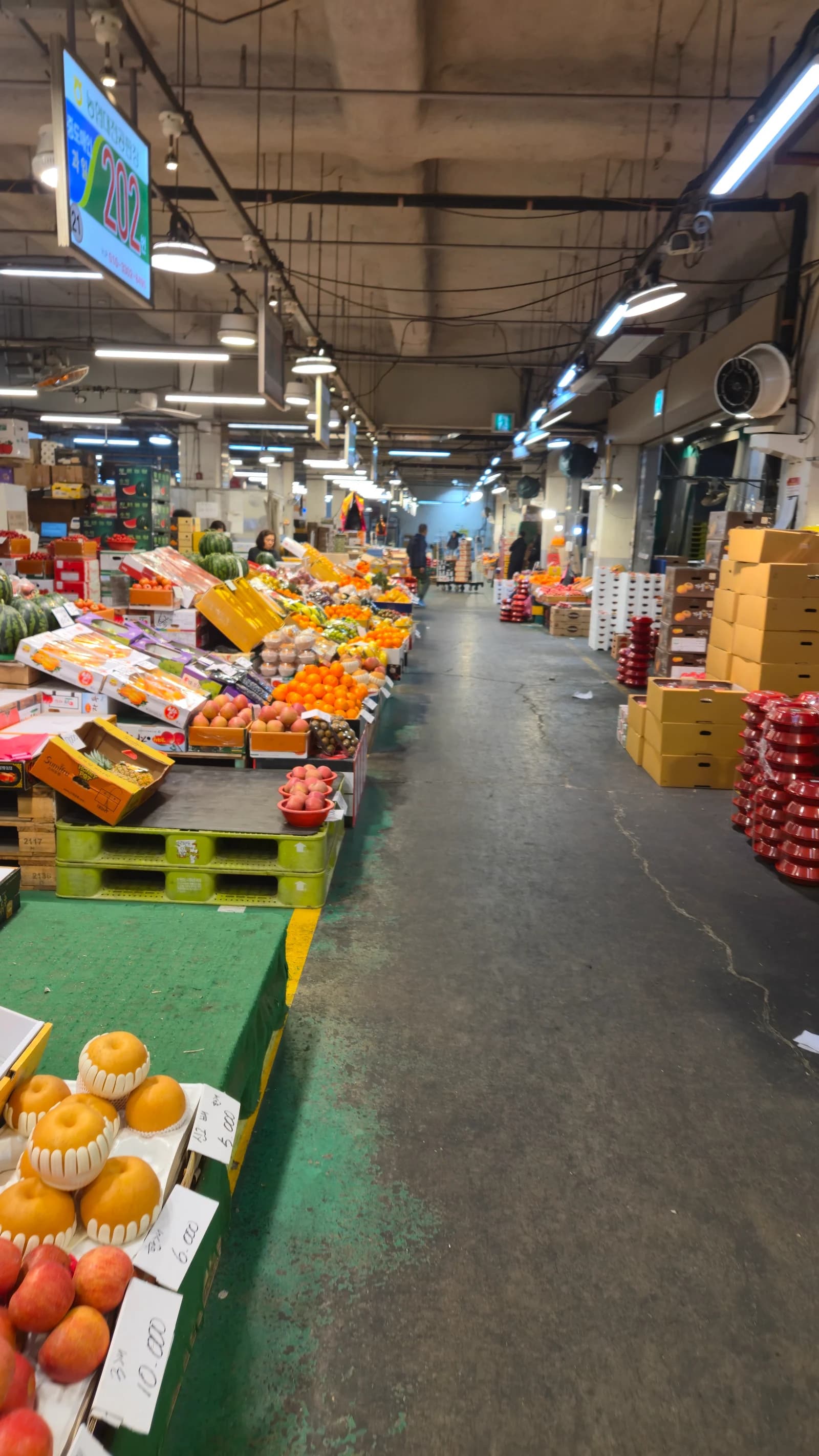
Here's the full view of the fruit section. Watermelons, chamoe, apples, pears, tangerines, tomatoes — they're all lined up on both sides of the aisle. It's not just one store, either. Multiple vendors sit side by side, so you can comparison shop as you walk. With all these spring seasonal fruits spread out right in front of you, time just flies by. My wife was already darting from stall to stall, her eyes doing all the shopping before her wallet even opened.
Korean Pears — A Whole Different Level of Juiciness from Western Pears
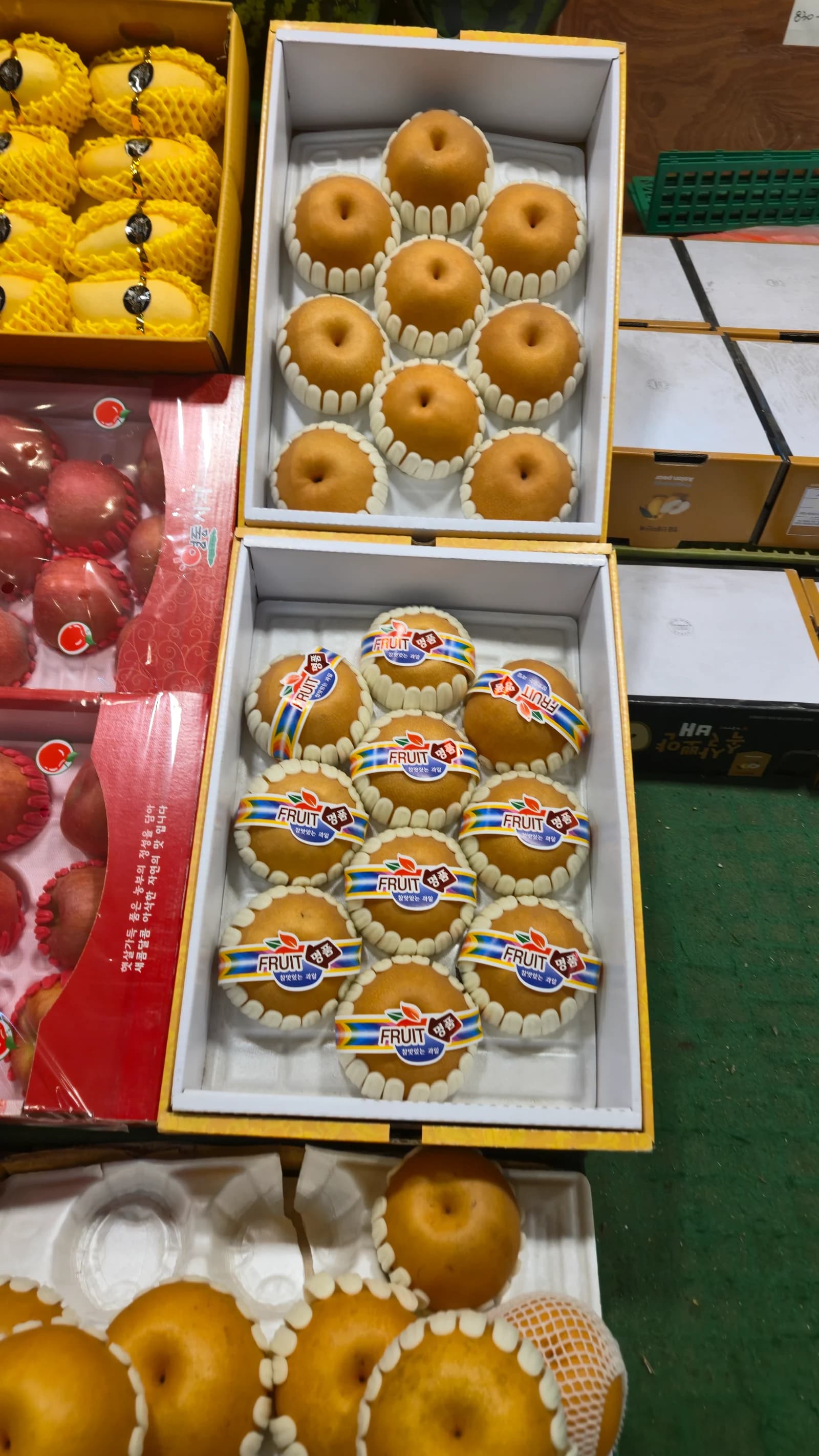
These are Korean pears — what you'd see labeled as Asian pears at Whole Foods or your local H Mart. Some were in gift packaging, others were just stacked loose, and they're noticeably bigger than what most Americans are used to. The Bartlett or Bosc pears you typically find at U.S. grocery stores are bell-shaped and soft when ripe. Korean pears are round, large, and stay crunchy. One slice and your mouth literally fills with juice. In the West, pears are often baked or turned into cider because the flavor can be mild, but Korean pears are best eaten raw — just peeled and sliced. The sheer volume of juice is on a completely different level.
Strawberry Season — The Must-Eat Fruit If You Visit Korea in Spring
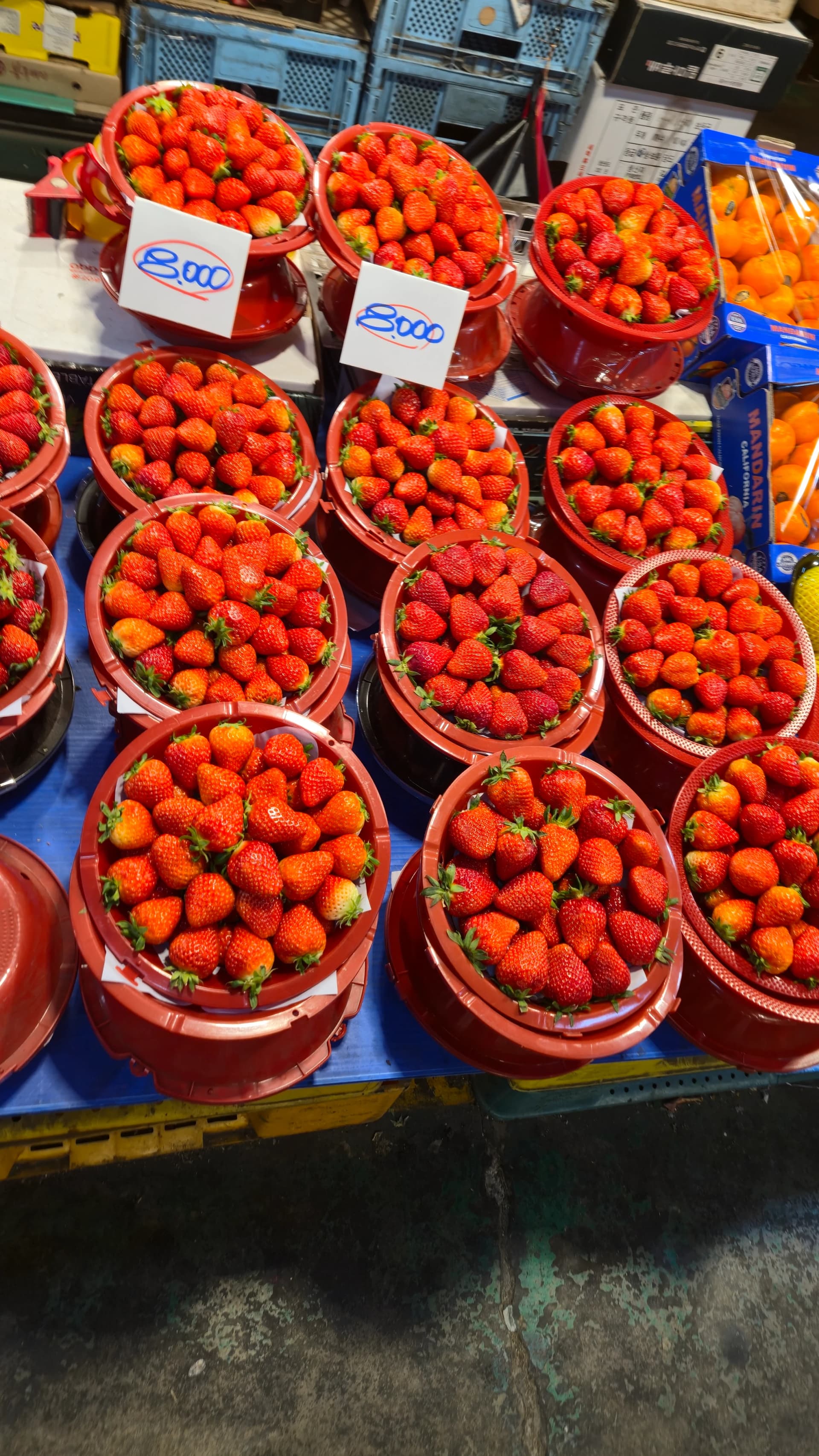
It's peak strawberry season in Korea right now. Every spring, no matter which market you visit, you'll see baskets overflowing with red strawberries like this. At about $5.70 per basket, that's roughly the same price as a single pack at a Korean grocery store — but the quantity you get is way more. If you're visiting Korea in spring, do yourself a favor and grab some strawberries. You won't regret it.
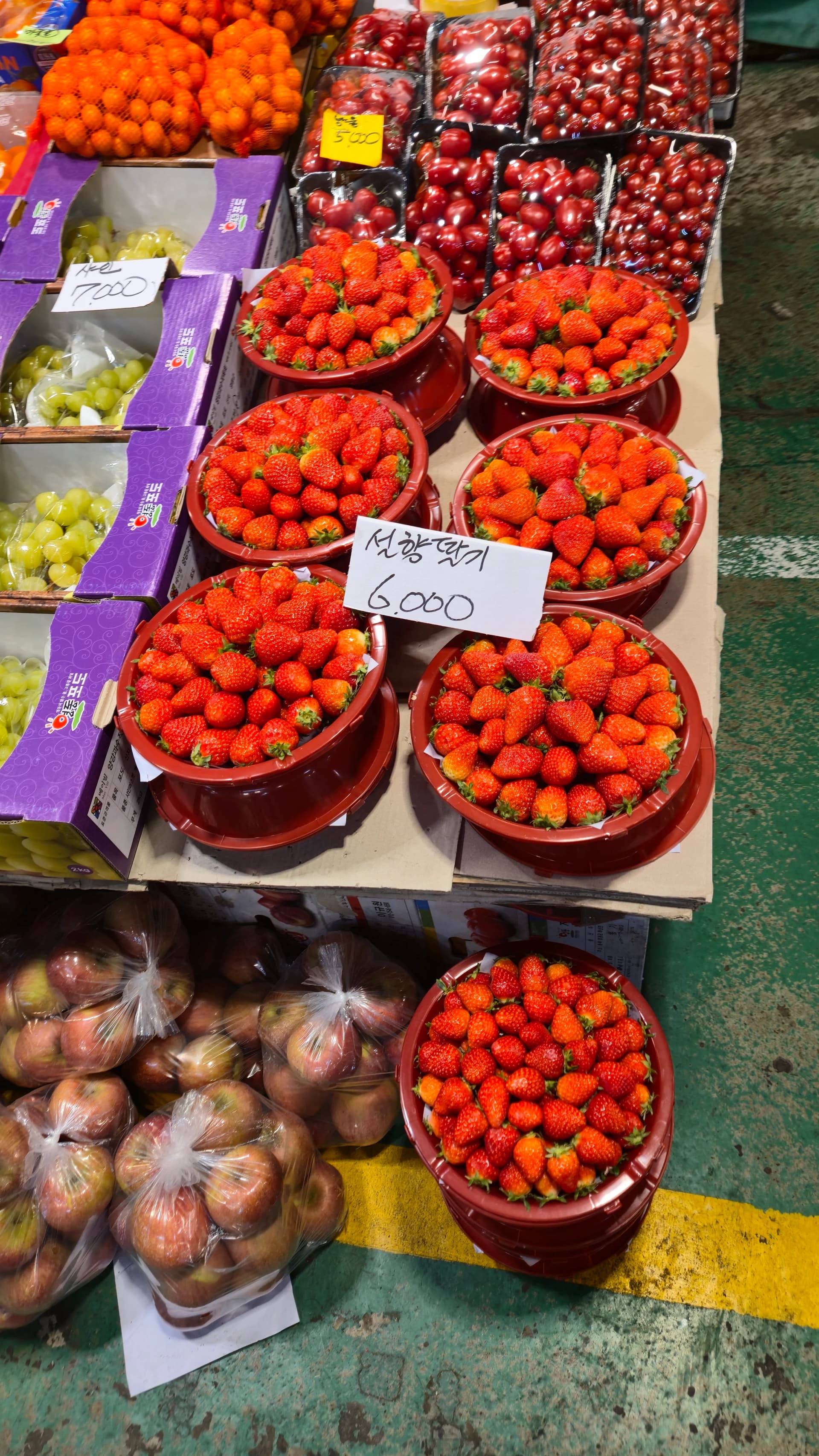
Here's the thing about market shopping — prices vary from stall to stall even for the exact same fruit. This vendor had Seolhyang strawberries for about $4.25, while the stall I'd just passed was selling a similar size for $5.70. It genuinely happens that you pay $7 at one place, then walk ten steps and find even better-looking ones for $5.70. That's why you absolutely have to browse multiple stalls before buying. Pounding the pavement is the name of the game here.
Apple Green Grapes and Finger Grapes
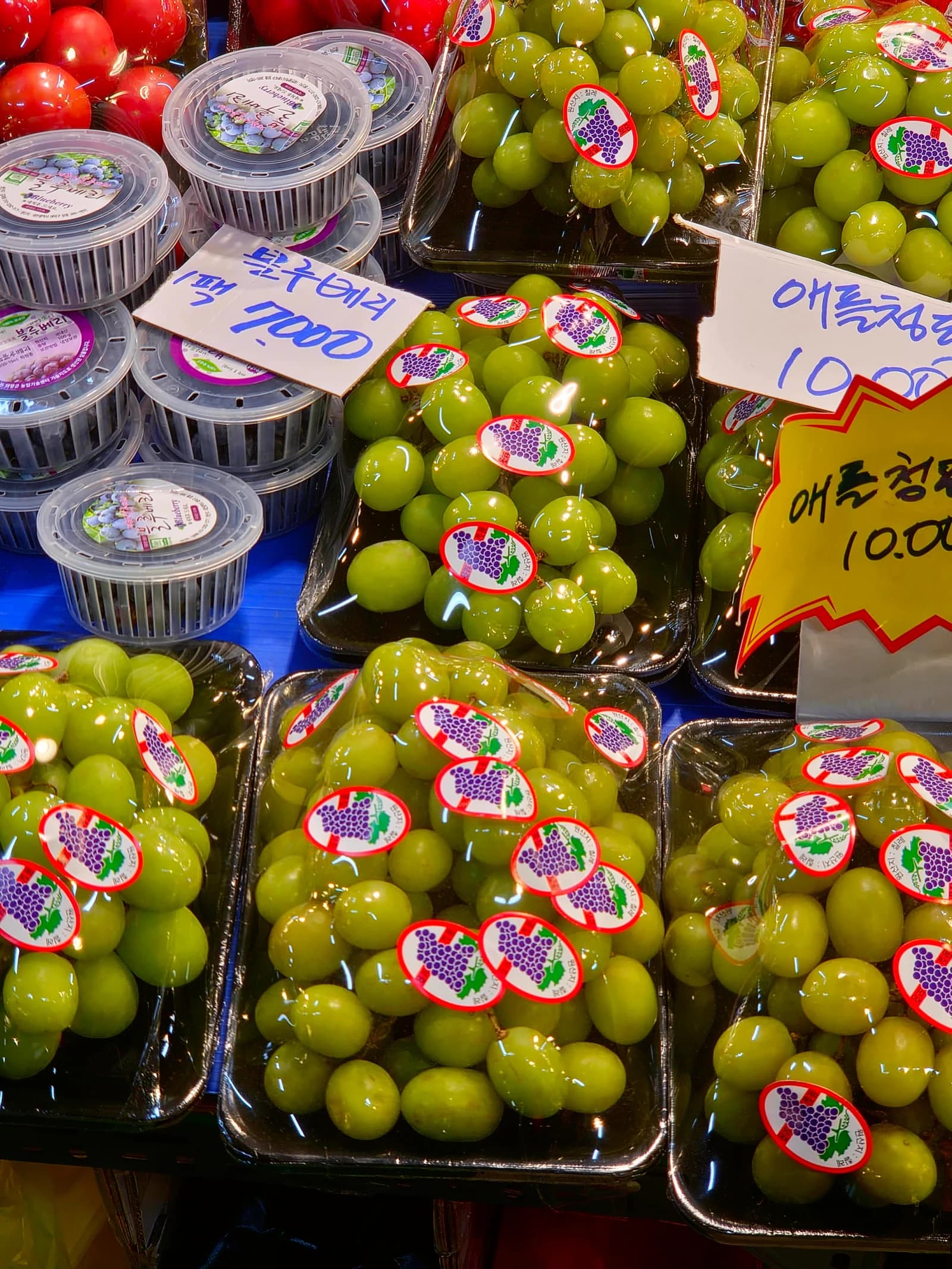
These are called "apple green grapes" in Korean — their official variety name is Autumn Crispy. They look a lot like Shine Muscat grapes, but they're a completely different variety. The texture is what sets them apart: they have an apple-like crunch that's way firmer than Shine Muscats. About $7 per pack, with blueberries right next to them at $5.
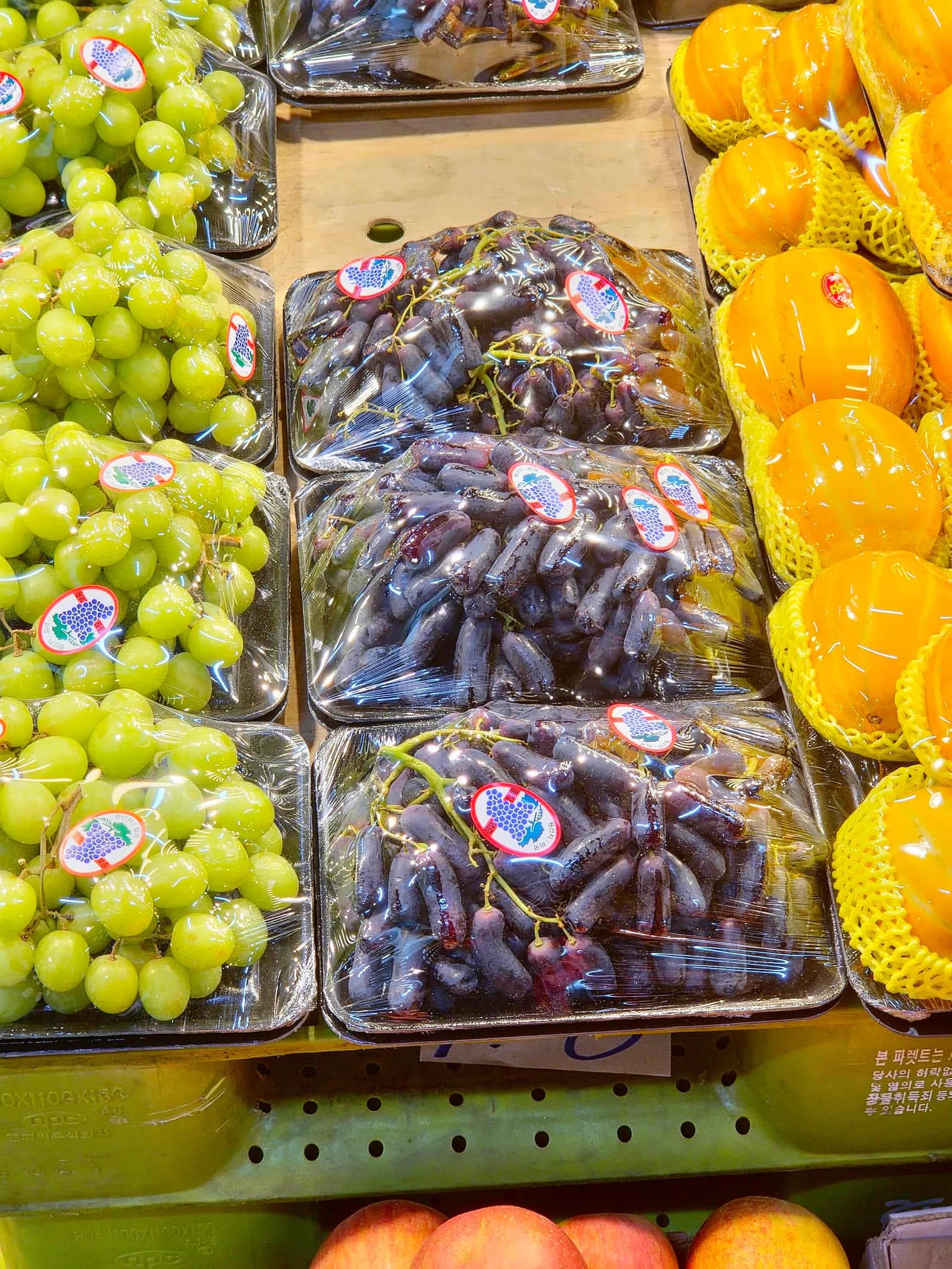
See those dark purple, elongated grapes in the middle? Those are called "finger grapes" in Korea — officially, they're the Black Sapphire variety. They really do look like little eggplants, which is how they got their Korean nickname. They're seedless, so you eat them skin and all, and the flavor is surprisingly bold and sweet. They've gotten really popular in Korea recently as an imported grape, so you'll often see them displayed right next to green grapes at the market.
Tomatoes — In Korea, They're Eaten Like Fruit
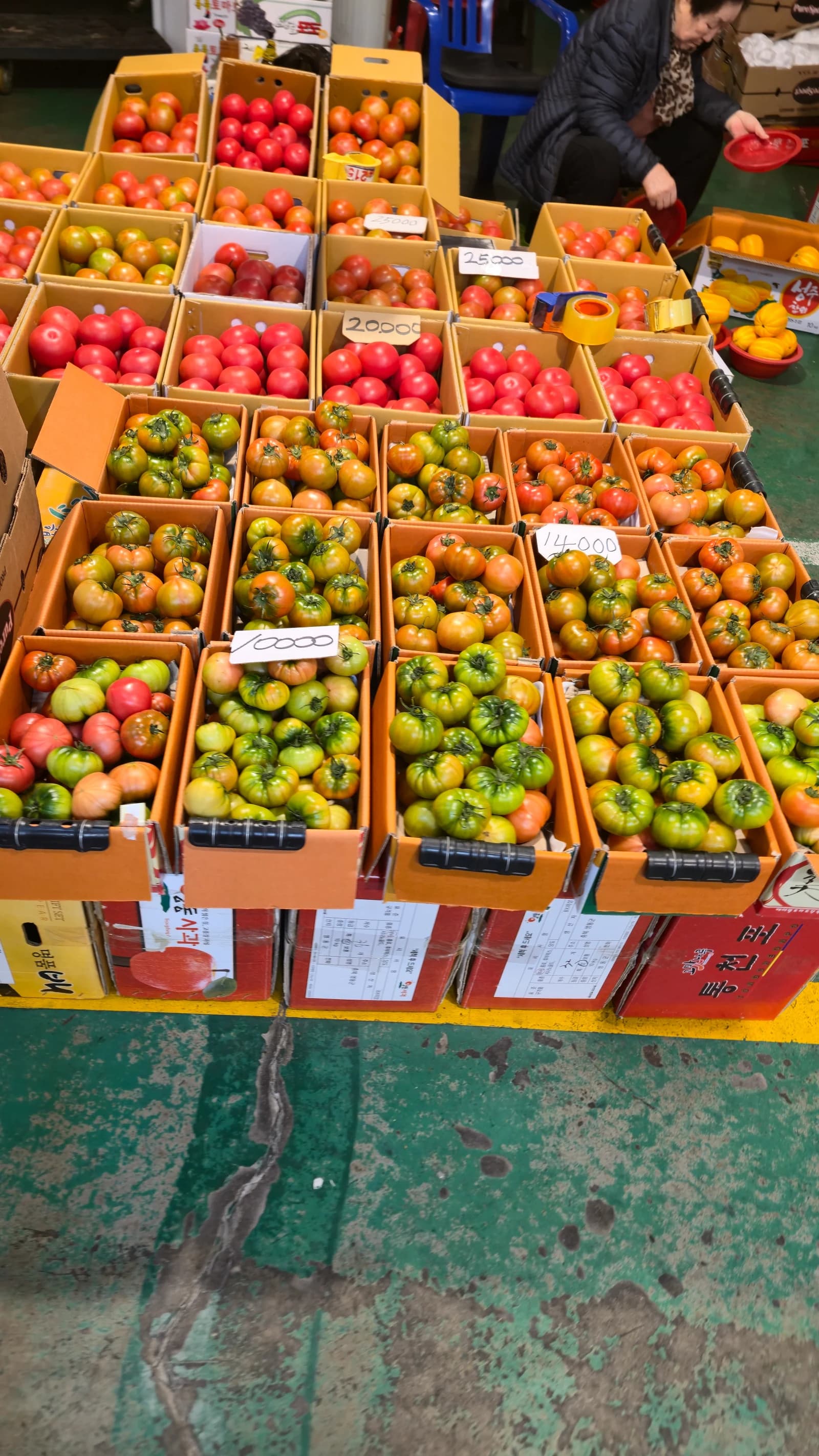
The tomato selection was impressive. Red ripe tomatoes were going for about $10.50 to $14 per box, while the greenish Daeji tomatoes (a specialty variety from southern Korea) were around $7 to $10. Koreans tend to treat tomatoes more like a fruit than a vegetable — they eat them raw as a snack rather than cooking them into sauces. Daeji tomatoes in particular are uniquely savory-sweet, almost salty, which makes them hugely popular in spring. Some people dip them in sugar, but most just wash them and bite right in. They're at peak season right now.
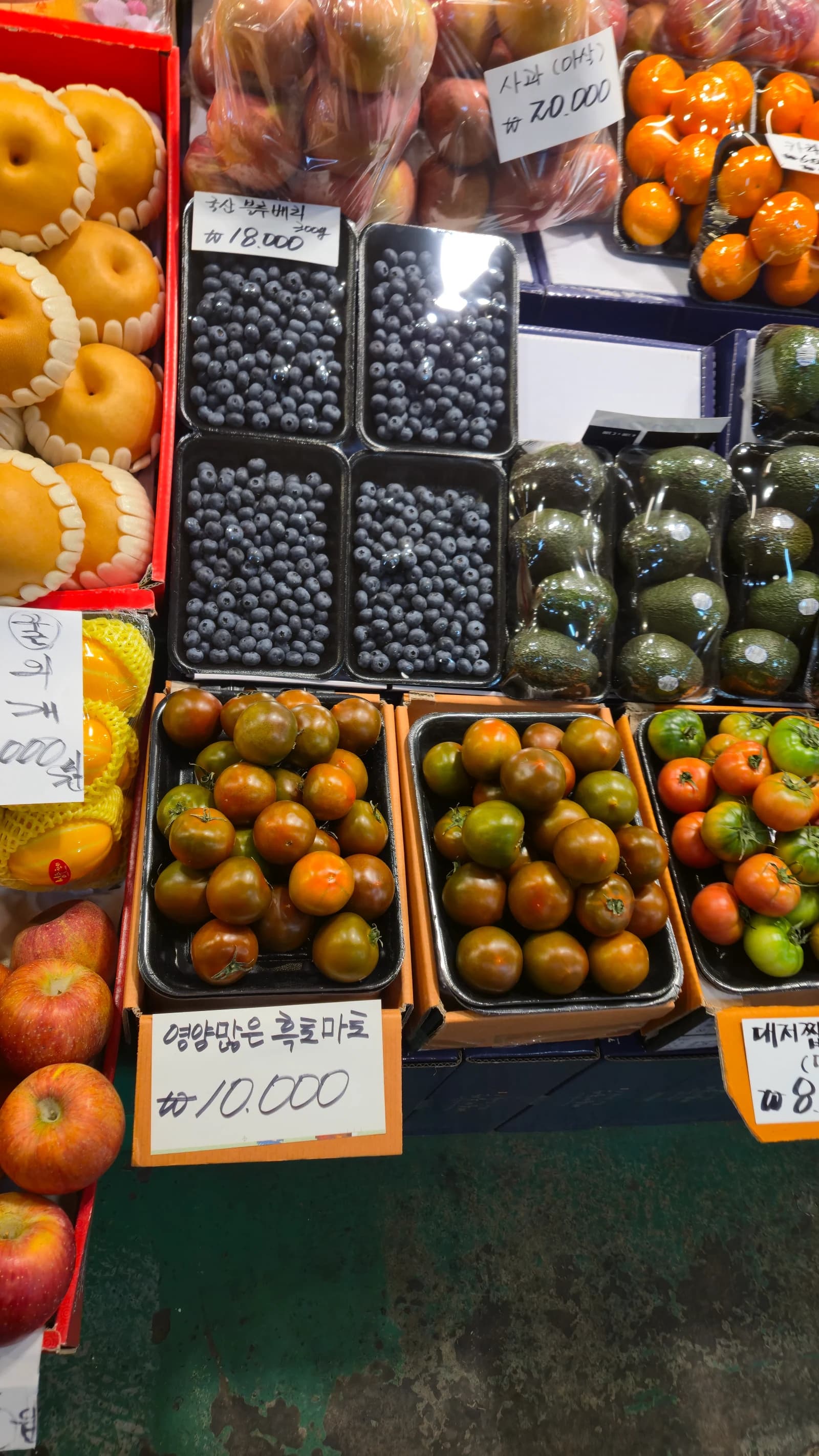
There were even black tomatoes here. About $7 per pack, noticeably darker than regular tomatoes. Right next to them were blueberries, avocados, tangerines, pears, and apples — all at a single stall. Being able to compare this many different fruits side by side in one spot is honestly one of the best things about shopping at a market like this.
Imported Fruit — Mangoes, Oranges, Pineapples
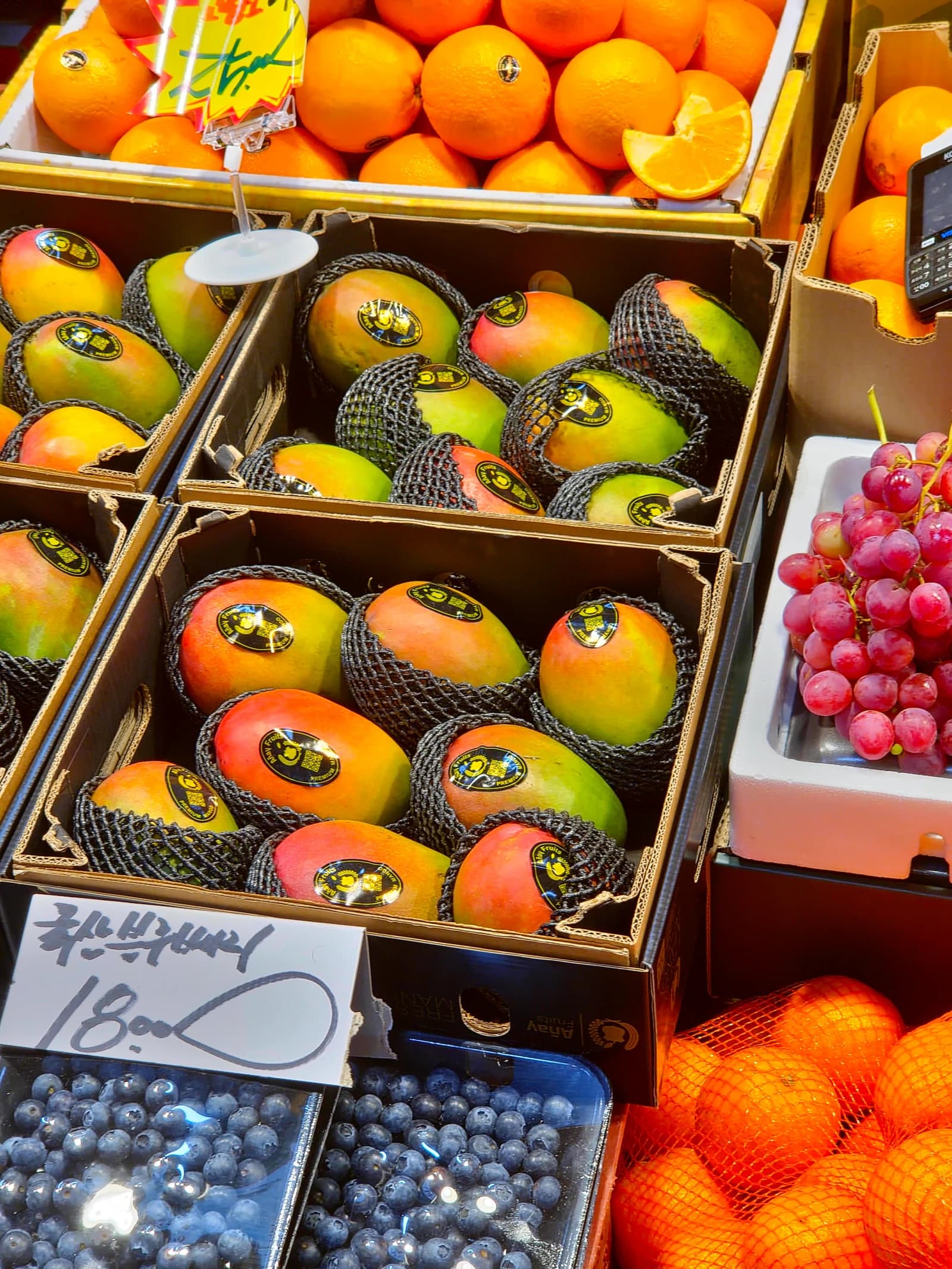
They had mangoes too. Most mangoes sold in Korea are imported since the Korean climate isn't suited for growing tropical fruit — only tiny amounts are greenhouse-grown on Jeju Island and parts of the southern coast. Because anything subpar gets filtered out during the import process, the mangoes that actually reach Korean shelves are usually top quality. The flavor delivers, but the price reflects it. At about $12.75 a box, it's a lot more than you'd pay for apples or strawberries here. For context, that same money could buy you three baskets of strawberries.
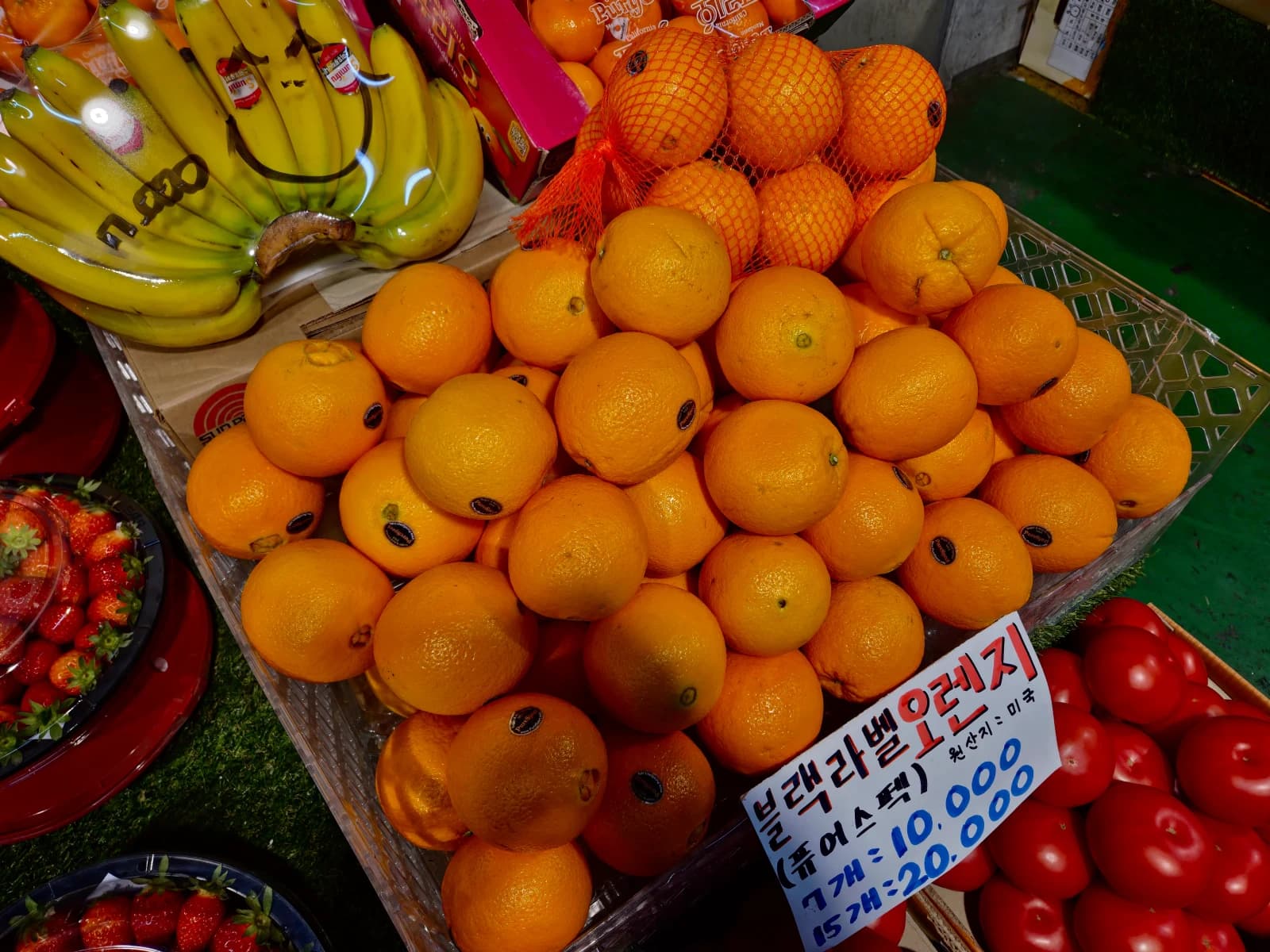
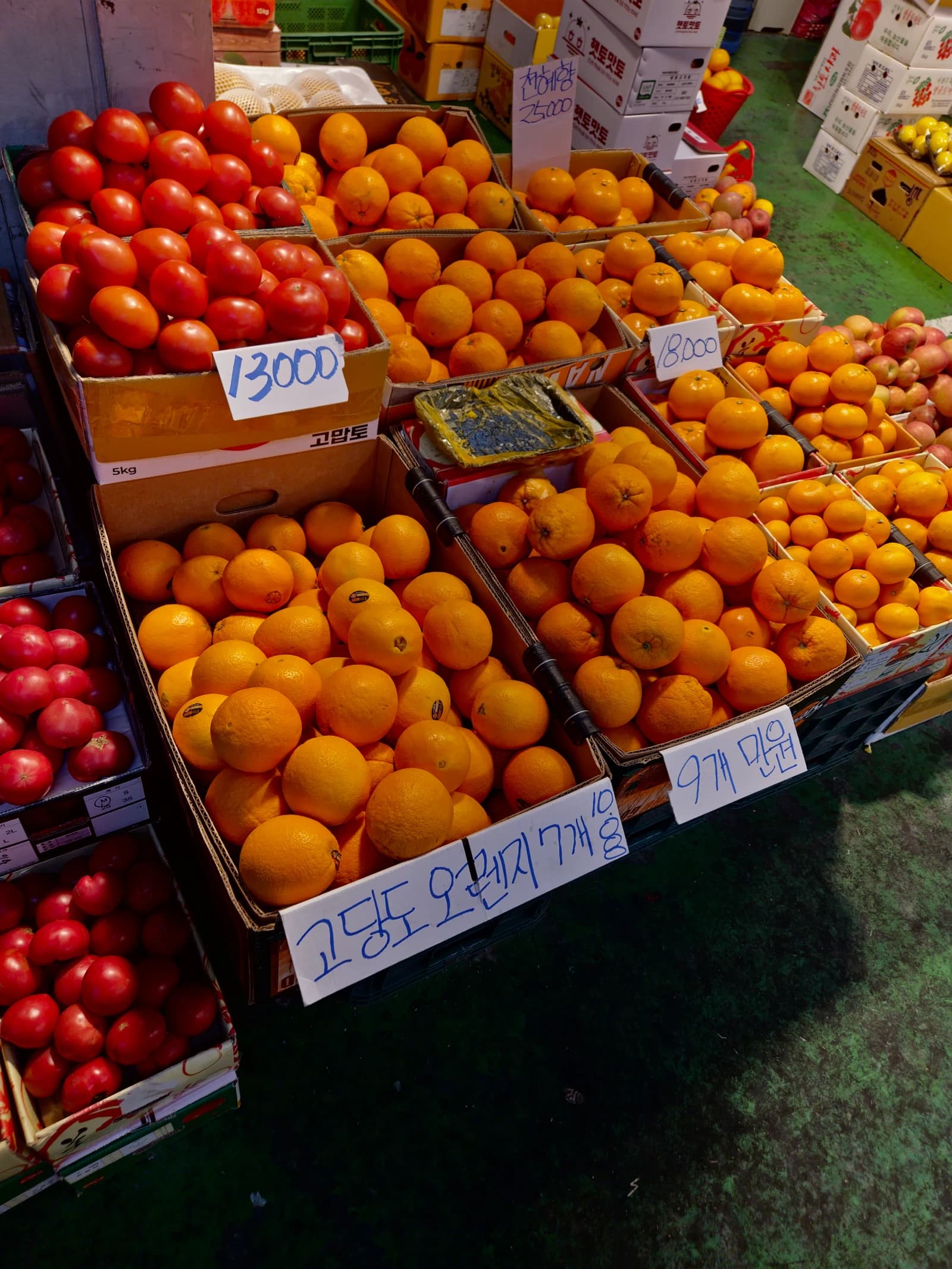
Oranges were stacked up on one side too. Most oranges sold in Korea are imported from the U.S. or Australia, and at the market they're usually bundled in bags rather than sold individually. Buying them one at a time at a grocery store adds up fast, so grabbing a bag here is a much better deal. They were sorted by size, and the vendor told us the bigger ones have more juice. My wife suggested peeling one to try right there, but these weren't samples, so we moved on.
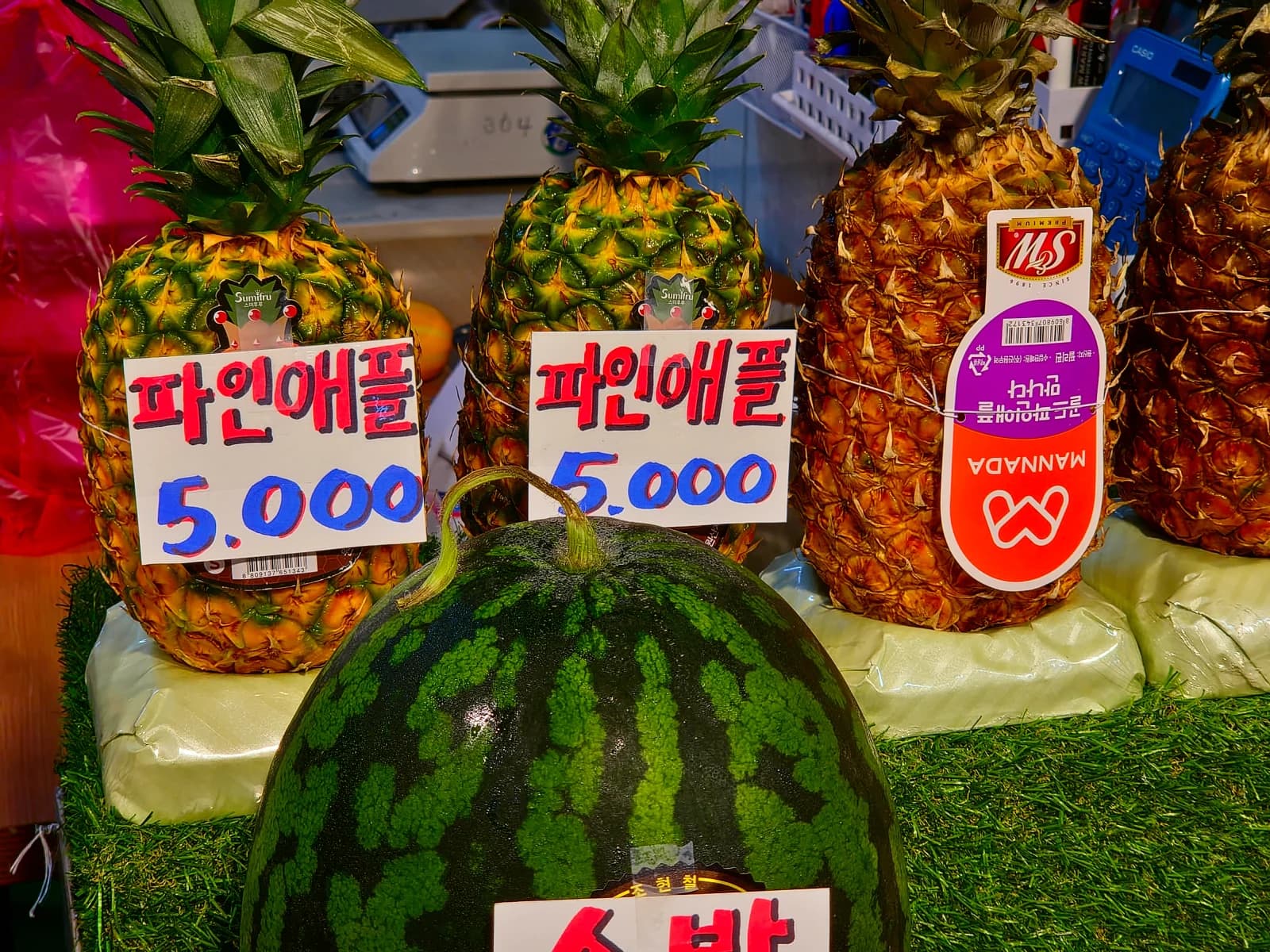
Pineapples were about $3.50 each. They're imported, but buying them at the market is still cheaper than at a grocery store. The watermelons visible below them are Korea's quintessential summer fruit, so their spring prices were still on the higher side.
Specialty Fruits — White Strawberries and Chilean Grapes
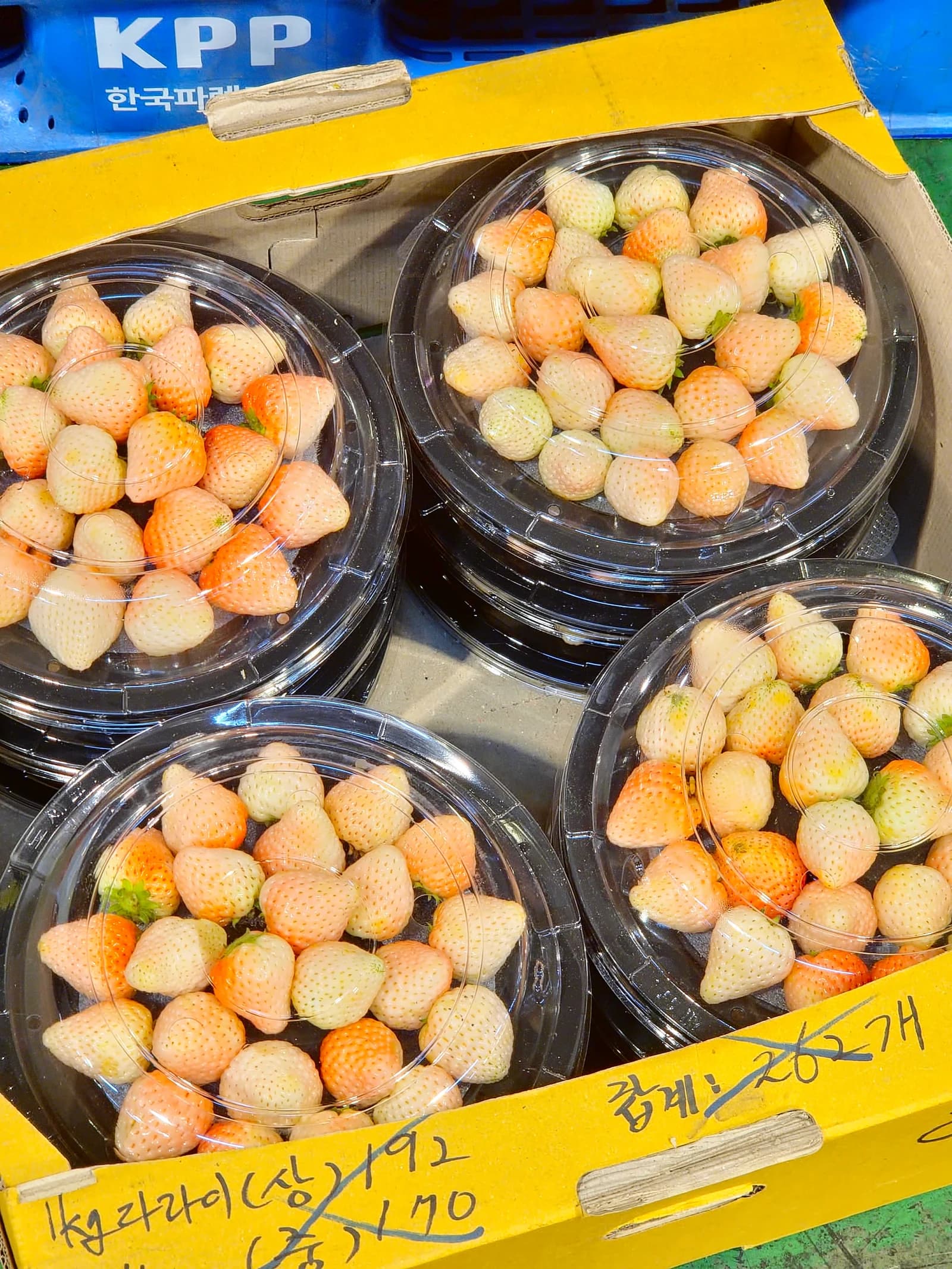
Now this is something you don't see every day — white strawberries. They're called the "Snow Mountain" variety (Mannyeonseol in Korean), and yes, they're naturally white. Compared to regular red strawberries, they're about 20% sweeter with almost zero tartness, giving them a pure, clean sweetness. Premium grade was about $13.50 per kilogram, with standard grade at around $7. Definitely pricier than regular strawberries, but the supply is so limited that if you spot them, they're worth trying at least once.
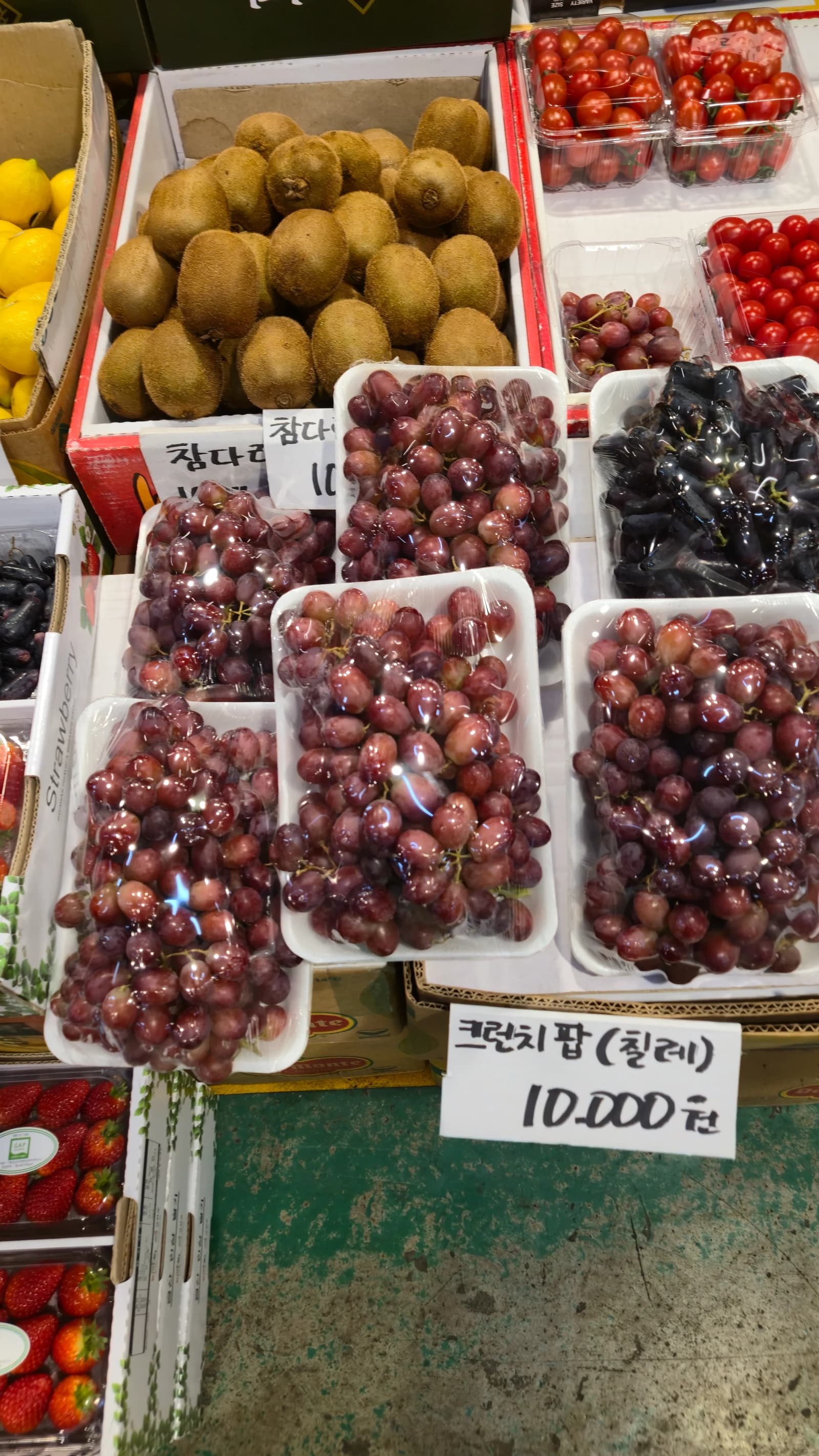
Chilean Crunch Farm grapes were also about $7 per pack. Since it's spring in Korea, it's autumn in Chile — meaning this is the peak season for Chilean grape exports heading north. Behind them, you could see kiwis, cherry tomatoes, strawberries, and finger grapes all clustered in one corner. It honestly felt more like a fruit exhibition than a market stall.
Kiwis, Cherry Tomatoes, and Bananas
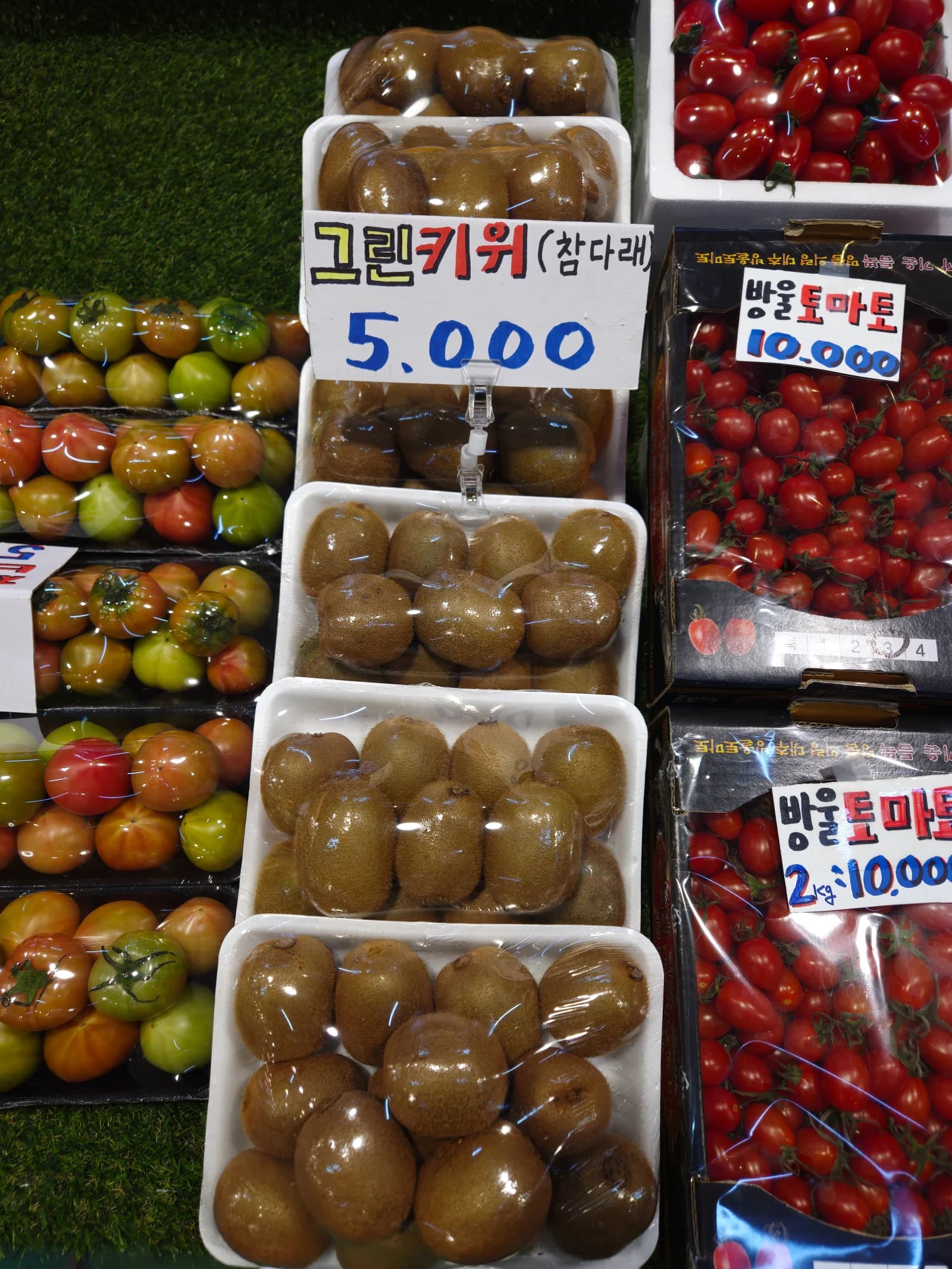
Green kiwis were about $3.50 per pack, and cherry tomatoes were around $7 for a 2-kilogram (about 4.4 lb) bag. Those greenish tomatoes on the left are the Daeji tomatoes I mentioned earlier. At Korean markets, fruit and tomatoes are often displayed right next to each other — which says a lot about how strongly Koreans view tomatoes as a fruit rather than a vegetable.
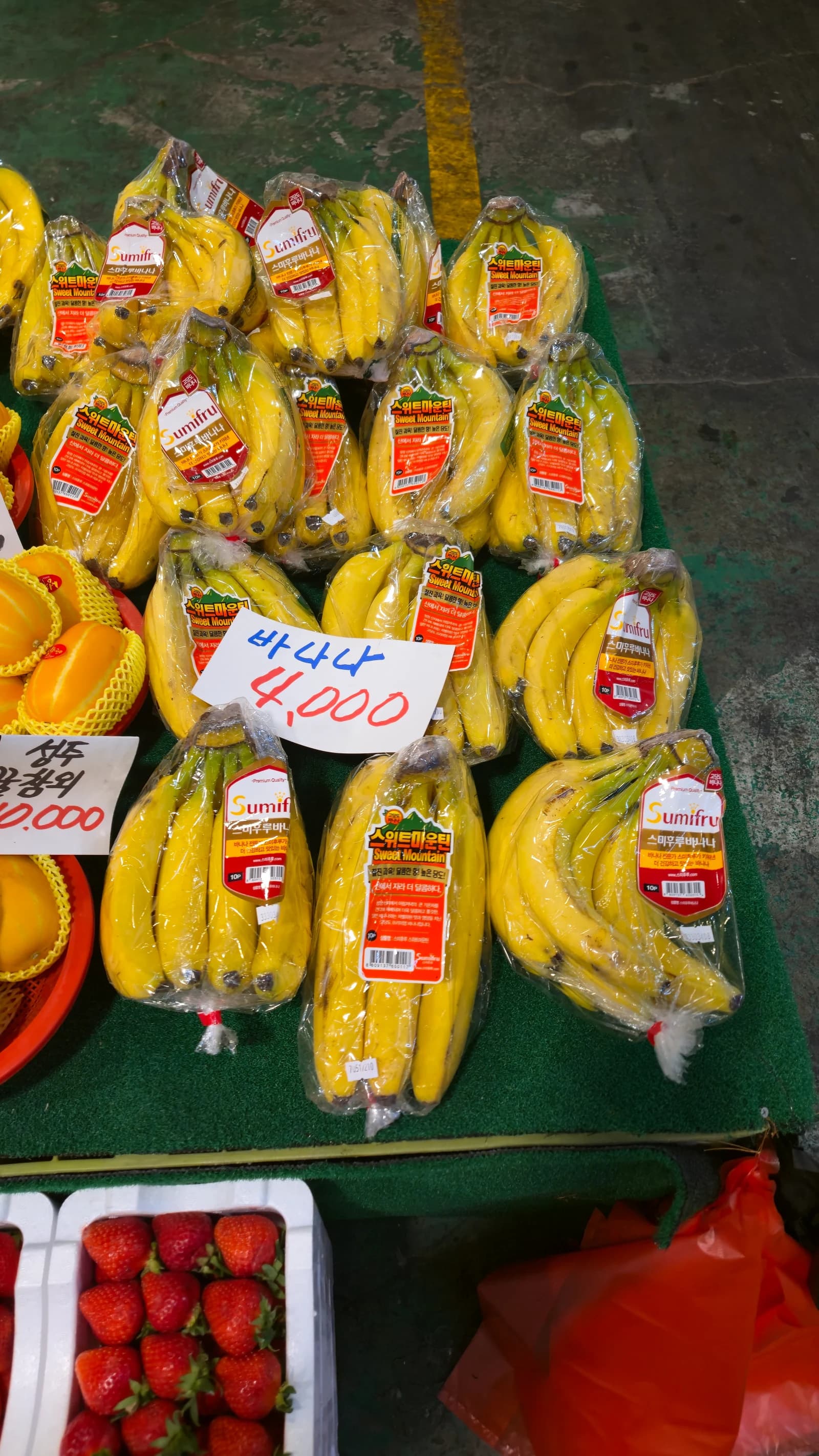
Bananas were about $2.85 a bunch. Sure, that's way more than what you'd pay in Southeast Asia, but among imported fruits in Korea, bananas are the best value by far. When mangoes run $12.75 a box and blueberries cost $10.50 a pack, bananas at $2.85 feel like a steal.
Domestic and Imported Side by Side — The Unique Scene of a Korean Market
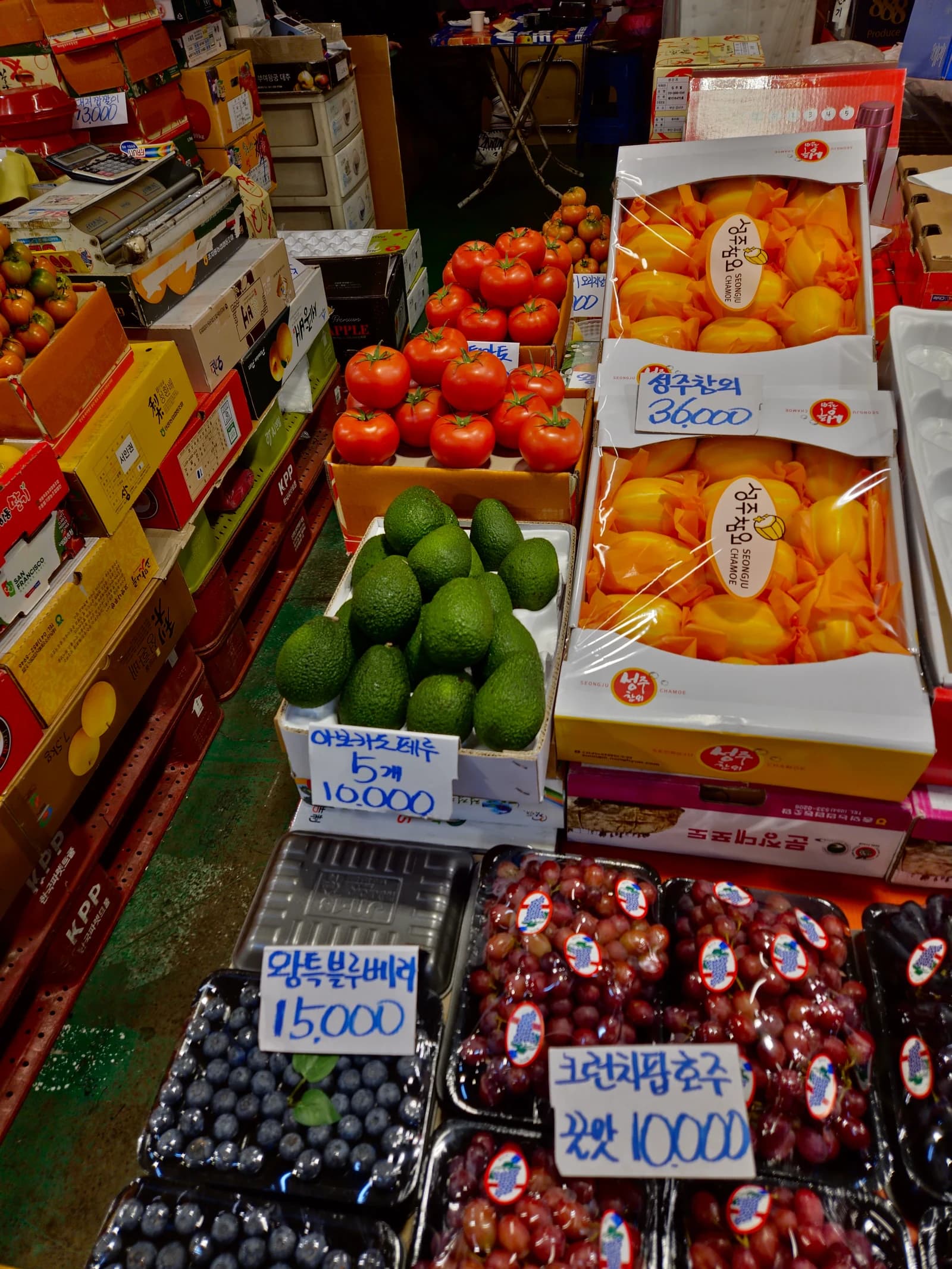
This particular stall had a Seongju chamoe gift set for about $25.50, avocados at 5 for $7, jumbo blueberries for $10.50, and Crunch Farm grapes at $7. What makes Korean traditional markets so interesting is exactly this — fruits from completely different countries of origin sitting side by side in a single stall. And those handwritten price tags? That's a sight you'd never see at a chain grocery store. It's pure market charm.
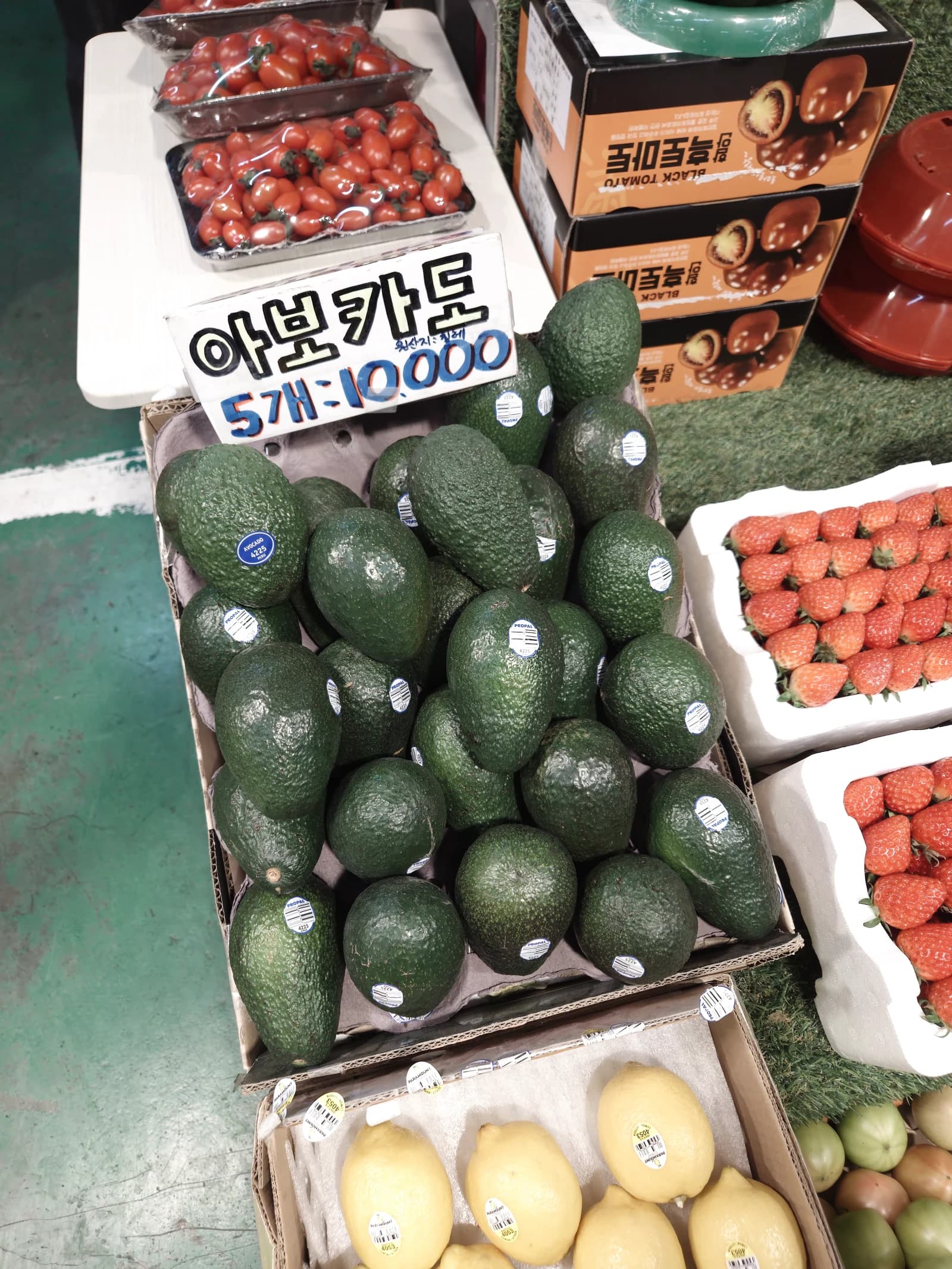
Avocados were 5 for about $7. Avocados aren't actually that popular as a home fruit in Korea. You'll see them on menus at cafes and brunch spots, but people buying them to eat at home are still in the minority. My wife likes them, but I'm not a fan, so I passed on these. We grabbed three packs of strawberries instead, and I'd say that was the right call.
3 Packs of Strawberries for $7 — The Market Rewards Those Who Walk
My Actual Purchase Review
All that walking around comparing prices at different stalls actually paid off. I ended up finding 3 packs of strawberries for about $7. Each pack was roughly 500 grams (about 1.1 lbs), so that's a massive haul. We got home, demolished one pack together that same day, and threw the other two in the freezer. I was so glad I didn't buy at the first stall I saw. At the market, walking more always pays off.
Honest Downsides
The market is huge, and my legs were killing me. We only covered the fruit section and it took well over an hour. Some stalls also don't have price tags at all, which means you have to ask directly — and that can be awkward if you don't speak Korean. For non-Korean speakers, this could be a real barrier.
That said, you'll find fruit varieties here that you'd never see at a regular grocery store, and the fun of comparing prices stall by stall is genuinely entertaining. If you're traveling in Korea, stopping by a traditional market at least once is a worthwhile experience.
Next time, I'm planning to cover the vegetable section and the seafood section. Market exploration doesn't end with fruit.
This post was originally published on https://hi-jsb.blog.