
Korean Raw Fish Full Course: Sashimi Feast Guide
Table of Contents
18 items
Korean Raw Fish Restaurants: Not Just a Meal, But a Culture
If you're heading to Korea and you love raw fish, I've got some seriously great news for you. Korea is a country where you can enjoy fresh sashimi literally anywhere — Seoul, Busan, Jeju, and even inland cities that are nowhere near the ocean. I live in Daejeon, a city about two hours south of Seoul with zero coastline, and even here I can walk into a neighborhood raw fish restaurant and get freshly prepared live fish sashimi. That's honestly the most incredible thing about Korean raw fish restaurant culture. Today, rather than reviewing one specific spot, I want to walk you through what it's really like to eat at a local Korean raw fish restaurant — the kind Korean people actually go to. Let's dive in!
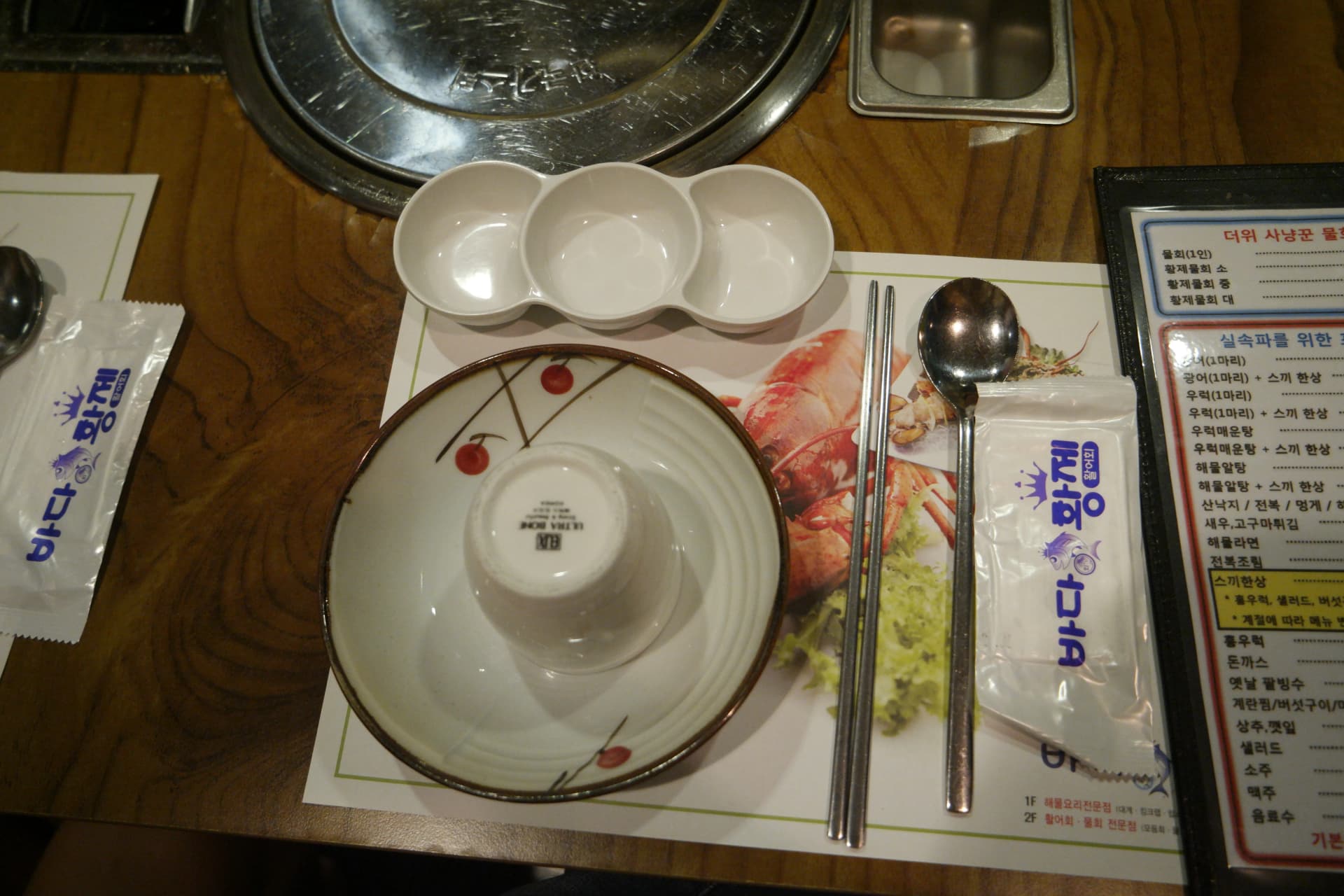
Two Styles of Raw Fish Course Dining
Most Korean raw fish restaurants sell their dishes as a full course meal. There are broadly two styles: one is the full-spread course, where you get a generous lineup of side dishes (called "sseukidashi" — adapted from the Japanese word for appetizer sides), and the other is the à la carte style, where you skip the sides and focus purely on the raw fish itself. The full-spread course costs a bit more, but you get a whole variety of side dishes alongside your sashimi. The à la carte style is more about picking exactly what you want. What I'm showing you today is the full-spread course — the one where your table literally overflows with food.
The Side Dishes Begin: Salad 🥗
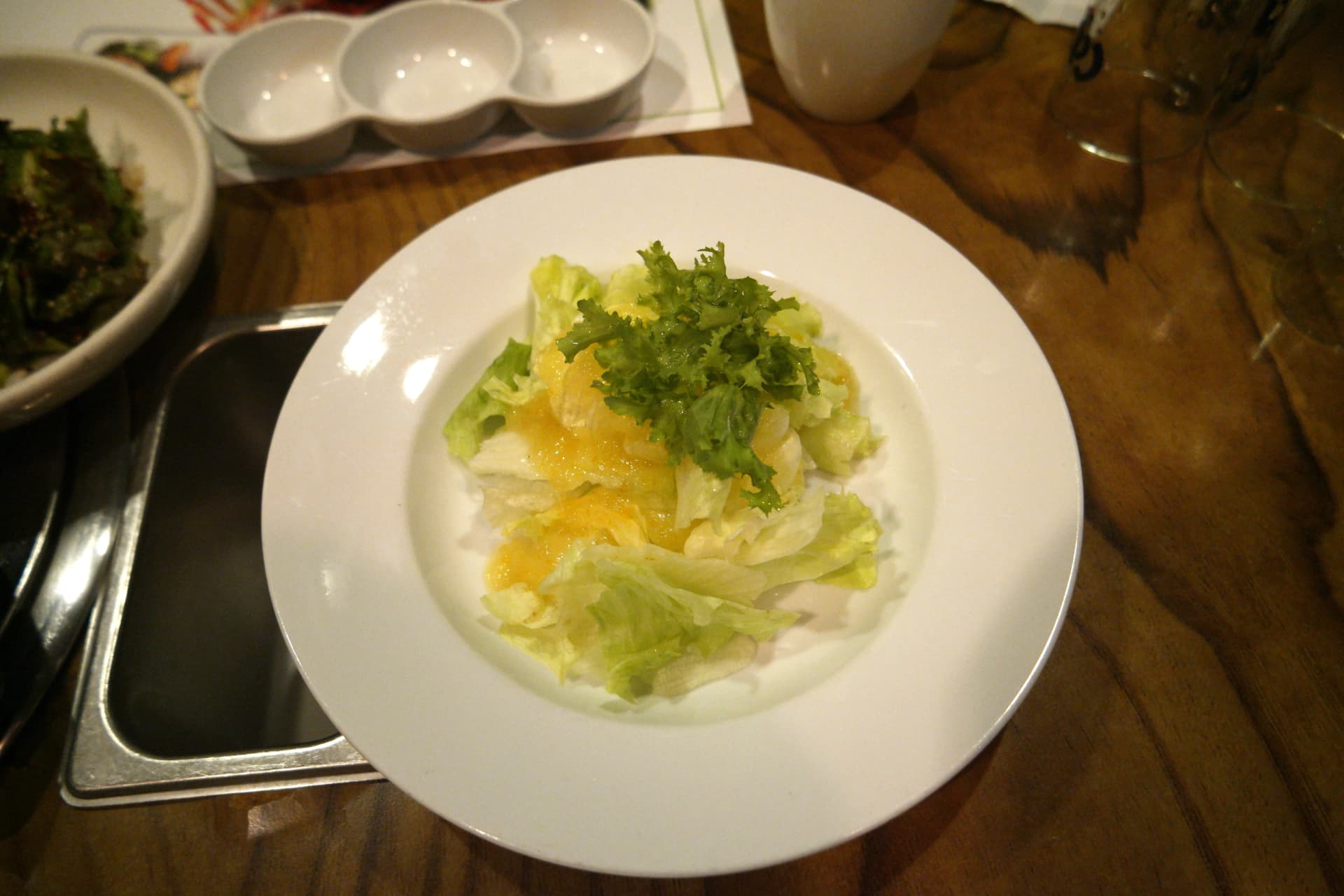
The side dishes kick off with a salad. It's a clean, simple plate of crispy lettuce topped with a sweet-and-tangy dressing, and its job is to wake up your taste buds before the heavier raw fish arrives. It might seem basic, but you'd honestly miss it if it weren't there — it's one of those dishes you don't appreciate until it's gone.
Steamed Egg and Seaweed Soup — A Warm, Comforting Combo 🥚
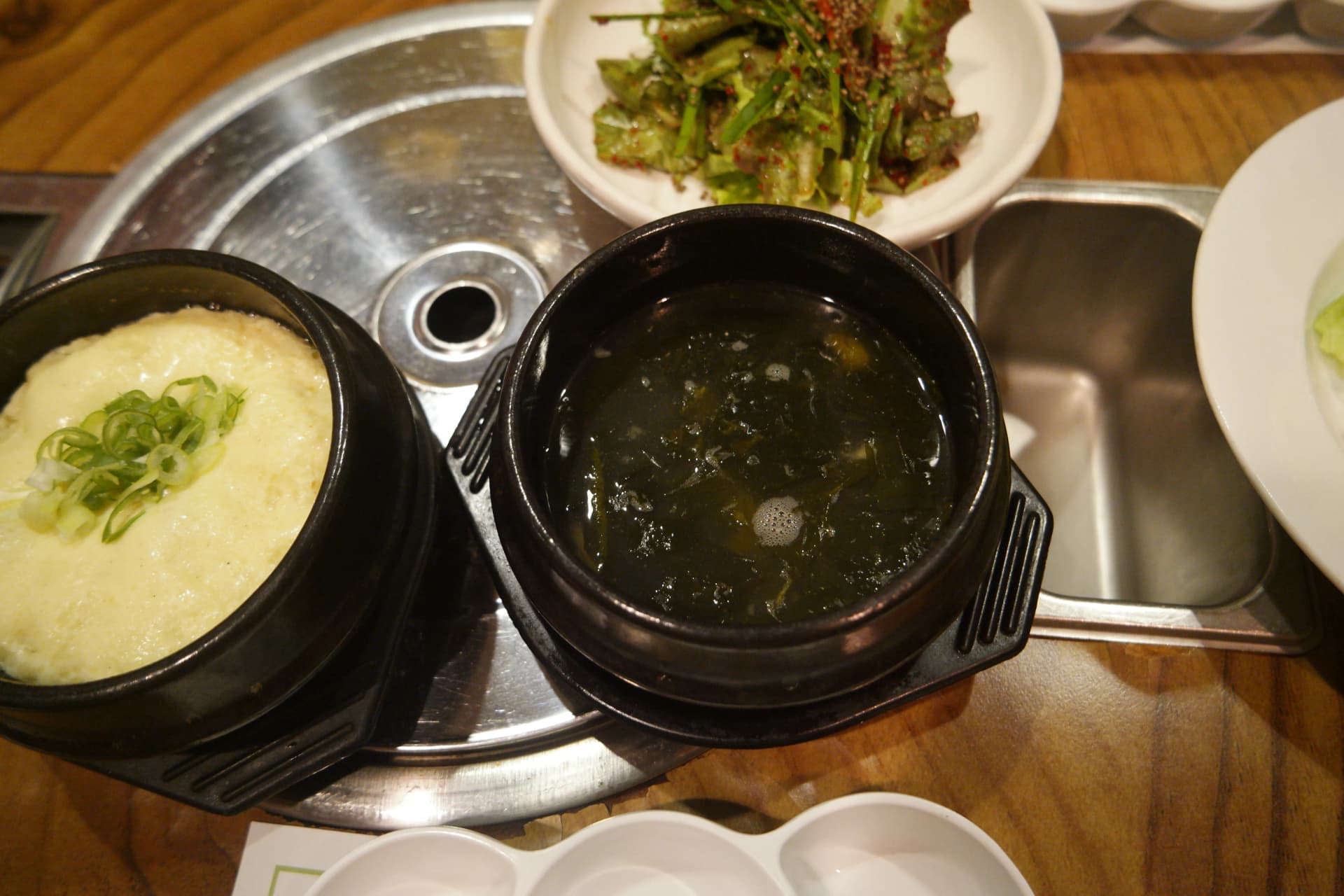
On the left is Gyeran-jjim, a soft and fluffy Korean-style steamed egg custard. On the right is Miyeok-guk, a traditional Korean soup made with seaweed. Fun fact: in Korea, seaweed soup is the quintessential birthday food — Koreans eat it every year on their birthday. Both dishes are super mild and gentle on the stomach, so they're perfect for easing you into the raw fish that's coming next.
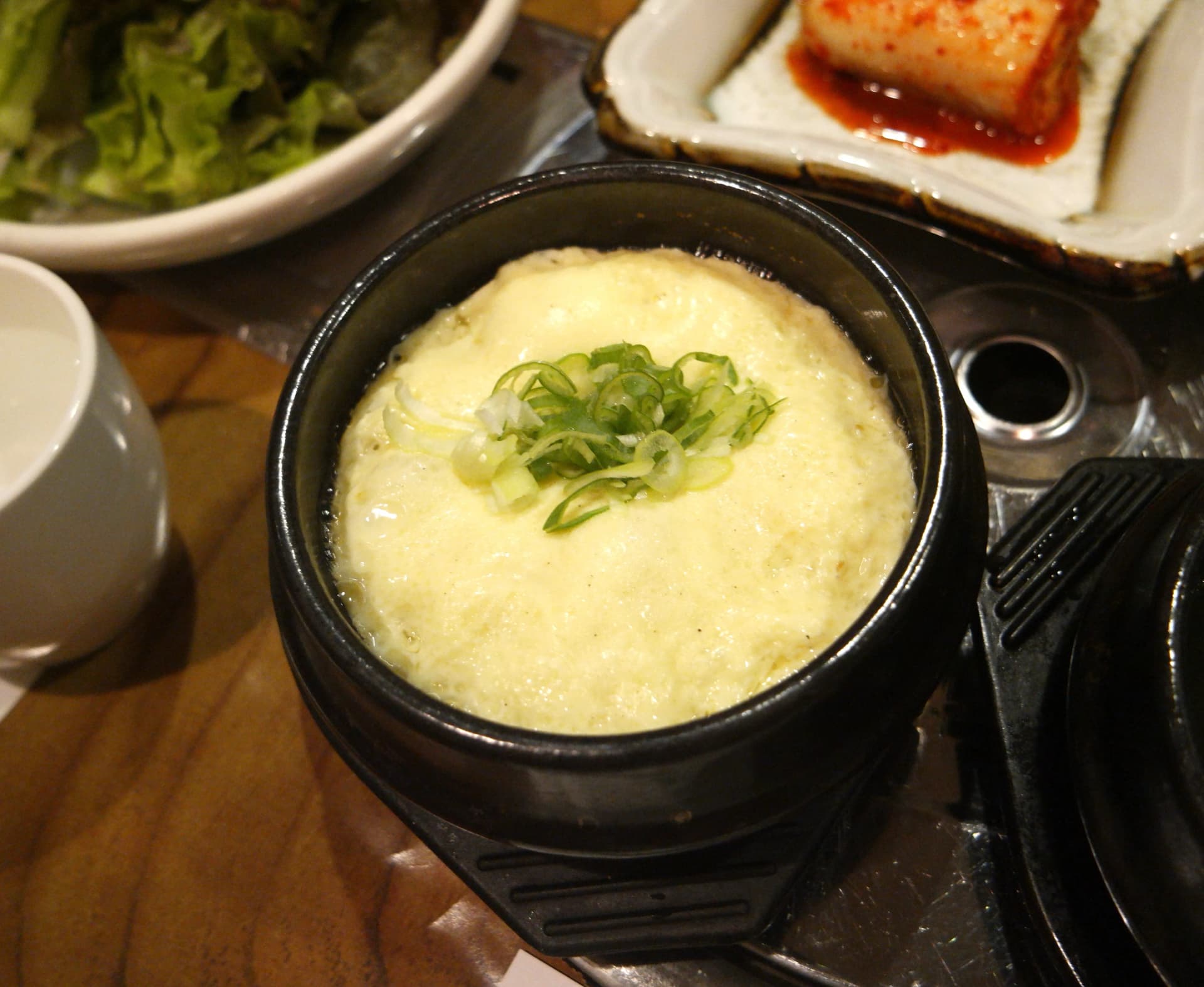
Steamed egg isn't just a raw fish restaurant thing — it shows up as a side dish at practically every type of Korean restaurant, from Korean BBQ joints to stew houses to traditional Korean set-meal restaurants. Ordering a steamed egg while grilling meat at a Korean BBQ spot is basically an unwritten rule at this point. That's how deeply embedded it is in Korean food culture — you really can't separate the two.
Seasoned Vegetables and Kimchi — The Essentials of a Korean Table
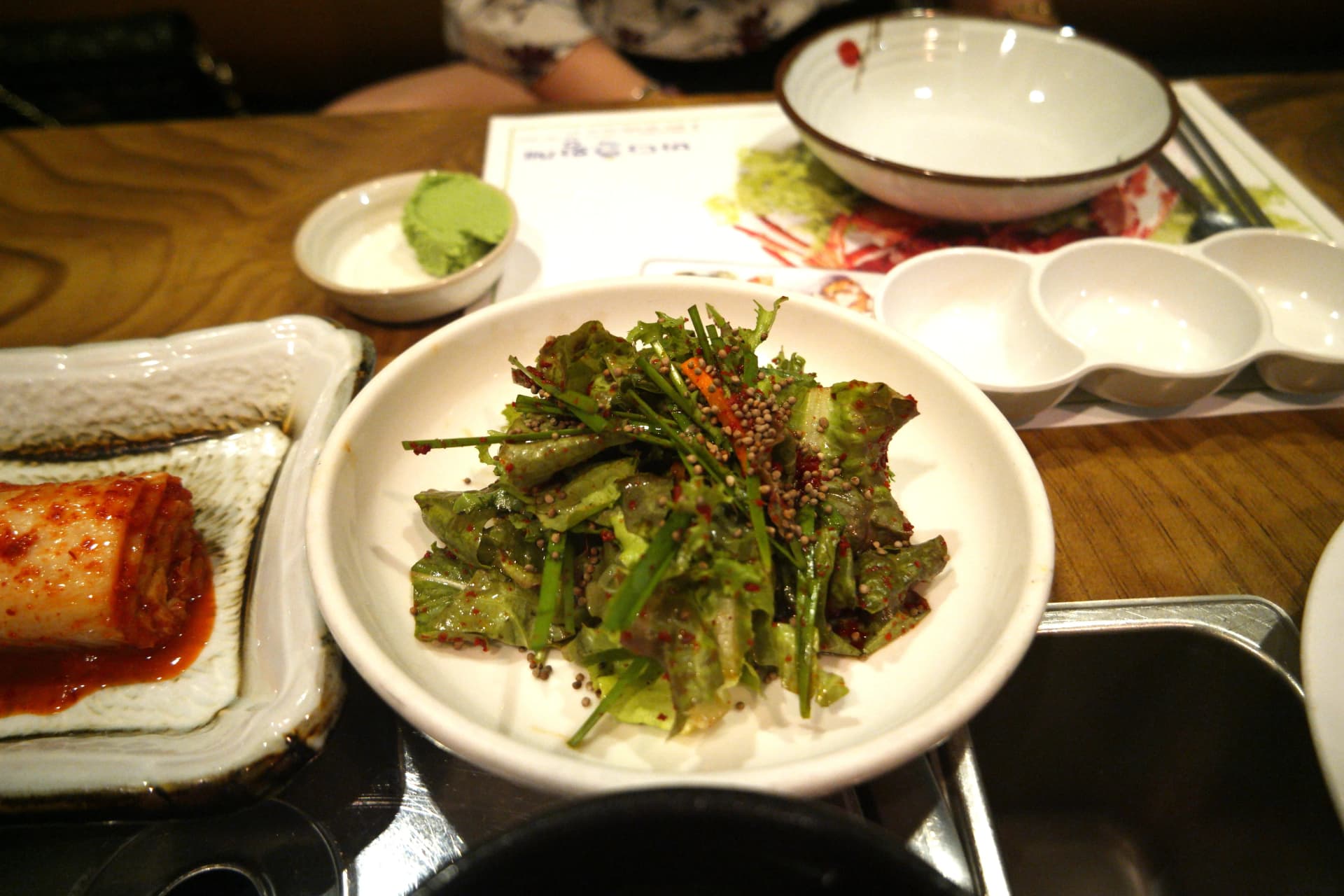
This is a Korean-style salad made with fresh leafy greens tossed in a chili-and-sesame dressing. When you eat it alongside your raw fish, it cuts through any richness and refreshes your palate. It looks simple, but trust me — it's lowkey addictive.
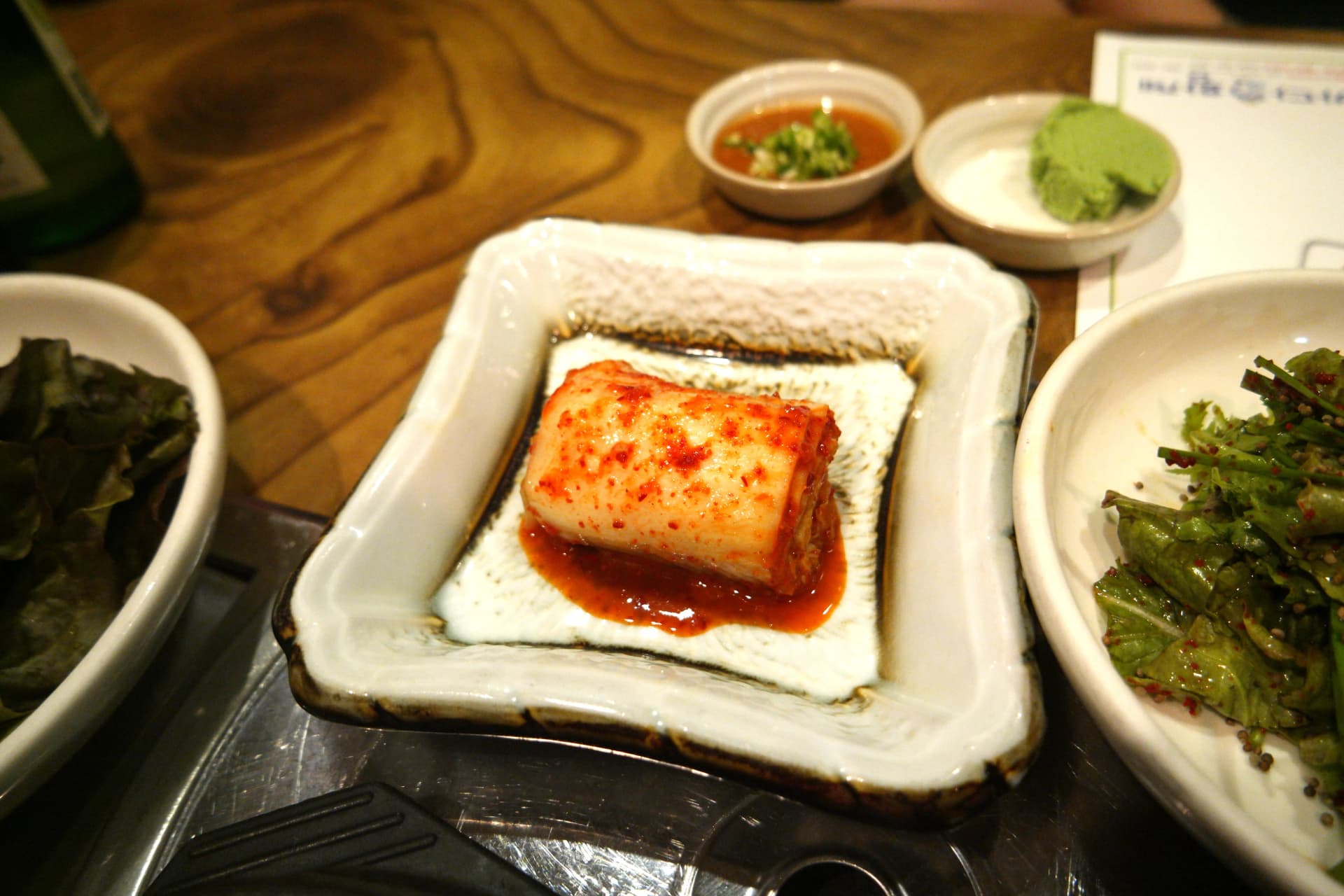
Kimchi is Korea's iconic fermented food, and it shows up at literally every restaurant without exception — it's the ultimate national side dish. It's made by fermenting napa cabbage with chili flakes, garlic, salted seafood, and other seasonings, giving it that signature spicy-tangy kick. For Koreans, a meal without kimchi on the table just feels incomplete — it's that integral to daily life. If you're not used to it, it might seem a bit intense at first, but if you're visiting Korea, it's absolutely worth giving it a try.
The Table Is Already Full Before the Raw Fish Even Arrives 🍽️
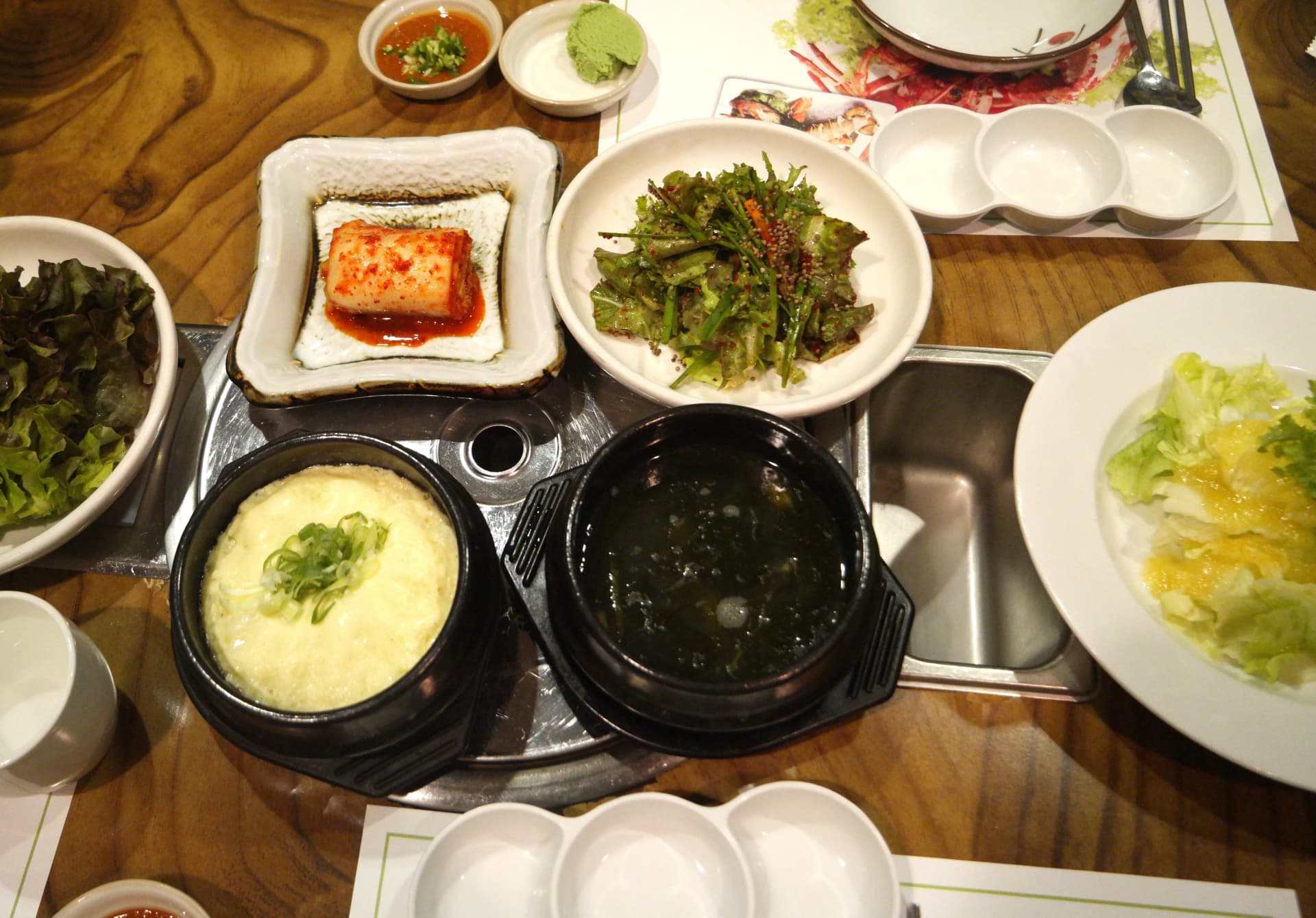
Salad, seasoned vegetables, kimchi, steamed egg, seaweed soup — the raw fish hasn't even arrived yet and the table is already completely packed. This right here is the magic of a Korean raw fish full course. The side dishes alone are enough to make a meal, and you already feel like royalty before the main event even begins. This is what the Korean sashimi dining experience is all about.
Ssamjang — The All-Purpose Sauce You'll Find Everywhere 🌶️
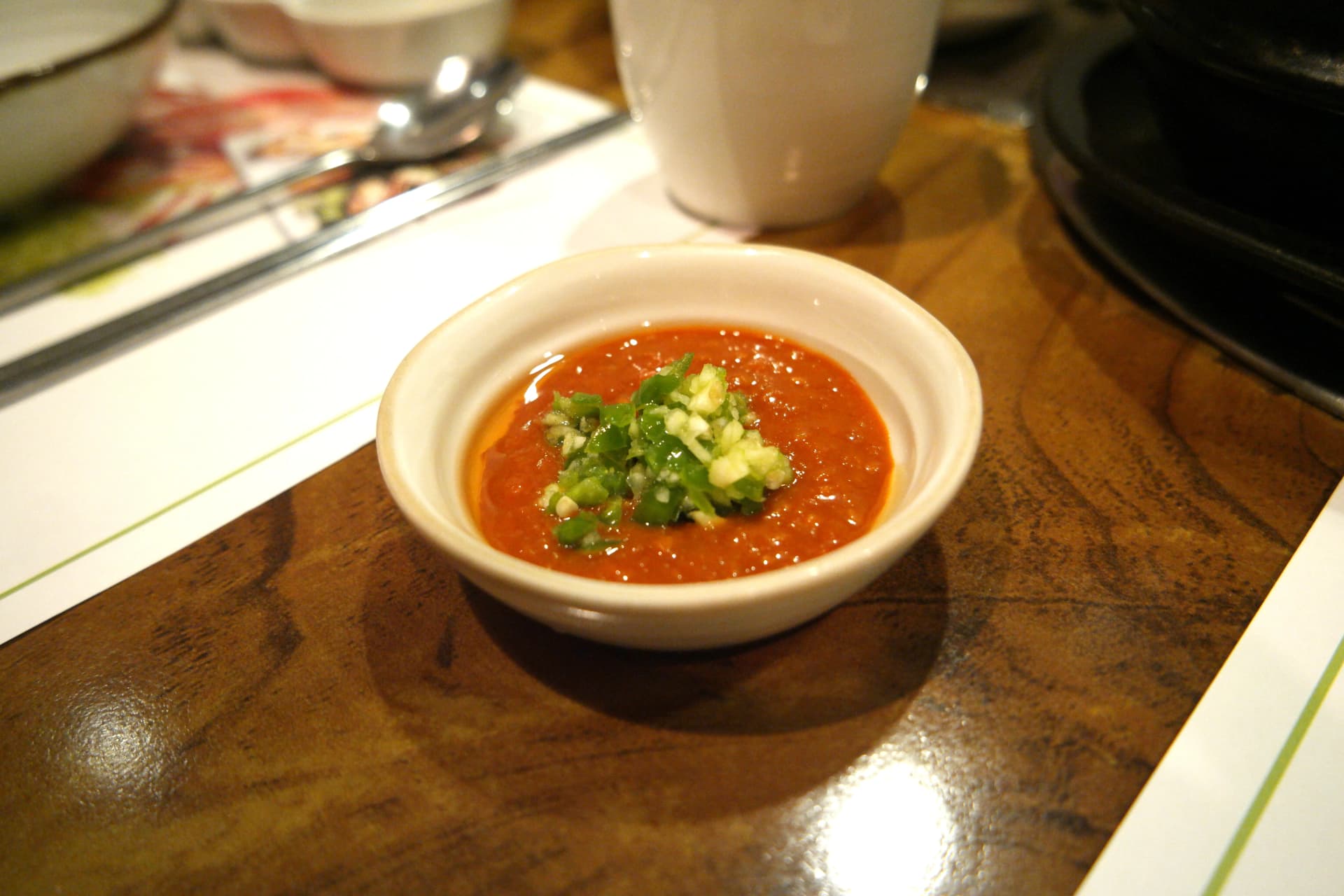
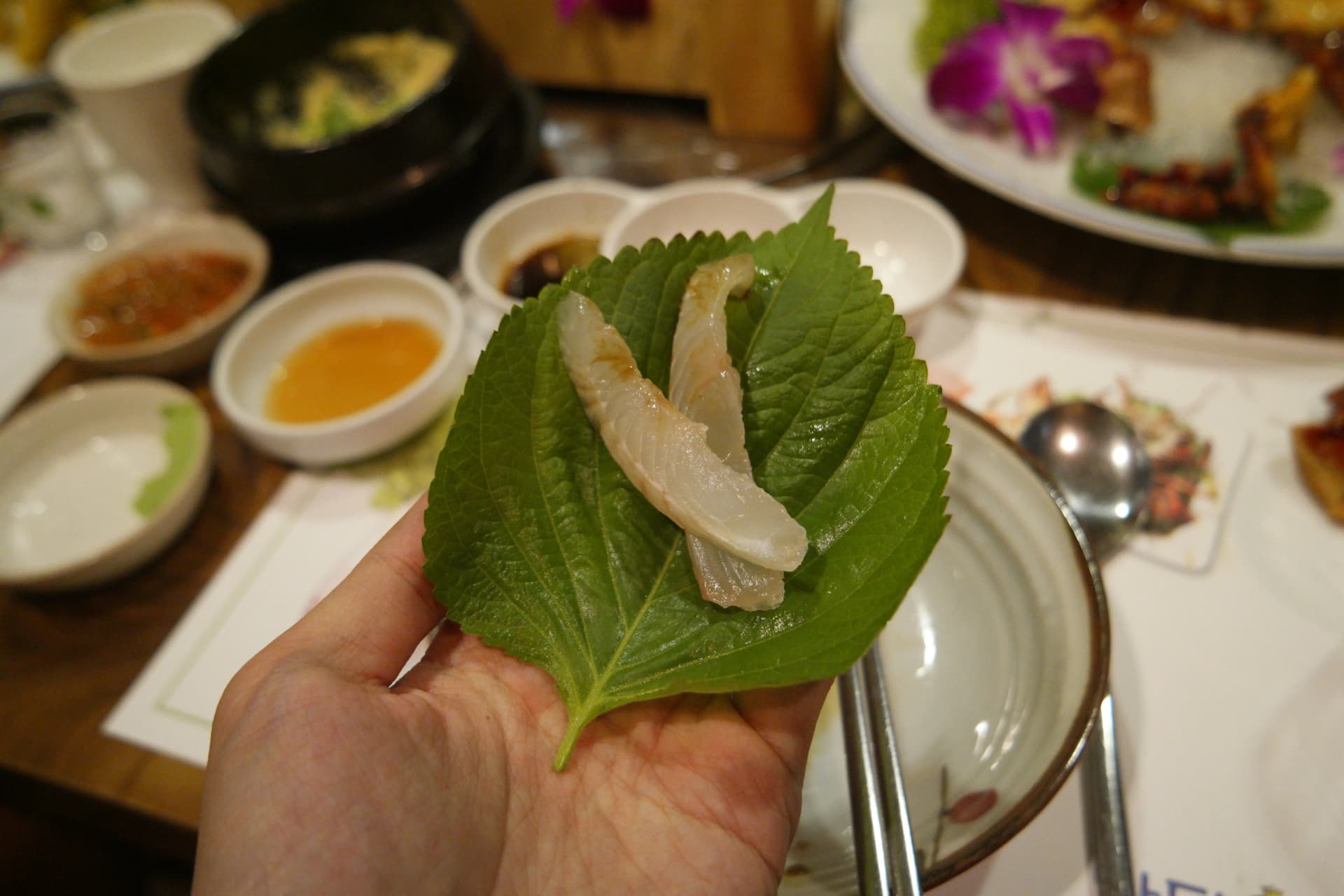
Ssamjang is a Korean seasoned sauce made by mixing chili flakes, garlic, scallions, and fermented bean paste. You take a piece of lettuce or perilla leaf, place a slice of raw fish on it, add a dab of ssamjang, and wrap the whole thing into one bite — the fresh flavor of the fish combined with the deep, savory-salty kick of the sauce is an absolutely incredible combination. It's not just a raw fish restaurant thing either; ssamjang is a staple at Korean BBQ spots too. And here's a fun detail: every restaurant makes their own version with slightly different ratios and consistencies, so even though it's the same sauce by name, each one tastes subtly different. In Korean food culture, ssamjang has evolved beyond being just a condiment — it's practically a culinary concept of its own.
Seafood Tempura — A Different Charm from Street Market Fries 🍤
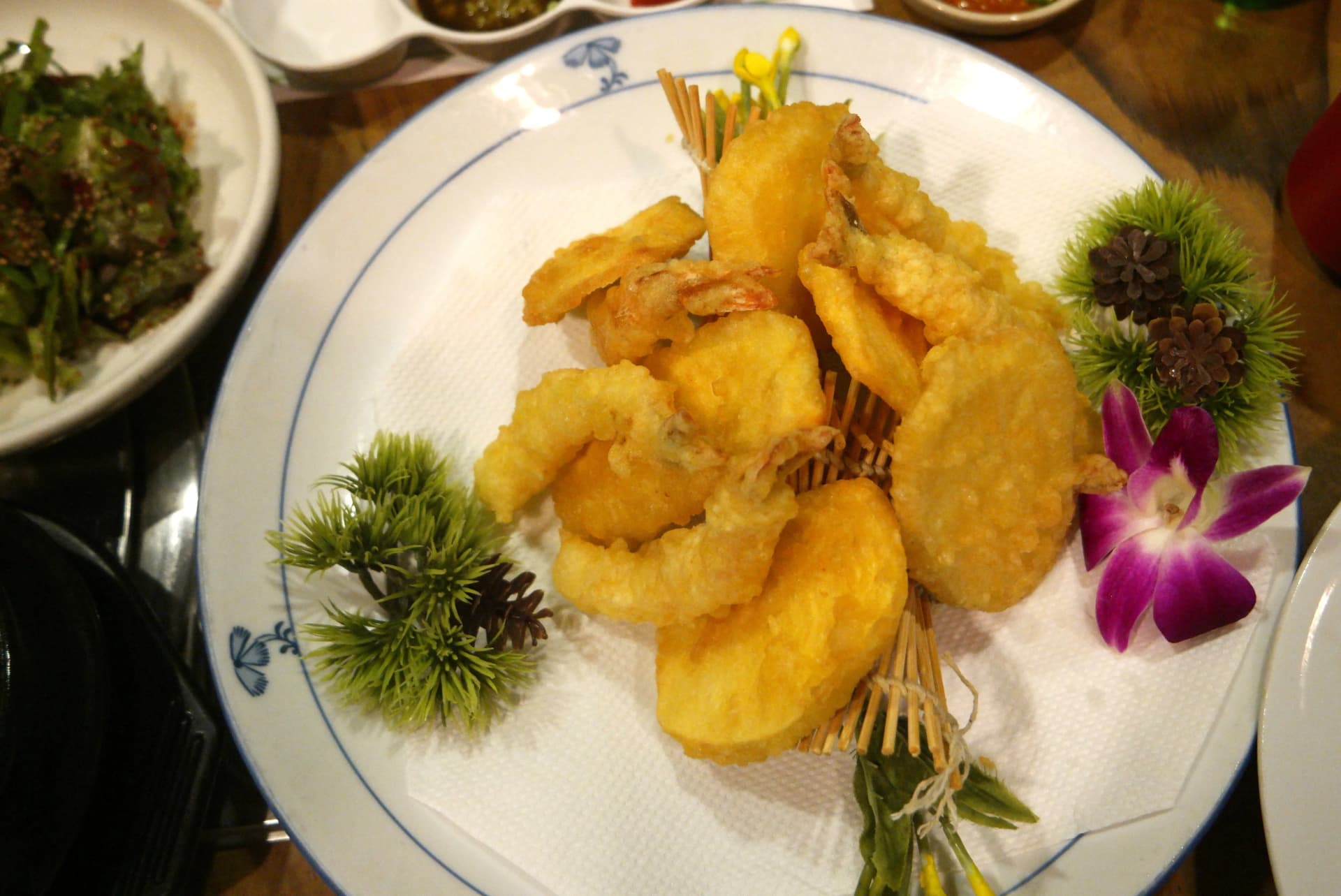
Now the real dishes start rolling in. First up is the seafood tempura. Shrimp, fish fillets, and other seafood are coated in a crispy batter and deep-fried to perfection. In Korea, fried food isn't just a restaurant thing — it's also a beloved street food you can grab at traditional markets. The difference? Market tempura is cheap and fried right in front of you with that irresistible freshly-made charm, while raw fish restaurant tempura lets you enjoy premium fresh seafood in a more refined setting. Same concept, totally different vibes — which is pretty cool when you think about it.
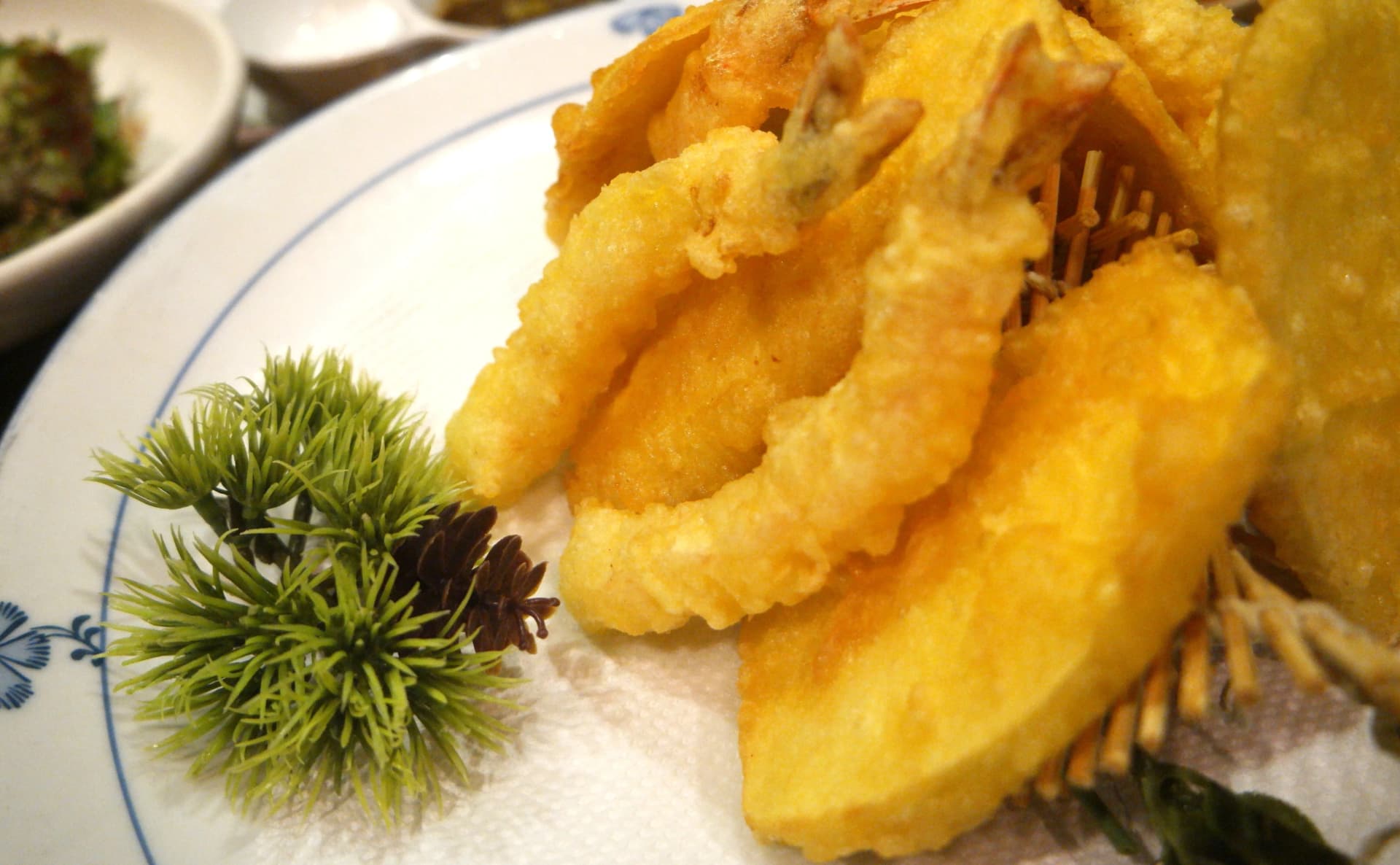
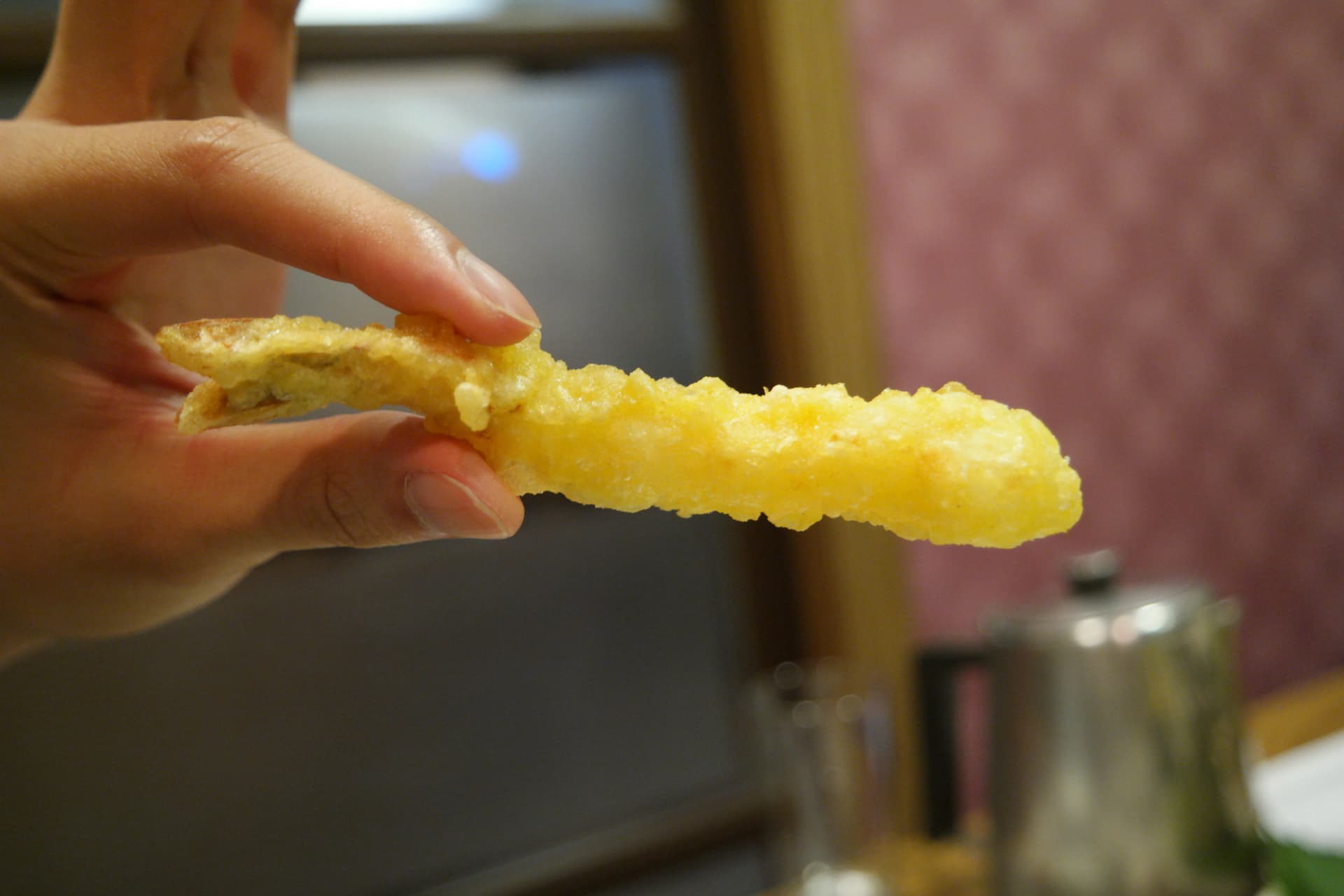
Get up close and you can see the plump shrimp sitting right there inside the batter. It's the kind of food you eat with your eyes first before it even hits your mouth.
Today's Main Event: Assorted Sashimi Platter (Modeum-hoe) 🐟
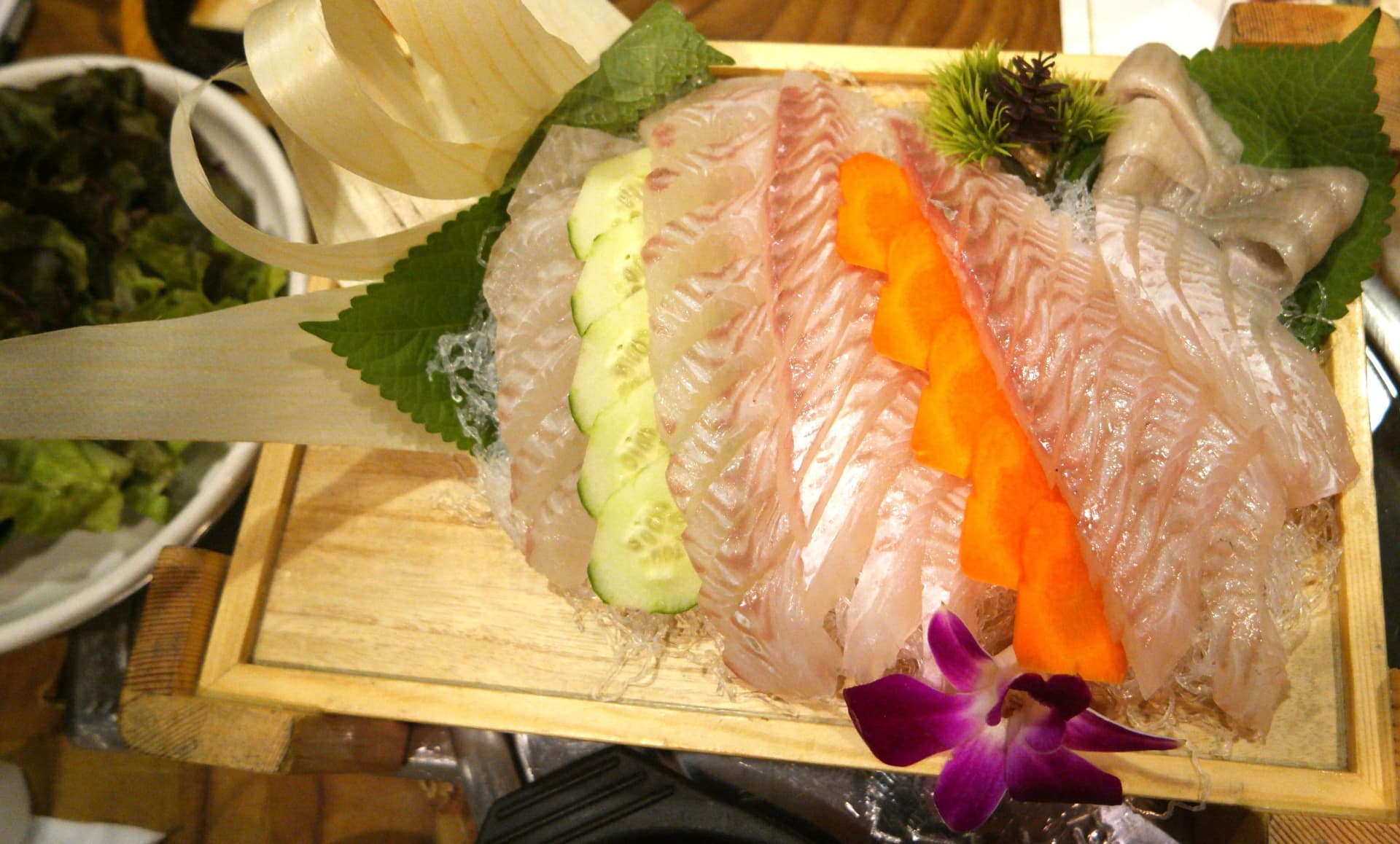
Finally, the star of the show has arrived. The biggest appeal of the assorted sashimi platter is that you get to try multiple types of raw fish all at once. If you order à la carte, you'd typically get just one kind — like flatfish or rockfish — but the assorted platter gives you three to four different varieties on a single plate. The way they lay everything out on perilla leaves, garnished with cucumber and carrot for a pop of color, all served on a bed of ice to keep it perfectly fresh — that's the signature Korean raw fish restaurant style right there. If you're trying sashimi for the first time, this is the perfect way to go since you can compare different flavors and textures side by side.
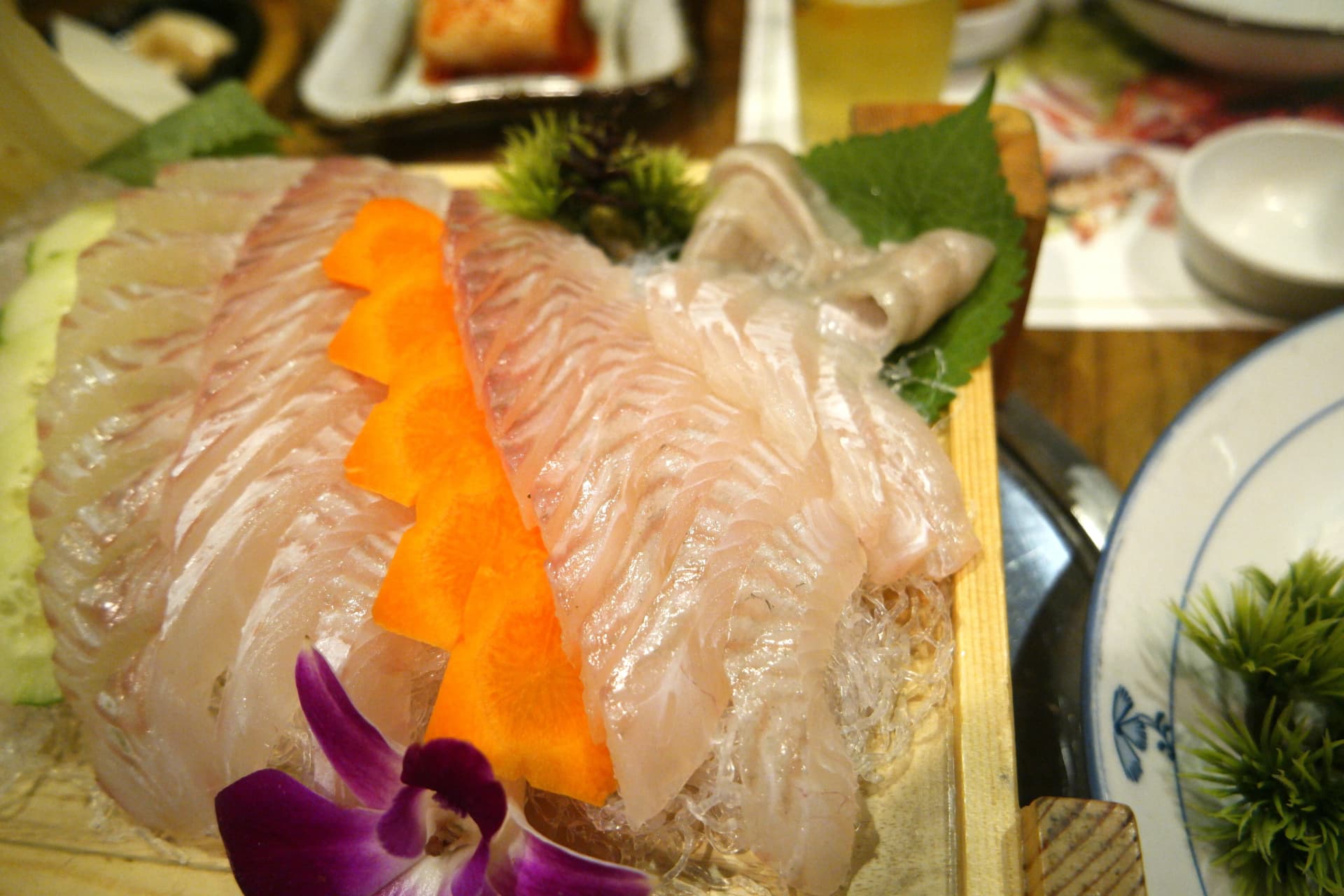
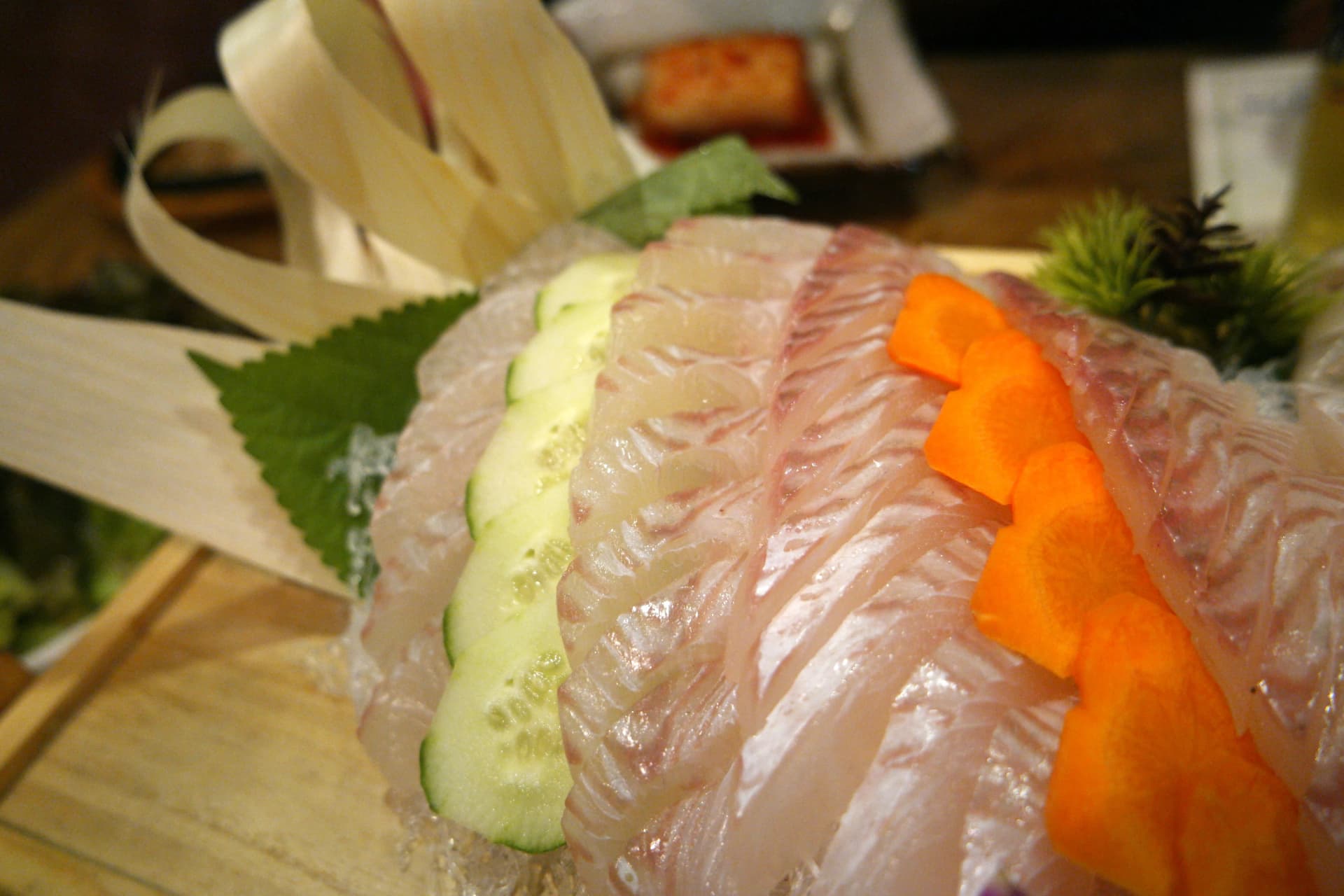
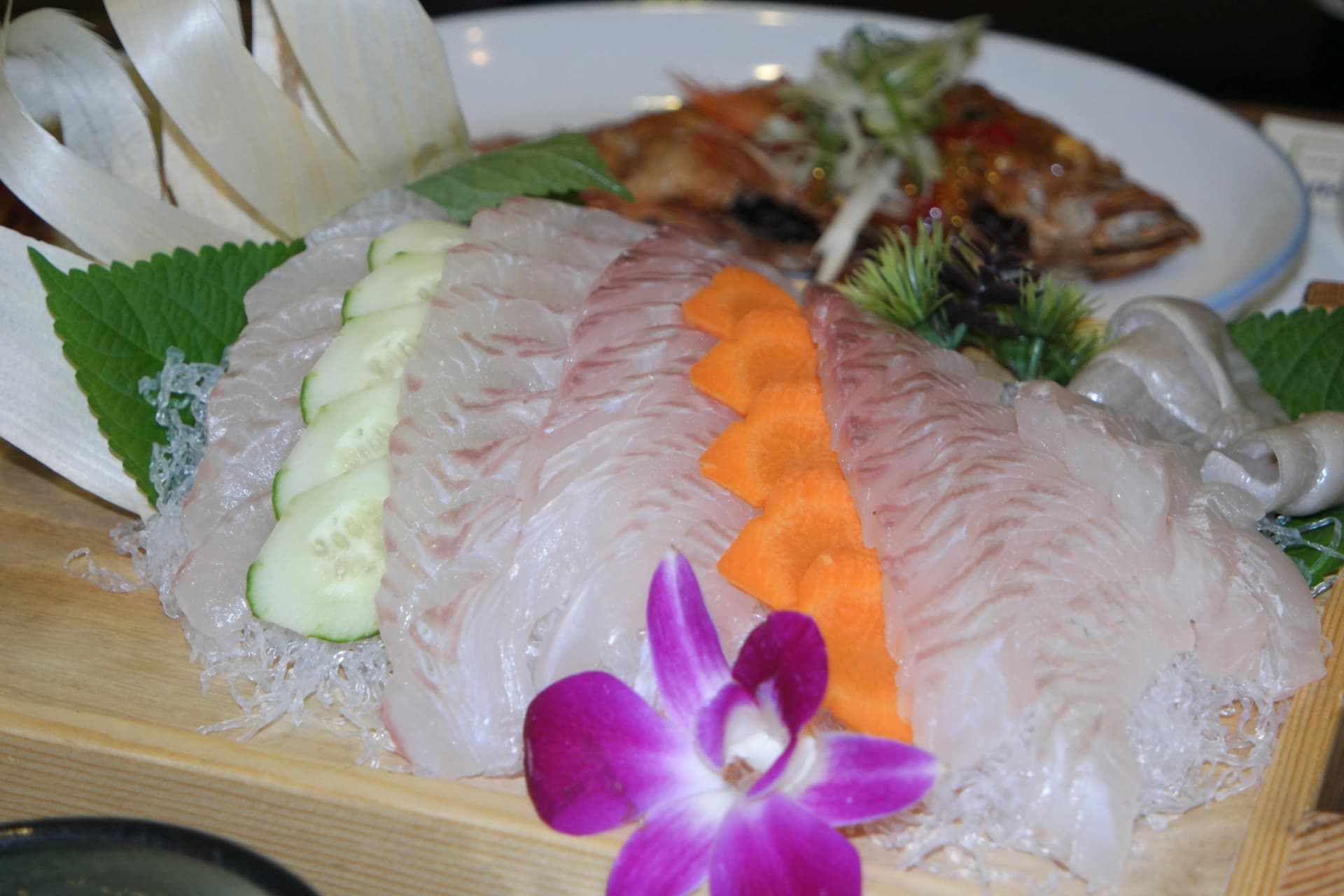
I took photos from a bunch of different angles, and you can really see how each slice has this vivid, alive texture to it. The colors, the plating — this sashimi platter speaks for itself. No words needed.
Whole Fried Fish — Crispy from Head to Tail
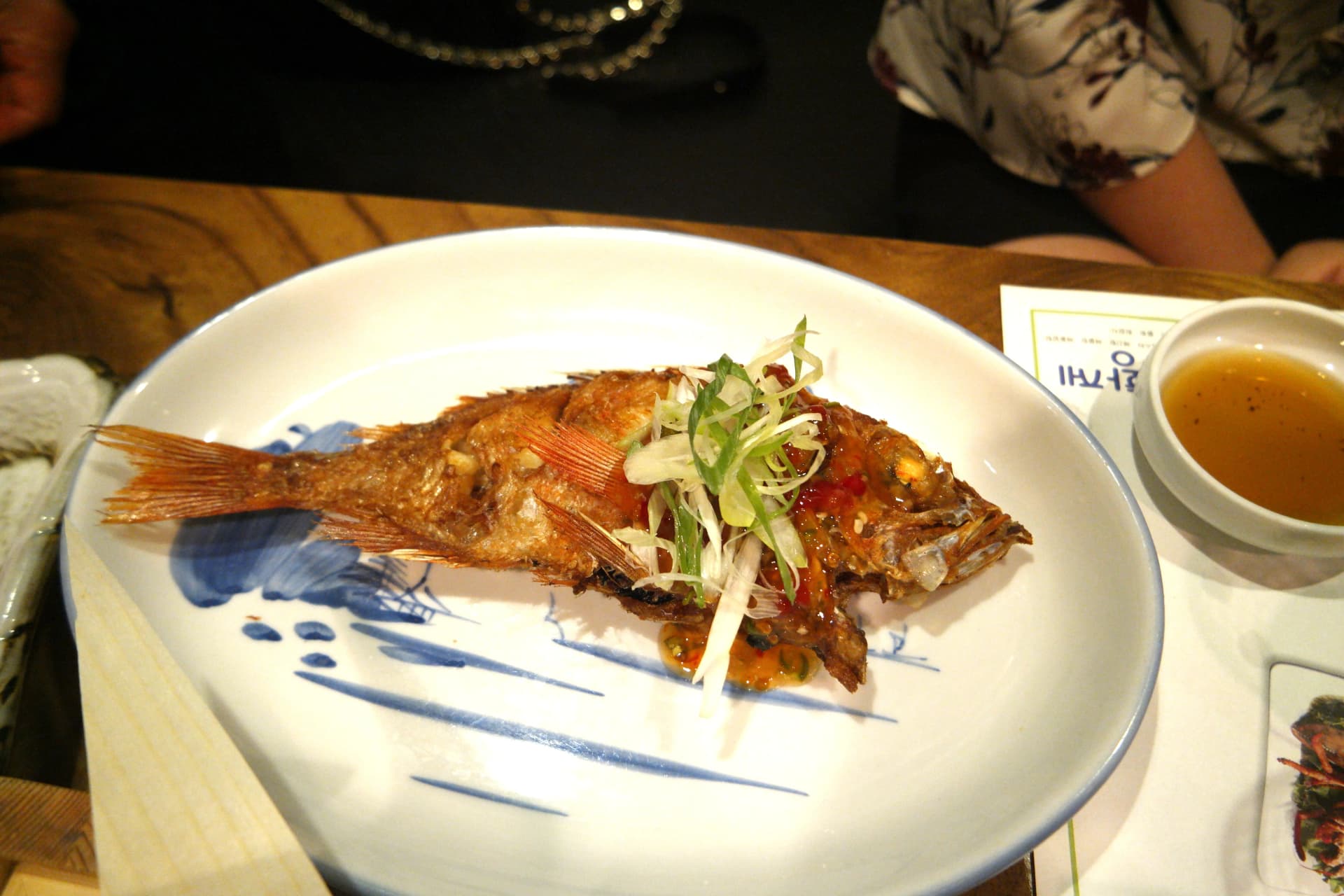
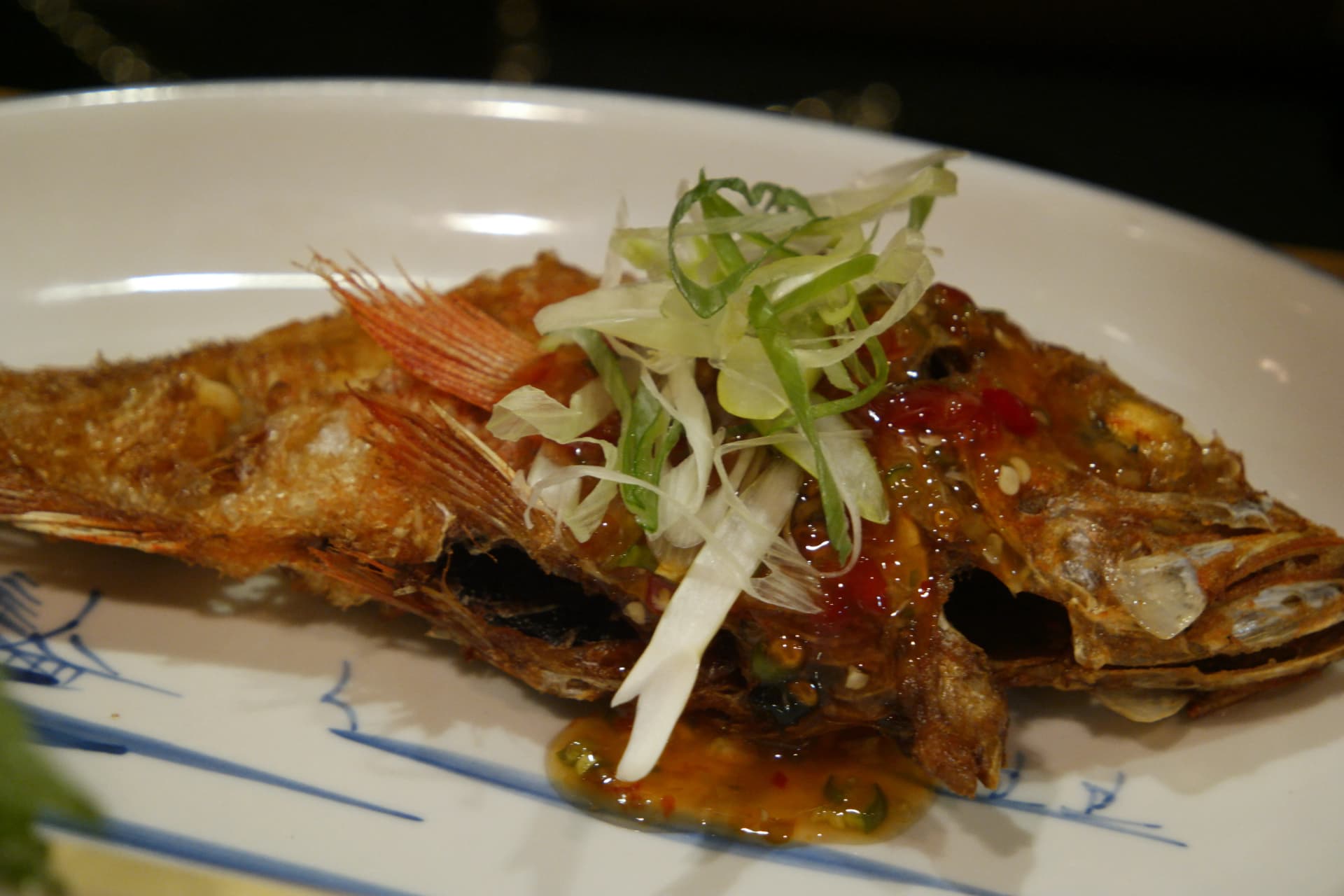
This is a whole fish, deep-fried until perfectly crispy, then finished with a spicy chili sauce and a pile of shredded scallions on top. The outside is shatteringly crispy while the inside stays moist and tender — and zooming in on that spicy sauce drizzled all over just makes it look even more mouthwatering. This visual alone is enough to make you demolish a whole bowl of rice.
Two Ways to Enjoy Raw Fish at a Korean Sashimi Restaurant 🥬
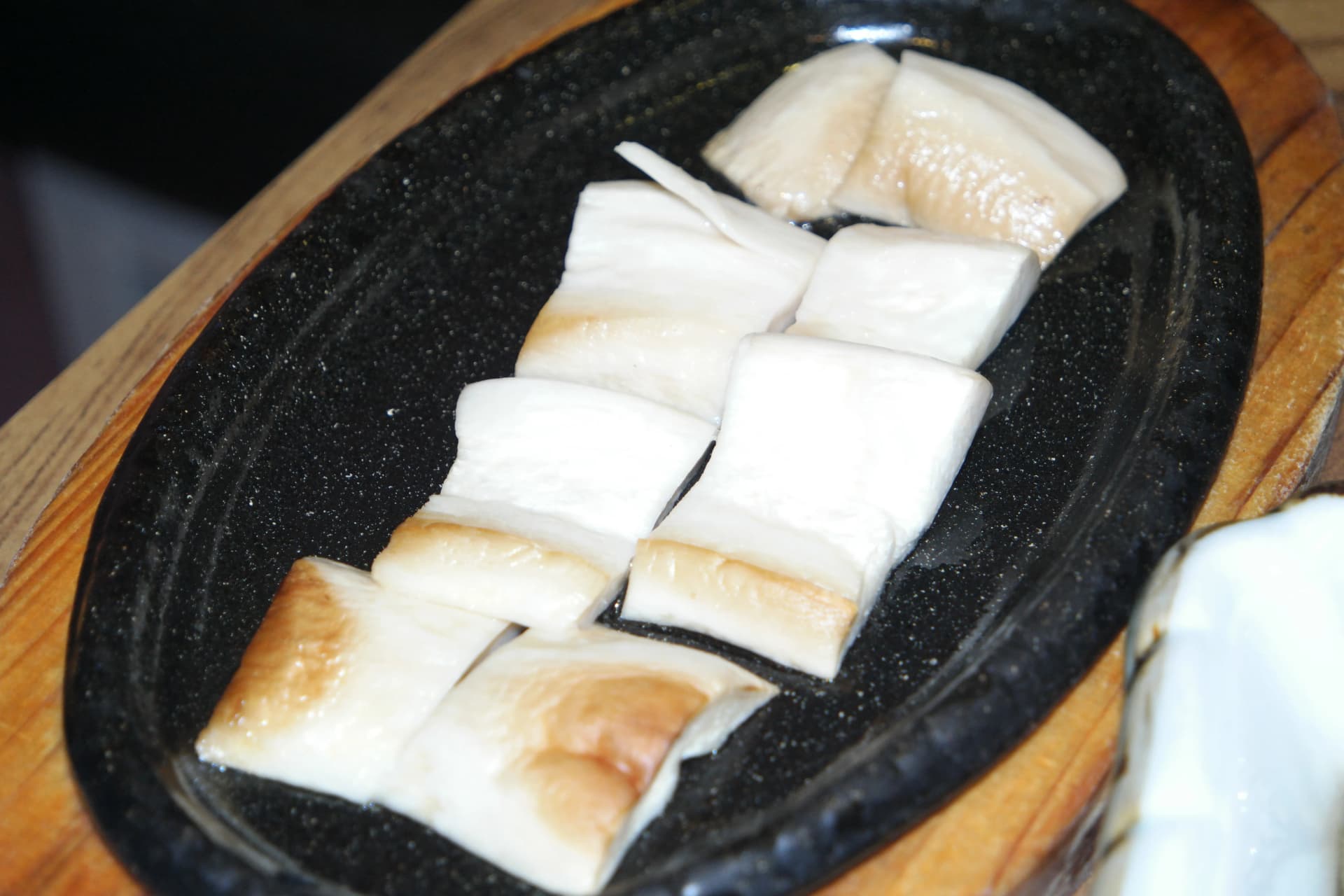
Dip in Chojang or Soy Sauce
Simply dip the raw fish in chojang (vinegared chili paste) or wasabi soy sauce and eat it as is.
This method lets you fully appreciate the clean, delicate flavor and texture of the fish itself. Best for anyone who wants to savor the pure freshness of the sashimi.
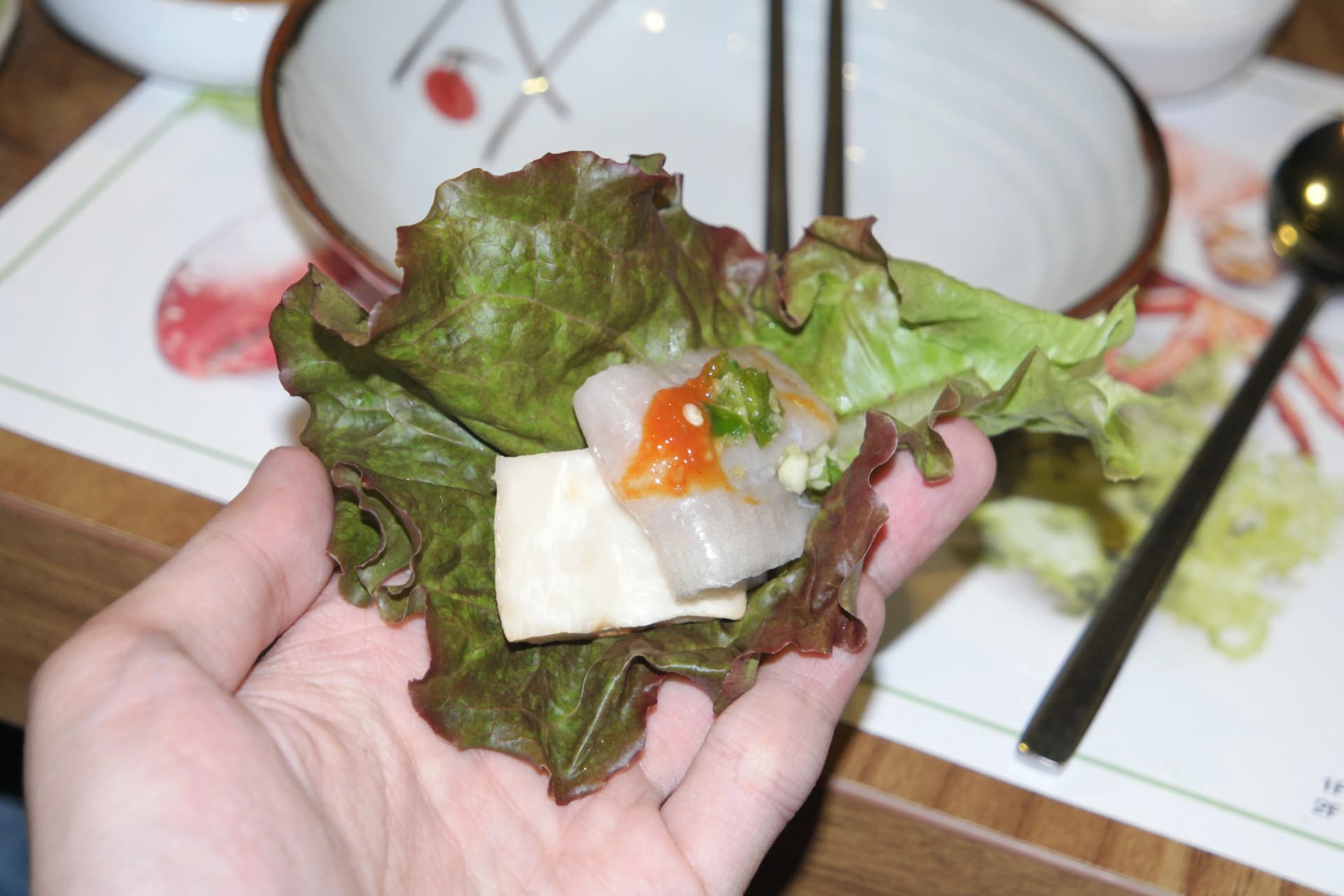
Wrap It in Lettuce (Ssam Style)
Place the raw fish on a lettuce or perilla leaf, add some ssamjang, and wrap it all up into one bite.
The crunch of the vegetables and the savory-salty depth of the ssamjang blend beautifully with the fish. Perfect if you want to experience a medley of flavors in every bite.
Both methods have their own distinct charm, so I'd recommend alternating between the two — that way you never get bored and every bite feels different right until the end. A slice of sashimi on a piece of lettuce, a little spoonful of ssamjang, all wrapped up and popped into your mouth in one go — that's the real Korean raw fish restaurant experience right there.
Exotic Seafood — Sea Squirt, Sea Cucumber, and Abalone Sashimi
Sea Squirt (Meongge) — Like Swallowing the Ocean Whole
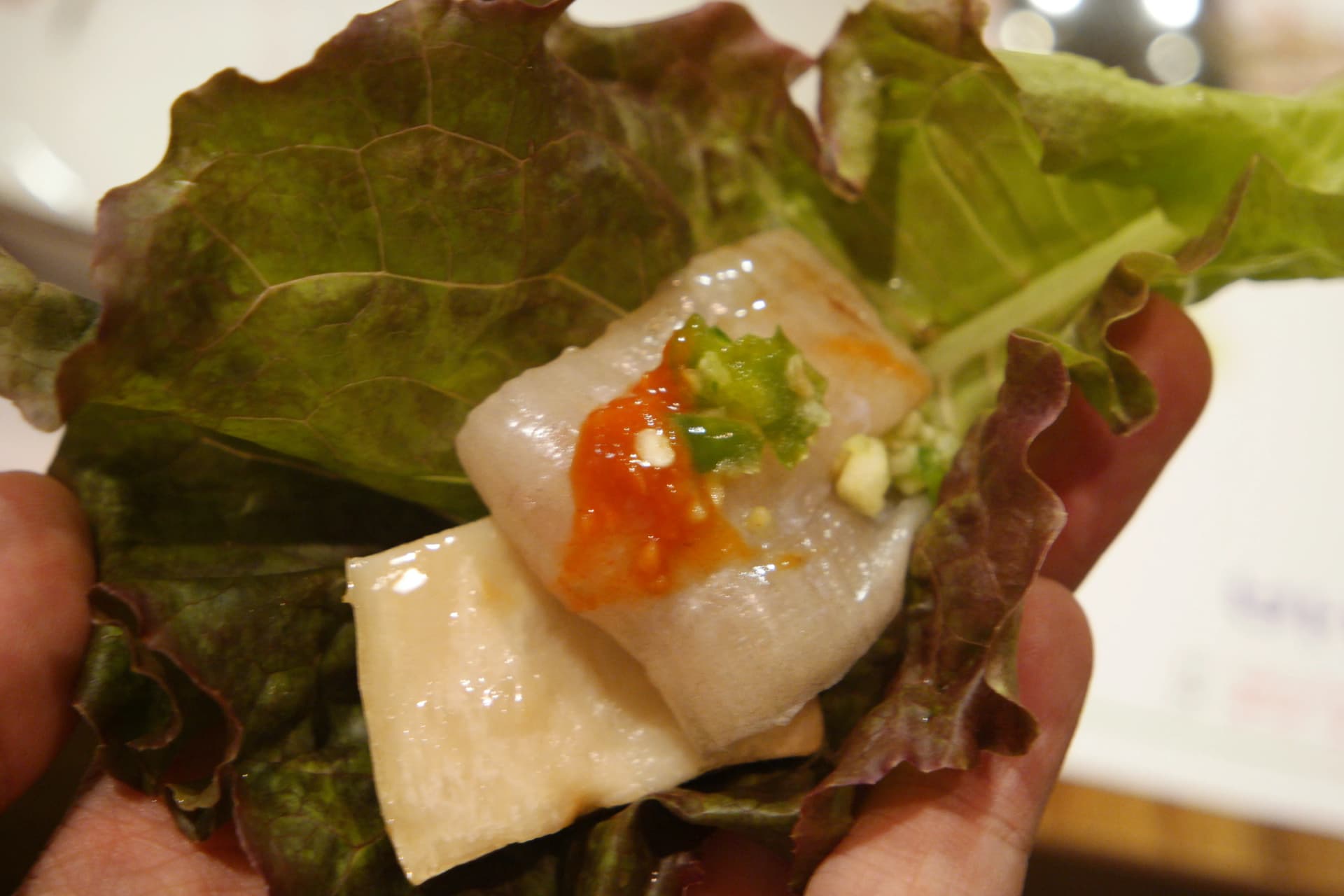
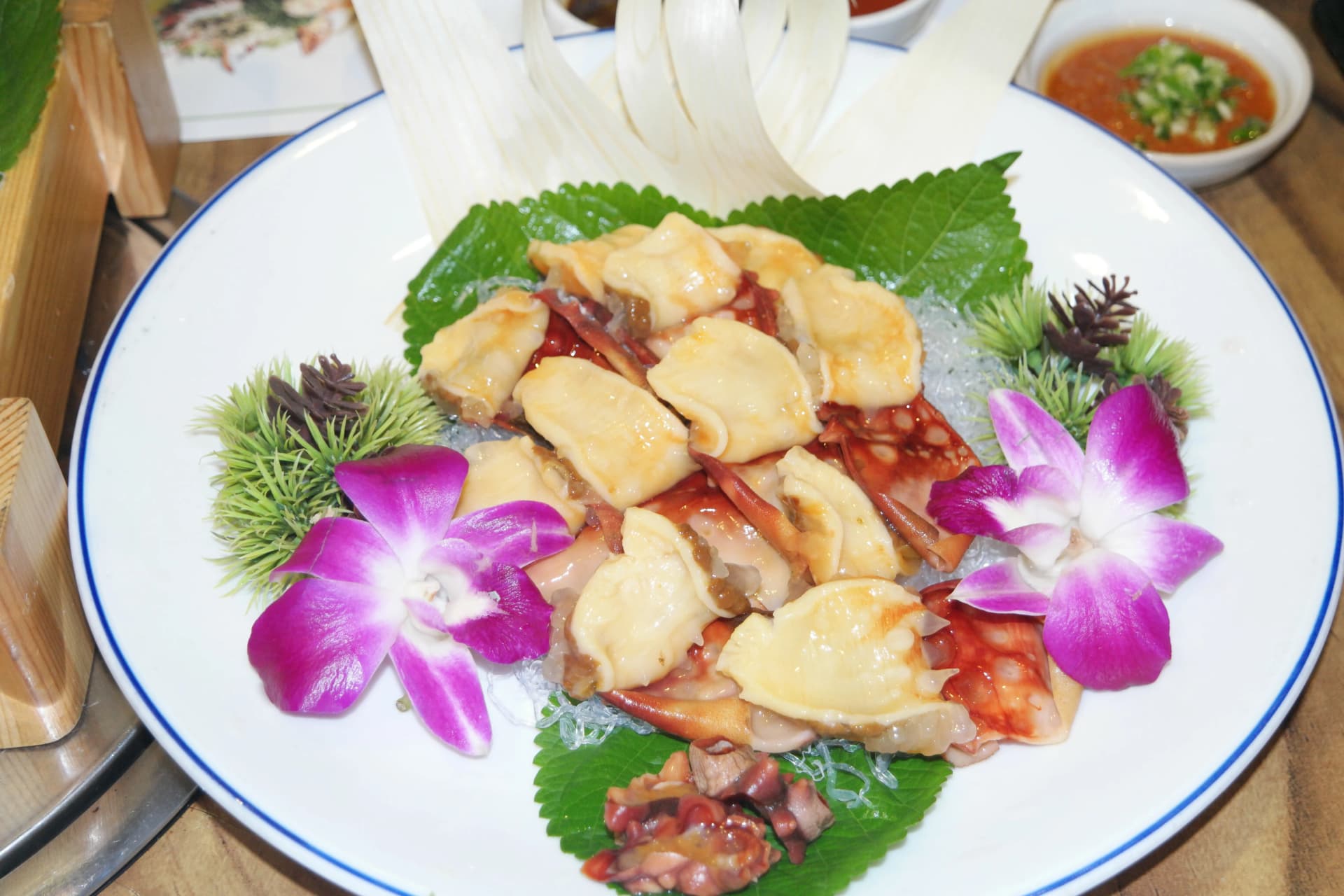
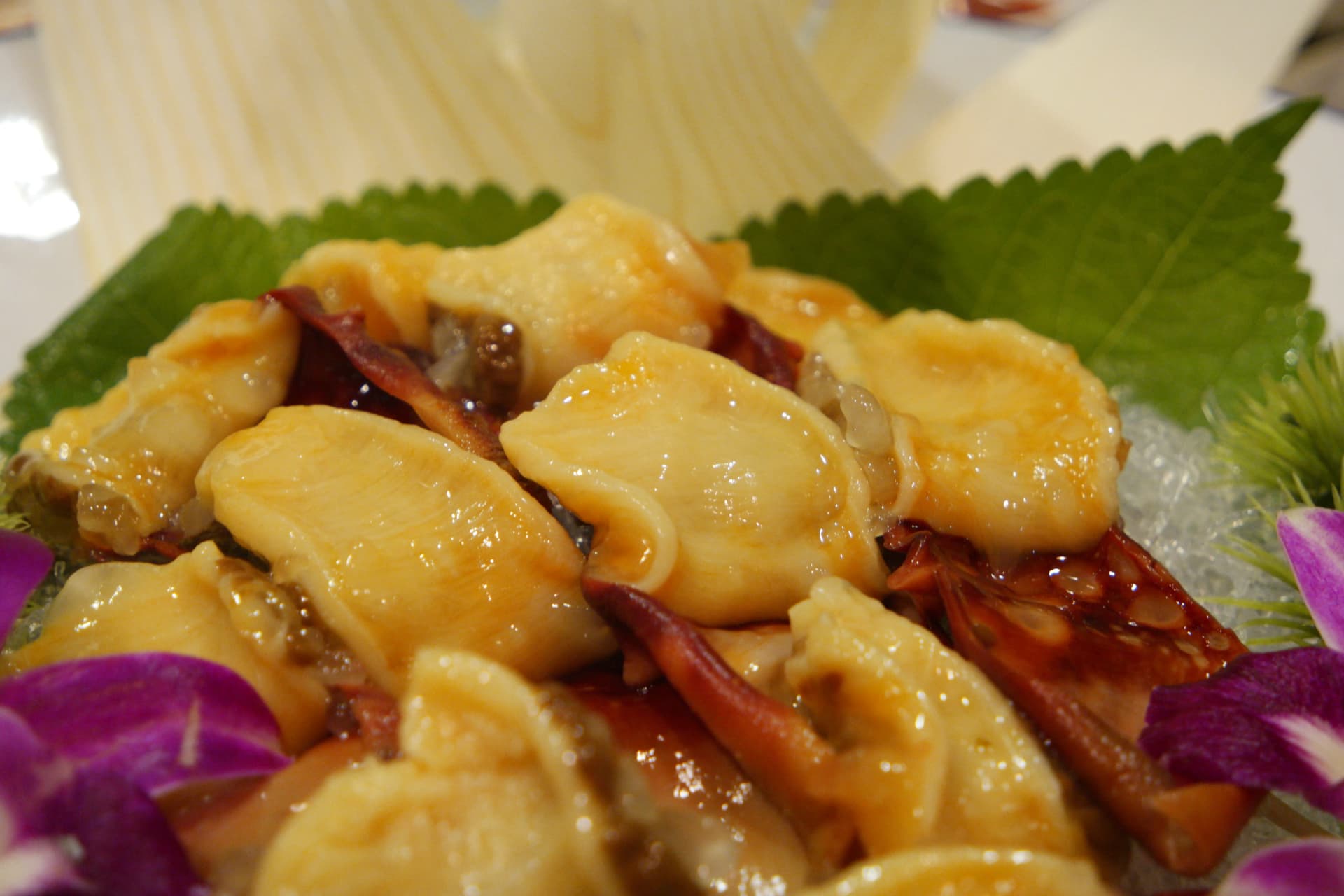
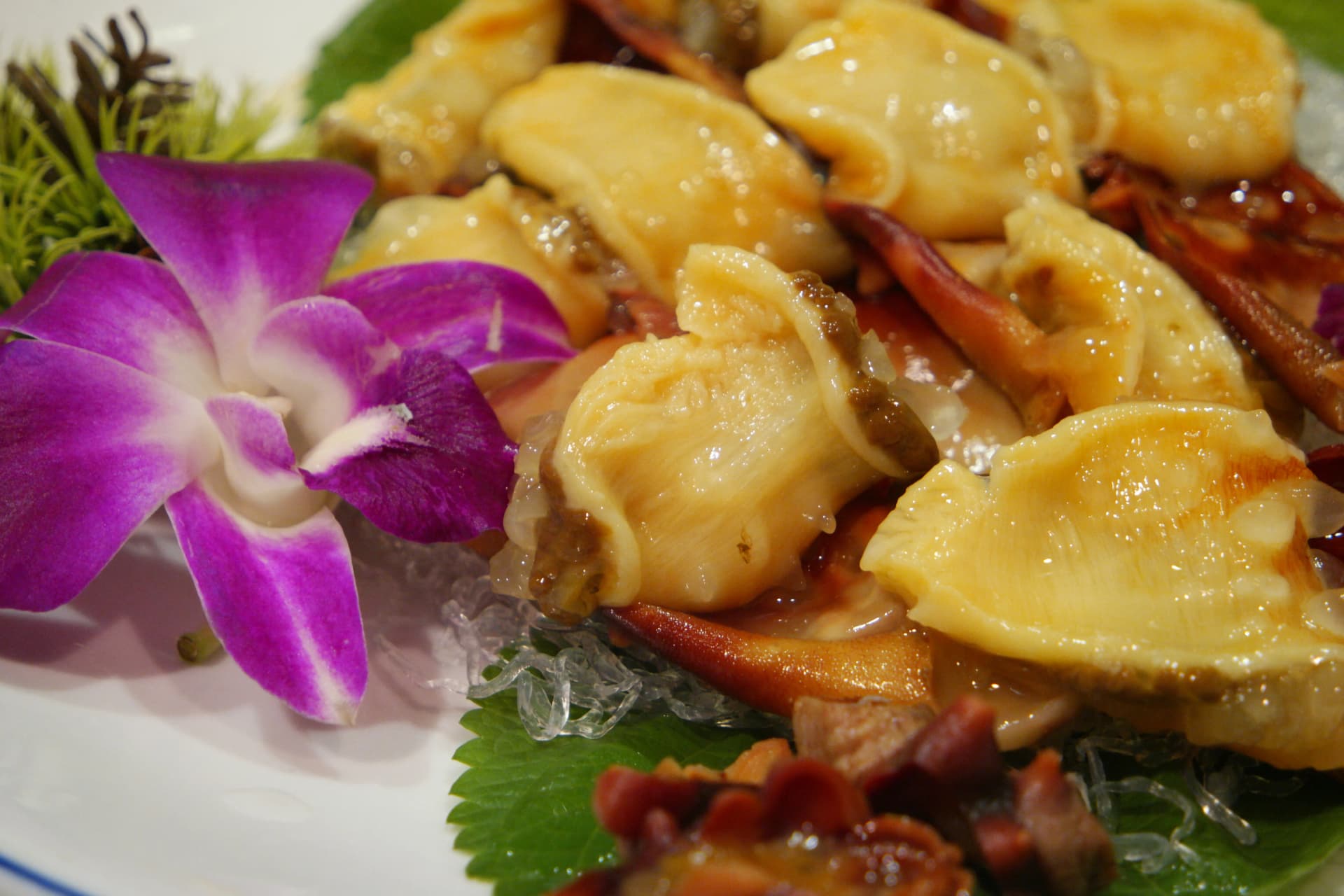
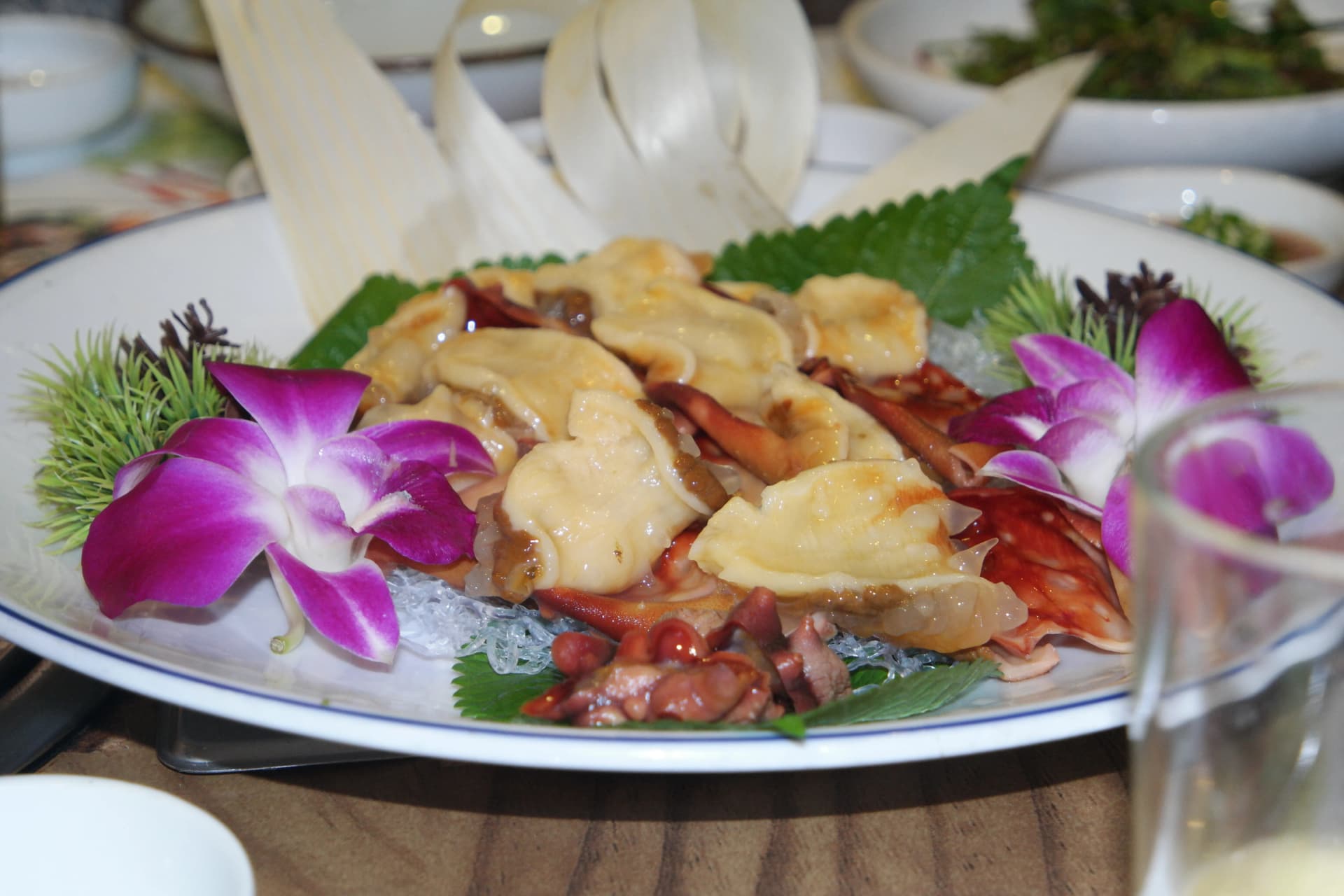
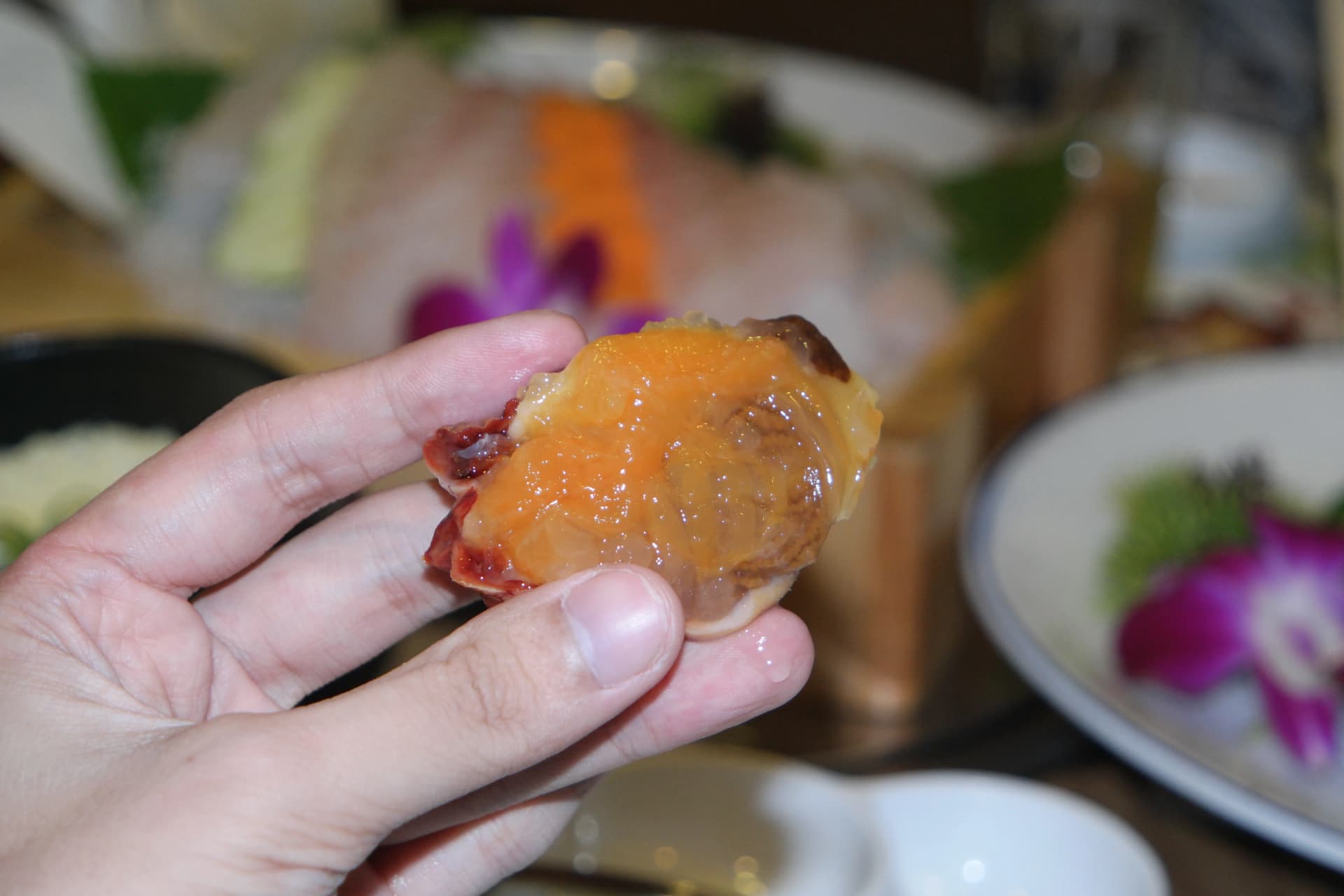
Sea squirt, called "meongge" in Korean, is one of the most popular exotic seafood items at Korean raw fish restaurants — and it's probably going to be completely unfamiliar to most visitors. It's a marine creature that grows attached to underwater rocks, with a bumpy, irregular exterior and bright orange flesh inside. It's mainly eaten in Korea and Japan, and very few other countries consume it, making it a genuinely rare culinary experience. The taste isn't just "fishy" — it's more like a deep, intense burst of ocean flavor that fills your entire mouth. It's definitely a love-it-or-hate-it thing, but people who get hooked on it say they can never go back. If you're visiting Korea, this is one dish you absolutely have to try at least once.
Sea Cucumber (Haesam) — The Ultimate Chewy Texture
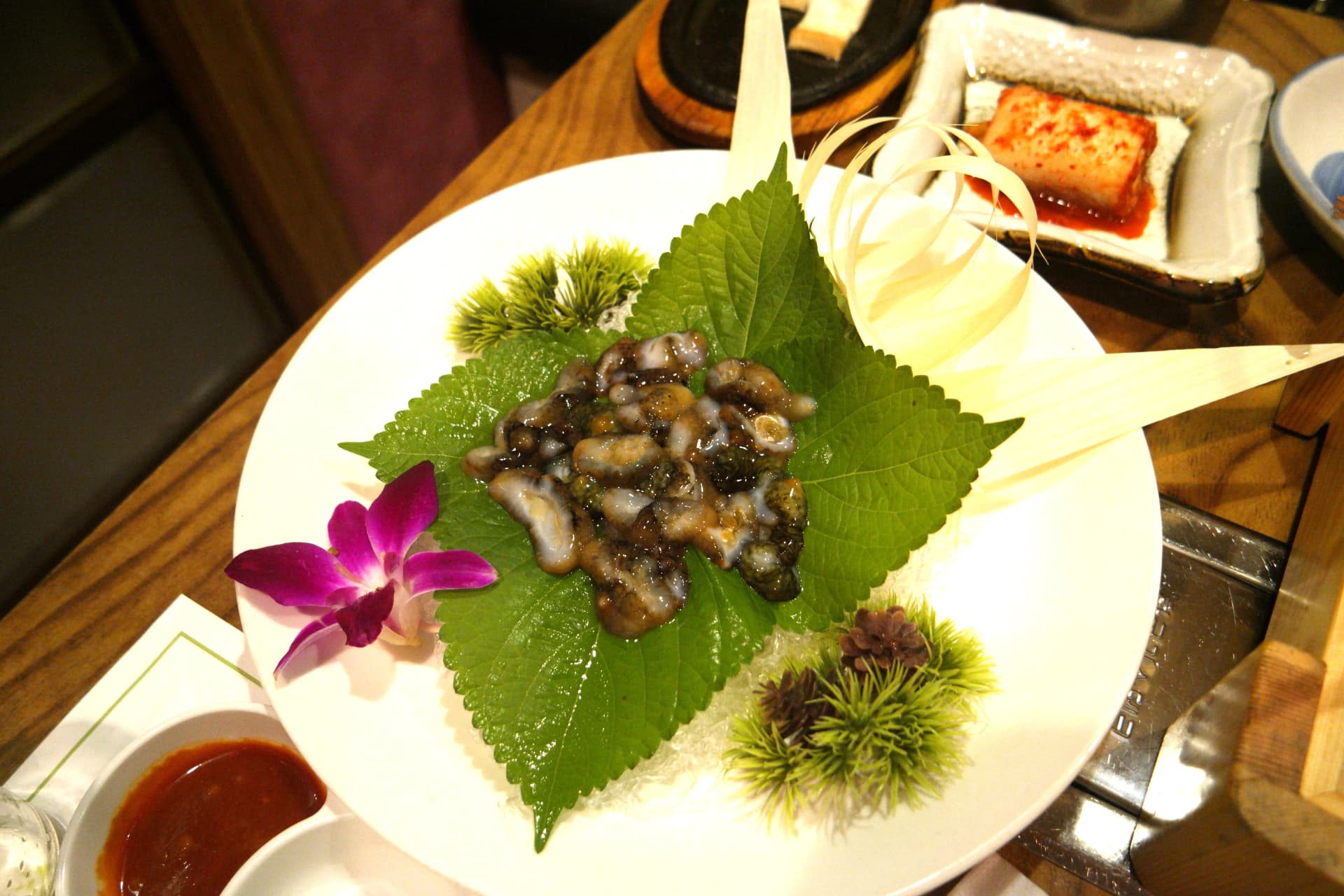
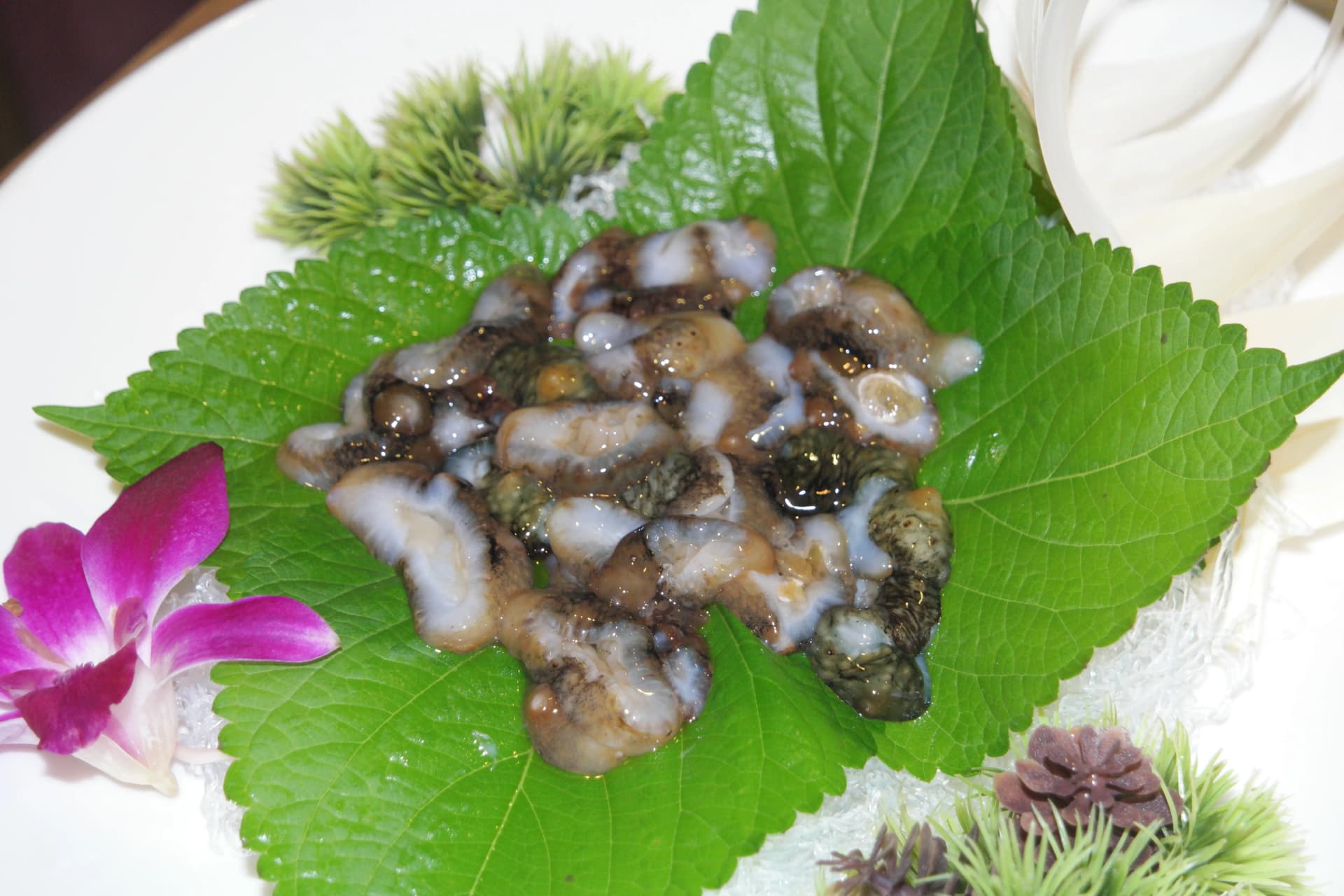
Sea cucumber — literally "sea cucumber" in English, and "haesam" in Korean — is enjoyed in different ways around the world. In China, it's mostly dried and used as an ingredient in high-end dishes. In Japan, it's often served in a vinegared preparation. But in Korea, they do something a bit special: they eat it raw, sliced up just like sashimi. It has this uniquely chewy and crunchy texture, and the more you chew, the more you taste this clean, pure ocean flavor. Like sea squirt, it's polarizing — but if you want to truly experience Korea's authentic seafood culture, you've got to give it a shot. Put it on a perilla leaf, dip it in chojang, and the flavor honestly doubles.
Abalone Sashimi (Jeonbok-hoe) — Bouncy Perfection from Wando
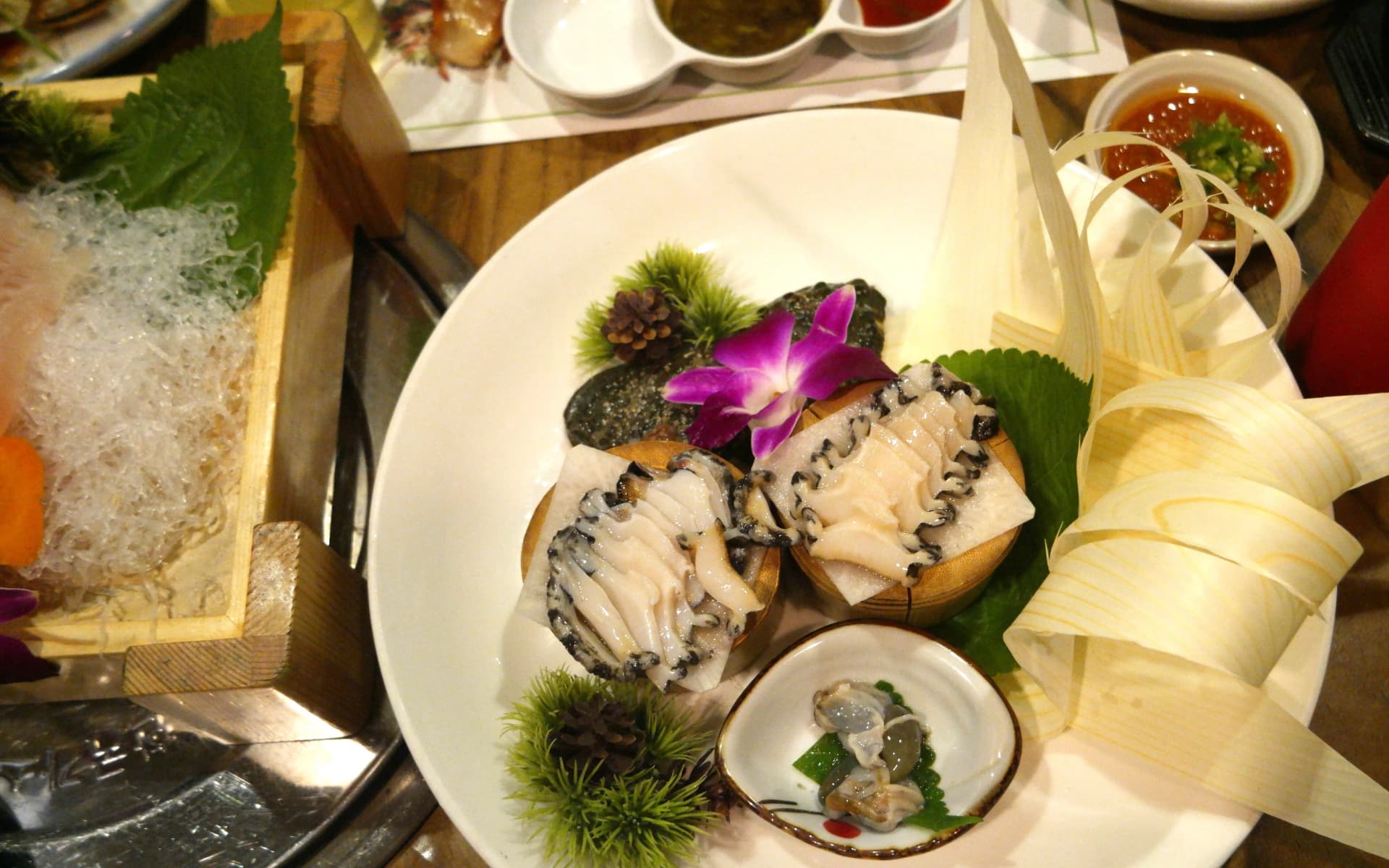
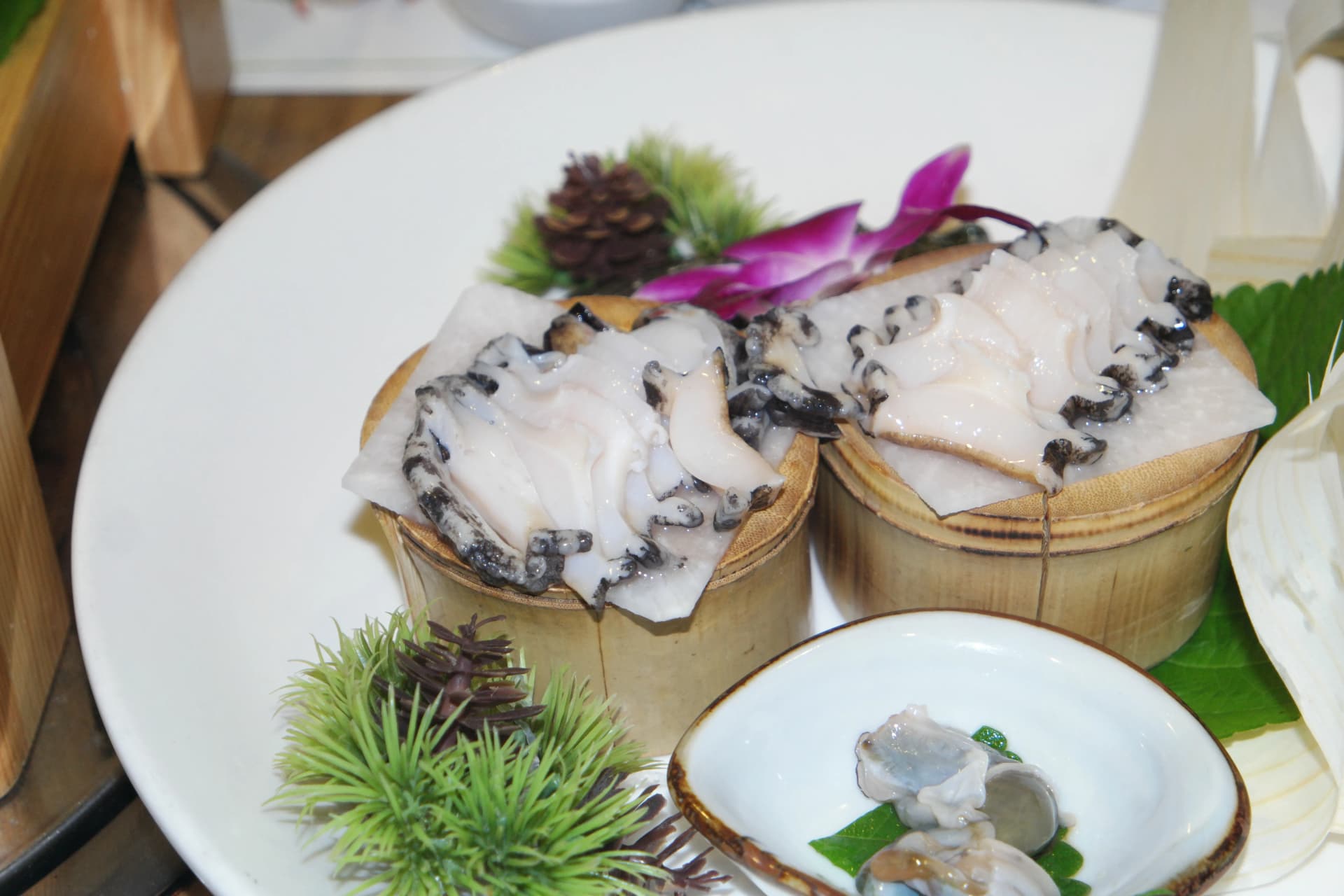
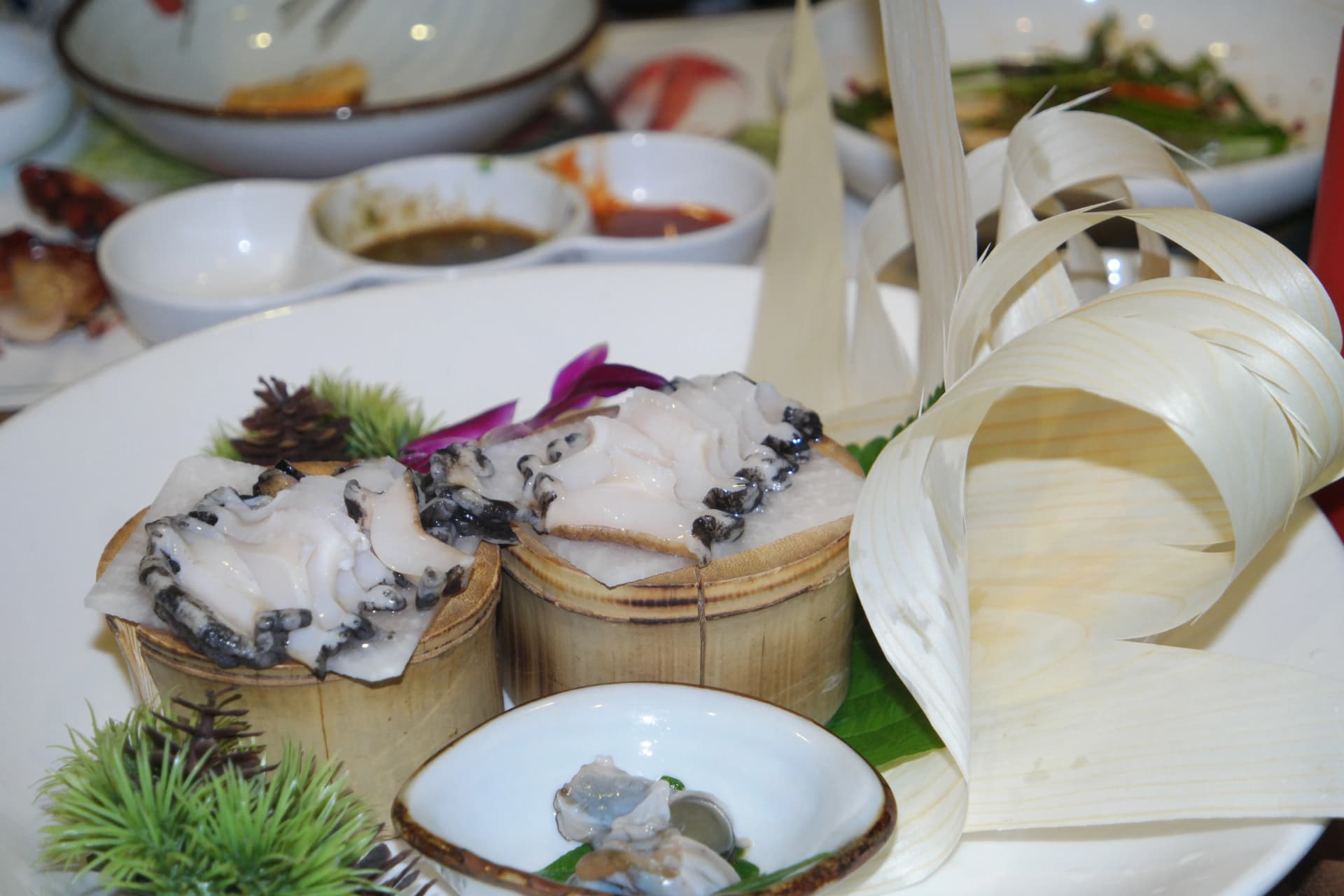
This is one of the beautiful things about the Korean raw fish full course — the side dishes just keep on coming. This time it's abalone sashimi (jeonbok-hoe). When Koreans think of abalone, one place immediately comes to mind: Wando, a county on the southern coast of Jeollanam-do Province. Thanks to its pristine waters and abundant seaweed, Wando is considered the ultimate location for abalone farming. Wando abalone is prized across Korea for its firm, bouncy texture and rich flavor — it's considered the highest quality you can get. In Korea, abalone is enjoyed in many ways: thinly sliced raw and dipped in chojang, or steamed until soft and tender. It's truly a premium seafood delicacy. That little bowl you see contains the abalone's intestines, which is actually considered a delicacy in its own right — quite a lot of people love it.
The Grand Finale: Spicy Seafood Stew (Haemul Maeuntang) 🔥
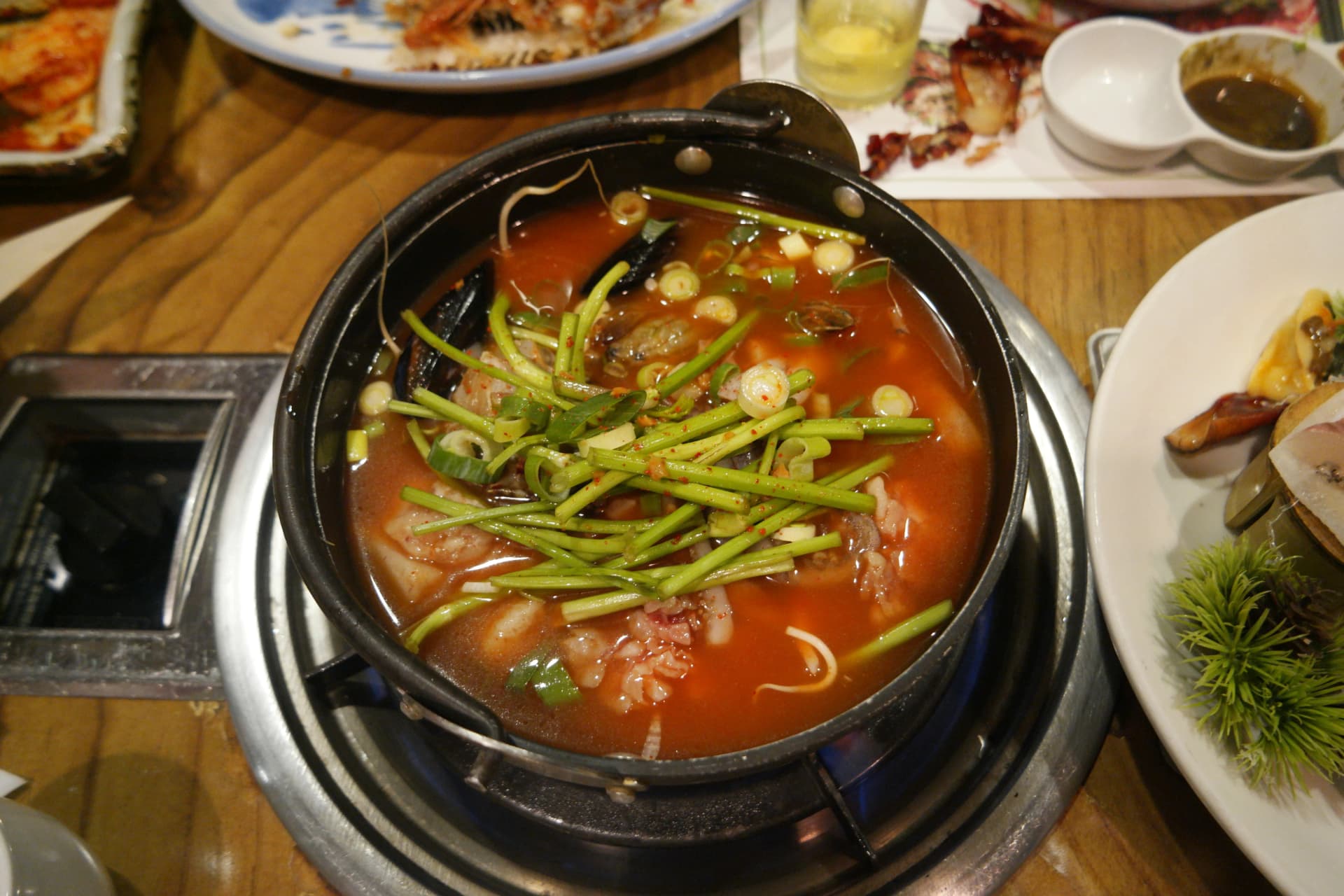
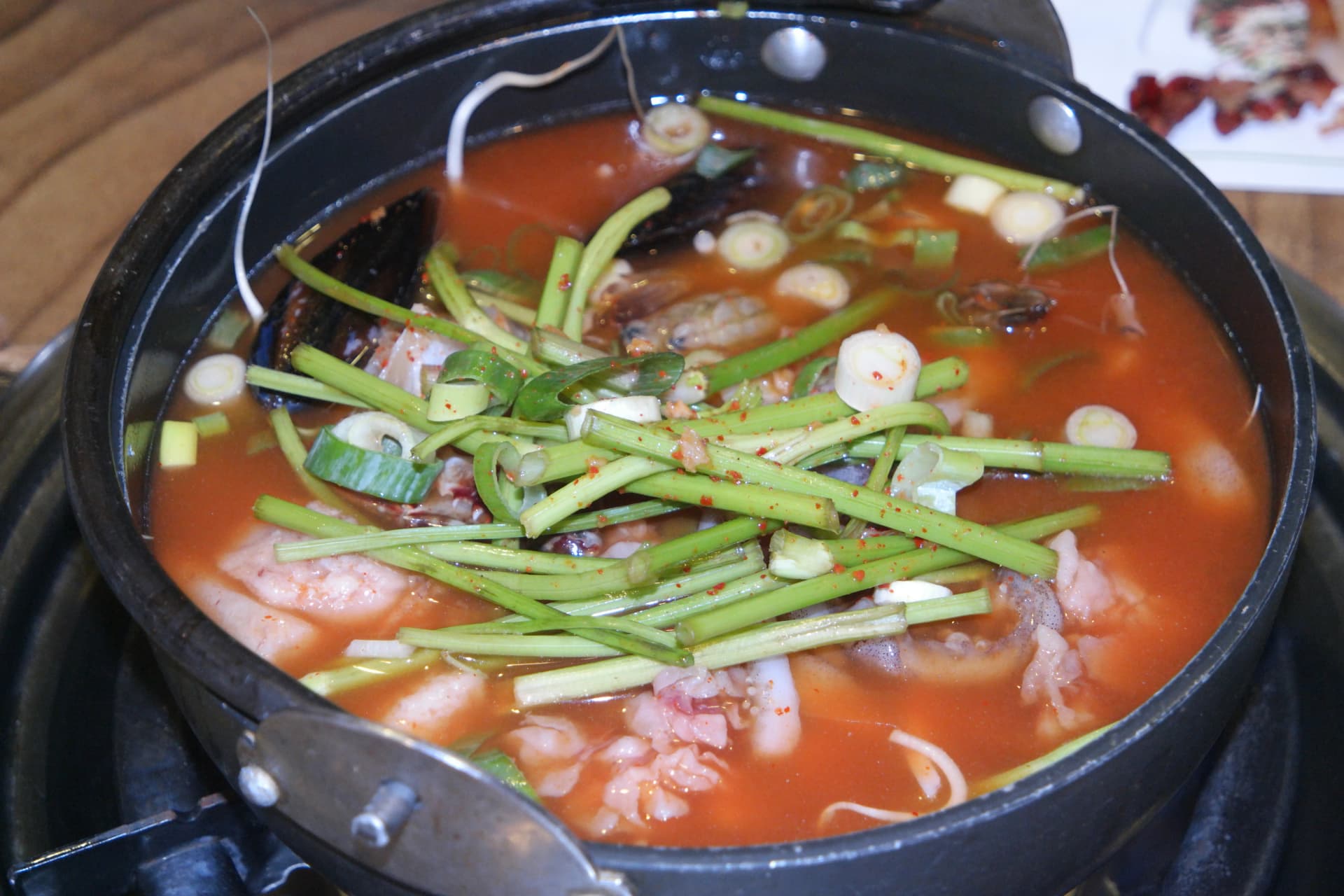
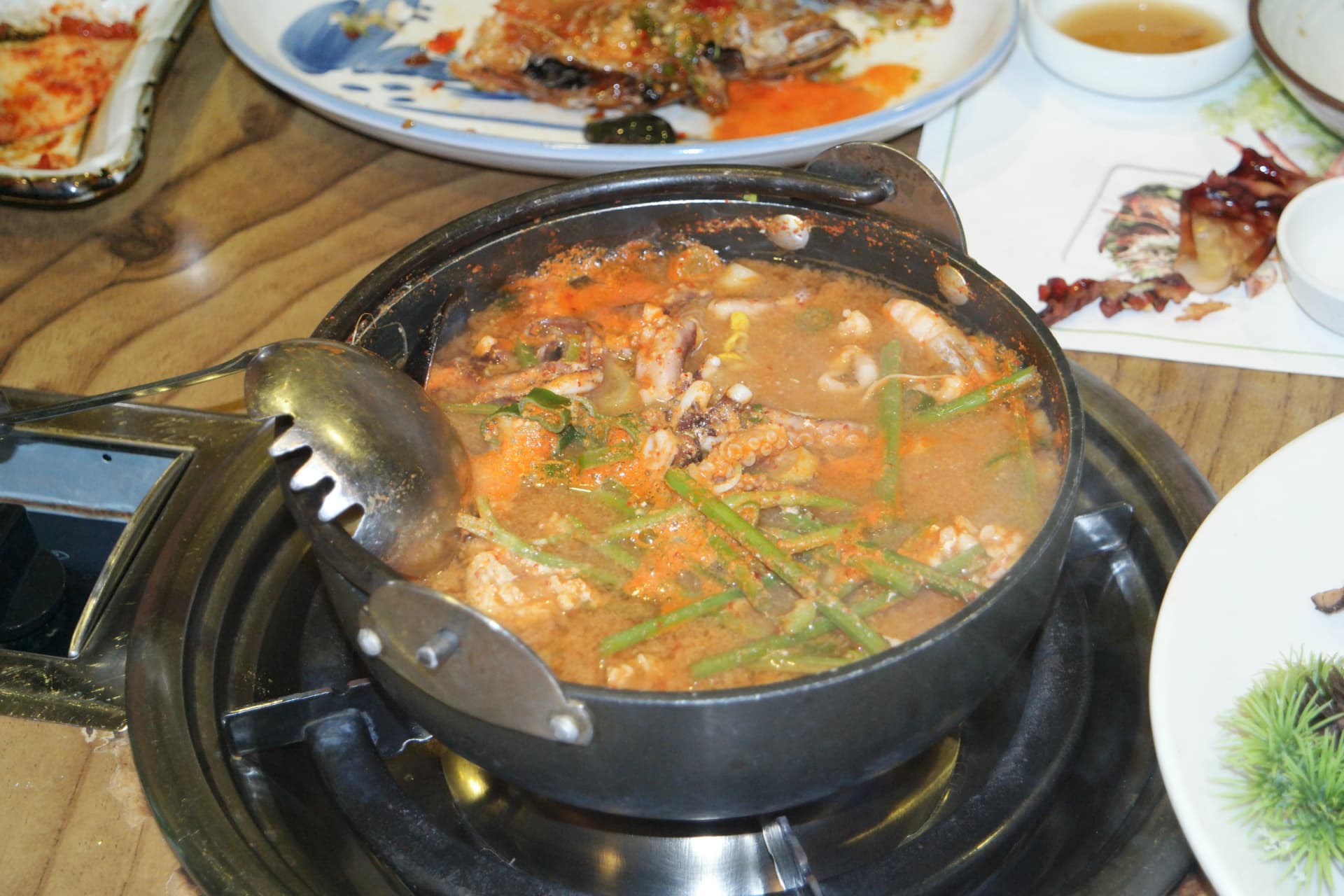
At last, the grand finale of the course: Haemul Maeuntang, a fiery spicy seafood stew. Here's the genius of Korean raw fish restaurants — almost nothing goes to waste. After they fillet the fish for sashimi, there's still plenty of meat clinging to the bones. Instead of tossing it, they throw it into a pot with all kinds of seafood and boil it into this rich, spicy stew. Octopus, clams, and more are loaded in, and the broth is made fiery-red with chili flakes and scallions — it looks absolutely incredible. After eating cold raw fish, this stew warms your whole body from the inside out, and the spicy broth cleanses your palate perfectly to wrap up the meal. It's the ideal closer to the course. There's a real wisdom in Korean food culture about using every last bit of an ingredient and letting nothing go to waste.
How Much Does a Korean Raw Fish Course Actually Cost?
A lot of people assume a Korean raw fish course must be expensive, but honestly, it's more affordable than you'd think. Here are the average prices across the country, though keep in mind they can vary depending on the region and restaurant.
BUDGET
Affordable
1 person · $15–$22
2 people · $30–$45
3 people · $45–$65
4 people · $60–$90
STANDARD
Mid-Range
1 person · $30–$45
2 people · $60–$90
3 people · $90–$135
4 people · $120–$180
PREMIUM
High-End
1 person · $50–$75+
2 people · $105–$150+
3 people · $155–$225+
4 people · $210–$300+
※ The prices above are national averages including the full course spread, and can vary by region and restaurant. Coastal areas like Busan and Jeju can sometimes be a bit cheaper, while downtown Seoul tends to run a bit higher.
If You Visit Korea, You Have to Try a Raw Fish Full Course
So, what did you think of the Korean raw fish restaurant course we just walked through together? From the salad to the steamed egg, seaweed soup, seasoned vegetables, kimchi, tempura, assorted sashimi platter, sea squirt, sea cucumber, abalone sashimi, and finally the spicy seafood stew — all of that laid out on one table is the quintessential Korean sashimi dining experience. It's not just about eating a plate of raw fish; it's an entire dining culture that flows from start to finish as one complete meal, and that's what makes Korean raw fish restaurants so special. Whether you're near the coast or deep inland, you can experience this level of a seafood full course spread anywhere in the country — and honestly, that alone is something Korean food culture can be incredibly proud of. The prices are more reasonable than you'd expect, so if you're coming to Korea, please do yourself a favor and try a raw fish full course. It'll be an experience beyond anything you imagined!
This post was originally published on https://hi-jsb.blog.