
18 Side Dishes With One Bowl of Rice — A Korean Barley Rice Feast
Table of Contents
16 items
I Wanted to Treat My Wife to a Proper Korean Spread
My wife works hard every single day, and I'd been wanting to take her out for a real meal. I stumbled across a barley rice restaurant on YouTube Shorts — this video showed a table absolutely buried in side dishes — and I made up my mind right then. She's never been big on expensive dining out, so I kept putting it off. This time I just went ahead and covered the whole bill myself. In April 2026, we visited 1972 Song Eunjeong Boribap (the original location) in Jochiwon, Sejong City — a small city about an hour south of Seoul.
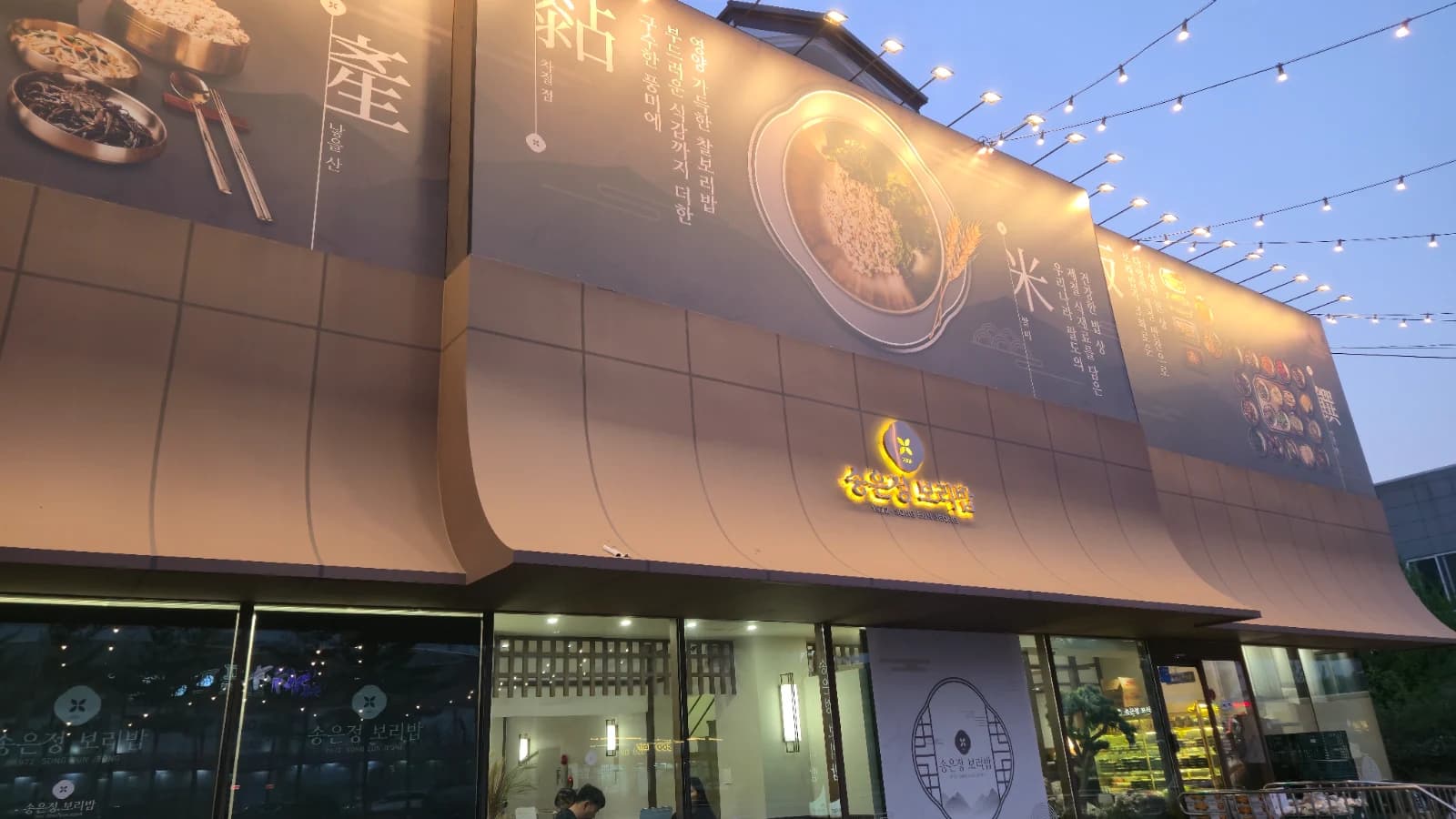
We got there in the evening and the building was way bigger than I expected. I'd pictured some little neighborhood hole-in-the-wall, so the sheer size of the place caught me off guard. There's a huge photo of barley rice on the outer wall, and the lighting was surprisingly modern for a traditional Korean rice joint. That said, the parking lot is pretty tight for a restaurant this size — if you show up during the dinner rush, you might circle around a bit looking for a spot.
Wide Tables — There's a Reason for That
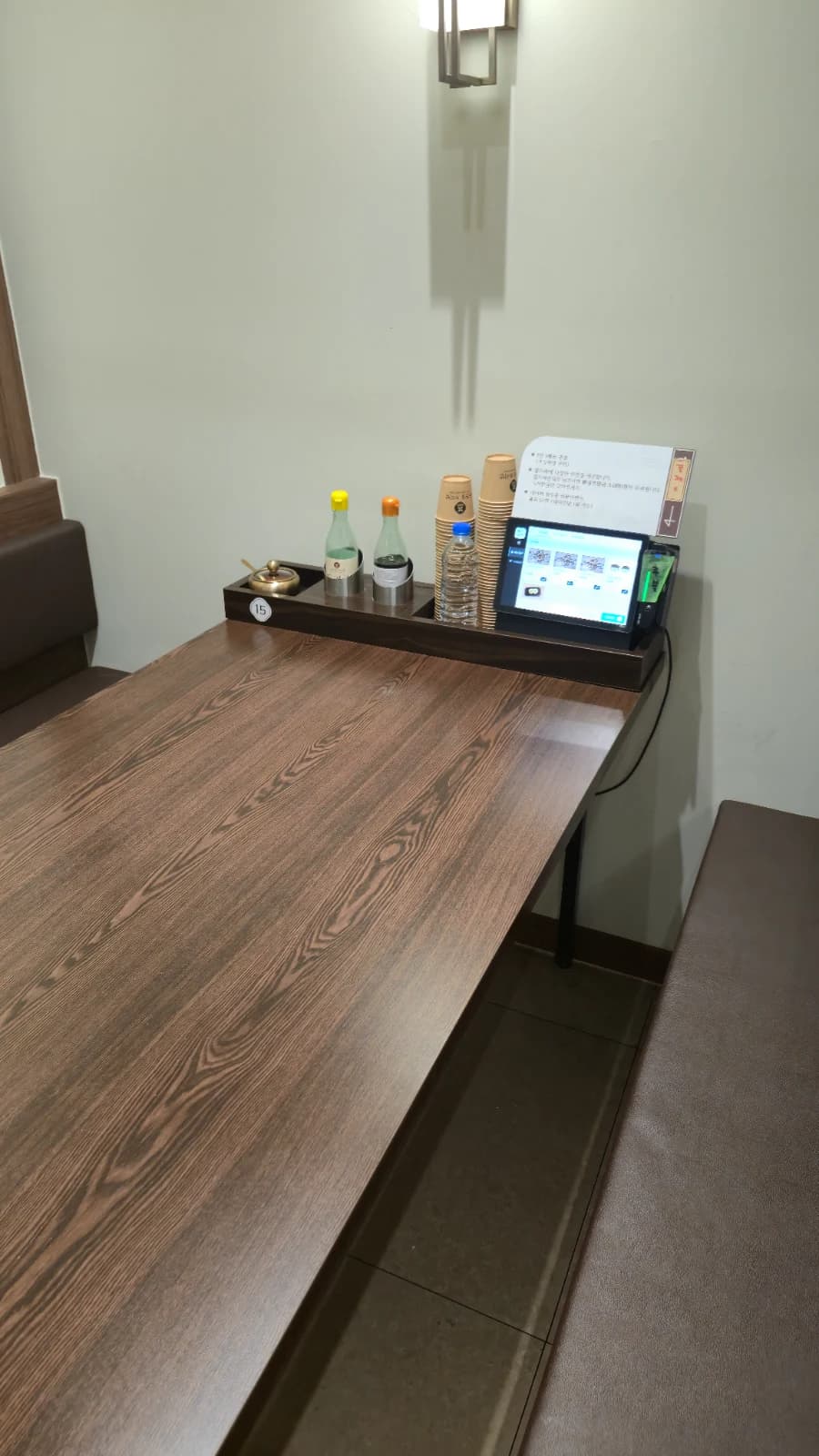
We sat down and immediately noticed how wide the table was. It's a four-person setup, so with just the two of us it felt almost too roomy. I didn't understand why until the side dishes started arriving. On one end there was a tablet for ordering, and they'd already set out sesame oil and perilla oil on the table.
Tablet Ordering — Convenient, but No Real Translation
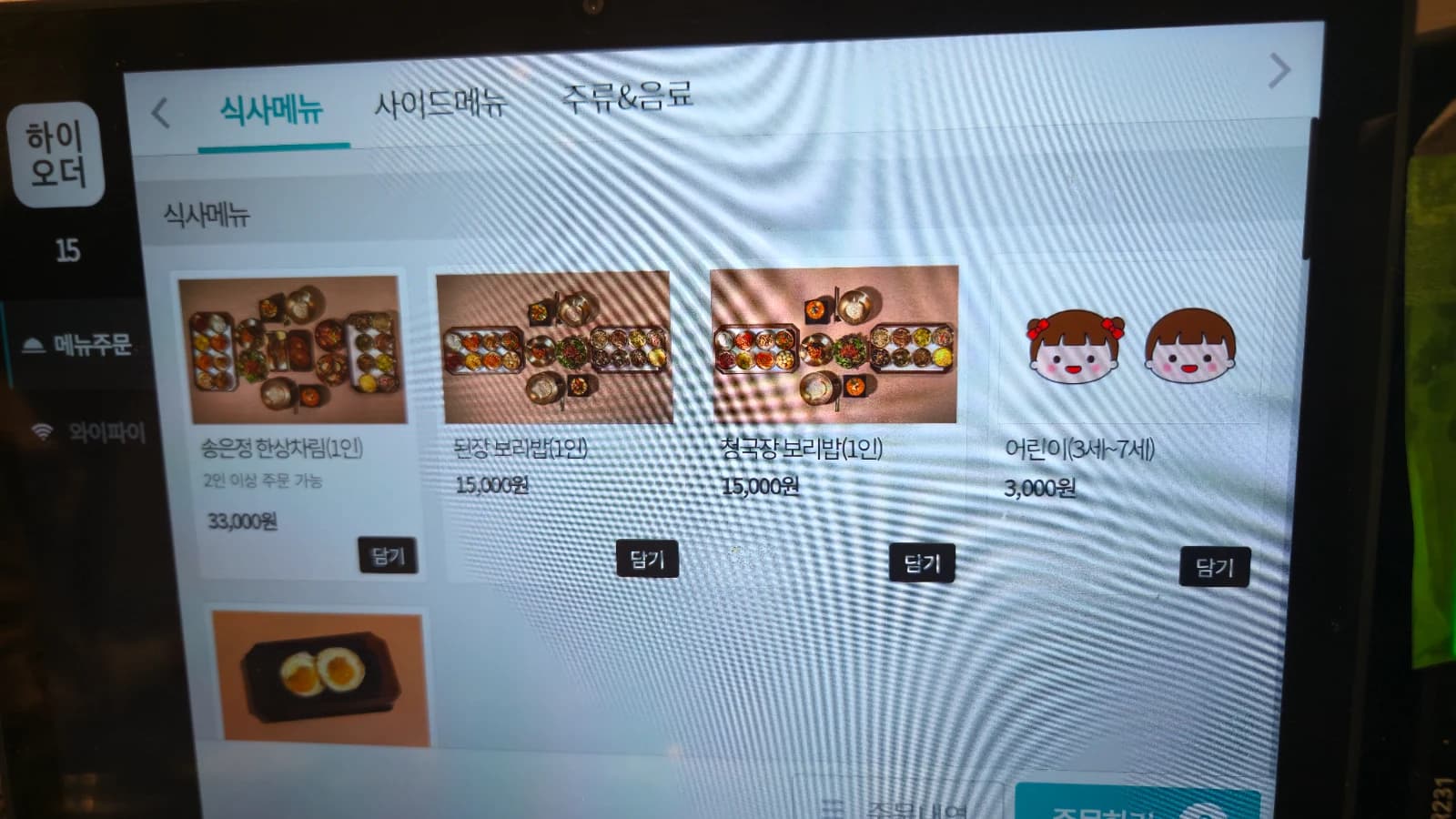
You order from a tablet at your seat. A few taps and you're done — except the menu technically has an English option that isn't actually translated. If you can't read Korean, ordering is going to be a struggle. So here's the full menu breakdown for you.
1972 Song Eunjeong Boribap · Menu
Menu · メニュー · 菜单
-
$24
Song Eunjeong Full Table Set (per person)
Full Table Set / 松恩亭フルセット / 松恩亭套餐
Min. 2 persons required
-
$11
Doenjang Boribap (per person)
Soybean Paste Stew + Barley Rice / 味噌チゲ麦ごはん / 大酱汤麦饭
-
$11
Cheonggukjang Boribap (per person)
Fermented Soybean Stew + Barley Rice / 清麹醤チゲ麦ごはん / 清麴酱汤麦饭
-
$2
Kids Meal (ages 3–7)
Kids Meal / お子様メニュー / 儿童餐
Add-ons
- Grilled Mackerel / 鯖の塩焼き / 烤鲭鱼$7
- Spicy Pork Stir-Fry / 豚キムチ炒め / 辣炒猪肉$4
- Beef Bulgogi / 牛プルコギ / 烤牛肉$7
Korean Barley Rice Table Setting — This Is What Comes With One Bowl of Rice
Eating a meal in Korea isn't just about the rice. The rice is the center, and then everything fans out around it — seasoned vegetables, stews, grilled items, braised dishes, pickles — all spread across the table. That's Korean banchan culture, and it's the whole point of a Korean set meal. Barley rice, or boribap, is rice cooked with barley mixed in. It has a rougher, chewier texture than plain white rice, with individual barley grains that pop between your teeth. Koreans have been eating it as a hearty, healthy grain staple for generations. At barley rice specialty restaurants, the standard move is to pile seasoned vegetables on top and mix everything together, which is exactly why so many side dishes come out. I've been living in Korea and I've reviewed a few $6–$8 everyday Korean lunch sets (baekban) on my blog before, and this barley rice spread was basically the upgraded full-course version of those.
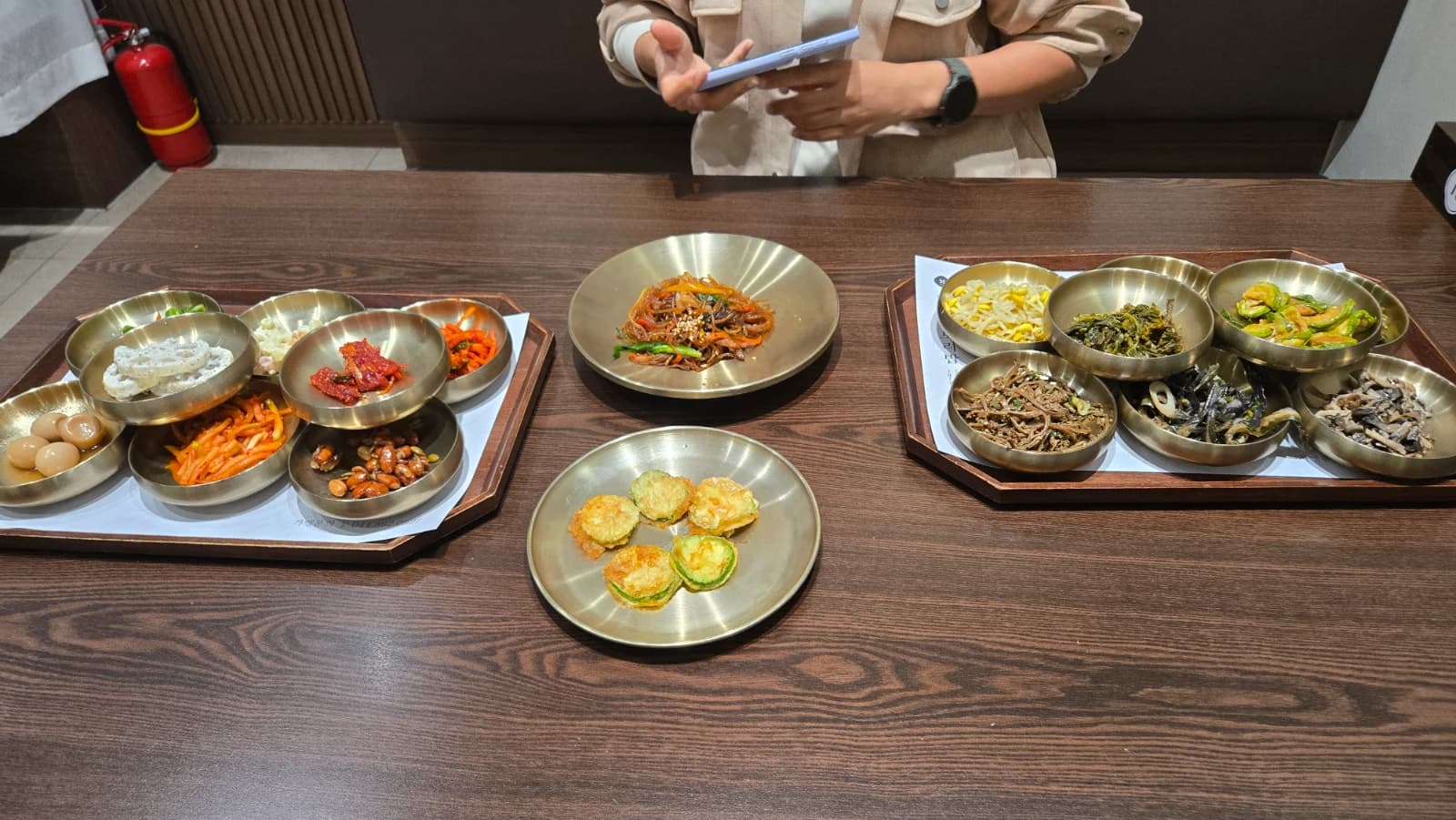
We placed our order on the tablet and the side dishes arrived in under 30 seconds. Two brass trays came out packed to the edges, all at once — my wife hadn't even put her phone down yet. The speed honestly shocked me.
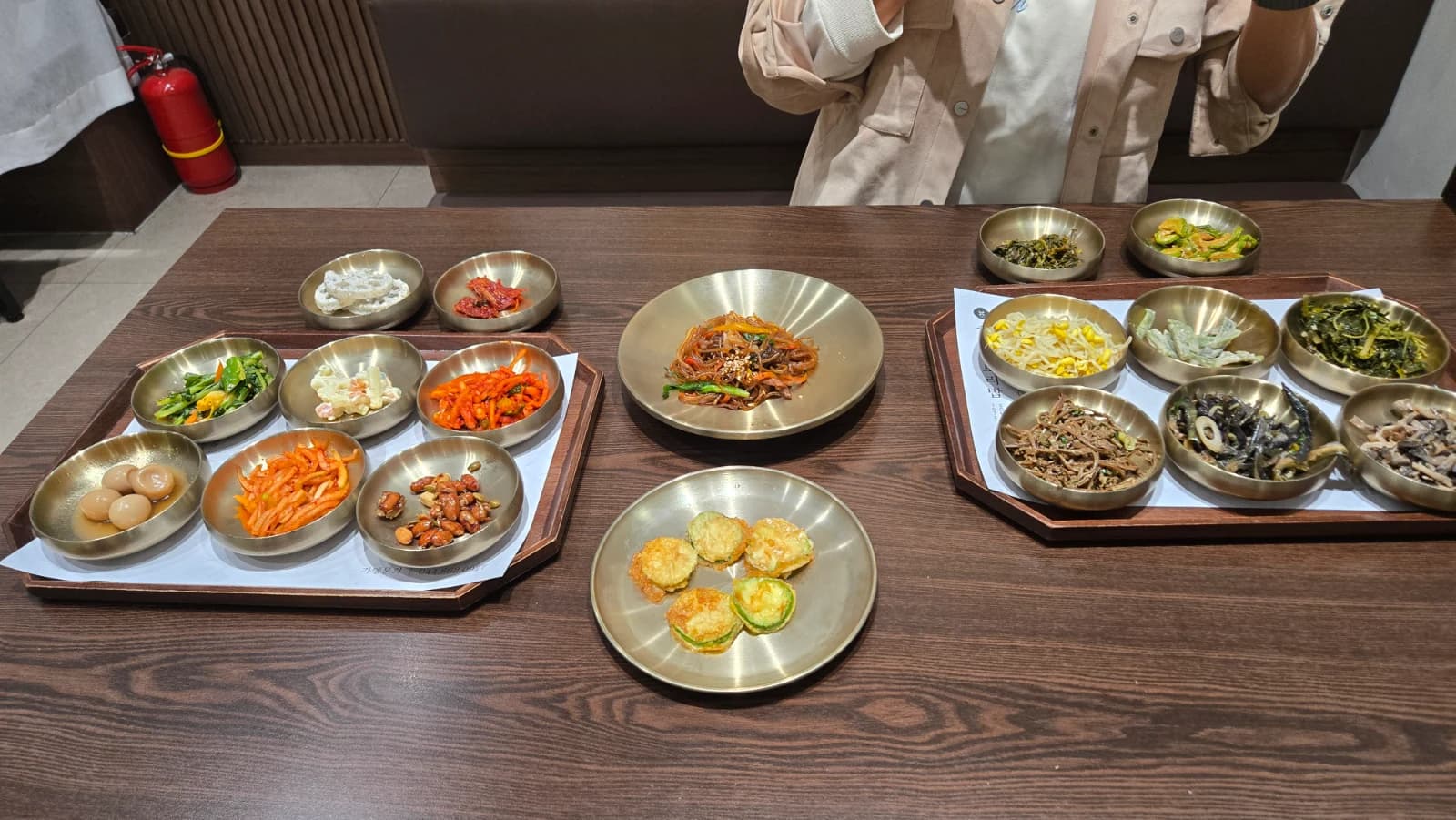
Once we unpacked both trays, the table filled up in seconds. That's why the tables are so wide — now it all made sense. My wife looked at the whole spread and said, "This is ALL for us?" She was genuinely moved. It was her first time seeing banchan laid out this dramatically at a Korean restaurant, and her eyes went wide.
Two Brass Trays — Banchan and Namul Come Separately
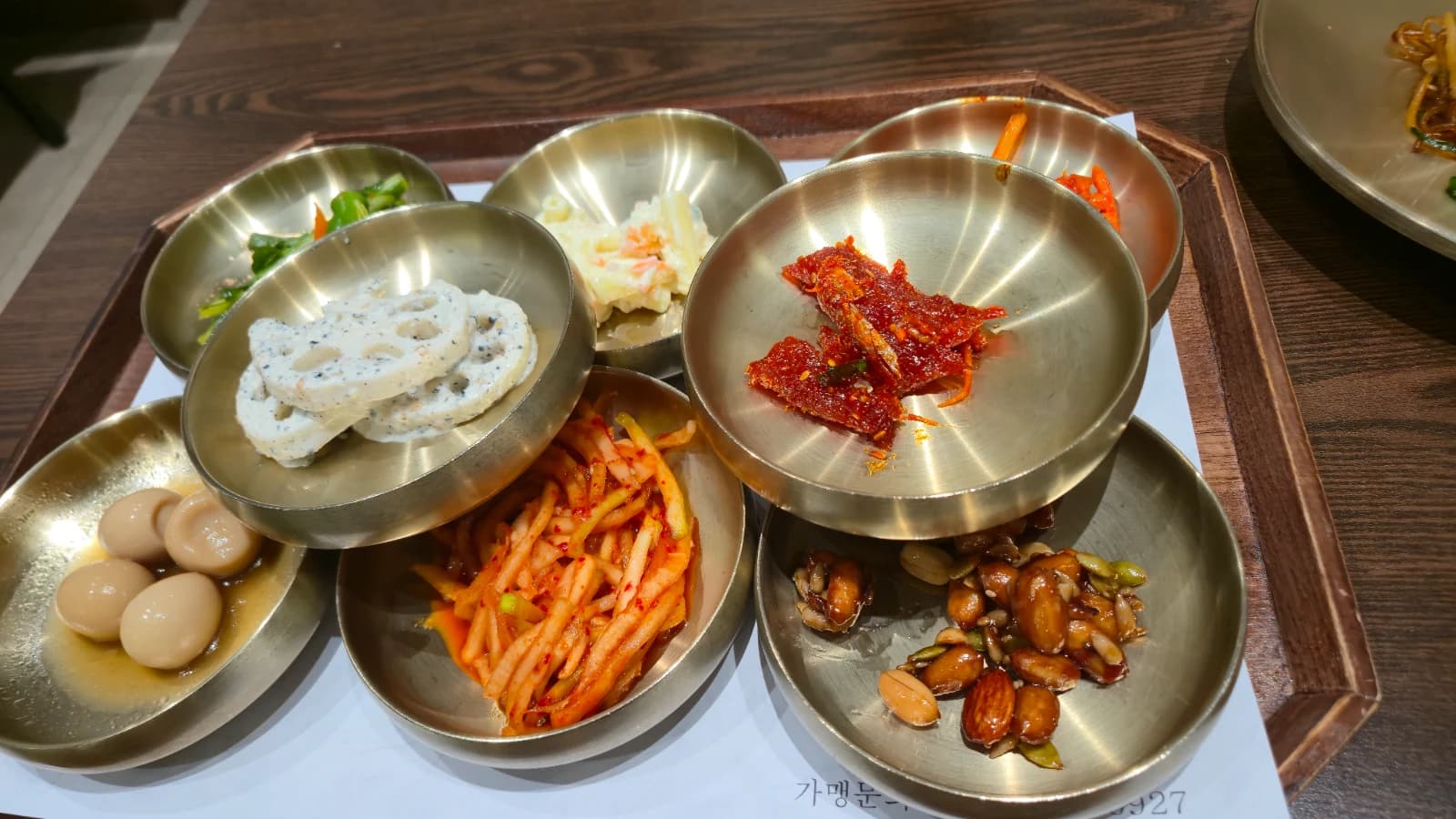
This tray was the banchan side — the non-vegetable dishes. Soy-braised quail eggs, lotus root salad, spicy shredded radish, seasoned dried pollack, candied nuts, and macaroni salad, each in its own little brass bowl. These are the salty-sweet ones that get your appetite going. Young radish kimchi was on this tray too.
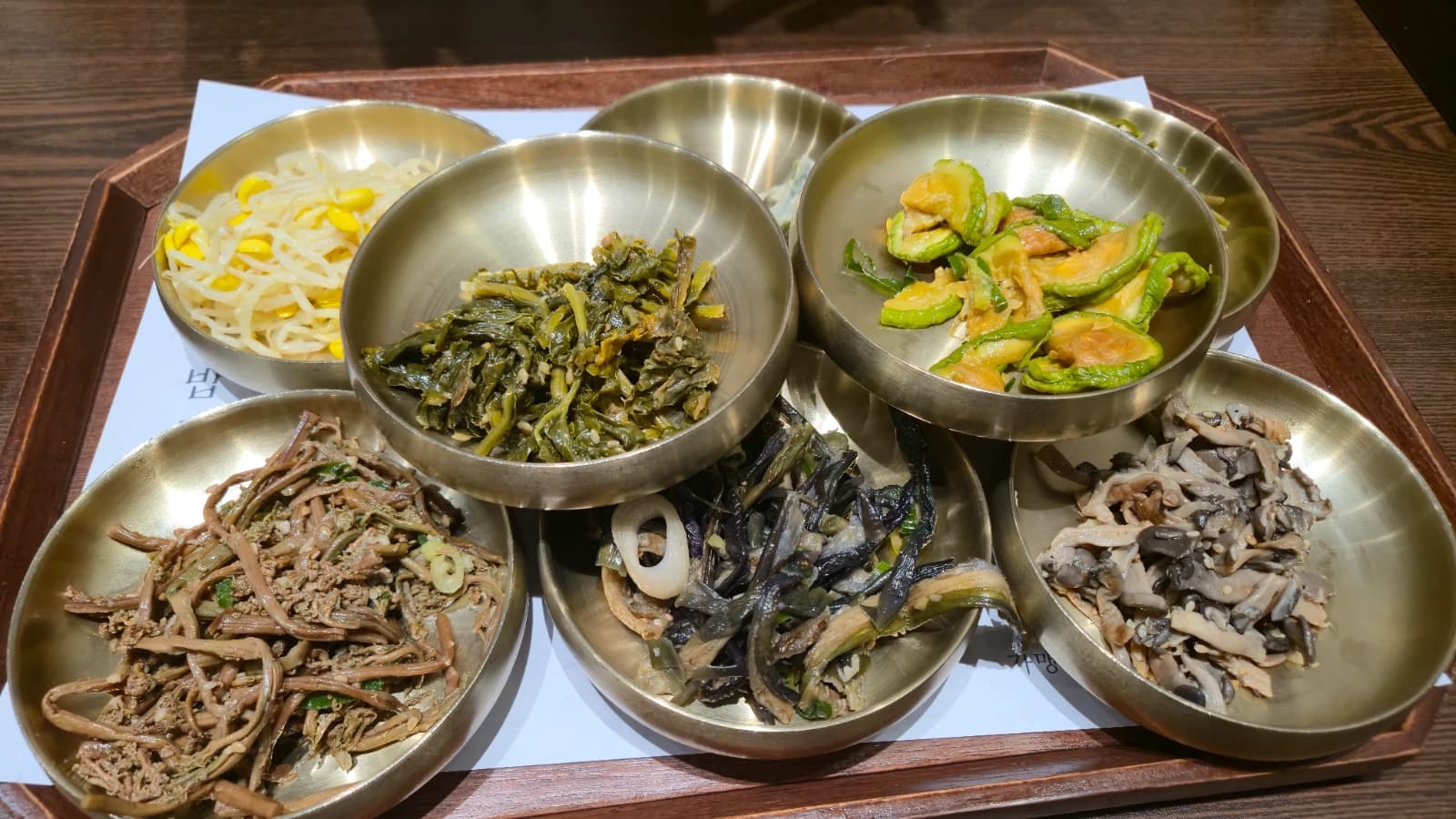
The other tray was all namul — seasoned vegetables. Bean sprouts, bracken fern, dried eggplant, gondre (Korean thistle), zucchini, and oyster mushroom, all neatly arranged. These are the ones you mix into your barley rice. Having the banchan and namul on separate trays kept everything organized and made it kind of fun deciding what to dig into first.
The Side Dishes That Really Stood Out
This place is known for its banchan game, and honestly, the variety and quality both delivered. I won't go through every single one in full detail — I'll just hit the highlights.
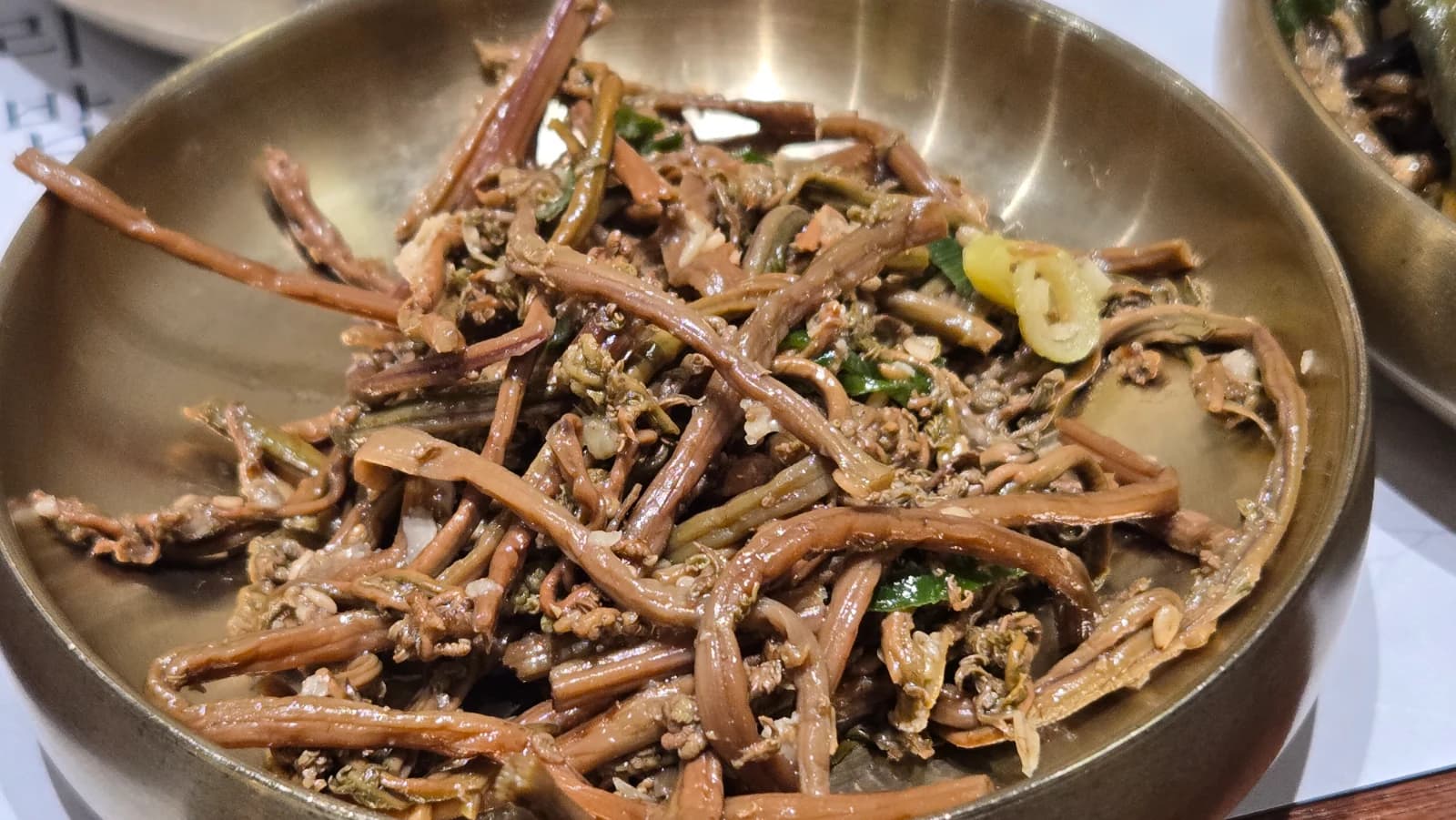
Bracken fern (gosari). In Korea, dried bracken gets rehydrated and then stir-fried in a soy-based seasoning — it's practically a mandatory banchan at any barley rice restaurant. The first bite feels a little tough, but after a couple more chews it goes soft and gives way to this savory, nutty flavor from the soy sauce and sesame oil soaking through. I liked it so much I went back to the self-serve bar for a second plate.
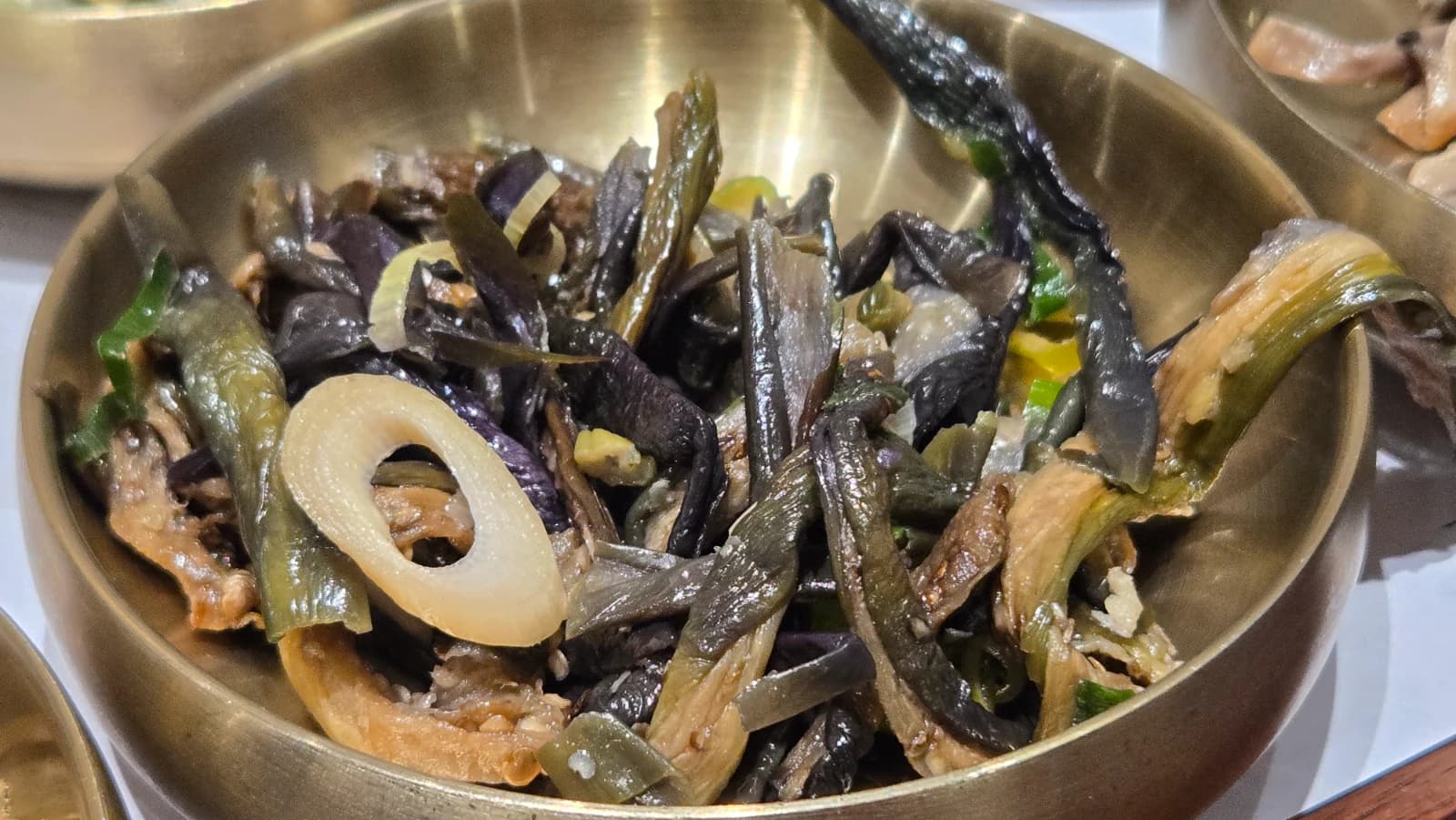
Dried eggplant (geon-gaji). This isn't fresh eggplant — it's been dried, rehydrated, and stir-fried with seasoning. The texture is completely different from regular eggplant. It's chewy, almost meaty, and the soy seasoning penetrates deep. Mix it into your rice and it absolutely holds its own.
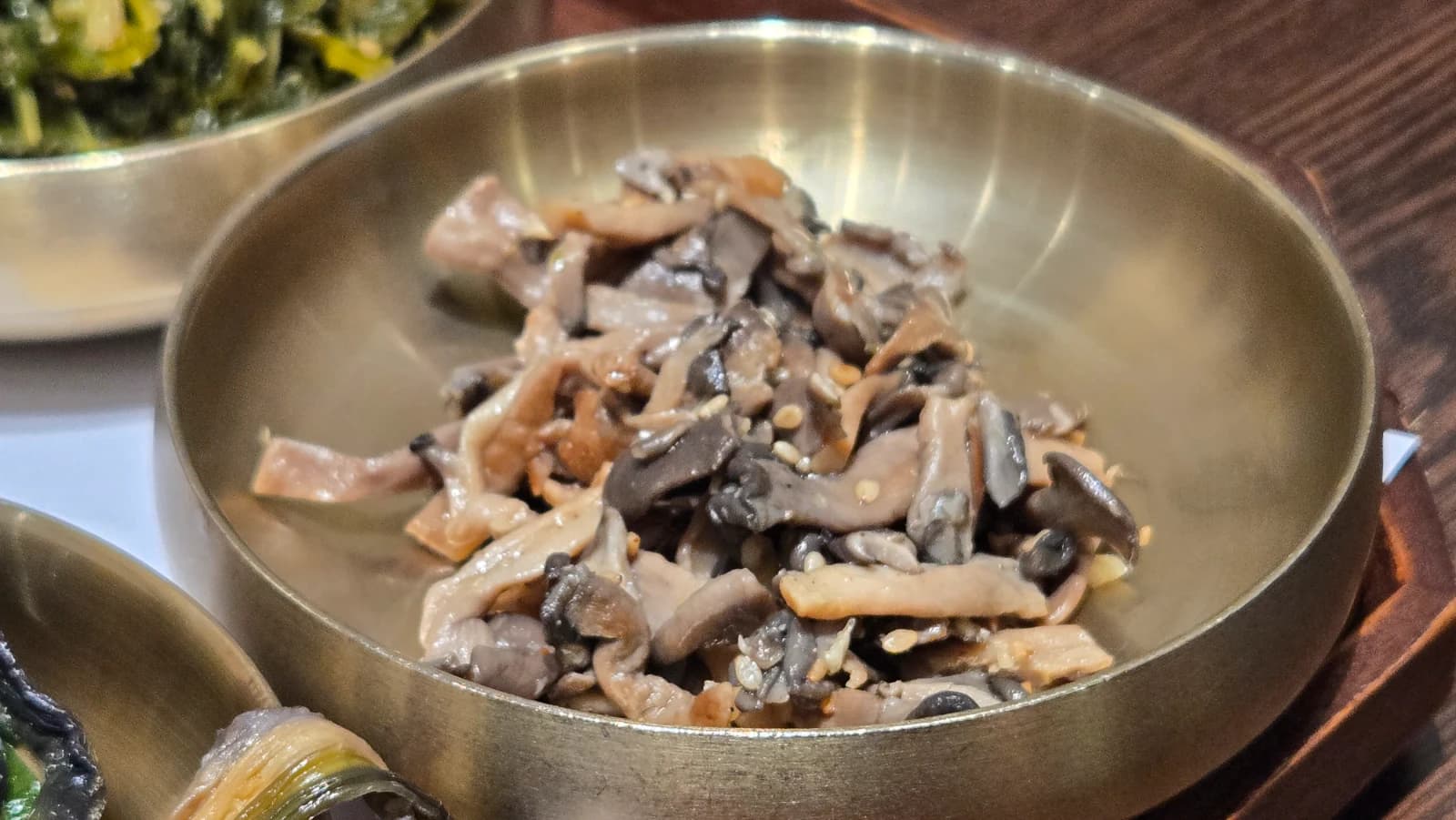
Oyster mushroom stir-fry. Torn into thin strips and sautéed in sesame oil — not slimy at all, just pleasantly chewy. The seasoning is on the lighter side, which ended up balancing out the bolder dishes nicely.
The Rest of the Namul, Quick Hits
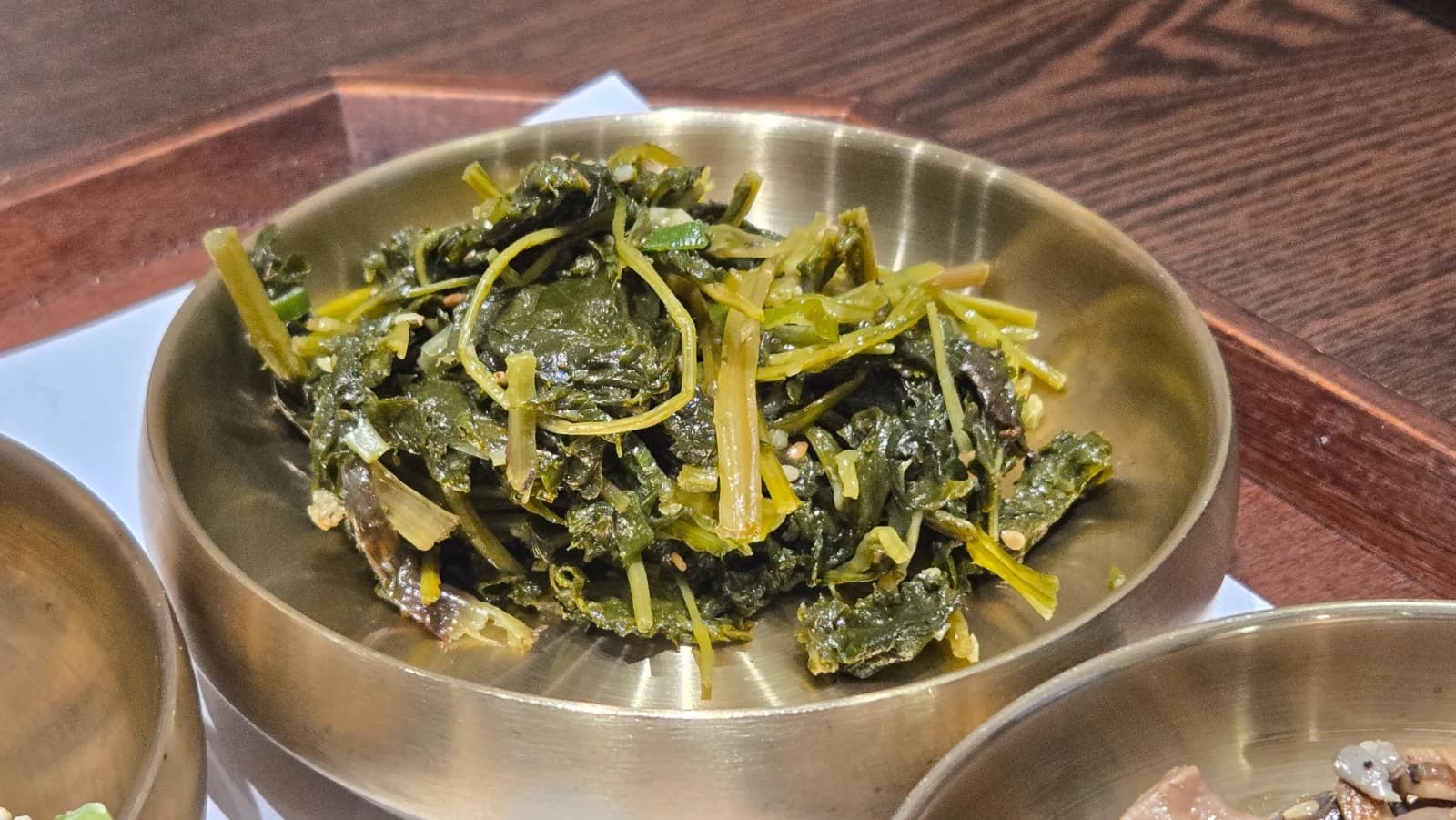
Dried radish greens (siraegi). Stir-fried with the stems still on — a strong grassy flavor with sesame oil really coming through.
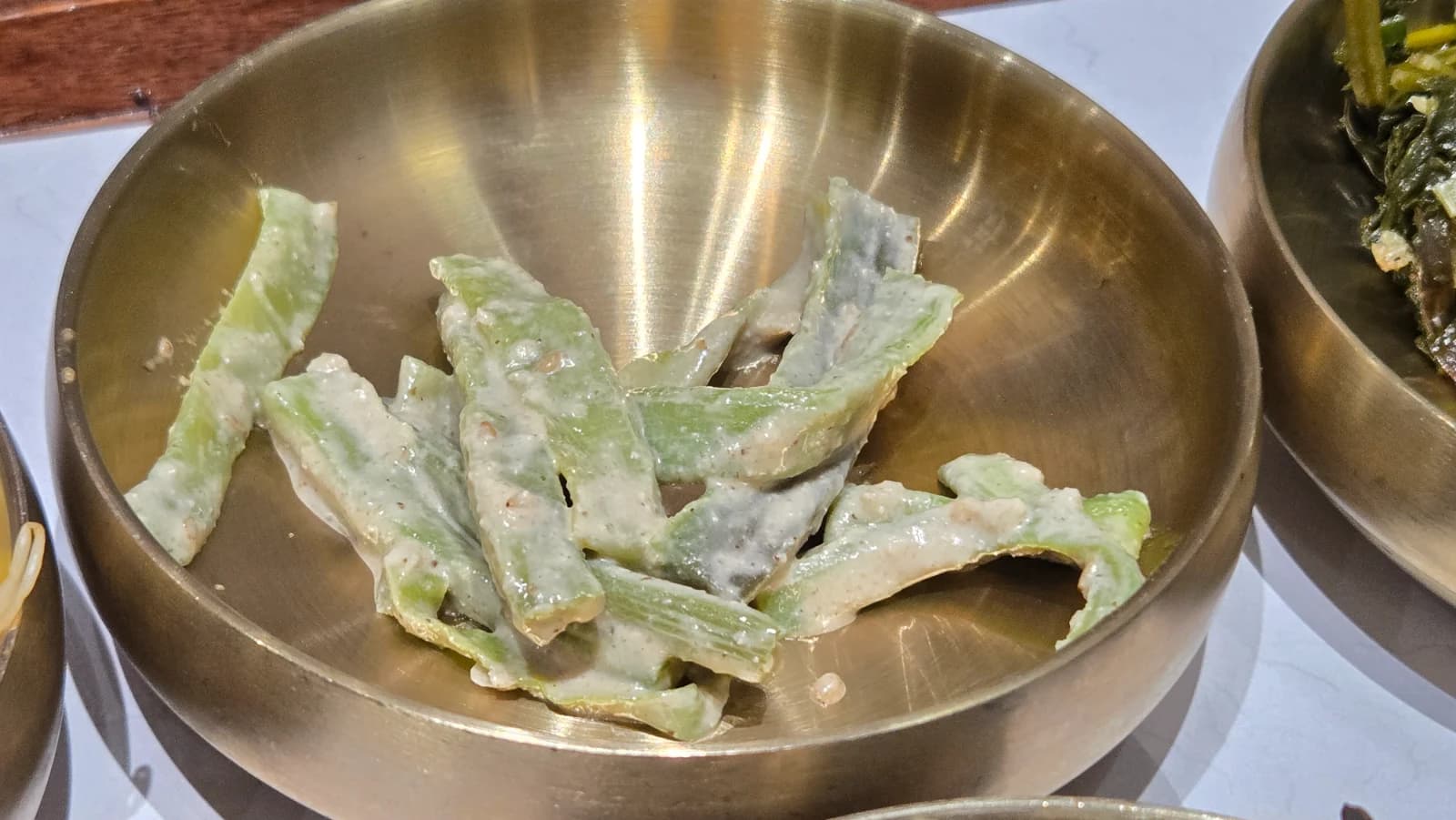
Taro stem. The stems have tiny air pockets inside, giving them this unique spongy softness — almost like a natural sponge. The seasoning seeps into all those little gaps, so each bite is moist and flavorful.
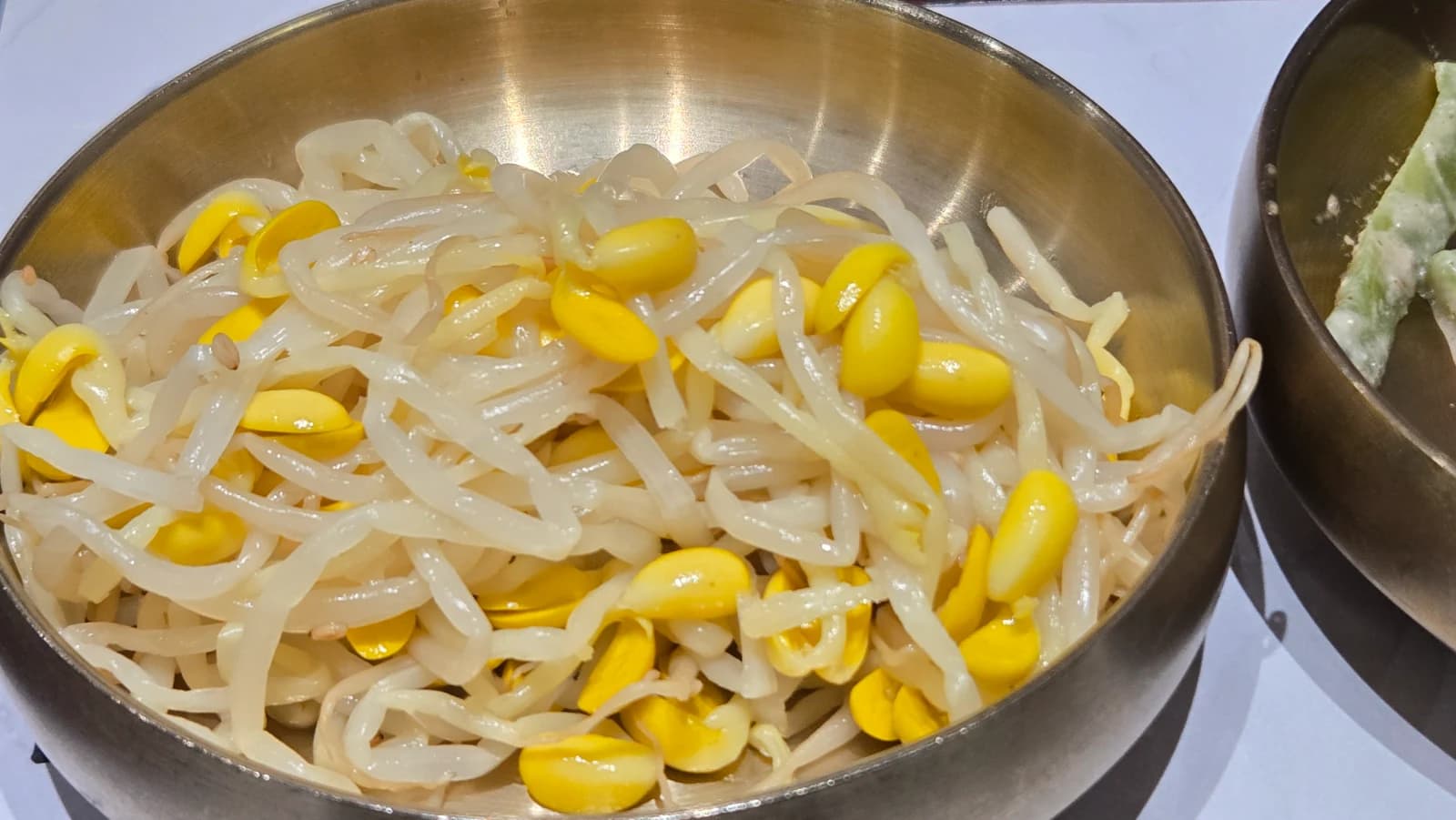
Bean sprouts. Barely seasoned on their own, so they don't do much solo — but mixed into the barley rice, they play their role perfectly with that clean crunch.
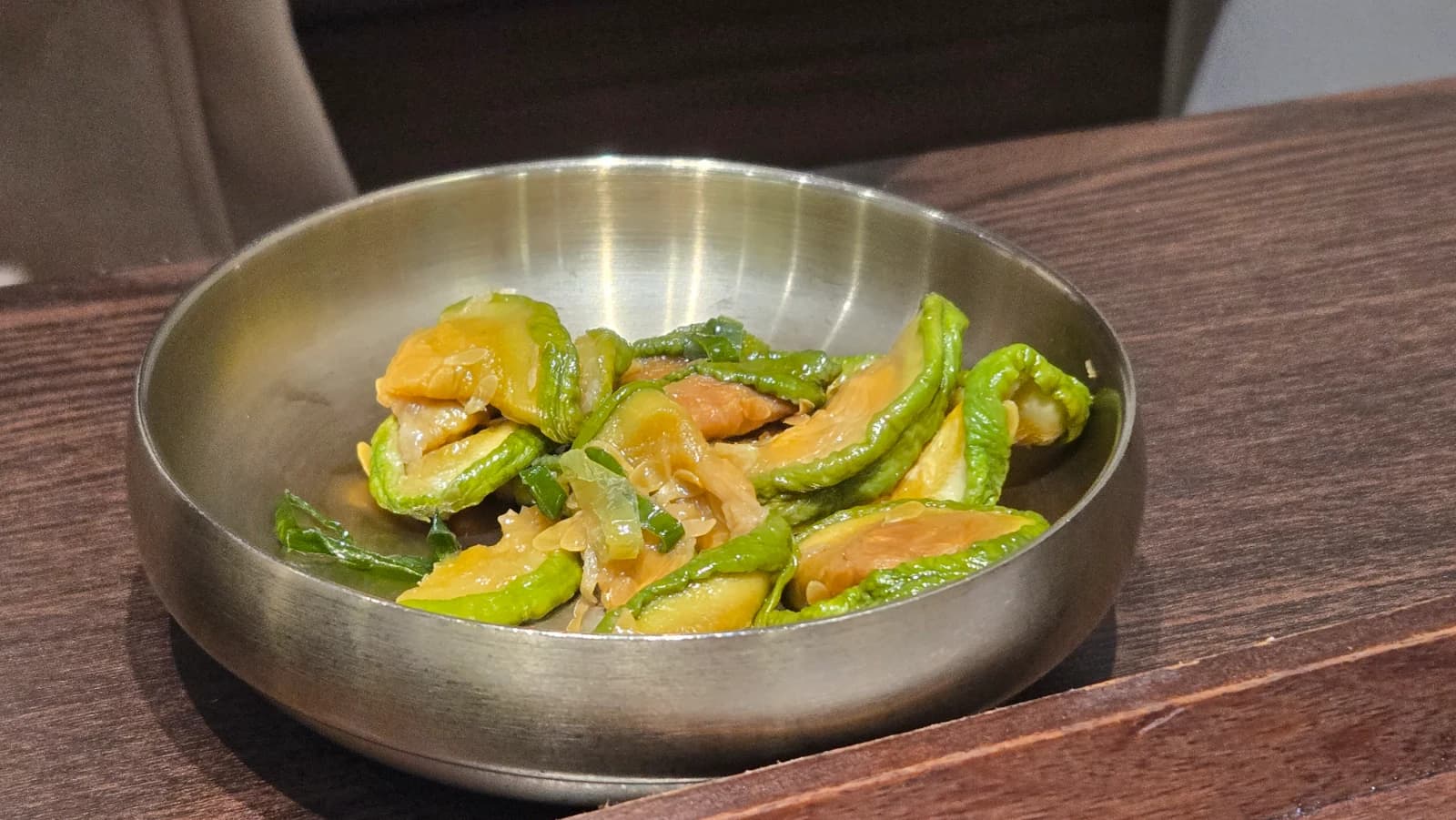
Zucchini stir-fry. Just barely cooked to keep that crisp bite, and completely clean-tasting with no greasiness.
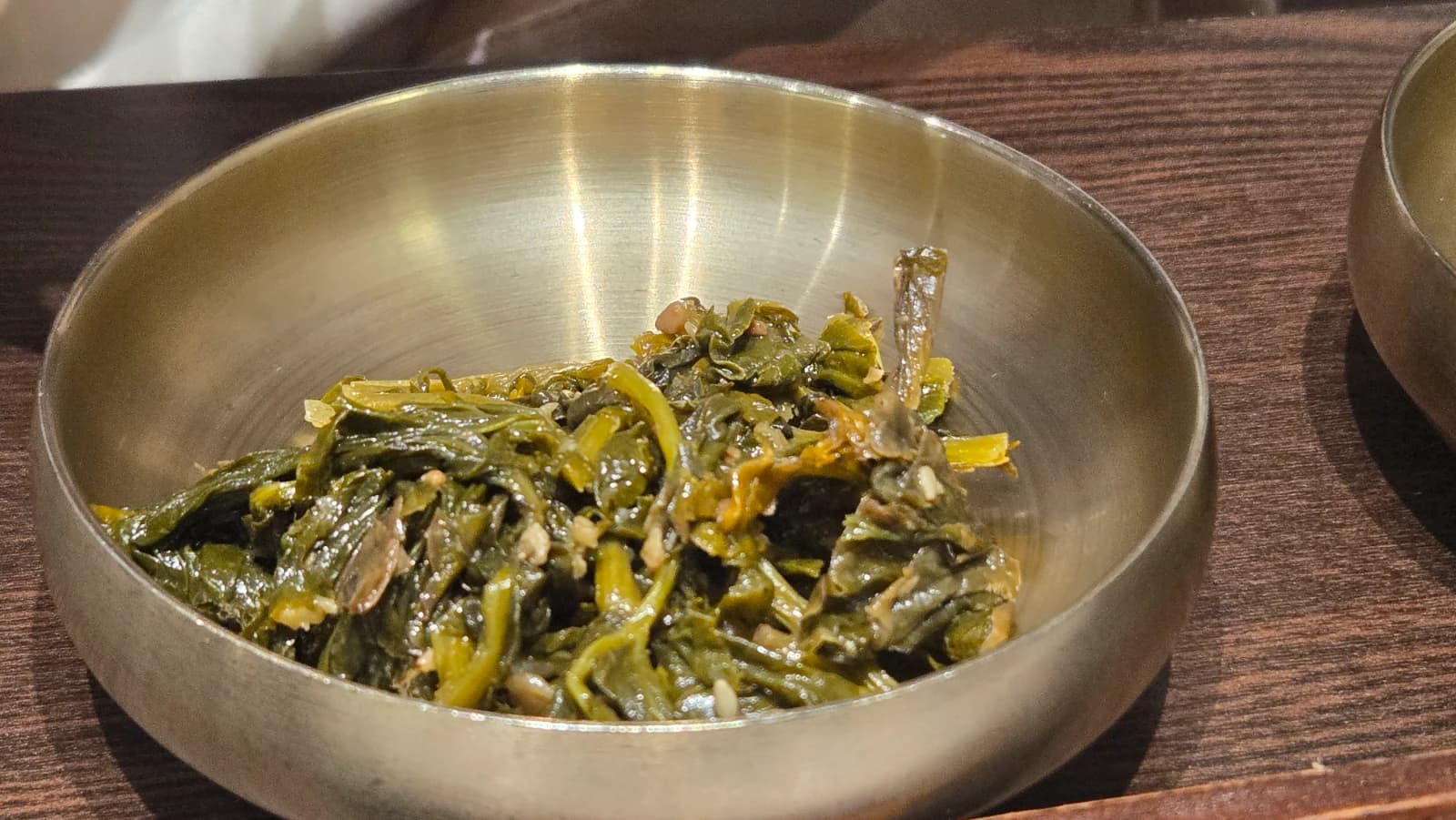
Gondre (Korean thistle) or chwi-namul. I'm honestly not 100% sure which one it was, but the subtle bitterness melting into perilla oil was an unbelievably good match with barley rice.
Beyond the Vegetables
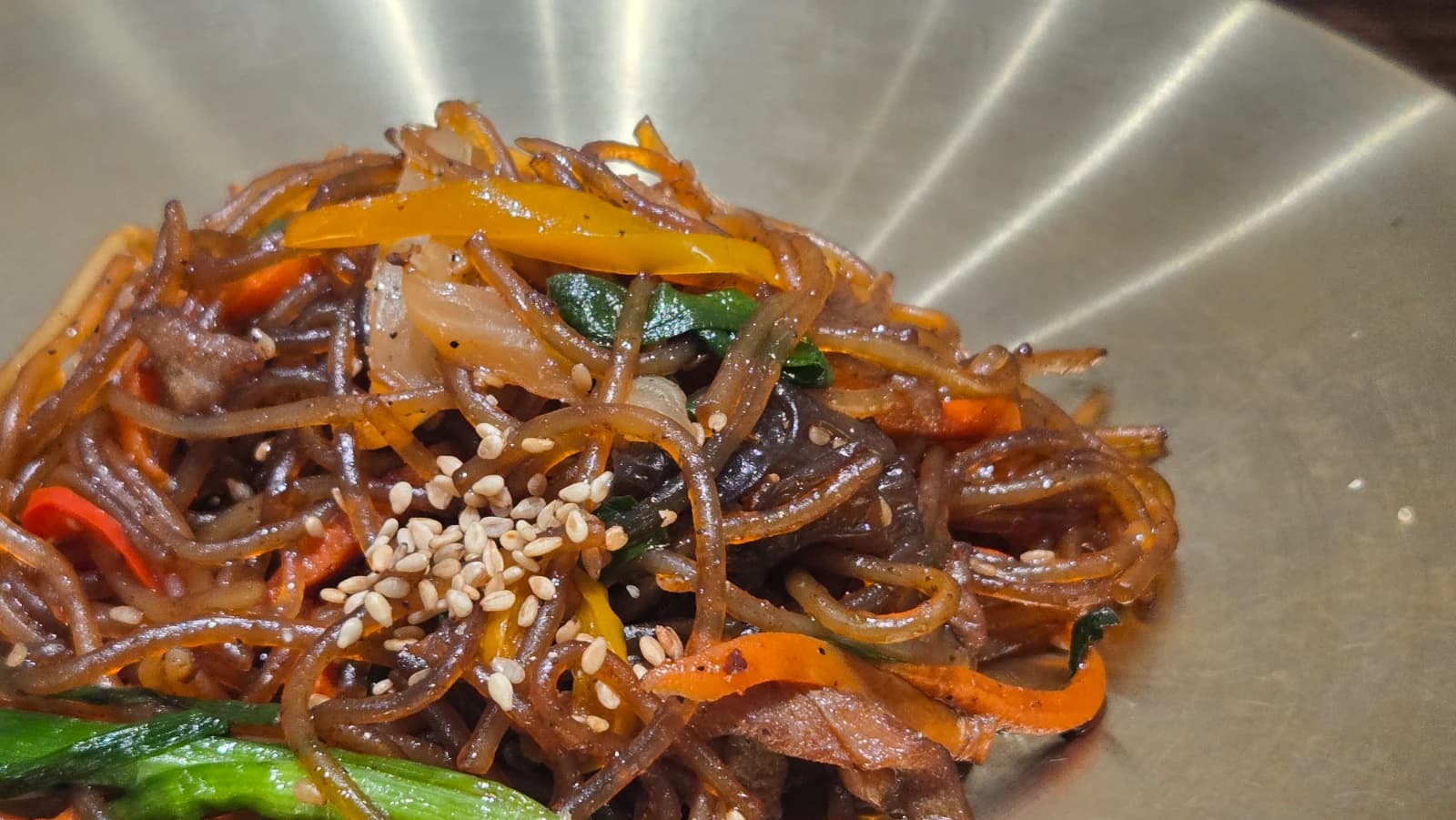
Japchae. Chewy glass noodles stir-fried in soy sauce with vegetables and sesame seeds sprinkled on top. My wife was absolutely obsessed with this one — she went back to the self-serve bar for more twice. Something about that chewy, slightly sweet flavor just hooked her completely.
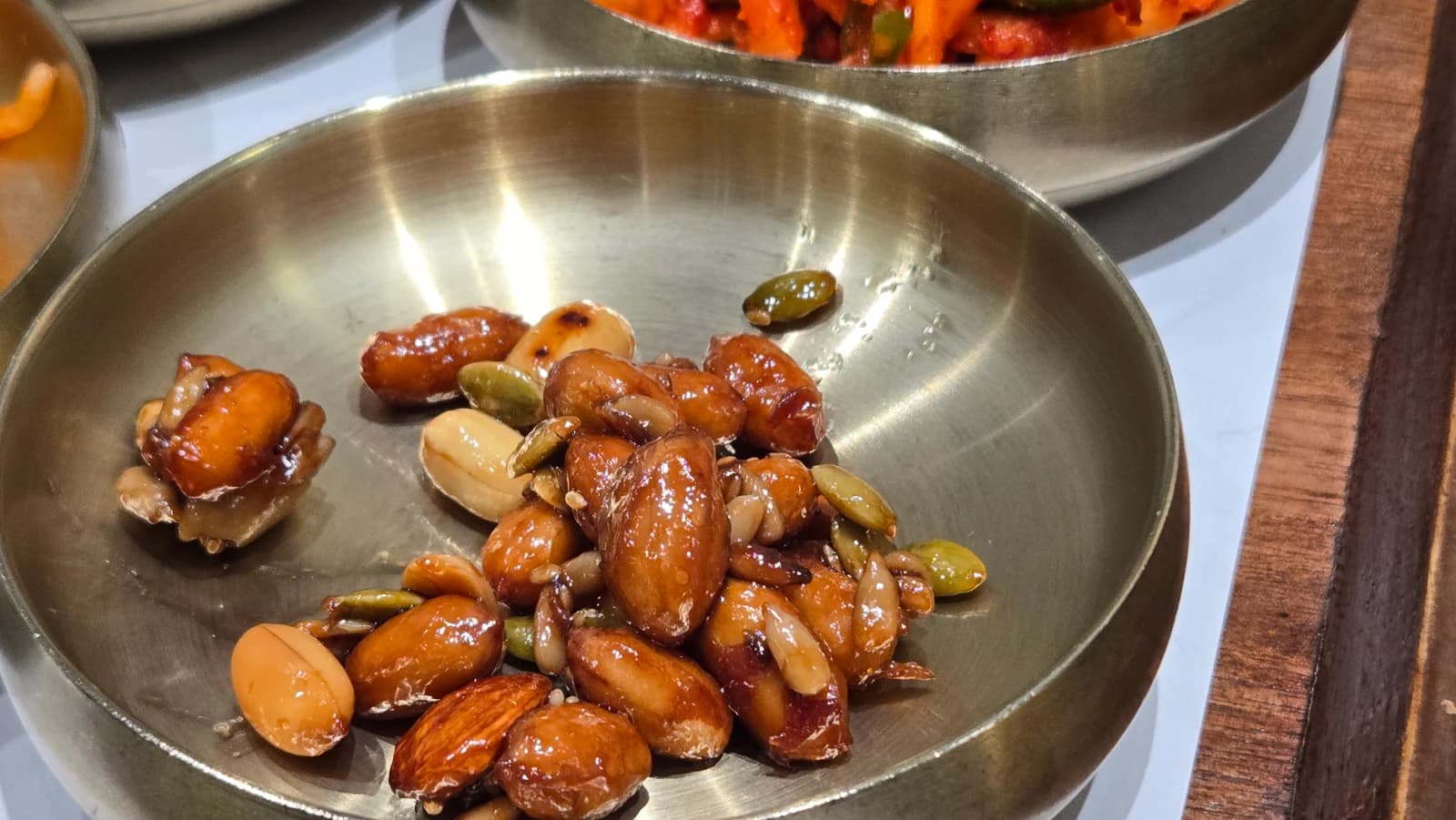
Candied nuts. Almonds, peanuts, and pumpkin seeds glazed in rice syrup — more of a sweet snack than a savory banchan. Pop one of these in between bites of namul and it completely resets your palate.
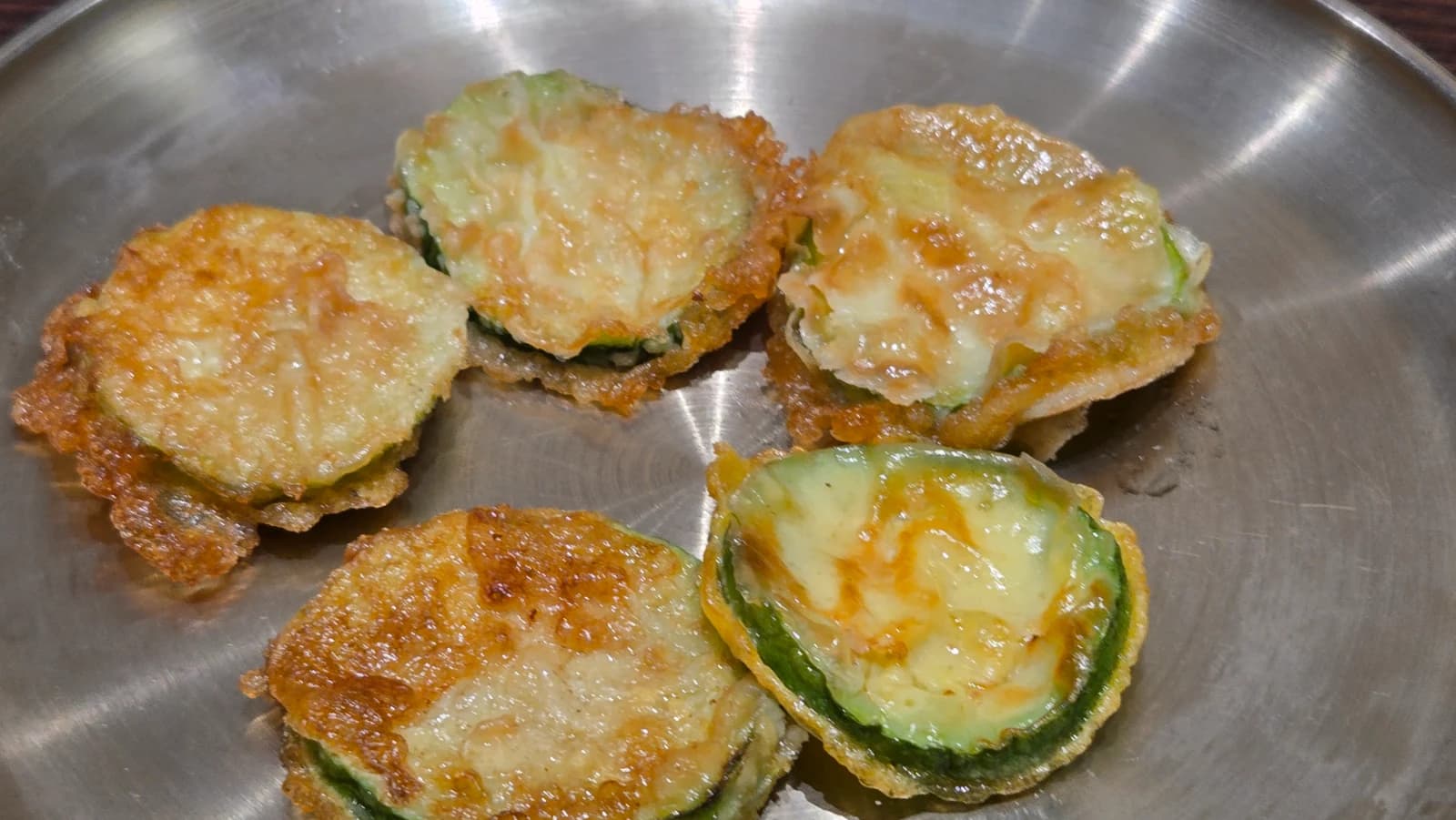
Zucchini pancake (hobak-jeon). Thin-sliced zucchini dipped in egg batter and pan-fried — crispy shell, moist center.
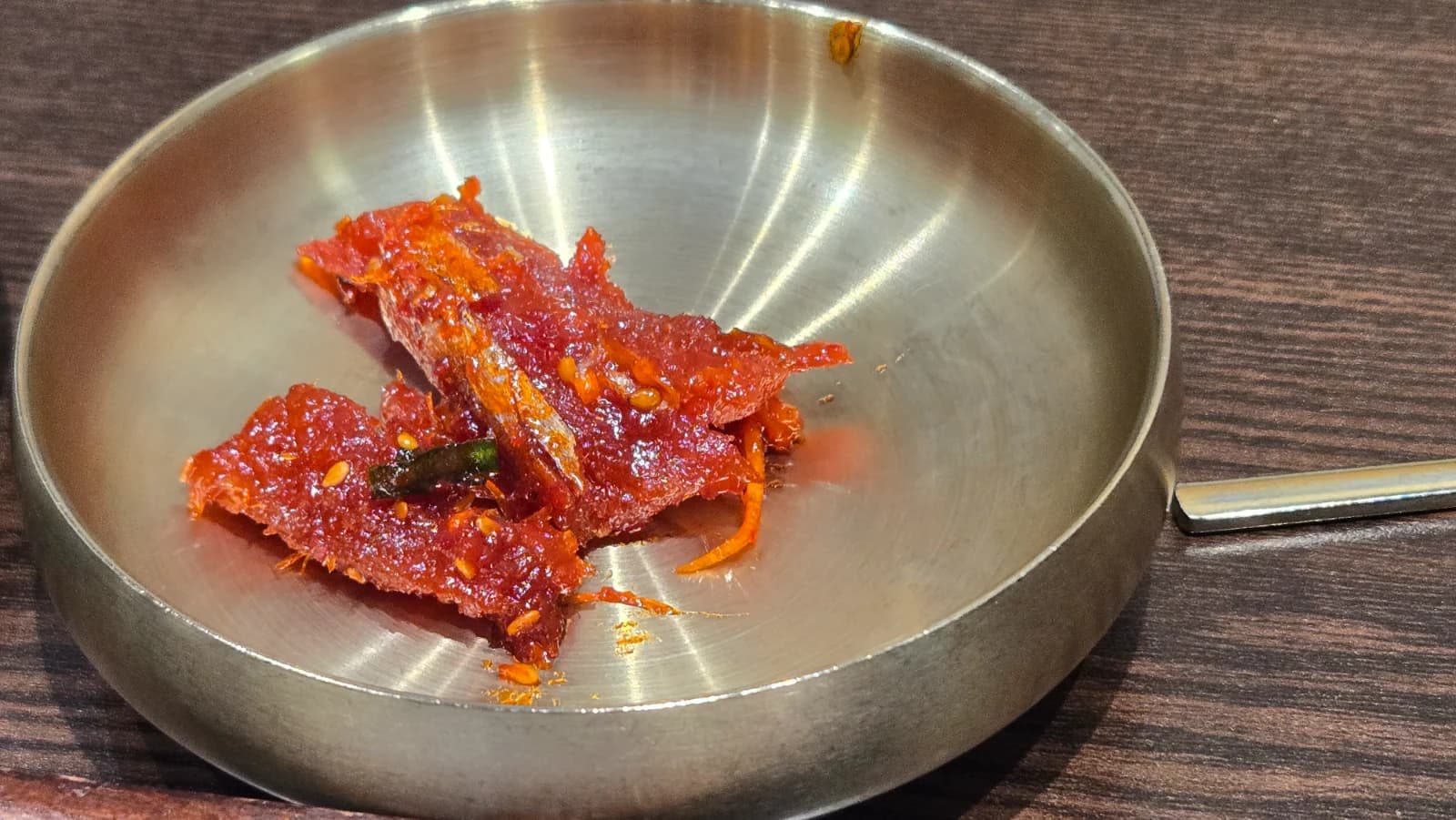
Seasoned dried pollack. Dressed in gochujang (red pepper paste), sweet and salty at the same time. This was one of those banchan my chopsticks kept drifting back to without me even thinking about it.
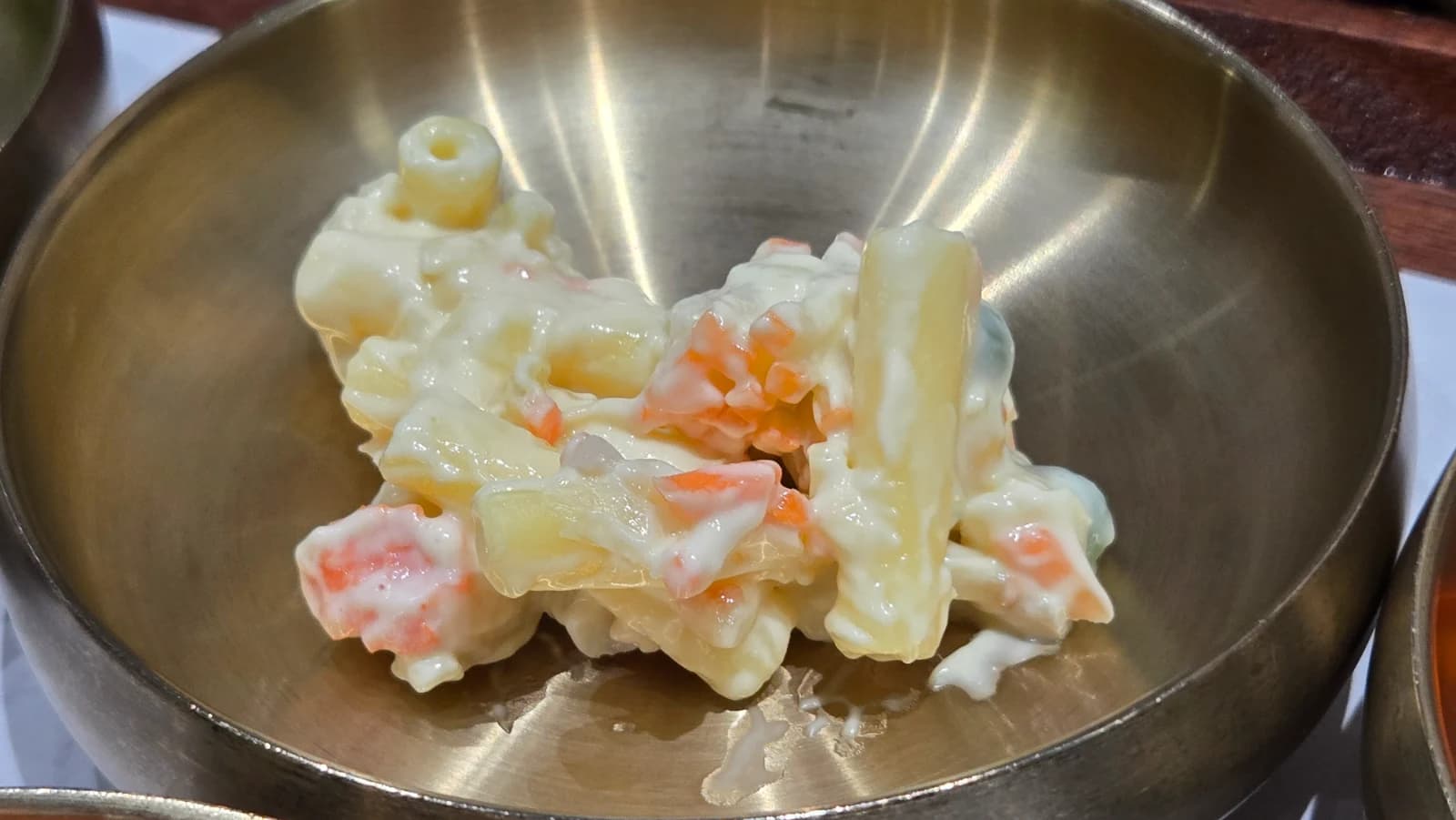
Macaroni salad. Finding this sandwiched between all the namul dishes is kind of a fun curveball — it totally shifts the mood. If you've got kids at the table, I guarantee this is the first thing they'd reach for.
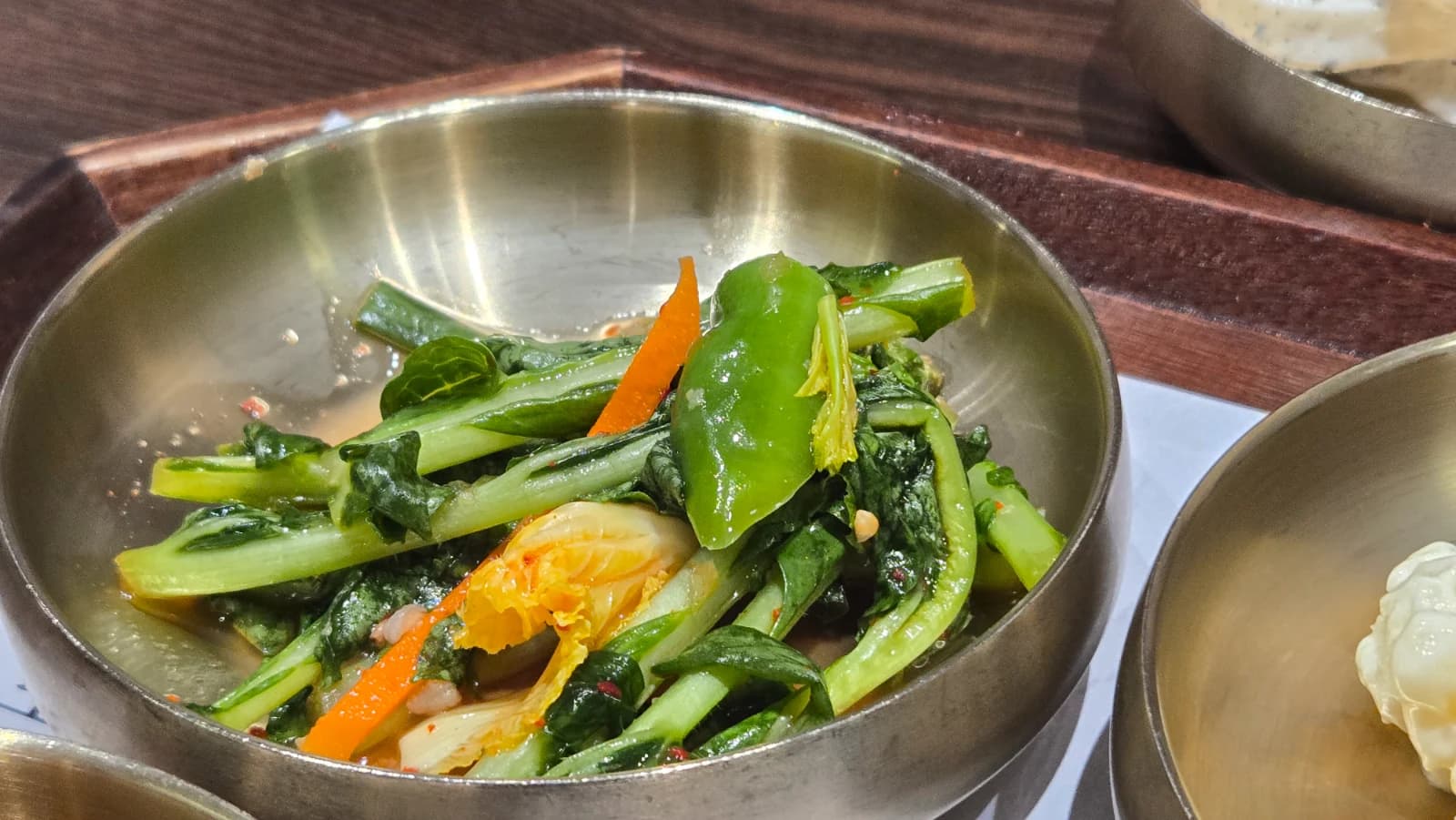
Young radish kimchi (yeolmu). Young radish pickled in chili seasoning with a bit of liquid — cool, refreshing, and when you fold it into your barley rice, the spicy kick really wakes everything up.
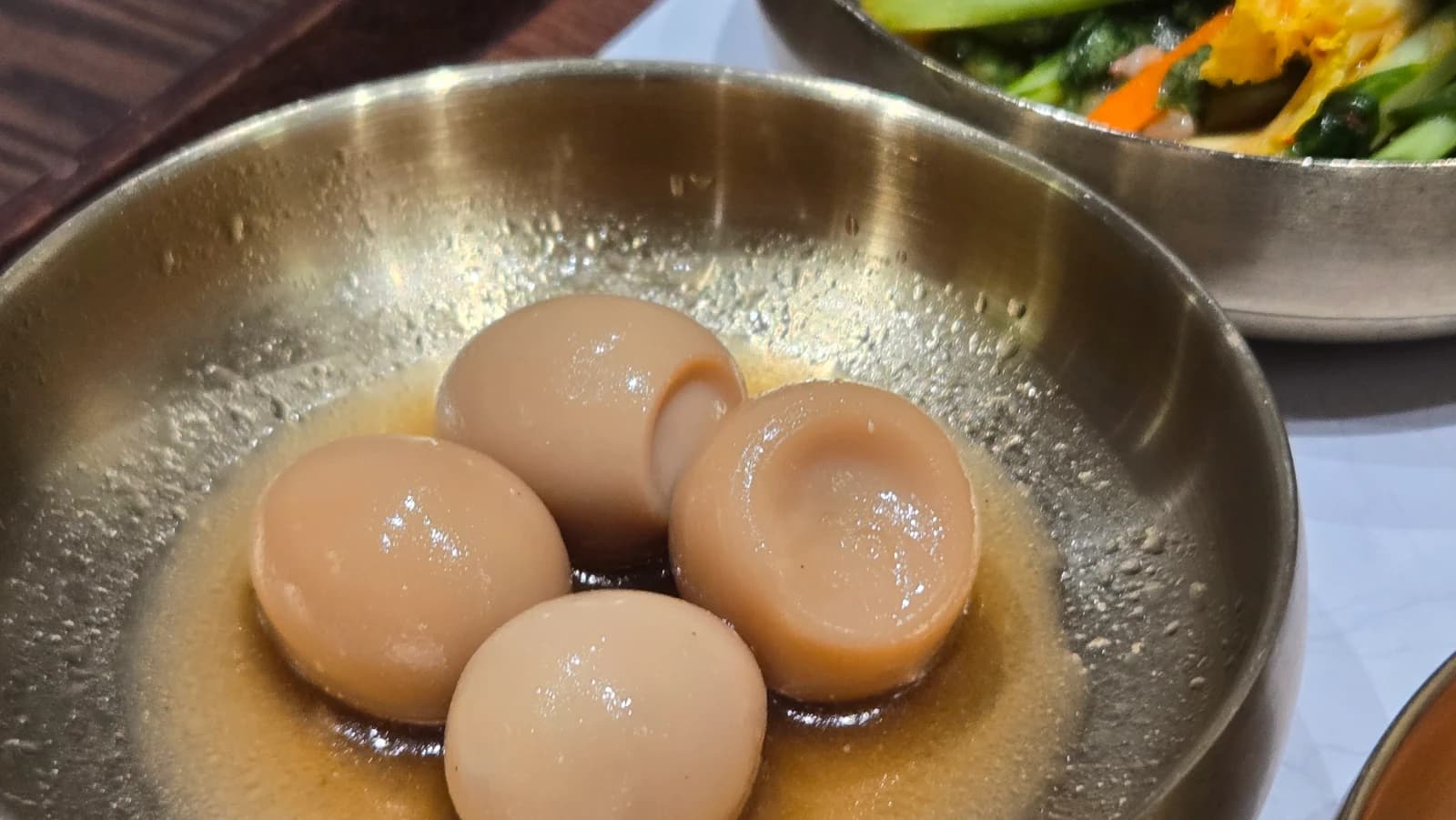
Soy-braised quail eggs. Simmered in soy sauce, salty with a hint of sweetness, and perfectly bite-sized. Surrounded by all those vegetables, having a little hit of protein kept me reaching for these over and over.
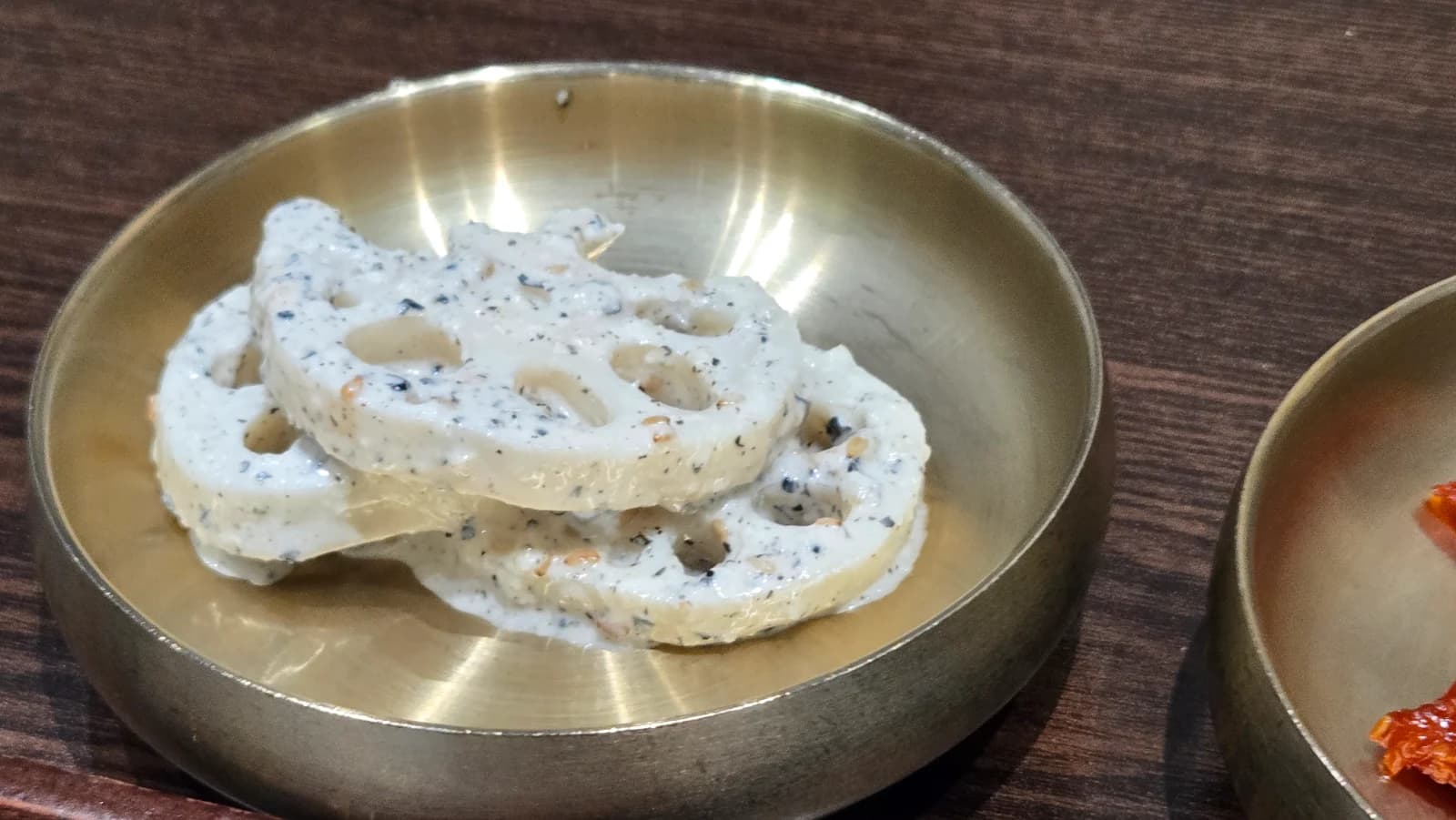
Lotus root salad. Tossed in a creamy sesame dressing with that signature crunch — a completely different vibe from the namul. The cross-section with all those little holes is honestly just fun to look at, too.
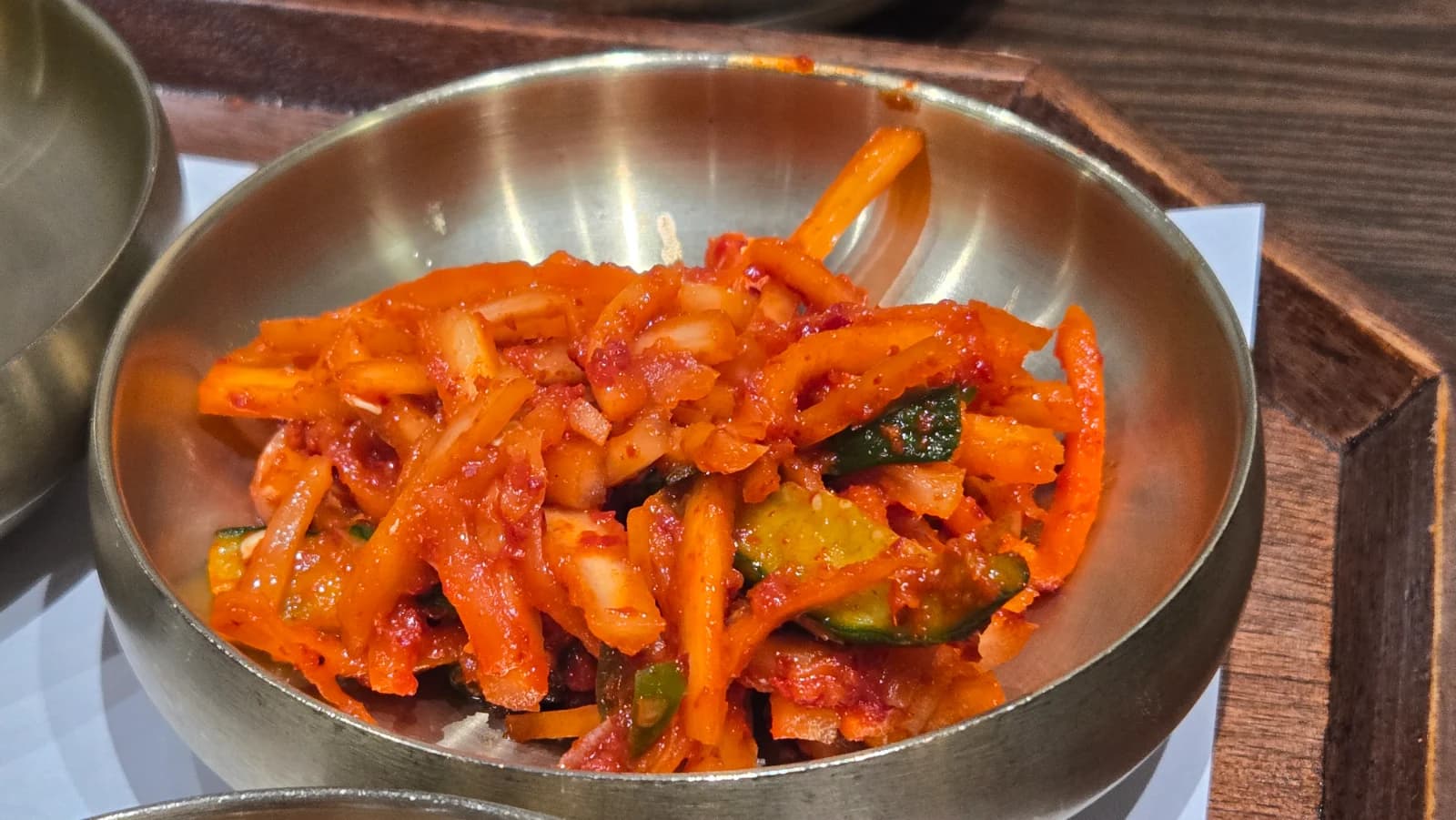
Spicy shredded radish (musaengchae). Thin-cut radish tossed in chili flakes — crunchy, spicy, and refreshing all at once. It cleans up your palate in a way that's hard to describe. Mix it into the barley rice and it lifts the entire bowl.
Overall, the banchan here weren't heavy-handed at all. Not too salty, not too bland — right down the middle. Honestly, if you're someone who craves bold, punchy flavors, this might come across as a little mild. But from a health standpoint, I think that's actually the better call. Salty doesn't automatically mean delicious, you know?
The Main Event — Barley Rice and Cheonggukjang Stew
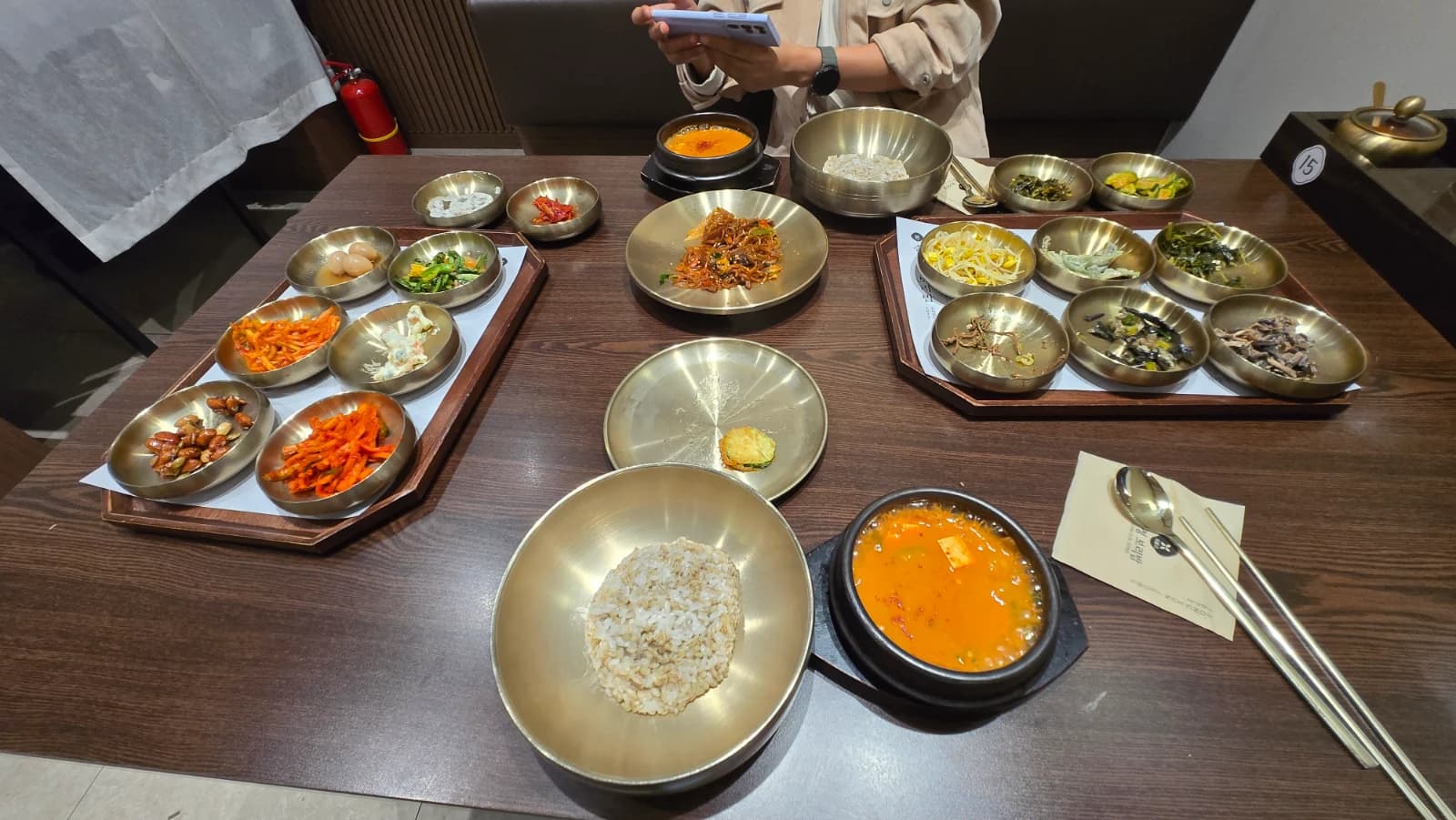
After about 10 minutes of snacking through the banchan, the mains arrived. A brass bowl of barley rice, and right next to it, a stone pot of cheonggukjang bubbling away. Once these hit the table, the spread finally felt complete. We'd ordered the cheonggukjang barley rice set — let me quickly explain what that actually is.
🫘 What Is Cheonggukjang?
Cheonggukjang is a traditional Korean fermented soybean paste made by fermenting boiled soybeans with rice straw or Bacillus subtilis bacteria for just 2 to 3 days. Its cousin doenjang (regular soybean paste) ferments for months or even years, but cheonggukjang's short fermentation means the beans stay chunky and intact — and the smell is significantly stronger.
That intense fermented aroma makes it one of the most polarizing foods in Korea — even among Koreans themselves. People who love it will pour the stew right over their rice and eat it like soup. People who hate it will literally leave the room just from the smell.
A cheonggukjang barley rice set takes this fermented paste and turns it into a stew, served alongside barley rice. The stew comes in a stone pot with tofu, zucchini, and chili peppers, boiling hot when it reaches your table. Pour it over your rice while it's still piping hot and you get this deeply savory, almost addictive flavor.
💡 If you're sensitive to strong smells, go with the doenjang barley rice set instead — same price. Doenjang is also fermented soybean, but the aroma is much milder and more approachable.
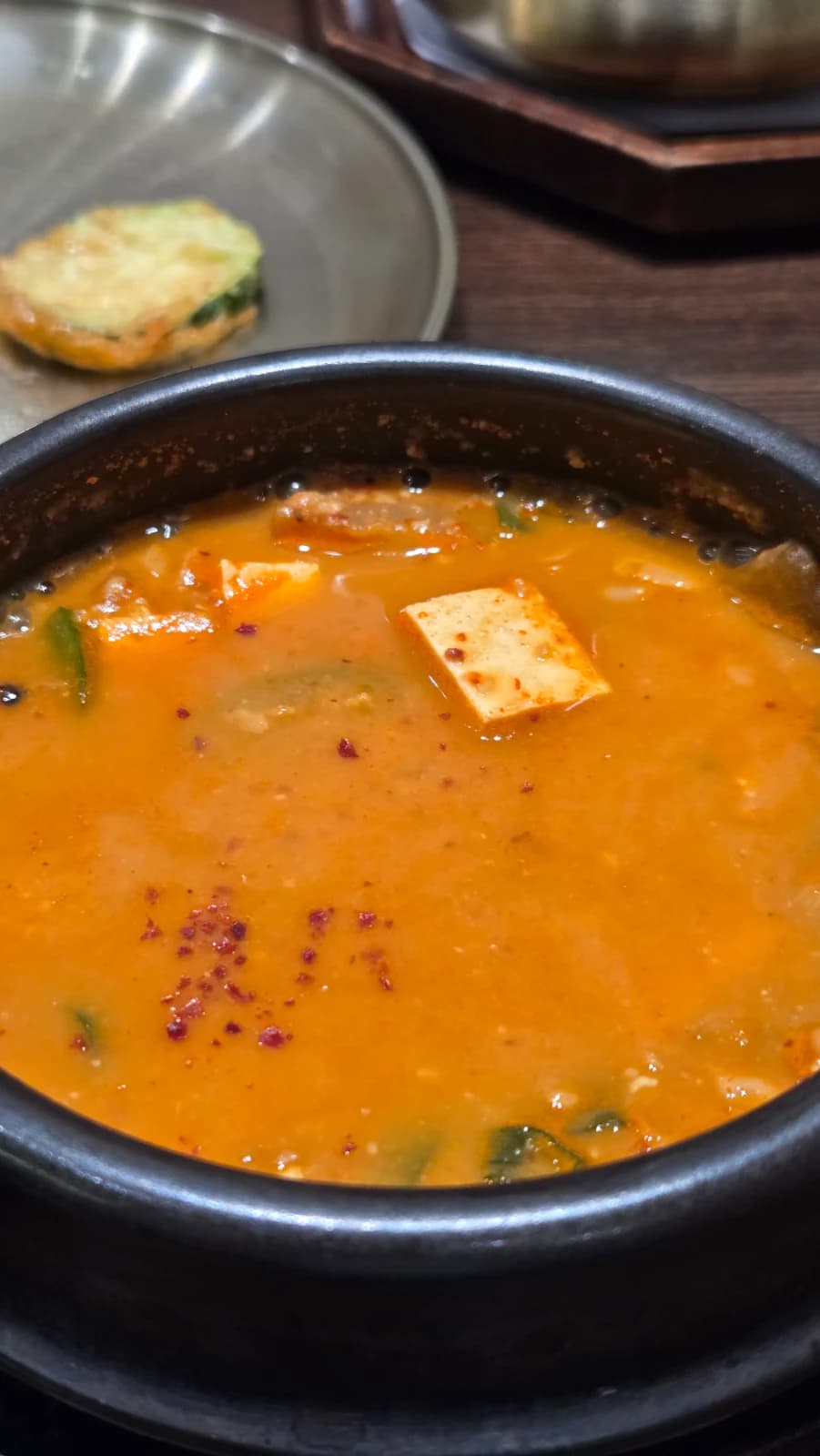
This is the cheonggukjang. When it comes to a boil in the stone pot, you can smell the fermented soybeans rising up. I'm a fan of this stuff, personally.
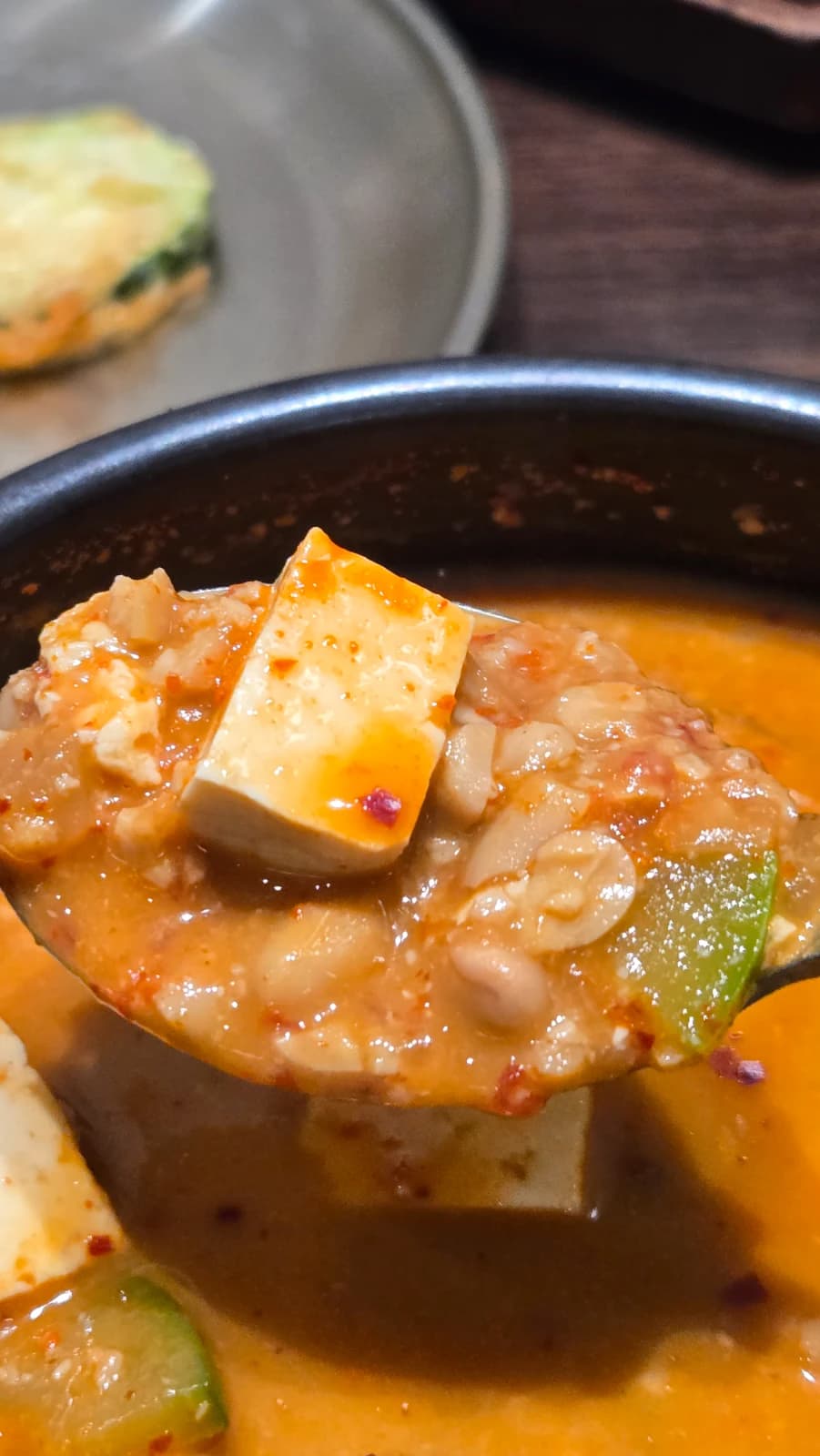
Inside the broth, the soybeans had broken down a bit, and there were chunks of tofu, zucchini, and chili peppers floating around. This restaurant's cheonggukjang leans more subtle — it wasn't the kind that hits you like a wall of funk. My wife slurped up every last drop of the broth, and I ended up pouring over half my rice into the stew and eating it that way.
Self-Serve Bar — Unlimited Refills, No Asking Required
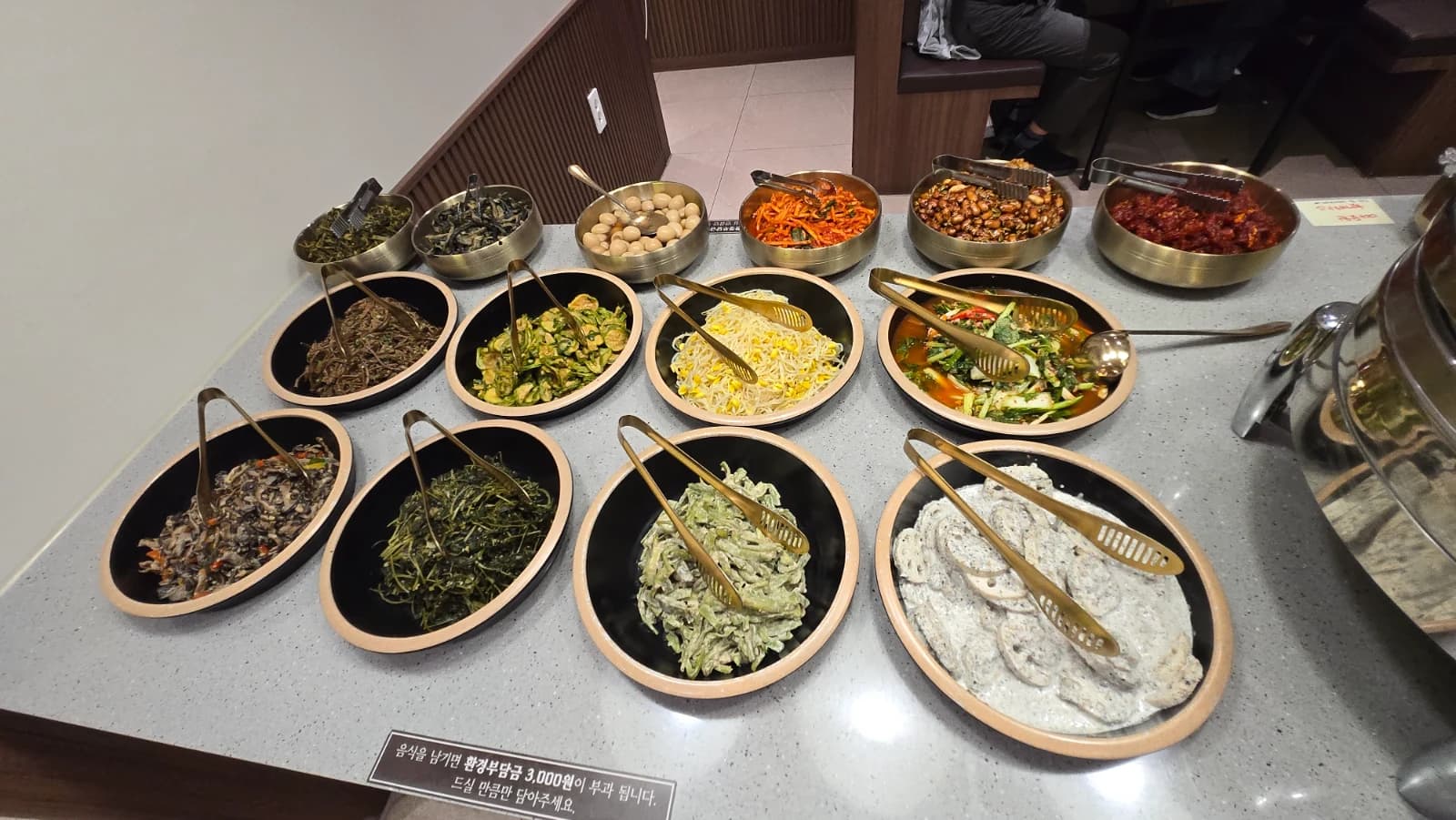
This is the self-serve bar. If you run out of any banchan at your table, just grab a plate and help yourself — no need to flag down a server or feel awkward about it. You take whatever you want, as much as you want. Really convenient and zero pressure.
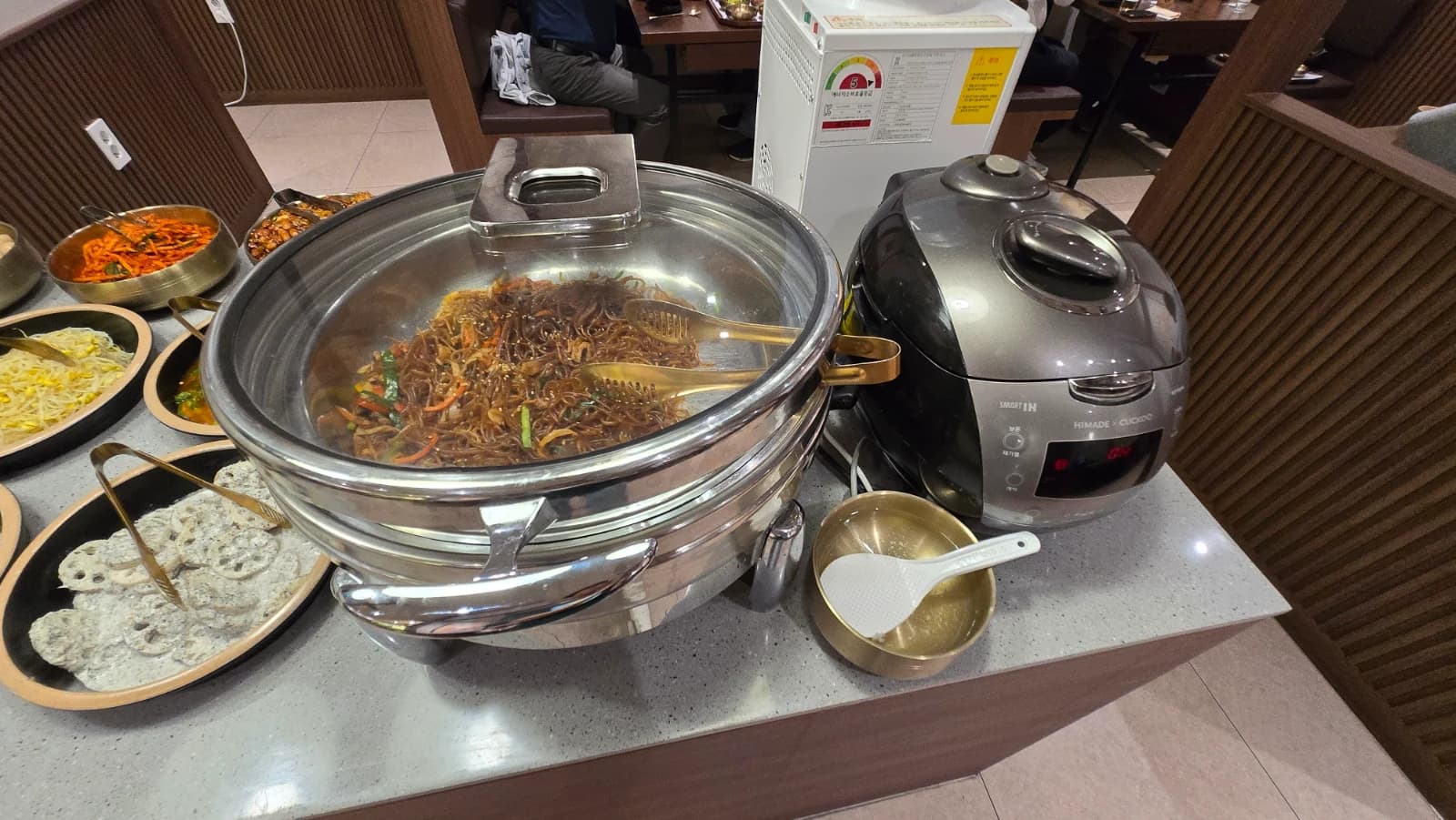
At the far end of the self-serve bar there was a big warmer full of japchae and a rice cooker. If you need more rice, you just scoop it out yourself — which I did, grabbing a full extra bowl. Honestly though, the rice from this cooker was noticeably stickier and more clumped than the freshly served bowl. Still edible, but there was a clear difference compared to the one that came with the meal. One heads-up: there's a sign that says "a $2 surcharge will be applied for wasted food," so only take what you'll actually eat.
Add-On: Grilled Mackerel — One Whole Fish for $7
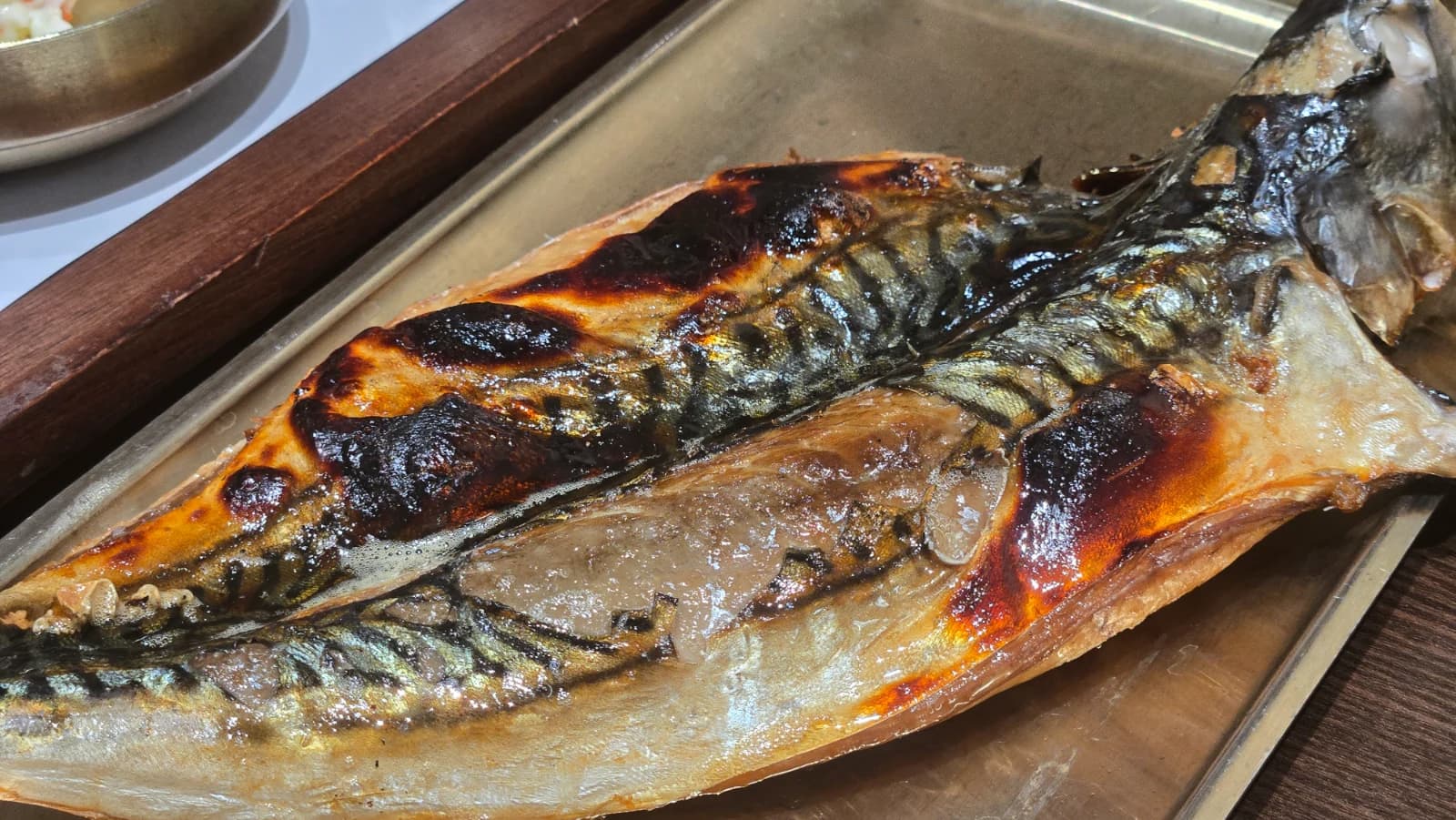
The banchan alone was already plenty of food, but something felt missing, so we added a grilled mackerel. Mackerel is one of the most common fish in Korean home cooking, but getting a whole one grilled like this is more of a restaurant thing. The skin was perfectly crisped, and the flesh inside was moist and tender — I barely had to press with my chopsticks before it flaked right off. No excessive saltiness, just the mackerel's own natural, rich flavor leading the way.
The Complete Spread — $29 for Two People
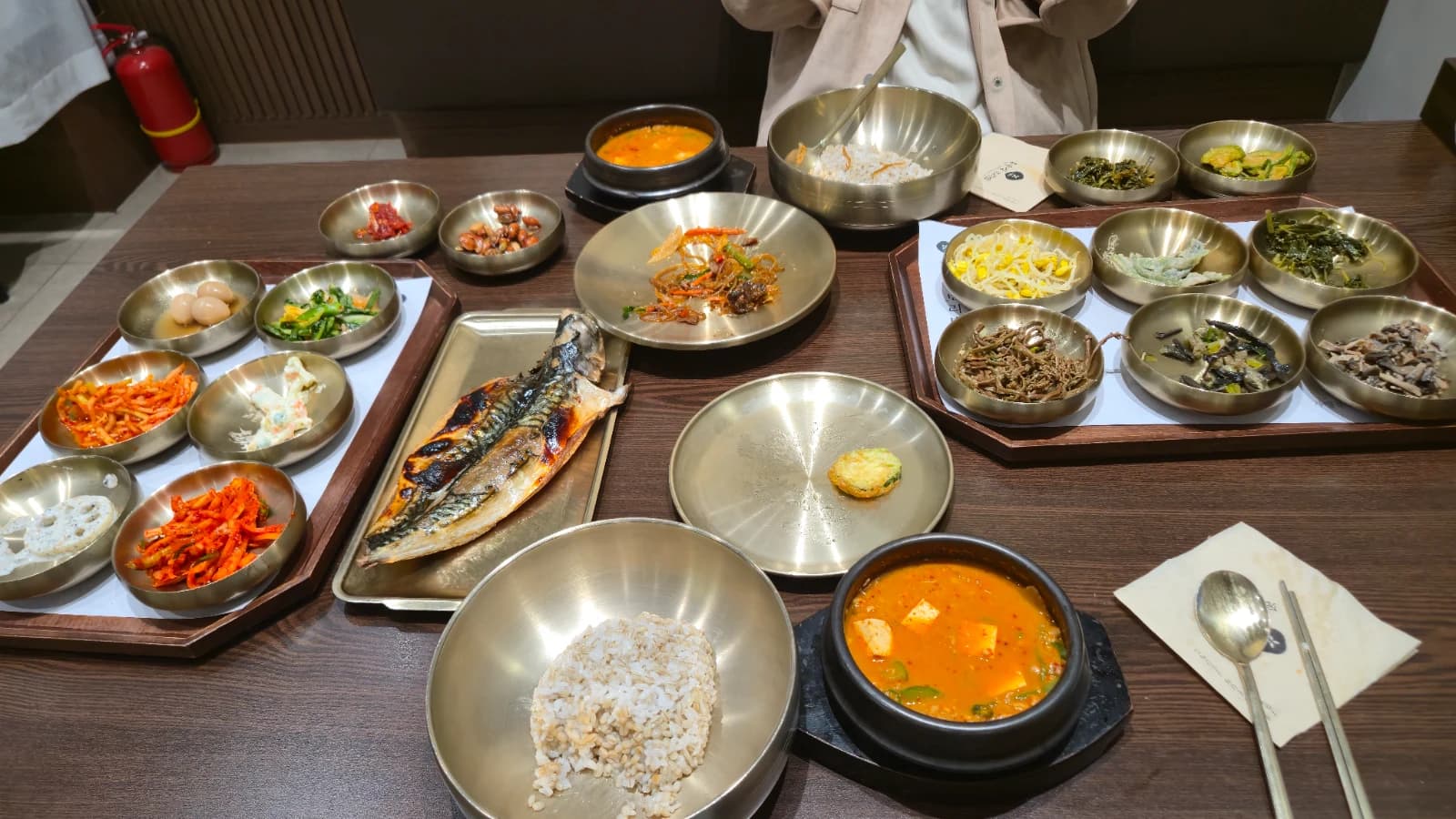
This was the finished table from our meal. Barley rice, cheonggukjang stew, grilled mackerel, over a dozen banchan, plus japchae and zucchini pancake. Compared to the $6–$8 everyday Korean lunch sets I've reviewed on my blog before, this was like seeing the same genre at a completely different level. Two orders of the cheonggukjang barley rice set at $11 each, plus one grilled mackerel at $7, brought us to $29 total. That's not exactly cheap. But when you see this table in person, it makes sense. Factor in the number of side dishes, the unlimited self-serve refills, and the mackerel on top of all that, and it's a pretty solid deal for what you get.
How to Eat Barley Rice Bibimbap — Here's the Move
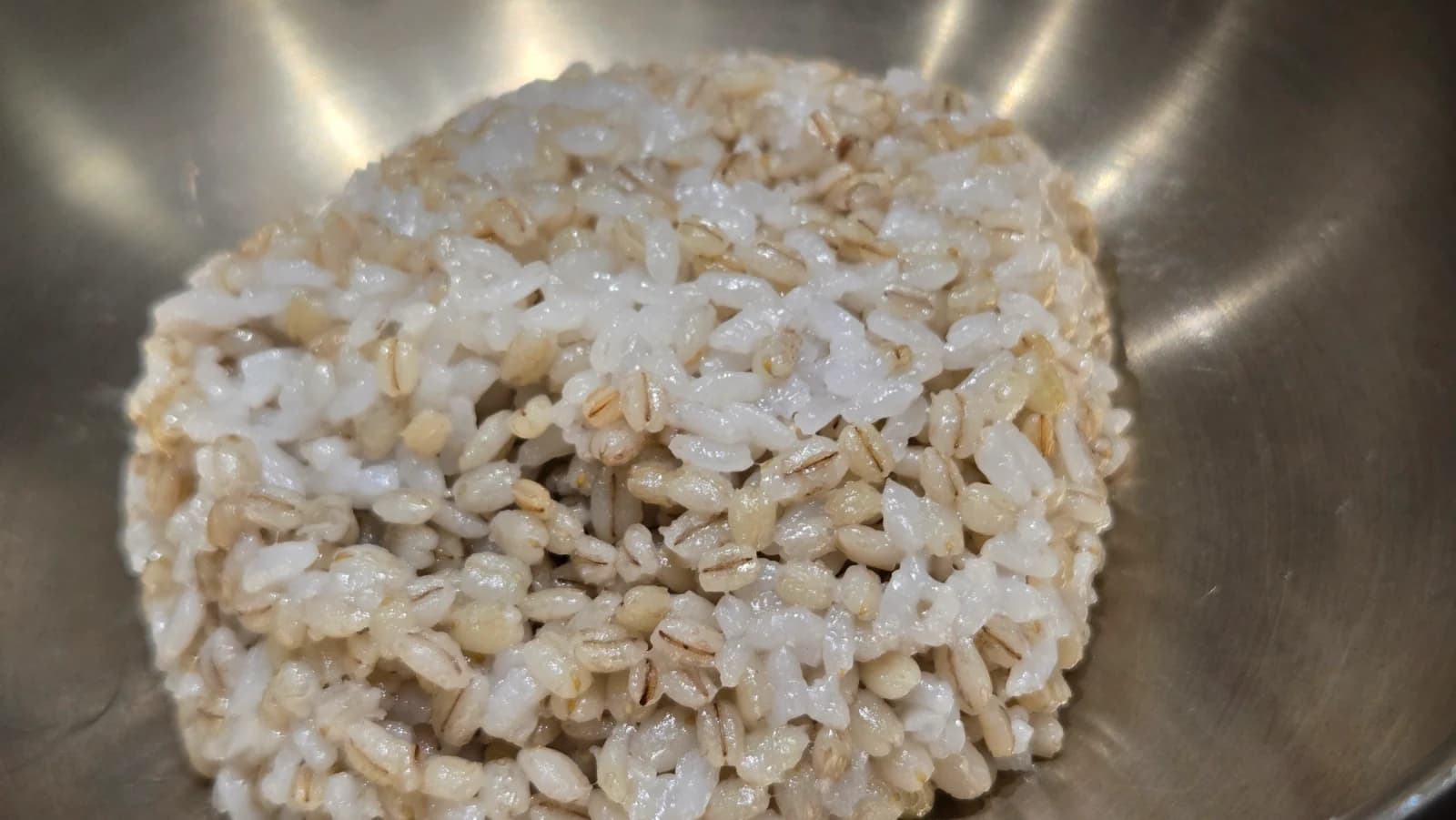
This is the barley rice. You can see the barley grains scattered between the white rice. It's rougher than plain white rice, with a poppier, chewier bite to every spoonful. My wife said the texture was unusual but she really liked it — she normally prefers sticky, soft rice, but this was a totally different kind of appeal. She kept saying how unexpectedly good Korean barley rice was and that she'd never had a texture like this before.
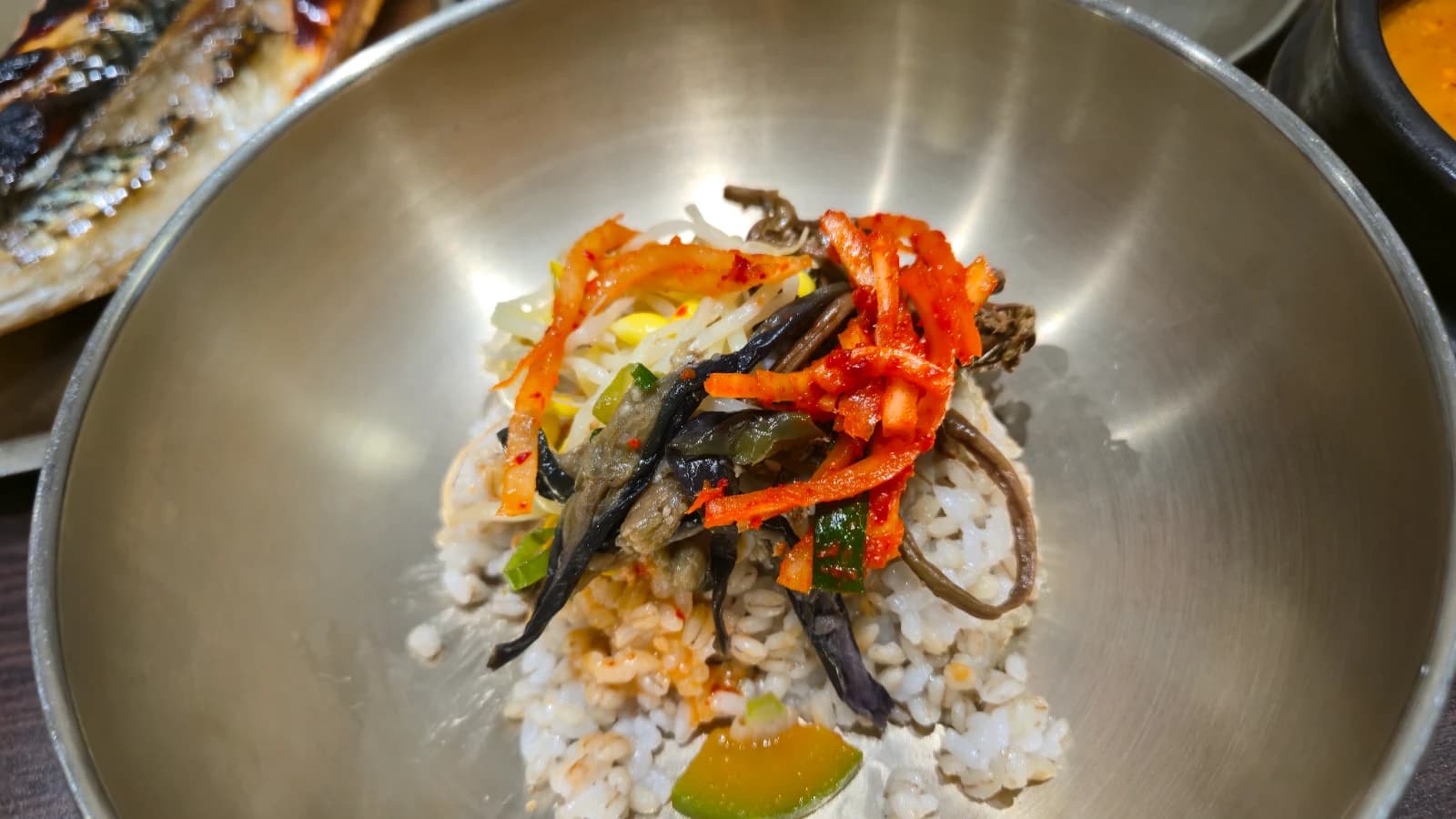
You pile the namul on top of the barley rice — shredded radish, dried eggplant, whatever you want — then add gochujang (red pepper paste) and sesame oil and mix it all up. That's your bibimbap, barley rice style. This is the classic way to eat it at a Korean barley rice restaurant. You can eat everything separately, sure, but when you mix it all together, every spoonful hits differently — crunchy, chewy, spicy, all at once. Each bite is its own little combination. The pro tip is to be generous with the perilla oil — that's what ties everything together with a smooth, nutty richness.
One Bite of Mackerel, One Spoonful of Namul
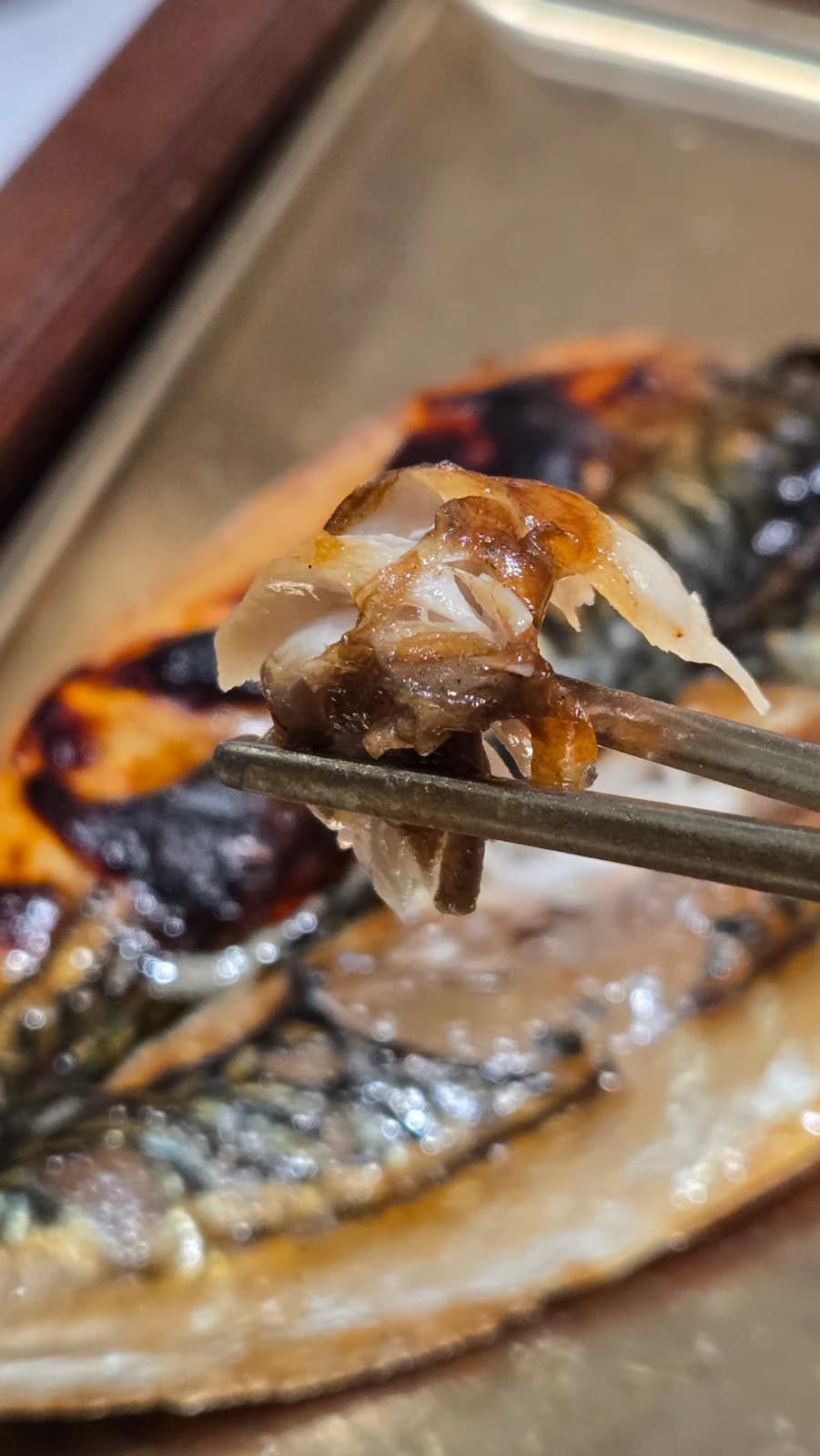
I picked up a piece of mackerel with my chopsticks. You can see the skin side is charred and crispy while the inside stays moist and tender. Alternate between a bite of this and a spoonful of the barley bibimbap, and the nutty vegetable flavors hit first, then the mackerel's rich umami slides in behind it, filling your whole mouth.
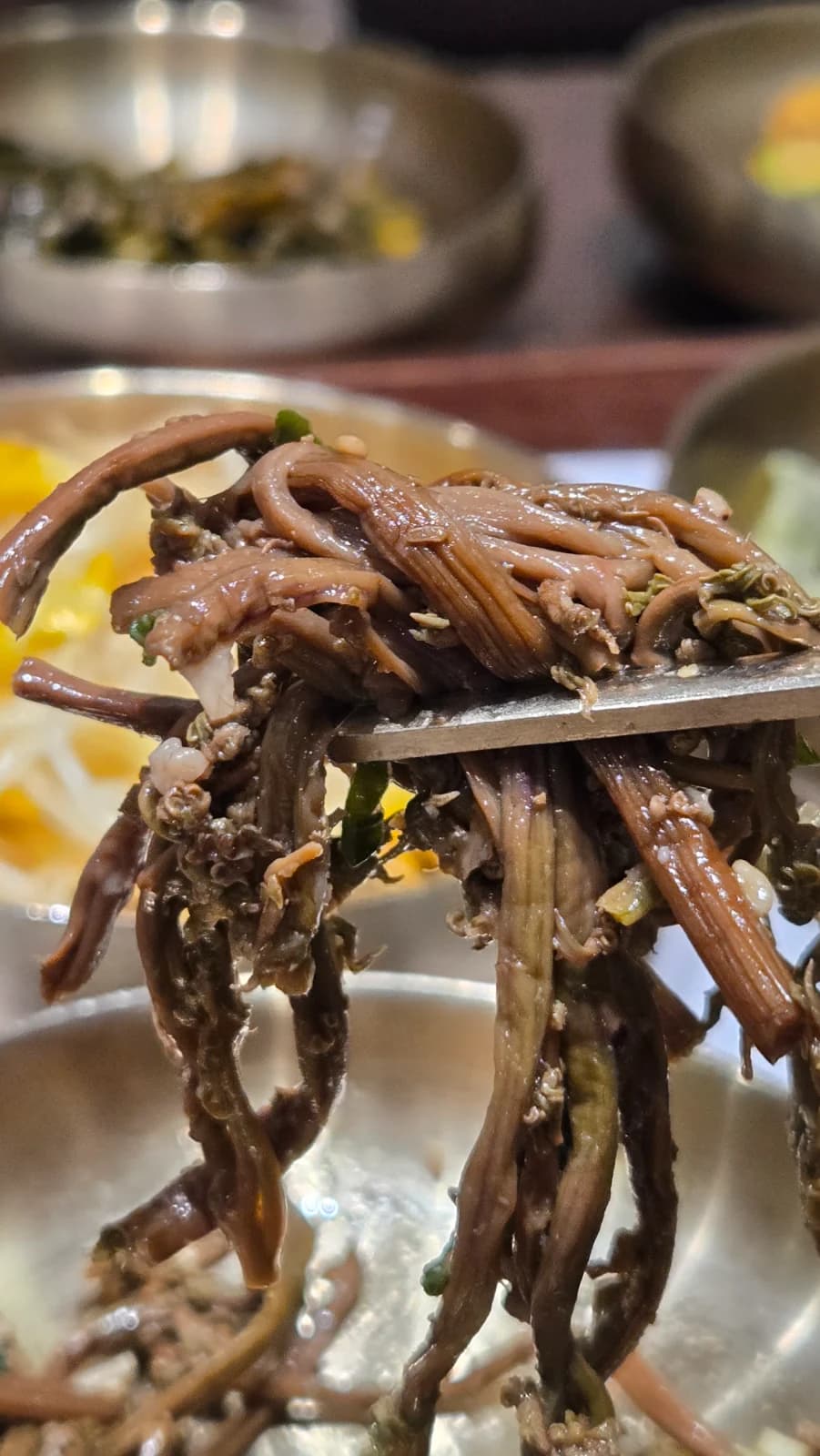
When you lift the namul with chopsticks, the perilla oil catches the light and glistens. It tastes completely different eating it straight off the plate versus piled on top of your rice. My wife said bracken and gondre were her favorites to add, while I gravitated toward the spicy shredded radish with my barley rice. That's the beauty of bibimbap — there's no wrong answer, just whatever your taste buds are telling you.
Korean Barley Rice Set Meal — My Honest Takeaway
A Korean barley rice spread isn't just a meal — it's an experience. Every single banchan plays its own role, and depending on how you combine and mix them, you get a different flavor every time. Eating this with my wife really drove home something I'd started to take for granted: this Korean table-setting culture is genuinely impressive when you see it through fresh eyes. You order one bowl of rice and over a dozen side dishes cover the table, and when you finish them you can go get more, and then you mix everything together your own way to build your own bowl. My wife kept saying how delicious Korean barley rice was, especially that unique texture — and it's true that this kind of dining experience is something you're just not going to find easily outside of Korea.
At roughly $15 per person, it's not the cheapest meal. But for what you get, the value is definitely there. If I had to nitpick: people who like bold, intense flavors might find the overall seasoning a bit gentle; the parking lot is a little cramped for the size of the restaurant; and the self-serve rice refill isn't quite as good as the freshly served bowl. Still, if you've got someone in your life who works hard every day and you want to treat them to a proper Korean spread, this meal was absolutely worth every penny.
1972 Song Eunjeong Boribap (Original Location)
Song Eunjeong Boribap · Jochiwon, Sejong City (about 1 hour south of Seoul)
- 📍 2427 Sejong-ro, Jochiwon-eup, Sejong City, South Korea (1st floor)
-
🕐
Daily 8:30 AM – 8:30 PM (last order 8:00 PM)
Break time 3:00 PM – 5:00 PM - 📞 +82-507-1343-0929
- 🅿️ Dedicated parking lot available (somewhat tight for the restaurant's size)
- 💰 ~$29 for two (cheonggukjang barley rice ×2 + grilled mackerel ×1)
- 📌 Reservations available via Naver · Photo review event: 2 free sesame oil fried eggs