
Hidden Hanok Village Walk — A Secret Traditional Neighborhood
Table of Contents
15 items
A Traditional Korean Village You've Never Heard Of
When people think of hanok villages — neighborhoods filled with traditional Korean houses — they usually picture Jeonju or Bukchon in Seoul. But there's a quiet, tourist-free, completely free-to-enter hanok village where people actually live, tucked away in Sejong, a modern planned city about 1.5 hours south of Seoul. It's called Goun-dong Hanok Village. About 46 traditional Korean houses clustered together in a small residential neighborhood, and it takes just 30 minutes from Daejeon. If you're the kind of person who wants to walk through traditional Korean alleys in peace, or if you're looking for a stop on a long Seoul-to-Busan road trip that's way better than a highway rest area — this is it.
I visited last autumn with my wife. It's close to where we live, but we had no idea there was a hanok village here until way later. That's the thing about Sejong — even Koreans go "wait, what's there?" when you mention it. The city's image is all government buildings and apartment complexes. On this day, we stopped by Hemel, a hanok-style cafe right next to the village, and walked through the village on our way out. I'll write a separate review of Hemel later, so I'll keep it brief here — it's a cafe serving tea and desserts inside a traditional Korean building, and it's perfectly positioned to pair with a hanok village visit.
Traditional Alleys in the Middle of a Brand-New City
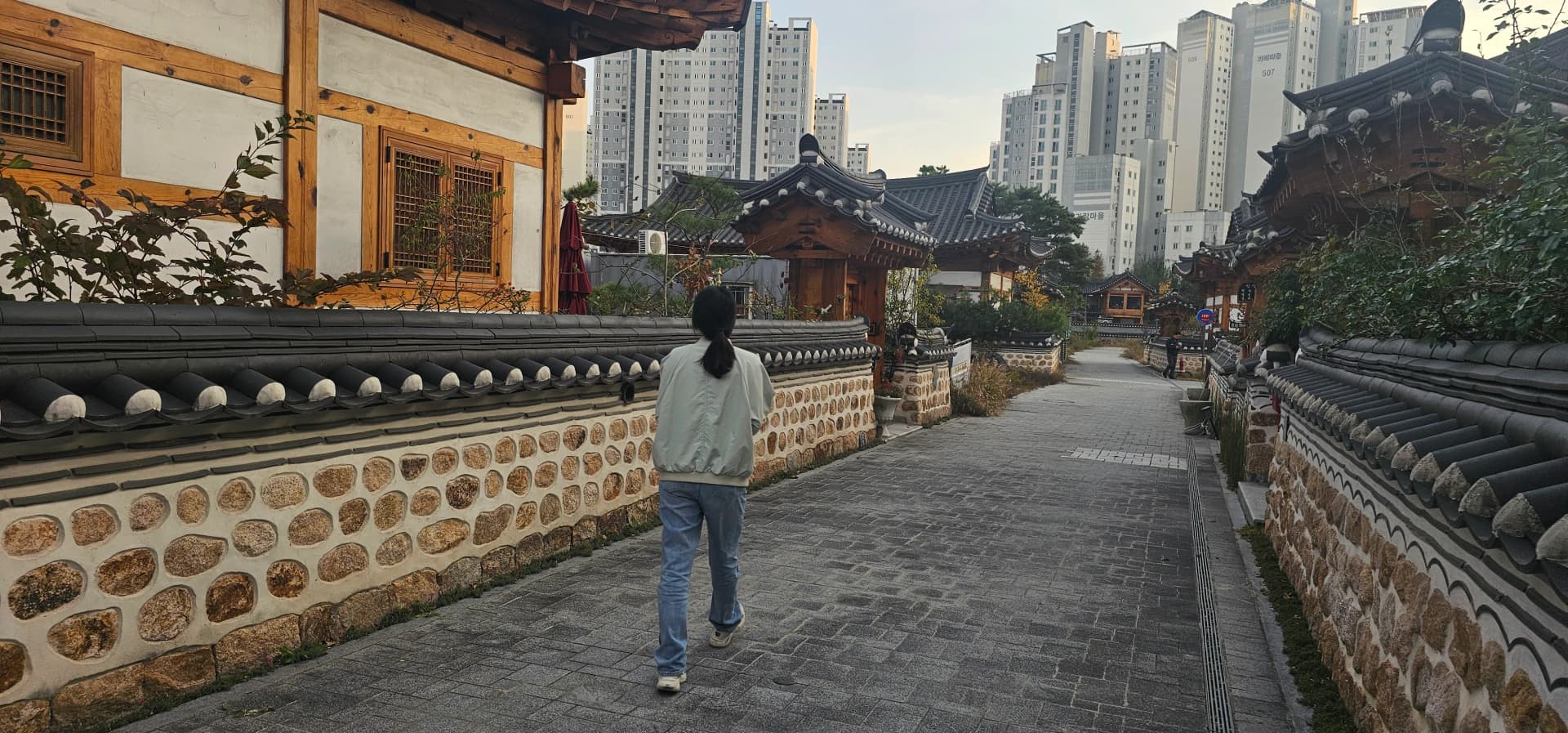
Once you step into the inner alleys of the village, low stone walls stretch along both sides and curved tile roofs start filling your view. But look up, and there's a 20-story apartment complex standing right behind them. That's your first impression of this hidden hanok village. You're clearly in the middle of a modern city, yet once you're inside the alleys, the air feels different. When I glanced back over my shoulder and saw the apartments again, my wife said "Are we seriously still in a new city?" I was thinking the exact same thing.
Walking Between Stone Walls and Dried Hydrangeas
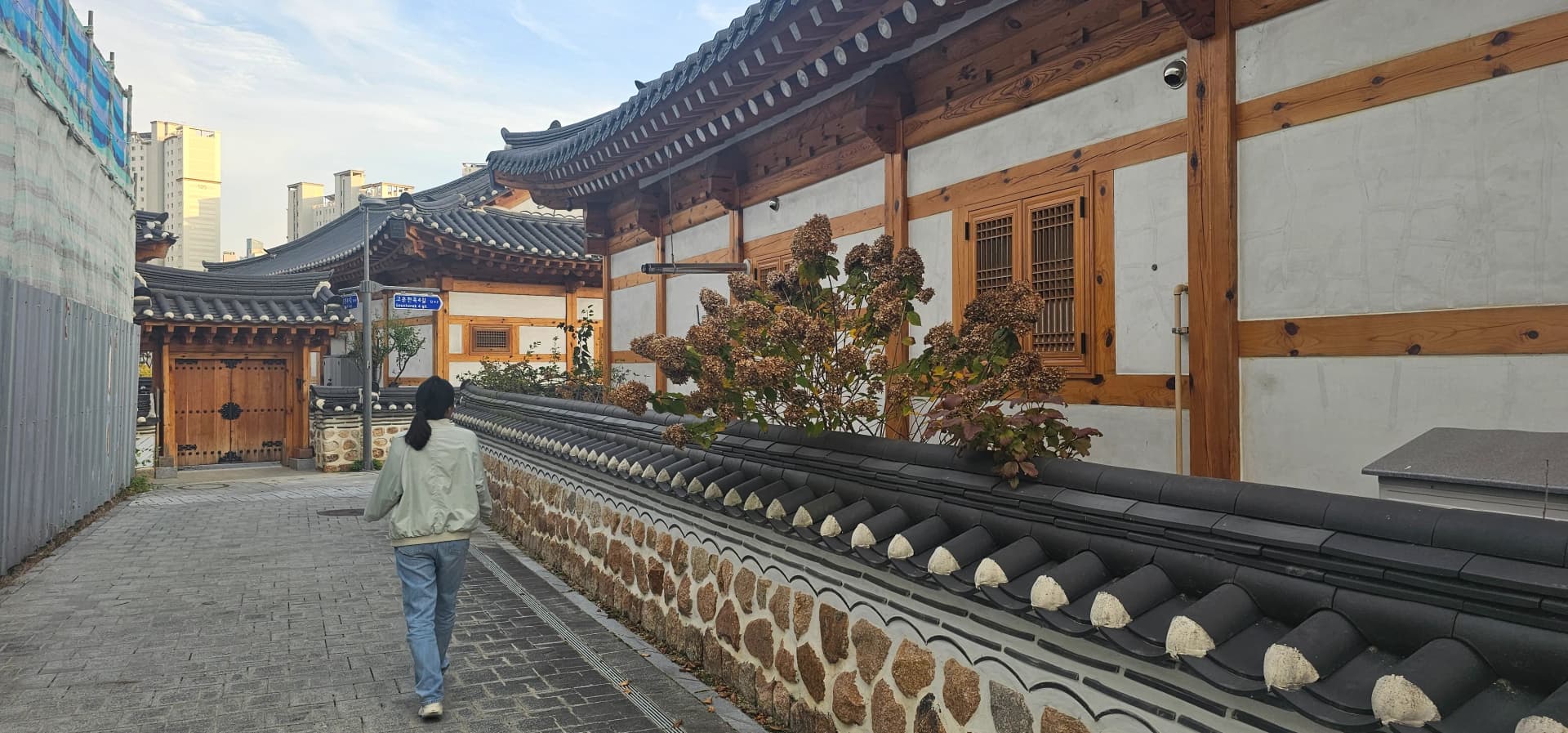
Go a little deeper and the apartment buildings start to disappear from view. Instead, dark tile-capped stone walls stretch out on both sides, and dried hydrangeas were poking their heads over the tops of the walls. If it had been summer, they would've been blooming blue, but it was late autumn so they were crispy and brown. And honestly? That had its own kind of charm. The traditional houses with the dried hydrangeas — nobody paying attention to them, just being pretty on their own. The alleys were so quiet that the only sound was our footsteps echoing on the stone pavement.
Not a Tourist Attraction — A Real Neighborhood Where People Live
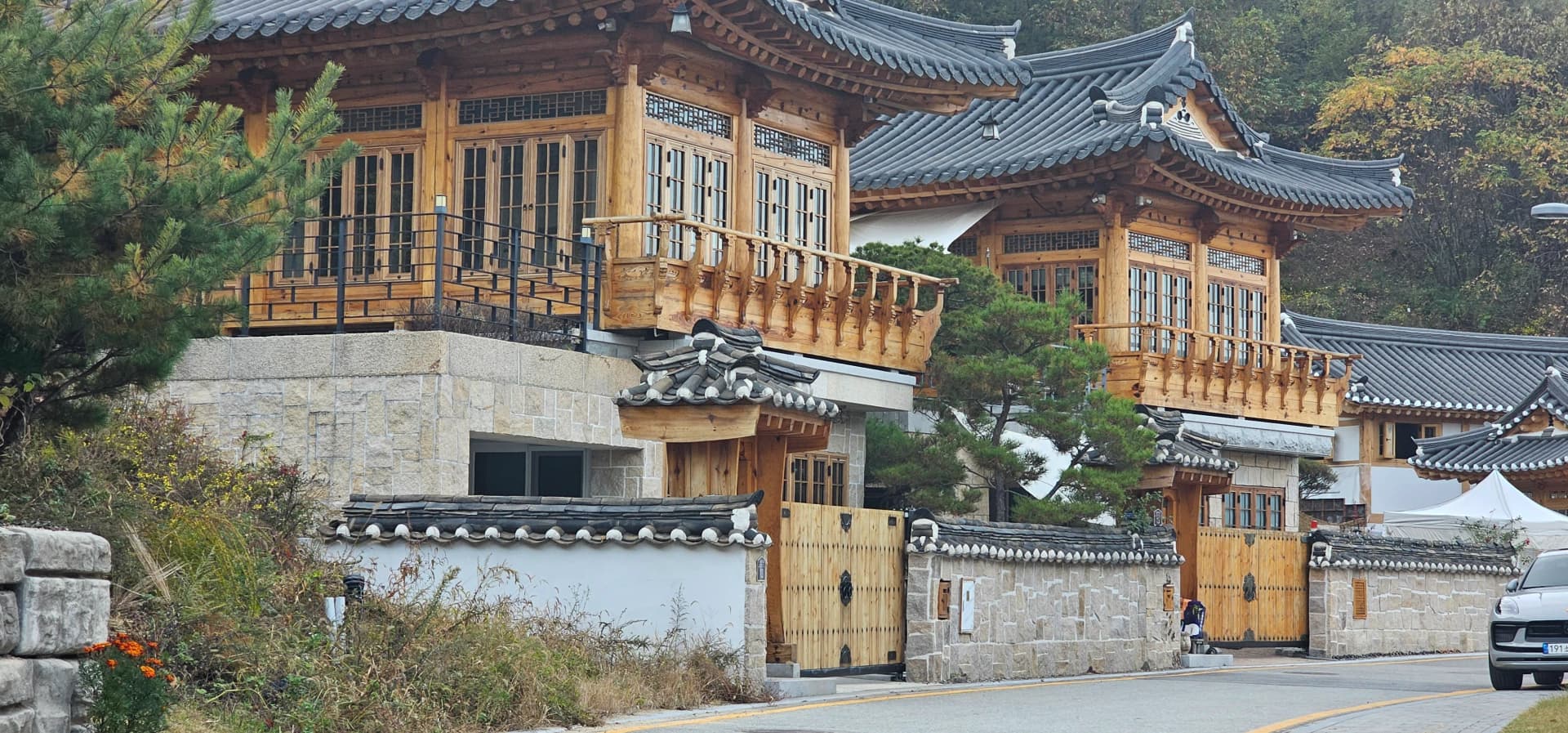
These are real homes where real people live. A two-story hanok with a wooden-railing balcony — at first glance it looks like a luxury resort or a cultural heritage site, but it's actually someone's house. What makes this neighborhood special is that these aren't old preserved hanok buildings. They were built from scratch following traditional Korean architectural styles. They followed hanok review guidelines covering structure, roofing, and wall specifications down to the details. That's why the entire village has this incredible visual consistency — not a single building looks out of place.
If you've traveled around Korea, you'll have noticed that this country tears down old buildings and puts up new apartments at lightning speed. Outside of palaces and temples, it's pretty hard to encounter traditional architecture in everyday life. In that sense, this village is a rare example of traditional Korean architectural beauty translated into a modern residential space.
Pine Trees and Tile Roofs Above Stone Foundations
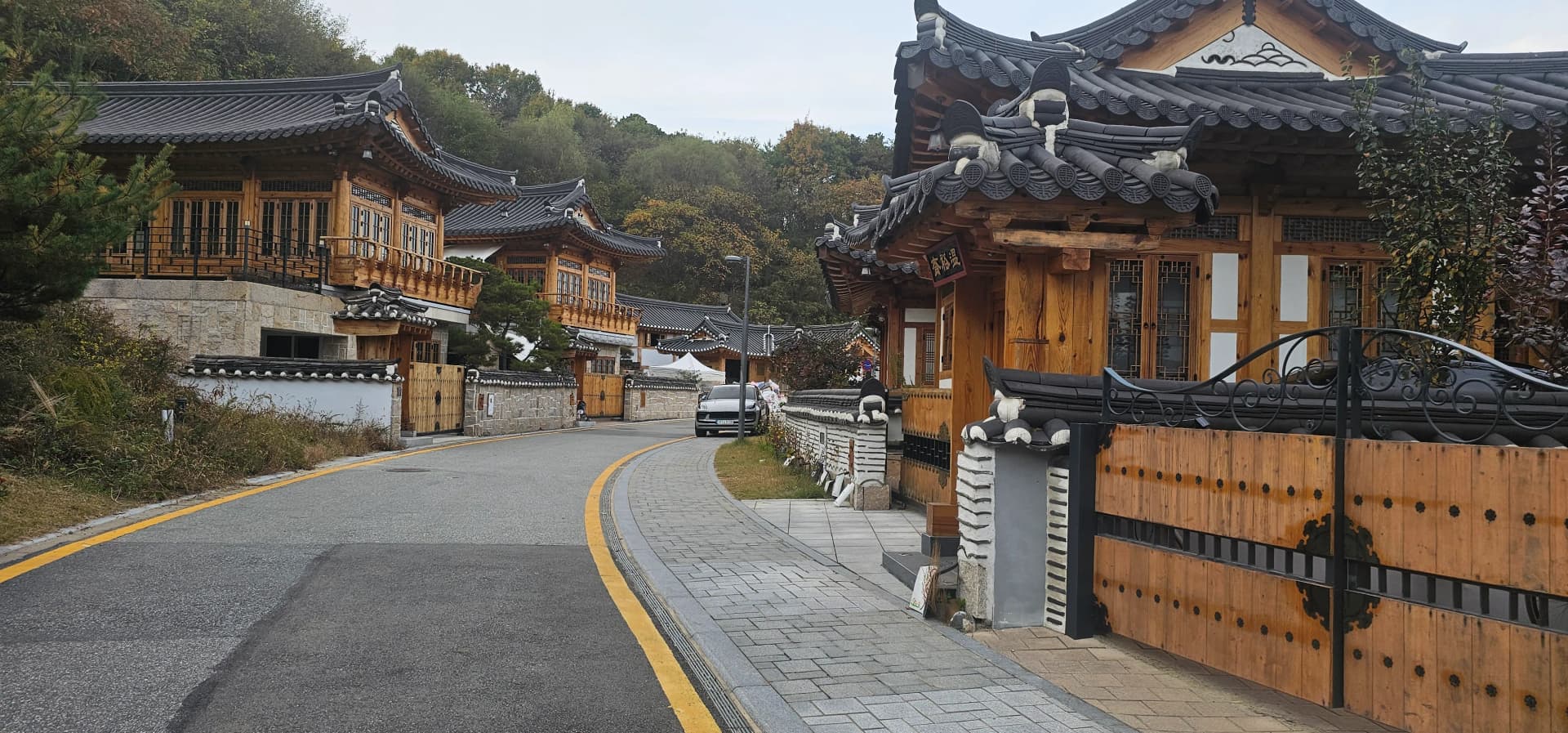
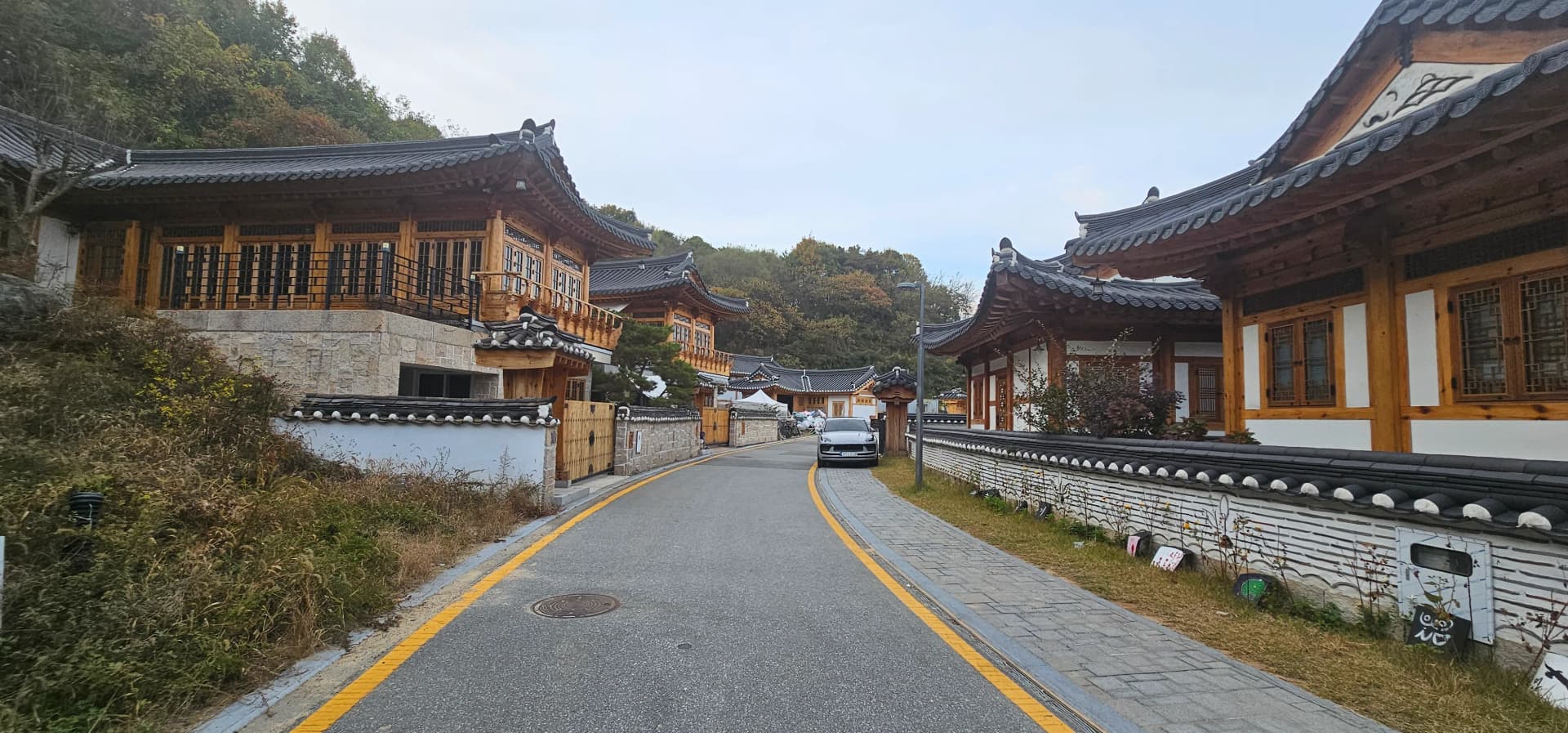
The tile roof lines visible through the pine trees, the wooden structures perched on top of stone foundations — the concept is clear and there's nothing sloppy about it. If you've only ever seen traditional Korean hanok houses in photos, this is probably the cleanest way to see them in person. These aren't hanok buildings dressed up for tourists — they're homes that people walk into and live in every single day.
The Outer Road — A Hillside That Looks Like a Hanok Resort
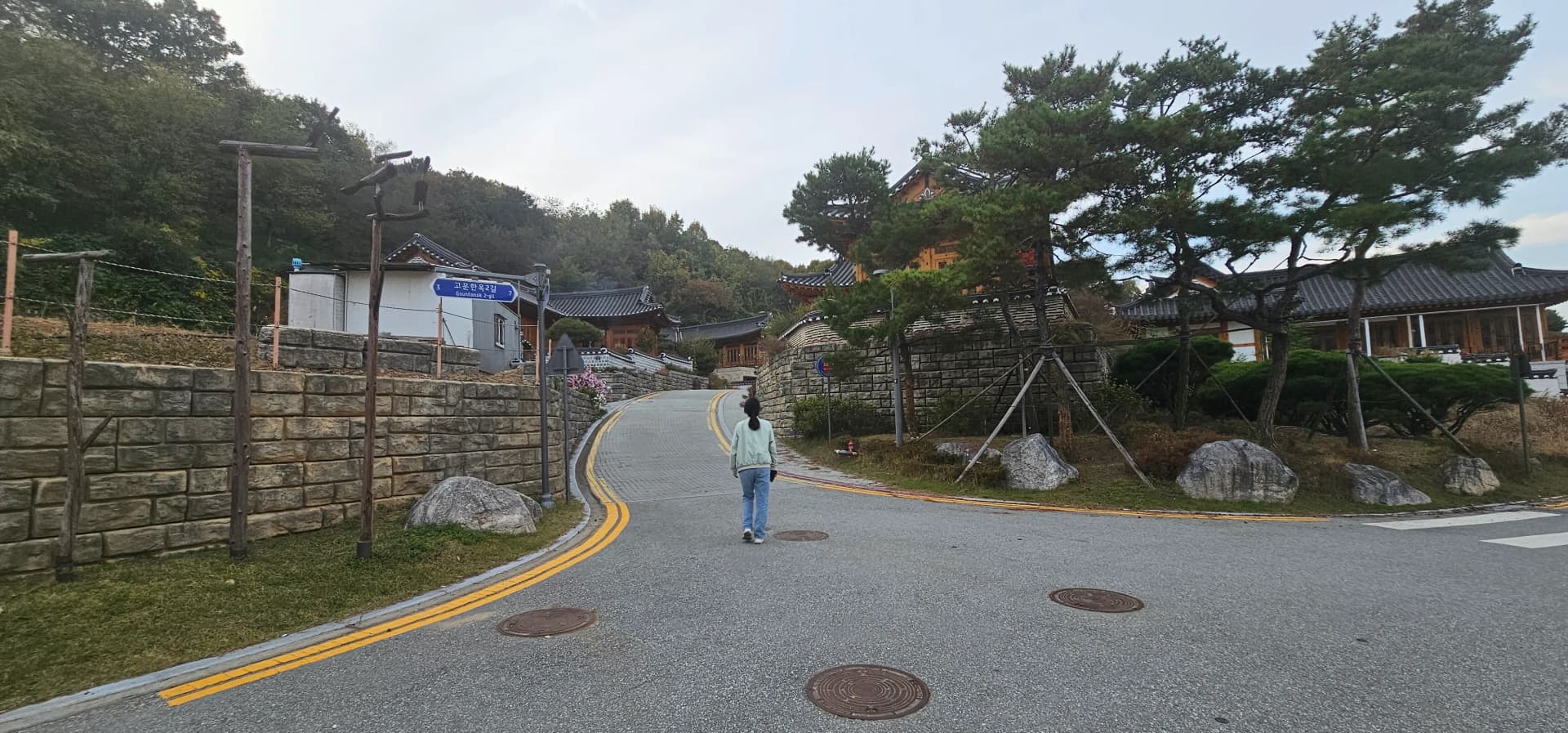
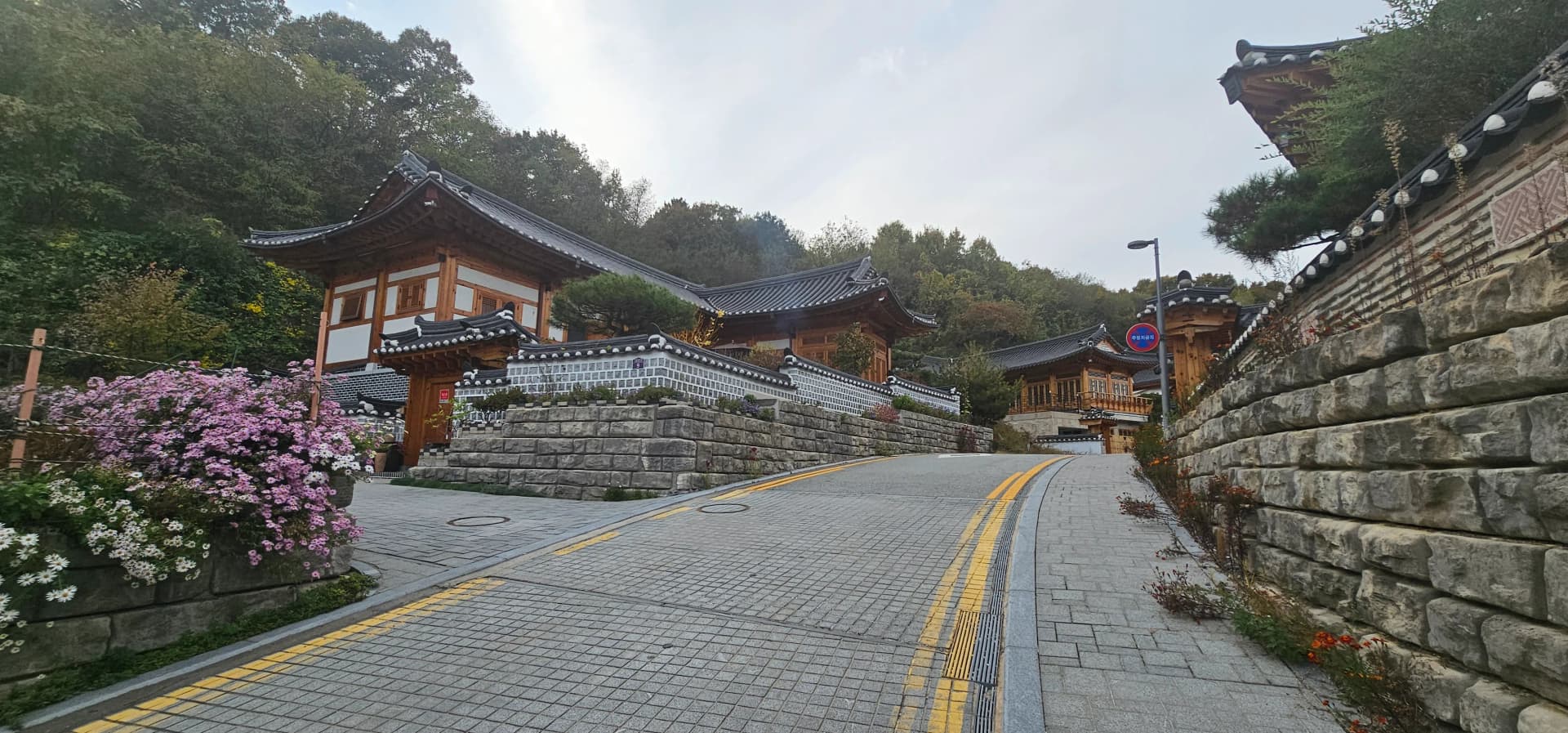
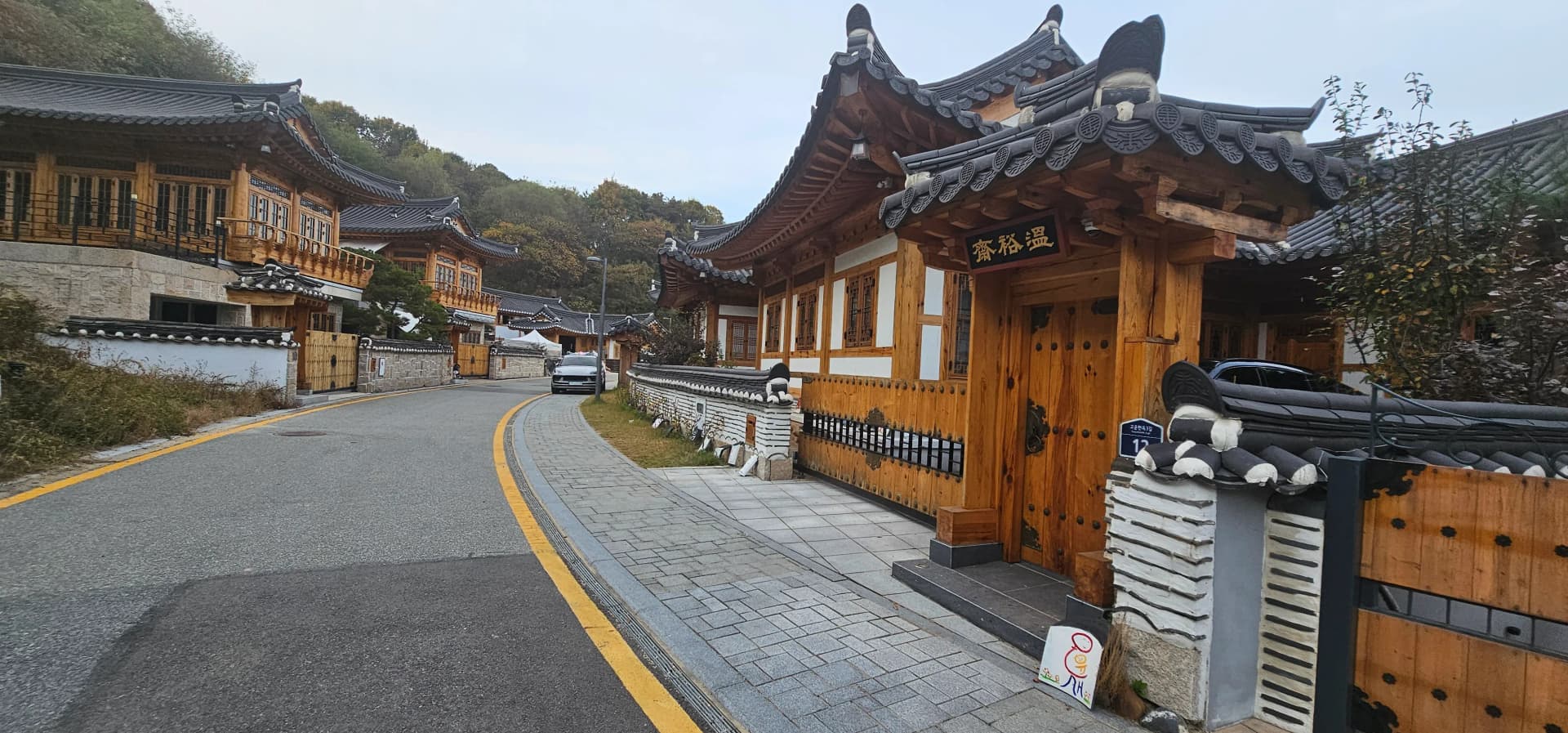
When you come out to the outer road side of the village, the scenery changes a bit. The inner alleys felt like narrow paths winding between stone walls, but out here the road is wide and the hanok houses stretch along both sides of a hill. Each front gate has Chinese characters displaying the house's name, and two-story hanok buildings sit on top of stone terraces — honestly, my first thought was that this looked more like a hanok resort than a neighborhood. But see that car parked in front of the gate? That belongs to someone who actually lives here.
You could see the hills behind the village just starting to turn autumn colors, and the way those colors layered behind the tile roof lines made for a really beautiful scene. It was just the two of us on the road. Not just quiet — almost awkwardly quiet. I felt a tiny bit like we'd snuck into someone else's neighborhood, but the village is designed to welcome walkers, so no need to worry about that.
The Top of the Hill — Best Spot for Photos
Follow the road up the hill and you'll reach the far edge of the village. From here, the wooded hills press right up against you, so the view of pine trees overlapping with tile roofs feels completely different from the city side. It's not "hanok houses sandwiched between apartments" anymore — it's hanok houses nestled into a hillside, which honestly felt more like a traditional countryside estate village.
There was a cluster of azaleas blooming along the stone terrace, and seeing them just sitting there in full bloom on this empty hillside road with nobody around felt almost like a waste. The hanok walls, the pink flowers, the green mountain behind them — this area was hands-down the best spot for photos. But almost nobody comes up this far. Most people only make it to the cafe near the entrance and turn back, so up here it was literally just the two of us.
Golden Hour Silhouettes on Tile Rooftops
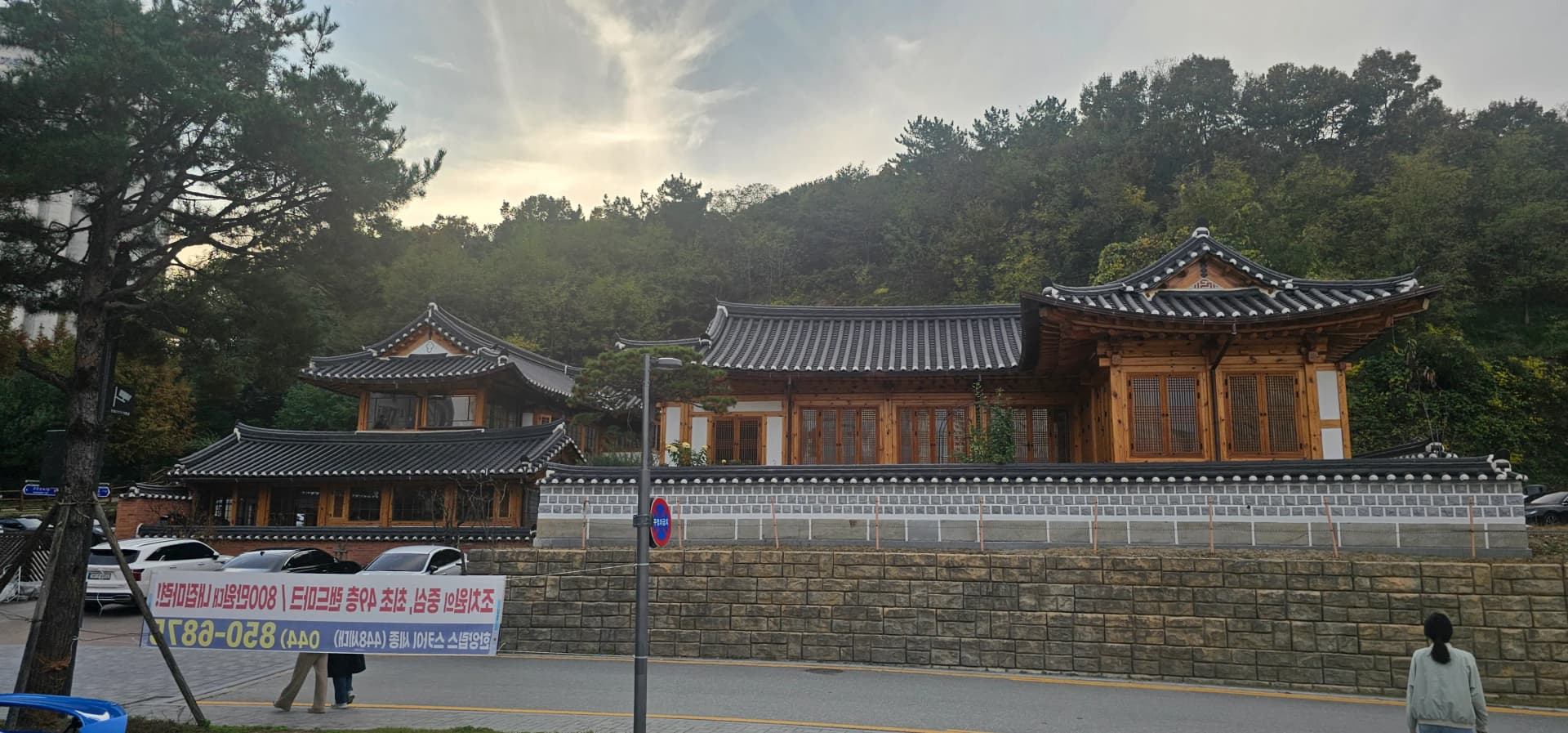
From the road at the bottom, if you look up, you can see two or three hanok houses standing side by side on top of the stone terrace, and since the sun was just about to drop behind the mountain, the backlight caught only the outlines of the roofs. The timing was perfect. If you visit in the late afternoon, you can catch a scene like this. It's honestly worth timing your visit specifically for this golden hour moment.
Wall Details — Things You Only Notice When Walking Slowly
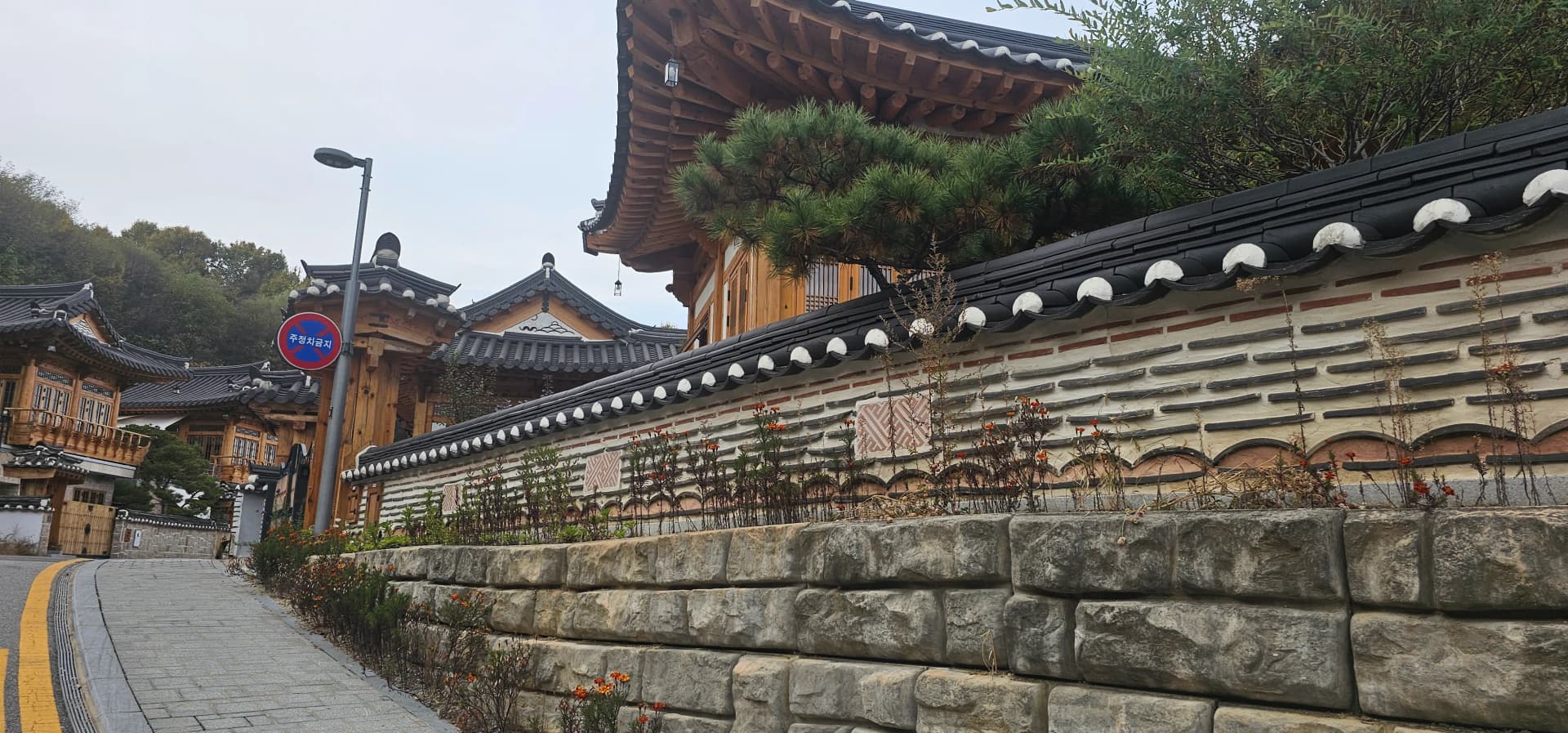
The wall details caught my eye, so I went in for a closer look. It's a traditional patterned wall built with a mix of tile fragments and bricks, with a pine tree poking up above the stone foundation and small flowers planted below. This kind of detail doesn't really show up in photos — you have to be there, walking slowly, to actually notice it.
Parking Warning — You'll Get Fined for Parking Inside the Village
One thing to watch out for. Most roads inside this village are no-parking zones. In Korea, if you park where these signs are posted, you'll get hit with a fine. If you're driving a rental car, don't park inside the village. Use the Hemel cafe parking lot or the public parking area in the center of the village instead. If you leave your car just anywhere because the alleys look pretty, you might find a fine waiting for you when you return your rental. I parked at the Hemel cafe lot — it had plenty of spaces and was totally hassle-free.
A Neighborhood Where Traditional Houses and a Modern City Share the Same Frame
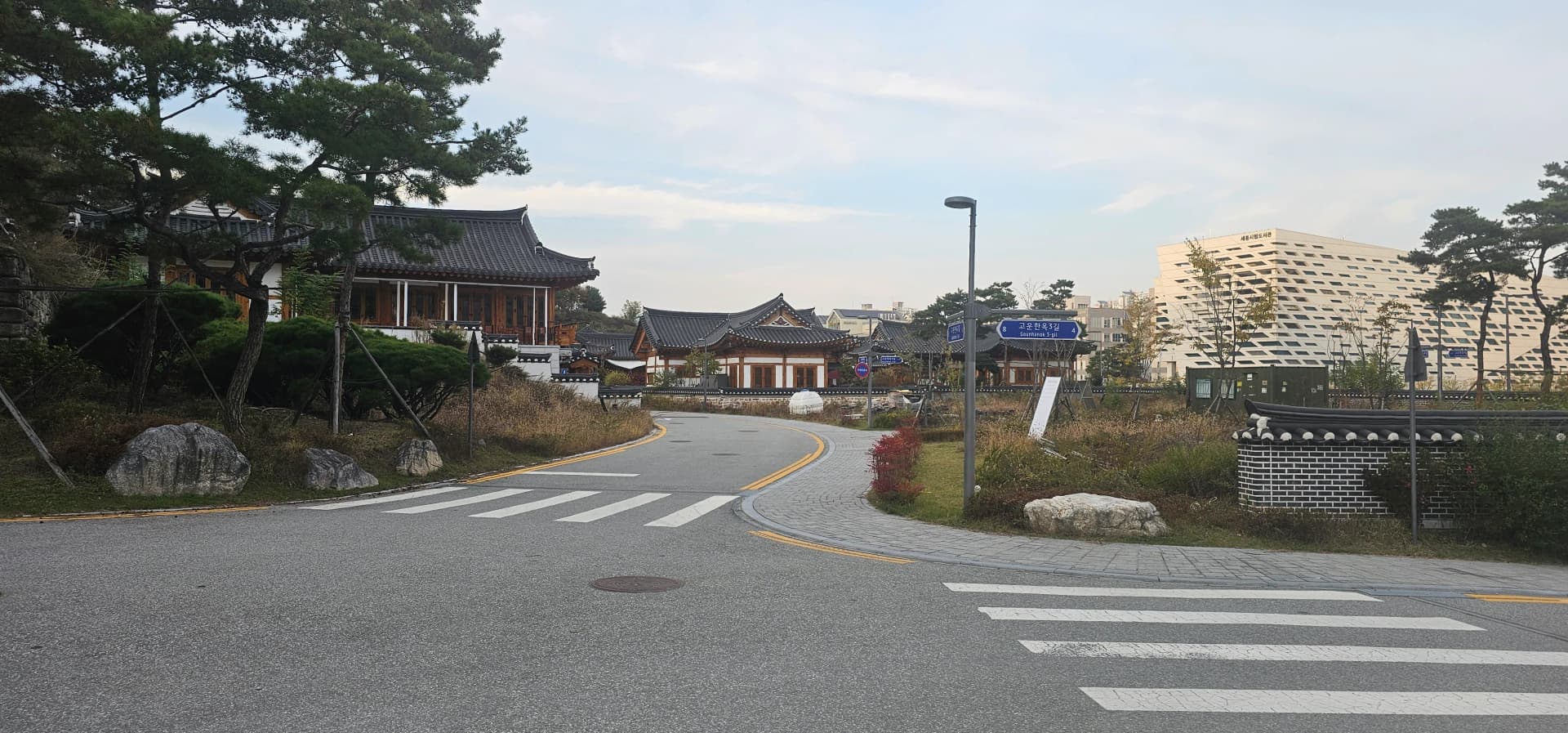
If you step back near the village entrance and look around, you'll see tile rooftops peeking through pine trees on one side, and modern buildings in the distance on the other. This single view captures everything Sejong is about as a city. Traditional hanok houses and a brand-new planned city existing in the same frame — that's the identity of this neighborhood. There's something surreal about feeling like you've crossed into a completely different era just by walking across one crosswalk.
Is It Worth Visiting? — My Honest Take
Honestly, this village alone isn't worth making a dedicated trip all the way to Sejong for. The village is small — you can walk the whole thing in 20 minutes. But if you're passing through Sejong anyway, that changes everything. Anyone driving from Seoul toward Busan, Gwangju, or Daejeon will pass right through the Sejong area. It's only 10–15 minutes off the highway, so the move is to take a 30-minute to one-hour break here instead of a rest stop. Walk the traditional alleys, grab a cup of tea at the cafe next door, and get back on the road.
If you live near Sejong like I do, it's a perfect light outing for a casual stroll. If you're a traveler passing through, stopping to walk one loop around the hanok alleys is more than enough. This isn't a place that's been decorated to put on a show for tourists — it's a real neighborhood you walk through quietly. And that's exactly what makes this hidden hanok village so charming.
How to Get to Goun-dong Hanok Village
📍 Address
Goun Hanok-gil area, Goun-dong, Sejong (a modern planned city about 1.5 hours south of Seoul)
Goun Hanok-gil, Goun-dong, Sejong Special Autonomous City, South Korea
🔍 Navigation Search Terms
"Sejong Hanok Village" or "Goun-dong Hanok Village" or "Hemel Tea House Sejong"
🅿️ Parking
Recommended: Hemel Tea House parking lot (free with cafe purchase). Free public parking also available at the village center.
Street parking inside the village is prohibited — fines apply.
🎟️ Admission
Free
🚗 Travel Time from Major Cities
Seoul → approx. 1.5–2 hours (highway)
Daejeon → approx. 30 minutes
Sejong city center → approx. 10 minutes
🚶 Walking Time
Full village walk: about 20 minutes. With the cafe included, allow 1–1.5 hours.
📸 Best Time to Visit
Afternoon stroll between 2–5 PM recommended. Backlit sunset photos are stunning. Weekdays are much quieter than weekends.
Nearby Places Worth Visiting Around the Hanok Village
If the hanok village alone feels too short, there are plenty of things to pair it with nearby. Plan a half-day itinerary and you can comfortably hit everything.
Hemel Tea House (Hanok Cafe)
A hanok-style cafe right next to the village. You can enjoy traditional Korean tea, coffee, and desserts inside a traditional building. The parking lot is spacious, so it's the most convenient place to park when visiting the village. Separate review coming soon.
Address: 3 Goun Hanok 1-gil, Sejong | Hours: Weekdays 09:30–18:00 / Weekends 10:00–20:00
Hemel Instagram →National Sejong Arboretum
Korea's first urban arboretum. The four-season greenhouse is seriously impressive, and the outdoor gardens are spacious. About a 10-minute drive from the hanok village.
Address: 136 Sumogwon-ro, Sejong | Admission: Adults $4 / Teens $3 / Children $2 | Closed Mondays
Summer 09:00–18:00 / Winter 09:00–17:00
National Sejong Arboretum Official Website →Sejong Lake Park
One of Korea's largest artificial lake parks. Walking paths, bike trails, and even a floating stage. Free admission, free parking. Just a 5-minute drive from the hanok village.
Address: 216 Dasom-ro, Sejong | Hours: 05:00–23:00 (open year-round)
Recommended Half-Day Itinerary
Hanok Village Half-Day Itinerary
Arrive at Hemel Tea House → Park → Enjoy a cup of tea (about 40 min–1 hour)
Stroll through Goun-dong Hanok Village (about 20–30 min)
National Sejong Arboretum or Sejong Lake Park (5–10 min drive, about 1–2 hours)
Grab a meal in the Sejong city area, then head to your next destination
This post was originally published on https://hi-jsb.blog.