
Grilled Makchang Guide | How to Eat, Prices & Types Explained
Table of Contents
12 items
Grilled Makchang — If You Skip It Based on the Name, You're Seriously Missing Out
Let's be honest — grilled makchang is not the kind of dish where you hear the name and immediately say, "Sign me up!" Especially if you're from a Western country. The name alone is a barrier. The moment the word "intestines" comes up, I've seen plenty of faces just freeze on the spot.
But here's the funny thing — people who actually try it have a completely different reaction. They go, "Wait, why is this so good?" and suddenly their chopsticks won't stop moving. They start with one cautious little piece, and before you know it, they're the one eating the most at the table. If you look at reviews from foreigners who've tried it, the same words keep popping up: "addictive," "tastes like bacon," "super flavorful" — over and over again.
The dish I'm introducing today is grilled makchang. In Korea, it's part of what people call the "holy trinity of grilled offal" alongside gopchang (small intestine) and daechang (large intestine). It's been beloved for ages here, but surprisingly, it's barely known outside of Korea. Today, I'm going to properly break down what grilled makchang actually is, how to eat it, and why once you try it, it keeps calling you back.
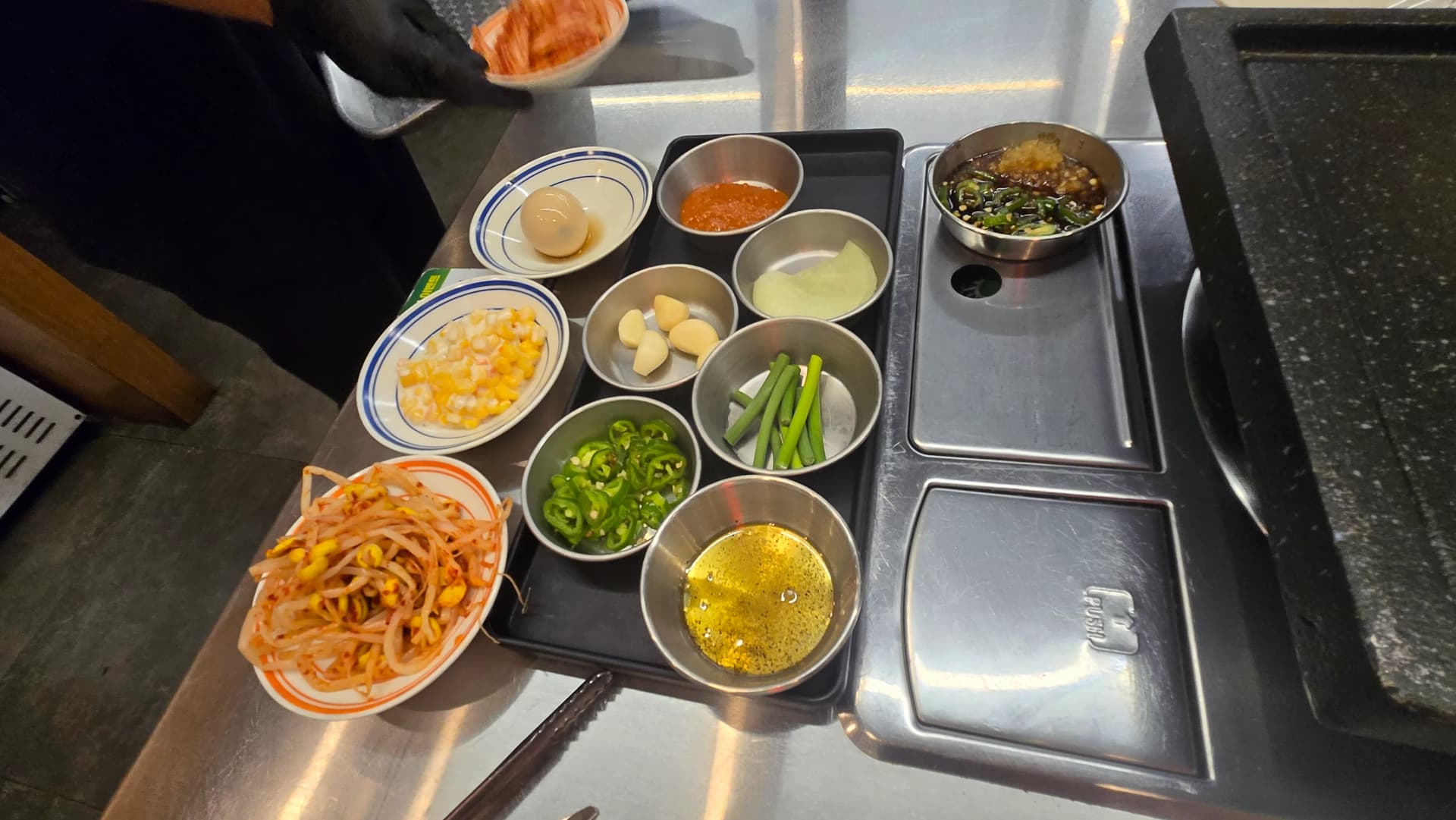
The Standard Korean BBQ Table Setup — And Yes, It's All Free
The moment you sit down, the table gets loaded up like this. Corn salad, bean sprouts, onions, eggs, garlic, gochujang sauce, scallions, cheongyang chili peppers, oil dipping sauce, pickled green onions — and you didn't order any of it. It just shows up. This is Korean BBQ culture. You order one type of meat, and your entire table fills up like this. And obviously, there's no extra charge. If this were a restaurant in the West, every single one of these would cost extra, but in Korea, this is just the standard. This is one of the moments that shocks first-time foreign visitors the most.
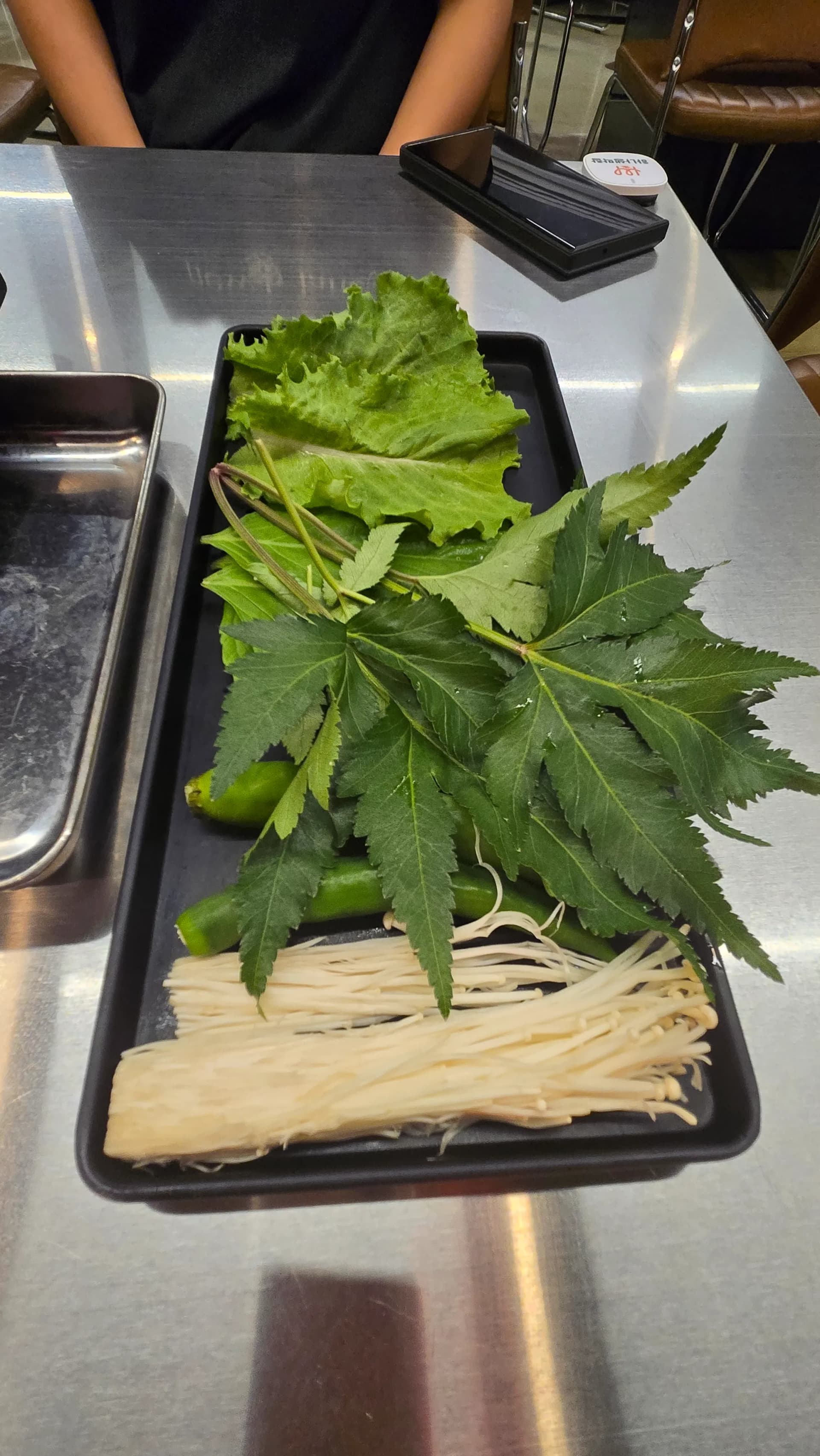
Ssam Vegetables — The Korean Way of Wrapping Your Meat
These are ssam vegetables. Lettuce, broad leafy greens, cheongyang chili peppers, and enoki mushrooms all came out together. The way Koreans eat meat is a bit unique — you don't just eat the meat by itself. You take a broad leaf, place a piece of meat on it, add a little garlic or sauce, and pop the whole thing in your mouth at once. This is called "ssam." The vegetables cut through the richness of the meat so it never feels too greasy. Foreigners usually find it a bit unfamiliar at first, but once they try it, many of them end up eating this way exclusively. And of course, all of these generous portions of vegetables come free with the meal.
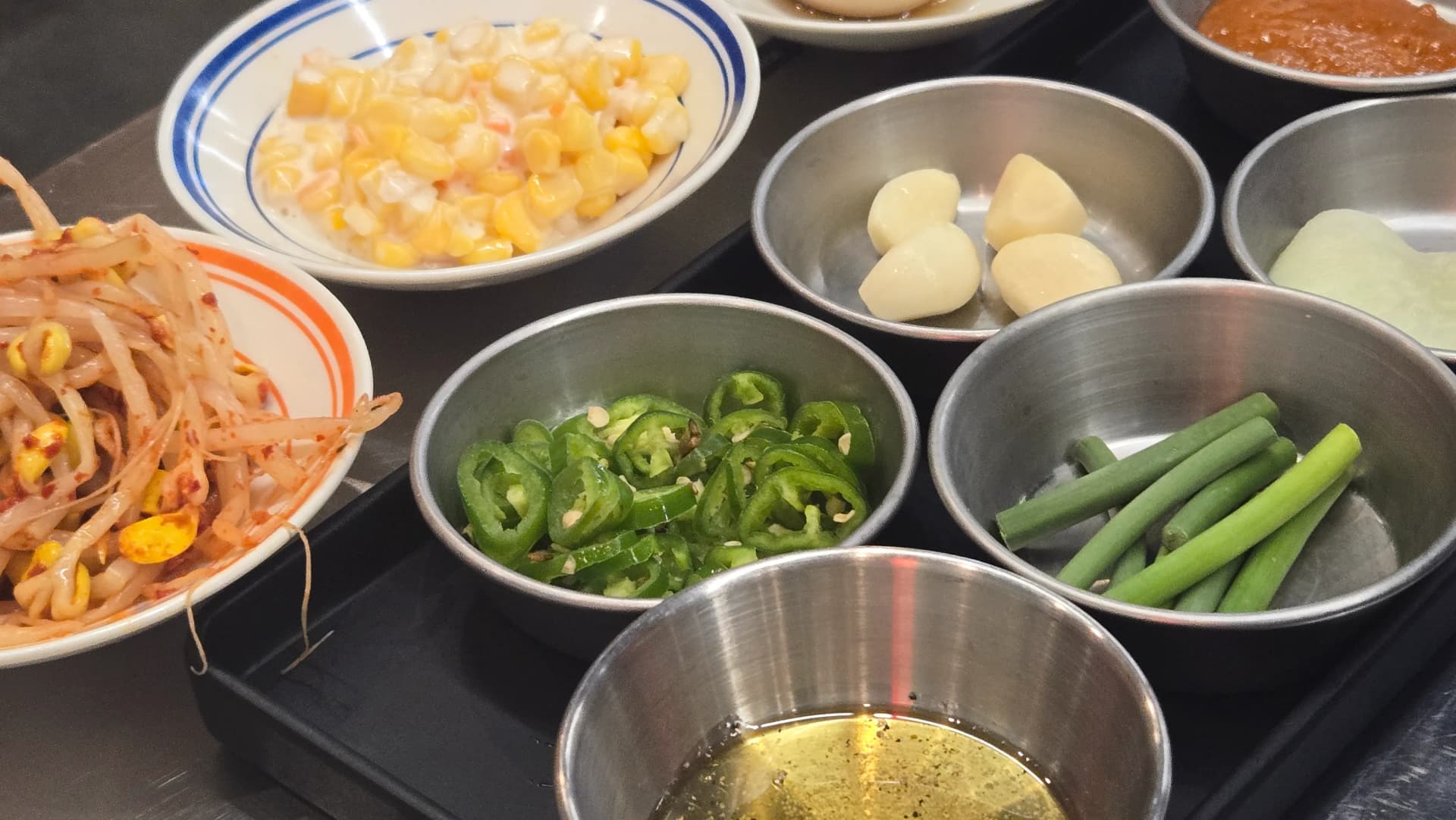
Every Single Side Dish Has a Purpose
Let me zoom in a bit. You've got corn salad, seasoned bean sprouts, cheongyang chili peppers, garlic, scallions, and oil dipping sauce all laid out. Since makchang is such a rich and fatty dish, this lineup isn't here by accident. Bite into a piece of cheongyang chili and the greasiness instantly gets cut. Grill the garlic alongside and eat it together, and the nuttiness doubles. The whole culture of grilling whole garlic cloves at a Korean BBQ joint is something that feels really novel to foreigners. And again — all of this is complimentary.
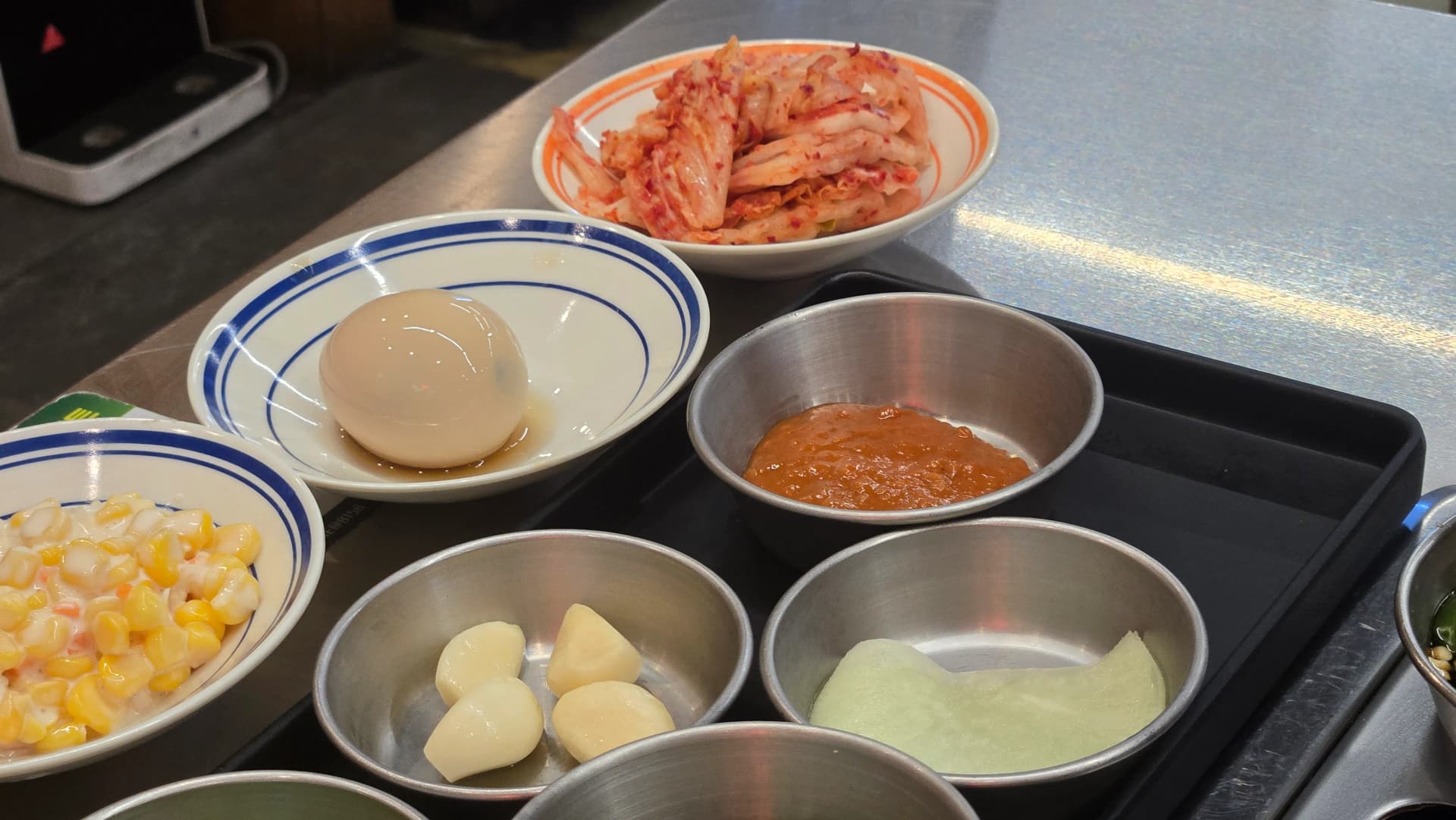
Kimchi, Ssamjang & Eggs — Makchang's Best Friends
Kimchi and ssamjang came out too. Kimchi hardly needs an introduction at this point — it's Korea's world-famous fermented side dish, and when you're eating meat, it's absolutely essential to have it on the side. There are also boiled eggs, which come as part of the standard setup. Popping a bite of egg between pieces of makchang is a nice way to reset your palate.
What Is Ssamjang?
Ssamjang is a uniquely Korean sauce made by mixing doenjang (fermented soybean paste) and gochujang (red chili paste) with sesame oil, garlic, scallions, and other ingredients. It's savory, nutty, and slightly spicy — and when it meets the rich flavor of grilled meat, the pairing is incredible.
The way to eat it is simple. Place a piece of meat on a lettuce leaf, dab a tiny bit of ssamjang on top, and wrap the whole thing into one bite. The sauce is quite salty on its own, so just a small amount is more than enough.
At a Korean BBQ restaurant, eating without ssamjang is practically unimaginable — it's that essential.
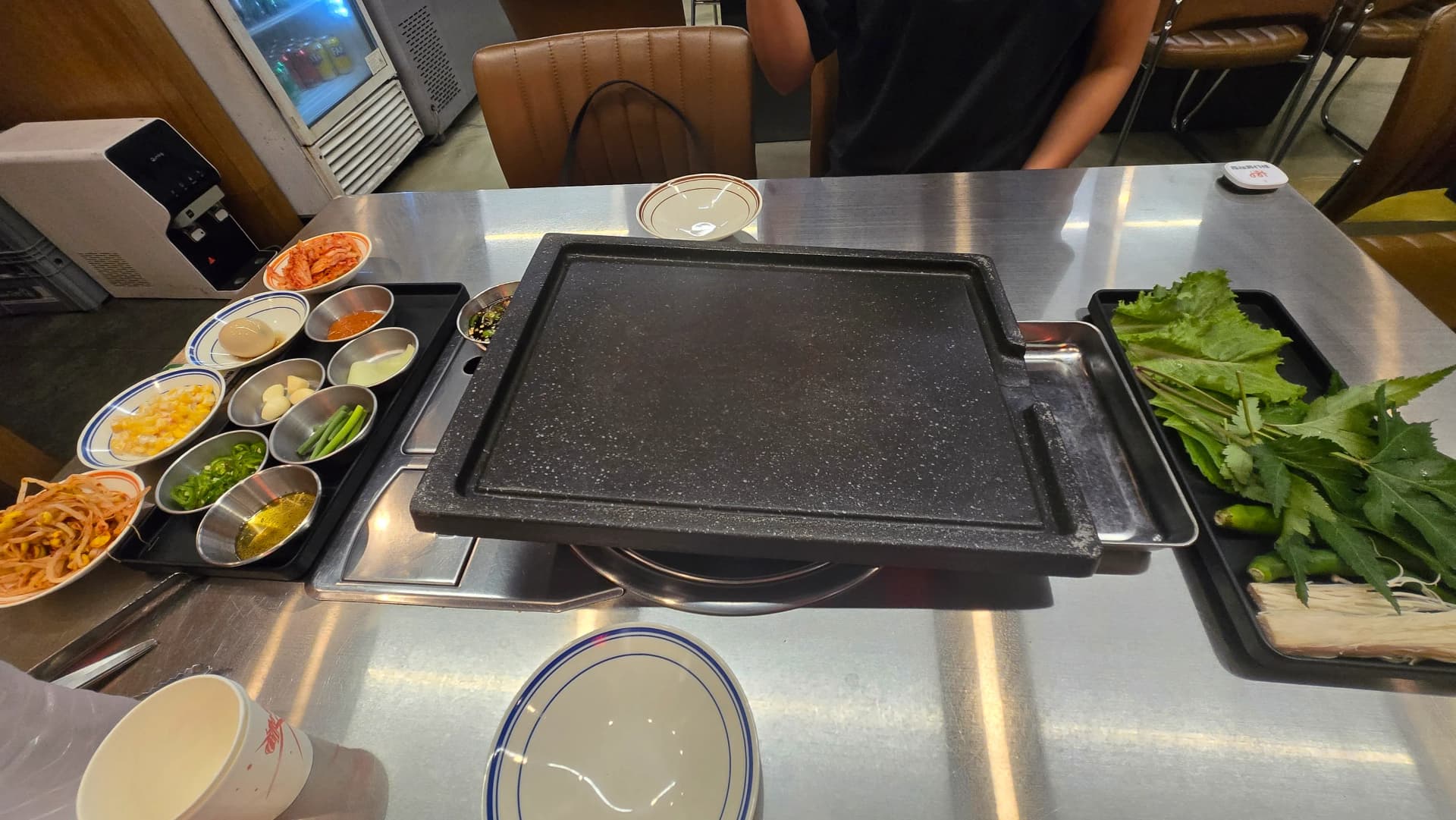
The Grill Is Ready — The Calm Before Grilled Makchang Hits the Table
This is the scene right before things really get started. The grill sits in the center of the table, side dishes are arranged on the left, and ssam vegetables have taken their place on the right. The grill is still clean and empty, but the moment the makchang lands on it, the whole vibe completely shifts. This is the classic Korean BBQ table setup — everything arranged around the grill, all ready to go. For foreigners, this moment feels both completely foreign and genuinely exciting at the same time. Now all we need is the makchang.
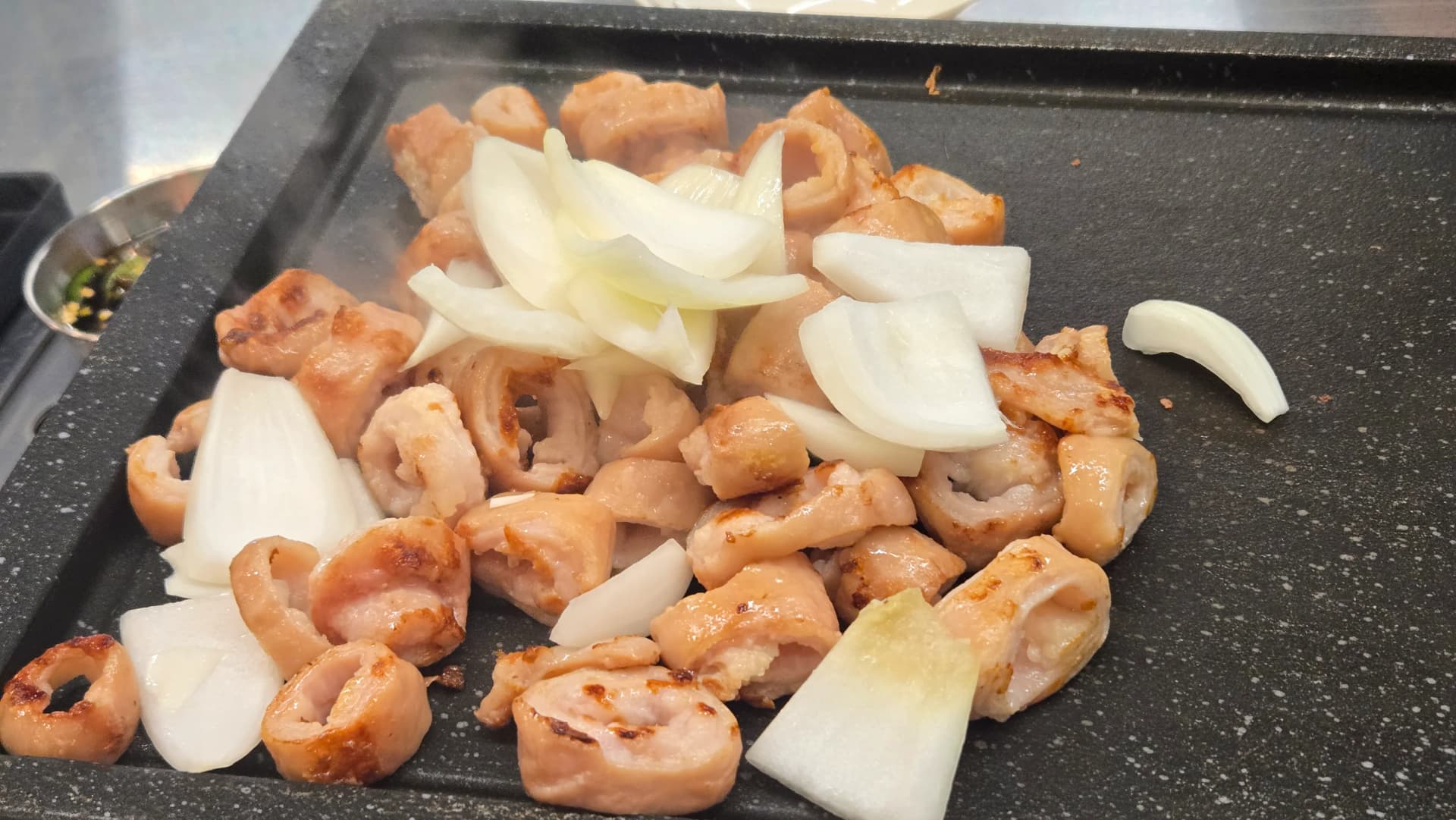
Finally — Grilled Makchang Hits the Grill
It's here. This is today's star — makchang. It's sizzling away on the grill alongside onions, and honestly, when you first see this, it might not be the easiest thing to reach for. The rolled-up shape and unique texture mean that if you're not used to offal, the visual alone can make you hesitate.
But the moment you pick up a piece and put it in your mouth, the whole story changes. The outside is slightly crispy, the inside is moist and savory, and when the sweetness of the grilled onions hits alongside it, the combination is genuinely incredible. When foreigners write in their reviews that "I couldn't stop eating" or "my hands just kept reaching for more," that's not an exaggeration. Once you get past the visual barrier, what's left is simply delicious food.
Grilled Makchang Price Guide (2025)
Budget-Friendly — $7~$9 per serving (200g)
This is the range you'll find at local makchang joints in Daegu (a city in southeastern Korea famous for makchang) and smaller regional towns. Daegu's makchang culture is so well-developed that even at these prices, the quality can be surprisingly high.
Average — $10~$13 per serving (200g)
This is the standard price range for dedicated makchang restaurants in Seoul, the greater Seoul area, and Busan. Many places at this tier pre-grill the makchang before serving, and the side dish selection tends to be more generous starting from this price point.
Premium — $14~$18+ per serving (200g)
This covers upscale makchang spots in trendy Seoul neighborhoods like Gangnam, Hongdae, and Itaewon. Prices climb even higher when premium Korean beef (hanwoo) so-makchang or specialty cuts are on the menu. These are restaurants that focus on quality over quantity.
Realistic Cost for Two People?
For two people ordering 2–3 servings of makchang plus drinks, you're typically looking at around $25~$33. It's not exactly cheap, and if you're a big eater who ends up ordering over 1kg, the bill can add up pretty quickly.
For people like that, there are restaurants that offer unlimited gopchang and makchang. If you want to eat without worrying about quantity, going for an all-you-can-eat spot is a smart move — I'll introduce some of the top ones further down in this article.
* Per serving = 200g. Side dishes and ssam vegetables included at no extra charge. Prices vary by region and restaurant.
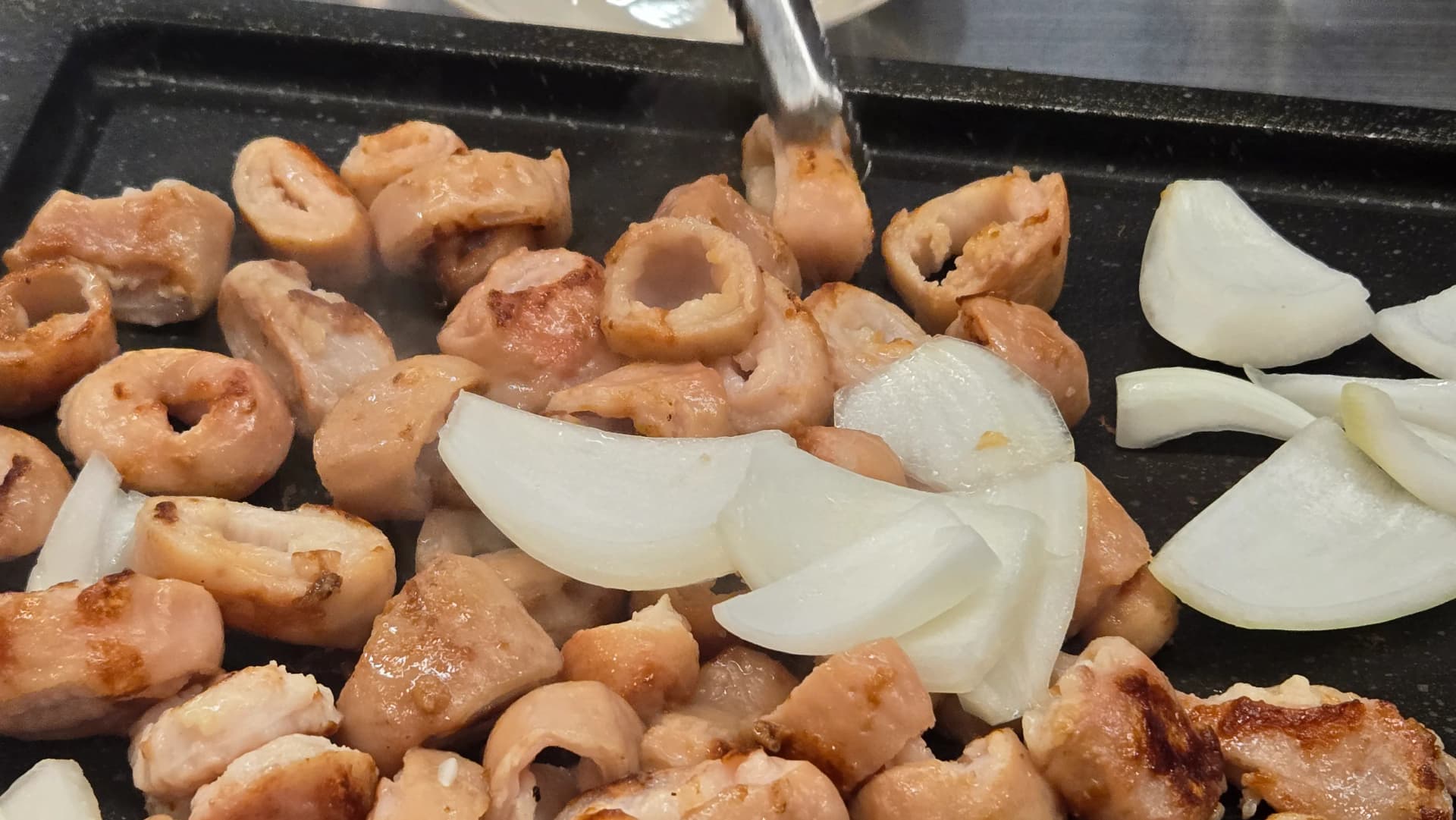
How to Eat Grilled Makchang — Cooking It Thoroughly Is Key
The way to eat it is simpler than you'd think. Just keep flipping the pieces with tongs so they cook evenly on all sides. There's no need for any complicated prep or cutting — just grill them as they come and eat them straight off the grill.
One crucial thing to know: makchang is pork, so you absolutely cannot eat it lightly seared the way you might with beef. It must be cooked all the way through. The key is to keep grilling until the outside turns a nice golden-brown color and the pieces start to shrink and tighten up a bit.
This blog is published in multiple languages for readers all around the world. If you can't eat pork for religious reasons — whether Islamic, Jewish, or otherwise — don't worry. There are restaurants that specialize specifically in so-makchang, which is beef makchang. So-makchang comes from the fourth stomach of a cow, making it a completely different cut from pork makchang. Just confirm whether a restaurant serves beef so-makchang before you visit.
So-makchang and pork makchang may have similar names, but the cut, flavor, and price are all completely different. Knowing the difference before you choose will make for a much more satisfying meal.
Beef So-Makchang vs. Pork Makchang Comparison
Beef So-Makchang
Cut: The fourth stomach (abomasum) of a cow
Flavor: Less fatty and more mild. It has a savory nuttiness that builds the more you chew — great for people who don't like greasy food.
Texture: Thick and chewy. It has a really satisfying bite to it.
Price: $12~$17 per serving (150–200g)
Pork Makchang
Cut: The very end of the pig's large intestine (rectum)
Flavor: Juicy and intensely rich. One bite and your entire mouth fills with a deep, savory, almost buttery flavor.
Texture: Soft and moist. Noticeably more tender than beef so-makchang.
Price: $7~$13 per serving (200g)
* Prices vary by region and restaurant. Beef so-makchang is generally more expensive than pork makchang overall.
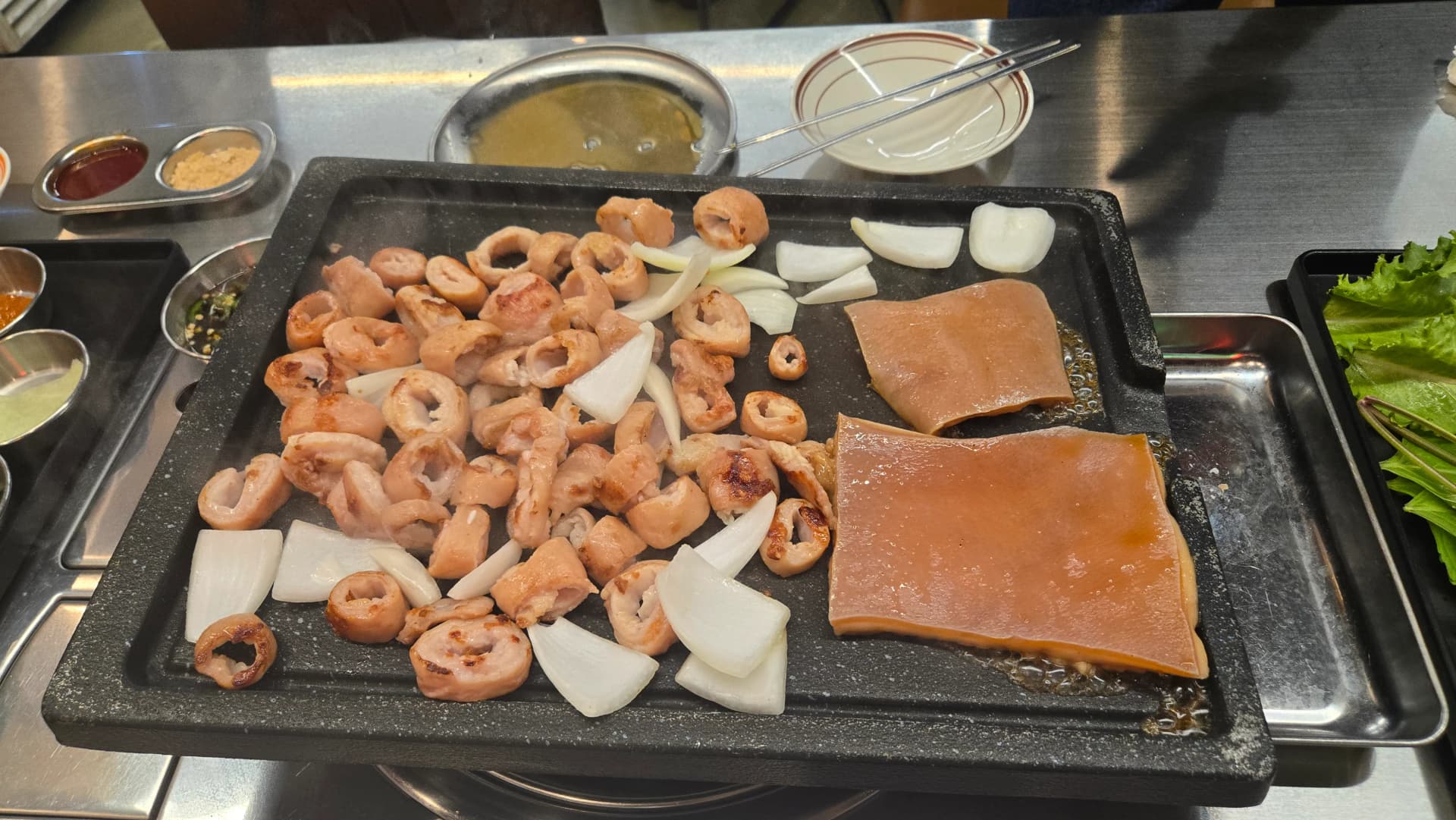
Add Some Pork Skin to the Grill and the Whole Game Changes
While the makchang was cooking away, we threw some pork skin (dwaeji-kkeopdegi) on the grill too. Those flat pieces on the right side of the grill — that's the pork skin.
I'll be honest, just hearing the name "pork skin" probably triggers almost as much hesitation as makchang for some people. The word "skin" just carries a certain weight. But once you actually taste this stuff, it's the kind of thing that makes you lose your mind. The outside is chewy, the inside is tender, and as it grills to a golden crisp, this uniquely savory aroma rises up and you just can't stop reaching for it. Eating it alongside makchang creates this alternating texture experience — chewy meets crispy meets juicy — and the combination works way better than you'd expect.
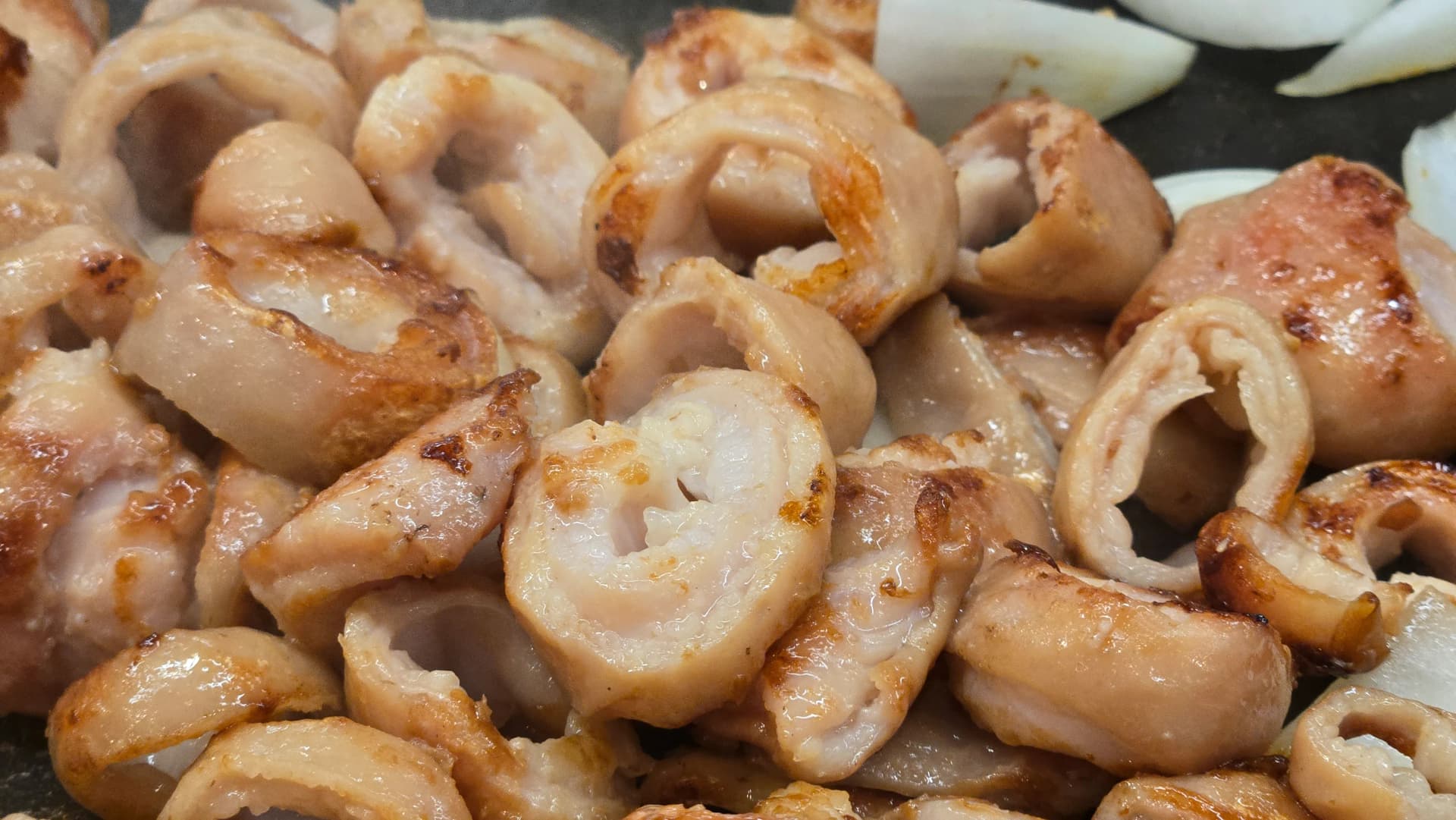
This Is When It's Ready — The Moment Grilled Makchang Is Done
When it looks like this, it's time to eat. The surface has turned a nice golden-brown, and that signature savory, nutty aroma of makchang fat starts rising from the grill. If you look at the cross-section, you can see it's fully cooked through, looking dense and packed inside. At this point, grab one with your tongs, dip it lightly in the oil sauce, and put it in your mouth — absolute heaven.
Compared to when it first went on the grill raw, the pieces have shrunk slightly and the color has completely changed. This transformation is the signal that your makchang is properly cooked. The texture — slightly crispy and chewy on the outside, moist and juicy on the inside — is exactly why people who were hesitant at first always end up eating the most.
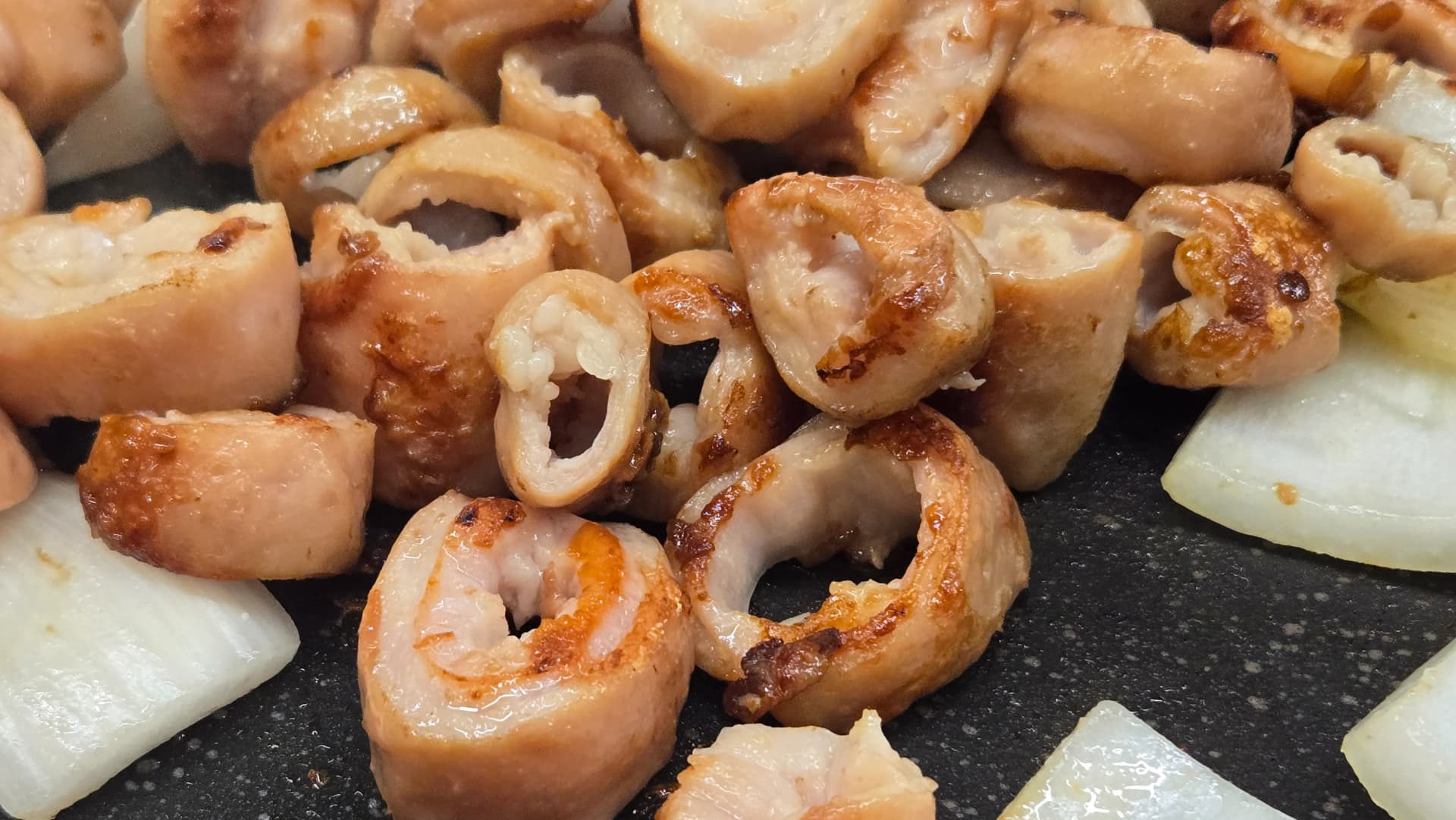
Crispy Outside, Juicy Inside — Grilled Makchang at Its Best
This is makchang that's almost completely done. Looking at the cross-section, you can see it's cooked all the way through — dense and packed inside, with the surface grilled to a golden brown with slightly charred spots here and there. The onions on the side are grilling along with it, and when the sweetness of the onions meets the savory fat of the makchang, it tastes even better. It's just about time to dig in.
Grilled Makchang — Just Get Past That First Bite and the Rest Takes Care of Itself
The makchang is now fully cooked. This is where the real experience begins.
Even the people who were thinking, "Can I really eat this?" — by this point, their whole expression has changed. You grab a golden-brown piece of makchang off the grill with tongs, give it a light dip in the oil sauce, place it on a ssam leaf, and wrap it into one big bite. That's the moment you finally understand what all the fuss is about.
The outside is slightly crispy and chewy, and rich juices burst out from the inside. Add the sweetness of the onions, the nuttiness of grilled garlic, and the earthy depth of ssamjang all hitting your mouth at once — and that's exactly why foreigners keep writing in their reviews, "Why is this so good?" and "I literally could not stop eating."
Grilled makchang is a dish where the visuals don't do it justice. If anything, it's a dish that loses out because of its appearance. But once you get past that very first bite, your hands just move on their own from there. If you're coming to Korea, you really need to try it at least once. I've almost never seen anyone regret it.
Grilled Makchang FAQ — Frequently Asked Questions
Q. Doesn't makchang smell really bad?
Properly cleaned makchang barely has any smell at all. Specialized restaurants wash it multiple times and often pre-grill it before serving, so the smell is way less intense than you'd expect. In fact, the savory aroma that rises when it's grilling on the hot plate is actually one of makchang's biggest charms.
Q. How long should I cook it?
Since makchang is pork, it absolutely must be cooked all the way through. Keep grilling until the surface turns golden-brown, the pieces shrink slightly, and they start to tighten and curl up. Do not eat it lightly seared the way you would with beef.
Q. I can't eat pork — is there an alternative?
Yes, there is. Some restaurants specialize specifically in beef so-makchang. So-makchang comes from the fourth stomach of a cow, making it a completely different cut from pork makchang. If you cannot eat pork for religious reasons, just confirm whether the restaurant serves beef so-makchang before you visit.
Q. Can I go alone?
It depends on the restaurant. Some makchang places don't accommodate solo diners. It's best to call ahead or check on Naver Place (Korea's main restaurant review app) before visiting. Daegu, being the makchang capital, tends to have more places that welcome solo visitors.
Q. Which region is most famous for grilled makchang?
Daegu, a major city in southeastern Korea, is the undisputed home of grilled makchang. The Anjirang Gopchang Alley in Daegu is the most iconic destination where makchang fans from all over the country flock to eat. In Seoul, you'll find clusters of makchang specialty restaurants around Mapo, Hongdae, and Noryangjin.
Q. What goes well with grilled makchang?
At makchang restaurants, finishing with fried rice is practically a ritual. After you've eaten all the makchang, you fry rice in the leftover fat on the grill — and it's an absolute treat on its own. Makchang also pairs perfectly with soju (Korean rice liquor) or beer, which is why it's one of the most popular choices for Korean office workers' group dinners.
Top All-You-Can-Eat Makchang & Gopchang Restaurants Across Korea
* Prices may change over time. We recommend confirming before your visit.
Gwangmyeong Daechang Jip
This is the largest all-you-can-eat gopchang and makchang franchise in Korea, with locations nationwide. Over charcoal, you can pick and refill whichever cuts you want — gopchang, daechang, makchang, heart, doraechang (twisted intestine), and beef brisket. Everything comes pre-grilled so you can start eating right away, and flying fish roe rice balls plus regular rice are also unlimited.
Uri So Hwangso Gopchang (Kondae Branch)
Located near Konkuk University Station in Seoul, this is an all-you-can-eat spot specializing in Korean beef (hanwoo) gopchang. Gopchang, daechang, makchang, and heart are all unlimited, and there's a self-serve bar where you can grab vegetables, tripe, raw liver, and more. Self-serve ramyeon (Korean instant noodles), tuna mayo rice balls — all free. For the price, this is honestly one of the best deals in Seoul.
Kim Deokhu-ui Gopchangjo
This all-you-can-eat gopchang spot is so popular that it has multiple locations in the Hongdae area alone. Korean beef gopchang, makchang, daechang, and heart are all unlimited, and they've got side options like cold noodles, ramyeon, and their signature "deokhu rice," making it a fully satisfying meal. Because of Hongdae's international vibe, there are tons of foreign visitors too, so the atmosphere is lively and global.
Taebong Gopchang (Bugyeongdae Branch)
This is a Busan local favorite — an all-you-can-eat gopchang spot that's been loved by residents for years. The meat comes pre-grilled so you can cook and eat it quickly, and there's free parking, which is a nice bonus. If you're traveling through Busan and happen to be near Pukyong National University, this is definitely worth a stop.
Halmeoni Ttal Gopchang (Bongmyeong Branch)
This is an all-you-can-eat beef gopchang gem in Daejeon, a city about 1.5 hours south of Seoul. It's built such a reputation for flavor that people come all the way from Busan just to eat here. They run a self-serve bar where you grab your own ingredients, making it super convenient, and at an affordable price point, you can eat as much beef gopchang as you want. It's a hidden gem that draws not just locals but visitors from across the country.
This post was originally published on https://hi-jsb.blog.