
Dried Pollock 4 Ways — A Korean Fish You've Never Heard Of
Table of Contents
11 items
Have you ever heard of hwangtae? It starts as Alaska pollock — one of the most common fish in the world — but after hanging outdoors all winter, freezing and thawing dozens of times, it transforms into a completely different ingredient. The flesh puffs up, turns golden yellow, and develops a spongy texture that soaks up any sauce or broth you throw at it. Koreans use this dried pollock to make stews, hangover soup, braised dishes, and spicy side dishes, yet most people outside Korea don't even know it exists. I've already covered popular stuff like tteokbokki and bibimbap on this blog, so today I want to show you something different. These are the hwangtae dishes my friend and I ate in Daejeon, a major city about 1.5 hours south of Seoul, in the summer of 2025.
What Is Hwangtae (Freeze-Dried Pollock)?
Hwangtae starts as myeongtae — Alaska pollock — one of the most heavily consumed fish in Korea. What makes it special is that depending on how it's processed, the same fish gets an entirely different name.
Same Fish, Different Names
• Saengtae — fresh, straight-from-the-ocean pollock
• Dongtae — flash-frozen pollock
• Bugeo — wind-dried pollock, flat and hard like a board
• Hwangtae — pollock that's been repeatedly frozen and thawed over an entire winter
The key is in that freeze-thaw cycle. In the Daegwallyeong mountain pass area of Gangwon Province in eastern Korea, winter nights plunge below 5°F (−15°C), then daytime sun warms things back up. Producers harness this natural temperature swing to create hwangtae.
How It's Made
In autumn, freshly caught pollock are gutted and hung one by one on outdoor wooden drying racks called deokjang. From December through March — roughly 3 to 4 months — the fish dry naturally in the open air.
Every night the fish freeze solid. Every day they thaw. This cycle repeats anywhere from several dozen to nearly 100 times. Each time, the cell walls in the flesh rupture and the tissue expands.
The result? What was once a flat, firm fish puffs up into something soft, spongy, and golden yellow. The character "hwang" (黃) literally means yellow, and finished hwangtae really does have a pale golden color.
This technique originally started as a preservation method back before refrigeration existed, but it ended up creating a flavor and texture totally unlike the original fish. Drop hwangtae into broth and it deepens the stock. Braise it in sauce and it absorbs every drop like a sponge. Grill it and the flesh stays plump and juicy. Think of it like stockfish in Nordic cooking — dried fish that becomes something greater through the drying process — but hwangtae is softer, spongier, and more absorbent. In Korea, it's so everyday that people cook up a pot of hwangtae hangover soup the morning after drinking without thinking twice.
The catch is that the specific climate conditions needed are quite particular, which is why hwangtae is rarely produced outside Korea.
💡 In Korea, this single species of pollock goes by more than 7 different names depending on its processing method, size, and harvest timing. There's nogaree (baby pollock), kodaree (semi-dried pollock), and more. Even native Korean speakers get confused by all the names.
From this one ingredient, Koreans make stew, soup, braised dishes, and seasoned side dishes. Let me show you how the same dried pollock changes completely depending on how it's cooked — with photos of every dish.
Spicy Seafood Stew with Dried Pollock (Hwangtae-Haemul-Jjim)
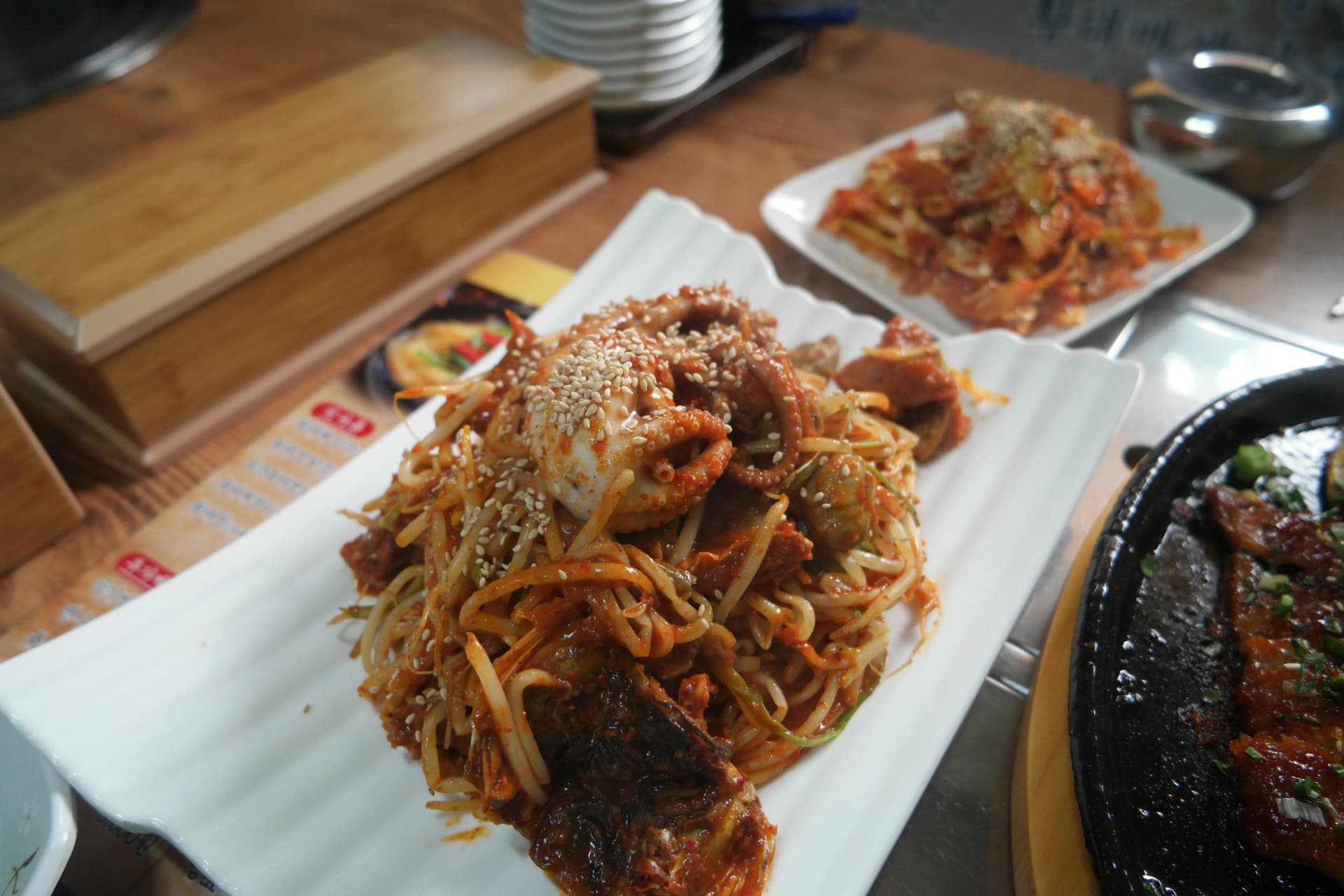
Hwangtae-haemul-jjim is a spicy braised seafood stew built on a base of bean sprouts and loaded with dried pollock, baby octopus, and sea pineapple in a gochujang-based sauce. This was the first dish to hit our table. We ordered the small size, and the second it landed, my friend looked at it and said, "Is this really enough for just two people?" Bean sprouts were piled high on the bottom, and on top sat hwangtae, jjukkumi (small octopus), and mideodeok (sea pineapple), all heaped together.
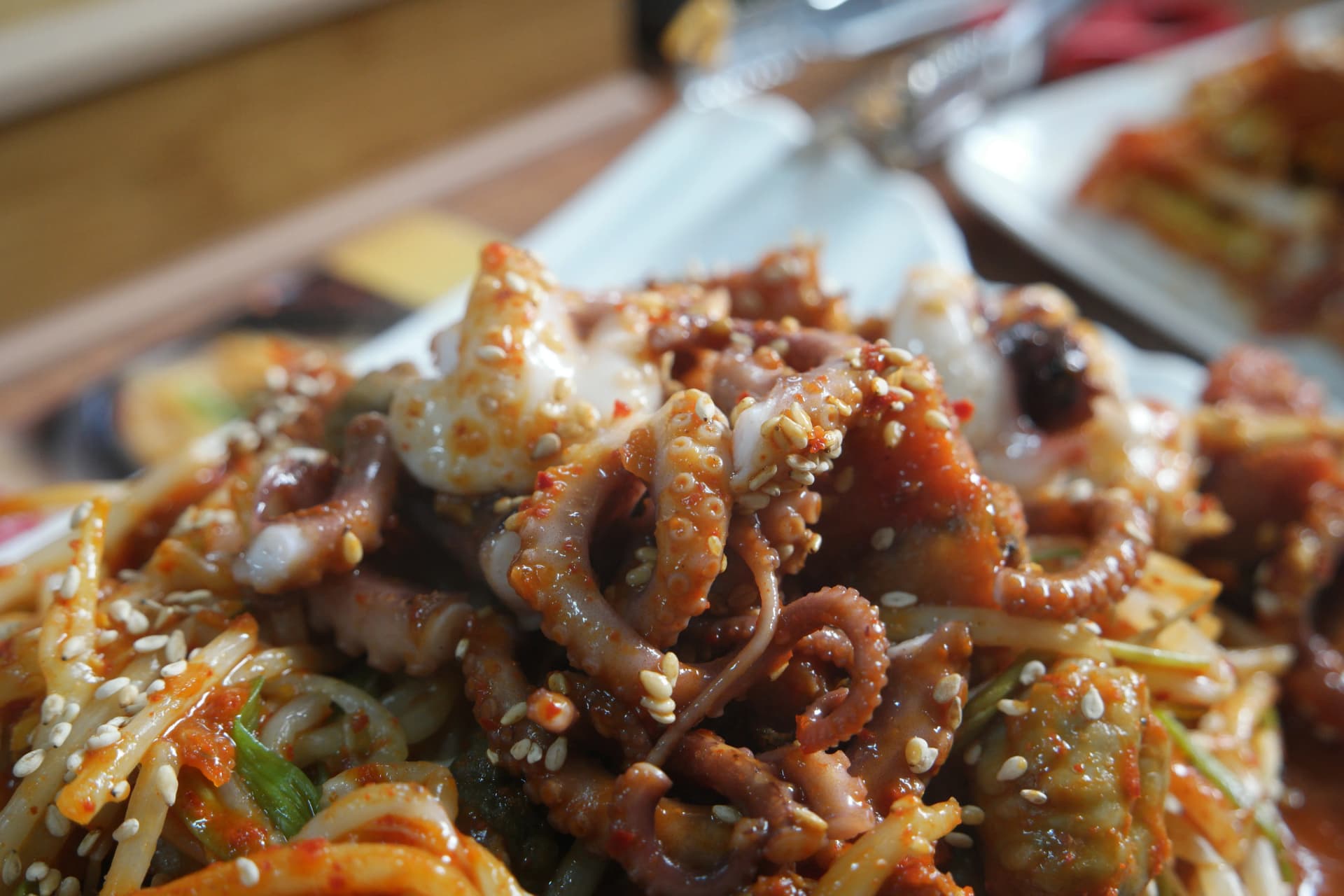
It looks fiery, but the first bite was actually sweet. The sweetness hits first, and the heat creeps in after. The dried pollock had soaked up the sauce completely — every chew released a burst of that sweet-spicy seasoning. With regular fish, braising in sauce usually makes the flesh fall apart, but hwangtae does the opposite: it actually gets plumper.
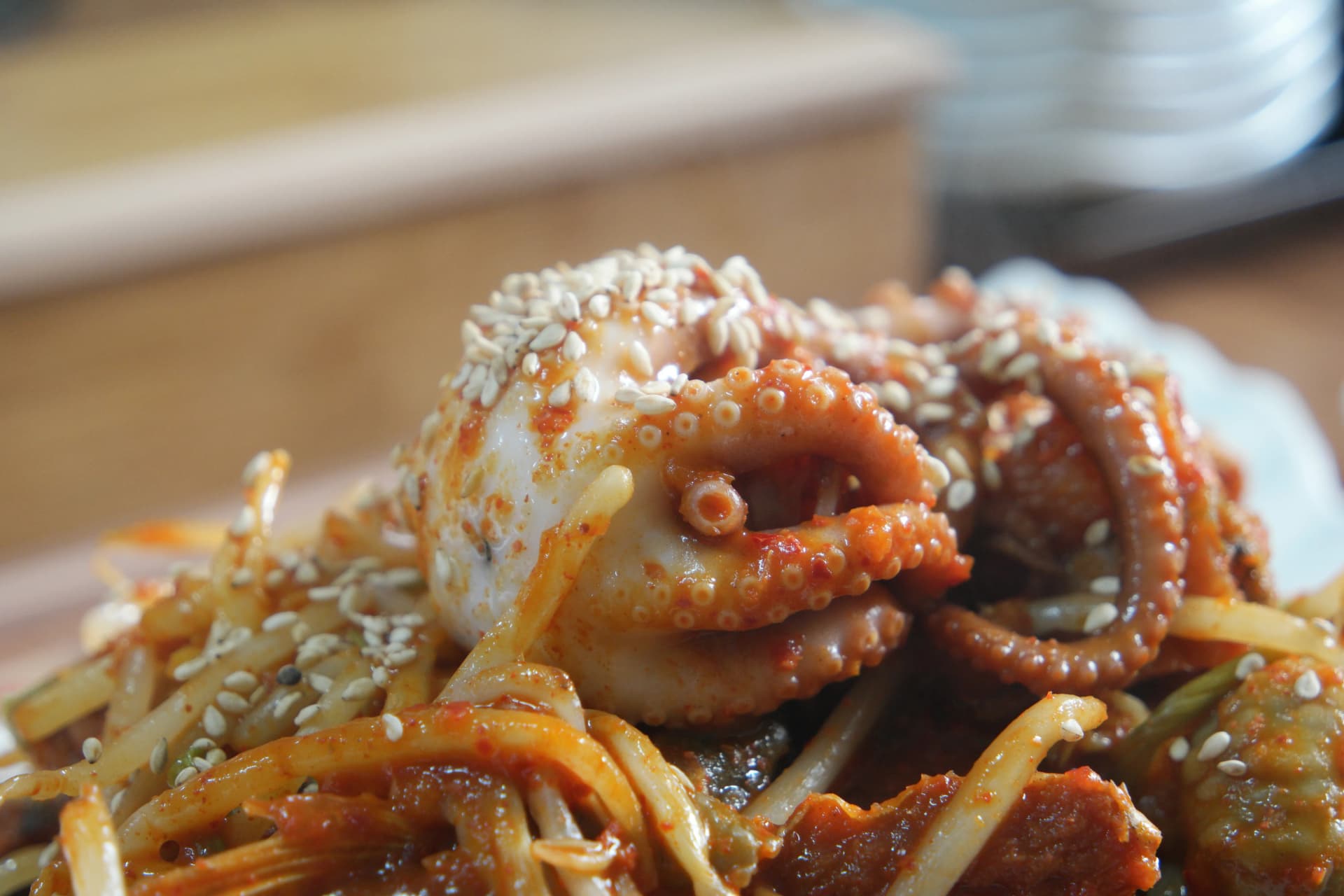
The baby octopus came whole — suckers and all, sitting right on top. In Korea, it's totally normal to serve seafood like this, in its full original form.
Baby Octopus and Sea Pineapple — The Seafood Inside the Stew
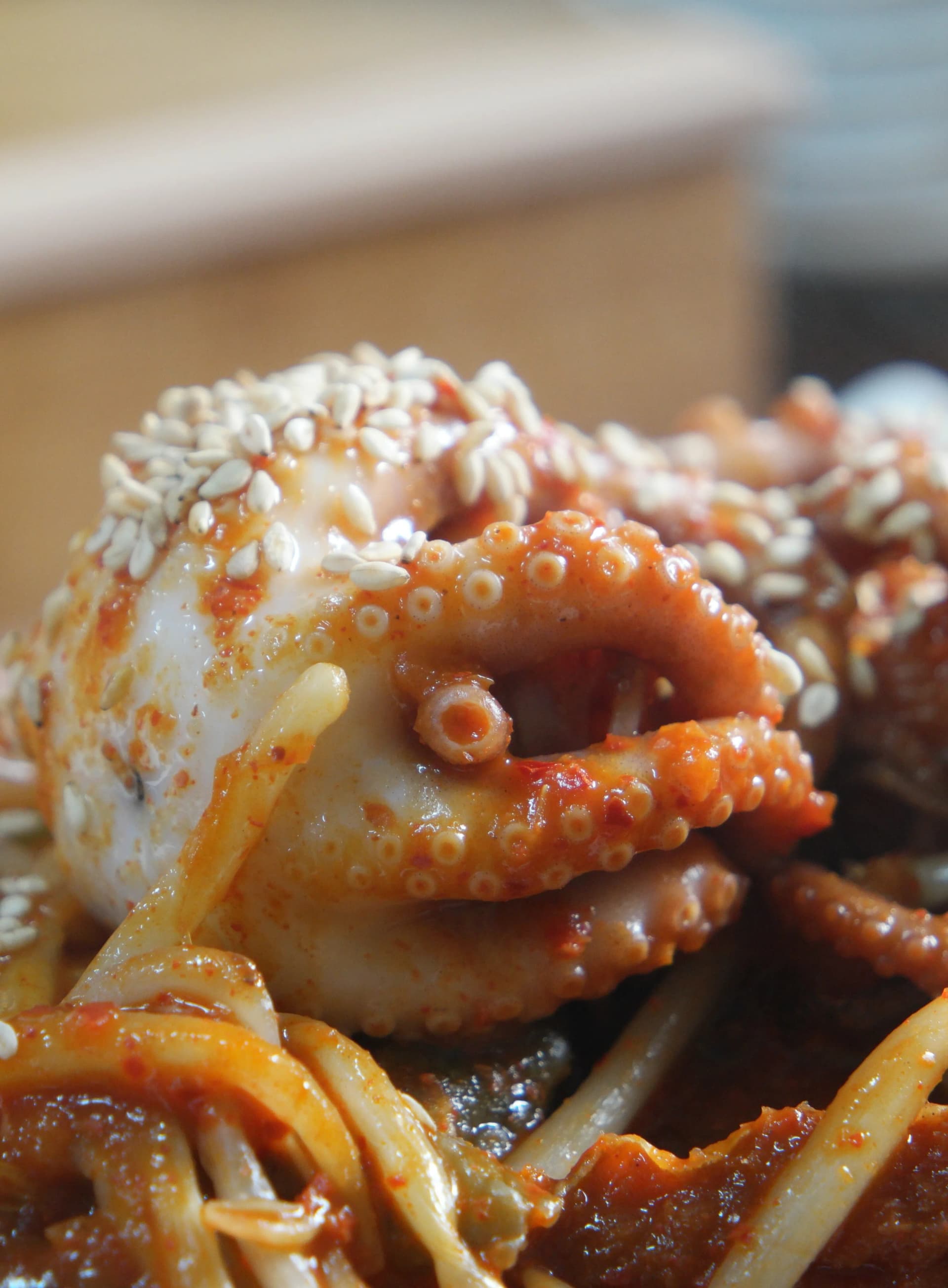
Up close, you can see the jjukkumi are much smaller and thinner-legged than regular octopus. They'd been braised down in the sauce so they were perfectly chewy. My friend basically picked out every piece of octopus before touching anything else.
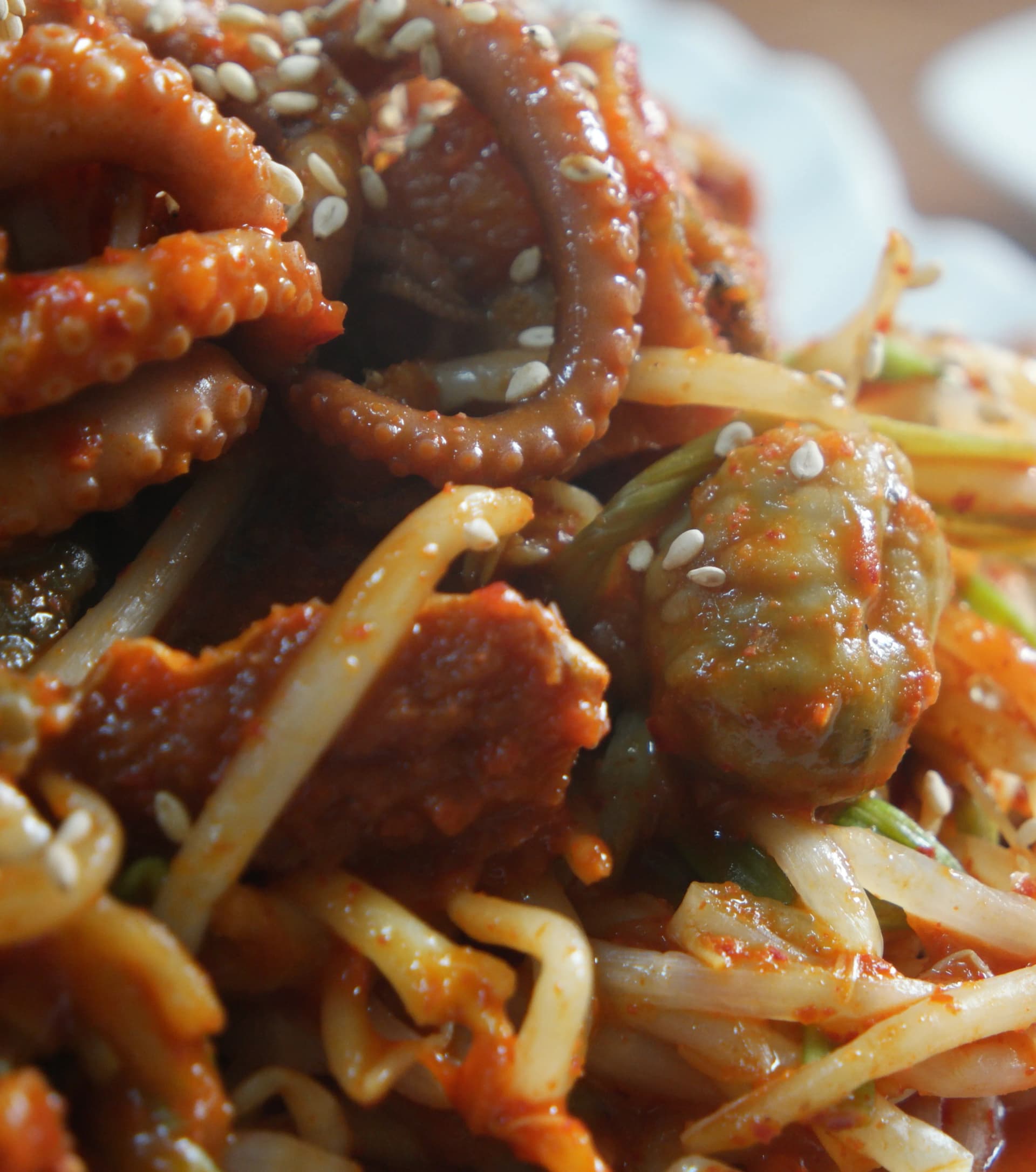
The greenish lumps? That's mideodeok — sea pineapple — and it's a type of seafood that's nearly impossible to find outside Korea.
🦑 What is Mideodeok (Sea Pineapple)?
Known in English as sea pineapple or sea squirt, mideodeok is a marine animal that grows attached to rocks. It's mainly harvested along the southern coast of Korea and is used in stews and soups.
When you bite into it, a burst of briny, ocean-flavored juice pops out. It's polarizing even among Koreans — some love it, some can't stand it — but if you're into seafood, it's absolutely worth trying.
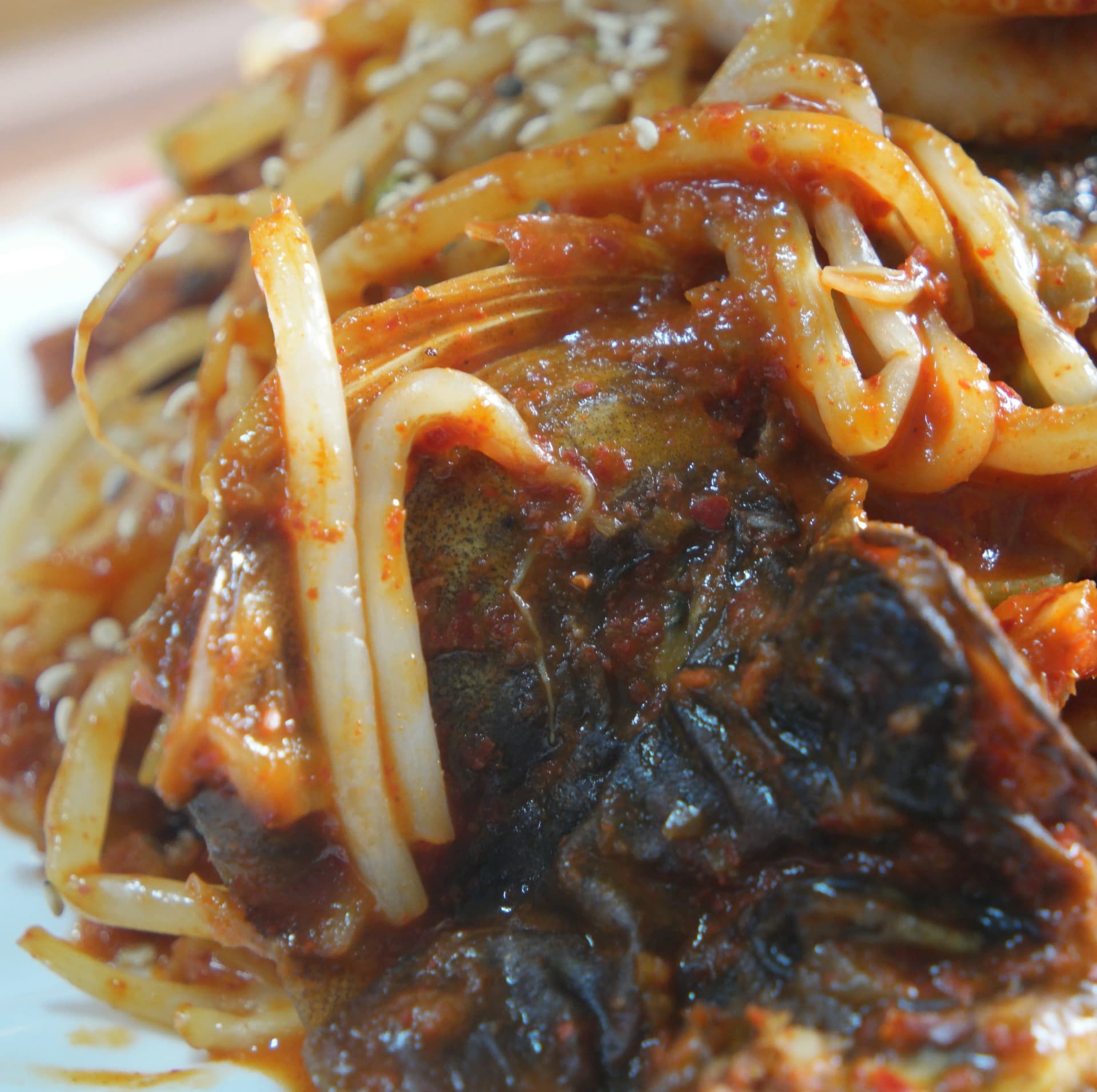
Here's the hwangtae hiding among the bean sprouts. Even after being braised in all that sauce, it hasn't fallen apart — it's actually swollen up. That's the defining trait of cooking with dried pollock.
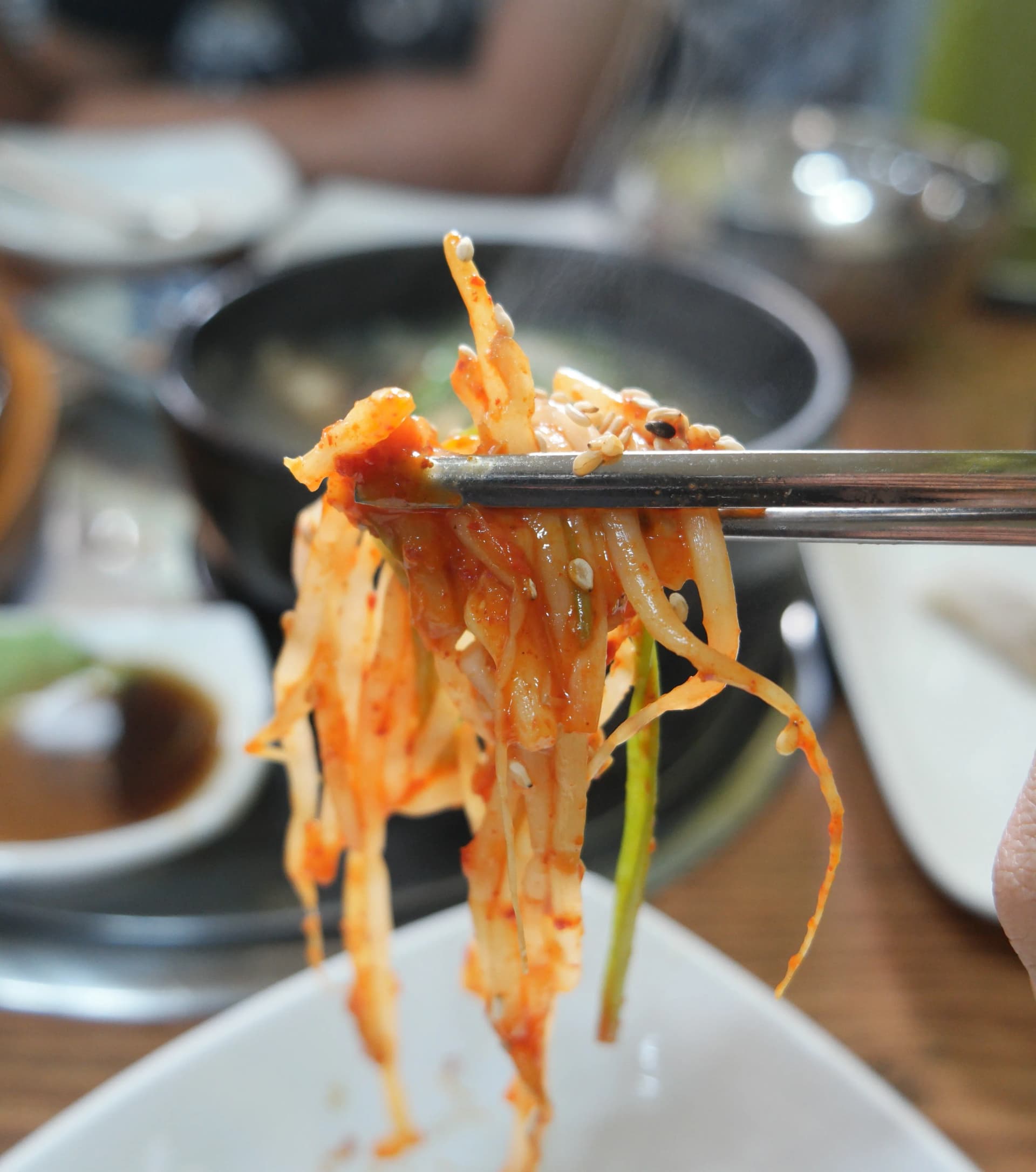
Don't sleep on the bean sprouts at the bottom, either. They'd absorbed all that spicy sauce, and honestly, just piling these on top of rice was already a meal by itself.
What to Do with the Leftover Sauce
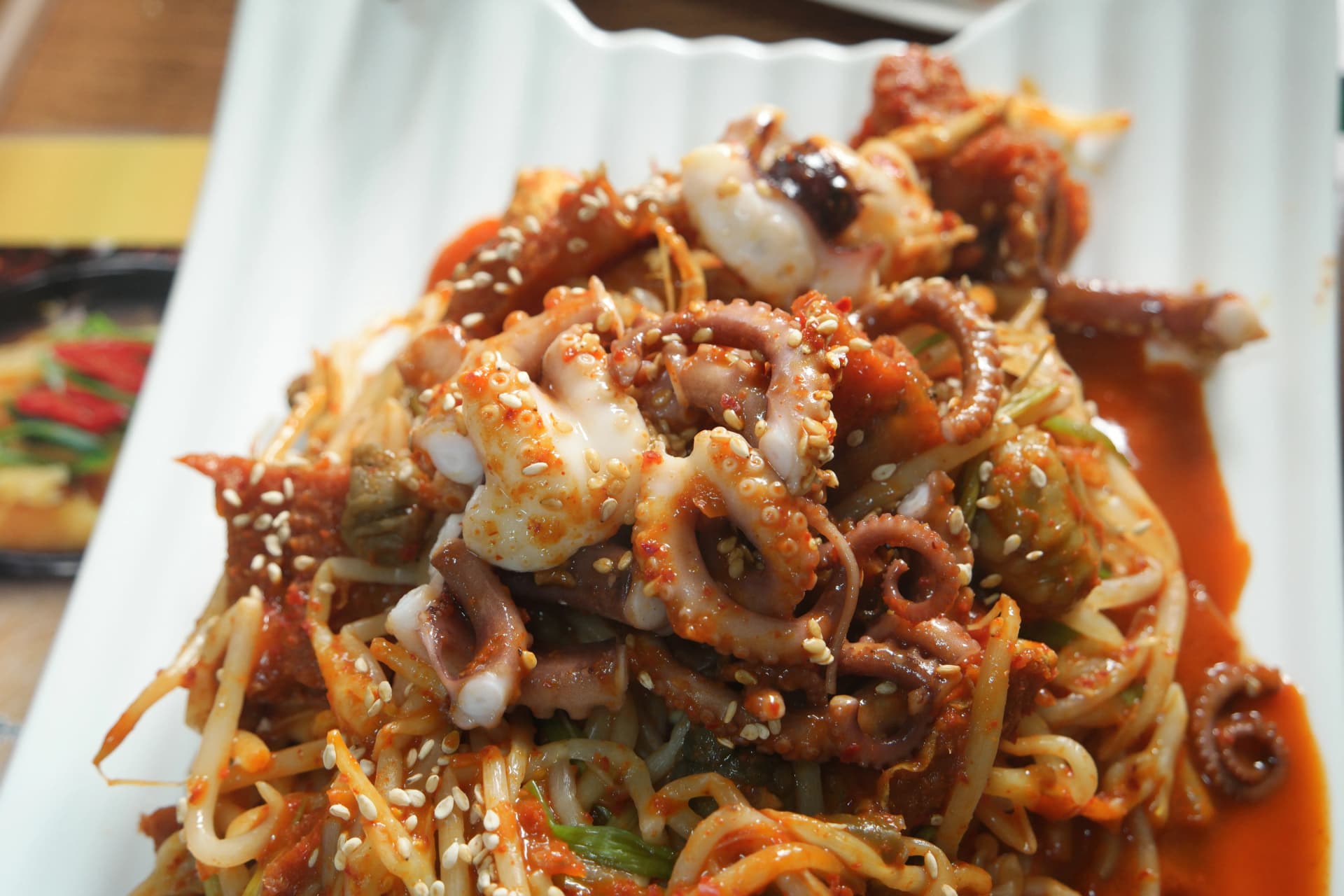
Once you've eaten most of it, there's a pool of red sauce left at the bottom of the plate. In Korea, you don't throw that away. You dump rice in and mix it all together. My friend said this sauce-mixed-rice was actually better than the main dish itself, and honestly, I couldn't argue.
Dried Pollock Hangover Soup (Hwangtae-Haejangguk)
After that heavy, spicy stew, all we wanted was something light and clear. That's when we ordered the hwangtae hangover soup.
🍺 What is Haejang (Korean Hangover Recovery)?
Haejang literally means "to cure a hangover." Korea has a long-standing tradition of eating piping hot soup the morning after a night of drinking. There are tons of varieties: hwangtae hangover soup, pork bone soup (ppyeo-haejangguk), bean sprout soup (kongnamul-haejangguk), and more.
Korean cities are dotted with dedicated hangover soup restaurants that stay open until the early morning hours. Going straight from a bar to a hangover soup joint is basically a ritual at this point.
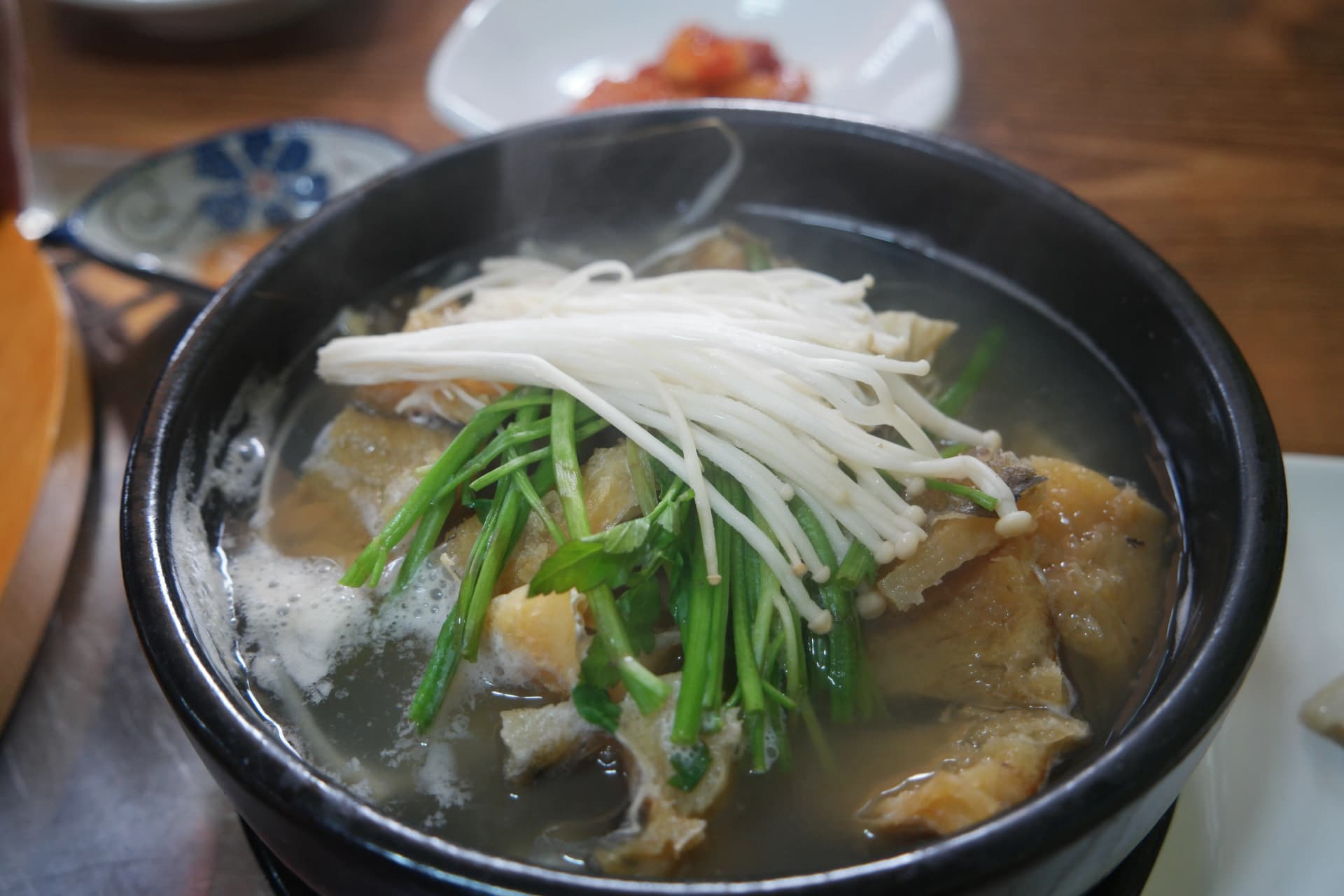
We hadn't actually been drinking that day, but the thing about hangover soup is it's delicious even when you're perfectly sober. The broth was bubbling away in a ttukbaegi — a traditional Korean earthenware pot — with enoki mushrooms and chives floating on top. It was the complete opposite of the stew: clear, clean, and almost zero oil.
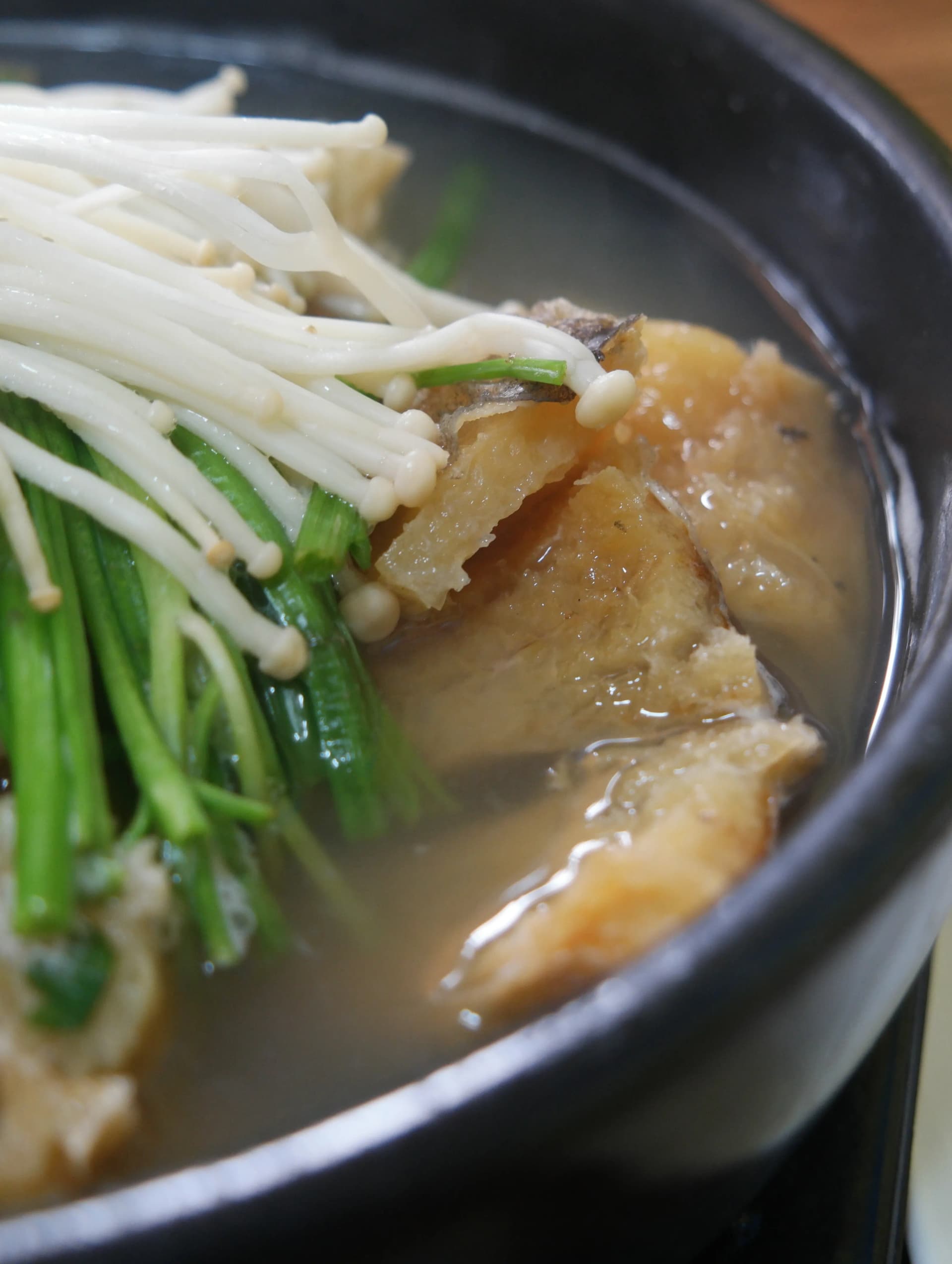
The dried pollock had swelled up with broth and gotten incredibly thick. Hard to believe this was once a stiff piece of dried fish. When you pick it up with chopsticks, it tears along the grain — the texture is closer to soft tofu than to anything you'd call "fish."
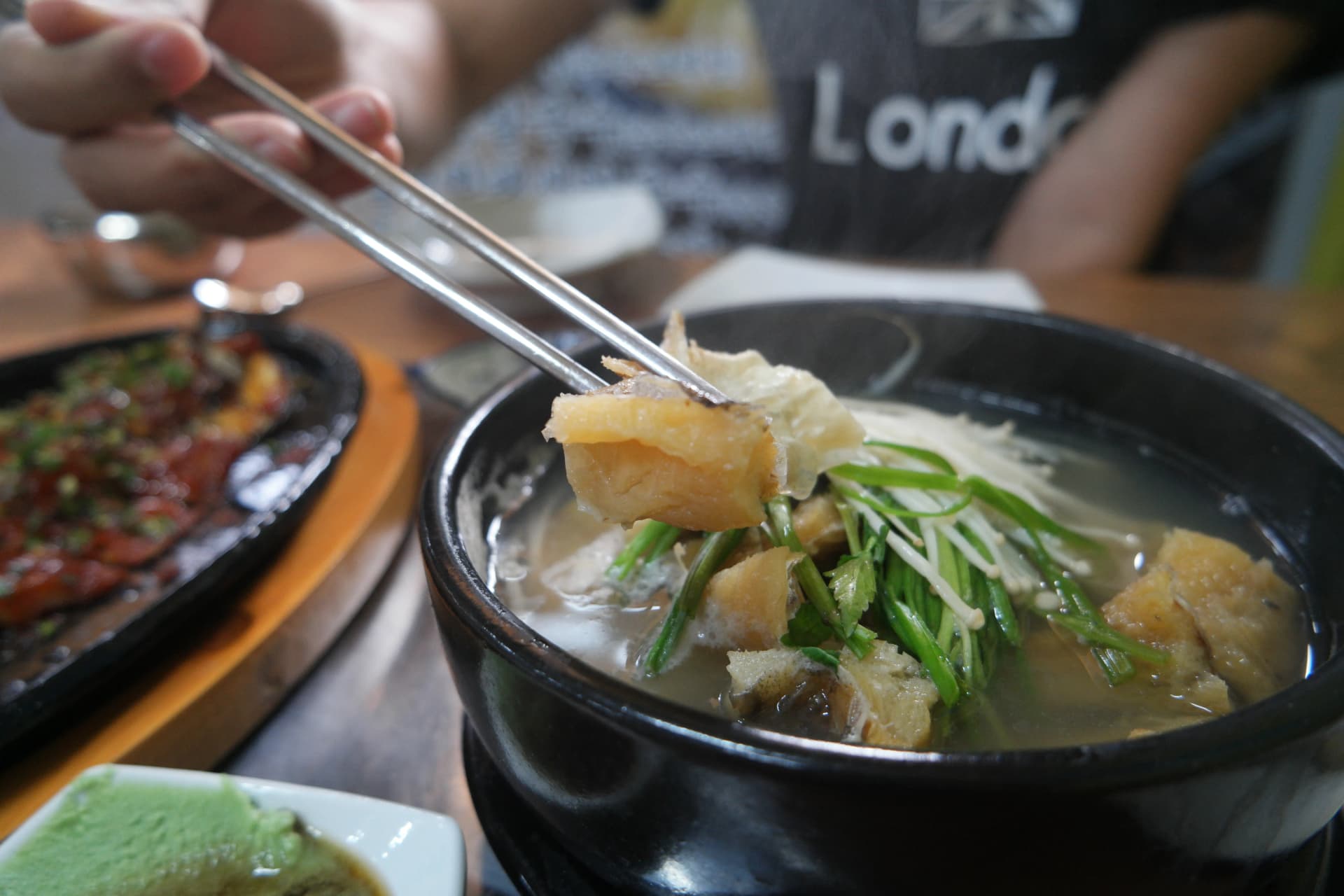
Look at the thickness when you lift a piece out. You'd never guess it started as flat dried fish, right? You can see the braised pollock platter in the background there — ordering both at the same time makes a great combo. One spoonful of clear broth, one bite of braised fish, one scoop of rice. That cycle just keeps repeating.
Dipping the Dried Pollock in Wasabi Soy Sauce
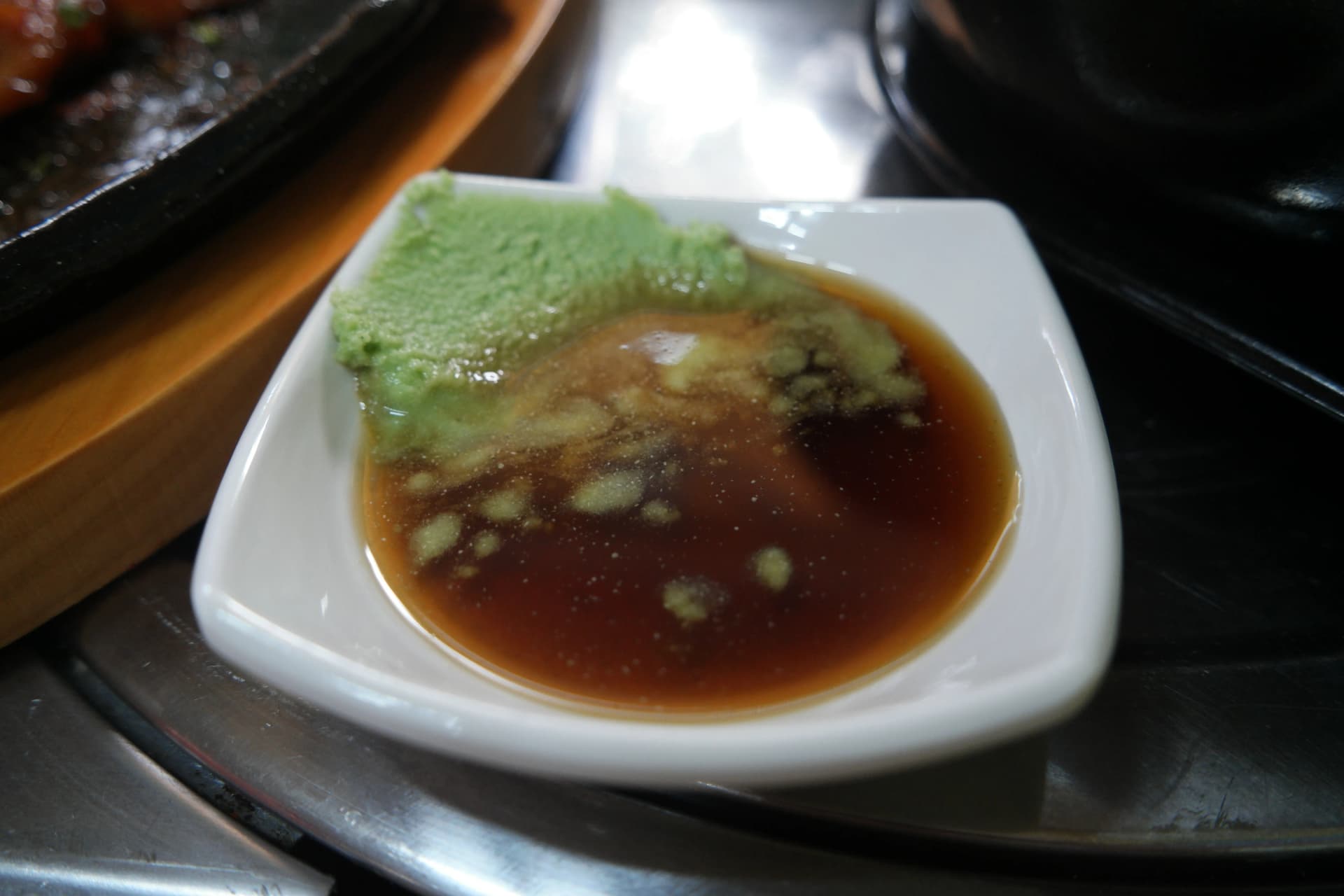
Here's a game changer: wasabi soy sauce. Fish out a piece of hwangtae from the soup and dip it in this, and it becomes a completely different experience. The mild, clean pollock suddenly gets a sharp wasabi kick and the salty depth of soy sauce. It was a flavor switch I didn't see coming.
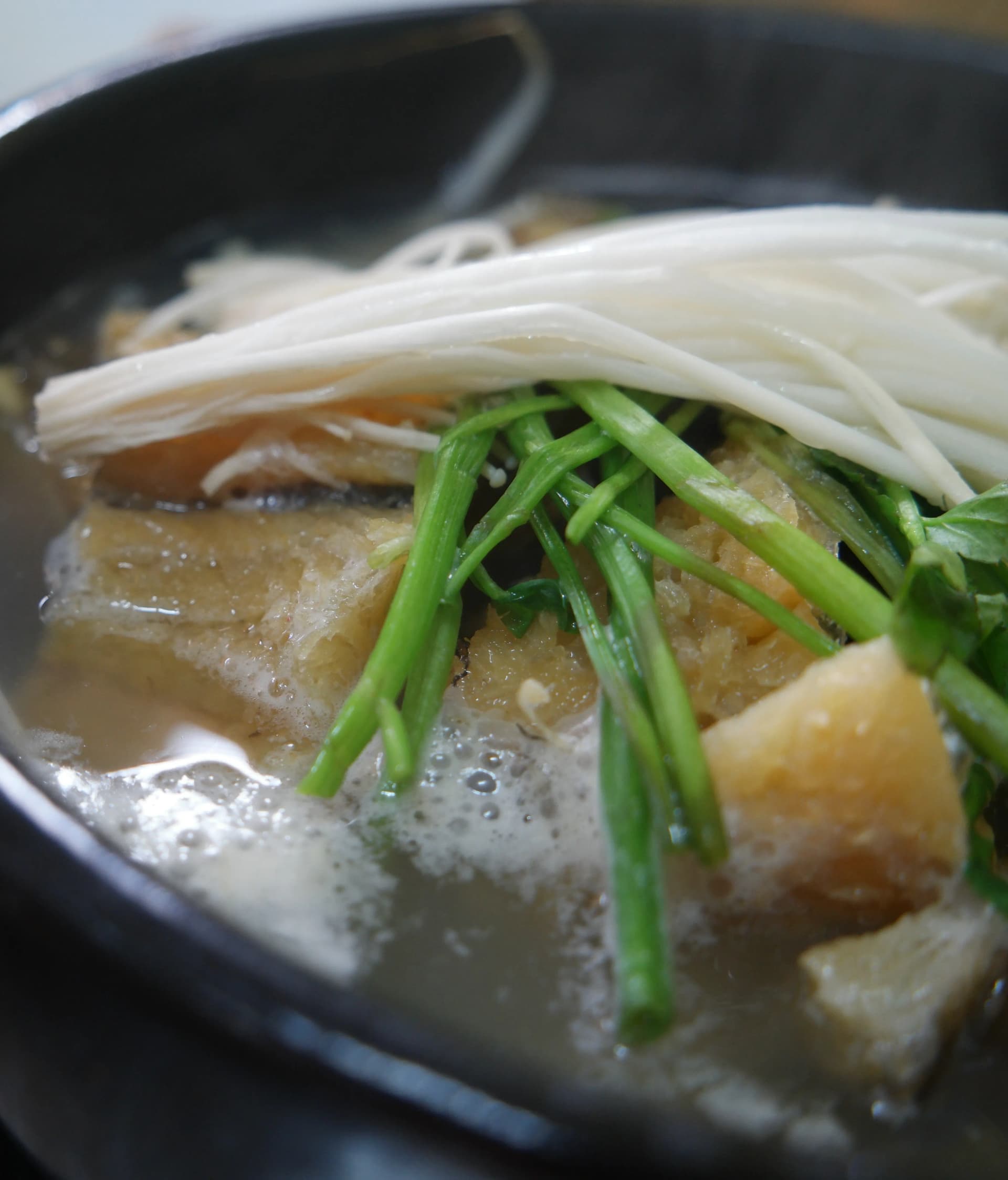
The sweet spot is when it's still bubbling with foam on top. Hwangtae hangover soup loses about half its magic once it cools down. I started by eating rice on the side, then at the end, dumped the remaining rice directly into the broth and finished it that way. My friend went all-in from the start — rice in the soup from bite one. There's no wrong way to do it.
Braised Dried Pollock in Gochujang Sauce (Hwangtae-Jorim)
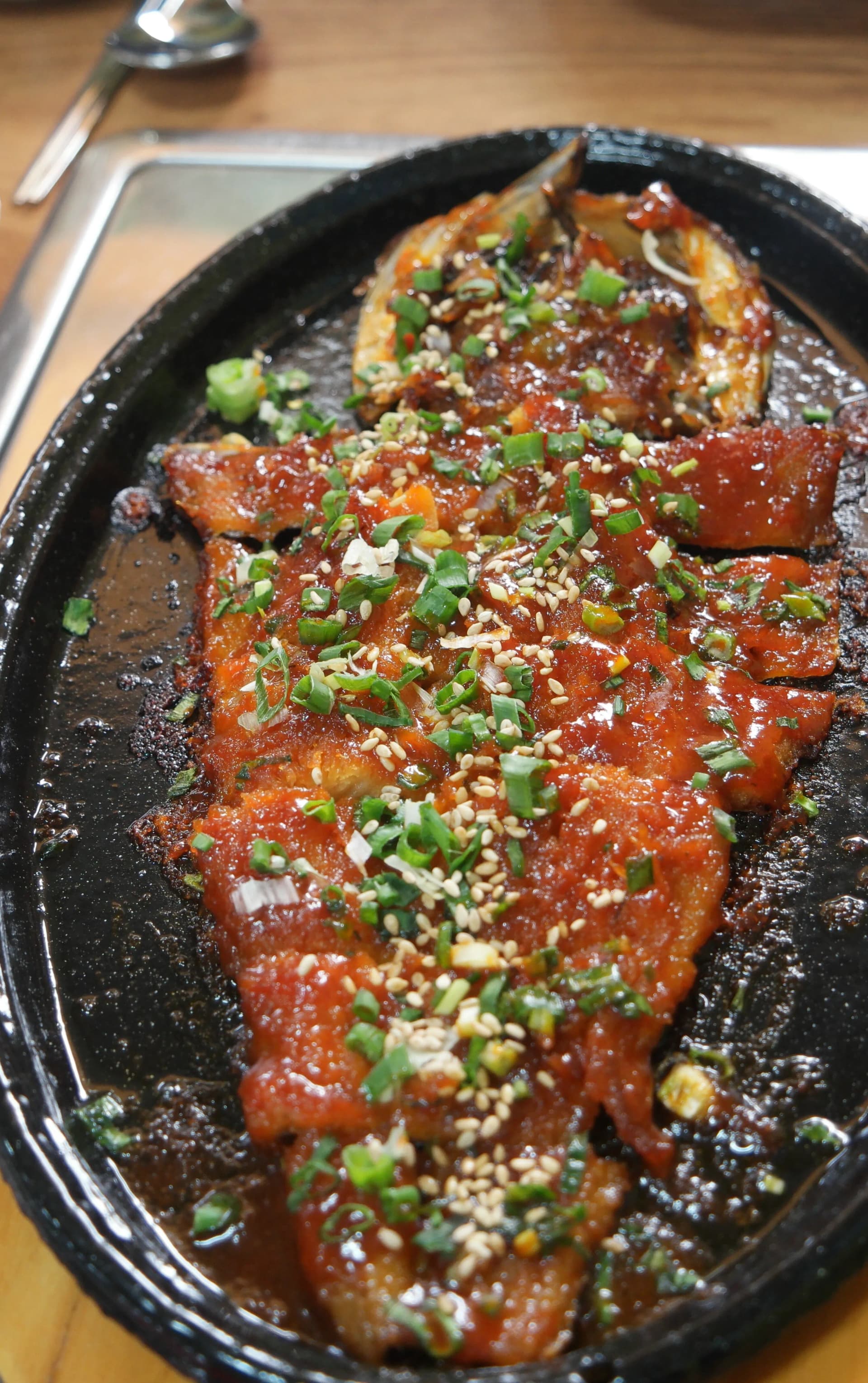
Hwangtae-jorim is braised dried pollock coated in a sweet-and-spicy gochujang glaze and cooked on a sizzling iron plate. This was the simplest dish of the day. A whole piece of dried pollock on a hot plate, brushed with gochujang (Korean red pepper paste) sauce, and braised down. No other ingredients — just the fish and the sauce. Of all four dishes, this one let you taste the hwangtae itself most directly.
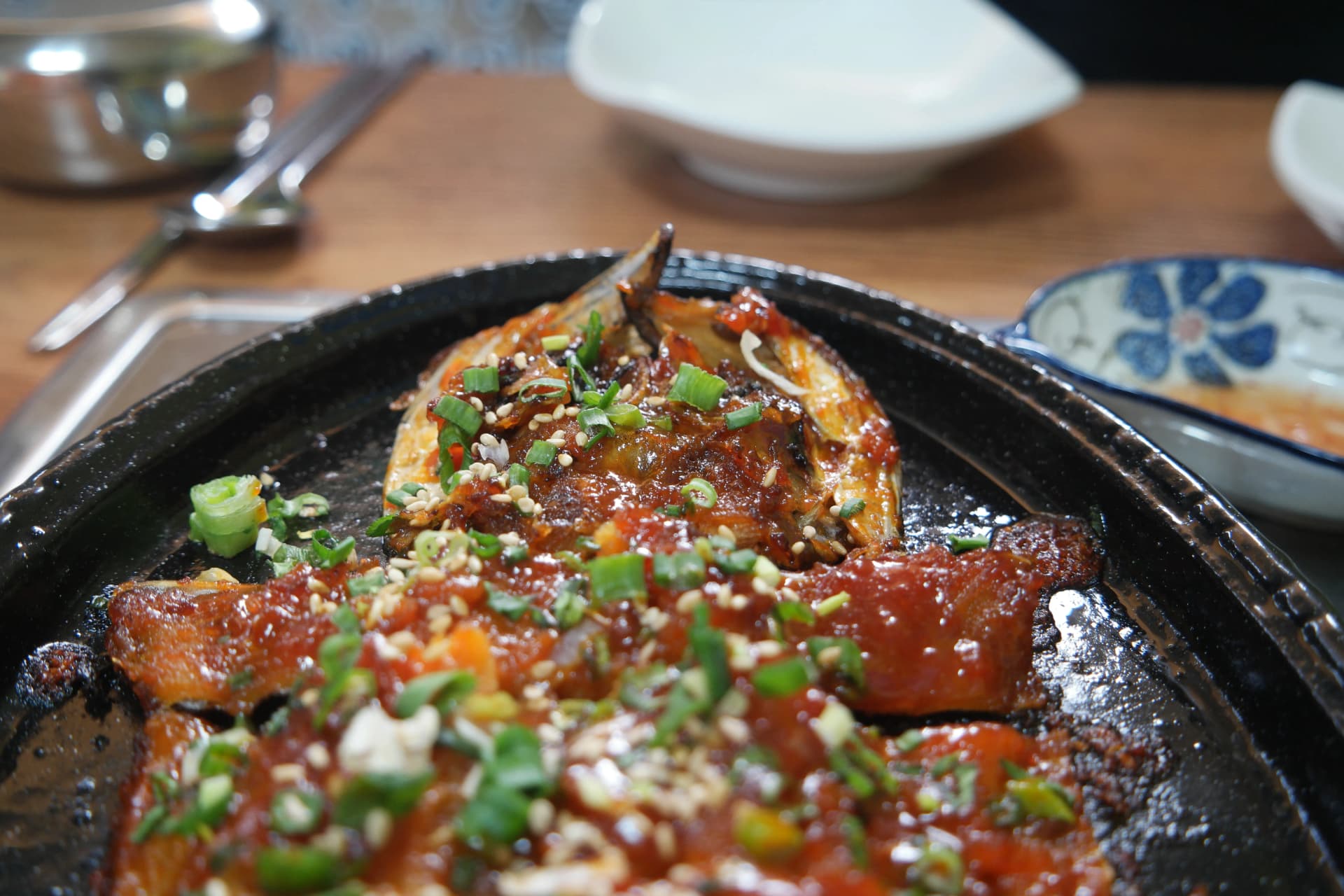
The head section. You can see the sauce clinging to the fins and the edges getting all crispy and caramelized on the hot plate. I went for those crispy edges first.
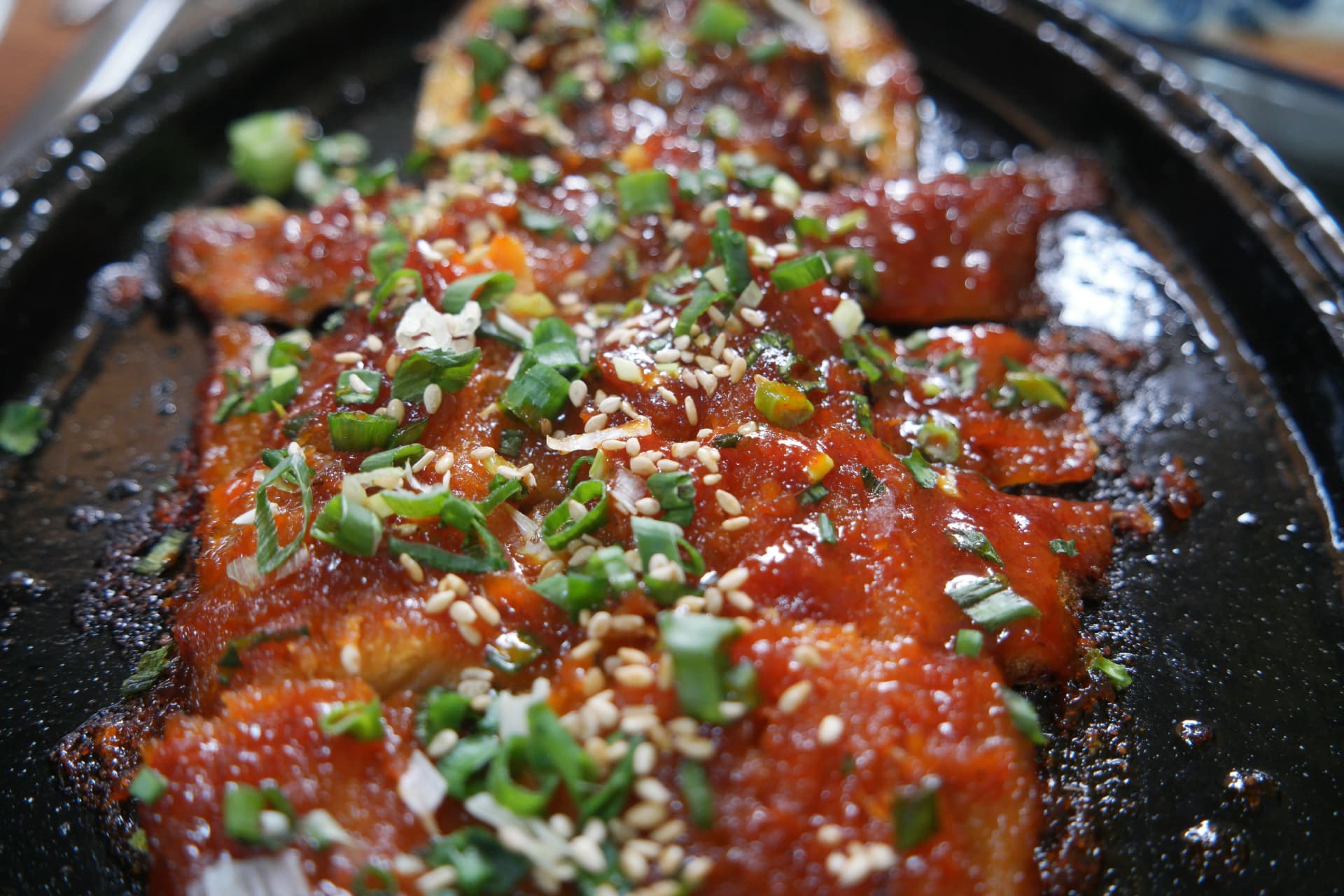
The body has this gorgeous, glossy sauce coating. Sweet upfront, spicy on the finish. Even if you're not great with heat, this one is manageable.
Different Textures from Head to Tail
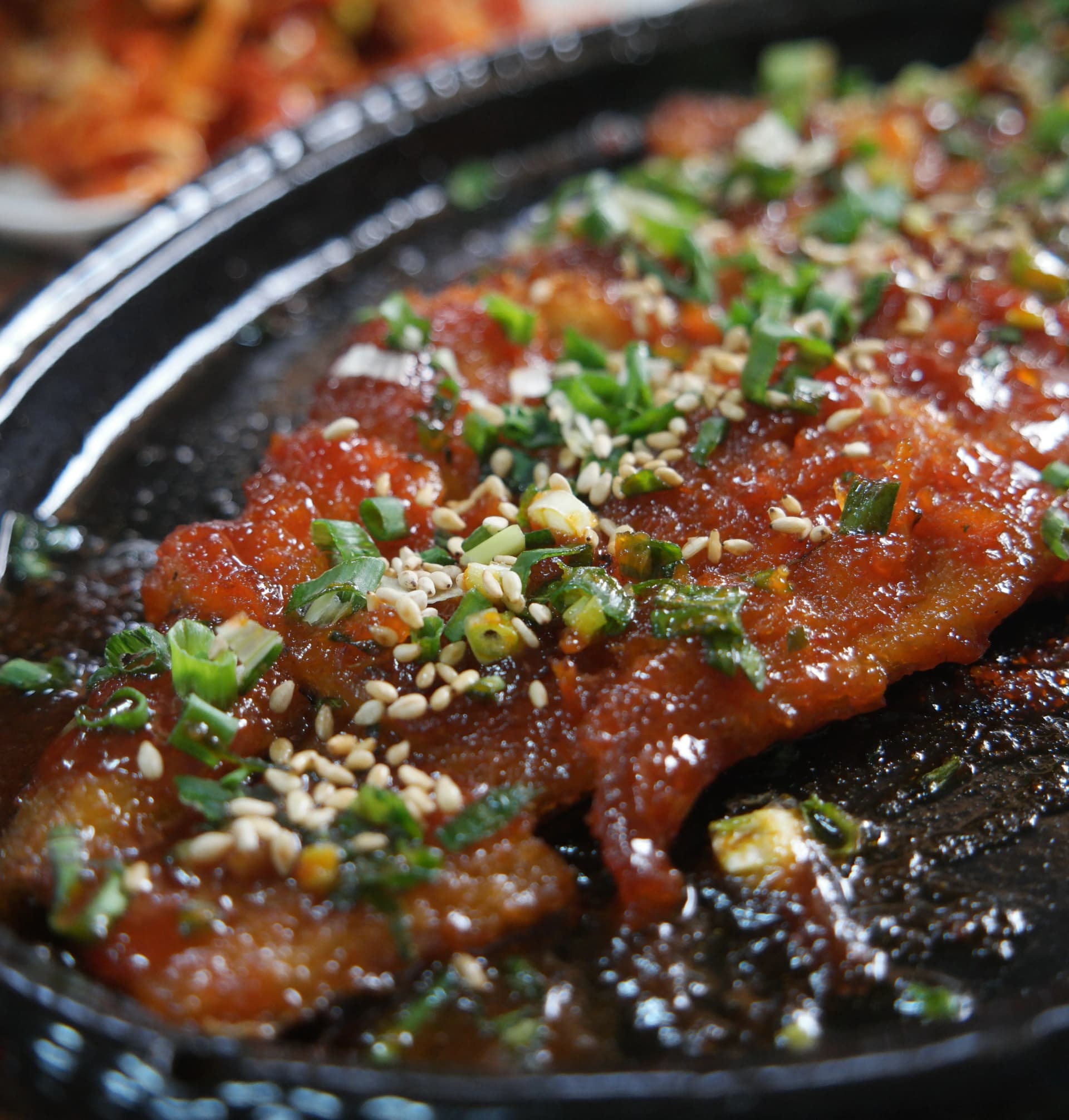
The tail section. The flesh is thinner here, so the sauce has penetrated much deeper. The head end is thick and moist; the tail end is thin and crispy. Same fish, same sauce — but each section eats completely differently.
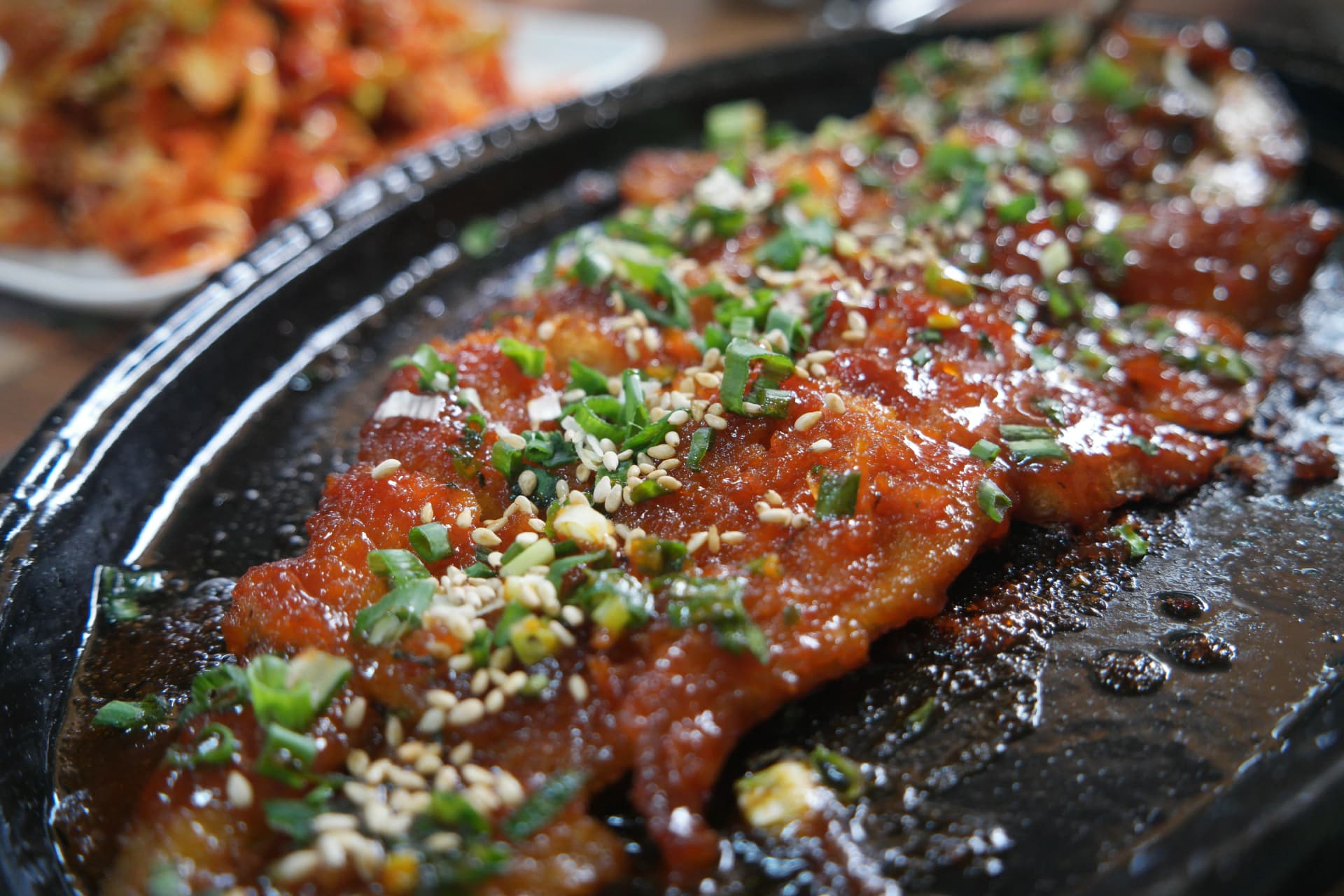
Put the stew and the braised dish next to each other and they look like entirely different foods, even though both start with the same dried pollock. The stew is moist with mixed seafood flavors, while the braised version is more intensely seasoned and savory. With rice, the braised one was the better pairing.
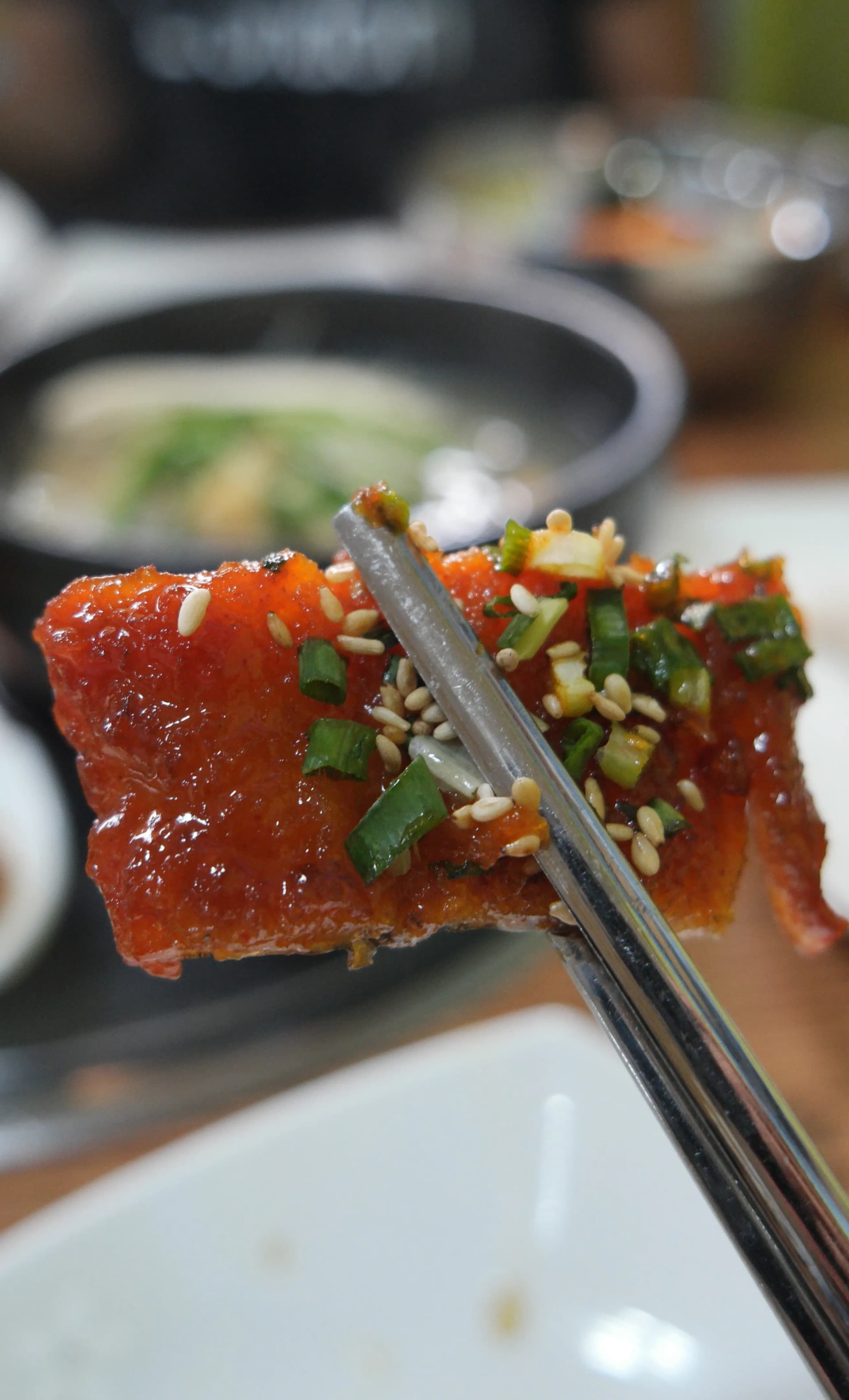
Just pick up a piece and place it on your rice. Done. There's a Korean expression for this — "bap-doduk," which literally means "rice thief." It's what you call a side dish so good your rice disappears without you noticing. By the time I told my friend to save some rice, it was already too late.
Spicy Seasoned Dried Pollock Salad (Hwangtae-Muchim)
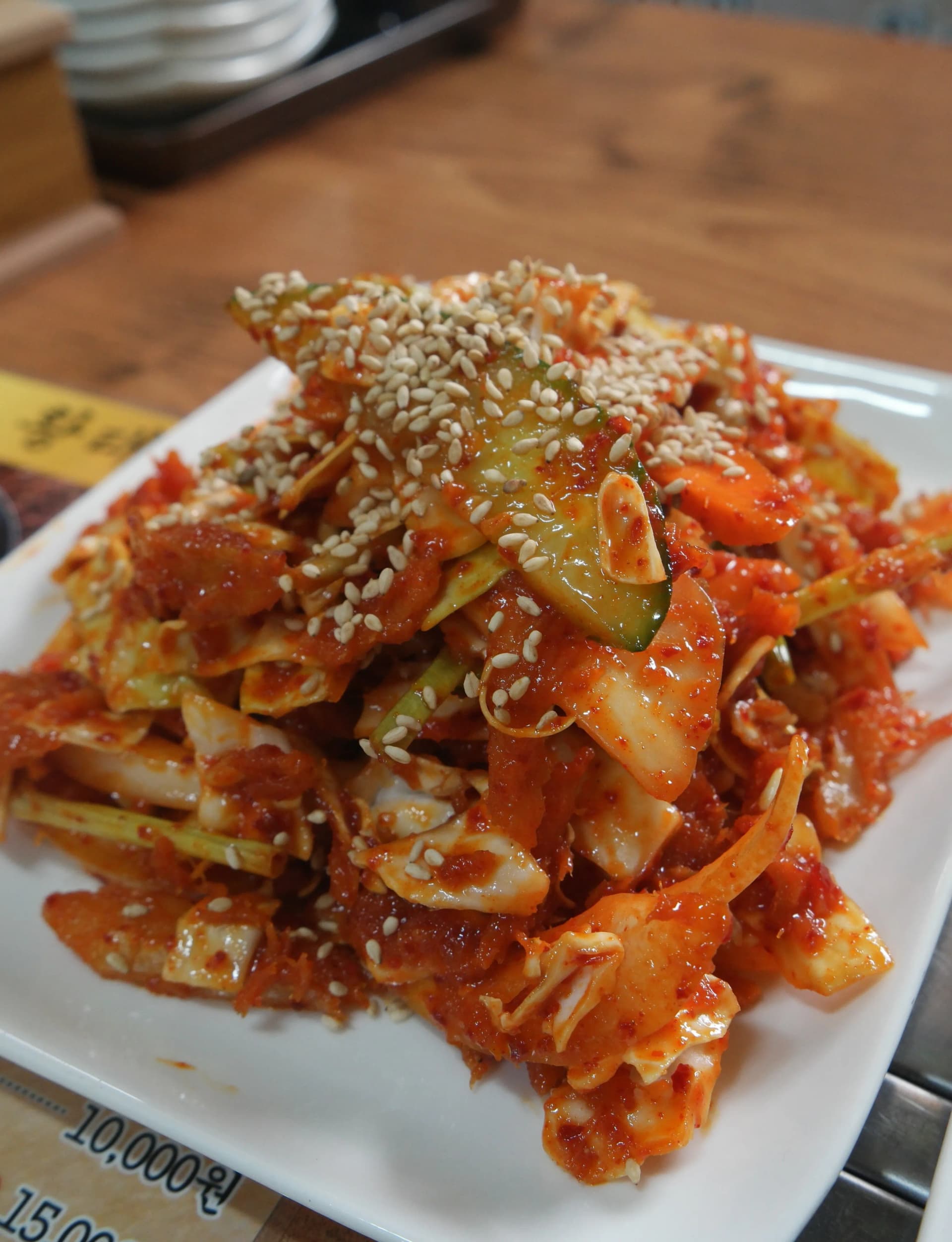
Hwangtae-muchim is a cold, tangy Korean side dish (banchan) made from shredded dried pollock tossed in a red pepper flake dressing with cucumber, carrot, and sesame seeds. It's not a main dish — you pick at it between bites of the heavier stuff. The tangy, chewy pollock strips cut right through the richness, refreshing your palate after the spicy stew or the savory braised fish.
Barley Rice Bowl — Mix It All Together for a Full Meal
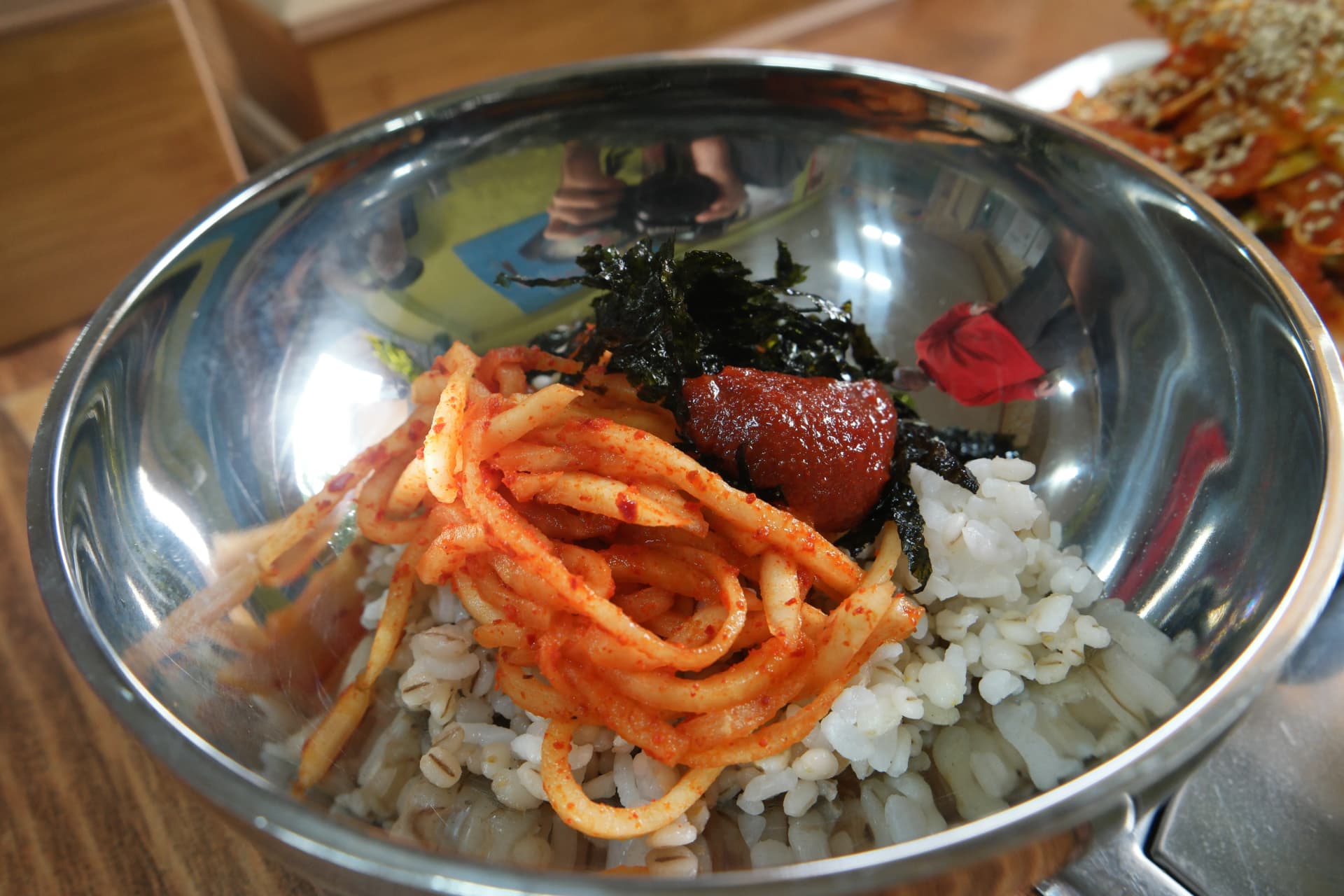
The rice here is bori-bap — barley rice — served in a big metal bowl called a yangpun. It comes topped with shredded radish, seaweed flakes, and a dollop of gochujang, and you mix it all together. Getting barley rice instead of plain white rice is a hallmark of old-school Korean set meals called jeongsik. You pile a bit of each hwangtae dish on top as you eat, and that's a complete meal right there.
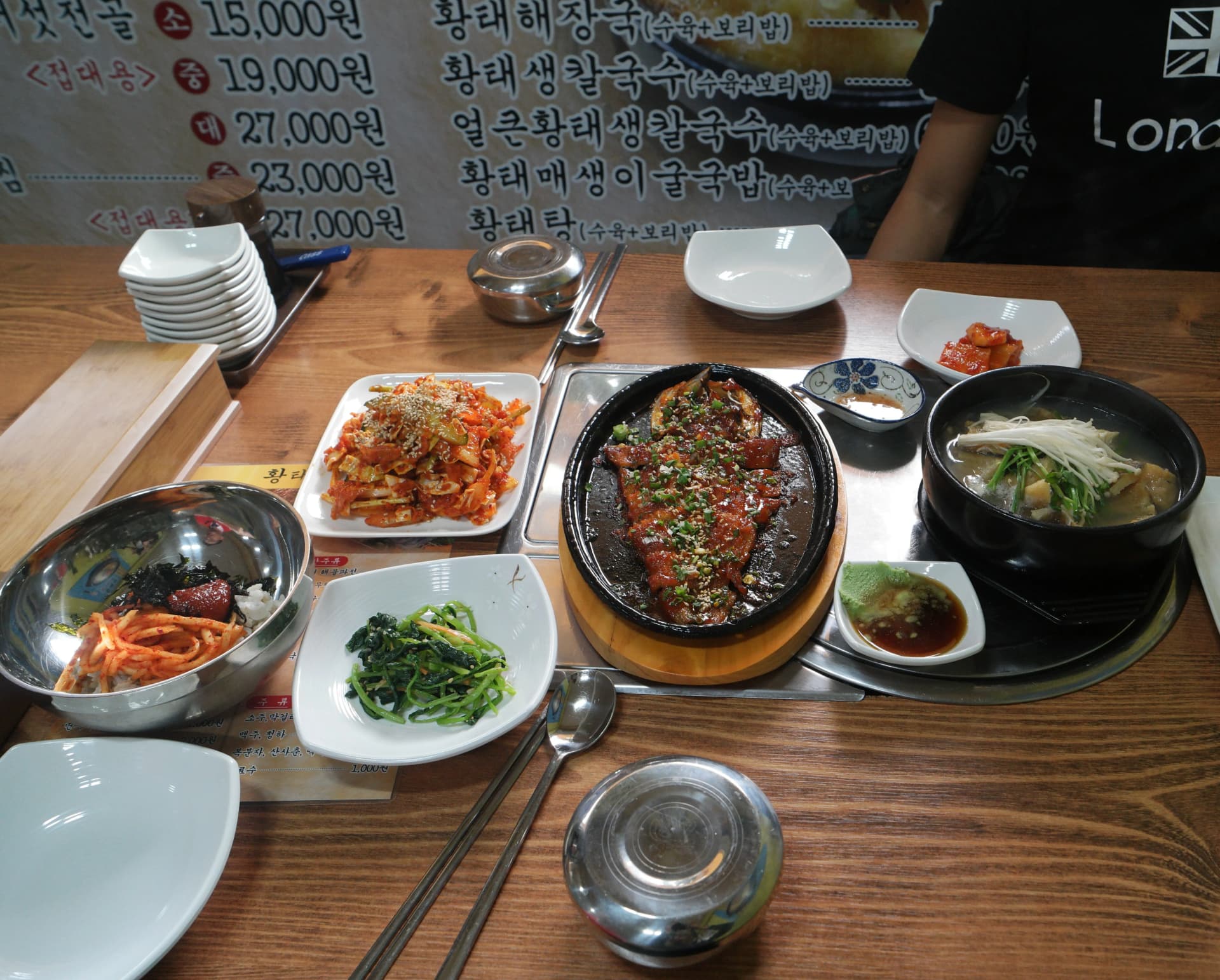
This is the full spread from another visit. Yeah, I went back a few days later. You can see the braised pollock and the hangover soup set out together. One single dried fish and you get a table this full.
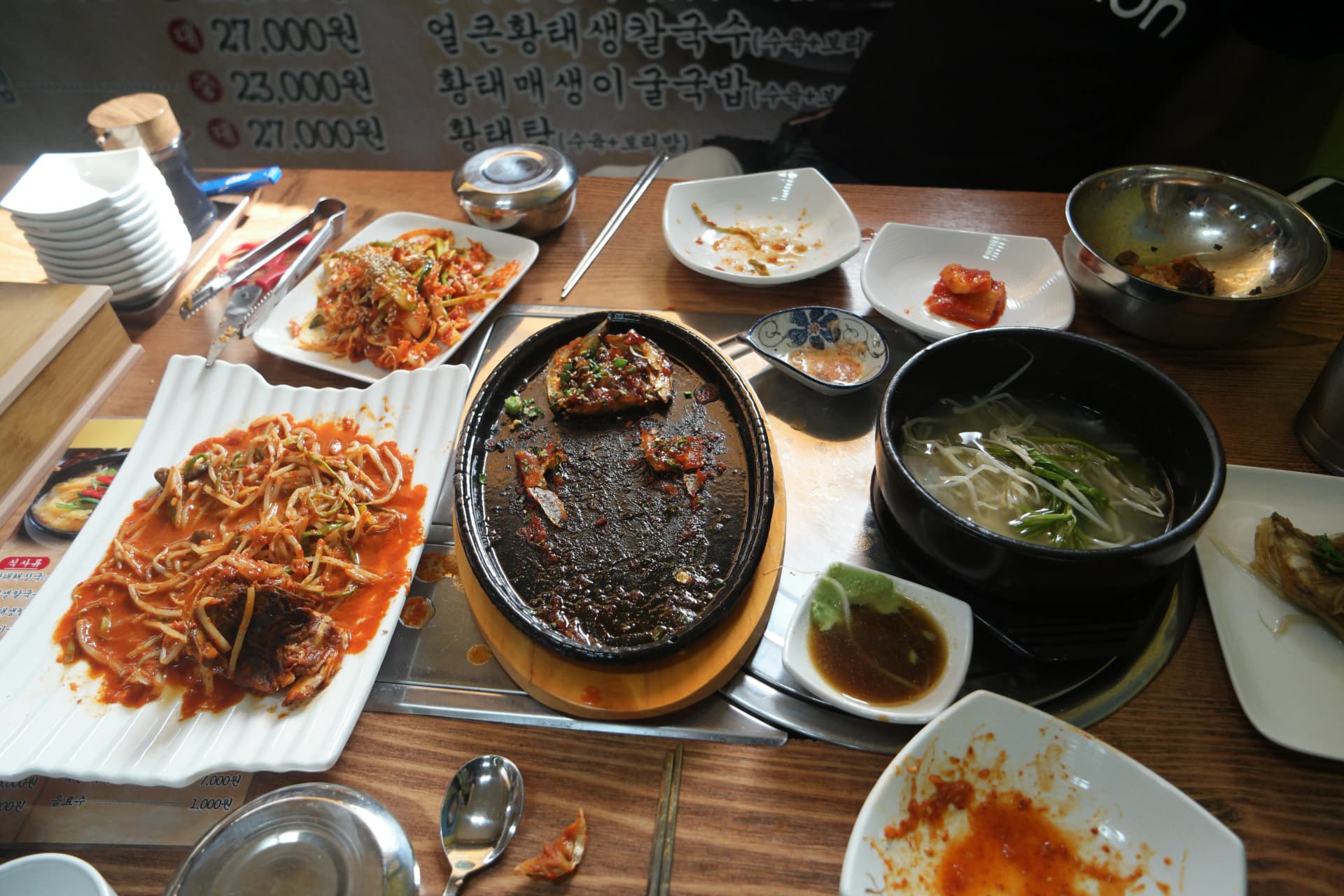
After we were done. Every plate wiped clean.
My Honest Take on These Dried Fish Dishes
The stew and the braised dish are both on the spicy side. They use gochujang-based sauces, so if you're sensitive to heat, it might be rough. My friend had to reach for water at least three times while eating the stew. That said, there's enough sweetness underneath the spice that it's not unbearable. If it's your first time, I'd recommend starting with the hangover soup — it's clear, mild, and zero spicy.
📌 All 4 Dried Pollock Dishes at a Glance
• Hwangtae-haemul-jjim — spicy seafood stew with dried pollock, octopus, and sea pineapple. Big portions and bold flavor.
• Hwangtae-haejangguk — clear, mild hangover soup. Totally fine even if you can't handle spice.
• Hwangtae-jorim — braised dried pollock in gochujang glaze. A serious rice thief — you might need extra rice.
• Hwangtae-muchim — tangy, spicy shredded pollock side dish. A palate cleanser between the bigger dishes.
If you're visiting Korea, don't just stick to samgyeopsal and fried chicken. Give dried pollock a shot. Hwangtae restaurants exist in Seoul too, and there are even more if you head out toward Gangwon Province in the east. If you spot "황태" (hwangtae) on a menu, just walk in and try it.
This post was originally published on https://hi-jsb.blog.