
Sizzling Korean BBQ You Must Try: Jumulleok
Table of Contents
19 items
Jumulleok — The Korean BBQ Dish With the Funniest Name
When you're traveling in Korea and browsing through a restaurant menu, you'll occasionally stumble across a name that makes you do a double take. One of them is Jumulleok (주물럭). The first time you hear it, you might think, "Wait, is that actually a food?" — and yes, it absolutely is.
If you were to translate it into English, the closest equivalent would be something like "Knead & Grill" — because "knead" is exactly what you do when you're working dough with your hands. And that's precisely how jumulleok is made. The meat gets loaded up with marinade, then someone squeezes and massages it with both hands until everything is thoroughly combined. The name literally came from that action, which is kind of amazing when you think about it.
There's actually a pretty fun origin story behind this dish. Back in the 1970s, at a small restaurant in Mapo, Seoul, a grandmother suddenly got slammed with way more customers than expected and ran out of the pre-marinated meat she had prepared. With no time to wait, she grabbed raw meat and kneaded the marinade in on the spot with both hands, then threw it straight onto the grill. What started as a near-disaster ended up becoming one of the most beloved dishes on Korean dinner tables. That grandmother probably had no idea she was inventing something that would outlast her by decades.
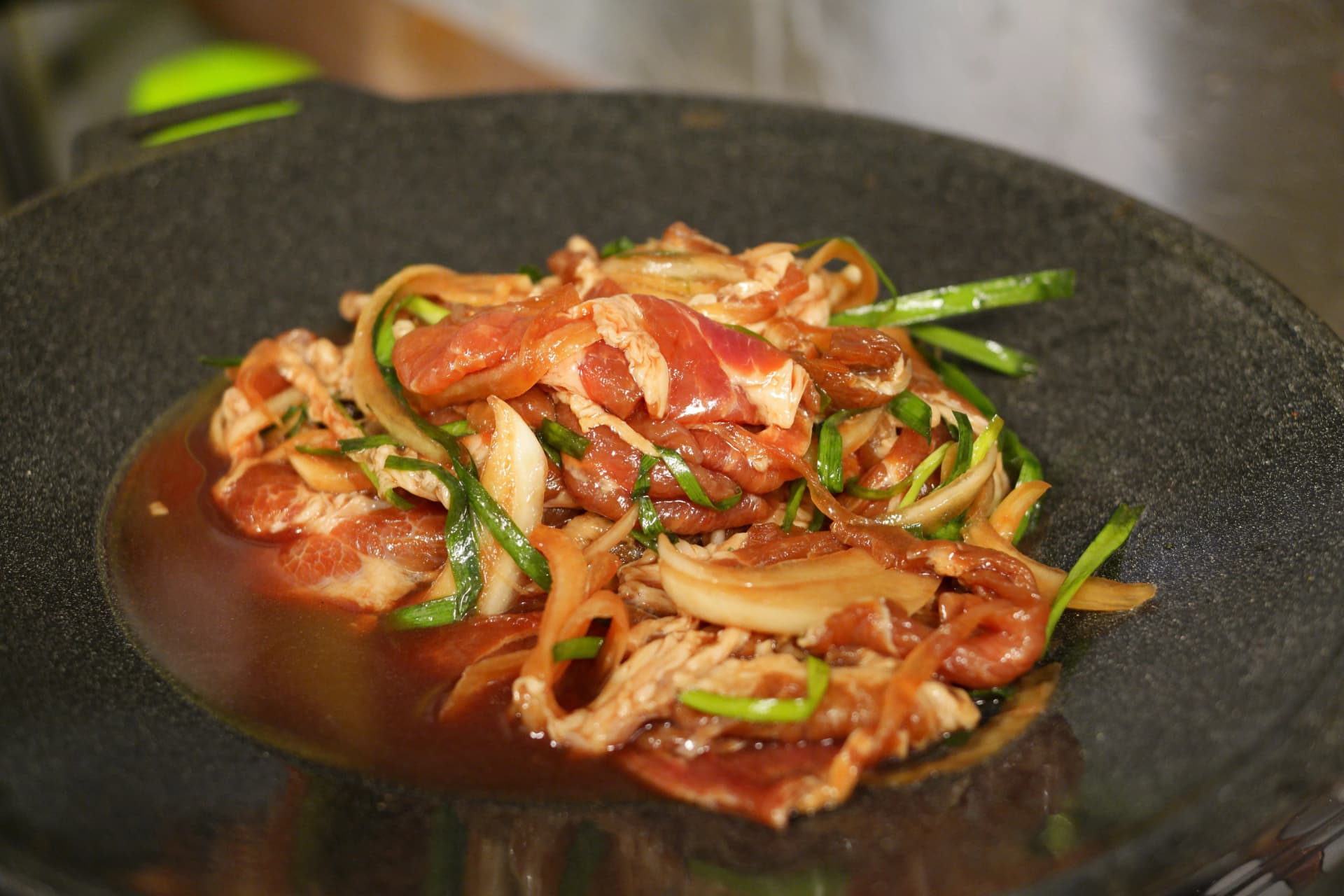
First Look: Jumulleok Arriving on the Iron Plate
This is what jumulleok looks like when it comes out. It arrives at the table already loaded onto a heated iron plate — seasoned pork glistening with a deep, rich soy sauce marinade, surrounded by sliced onions and green onions. You can see that dark brown sauce pooling across the plate, and from here you either turn on the burner yourself and stir as it cooks, or in some restaurants a staff member comes over and does the stir-frying for you. The moment the meat starts cooking and the marinade begins to reduce, with that hit of green onion fragrance rising into the air, every table around you is going to start craning their necks.
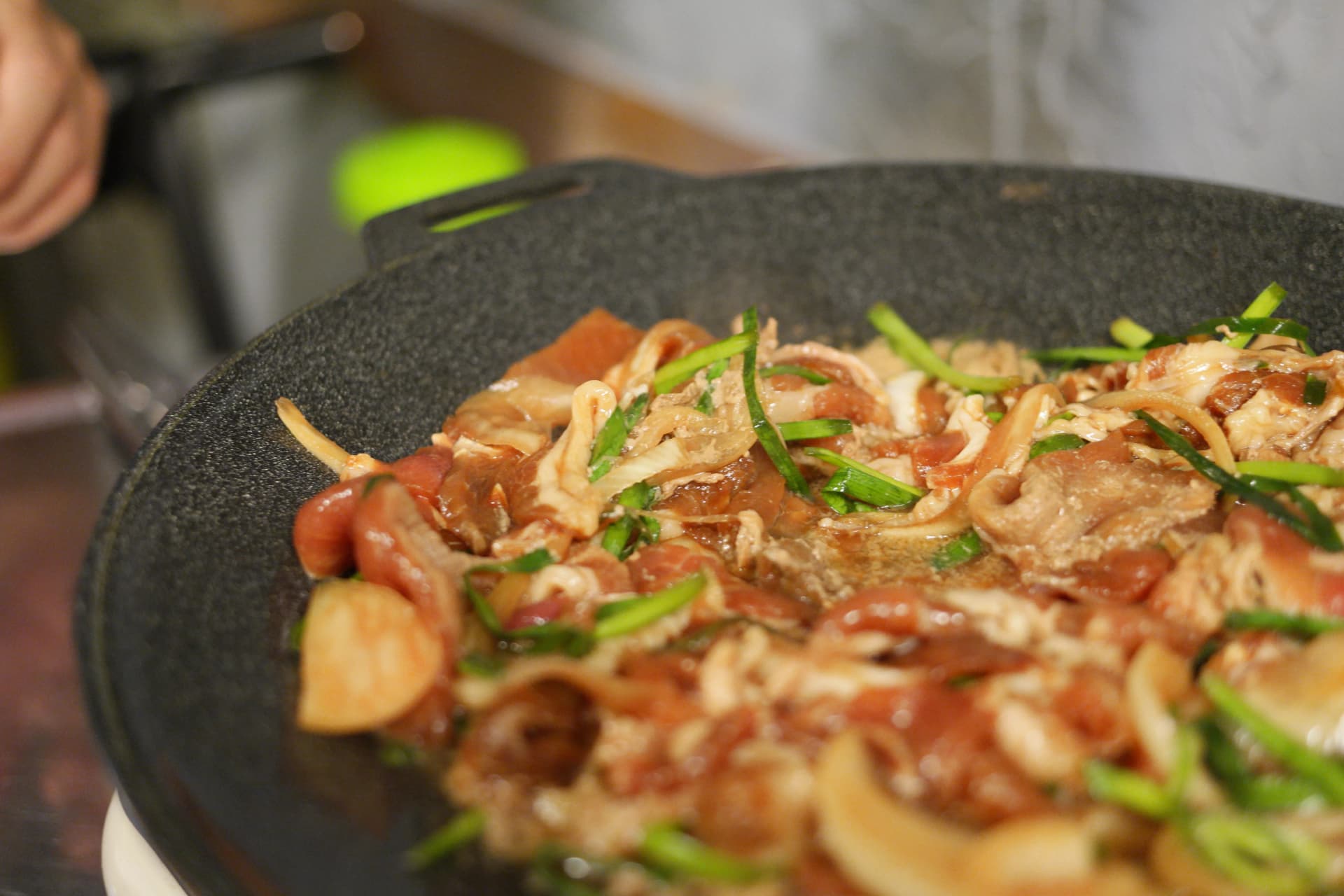
This is the midpoint of cooking. The soy sauce marinade is soaking up all that heat and slowly reducing, and the surface of the meat is starting to take on a gorgeous glaze. The onions have gone translucent and are beginning to soften. You can see someone stirring it — and that's exactly the right call at this stage, because you need to keep things moving so the marinade coats everything evenly.
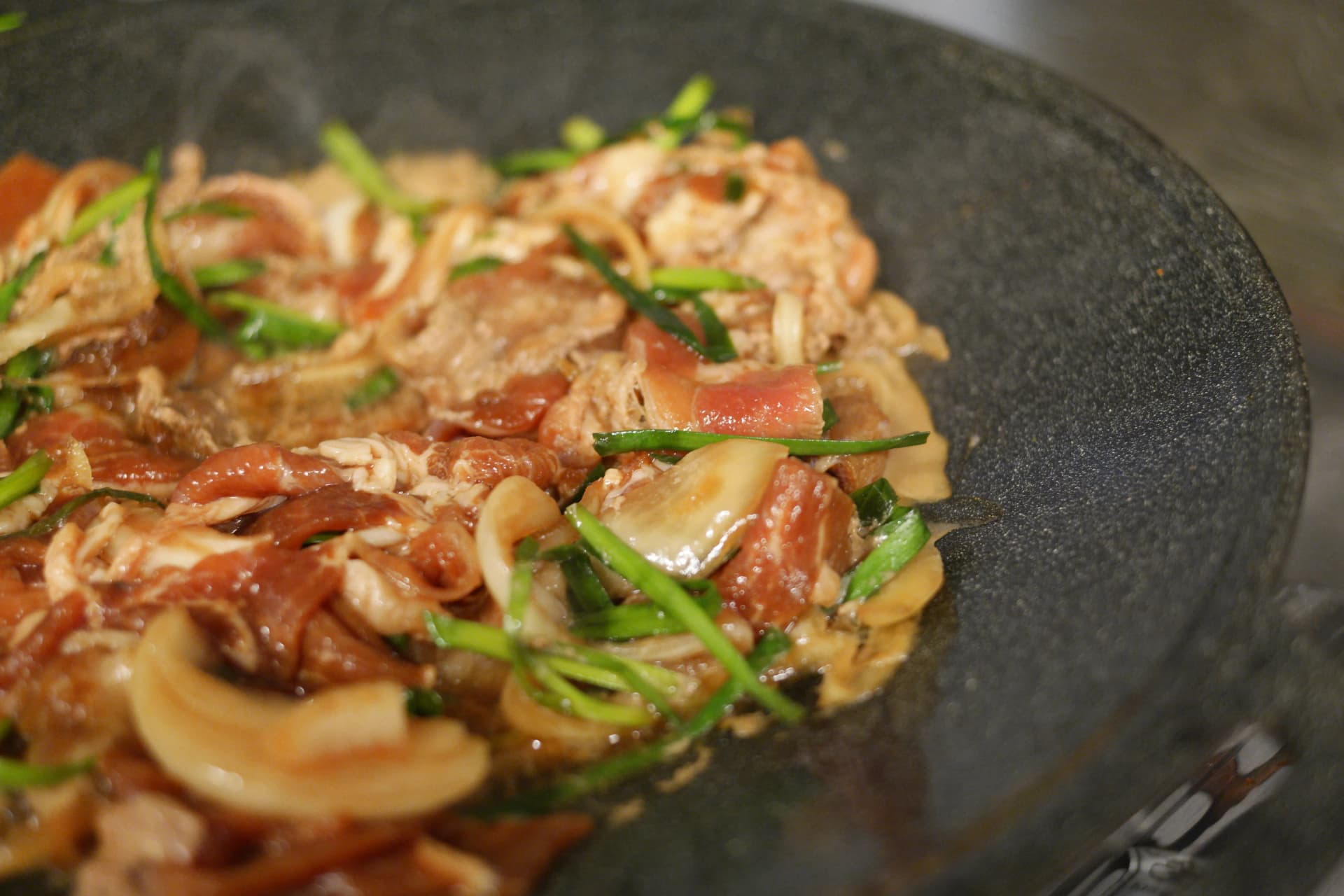
Almost done. The meat has cooked all the way through, and the soy marinade has reduced down so much that it's practically coating every single piece individually. The green onions have gone completely soft and tender. The portion looks smaller than when it first hit the plate — and that's actually the sign that it's cooked properly. At this point, just grab your chopsticks and go.
Pork Jumulleok vs. Beef Jumulleok — What If You Don't Eat Pork?
🍖 Types of Jumulleok
🐷
Pork Jumulleok
돼지주물럭
The most popular version. Pork marinated in soy sauce and grilled on an iron plate — the most commonly found style across Korea.
🐄
Beef Jumulleok
소주물럭
Beef instead of pork, same cooking method. The deeper, richer flavor of beef adds a completely different kind of appeal.
⚠️ Some restaurants carry both versions, while others only serve one.
Before you visit, check the menu in advance on Naver Maps or Kakao Maps.
Lettuce and Side Dishes — The Standard Korean BBQ Table Setup
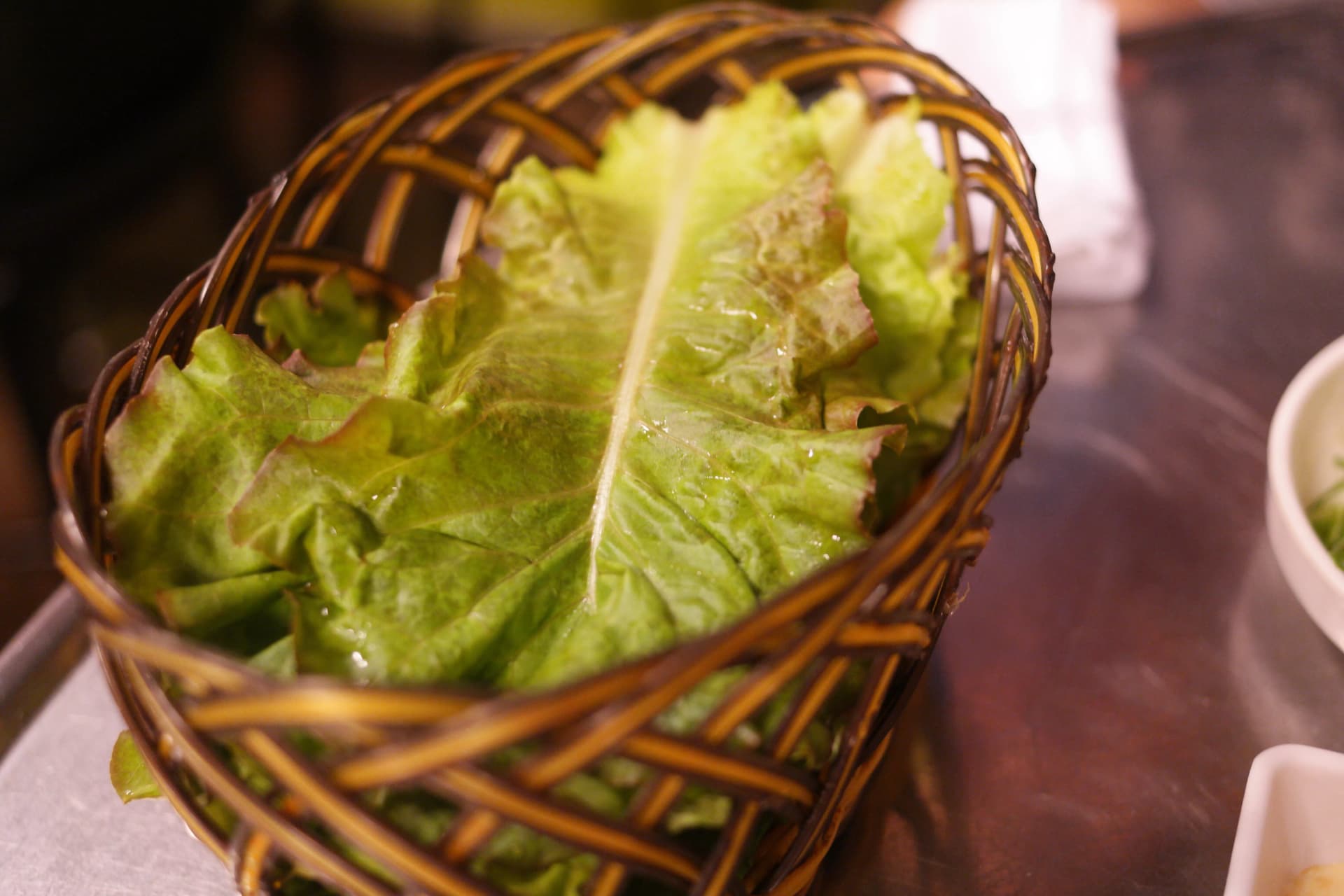
This is the lettuce that comes out automatically with your jumulleok. You place a piece of meat on a leaf and wrap it up to eat. At Korean BBQ restaurants, this is basically a non-negotiable staple. 🥬
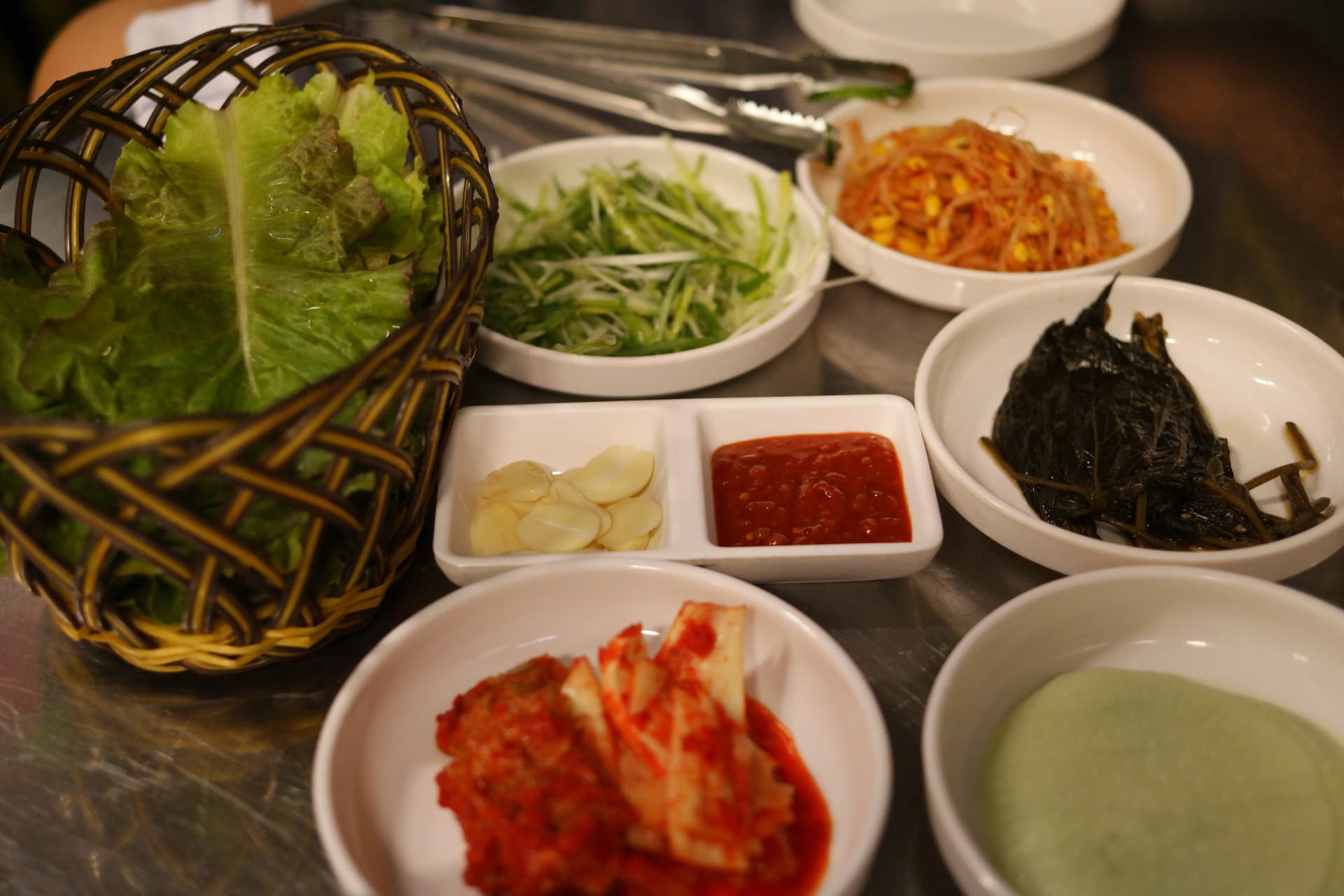
This is the complete spread of free side dishes that come with your jumulleok order. Centered around the lettuce basket, you also get shredded green onion, garlic cloves, ssamjang (a thick savory dipping paste), kimchi, seasoned bean sprouts, seasoned seaweed salad, and bright green pickled radish. None of this costs extra — it all comes included when you order jumulleok. The classic move is to lay a piece of meat on a lettuce leaf, add a slice of garlic, a small dab of ssamjang, and wrap the whole thing up in one bite. That's the proper way to eat it.
Watching Jumulleok Cook — The Best Part of the Whole Meal
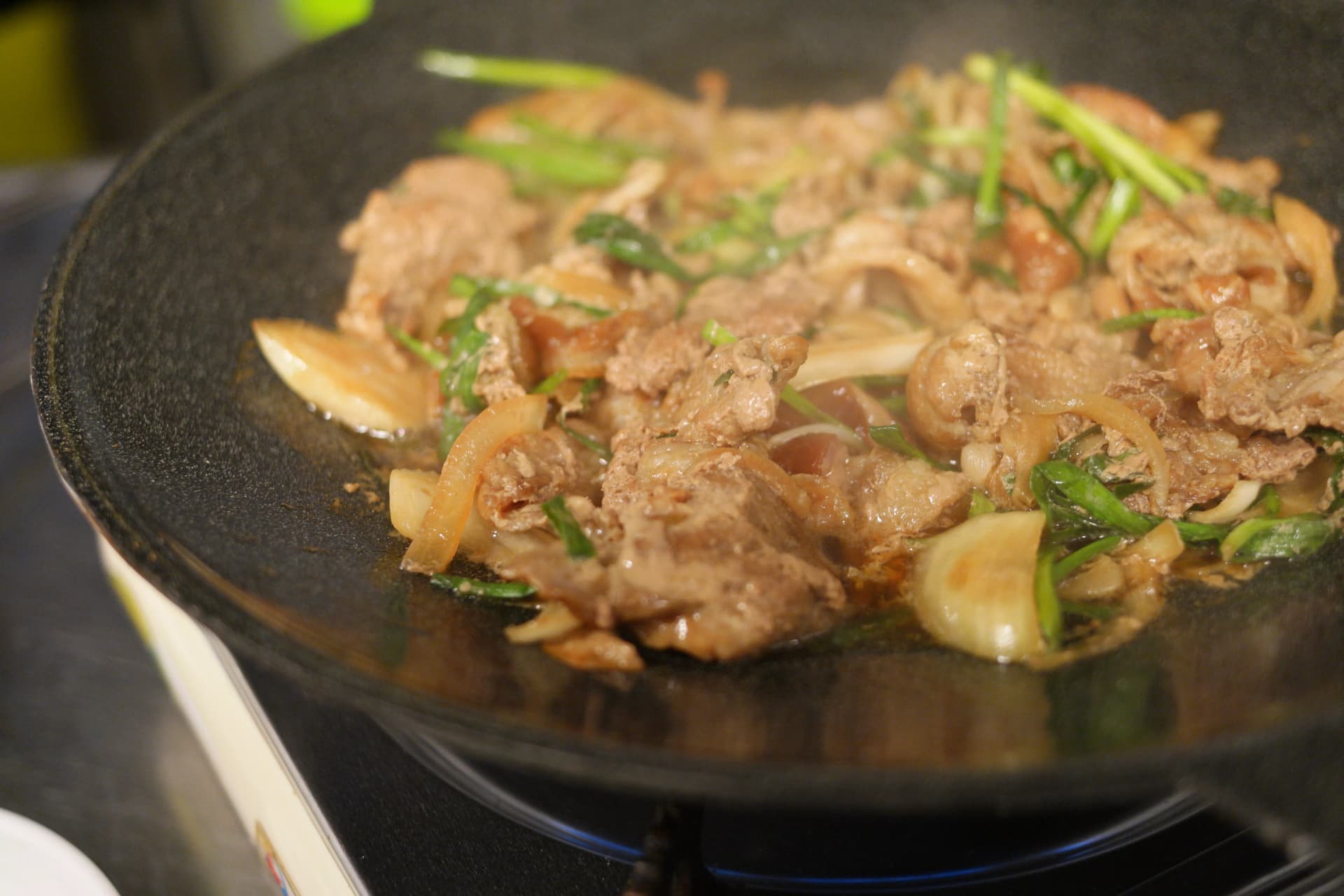
This is the very beginning of cooking. The outside of the meat is just starting to turn brown while the inside is still moist and tender, and the garlic is soaking up heat and beginning to turn a toasty golden color, releasing that nutty aroma. You can't eat it yet — but already the whole area around the iron plate is starting to smell absolutely incredible. 🔥
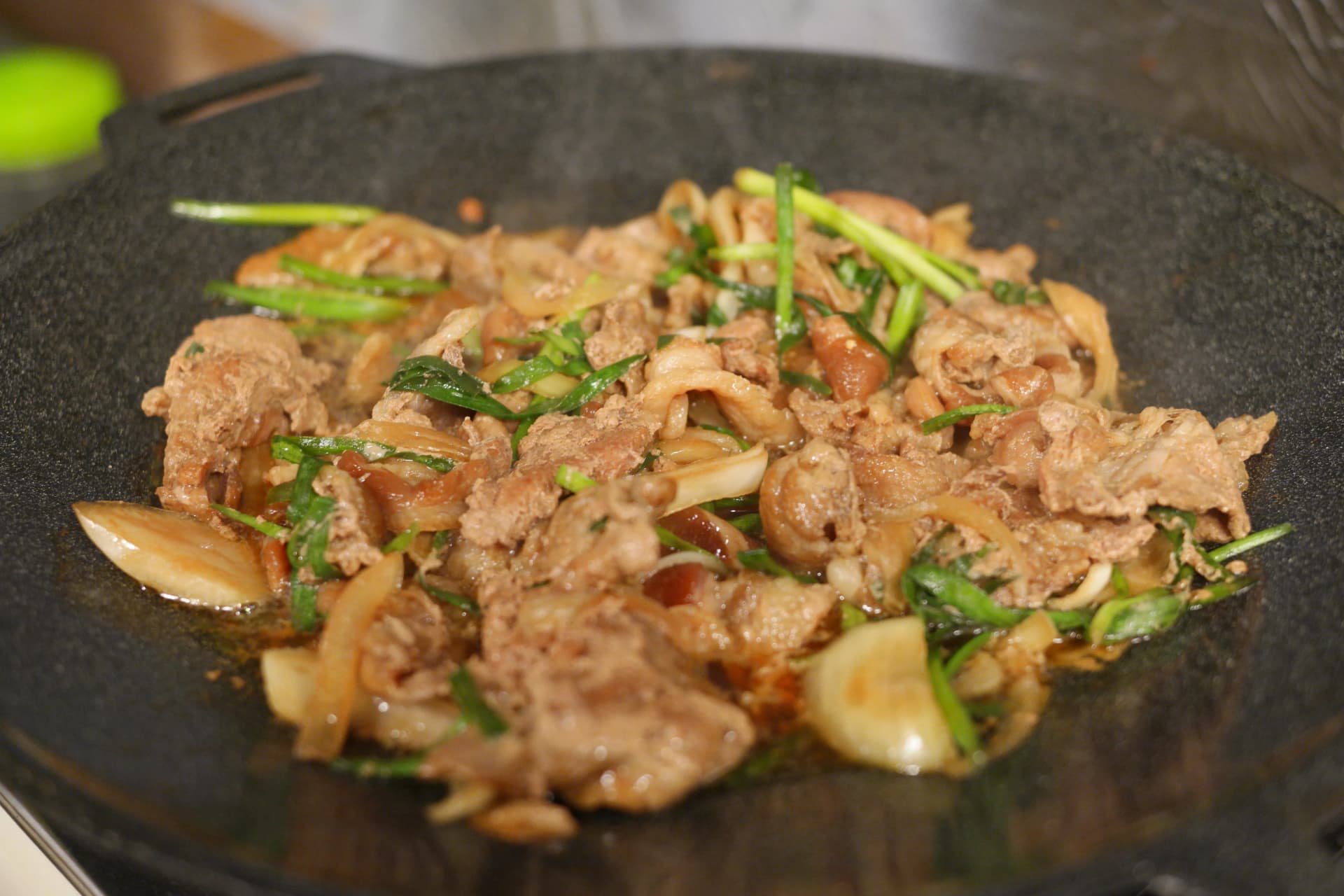
A bit further along now. The meat is cooking evenly throughout, the soy sauce marinade is seeping into every gap between pieces, and the onions have fully softened and are going through that gorgeous caramelizing process where all their natural sweetness comes out. The green onions have gone from sharp and pungent to soft and sweet. This is the moment where it gets really hard to keep your chopsticks on the table. 🍖
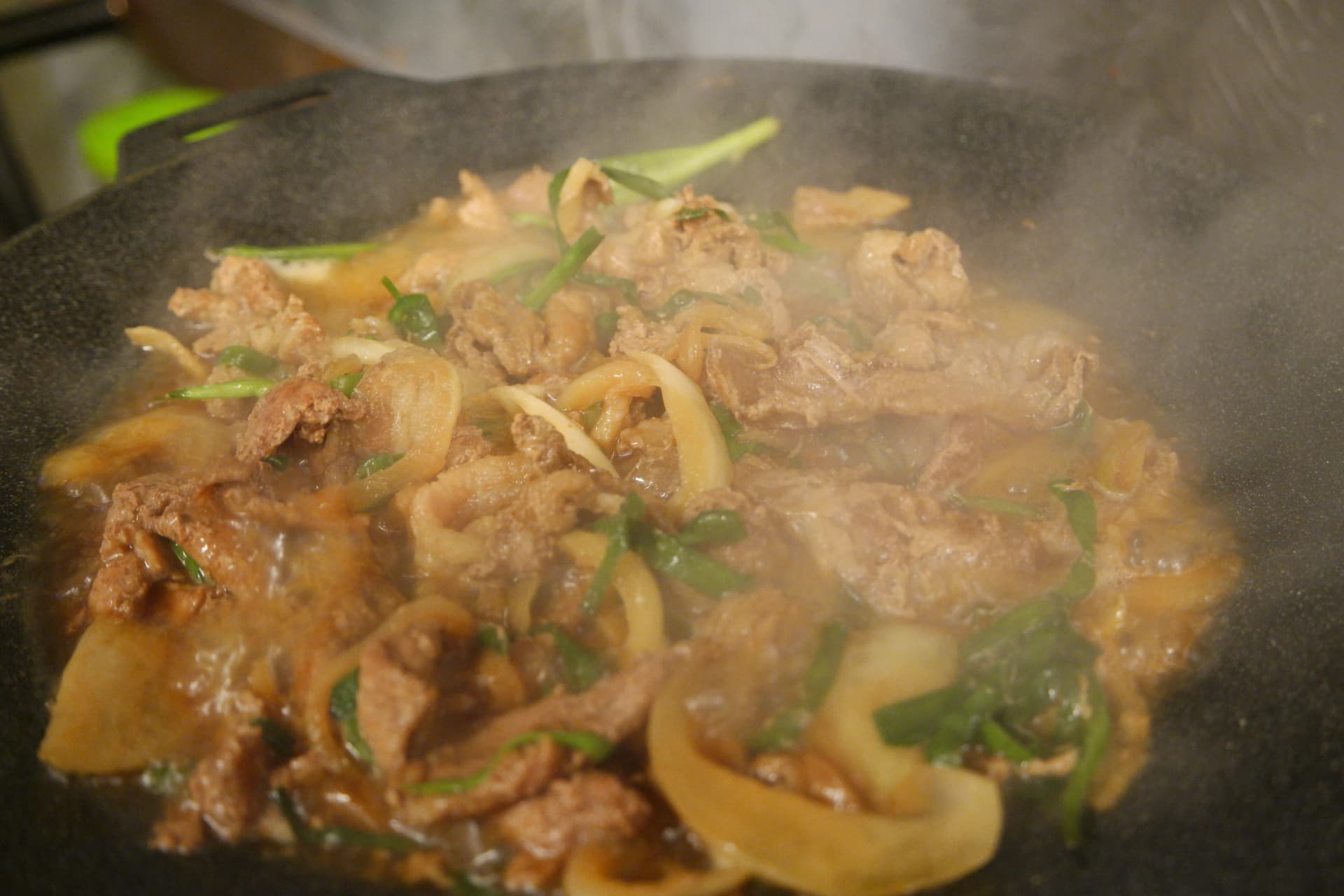
Now the steam is really rising off the iron plate. This is the climax of the whole cooking process — don't worry though, there's no burning happening here. There's enough soy sauce pooled on the plate that the meat stays juicy and tender even at high heat. In fact, this is the exact moment when the most incredible smell starts spreading through the restaurant. You'll have people at neighboring tables turning around going, "Wait, what is THAT?" — and honestly, that's part of the experience.
Adding the Shredded Green Onion — The Visual Highlight of Jumulleok
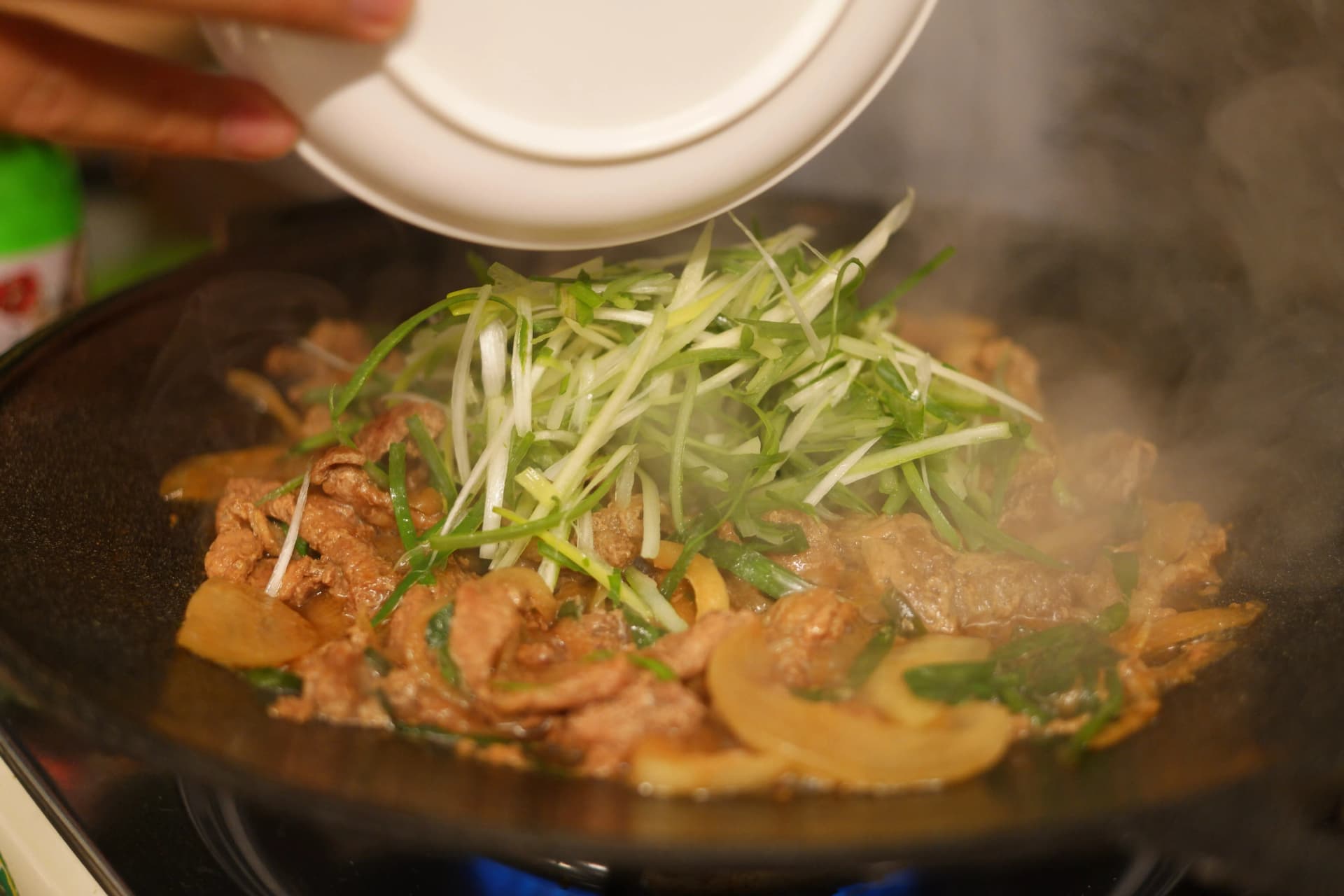
Once the meat is mostly cooked through, a big pile of shredded green onion gets added on top just like this. This moment — fresh shredded green onion cascading down onto the hot iron plate — is the visual highlight of the whole jumulleok experience. The second that green onion hits the heat, a burst of steam shoots up along with this fresh, fragrant smell that hits you all over again. After adding the green onion, you give it just a little more time on the heat, and the result is this perfect combination: a bit of crunch still left in the onion, all blended into the soy marinade for a much richer, more complex flavor. It looks amazing and tastes even better. This is the final finishing move of jumulleok.
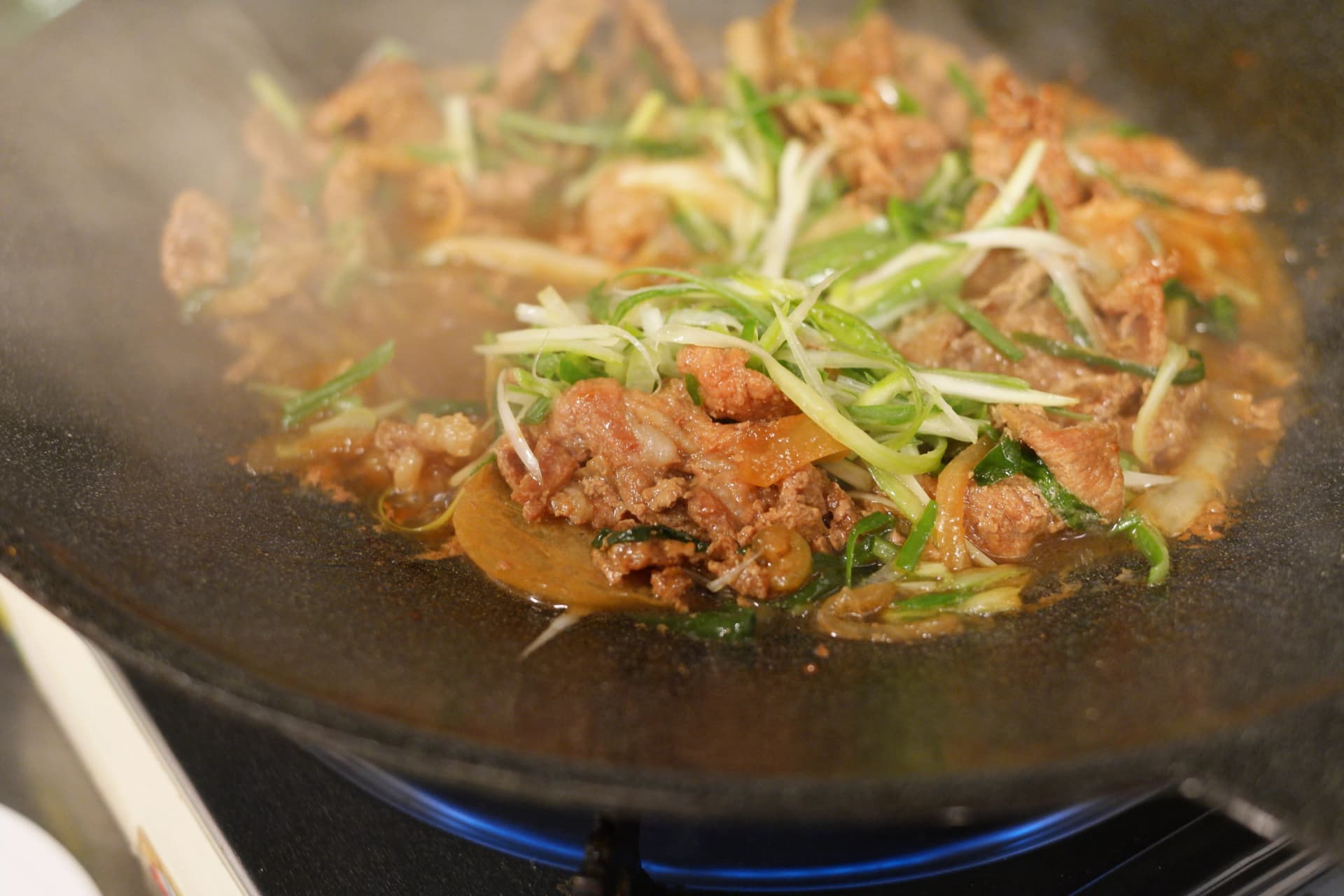
Done. The soy sauce marinade has fully reduced, and every single piece of meat has this gorgeous glossy coating. The shredded green onion has wilted slightly but still has a little bite left to it. Even though this was cooked over intense heat — you can literally see the blue flame under the iron plate — the sauce kept everything moist and tender throughout. Now it's time to grab your chopsticks, get some lettuce, and wrap up the first bite.
How to Eat Jumulleok the Right Way — The Art of the Wrap
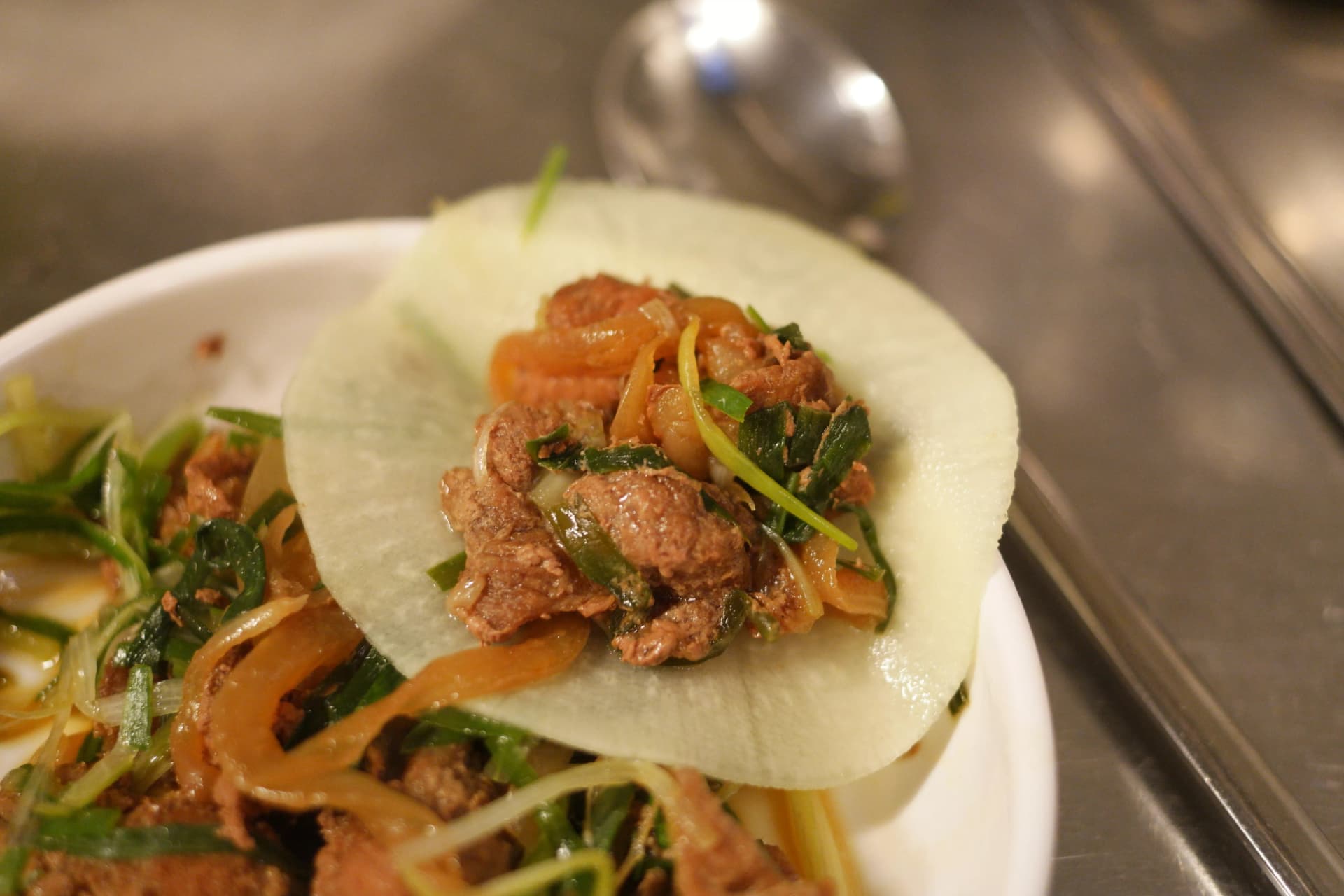
This is one of the best ways to enjoy jumulleok. You place a piece of meat onto a thin slice of pickled radish and wrap it up — and honestly, this combination is on another level. The sweet-and-tangy sourness of the pickled radish meets the sweet-salty depth of the soy-marinated jumulleok, and they balance each other out perfectly. Eating it wrapped in lettuce is fantastic, but the pickled radish wrap is the moment when you go, "Oh. THIS is it." Genuinely next level.
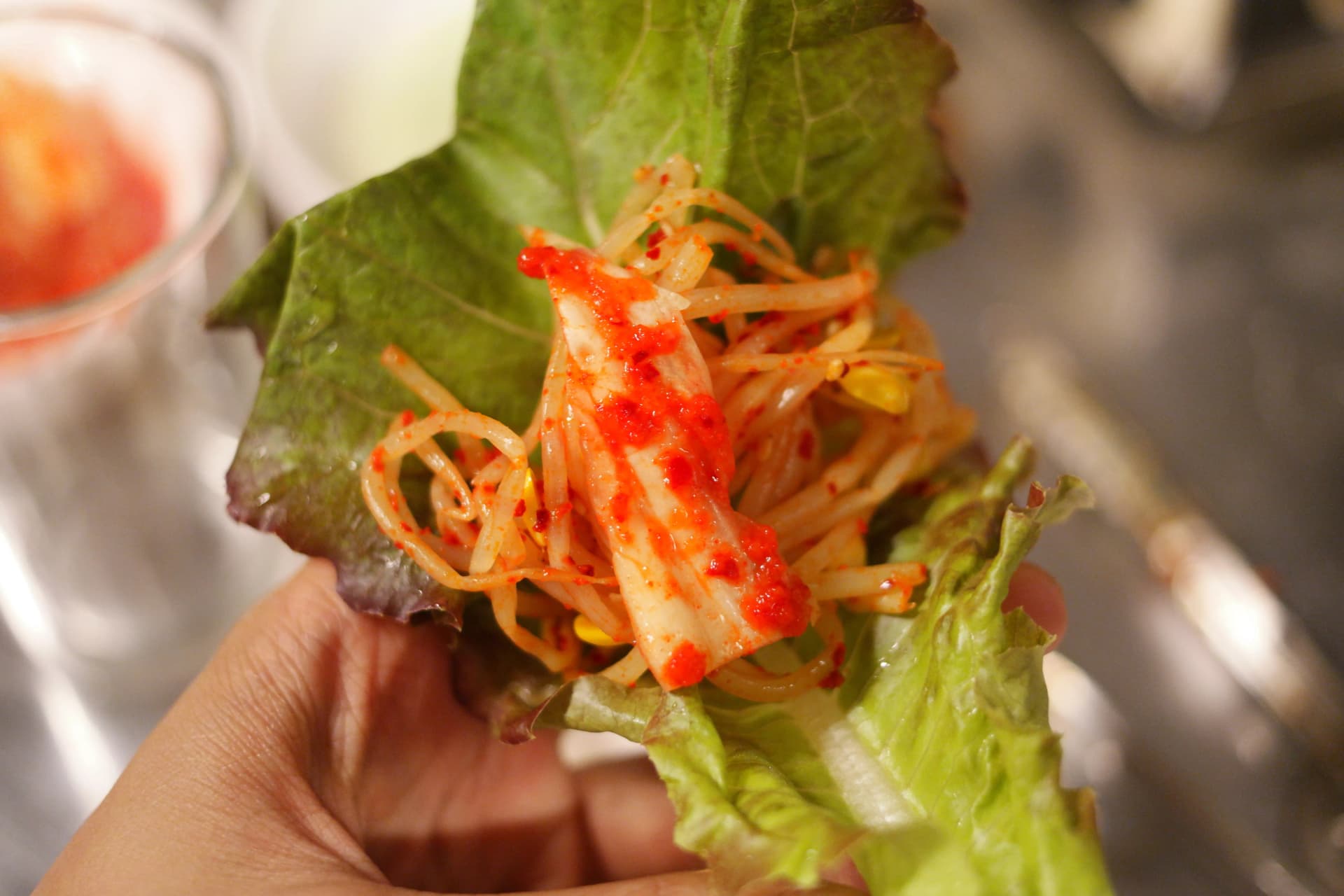
Here you can see the seasoned bean sprouts being layered onto a lettuce leaf as a base before adding the meat. You can build the wrap with side dishes first and then add the jumulleok on top, or just go straight for the meat. Either way works perfectly. Korean BBQ wrap culture is honestly a lot more intuitive than it looks, isn't it?
Spicy Jumulleok — Welcome to the Gochujang Side of Things
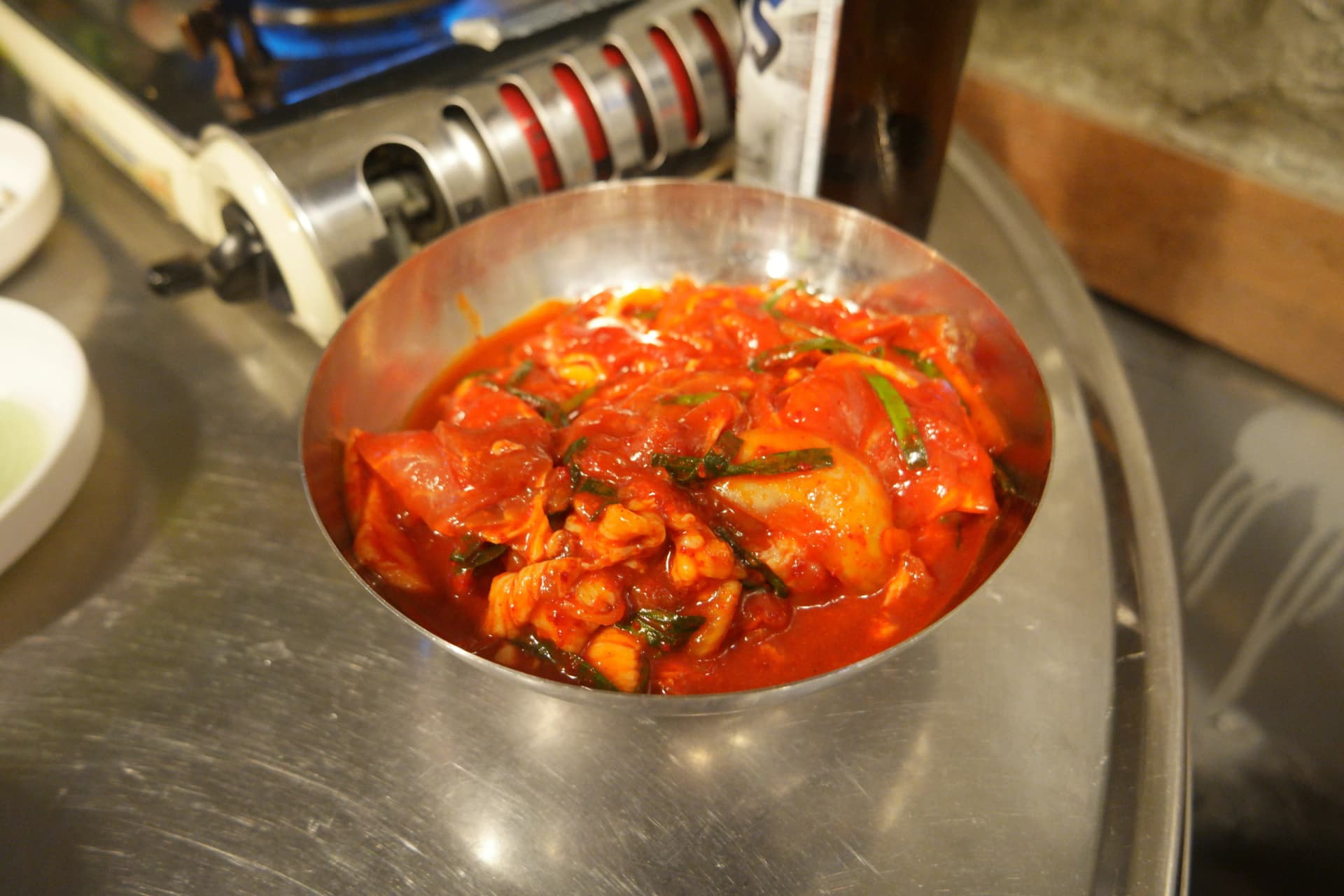
This is spicy jumulleok. The visual is completely different from the soy sauce version — a fiery red gochujang (Korean chili paste) marinade completely enveloping the meat. Just the way it arrives in that stainless steel bowl already sends a very clear message: yes, this one is spicy. While soy sauce jumulleok is all about that sweet, deep, mellow flavor, spicy jumulleok is sharp, intense, and in-your-face. If you're someone who loves heat, this version might actually be the one that speaks to you more.
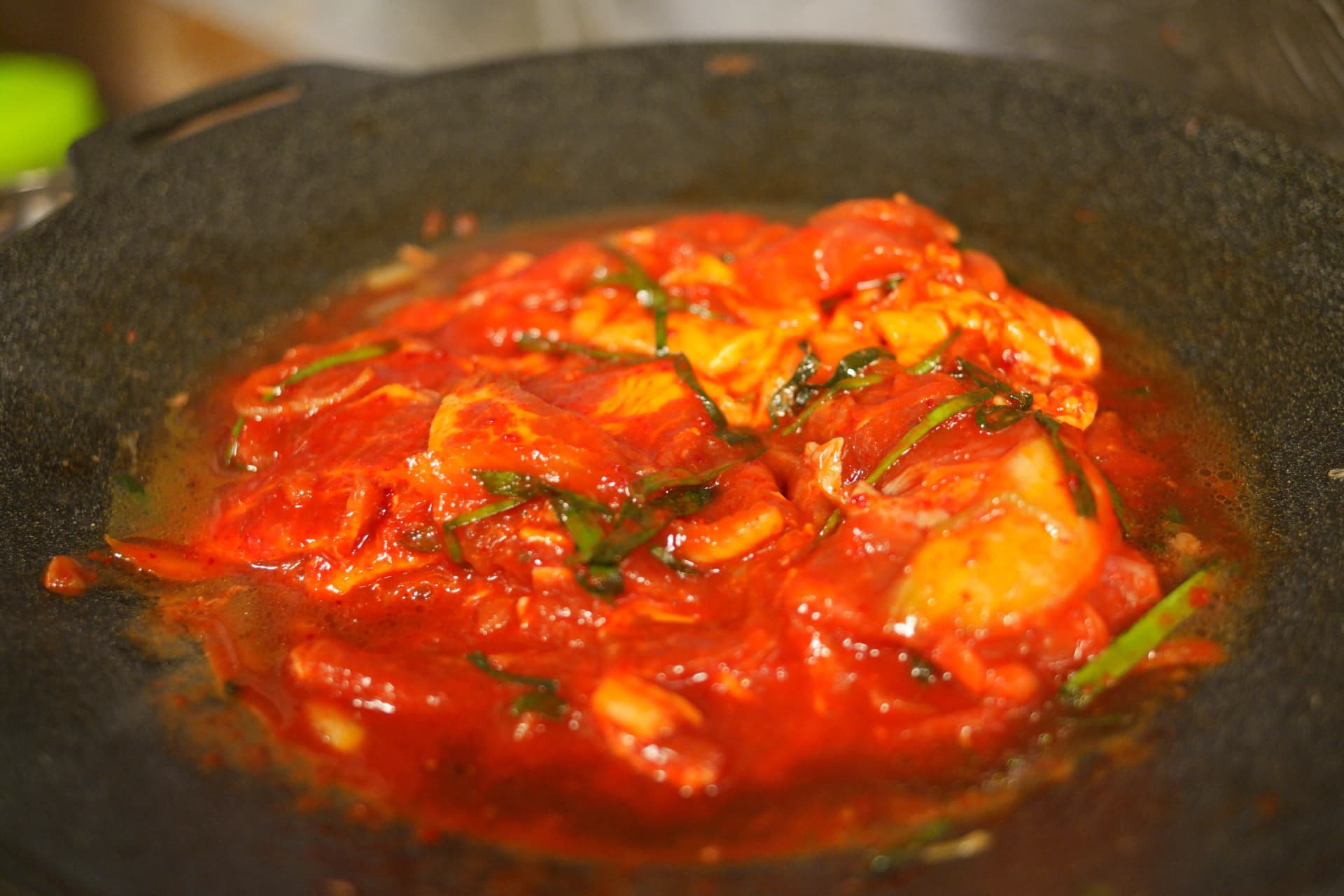
This is what it looks like the second it hits the iron plate. Where the soy sauce version was all warm brown tones, spicy jumulleok is red from start to finish — blazing, unrelenting red. The burner isn't even on yet and already the gochujang marinade is spreading across the plate, that intense crimson color just completely taking over. It's the same iron plate, the same dish, but it feels like an entirely different food just because of the color. If you're a spicy food person, your mouth will already start watering the moment you see this.
Spicy Jumulleok vs. Jeyuk Bokkeum — Two Similar Dishes That Are Actually Different
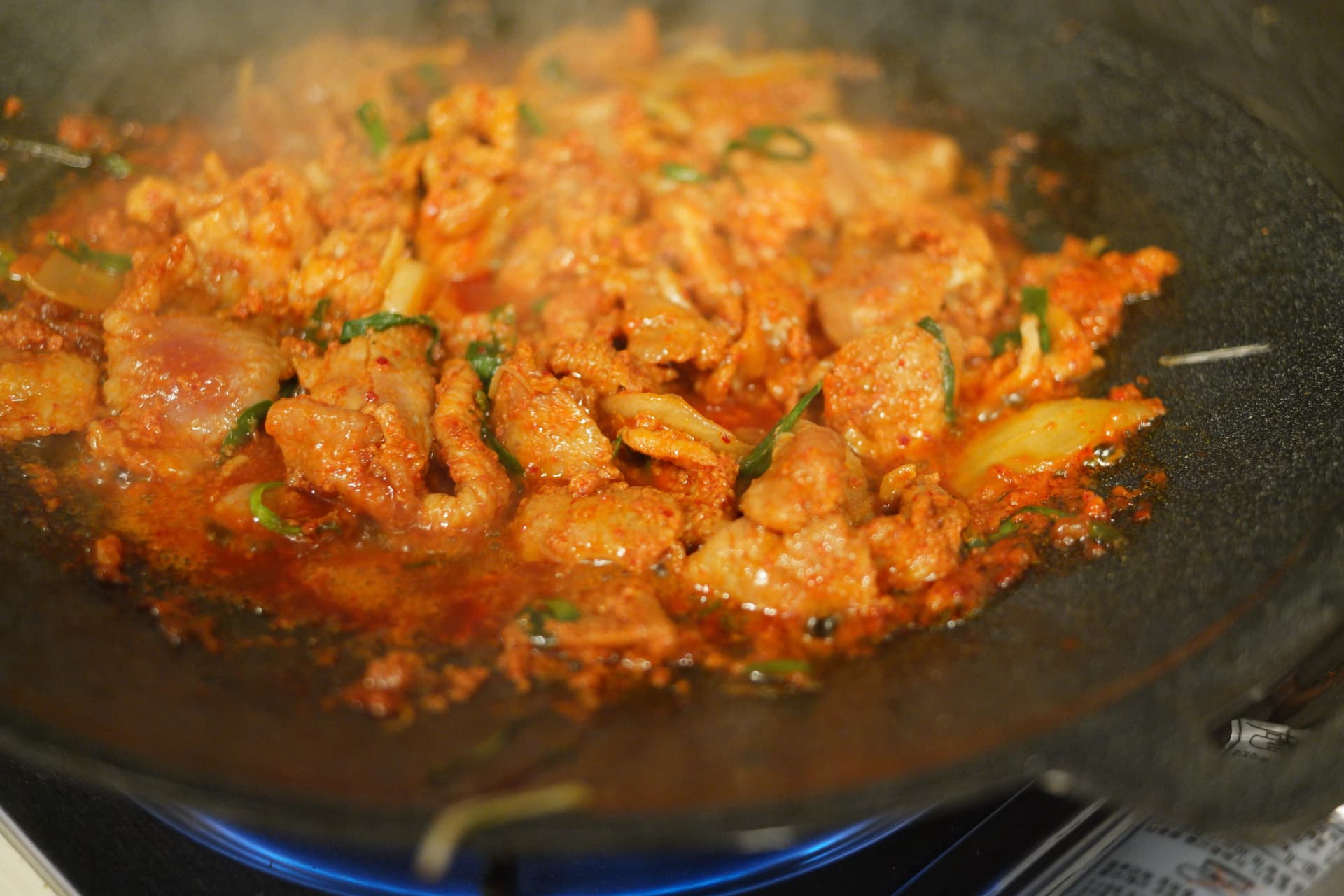
This is the spicy jumulleok well into the cooking process. The vivid red gochujang marinade has fully absorbed into the meat with all that heat, the color has deepened and gone glossy, and the initial moisture has cooked off so the sauce is now a thick, concentrated coating on every piece.
A dish that often comes up as a comparison is jeyuk bokkeum — stir-fried spicy pork. On the surface, both involve pork cooked in gochujang marinade, so they can look almost interchangeable. But jeyuk bokkeum is typically stir-fried in a pan and served as a side dish alongside rice, while spicy jumulleok is cooked directly on a tabletop iron plate right in front of you, uses thicker-cut meat, and comes with a more generous amount of marinade — making it feel more like the main event of the meal. They're similar but different, and if you're on a Korea food trip, trying both and comparing them is absolutely worth it.
Finish With Fried Rice — Do NOT Get Up When the Meat Is Gone
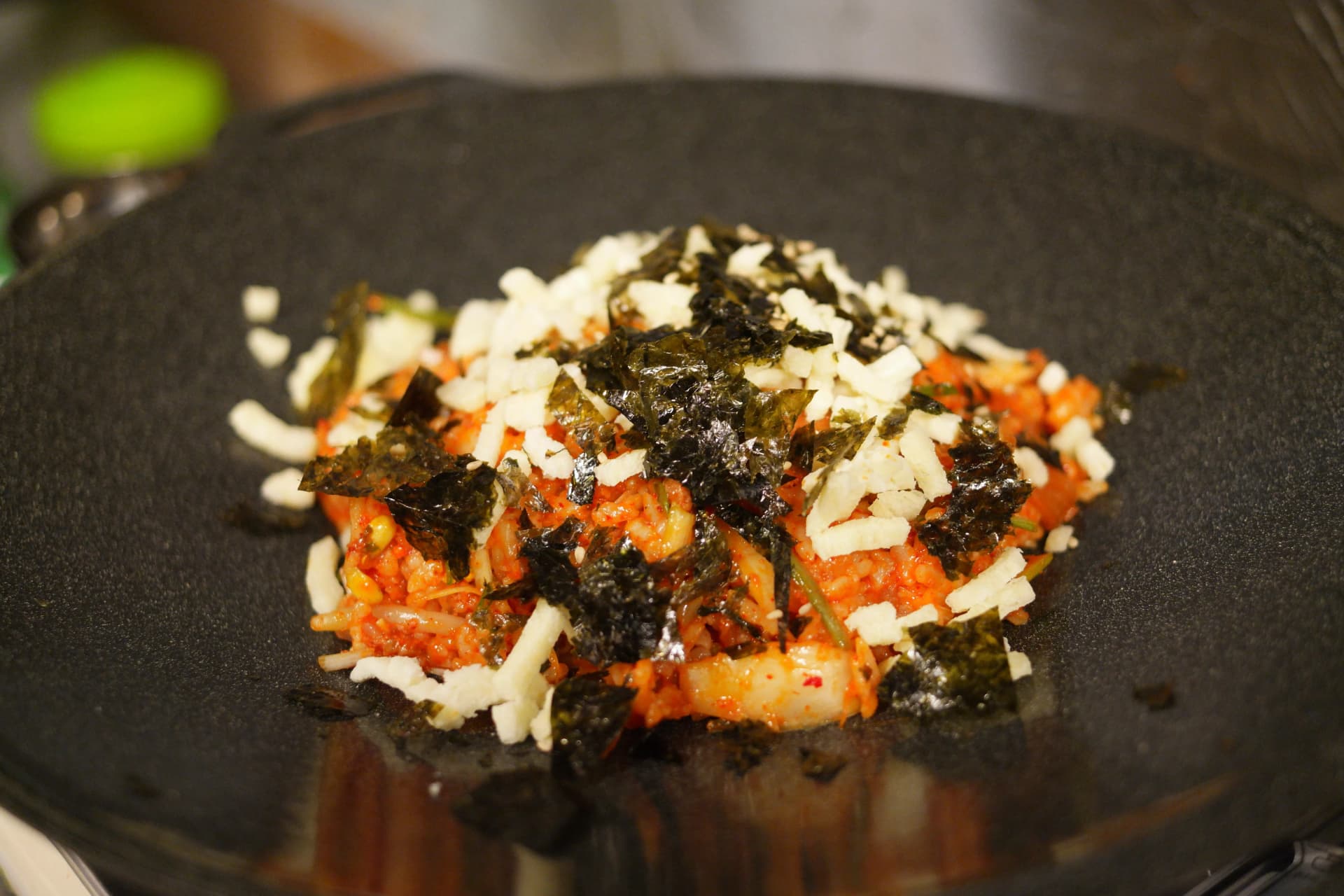
Finishing the meat does not mean you're done. At this particular restaurant, once all the jumulleok is eaten, you can use the leftover marinade-soaked iron plate to make fried rice as a finale. There's an extra charge for it, but they load cheese on top and fry it all together — and even before you taste it, the visual of rice grains and shredded seaweed mixing together already looks incredible. Because you're frying the rice in the same pan that held all that jumulleok marinade, every grain soaks up that flavor completely. Then the cheese melts in and adds this rich, nutty creaminess on top of everything. Seriously — do not get up before doing this. The fried rice is the final chapter, and it completes the whole experience.
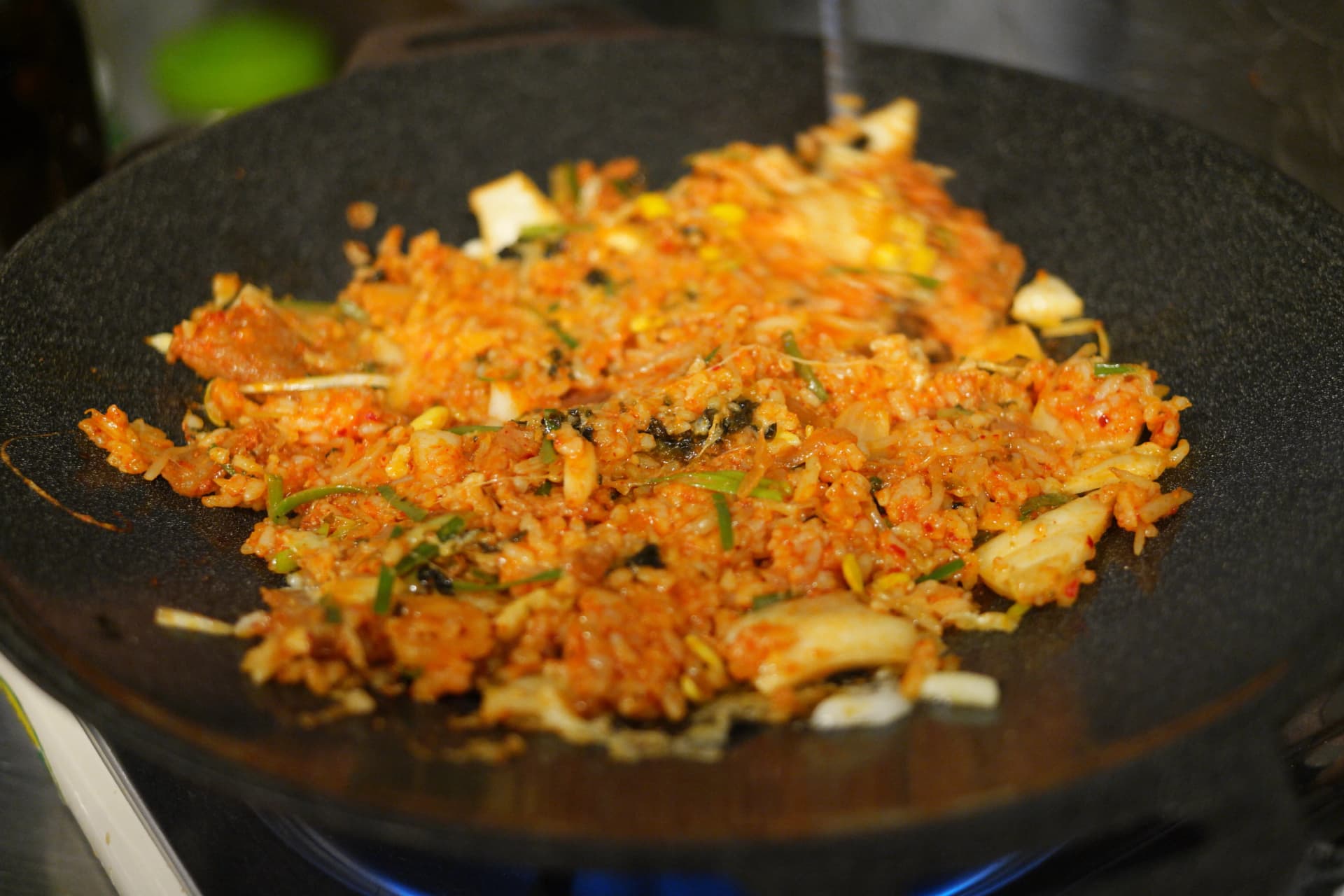
This is the finished fried rice. Every single grain of rice has been stained a warm, glowing orange from the jumulleok marinade that soaked into the iron plate — it genuinely looks like a painting. If you like your fried rice on the moist and tender side, scoop it up right at this stage. If you're a crispy fried rice person, leave it on the heat a little longer until the rice grains start to get a slight crust against the plate. The fact that you can adjust it entirely to your preference is one of the best things about this fried rice. Plenty of people come in for the jumulleok and end up completely falling for the fried rice. Both are worth coming back for.
Jumulleok — Turns Out Simplicity Was Always the Answer
Jumulleok isn't a complicated dish. At its core, it's just meat, marinade, two hands, and a hot iron plate — as simple as Korean BBQ gets. But within that simplicity lives the deep savoriness of the soy sauce marinade, the freshness of the shredded green onion, the sharp contrast of the pickled radish, and that fried rice finale that ties everything together. There's not a single boring moment in the whole meal.
The name is funny (Knead & Grill), the technique is rough and hands-on, but once you've tried it you'll immediately understand why this dish — accidentally invented by a grandmother in 1970s Mapo — has been a fixture on Korean dinner tables for over 50 years.
If you're in Korea and you spot jumulleok on the menu at a Korean BBQ restaurant, don't hesitate. Just order it.
Jumulleok FAQ — Everything You Want to Know
🍖 Jumulleok FAQ
Q1. What exactly is jumulleok?
It's a Korean dish where meat is kneaded thoroughly with marinade using both hands, then grilled on a hot iron plate right at the table. The name literally comes from the Korean verb meaning "to knead with your hands" — in English you could describe it as "Knead & Grill." The dish originated in the 1970s when a grandmother at a small restaurant in Mapo, Seoul improvised on the spot and accidentally invented something that would become a national staple.
Q2. How is it different from bulgogi?
They look similar at first glance but there are real differences. Bulgogi uses thin slices of beef pre-marinated in soy sauce for hours, then cooked on a domed grill pan. Jumulleok uses thicker-cut meat (pork or beef) kneaded with marinade right before cooking and grilled on a flat iron plate. The difference in meat thickness and marinade timing changes the texture and overall flavor quite significantly.
Q3. What's the difference between spicy jumulleok and jeyuk bokkeum?
Both involve pork in gochujang marinade, so they can seem almost identical. But jeyuk bokkeum is stir-fried in a pan and served as a side dish with rice, while spicy jumulleok is cooked on a tabletop iron plate right in front of you. Jumulleok also uses thicker-cut meat and a more generous amount of marinade, which makes it feel more like the centerpiece of the meal rather than a supporting dish.
Q4. Which is better — soy sauce jumulleok or spicy jumulleok?
It's completely a personal preference thing! Soy sauce jumulleok is sweet and deep in flavor, approachable for pretty much anyone. Spicy jumulleok is sharp and bold, which tends to be a better fit if you love heat. If it's your first time, ordering half-and-half to compare both is genuinely the best move.
Q5. What's the best way to eat it?
The classic move is to put a piece of jumulleok on a lettuce leaf or a thin slice of pickled radish, add a garlic clove and a small dab of ssamjang, then wrap it all up in one bite. The pickled radish version especially is incredible — the tangy sourness of the radish perfectly balances the sweet-salty soy marinade. And after the meat is gone, absolutely do the fried rice on the leftover marinade plate. No regrets, every single time. 🍖
Q6. I don't eat pork — is there an alternative?
Yes! Jumulleok can also be made with beef (beef jumulleok / 소주물럭). The cooking method is exactly the same, and the deeper, richer flavor of beef gives it a completely different kind of appeal. That said, not every restaurant carries the beef version, so check the menu on Naver Maps or Kakao Maps before you visit.
Q7. How much does it cost?
It varies by restaurant, but a single serving typically runs around $9–$13 USD (roughly ₩12,000–₩18,000). Most people order two servings when dining as a pair, which is the norm. Fried rice at the end may cost a small extra fee — usually around $1.50–$2.50 USD (₩2,000–₩3,000) depending on the place. Overall it's very much in line with regular Korean dining prices, so no sticker shock here.
Best Jumulleok Restaurants — Seoul, Busan & Incheon
📍 Recommended Jumulleok Restaurants
Not a sponsored list — based on actually well-known restaurants
Seoul — Top 10
Mapo Wonjjo Jumulleok
📌 Yonggang-dong, Mapo-gu
The original jumulleok restaurant, operating since the 1970s. Famous for beef sirloin jumulleok and widely credited as the birthplace of the dish.
💰 Mid-range
Darae Sikdang
📌 Sangdo-dong, Dongjak-gu
Ranked #1 for pork jumulleok in Seoul on DiningCode. A true neighborhood gem where locals line up to get in.
💰 Budget
Seonggwang Sikdang
📌 Sinyongsan Station, Yongsan-gu
A go-to lunch spot for office workers near Sinyongsan Station. Famous for the pork jumulleok and cold noodle (naengmyeon) combo.
💰 Budget
Gim Daejang
📌 Dangsan-dong, Yeongdeungpo-gu
A popular spot near Dangsan Station. A dedicated pork jumulleok restaurant known for its thick-cut meat and generous marinade.
💰 Mid-range
Sampyeong Sikdang
📌 Hongdae, Mapo-gu
A retro-vibes pork jumulleok spot near Hongdae. The lunch jumulleok set is especially popular.
💰 Budget
Somumnan Galbi Jip
📌 Gajwa Station, Seodaemun-gu
A long-running neighborhood institution. A no-frills local BBQ spot where you can enjoy both galbi (ribs) and jumulleok.
💰 Budget
Hyoje Jumulleok
📌 Hyoje-dong, Jongno-gu
A hidden gem near Jongno 5-ga. Known for its chewy texture and impressively deep soy marinade flavor.
💰 Mid-range
Matna숯불 Jumulleok
📌 Hannam-dong, Yongsan-gu
A charcoal-grilled jumulleok spot right in the middle of trendy Hannam-dong. Serves both pork and beef versions.
💰 Mid-range
Wonjjo Jobakjip
📌 Mapo Station, Mapo-gu
A fixture on the Mapo jumulleok street. A classic old-school spot beloved for its pork rib jumulleok over many years.
💰 Mid-range
Daeseong Jip
📌 Seongsu-dong, Seongdong-gu
A popular chicken jumulleok spot in hip Seongsu-dong. Retro vibes with a unique twist on the classic dish.
💰 Budget
Busan — Top 4
Owolga
📌 Beomnae Station, Busanjin-gu
Ranked #1 for jumulleok in Busan on DiningCode. Famous for its sulfur-fed duck jumulleok — a local favorite with serious regulars.
💰 Mid-range
Oseong Garden
📌 Seomyeon, Busanjin-gu
An outdoor pojangmacha-style duck jumulleok spot in Seomyeon. Great atmosphere for pairing with makgeolli (Korean rice wine).
💰 Mid-range
Seyeonjeong
📌 Dongnae, Dongnae-gu
A quiet, understated jumulleok restaurant in the Dongnae area. Known for its clean, tidy presentation and well-balanced flavors.
💰 Mid-range
Sanjang 1988
📌 Seomyeon, Dongnae-gu
A Busan institution for duck jumulleok since 1988. Tucked away in an alley but locals line up for it — a true hidden waiting-list spot.
💰 Budget
Incheon — Top 4
Songdo Jumulleok
📌 Songdo, Yeonsu-gu
A neighborhood favorite for duck jumulleok in Songdo. Spacious and clean interior with generous portions.
💰 Mid-range
Sigolji
📌 Seoknam-dong, Seo-gu
A 40-year-old Incheon institution. A legendary duck jumulleok spot in the Seoknam-dong restaurant alley with serious word-of-mouth.
💰 Budget
Danpungnamu
📌 Wanggil Station, Seo-gu
A hidden gem near Wanggil Station on Incheon Metro Line 2. Duck jumulleok and yukgaejang (spicy beef soup) are the signature dishes.
💰 Budget
Dwaejilang Jjigaelang
📌 Mansu-dong, Namdong-gu
A pork belly jumulleok specialist near Mansu Station. Great value, generous portions, and a solid neighborhood regular crowd.
💰 Budget
※ Always check opening hours and closed days on Naver Maps or Kakao Maps before visiting.
This post was originally published on https://hi-jsb.blog.