
Spicy Noodle Soup That Made Me Sweat — Jjamppong Jijon Review
Table of Contents
16 items
Jjamppong Jijon — The Spicy Noodle Chain I've Hit Over Five Times
If you're looking for a seriously spicy noodle soup spot in Korea that's open 24 hours, Jjamppong Jijon is the name you need to know. I've been to three different locations more than five times since 2023, and on April 6, 2026, I went back again — this time to their 24-hour Dunsan branch in Daejeon, a major city about an hour and a half south of Seoul.
The Dunsan Branch — Open 24 Hours, Doors Unlocked at 7 AM
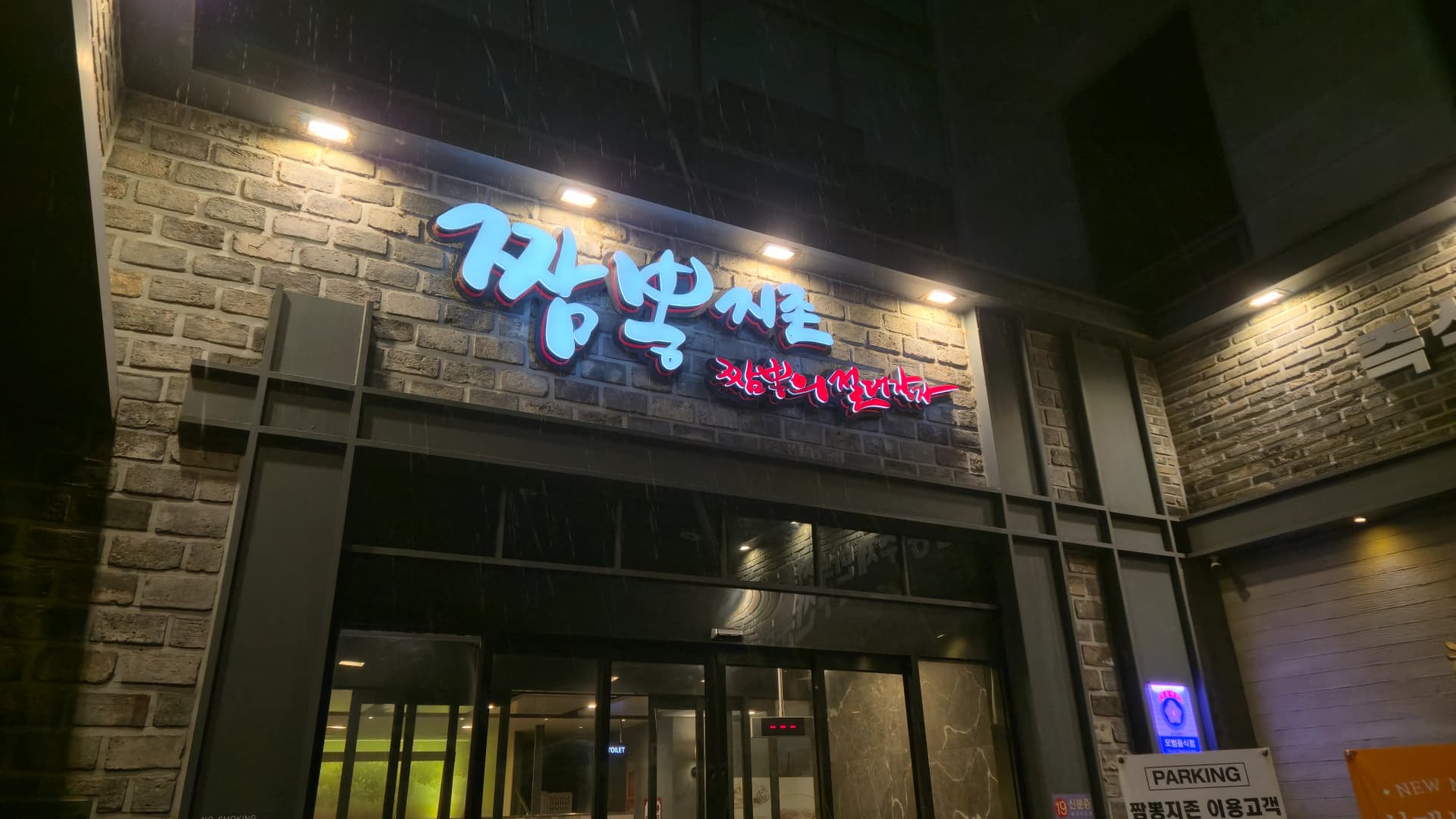
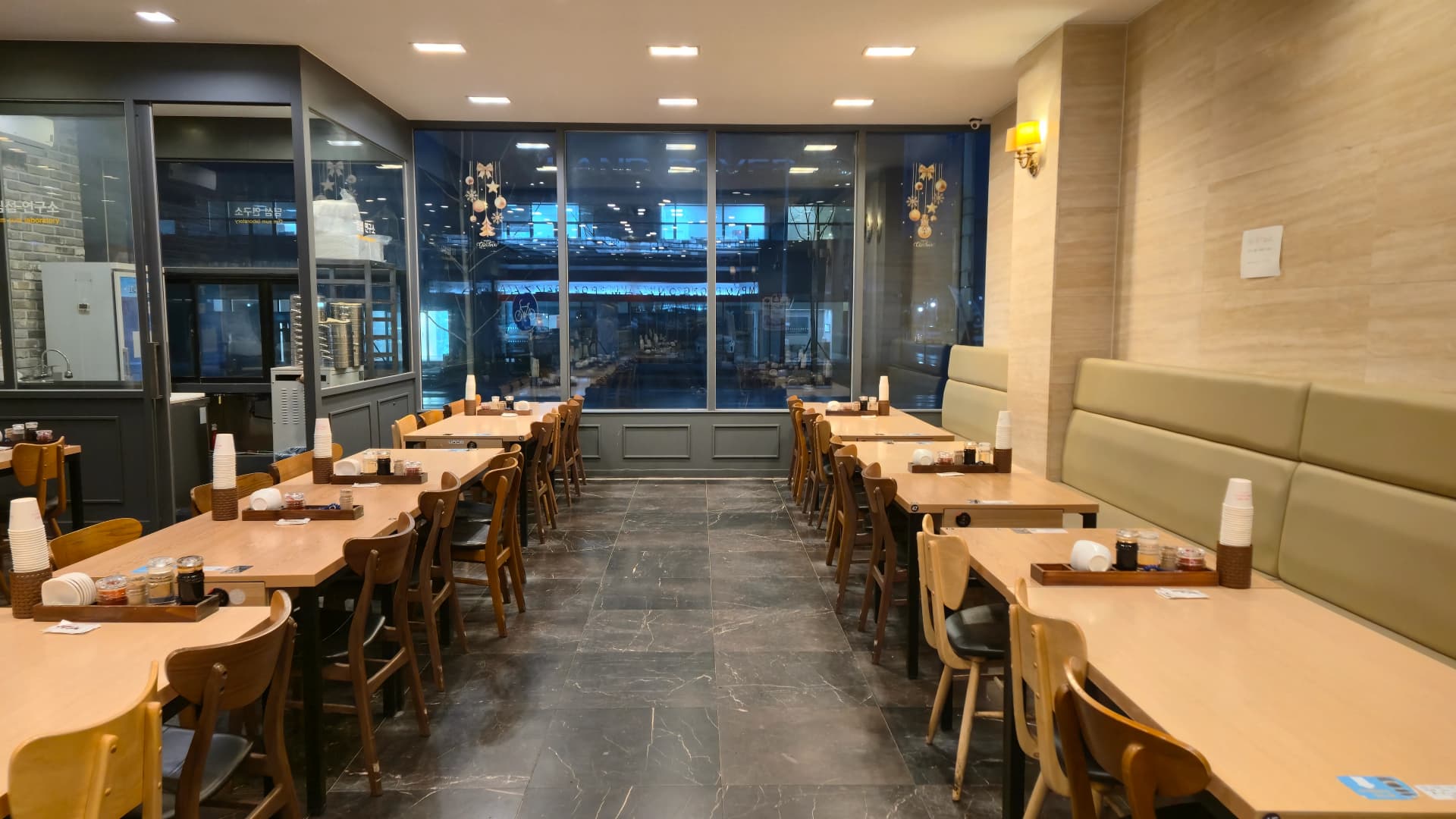
I got there before 7 AM and the doors were already open. My wife and I usually go to the Sintanjin branch, but that one doesn't open until 9 AM. We wanted an early start that day, so I searched for a 24-hour location and found the Dunsan branch. The interior was way nicer than what you'd expect from a Chinese-Korean noodle joint — wooden tables, cushioned booth seating, warm lighting. Nothing like the cramped, greasy hole-in-the-wall image you might have in your head. Tables are spaced out comfortably, and there's free parking behind the building for up to an hour, which is clutch if you're driving.
I first discovered Jjamppong Jijon in early 2023. A buddy dragged me to the Gasuwon branch, saying they do legit spicy jjamppong there. That day we ordered two bowls of Hell Jjamppong at level 2 plus sweet-and-sour pork — we ate until we couldn't move, and the prices were a bit lower back then. See, most Korean-Chinese restaurants serve jjamppong with a mild chicken-stock base. It's fine, but sometimes that gentle broth just doesn't hit. This place was different from the very first spoonful. It's an intensely spicy noodle soup, but there's this deep umami underneath that keeps you going — instead of the heat making you stop, it actually makes you eat faster. Think of it like the difference between a generic hot sauce and something like a really well-made Nashville hot chicken — the spice is aggressive, but the flavor behind it is what gets you hooked. After that first visit, I went back to the Gasuwon branch with my brother, and again solo. A few months ago, my wife and I started hitting the Sintanjin branch — we've been there twice. The Dunsan branch makes it our third location. My wife isn't Korean and couldn't handle spicy food at all when she first came to Korea. She started at the lowest spice level here and has now worked her way up to level 2.
There are close to 100 Jjamppong Jijon locations across Korea, so no matter which city you're in, just search the name and you'll probably find one nearby. If you're traveling in Korea and craving a fiery bowl of spicy noodle soup, this chain has you covered.
Jjamppong Jijon Dunsan Menu and Prices
Jjamppong Jijon Dunsan Menu
Jjamppong Jijon Dunsan · As of April 2026
🔴 Jjamppong (Spicy Noodle Soup)
⚫ Jjajang & Fried Rice
🍗 Sweet & Sour Pork (Tangsuyuk)
🥟 Dumplings
🌶️ Hell Spice Levels — Most jjamppong and jjajang dishes can be ordered at Hell spice levels (1–4). No extra charge for going hotter.
※ Prices as of April 2026 at the Dunsan branch. May vary by location and season.
Here's what we ordered this time: my wife got the Jjamjjamyeon (half-and-half) for $10, and I got the Sundubu Jjamppong Noodle for $10. Total came to about $19 for two people. I wanted to go all out like the first time at the Gasuwon branch — two bowls of jjamppong plus sweet-and-sour pork — but at today's prices, that'd run close to $32. For a noodle run? Felt like too much, so we stuck with one bowl each this time.
My Wife's Jjamjjamyeon — Spicy Noodle Soup and Black Bean Noodles in One Bowl
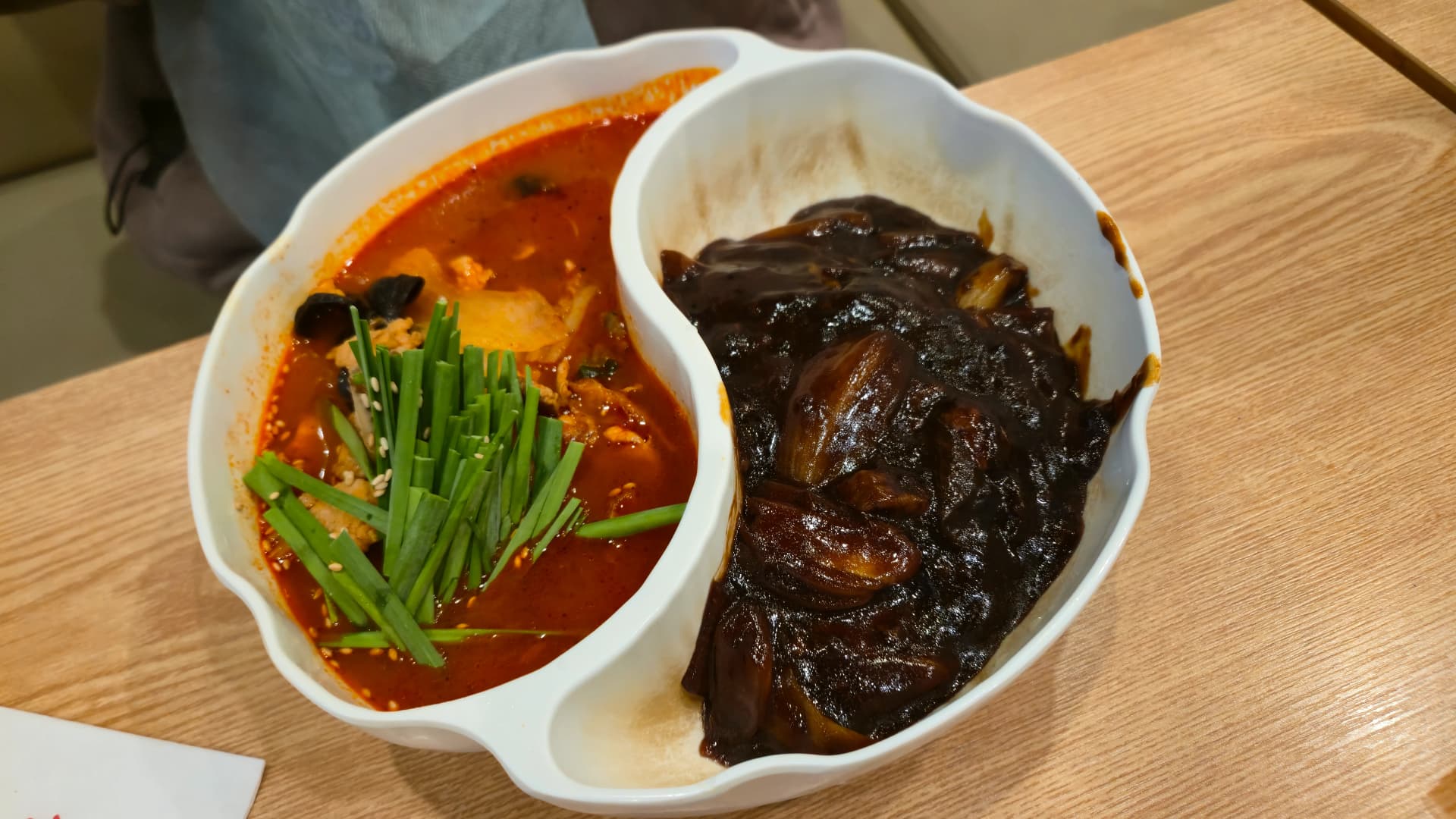
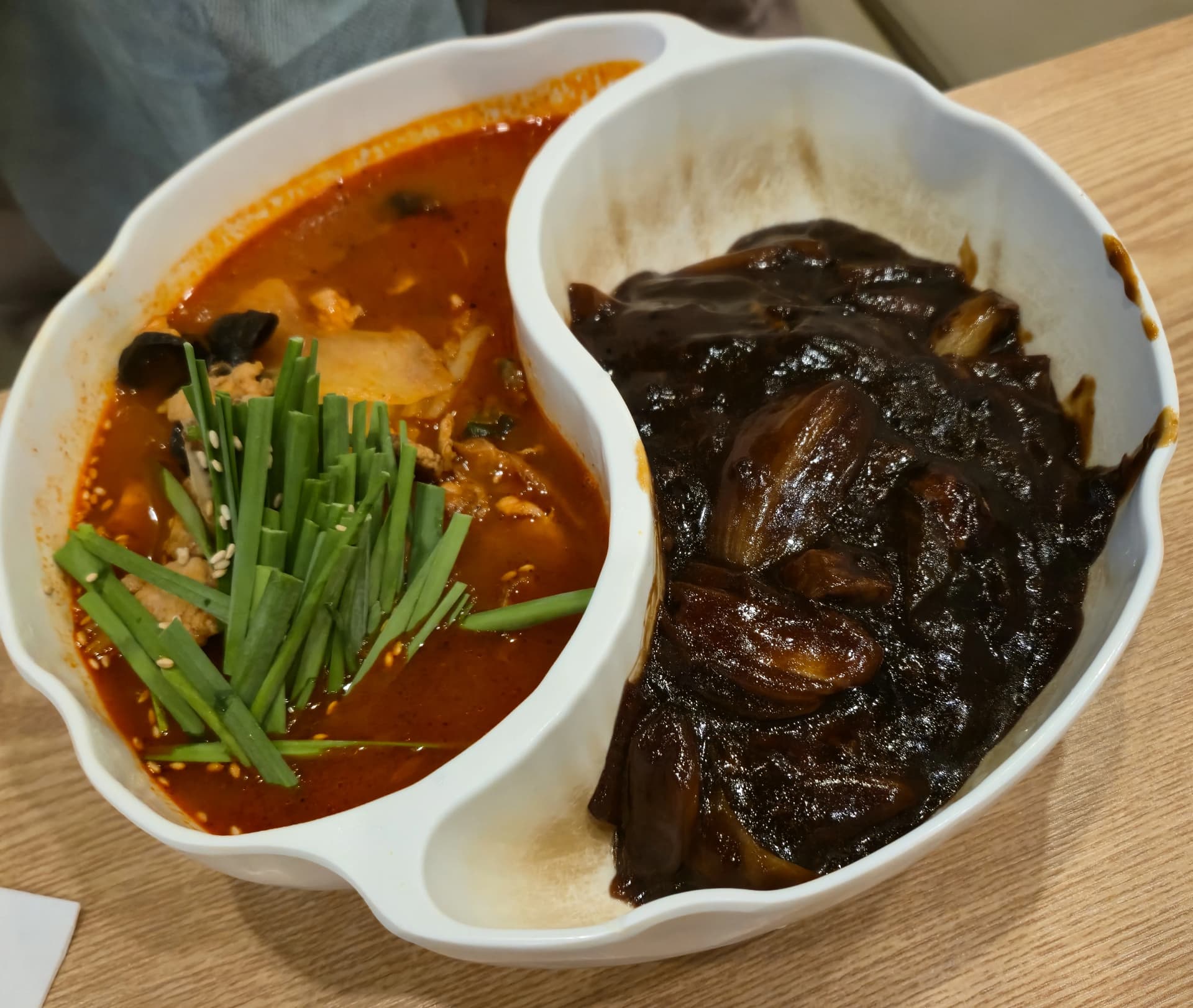
This is what my wife ordered — the jjamjjamyeon. It's a half-and-half bowl: spicy jjamppong on one side, black bean jjajangmyeon on the other. Since coming to Korea, my wife fell in love with both, so she used to agonize over which to order every single time. This dish solved that problem permanently.
Jjamjjamyeon
Jjamppong + Jjajangmyeon — half and half in one bowl
Spicy red broth with vegetables and meat. Topped with chives and sesame seeds.
Sweet black bean sauce side with stir-fried onions. Zero spice here.
For when you can't choose between spicy noodle soup and black bean noodles — this bowl gives you both.
My wife's routine is always the same: slurp a few spoonfuls of the jjamppong broth first, then mix and eat the jjajang noodles. One thing to note though — each side is slightly smaller than a full single order, so if you're a big eater, you might be better off just picking one and getting the full portion.
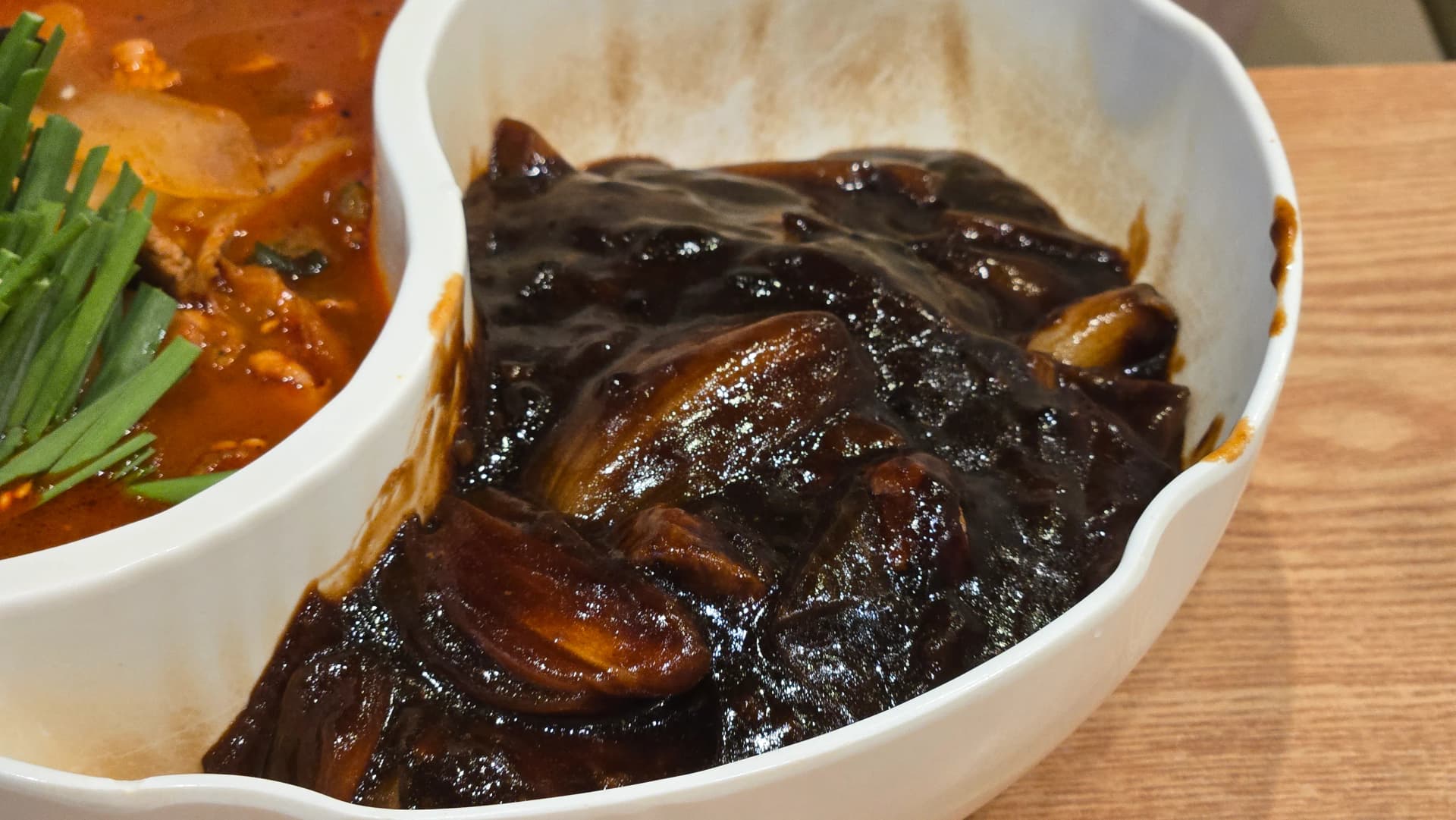
Close-up of the jjajang side. The black bean sauce completely coats the noodles, and you can see big chunks of caramelized onion in there. Since it's a half portion, the sauce-to-noodle ratio is actually higher than a full bowl — every single bite packs a punch of flavor.
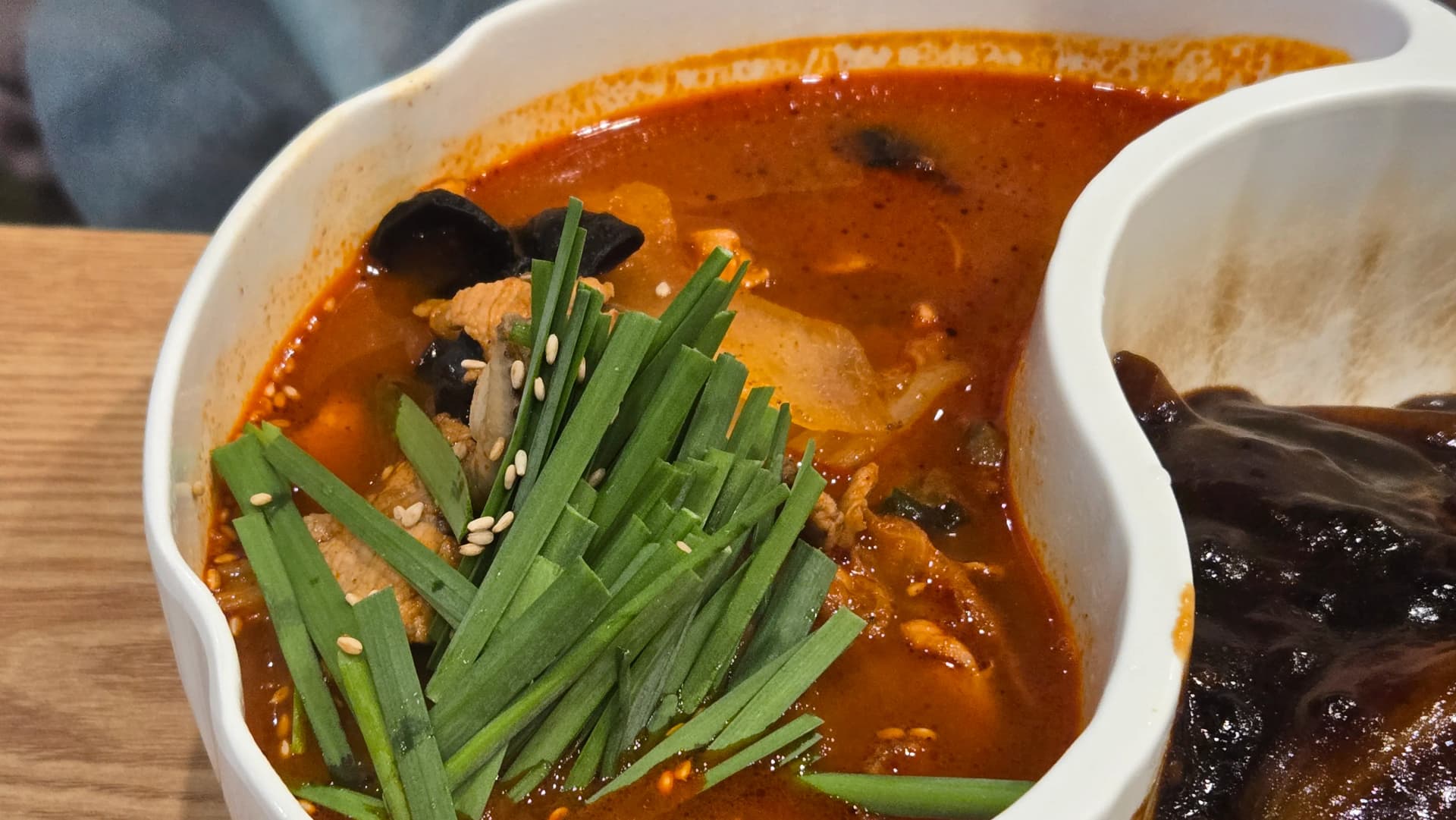
And here's the jjamppong side. My wife went with Hell level 2 — the "fiery hot" tier. The broth is a deep vermilion but clean and not oily at all, topped with chives and sesame seeds. Plenty of toppings in there too. Her eyes went wide at the first spoonful, but halfway through she was like, "okay this is actually really good" and just kept going. When I first brought her to the Sintanjin branch, she could barely handle level 1. Now she's at level 2. If you're not used to spicy food, start at level 1 — it's already got plenty of kick, roughly on par with a medium-hot bowl of ramen.
Hell Sundubu Jjamppong Level 3 — Taking on "Insanely Spicy"
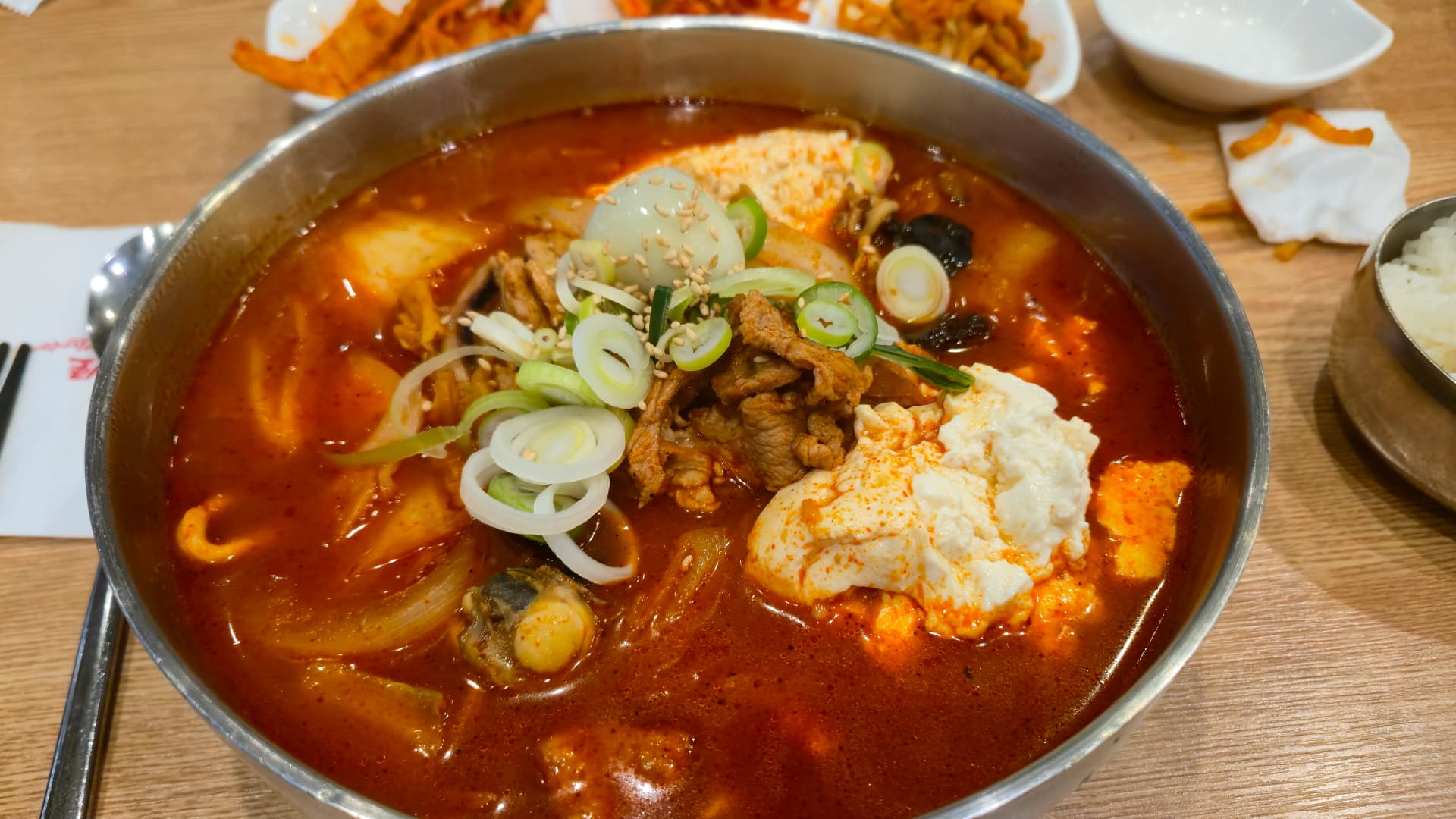
What I ordered: Hell Sundubu Jjamppong Noodle at level 3 — "insanely spicy." It came in a big stainless steel bowl filled to the brim with angry red broth. Chunks of soft tofu sit on top, with green onion, pork, and wood ear mushrooms peeking through the broth. I paired it with a bowl of rice from the self-service bar, and honestly, that combo is the key to surviving this thing.
Hell Jjamppong Spice Levels
Jiok Jjamppong — Hell Spicy Level
About as hot as a bowl of instant ramen. Totally manageable even if spicy food isn't your thing.
The heat hits fast and fills your whole mouth. Good for people who actually enjoy spicy food.
You'll be sweating from the first spoonful. Even Koreans struggle at this level.
Your lips go numb and the heat burns all the way down. The final boss for spice chasers.
※ Some locations offer levels beyond 4.
When I first ate here at the Gasuwon branch, I started at level 2. I thought that was spicy at the time, but after a few visits I got used to it, so I bumped it up to level 3 this time. It's a completely different beast. The capsaicin hits your tongue immediately on the first spoonful — like, if you've ever had a Nashville hot chicken at the top tier and thought "yeah, this is no joke," it's that kind of immediate punch. But the umami in the broth doesn't go anywhere, so you literally can't put the spoon down. My wife was next to me going, "why are you sweating so much?" and I just couldn't stop.
How Soft Tofu Tames the Heat
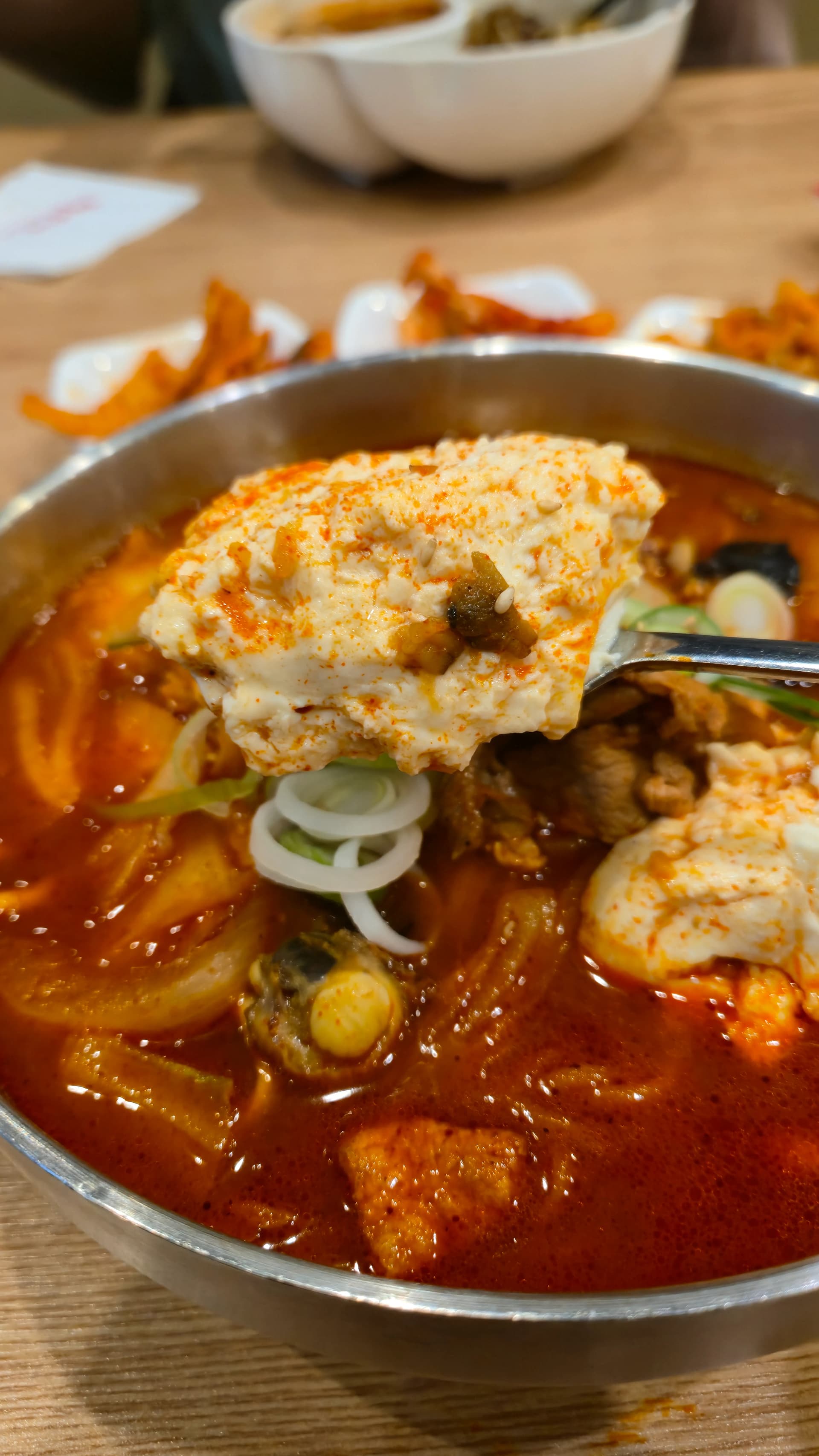
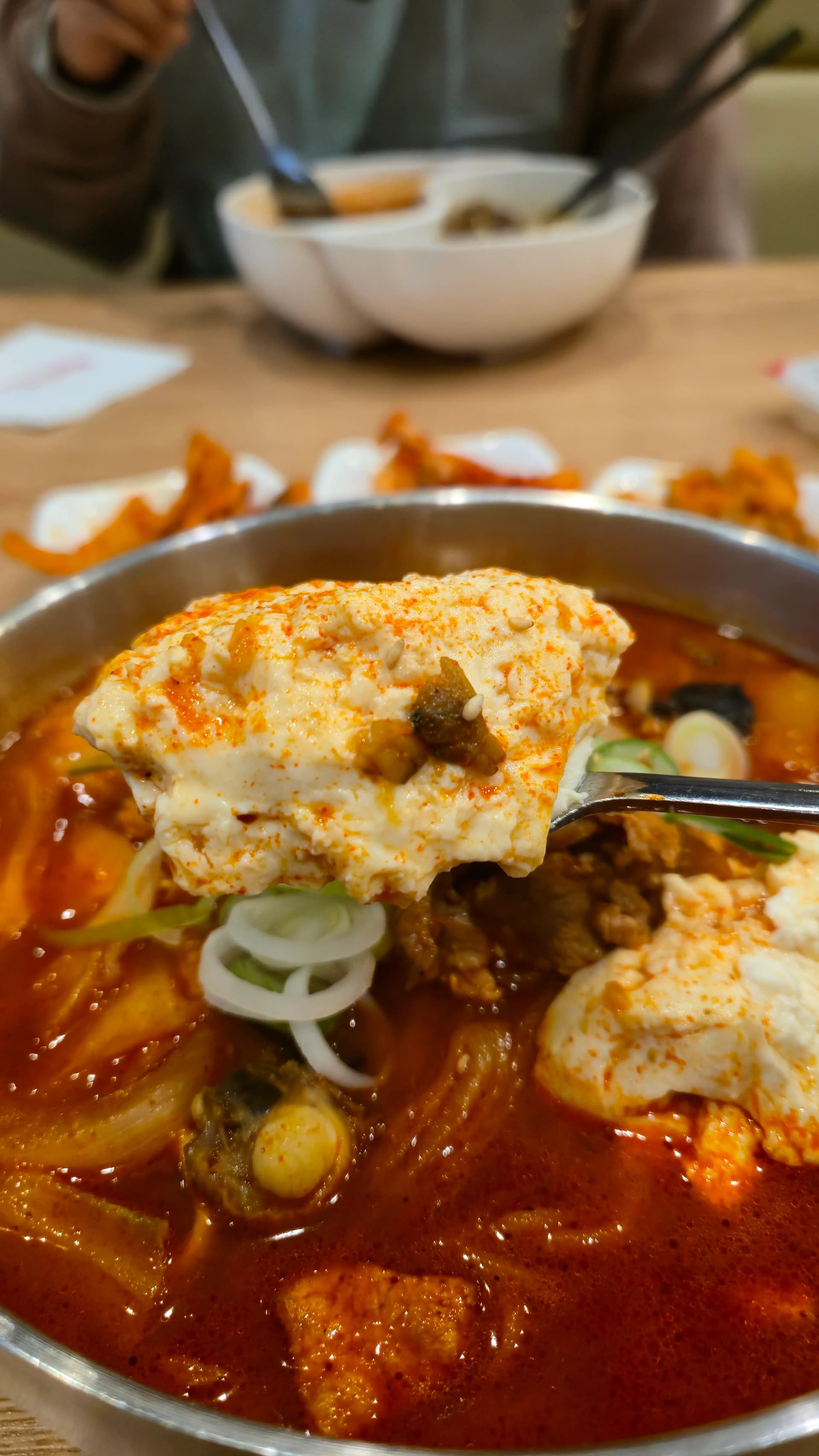
That's sundubu on the spoon — Korean-style extra-soft tofu. It's way softer than regular tofu; you can't even pick it up with chopsticks. It practically melts when you touch it, with this pillowy, cloud-like texture. When it meets the spicy broth, it does serious work. You get the creaminess first, and the heat rolls in slowly behind it. This tofu is honestly the reason I was able to finish a level 3 bowl — it keeps resetting your palate between the waves of fire.
The Toppings — Pork, Clams, and Wood Ear Mushrooms
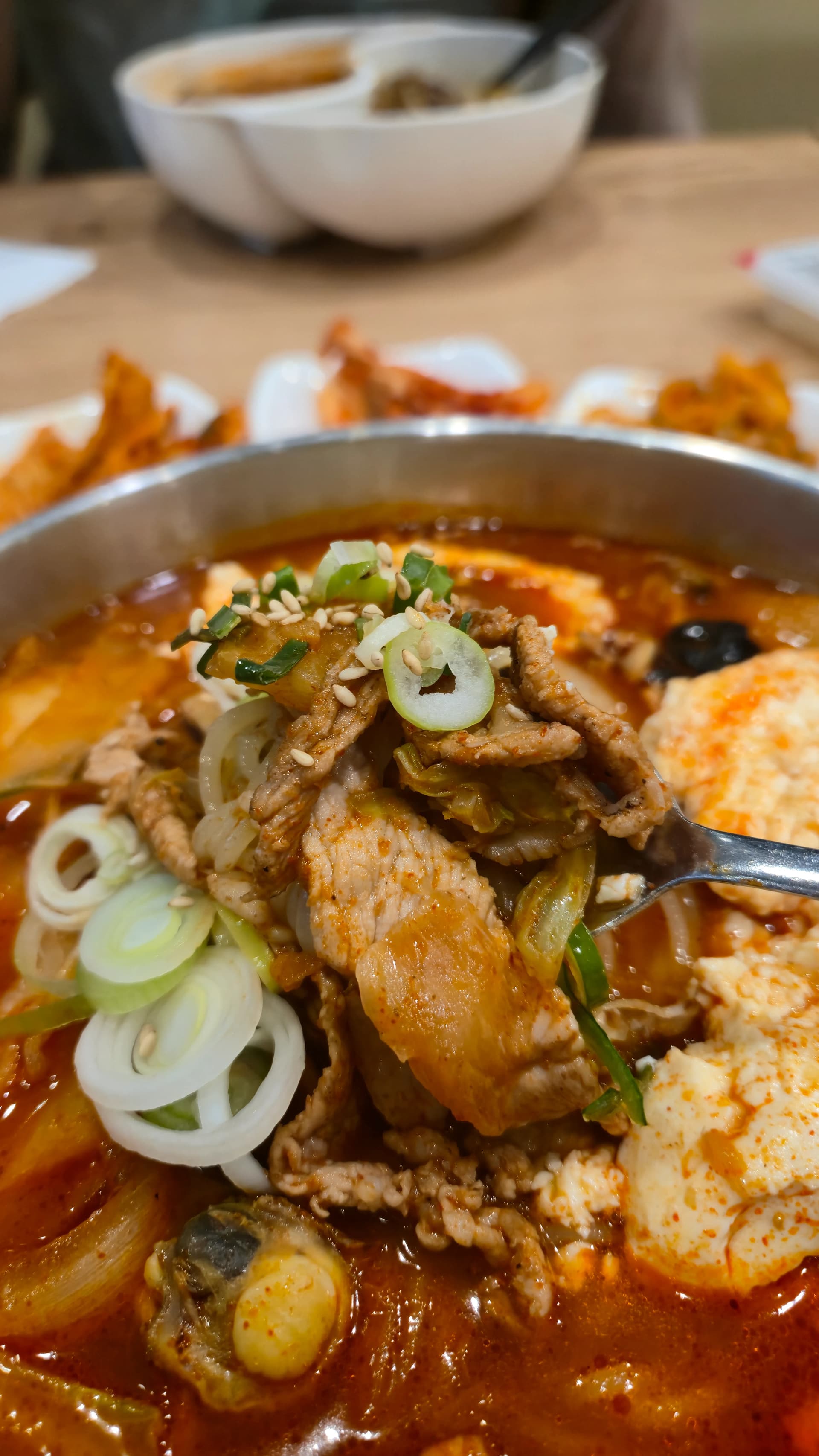
I fished out some of the toppings. The pork is sliced thin and completely soaked in the broth, so every bite releases another burst of spicy soup flavor. Green onion and napa cabbage came tangled up with the meat, and the sesame seeds added a nice nutty note on top.
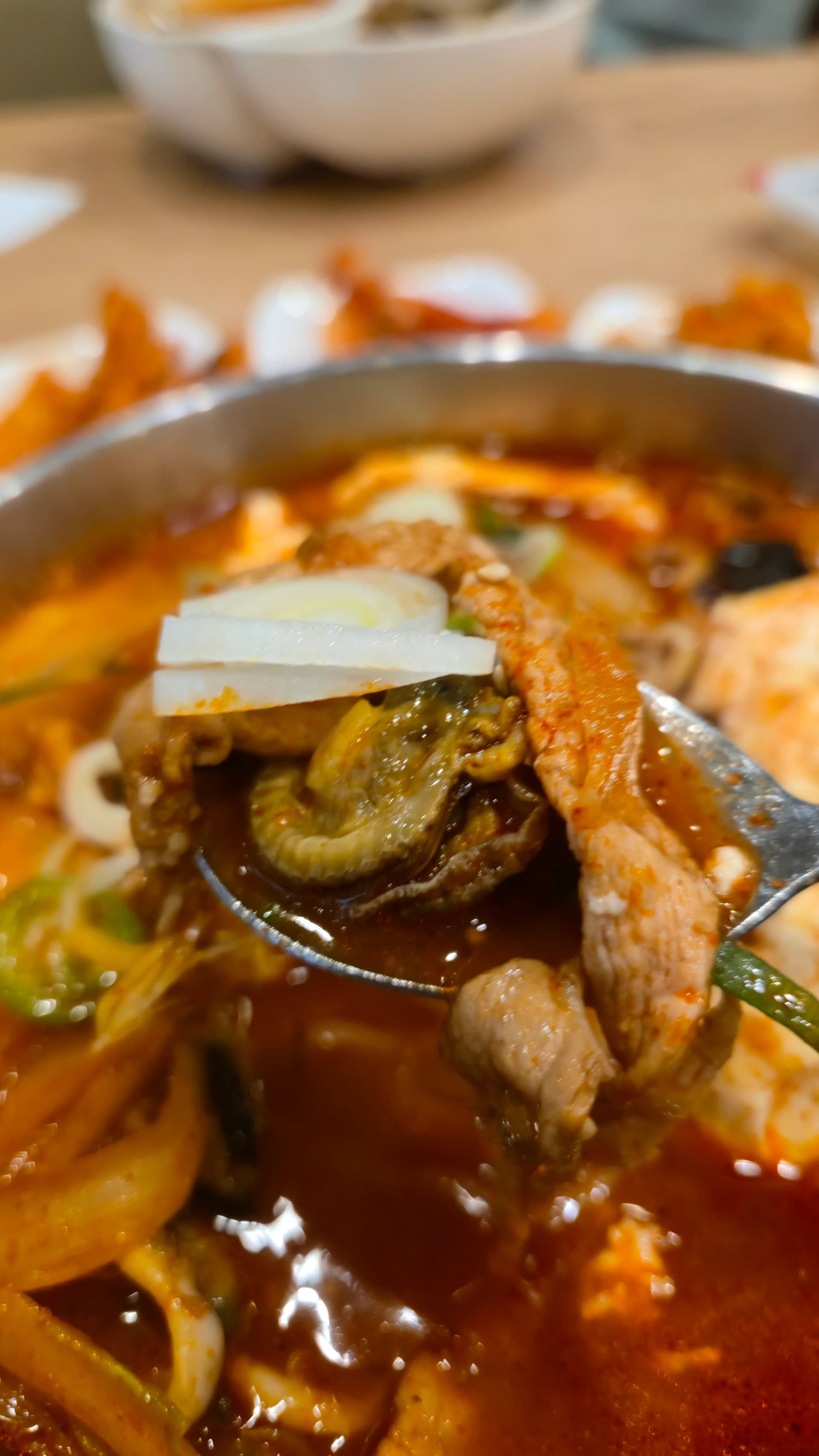
There were clams hiding at the bottom too. I figured a sundubu jjamppong would just have tofu, but there were baby clams and wood ear mushrooms mixed in as well. The clam umami definitely added depth to the broth. That said, I'll be honest — there weren't a ton of them. You had to scrape the bottom to find a few, so if you're ordering this specifically for the seafood, you might be a little disappointed.
The Noodles Are on the Thin Side — A Divisive Point
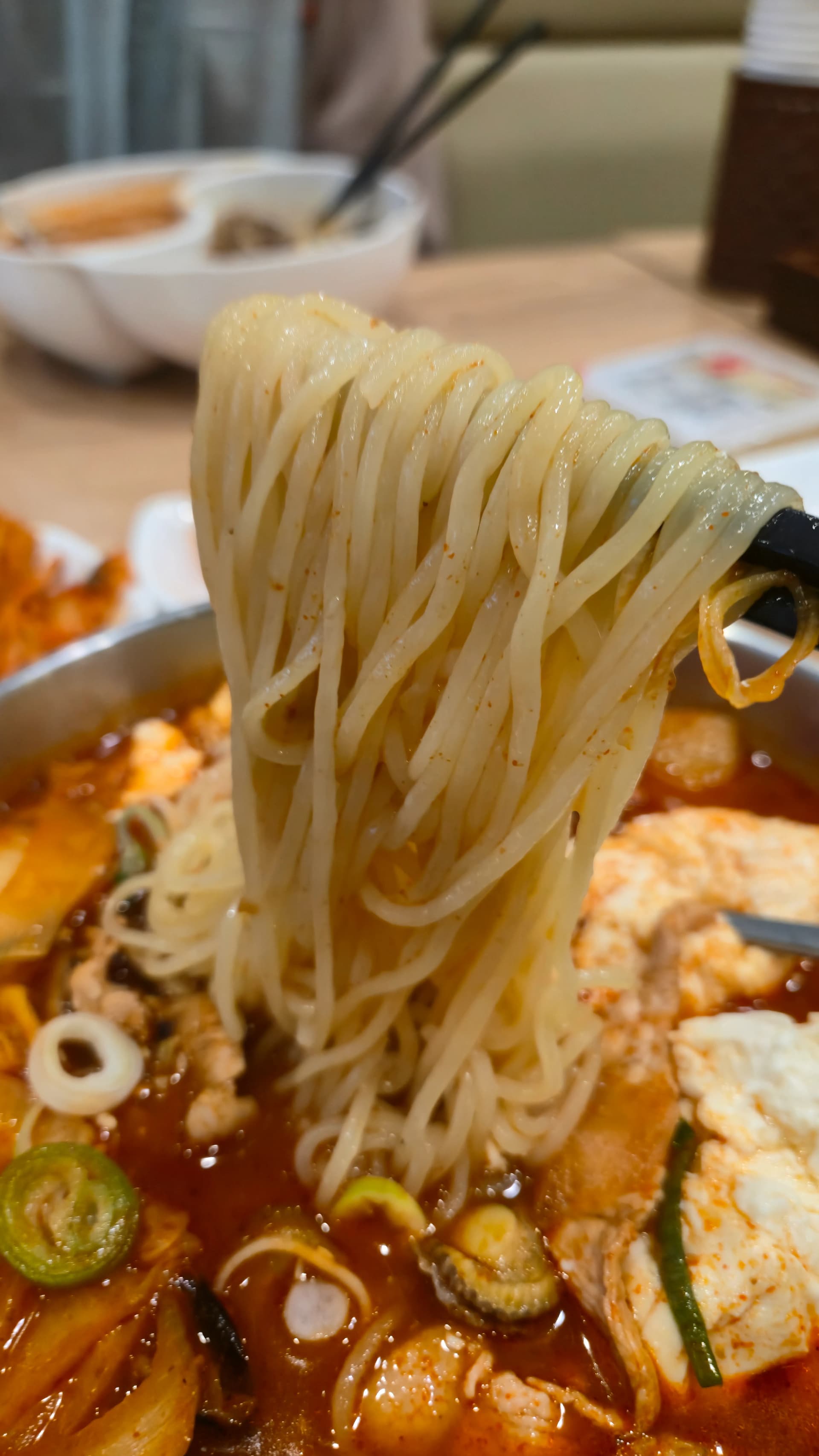
I pulled up a big chopstick-full of noodles. Jjamppong Jijon's noodles are noticeably thinner than what you'd get at a typical neighborhood Chinese-Korean restaurant. Standard Korean jjamppong noodles are thick and chewy — these are much finer. I noticed it the very first time I ate at the Gasuwon branch and thought, "huh, these are different." The upside is that the thin noodles soak up way more broth — every bite delivers the soup flavor right along with the noodle. If you prefer fat, chewy noodles, this might be a dealbreaker for you, but personally, I think the thin noodles work better with this kind of intense spicy broth.
Self-Service Side Dishes — Help Yourself, No Korean Required
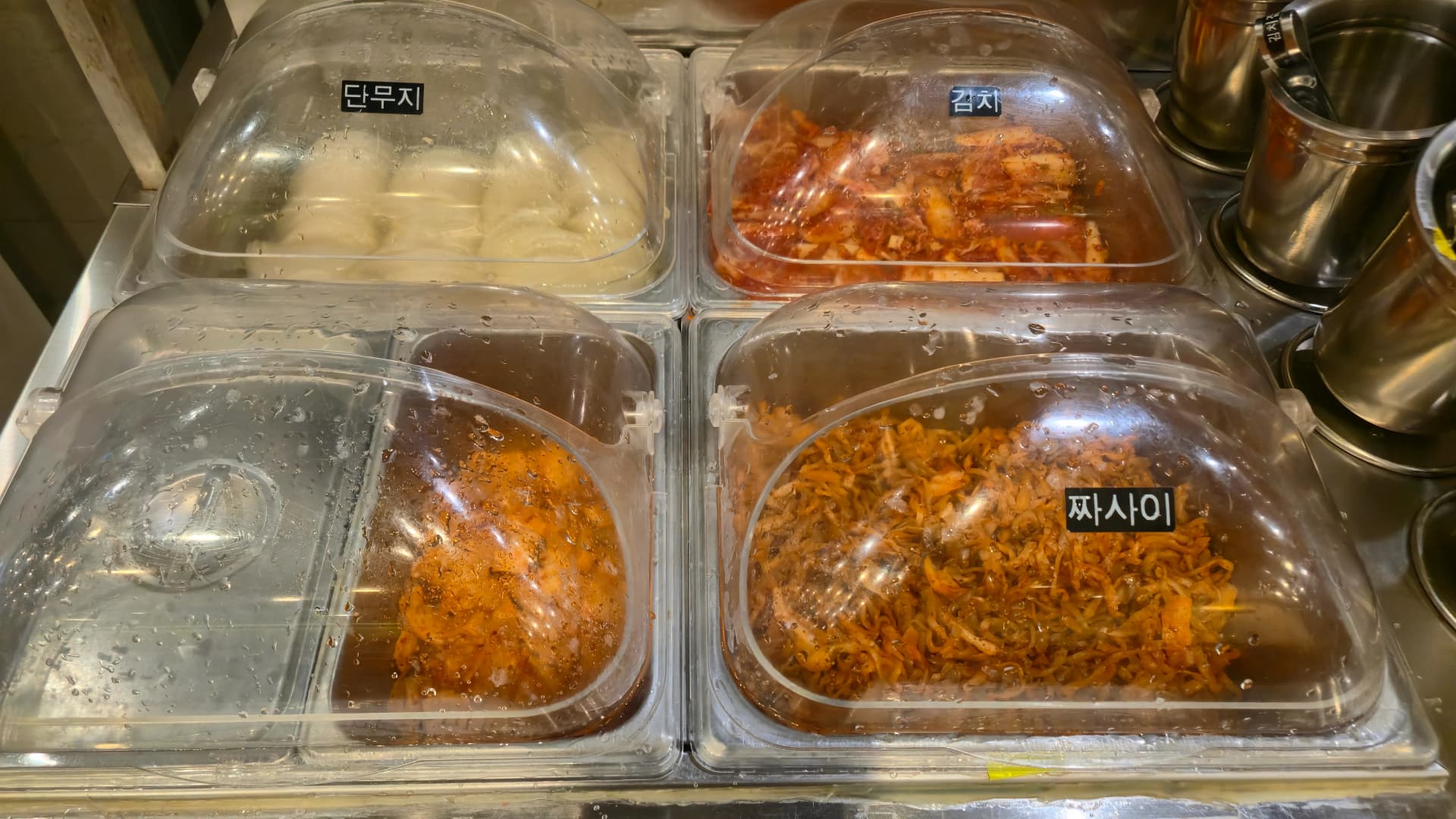
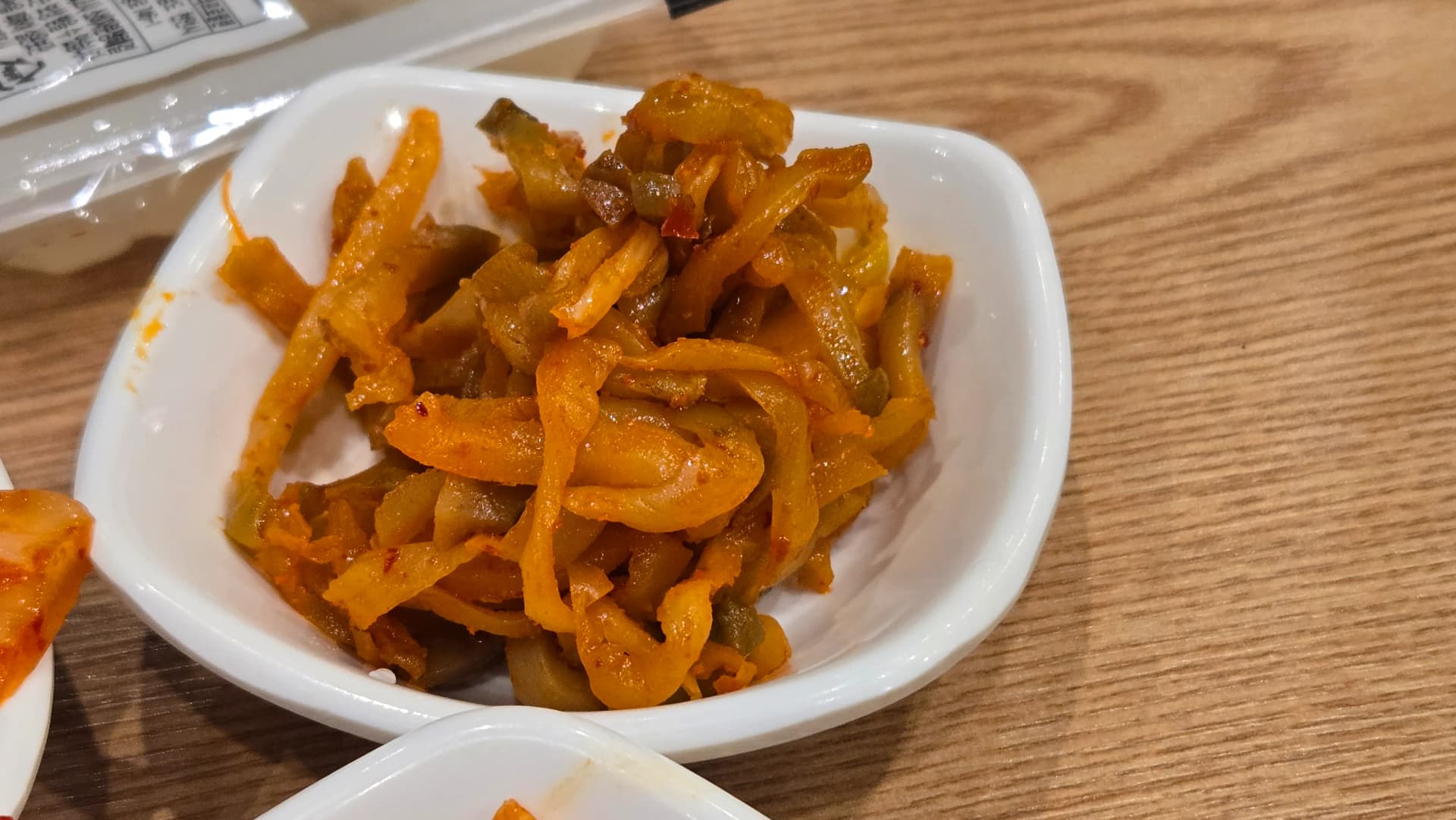
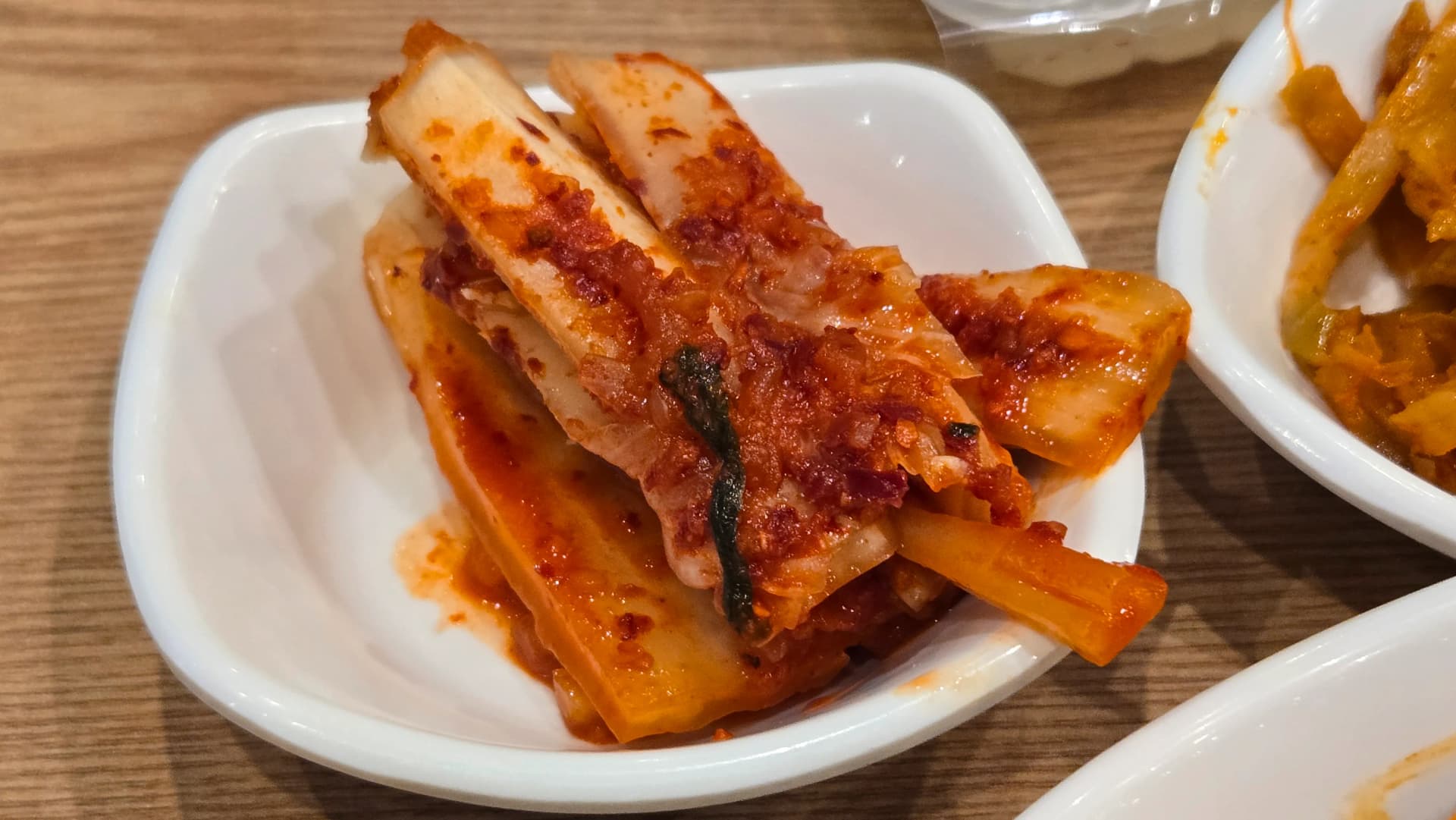
There's a self-service bar on one side of the restaurant. Four side dishes — pickled radish, kimchi, zhacai (Chinese pickled mustard stem), and seasoned fish cake — all neatly arranged under clear lids. You just walk up and grab whatever you want, as many times as you want. Rice is unlimited refills from here too. My wife doesn't speak Korean, but she said she loves this self-service setup. No need to ask anyone for anything — just walk up and serve yourself.
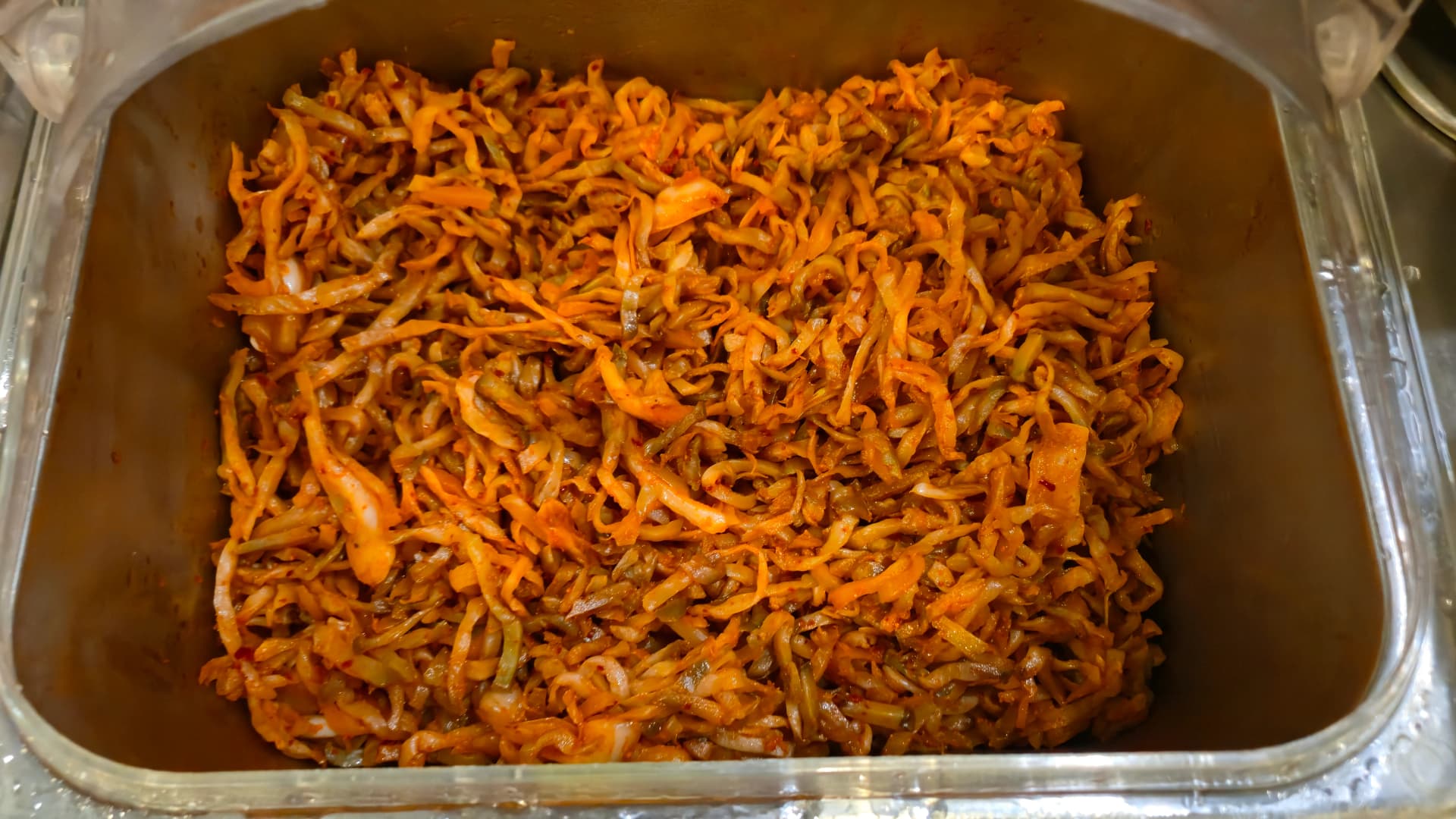
Zhacai
Chinese Pickled Mustard Stem — Jjasai in Korean
A fermented side dish made from mustard plant stems preserved in salt. It's crunchy, salty, and slightly spicy. Pop a bite of this between spoonfuls of greasy jjajang or fiery jjamppong and it completely resets your palate — like a pickle after a heavy burger.
Here's a close-up of the zhacai. It's shredded and tossed in seasoning, and when you eat a bit of this between spoonfuls of jjamppong broth, your mouth feels instantly refreshed. I refilled my plate twice that morning.
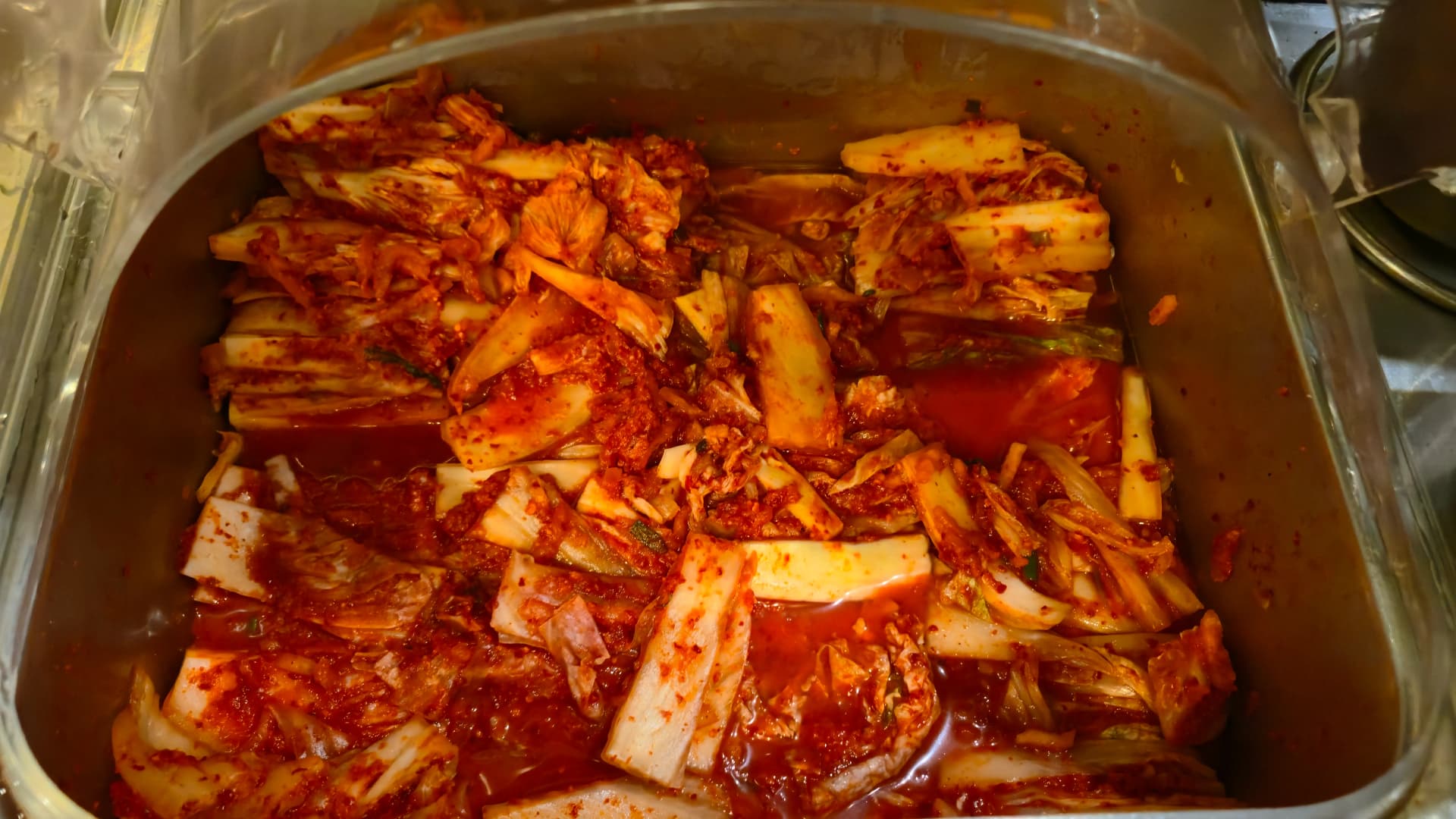
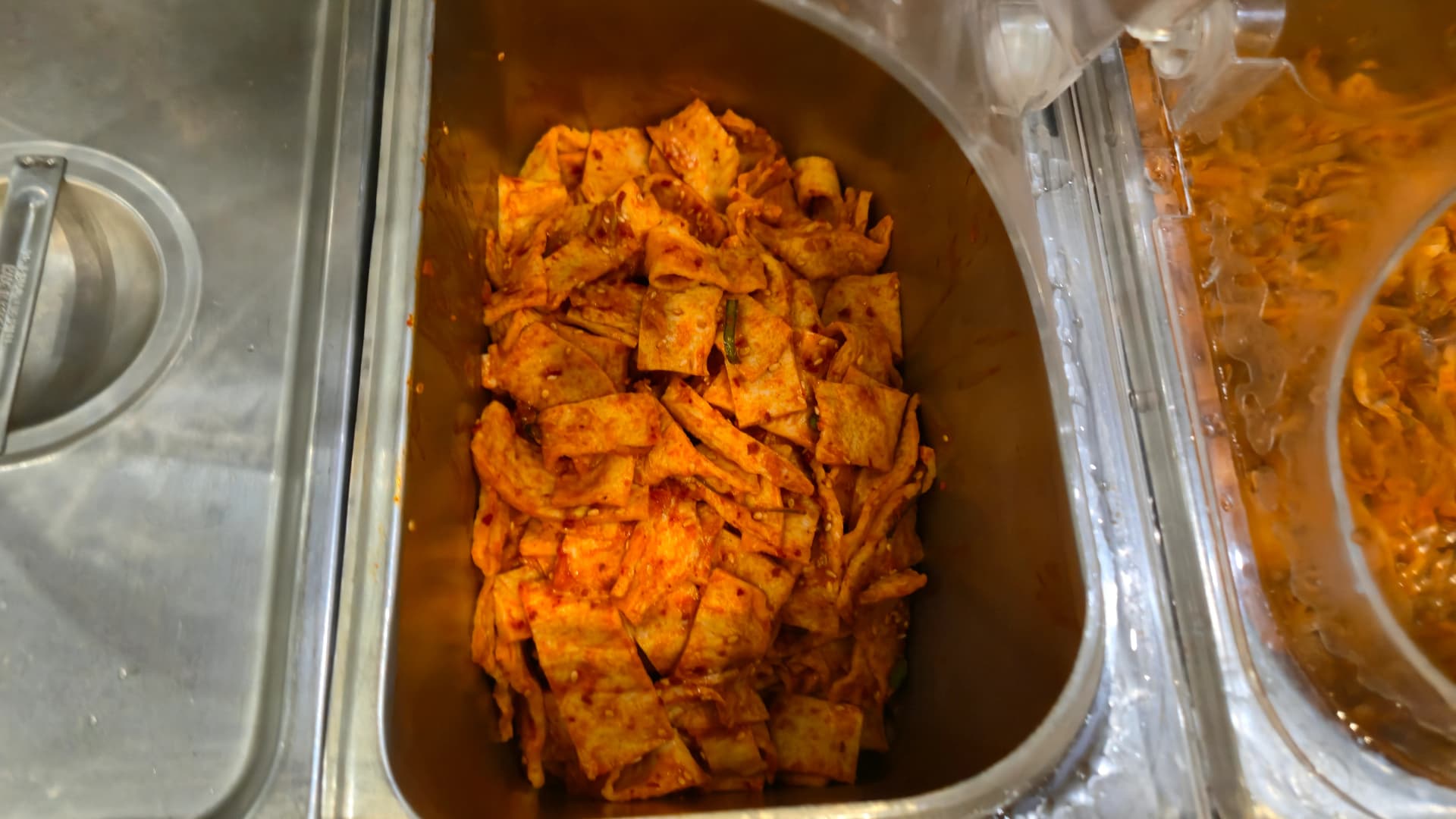
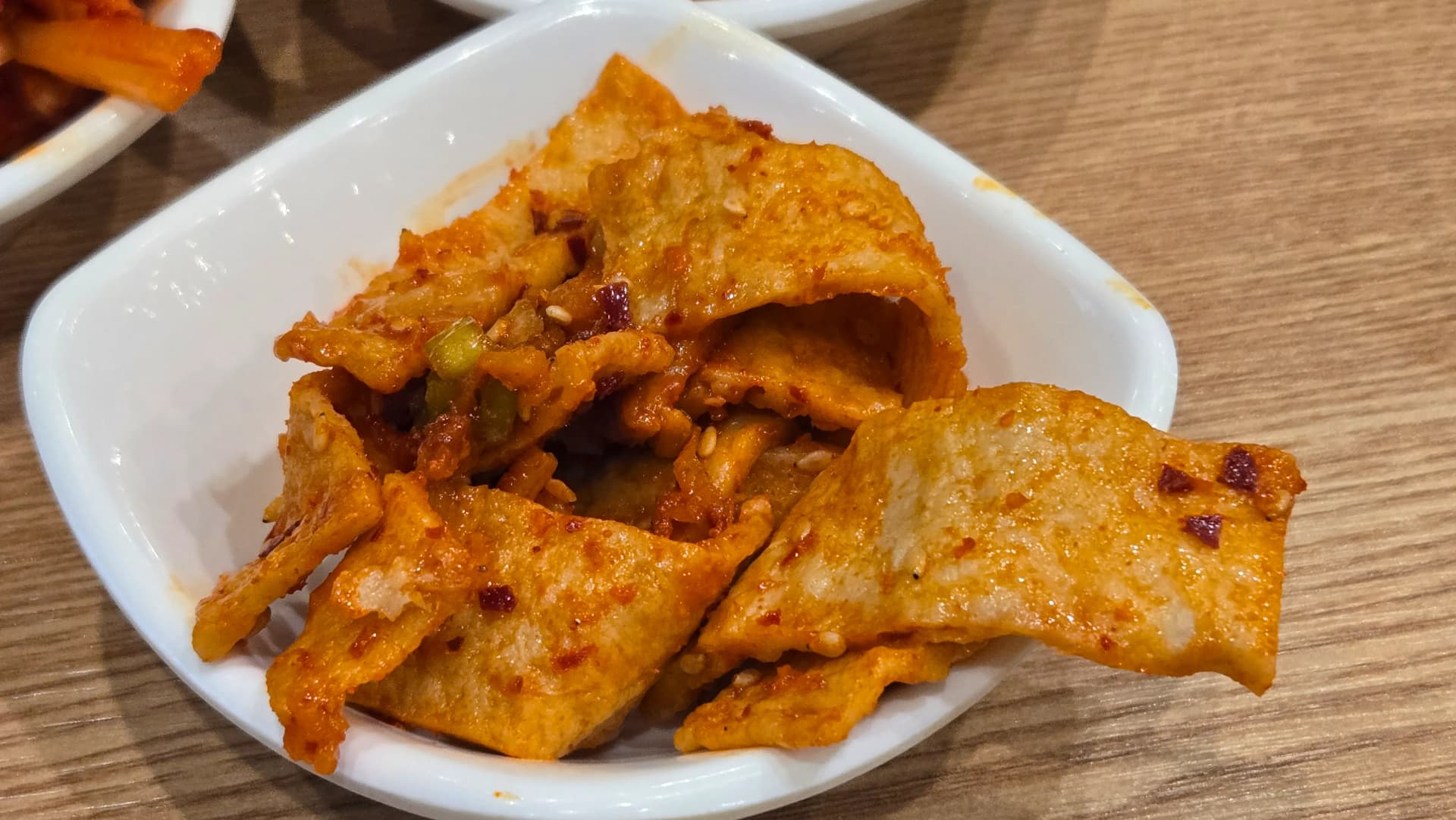
The kimchi was slightly fermented — still crunchy but with that tangy, funky edge starting to develop. The seasoned fish cake is Korean-style fish cake tossed in gochugaru (red pepper flakes) — chewy, sweet, and a little spicy, more like a snack than a side dish. Both are unlimited from the self-service bar.
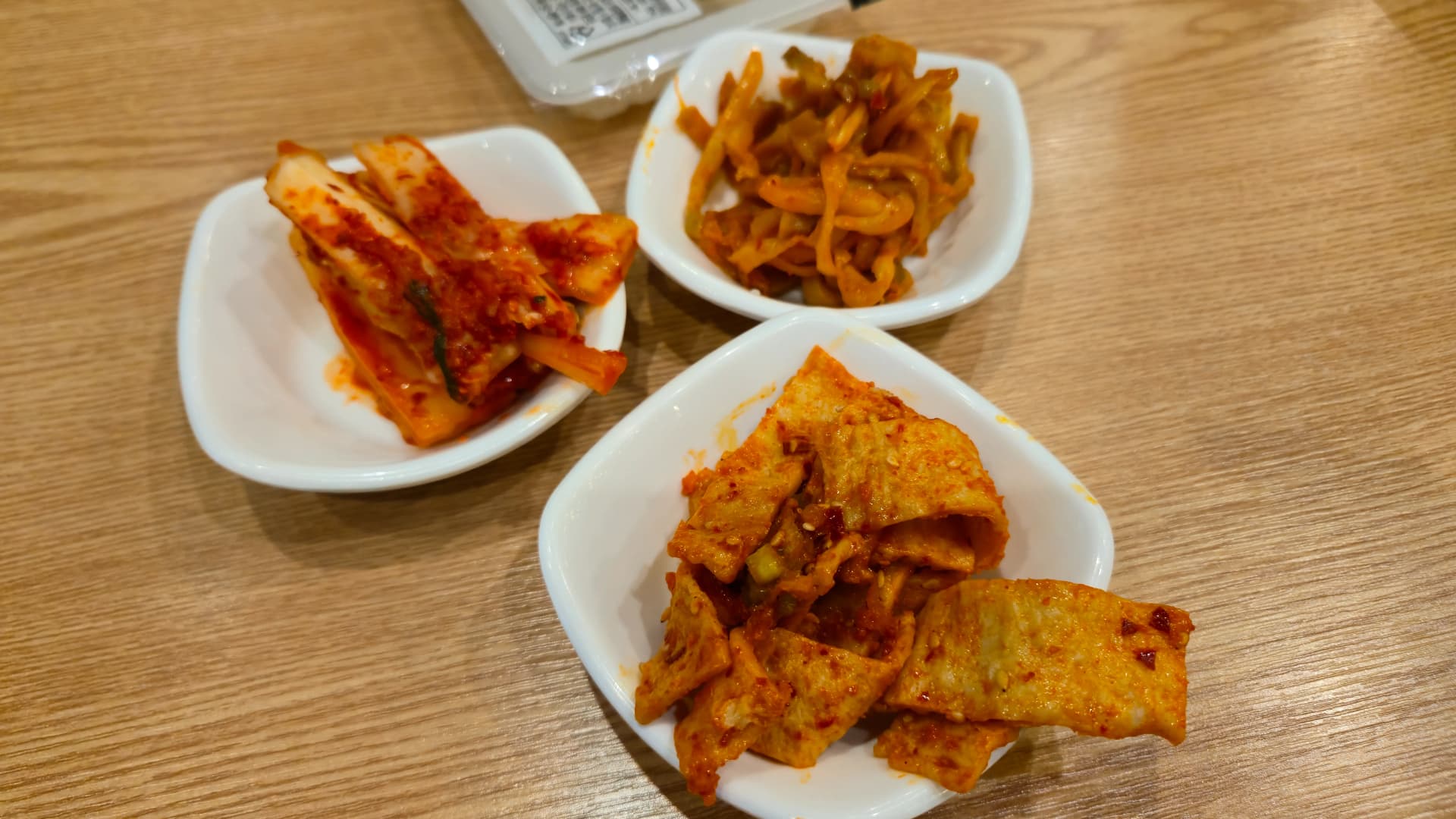
One plate of zhacai, one plate of kimchi, one plate of fish cake. I laid all three out on the table and alternated — spoonful of jjamppong, bite of side dish, spoonful, bite. Once you get into that rhythm, even level 3 heat becomes totally manageable all the way to the last drop.
The Pickled Radish — Thin and Tangy
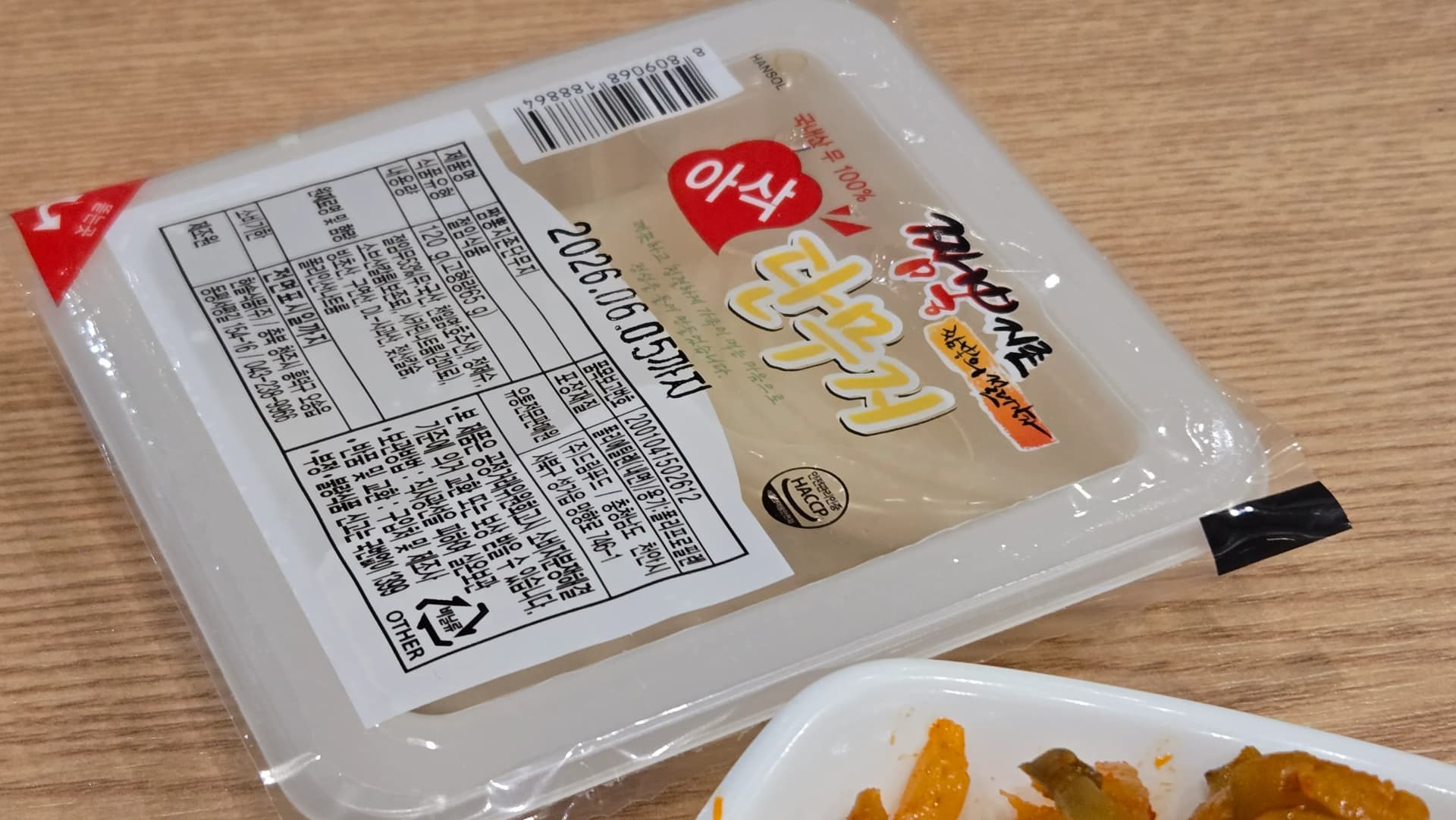
The pickled radish comes in individual packets. You get one with your order, and if you want more, just grab them from the self-service bar. Most Korean-Chinese restaurants serve thick, bright yellow pickled radish. Here, it's almost translucent and way thinner. It's tangier than usual too, which might not be everyone's thing, but I actually think the thin, sour style pairs better with greasy jjajang or spicy jjamppong than the standard thick stuff.
Dessert — Free Soft Serve, Coffee, and Drinks
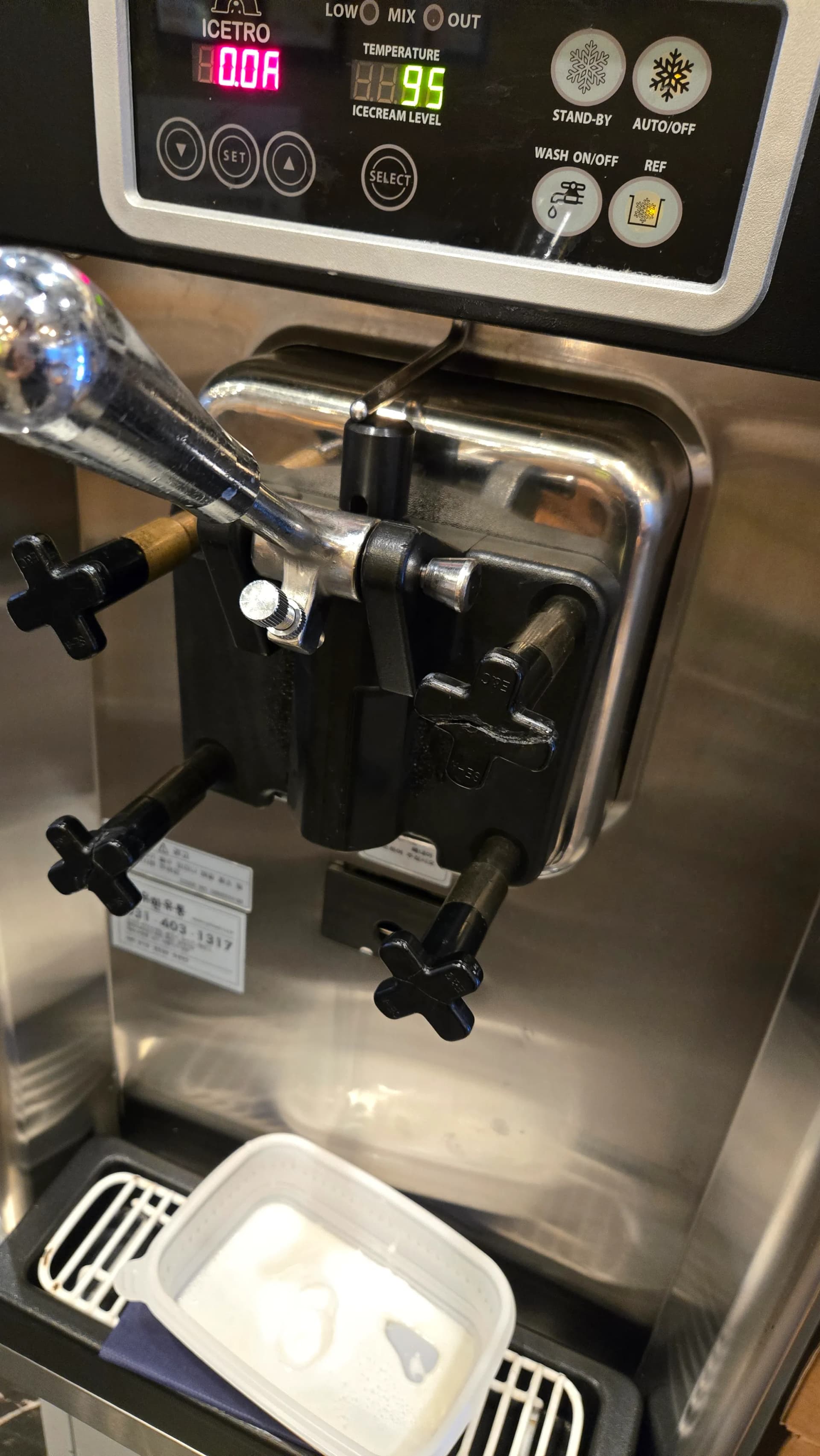
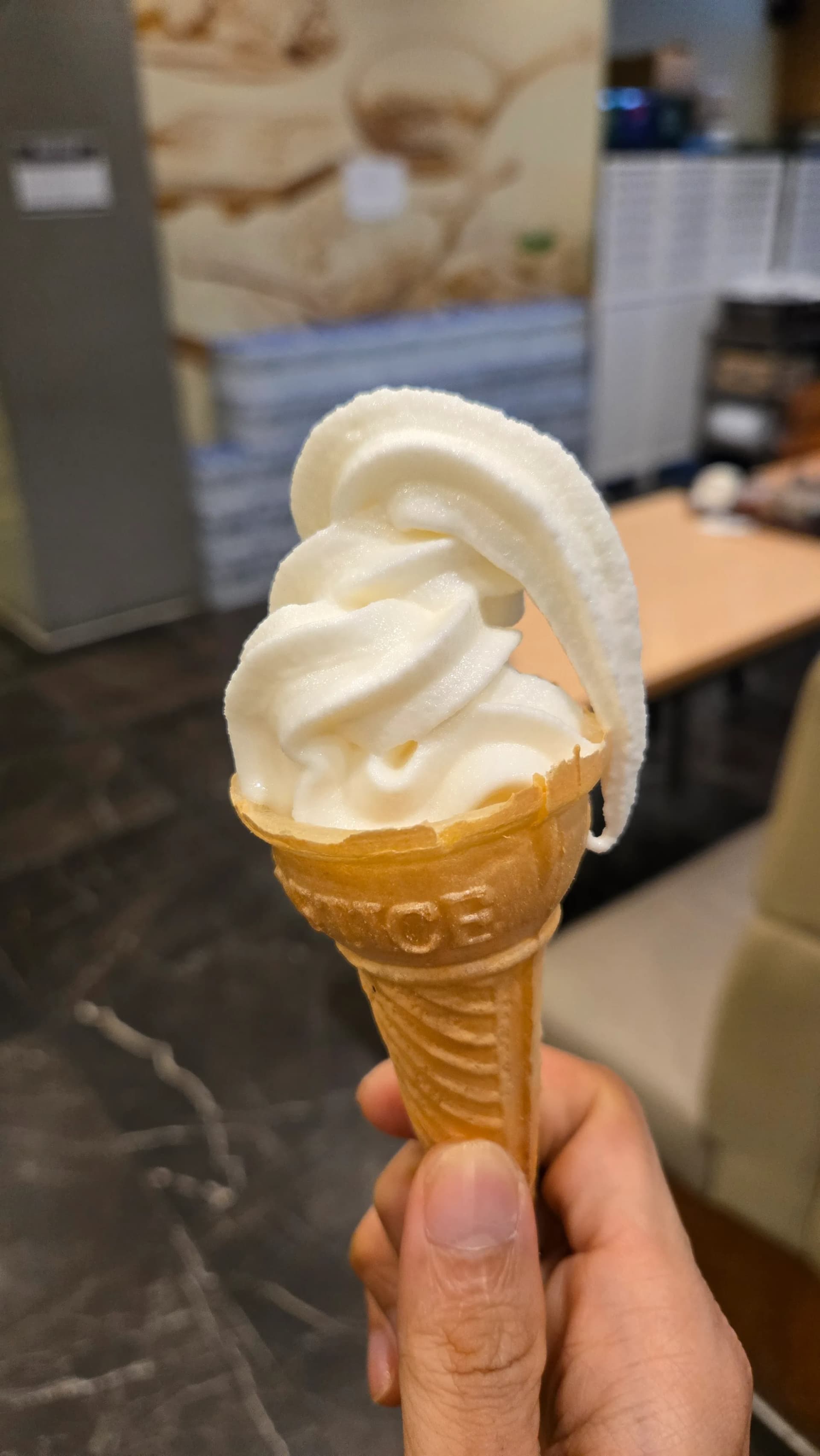
The self-service bar even has a soft serve machine. This varies by location — the Dunsan branch lets you pull your own soft serve cone. I never saw one at the Gasuwon branch, and the Sintanjin branch didn't have one either. First time I spotted it was here. The milk flavor was just right — not too sweet, not too bland. One lick and my mouth instantly cooled down from that level 3 numbness.
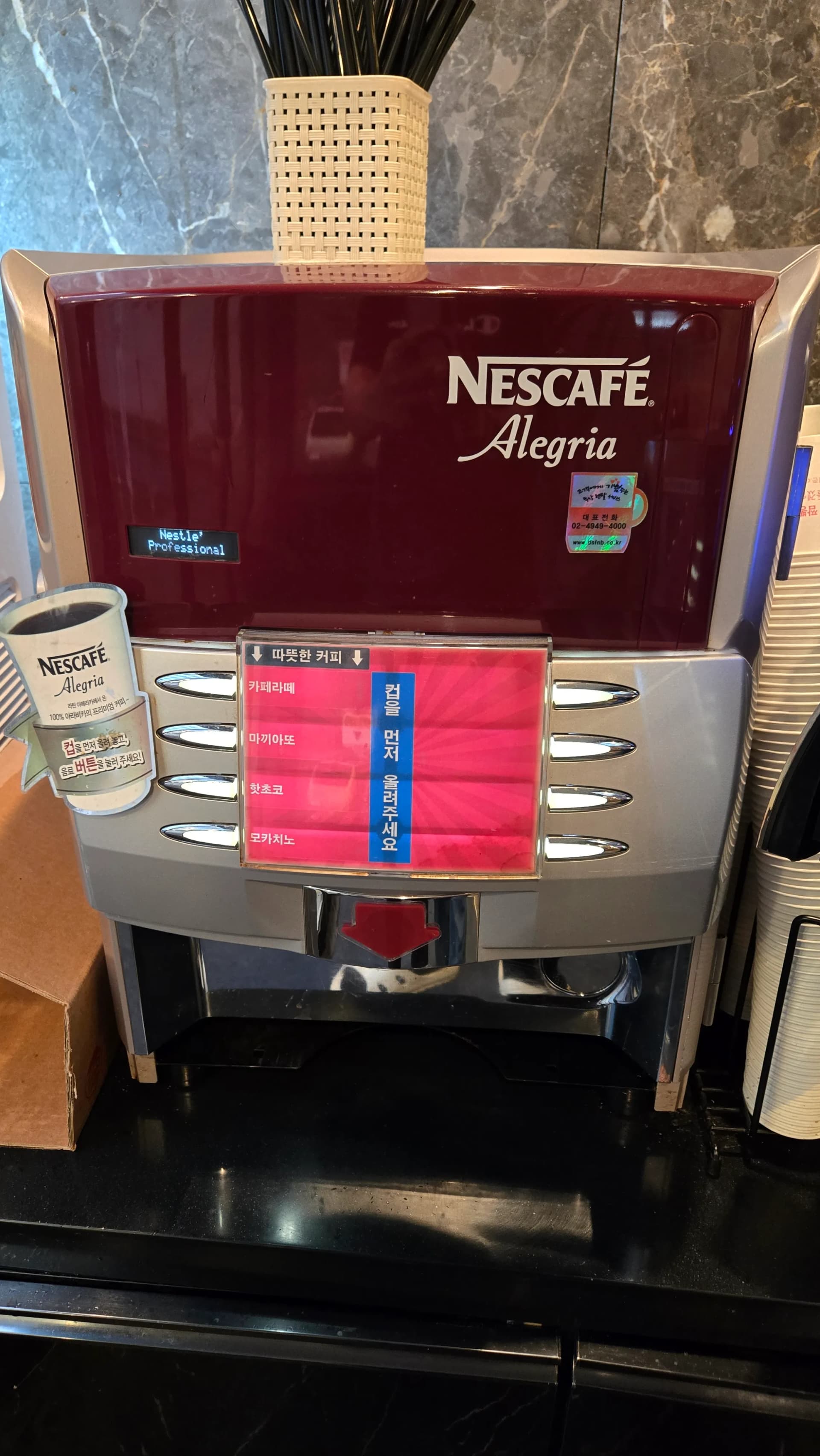
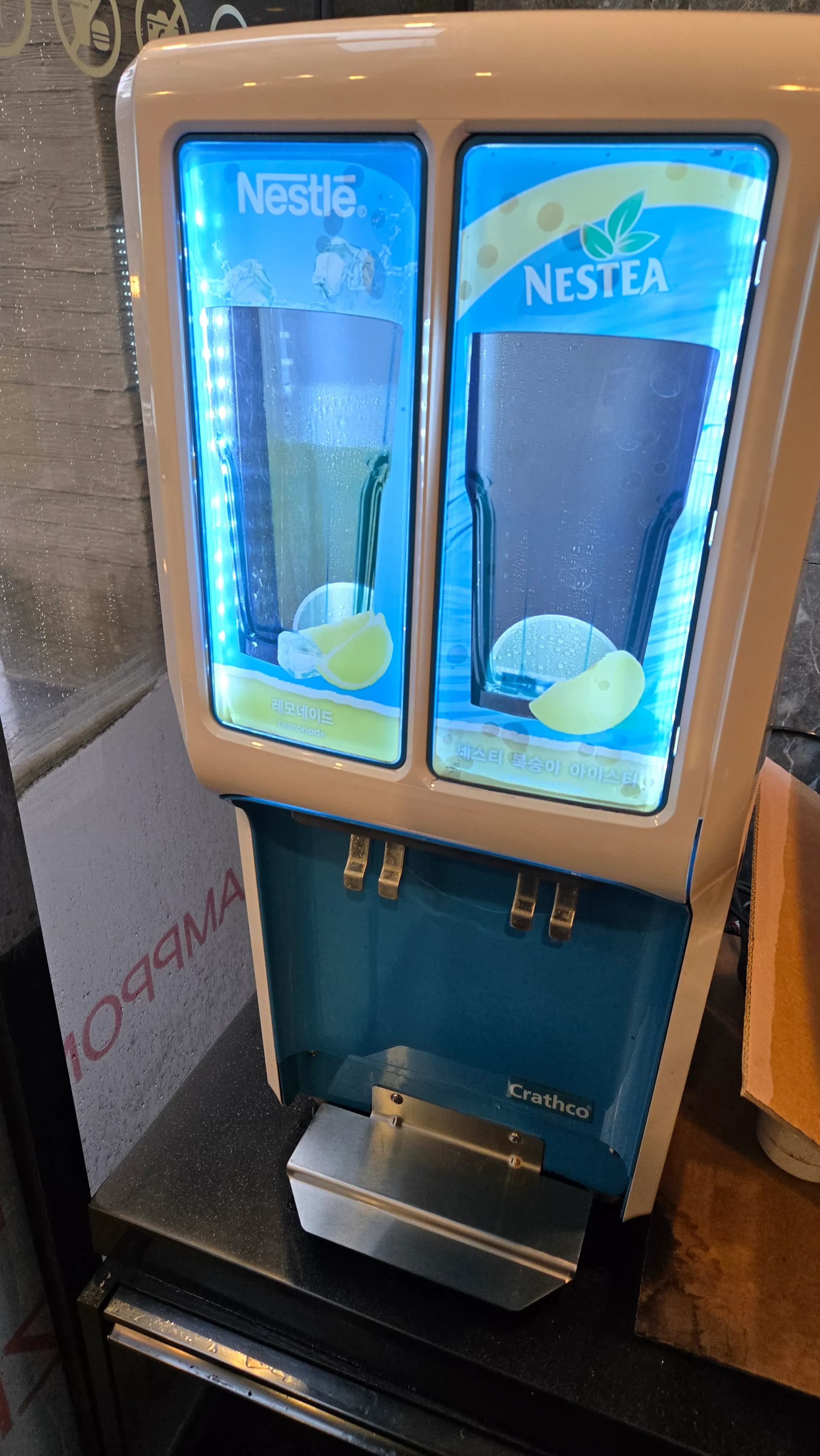
There's a coffee machine at the self-service bar too. Americano, latte, macchiato, hot chocolate — all available. Plus separate dispensers for lemonade and peach iced tea. The soft serve depends on the location, but coffee and drinks seem to be standard at most branches. It's all free and self-serve, no need to ask staff for anything. Even if you don't speak Korean, you just walk up and press a button. For a Korean-Chinese chain restaurant to include post-meal drinks and dessert at no extra cost is pretty rare, honestly.
$19 for Two People — Expensive or Fair?
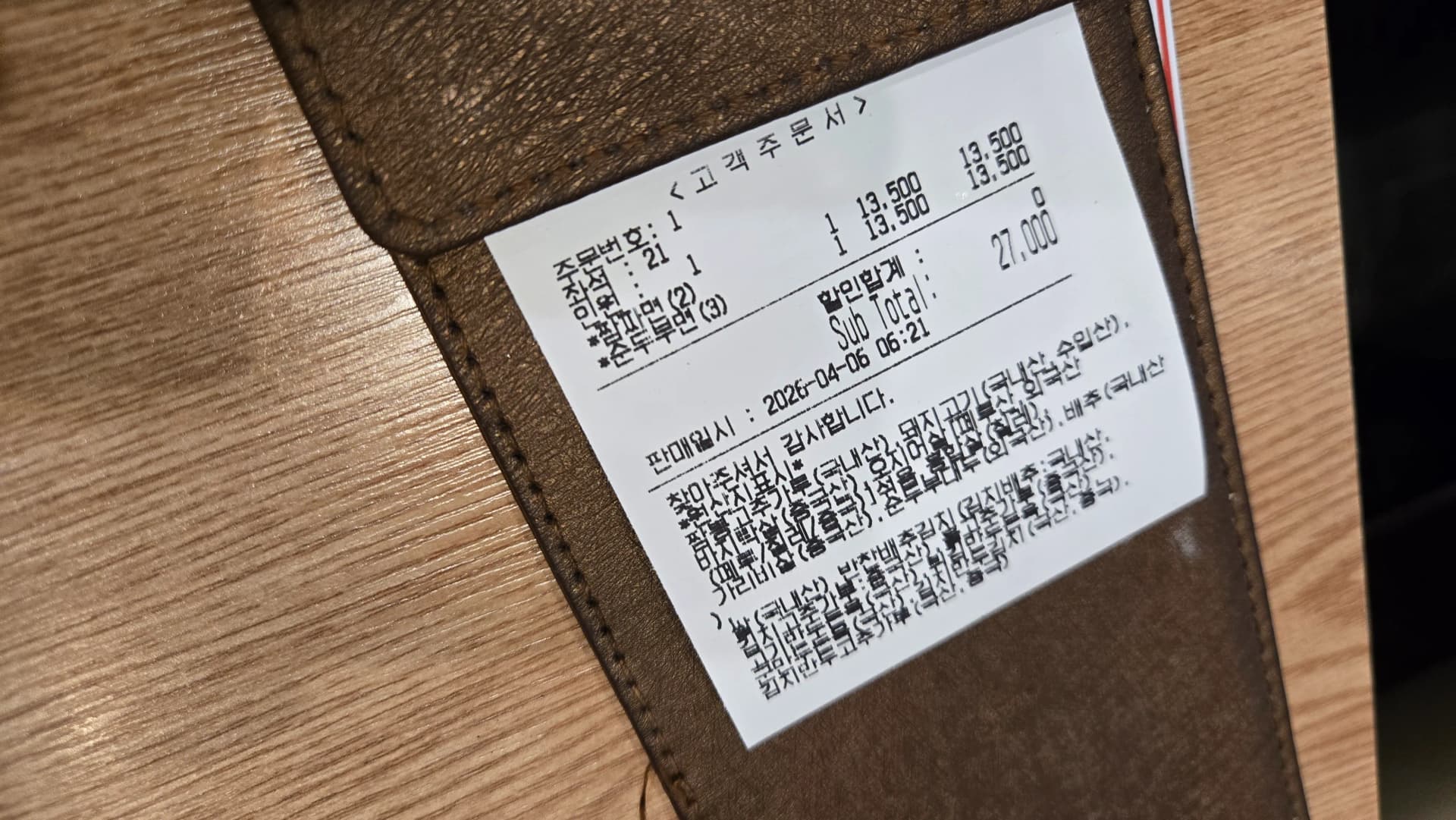
Total for two: about $19. If you compare it to a regular neighborhood Korean-Chinese restaurant, it is on the pricier side. Normally, one jjajangmyeon and one jjamppong would run you about $11–14 total. Here, you're paying maybe $5 more. Add sweet-and-sour pork and you're looking at $32-ish, which starts to feel steep.
But when you break it down, $19 isn't that bad. Rice refills are unlimited, so you don't have to pay the $1–1.50 per extra rice bowl that most Chinese-Korean restaurants charge. Side dishes are all-you-can-eat from the bar. And on top of that, the after-meal coffee, drinks, and soft serve ice cream are all free. When you think of the total price as including unlimited rice, sides, and dessert, it's not outrageous. I can't call it cheap, but "solid value" is my honest take. If you're tired of the mild jjamppong at your local Chinese-Korean spot and you're craving something intense, addictive, and genuinely spicy, Jjamppong Jijon is absolutely worth a visit.
This post was originally published on https://hi-jsb.blog.