Sashimi Course for £28 — A Korean Set Meal in Full
Table of Contents
16 items
A Winter Evening at a Neighbourhood Japanese Restaurant in Korea
Last winter, I messaged my wife on the way home from work suggesting we grab some sashimi. There was a little neighbourhood Japanese restaurant near our flat in Daejeon — a mid-sized city a couple of hours south of Seoul — and whenever neither of us could be bothered to cook, we'd pop in and order a set course for a leisurely dinner. In Korea, Japanese-style restaurants (called ilsikjip) range from about £17 a head at the budget end to well over £55 for a fancy omakase. This place did a full course for roughly £28 per person. I walked past the spot not long ago and the sign had changed — the restaurant's gone. So this isn't a recommendation for a specific venue; it's a look at what a typical Korean neighbourhood Japanese restaurant puts on the table when you order a set course. If you've ever wondered just how much food you'd get for around £28 a head, this should answer that rather nicely.
A typical Korean sashimi course follows roughly this order
Starter — a small dish such as braised mackerel or salad to open the palate
Soup — a warm bowl of dried-pollack broth or miso
Hoe-muchim — sliced raw fish tossed with vegetables in a tangy chilli-vinegar sauce
Porridge — a silky abalone or rice porridge to cleanse the palate
Sushi and sashimi — the main event: tuna, flatfish, prawn and more
Sides — grilled mackerel, steamed egg, corn cheese and other hot dishes slotted in between courses
Finisher — a rice dish such as roe rice or fried rice to round things off
The exact order and selection vary from place to place, but most Korean Japanese restaurants follow this general flow.
First up: a single piece of braised mackerel
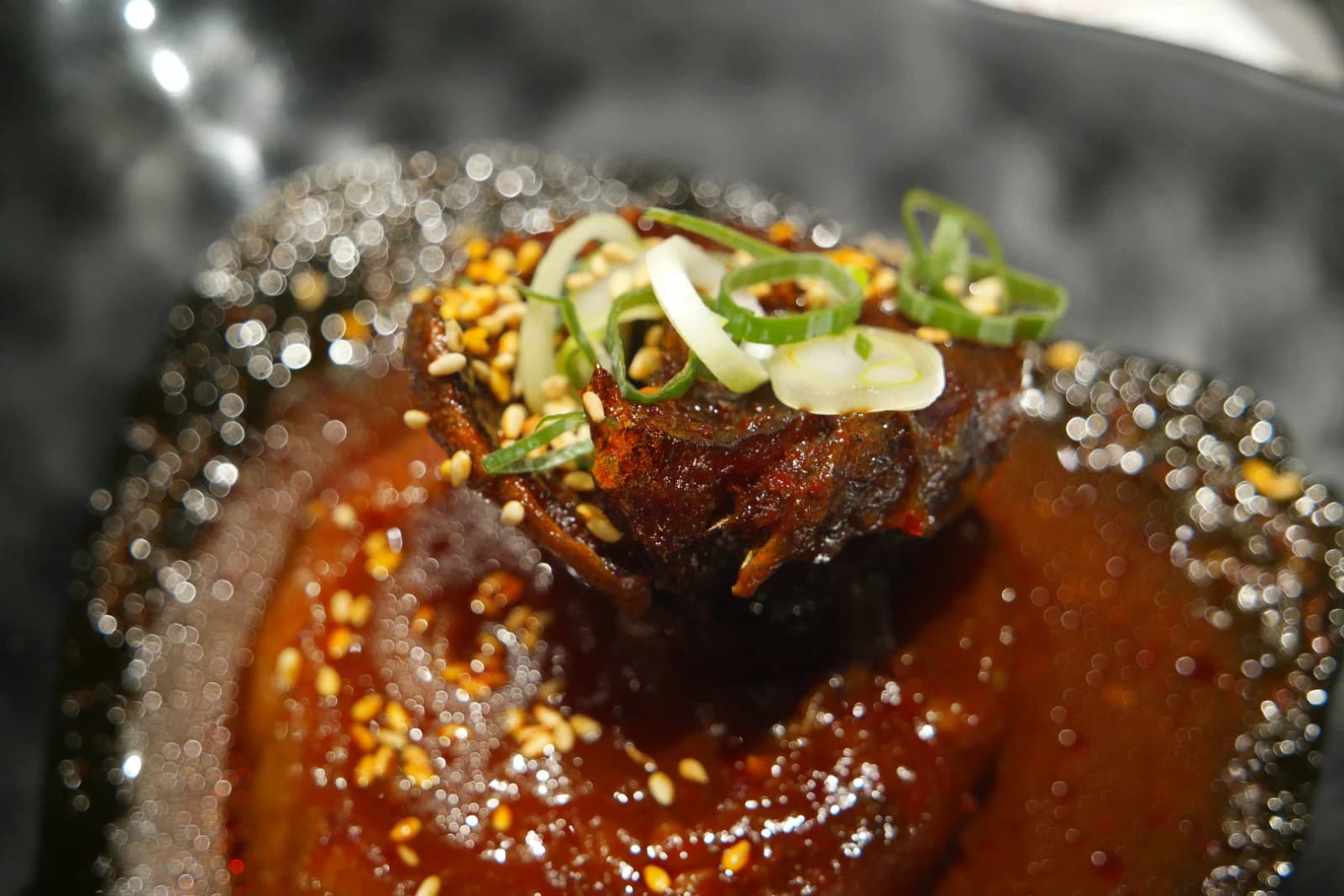
The moment we sat down, dishes started arriving one by one. First out was braised mackerel. Mackerel is an incredibly common fish in Korea, often simmered in a soy-based sauce and served as a side dish at home. This came as a single piece in a small bowl, scattered with sesame seeds and finely sliced spring onion. The braising liquid pooled at the bottom, and each bite delivered a salty-sweet combination that was quietly satisfying. The flesh was so tender it practically fell apart at the touch of a chopstick — a rather elegant way to start a course, I thought.
A bowl of dried-pollack soup to settle the stomach
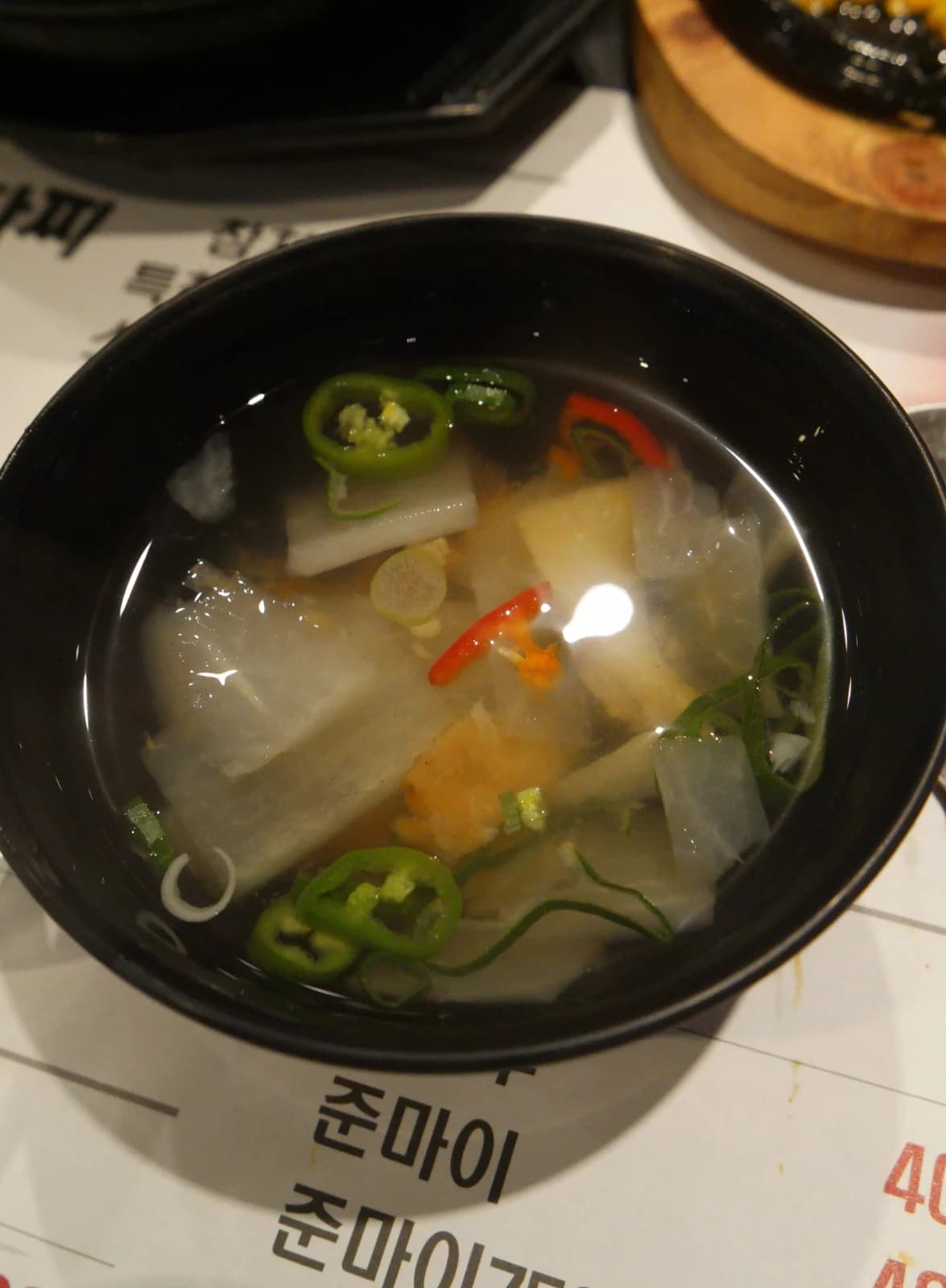
Next came hwangtae-guk, a clear soup made from dried pollack. Hwangtae is pollock that's been hung outdoors over winter and repeatedly frozen and thawed until it turns into a light, spongy dried fish — when simmered, it produces a clean, refreshing broth. The serving was small, just a mini bowl, but it had slices of radish and a few bits of green chilli floating in it. One sip and there was that gentle warmth settling in the stomach. My wife tried a spoonful, murmured "Hang on, this is actually lovely," and polished hers off before I'd barely started mine.
Spicy Sashimi Salad and Abalone Porridge — the First Half
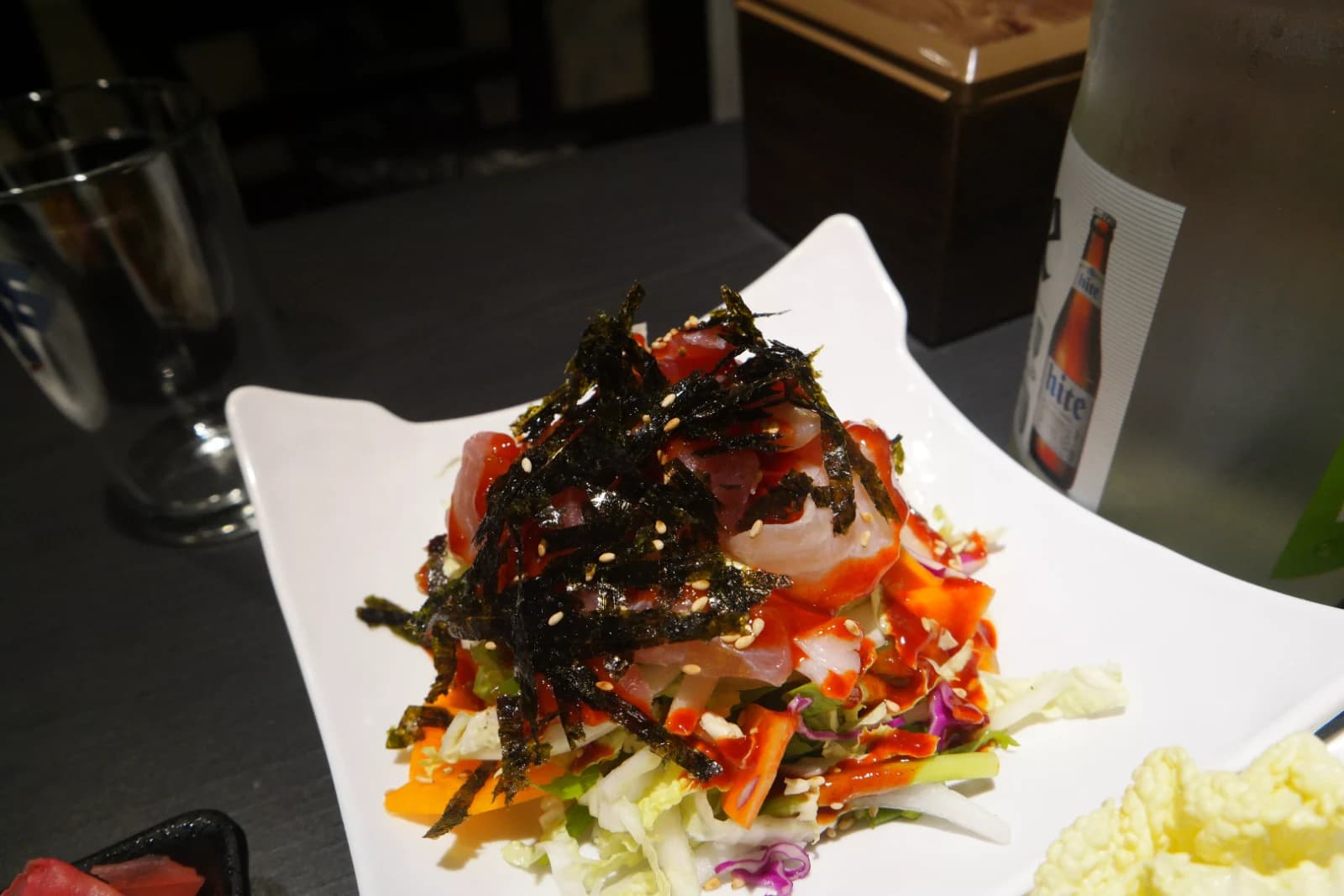
The hoe-muchim arrived heaped on the plate like a small mountain. It's a dish of thinly sliced raw fish tossed with vegetables — shredded cabbage and carrot on the bottom, fish on top. A bright red sauce called chojang (a tangy, slightly spicy dipping sauce made from chilli paste, vinegar, and sugar) was drizzled liberally over the lot, and a generous mound of shredded seaweed sat on the very top. Mixing from the bottom up and taking a mouthful, you get the chewy bite of the fish and the crunch of the vegetables all at once, while the chojang cuts through with a sharp, sweet-sour kick that properly wakes up the palate. The subtle nuttiness of the seaweed kept it from feeling heavy, and I genuinely couldn't stop picking at it.
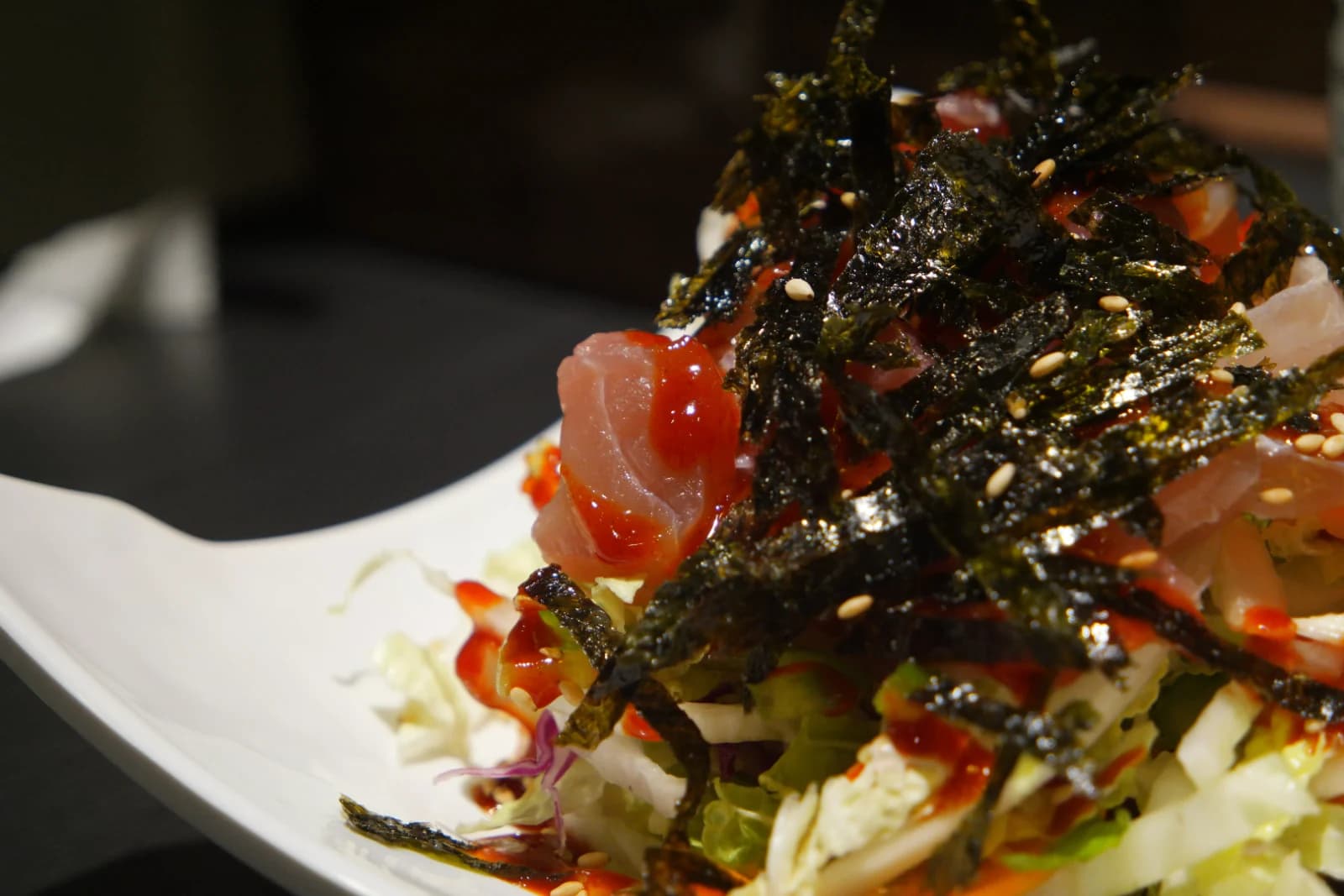
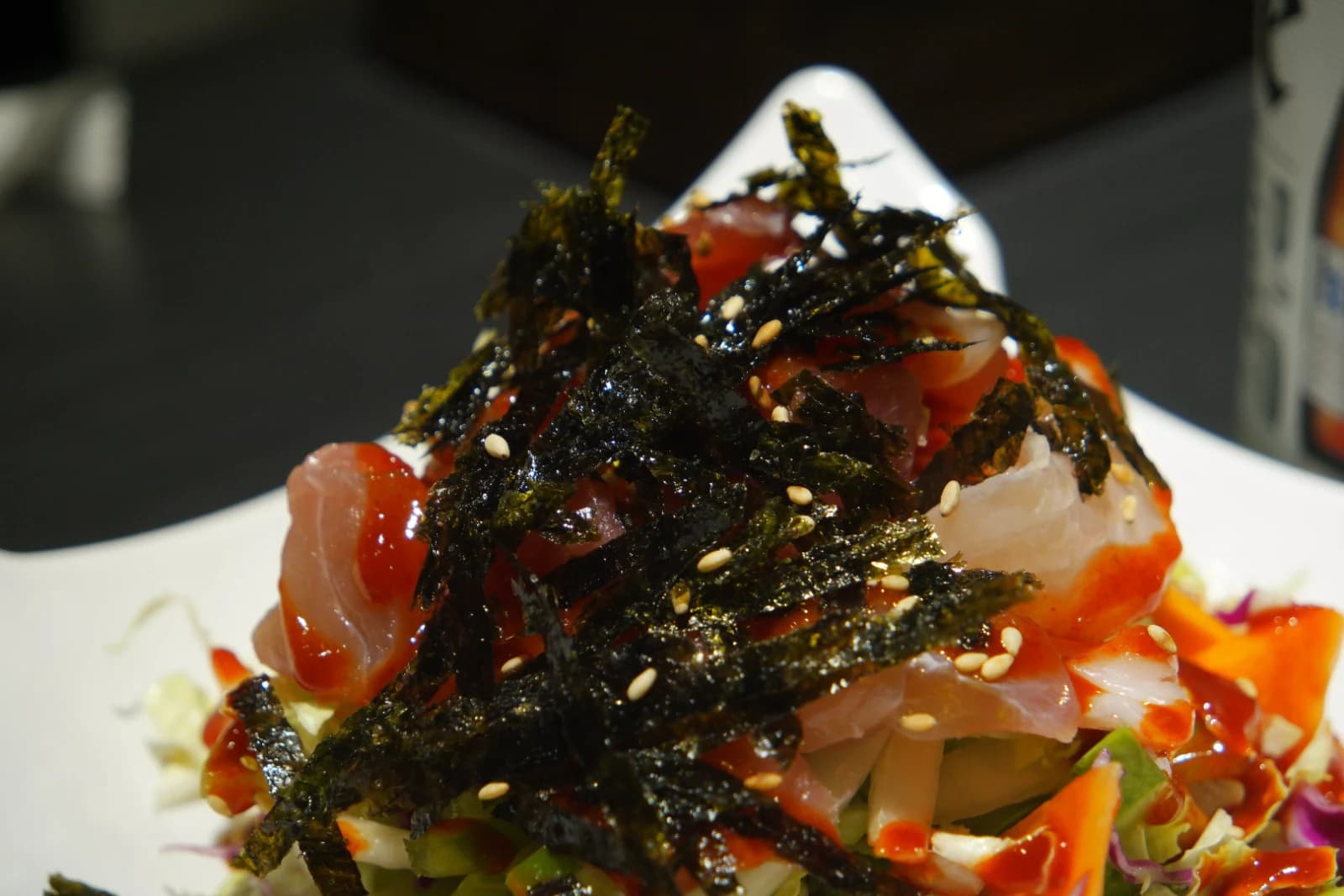
Up close, you could see the chojang trickling over the fish and seeping between the strands of seaweed. Sesame seeds dotted here and there gave little bursts of nuttiness with each bite, and beneath the seaweed the semi-translucent fish had taken on a pinkish tinge from the sauce — genuinely appetising. There was a moment of just admiring the whole thing before mixing it up, which was half the fun, honestly.
Abalone porridge — my wife's favourite dish of the entire course
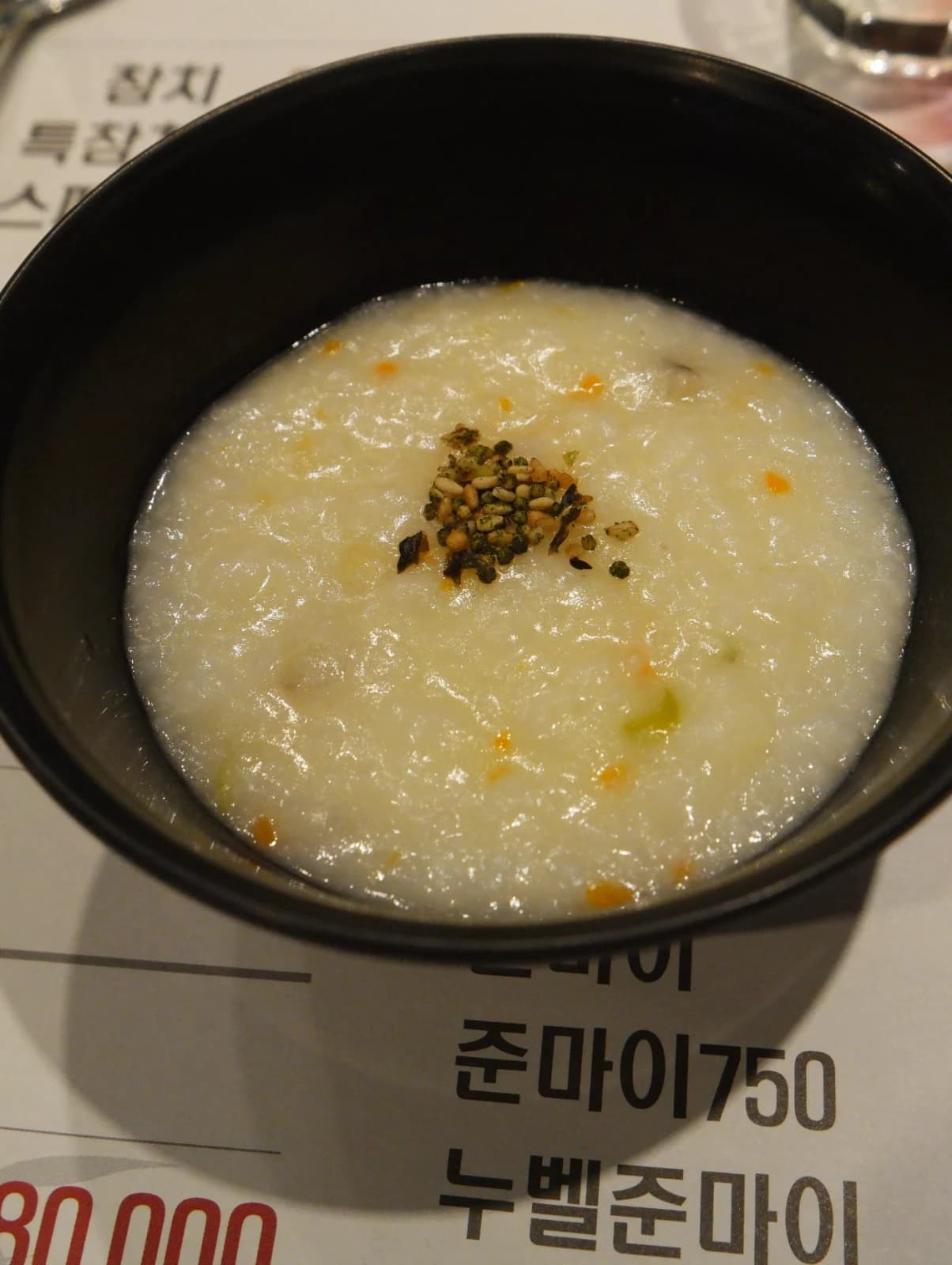
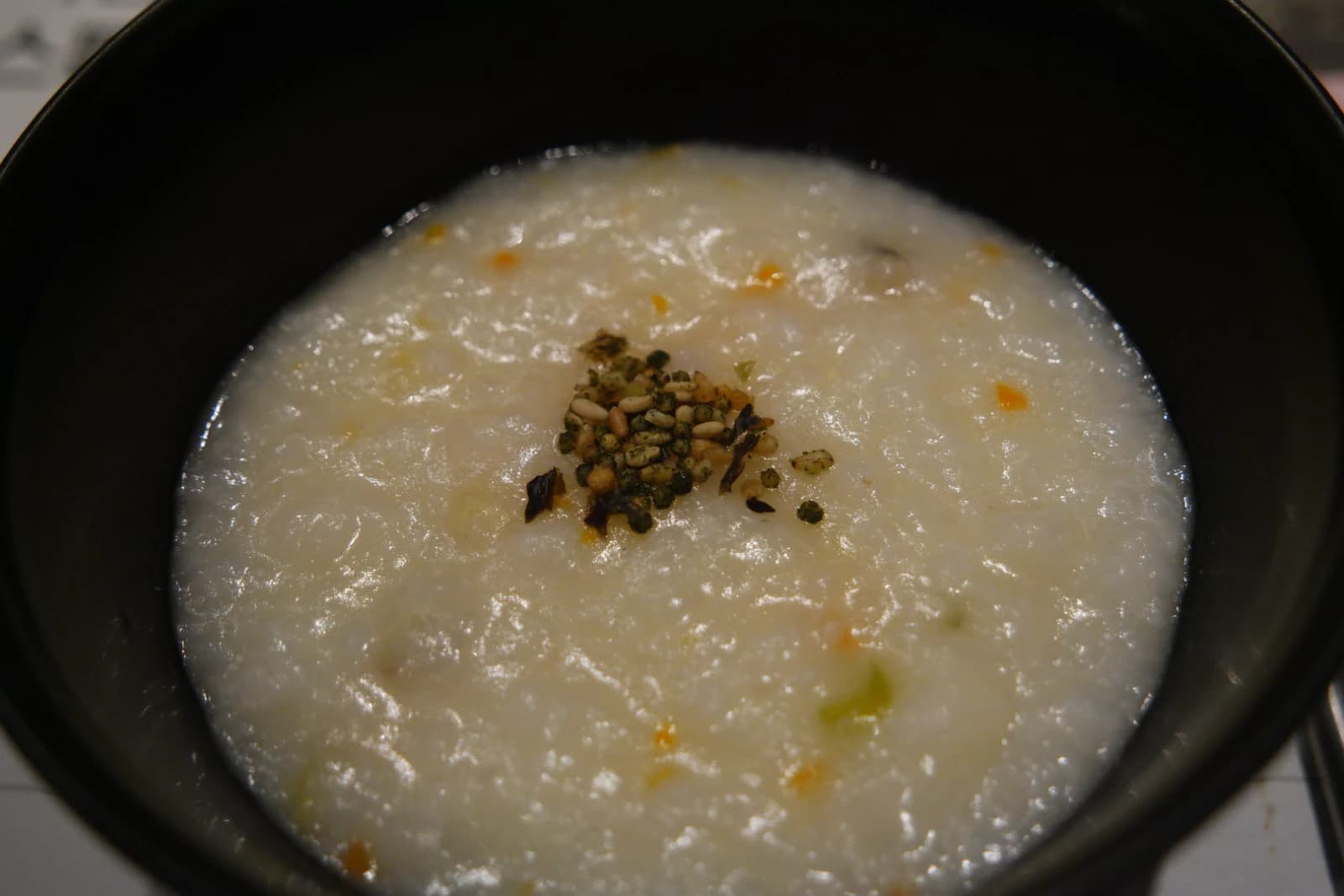
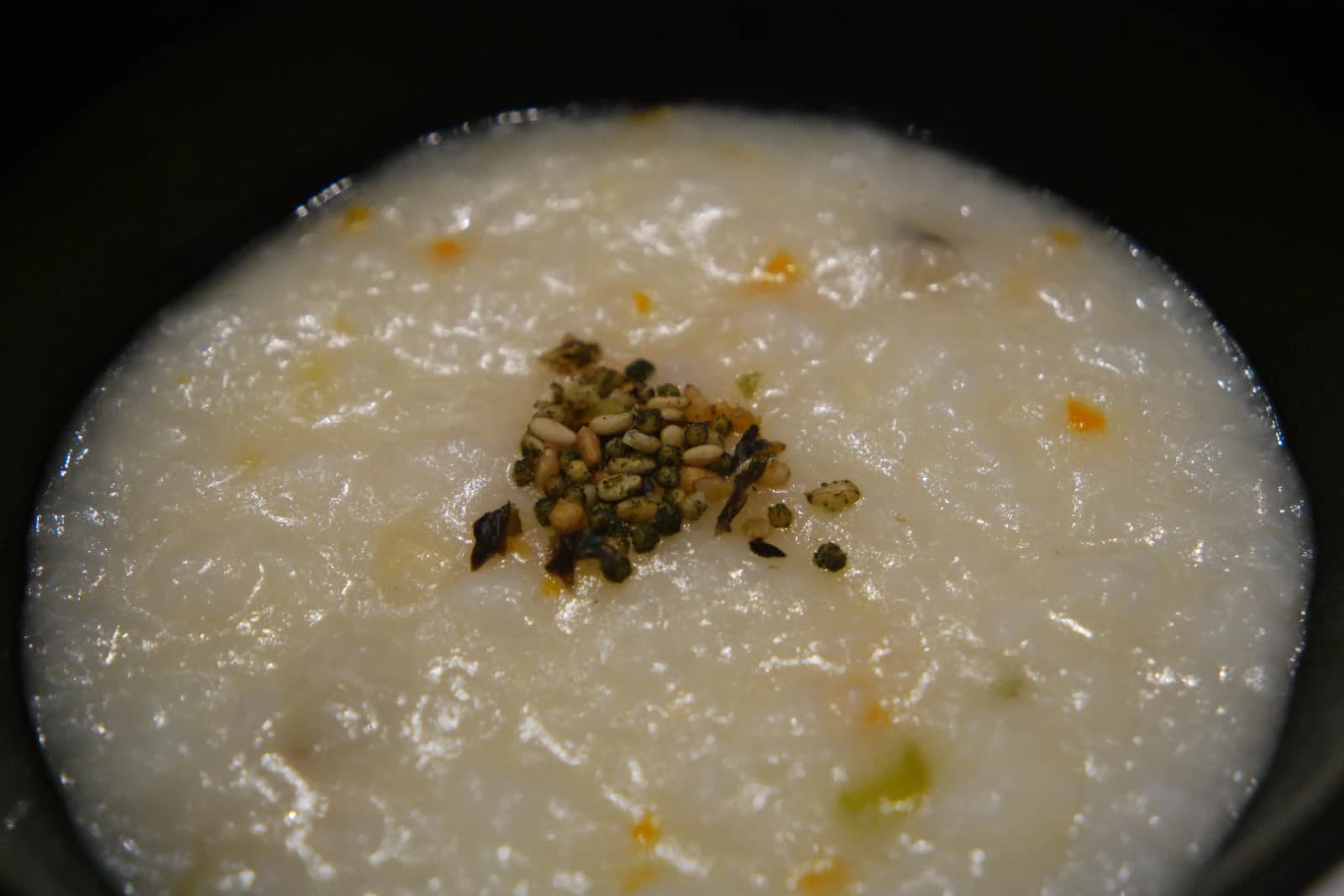
Then came the abalone porridge. Abalone is considered a premium shellfish in Korea, and when it's cooked down with rice, the result is a thick, creamy white porridge. Pine nuts and sesame seeds sat on top, and you could spot little orange flecks here and there from the abalone innards. A spoonful slid down smoothly with a gentle hint of the sea — warming, savoury, and not the least bit aggressive. Coming straight after the punchy chojang-dressed sashimi salad, it felt like a palate reset. My wife declared this her absolute favourite of the entire meal and kept going on about it long afterwards.
Where to eat raw fish in Korea: hoejip vs ilsikjip
Hoejip (raw fish restaurant)
These places focus on live-catch sashimi — fish are kept alive in tanks and sliced to order. The décor tends to be no-frills and the atmosphere casual. You'd typically dip the fish in chojang or ssamjang (a savoury paste) and wrap it in lettuce with garlic.
At the end of the meal, they'll often boil the leftover fish bones into a fiery soup called maeuntang. You'll also find distinctly Korean seafood like live octopus and sea squirt on the menu.
Ilsikjip (Japanese-style restaurant)
These serve aged fish (seoneo) in a multi-course format inspired by Japanese cuisine. Expect sushi, sashimi, tempura, grilled fish, porridge, and rice dishes served in sequence, often with extras like steamed egg or corn cheese woven in.
The interiors lean Japanese in style, and the plating is generally more refined.
The restaurant in this post was an ilsikjip, and we ordered the roughly £28-per-head set course.
The Mains Arrive — Sushi and Seafood Covering the Table
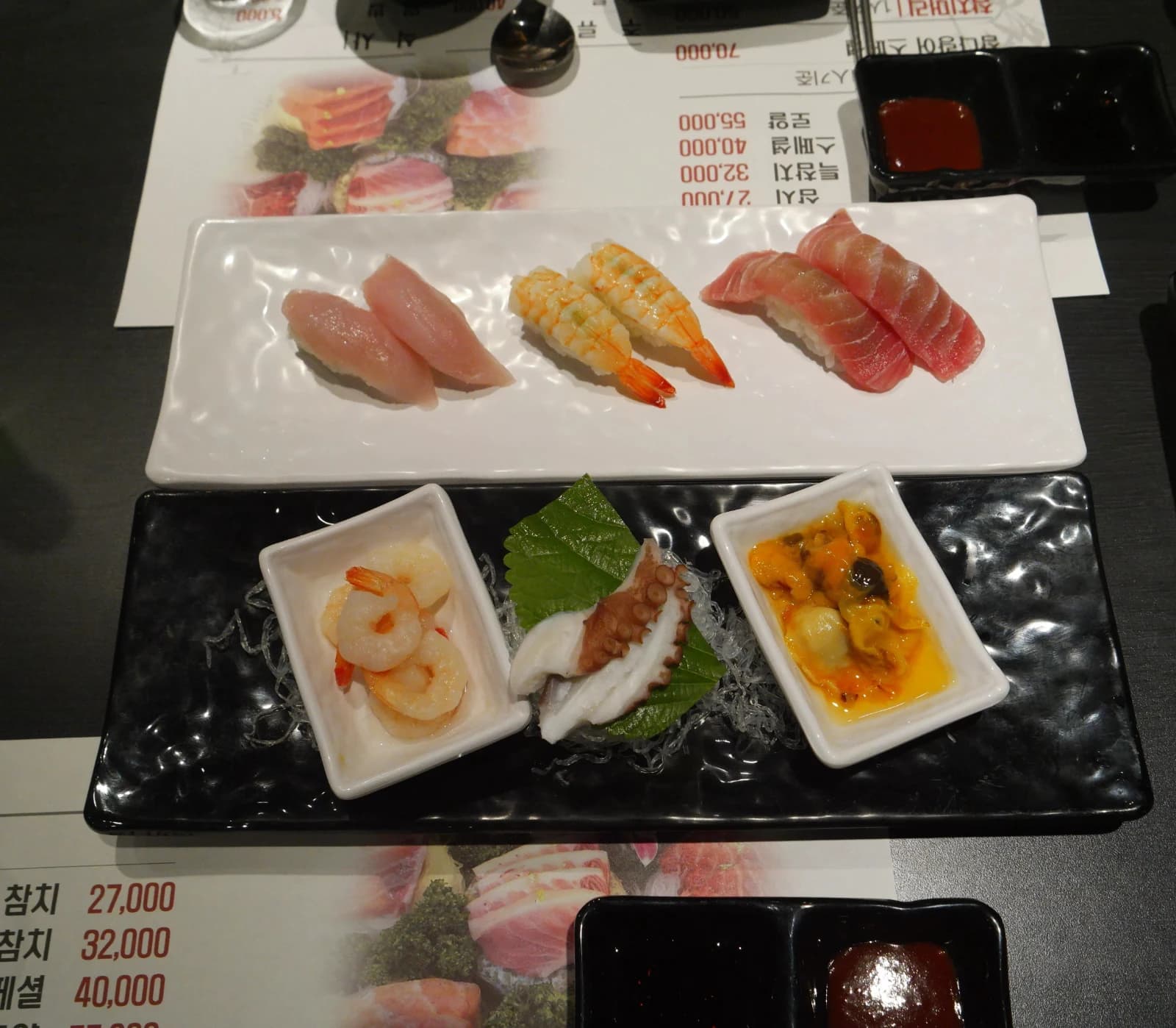
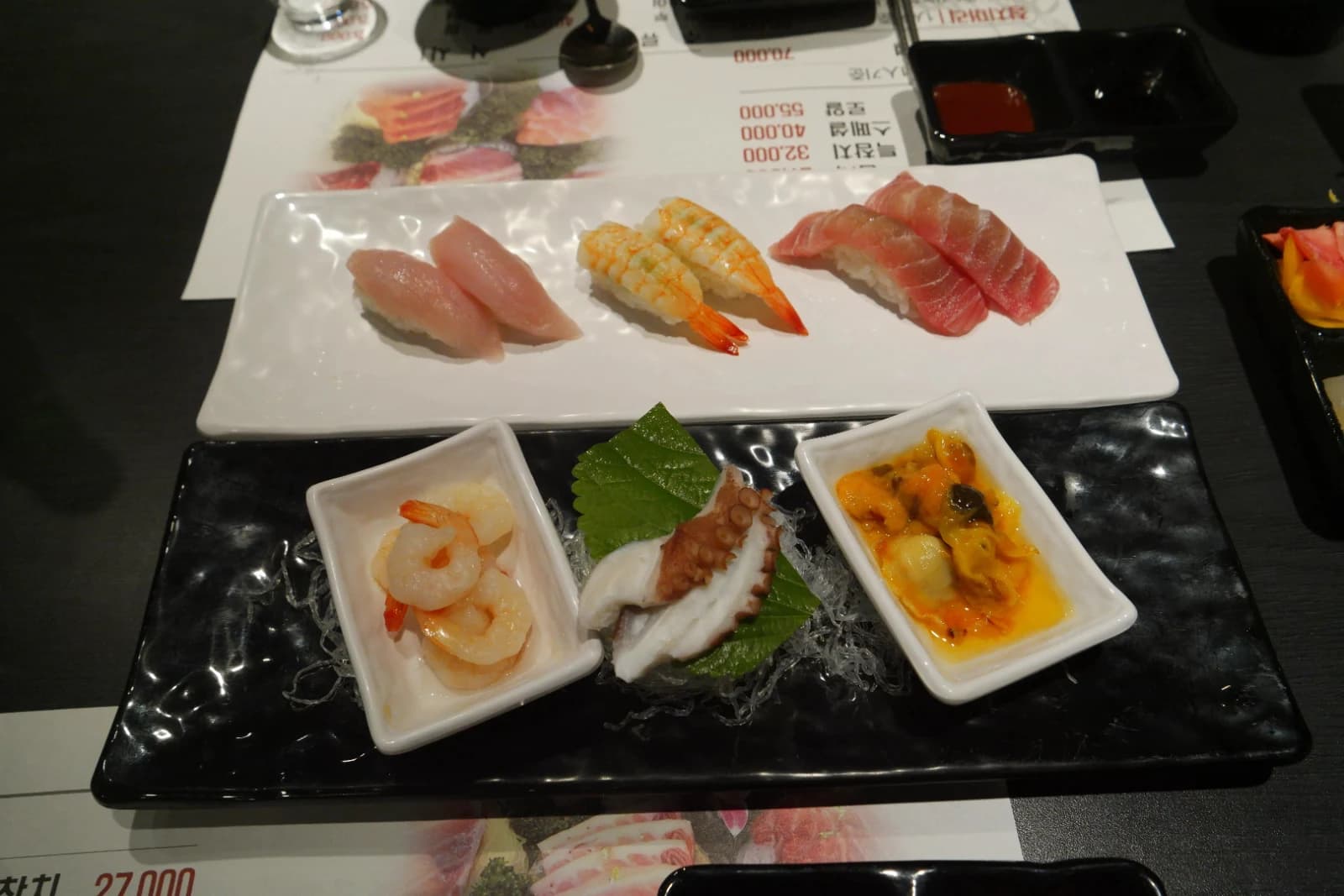
Past the halfway mark, the serious mains started landing. A white plate bore the sushi, while dark dishes held individual portions of prawn, octopus, and sea squirt — all arriving at once. For a neighbourhood Japanese restaurant in Daejeon charging roughly £28 a head, seeing this much food spread across the table was honestly a bit of a shock. My wife watched plate after plate arrive and laughed: "There's more?" If Japanese omakase is all about the perfection of each individual piece, the Korean approach is about filling the table until there's no room left. They're simply different philosophies, and I'd struggle to say one is categorically better than the other.
Three types of sushi: tuna, flatfish, and prawn
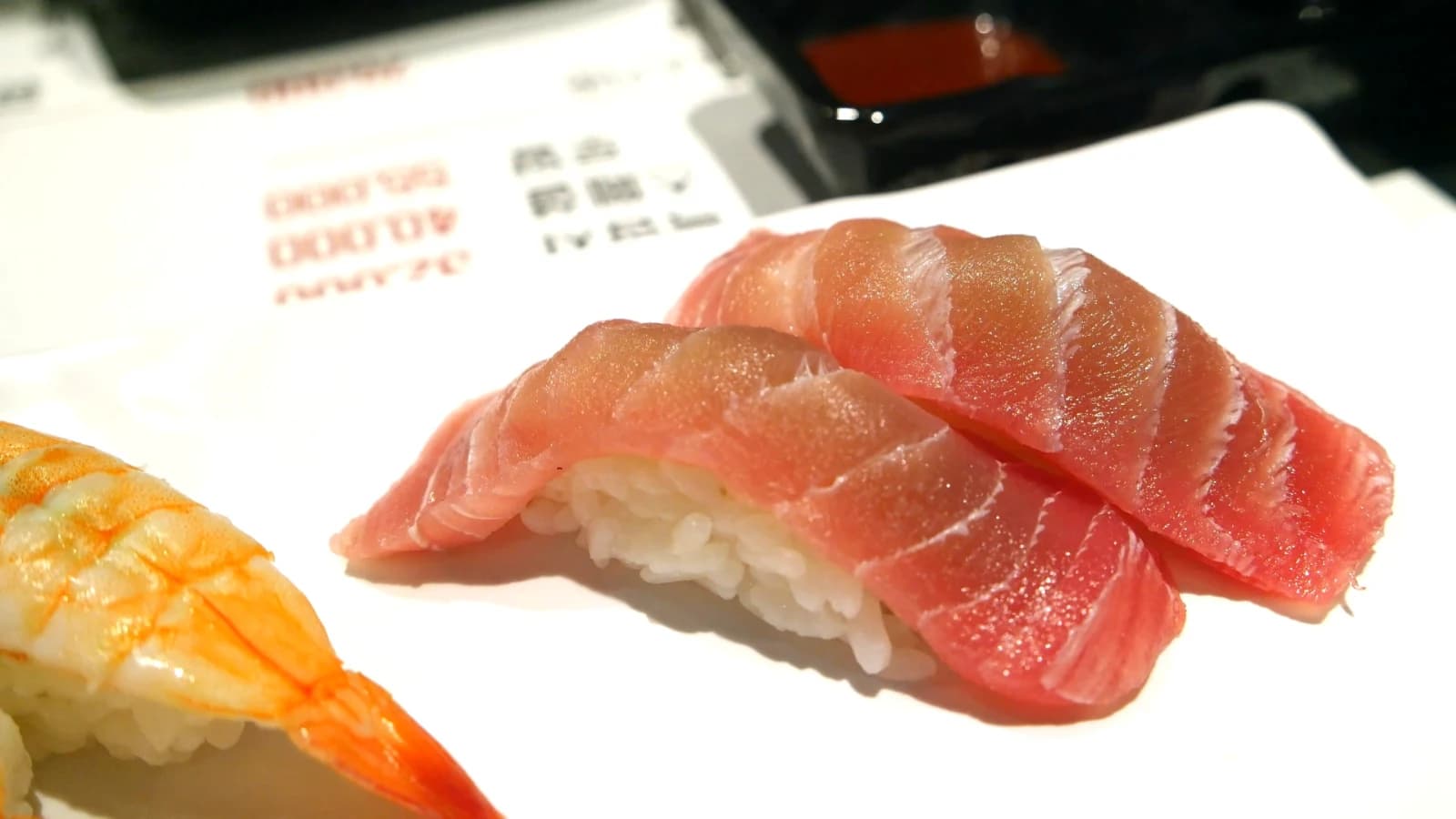
Tuna nigiri. A thick slab of deep red tuna sat over the rice, and the moment it hit my tongue it simply melted.
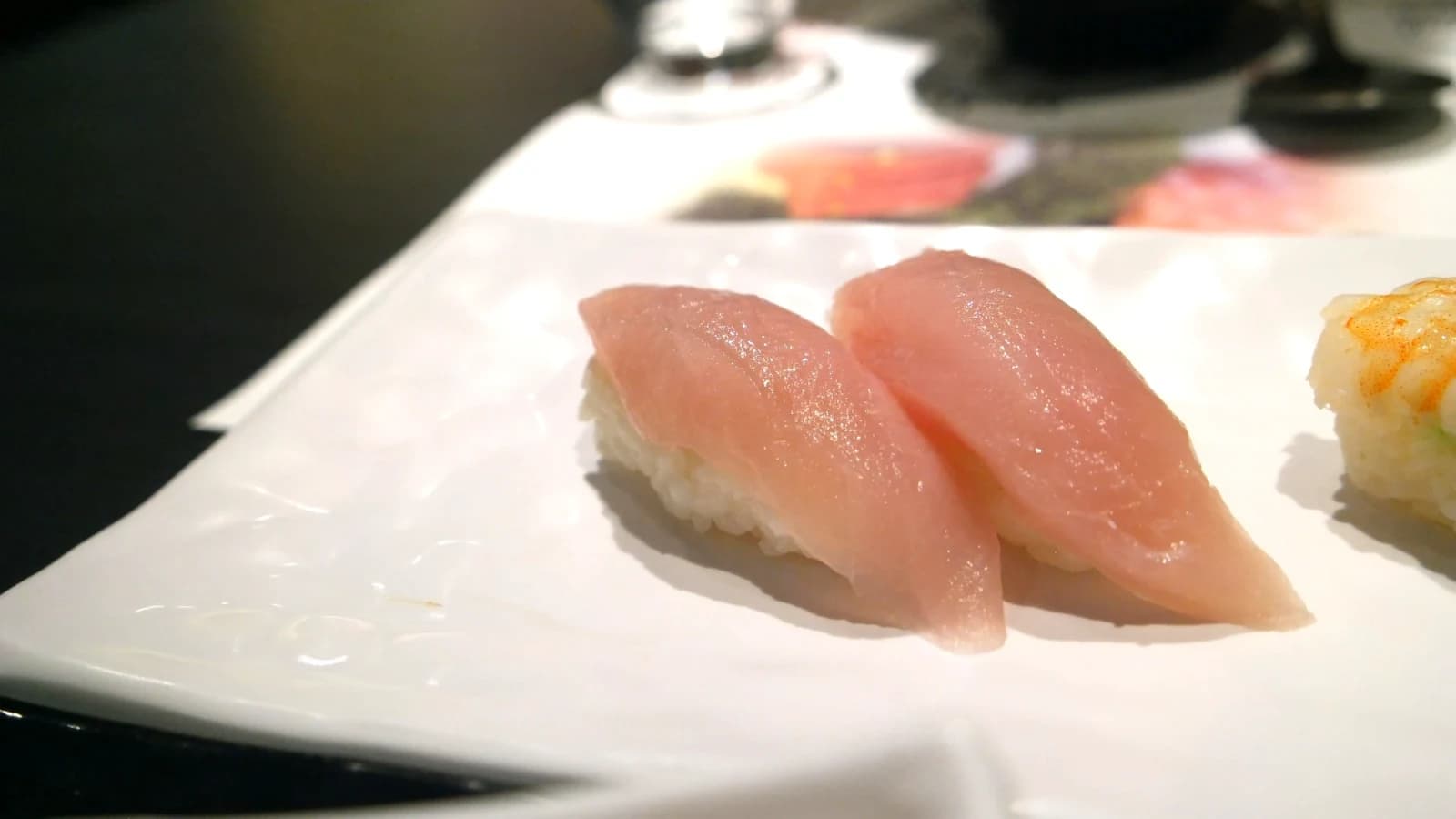
The flatfish nigiri was a completely different affair. The pale pink flesh had a satisfying bounce to it, the exact opposite of the tuna's melt-in-the-mouth texture. Rather than dissolving, this one was all about the chew — a quiet, pleasant resistance.
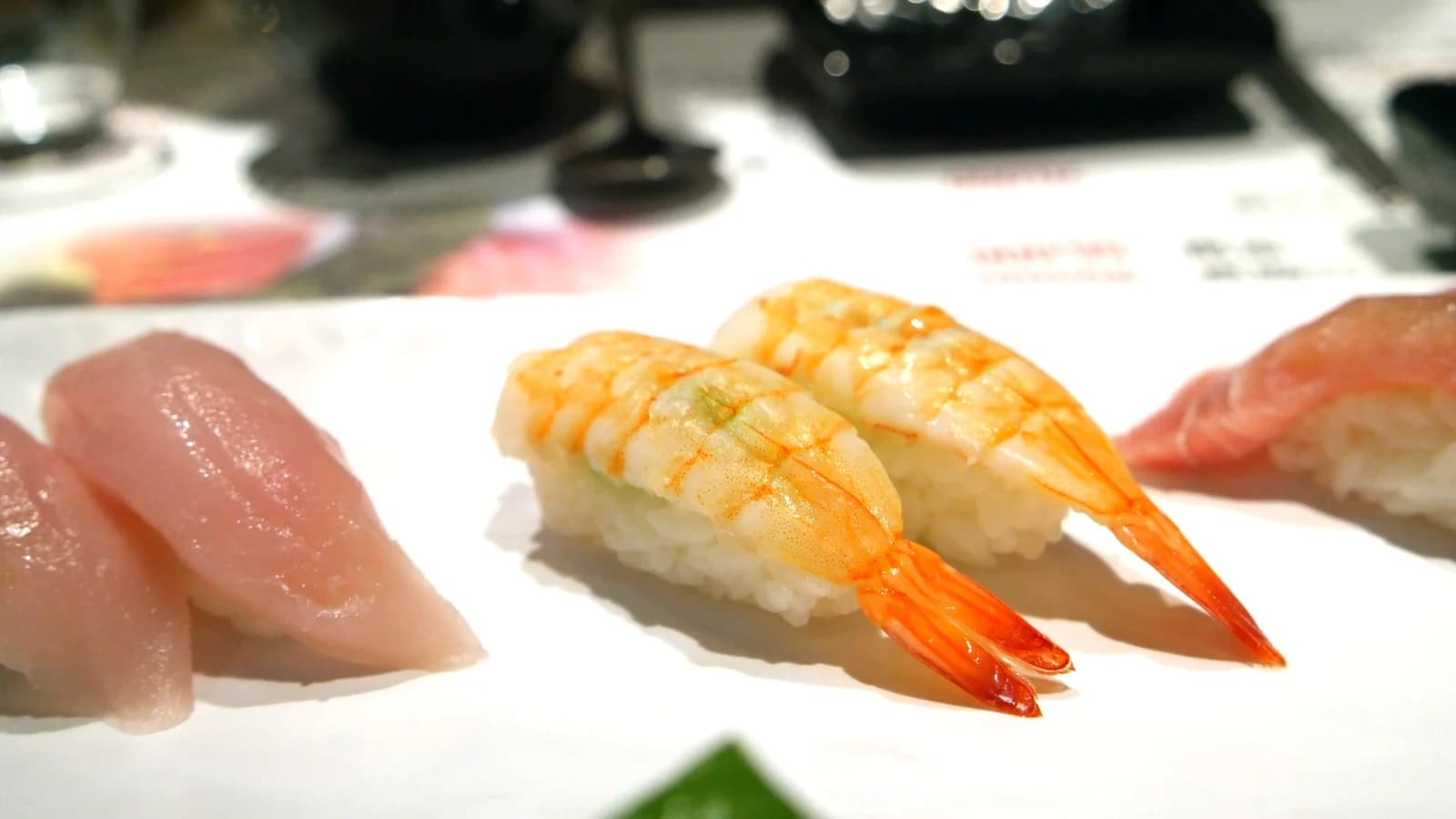
The prawn nigiri had a whole boiled prawn, tail and all, pressed onto the rice. It had a lovely snap to it and a gentle sweetness, and it was the first piece my wife reached for. I suspect for many visitors from abroad, prawn is a friendlier entry point than tuna — there's nothing unfamiliar about it.
Seafood side dishes: prawn, sea squirt, and octopus
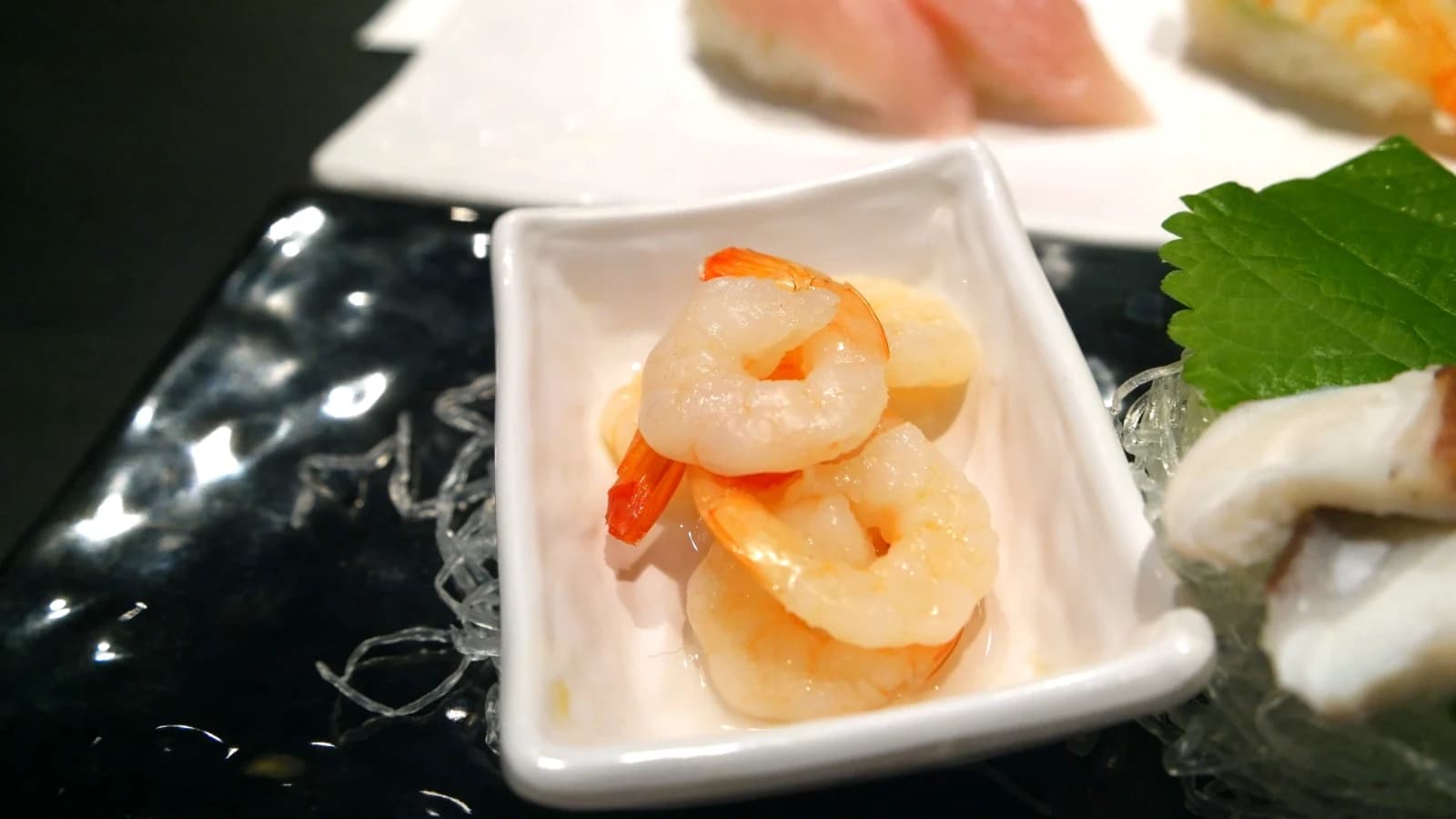
A handful of plump, translucent little prawns arrived in a separate dish, completely unseasoned. Their natural sweetness came through on its own, and honestly I preferred them without any dipping sauce at all.
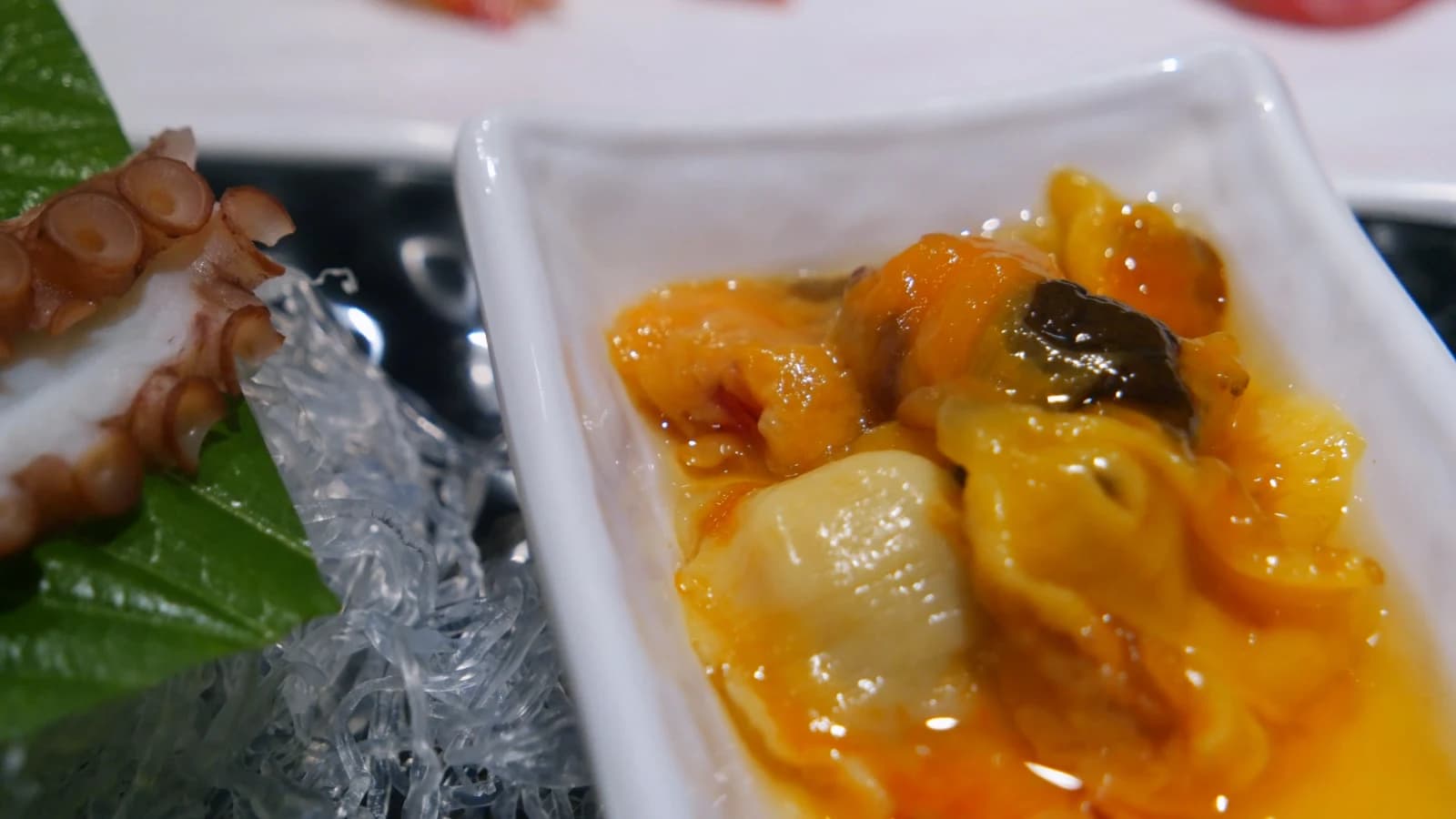
Sea squirt turned up next. Known as meongge in Korean, it's a bright orange marine creature with a soft, slightly rubbery texture, a powerful ocean smell, and a bitter aftertaste that divides opinion sharply. My wife — who isn't Korean — tried a piece, immediately pulled a face, and pushed the rest firmly in my direction. The expression said it all, really, and I couldn't help laughing. If you've never had it before, do brace yourself.
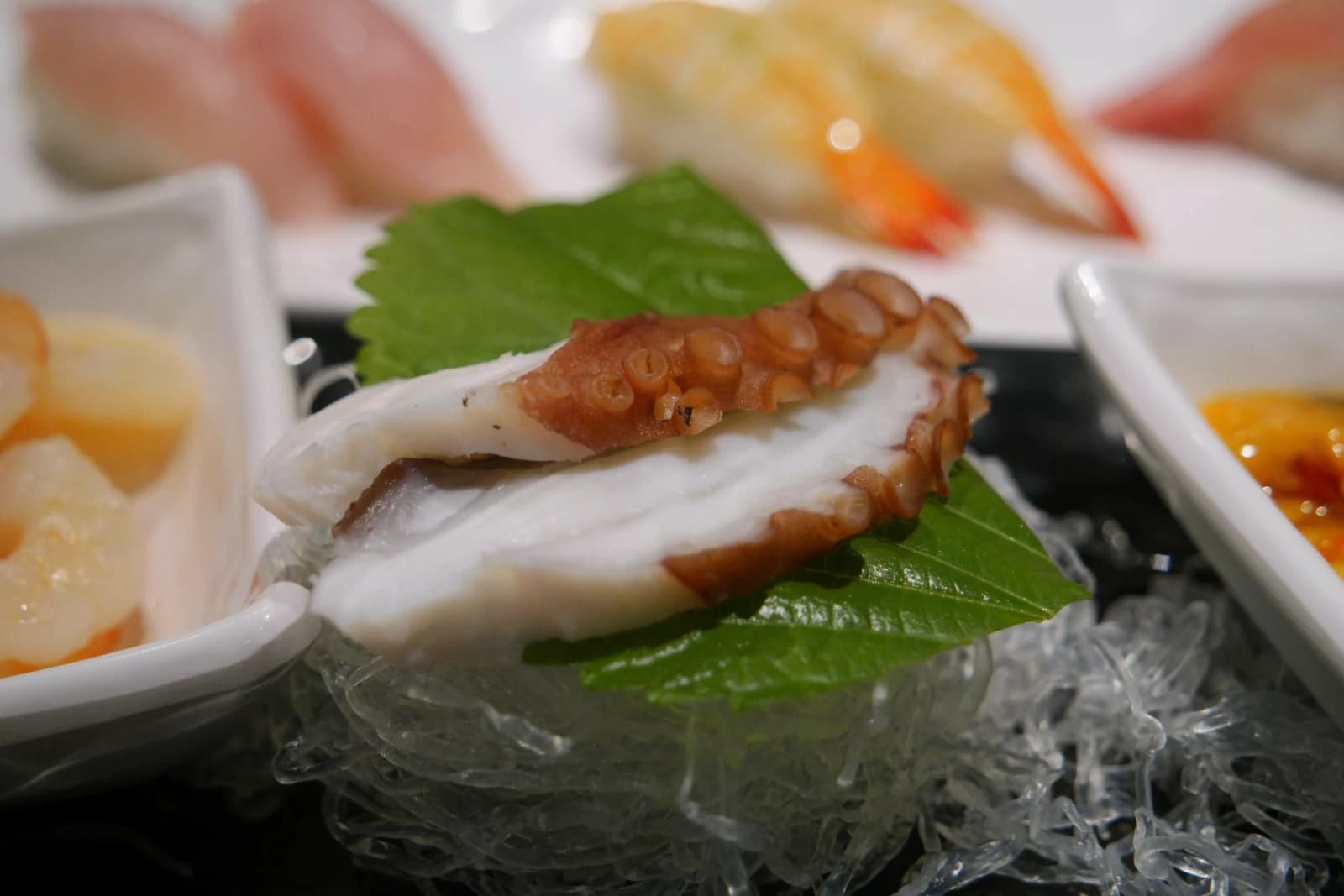
A thick slice of octopus leg arrived on a perilla leaf — a pungent, aromatic leaf commonly used in Korea as a wrap for fish or meat. Eating the octopus together with the leaf gave you a herby fragrance and a chewy texture all in one go. The suckers were rather vivid to look at, I'll admit, but the flavour was gently savoury and built slowly as you chewed.
The Sashimi Main: Tuna by the Cut, Plus Flatfish
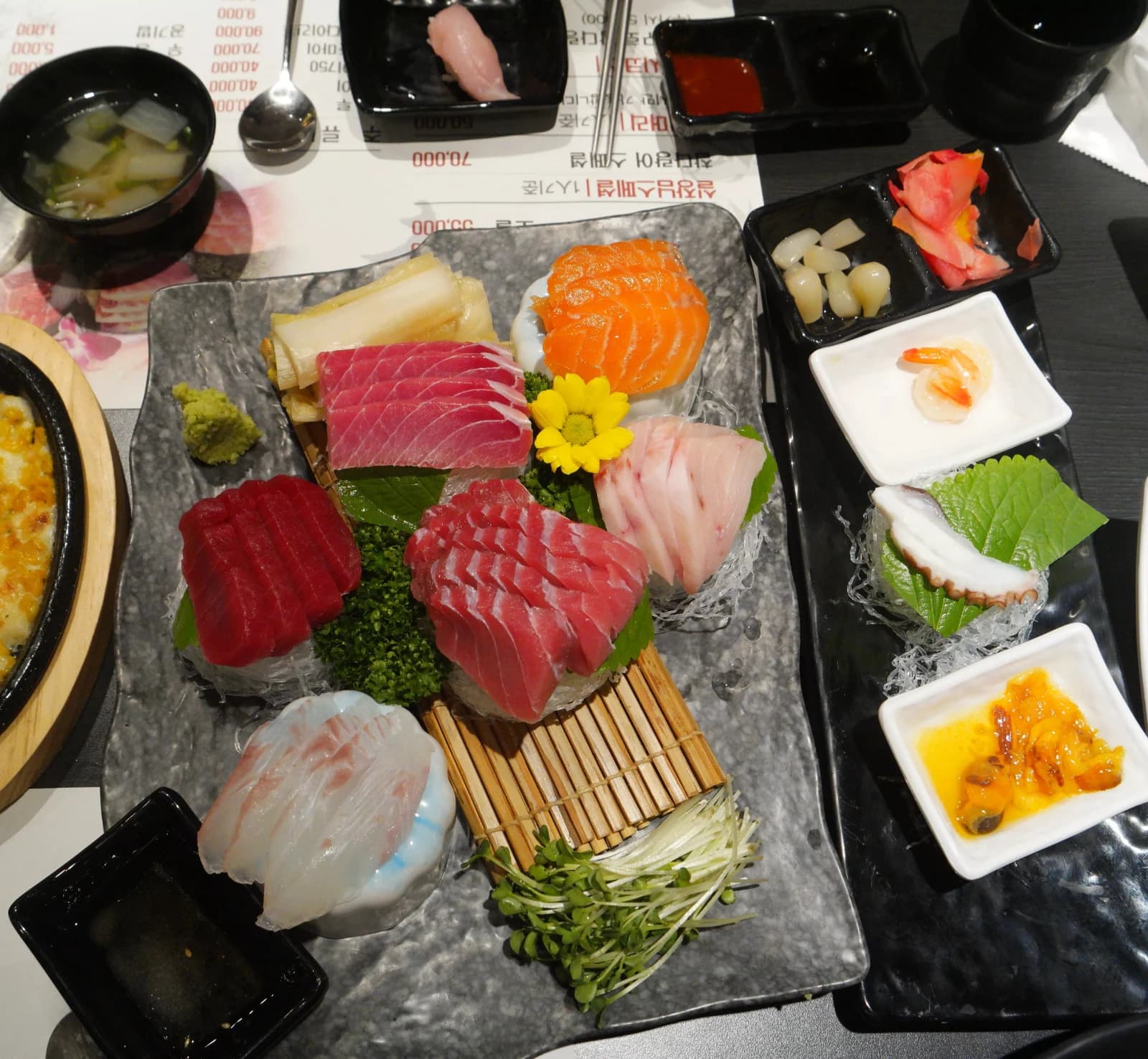
At last, the centrepiece arrived. A large platter held thickly sliced tuna arranged by cut — lean, medium-fatty, and fatty belly — alongside a separate bamboo tray of flatfish sashimi. A generous mound of wasabi sat to one side, and a yellow chrysanthemum had been placed in the centre as a garnish. To the left, the pollack soup and a steamed-egg hotpot were still hanging about; to the right, the sushi plate and leftover seafood dishes jostled for space. The table looked like a battlefield. This was the moment my wife pulled her phone out for photos. A spread like this for roughly £28 a head really sums up the value you can get at a Korean Japanese restaurant.
Chutoro and otoro — medium-fatty and fatty tuna belly
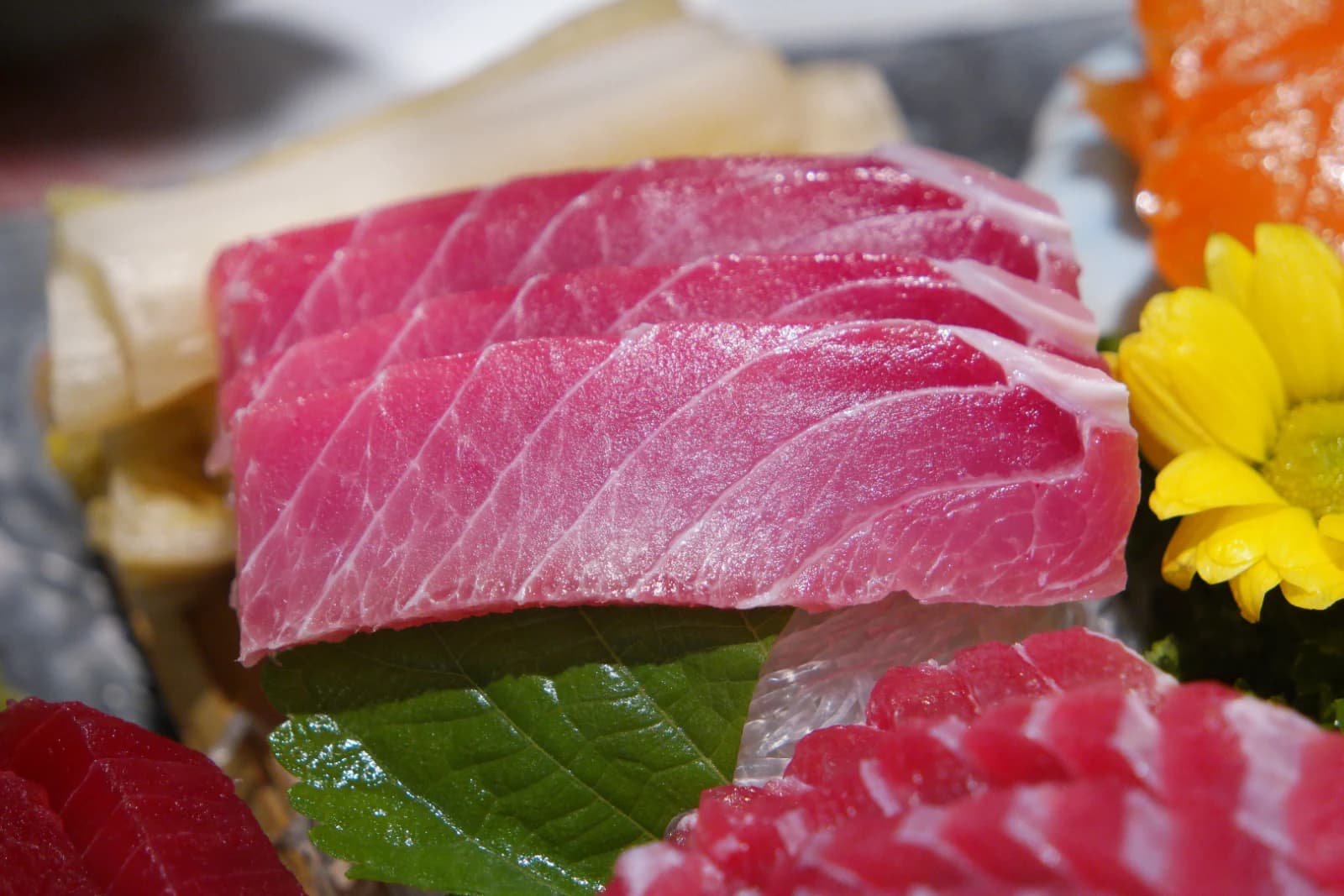
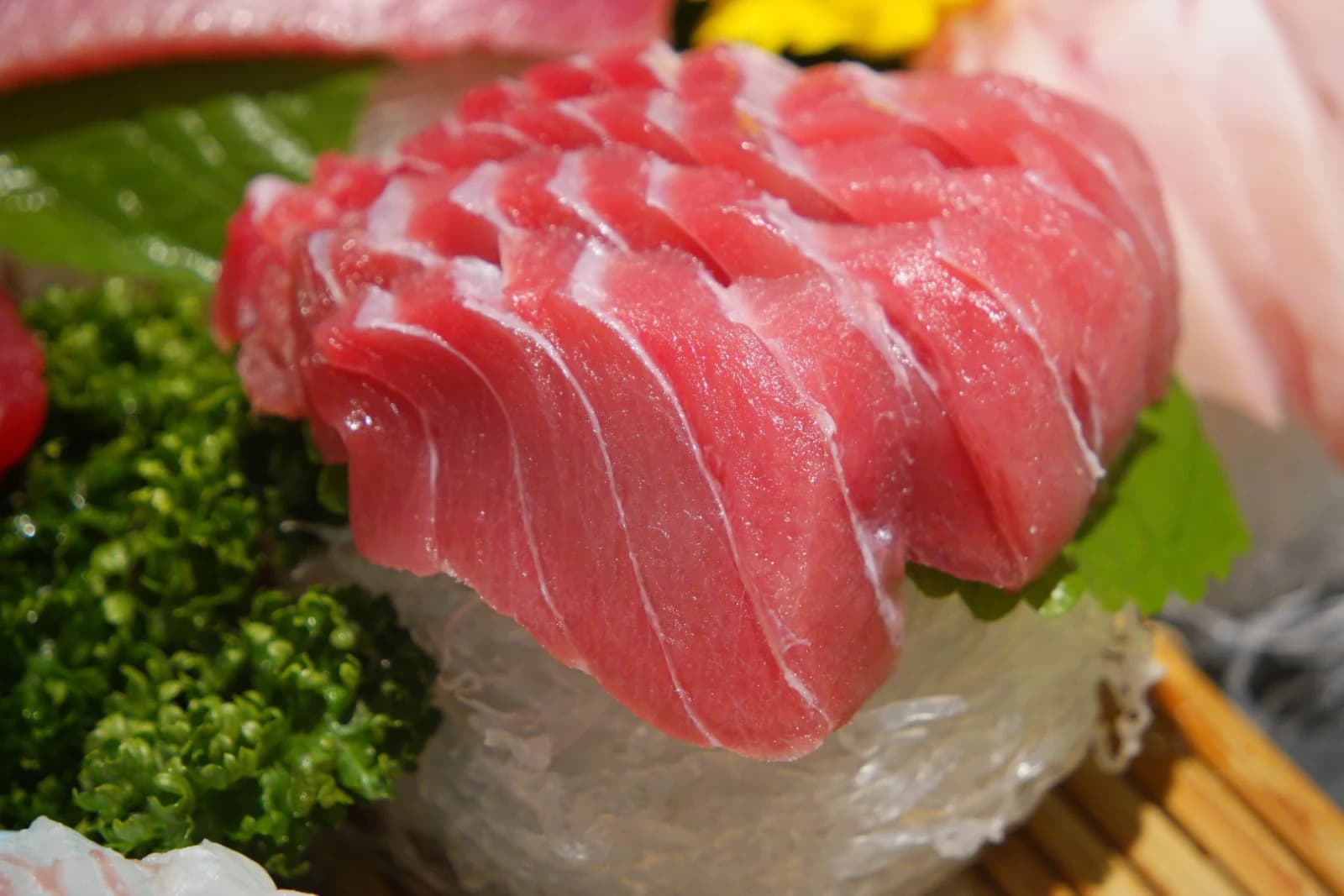
Picking up a slice of chutoro (medium-fatty tuna belly), you could see the fine white veins of fat running through the flesh. In the mouth, that fat melted at body temperature and released a rich, buttery flavour — I instantly understood why this cut is the most popular of all tuna parts. I passed a piece to my wife; her eyes widened, she nodded, and that was all the review I needed.
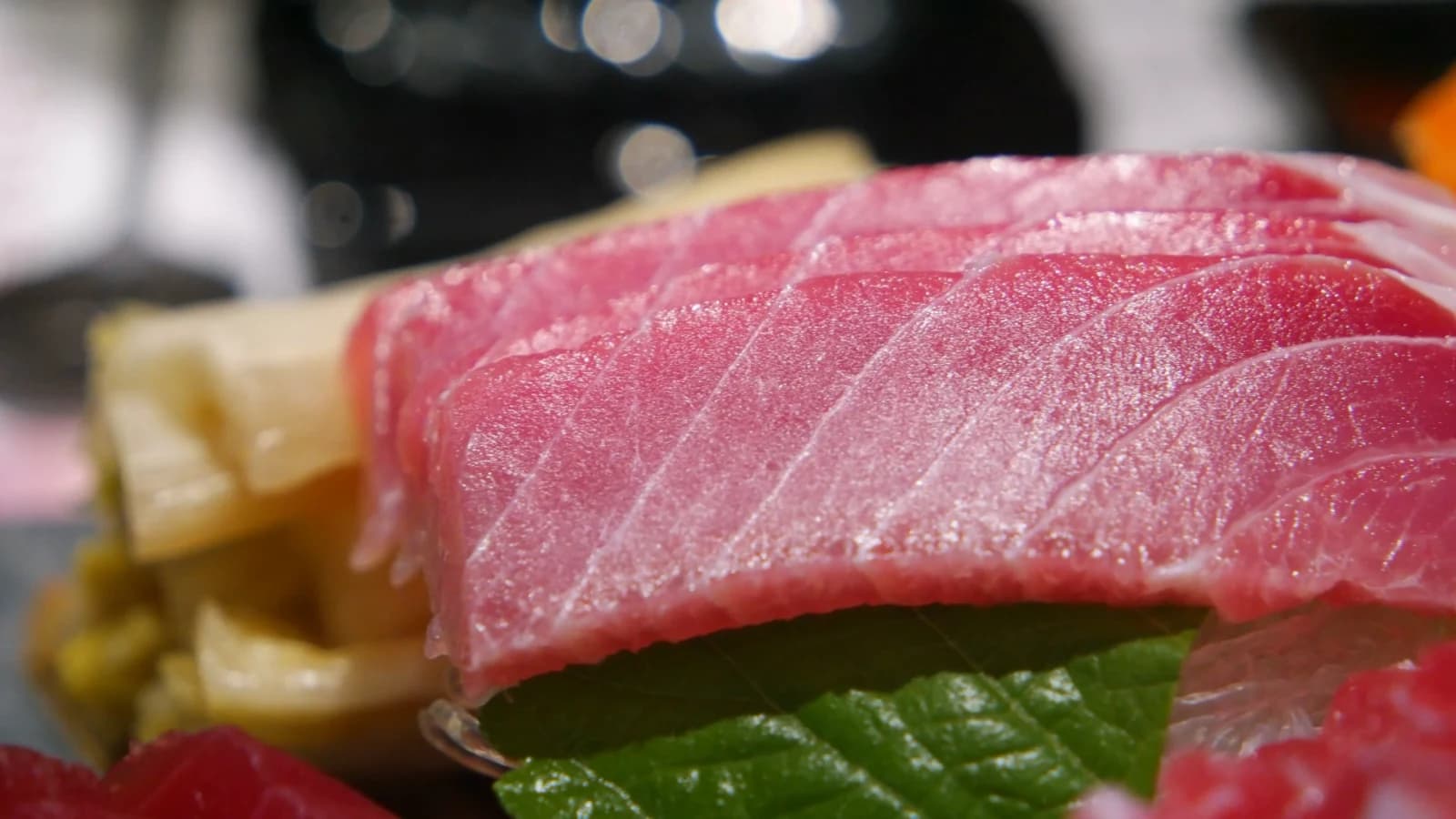
From another angle, the fat spread in a pinkish hue along the grain of the fish — really quite beautiful. Beside it sat pickled ginger — thinly sliced young ginger preserved in vinegar. When you're eating your way through several types of fish, nibbling a piece of pickled ginger between varieties clears the palate and lets the next fish's flavour come through much more clearly.
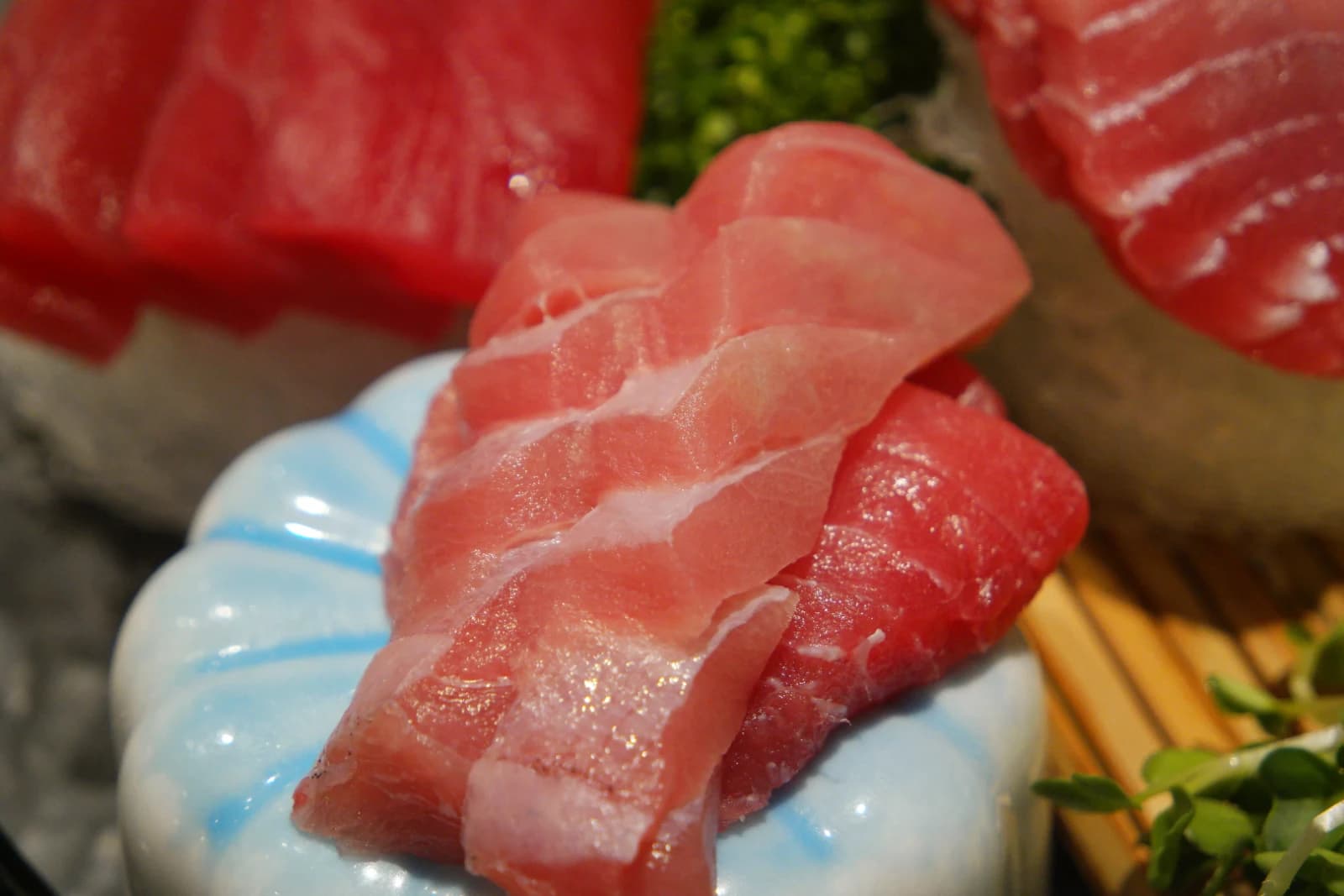
This was the otoro — the fattiest part of the tuna. The flesh was almost pink, laced with dense white striations. It didn't so much chew as simply dissolve the moment it touched my tongue. In Japan, this cut sits at the very top of the price range, so seeing it included in a £28 course was genuinely surprising. It wouldn't be fair to compare it directly against what you'd get at a high-end sushi counter in Tokyo — the ageing and thickness would differ — but the fact that you can taste it at this price point is one of the real advantages of eating Japanese-style in Korea.
Lean tuna, flatfish, and salmon
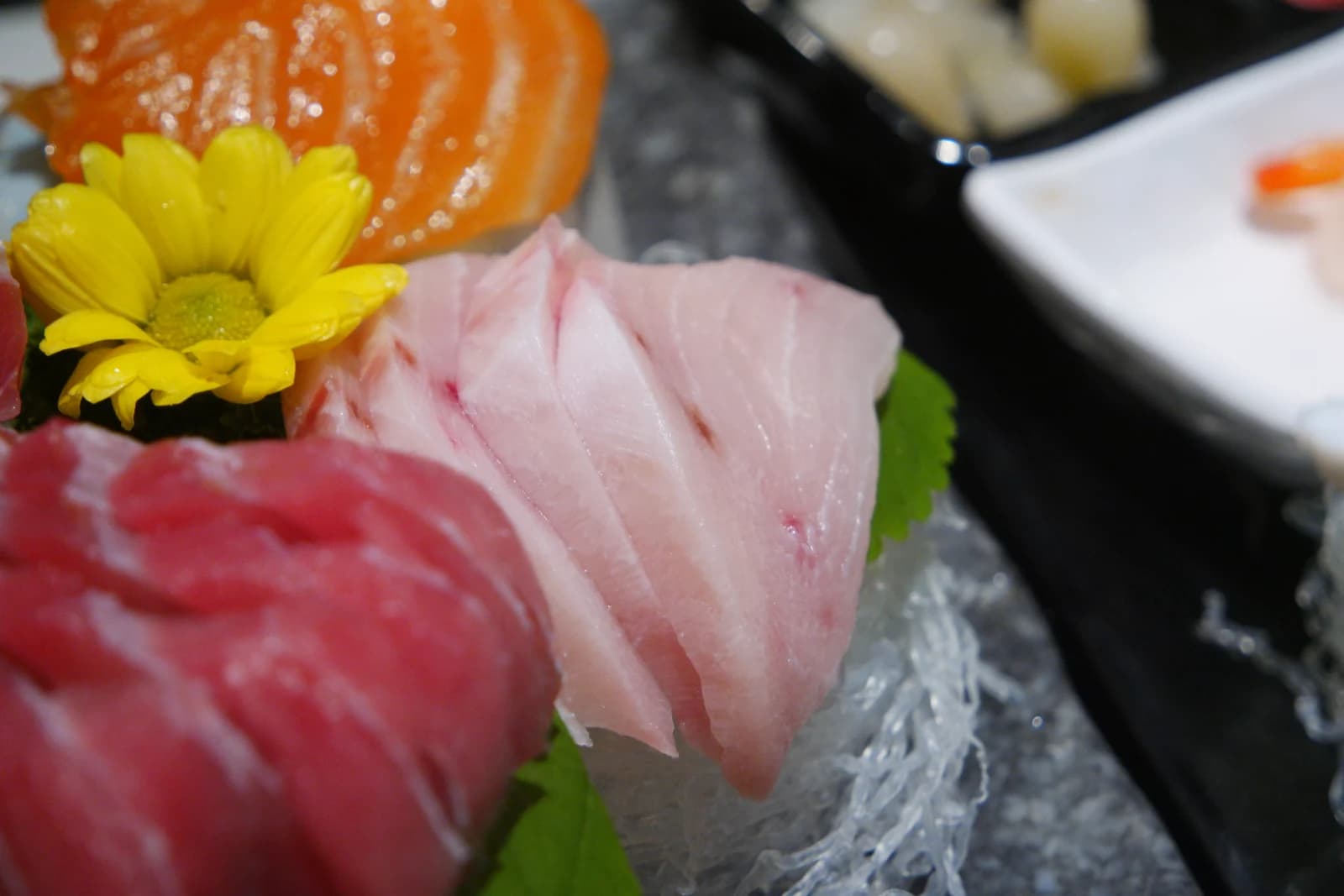
The akami (lean tuna) was a deep red with very little fat. Compared to the belly cuts, the texture was firmer and drier, but with a touch of wasabi and a dip in soy sauce, the clean, pure flavour of the tuna really shone. After all that richness, this one hit the reset button on the palate.
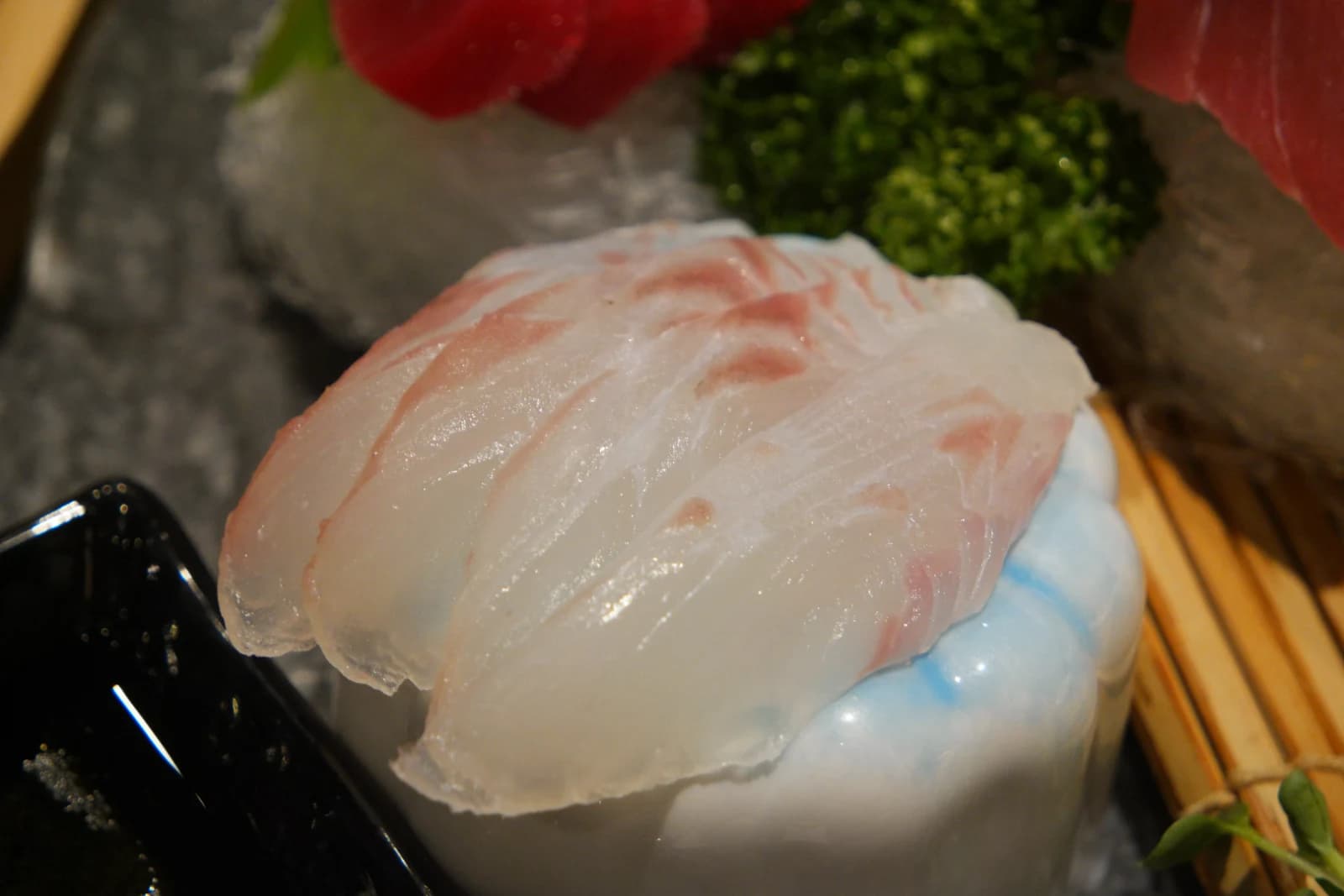
The flatfish sashimi on its bamboo tray had that characteristic translucent white appearance. Each piece was springy under the teeth with a delicate sweetness that crept up slowly — a completely different register from the tuna's bold richness.
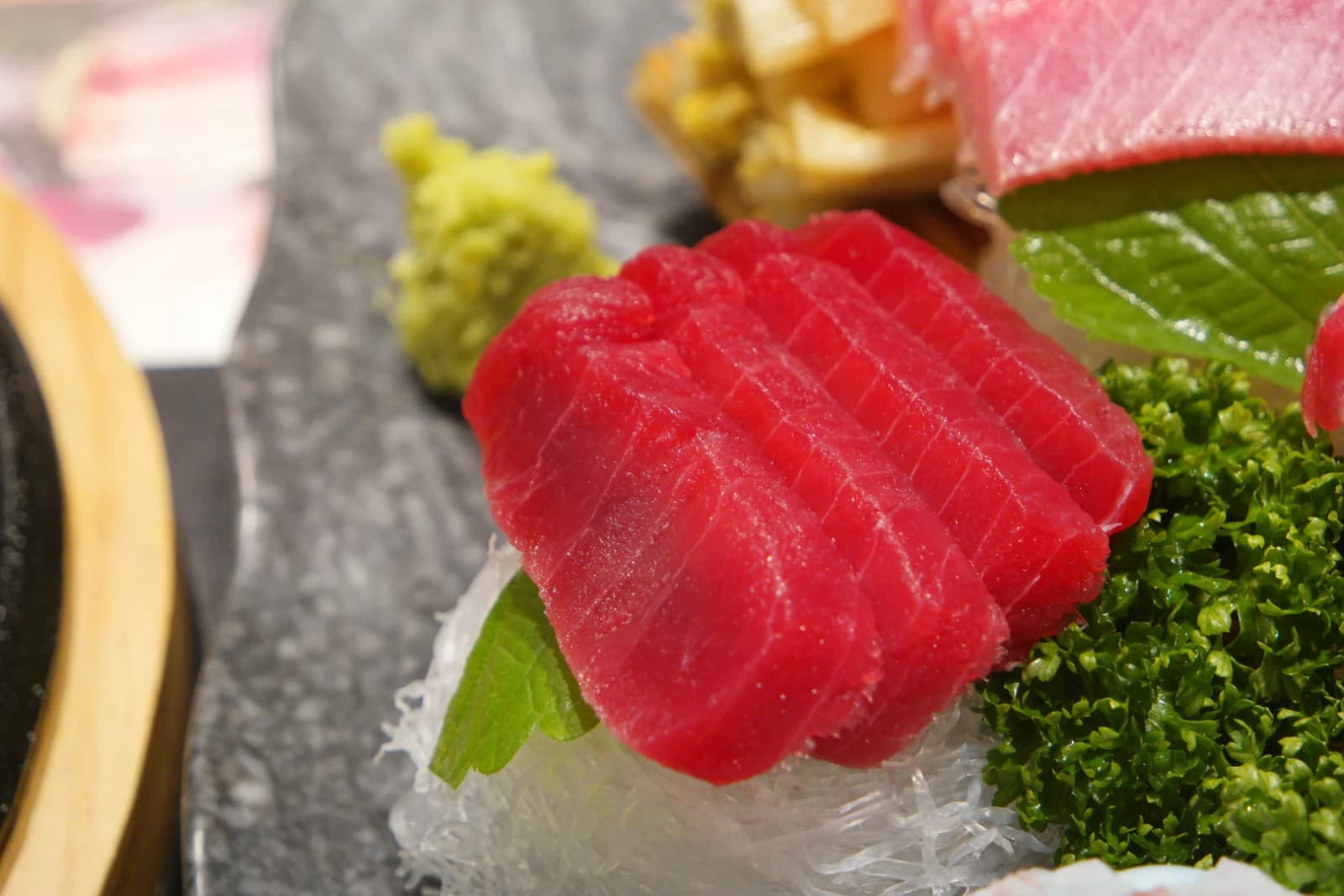
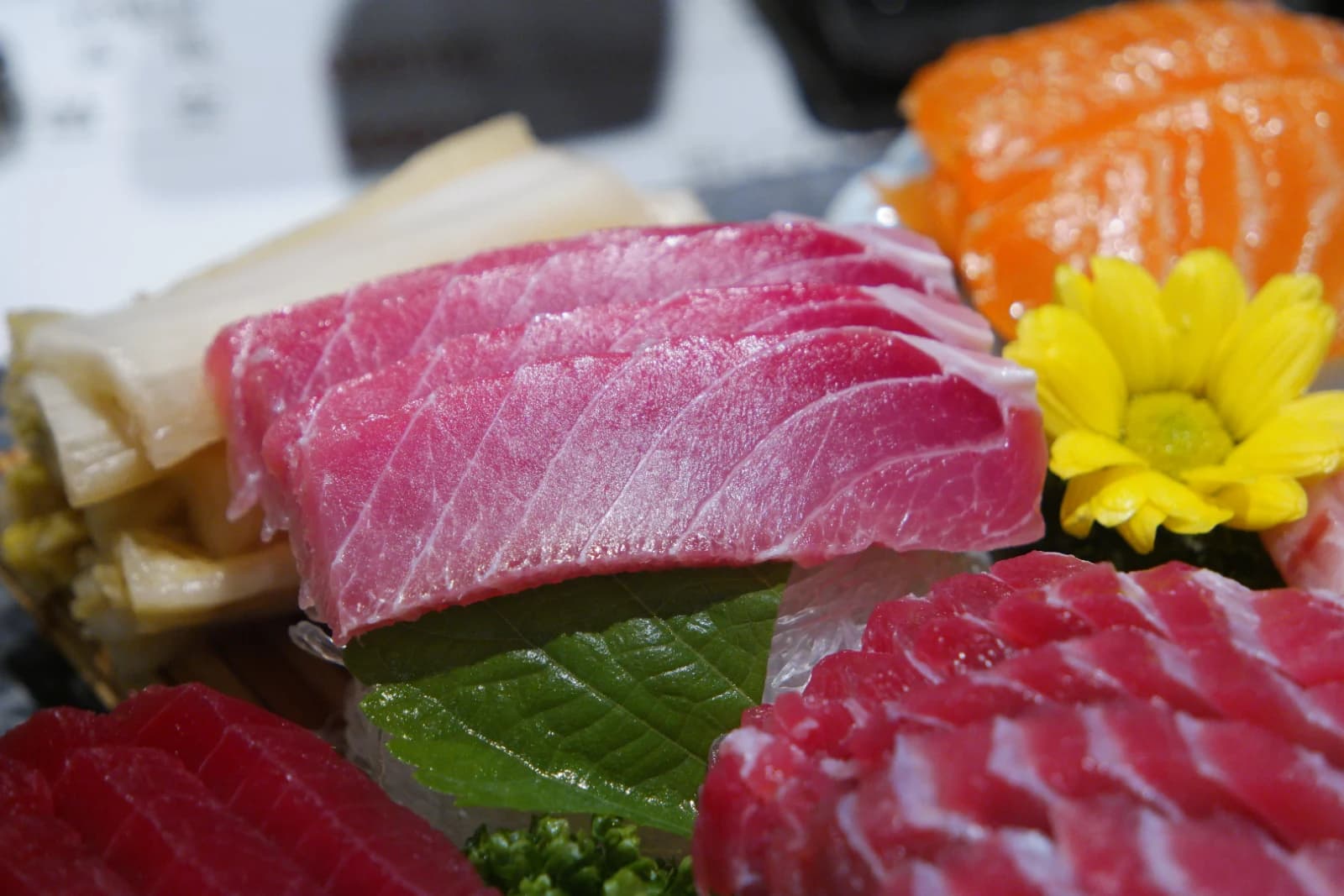
The vivid red of the lean tuna beside the bright green wasabi made a striking contrast, and right next to them the chutoro and salmon sat side by side — pink and orange together, which was lovely just to look at. My wife took more photos during this stretch of the meal than at any other point.
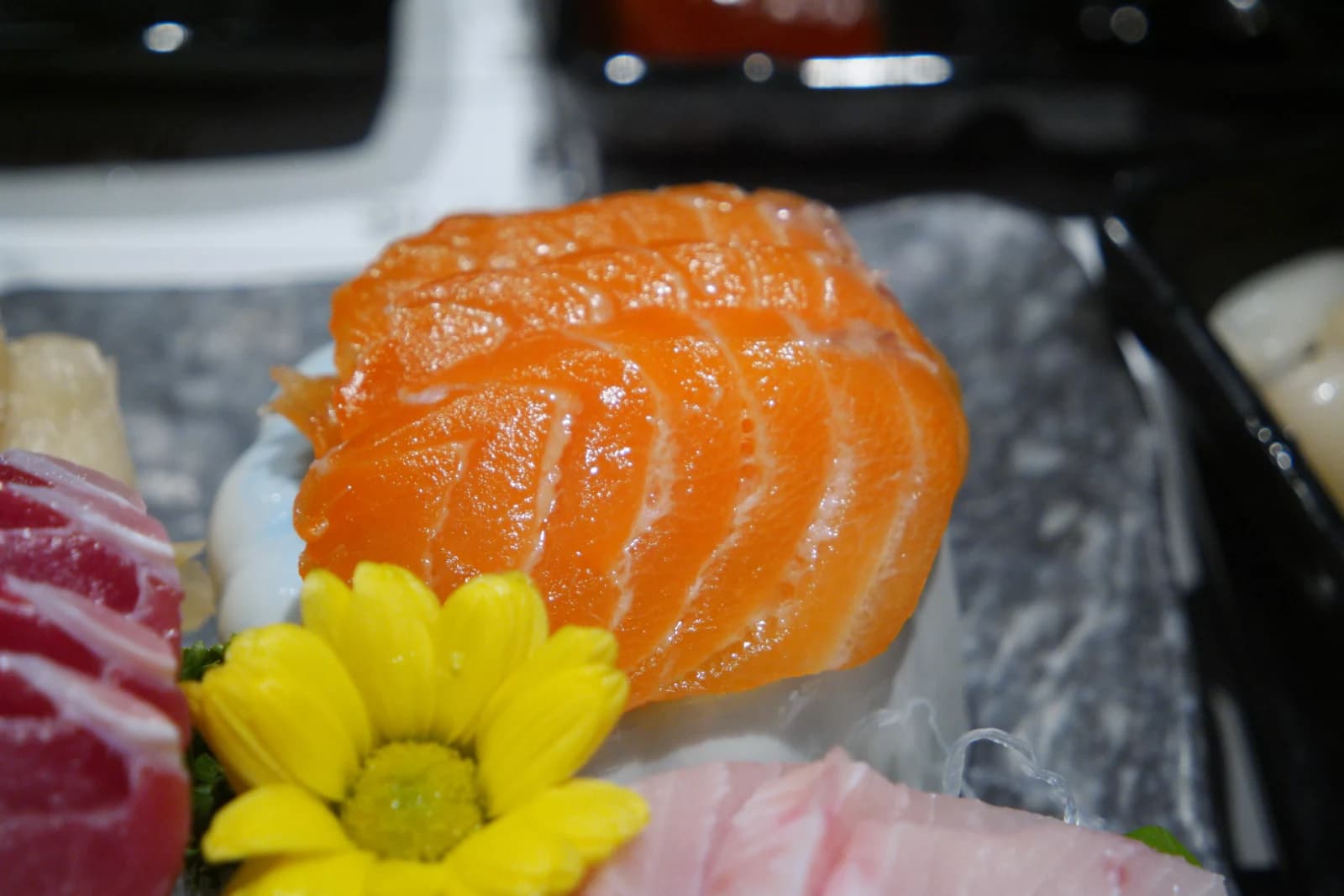
The salmon sashimi was a vivid orange with a faint oily sheen on the surface. In the mouth it was buttery, smooth, and rich. My wife prefers salmon to tuna, so she quietly moved a few extra slices onto her own plate. "These are mine," she said, sliding the dish out of my reach. I didn't put up a fight.
Wrapping sashimi in leaves — another way Koreans enjoy raw fish
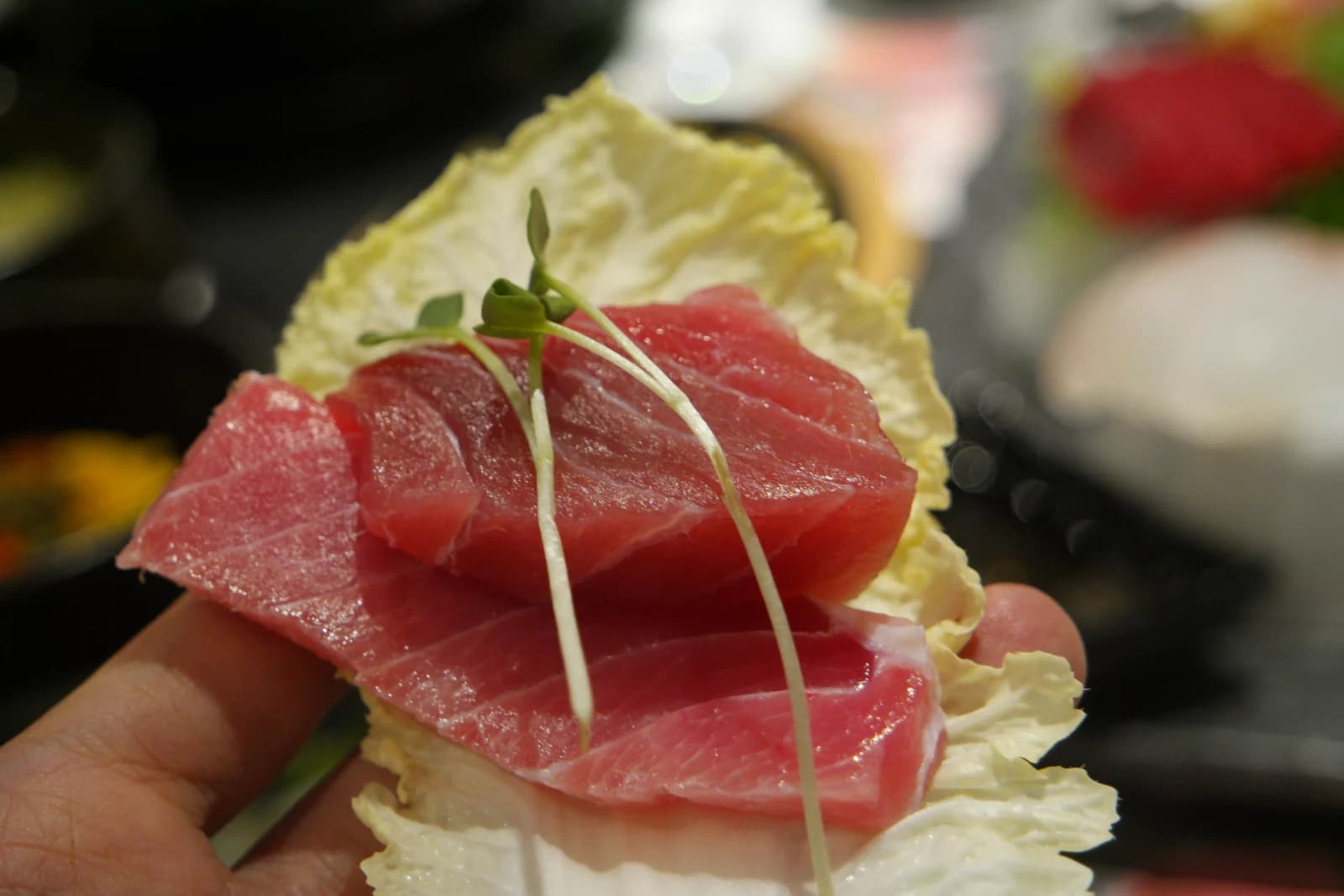
I tried wrapping a piece of tuna in a cabbage leaf. In Korea, there's a whole culture of ssam — wrapping food in leafy greens and eating it in one bite. You see it everywhere at barbecue restaurants with pork belly and lettuce, and the same idea carries over to sashimi. The crunch of the cabbage combined with the softness of the tuna made for a noticeably different experience compared to eating the fish on its own.
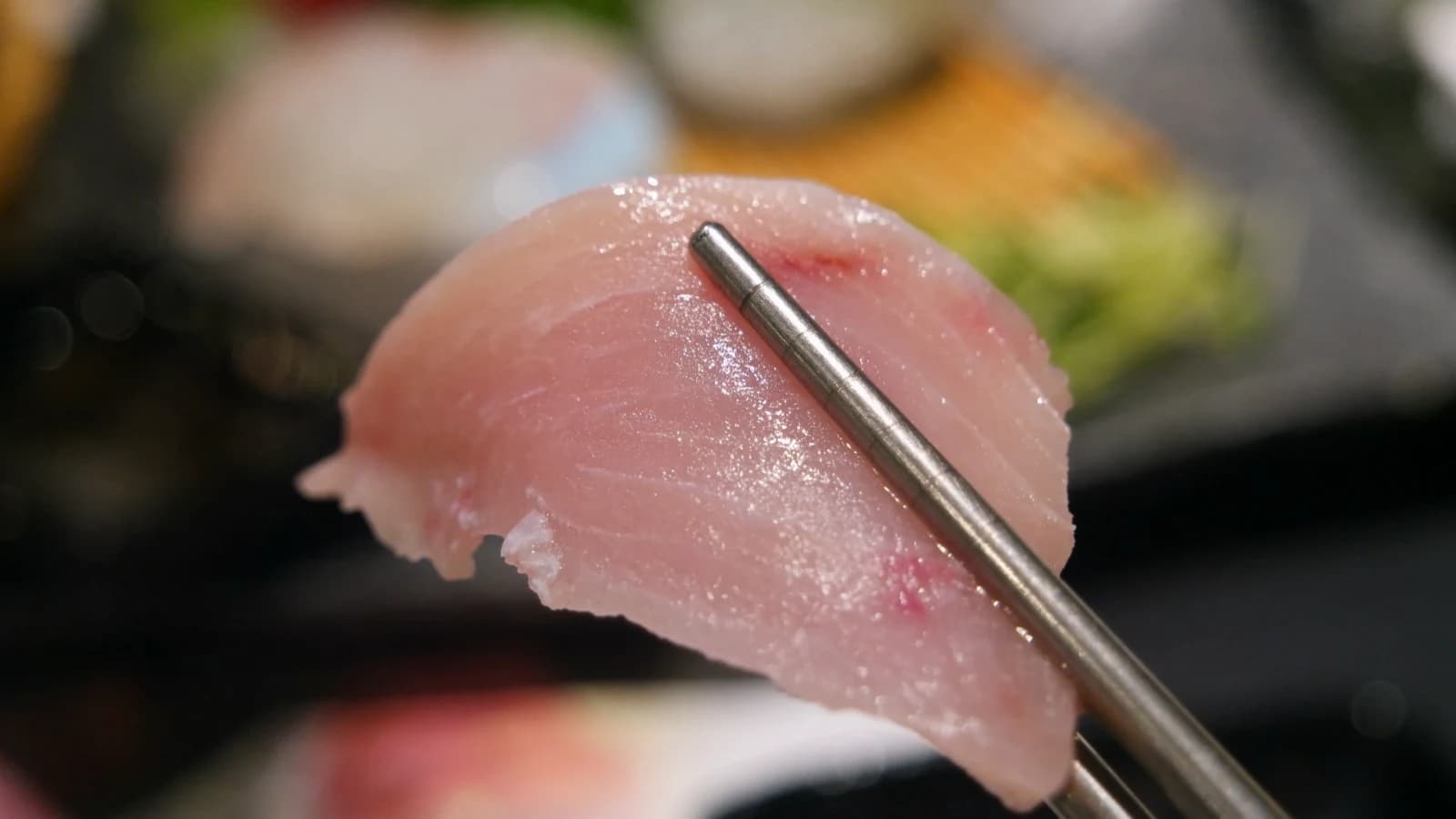
Holding a slice of flatfish up with chopsticks, it was so thin you could almost see through it. The initial bite was springy, and then a quiet sweetness gradually built the longer you chewed. That understated, slow-building flavour is what keeps white fish interesting — I found myself going back to it again and again.
How Koreans eat raw fish
Two dipping sauces
At a Korean Japanese restaurant, you'll normally be given two sauces. One is soy sauce with wasabi dissolved in it. The other is chojang — a sweet, spicy red sauce made from chilli paste, vinegar, and sugar. Common wisdom says white fish goes with chojang and red-fleshed fish like tuna with soy-wasabi, but there are no hard rules — just go with what you fancy.
Ssam — the leaf wrap
Place a piece of sashimi on a leaf of lettuce, perilla, or cabbage, add a sliver of garlic or a slice of chilli if you like, and eat the whole thing in one bite. It's the same concept as wrapping barbecued pork belly in lettuce. The crunch of the vegetables against the softness of the fish creates a satisfying contrast.
Pickled ginger
Thinly sliced ginger preserved in vinegar, typically a pale pink colour. Eat a piece between different types of fish to cleanse the palate so each new variety tastes fresher.
Mid-Course Sides — This Is What Makes Korean Set Meals Different
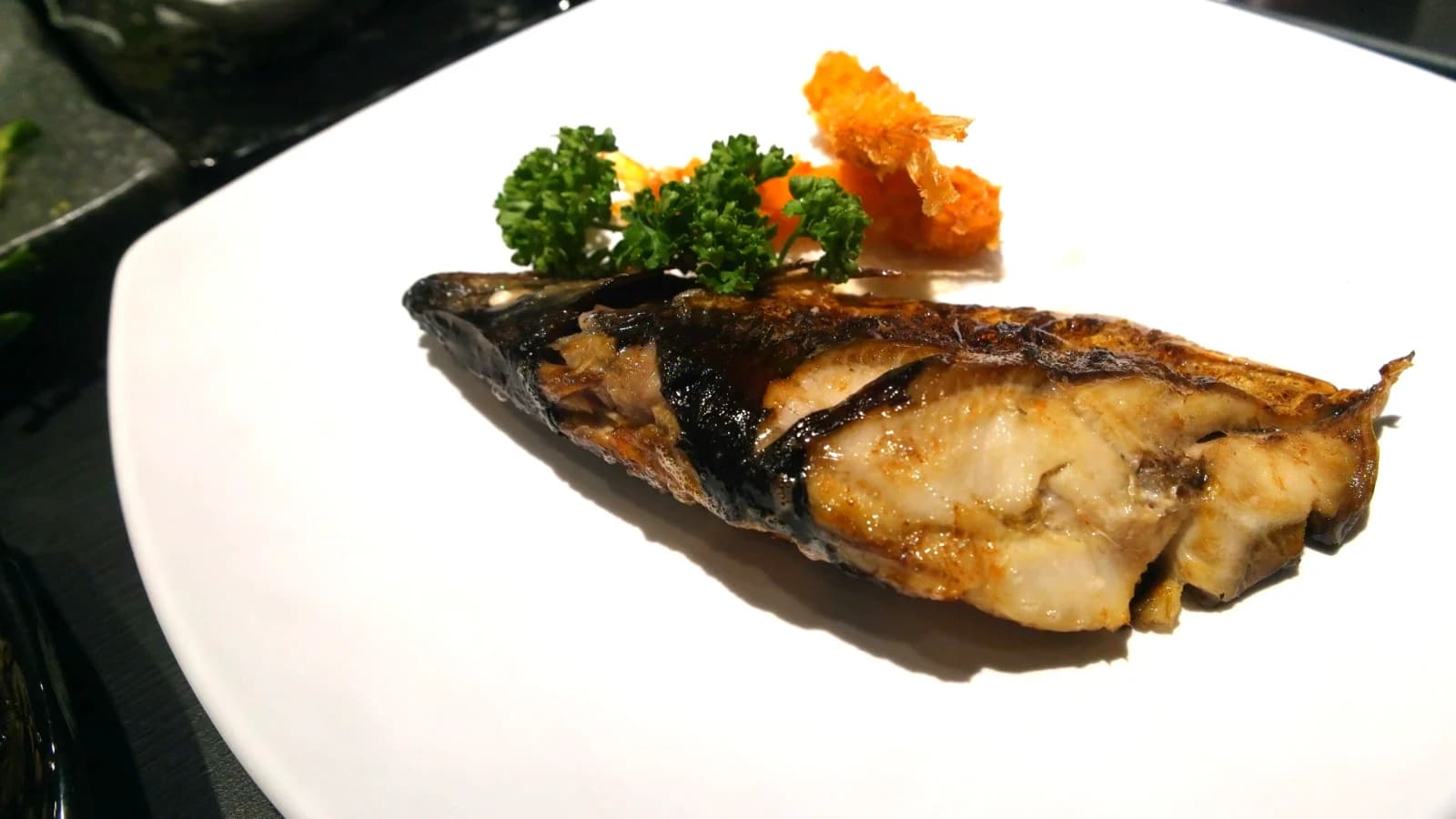
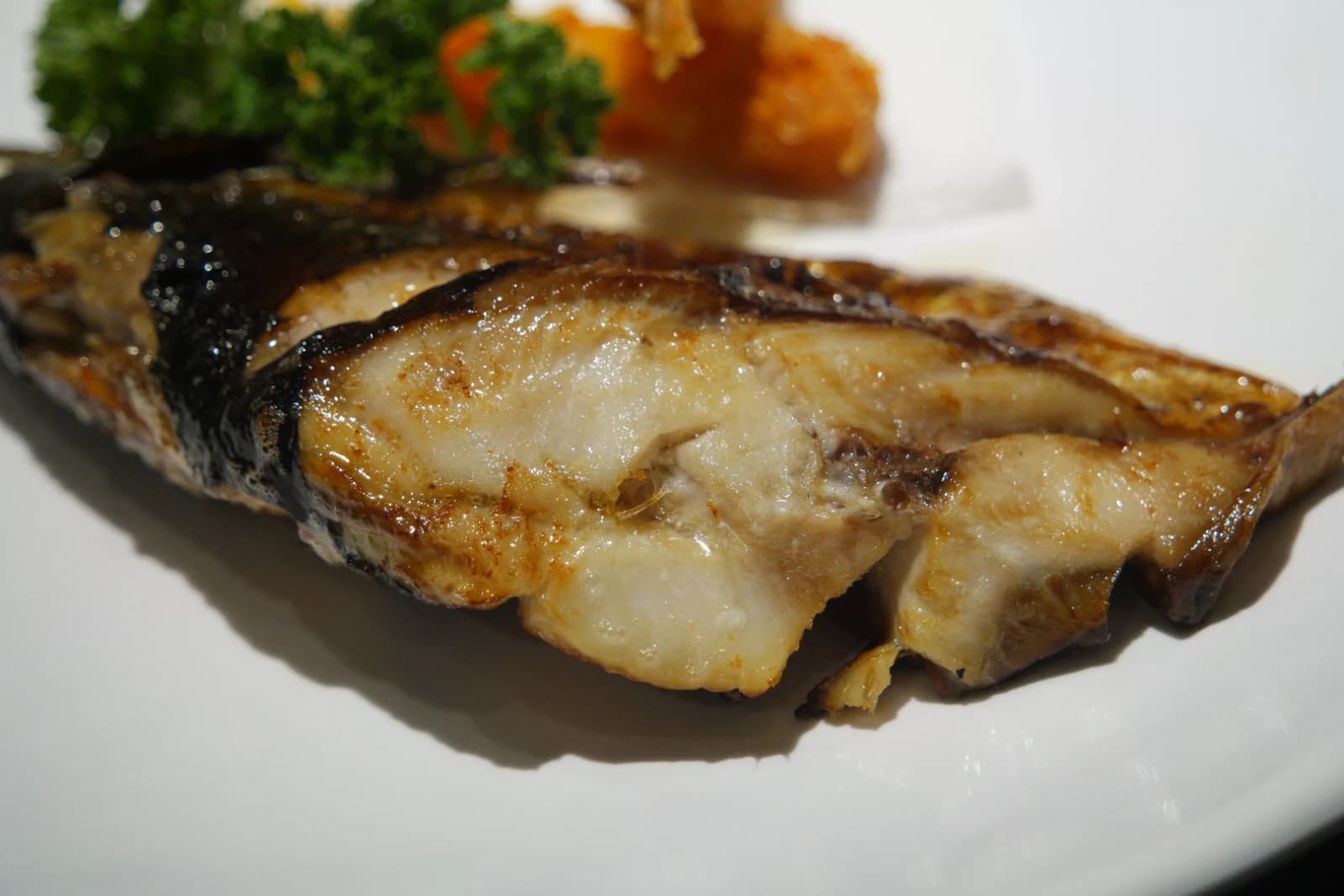
Right in the middle of the sashimi, a plate of grilled mackerel appeared out of nowhere. This is what Korean Japanese restaurants are like. Hot side dishes turn up unannounced between courses. The skin had been grilled to a deep golden brown, cracking apart to reveal white flesh underneath, and as I peeled it away with chopsticks, a wisp of savoury, salty steam rose from the oily flesh. After plate after plate of cold sashimi, a mouthful of something piping hot was exactly what the palate needed — it brought the appetite roaring back. In a Japanese omakase, you don't tend to get these kinds of interruptions; in Korea, these hot interjections are what give the course its rhythm.
Steamed egg and corn cheese
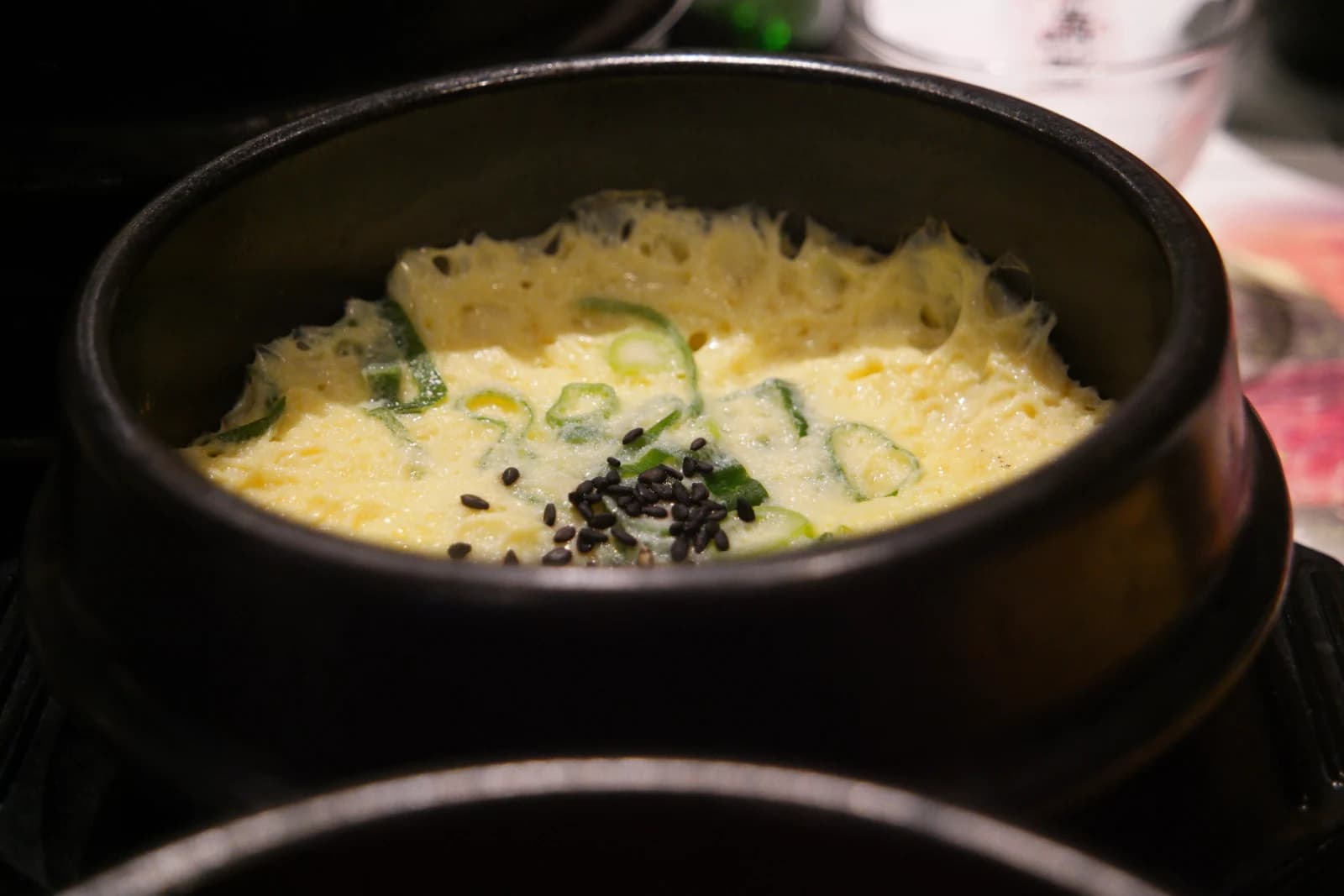
Gyeran-jjim (Korean steamed egg) arrived next. Beaten eggs are steamed in a stone pot until they puff up into something impossibly light and wobbly — Koreans eat it with a spoon, almost like a savoury custard soup. It came still foaming, with black sesame seeds and spring onion sprinkled on top. Soft, warm, and utterly gentle — spooning a bit of this between rounds of sashimi felt like giving the mouth a little rest.
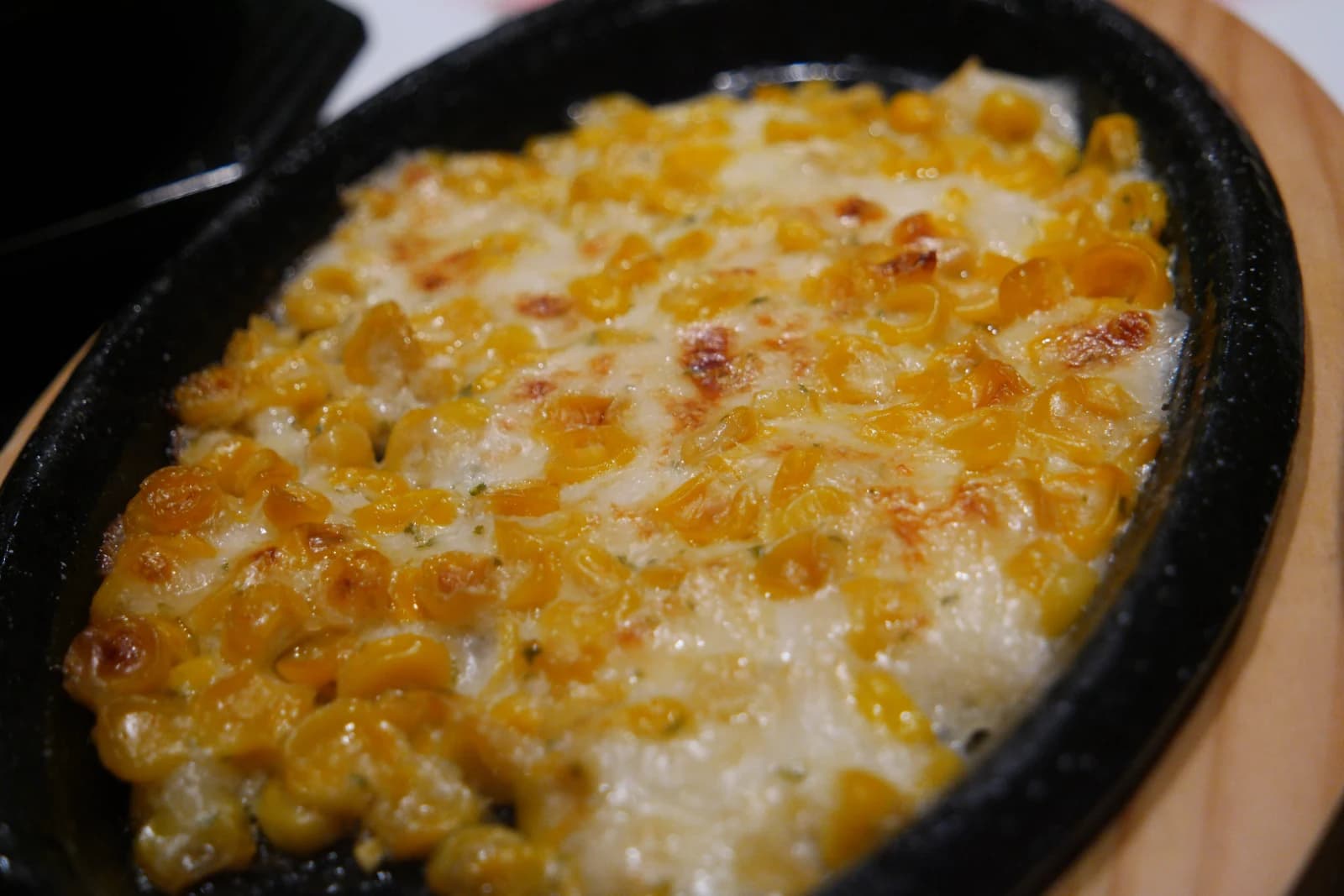
Corn cheese made an appearance too. Sweetcorn kernels baked under a layer of melted cheese on a little iron plate, still bubbling furiously when it landed on the table. The combination of sweet corn and salty cheese was a world away from raw fish, but in Korean Japanese restaurants this sort of thing is routinely included in the set course. My wife asked, "Can we order another one of these?" and I considered flagging down the staff, but couldn't quite work out whether it was an add-on or course-only. In the end, we just scraped the plate clean and left it at that.
Korean Japanese restaurants vs Japanese ones
At a Japanese omakase or sushi counter, the chef typically presents each piece individually with meticulous care, and the emphasis is on ageing technique and the quality of each individual topping. When it comes to the perfection of each single piece, Japan is unquestionably world-class — no argument there.
Korean Japanese restaurants, by contrast, lean into volume and variety across the whole course. You'll find starters, porridge, grilled fish, steamed egg, cheese dishes, and rice courses all bundled in alongside the sashimi and sushi — and the sight of the entire table groaning under the weight of it all is something you really only see in Korea.
That doesn't mean Korean sashimi falls short of Japan's. It's simply a different approach. And when you weigh up the overall experience against the price, Korea often comes out ahead in terms of sheer satisfaction.
What to expect at each price point
Around £17 per head — A basic assorted sashimi platter with 2–3 simple sides. Think lunchtime set menus at small neighbourhood spots or casual raw fish restaurants.
Around £28 per head — A solid course like the one in this post: starters through to porridge, sashimi, sushi, hot sides, and a rice finish. The sweet spot if value matters to you.
£55 and above per head — Proper high-end omakase territory. Premium ingredients like otoro, sea urchin, and king crab appear, and each dish is individually plated with real attention to detail.
The Finishing Roe Rice, and a Restaurant That No Longer Exists
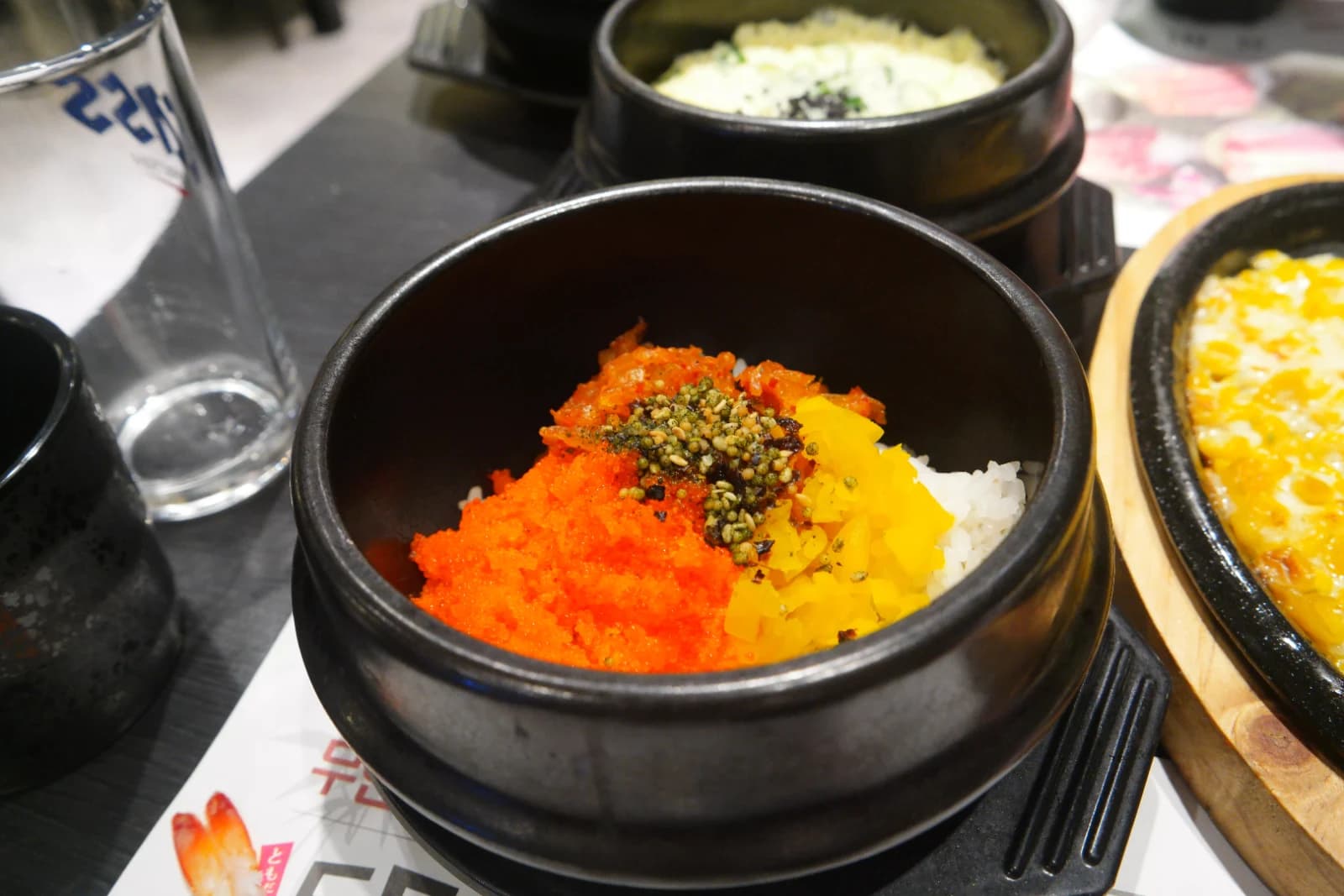
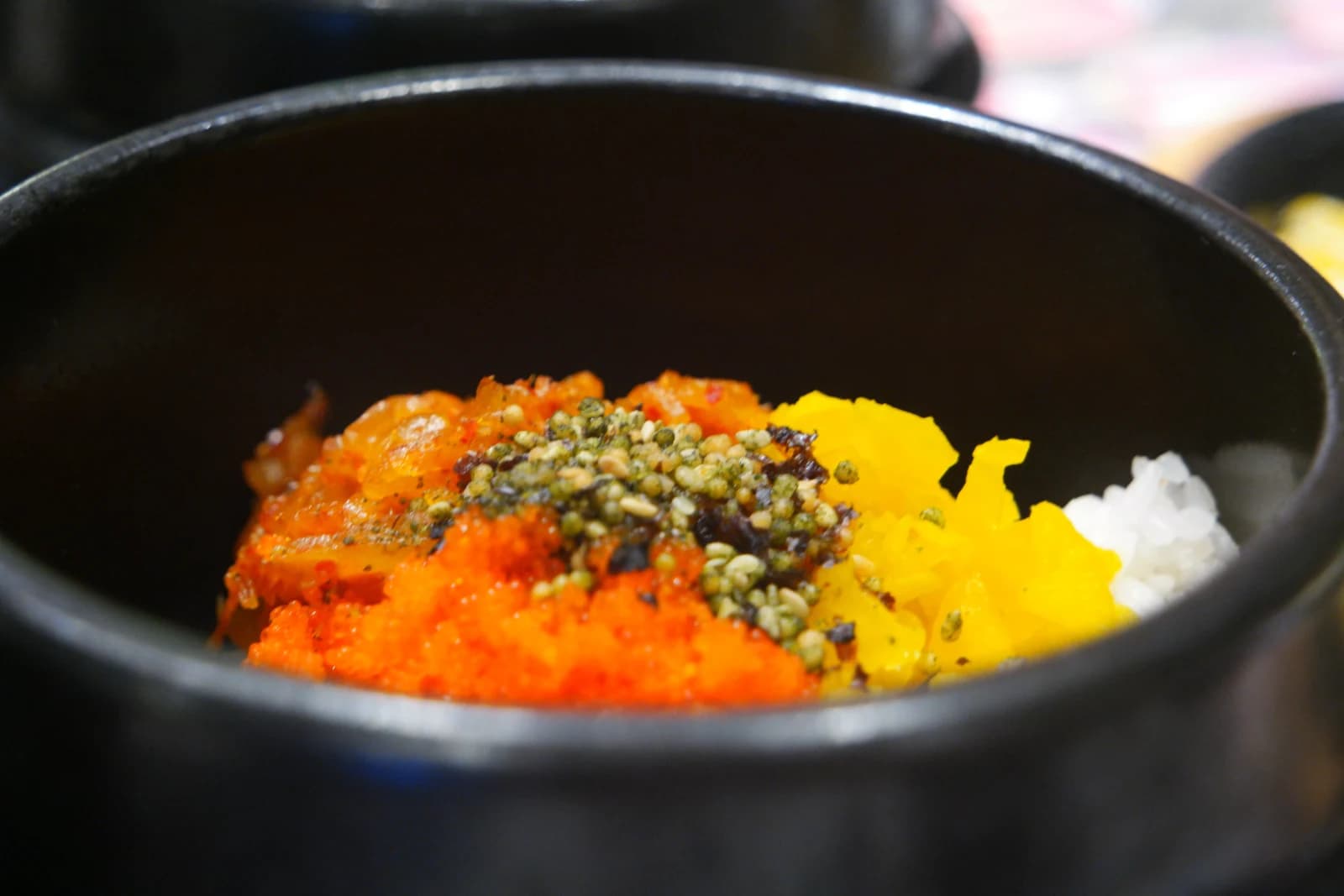
The finale was al-bap — roe rice. A stone pot of steaming rice came topped with a generous heap of bright orange flying fish roe, with yellow danmuji (pickled radish) and sesame seeds on the side. You mix it all together with a spoon, and as the tiny eggs pop between your teeth they release a briny, savoury hit that works its way through every grain of rice. My wife looked at it and said, "When are we ever going to finish all this?" — yet before the sentence was even finished, she'd already scooped up a spoonful. We both cleared our bowls, naturally.
Handy Korean phrases for a Japanese restaurant in Korea
"Koseu-ro halgeyo" (코스로 할게요)
Means "We'll have the set course." Use this when ordering.
"I-inbun-iyo" (이인분이요)
Means "For two people, please." Swap the number for il-inbun (one) or sam-inbun (three) as needed.
"Wasabi deo juseyo" (와사비 더 주세요)
Means "More wasabi, please."
"Gyesan-iyo" (계산이요)
Means "The bill, please." Use it when you're ready to pay.
Most Korean Japanese restaurants don't have English menus, so pointing at photos on the menu or using these phrases will make ordering a good deal smoother.
The bill, and an honest couple of grumbles
The bill came to ₩100,000 for two — roughly £28 each. From the braised mackerel starter through the porridge, sashimi salad, sushi, grilled fish, steamed egg, corn cheese, and roe rice, that price felt genuinely fair. I did have two small criticisms, though. First, the sashimi slices could have been a touch thicker. There was an impressive variety of fish, but each individual slice was on the thin side. Second, having something as divisive as sea squirt included in the set course could be a stumbling block if you're dining with someone from abroad — a heads-up from the staff would go a long way.
On the drive home, my wife said the abalone porridge and the corn cheese were her highlights. Not the sashimi — the sides. We'd gone out specifically for raw fish, and yet what stuck in the memory were those warm dishes slotted in between courses. She turned to me in the car and said, "Let's go back soon." A few months later, I drove past the spot and found a different sign hanging above the door.