
Gamjatang Guide — Rich Pork Bone Stew You Need to Try
Table of Contents
21 items
The One Korean Dish That Wins Over Every Foreigner
There's one dish in Korea that foreigners fall for almost unanimously. Even people who aren't familiar with Korean fermented pastes or stew culture — they might look a bit skeptical at first, but the moment they take that first bite, their eyes go wide. Unfortunately, if you can't eat pork for religious reasons, this one's not for you. But aside from that, pretty much every foreigner who tries it gives it a big thumbs up.
It's gamjatang — a rich, spicy Korean pork bone soup.
What Exactly Is Gamjatang?
🍖 What Is Gamjatang?
Gamjatang is a bold, spicy stew made by simmering pork spine bones for hours. Dried radish greens (siraegi), potatoes, and perilla seed powder come together to create a deeply savory, nutty broth. Once you taste that rich flavor, it's seriously hard to forget.
🤔 But Why Is It Called "Gamja-tang"?
The name has "gamja" in it, which means potato in Korean. But the star of the dish actually isn't the potato. There are two theories about the name:
- The spinal marrow inside pork backbone was supposedly called "gamja" in old Korean
- It may come from a specific backbone cut called "gamja-ppyeo" (gamja bone)
Bottom line: the real star of gamjatang is the pork spine bone, not the potato.
📜 Origin Story
Back in 1899, during the construction of the Gyeongin Railway (Korea's first railroad), laborers who could barely afford meals started boiling cheap ingredients together — pork backbone, potatoes, and dried radish greens. That humble workers' stew eventually spread across the entire country and became the gamjatang we know today.
🥘 Key Ingredients
- Pork spine bones → the backbone of the broth (pun intended), delivers the deep, rich stock
- Potatoes → soak up the broth and turn perfectly sticky and tender
- Siraegi (dried radish greens) → adds nutty depth + great texture
- Perilla seed powder → the secret behind the signature nutty, creamy broth
- Red chili flakes (gochugaru) → brings the bold, spicy kick
Jaw-Dropping Visuals Before the Heat Even Hits
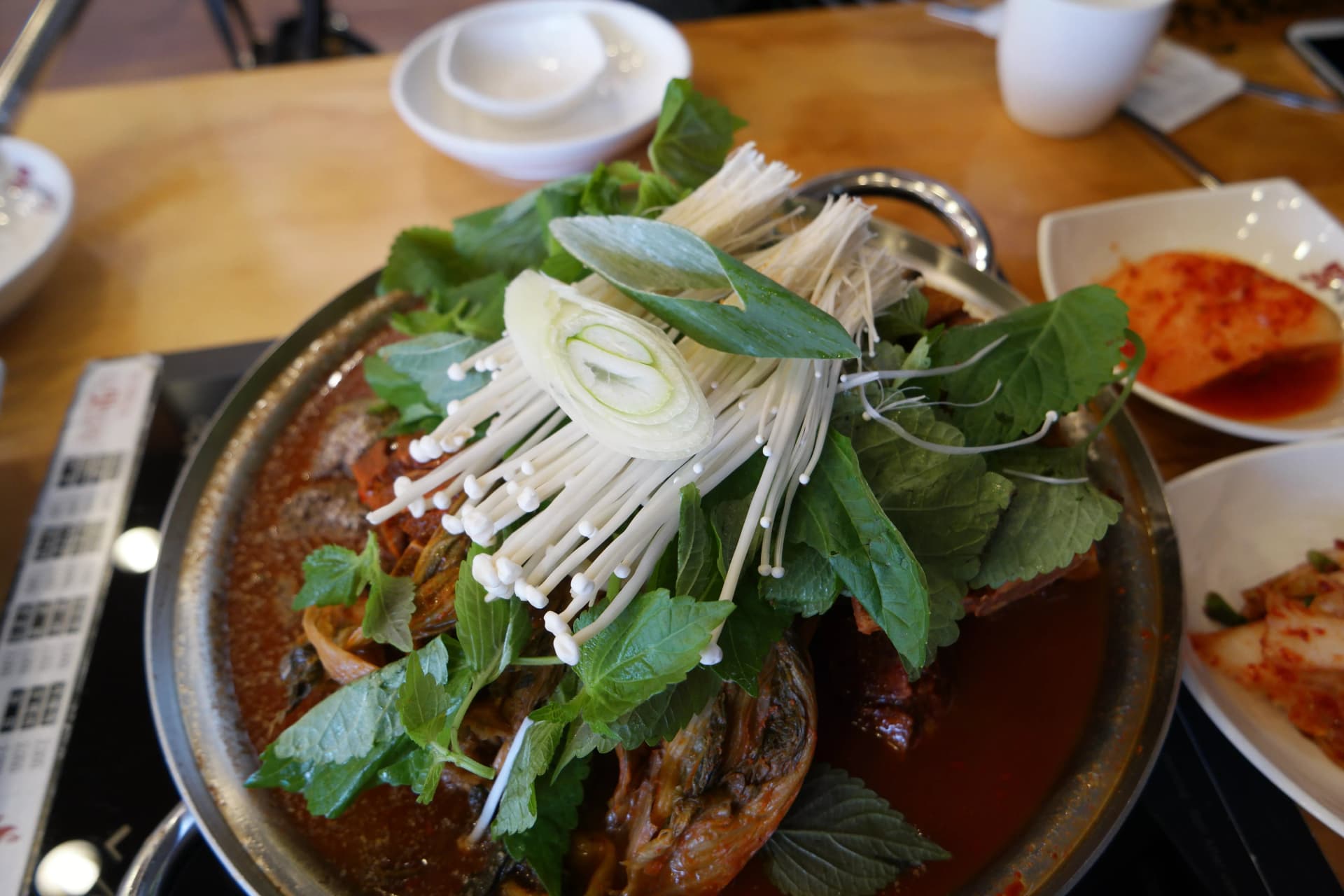
This is gamjatang right before it starts boiling. On top of the red broth, perilla leaves, enoki mushrooms, and green onions are piled up like a tower. The visual impact is already jaw-dropping before the heat is even on — and the real magic starts the moment those vegetables sink into the broth and start cooking down.
The perilla leaves release their fragrance into the broth, the enoki mushrooms soak up the liquid and turn wonderfully chewy, and the green onions add a layer of sweetness. All three elements come together at once.
You can see kimchi on the side too. Gamjatang with kimchi is basically an unwritten rule in Korea, haha.
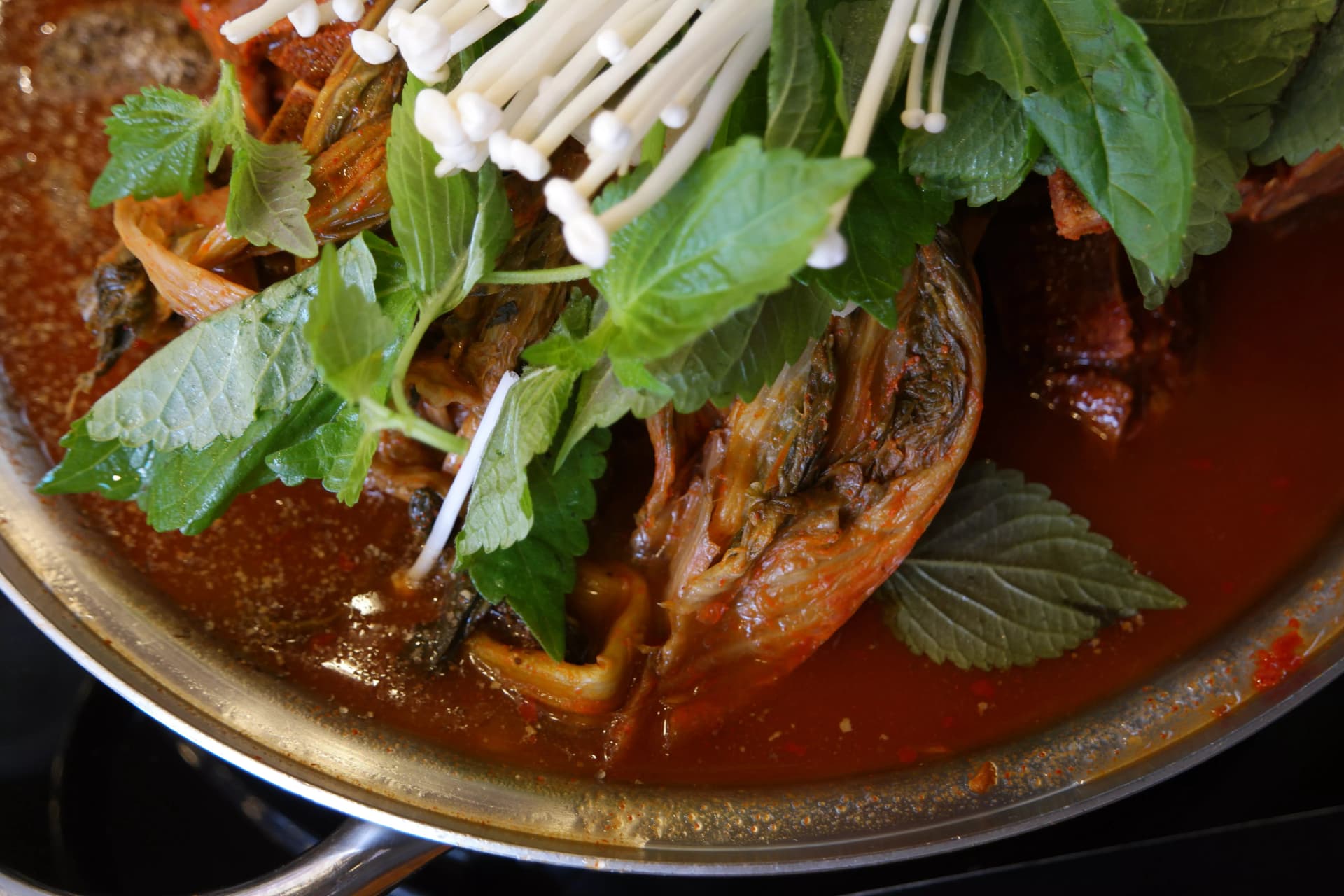
Up close, it's even more impressive. The dried radish greens are submerged deep in that intense red broth, with perilla leaves and enoki mushrooms sitting on top. Just looking at the broth color, you can tell how long and deeply it's been simmered.
See the siraegi? In gamjatang, dried radish greens are not just a side garnish. The longer they simmer, the more broth they absorb — all that deep bone flavor soaks right into them. Some people actually say the siraegi ends up tasting even better than the meat, haha.
Notice the glistening layer of oil around the edges of the broth? That's proof of the real deal — rendered goodness straight from those pork spine bones.
The Gamjatang Table Setup and Side Dishes
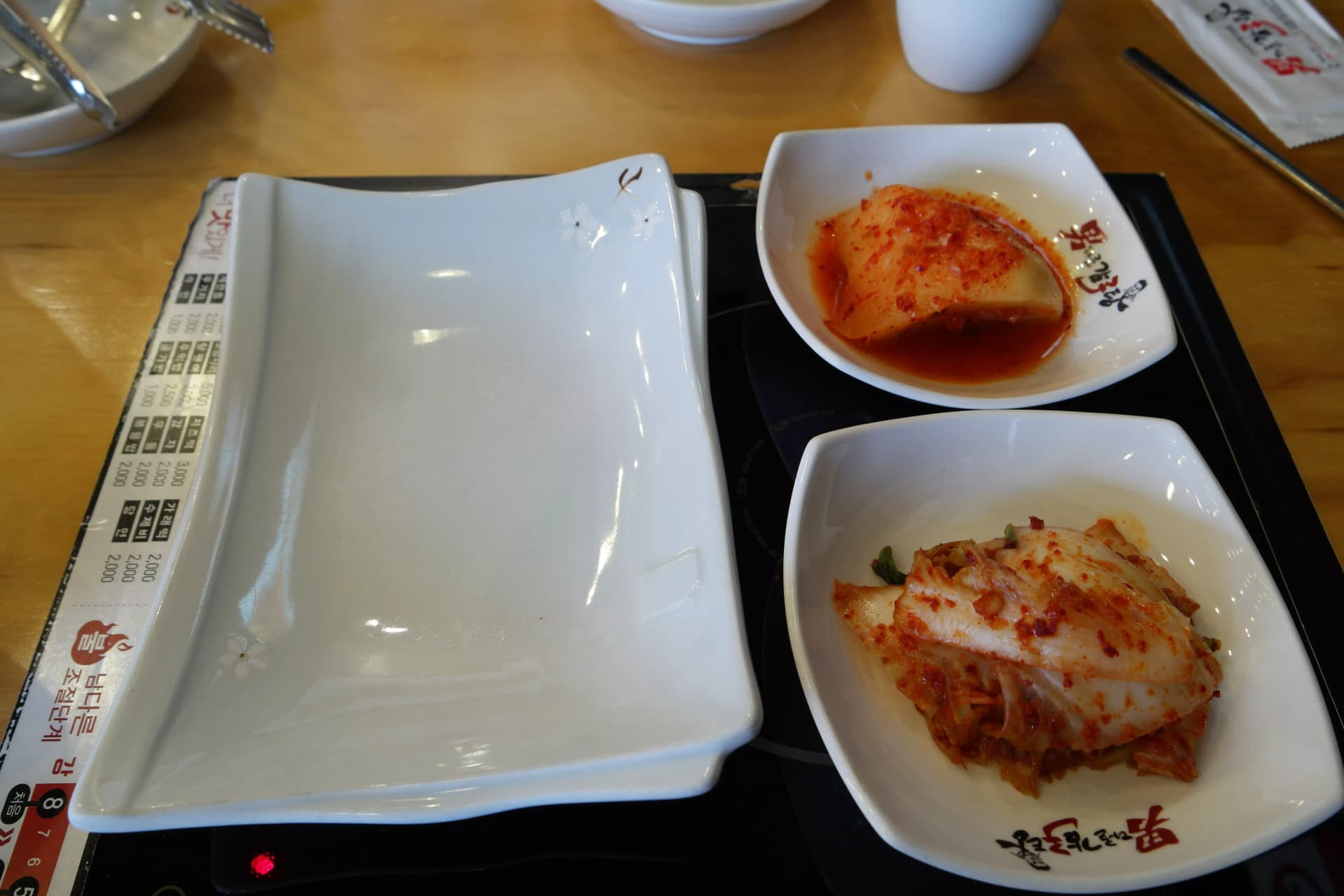
Here's the full table setup. Small plates for pulling apart meat, kimchi, and kkakdugi (cubed radish kimchi) are all lined up neatly. No matter which gamjatang restaurant you go to in Korea, the setup is pretty much identical. Before you even order, the table is already prepped and ready.
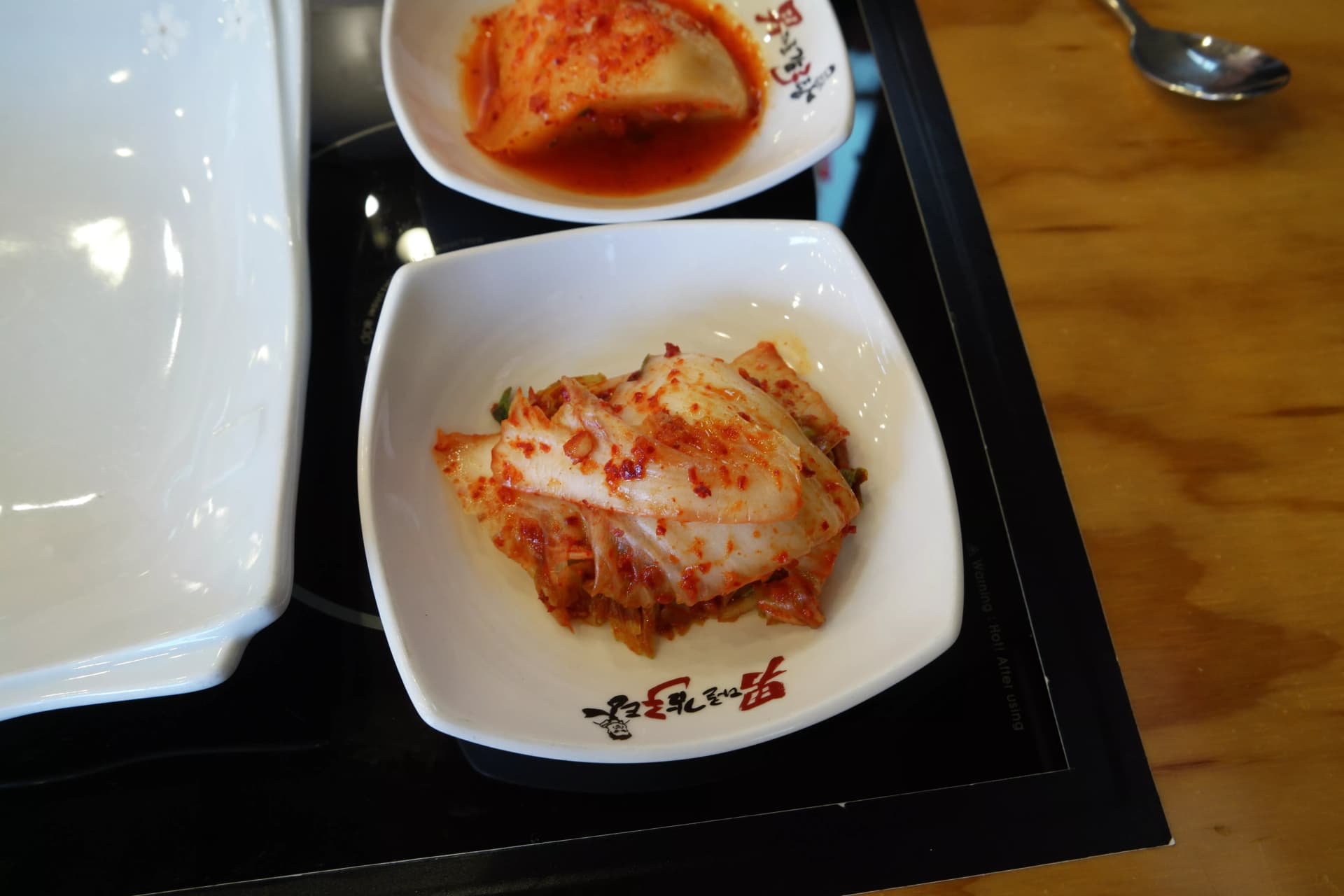
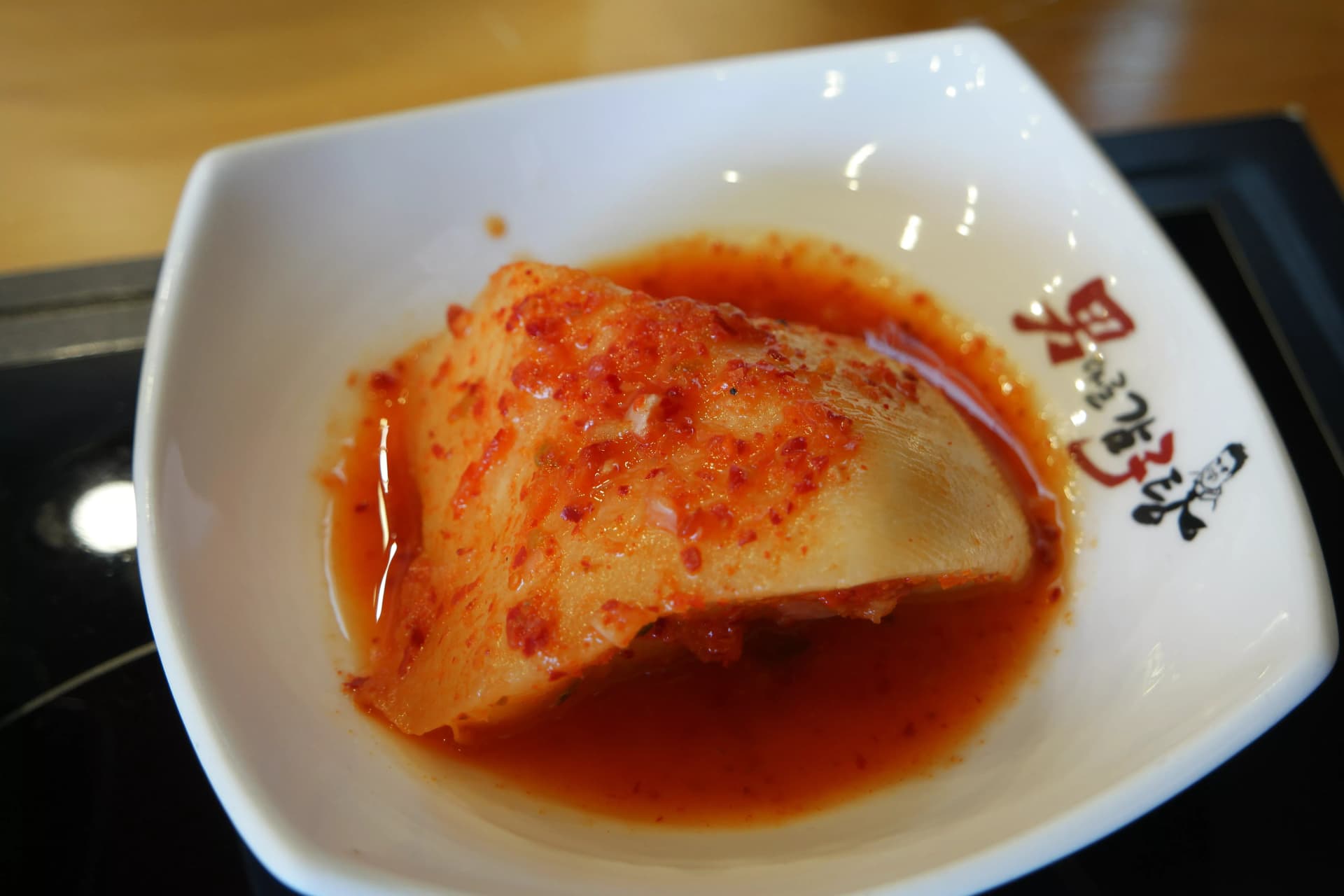
The kimchi is sitting in a pool of red brine, the napa cabbage perfectly fermented. Put a piece of kimchi on top of your spoonful of gamjatang broth and the spiciness doubles — and it's seriously addictive, haha. At Korean restaurants, kimchi is a basic side dish that comes free with your meal, and you can get unlimited refills.
The radish is cut into neat cubes and coated in red chili seasoning. Since gamjatang broth is so bold and intense, the crisp, refreshing crunch of kkakdugi resets your palate between bites. Gamjatang and kkakdugi are a more perfect pairing than you'd expect.
🥬 Kimchi vs Kkakdugi — They're Both Kimchi
Kkakdugi isn't a separate food. It's a type of kimchi made with cubed radish instead of napa cabbage.
🥬 Napa Cabbage Kimchi
- Main ingredient: Napa cabbage
- Texture: Soft with a satisfying chew
- Flavor: Deep, rich fermented taste
- Brine: Plenty of red liquid
- The most iconic type of kimchi
🟥 Kkakdugi
- Main ingredient: Radish (mu)
- Texture: Crispy and refreshing crunch
- Flavor: Slightly sweet with a spicy kick
- Brine: Light and clean
- A variety of kimchi
What They Have in Common
- They're both kimchi
- Fermented foods → packed with probiotics
- Basic side dish at Korean restaurants → free + unlimited refills
- Both help balance out gamjatang's bold, spicy broth
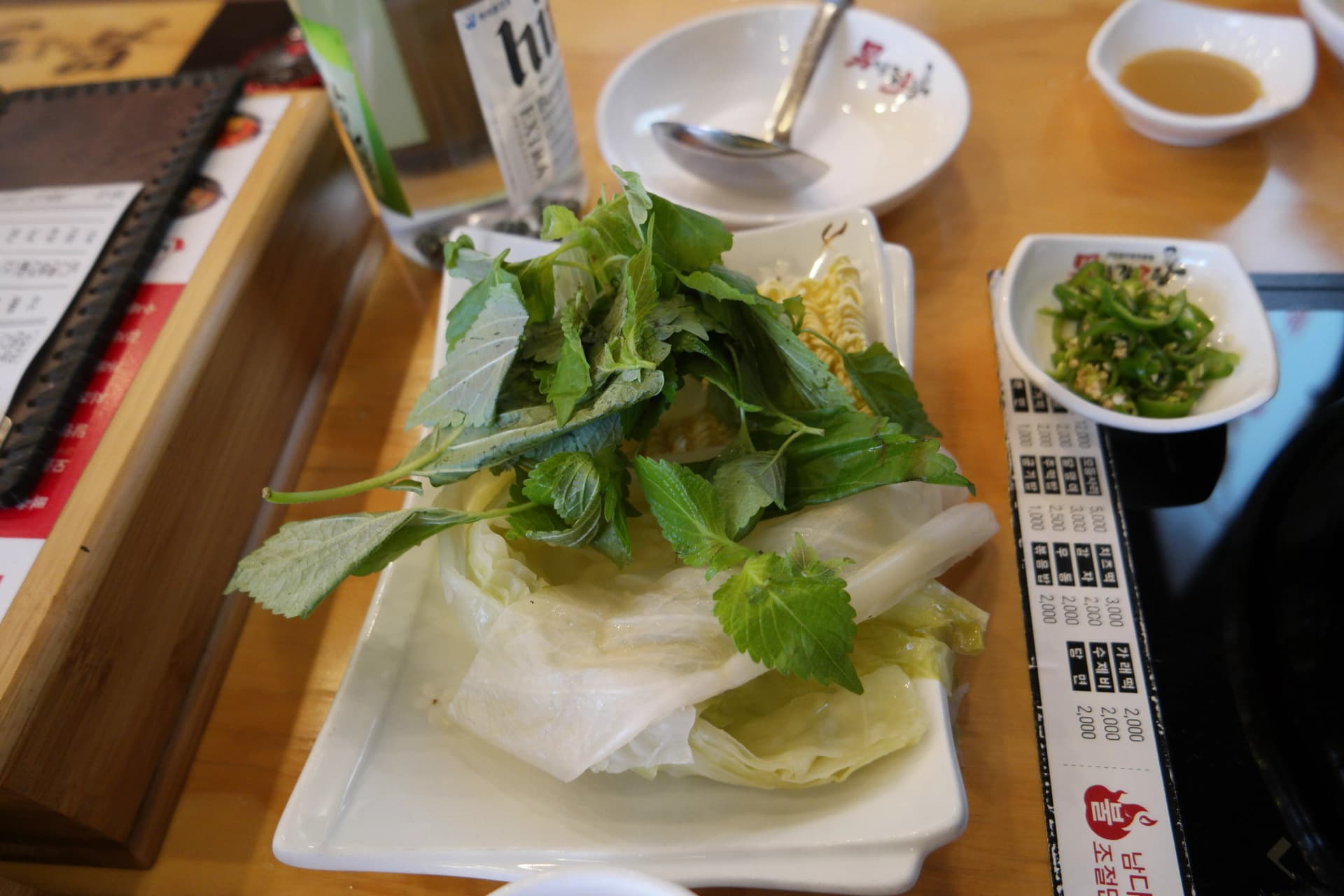
These are napa cabbage and perilla leaves — not part of the default setup, but ordered separately as add-ons. As the gamjatang boils, the vegetables cook down and shrink, so ordering extra cabbage and perilla leaves to toss into the pot is a great move. The broth seeps into the vegetables and the flavor gets even deeper.
I highly recommend adding extra vegetables when you eat gamjatang. If you're eating only meat, it can start to feel heavy, and the cabbage and perilla leaves balance that out perfectly. The extra charge is barely anything, so it's totally worth it, haha.
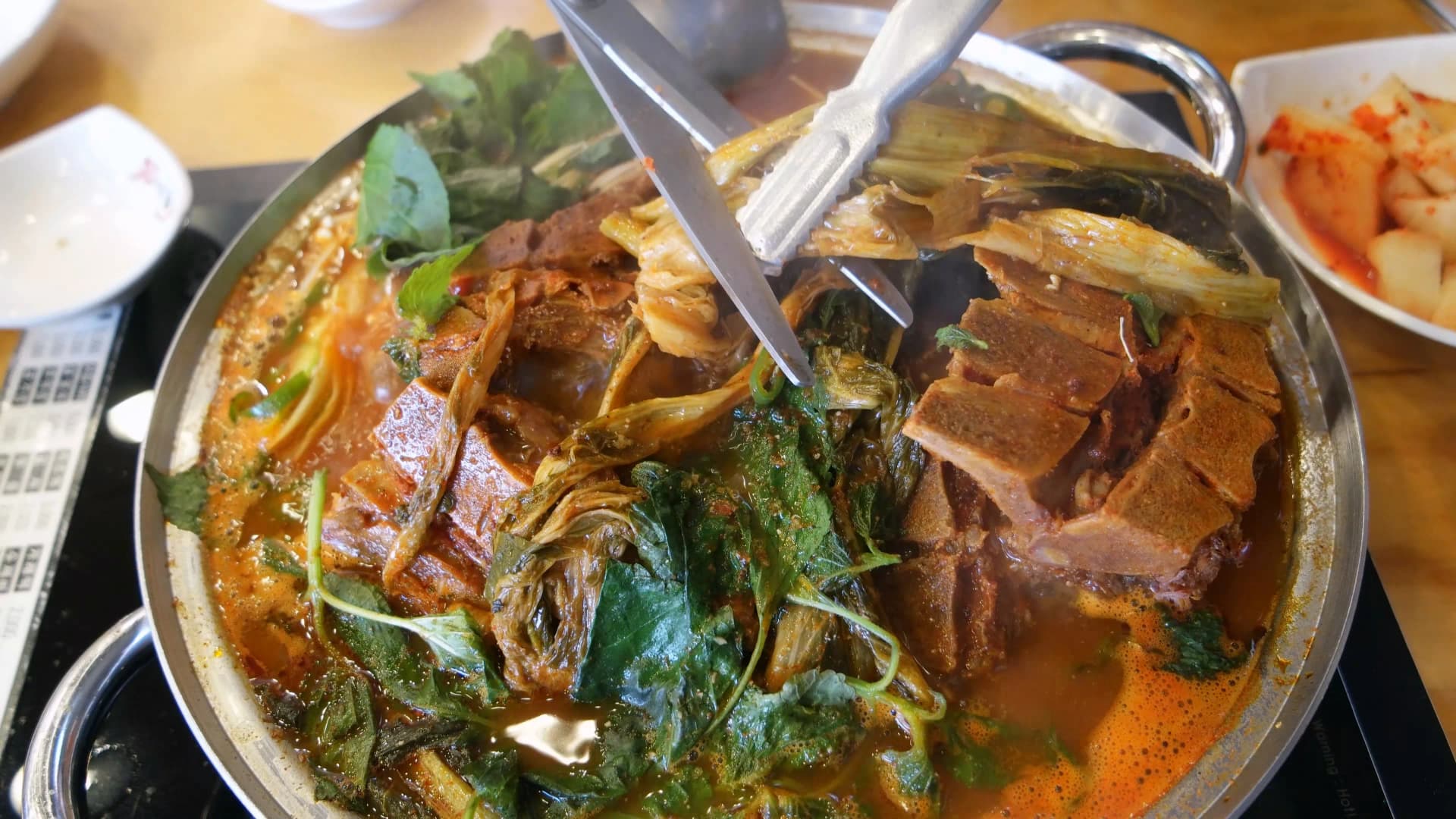
Here's the siraegi after it's been simmered. The dried radish greens are originally really tough and long. It's hard to eat them whole, so the key move is to cut them into manageable pieces with scissors. In gamjatang, siraegi isn't just a filler ingredient. The longer it boils, the more bone broth it absorbs. Eventually, some people say the siraegi actually tastes better than the meat itself, haha.
Pork Spine Bones — The True Star of This Pork Bone Soup
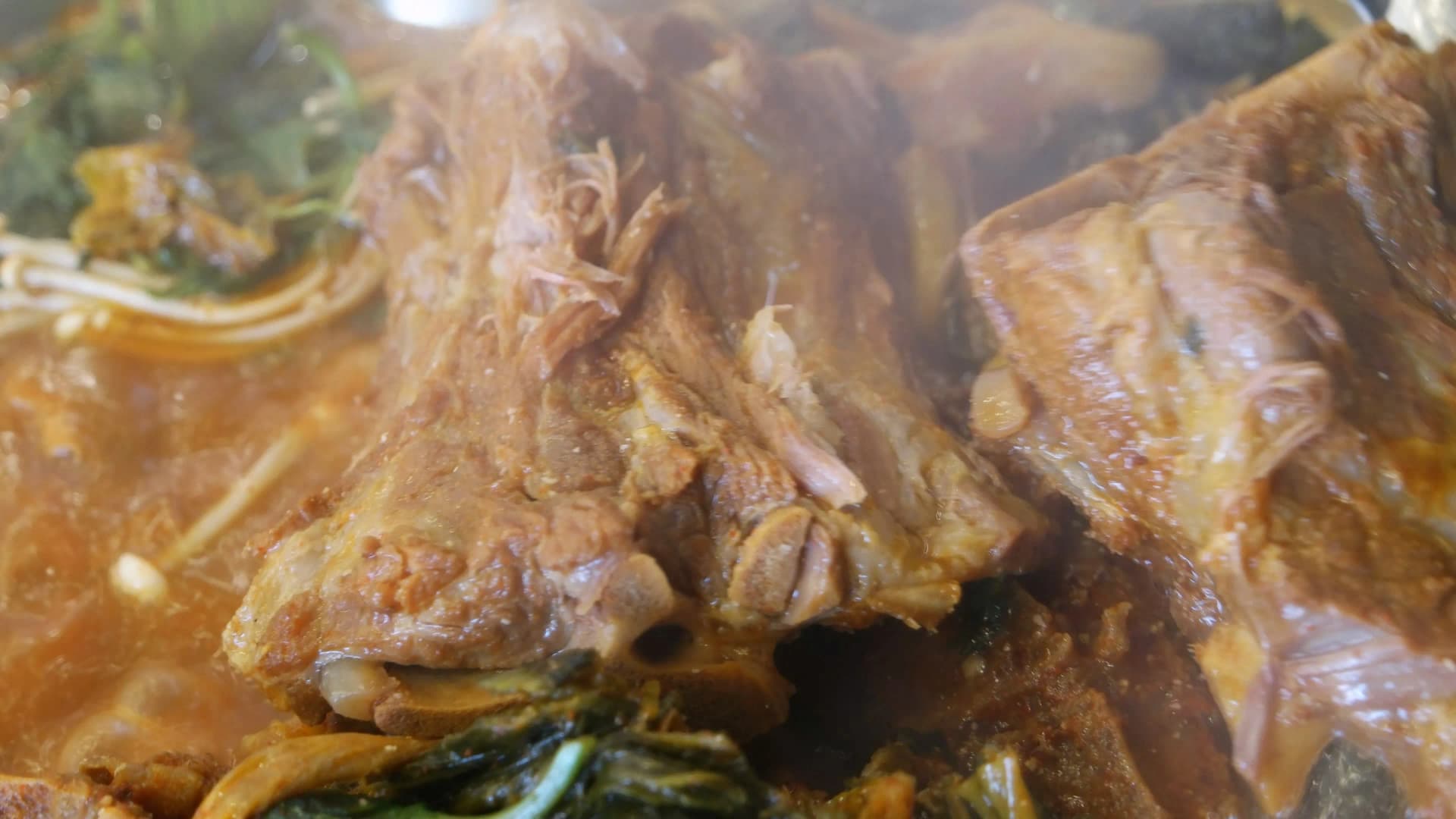
Here are the pork spine bones submerged in the broth. As they cook, all that rich flavor seeps out of the bones and into the soup. At first the bones feel tough, but after simmering for a while, the meat around the bone starts loosening up — eventually you can grab it with your hand and suck the meat right off. That moment is the absolute highlight of eating gamjatang, haha.
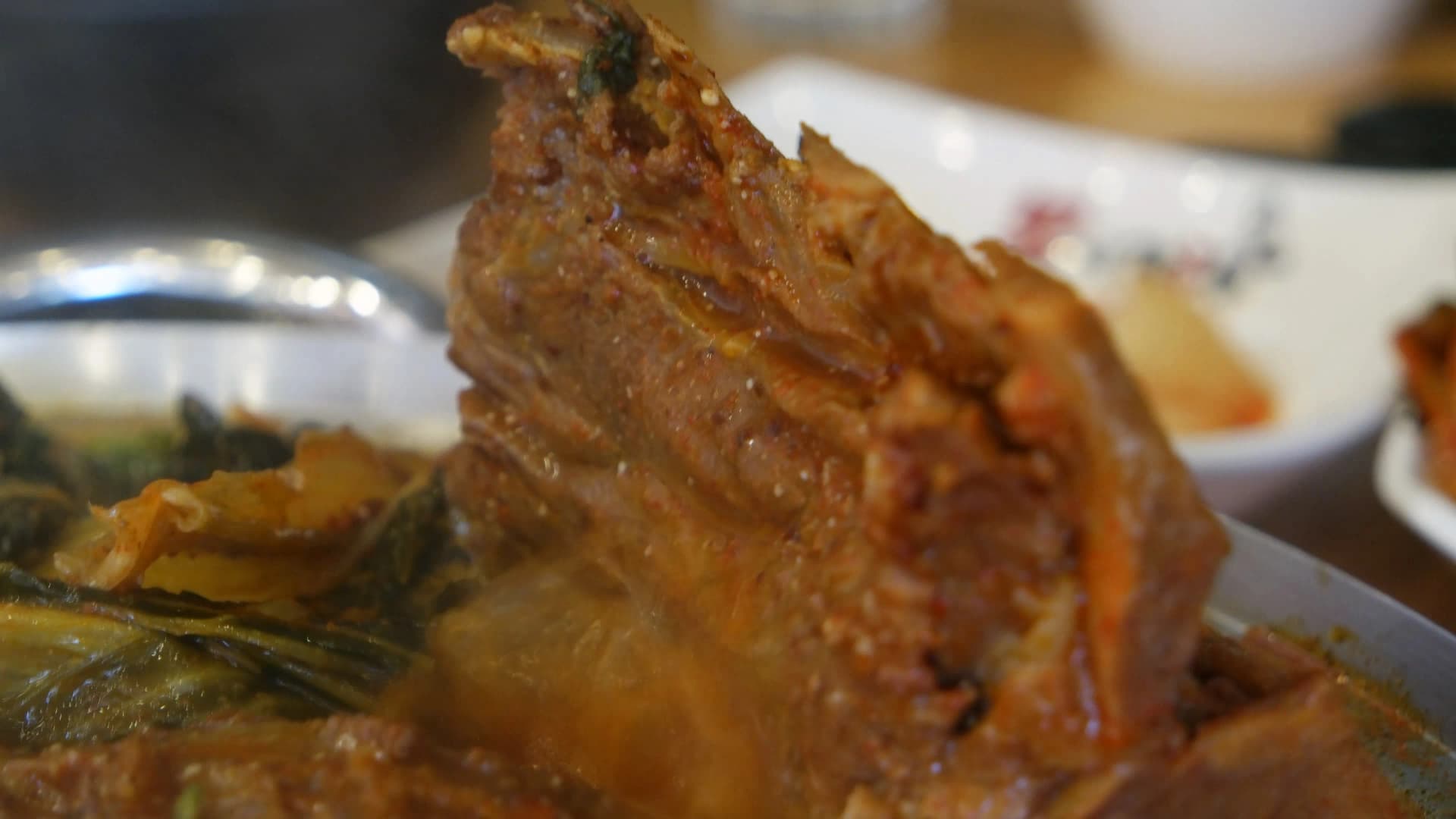
Here's the bone from another angle. You can see the meat clinging between the vertebrae. The longer that meat stays submerged in the broth, the more tender it gets — it tears apart softly and practically melts in your mouth. If the meat around the bone is still tough, it needs more time. When it starts naturally separating and you can see the meat pulling away, that's when it's perfectly done.
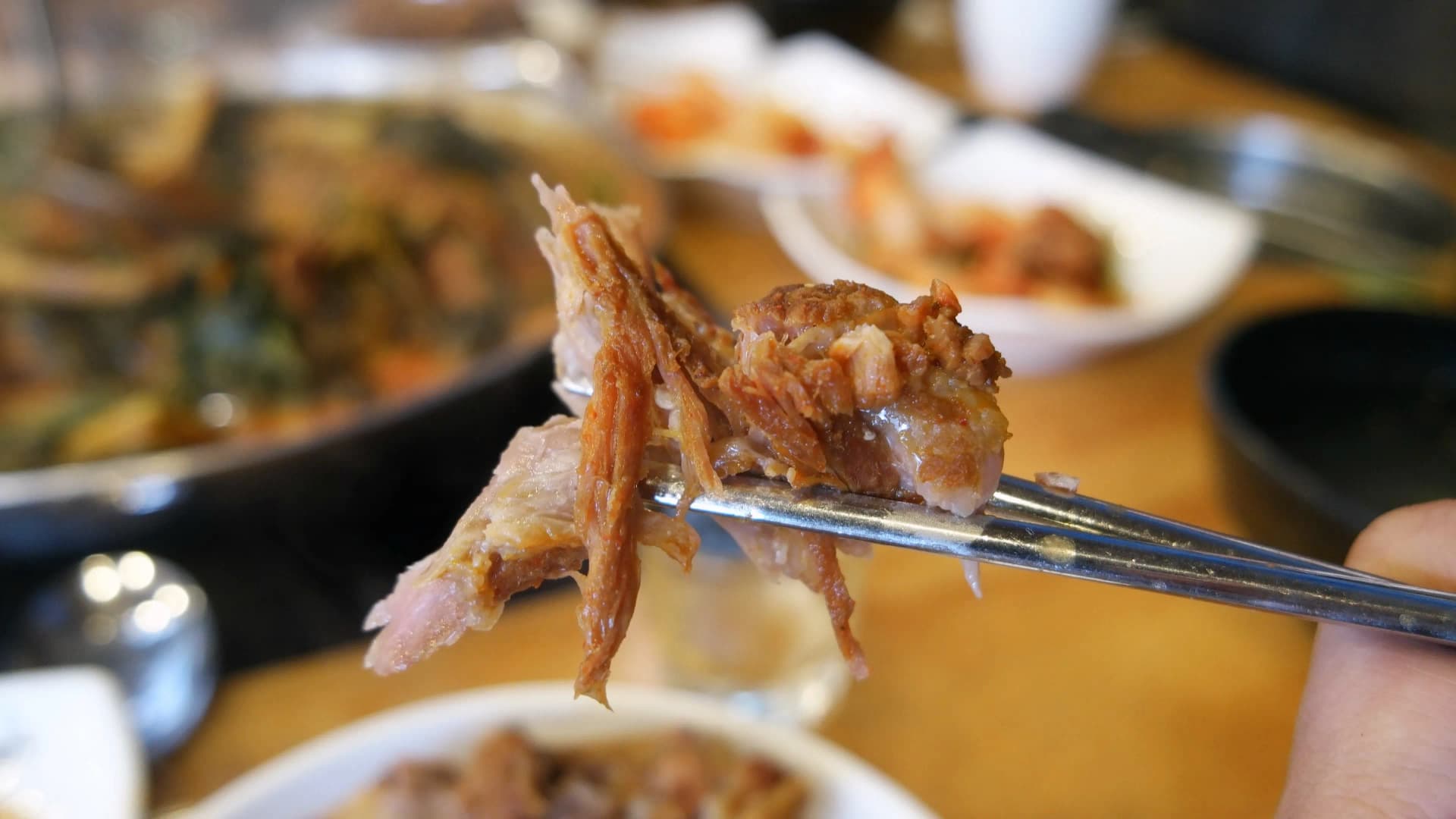
This is the beauty shot with chopsticks lifting a bone out of the pot. Ready to eat for real, haha. The angle matters here — you can see the spine bone clearly and the broth color really pops, making you just want to dig in. When I show foreigners a photo like this and say "this is gamjatang," this kind of shot is the most convincing, haha.
The Longer You Boil It, the Deeper the Flavor Gets
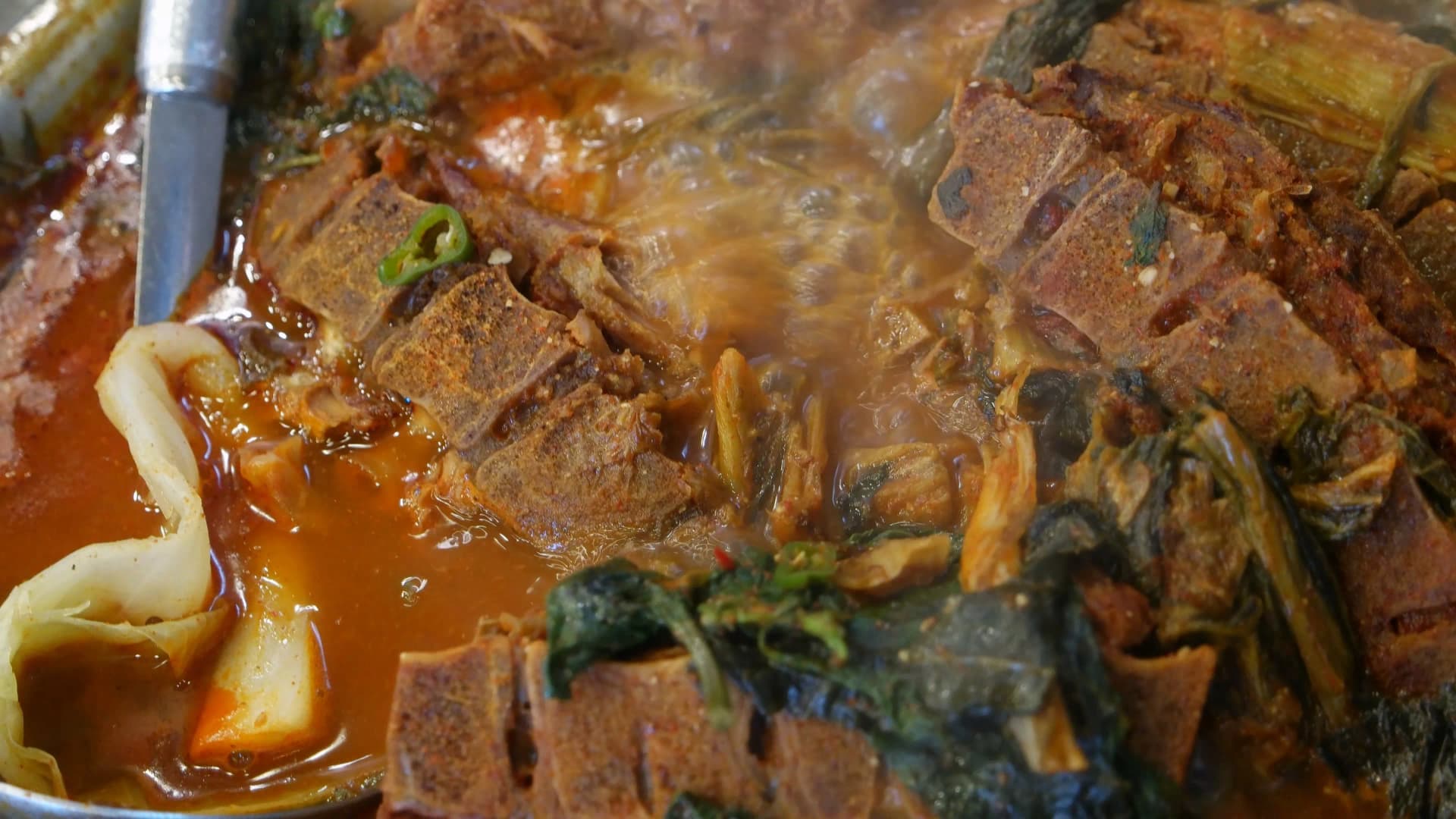
This is the broth after more boiling. The color is noticeably darker and thicker compared to the beginning. Gamjatang is the kind of dish that gets better the longer you cook it. The perilla seed powder and red chili flakes fully dissolve into the broth, transforming what started as a relatively clear soup into a rich, heavy, deeply concentrated broth. That's why people say gamjatang is a dish you eat twice — the flavor when you first start is completely different from the flavor after it's been boiling for a while, haha.
🍖 How to Eat Gamjatang Like a Pro
🔥 Let It Boil Properly First
Don't eat it the second it arrives — let it come to a rolling boil first. The longer it simmers, the more flavor seeps out of the bones and the perilla seed powder fully dissolves, creating a completely different, deeper flavor than what you started with. The second-round broth is the real deal.
🦴 The Trick to Getting Meat Off the Bone
There's a groove running down the center of each bone. Press your chopstick firmly into that groove and the bone will crack open. Use the same technique on the grooves along the sides — press firmly and the meat chunks will pop right off. It's not about brute force; it's about targeting those grooves.
✂️ Cut the Siraegi with Scissors
The dried radish greens often come in big pieces. They're awkward to eat whole, so snip them into bite-sized pieces with scissors. Once cut, the broth soaks into them more evenly and the flavor really comes alive. Some places run out of siraegi before they run out of meat — that's how popular it is.
🥬 Toss in Perilla Leaves and Cabbage
Adding perilla leaves to the broth infuses it with their distinctive aroma and takes the flavor to another level. Napa cabbage absorbs the broth as it softens, getting sweeter the more you chew. When the meat starts feeling heavy, a bite of cabbage resets your palate.
🍚 Finish with Fried Rice
After you've eaten all the solids, add rice to the leftover broth and stir-fry it — that's gamjatang fried rice (bokkeumbap). The perilla-scented broth coats every grain of rice, and it honestly tastes like a completely different dish. Finishing gamjatang with fried rice is practically an unwritten rule in Korea, haha.
🥒 Eat It with Kkakdugi
Since the gamjatang broth is so bold and intense, the crisp, cool crunch of kkakdugi between bites refreshes your palate perfectly. The contrast between the crunchy radish and the rich broth actually makes everything taste even better. Gamjatang and kkakdugi are a match made in heaven.
Gamjatang Fried Rice — The Real Finale Starts Here
The real finale of gamjatang is the fried rice. Once you've eaten all the solids and there's broth left in the pot, you add rice and start frying. The moment you do, a completely new dish is born, haha.
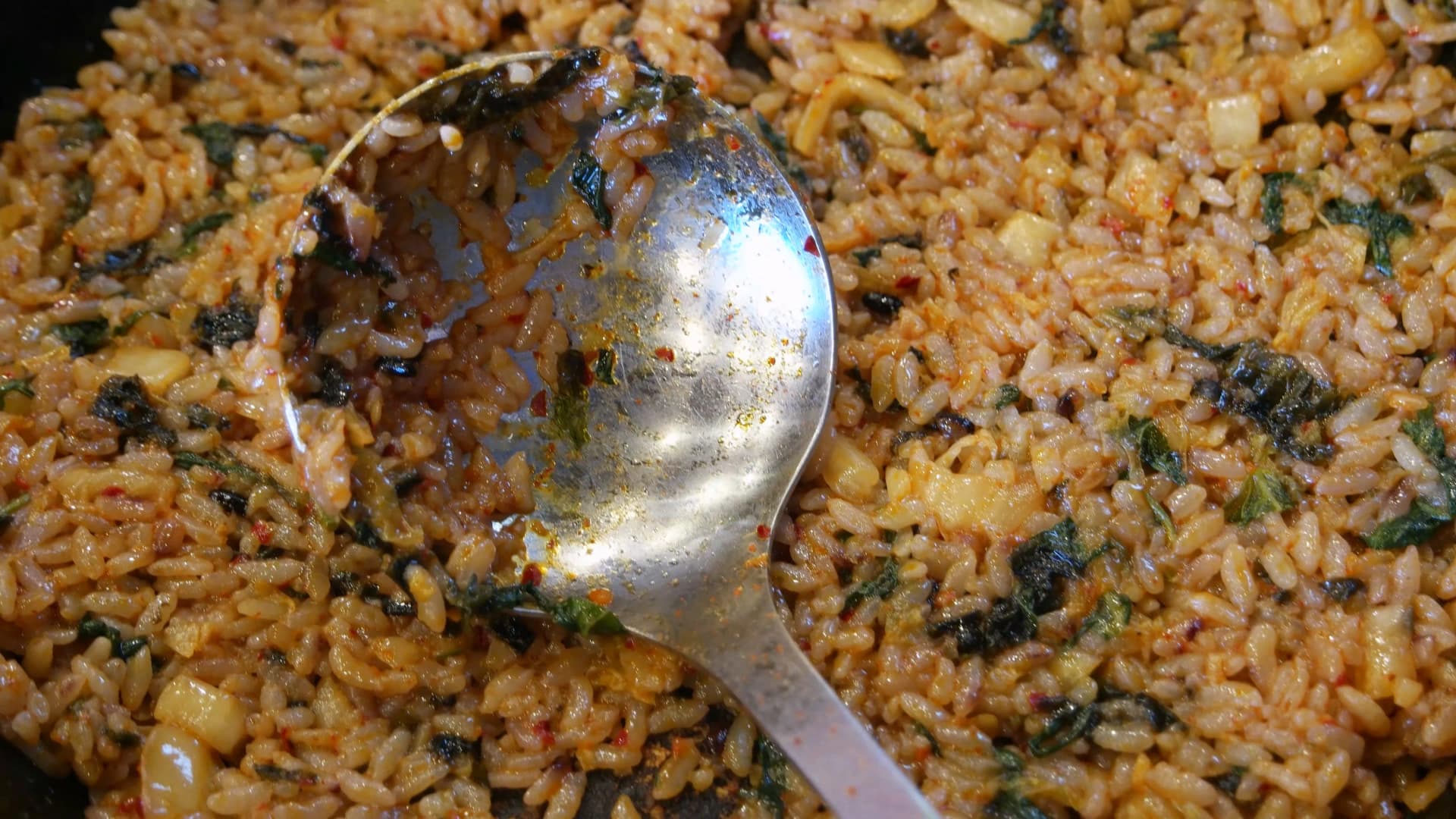
Here's a close-up shot of a spoonful of the fried rice being lifted up. The perilla-scented broth has coated each individual grain of rice evenly — you can see how the rice has turned red. The perilla leaves have been fried into the rice, their aroma completely absorbed.
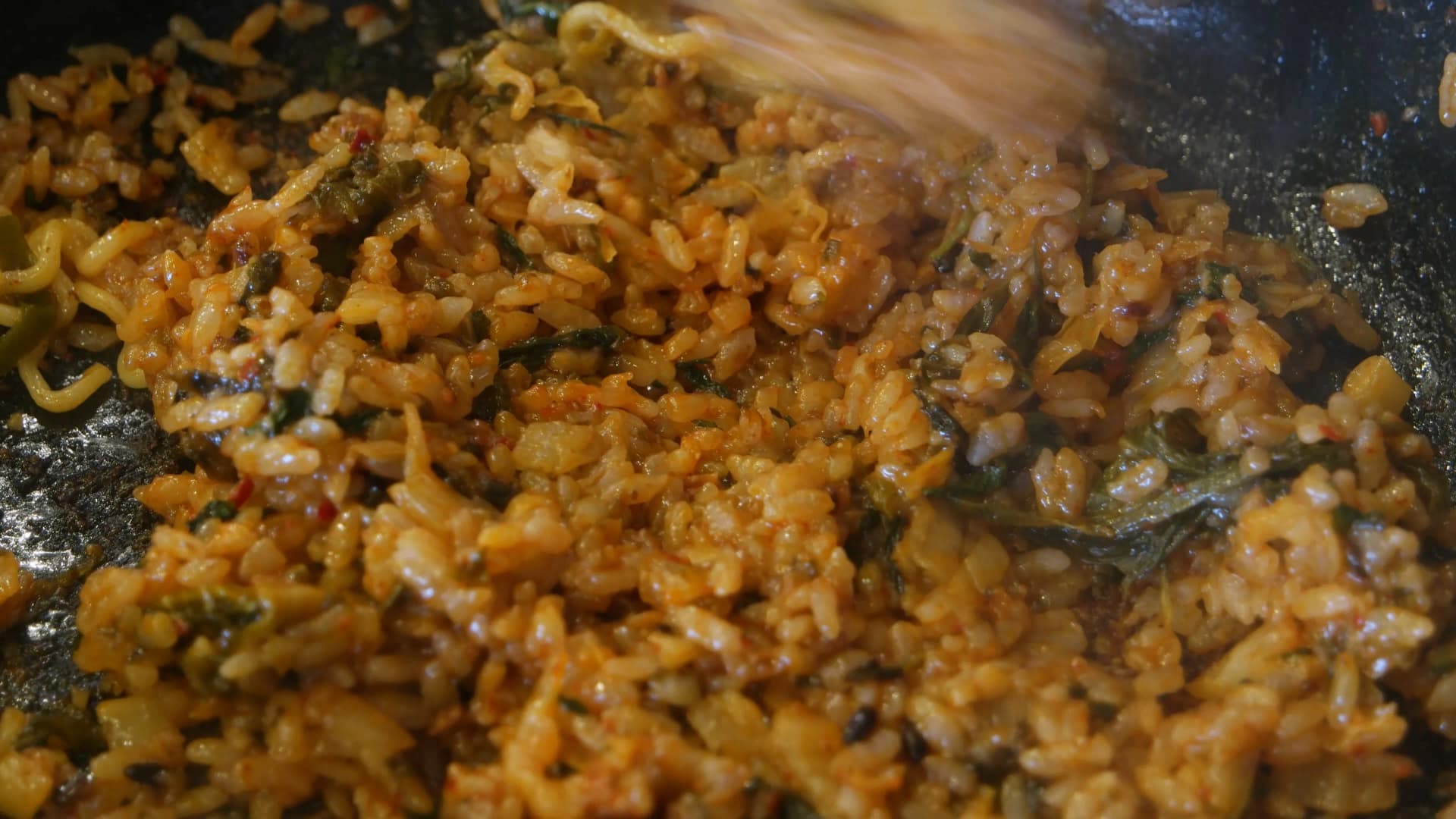
This shot captures the frying process. You can almost feel the motion of the spatula. As the broth gets absorbed into the rice, it gradually transforms into fried rice — and right around this point, the smell of crispy scorched rice (nurungji) starts rising from the bottom of the pot.
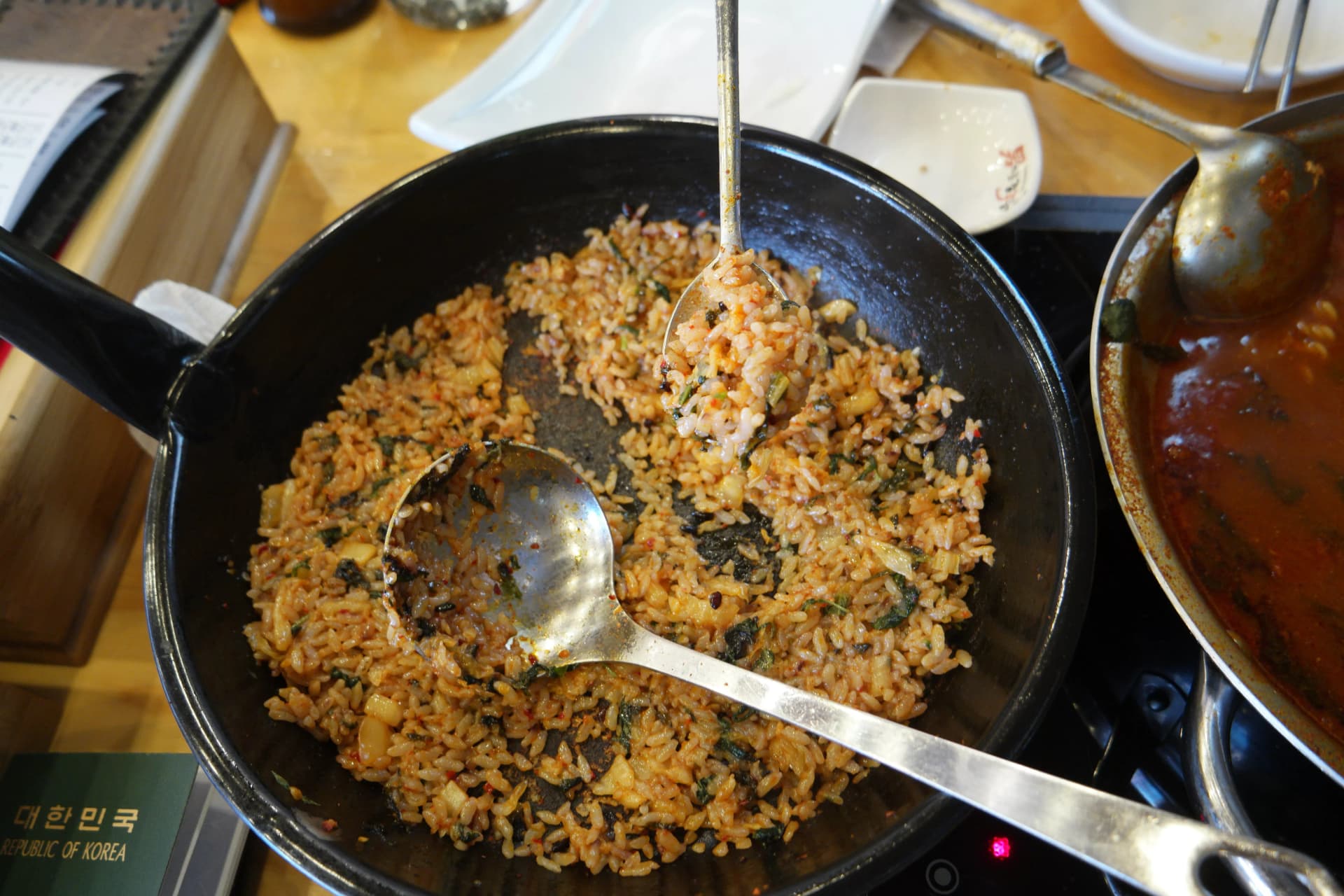
The finished fried rice in all its glory. You can see the gamjatang pot on the right — that's where the broth came from. There's even a little Korean sign visible on the table, haha.
🍚 How to Enjoy Gamjatang Fried Rice
There are two ways to get your rice fix with gamjatang. You can order the fried rice separately, or get a bowl of plain steamed rice on the side. If you want the fried rice finish, just ask the staff. It works best when there's not too much broth left — but even if there's a lot remaining, don't worry. The staff will scoop out the excess and make it for you.
💧 Moist Style
The broth is only partially cooked off so the rice stays juicy and soft, with all the broth flavor intact. It slides down smooth and easy.
🔥 Crispy Style ✅ Recommended
The broth is fully cooked off for a crunchier texture. The perilla flavor concentrates into the rice and you get that amazing scorched rice (nurungji) aroma — the taste becomes way more intense.
⚠️ Watch Out with Crispy Style!
As the liquid reduces, the rice can stick and burn on the bottom of the pot. Stir frequently and evenly throughout to keep it from scorching.
Gamjatang — Nothing Goes to Waste, Start to Finish
Gamjatang is one of those dishes where once you've tried it, you can't forget that rich, deep pork bone soup flavor. The sight of whole bones in a pot might throw you off at first, but the moment you press your chopstick into that groove and pull the meat off the bone, you're completely hooked. The broth that deepens the longer you cook it, the siraegi that soaks up all that flavor, and the gamjatang fried rice to close it all out — from the very first bite to the very last grain of rice, absolutely nothing goes to waste.
❓ Gamjatang FAQ
Q1. There's no potato in my gamjatang. Why is it called "gamja" (potato) tang?
There are two origin theories. One says the spinal marrow inside pork backbone was called "gamja" in old Korean. The other says it comes from a specific bone cut called "gamja-ppyeo." Either way, the real star is the pork spine bone, not the potato. (Though many places do include potatoes too.)
Q2. How do I eat the bones? I've never done this before.
Press your chopstick firmly into the groove running down the center of the bone — it'll crack open. It's not about brute force; target the grooves. Press the side grooves the same way and the meat chunks will pop right off.
Q3. How spicy is it?
It's got a bold kick, but it's not extremely spicy. Most foreigners can handle it just fine. If you're worried, you can ask for less spicy (deol maepge) when you order.
Q4. Can I order just one serving?
Most gamjatang restaurants require a minimum order of 2 servings. If you're eating solo, a more realistic option is to order ppyeo-haejangguk (single-serve bone hangover soup) — same style of broth, but portioned for one.
Q5. What is siraegi?
It's dried radish greens. The texture starts out tough, but the longer it simmers, the more broth it absorbs — turning soft and incredibly flavorful. Some people swear the siraegi ends up tasting better than the meat.
Q6. How do I order the fried rice?
Once you've eaten all the solids, just ask the staff for fried rice (bokkeumbap). Even if there's too much broth left, they'll scoop out the excess and make it for you. It's the true grand finale of gamjatang, haha.
Q7. What if I can't eat pork?
Gamjatang's core ingredient is pork spine bone, so there's no real substitute. If you can't eat pork for religious or dietary reasons, unfortunately you'll have to pass on this one.
Q8. Do I have to pay for kimchi and kkakdugi?
At Korean restaurants, kimchi and kkakdugi are basic side dishes — totally free. You can ask for unlimited refills at no charge.
Where Can You Find a Gamjatang Restaurant?
📍 Where Can You Eat It?
You don't need to go on a special hunt for gamjatang. It's everywhere — right in the heart of Seoul, in small rural towns, even in tiny village centers. It's one of the most common restaurant types in Korea, so you'll have absolutely no trouble finding one wherever you are.
If you want to find a highly-rated gamjatang spot, the fastest way is to search from wherever you are right now. Copy and paste any of the search terms below into Google or Naver.
🔍 Recommended Search Terms
감자탕 맛집
For finding nearby gamjatang restaurants based on your current location
감자탕 맛집 추천 (area name)
e.g.) 강남 감자탕 맛집 추천 / 홍대 감자탕 맛집 추천
Gamjatang restaurant near me
For searching in English. Works great on Google Maps.
뼈해장국 맛집
When you need a single-serve option. Same broth style, perfect for solo dining.
💡 Search Tip
Searching on Naver Map or KakaoMap lets you see reviews and photos together, which is super convenient. Google Maps also has solid Korean restaurant info, so foreigners have nothing to worry about.
This post was originally published on https://hi-jsb.blog.