
Spicy Korean Army Base Stew You Need to Try
Table of Contents
14 items
Jjigae: The Heart of Every Korean Meal
Today, let's talk about one of the best entry-level dishes in Korean cuisine: budae-jjigae (Army Base Stew) — a spicy Korean stew that's absolutely worth trying on your trip.
First things first — jjigae is basically Korea's version of a rich, hearty stew. You load up a pot with ingredients, let it bubble away, and eat it with rice. In Korea, jjigae isn't just another dish — it's the centerpiece of the table. People cook it at home all the time, and at restaurants, a single pot of jjigae is a perfectly complete meal.
In English, it's often translated as "Korean stew," but it's pretty different from Western stews in both how it's cooked and how it's eaten. Jjigae is served still bubbling on a tabletop burner, and you scoop from the pot right at the table. It always comes paired with steamed rice — that combo is the most fundamental form of a Korean meal.
What Exactly Is Budae-jjigae (Army Base Stew)?
So what's budae-jjigae? The name literally translates to "army base stew." After the Korean War, people living near U.S. military bases started tossing processed meats — ham, sausages, SPAM — into a spicy broth made with kimchi and gochujang (Korean chili paste). That's how this dish was born. Fast-forward to today, and it's evolved into a full-blown Korean one-pot meal with added ramyeon noodles, cheese, rice cakes, and dumplings. Part of the fun is gathering around the pot and cooking it together.
What's fascinating is that a dish born out of wartime scarcity has become one of Korea's most beloved comfort foods. Areas near former U.S. bases like Uijeongbu and Songtan (both cities within 1–2 hours of Seoul) are famous as the birthplace of budae-jjigae, and their "budae-jjigae alleys" are still popular tourist spots today.
🍲 Key Ingredients in Budae-jjigae
Side Dishes That Come with Army Base Stew
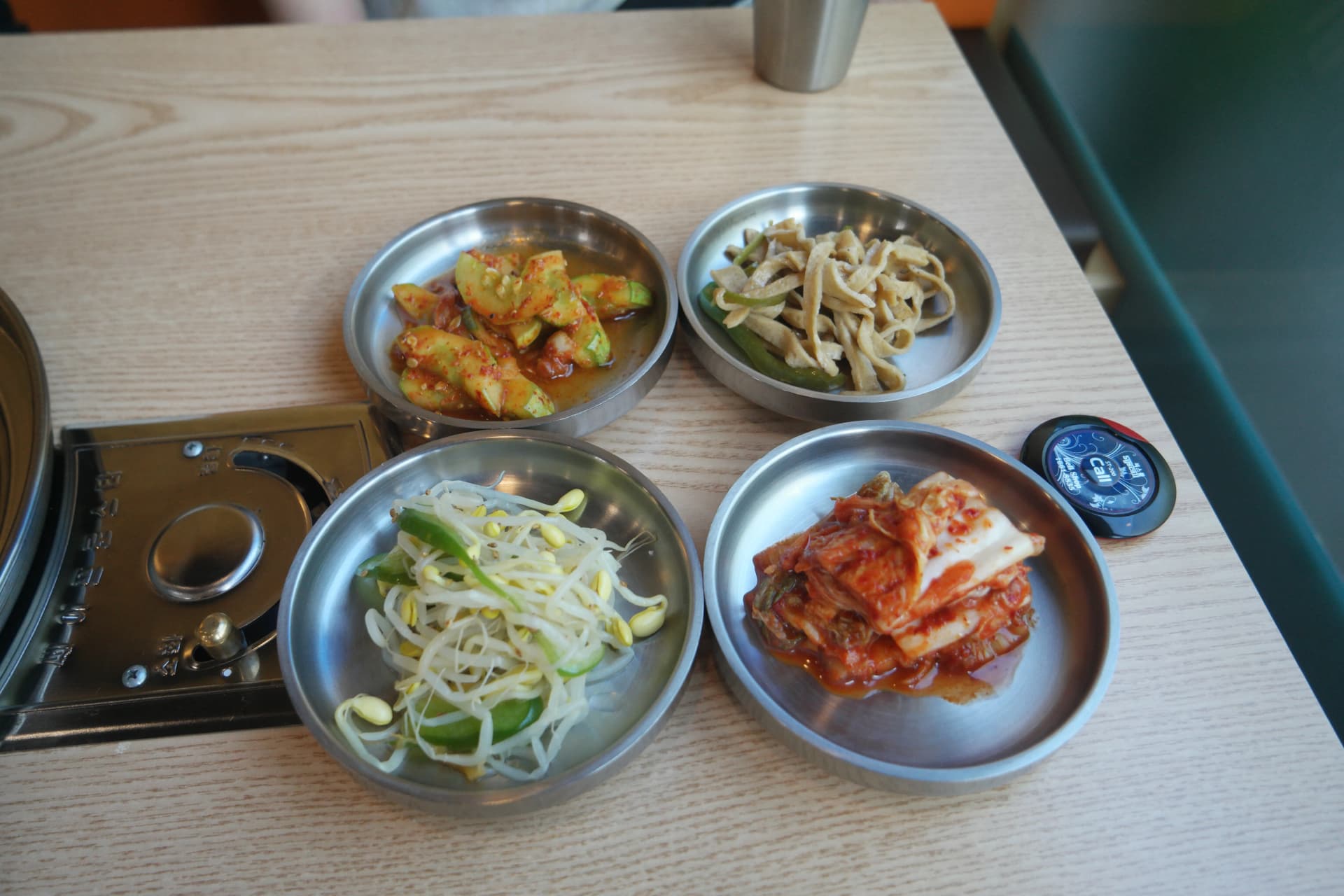
Before the main dish arrives, you'll find a spread of small side dishes already laid out on the table. In Korea, these complimentary sides — called banchan — are eaten alongside rice, and they vary from restaurant to restaurant. If you're visiting Korea for the first time, you might wonder "Do I have to pay extra for these?" The answer is no — banchan are free in Korea, and most places will happily refill them too.
Seasoned Bean Sprouts — The Perfect Sidekick to Spicy Stew
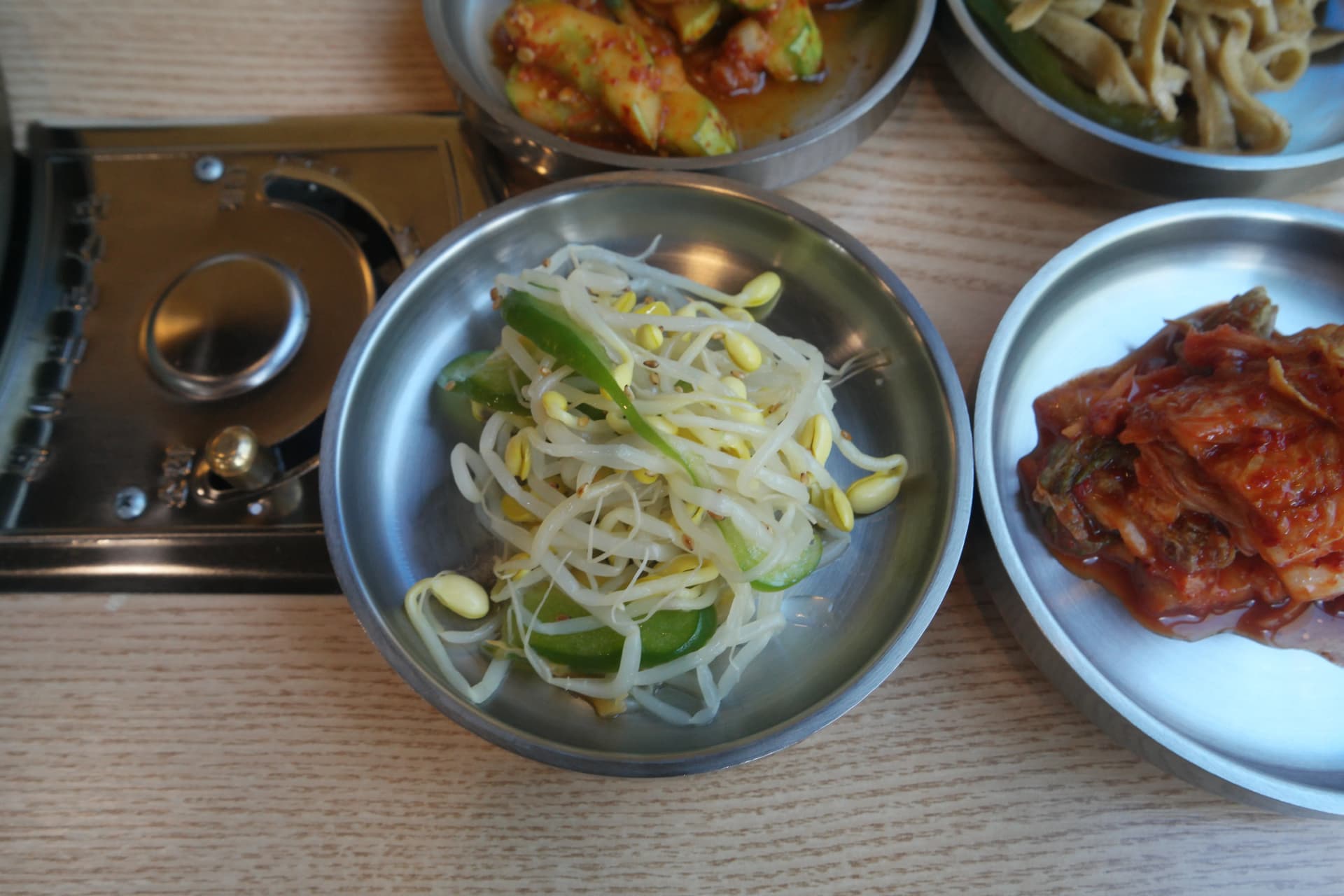
This one is kongnamul-muchim — lightly seasoned bean sprouts. It's a simple, mild side dish with a satisfying crunch, and it works wonders alongside a spicy stew. Bean sprouts are one of the most common ingredients in Korean banchan, and their crisp texture basically acts like a "reset button" for your palate between bites of heat.
Kimchi — The Korean Table Essential
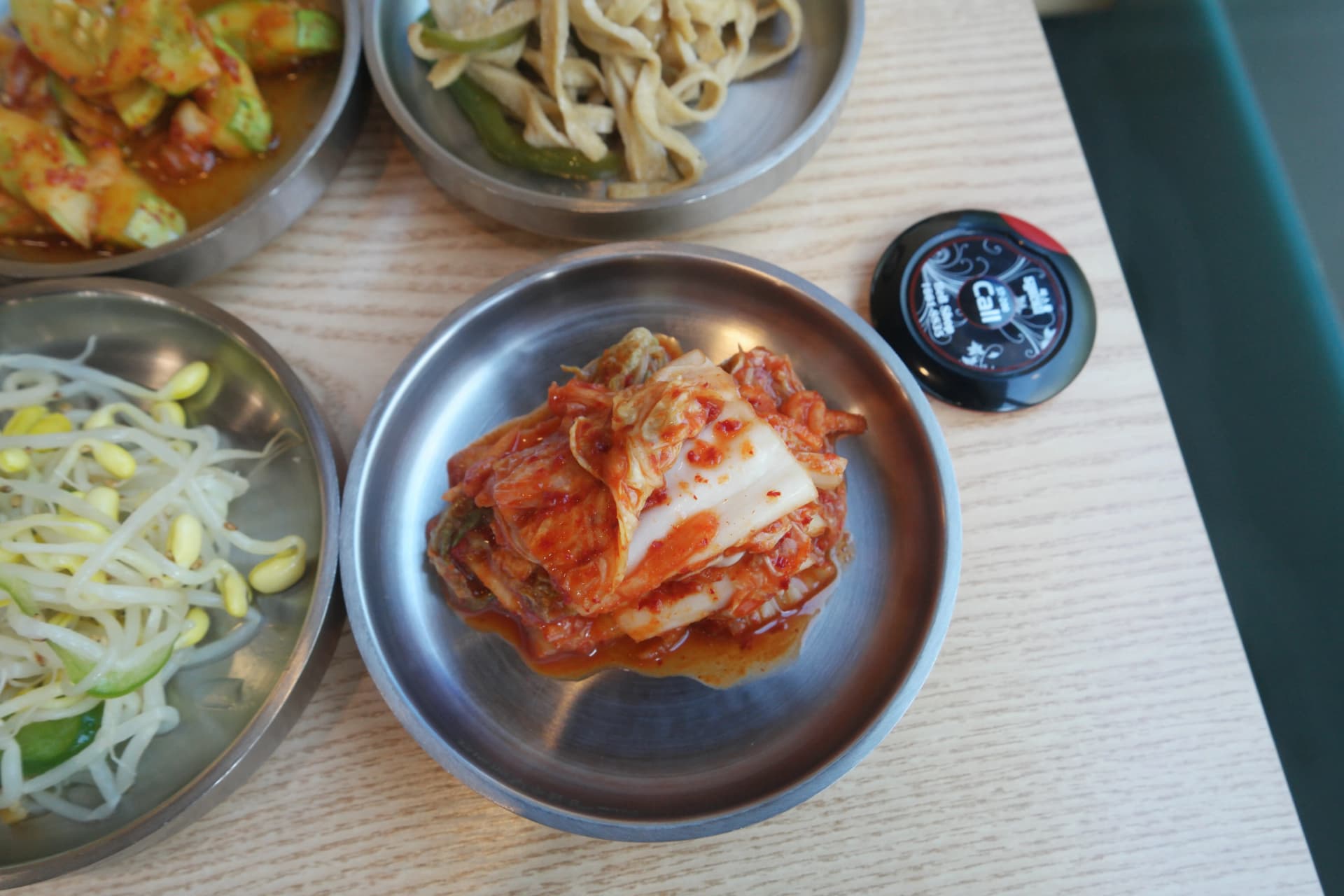
Next up: kimchi. It's the most iconic side dish in all of Korean cuisine — tangy, spicy, and a perfect match for rice. If kimchi is new to you, try dipping it briefly into the budae-jjigae broth before eating. The stew mellows out kimchi's strong flavor, making it a great way to ease into it.
Stir-Fried Fish Cake — A Savory Little Bite
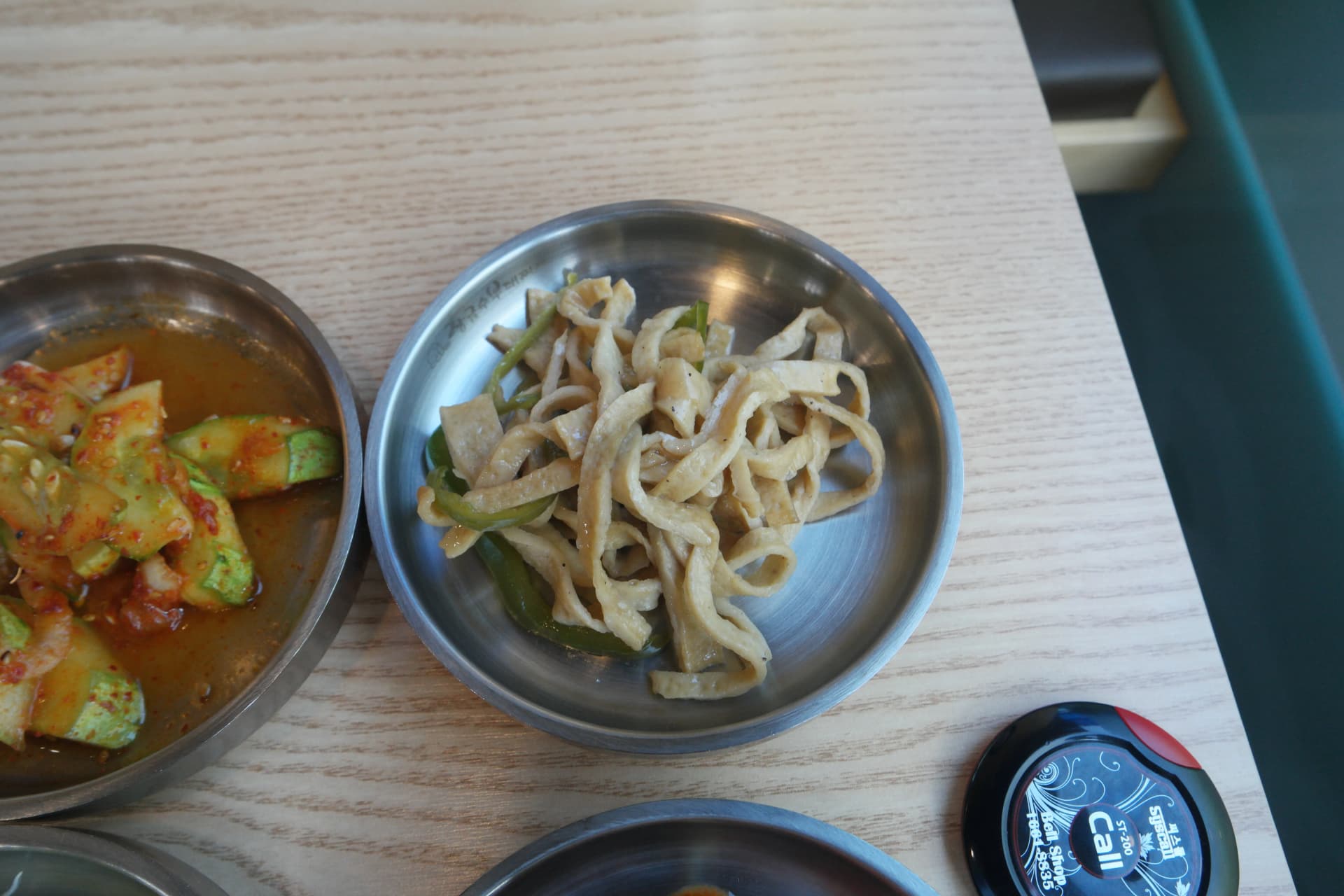
This banchan is eomuk-bokkeum — strips of fish cake stir-fried in a savory soy sauce glaze. It's salty and slightly sweet, perfect for snacking on while you wait for the main event. Korean fish cake (eomuk) is similar to Japanese kamaboko, but in Korea it's more commonly stir-fried or served in broth.
Spicy Cucumber Salad — The Perfect Match for Rich Stew
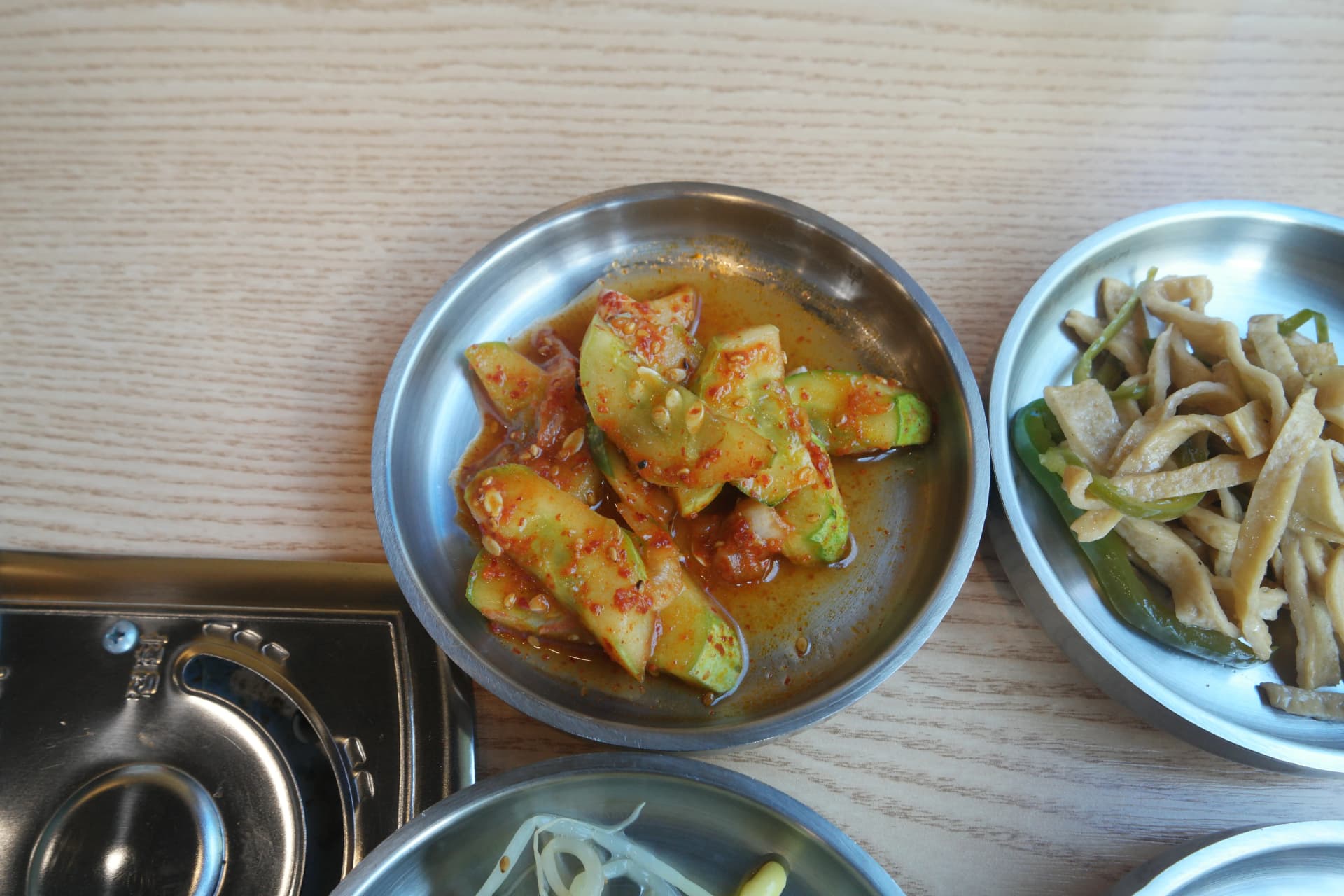
This is oi-muchim — a spicy-tangy cucumber salad done kimchi-style. It's refreshing and bright, which makes it a fantastic pairing with the rich, meaty budae-jjigae. One bite of this crisp cucumber between spoonfuls of stew keeps everything from feeling too heavy, so you can just keep eating.
The Main Event: Budae-jjigae Arrives
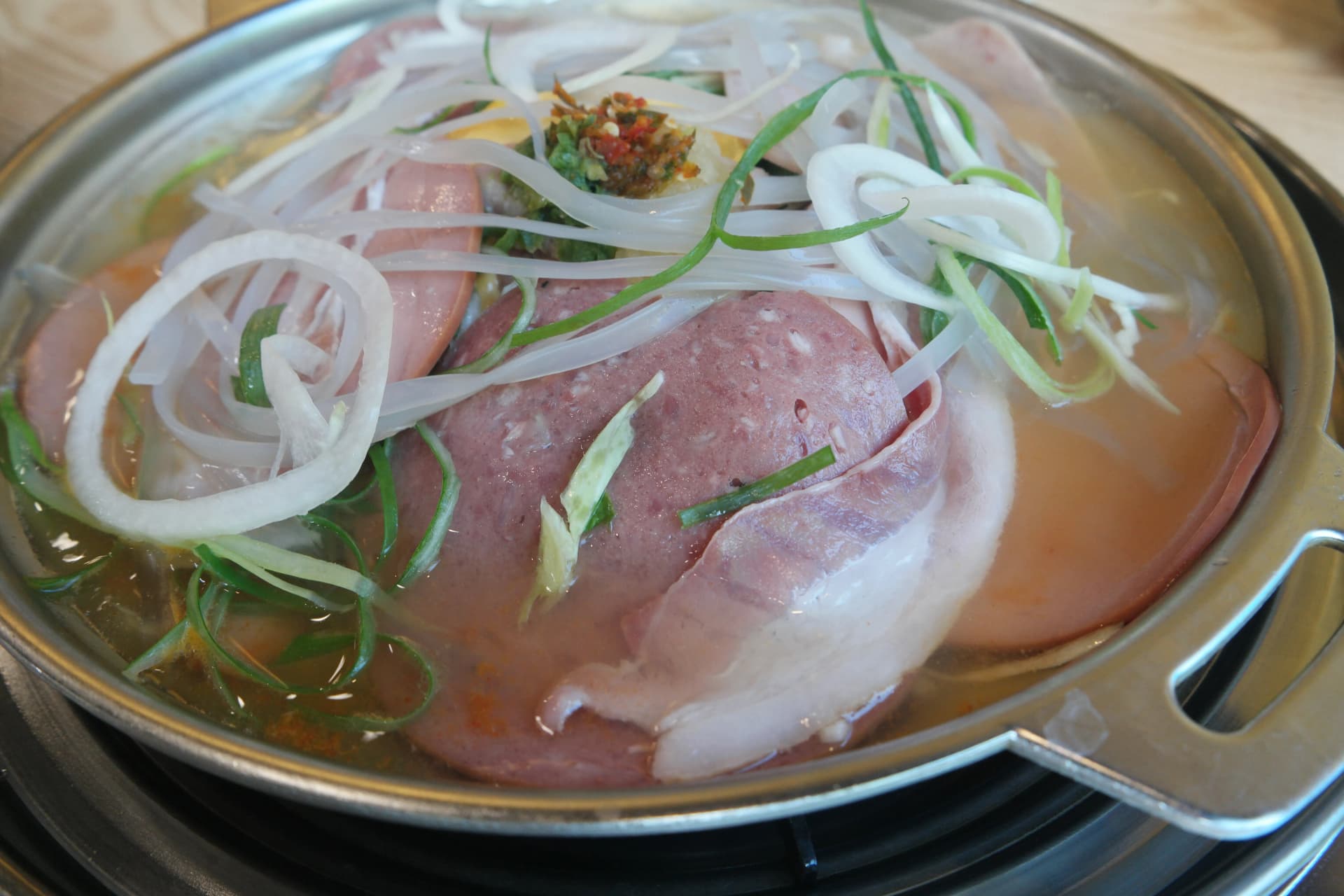
Here it is — today's main dish, budae-jjigae. If you're new to Korean food, especially if you come from a bread-or-pasta culture, the idea of eating a stew with rice might feel a little unfamiliar at first. But here's the funny thing — people who visit Korea regularly almost always end up loving this combo of rice plus a spoonful of stew. If you haven't traveled Korea much yet, I seriously recommend budae-jjigae as your starter dish. It layers familiar ingredients like ham and sausage on top of Korea's spicy stew tradition, so it's approachable for first-timers while still delivering that authentic Korean kick.
Cooking the Stew — When the Broth Comes Alive
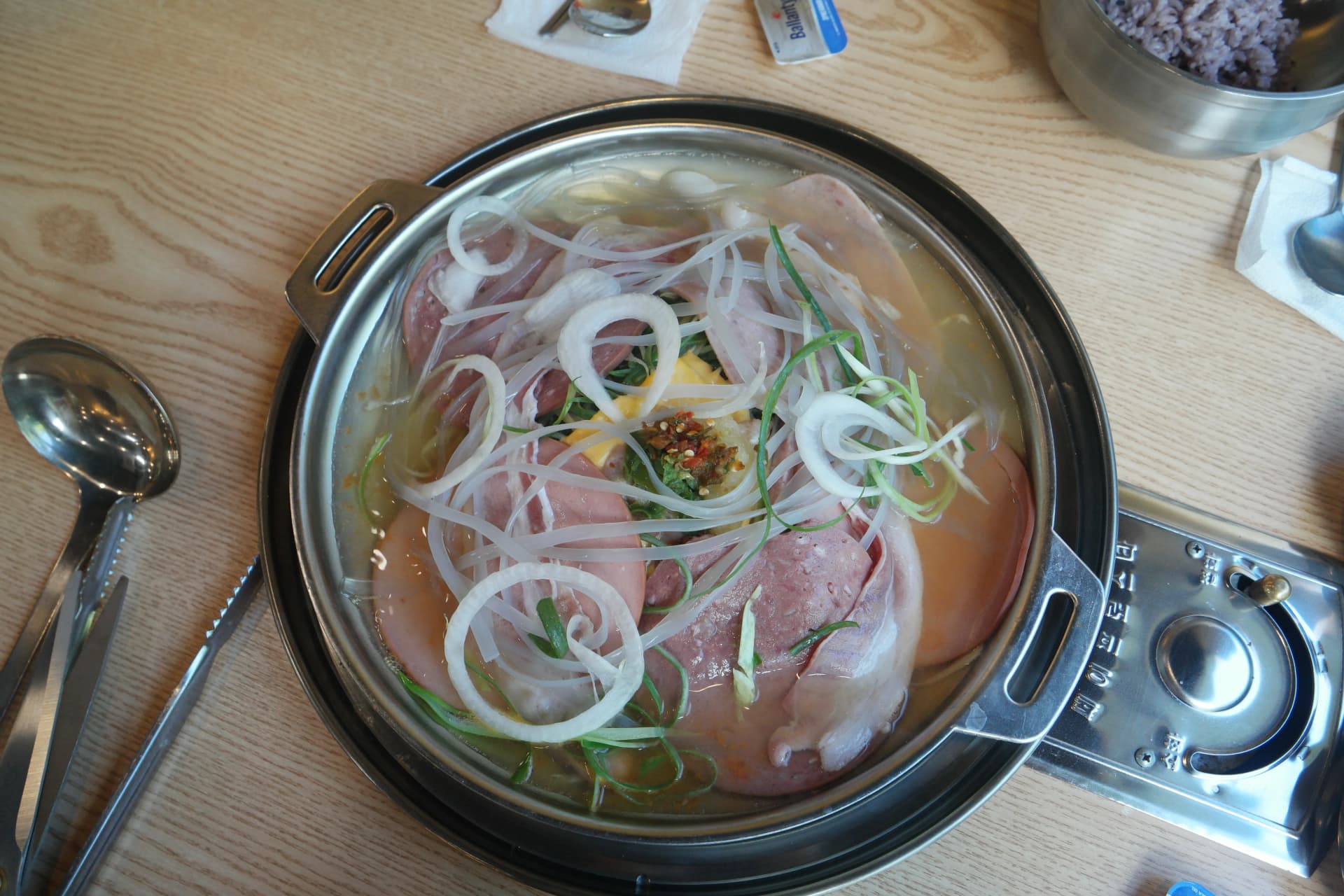
Budae-jjigae is cooked by piling ham, sausage, onion, and green onion into the pot and letting it all simmer together. Once you stir in the seasoning paste in the center, the broth gradually turns red and the flavors really come alive. At most Korean restaurants, the pot sits on a tabletop gas burner and you cook it yourself — and honestly, watching it bubble right in front of you is half the fun of budae-jjigae.
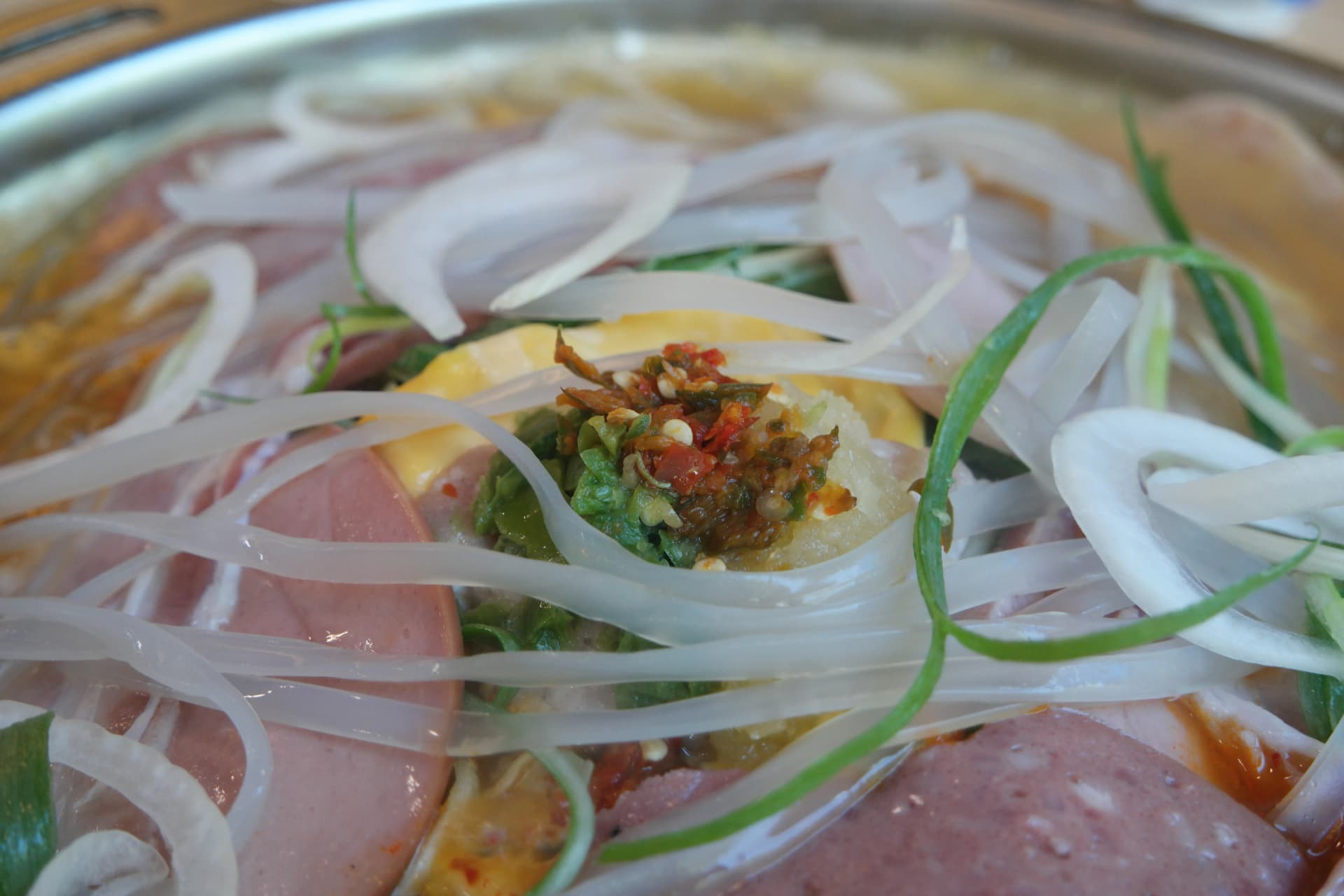
It starts out looking like a clear broth, but as it simmers and the seasoning mixes in, it transforms into that signature spicy army stew broth. As everything cooks, the salty richness from the ham slowly infuses into the soup.
A Korean Stew Even Foreigners Love
Budae-jjigae is one of those dishes that wins over international visitors at a surprisingly high rate. The familiar ingredients — ham, sausage — lower the barrier to entry, making it easy to enjoy even if you've never had Korean stew before. If you check Korean travel forums or YouTube, you'll find tons of reviews saying "budae-jjigae was the best thing I ate on my first trip to Korea."
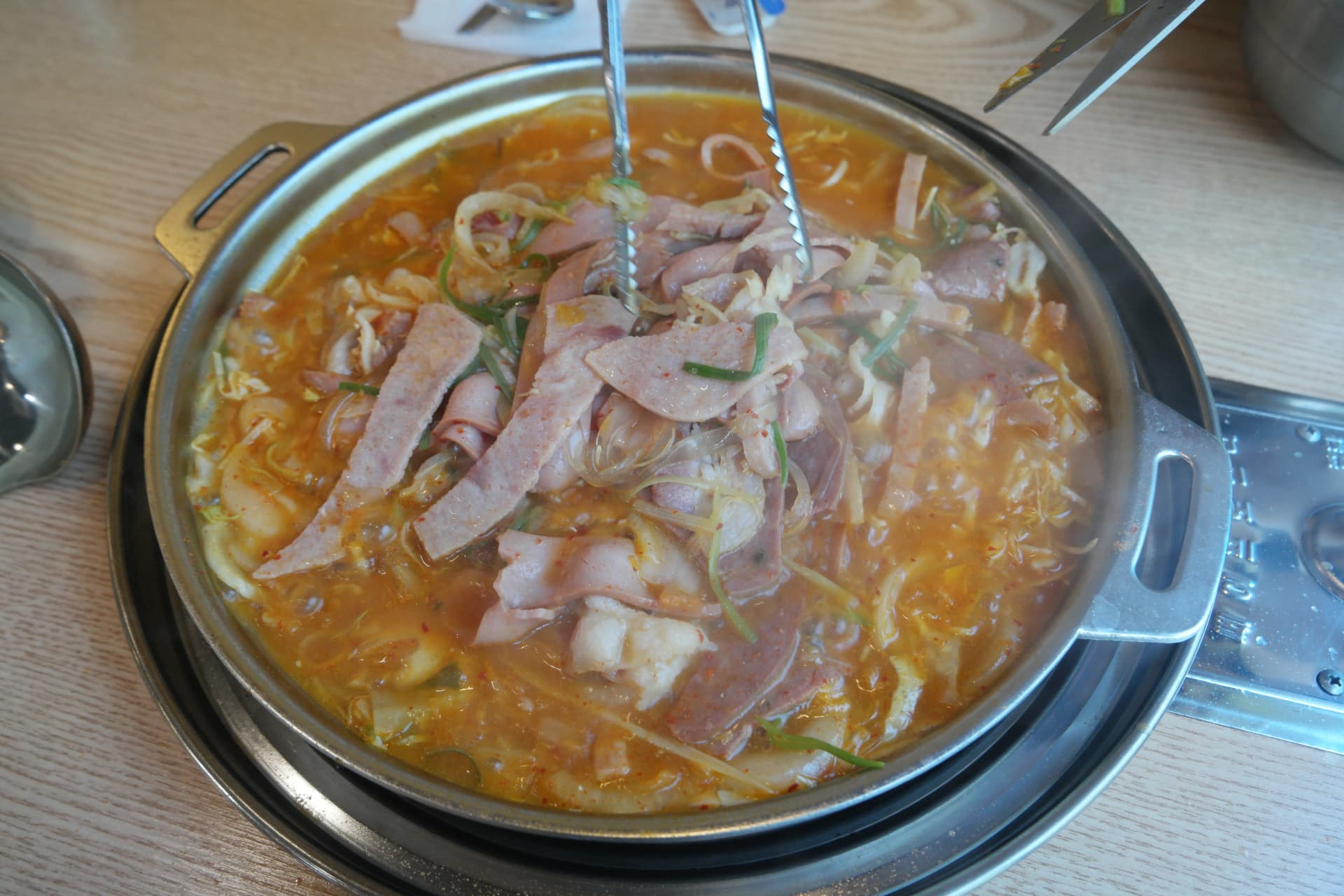
If you're traveling in Korea, you can find budae-jjigae restaurants practically everywhere. From small neighborhood joints to well-known franchise chains, there are plenty of options, making it easy to work into any itinerary. The price is pretty reasonable too — typically around $6–$9 per serving.
The Magic of a Bubbling Pot of Army Base Stew
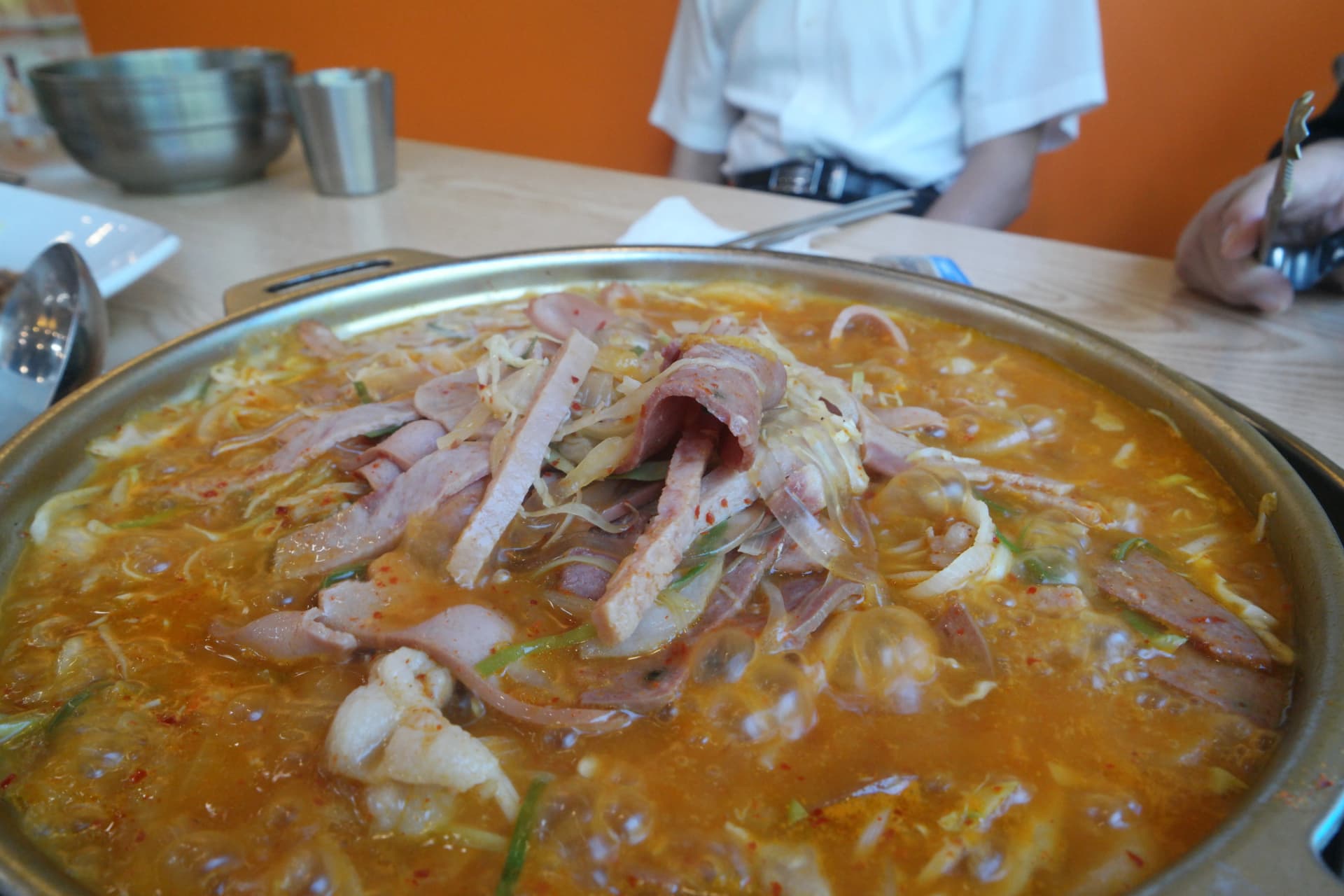
Once it really gets bubbling, the broth thickens and all the flavors meld together — that's when budae-jjigae hits its peak. The Korean word "bogeul-bogeul" is an onomatopoeia for the sound of a pot simmering, and when you start hearing that sound, it means it's finally time to dig in.
Loaded with Chunky, Hearty Bites
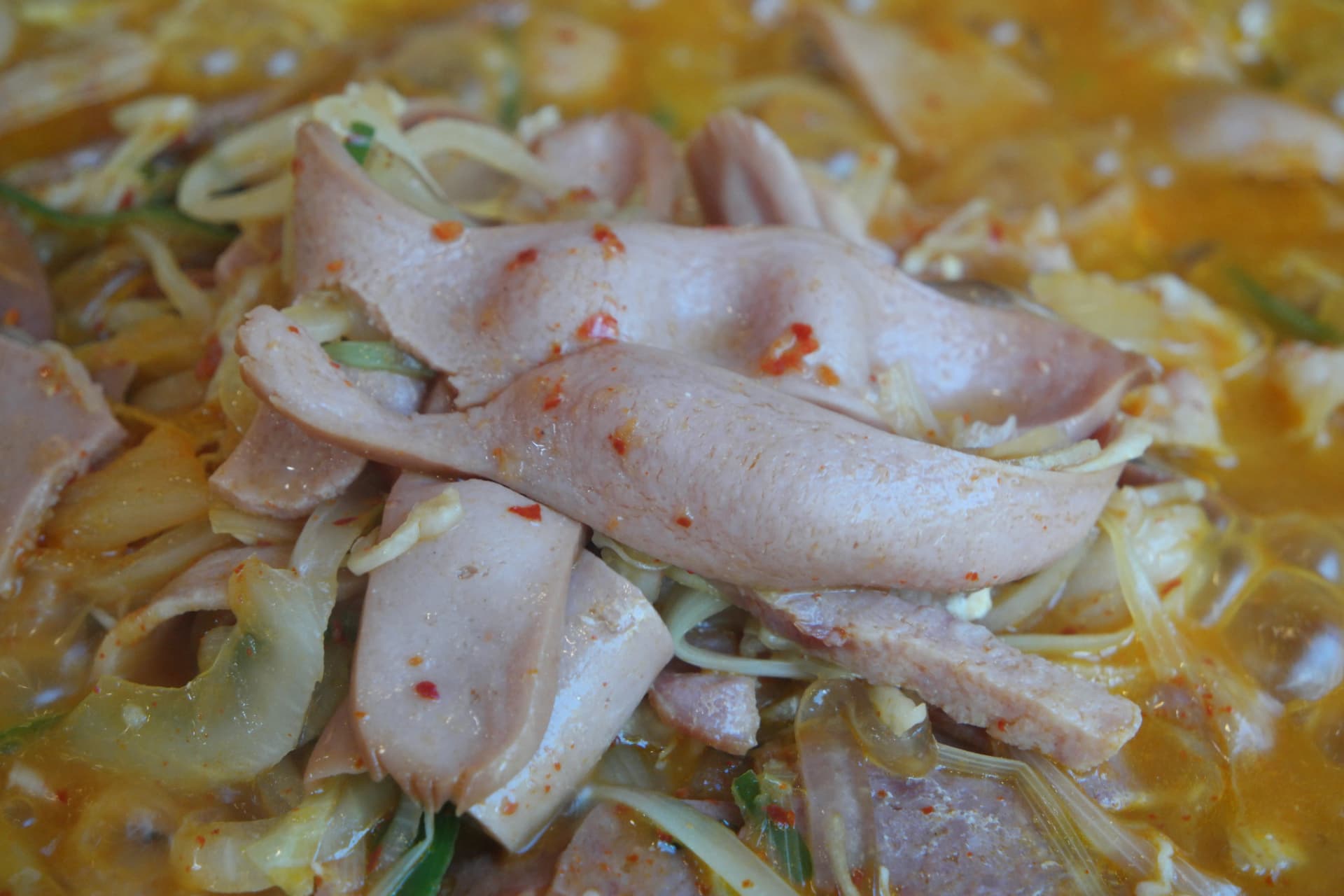
The ham and sausage pieces are cut nice and thick, so every bite feels substantial and satisfying. The meaty richness soaks deep into the broth too. With this much stuff loaded in, it really feels like proper, no-holds-barred budae-jjigae.
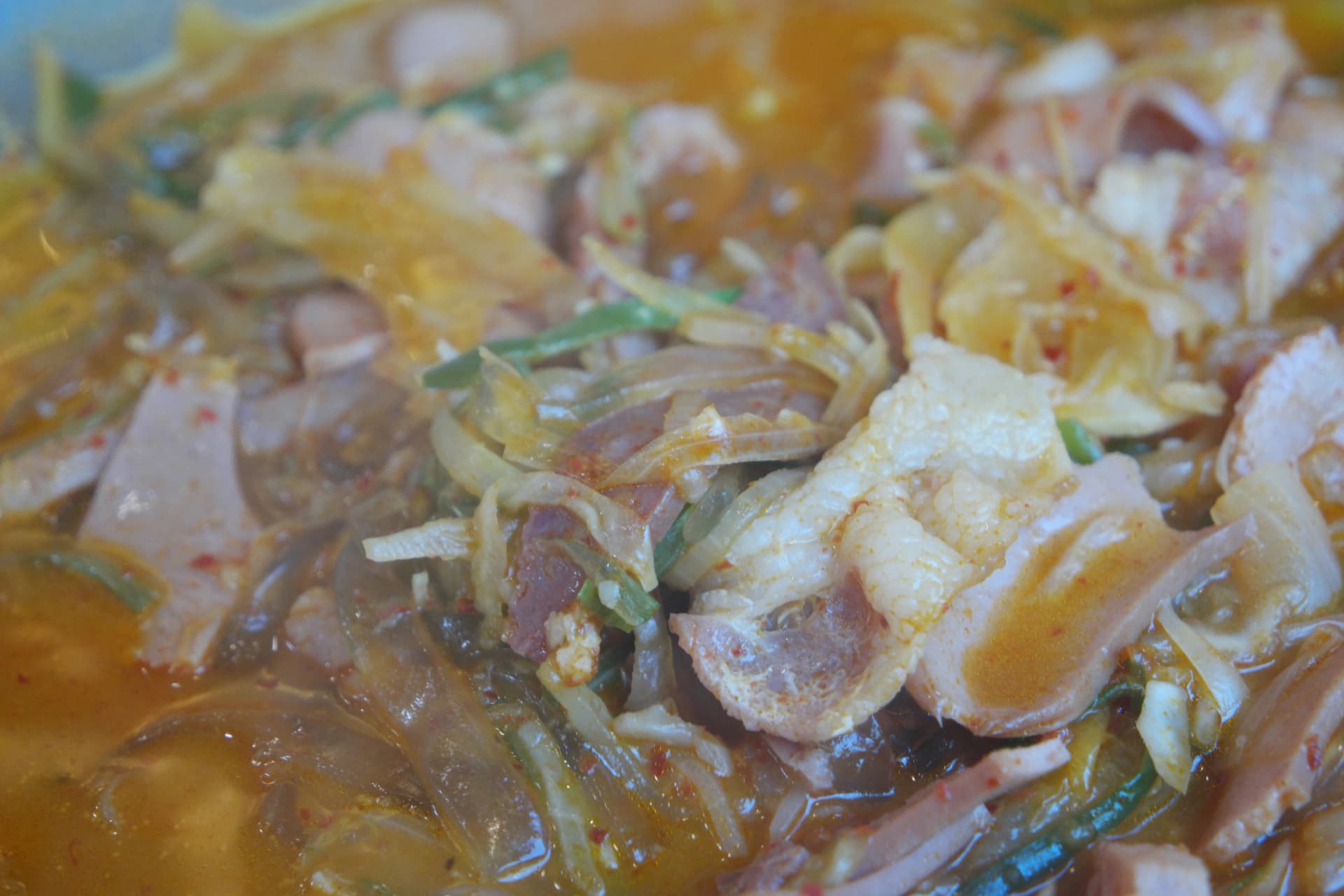
As it simmers down, the broth gets thicker and all the ingredients break down into a richer, more concentrated flavor. The ratio of solids to broth is especially generous here, so it never gets boring even with rice — the satisfaction holds up right to the last spoonful.
Budae-jjigae and Rice — The Most Korean Way to Eat It
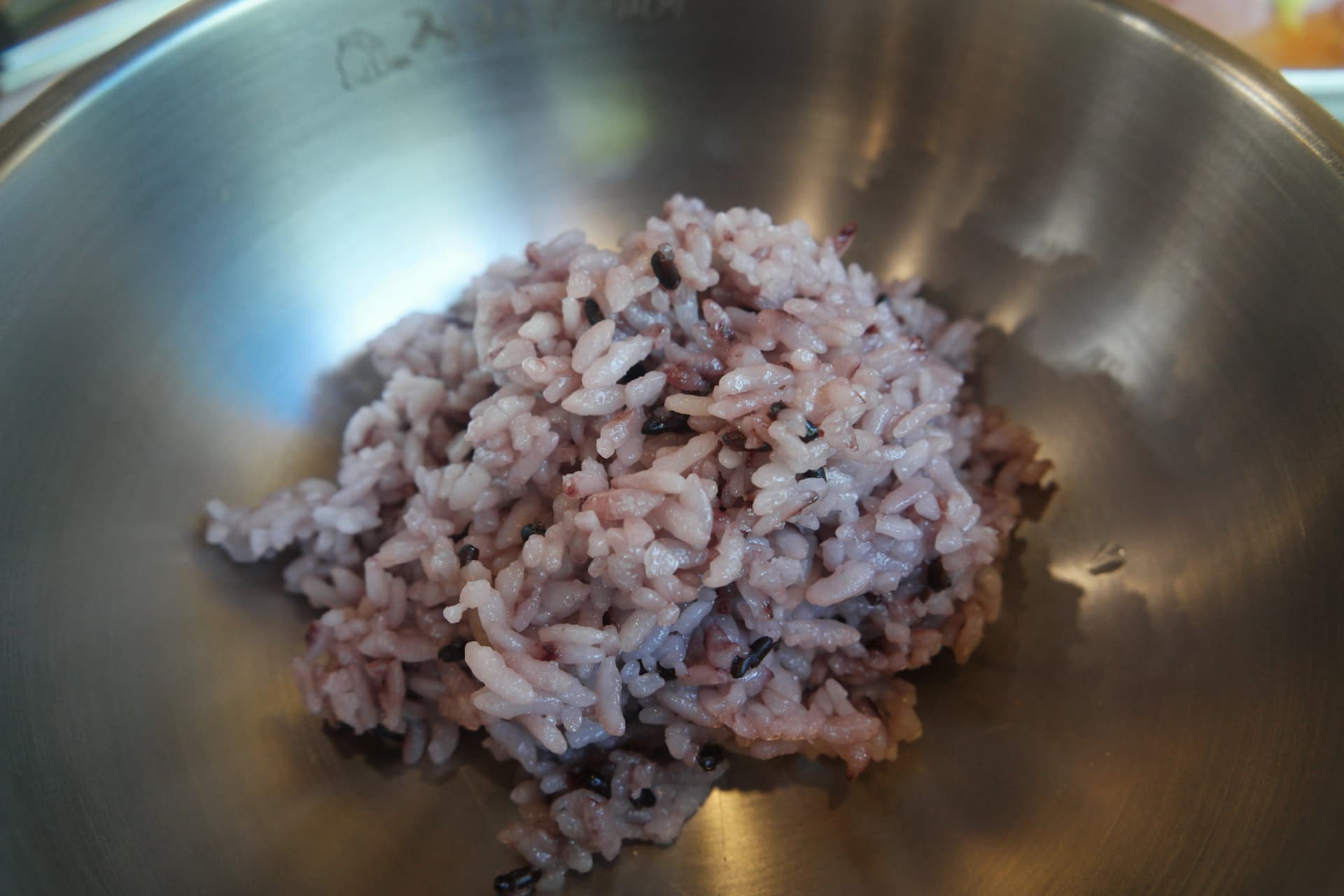
At this particular spot, the rice came as black rice (heukmi-bap), though this varies by restaurant. Some places serve mixed grain rice, while others go with plain white rice. It depends on where you go.
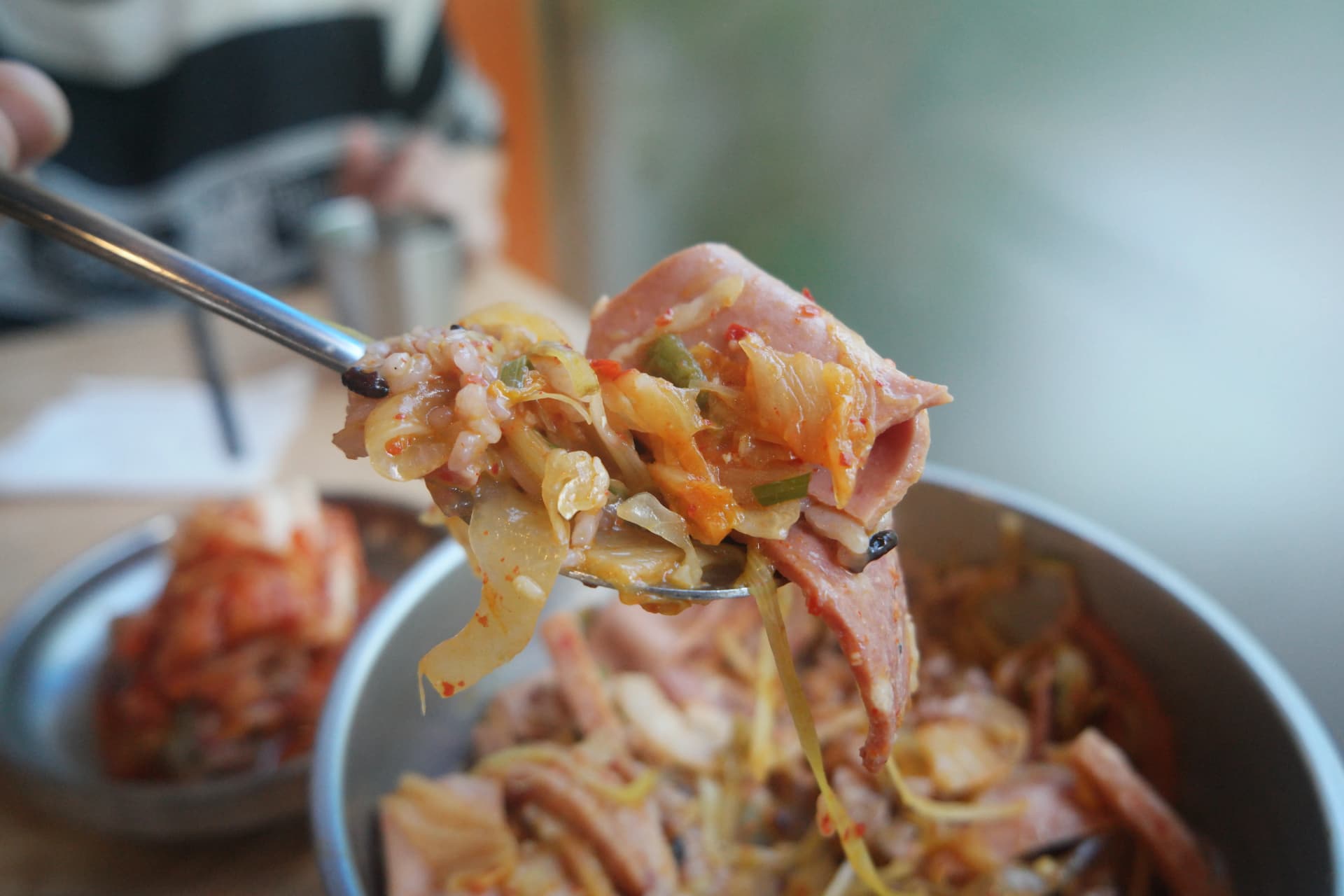
Scoop the stew toppings over your rice, and the salty ham combined with the spicy kimchi and seasonings balances out perfectly against the plain rice — that's the most "Korean" way to enjoy it. Here's a tip for first-timers: rather than sipping the broth on its own, try getting a spoonful of toppings and rice together. That's how you really taste what budae-jjigae is all about.
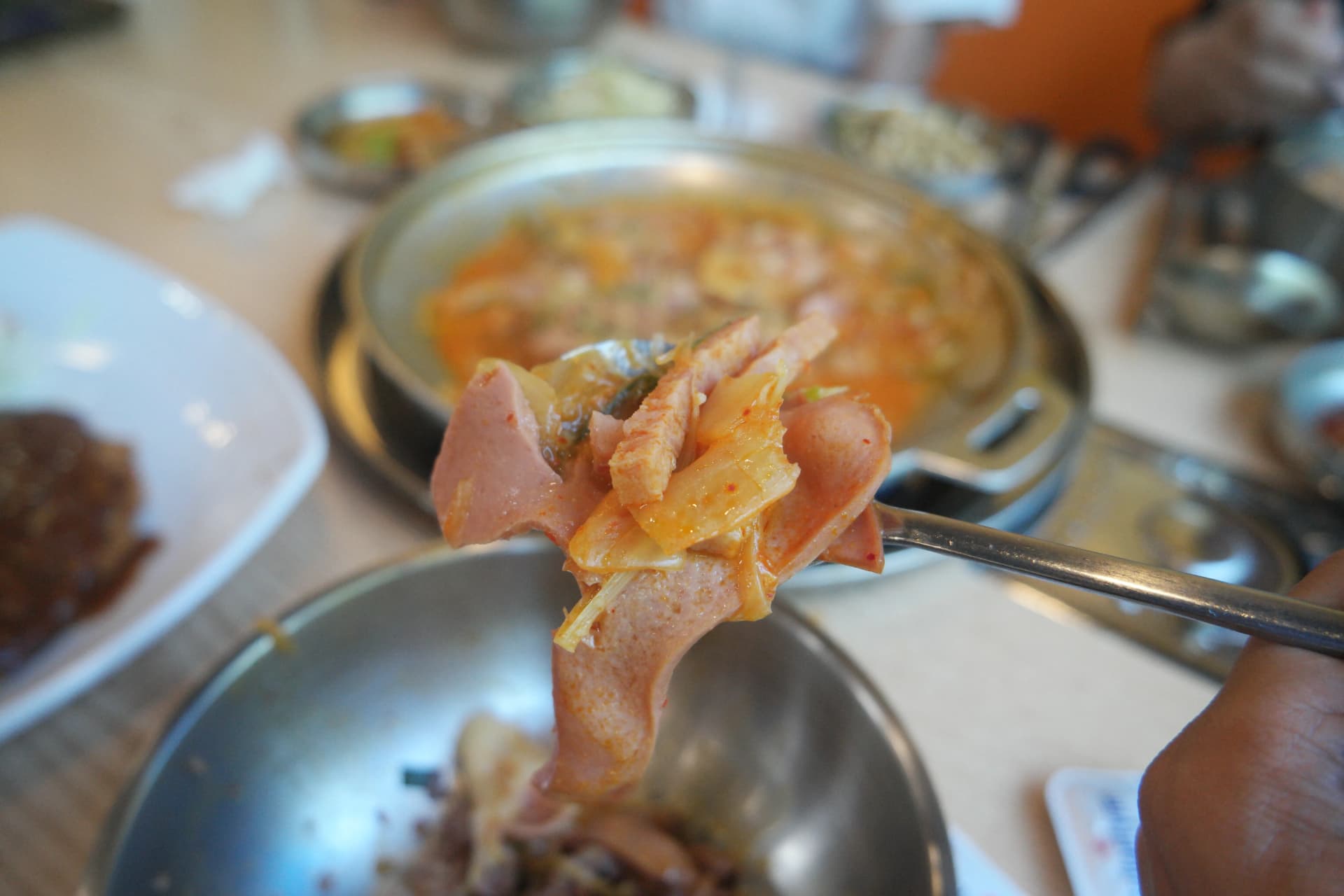
With ham, onion, and kimchi all loaded onto one spoon, every bite is packed with texture. The broth seeps between the rice grains and the umami just explodes.
🌶️ Worried About the Spice Level?
Budae-jjigae is definitely on the spicy side by default, but many restaurants let you adjust the heat. When ordering, just say "Deol maepge haejuseyo" (less spicy, please) or simply "Less spicy, please" in English — most places will accommodate. If you're still nervous, add a cheese topping or throw in some ramyeon noodles — both help mellow out the broth. Mixing rice into the soup is another great trick for taming the heat.
🔍 Recommended Search Keywords for Budae-jjigae
Search these terms before your Korea trip to easily find restaurant recommendations and reviews.
Don't Miss Budae-jjigae on Your Korea Trip
The budae-jjigae I introduced today combines Korea's stew tradition with familiar ingredients like ham and sausage, making it a perfect entry point for anyone new to Korean food. Whenever you need a warm, filling meal during your travels, stop by a budae-jjigae spot — you won't regret it. If you're worried about the spice, just ask for it mild or add cheese and noodles to smooth things out. Sitting around a bubbling pot of army base stew, sharing it with others — that's the kind of moment that makes your Korea trip truly unforgettable.
This post was originally published on https://hi-jsb.blog.