
Stunning Hanok Cafe in Rural Korea: Complete Guide to Cafe EWA
Table of Contents
9 items
Cafe EWA in Jeungpyeong: A Complete Hanok Experience
Korea has an incredible variety of cafes. From luxurious hotel-style cafes to fairytale-like hideaways, nature-surrounded retreats, and the tranquil traditional Hanok-style cafes that are uniquely Korean.
Regardless of nationality, everyone occasionally seeks a peaceful escape from the noise of modern life. This time, stumbling upon a photo while browsing the internet, I rushed there immediately. This place perfectly combines traditional Korean beauty with modern comfort, anyone from anywhere in the world will fall in love at first sight.
Let me tell you about Cafe EWA in Jeungpyeong, the place that captured my heart with just one photo and where I headed without hesitation.
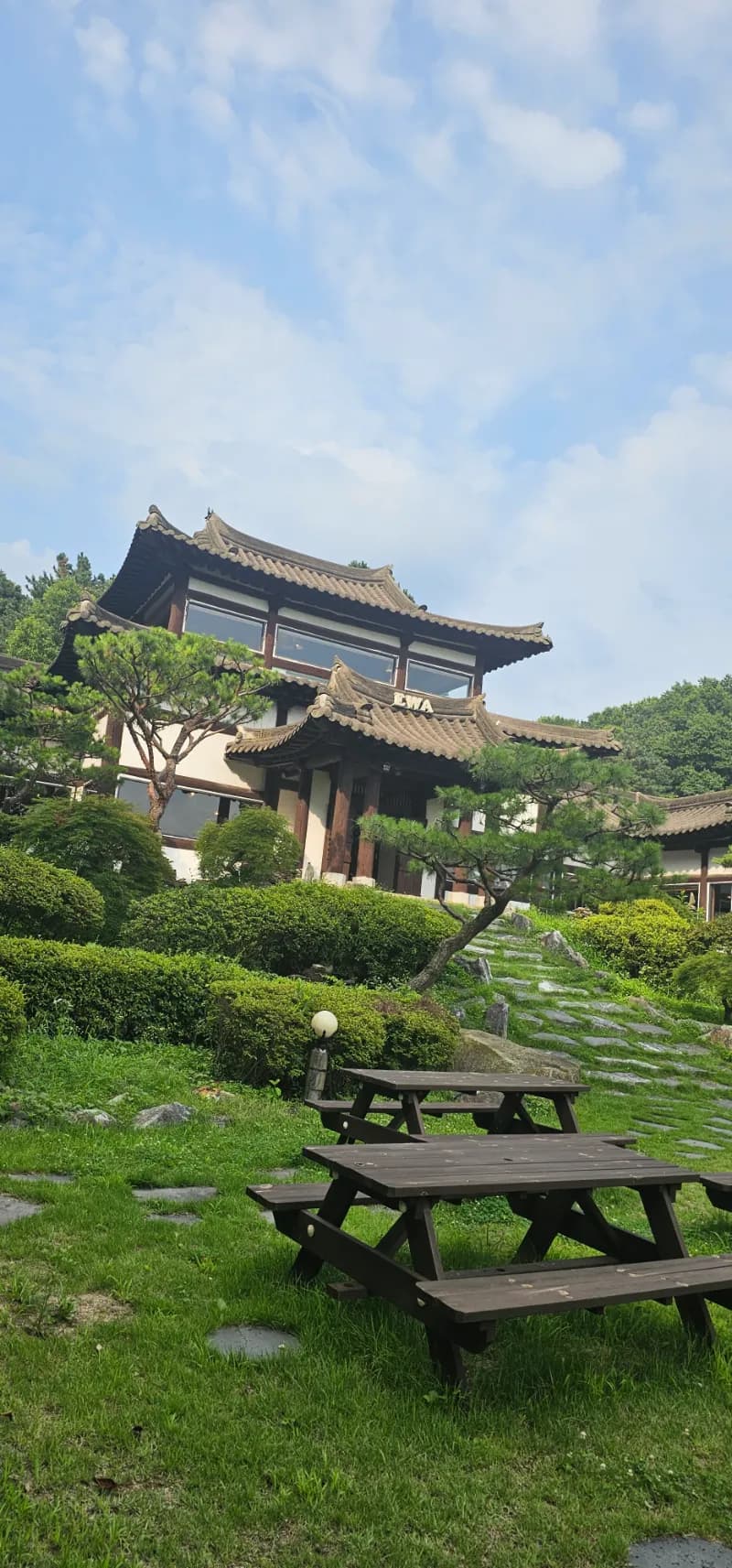
Majestic Hanok Exterior and Perfect Photo Spots
It looked like a movie set, the scale was so large I almost doubted it. A majestic yet elegant Hanok building stood firmly on the hill. I knew right away I was lucky that day. Even random shots came out beautiful, I was certain I would get the best photos of my life here.
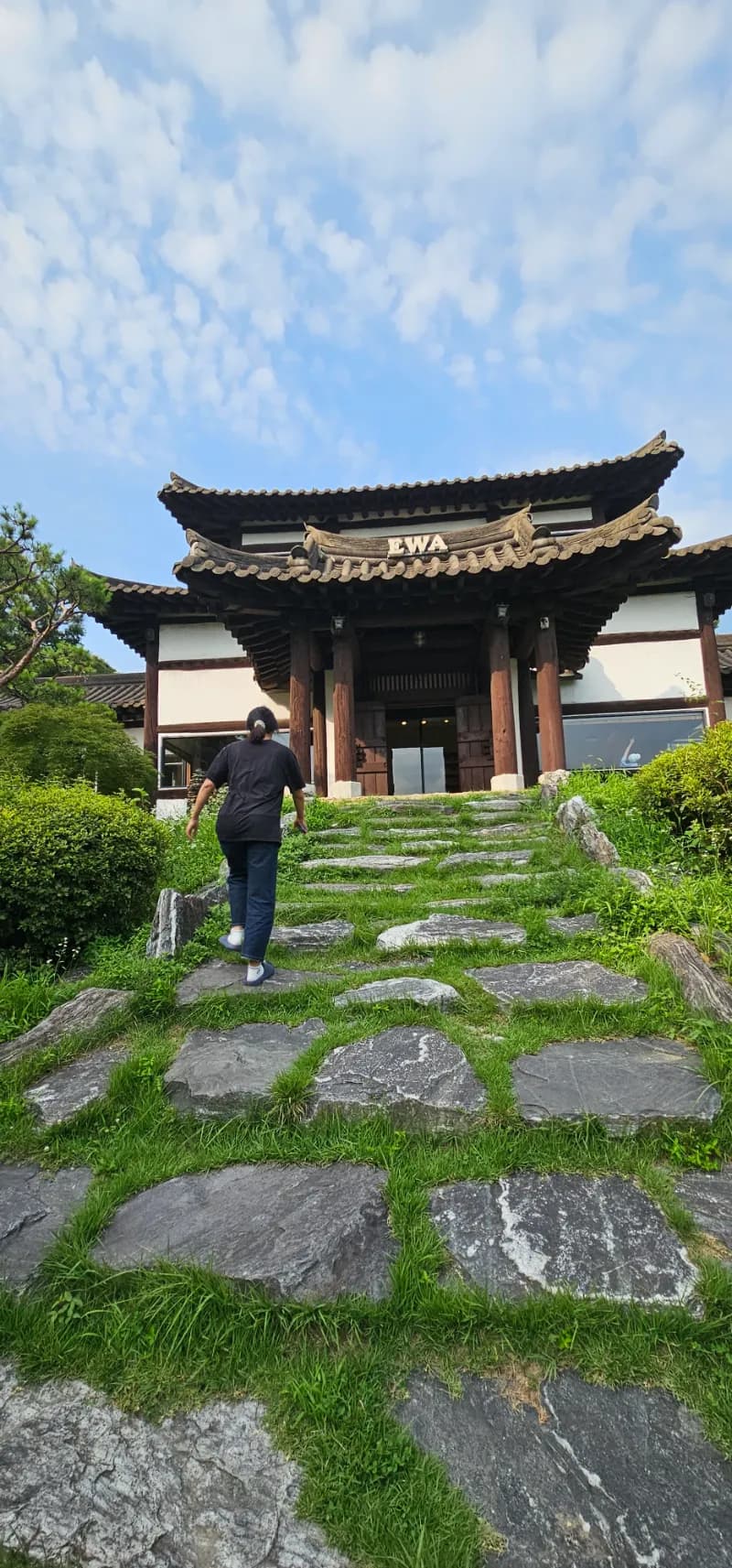
Seeing the letters EWA clearly written on the tile roof, I felt as if a modern touch blended with the traditional atmosphere. From afar it looked simply like a grand Hanok, but approaching the entrance and seeing those letters, I truly felt it was a contemporary-style cafe. The ancient tiles and clean English font harmonized surprisingly well, giving an elegant and natural impression, and the unique atmosphere of the place was palpable from the entrance.
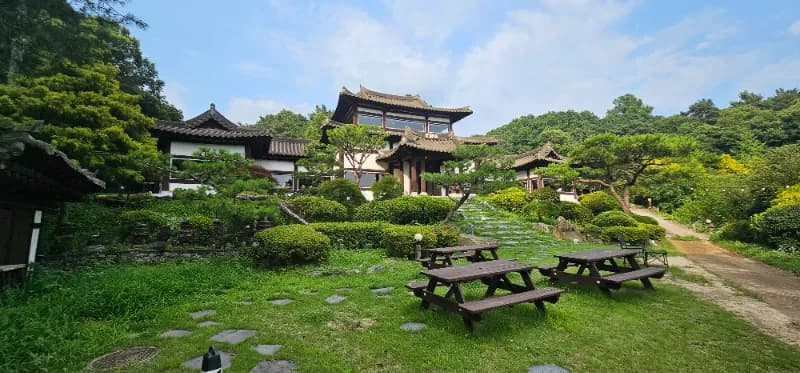
The view from afar resembled a wealthy family's mansion from times past. Except for the glass windows, everything preserved the charm of traditional Hanok, leaving me even more impressed.
What Makes Hanok Unique Among Asian Architecture
Before continuing, it's worth explaining what sets Hanok apart from other traditional Asian architectural styles. Traditional Japanese houses are known for their straight, minimalist lines, with tatami covering the floor and sliding paper doors. Chinese architecture is famous for grand symmetry, vibrant colors like red and gold, and elaborate ornaments featuring dragons and phoenixes. Korean Hanok takes a different path.
Hanok embraces natural curves. The roofs have a gentle curvature that mimics the surrounding mountains, wooden pillars retain their organic shapes without excessive processing, and the entire structure seeks to blend into the landscape rather than dominate it. It's architecture that breathes with nature. Additionally, the ondol heating system, which distributes heat beneath the floor, has shaped an entire culture of living at floor level - something unique to Korea.
Fusion Interior Combining Tradition and Modernity
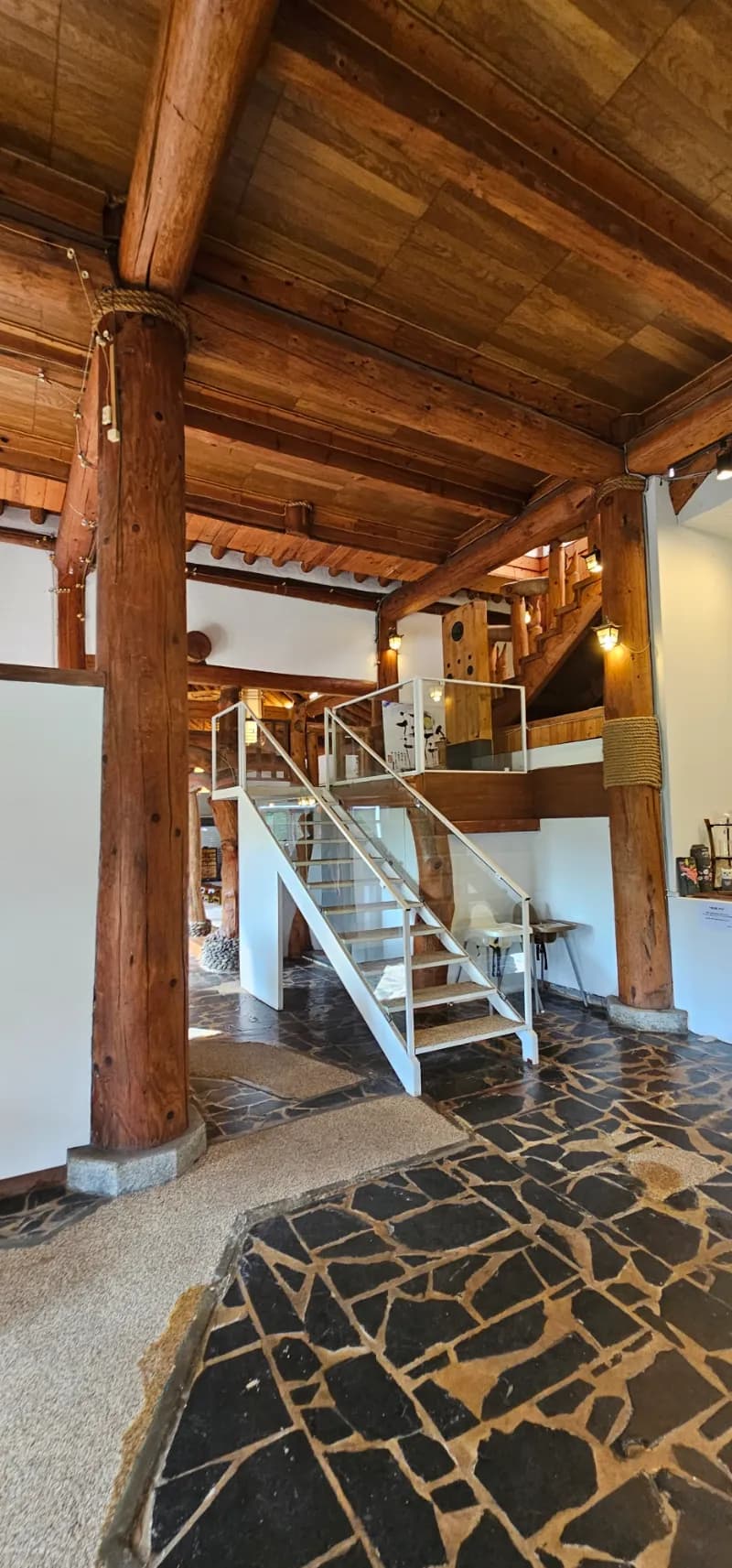
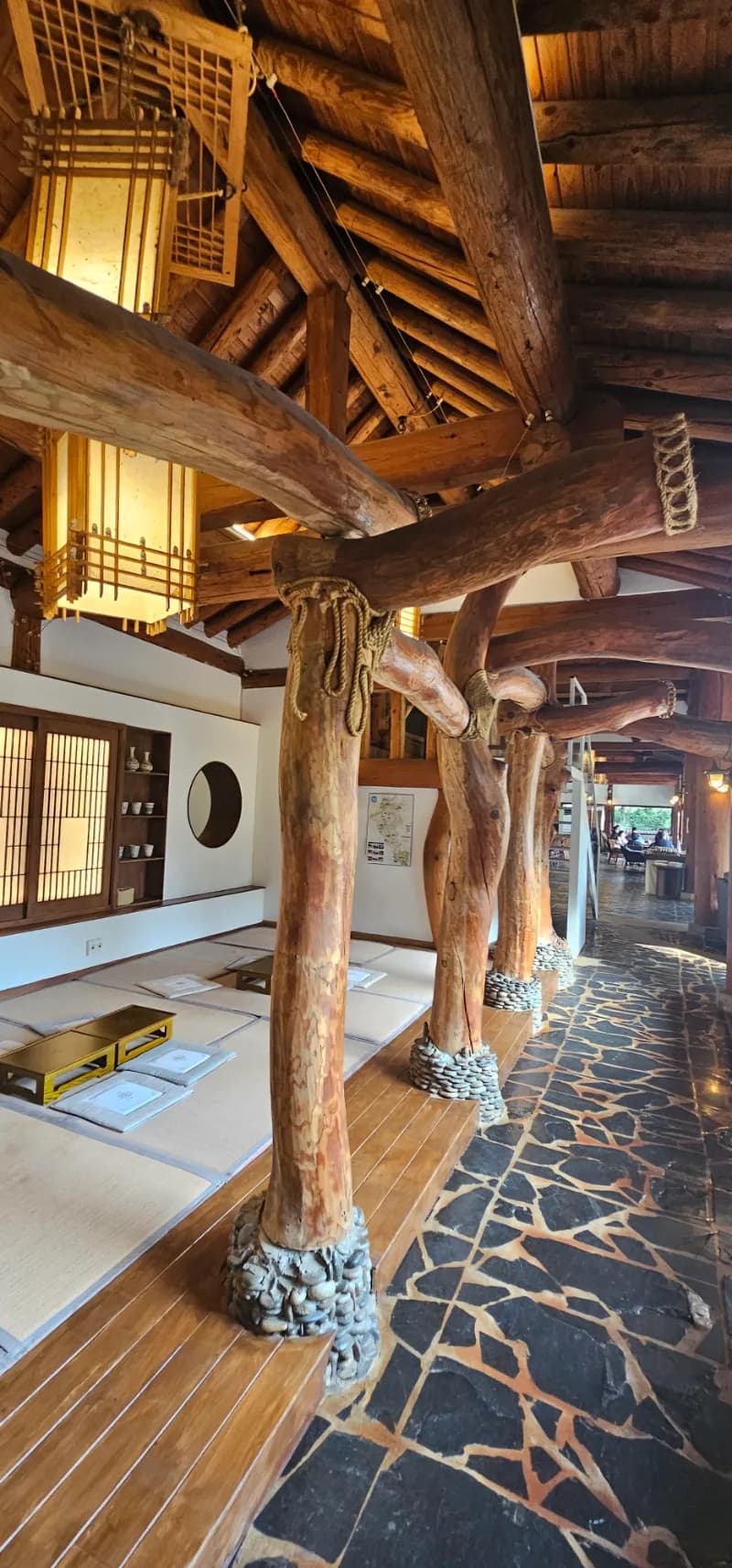
Upon entering, a different surprise from what I saw outside awaited me. The thick wooden pillars and characteristic Hanok beams were preserved intact, giving a sense of solidity, but at the same time the floor and stairs had a very modern style. A combination that surprises.
You could say it's a fusion interior that mixes a modern touch with the traditional Hanok structure. Rather than looking old-fashioned, the place had a clean and trendy atmosphere, enjoyable to explore. The warm wood tones and modern design harmonized beautifully, photos from any angle came out gorgeous.
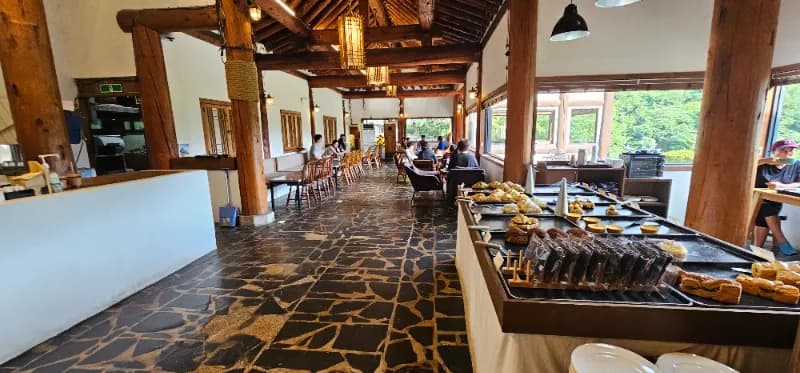
What deserves praise at Cafe EWA is the perfect balance between the old Hanok atmosphere and modern interior, without leaning to either side.
The thick beams and wooden pillars supporting the ceiling show the charm of traditional Hanok, while the smooth floor and elegantly designed stairs below capture contemporary taste. Especially the clean lighting filtering through the rustic wood texture and the views from the large modern panoramic windows combined beautifully. Throughout the visit, it was clear the place had great style. It's a smart fusion space that preserves Hanok tranquility while being perfectly comfortable to use.
The interior space was quite spacious, even choosing where to sit was a pleasure. Even the bakery display area blended naturally into this atmosphere.
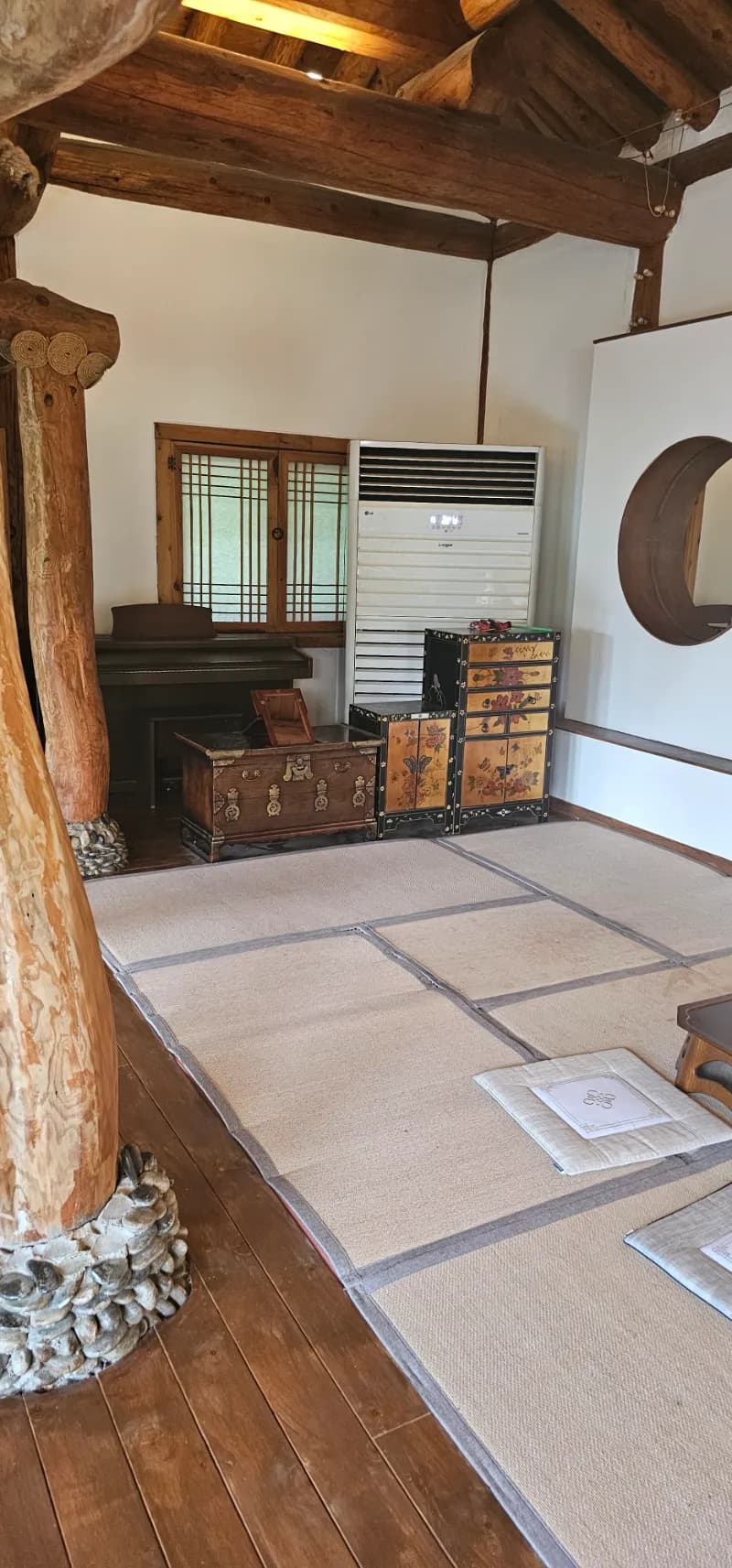
Traditional Korean Floor Seating: A Cultural Experience Worth Trying
In one corner of the interior was an area with traditional Korean floor seating. The first rule: you must remove your shoes before stepping onto the raised wooden platform. This isn't just about cleanliness - it's a sign of respect that goes back thousands of years in Korean culture. Think of it like how you might take off muddy boots before walking on grandma's pristine carpet, but elevated to a cultural tradition.
This is the typical Korean sitting style called "jwasik," which is different from Japanese tatami. In Korean culture, sitting on the wooden floor heated by the ondol system has been part of traditional life for millennia. The ondol is an ingenious heating system that distributes heat from the kitchen through channels under the floor, keeping the entire house warm during harsh winters. This explains why Koreans developed a culture of living at floor level, eating, sleeping, and socializing on it.
Once you step onto the platform in your socks, you'll sit cross-legged in what Koreans call "yangban-dari" - literally meaning "nobleman's legs." Picture yourself sitting on a picnic blanket at a summer concert, or gathered around the Christmas tree on Christmas morning opening presents on the living room floor, or huddled around a campfire with friends. That relaxed, grounded feeling? That's the everyday experience Koreans have cultivated for centuries.
There were woven mats spread out with soft cushions on top, and I felt like I was visiting grandma's countryside home. For Koreans, visiting grandparents' house evokes special memories: the scent of aged wood, antique furniture passed down through generations, the warm floor beneath your feet, and tea served in traditional ceramic cups. It's that same feeling Americans or Brits get when visiting their grandmother's cottage - that old house with creaky wooden floors that tell stories, the smell of fresh-baked cookies, and that sense of warmth and belonging that only grandparents' homes can provide. My heart found peace in this space.
Will your legs fall asleep? Probably. Will it be a bit uncomfortable at first? Maybe. But here's the thing - this is exactly how Koreans have lived for thousands of years, and there's something genuinely special about experiencing it firsthand rather than just reading about it. The warm floor beneath you, the low table in front of you, the act of sitting where countless generations have sat before - it connects you to Korean culture in a way that sitting at a regular table simply cannot. Consider it a small price to pay for an authentic cultural experience, and honestly, it makes for a great story and unique photos for your Instagram.
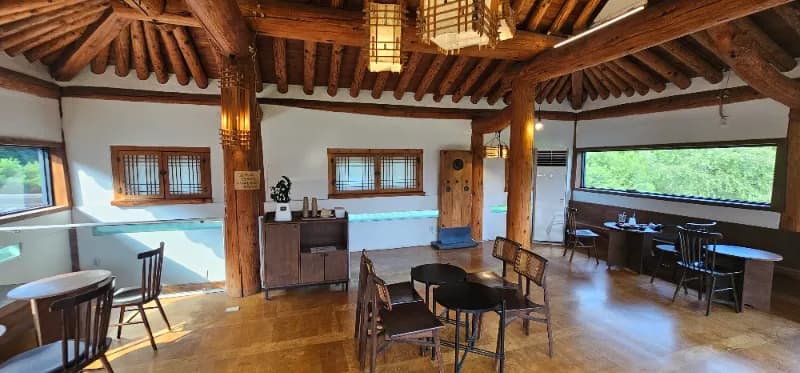
In particular, the mother-of-pearl inlaid cabinets (najeonchilgi), a Korean craft requiring months of meticulous work, and the antique furniture placed in corners further highlighted the traditional beauty of Hanok. These decorations, rare in modern cafes, made the place even more special. The atmosphere was perfect for sitting quietly and drinking tea while contemplating the outside scenery.
Not ready for the full floor-sitting experience? No worries - Cafe EWA also has plenty of regular tables and chairs. The tables arranged along the spacious interior let you enjoy Hanok's charm without giving up modern comfort. Especially the seats near the windows offering a full view of the green landscape through large glass panels were truly golden seats.
Thanks to the high ceiling, there was no feeling of being cramped, and the spacing between tables was generous, you could chat comfortably without disturbing neighbors.
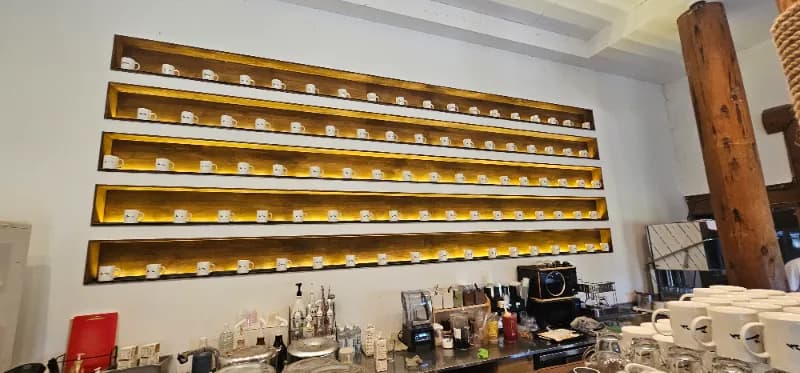
Heading toward the lobby counter, the cup display filling the wall immediately caught my attention. White cups neatly arranged under soft indirect lighting created an elegant atmosphere like being in a gallery. Despite being a traditional Hanok building, these small details were decorated very modernly and stylishly.
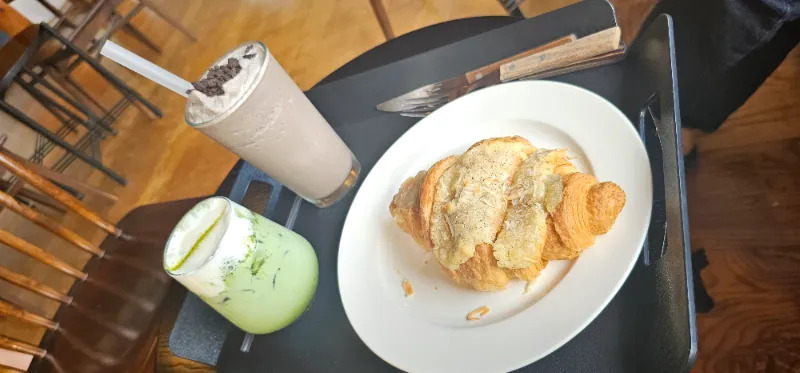
Recommended Menu: Chocolate Smoothie, Matcha Latte, and Croissant
After walking around, I craved something sweet, so I ordered several items. I don't remember the exact menu names, but I chose a cold chocolate smoothie, a slightly bitter but creamy matcha latte, and a perfectly baked golden croissant.
The croissant especially impressed me: crispy outside, soft inside, with a sweet topping that paired perfectly with the drinks. The presentation was so beautiful I had to take dozens of photos before eating. Enjoying such delicious desserts while feeling the Hanok atmosphere, I truly felt I had come to the right place.
Important Info: Self-Service Culture in Korean Cafes
Foreign visitors should know that most Korean cafes operate on a self-service system. After ordering, you'll receive a vibrating buzzer or number ticket. When the buzzer goes off or your number is called, you need to go to the counter yourself to pick up your drink. Some small or upscale cafes may bring it to your table, but this is rare. Also, after finishing your drink, you need to return your cup yourself to the area marked "RETURN" or "반납대" (return stand). Leaving it on the table and walking away is not considered proper etiquette.
Important Info: Cup Policy in Korea
Another important thing foreign visitors should know: Korea enforces a strict policy on disposable cups for environmental protection. If you want to drink inside the cafe, your beverage will be served in a ceramic or glass cup, as disposable cups are banned for consumption inside the cafe. If you order takeaway, you'll get a paper cup, but in that case you're not allowed to sit and drink inside the cafe. And if you're drinking inside the cafe with a ceramic cup and want to take the remainder with you, you can simply request it at the counter and they'll transfer it to a paper cup. This system might seem strange at first, but it's part of Korea's environmental conservation efforts.
Conclusion and Practical Tips
The interior was very spacious, not just for sitting but with many places to explore. From the first floor to the second, each area's atmosphere was slightly different, walking a full circle was very enjoyable. From the corridor where you can see the majestic beams up close to the traditional Korean floor seating area decorated with care in every detail, every place you stepped was a photo spot, eyes never got tired. Especially walking along the wooden pillars that preserve Hanok's charm, it felt like visiting a well-curated exhibition.
Coming with family or friends, everyone can choose seats according to their taste, the space utilization was very well thought out. I was so satisfied I want to bring my parents next time.
Cafe EWA was perfect from atmosphere to taste, but if there's one thing to consider, it's the accessibility issue. Getting there by public transport is a bit difficult. From the bus stop, walking would take about 20 minutes, which might be a bit tiring for those without a vehicle.
But on the other hand, if you have a car, I recommend this place without hesitation. It's perfect for a visit during a relaxed car trip. If you want to escape the noisy city and feel true relaxation amid peaceful countryside scenery, come by car. This is a wonderful place worth the effort of the journey.
With this, I conclude my brief review of Cafe EWA in Jeungpyeong. For more detailed information, check out the cafe section below.


