
Blood Sausage Soup With Rice — A Korean Winter Comfort Food Guide
Table of Contents
14 items
Sundae gukbap — a hearty pork bone broth soup with rice — is one of the comfort foods Koreans turn to the moment winter hits. Whether you're in Seoul, Busan, Daejeon, or Daegu, there's almost always a sundae gukbap sign tucked somewhere down an alley. If you wander into a local Korean restaurant during your trip, there's a solid chance you'll see it on the menu. When you need a quick solo meal in Korea, nothing beats a gukbap joint, and sundae gukbap in particular is the kind of filling, one-bowl meal that leaves you fully satisfied.
I'm Korean, living in Korea, and this is the story of the day I walked into a sundae gukbap place in Daejeon — a major city about an hour and a half south of Seoul — back in January 2026. The below-freezing wind was hitting me in the face, and from somewhere down the alley, I caught the smell of broth simmering away. That smell alone pulled me in. I pushed the door open. It was a small, cozy restaurant. It was early evening so there weren't any customers yet, but the second I opened that door, a wave of warm air hit me — and I immediately knew I'd made the right call.
This post isn't a recommendation for one specific restaurant. It's a guide to sundae gukbap as a Korean winter comfort food — what goes into it, what it looks and tastes like, and how to actually eat it. That day, a bowl of sundae gukbap was 10,000 won and a side plate of sundae was 8,000 won, totaling 18,000 won. That's roughly $13. More than enough food for one person.
What Is Sundae Gukbap?
Sundae gukbap is a Korean pork bone broth soup served with rice, stuffed with sundae (Korean blood sausage), pork offal, and boiled pork head meat. The broth is milky-white from hours of boiling pork bones and intestines. Sundae itself is pig intestine casing stuffed with glass noodles, vegetables, and pork blood, then steamed. Think of it like blood sausage or French boudin noir, but the Korean version has glass noodles inside, giving it a distinctly chewy, springy texture. The organ-y aroma is also pretty strong.
I'll be honest — this is a pretty challenging dish for most foreigners. There's the offal smell, the fact that the sausage is made with pork blood, and all these unfamiliar cuts of meat floating around in the broth at once. Even some Koreans can't handle it. But I'm writing about it anyway because you really can't understand Korean soup culture without knowing sundae gukbap. Along with seolleongtang (ox bone soup) and dwaeji gukbap (pork soup with rice), it's one of Korea's quintessential winter soul foods. Walk down any alley on a cold day and this is the sign you'll see most.
Side Dish Setup at a Pork Bone Broth Soup Restaurant
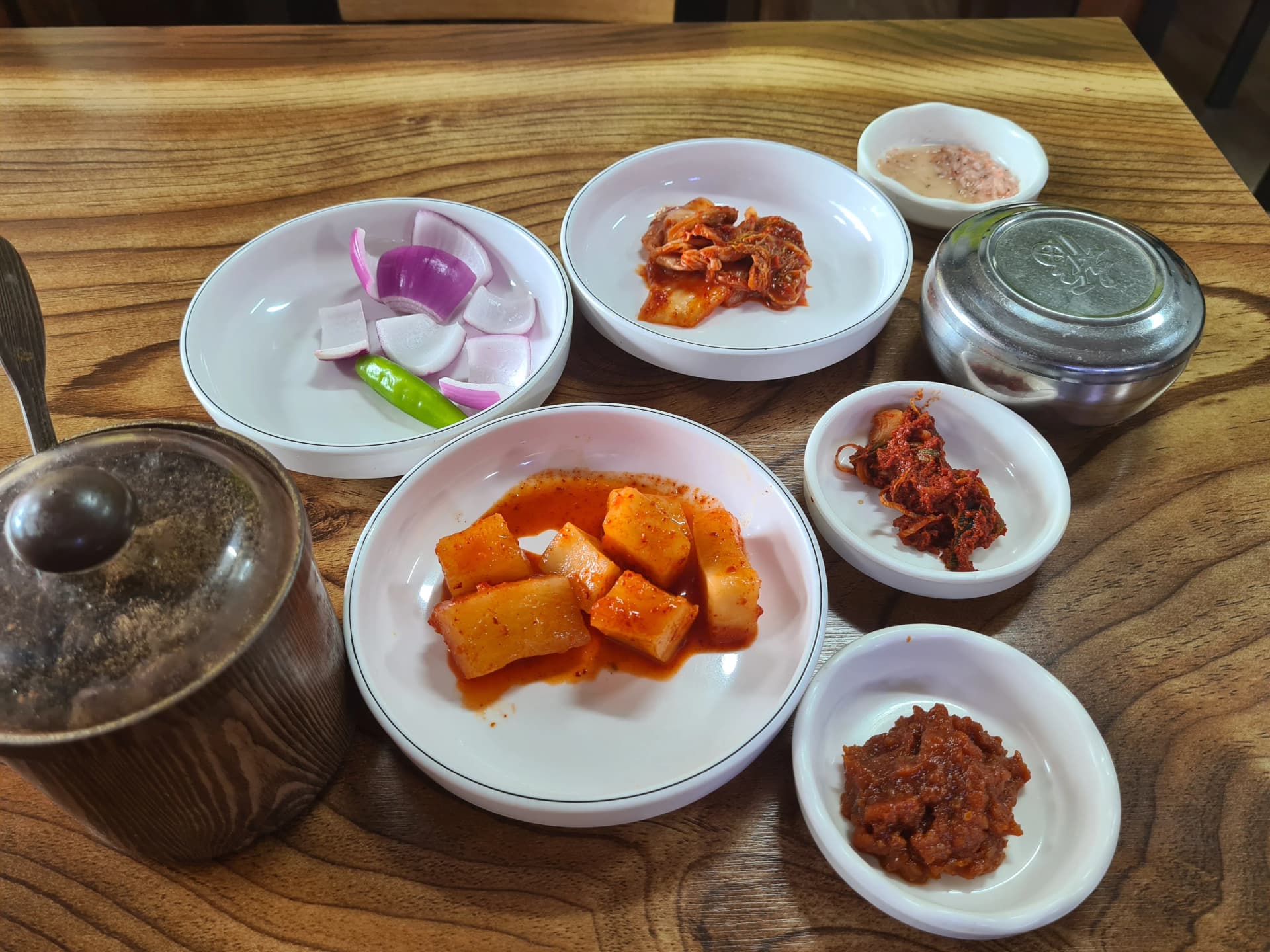
When you order sundae gukbap, the side dishes come out first before the soup even arrives. And it's not just sundae gukbap joints that do this — you'll see the same kind of setup at any Korean broth-based restaurant, whether it's gamjatang (pork bone stew) or ppyeo-haejangguk (bone hangover soup).
Kkakdugi (cubed radish kimchi) and baechu kimchi (napa cabbage kimchi) — these two are at every single gukbap restaurant in the country, no exceptions. The raw onion slices and green chili peppers are for munching on between bites. The silver kettle? That's extra broth for refills. All the side dishes are free and unlimited refills.
Napa Cabbage Kimchi — Deep-Fermented and Tangy
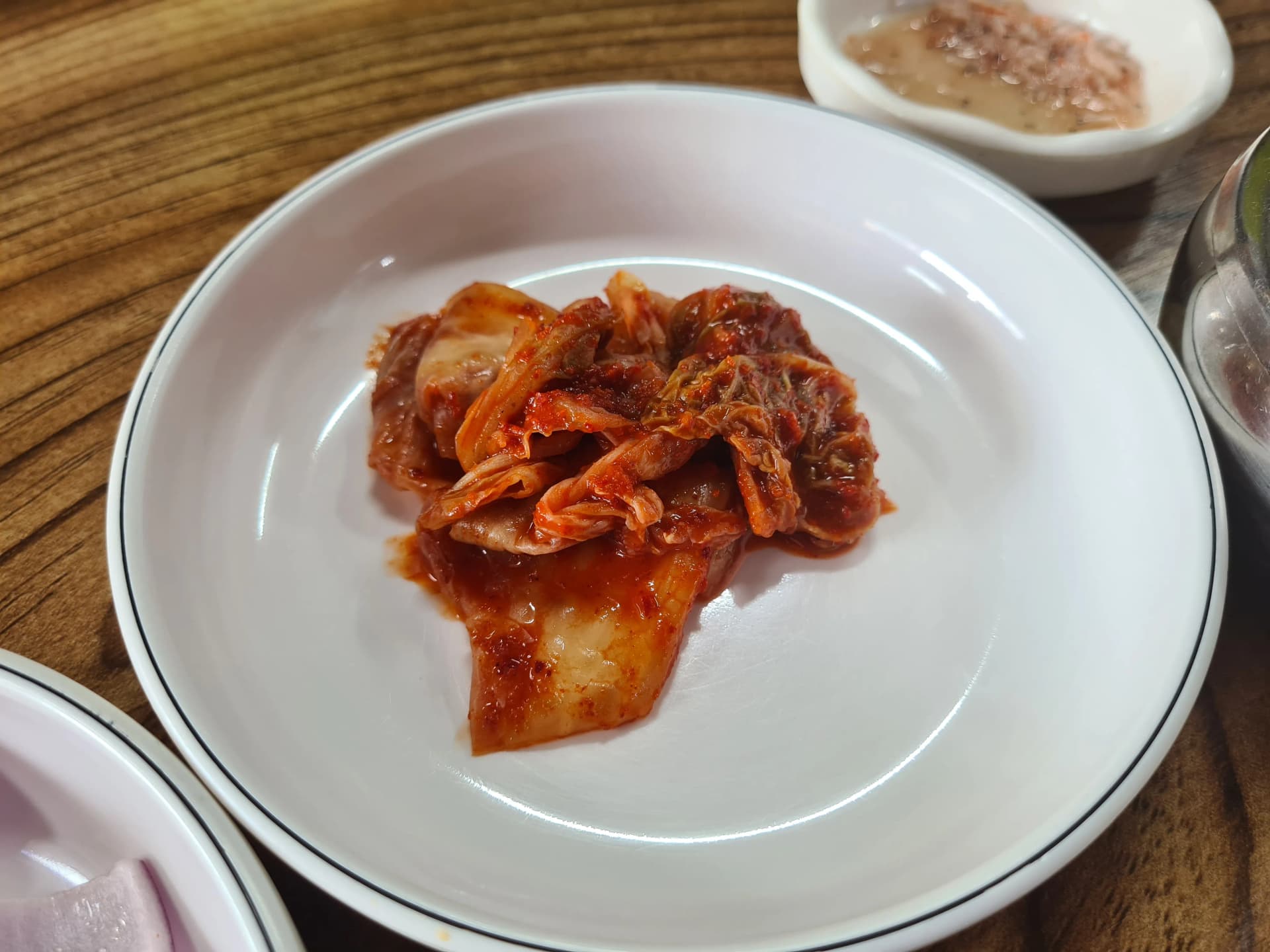
See how dark that color is? This is napa cabbage kimchi that's been fermenting for a long time — basically what Koreans call mugeunji, or aged kimchi. The longer it ages, the darker it gets and the more sour it becomes. When you're eating gukbap, this deeply fermented kind pairs way better than the fresh stuff. There's no crunch left — it's soft and almost melty — but that salty-sour punch, when it hits your mouth alongside a spoonful of piping hot broth, somehow just works.
Kkakdugi — Crisp and Fresh
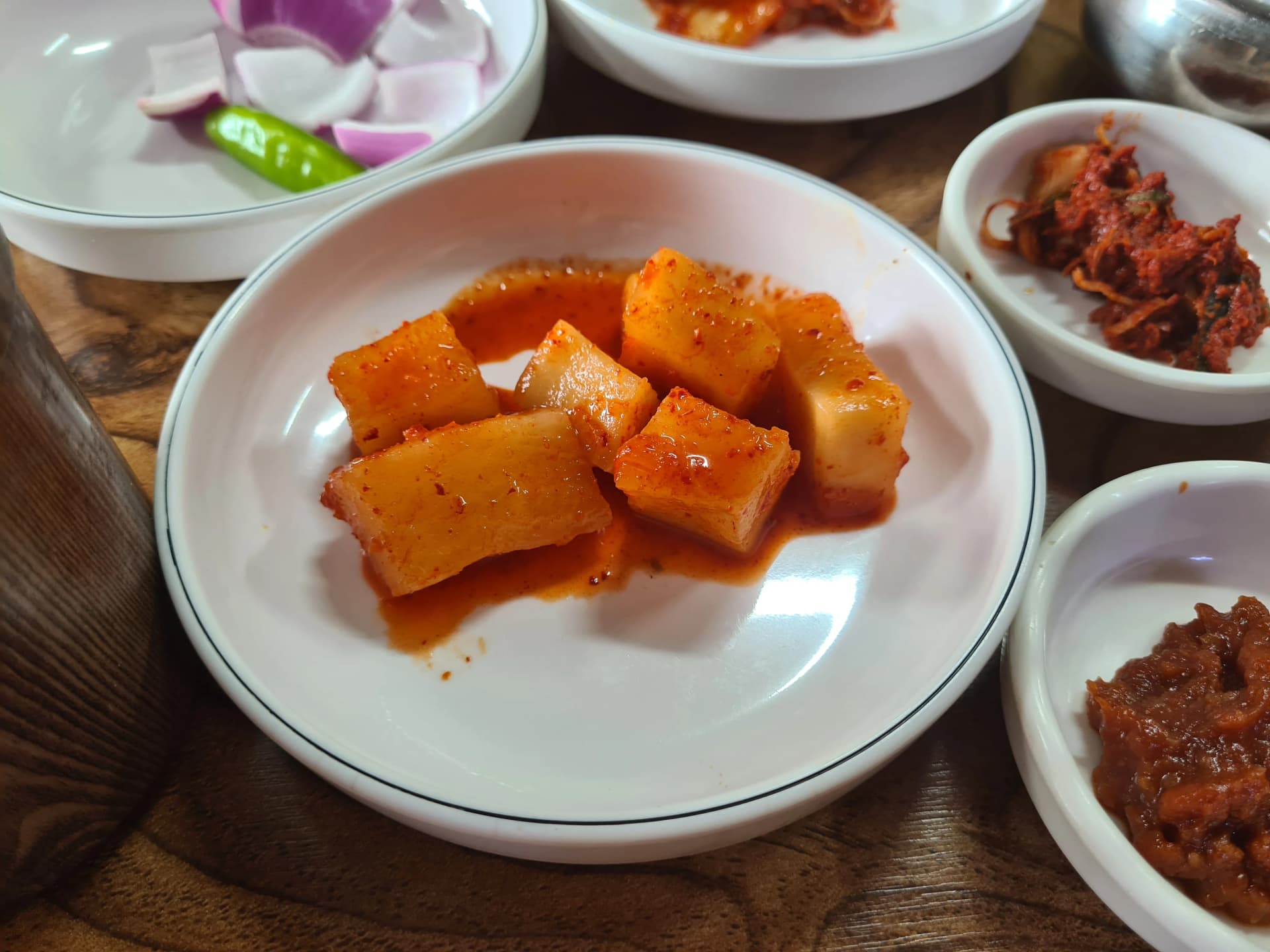
Kkakdugi. Compared to the cabbage kimchi, the color is way brighter — almost translucent. That's because it's barely fermented. This kind of kkakdugi hits you with a satisfying crunch first, and there's still a cool, natural sweetness from the radish. The more aged version, on the other hand, gets sour and soft, just like the cabbage kimchi. A lot of gukbap restaurants serve their cabbage kimchi deeply aged but their kkakdugi relatively fresh, and this place had exactly that combo. The deep sourness of the aged kimchi, the crisp bite of the fresh kkakdugi — you need both to complete a bowl of gukbap.
Raw Onion and Green Chili Peppers
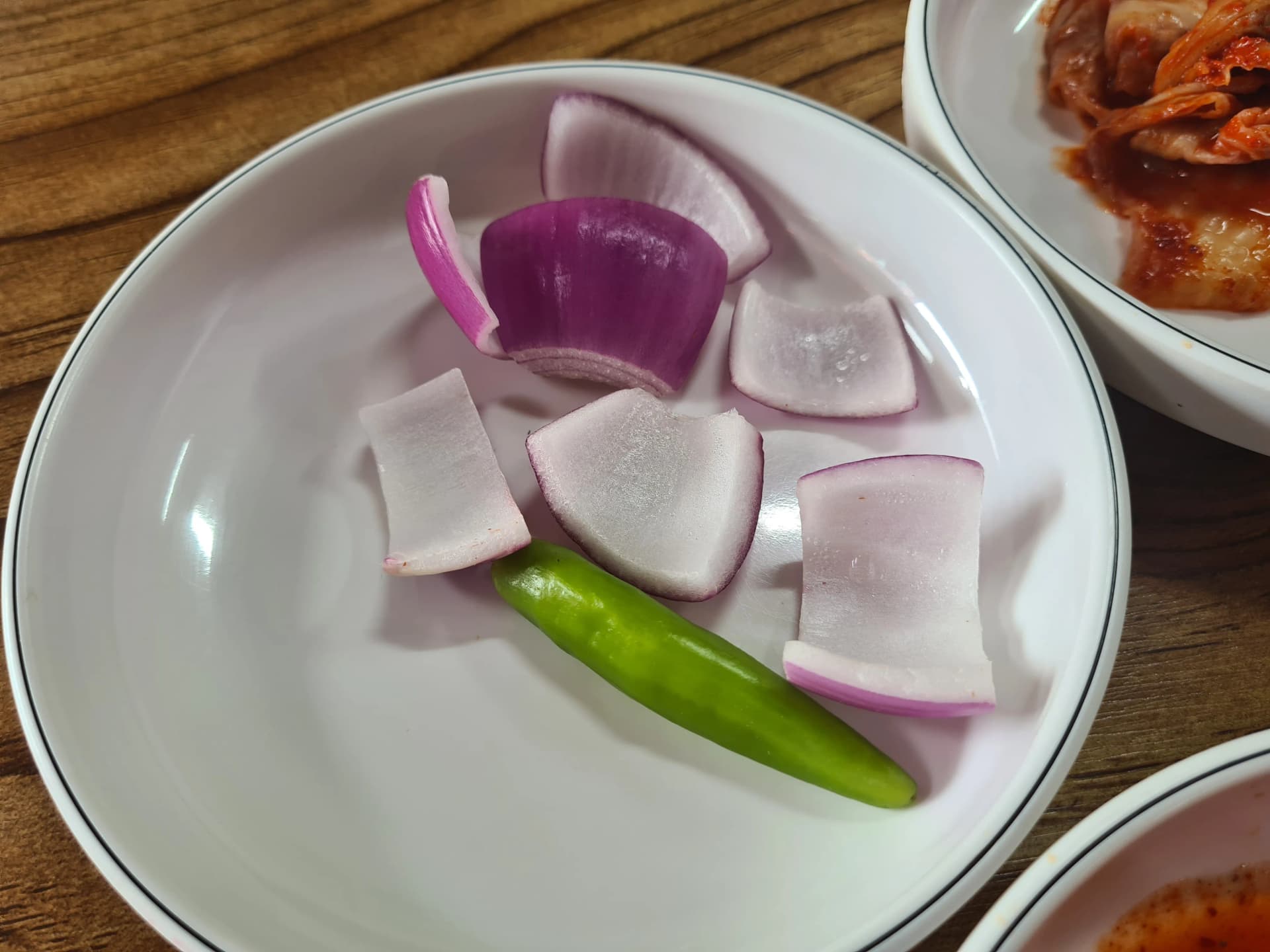
Onion slices and green chili peppers. When you're eating your way through the soup and things start feeling heavy, taking a raw bite of these between spoonfuls freshens everything up.
The side dish portions here were a little modest. Maybe too many customers had been leaving food behind. But the thing about Korean soup restaurants is that refills on sides are always free — just say "more please" and they'll bring it right out.
Sundae (Blood Sausage) Side Plate — A Separate Menu Item
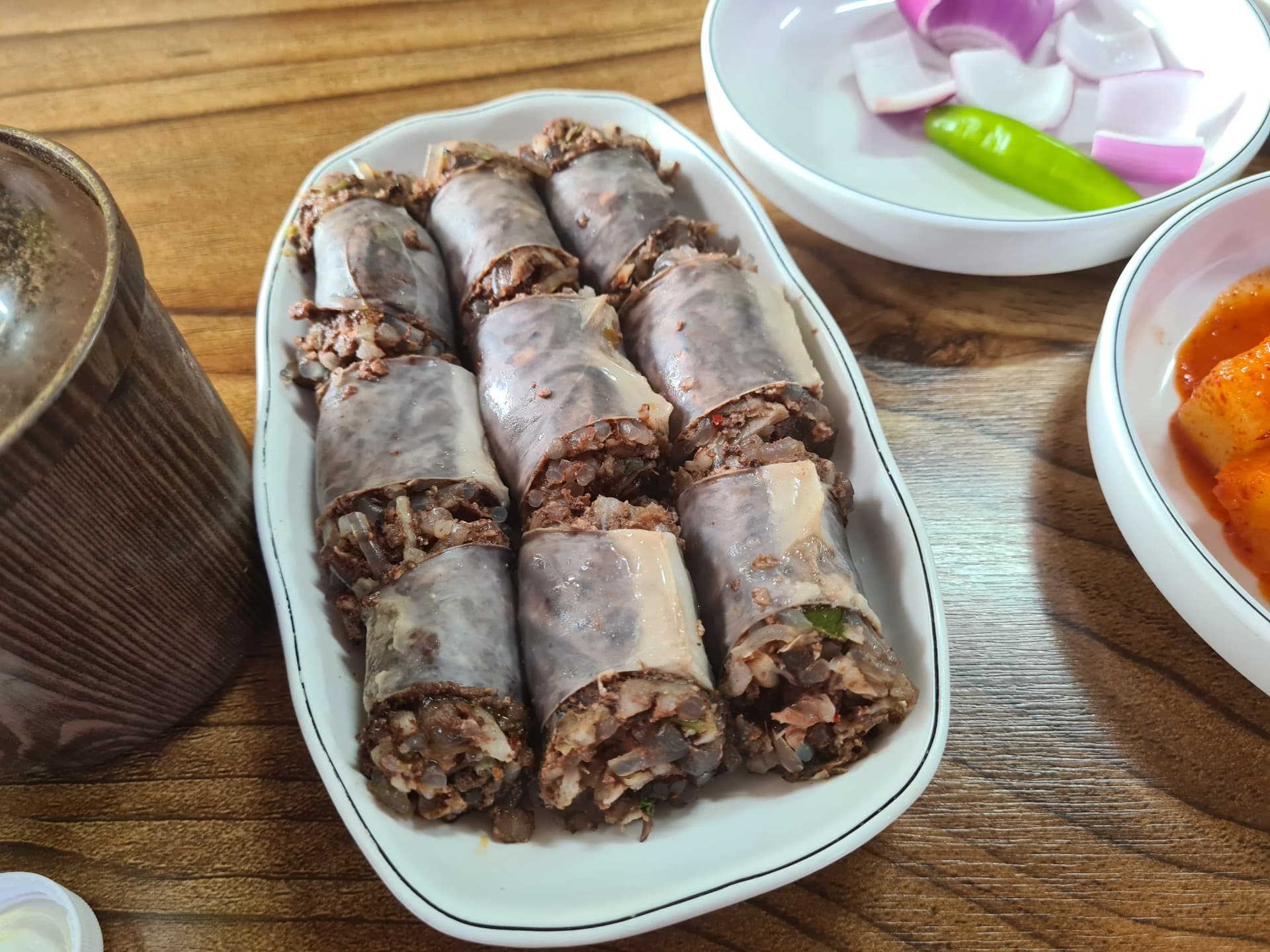
This is a separate order from the sundae gukbap — one serving of sundae on its own, which was $6. Yes, there's sundae inside the gukbap too, but you can also order it as a standalone plate like this. Completely different menu item.
The Quality of Handmade Blood Sausage
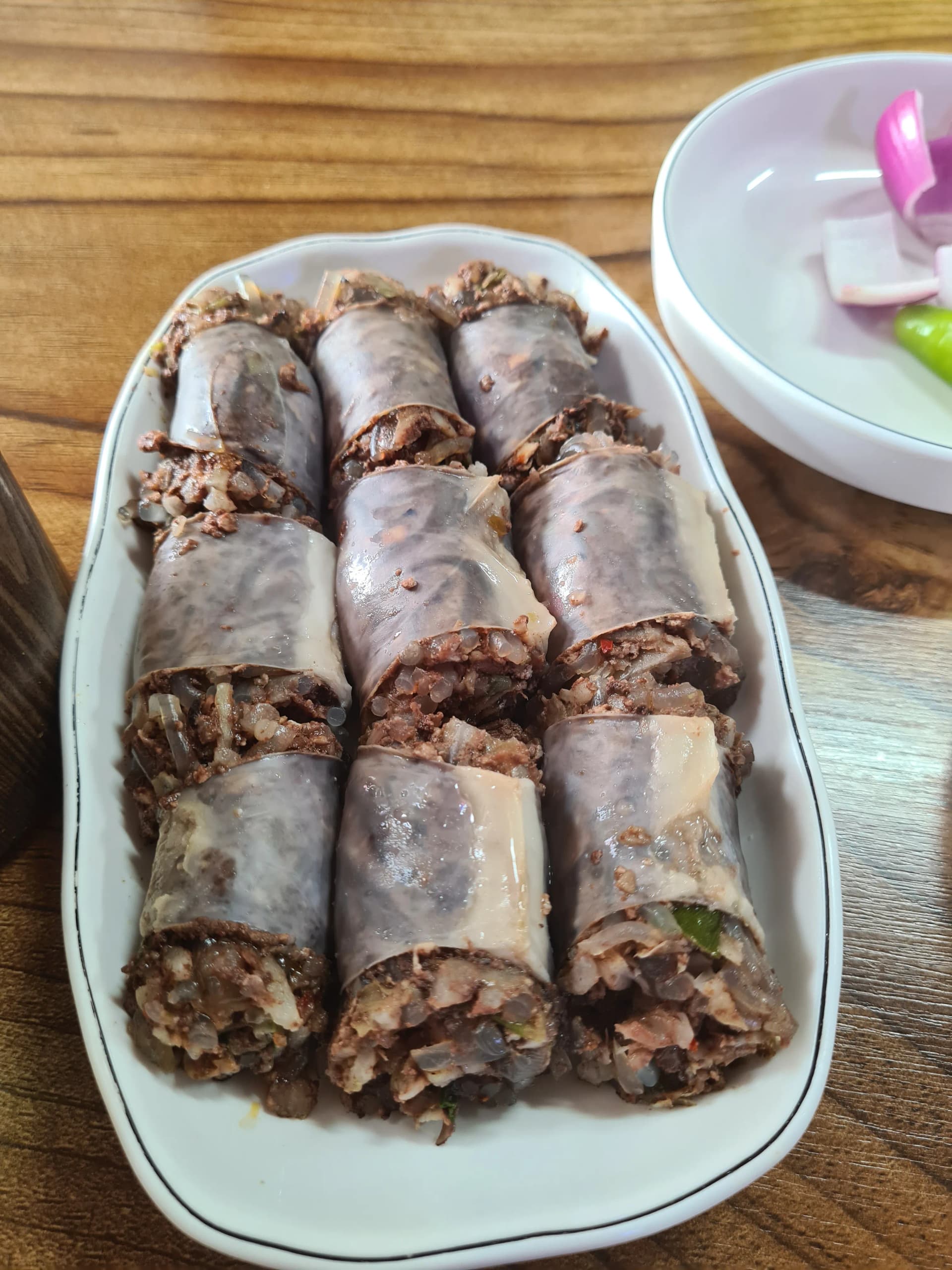
See how the casing is packed tight with glass noodles, vegetables, and pork blood? That's what handmade sundae looks like. Specialty shops stuff and steam the casings in-house, while non-specialty places often just buy factory-made sundae. The taste difference is pretty noticeable.
Korean sundae varies by region, too. In Seoul, the glass noodle ratio is high, so the texture leans chewy and bouncy. In the Jeolla region in the southwest, they use glutinous rice instead, which makes it stickier and denser. Jeju Island has a unique version stuffed with barley. The Daejeon sundae I had was a more traditional style — a balanced ratio of glass noodles, vegetables, and pork blood, stuffed absolutely full. You dip it in salt or salted shrimp paste to eat. There's no single "correct" way — it's all personal preference.
The Full Table Spread for Pork Bone Broth Soup With Rice
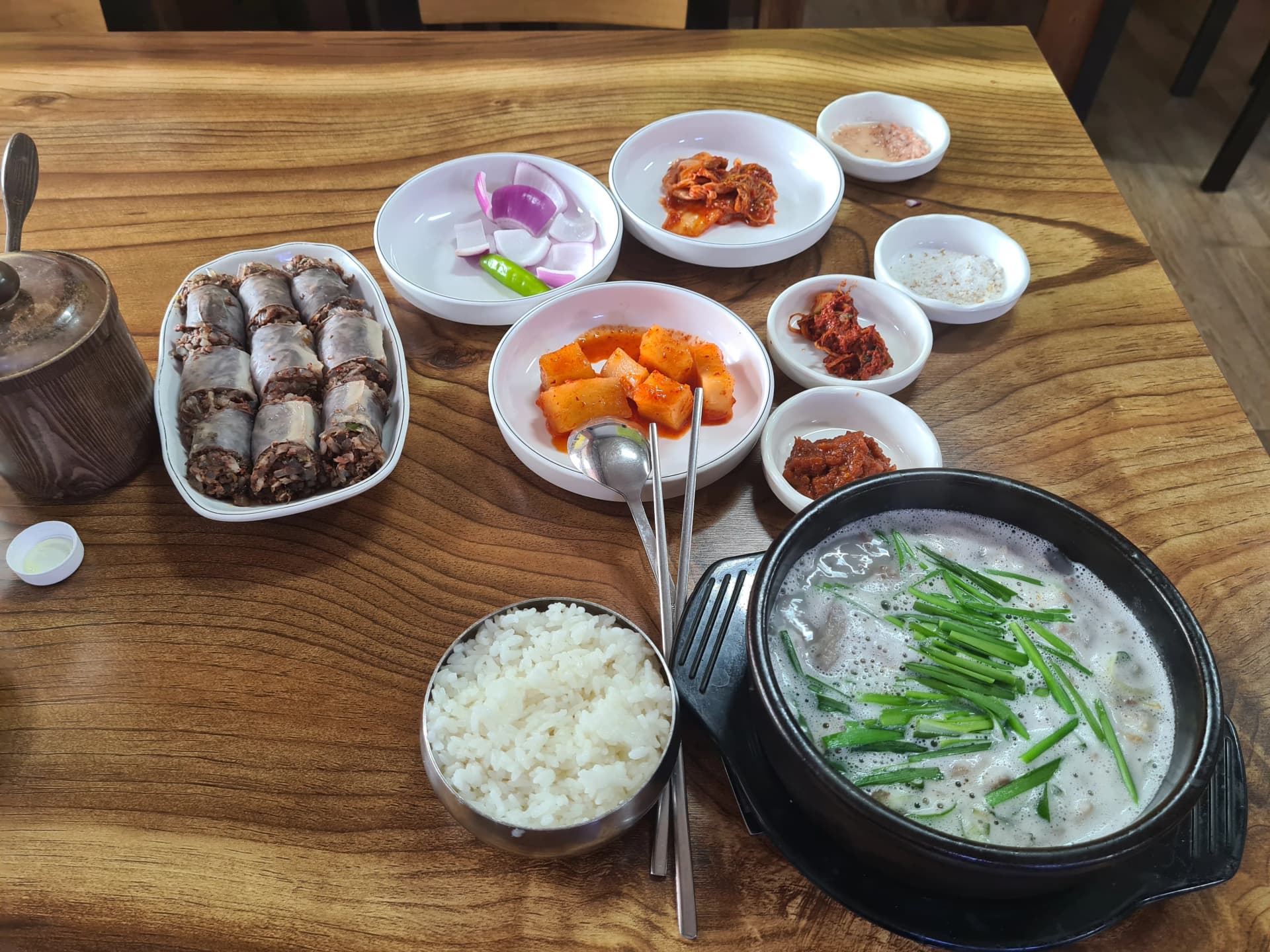
Here's the full spread — a plate of sundae plus one bowl of sundae gukbap, plus all the side dishes. The table was completely covered. This is just how Korean gukbap restaurants work. Even if you only order one bowl of soup, the rice, soup, and sides all come out separately, so the table always looks like a feast. The rice comes in a stainless steel bowl, and the sundae gukbap arrives still bubbling in a hot stone pot. The green stuff on top is chives. At $7 for the gukbap and $6 for the sundae plate, that's about $13 total for everything you see here — pretty solid for a solo meal.
Sundae Gukbap — What's Behind That Milky-White Broth
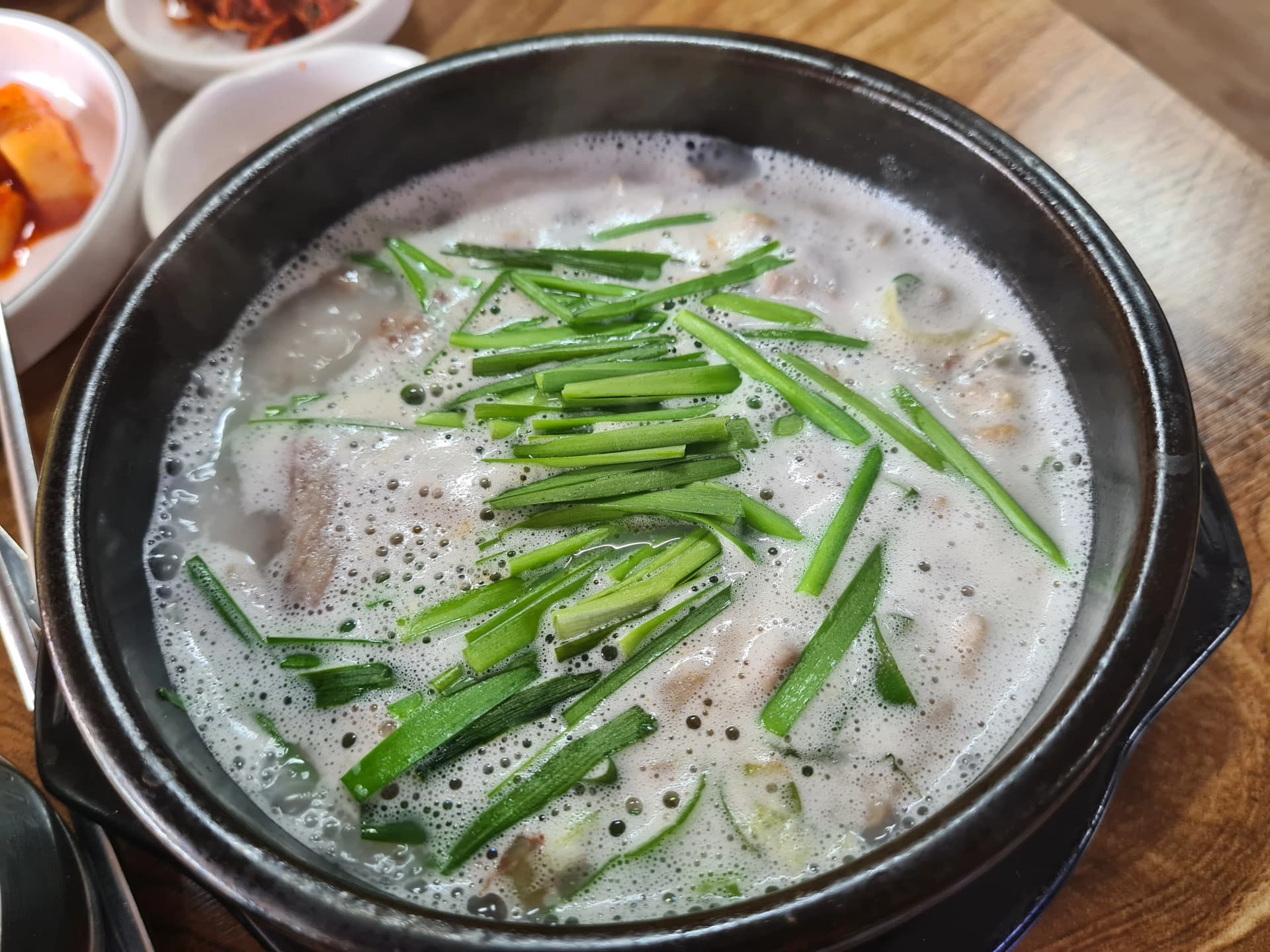
This is sundae gukbap. Milky-white broth with chives on top, and underneath the surface, sundae, pork offal, and boiled head meat are all submerged. When I ordered, I just said "one sundae gukbap" without specifying anything — and by default, it came with a mix of sundae and offal. In Daejeon and many other parts of Korea, the soup and rice come out separately. Whether you dump the rice into the broth or eat them side by side is entirely up to you.
If you look at the menu at a sundae gukbap place, you might see both "sundae gukbap" and "ttaro gukbap" listed separately. The names make them sound like totally different dishes, but the difference is actually simple.
Sundae Gukbap vs. Ttaro Gukbap — What's the Difference?
Sundae gukbap comes with the rice already mixed into the broth — everything in one bowl. Ttaro gukbap literally means "separate soup with rice," so the soup and rice come in different bowls. The ingredients and broth are the same; the only difference is whether the rice is pre-mixed or not. Some places only serve sundae gukbap, while others list both on the menu. Ttaro gukbap often costs about $1 more, usually because you get a slightly more generous portion of meat and offal.
Useful Tips When Ordering
At most sundae gukbap restaurants, you can choose what goes in your bowl when you order. Say "sundae only" and you'll get just blood sausage. Say "offal only" and it'll be mostly pork intestines and organ meat. Say "mixed" or "assorted" and you get both sundae and offal together. If you just say "one sundae gukbap" like I did, most places default to the mixed version. If it's your first time, going with the default mix is the best way to try a bit of everything. If the offal feels like too much, just ask for "sundae only."
What's Inside a Bowl of Blood Sausage Soup
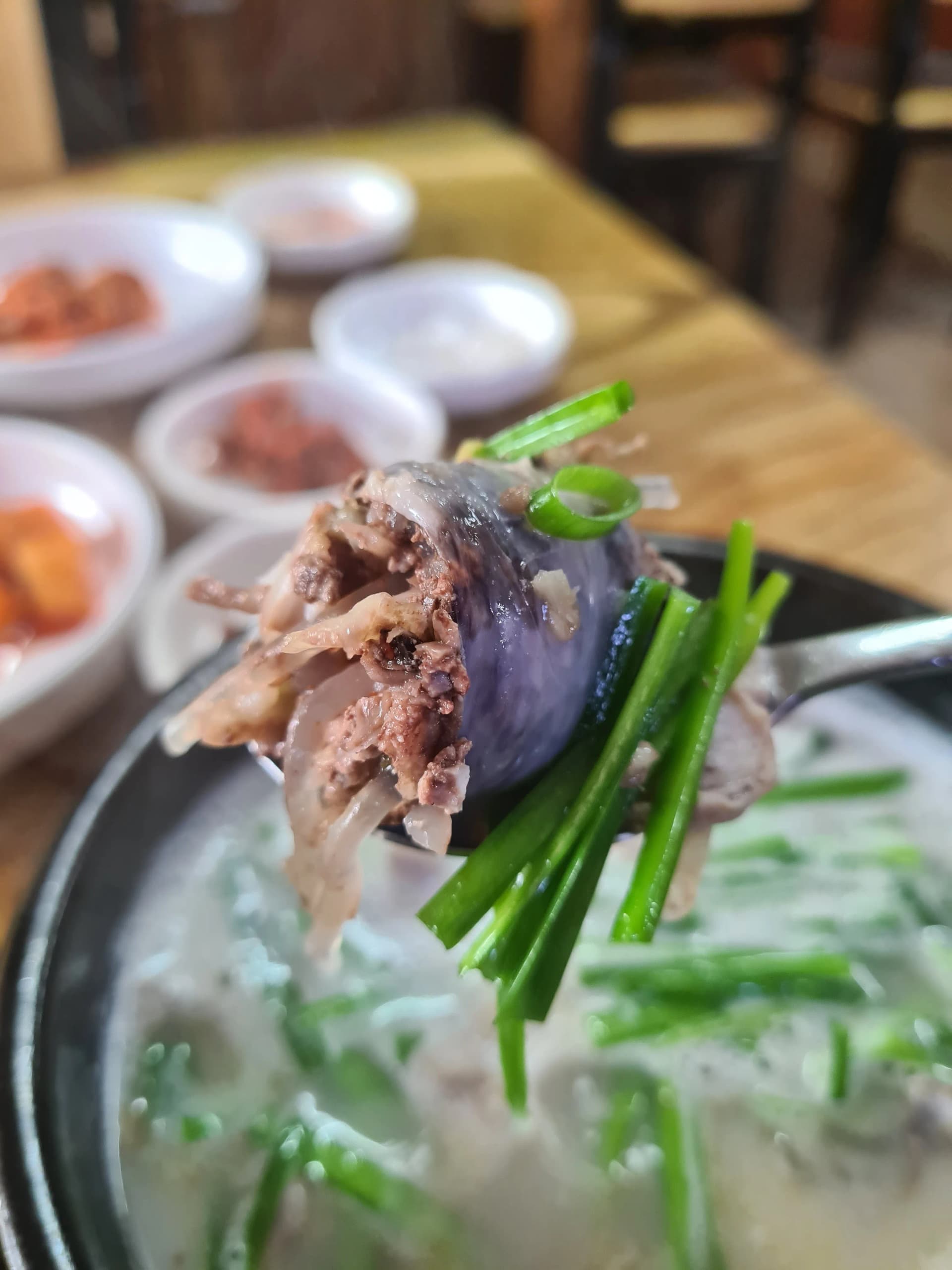
I hesitated for a second about whether to show you this. I scooped up a spoonful and got a piece of sundae, some chives, and offal all tangled together — and honestly, the visual isn't exactly pretty. But this is the reality of sundae gukbap.
Blood Sausage and Offal Up Close
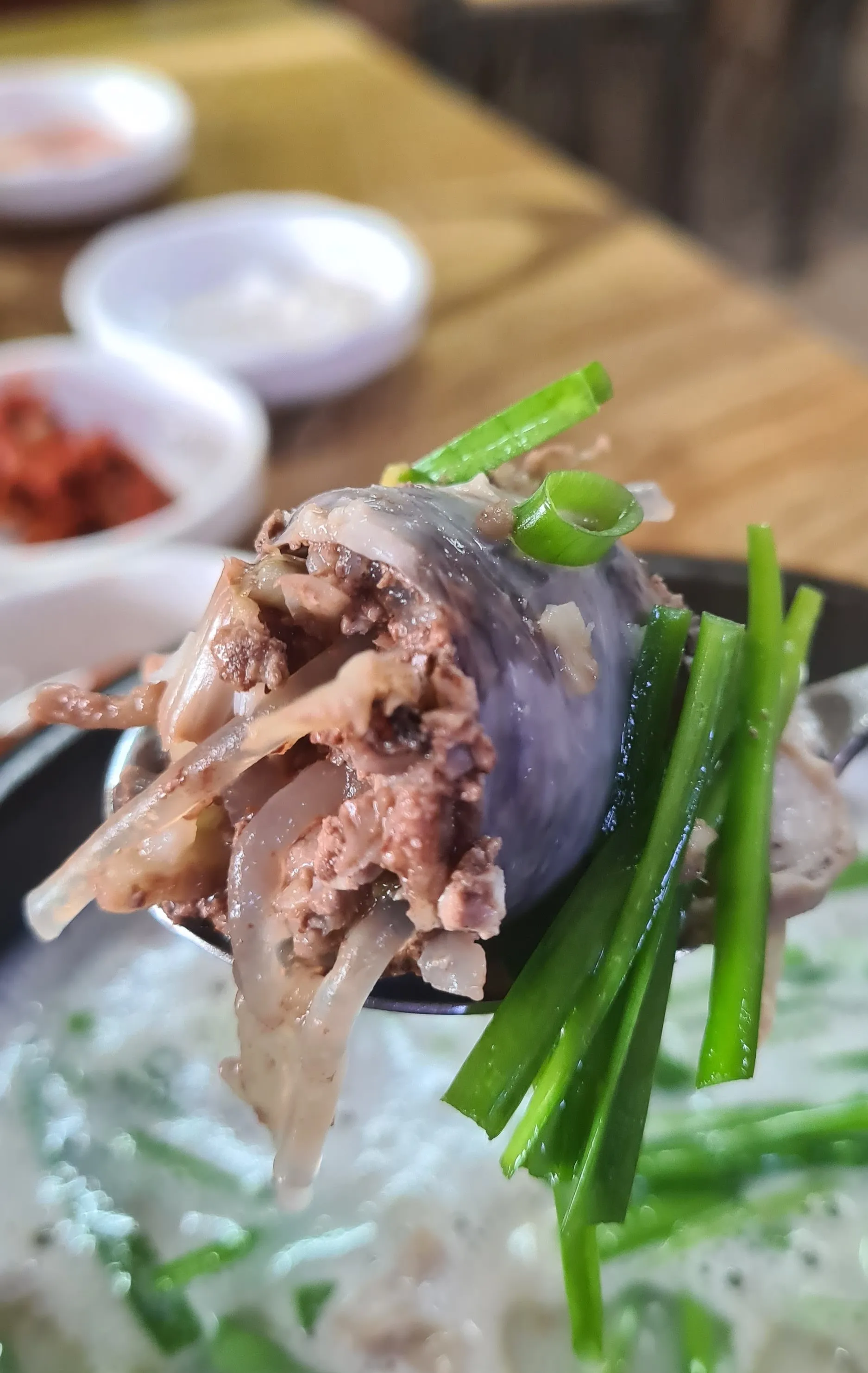
Even closer. You can see the glass noodles and vegetables packed tight inside the sundae, and the intestine casing still has some bounce to it. Factory-made sundae is never stuffed this full. The translucent bit next to it is offal — and I'll be real, if you're not used to seeing this kind of thing, it might trigger some initial resistance. But after simmering in the broth for a long time, it's gotten soft, and the texture is actually milder than you'd expect.
The Broth Flavor Varies From Restaurant to Restaurant
The broth flavor at sundae gukbap places varies quite a bit depending on where you go. Some restaurants boil the bones for so long that the broth turns thick and rich, almost like bone marrow soup — but with that comes a heavier, greasier mouthfeel. Others keep it light and clean with barely any oiliness at all. This place was somewhere in between, but honestly, by the second half of the bowl, the richness started to get to me and I was feeling a bit weighed down. The same dish can taste so different depending on the restaurant, and that's something you only learn by eating at multiple spots. This isn't a food you can judge after just one or two tries.
How to Eat Sundae Gukbap — You Season It Yourself
How Do You Actually Eat Sundae Gukbap?
1. Eating it as-is? — It'll be basically bland.
Sundae gukbap comes out with almost no seasoning at all. You can technically eat it straight, but it'll be extremely bland. In Korea, this soup is meant to be seasoned by the customer at the table. That's exactly why there's always salt sitting right there. Just add a little at a time and adjust to your own taste.
2. Salt — The most basic way to season
Salt is available at every single sundae gukbap restaurant. Start with about half a spoonful, taste the broth, then add more gradually if needed. Once you put too much in, there's no going back. Some places offer salted shrimp paste (saeujeot) instead of plain salt — it has more umami depth and makes the broth taste richer.
3. Perilla seed powder — Cuts the grease, adds nuttiness
If the broth feels too rich or greasy, try adding perilla seed powder (deulkkae-garu). It spreads across the surface and brings a nutty, toasty flavor while seriously toning down the heaviness. A lot of Koreans dump a generous amount of it into their sundae gukbap. Not every restaurant has it, but most specialty sundae gukbap spots keep it on the table.
4. Spicy red paste (dadaegi) — When you want some heat
You'll probably see a red paste sitting on the table. That's dadaegi — a spicy condiment made from red chili flakes, garlic, soy sauce, and more. Stir it into the broth and the milky-white soup turns red and the whole flavor shifts to a spicy, fiery version. It also cuts through the greasiness and adds a kick that more than half of Korean customers go for. If it's your first time, add just a little, taste it, and add more if you like it.
Personally, I just season mine with salt. If you want to taste the broth in its purest form, salt is the cleanest way to go. But at this particular spot, the richness started creeping up on me toward the end, and I thought next time I might throw in some perilla seed powder.
My Honest Take
Sundae gukbap, honestly, isn't a dish I'd casually recommend to someone trying Korean food for the first time. The look of it, the organ-y smell, the moment of hesitation before you pick up your spoon — it's all real. Even for me, depending on the day and how I'm feeling, it can be hit or miss.
But then there's that moment on a freezing cold day when you catch the scent of milky broth wafting up from some alley, push through the door, and take that first scorching hot spoonful. I almost burned the roof of my mouth on that first bite, and I still couldn't put the spoon down. That right there is why sundae gukbap has survived in Korea for decades and isn't going anywhere.
If you're visiting Korea and want to take a real shot at local comfort food, sundae gukbap is a full, proper meal for about $7 a bowl. And if the offal is too much for you, just order "sundae only."
Sundae Gukbap FAQ
How much does sundae gukbap usually cost?
It varies by region and restaurant, but most places charge between 9,000 and 12,000 won. In central Seoul or near tourist areas, it can go over 13,000 won, while smaller cities outside the capital sometimes still have it in the 8,000-won range. A separate plate of sundae adds another 8,000 to 15,000 won. In dollar terms, one bowl of sundae gukbap runs about $7 to $9.
Do sundae gukbap restaurants have English menus? How do you order?
Honestly, almost none of them have English menus. Unless it's near a tourist area, you'll likely only find a Korean-language menu. The good news is the menu is super simple — just saying "sundae gukbap" is basically your entire order. Pointing at the menu or using a translation app on your phone and pointing the camera at the menu board works for most situations. More and more places have self-order kiosks these days, but they're usually Korean-only too, so having a translation app ready is a smart move.
What are some similar Korean soups if sundae gukbap is too intense?
Korea has a huge variety of gukbap (soup with rice) options. Dwaeji gukbap is a pork bone broth soup with sliced boiled pork — much less offal than sundae gukbap, so it's easier to handle. Seolleongtang is a milky-white ox bone soup that's been simmered for hours, and gomtang is similar but with more meat and a slightly clearer broth. Kongnamul gukbap is a bean sprout soup with rice that's famous in the Jeonju region — since the main ingredient is bean sprouts, it's the least intimidating option for anyone put off by organ meats. Ppyeo-haejangguk is a spicy pork backbone soup, similar to gamjatang (pork bone stew).
Can vegetarians eat sundae gukbap?
No. Sundae gukbap is not vegetarian-friendly at all. The broth itself is made entirely from pork bones and offal, and every piece of solid food in the bowl is a pork product. The sundae is made from pork intestine casing and pork blood. The closest thing to a vegetarian-friendly gukbap in Korea is kongnamul gukbap (bean sprout soup with rice), but even that often uses a pork-based stock, so it's hard to call it truly vegetarian either.
What are the typical operating hours for sundae gukbap restaurants?
Most open very early in the morning. Opening at 6 or 7 AM is common, and quite a few run 24 hours. In Korea, there's a strong culture of eating a bowl of gukbap for breakfast or as a hangover cure after a night of drinking, so finding a spot open in the early morning or late at night isn't hard. That said, some places close early when they run out of broth, so if you're planning a late visit, it's worth checking ahead.
This post was originally published on https://hi-jsb.blog.