
Don’t Drain the Water: Thick, Glossy Korean Black Bean Ramen in 5 Minutes — Chapagetti
Table of Contents
19 items
Chapagetti Review: Korea’s Iconic Black Bean Ramen (Plus the Thick-Sauce Water Trick)
Hey! I’m Hi-JSB. Today I’m trying Chapagetti (짜파게티), one of Korea’s most iconic instant noodles—basically Korean-style black bean ramen. If you’ve been curious about Korean ramen but worry it might be too spicy, this one is the easy entry point.
First launched in 1984, Chapagetti isn’t just “another noodle pack” in Korea—it’s a pop-culture staple. It also got global attention through the movie Parasite, thanks to Chapaguri (aka ram-don in the English subtitles). I cooked it, tasted it, and broke down why it still hits after decades.
1) Spotting Chapagetti at a Korean Convenience Store
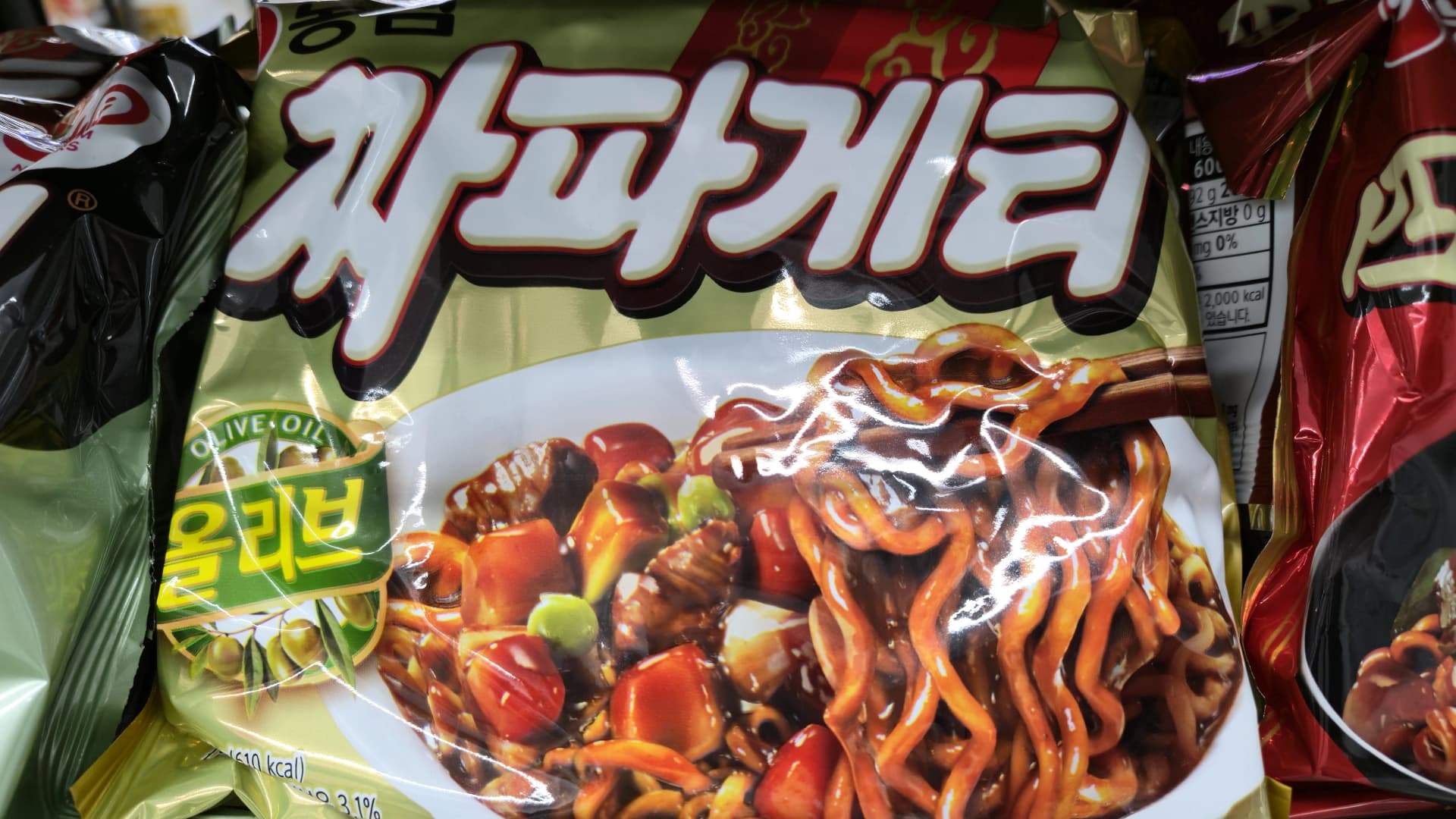
I found Chapagetti in the ramen aisle. The olive-green package with bold lettering is instantly recognizable, and the small “OLIVE OIL” badge highlights one of its signature features: a seasoning oil packet that boosts aroma and richness.
The package photo shows glossy noodles coated in deep brown-black sauce with veggie bits like onion, carrot, and cabbage—exactly the vibe people expect from Korean black bean noodles.
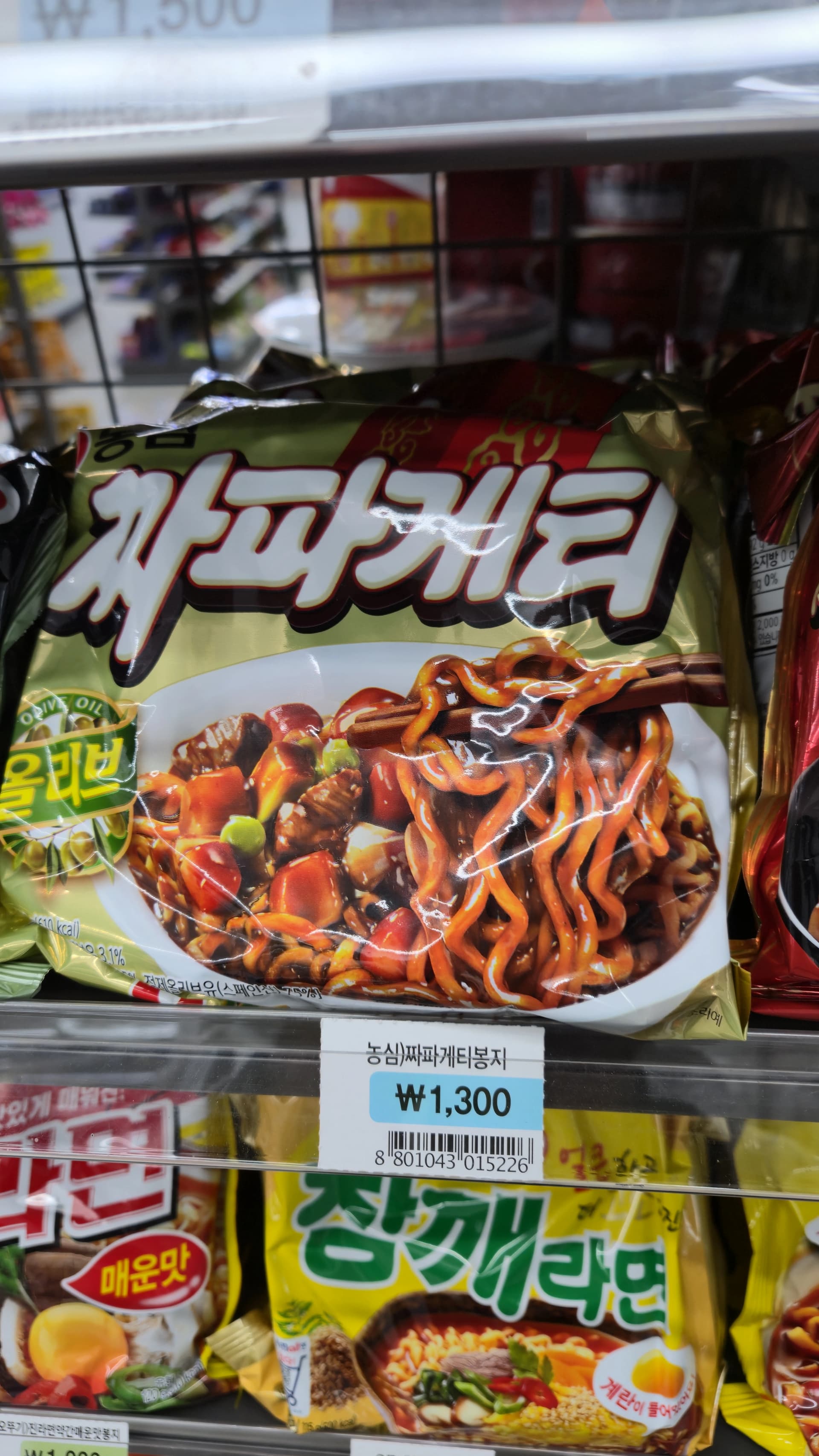
The price: ₩1,300 (about $1 USD / £0.80 GBP / A$1.50 AUD). For something this filling, it’s one of the best “late-night meal” deals you’ll find in Korea.
2) Packaging Close-Up
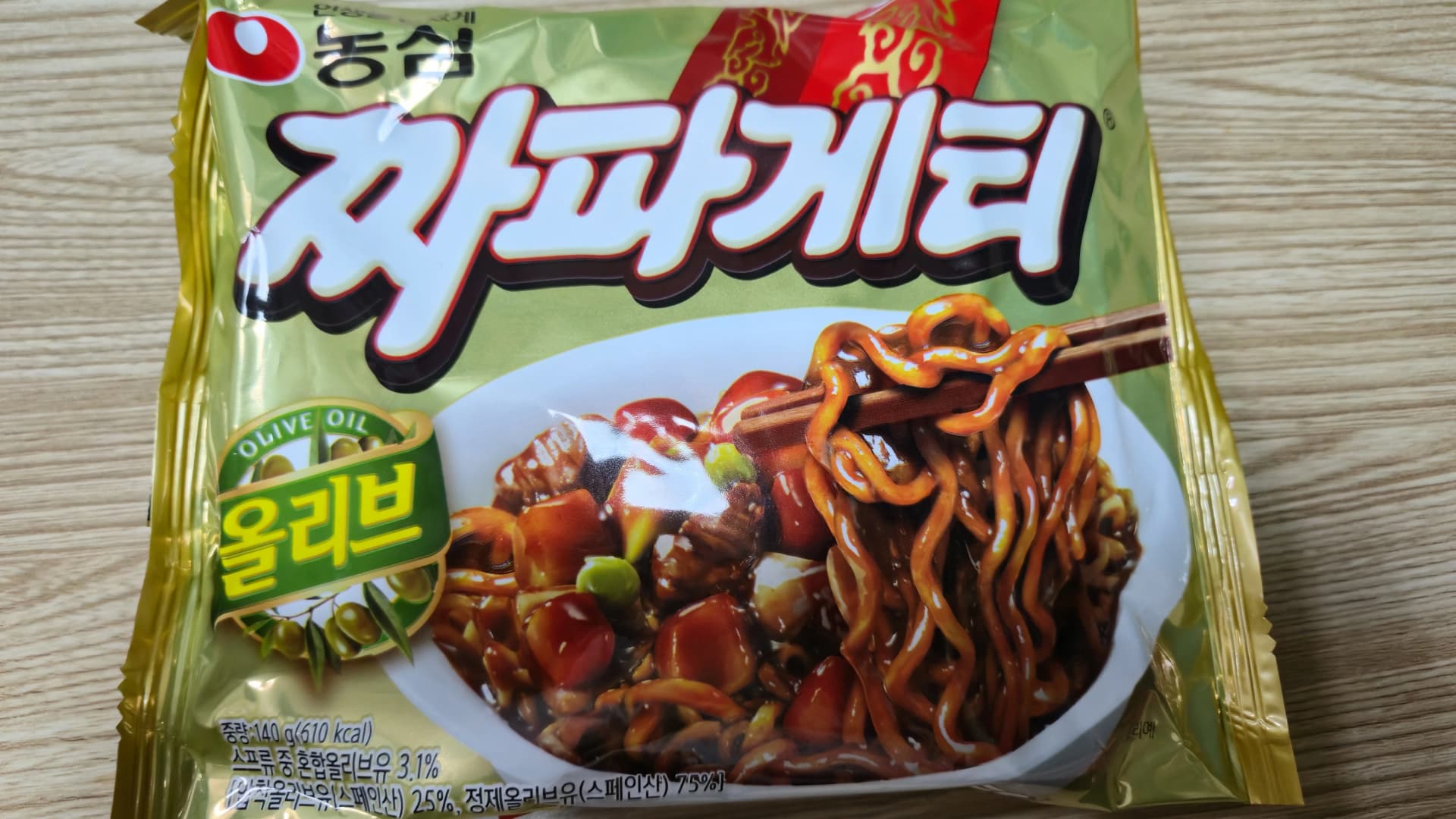
Up close, the front image sells the texture: thick noodles, glossy sauce, and visible toppings. If you’re chasing that “rich, clingy sauce” look, this is exactly the product promise.
3) What’s Inside the Bag?
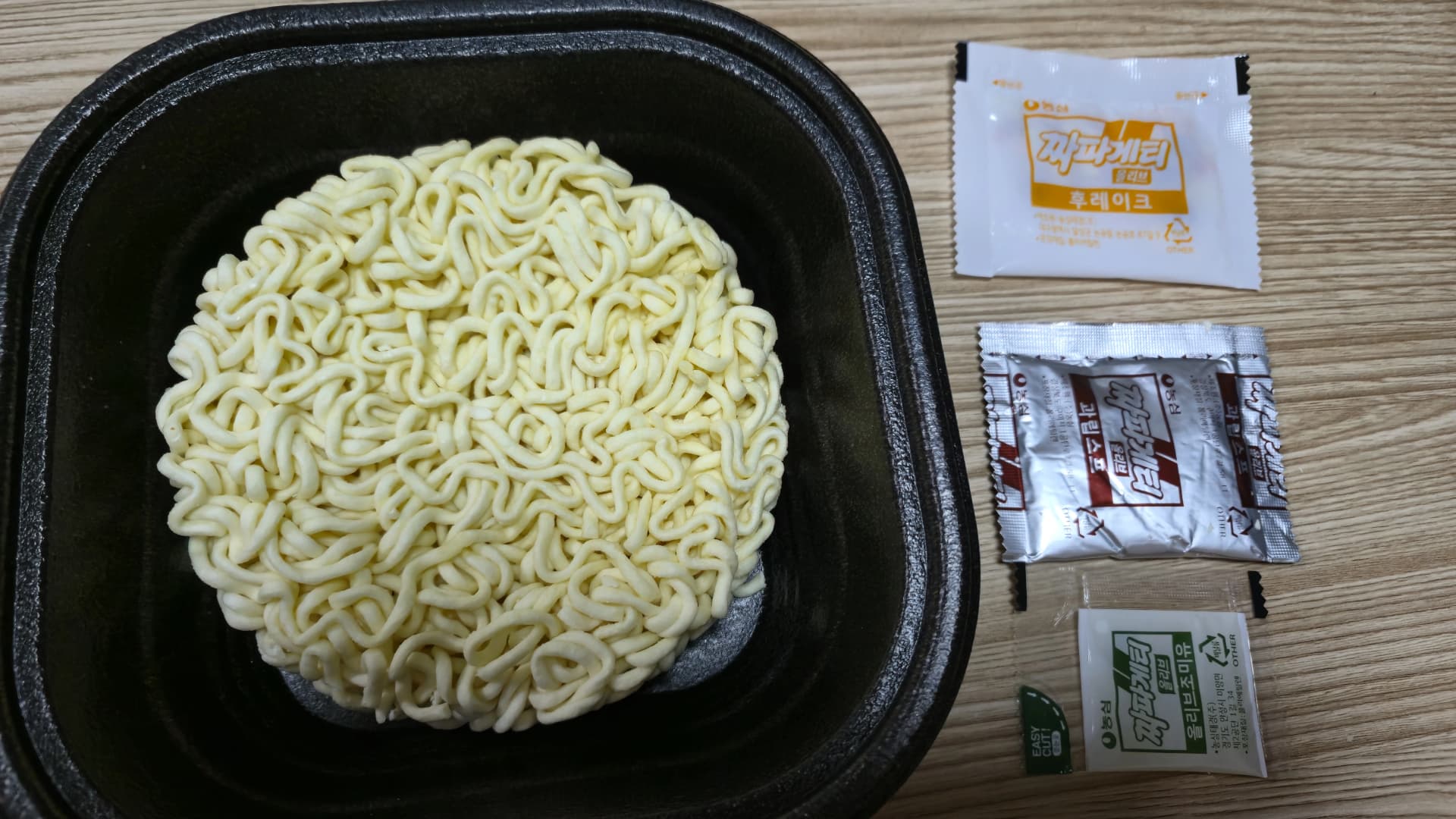
Inside, you get four components:
- Noodles (yellow, curly ramen block)
- Black bean sauce powder (brown powder packet)
- Vegetable flakes (dried onion, carrot, etc.)
- Olive seasoning oil (green packet)
The olive oil packet is the “secret weapon” that makes the finish smoother and more fragrant than many basic instant noodles.
4) How to Cook Chapagetti (Stovetop Method)
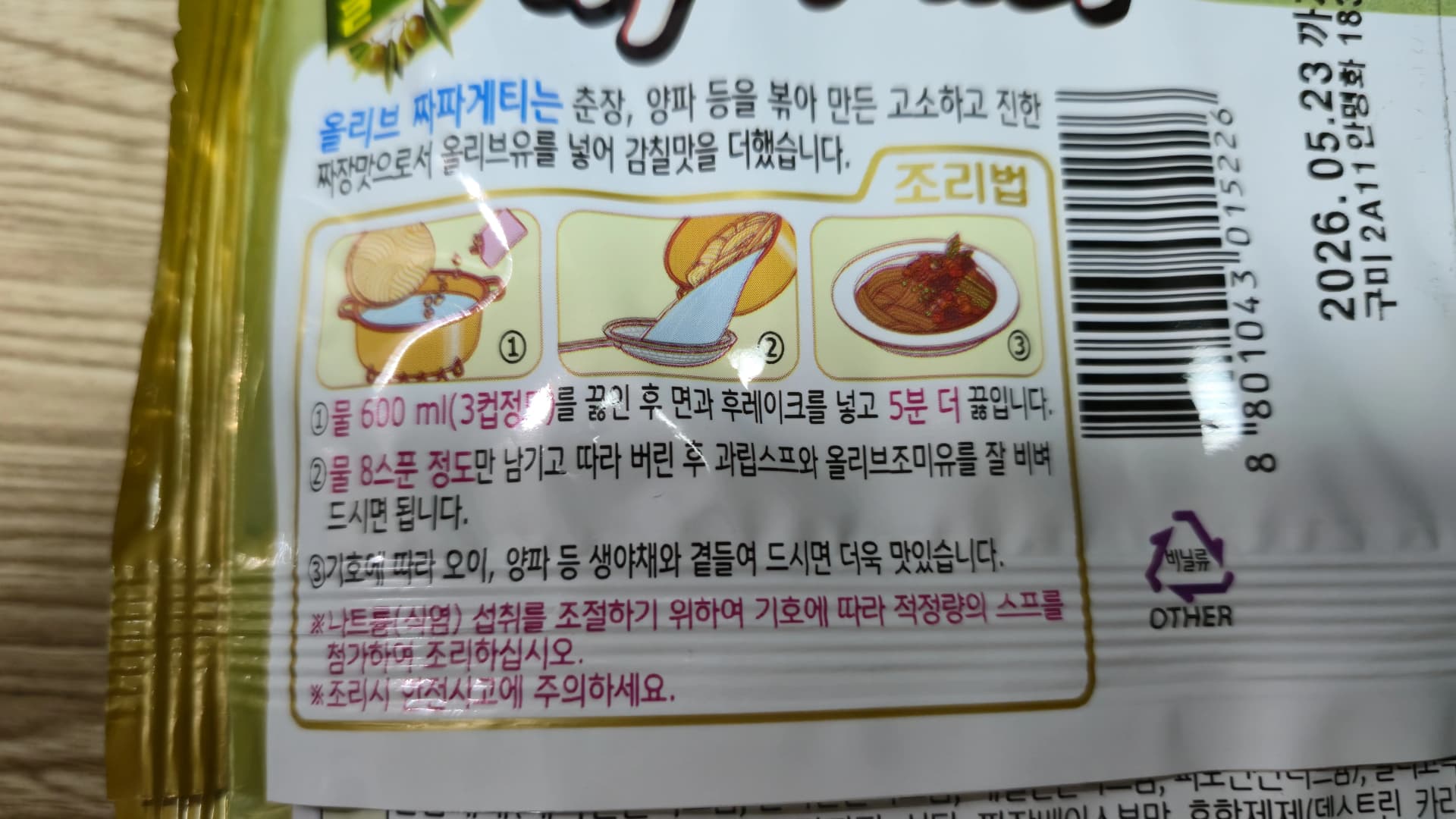
Chapagetti is a mix-noodle style (not a soup ramen), so water control matters. The standard steps:
- Boil 600 ml water (about 2.5 cups).
- Add noodles + vegetable flakes, cook about 5 minutes.
- Drain most water, leaving about 8 tablespoons (roughly 120 ml).
- Add sauce powder + olive oil, then mix thoroughly.
Important: Cook the vegetable flakes with the noodles so they soften properly. Adding them late can leave them dry and crunchy.
5) Nutrition Snapshot
Nutrition facts (per 140 g serving):
| Item | Amount | % Daily Value |
|---|---|---|
| Calories | 610 kcal | - |
| Sodium | 1,100 mg | 55% |
| Carbs | 96 g | 30% |
| Sugars | 7 g | 7% |
| Fat | 20 g | 31% |
| Saturated Fat | 8 g | 53% |
| Protein | 11 g | 20% |
It’s a satisfying meal, but sodium is relatively high. If that’s a concern, use a bit less powder, add fresh veggies, or leave slightly more water to dilute the sauce.
6) Ingredients, Allergens, and Dietary Notes
Key ingredients include wheat flour noodles, palm oil, starches, caramel color (for sauce color), dried vegetables (onion/cabbage/carrot), olive oil, and seasonings.
6.1 Allergens
Contains:
- Wheat (gluten)
- Egg
- Milk
- Soy
- Pork
- Beef
6.2 Religious / Dietary Sensitivities
Please note the following before eating:
- Halal: contains pork and beef ingredients, so it is not Halal-friendly.
- Hindu: contains beef ingredients, so it may not be suitable.
- Vegetarian/Vegan: contains meat-derived ingredients, so it is not suitable.
7) Traveler Hack: Cook Chapagetti in a Hotel Microwave
If you’re traveling in Korea, here’s the easiest win: you can make Chapagetti without a stove—just a microwave and a microwave-safe container.
Traveler tip: No burner in your room? You can still cook Chapagetti with hot water + a microwave (often available in hotels or convenience stores).
What you need: Chapagetti ₩1,300 (about $1 USD / £0.80 GBP / A$1.50 AUD), a microwave-safe container about ₩500 (about $0.40 USD / £0.30 GBP / A$0.60 AUD), and a microwave. Total: ₩1,800 (about $1.40 USD / £1.10 GBP / A$2.10 AUD).
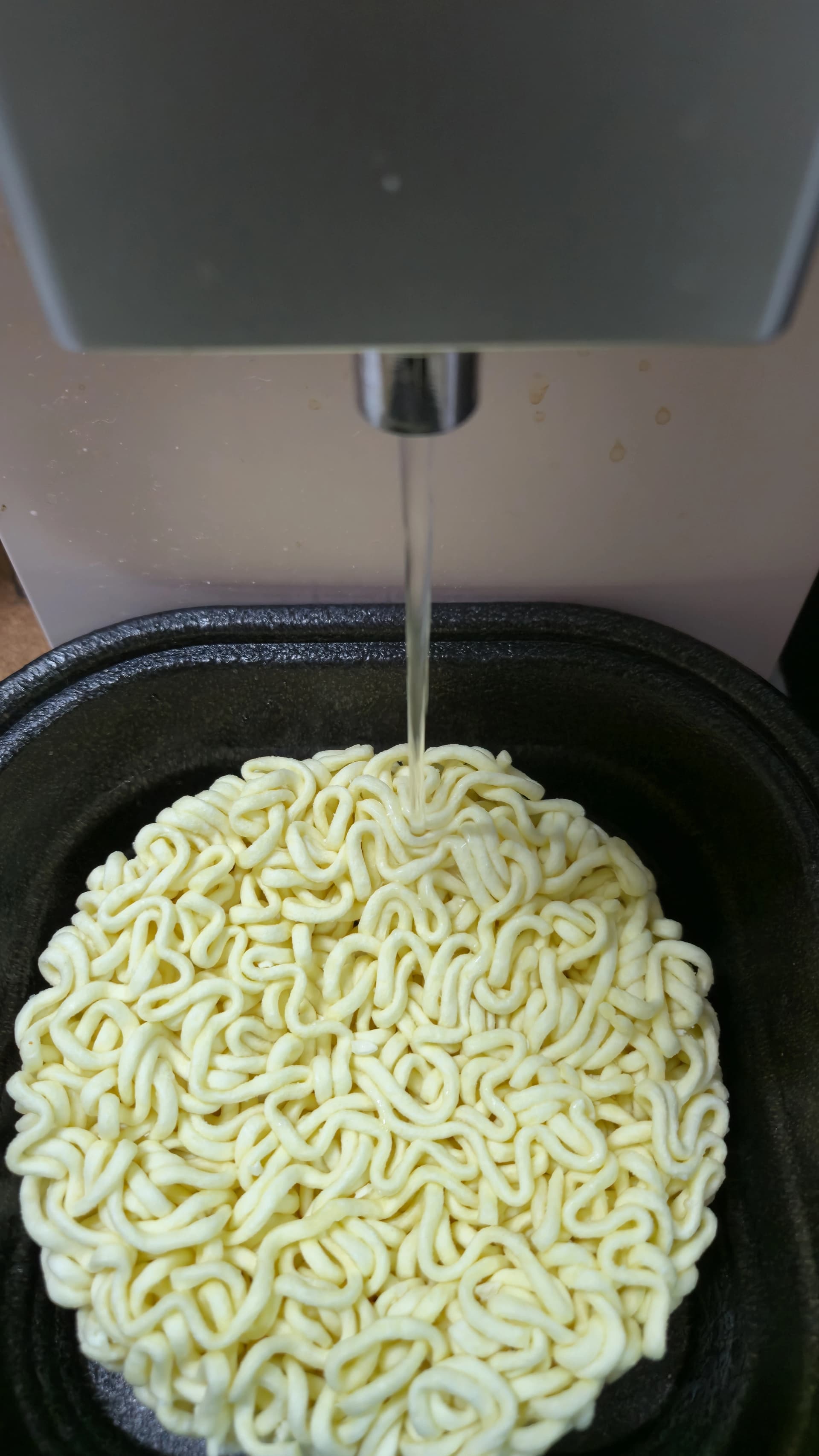
Many Korean water dispensers provide hot water around 90℃ (194℉), so you can skip boiling. Pour about 600 ml hot water until the noodles are fully submerged.
Don’t mess this up: add the vegetable flakes now. I added them too late once, and they didn’t soften enough.
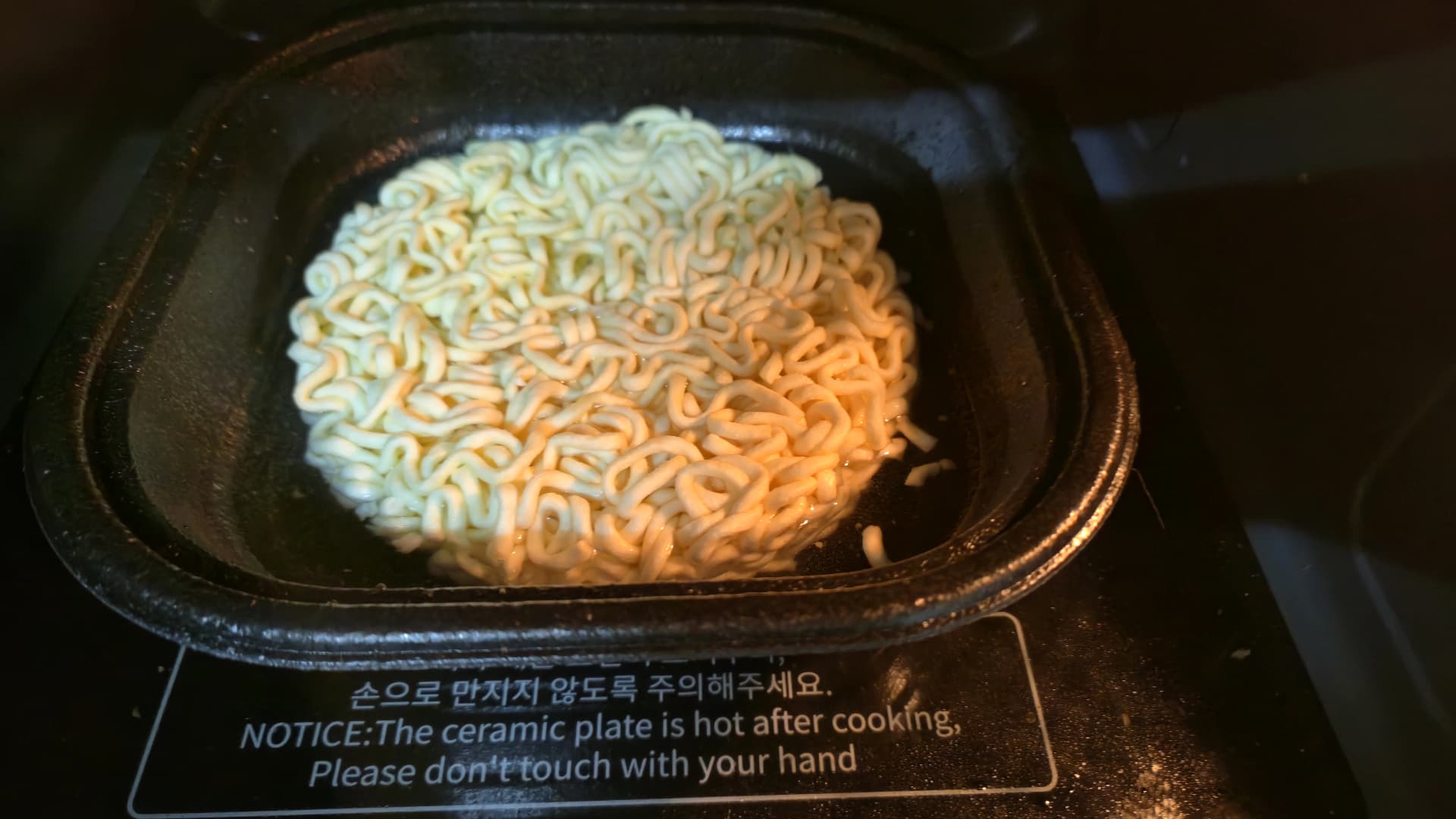
Microwave time (adjust to your microwave):
- Using hot water: 3:30–4:00
- Using cold water: 4:30–5:00
8) Add the Sauce: The “Leave 8 Tablespoons of Water” Rule
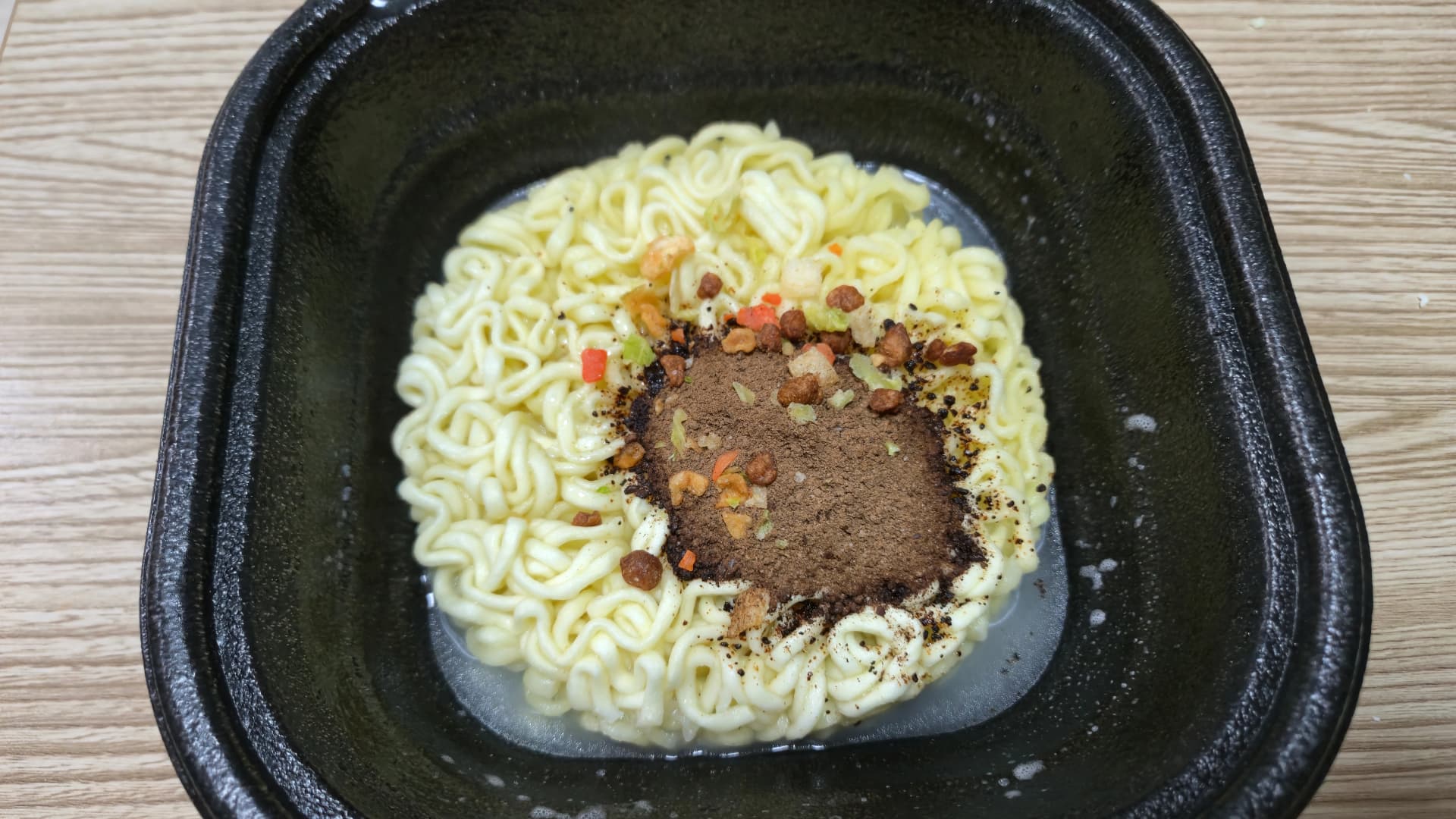
After cooking, drain most of the water—but leave about 8 tablespoons (roughly 120 ml). This is the no-fail way to get a thick, glossy sauce that coats evenly without clumping.
Add the sauce powder and olive oil, then mix for about 30 seconds until every strand is coated.
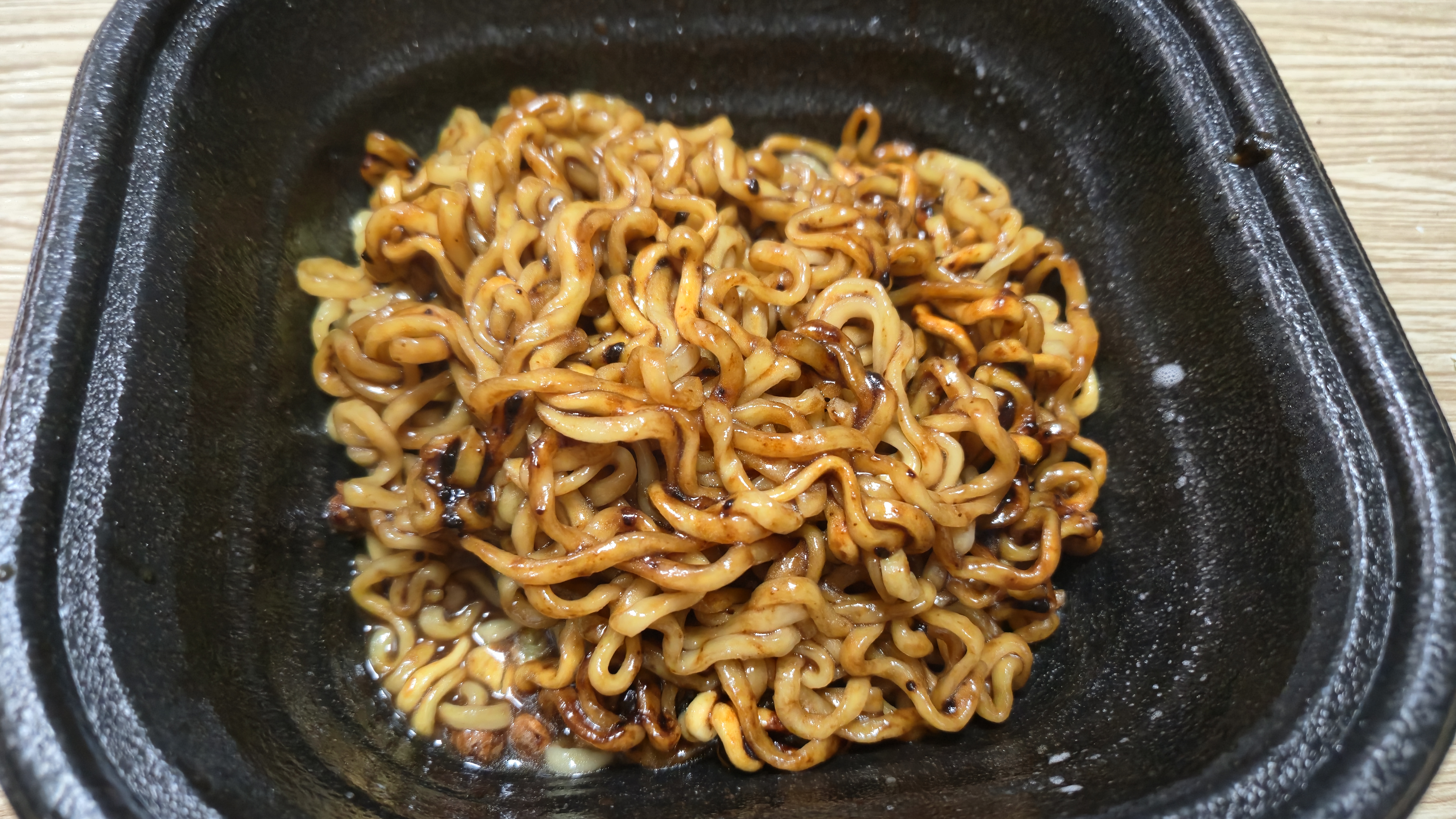
Done. The noodles turn a shiny deep brown, with veggie bits throughout. The sauce looks rich, and the texture is exactly the “thick and clingy” style people want.
9) Taste Review: Is Chapagetti Actually Good?
Yes. The first bite made immediate sense: it’s comfort food with a sweet-savory black bean profile—no heat required.
9.1 The Best News: It’s Not Spicy
A lot of people think “Korean ramen = spicy.” That’s true for many popular brands, but Chapagetti is not spicy. It’s more about a sweet, roasted-onion-like depth and a smooth, savory finish.
9.2 Flavor Breakdown
- Sweet-savory black bean vibe: more caramelized and toasty than sugary.
- Chewy noodles: thicker and bouncier than many standard ramen packs.
- Olive oil finish: makes it feel smoother and more “premium.”
Overall rating: 5/5. For the price, it seriously over-delivers.
10) Jjajangmyeon vs Chapagetti: What’s the Difference?
Jjajangmyeon is the Korean restaurant dish: noodles mixed with a dark black bean sauce. Chapagetti is the instant-noodle version inspired by that style—faster, easier, and finished with that signature oil packet.
11) Who Should Try It + Make-It-Better Tips
11.1 Recommended For
- People who want Korean ramen but can’t handle spicy food
- Families looking for a mild, easy comfort meal
- Travelers who want an easy hotel night snack
- Anyone wanting to try Chapaguri (ram-don) from Parasite
11.2 Easy Upgrades
- Add a fried egg: mix the yolk in for extra creaminess.
- Add cheese: one slice makes it richer and smoother.
- Make Chapaguri (ram-don): mix Chapagetti with Neoguri and add beef.
- Finish with a drop of sesame oil: boosts aroma instantly.
12) Final Verdict
Chapagetti stays popular for a reason: it’s mild, satisfying, and shockingly good for a budget convenience-store meal. If spicy Korean ramen has ever scared you off, this is the one that brings you in.
Grab a pack, don’t drain all the water, and enjoy that thick, glossy sauce moment.
This post was published at https://hi-jsb.blog