
Carbo Buldak vs Shin Ramyun Toomba: Which Korean Creamy Spicy Ramen Wins?
Table of Contents
8 items
The Ultimate Showdown: Two Creamy Spicy Ramen Legends
Hey there! I'm Hi-JSB.
After trying Shin Ramyun Toomba yesterday, a thought suddenly hit me: "Wait, isn't there another creamy spicy ramen from Korea?" That's right — Carbo Buldak!
Shin Ramyun Toomba and Carbo Buldak. Both combine cream and spice, but how exactly do they differ? I decided to do a proper head-to-head comparison of these two seemingly similar yet distinctly different noodles.
Shin Ramyun Toomba is a brand new product released in 2024 to celebrate Nongshim's 60th anniversary, while Carbo Buldak has been a global fan favorite for years. Same concept, different companies, different launch times — I was curious to find out exactly how they stack up against each other.
Package and Contents Comparison
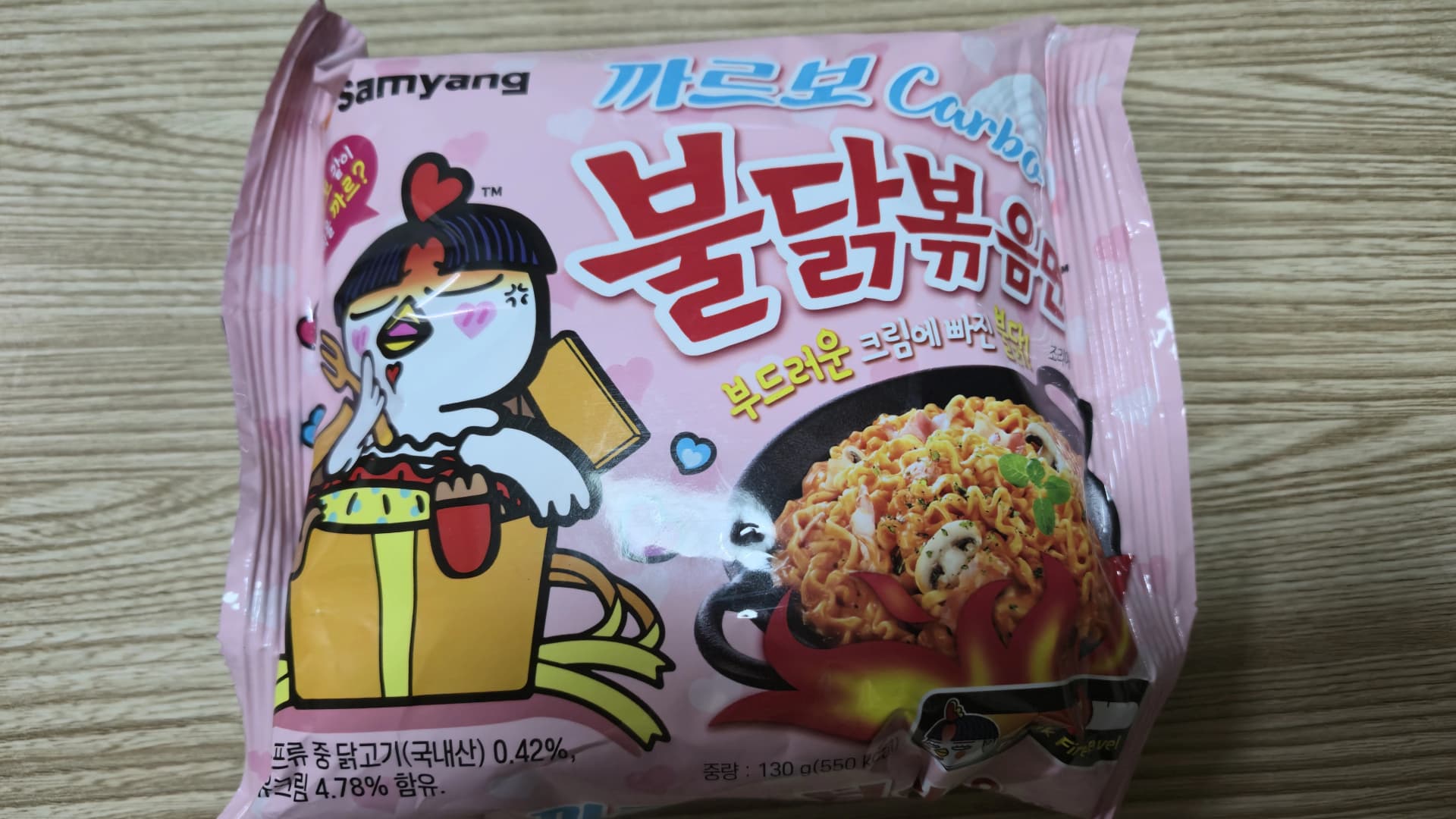
The moment I picked up Carbo Buldak at the convenience store, it felt completely different from Shin Ramyun Toomba.
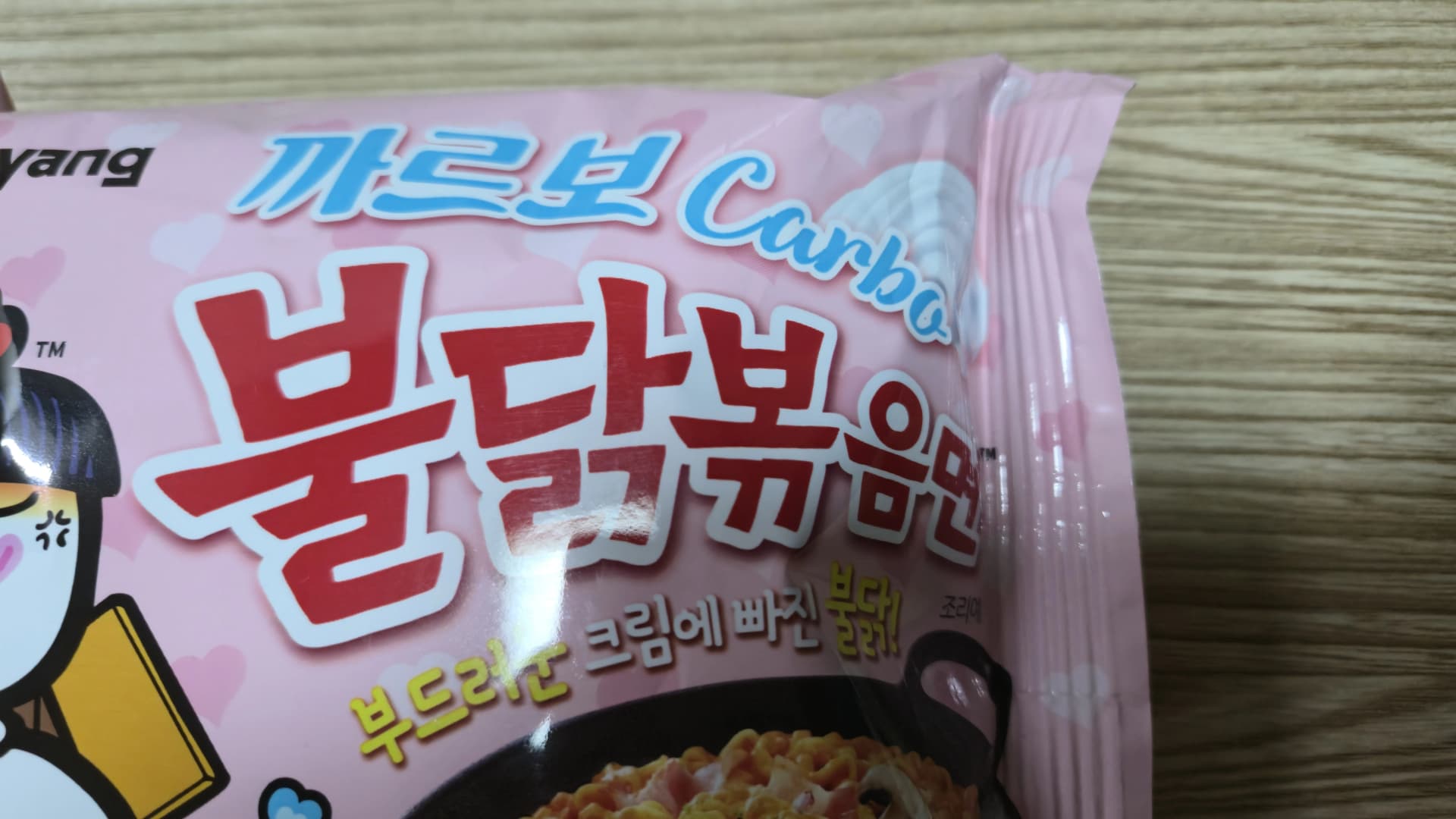
Carbo Buldak's package features a cute fire chicken character on a pink background. "Carbo" is written in big letters, with heart shapes scattered throughout, giving it an overall playful and adorable vibe. The Korean tagline translates to "Fire chicken drowning in creamy sauce."
Package vibe comparison: Shin Ramyun Toomba maintains a beige background with Shin Ramyun's iconic red triangle logo for a sophisticated, premium feel. Carbo Buldak goes with a pink background and cute character for a friendly, fun appeal. You can tell their target audiences and concepts are slightly different just from the packaging.
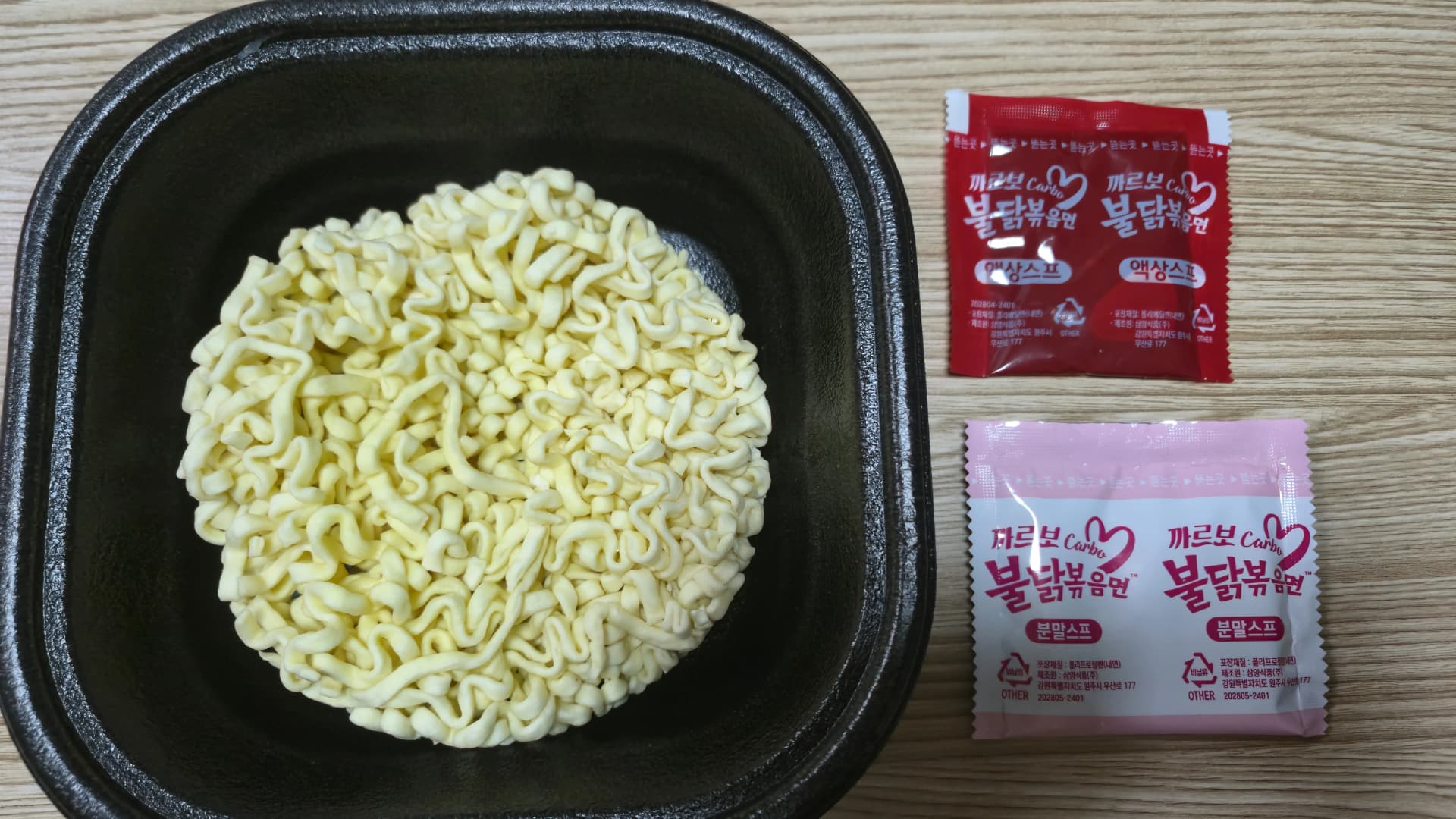
What's inside: Open the package and you'll find noodles, a liquid sauce packet, and a powder packet. But here's the most important difference I noticed: Carbo Buldak's noodles are noticeably thicker than Shin Ramyun Toomba's.
While Shin Ramyun Toomba uses noodles similar in thickness to regular Shin Ramyun, Carbo Buldak uses the signature thick, chewy Buldak noodles. This thickness difference significantly affects cooking time and texture later on.
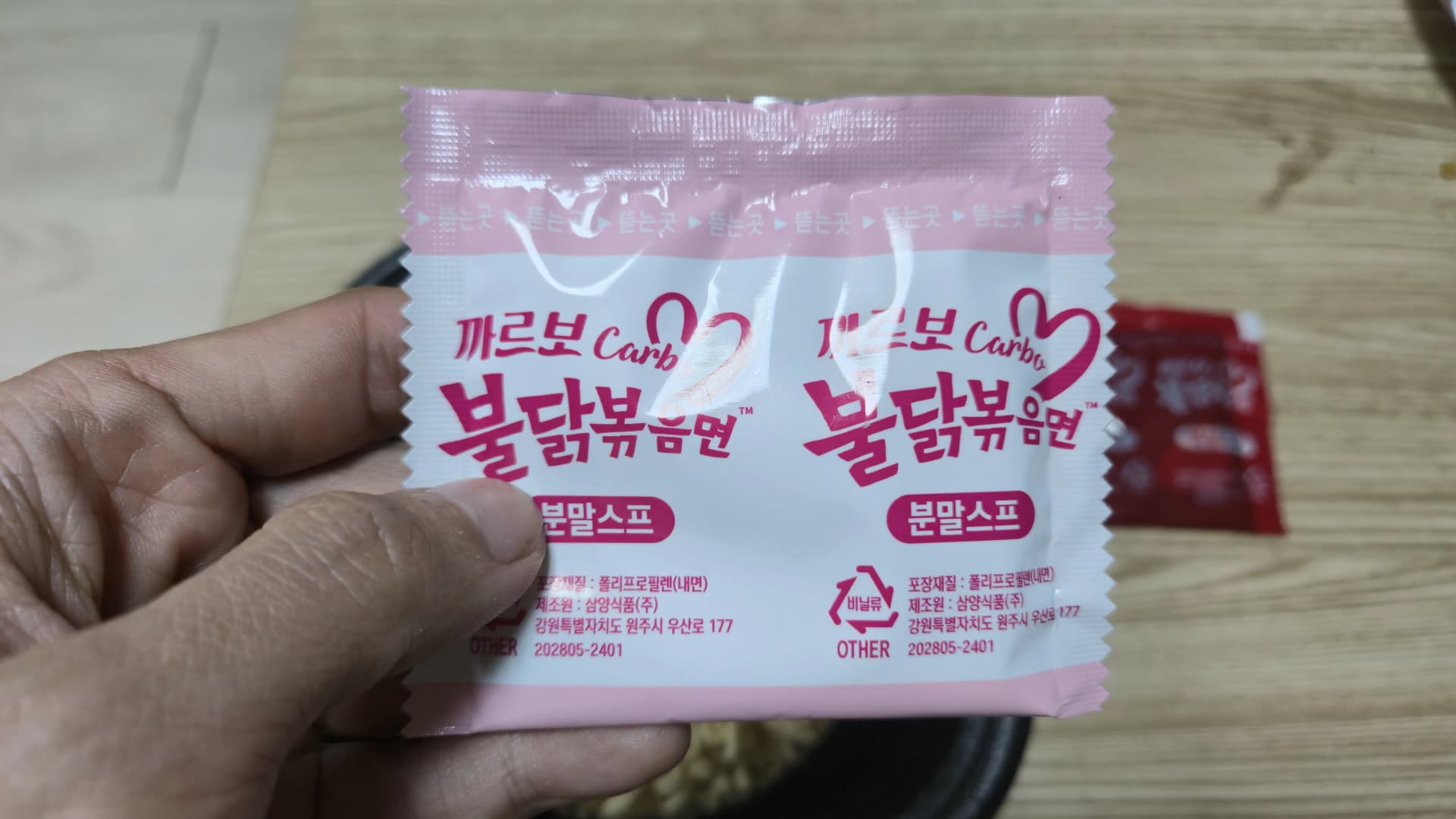
Powder packet: A packet in pinkish-white packaging containing the powder seasoning. It's a mix of cream powder and cheese powder — the moment you sprinkle it, a rich, savory aroma rises up.
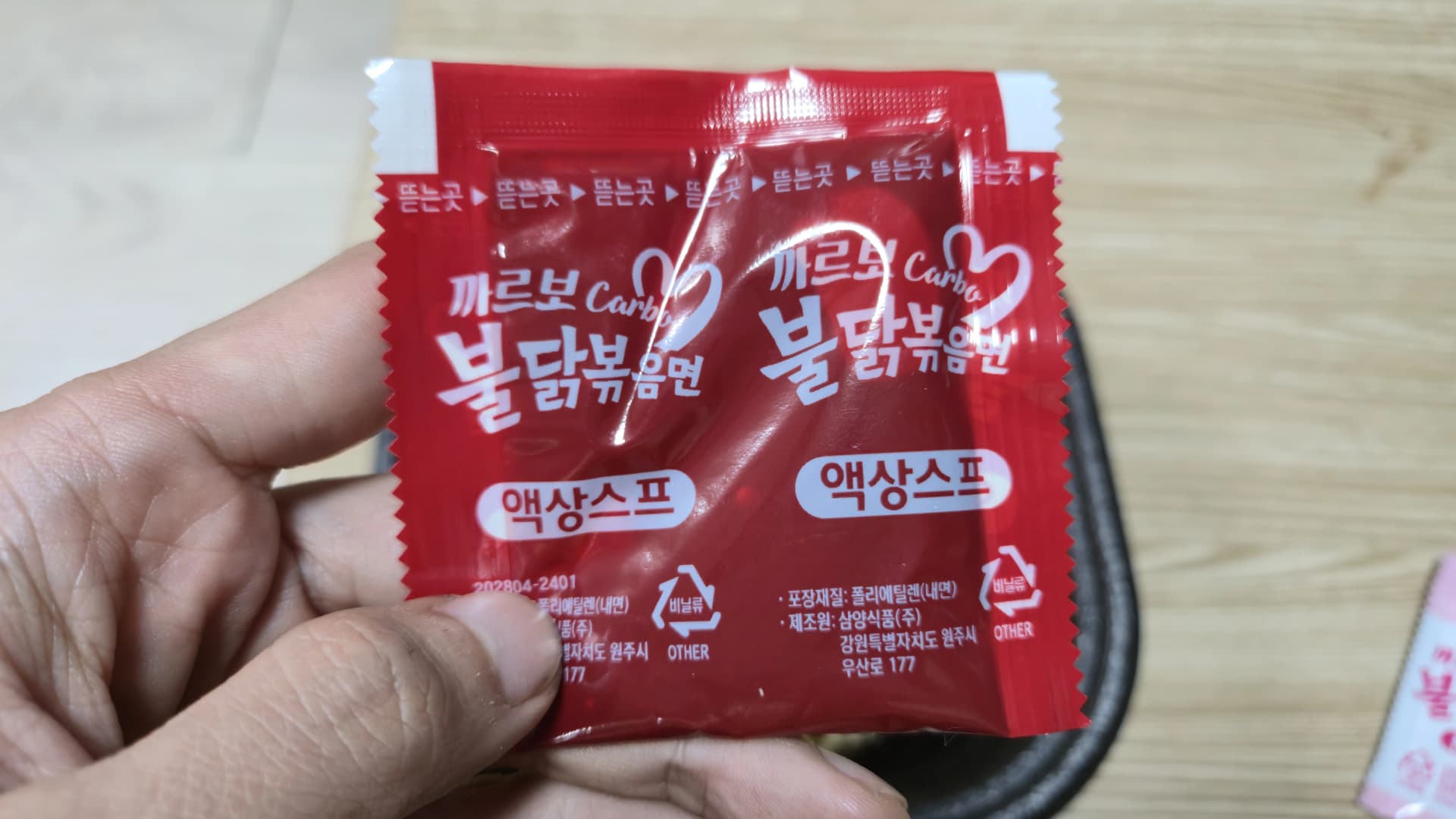
Liquid sauce packet: A packet in red packaging containing the liquid sauce. This is Buldak's signature spicy sauce. While Shin Ramyun Toomba's liquid sauce is an orange-beige color with a gochujang-based milder heat, Carbo Buldak's is a deep red with an intense gochugaru (red pepper flake) based spiciness. The color difference alone tells you everything.
Cooking Process and Final Result
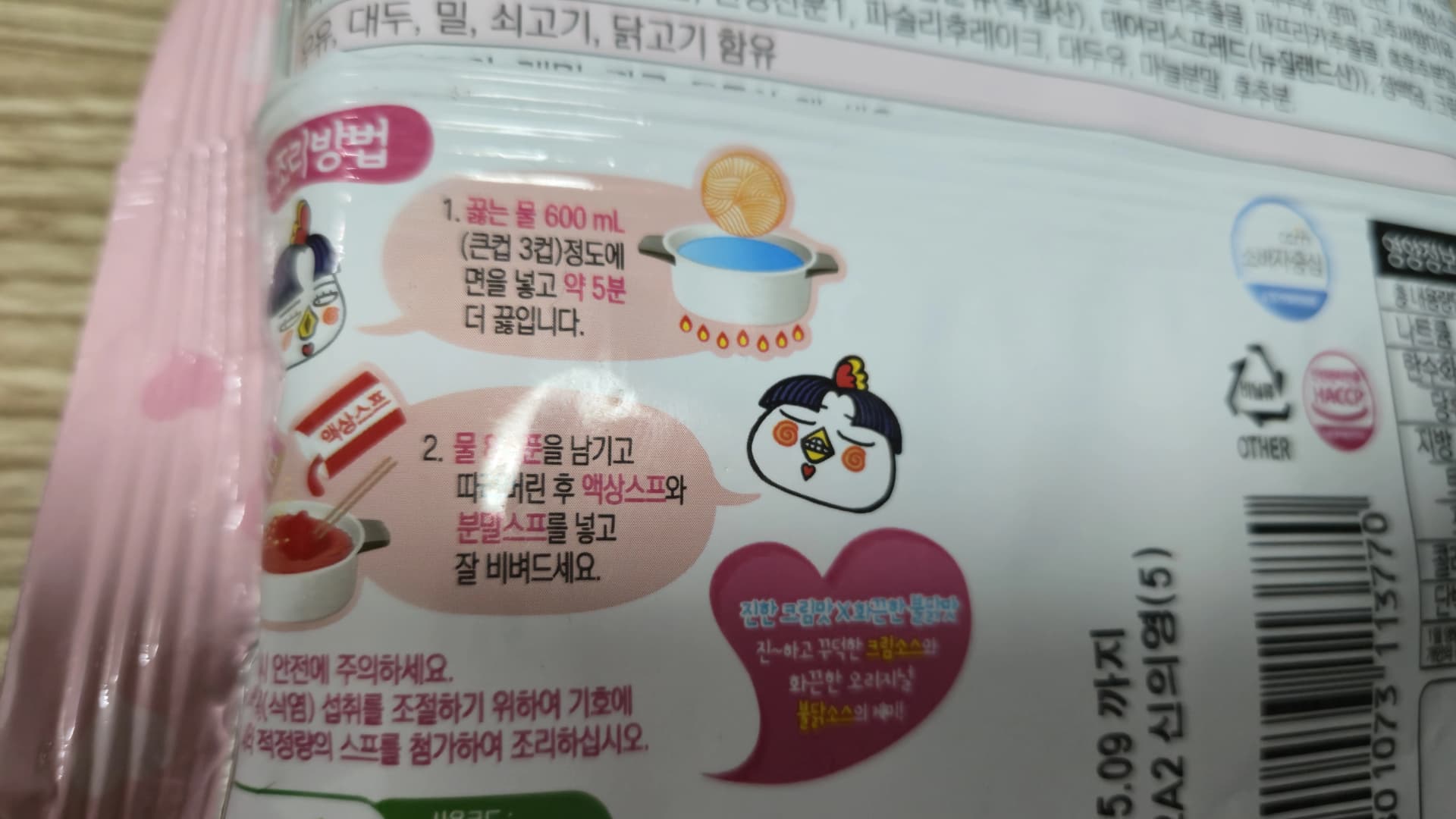
Key cooking differences:
- Shin Ramyun Toomba: 600ml water (about 2.5 cups), cook 4 min 30 sec, leave about 8 tablespoons of water → sauce is slightly thinner
- Carbo Buldak: 600ml water (about 2.5 cups), cook about 5 min, drain almost all water → sauce is thick and sticky
Shin Ramyun Toomba specifically tells you to leave about 8 tablespoons of water, while Carbo Buldak says to drain almost everything. This difference significantly affects the final consistency and taste.
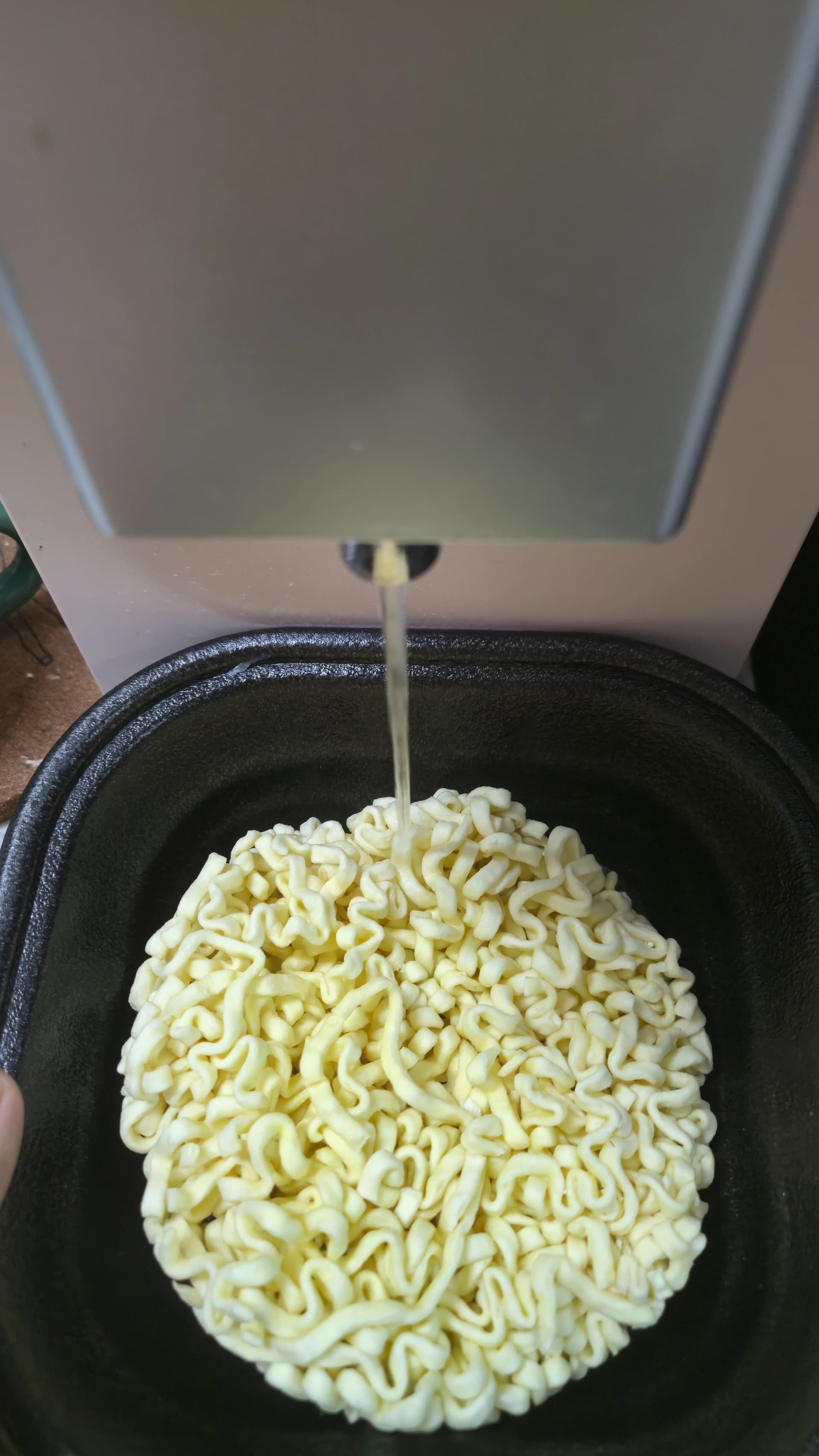
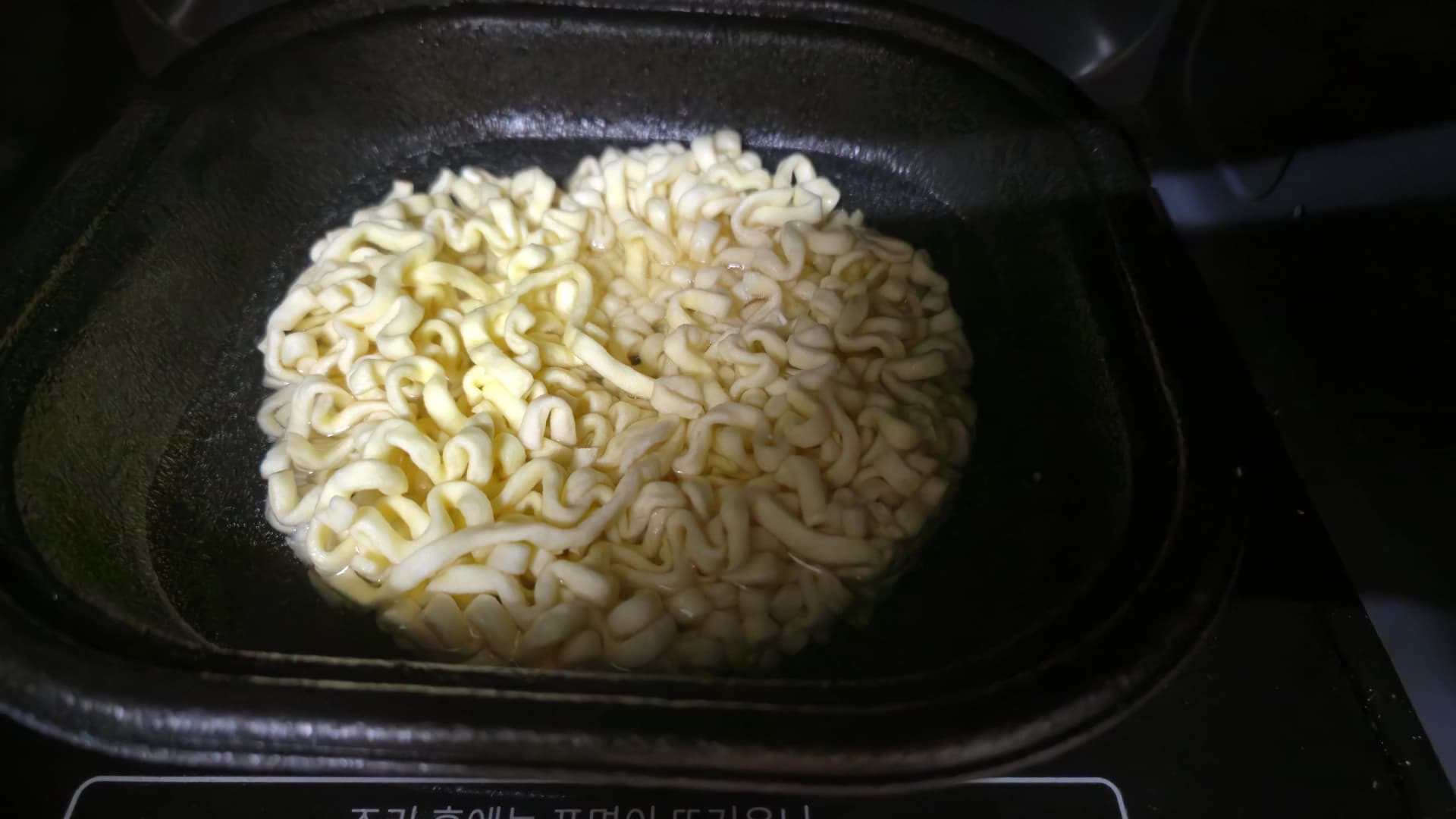
Microwave cooking time: Shin Ramyun Toomba needs hot water + 3 minutes in the microwave, but Carbo Buldak needs 3 minutes 30 seconds. The thicker noodles require extra time to cook through properly. If using cold water, I recommend about 4 minutes (based on a 1000W microwave).
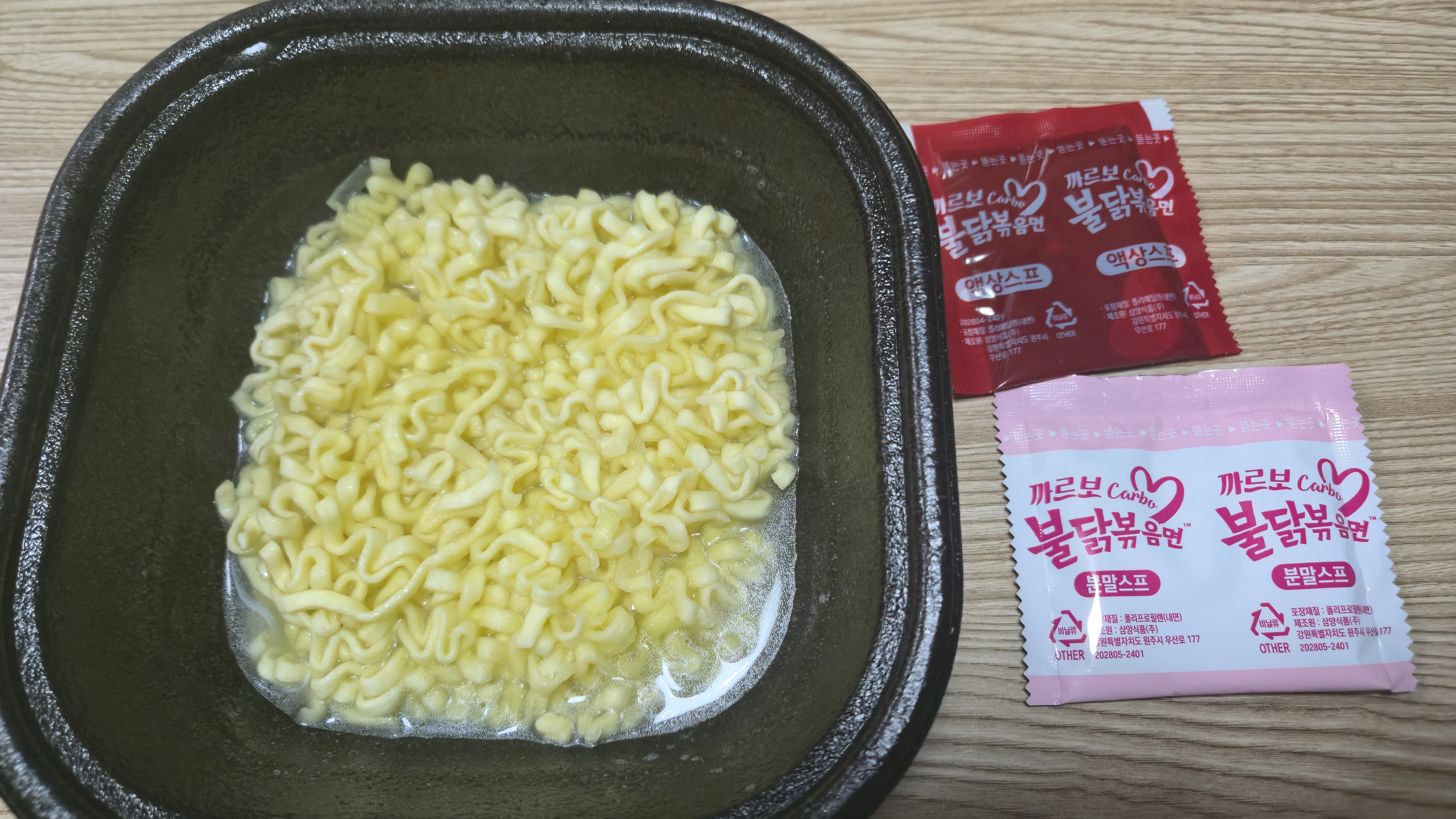
Once the noodles are cooked and drained, it's time to add the sauce. Looking at the liquid sauce and powder packet sitting on top of the noodles... "Wait, this looks exactly like Shin Ramyun Toomba?!" That's right. Red liquid sauce on the noodles with white powder on top — it looked almost identical to when I made Shin Ramyun Toomba. At this moment, I really felt how both companies developed such similar concepts.
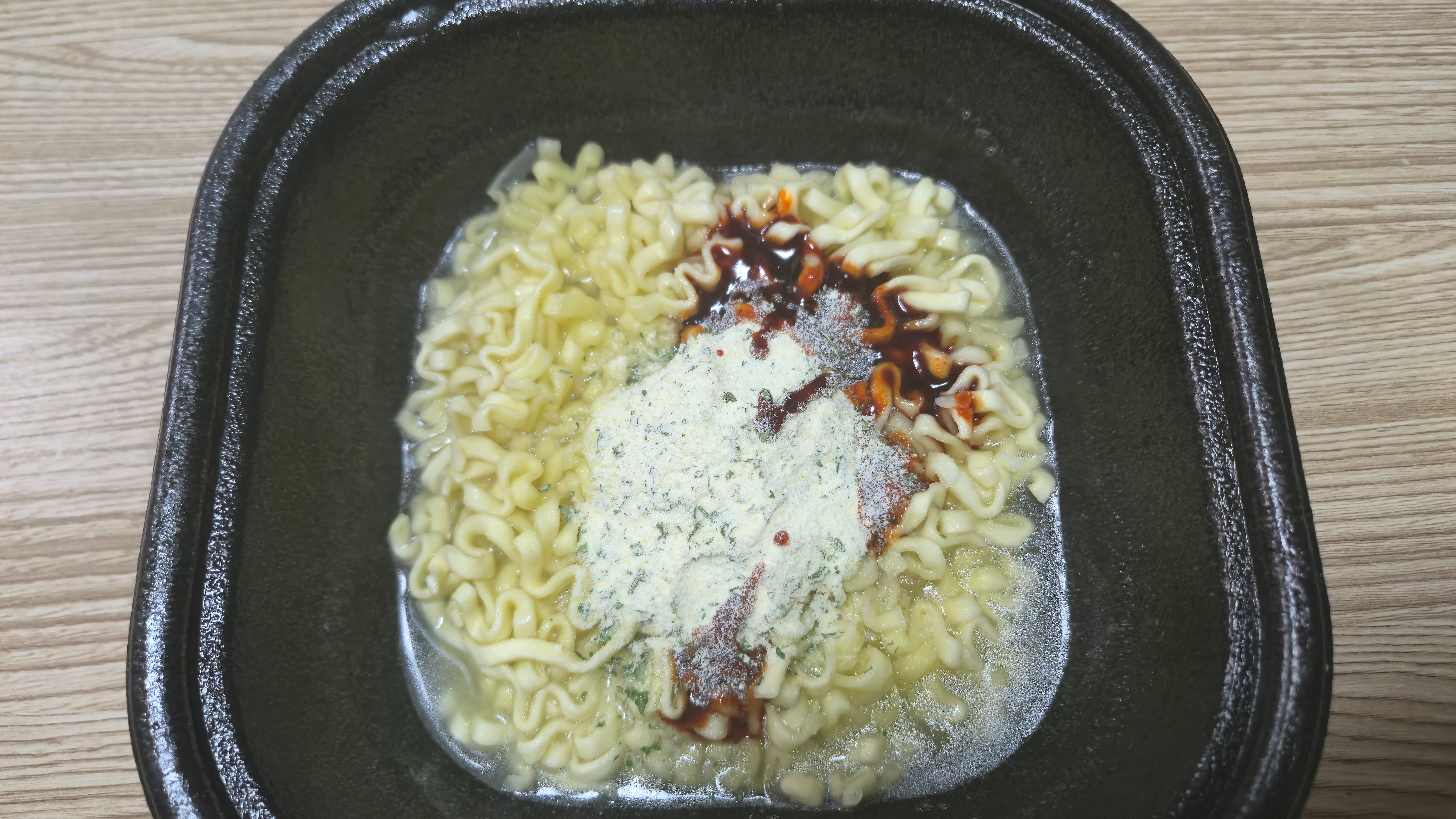
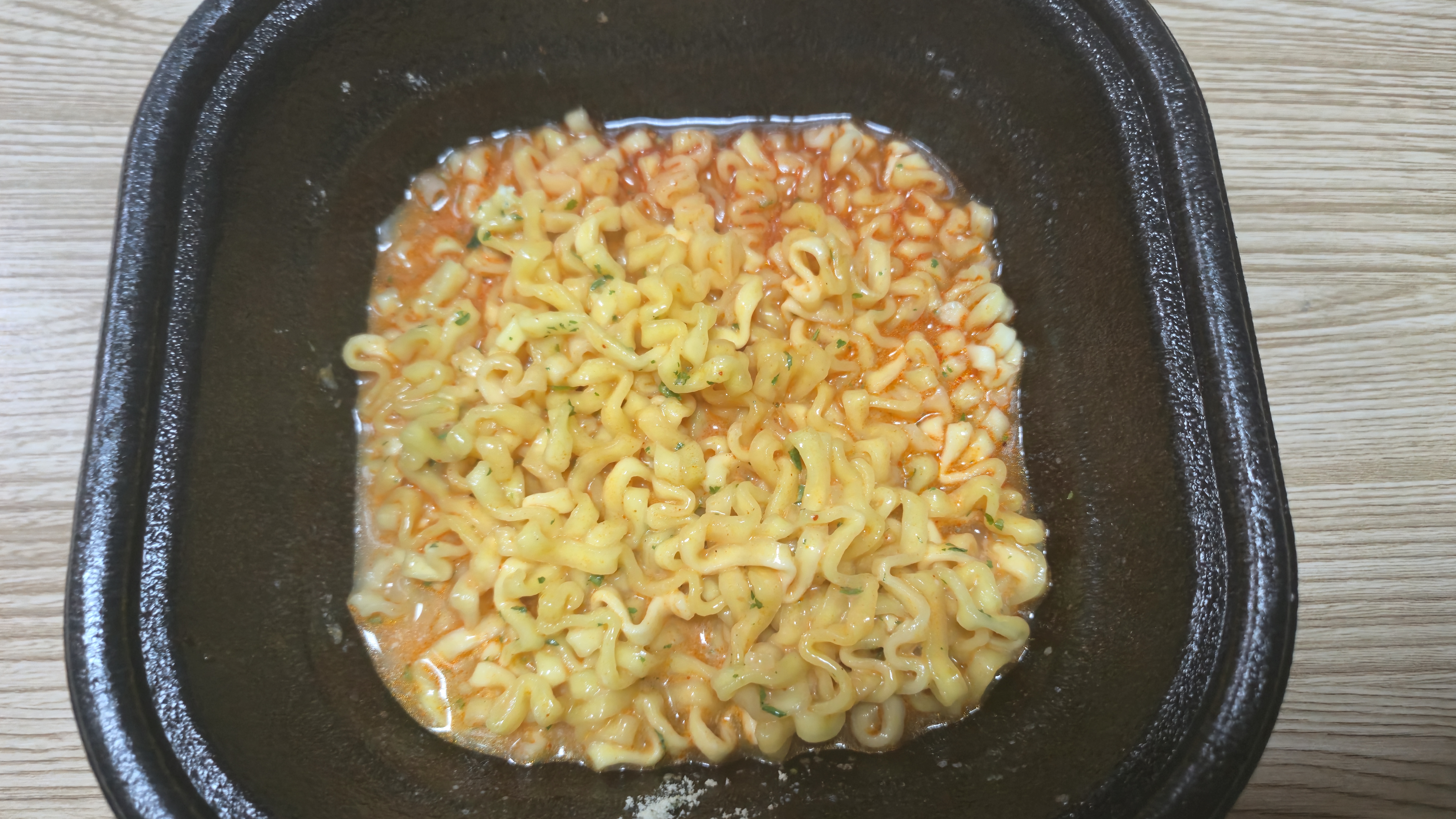
After mixing well for 30 seconds, it's ready! My first impression was "It's much redder." While Shin Ramyun Toomba had a soft blend of cream and orange tones, Carbo Buldak has a pinkish-orange color that's definitely more intense visually. Each noodle strand is coated with a thick, sticky layer of sauce.
Taste Comparison: The Key Differences
Alright, time for the taste test. With yesterday's Shin Ramyun Toomba still fresh in my memory, tasting Carbo Buldak made the differences crystal clear.
First bite: The spice hits first
The moment I put the first chopstick-full in my mouth, I knew right away. "This is Buldak." While Shin Ramyun Toomba leads with creamy smoothness, Carbo Buldak hits you with spice first. That signature sharp, intense Buldak heat comes first, followed by the cream's smoothness.
In terms of spice level, Carbo Buldak is definitely hotter. If "mildly spicy" fits Shin Ramyun Toomba, "properly spicy" is the right description for Carbo Buldak. But it's not as extreme as original Buldak — the cream does a good job of tempering the heat.
The cream plays completely different roles
As you keep eating, you notice the cream serves different purposes in each product:
- Shin Ramyun Toomba: Cream is the star, spice is supporting. Strong, lasting creaminess. Feels closer to pasta. Can get heavy toward the end
- Carbo Buldak: Spice is the star, cream is supporting. Cream works to neutralize the heat. Still feels like stir-fried noodles. Less heavy overall
I remember feeling a bit weighed down toward the end of Shin Ramyun Toomba yesterday, but Carbo Buldak didn't have that issue. The stronger spice seems to cut through any richness.
Noodle texture: Shin Ramyun Toomba uses the familiar Shin Ramyun noodles — smooth and silky. Carbo Buldak uses thick, chewy noodles with a bouncy, springy texture. Because Carbo Buldak's noodles are thicker, they're definitely more satisfying to chew.
Overall flavor balance:
- Shin Ramyun Toomba: 70% cream + 30% spice. Like cream pasta with a spicy kick
- Carbo Buldak: 60% spice + 40% cream. Like Buldak with added cream
Both products combine "cream + spice," but the ratios and balance are completely different. If Toomba feels like the West meeting Korea, Carbo Buldak feels like Korea meeting the West.
Nutrition Info and Important Notes
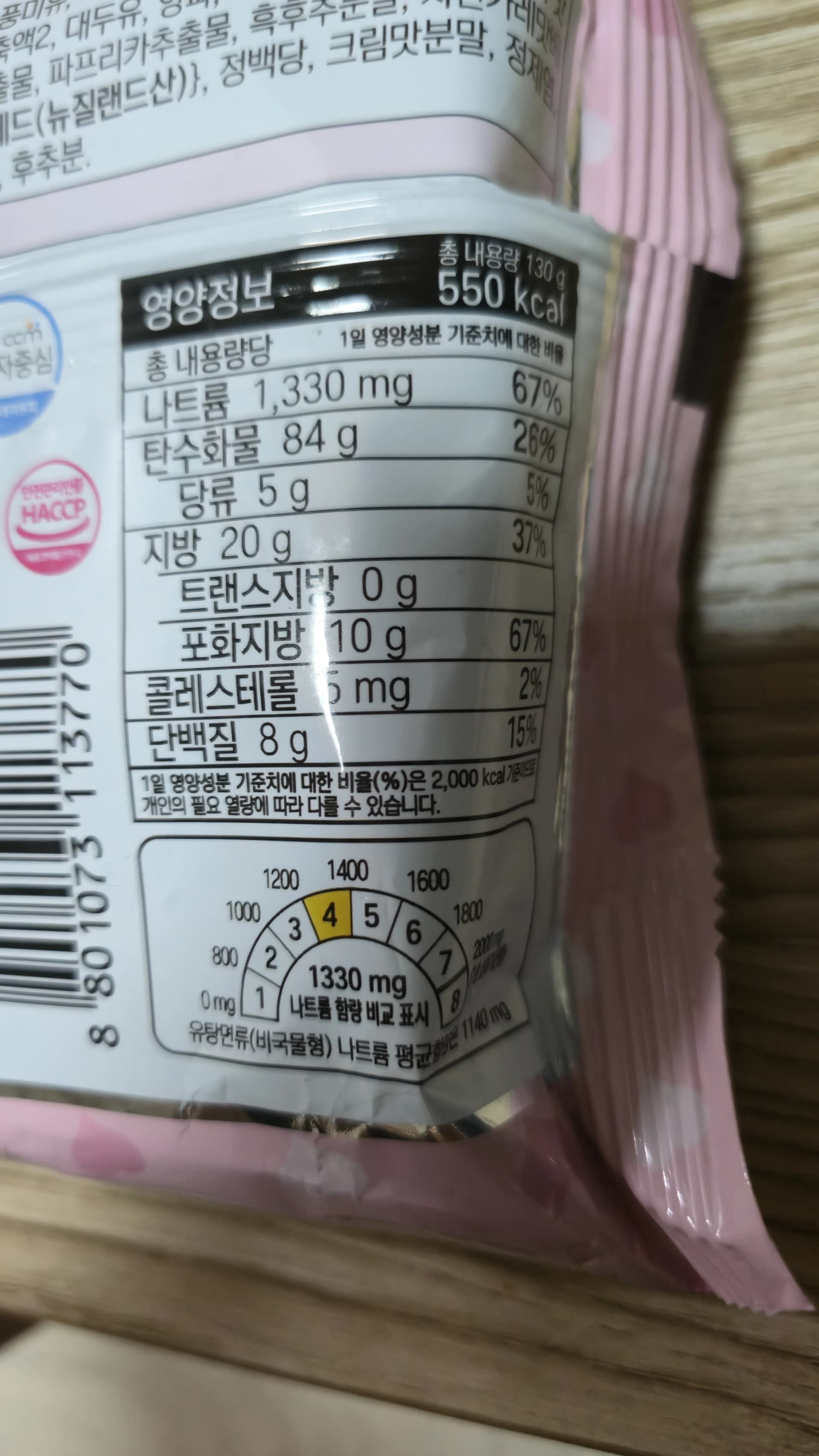
Quick nutrition comparison: Carbo Buldak (550kcal, 1,330mg sodium) is slightly lower than Toomba (590kcal, 1,390mg sodium), but both are in a similar range. Sodium is on the higher side, but lower than soup-based ramens, and since these are stir-fried noodles, portion control is easier.
If you're watching sodium: Use less liquid sauce, leave a bit more water to dilute, or add vegetables to lower the overall sodium ratio.
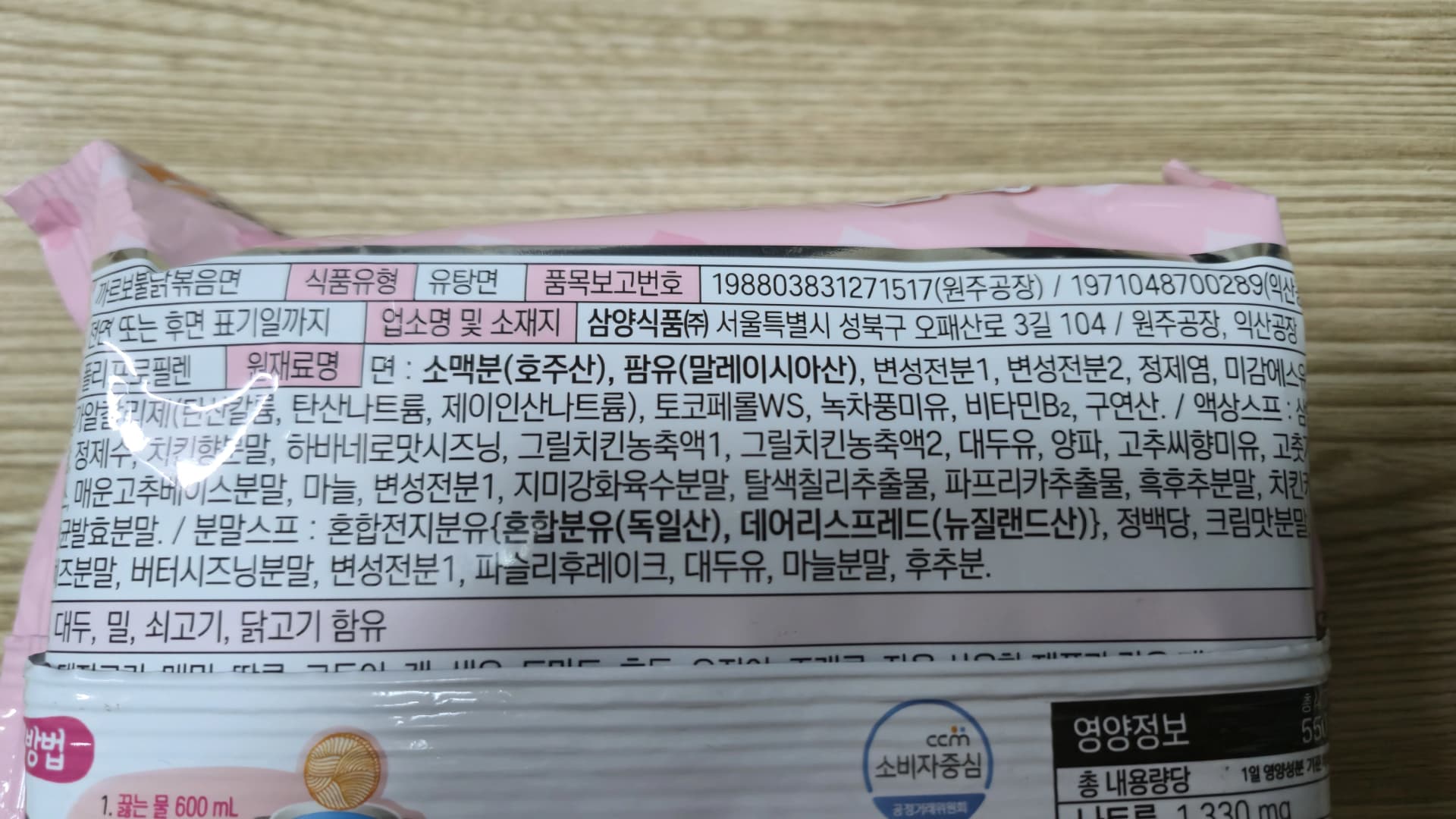
Dietary and Religious Considerations: Both products contain pork and beef.
- ⚠️ Muslims (Islam): Contains pork — not Halal compliant
- ⚠️ Hindus: Contains beef — not suitable
Allergens: Carbo Buldak contains soy, wheat, beef, and chicken. The facility also processes buckwheat, peanuts, mackerel, crab, shrimp, pork, squid, shellfish, and pine nuts. Shin Ramyun Toomba contains wheat, soy, egg, milk, pork, beef, and tomato. Both products contain various meat ingredients and are not suitable for vegetarians.
Which One Should You Choose?
Choose Shin Ramyun Toomba if you:
- ✅ Prefer creamy flavors
- ✅ Are introducing Korean ramen to friends who aren't used to spicy food
- ✅ Want a pasta-style ramen experience
- ✅ Prefer sophisticated, refined flavors
- ✅ Like smooth, silky noodles
Shin Ramyun Toomba feels like "cream pasta with a touch of spice." It's a great choice for introducing Korean ramen to friends who are more familiar with Western-style pasta.
Choose Carbo Buldak if you:
- ✅ Love spicy food
- ✅ Are a Buldak series fan
- ✅ Prefer chewy noodles
- ✅ Don't like heavy, rich flavors
- ✅ Want bold, intense flavors
Carbo Buldak feels like "Buldak with added cream." It keeps Buldak's signature heat while softening it with cream — perfect for those who found original Buldak too spicy.
Customization tips:
- Shin Ramyun Toomba: More creamy → add milk / Less rich → use all the liquid sauce / More spicy → add gochugaru (red pepper flakes)
- Carbo Buldak: Less spicy → use half the liquid sauce / More creamy → add extra powder or milk / More spicy → use all the liquid sauce + gochugaru
Samyang vs Nongshim: The Creamy Ramen Wars Backstory
Let me share an interesting backstory here.
Buldak's rise: Samyang's success story
Until the 1990s, Nongshim was a much bigger company than Samyang. They dominated the ramen market with Shin Ramyun's success. Then in 2012, Samyang released Buldak Bokkeum Myeon (Fire Chicken Noodles), which became an unexpected mega-hit. Especially from the mid-2010s, when the "Buldak Challenge" went viral on YouTube worldwide, Samyang became an icon of K-Food.
After Buldak's success, Samyang launched various Buldak series products: Carbo Buldak (2017), Cheese Buldak, Jjajang Buldak, Nuclear Buldak, Cream Carbo Buldak, and more. Among these, Carbo Buldak was the perfect solution for people thinking "I want to try Buldak but it's too spicy."
Nongshim's response: Shin Ramyun Toomba
In 2024, Nongshim celebrated their 60th anniversary by releasing Shin Ramyun Toomba. They quickly caught onto the "Toomba pasta" trend and created an innovative product combining Shin Ramyun with cream. If Samyang's Carbo Buldak is "Buldak + cream," Nongshim's Shin Ramyun Toomba is "Shin Ramyun + Toomba." Similar concepts but completely different approaches — two products born from the same trend.
Both products are huge successes. Consumers say "both are delicious" and choose based on the situation. This is healthy competition creating great results. Samyang has secured a solid position in the global market with the Buldak series, while Nongshim maintains its #1 position domestically and internationally through Shin Ramyun diversification. Thanks to both companies' competition, we get to enjoy better ramen.
Final Verdict and Recommendations
After this detailed comparison, the conclusion is simple: Both products are excellent, each with distinct appeal.
Quick comparison:
- Shin Ramyun Toomba ⭐⭐⭐⭐☆ (4.5/5): 70% creamy + 30% spicy. Pasta style. Smooth noodles. Best for cream lovers
- Carbo Buldak ⭐⭐⭐⭐⭐ (5/5): 60% spicy + 40% creamy. Stir-fried noodle style. Chewy noodles. Best for spice lovers
But this is just my personal preference — your take might be different. The best thing to do is try both yourself!
Tips for travelers in Korea: Both products are available at convenience stores nationwide (CU, GS25, 7-Eleven, Emart24) for about ₩1,500 (around $1.10 USD / £0.90 GBP / $1.70 AUD). No cooking equipment? Convenience stores sell microwave-safe containers for ₩500 (about $0.35 USD). Ramen ₩1,500 + container ₩500 = total ₩2,000 (about $1.50 USD) for a complete meal!
Where to buy outside Korea: Both are widely available at Asian grocery stores like H-Mart, local Korean markets, and online through Amazon. Carbo Buldak is especially easy to find due to its global popularity.
Comparing Shin Ramyun Toomba and Carbo Buldak made me realize Korean ramen culture is evolving incredibly fast. In the past, "red and spicy soup" was all Korean ramen had to offer. Now we're seeing products that reinterpret Western flavors like cream, cheese, and carbonara in a Korean style.
If you're in Korea or planning to visit, definitely stop by a convenience store and try both of these. Don't miss out on this small but certain happiness that costs just ₩1,500 (about $1.10 USD).
Hi-JSB will continue introducing Korea's hidden food gems, special dishes, and everyday moments of joy. What ramen should we explore next? 🍜