Soy Sauce Marinated Raw Crab — Korea's Ultimate Rice Thief
Table of Contents
13 items
Last winter my older brother messaged me saying "I'm craving marinated crab, my shout tonight," and I was out the door before he finished the sentence. We ended up at a gejang restaurant in Daejeon, a major city about an hour and a half south of Seoul. We ordered one serve of ganjang gejang (soy sauce marinated raw crab) and one of yangnyeom gejang (spicy marinated raw crab), plus two bowls of rice to start. Long story short — we polished off nine bowls of rice between us.
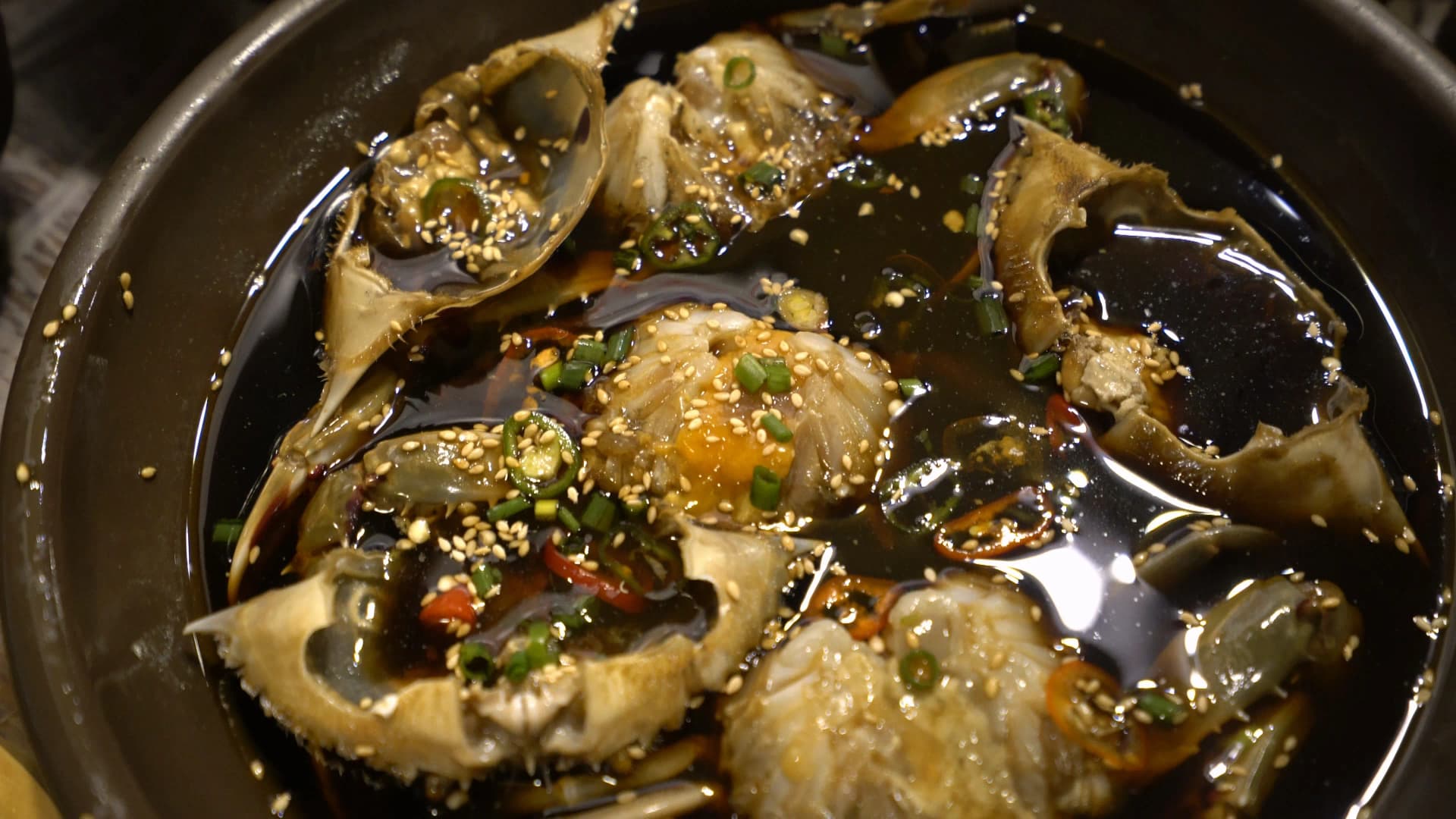
The first thing I noticed was the colour of the soy sauce
Ganjang gejang is a traditional Korean dish made from raw flower crabs marinated in seasoned soy sauce for several days. The moment the stone pot lid came off, the deep, glossy colour of the soy sauce caught my eye — dark and glistening, pooled around the crab with sesame seeds and sliced spring onions scattered across the top. I lifted the crab shell slightly and there it was: bright orange roe packed right to the edges. Seeing that, I knew we'd picked a good night to come.
Now here's the thing — this crab is completely raw. It's never cooked. The raw flower crabs are cured in a soy sauce marinade for days, and you eat them as-is. If you've never seen it before, that might sound a bit confronting. But once you pick up a piece, put it to your lips, and suck the meat out, this wave of salty, sweet umami just hits you all at once. If you've ever had good sashimi dipped in quality soy sauce, imagine that depth of flavour but about ten times more intense and complex. It's genuinely impossible to describe properly — you just have to taste it yourself.
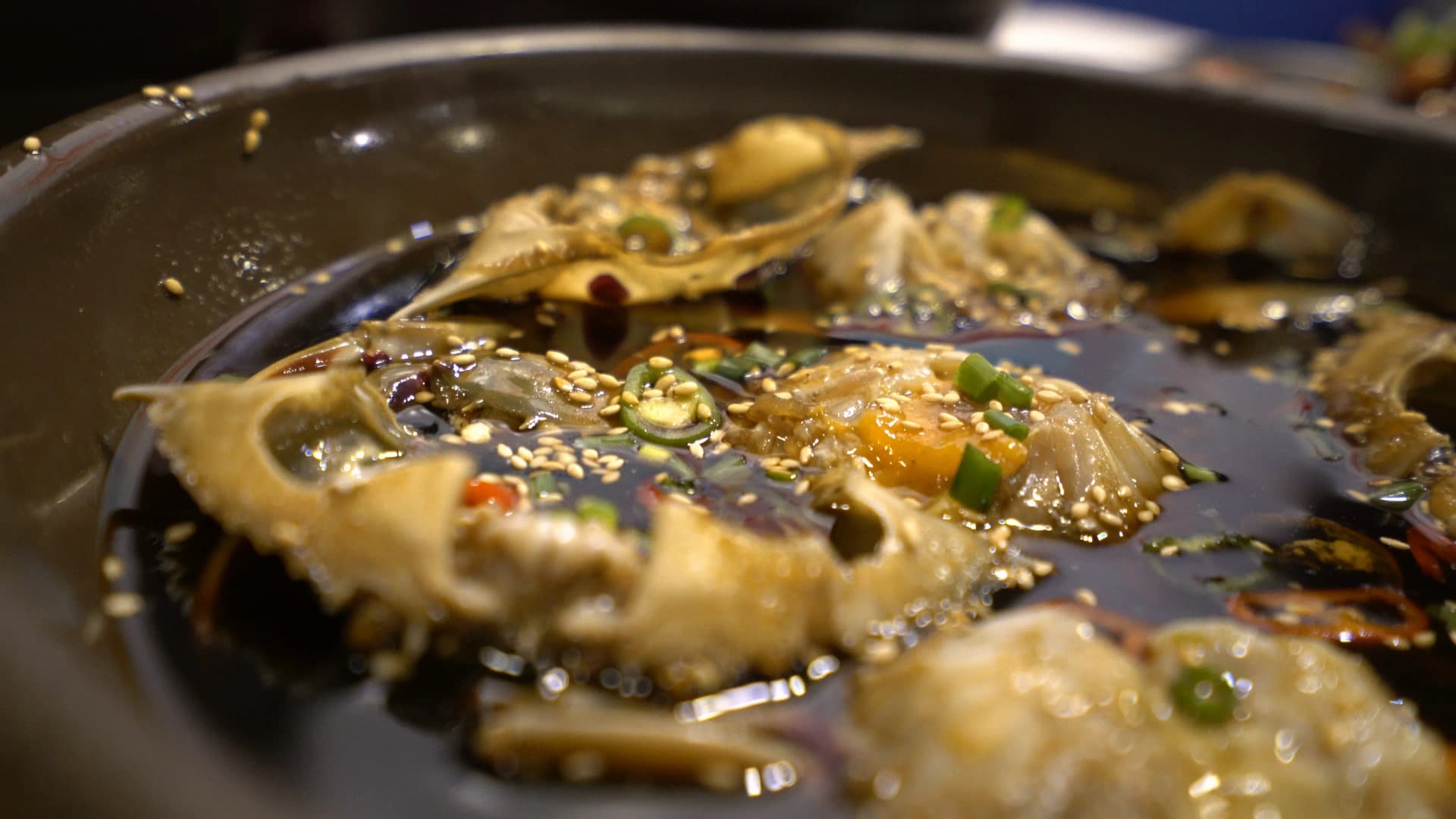
The quality of ganjang gejang comes down to how well it's been aged
Looking at it from the side, you could really see how the soy sauce had soaked right up to the edges of the shell. Sesame seeds were floating on the surface of the marinade, and when I leaned in closer, the crab meat had turned slightly translucent — a sign it had properly absorbed the soy sauce.
Honestly, ganjang gejang varies massively from restaurant to restaurant. Some places serve it so fishy you can't even get near it, while others make it so good you'd happily smash three bowls of rice without coming up for air. The difference comes down entirely to the ageing process. If the crab is under-marinated, the meat stays tough and all you get is salt. But when it's done right, the flesh practically falls off the shell with the lightest touch of your chopsticks. This one? The meat started sliding off the moment I touched it. Absolute ripper.
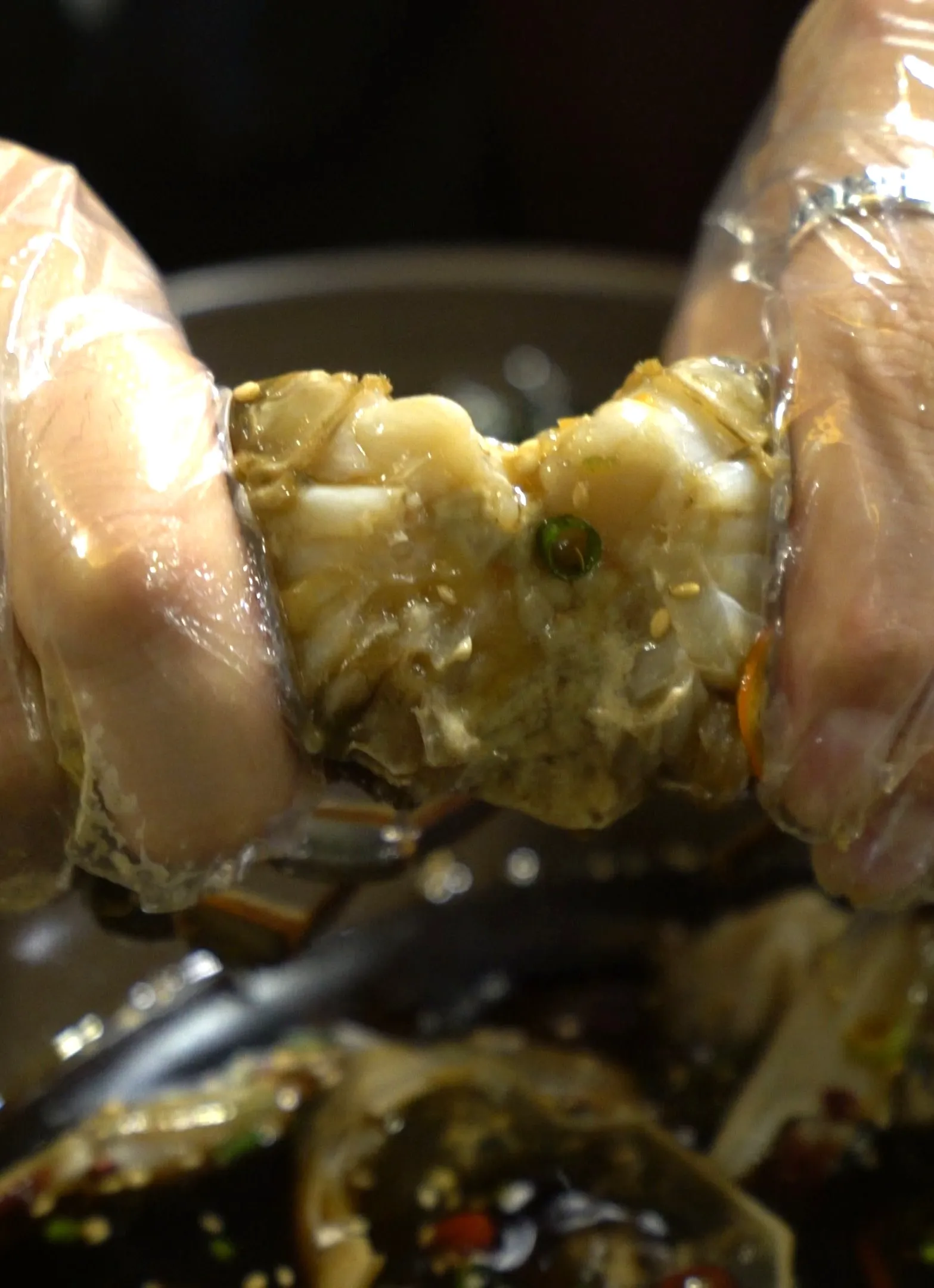
Marinated raw crab is meant to be eaten with your hands
Gejang isn't a chopstick-and-fork kind of dish. The meat clings to every nook and cranny inside the shell, so you need to crack it open with your fingers and suck the flesh out directly. That's why every gejang restaurant in Korea hands you disposable plastic gloves the moment you sit down.
When you snap a crab leg in half, you can see the soy-marinated meat packed tightly inside. You pop the open end in your mouth and slurp it out. It might feel a bit awkward at first — especially if you're not used to eating so hands-on — but every Korean does it this way. Think of it like eating Moreton Bay bugs or mud crab at a seafood shack back home: you just have to get stuck in. If you try to be delicate with chopsticks, you'll barely get half the meat out.
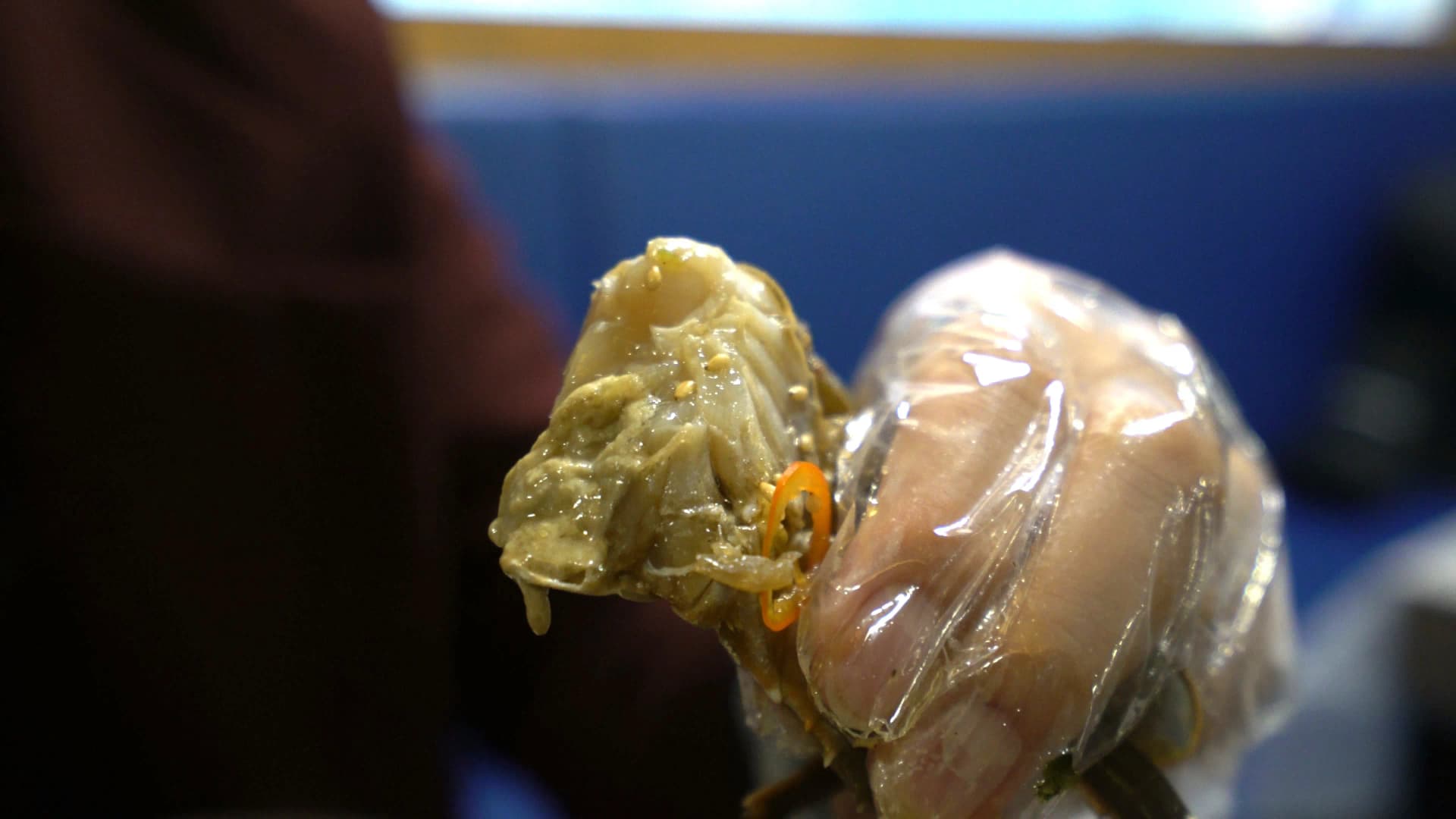
Give the shell a squeeze and the meat slides right out
If you press down on a crab leg with your thumb, the meat comes out in one satisfying chunk. All those bits you couldn't reach with chopsticks just slide out in a single push. The soy sauce has soaked all the way through to the centre, so you don't need to dip it in anything else. Pop it straight in your mouth and you get this incredibly soft, savoury umami hit that just spreads across your tongue.
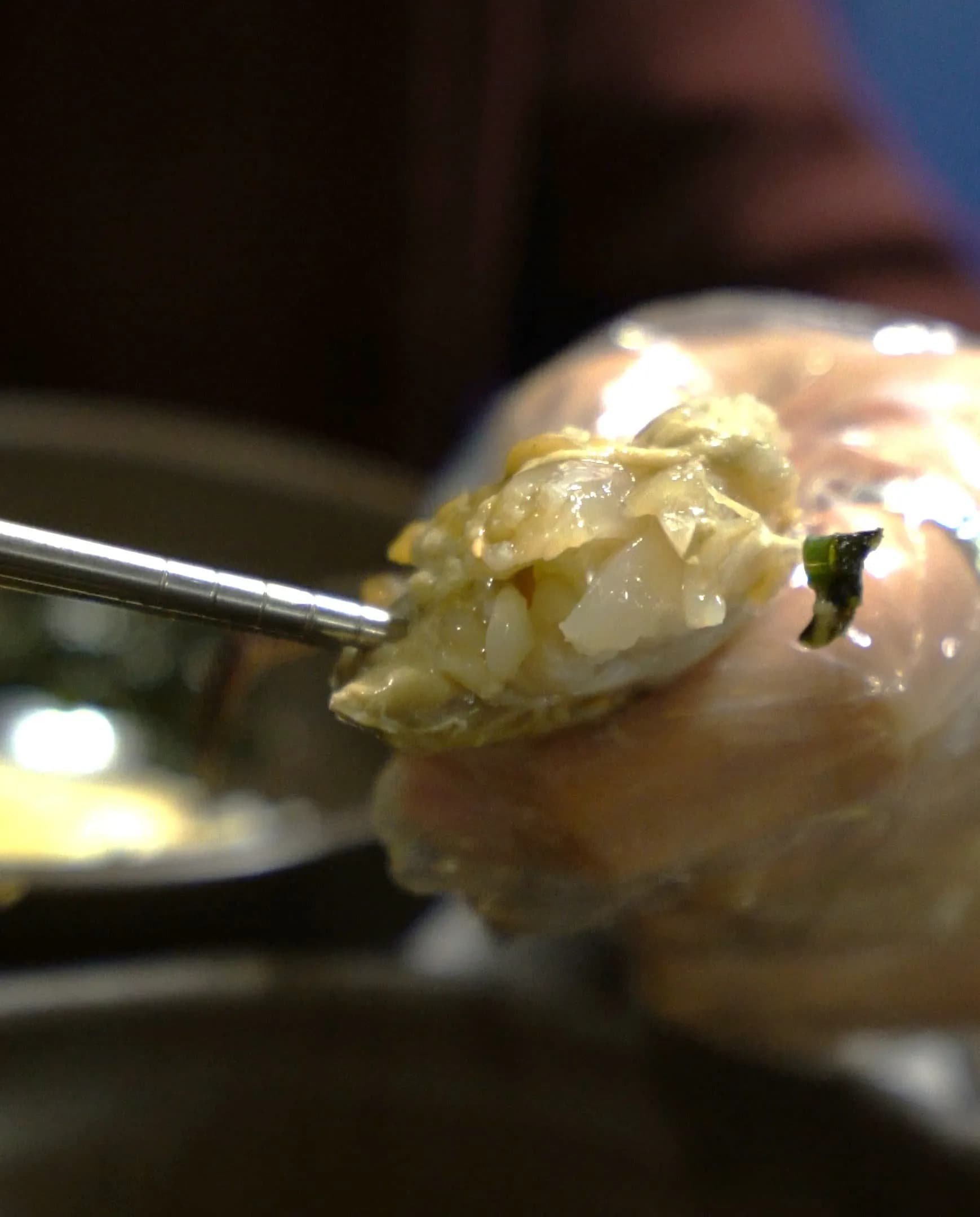
Whatever you do, don't throw out the crab shell
Once you've sucked all the meat out of the legs, you're left with the top shell — and this is the bit you absolutely cannot waste. This is where ganjang gejang goes from "yeah, that's tasty" to something genuinely unforgettable. Flip the shell over and inside you'll find the crab's innards and roe, all cured in that same soy marinade, sitting there thick and glossy. It's practically dripping with sauce. You scoop a big spoonful of hot white rice straight into the shell, lay a sheet of dried seaweed on top, and mash it all together.
My brother warned me: "Don't touch the shell first or you've already lost." He made me eat the legs first, and there was a good reason. Once you start on the crab shell rice, you physically cannot stop.
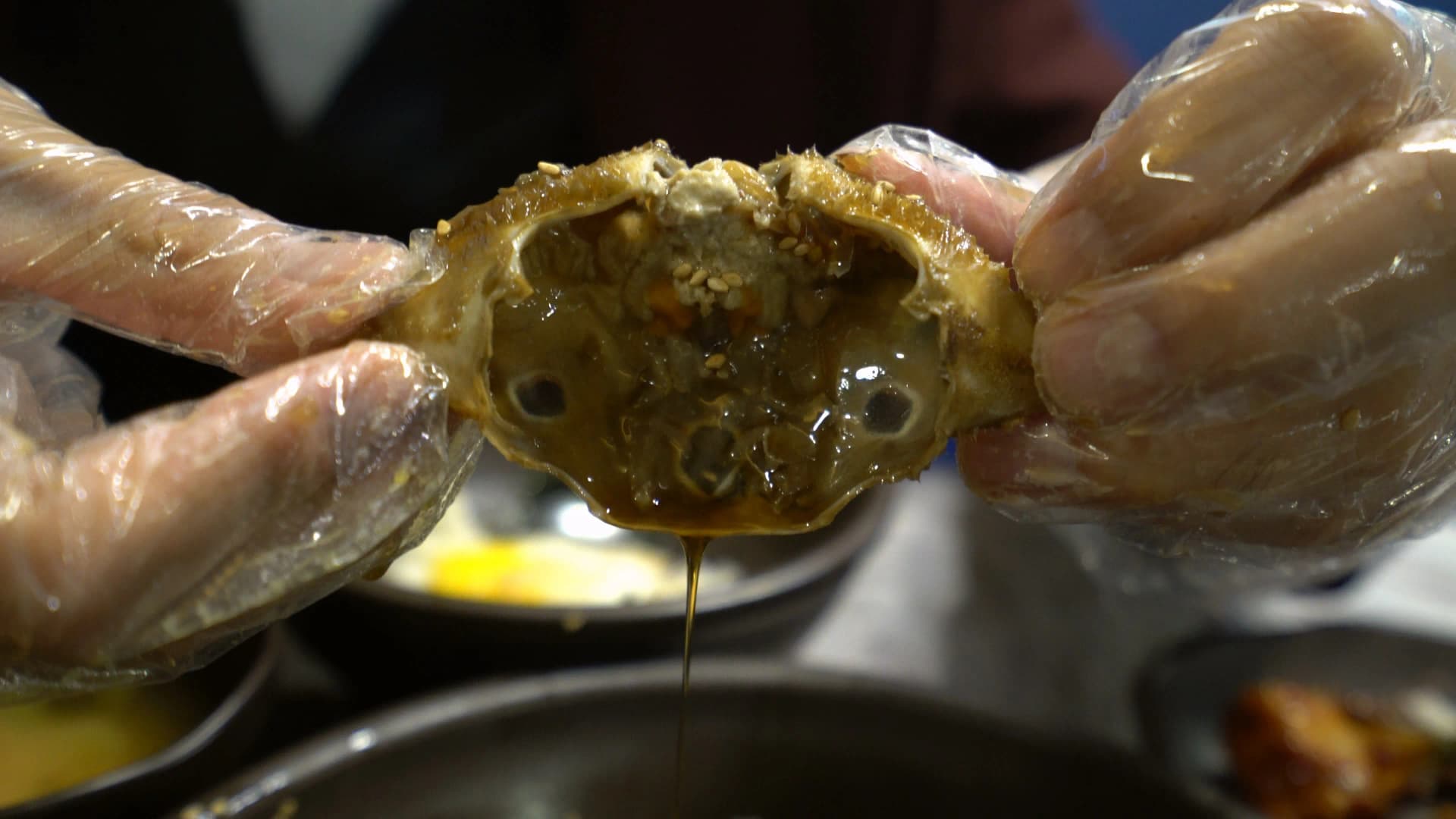
Crab shell bibimbap — the true identity of Korea's "rice thief"
This right here is what Koreans call gedikji bibimbap — crab shell bibimbap. You pile rice into the shell and mix it with the soy-cured innards and roe, and every single grain of rice gets coated in this intense, savoury, nutty flavour all at once.
When I was eating the crab legs, my reaction was basically "yeah, nice, this is good." But the moment I put the first spoonful of crab shell bibimbap in my mouth, I just went blank for a second. So this is what it's about. This is why Koreans call this dish a "rice thief" — bap-doduk — meaning the food is so addictive it steals all your rice before you even realise it's gone. One bowl of rice vanished in about thirty seconds, and then I was ordering another. This is the moment I became a crab-shell-first convert, no going back.
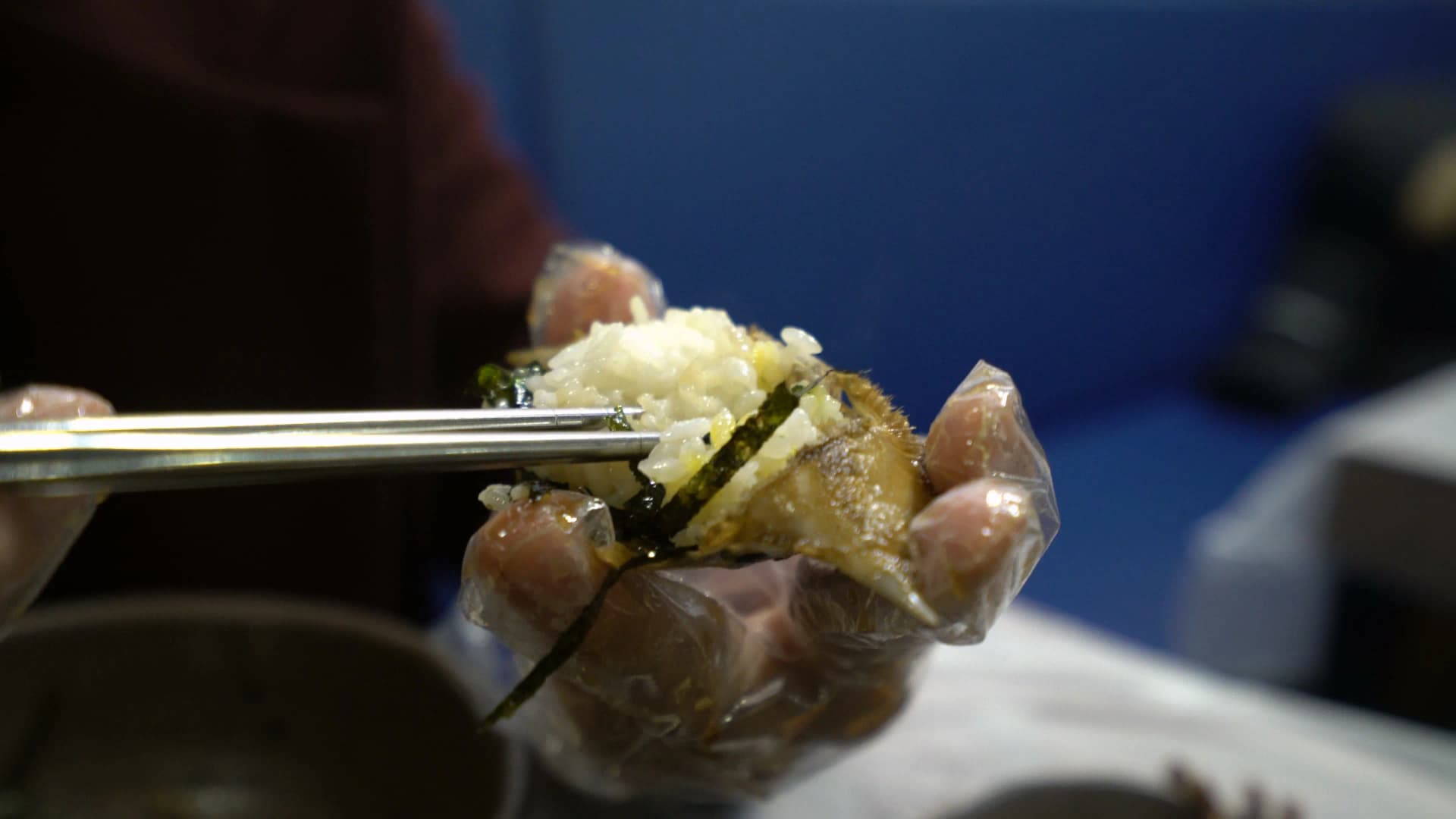
Yangnyeom gejang — same crab, completely different dish
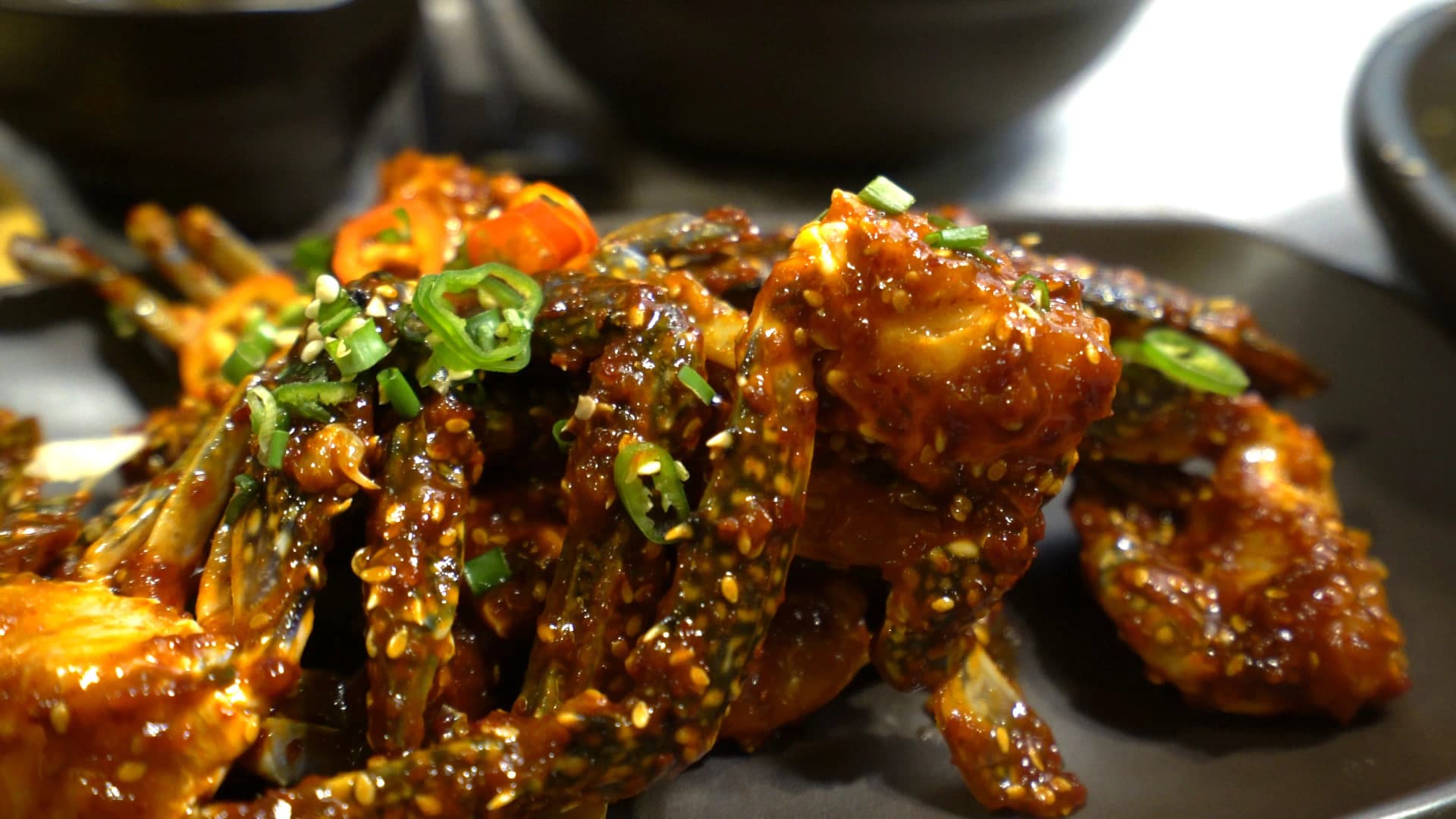
Yangnyeom gejang is the spicy cousin of ganjang gejang. It uses the same raw flower crab, but instead of soy sauce it's smothered in a gochujang-based chilli paste marinade. And honestly, it's an entirely different eating experience. The bright red sauce gets into every gap between the legs, with sesame seeds and spring onions piled on top — visually, it's a completely different beast.
The flavour hits differently too. Ganjang gejang is the quiet type — the umami builds slowly and sneaks up on you. Yangnyeom gejang kicks the door down. The moment it hits your tongue, sweet heat and chilli punch you simultaneously. The way it makes you eat rice is different as well. With ganjang gejang, it's the crab shell bibimbap that demolishes your rice. With yangnyeom gejang, you plonk a chunk of sauce-covered crab meat on top of your rice and the spicy sauce instantly turns the whole bowl into a sort of improvised bibimbap. If Vegemite on toast is the "I could eat this every day" comfort food for us Aussies, yangnyeom gejang on rice is the Korean equivalent — except spicier and with crab.
These days there are heaps of videos online of tourists trying ganjang gejang for the first time, but if I'm being honest, I'd actually recommend yangnyeom gejang as a starting point for newcomers. Ganjang gejang quality swings wildly depending on how well it's been aged — if you're unlucky, you cop a fishy one and it puts you off completely. Yangnyeom gejang is pretty solid no matter where you go. Start with yangnyeom, get a feel for raw marinated crab, and if you're keen, graduate to ganjang gejang. Way less chance of a bad first experience.
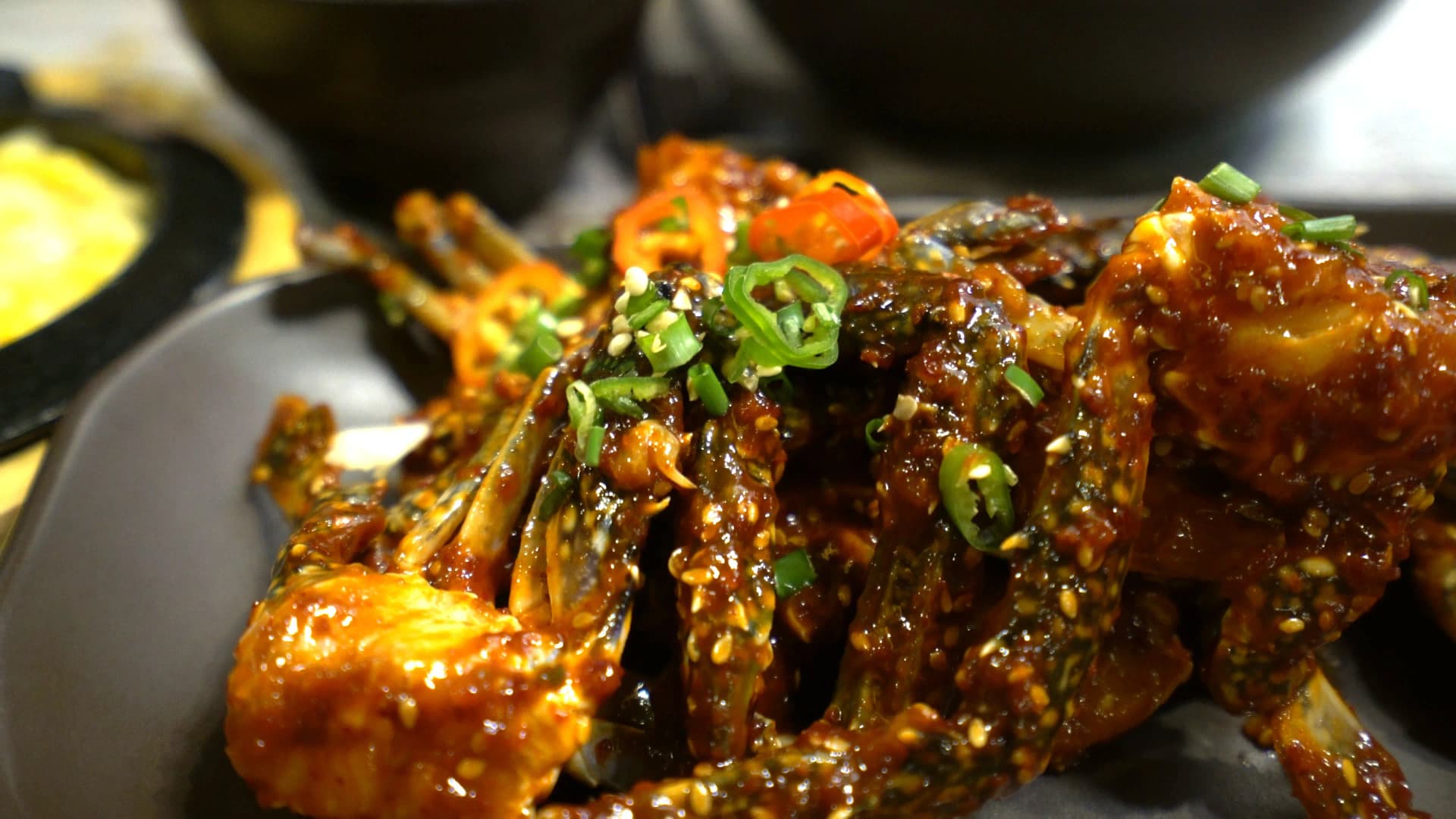
Yangnyeom gejang close-up — the sauce is seriously thick
Zooming in, you can really see how thick the chilli paste coating is. The crab shell is completely lacquered in red sauce, and between the bright red you can spot chunks of white crab meat bulging out. Yangnyeom gejang meat feels slightly firmer than the ganjang version. The spicy sauce wraps around the outside of the flesh, so when you bite in, the heat hits first and then the natural sweetness of the crab follows right behind it.
Yangnyeom gejang gets the hands-on treatment too
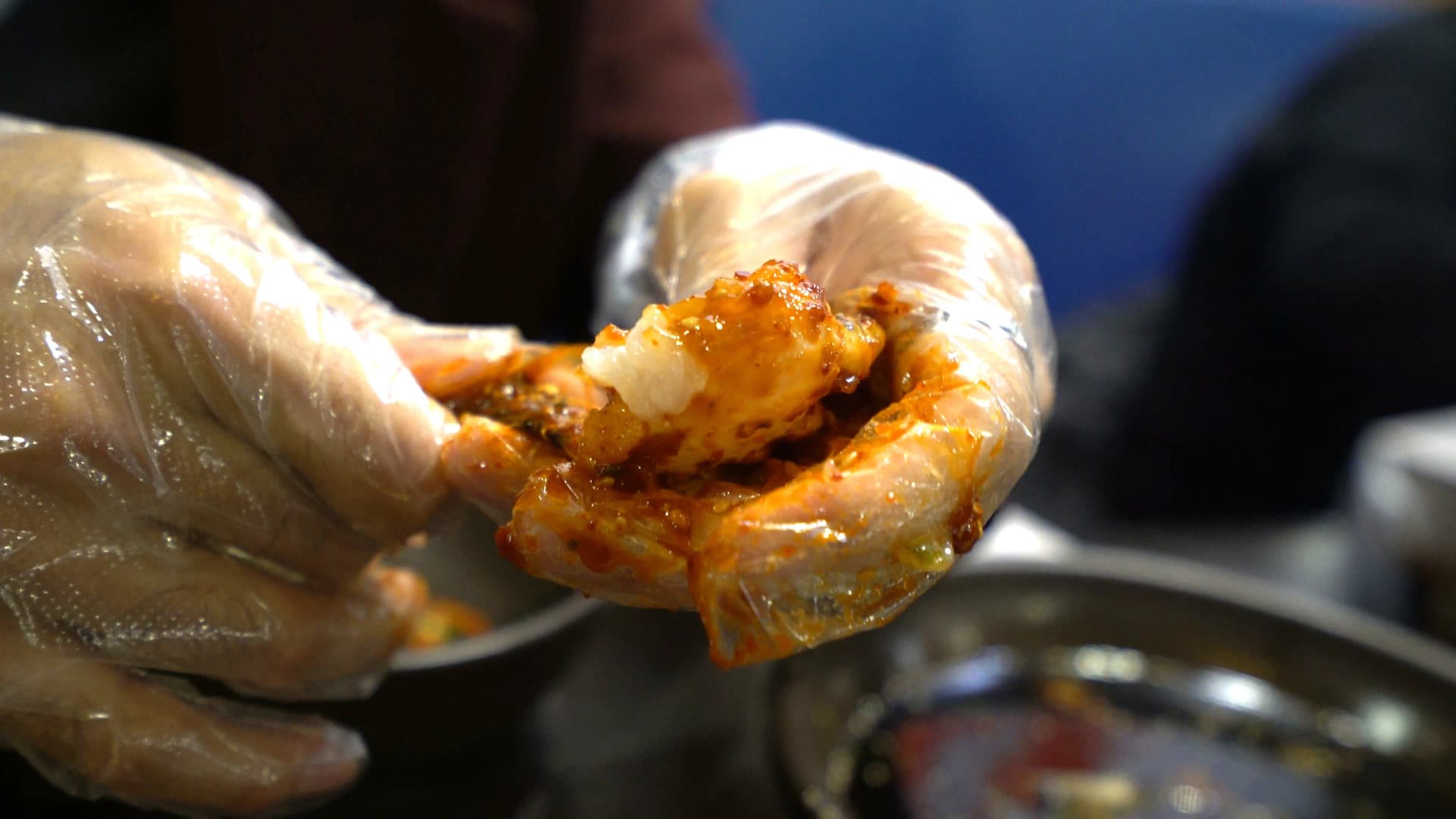
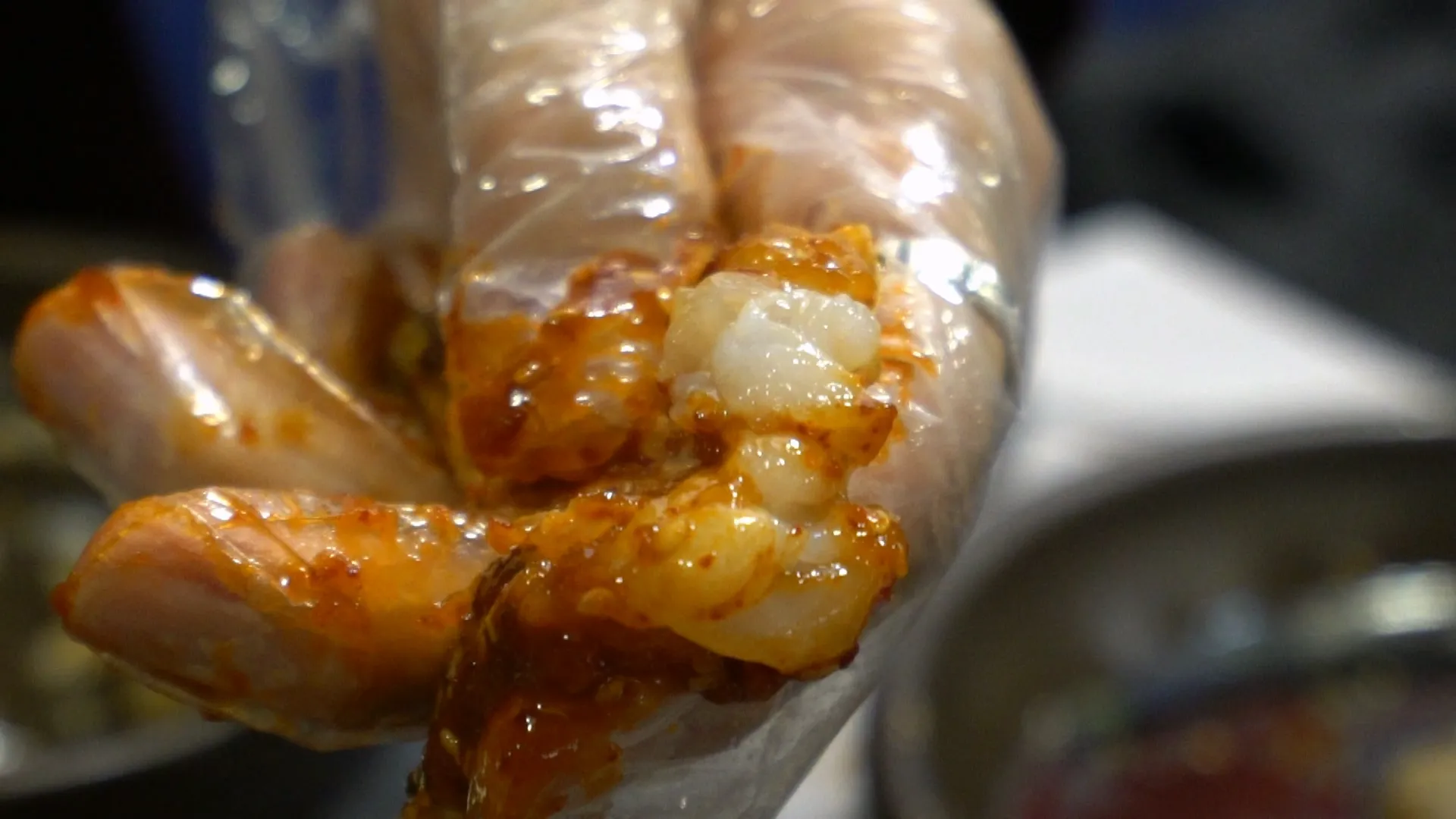
You eat it exactly the same way as ganjang gejang — gloves on, crack it open, suck it out. But because the sauce is so thick, when you pull the meat out it comes absolutely caked in red chilli paste. White crab flesh completely smothered in bright red sauce. If ganjang gejang is about appreciating the pure flavour of the crab itself, yangnyeom gejang is about that collision of bold sauce and sweet crab meat together. It's more than enough as a standalone snack or beer food, but good luck not reaching for the rice — it's practically impossible to resist.
Here's a top tip: if you alternate between the two — eating ganjang gejang, then switching to yangnyeom — it resets your palate completely. And that means another bowl of rice goes down. Every time.
This is how the rice comes at a gejang restaurant
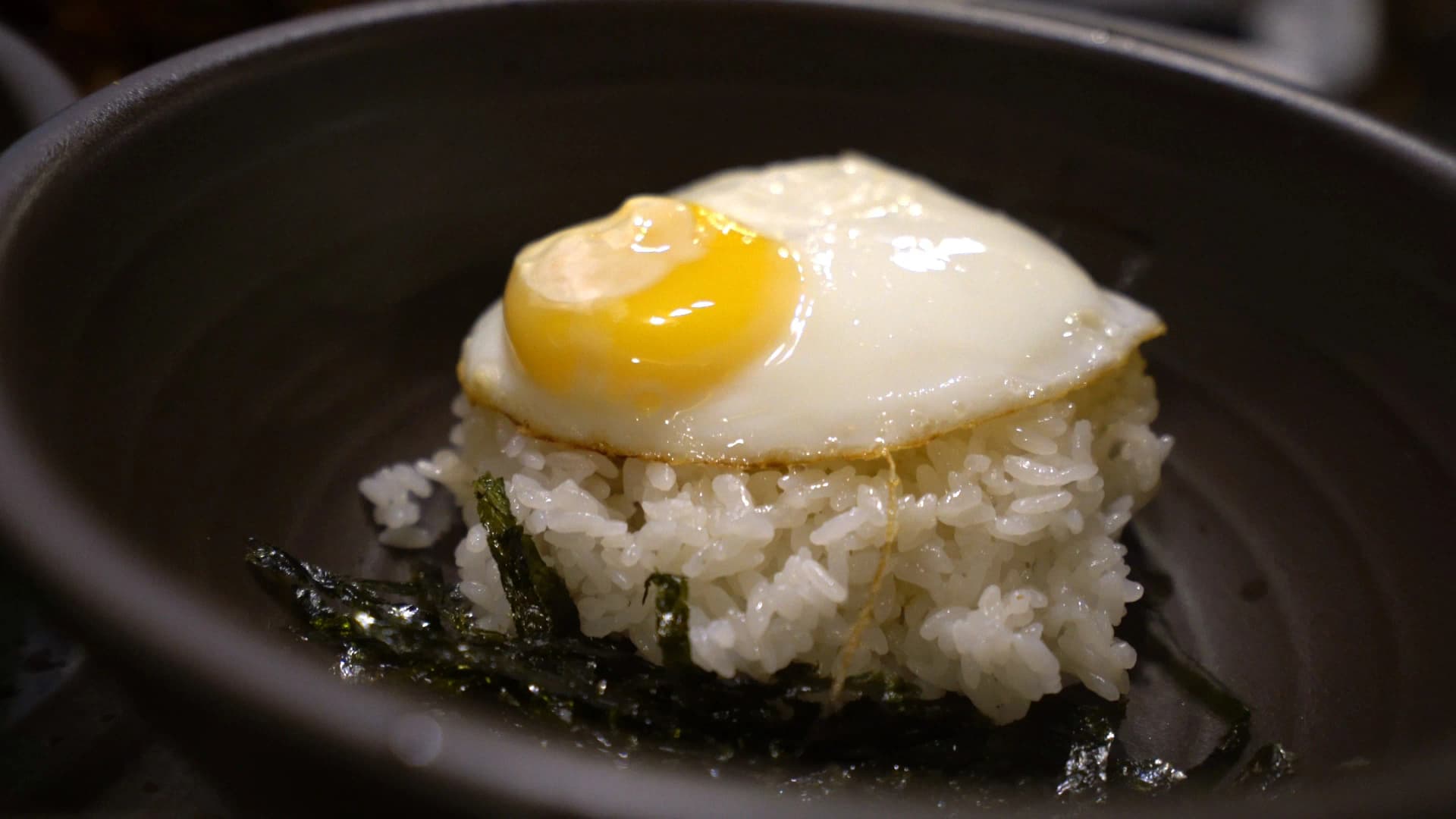
When you order rice at a gejang place, it doesn't just come as plain white rice. A lot of spots serve it like this — a bowl of steamed white rice with a runny fried egg on top and a layer of dried seaweed underneath. You can mix this into the soy sauce from the ganjang gejang, or scoop it straight into the crab shell for that legendary crab shell bibimbap. When the egg yolk bursts and mixes with the soy marinade, the richness goes up a whole other level.
The honest downsides
Look, it wasn't all perfect. The side dishes at this particular place were a bit underwhelming. Most well-known gejang restaurants will give you steamed egg custard, doenjang jjigae (fermented soybean paste stew), and various pickled sides as standard, but this spot was pretty light on that front. The gejang itself was top-notch, but the overall spread felt a bit bare. Also worth mentioning — marinated crab is seriously high in sodium. According to Korean food safety data, a 250g serve of ganjang gejang contains around 3,221mg of sodium, which is already well over the WHO's recommended daily limit of 2,000mg. If you're sensitive to salt, make sure you order plenty of rice to balance it out.
Whether it's ganjang gejang or yangnyeom gejang
If you visit Korea and leave without trying ganjang gejang, I reckon you'd genuinely regret it. Yeah, the idea of eating raw crab might make you hesitate at first, but one bite in and you'll wonder why you even thought twice.
Personally, I'm firmly in the ganjang gejang camp. Yangnyeom gejang is consistently decent wherever you go, but once you've tasted a properly aged ganjang gejang — that deep, clean umami that just doesn't quit — yangnyeom barely registers anymore. It's a bit like the difference between a mass-produced sweet chilli sauce and a slow-fermented artisan soy — both are good, but one has layers the other simply can't match.
When my brother went to pay, he turned to me and said "mate, the rice cost more than the crab." Each extra bowl of rice was about ₩1,000 (roughly A$1), and nine bowls meant around A$9 just on rice. But that's not something to complain about — that's a testament to how dangerously good the marinated crab was. According to BC Card's 2024 data on foreign tourist spending in Korea, ganjang gejang ranked third among the most popular dishes purchased by international visitors, up from sixth place in 2022. The rise has been largely attributed to the explosion of food videos on social media. It's easy to see why — this stuff is absolutely unreal.
Sources and references for this article
According to BC Card's 2024 report on foreign visitor card transaction data, ganjang gejang ranked third among the dishes most frequently purchased by international tourists in Korea, climbing from sixth place in 2022. The jump is widely attributed to the influence of mukbang (eating broadcast) videos on social media. (Kyunghyang Shinmun)
According to a column by Japanese journalist Enomoto Yasutaka published in the Chosun Ilbo (27 March 2025), Japanese visitors tend to have almost no aversion to ganjang gejang because soy sauce is a foundational seasoning in Japanese cuisine and eating raw seafood is culturally familiar. The article noted a clear preference for ganjang gejang over yangnyeom gejang among Japanese tourists. (Chosun Ilbo)
In 2025, the Tongyeong branch of the National Agricultural Cooperative Federation in Gyeongnam became the first agricultural co-op in Korea to successfully export both ganjang gejang and yangnyeom gejang to the United States, supplying them to H Mart stores as part of a broader distribution project. (Nongmin Shinmun)
According to a Korea Daily report (2 November 2025), ganjang gejang specialty restaurants in LA's Koreatown are thriving, with some establishments reporting that more than half their customers are Chinese. (Korea Daily)
Based on data from Korea's Ministry of Food and Drug Safety, a 250g serving of ganjang gejang contains approximately 3,221mg of sodium. The WHO recommends a daily sodium intake of no more than 2,000mg, so it's worth being mindful of how much you consume in one sitting. (iNews24)
This post was originally published on https://hi-jsb.blog.