
50 Thai Street Foods Under $2 — A Local Market Guide
Table of Contents
12 items
If you've ever wondered what a real Thai local market sells — not the tourist-polished night markets in Bangkok or Phuket — this is the guide for you. My wife and I lived in Rayong, a province about two and a half hours southeast of Bangkok, for three years. We visited the Ban Khai town market almost every single week. Today I'm walking you through everything we found there, with photos I took myself.
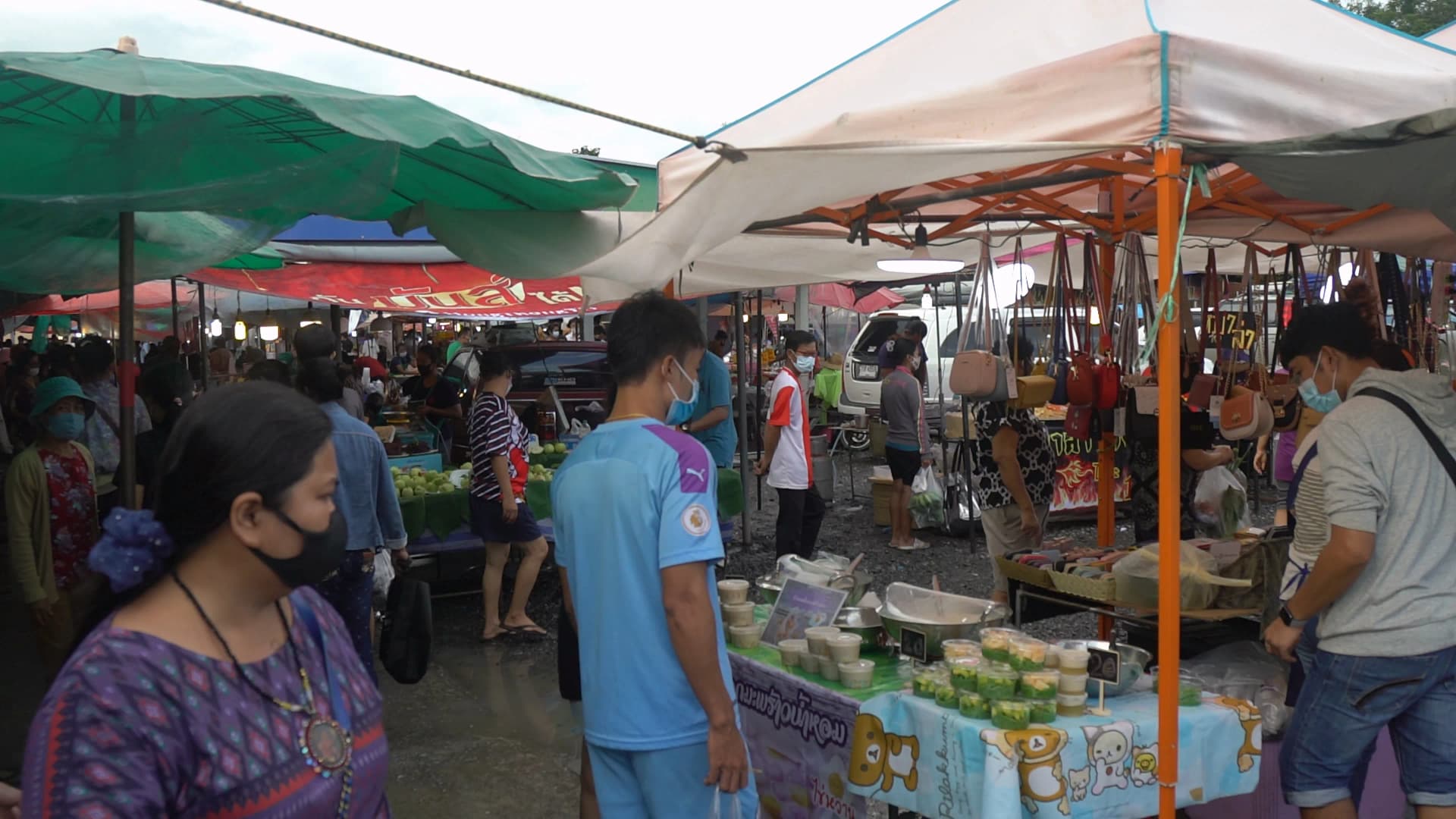
Here's the full view of the Ban Khai town market. Green and pink fabric awnings stretch overhead with vendor stalls packed tightly underneath. The first time my wife and I showed up, we just looked at each other like, "This place is way bigger than we expected." Thailand has these neighborhood markets in practically every town, and for locals they're more of an everyday grocery run than any supermarket ever could be. I'll be honest — the first few visits we just wandered around aimlessly and left without buying anything. But after a few trips, we started finding our go-to stalls one by one.
Fried Foods — The Smell of Oil Hits You Before You Even Walk In
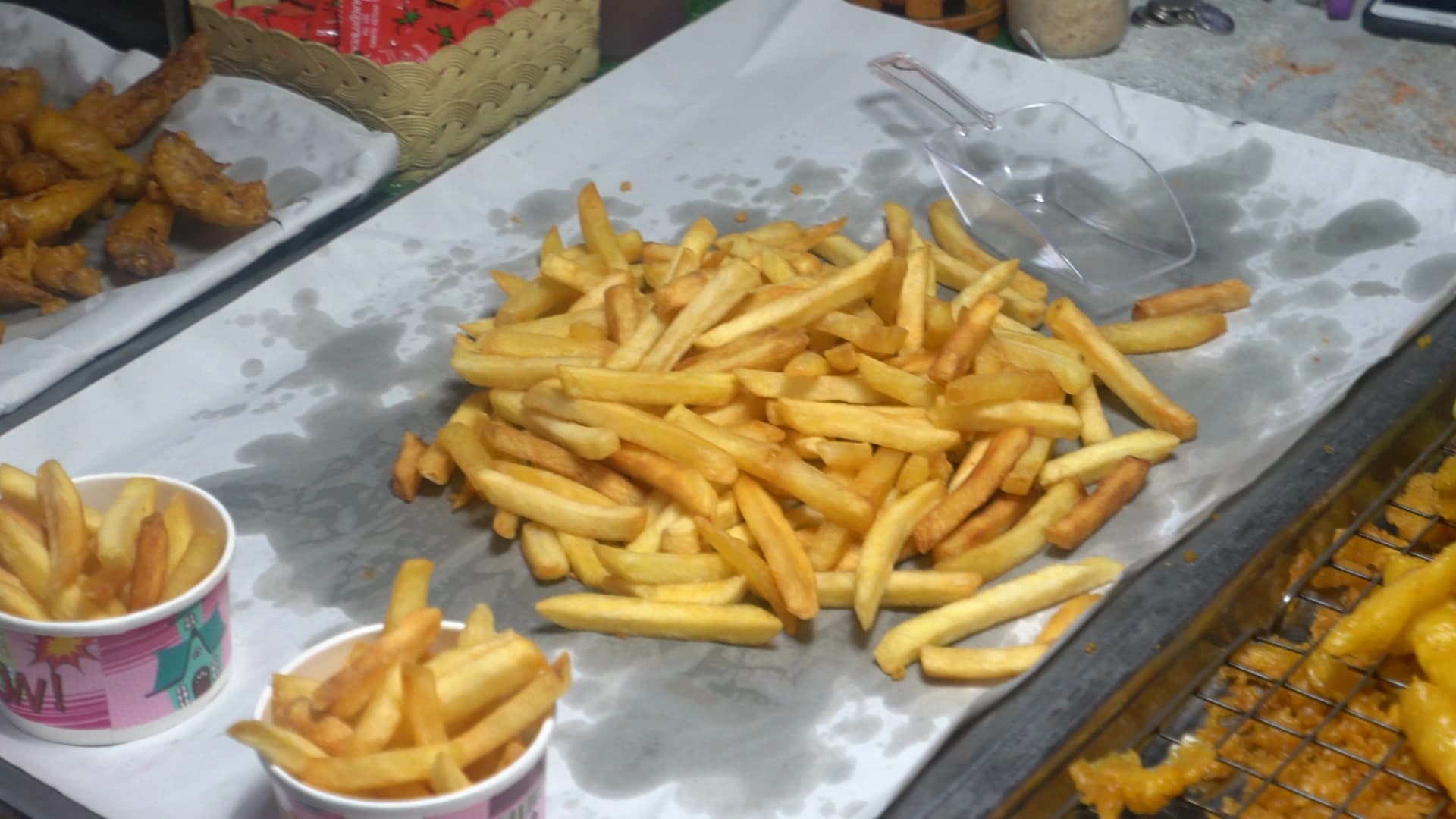
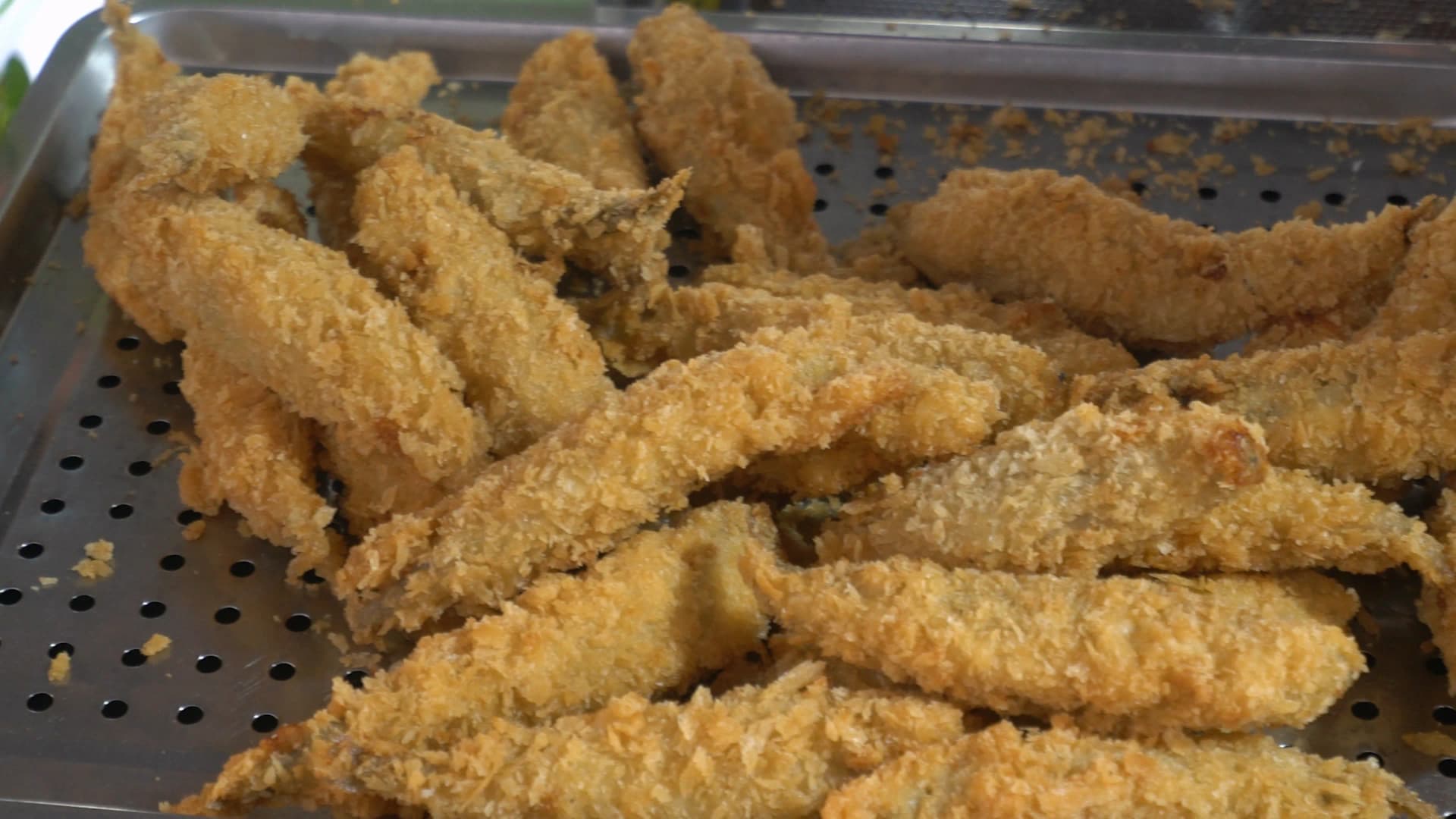
Right at the entrance — a massive fried food stall. French fries were heaped on sheets of paper, scooped into paper cups for selling. Next to them sat mystery fried items I couldn't quite identify, and more unidentifiable fried things were draining on a wire rack to the right. Thai markets pretty much always open with a wall of fried food — it's practically an unwritten rule. You smell the oil before you even step inside.
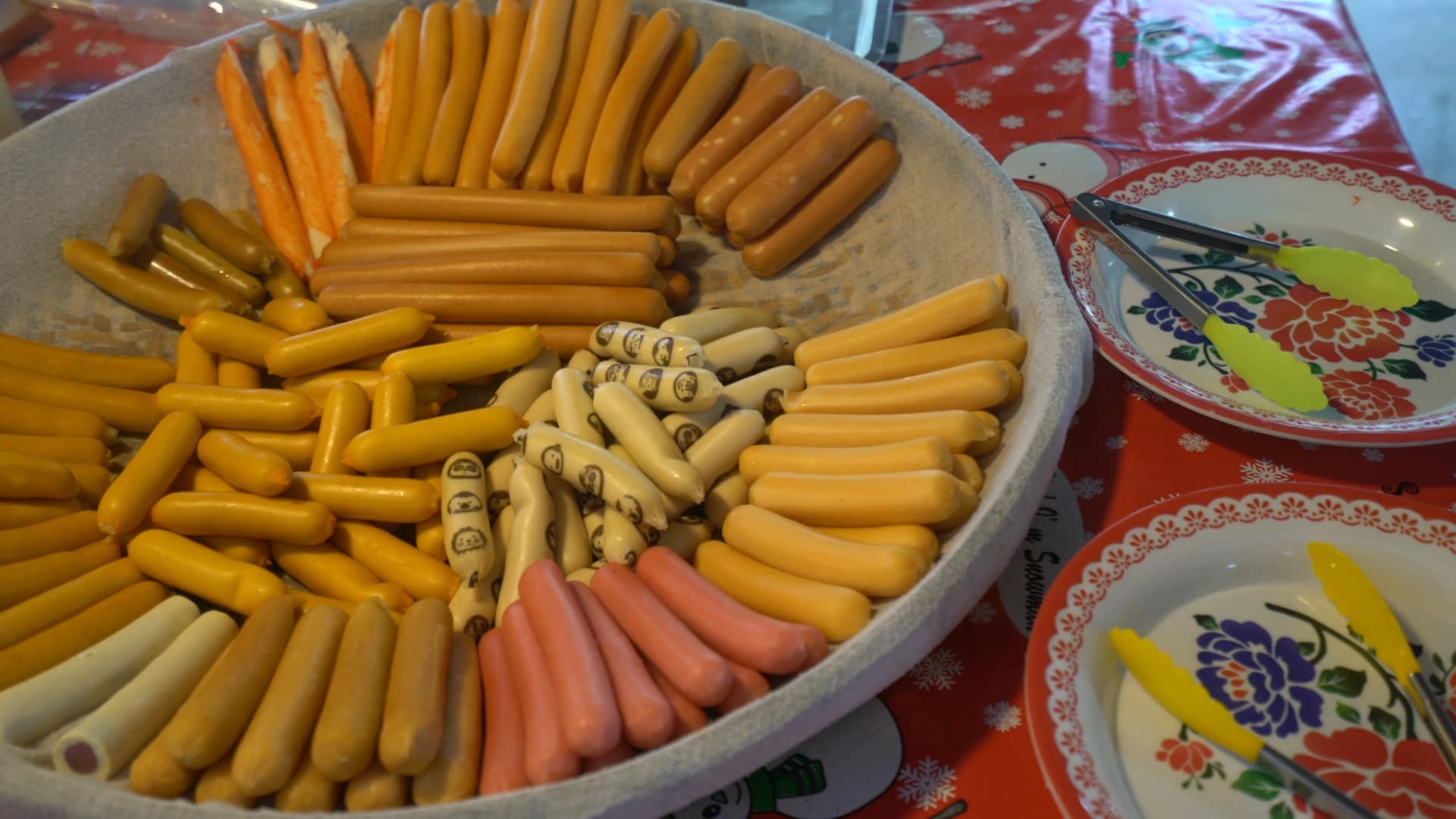
A sausage stall. Yellow, pink, white, and orange sausages were sorted by color on trays, and you grab what you want with tongs. Every single Thai market I've ever been to has one of these sausage stalls. It's like a universal constant of Thai street food. My wife wasn't really a fan, but I picked one up literally every time we went. So I heard "You're getting that again?" on pretty much every visit.
Takoyaki — Half the Price of Back Home and Tastes Just as Good
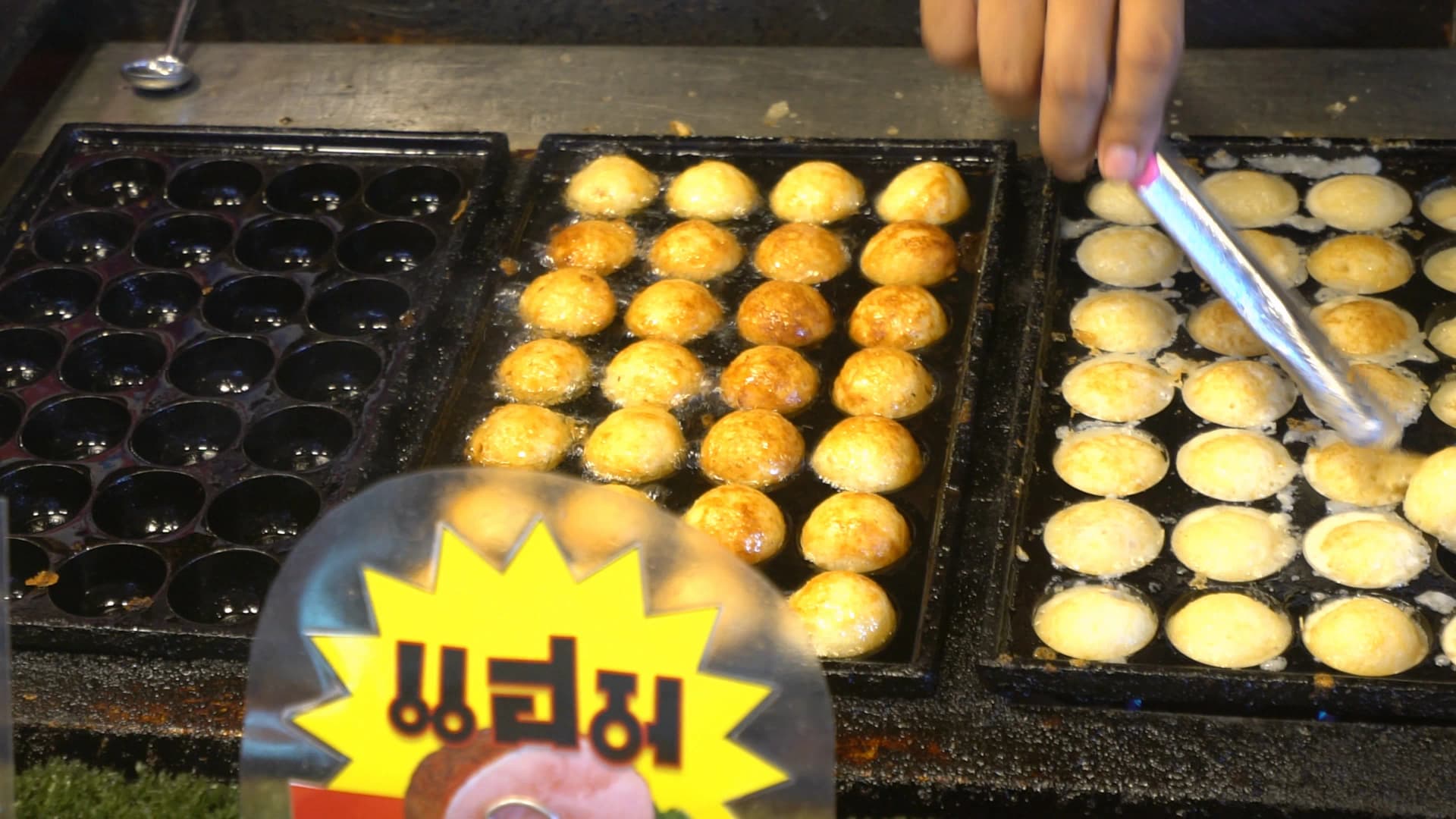
They even had takoyaki. A vendor was carefully flipping each ball in the round griddle mold. In the US, takoyaki at a Japanese restaurant or food festival runs you easily $8–10 for a small portion. Here it was about 40 baht (around $1.20), the portions were generous, and the taste was just as good. There was no way I was walking past this one.
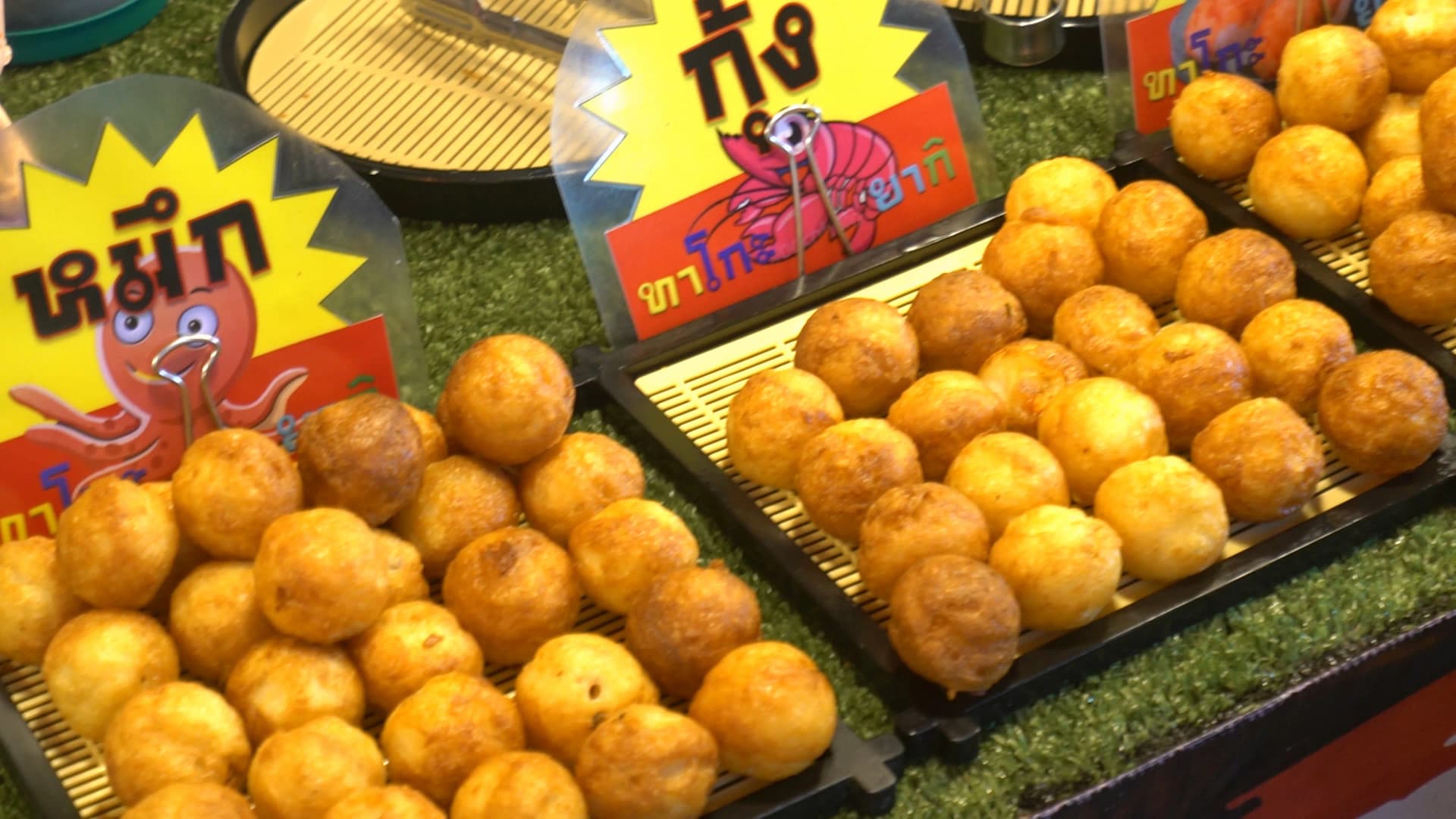
Pre-made takoyaki sat in trays sorted by flavor, and the variety was honestly impressive. Octopus, shrimp, cheese, pork — you name it. Back home you usually only find the standard octopus version, but here you could mix and match. The pieces were slightly bigger too.
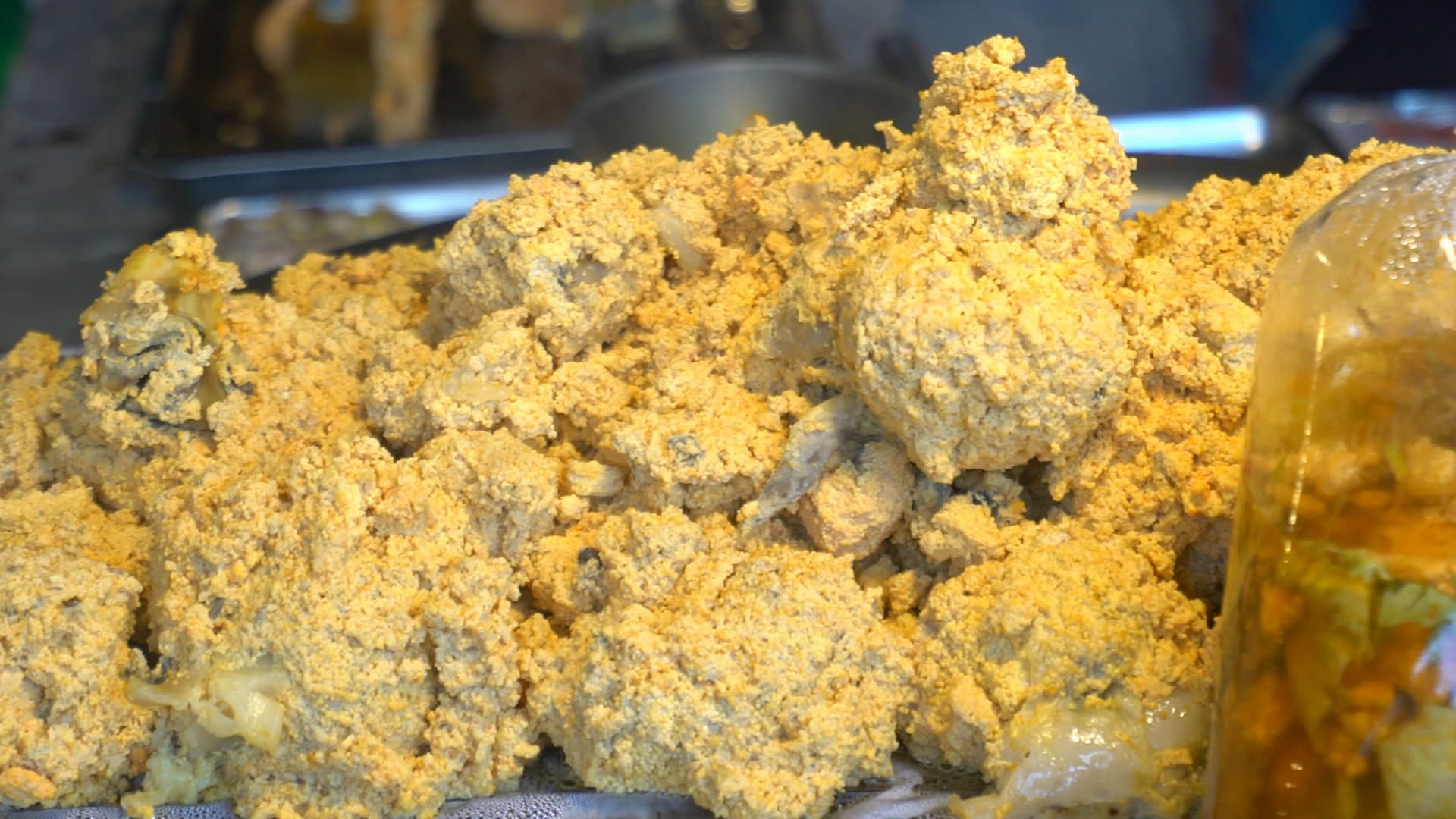
Some kind of fish roe dish… I honestly have no idea what it was exactly. Yellow powder coated the outside, and it was piled up in enormous mounds. I've had fish roe stew before, but I'd never seen it sold like this in giant stacked chunks. I walked right past it at the time because I didn't know what it was. Looking back, I kind of wish I'd just grabbed one.
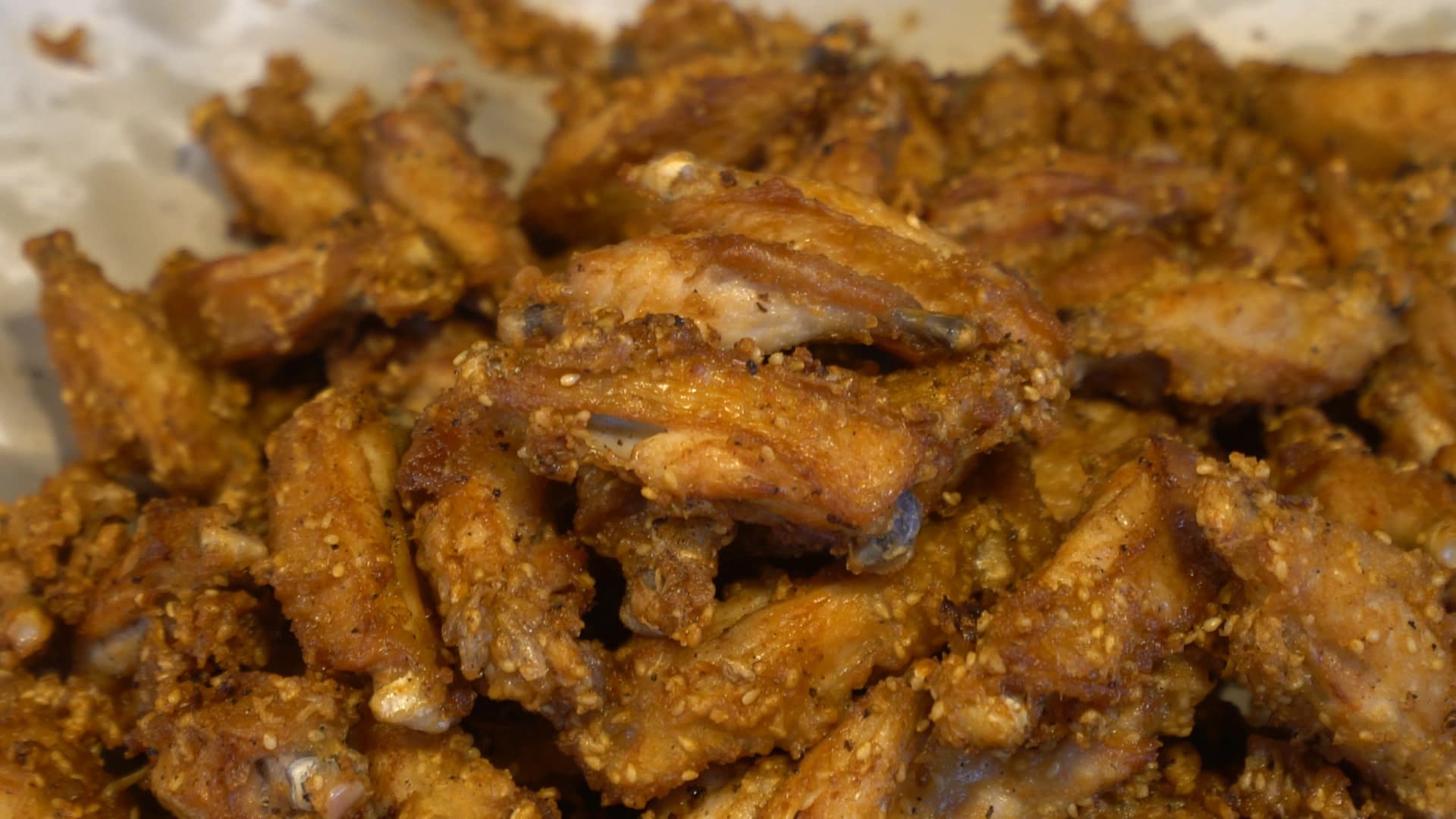
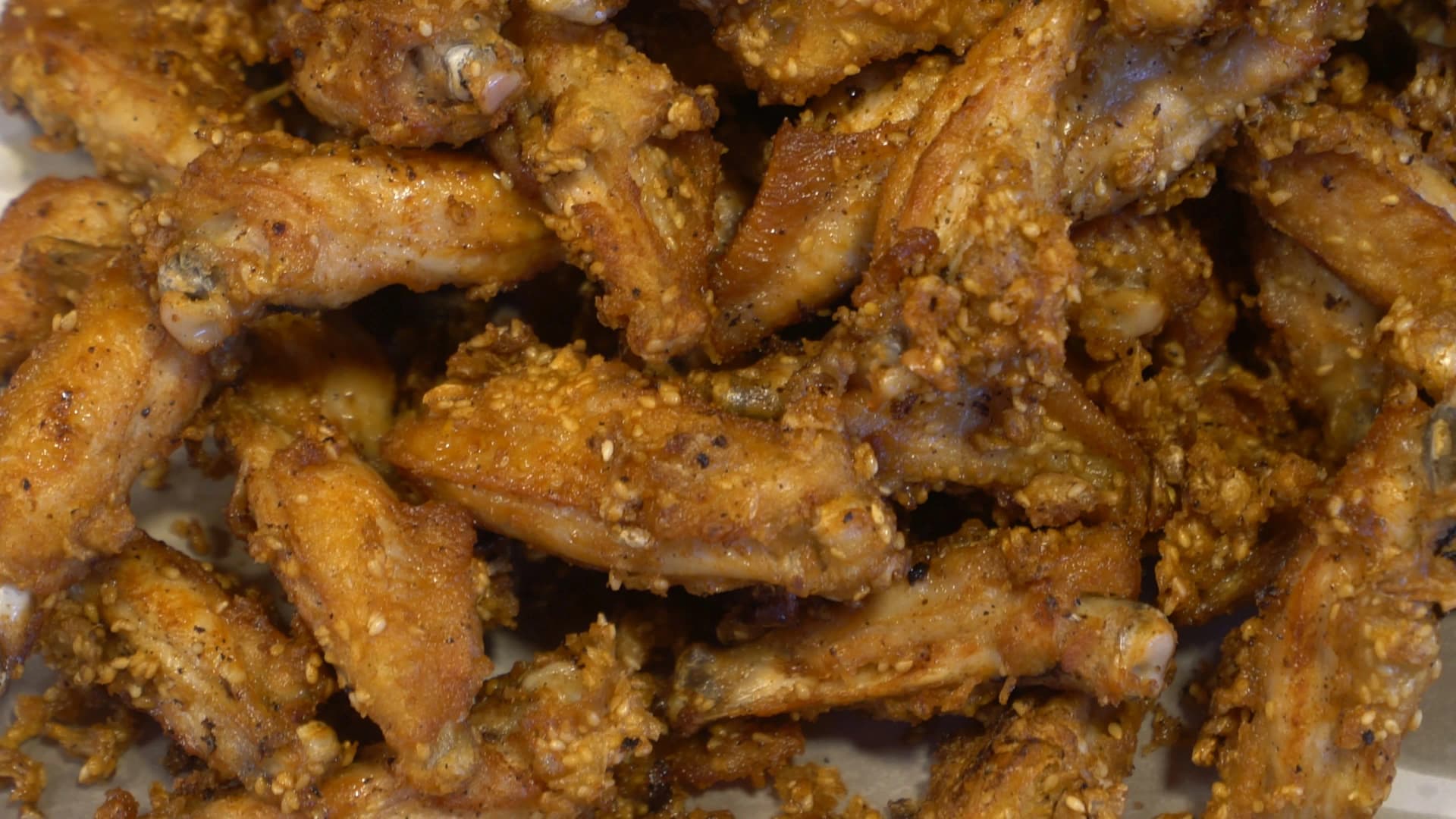
Fried chicken wings. Crispy wings piled sky-high, surfaces dusted with seasoning powder. These weren't thick-battered American-style fried chicken — more of a thin, skin-on, lightly fried style. Whenever you walked past this stall, the smell of these wings just followed you down the aisle. Seriously hard not to buy them every single time.
Fried Intestines — Amazing When Done Right, Awful When Done Wrong
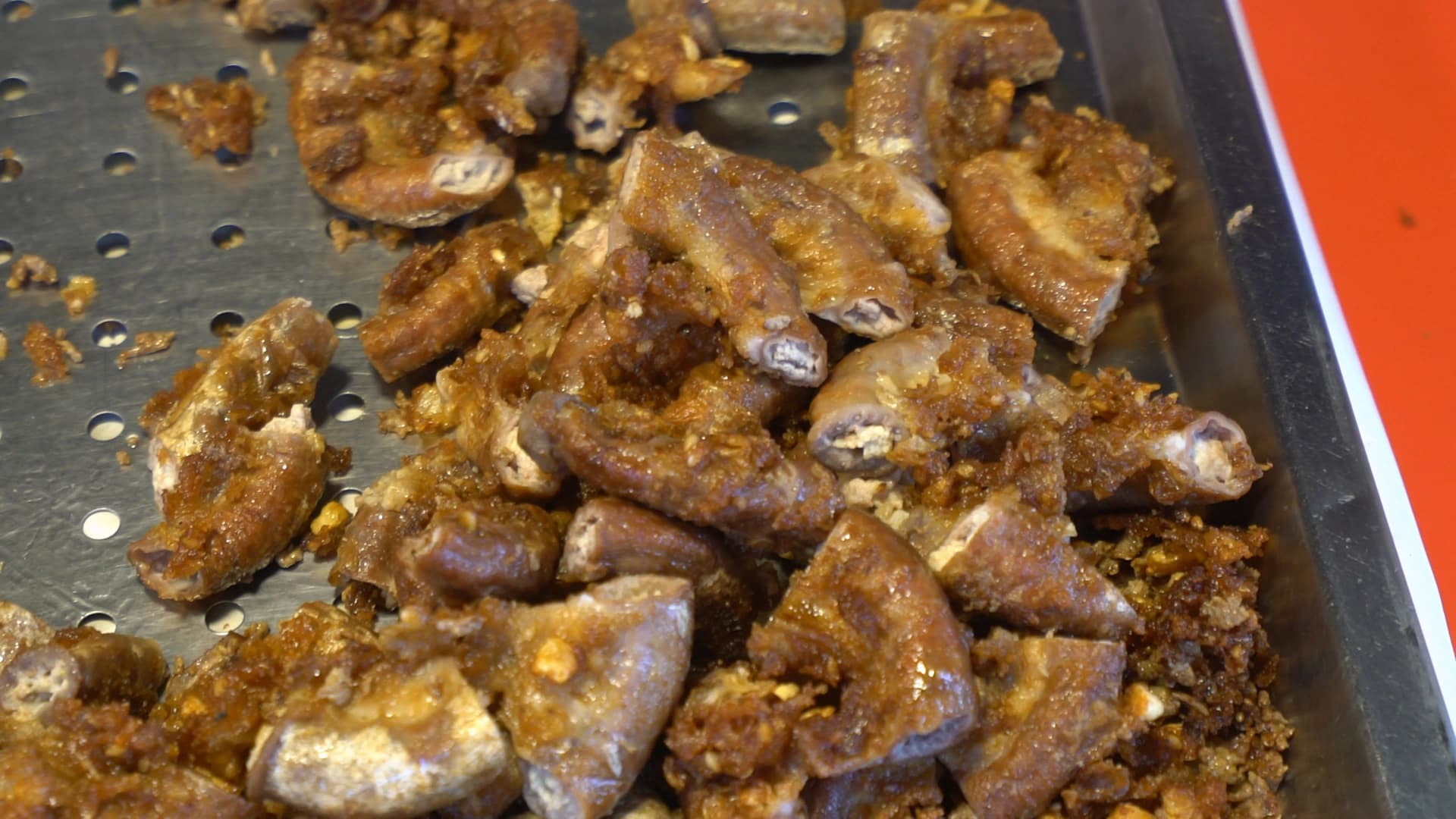
Fried intestines. In Thailand, deep-frying intestines and selling them at markets is super common. They shrivel up during frying, so they look pretty different from the plump grilled intestines you might see at a Korean BBQ spot. I'm a big intestine fan, so I tried these a few times in Thailand. The good ones had the fat still packed inside — rich, savory, genuinely delicious. But one time I picked a bad stall, and the smell was just horrendous. After that, I only bought from stalls where I saw a crowd already gathered.
Fruits — Where Thai Local Markets Are Unbeatable on Price
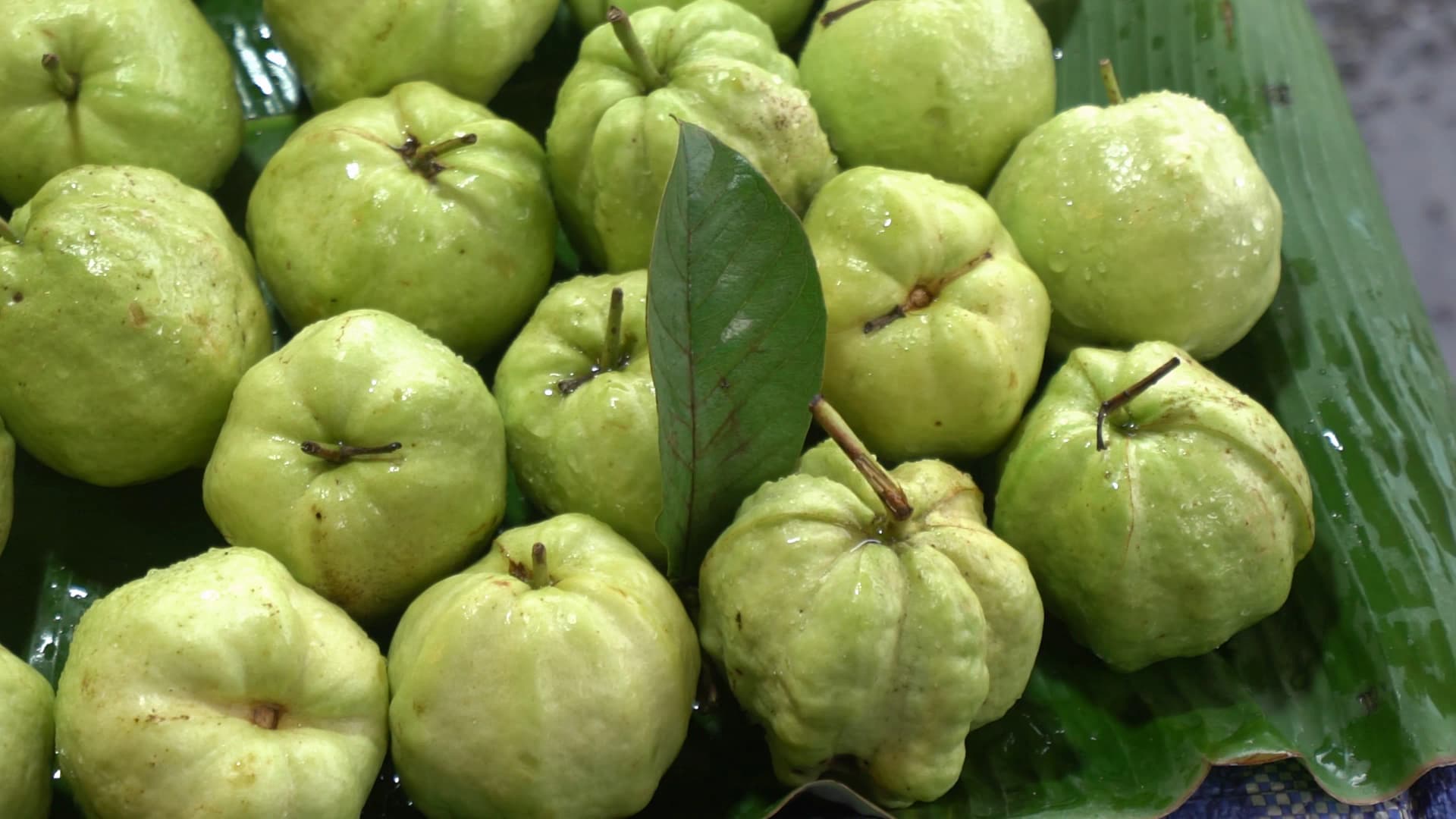
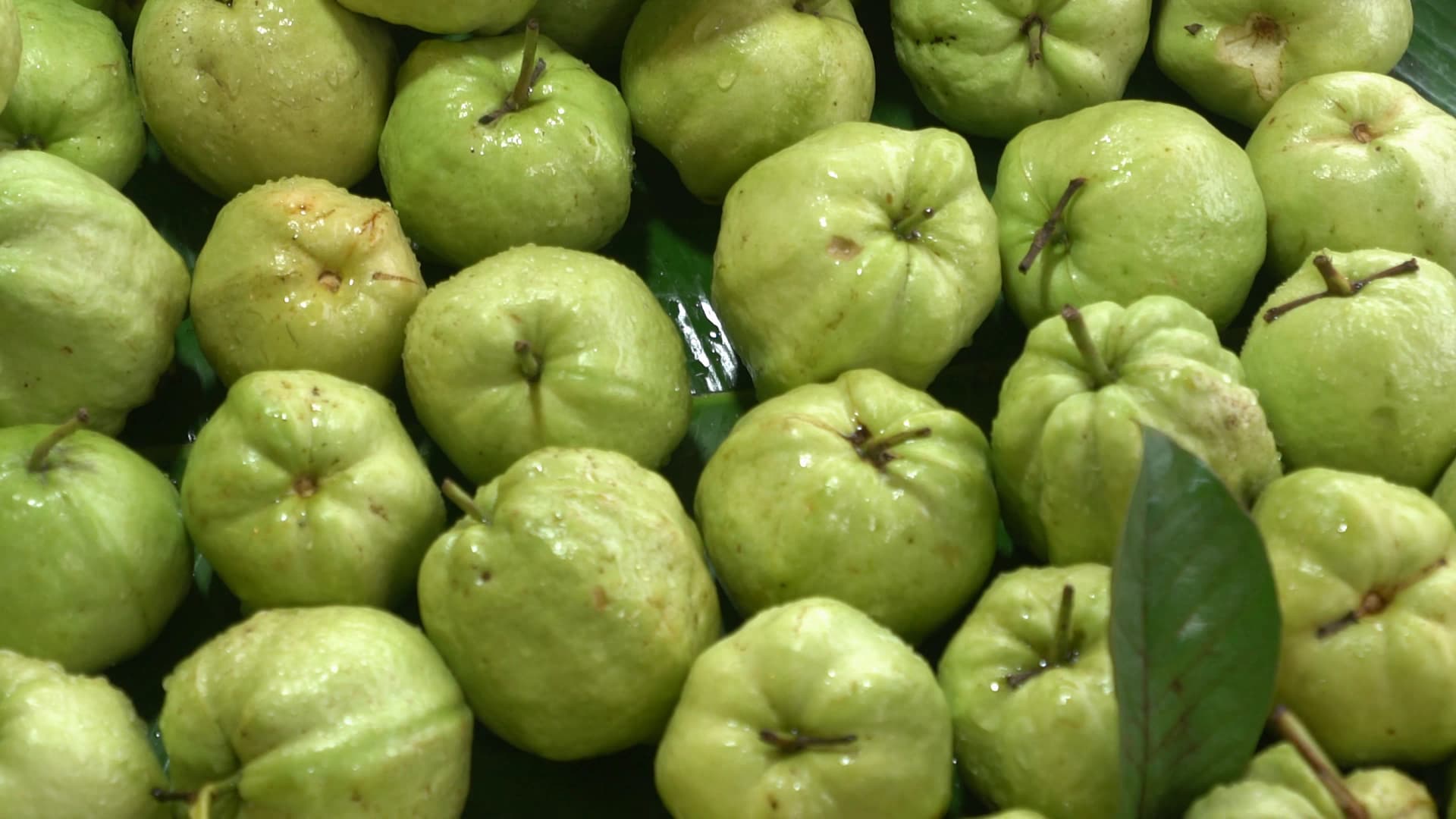
Guava. Bright green guavas glistening with moisture, piled on banana leaves. You'd be hard-pressed to find fresh guava at a regular American grocery store, but in Thailand they're everywhere. Locals eat them plain, or dipped in sugar, or — and this blew my mind — dipped in chili powder. Fruit with chili powder? Sounded insane at first, but it actually kind of works. Think of it like the way Mexicans put Tajín on mangoes. I offered some to my wife once, and after one bite she went, "Yeah… that's a no for me." Different strokes, I guess.
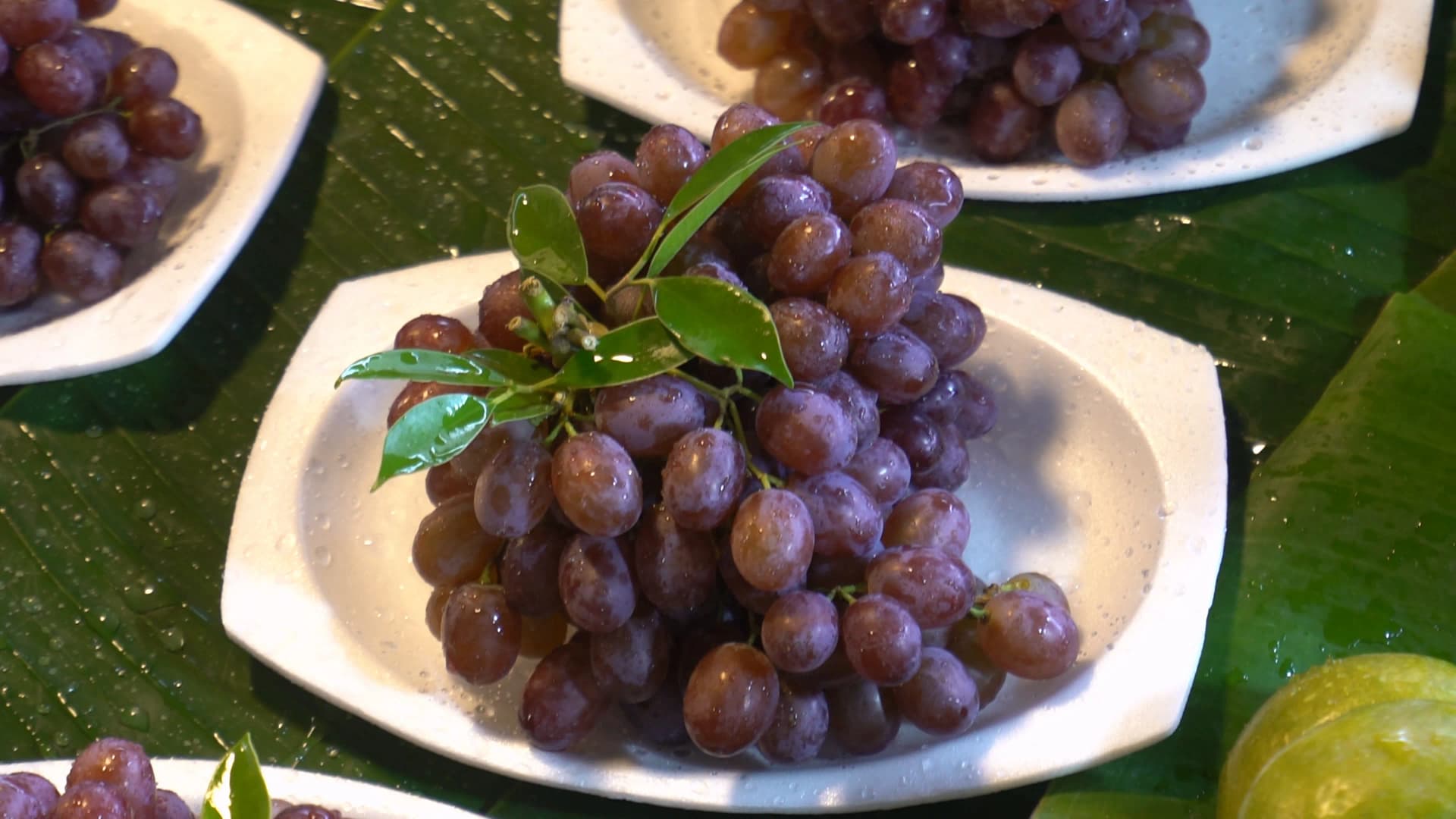
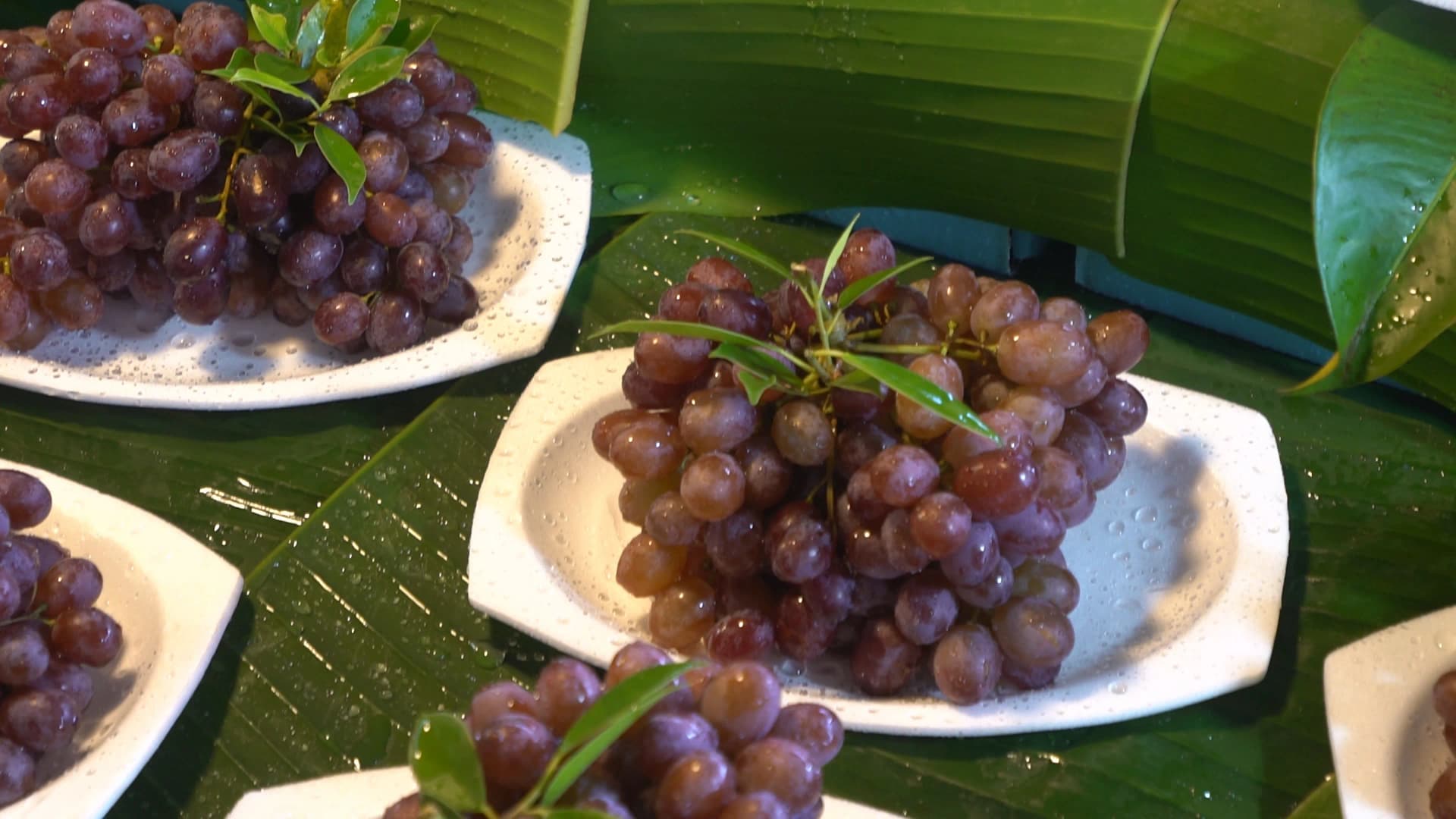
They had grapes too. Each bunch sat on a white plate over banana leaves, water droplets still clinging to the skin — looked incredibly fresh. In the US, it feels like every store only carries the same few varieties these days, but this market had several types of purple and green grapes laid out together, which was a nice change. They sold them by the plate, so it was perfect for two people to grab without over-buying. Here's a tip worth knowing: the tourist night markets in Bangkok or Phuket jack up fruit prices noticeably, but local town markets like Ban Khai sell at actual local prices — way cheaper across the board.
Grilled Skewers — The Main Event at Ban Khai Market
If you're talking about Thai street food, skewers are non-negotiable. Ban Khai's market had multiple skewer stalls scattered throughout, and most skewers were priced at 10 baht each (roughly $0.30). At that price, you just grab whatever catches your eye without thinking twice.
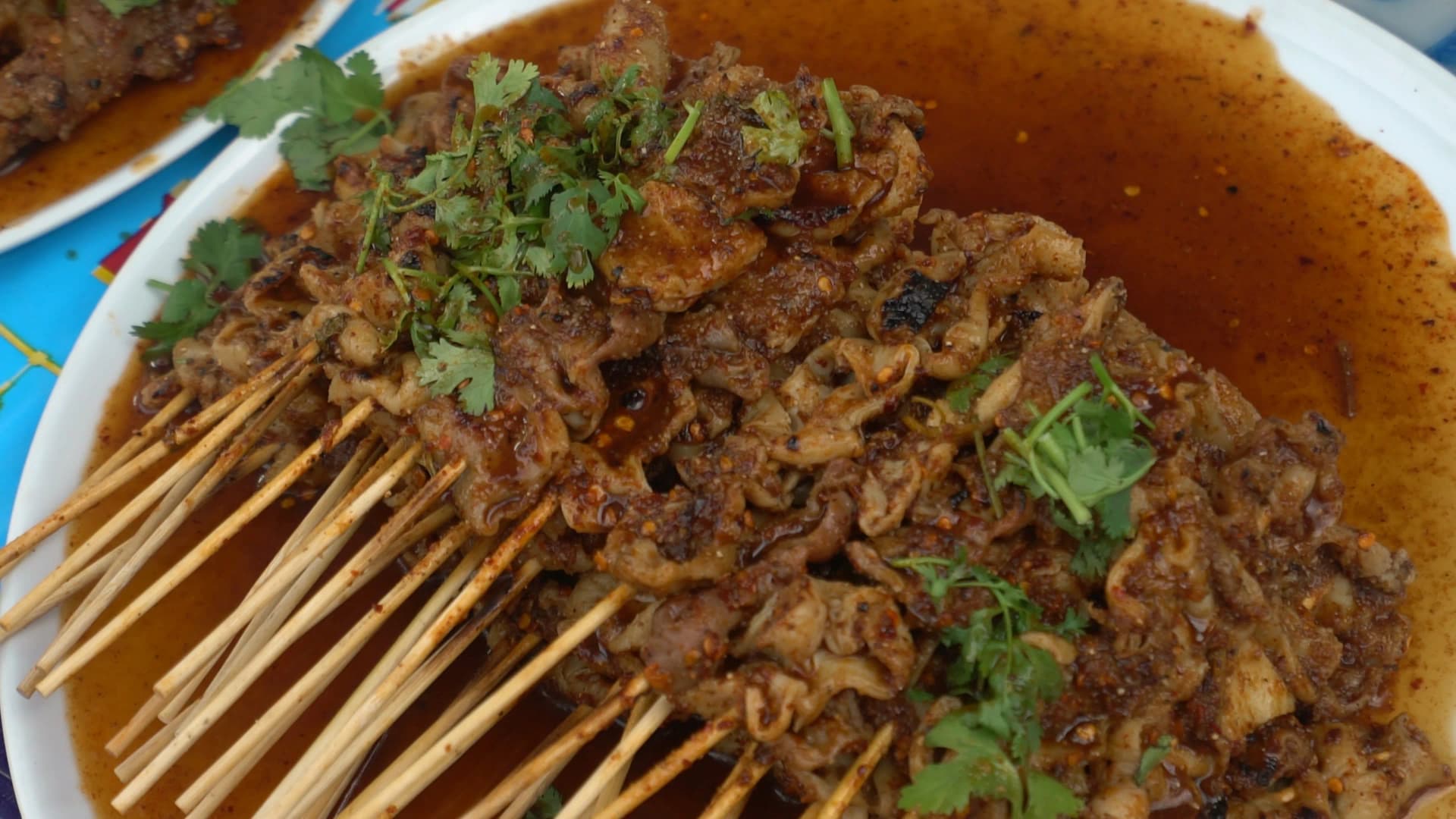
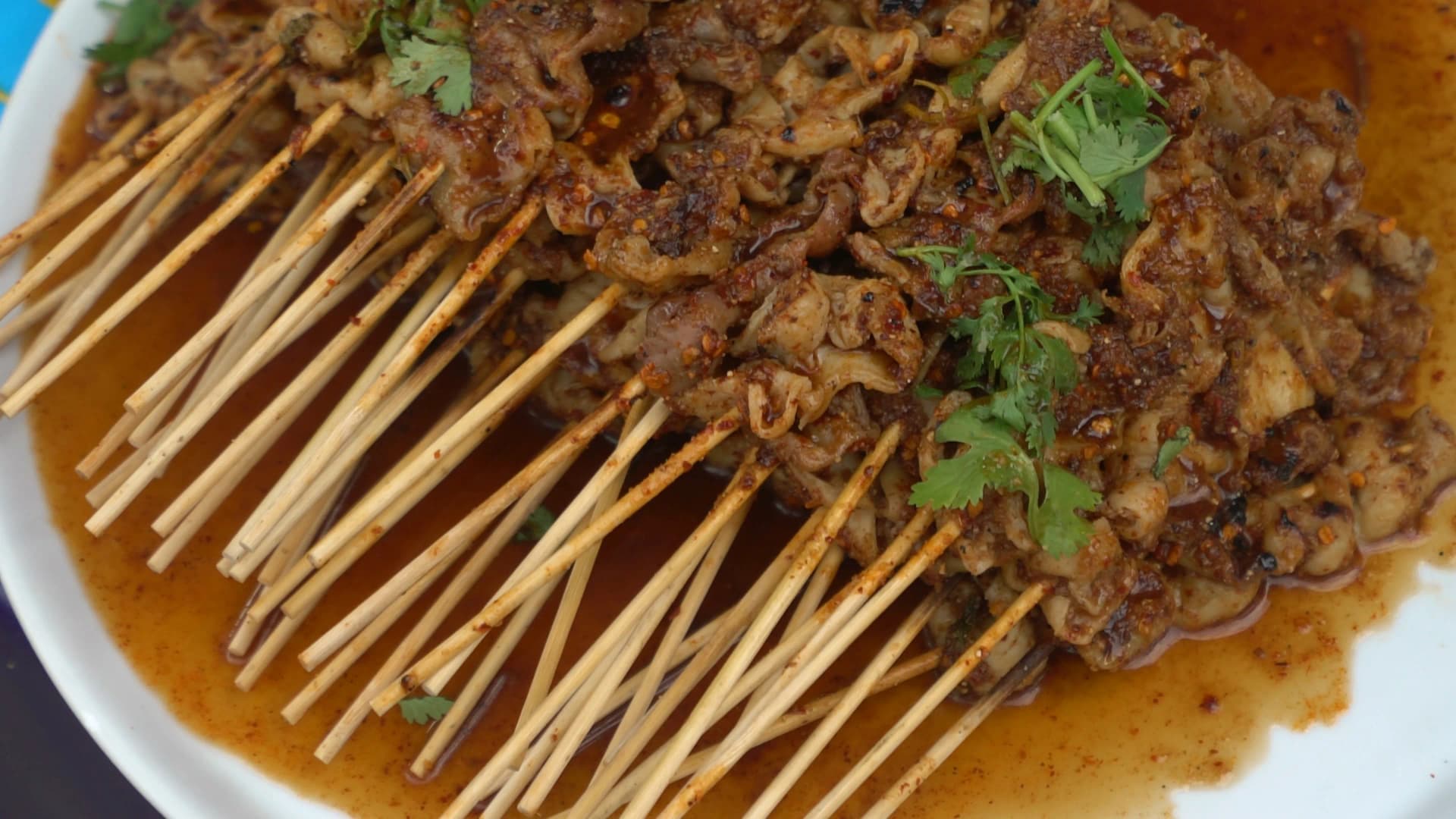
First up, pork intestine skewers. Intestines threaded on wooden sticks, grilled, then absolutely drenched in a thick dark sauce with fresh cilantro on top. The plate was practically swimming in sauce — definitely a polarizing level of seasoning. I didn't get to try these that day, and I still regret it. Next time I go, this is first on my list.
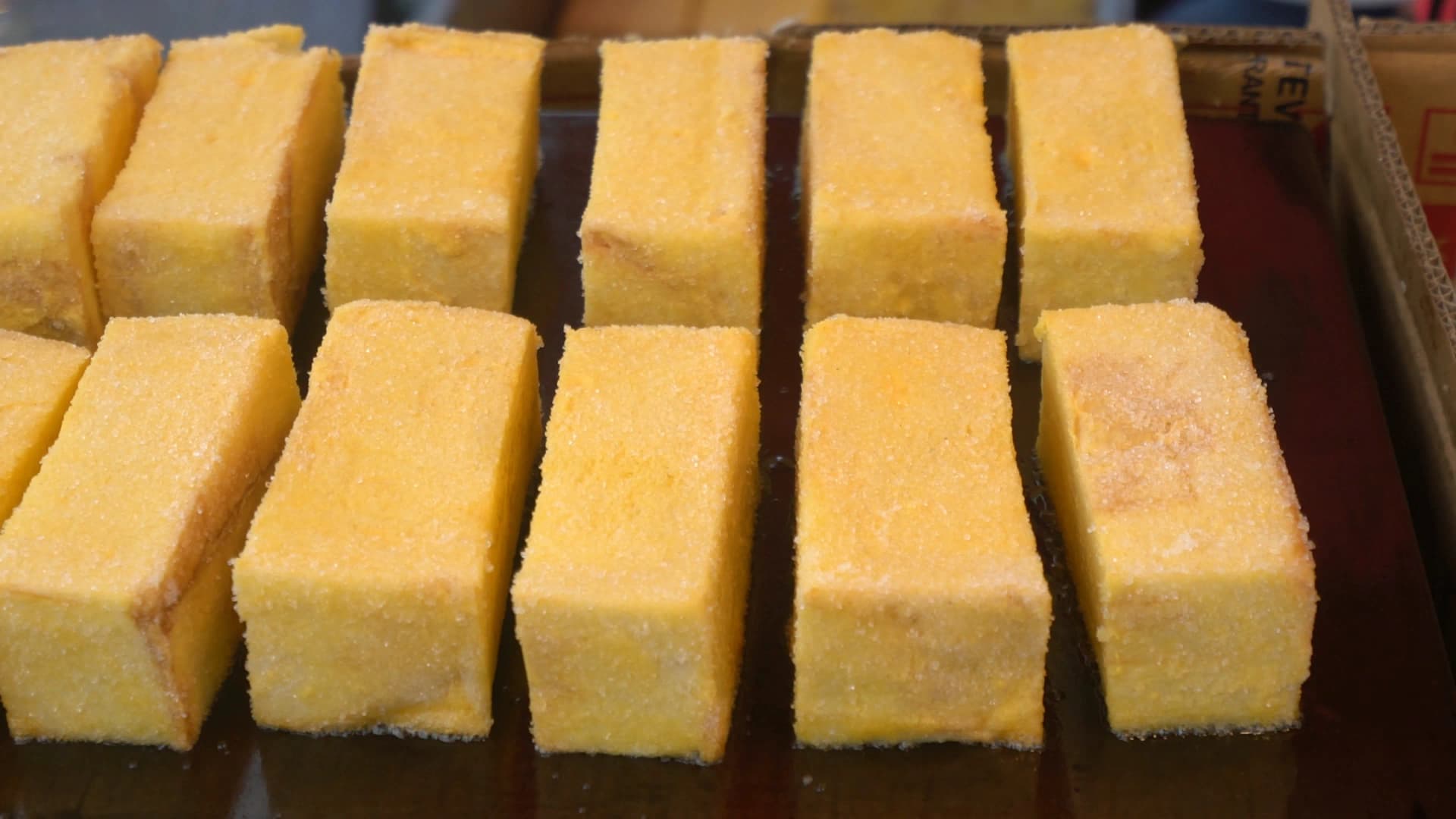
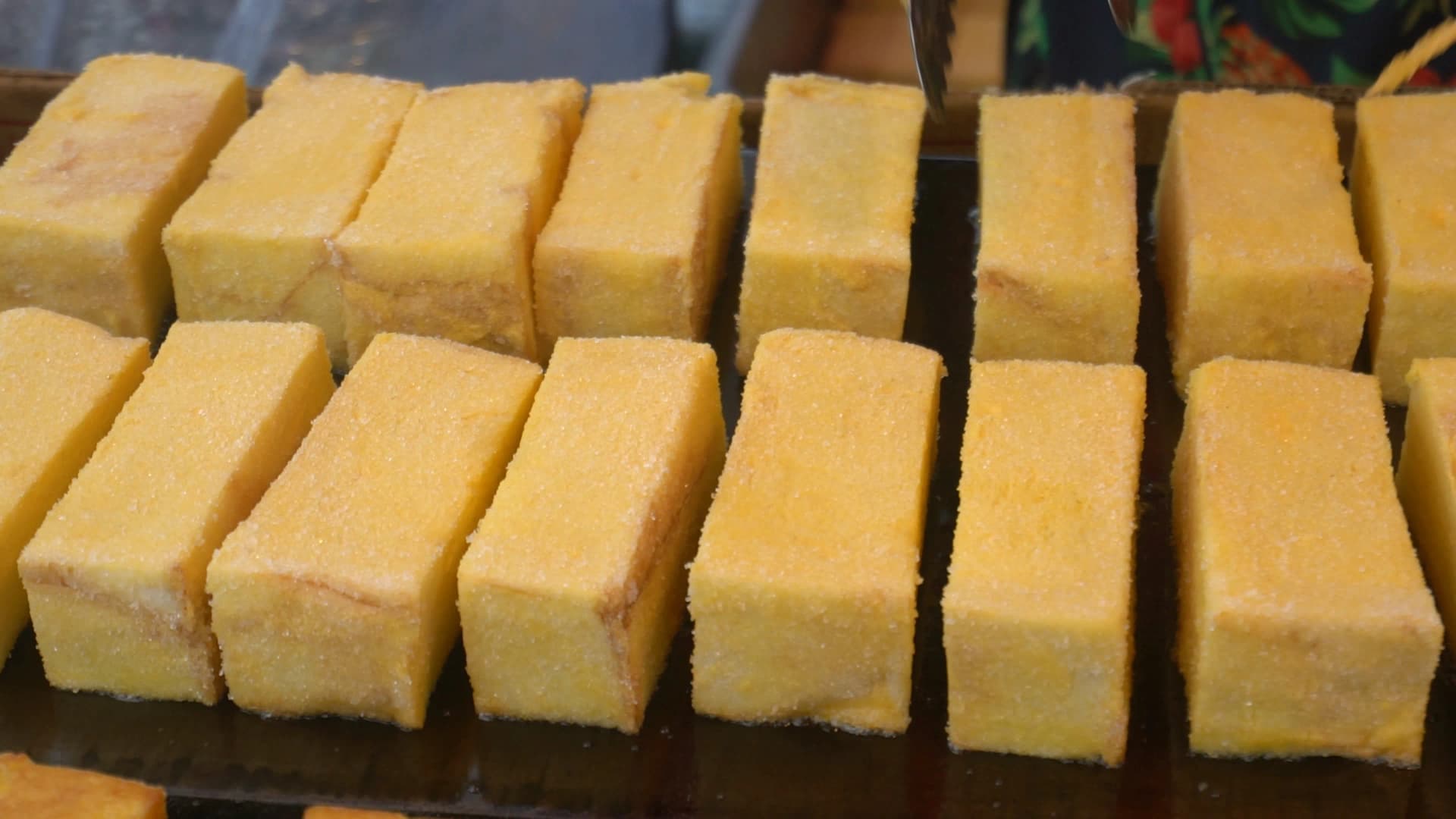
Deep-fried bread. Sliced into thick brick shapes and deep-fried whole, with sugar evenly coating the surface.
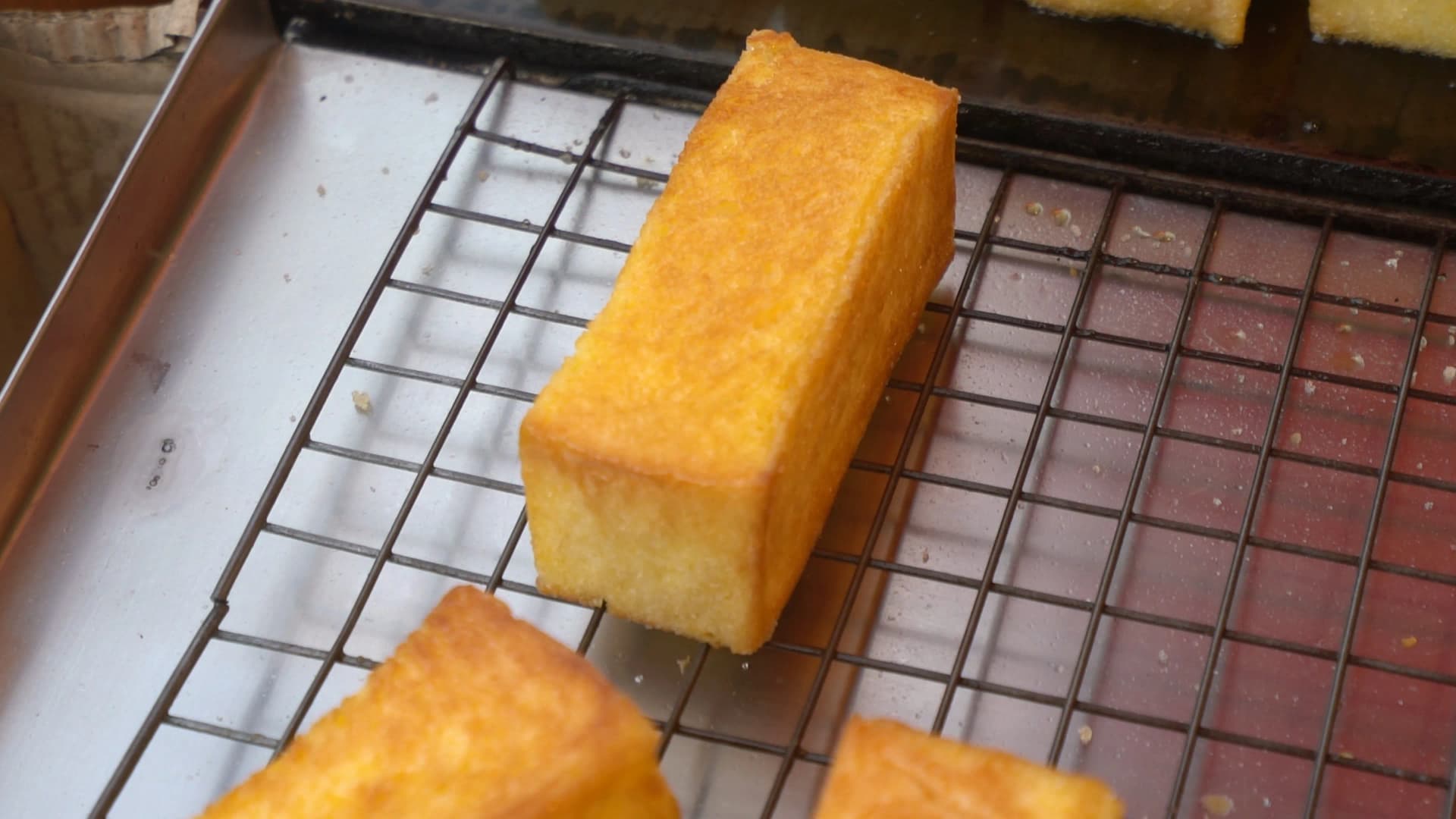
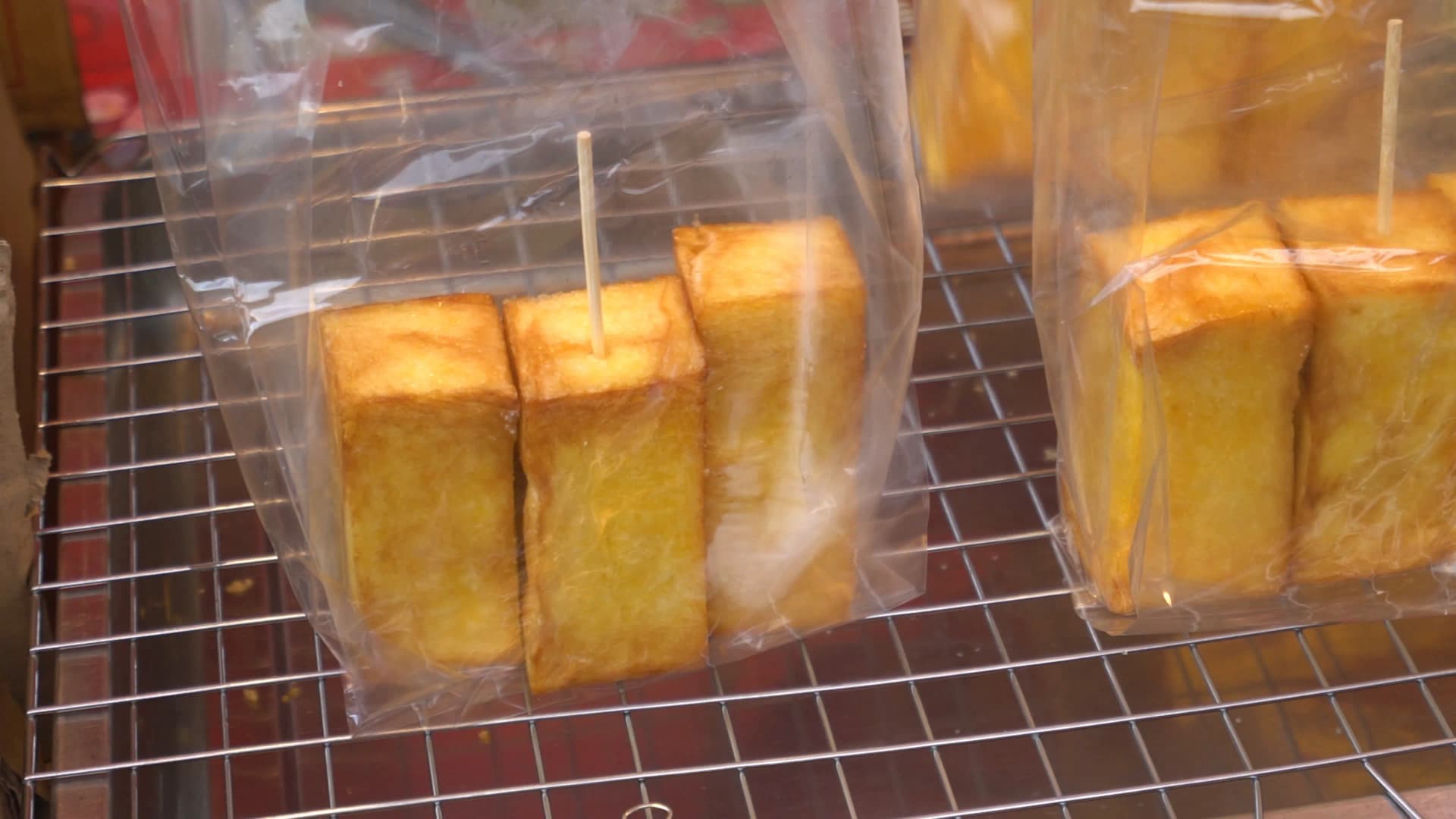
Some were draining on a wire rack, others already packaged in plastic bags with a stick poking out for easy grab-and-go. "Bread deep-fried in sugar must be insanely sweet, right?" That's what I thought. But when you actually bite into it, it's surprisingly mild. Crispy outside, pillowy inside, with just a hint of sweetness. My wife got hooked on these. Every single market trip, she'd beeline straight for this stall. Eventually she'd spot it the second we walked in and head there before even looking at anything else.
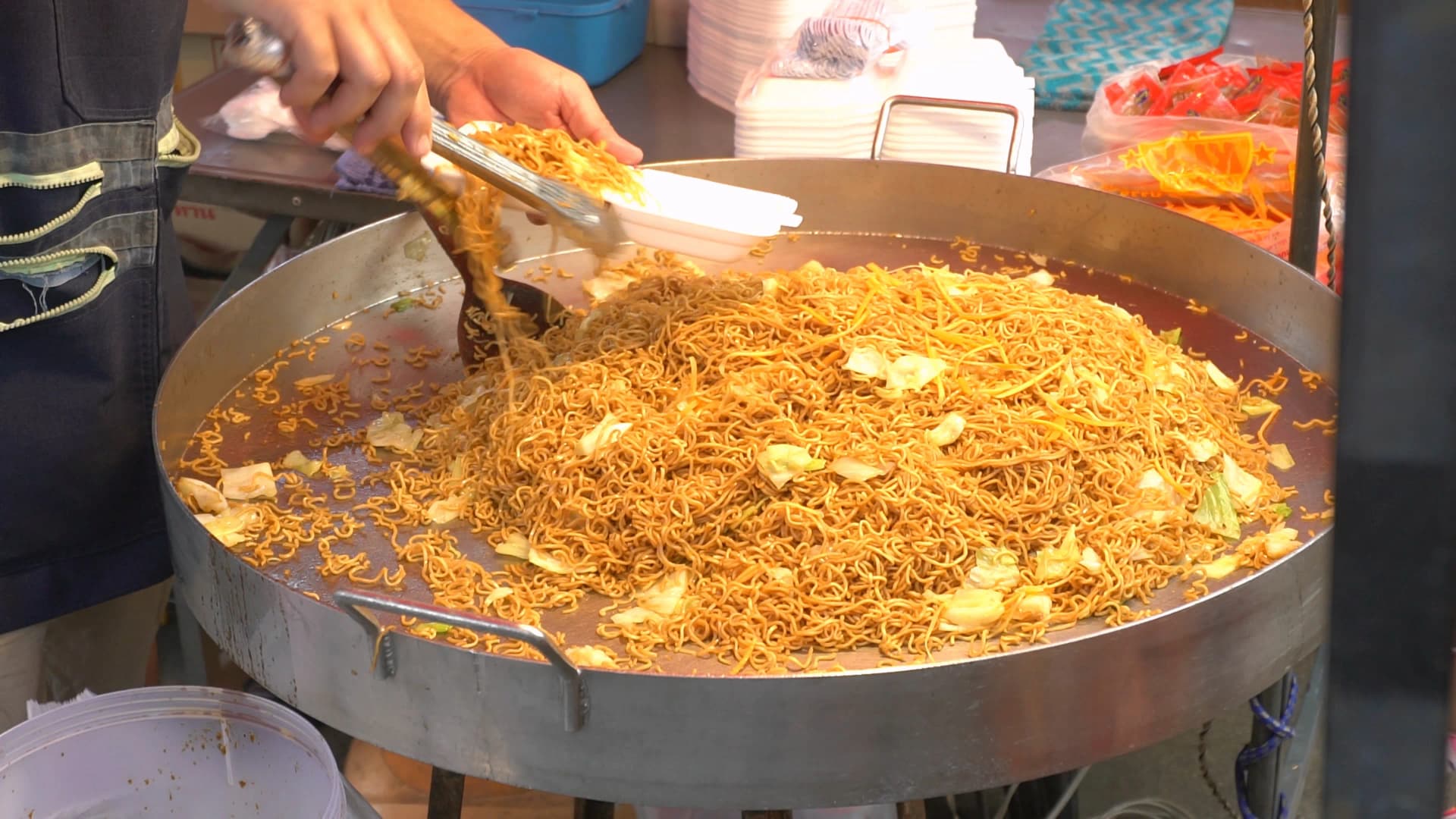
Soy sauce stir-fried noodles. A giant griddle heaped with noodles, scooped into containers with tongs for each order. It looks like it'd be crazy salty, but it was actually perfectly seasoned — just the right amount of savory with a gentle salty kick. This was hands-down the thing I bought the most at this market. Around 30 baht (about $0.90), and I grabbed it almost every single visit without fail. Personally, this is easily in my top three Thai street food items. Shredded cabbage mixed in throughout gave it a nice textural contrast, and it was the ideal thing to eat while walking around the market.
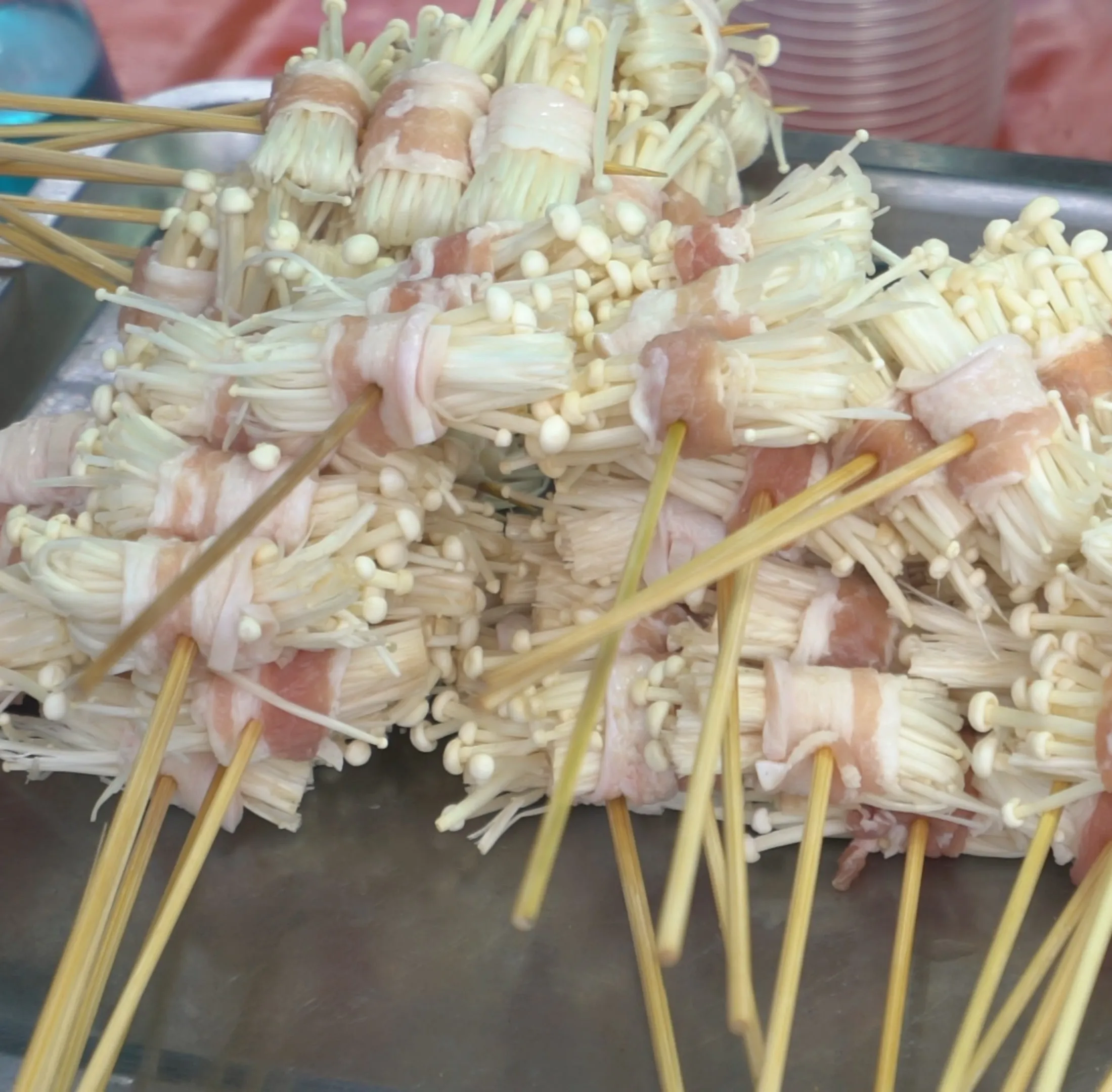
Enoki mushrooms wrapped in bacon, threaded onto skewer sticks. This is a hugely popular combo at American backyard cookouts and camping trips too, right? Seeing it at a Thai market gave me this weird feeling of familiarity. These were still raw and stacked up, waiting to hit the grill.
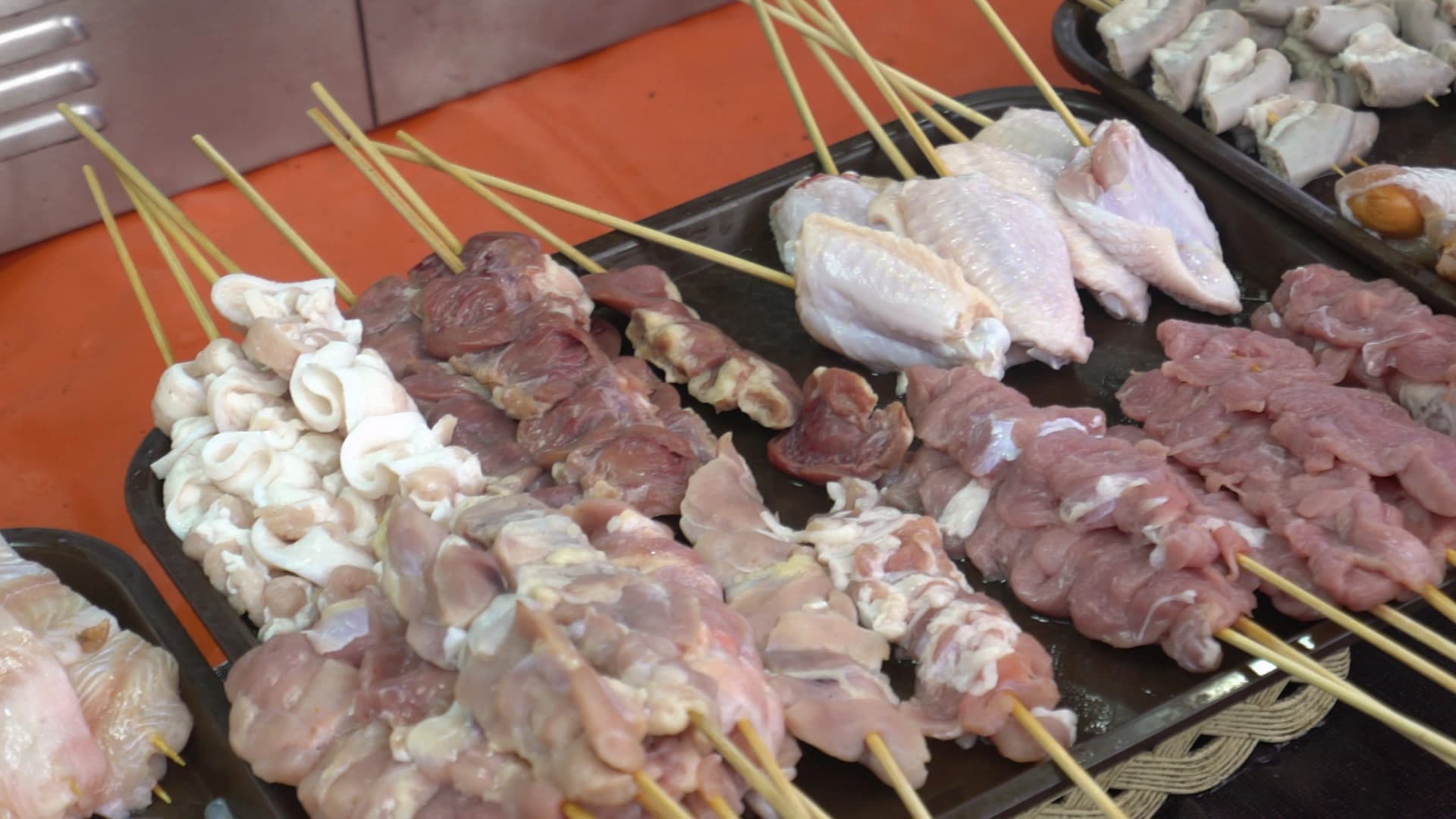
Raw meat skewers organized by cut on separate trays. Intestines, pork, chicken wings, chicken pieces — everything laid out uncooked and ready to go.
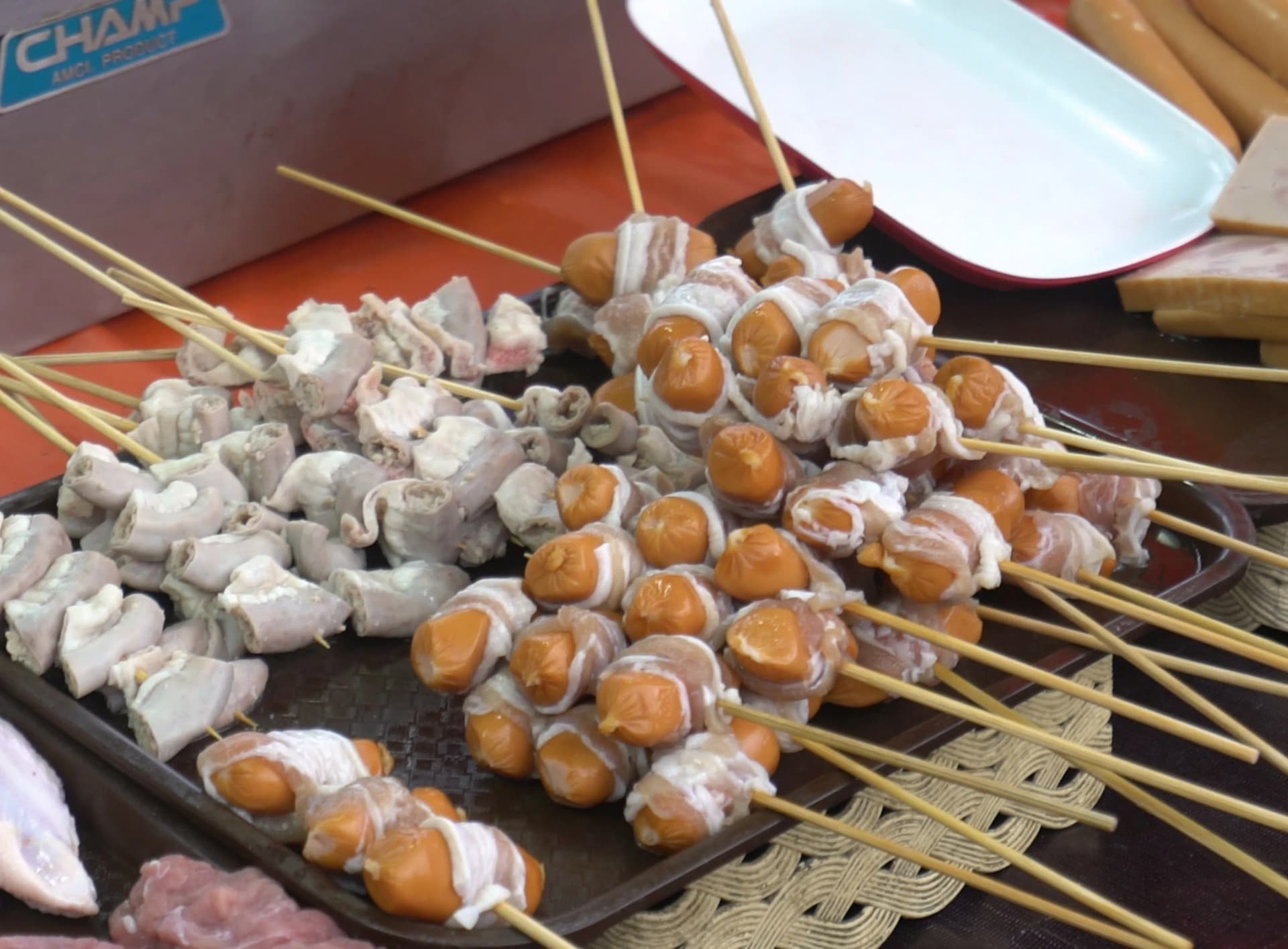
Intestine skewers, sausage-bacon skewers — same deal. You pick the ones you want, hand them over, and they grill them right there over charcoal on the spot.
Boiled Skewers — The Sauce Is Everything
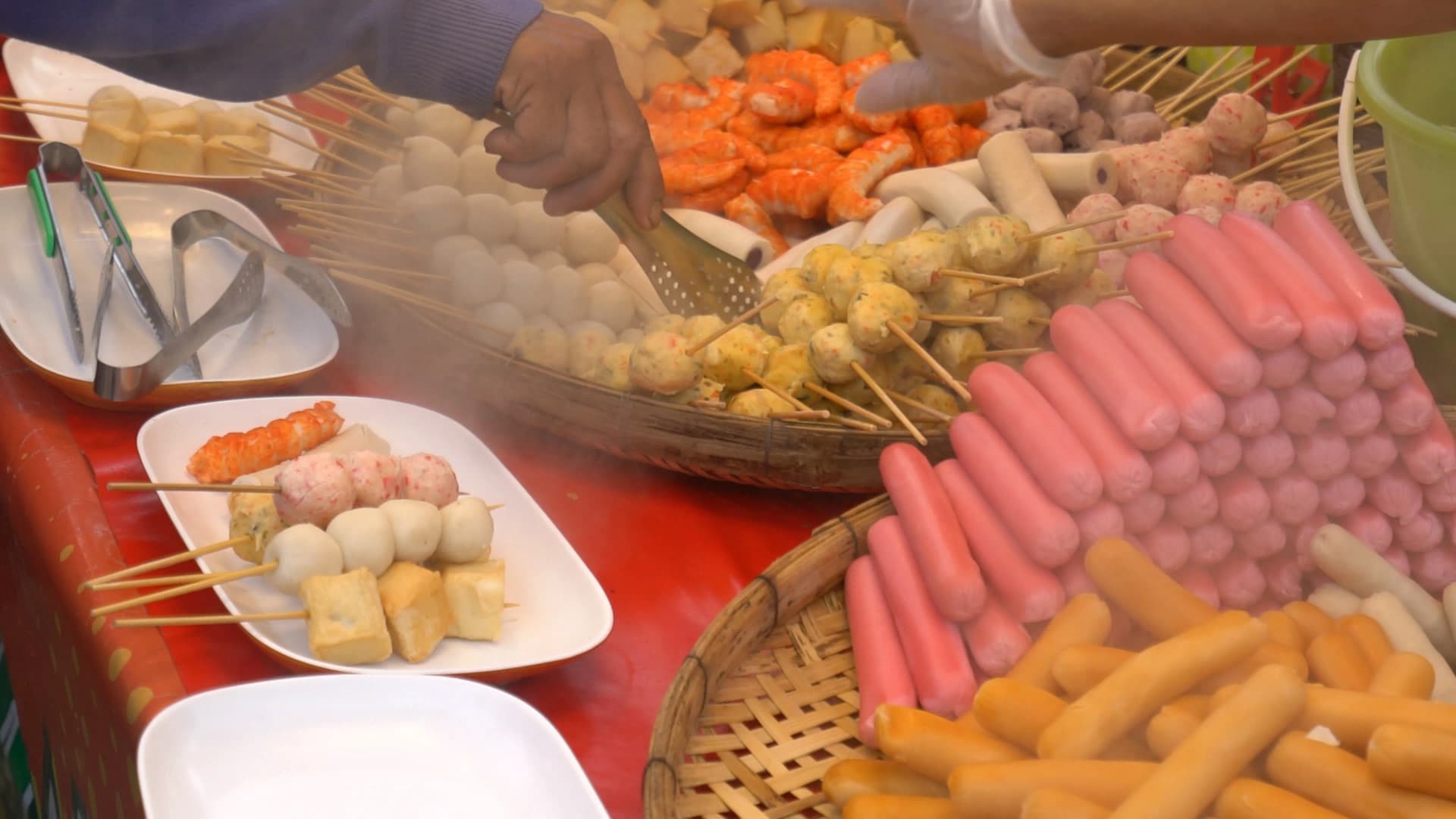
Boiled skewer stall. Fish cakes, meatballs, sausages, tofu, shrimp — all sorted by color in bamboo baskets. White, pink, yellow, orange — the whole display was a rainbow that caught your eye immediately. You pick what you want, and they slather on a sweet-spicy sauce. That sauce is the whole point. The skewers themselves are pretty mild on their own, but with the sauce, you literally can't stop at one. My wife only picked the shrimp skewers. I just grabbed everything within reach. So every time we settled up, my pile was always bigger.
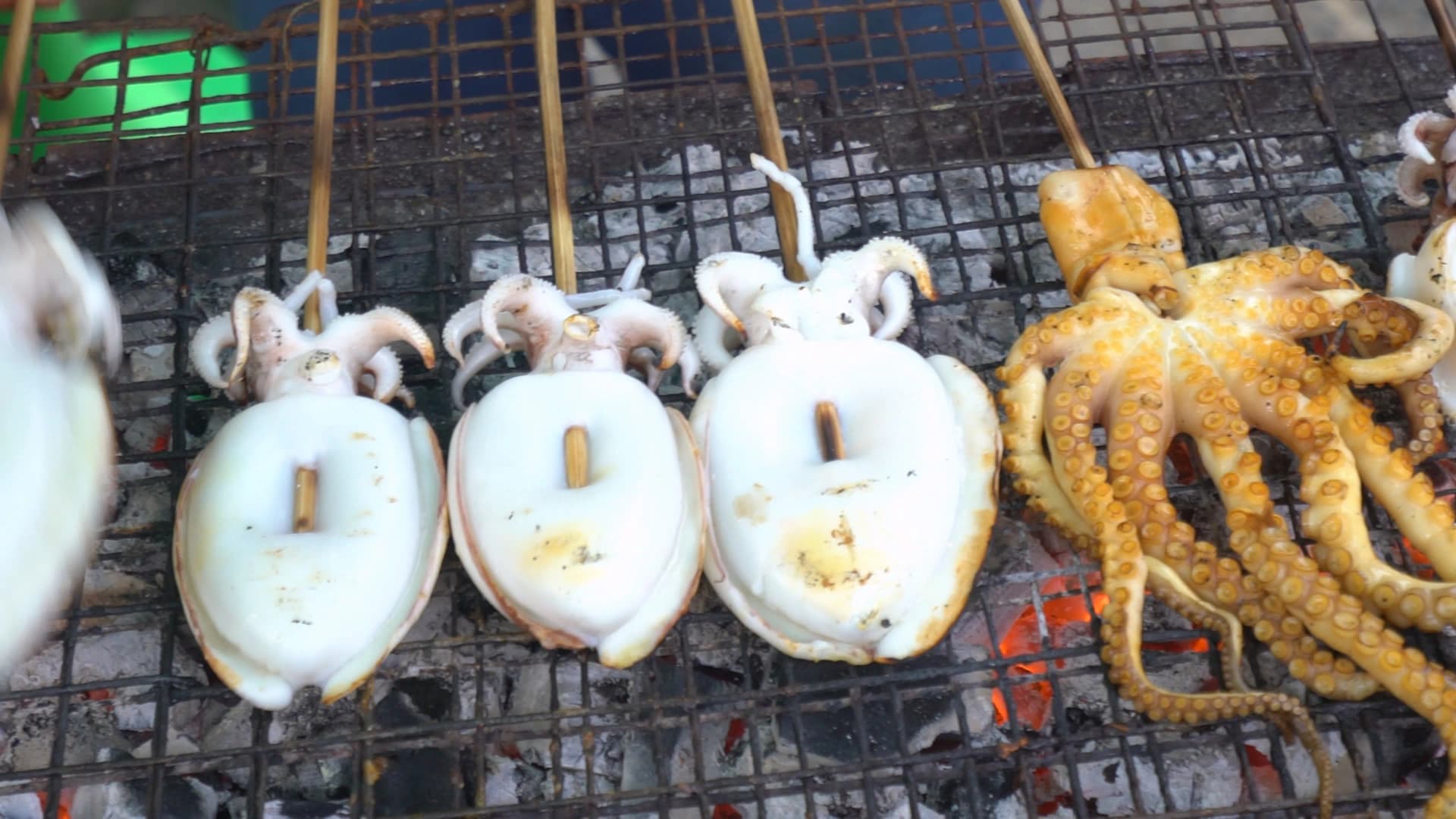
Seafood skewers. Whole squid and octopus threaded onto sticks, grilling right over charcoal. The smell that hit me as I walked past literally stopped me in my tracks.
Ready-Made Meals — In Thailand, You Buy Dinner at the Market
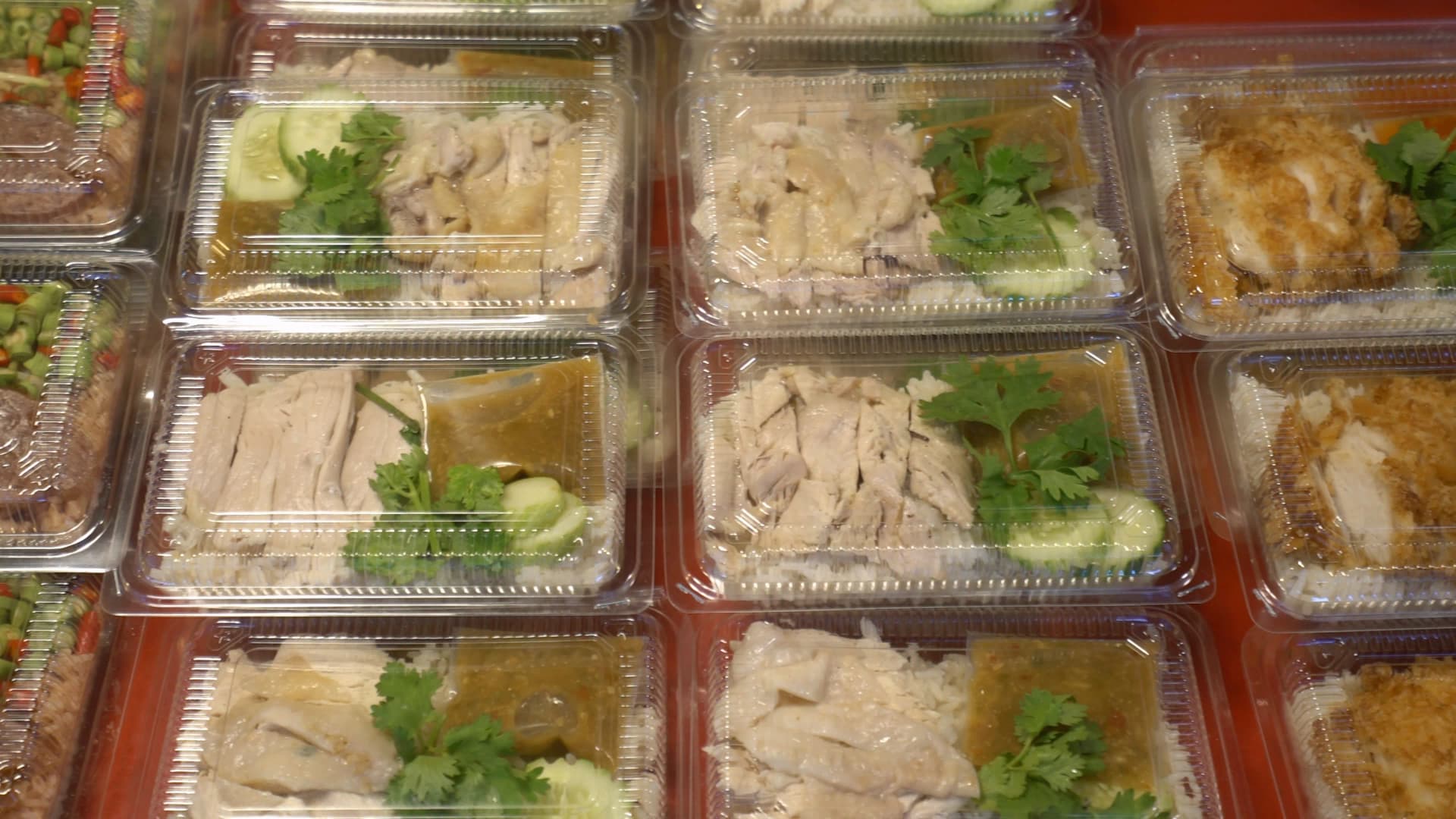
This is probably the biggest difference between Thai markets and what you're used to at home. In the US, farmer's markets or grocery stores are mostly about raw ingredients. In Thailand, markets sell complete ready-to-eat meals in takeaway containers all over the place. Eating out (or rather, buying takeout) is so ingrained in Thai daily life that many people just grab their dinner at the market instead of cooking at home. My wife and I did the same on lazy days — two boxed meals from the market, eat at home, done. The photo shows khao man gai. Around 40–60 baht ($1.20–$1.80) for a full meal.
What Is Khao Man Gai?
Khao Man Gai
Thai Chicken Rice — ข้าวมันไก่
Chicken poached in broth, served over rice that's been cooked in the same chicken stock. It's one of Thailand's most beloved everyday meals. It shares roots with Singapore's Hainanese chicken rice, but the Thai version stands apart with its signature dipping sauce — a soybean paste base mixed with ginger, chili, and vinegar that gives it a tangy, spicy kick.
The rice absorbs chicken fat during cooking, making it rich and fragrant. The chicken comes out tender and clean-tasting. It's usually served with cucumber slices, fresh cilantro, and a small bowl of clear chicken broth on the side.
You can find khao man gai practically anywhere in Thailand. At local markets, it's sold in takeaway containers for 40–60 baht ($1.20–$1.80). Generous portions at rock-bottom prices make it a go-to lunch or dinner for everyday Thai life.
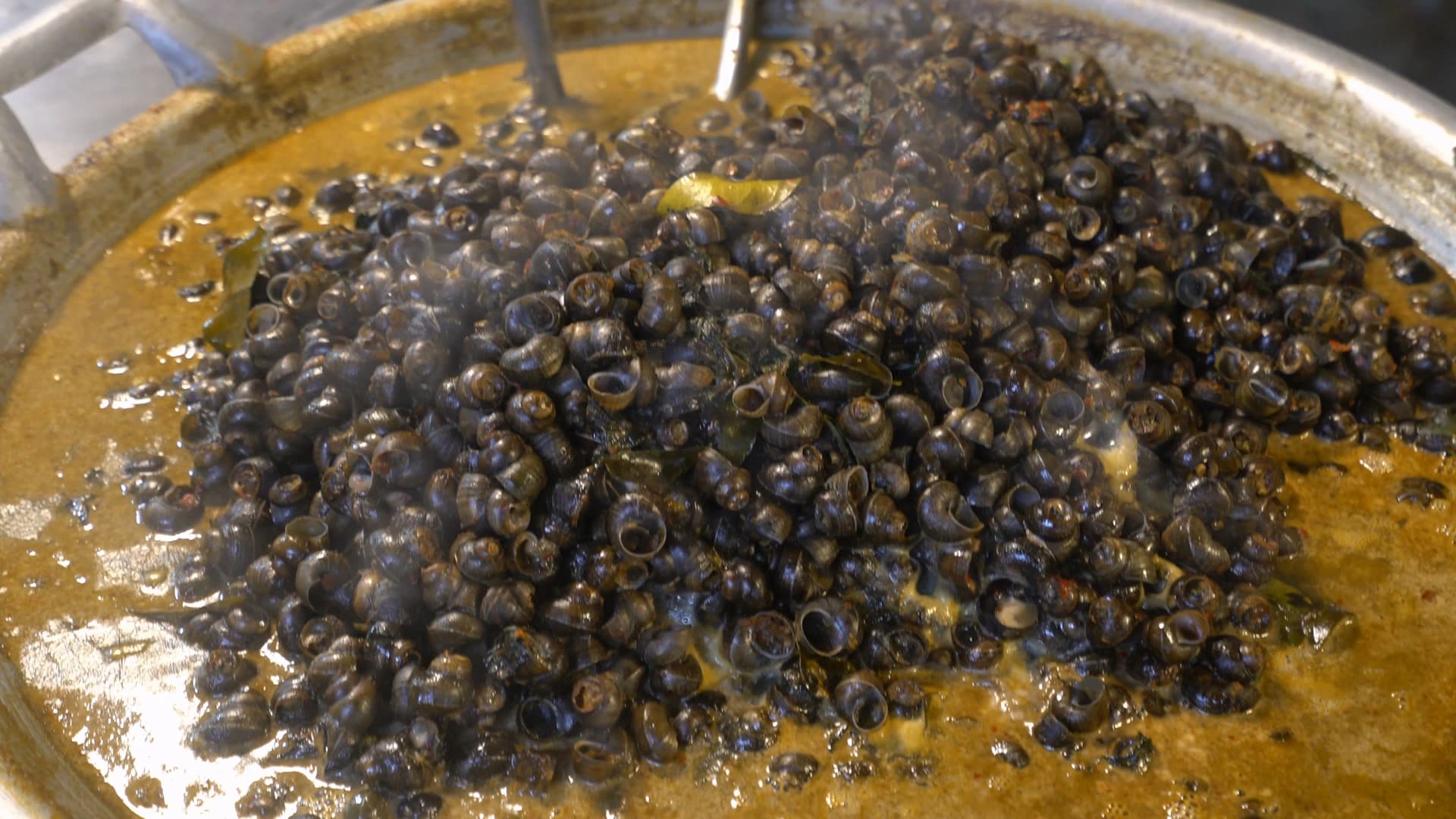
A big pot full of small snails simmering away in a dark, heavily spiced broth. They looked kind of like periwinkles or river snails — I honestly couldn't tell you exactly what species. Didn't try them either. When you're wandering around a Thai market, you constantly stumble on stuff you've never seen before. That's part of what makes the whole experience so entertaining.
Desserts and Snacks — The Browsing-for-Fun Section
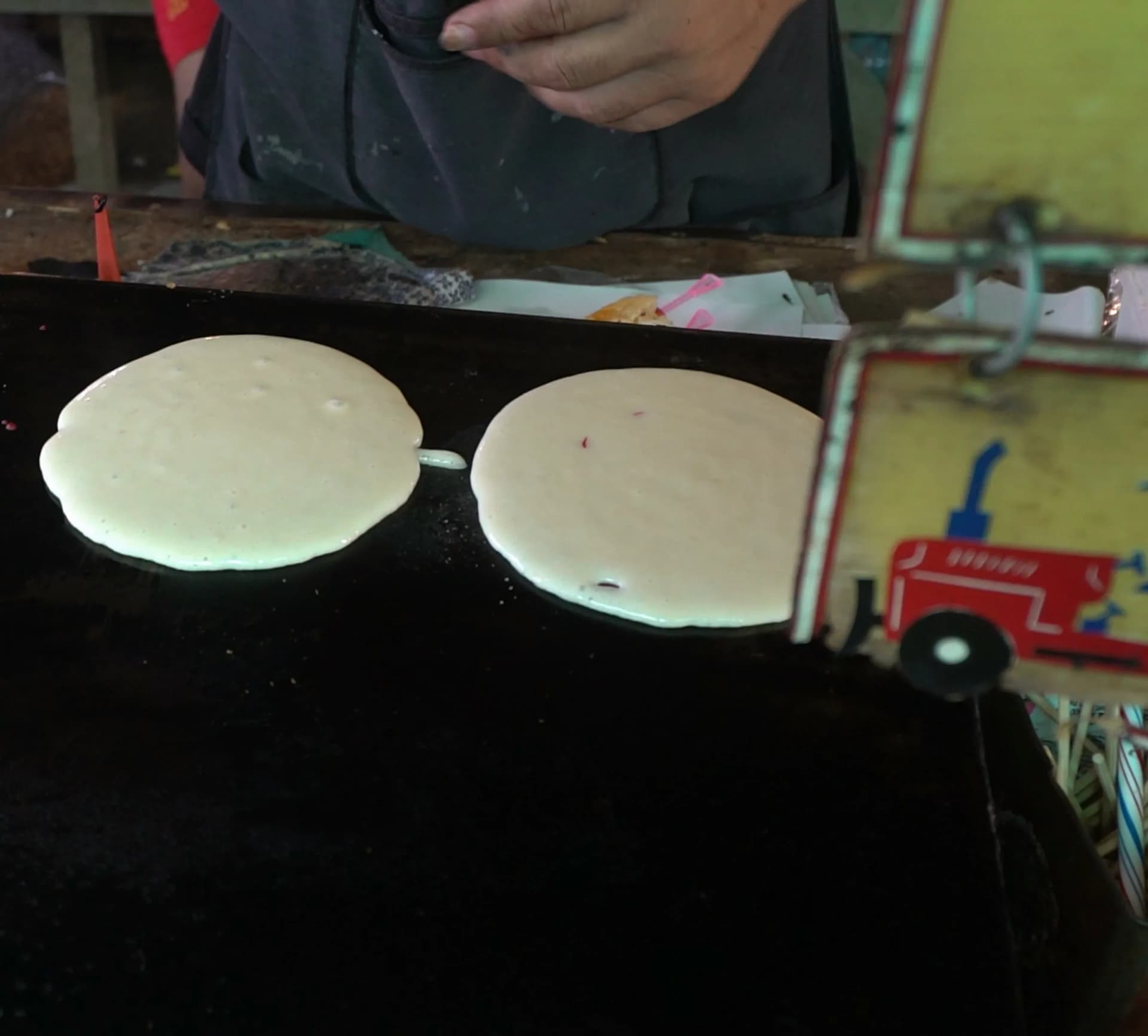
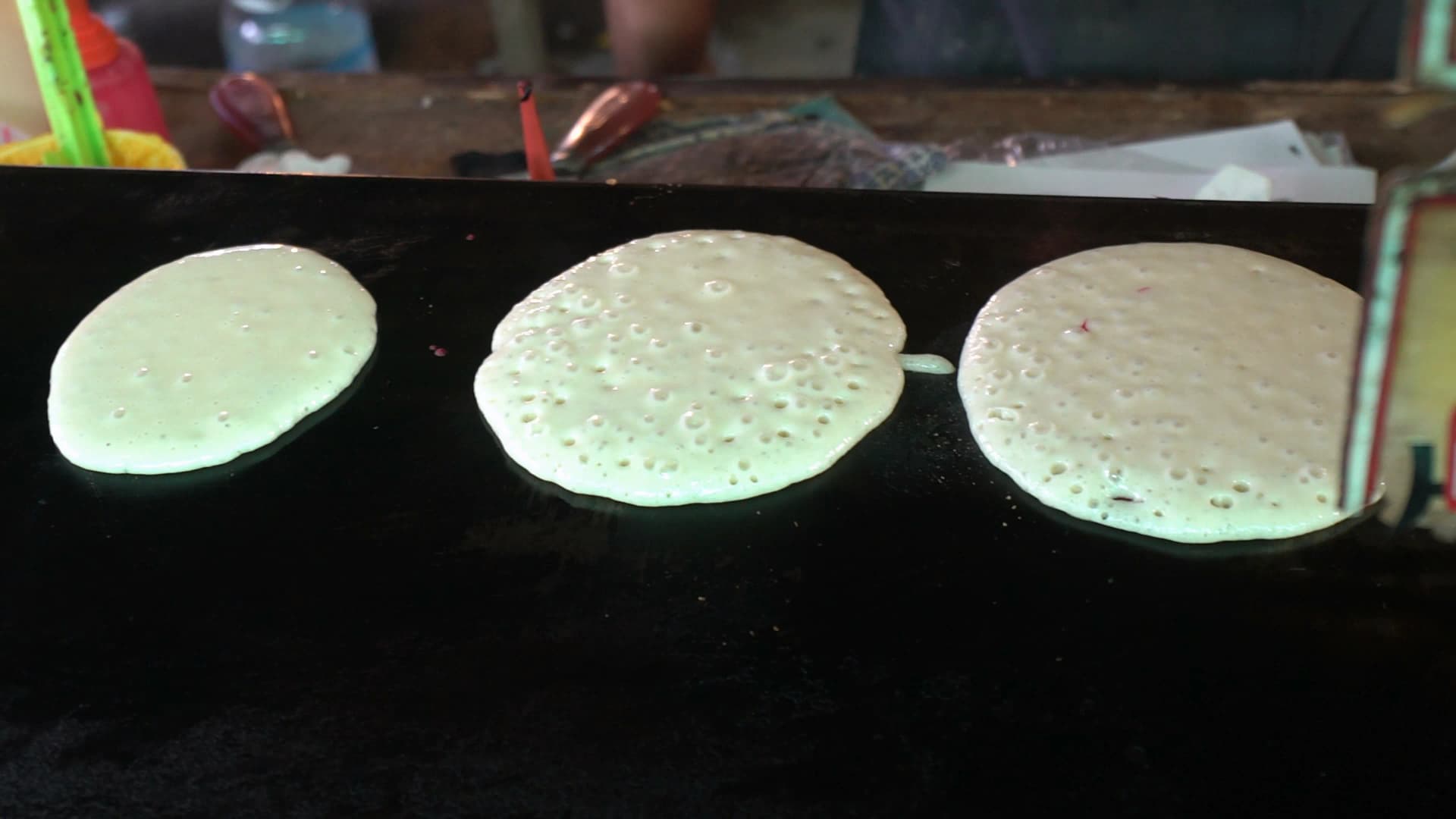
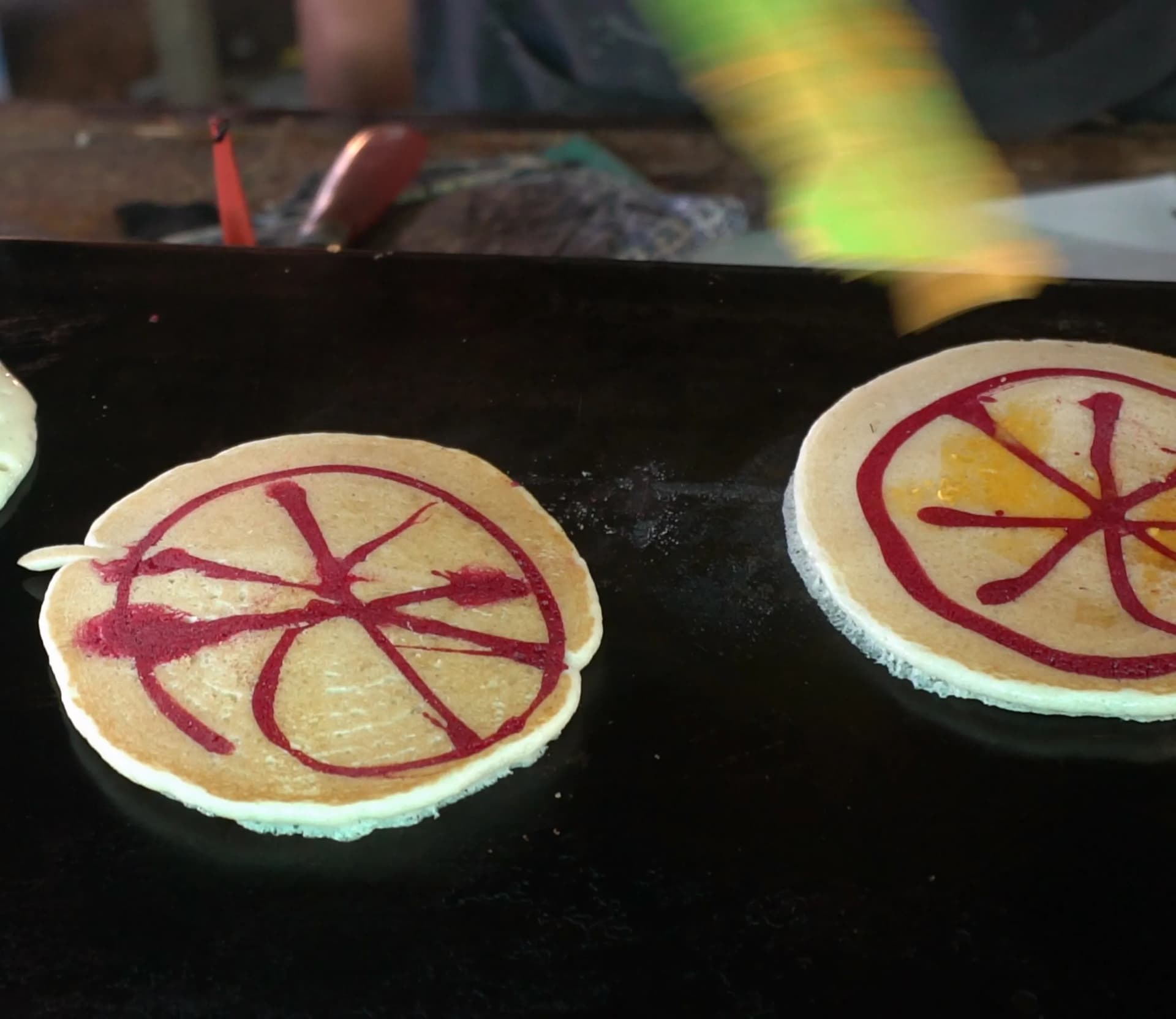
There was a pancake stall too. Batter poured into neat circles on a flat griddle, slowly turning from white to golden. After flipping, the vendor drew designs on top with red sauce — cross-section fruit patterns that made these look nothing like a regular pancake. My wife stood there admiring them forever. There was a bit of a line, so while she waited, I wandered off and ate a skewer nearby.
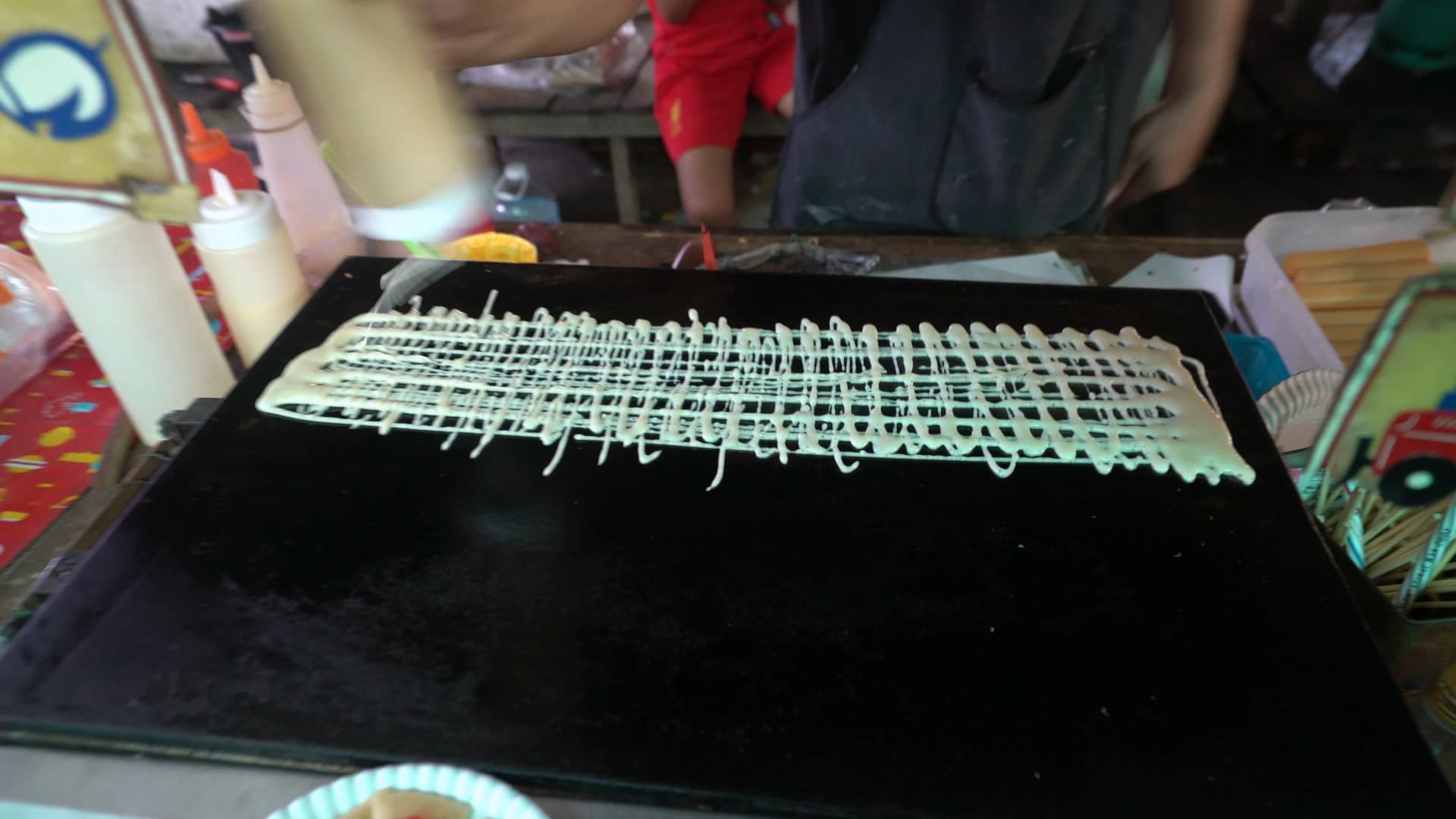
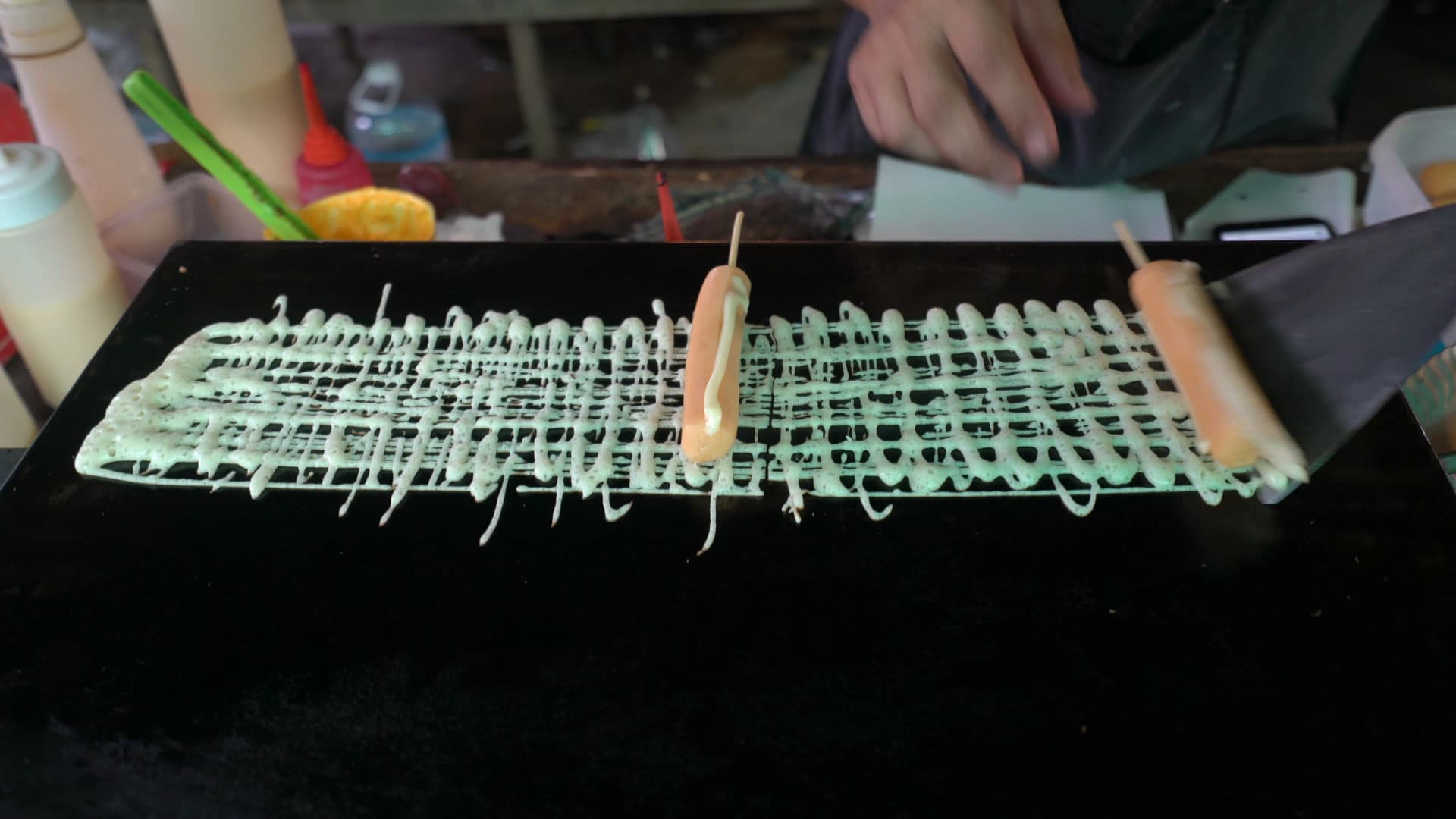
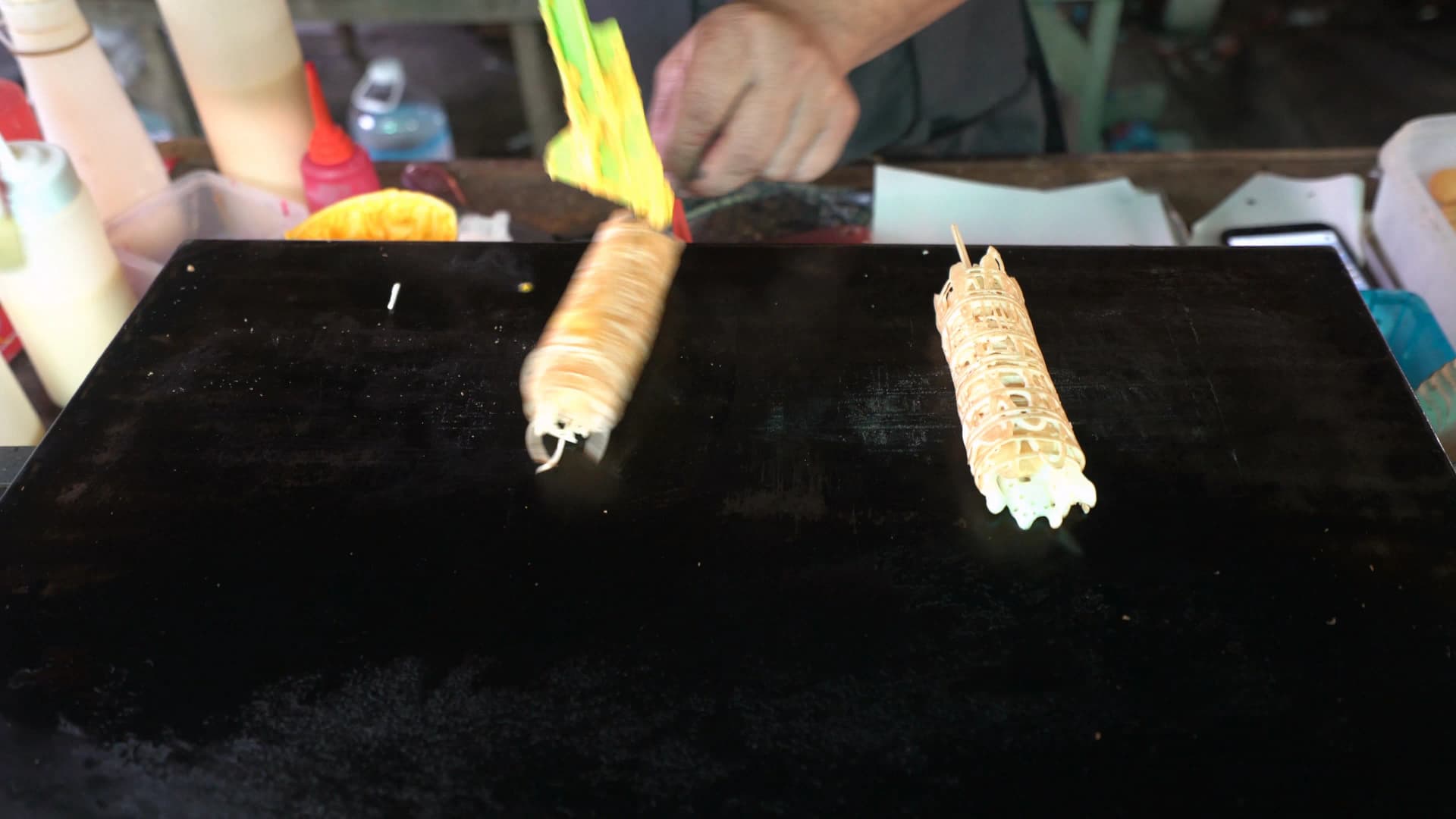
At the same stall, they were making something else that completely fascinated me. They squeezed liquid batter onto the griddle in a thin lattice pattern — like a lace net — then placed a sausage on top and rolled the whole thing up on a stick. The result was this delicate, crispy batter shell wrapped around a sausage like lace. The process was so mesmerizing I just stood there watching for way too long.
Character Pancakes — Apparently I Was the Only One Impressed
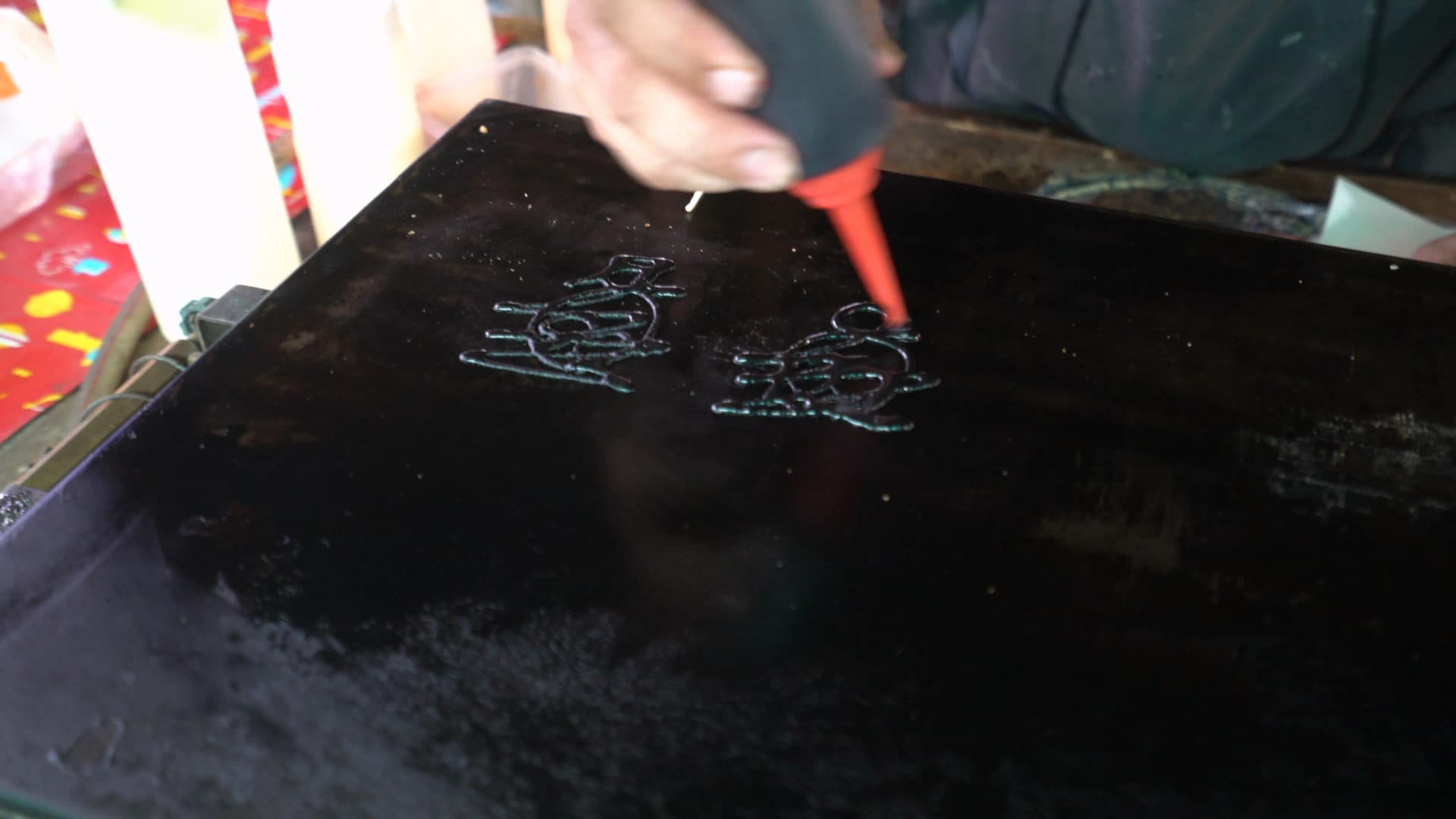
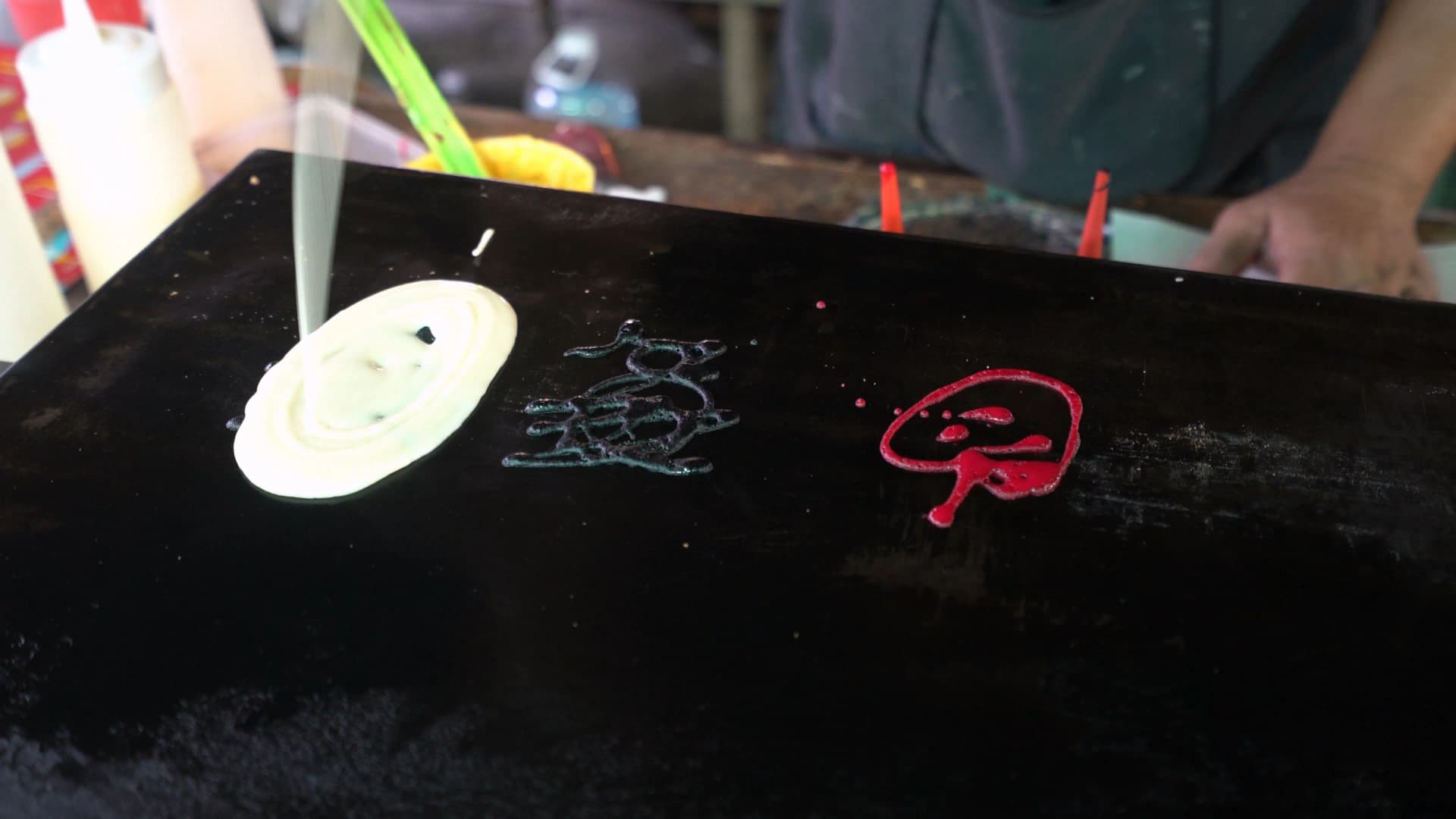
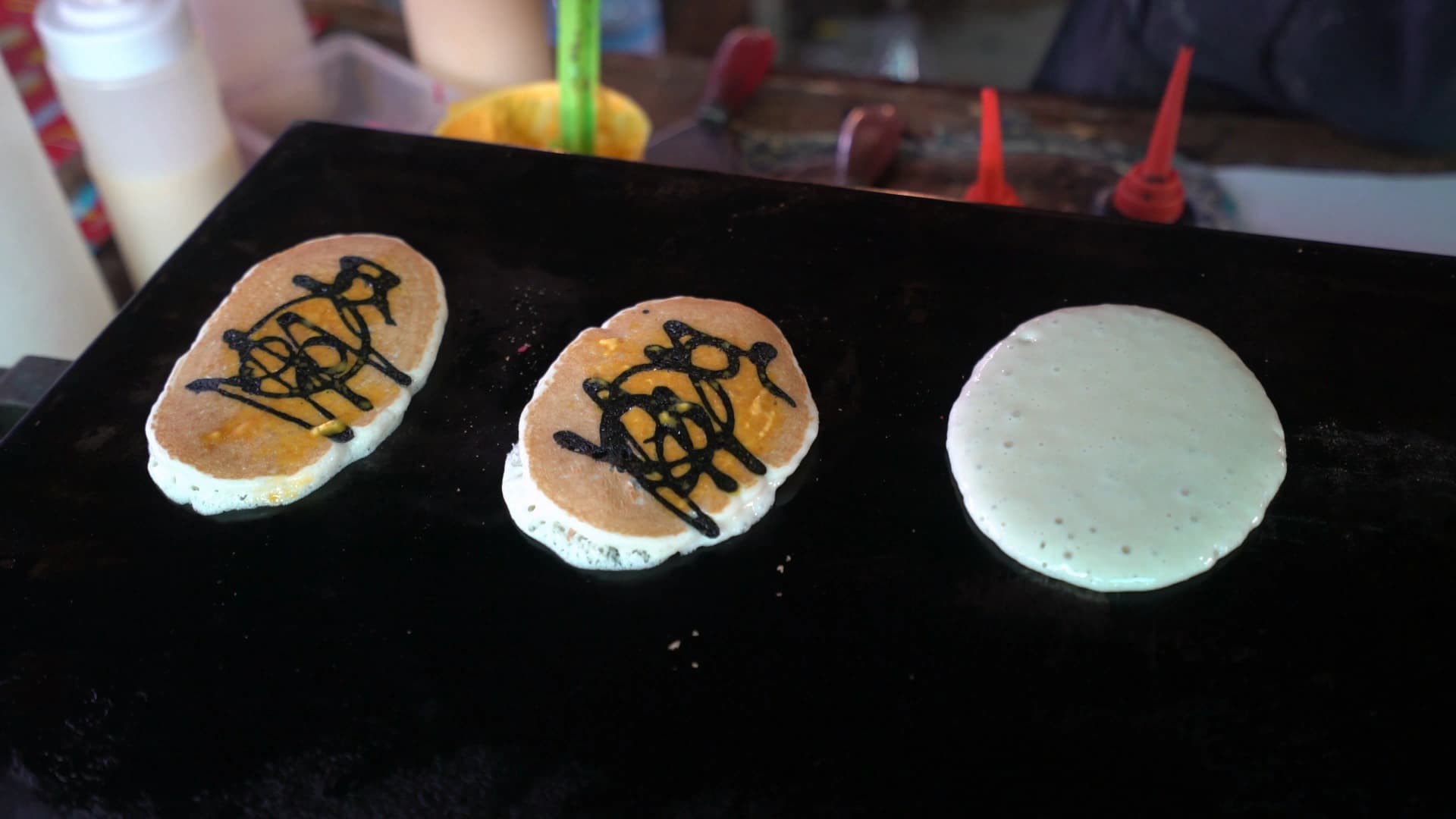
The highlight of this stall was the character pancakes. First, the vendor drew tiny character outlines on the griddle using colored batter. Then they poured white batter in a circle right over the drawing. As it cooked, the art fused into the pancake. Flip it over, and boom — a cartoon character pops out. I thought this was incredible — I've never seen anything like it in the US. But apparently in Thailand it's a totally common street snack, because every local walking by didn't even glance at it. I was the only one standing there with my jaw dropped.
Mala Skewers — The Undisputed King of Ban Khai Market
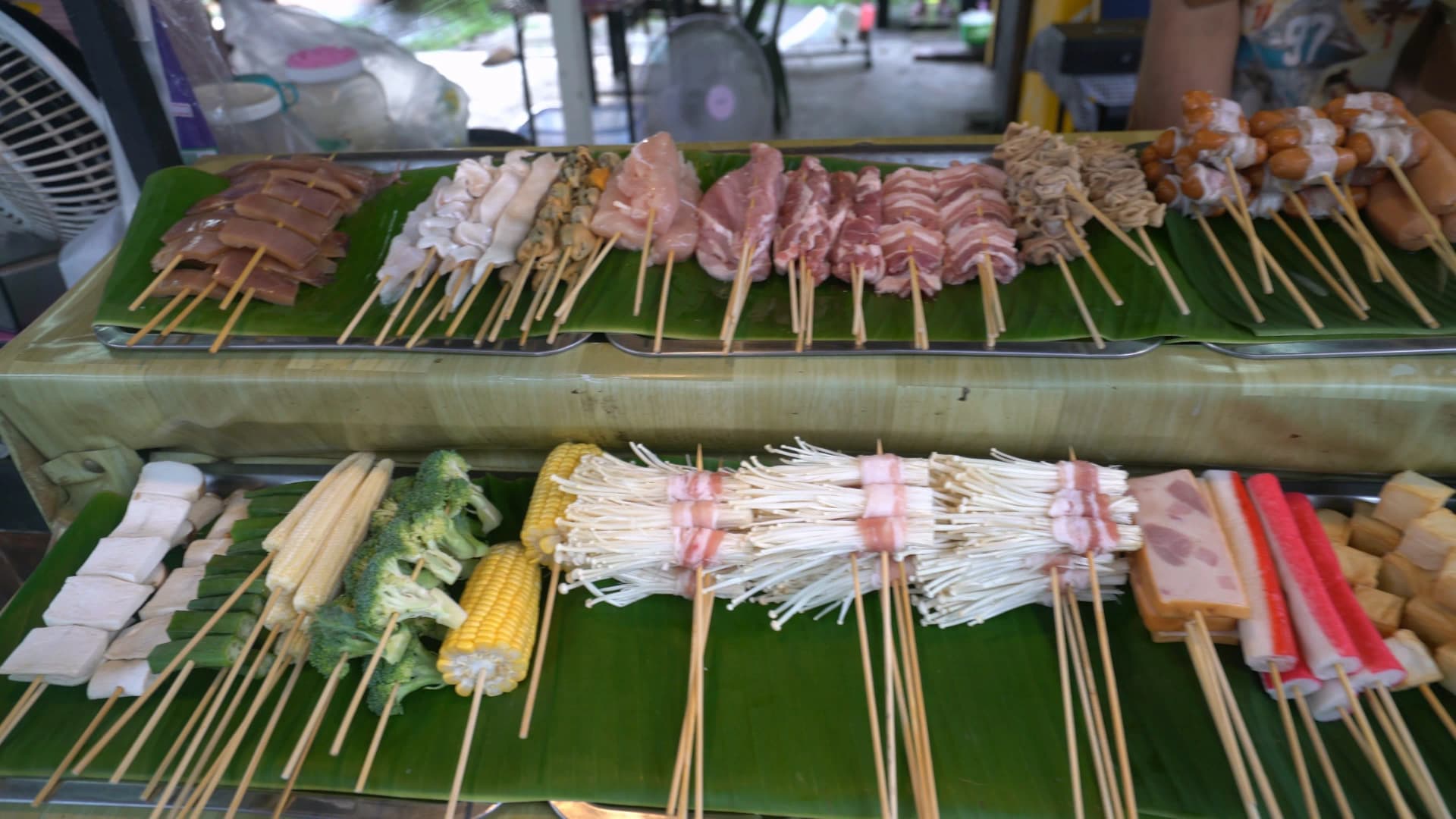
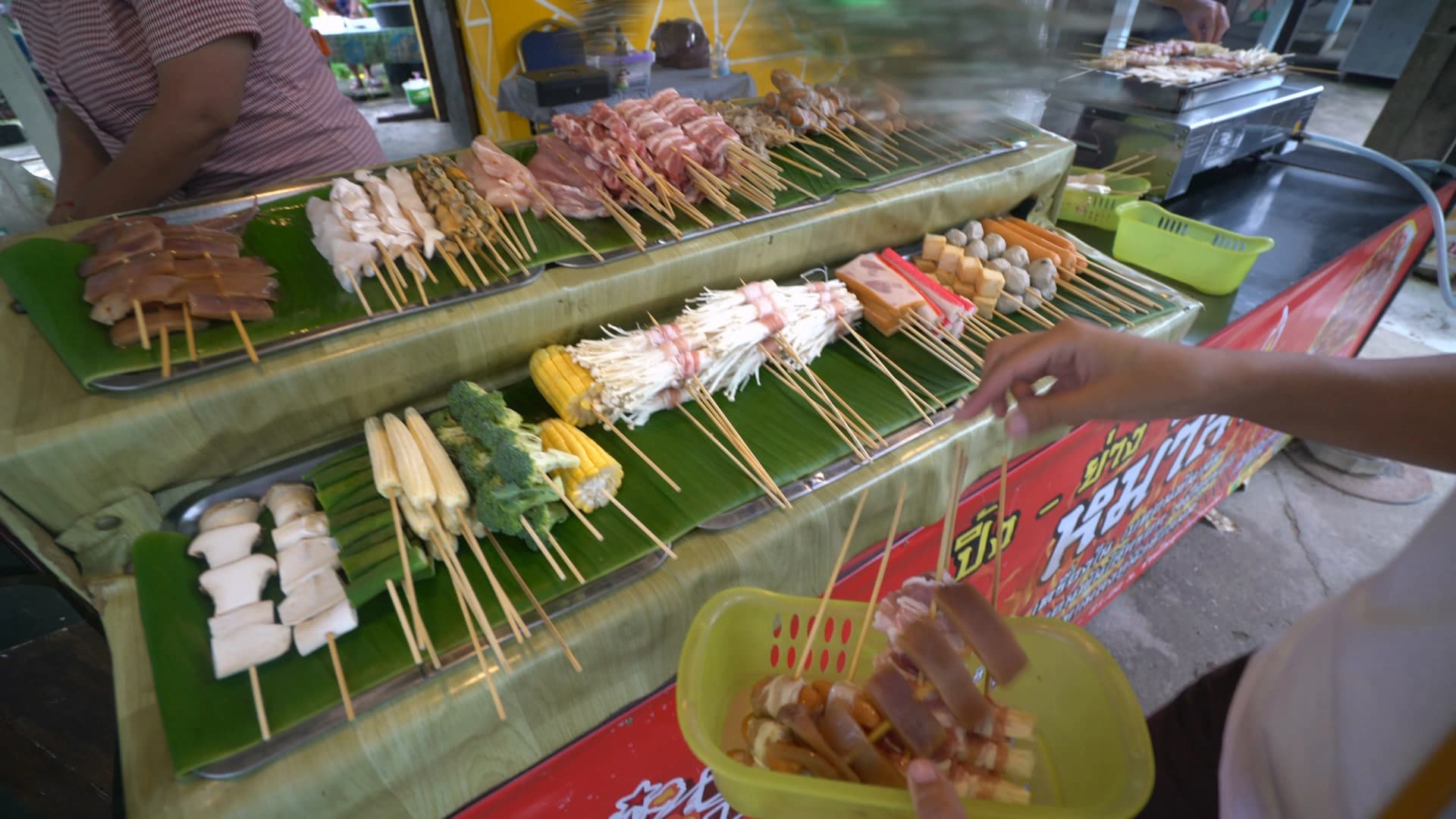
Skewers lined up by type on banana leaves, stretching as far as you could see. Top row: sausage, squid, pork, bacon wraps — all the meats. Bottom row: tofu, broccoli, corn, enoki-bacon rolls, imitation crab. You grab a basket, pick whatever you want, and they grill everything on the spot. Each skewer was 10 baht (about $0.30), so there's zero pressure on your wallet. My wife and I would grab a basket together — "add this one," "oh, this one too" — and honestly that was more fun than actual grocery shopping. Every time, she'd fill her half with veggies while I loaded up on meat. The basket always ended up split perfectly down the middle.
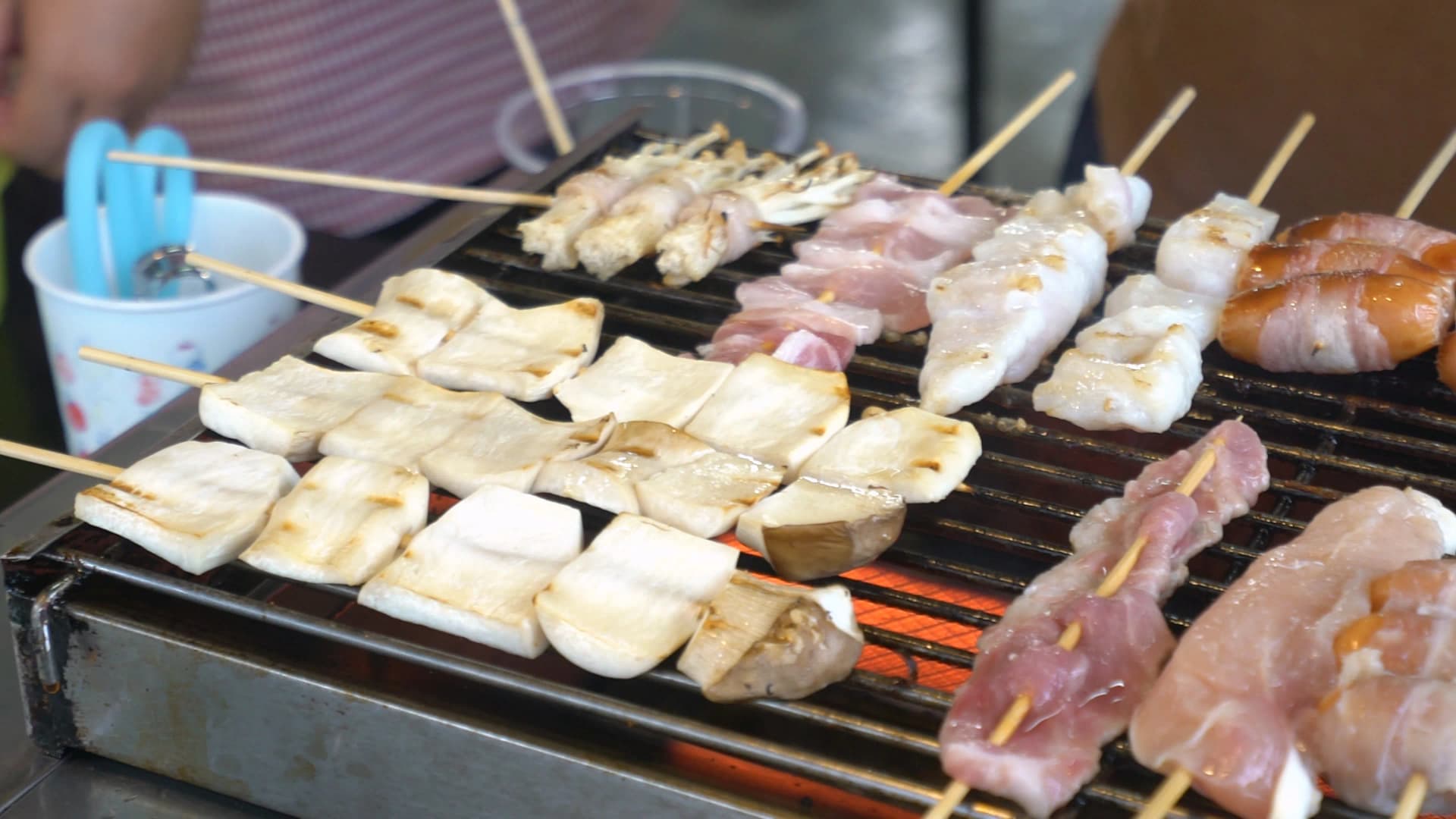
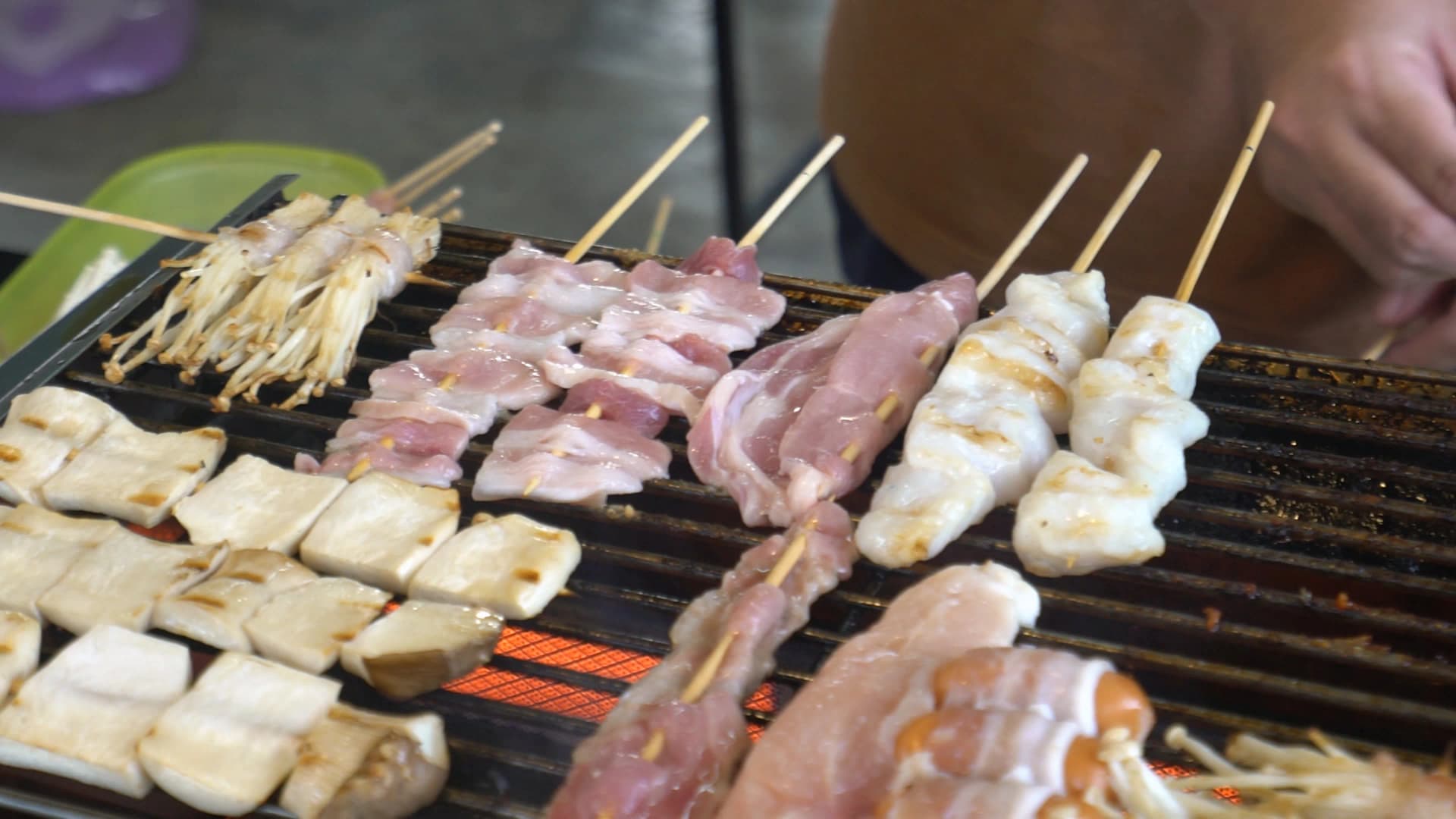
Our selected skewers hit the charcoal grill. Mushroom skewers, chicken skewers — still raw at this point, sitting over the flames. The color was light and the surface still moist, waiting for the heat to do its thing.
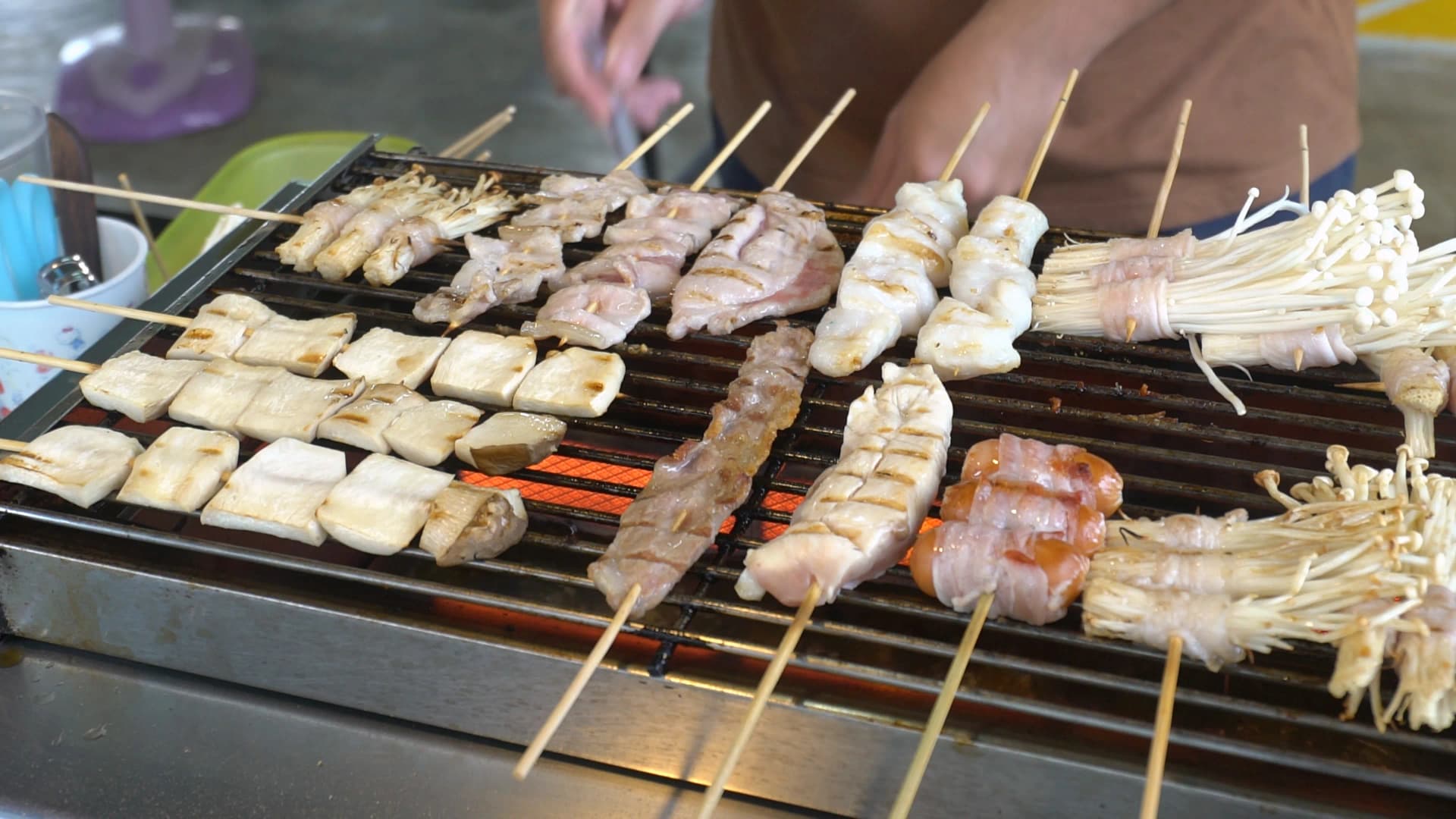
A few minutes later, about a third of each skewer was cooked through. The edges were starting to change color. Smoke rising, oil dripping, that beautiful sizzle filling the air.
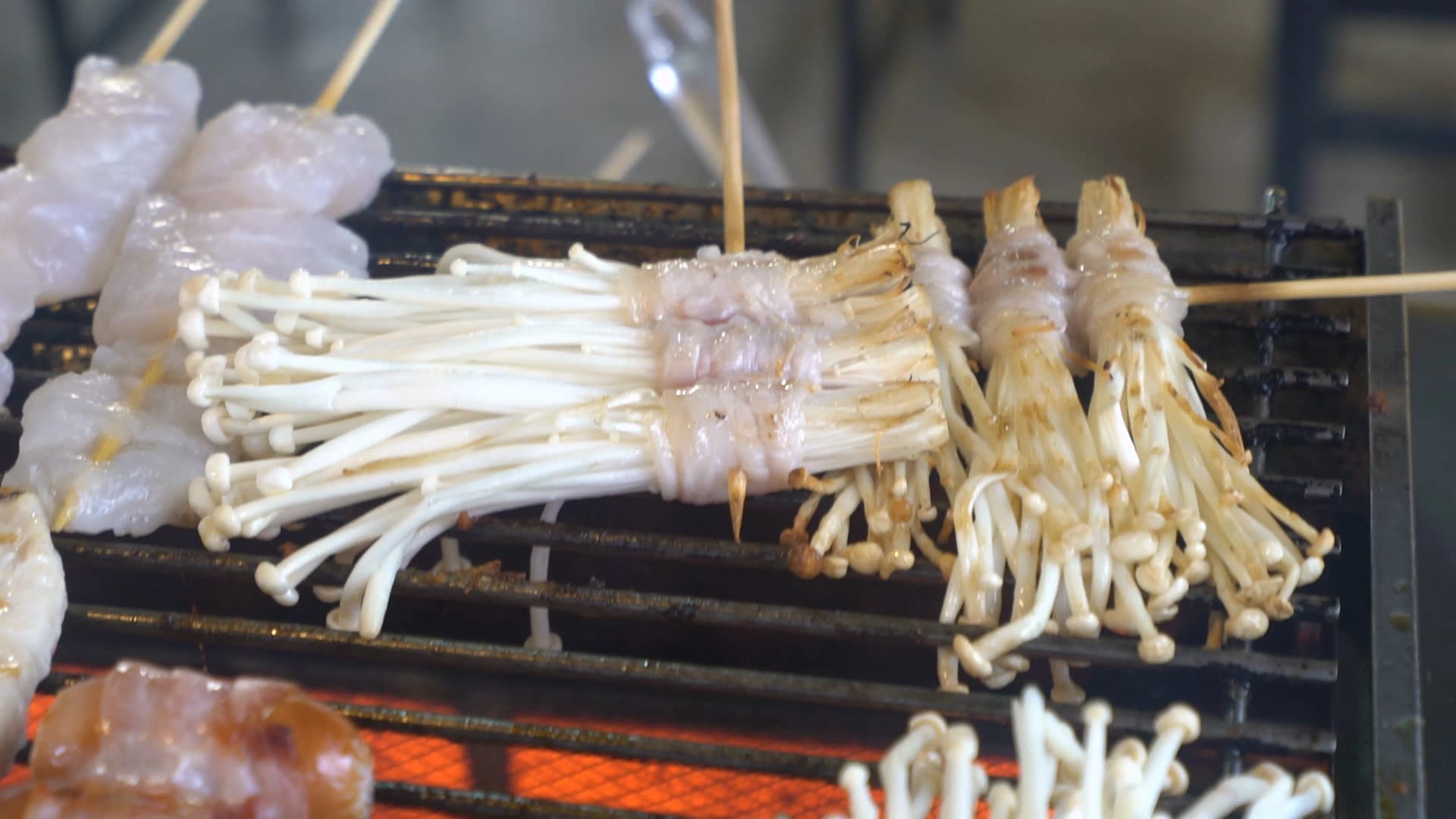
The bacon-wrapped enoki mushrooms were really getting going now. The bacon was shrinking and tightening around the mushrooms, fat rendering out as the outside turned crispy. You could actually watch the transformation happening in real time.
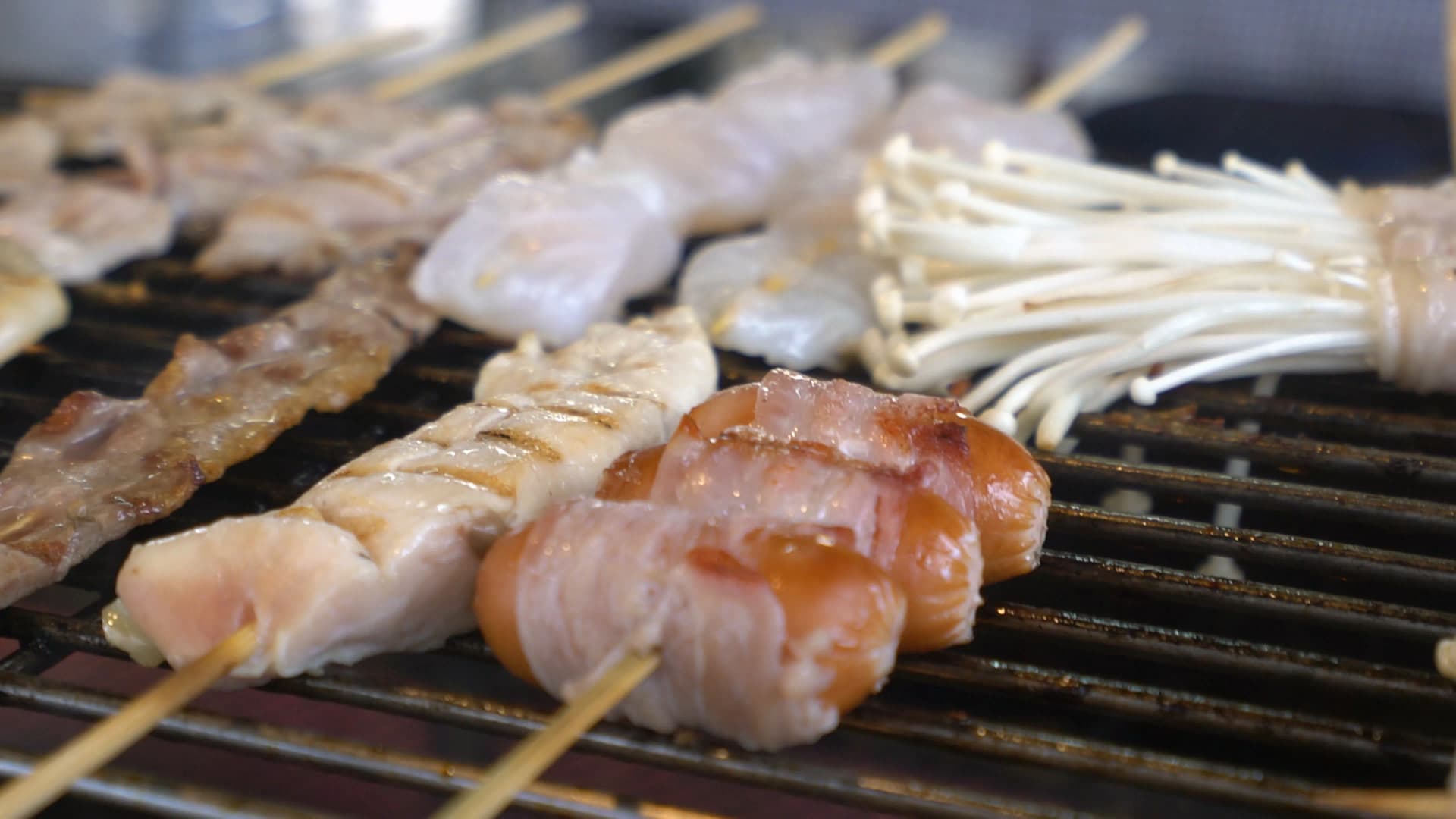
Up front, sausage-bacon skewers sat on a tray in rows, still uncooked and waiting. A customer picks, and they go straight on the grill.
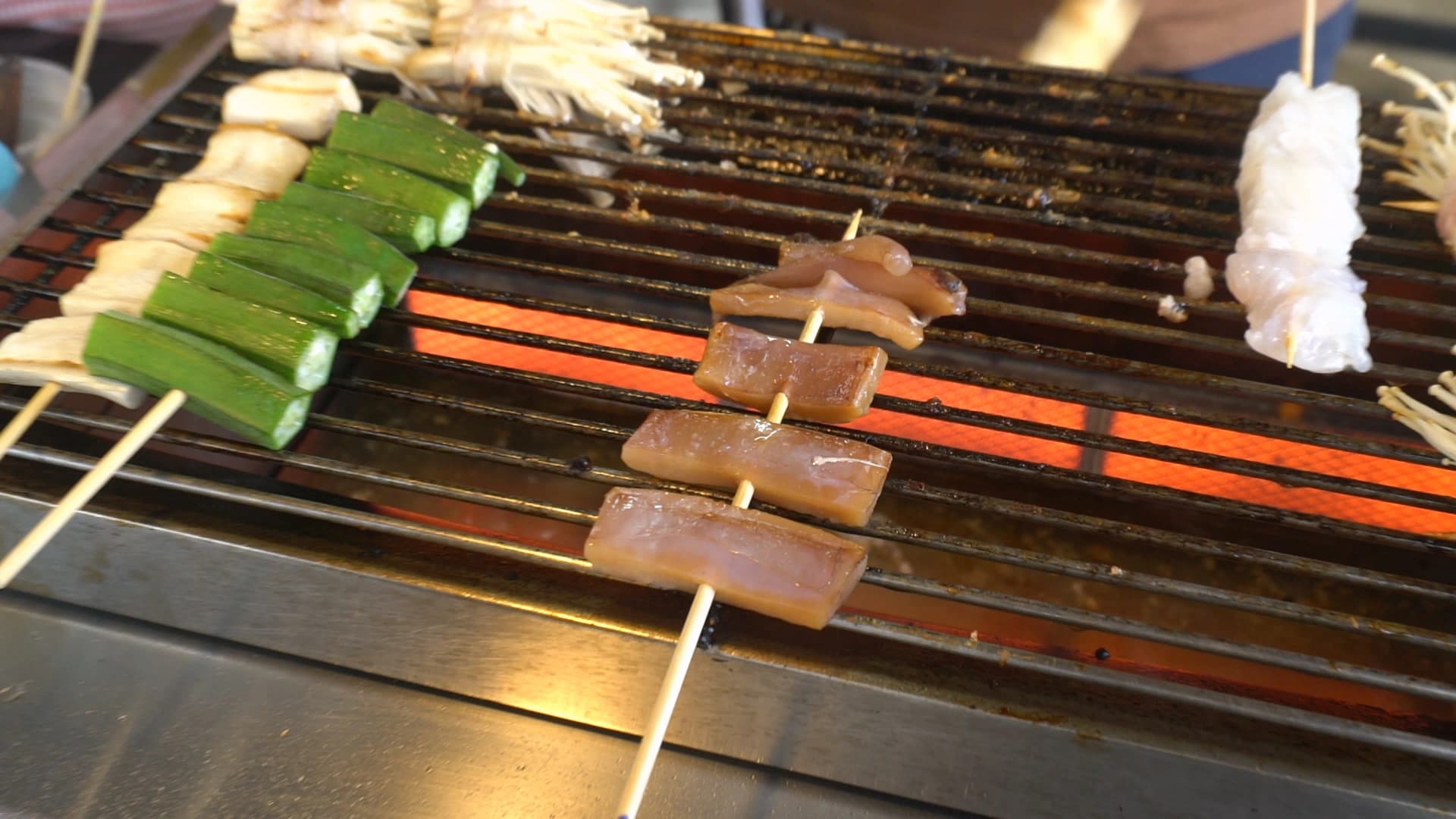
Pork skin skewers were there too. In the US, pork rinds are a popular snack, but they're usually fried. Seeing pork skin threaded on sticks and grilled over charcoal was a totally different approach — and honestly pretty intriguing.
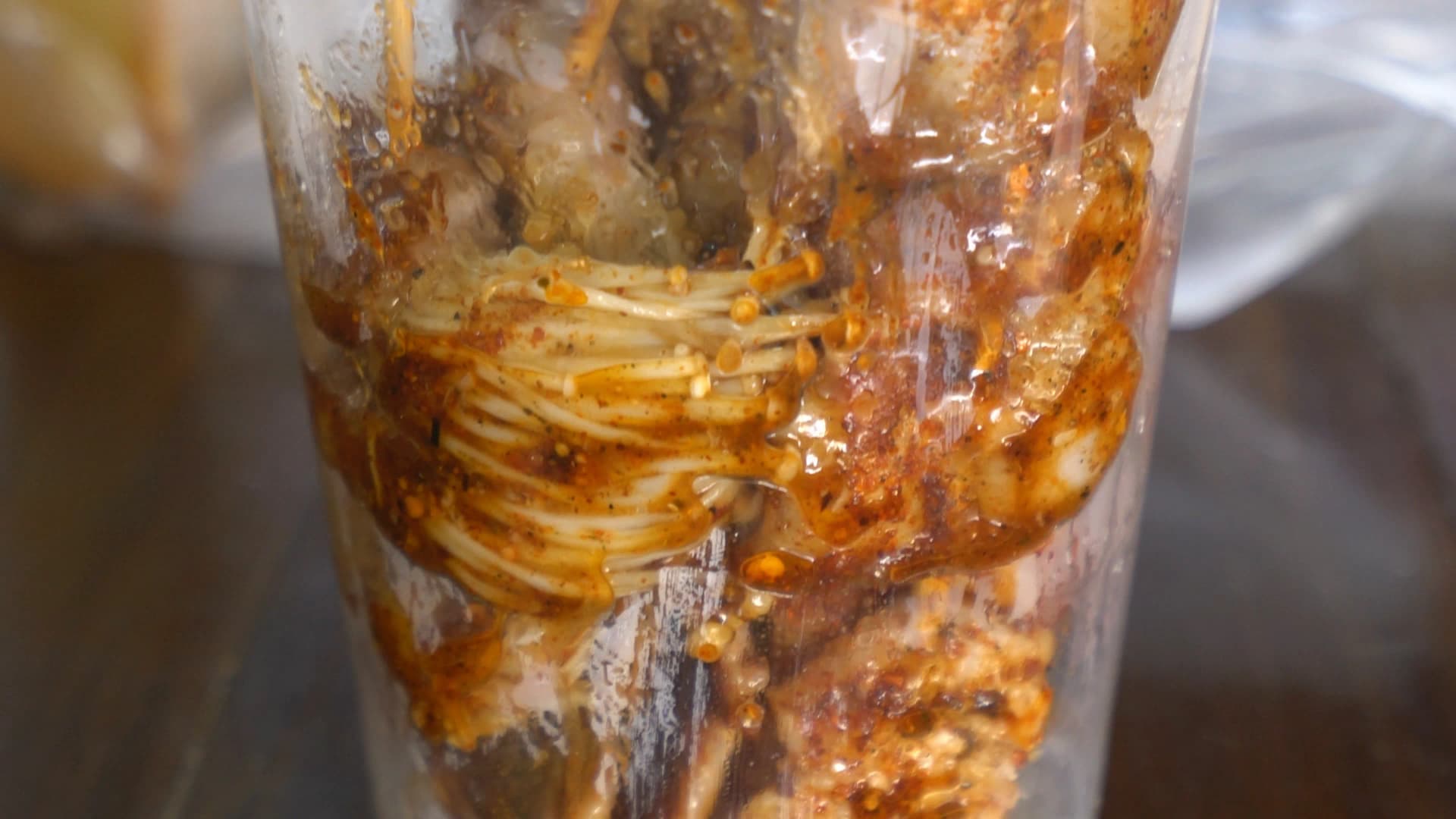
And here's the final product. What's that glossy red coating? That's mala sauce — the numbing-spicy Chinese seasoning that's taken over street food across Asia. Once the skewers are fully grilled, they slather on a generous coat of mala sauce. If you've had mala hot pot or mala xiang guo at a Chinese restaurant, you know the flavor profile. That tingly, numbing heat mixed with charcoal smoke — you could smell it from three stalls away, and your feet just stopped on their own.
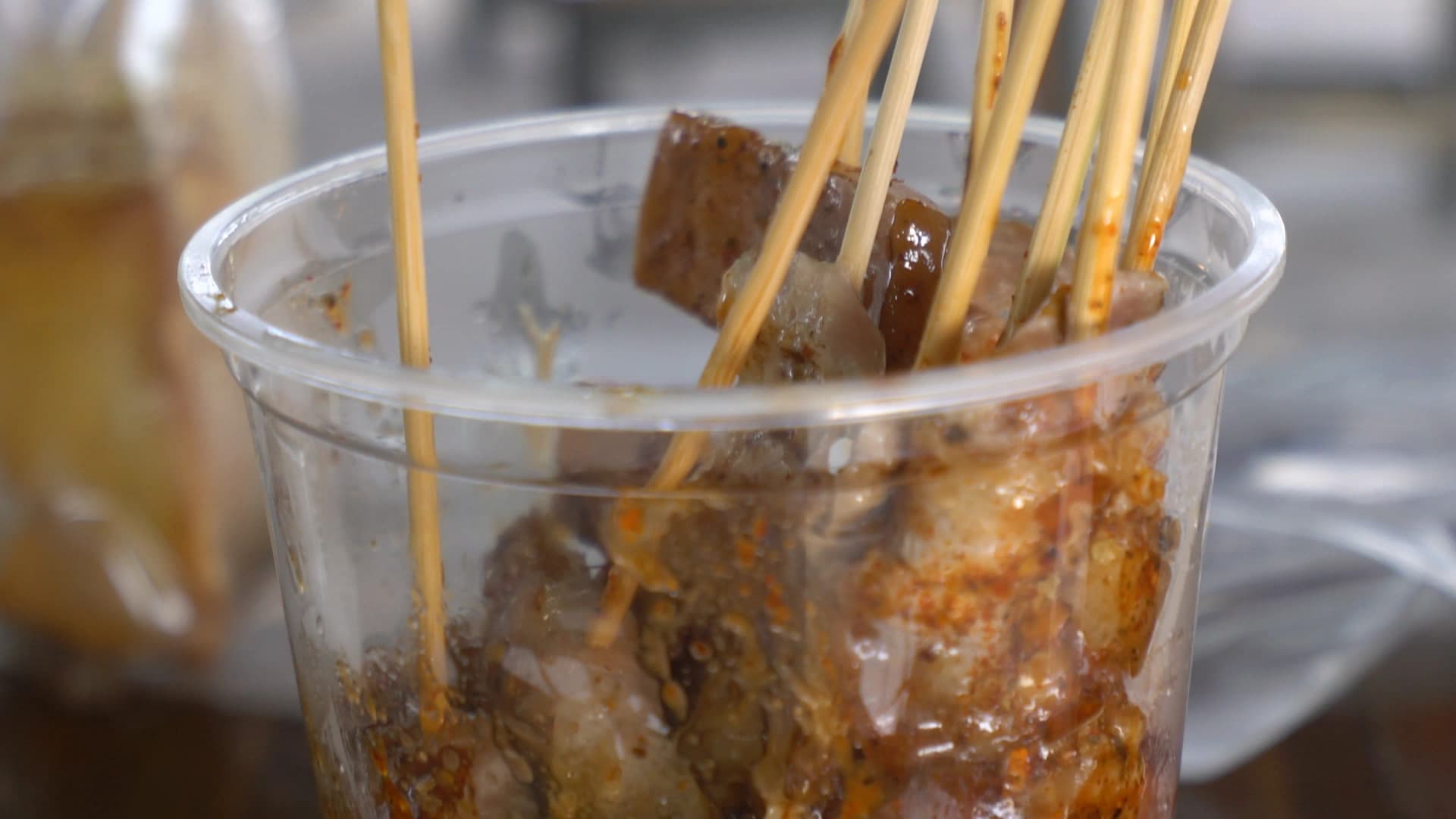
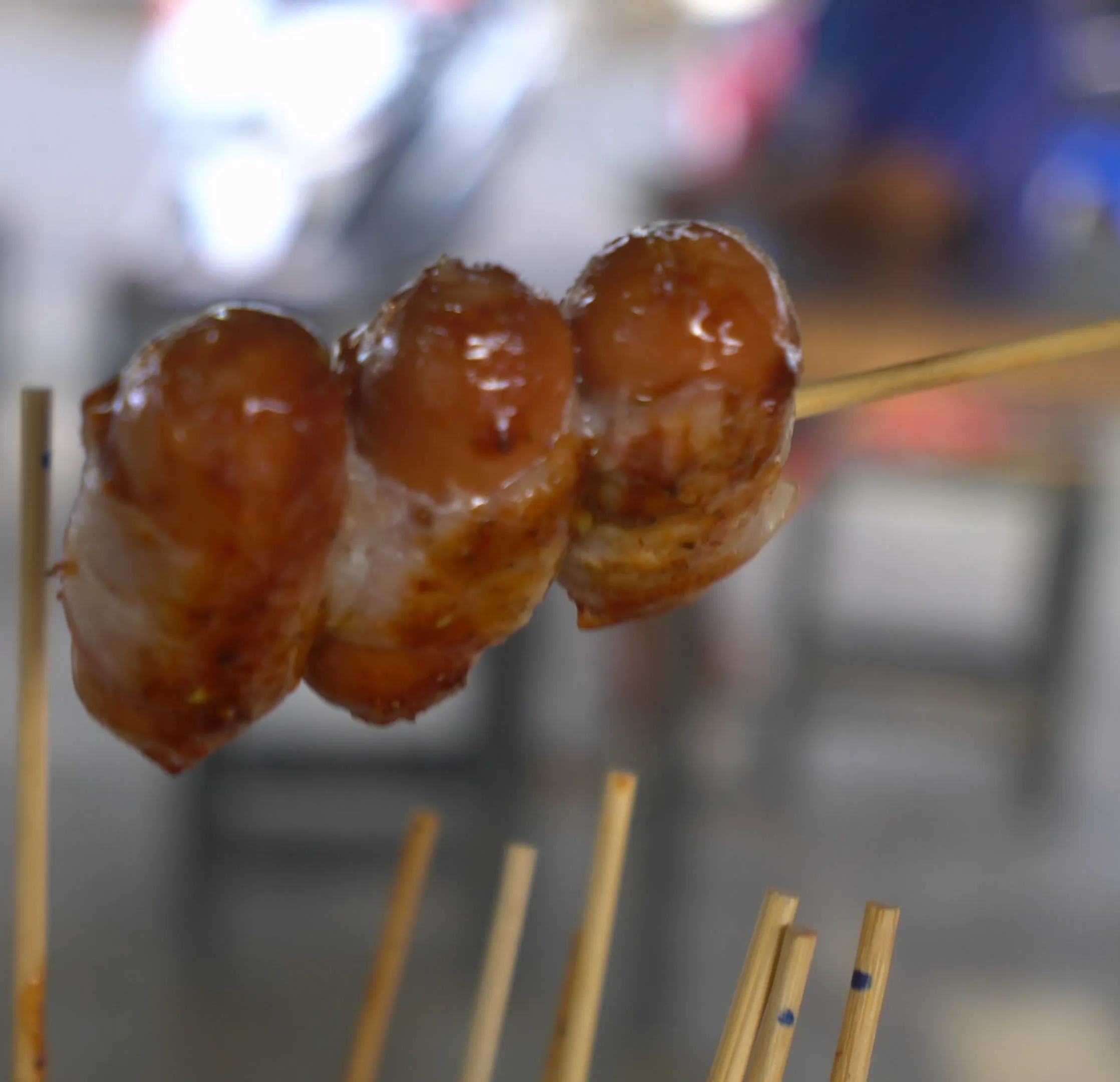
Packaged up. They stuff the skewers into a plastic bag and tie it shut so the sauce doesn't leak. Tons of people were walking around the market with one of these bags in hand. One downside though — the mala sauce does drip inside the bag. Prepare to get your hands messy. Wet wipes are absolutely essential.
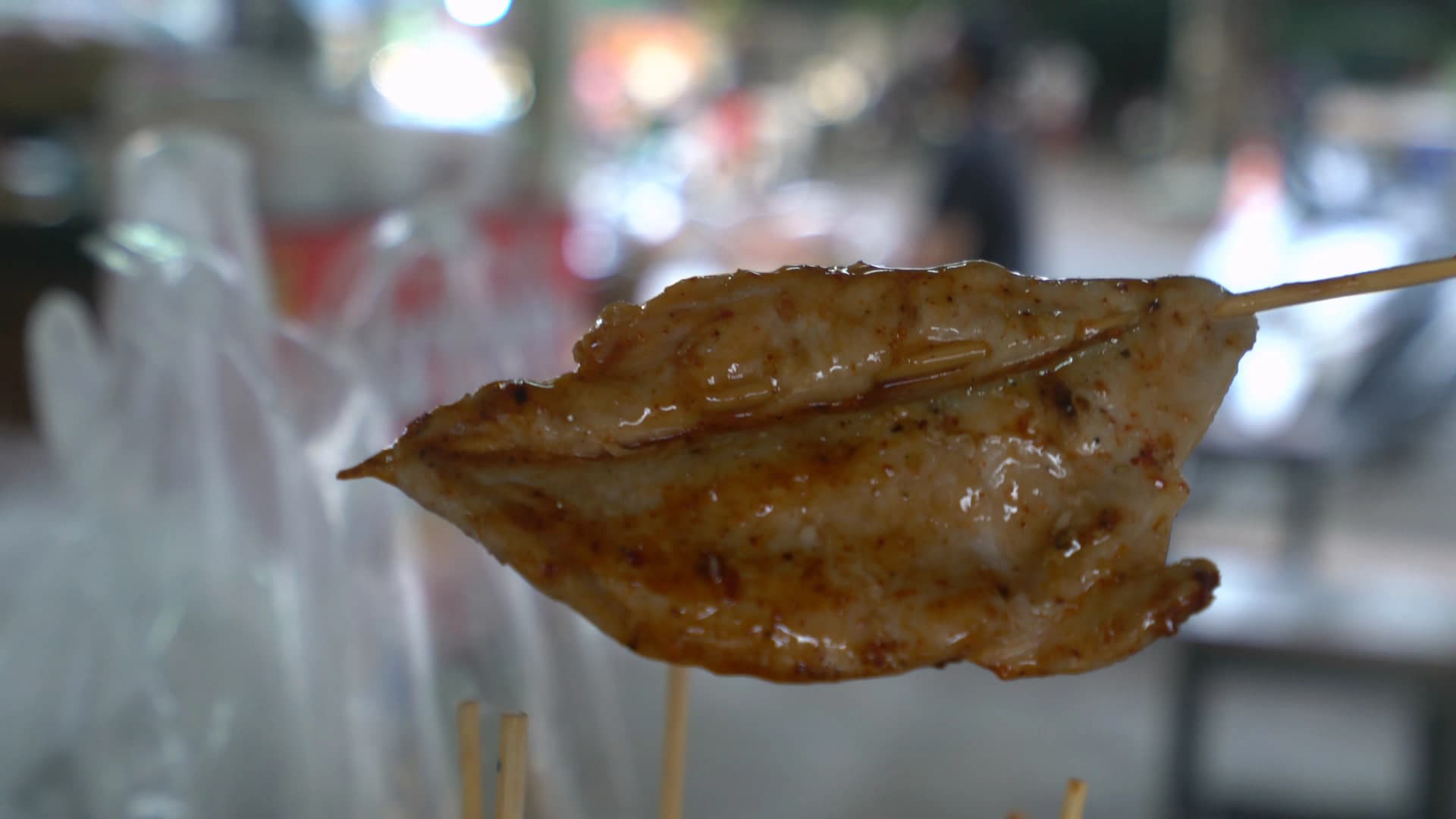
I grabbed one and took a close-up shot. Three round meatballs on a stick, coated in glistening sauce with this beautiful sheen. The second one was a flat piece of meat on a stick, with red mala seasoning visible in patches. When I actually bit in, the charcoal smokiness was the first thing I tasted, immediately followed by that signature mala tingle spreading across my tongue. I almost took a bite before getting the photo — barely held myself back. Meanwhile, my wife had already finished hers and was standing next to me eyeing mine.
Tips for Visiting Ban Khai Market
Most stalls only take cash, so bring small bills and coins. Some items don't have price tags, but just ask and vendors will tell you with a smile. Tourist markets are notorious for inflated prices and haggling games, but at a local town market like this one, that basically never happened to us — not once in three years.
Over those three years, I visited this market dozens and dozens of times. I'll be real — the first few visits I just looked around and left empty-handed. But once I started actually eating, my weekly haul kept growing and growing. By the time we moved back to the States, I told my wife the thing I'd miss most was this market. Bangkok and Phuket night markets are fun in their own way, but if you want to see what a real Thai market is actually like, find a small-town local one like this. No tourists, just you squeezed in among locals doing their daily shopping. That feeling — you can't get it anywhere else.
This post was originally published on https://hi-jsb.blog.