Paris Baguette Full Menu Guide — Korean Bakery Staples & Cakes
Table of Contents
15 items
What Is Paris Baguette? A Korean Bakery Chain You'll Walk Into Without Trying
Paris Baguette is Korea's most ubiquitous bakery chain — not a French import, but a fully Korean brand founded in 1988 by SPC Group. My wife is a foreigner, and I'm Korean, living in Daejeon (a major city about 90 minutes south of Seoul). We walked into our neighborhood Paris Baguette together, cameras in hand, and photographed everything: breads, cakes, sandwiches, salads, frozen meals, ice cream — the whole store. This is what they're actually selling as of April 2026.
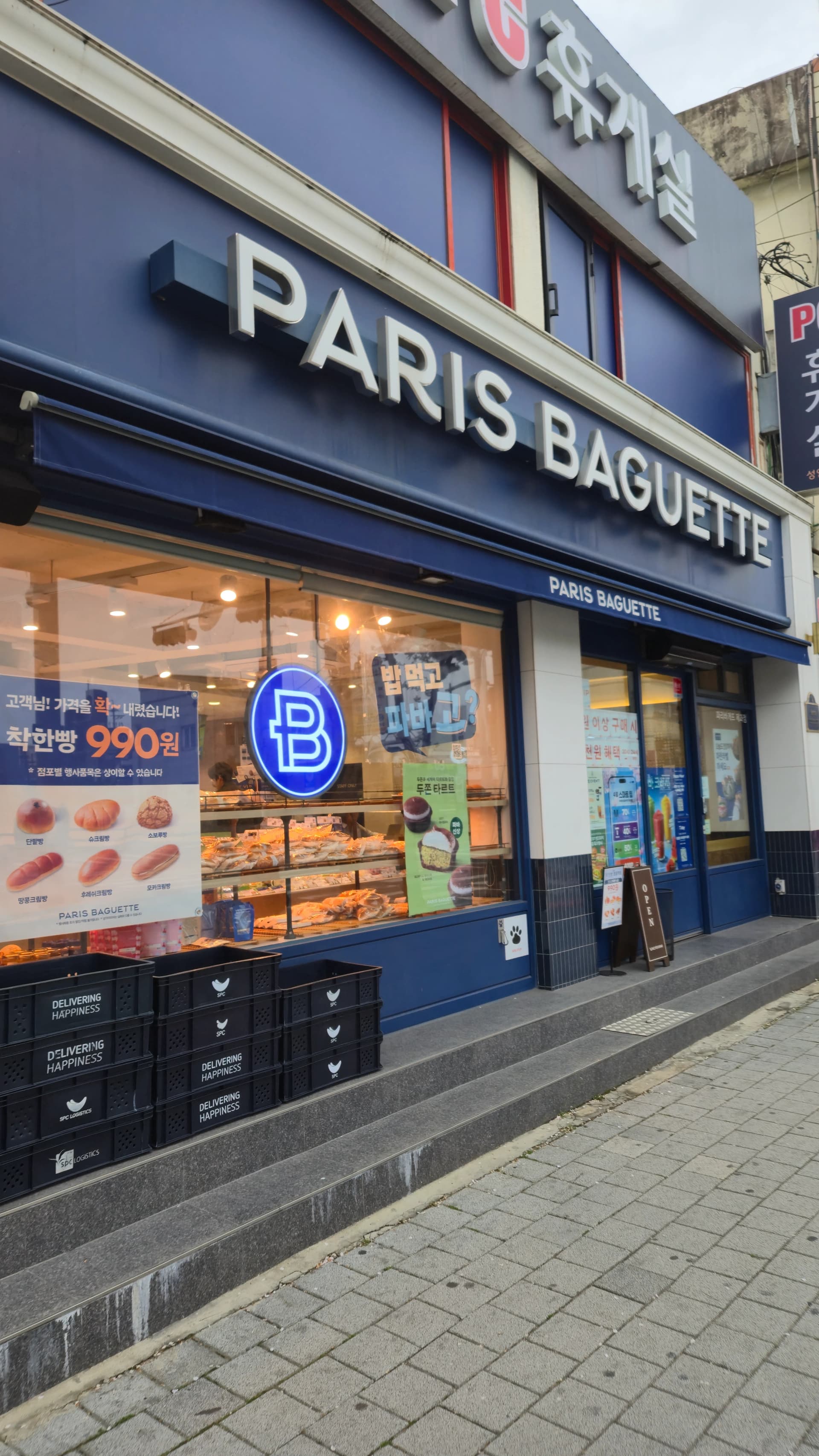
There's one literally three minutes from our front door. I've been going for about three years and I honestly can't tell you a single time I've planned to go. It just happens — I'm walking past, and somehow I'm inside. My wife laughs every time. "Again?" she says. But once you live in Korea, you get it. It's not about willpower.
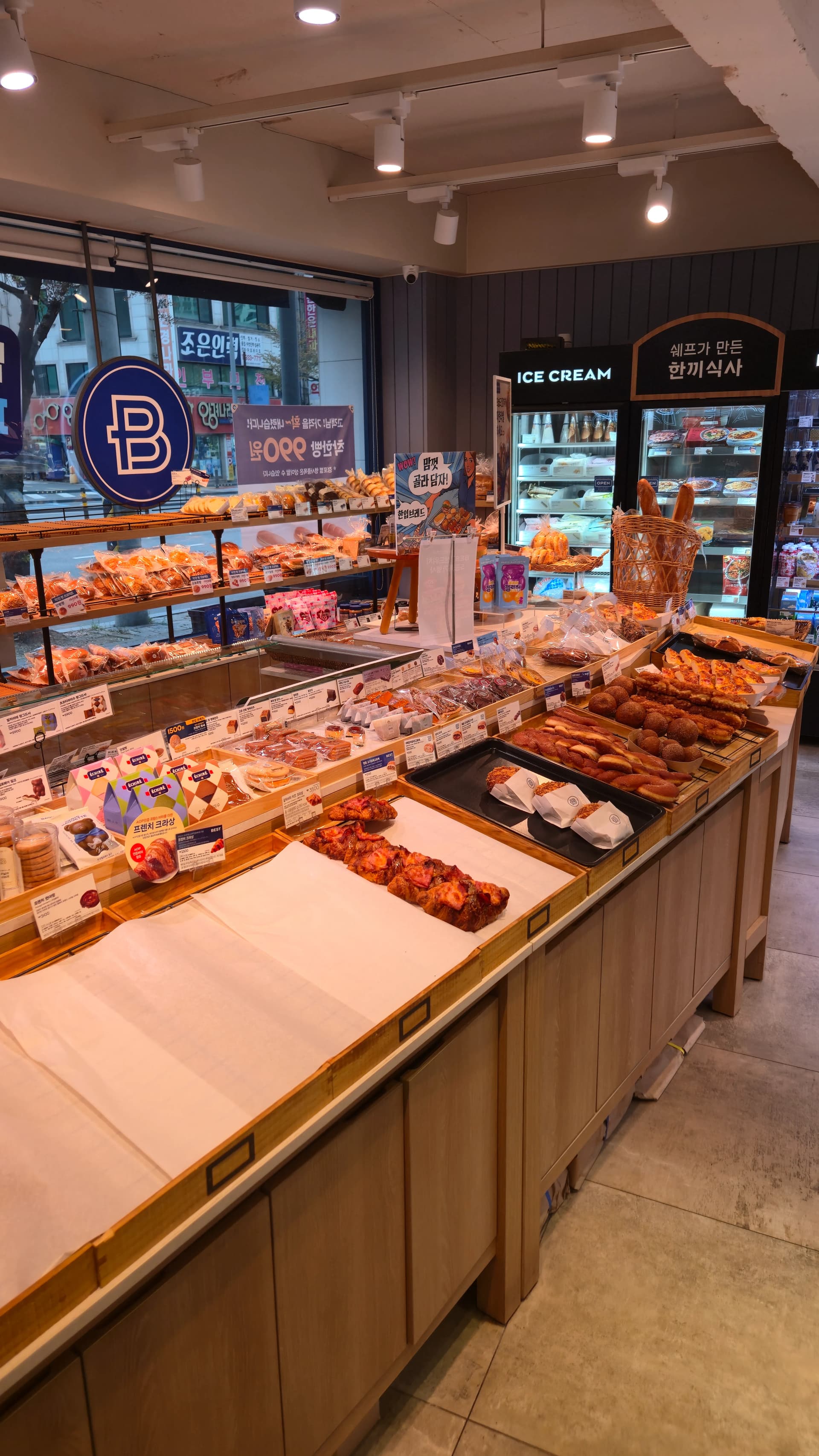
This is what you walk into. Wooden display shelves with breads sorted by category, and further back, a separate ice cream section and a ready-meal corner. It feels warmer than a convenience store but more accessible than a proper artisan bakery — that's kind of the sweet spot Paris Baguette occupies.
Quick background before we get into the food: Paris Baguette is not from Paris. Despite the name, it was started in Korea and has grown into something massive. There are over 3,400 locations in Korea alone, plus around 710 more across 15 countries — including the US, Canada, France, the UK, China, Singapore, Vietnam, and others. In 2026, it ranked 29th on the Franchise 500 list, and first in the bakery-café category. The fact that a Korean chain has a shop in the actual city of Paris — where the baguette was invented — is a little ironic, but at this point, it's just impressive.
The Iconic Korean Bakery Breads: Kkwabaegi Twist Donuts and Chapssal Donuts
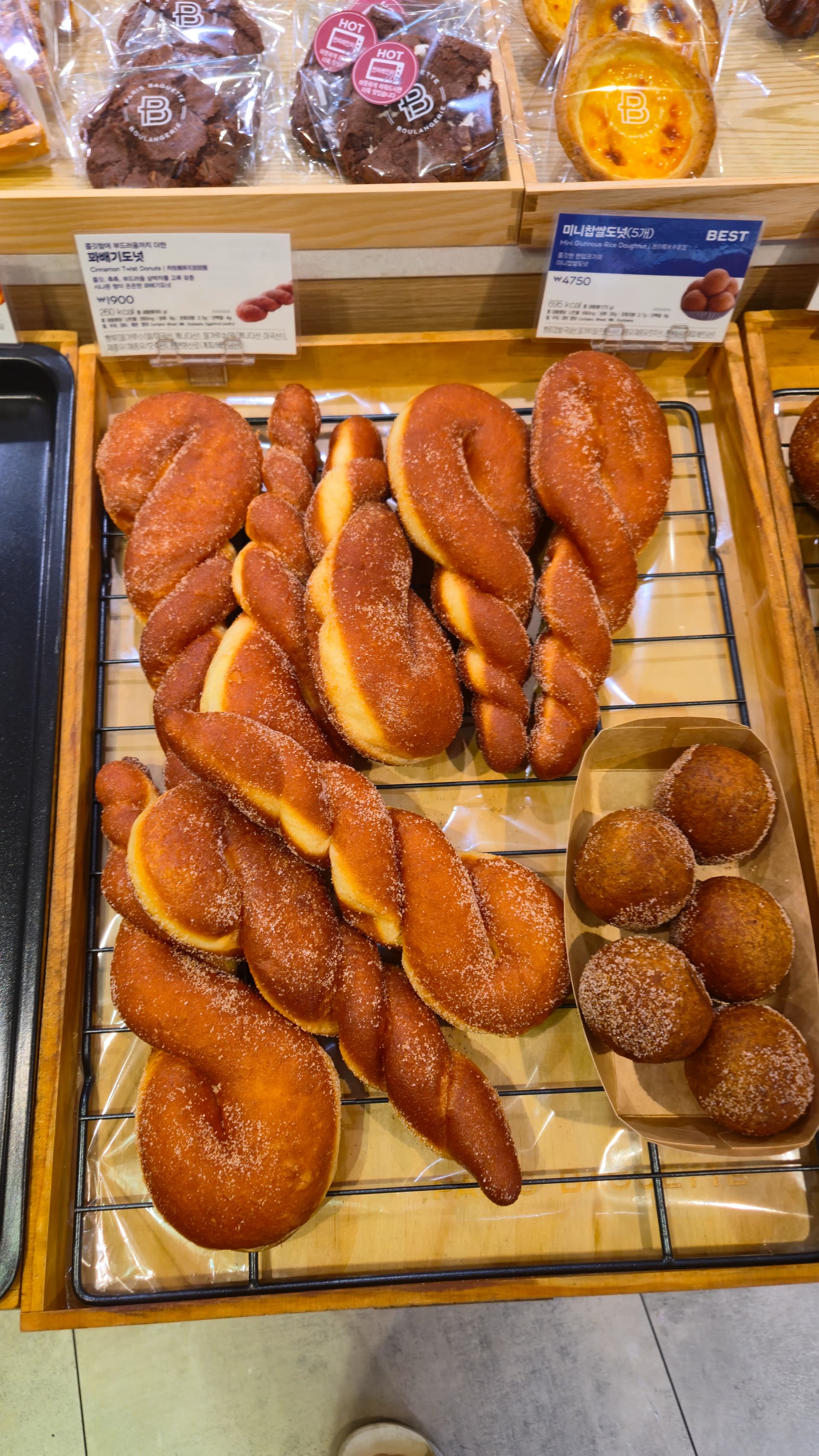
These two are the constants. In three years of visiting this store, I've never once walked in and not seen both of them on the shelf. If there's a "face of Korean bakery culture," it's probably these two sitting next to each other.
Kkwabaegi (꽈배기) is a Korean twisted donut — wheat dough stretched, twisted, and deep-fried. Some versions are rolled in sugar, some aren't, and you can see both in this photo. The outside is crispy, the inside is chewy in a way that's hard to describe without just eating one. Every Korean who grew up here has a memory attached to this bread.
The round ones next to it are chapssal donuts (찹쌀도너츠). Chapssal means glutinous rice — and when you make dough from it and fry it, the texture is completely different from a regular wheat donut. The inside is filled with red bean paste (팥앙금, pat-anggeum), made from adzuki beans cooked down with sugar into a thick, slightly dense, gently sweet filling. You bite through the chewy chapssal exterior and hit the soft bean filling inside. Trying to explain this texture to my wife was genuinely difficult. Some things you just have to eat.
Croquettes: Come in the Morning or Don't Bother
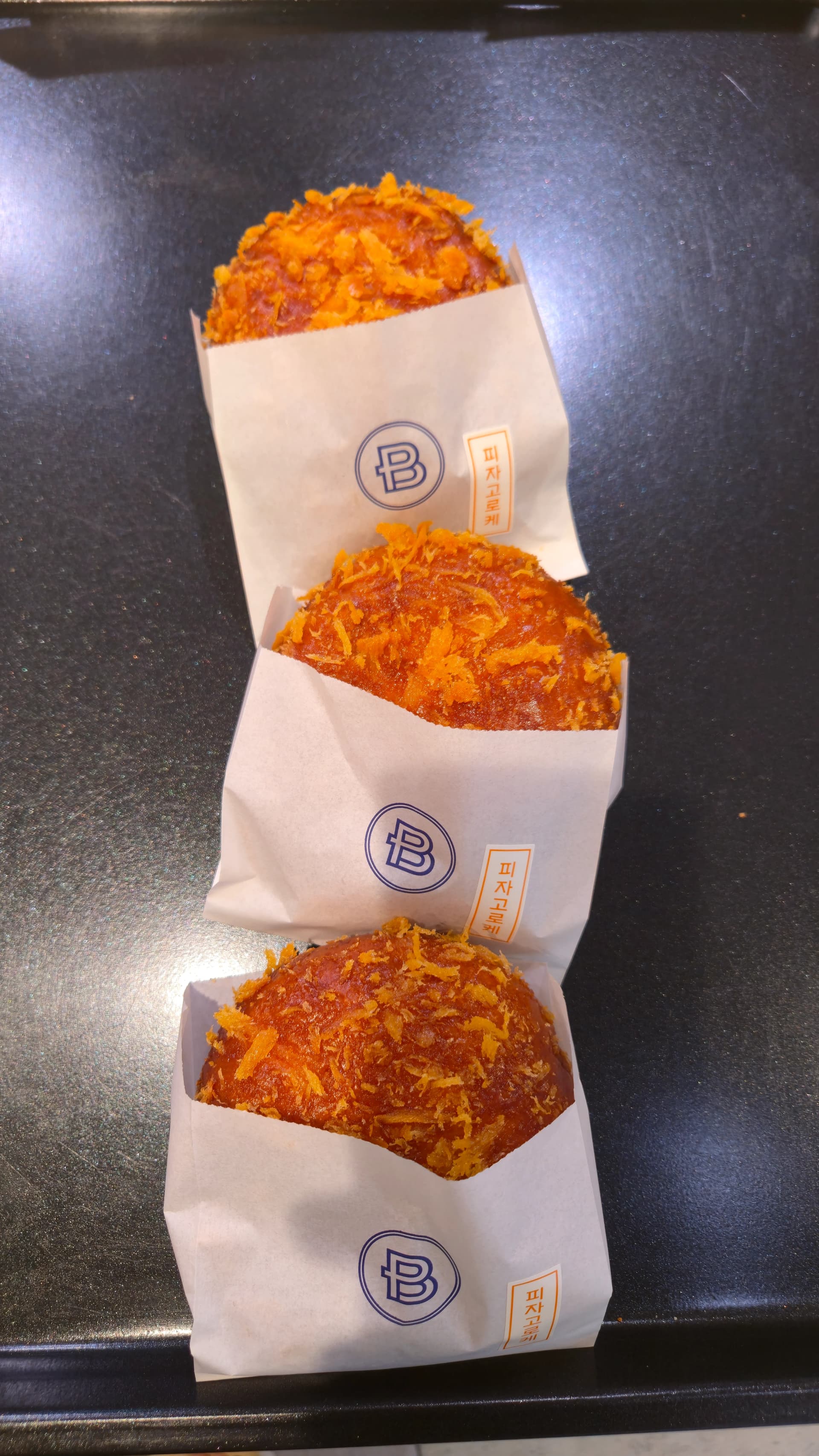
This is the pizza croquette (피자고로케). Croquettes — or "goro-ke" in Korean — originally came from Japan but have completely integrated into Korean bakery culture. Breaded, deep-fried exterior; moist, savory filling inside. This pizza version has tomato sauce, cheese, and vegetables.
Normally they sell curry, veggie, and pizza varieties, but we got here around 3 PM and this was the only one left. That's a pattern I've noticed — competing bakery brands like Tous les Jours tend to have more croquettes available in the afternoon. If you want the full selection at Paris Baguette, come in the morning. I'm saying this from experience.
Glutinous Rice Breads You Can't Find Outside Korea
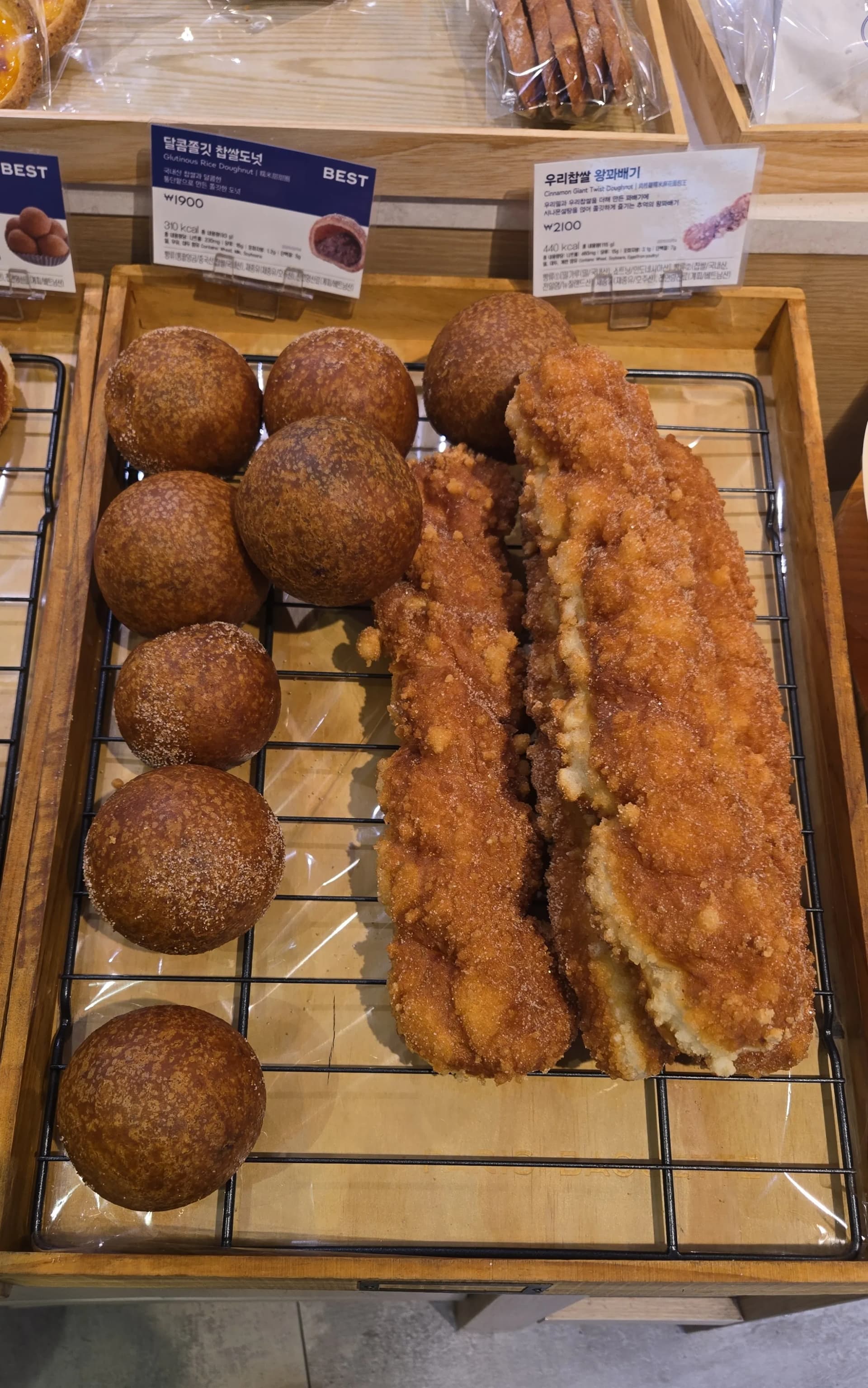
The one on the left is the chapssal donut from earlier. On the right is the Woori Chapssal Wang-kkwabaegi — a premium, oversized twisted donut made with glutinous rice dough. "Wang" means "king" in Korean, and yeah, it's noticeably larger and thicker than a regular kkwabaegi. Where a standard wheat kkwabaegi is all about the crispy outside, this one delivers a stretchy, chewy pull with every bite that just keeps going. The name is earned.
Savory Breads for When You're Done with Sweet
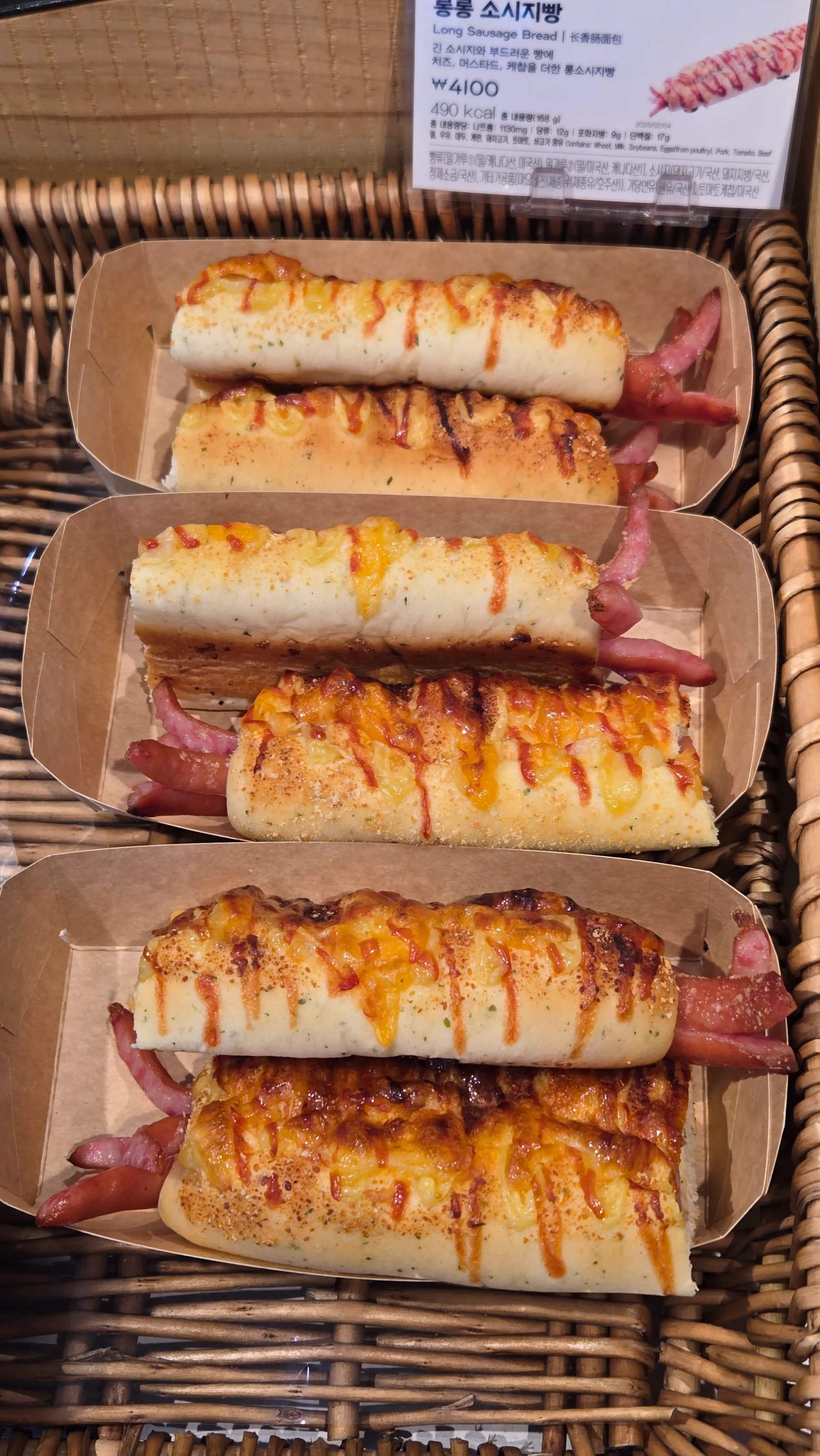
This is the Long Long Sausage Bread (롱롱 소시지빵). The sausage is so long it sticks out of both ends of the bun, topped with melted cheese and ketchup, then baked. It's less of a snack and more of a full meal — I've eaten this with a coffee for lunch on busy days more times than I'd like to admit. When you're tired of sweet breads, this is the instinctive grab. For Korean office workers, this is basically routine.
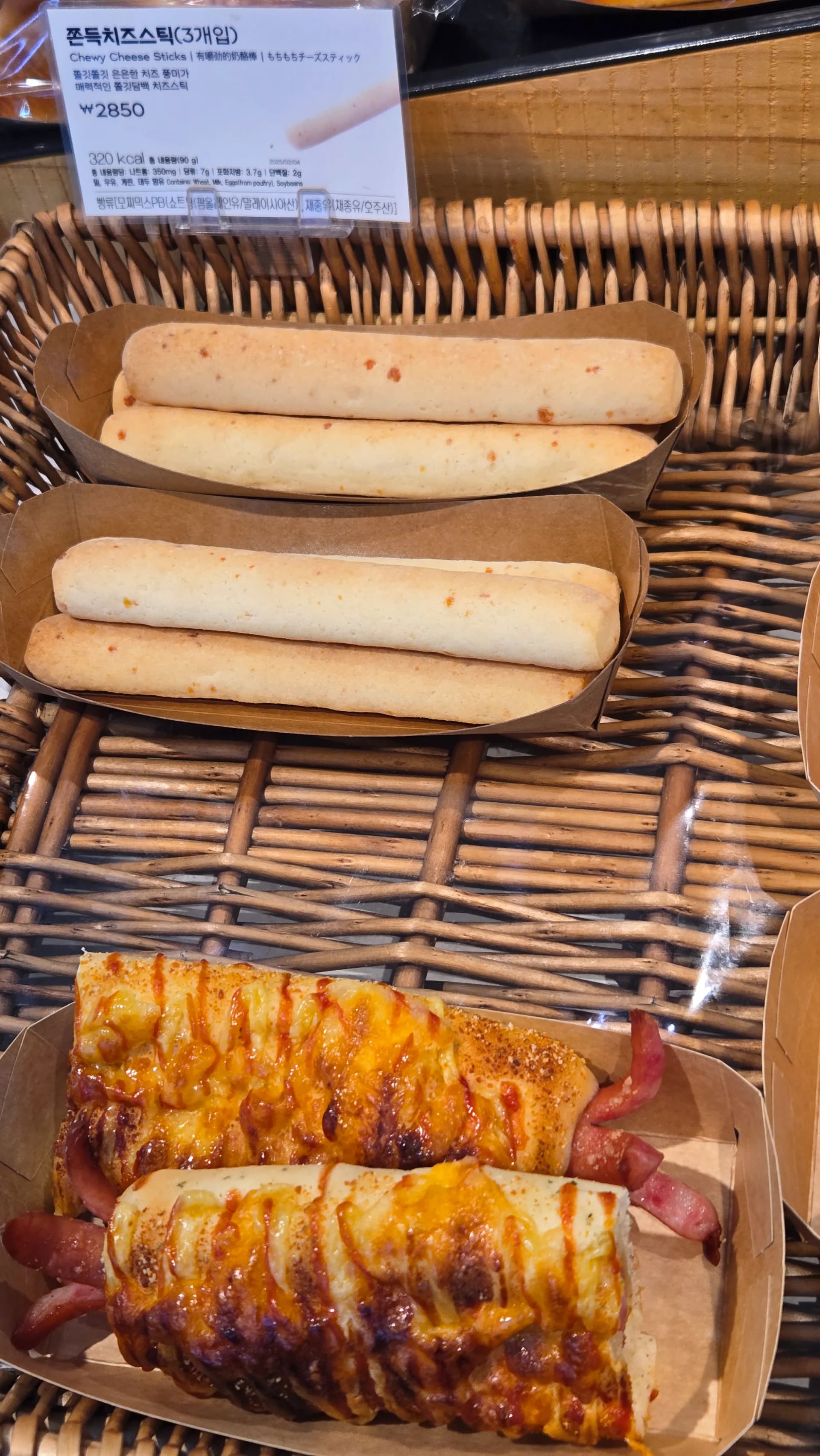
Chewy Cheese Sticks (쫀득치즈스틱), sold in a pack of three. Chapssal dough wrapped around cheese — when you bite down, the cheese pulls and stretches. Great with coffee. The three disappear faster than expected.
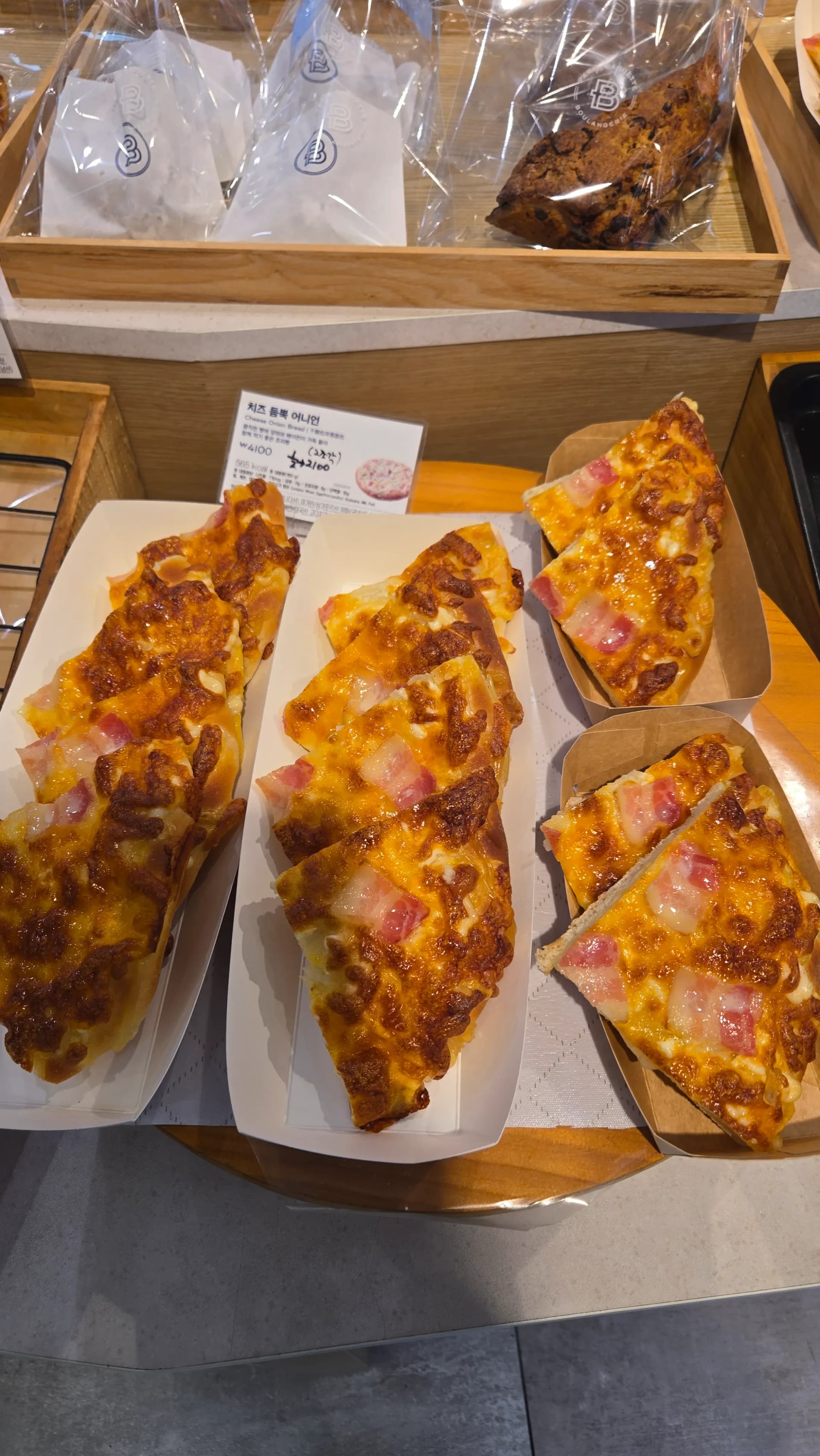
Cheese-Loaded Onion Bread (치즈듬뿍 어니언). Flat bread loaded with ham, cheese, and onion. The kind of thing you reach for when you've had enough sweet pastries for one week.
Breads You Grab Without Even Checking the Name
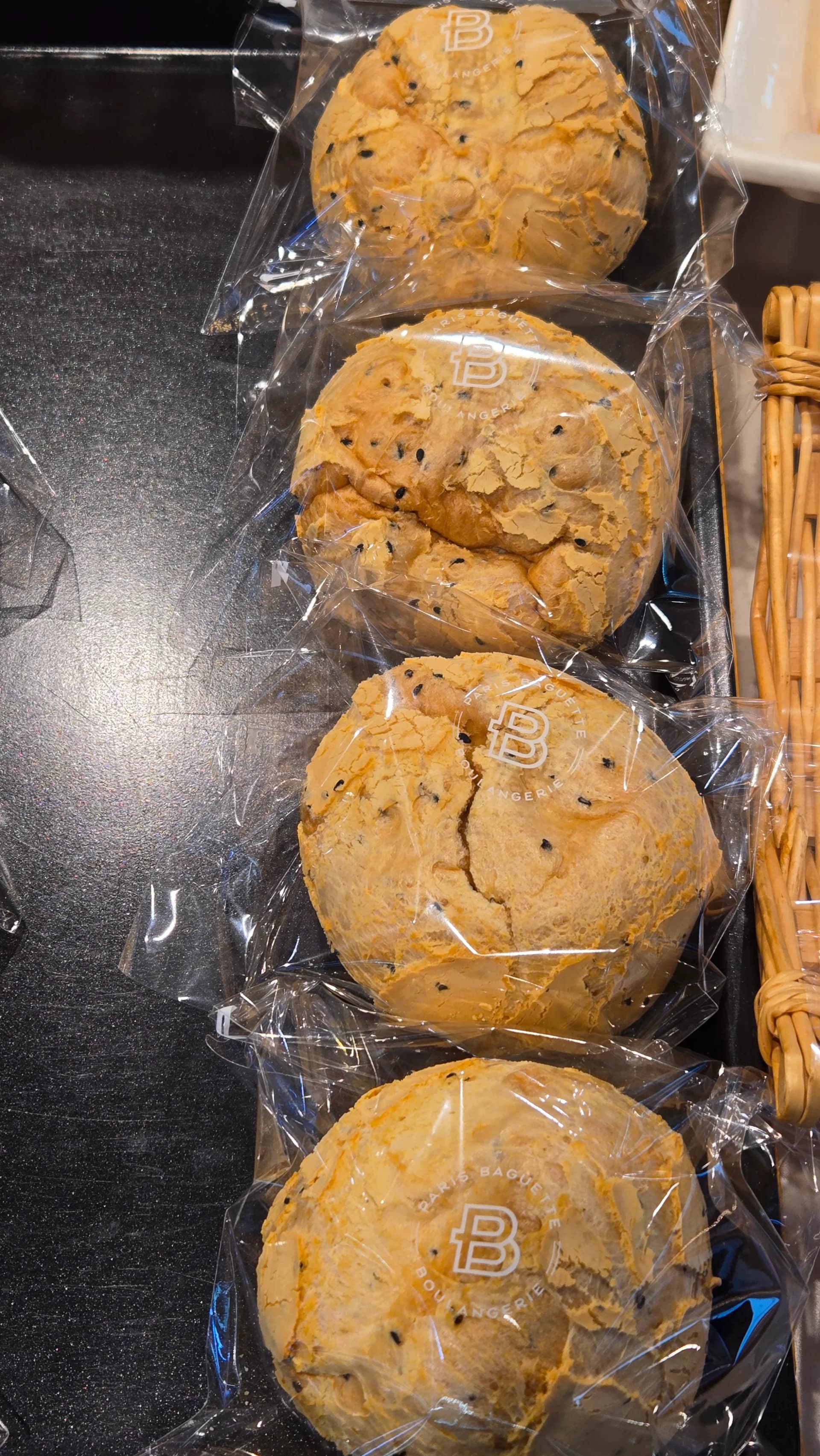
The one on the left is plain chapssal bread (찹쌀빵). Nothing inside. No filling whatsoever. And yet it's one of the things I always end up buying. The chewy, stretchy texture is the entire point — it's not trying to be anything else. Writing this reminded me that I actually bought two of these today. That's basically every visit.
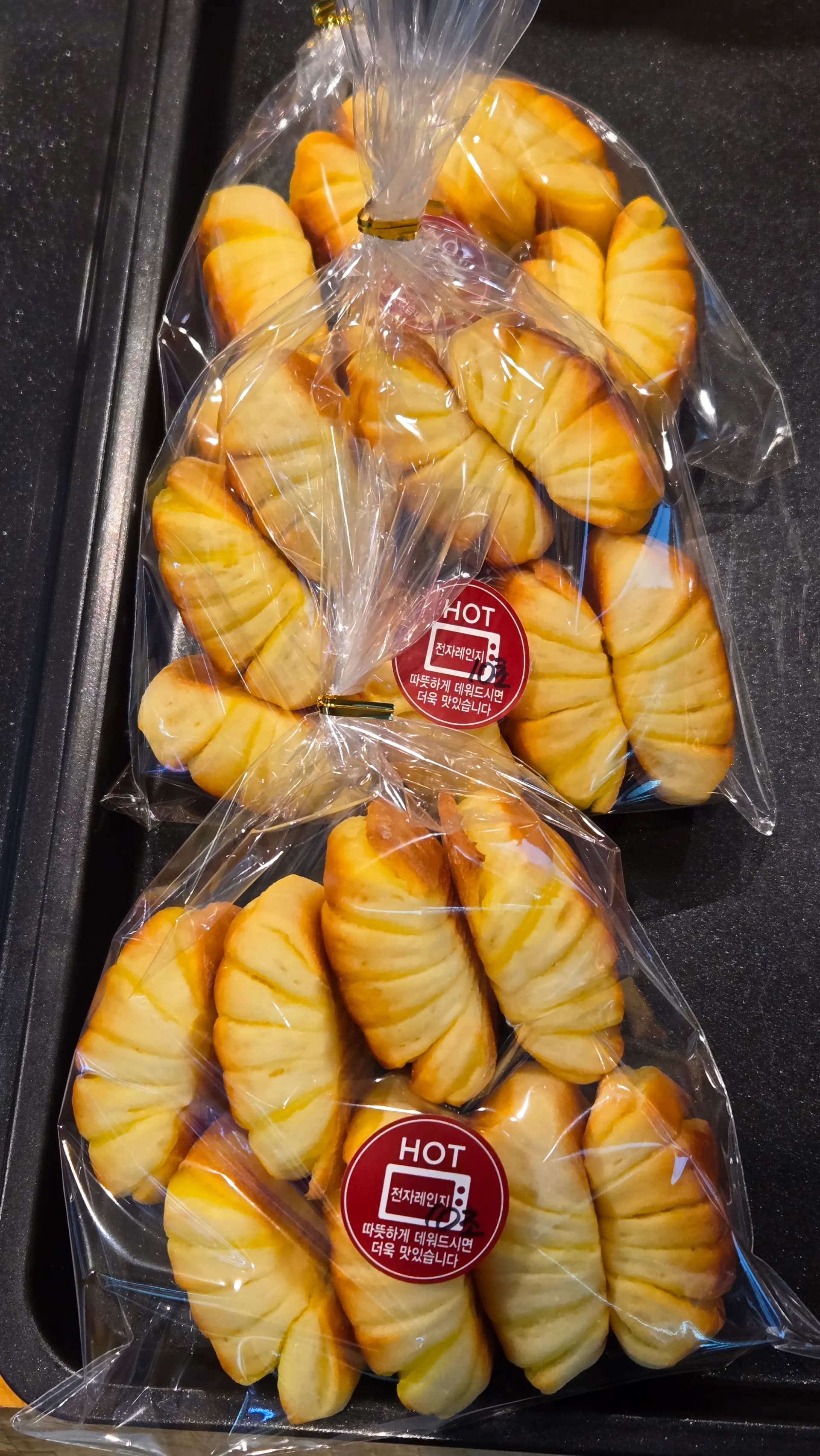
The one on the right has a piece of chaltteok (찰떡) — a type of Korean pounded rice cake — baked inside the bread. The packaging actually says it tastes better microwaved. Paris Baguette sells several variations of chapssal and chaltteok breads, and that tip is real: heating it makes the rice cake section stretchier and completely changes the experience. These are the kinds of breads where you don't bother reading the label — something about them just draws your hand out automatically.
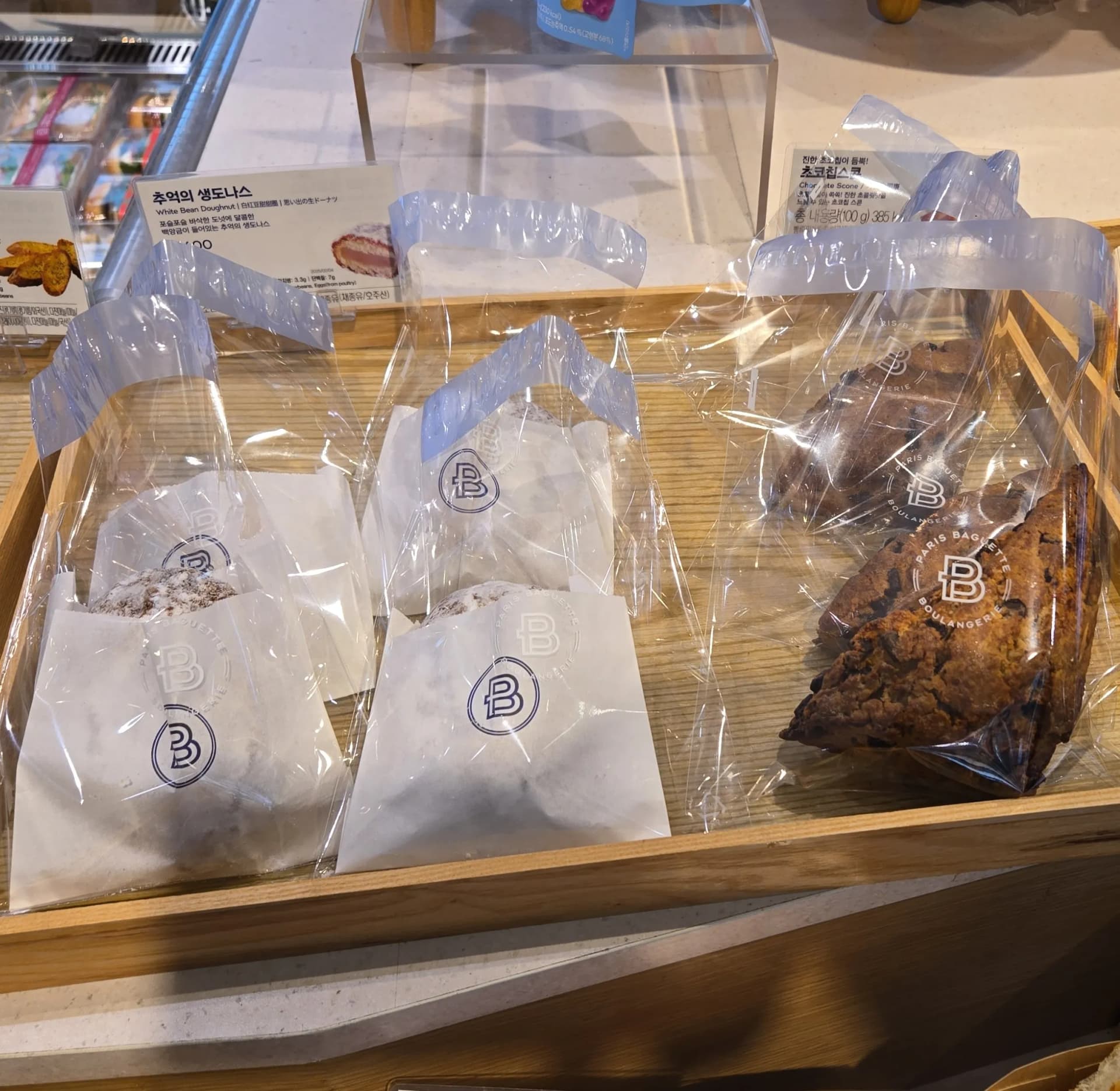
On the left: Chueok-ui Saeng Donaseu (추억의 생도나스), which translates roughly to "nostalgia donut." A classic Korean-style fried donut dusted with powdered sugar and filled with white bean paste (백앙금, baek-anggeum) — made from white kidney beans instead of adzuki beans. It's lighter and more crumbly than red bean paste, but still filling. One is usually enough.
On the right: the Choco Chip Scone. Honest review — it's divisive. The butter flavor is strong and there are plenty of chocolate chips, but the texture is dry. It works with coffee. On its own, it's not particularly exciting. I wouldn't put it on the must-try list.
The 75-Cent Mini Breads
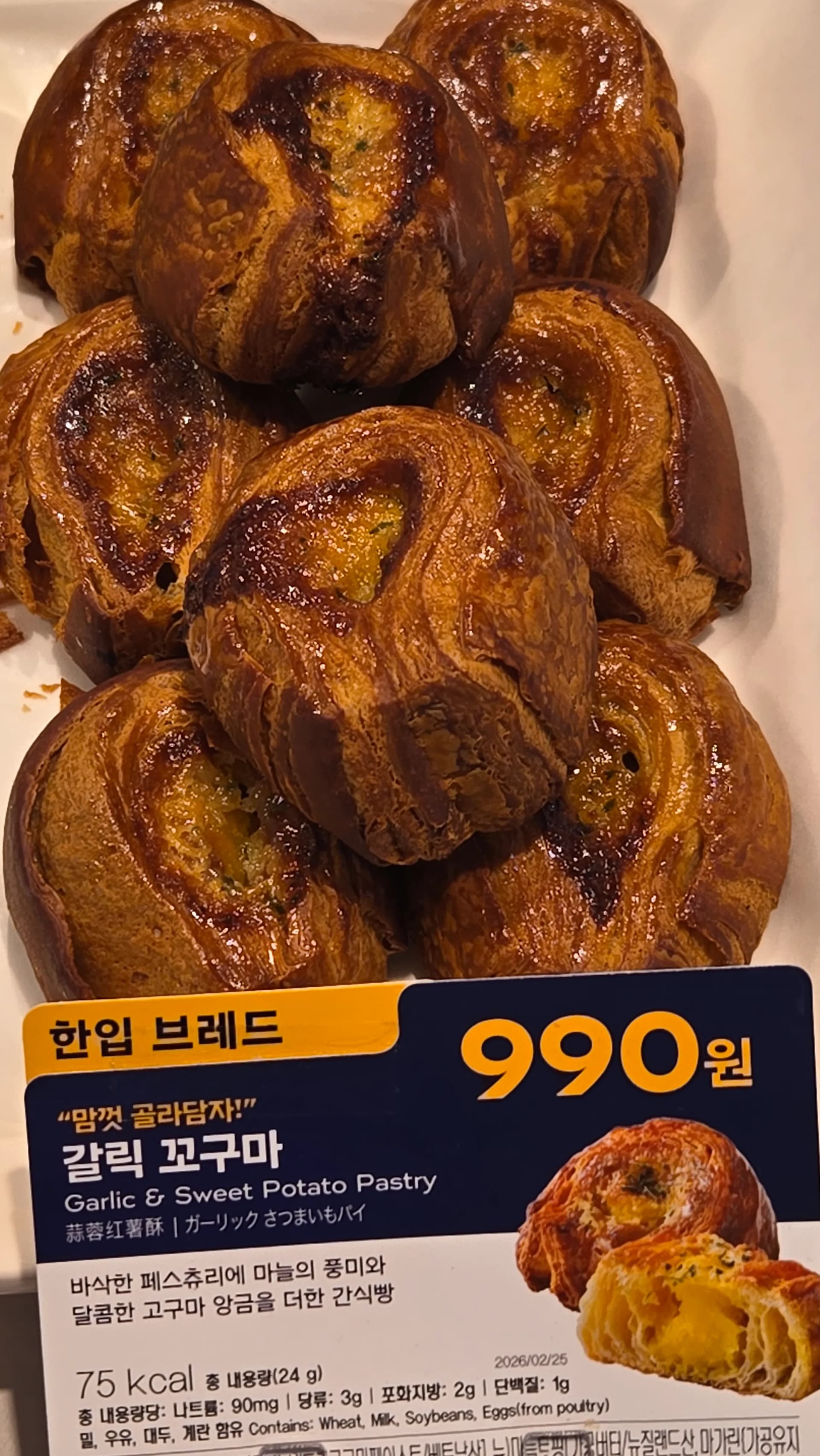
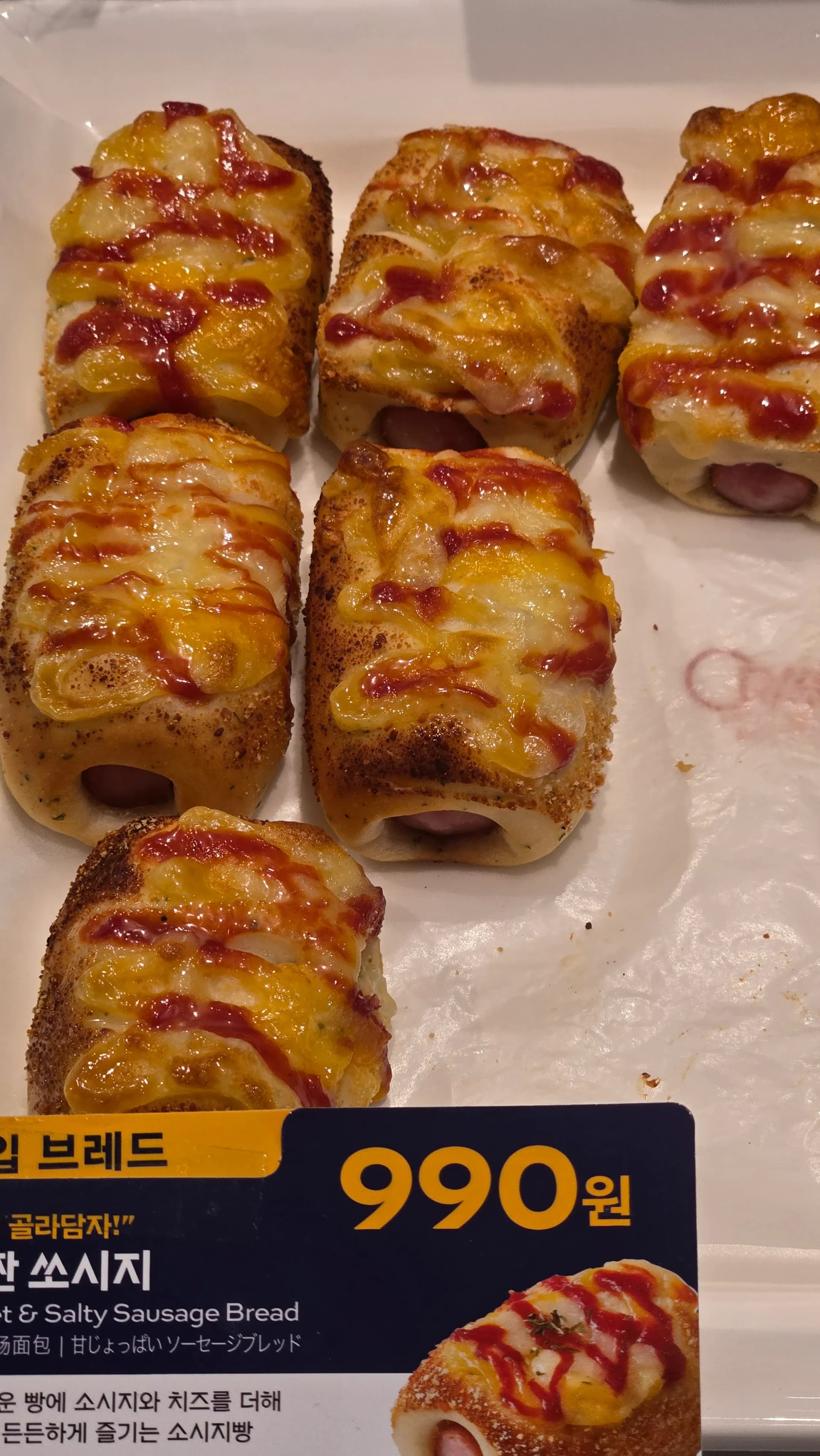
These are the Hanip Bread (한입 브레드) series — mini breads priced at ₩990, which is roughly 75 cents. The Garlic Sweet Potato version is a flaky pastry with garlic flavor and sweet potato filling — salty meets sweet in a way that sounds weird but completely works. The mini sausage version is exactly the same as the full-size Long Long Sausage Bread, just smaller. At Korean bakery prices in 2026, 75 cents is genuinely a deal.
Korean Cakes Have Changed — Here's What's Actually on the Shelf Now
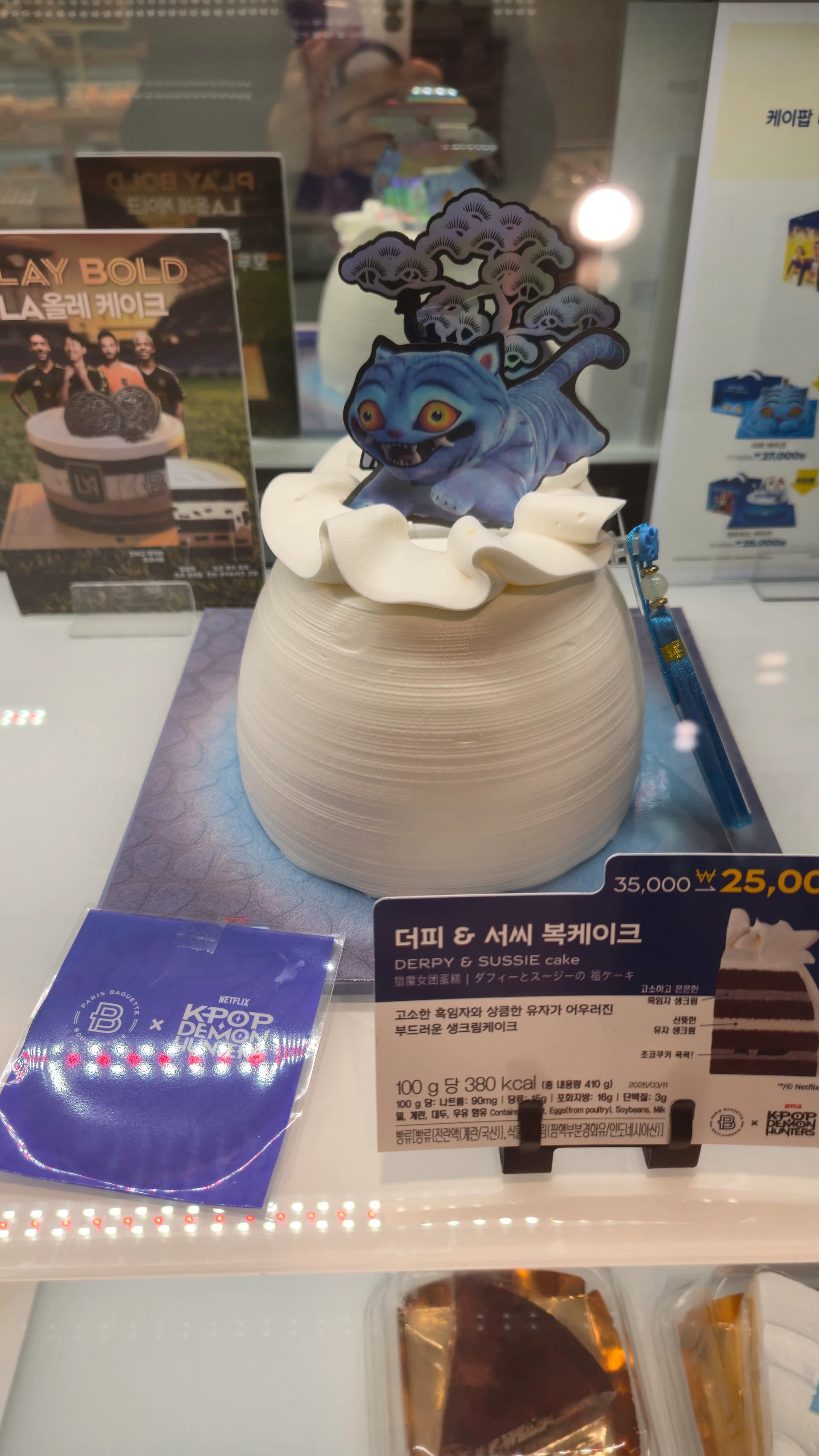
The Korean cake scene looks nothing like it did ten years ago. The old Korean birthday cake formula — white cream, strawberries on top, "Happy Birthday" lettered in piped frosting — is basically gone from Paris Baguette's display case. What replaced it is genuinely interesting.
This one is a Netflix KPop Demon Hunters collaboration cake featuring characters Duffy and Sue. KPop Demon Hunters is a Korean Netflix animated series set in the idol industry, and it's been popular enough to land a Paris Baguette collab. The cake itself layers black sesame cream (흑임자, heuk-imja) with yuzu whipped cream. Black sesame is exactly what it sounds like — ground black sesame seeds with a nutty, slightly bitter depth. Yuzu is a fragrant Korean/Japanese citrus fruit, most common in winter, with a floral tartness that pairs surprisingly well with sesame. Traditional Korean ingredients, inside a Netflix character cake. That combination says a lot about where Korean desserts are headed.
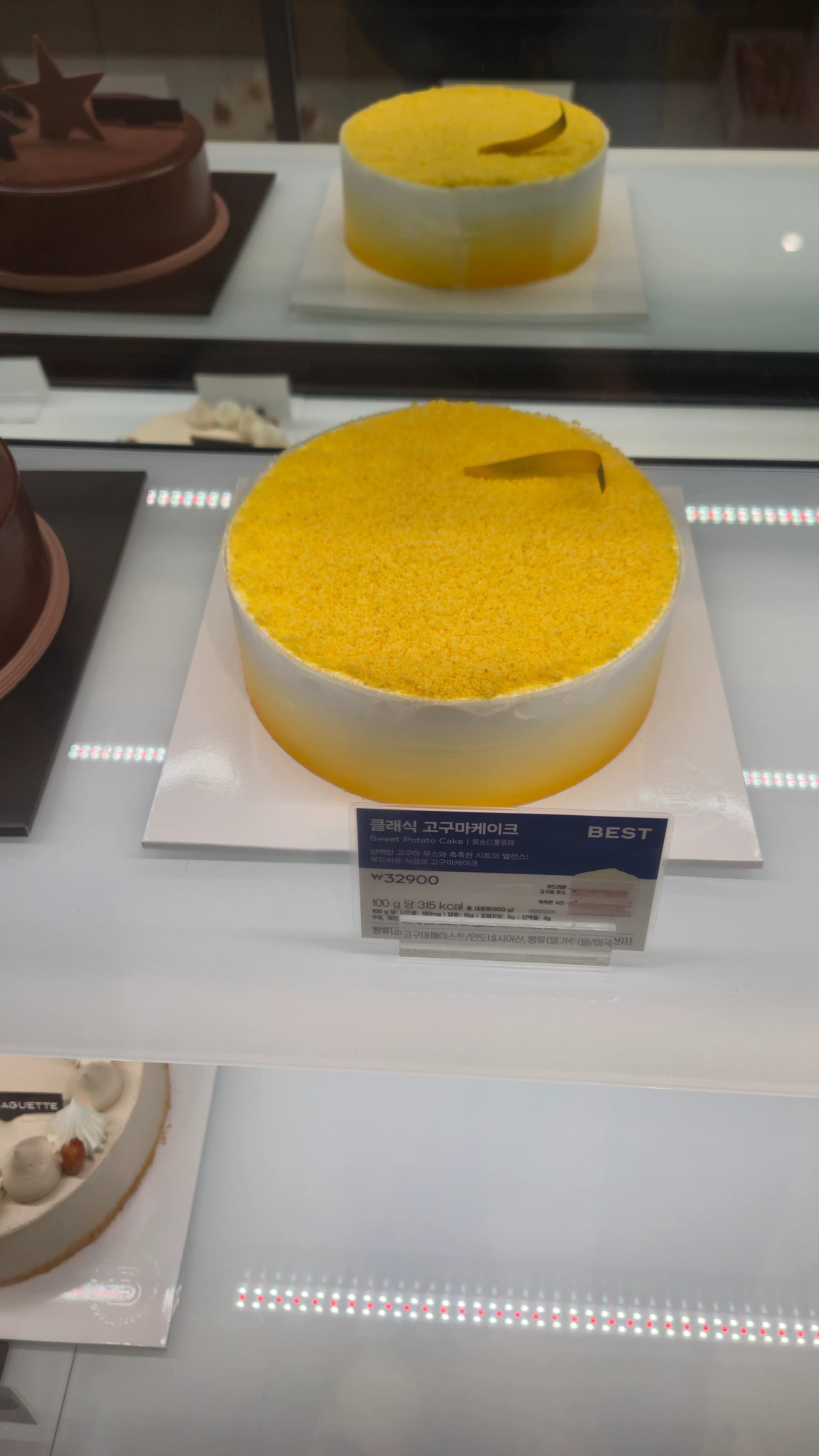
The Classic Sweet Potato Cake (클래식 고구마케이크). This one I want to spend a little more time on.
The entire top of this cake is covered in dense yellow sweet potato crumble — you can recognize it from across the store. It's one of Paris Baguette's long-running bestsellers, and the BEST label on the shelf is not marketing fluff. The structure is sweet potato mousse layered with whipped cream, which means it's sweet but not heavy, rich but not cloying.
Sweet potato in a cake might sound strange if you're not from Korea, but here, sweet potato is used in desserts constantly — sweet potato latte, sweet potato bread, sweet potato ice cream — it's a normal flavor in the Korean dessert vocabulary. My wife's reaction when I told her what it was: skeptical. After one bite: "Can we get this again?" Out of every cake we've bought from Paris Baguette, this one got the strongest response. I'd put it on anyone's short list.
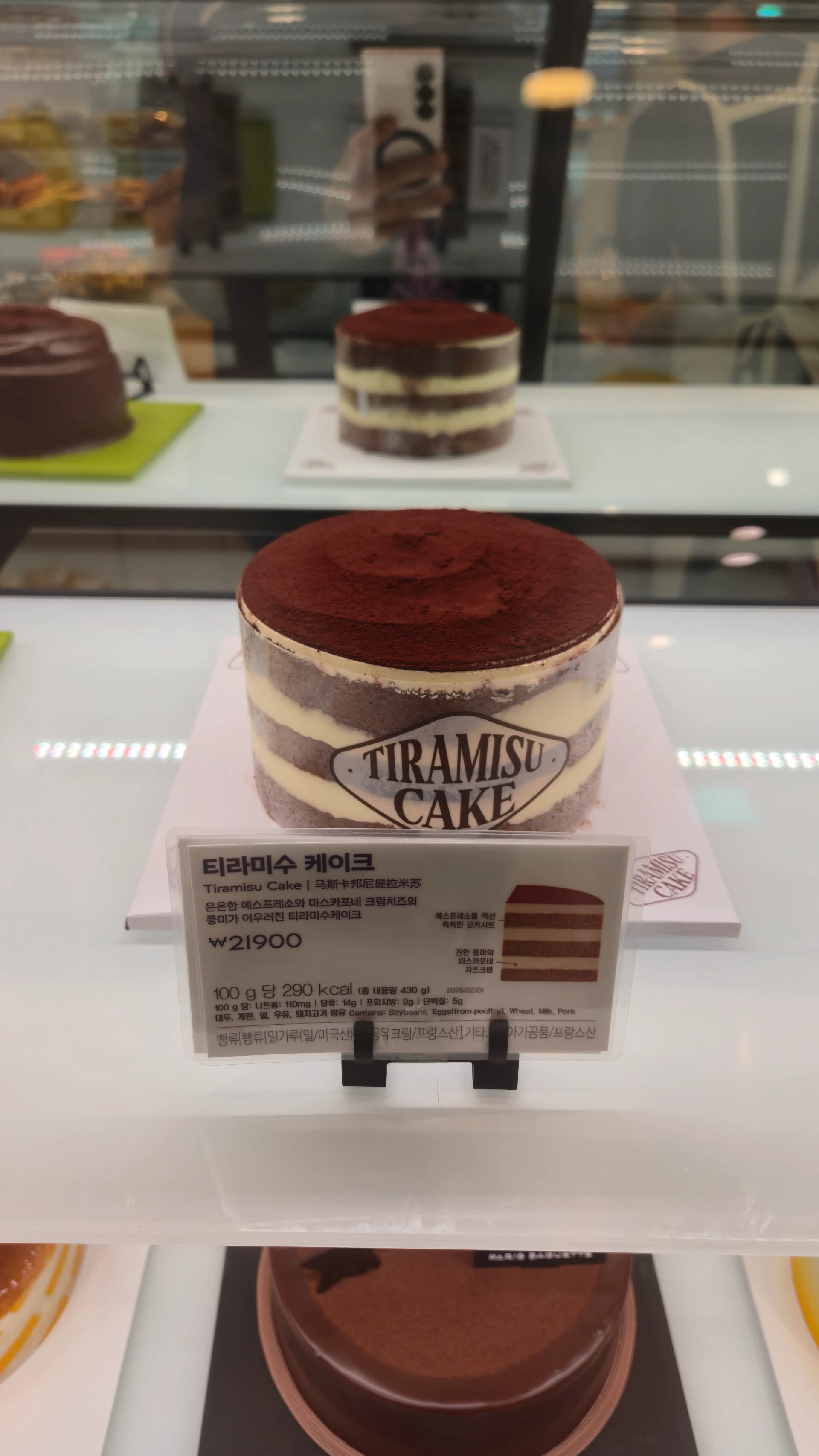
Tiramisu cake. Espresso-soaked sponge layers alternating with mascarpone cream cheese. An Italian dessert sitting completely naturally on a shelf in a Korean neighborhood bakery. That's just normal now, and it doesn't feel strange at all anymore.
Dubai Chocolate Made It Into the Cake Case
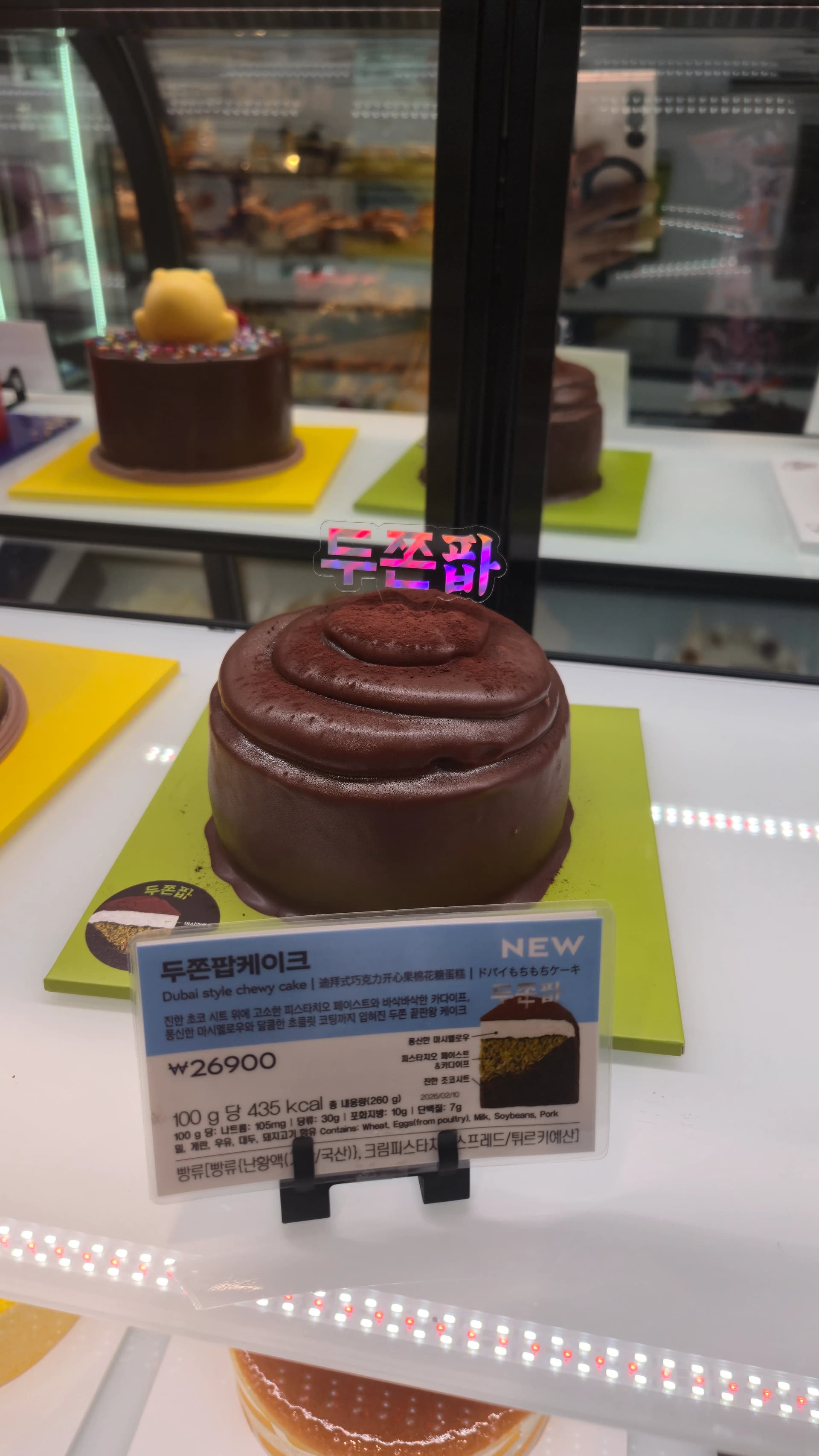
The Dujjeonpop Cake (두쫀팝케이크). This is the Dubai chocolate trend — which took Korea by storm over the past year or two — turned into a layer cake. For context: "Dubai chocolate" refers to a Middle Eastern-origin dessert combining pistachio paste and kataifi (an ultra-thin shredded wheat pastry) inside a chocolate shell. The combination went viral globally, and Korea ran with it harder than almost anywhere else. Paris Baguette's version has a dark chocolate sponge base, pistachio cream, crispy kataifi, marshmallow, and a full chocolate coating on the outside. Trend cakes like this don't always stick around, but as of spring 2026, this one shows exactly where Korean dessert culture is pointing.
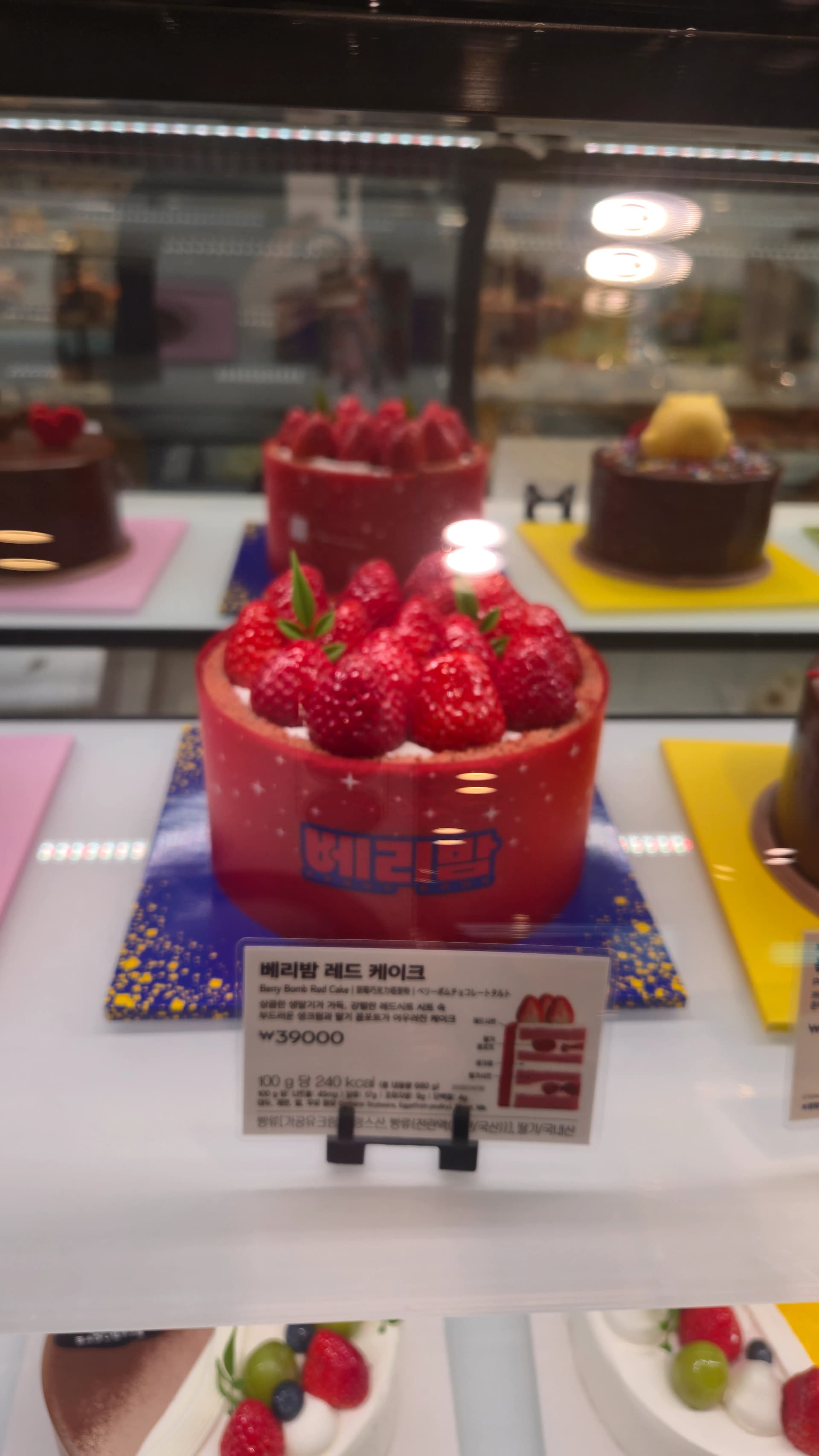
Berry Bomb Red Cake (베리밤 레드 케이크). Strawberries stacked across the entire top surface. Honest truth: I'd already decided about this cake before I tasted it. The visual won.
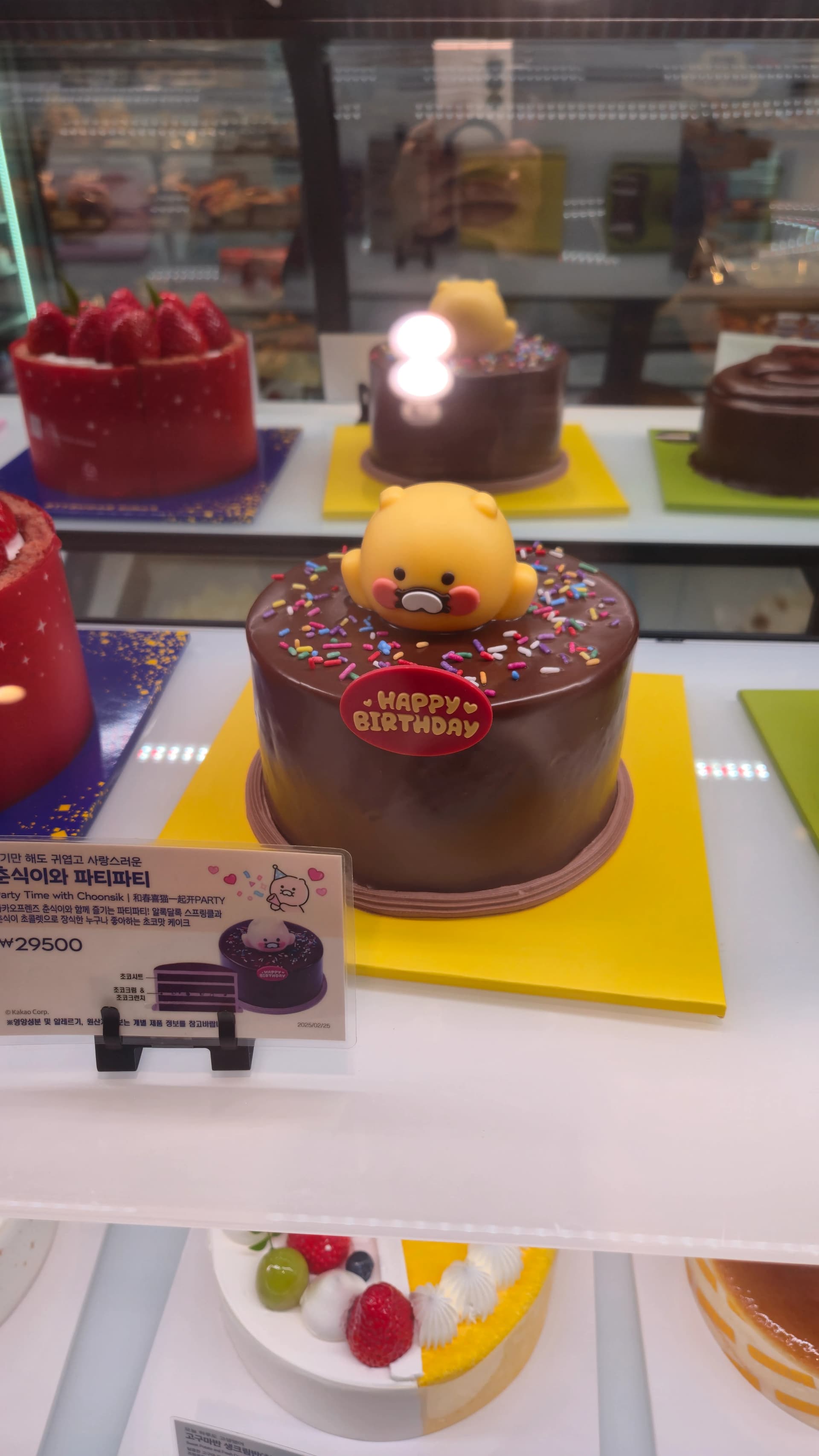
Chunsik and Party Party Cake (춘식이와 파티파티 케이크). KakaoFriends is the character brand behind KakaoTalk — Korea's dominant messaging app, used by essentially the entire country. Chunsik is one of the most popular characters in the lineup, and here he appears as a chocolate decoration on top of a chocolate glazed birthday cake with colorful sprinkles. This type of IP collaboration birthday cake sitting casually in a neighborhood bakery display case is one of the more distinctly Korean things about Paris Baguette. It's completely ordinary here.
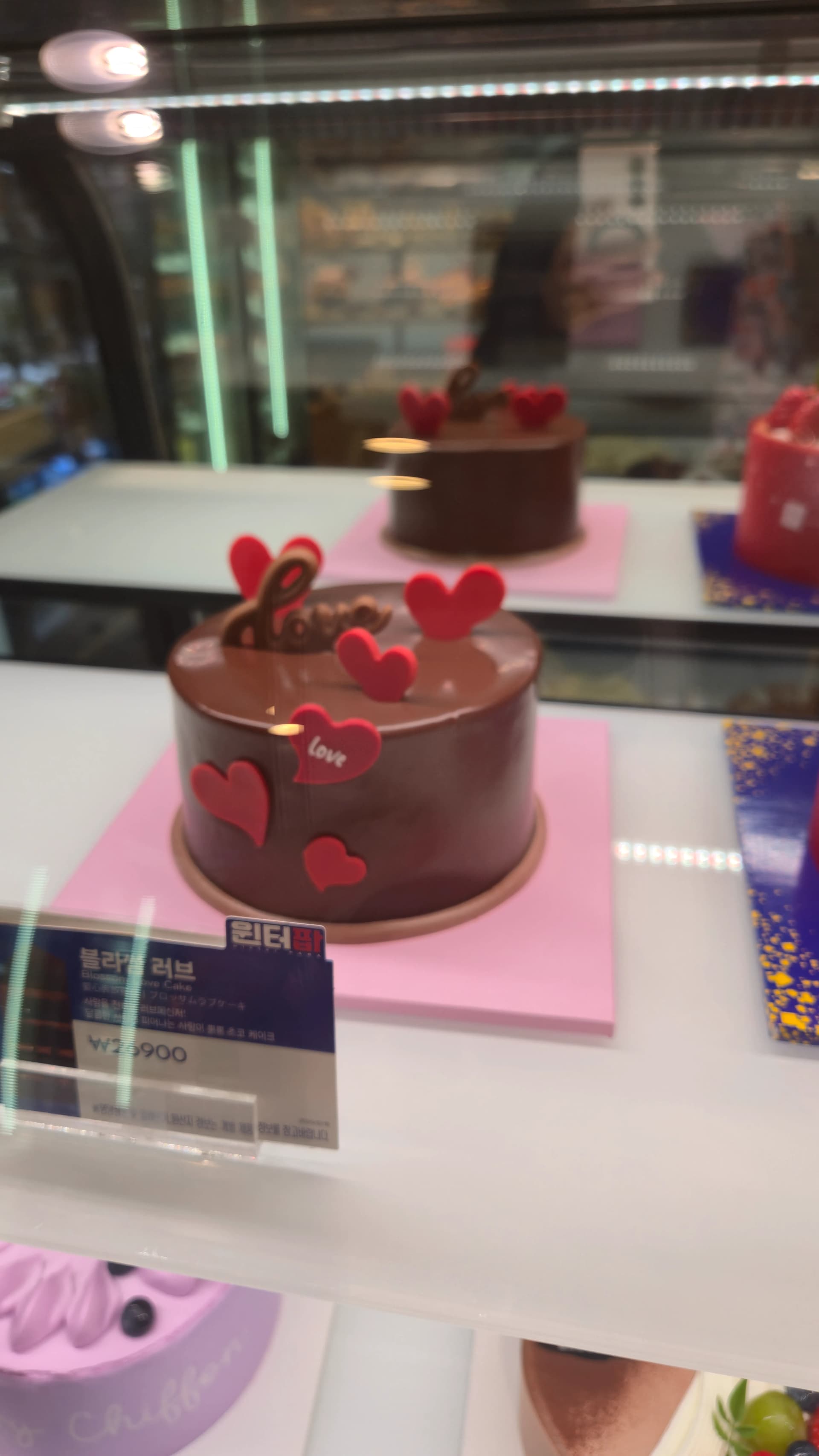
Blossom Love Cake (블라썸 러브 케이크). Full dark chocolate glaze coating the outside, with red heart accents at intervals. After looking at the whole cake case, this one personally struck me as the most refined-looking of the bunch.
Paris Baguette as a Lunch Spot — More Korean Office Workers Than You'd Expect
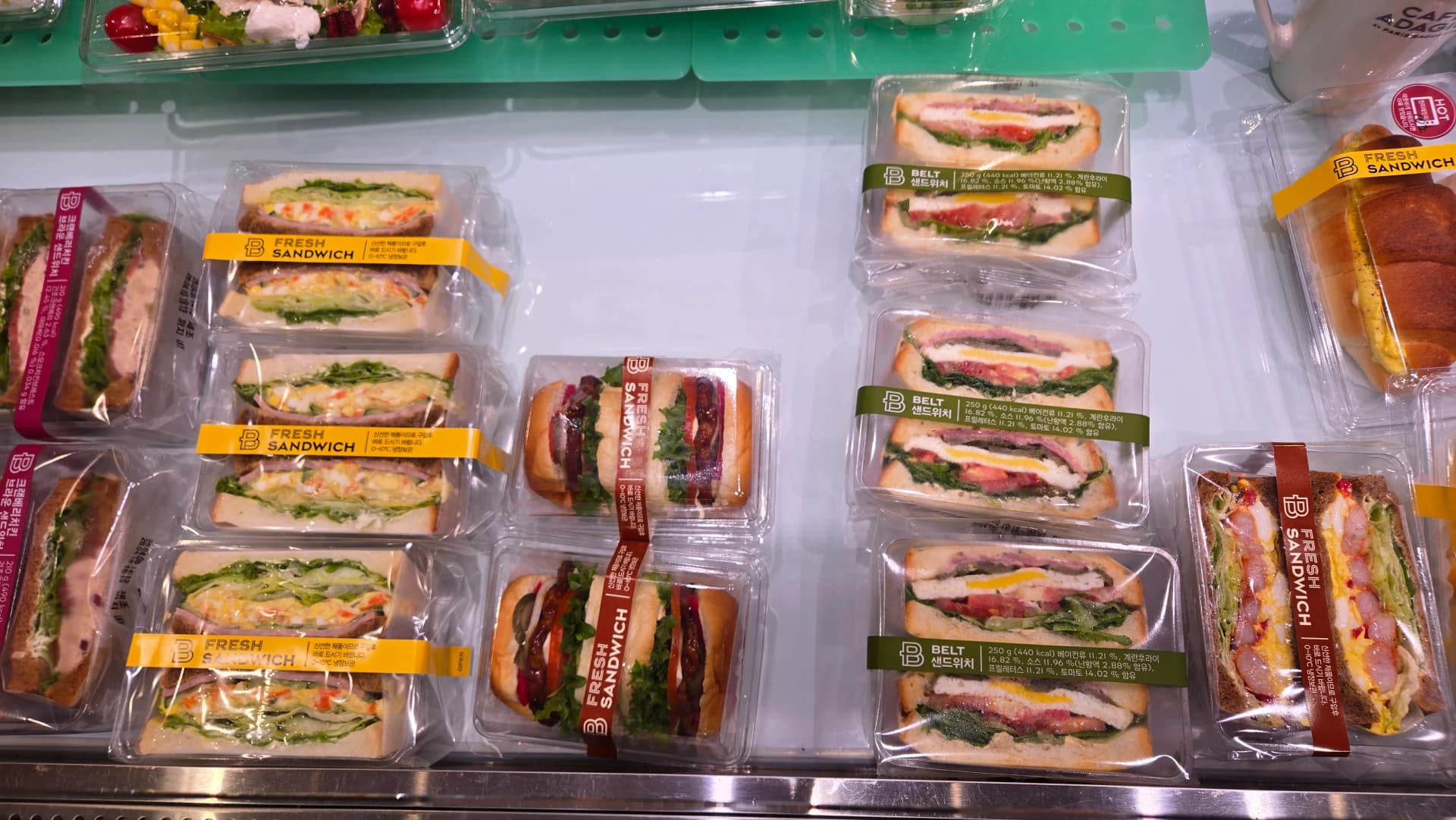
Moving into the refrigerated section. The sandwich lineup splits into Fresh Sandwiches and Belt Sandwiches, and both are noticeably more substantial than what you'd find at a Korean convenience store — thicker layers of ham, cheese, and vegetables. A real portion of Korean workers eat lunch at places like this. I do too, occasionally.
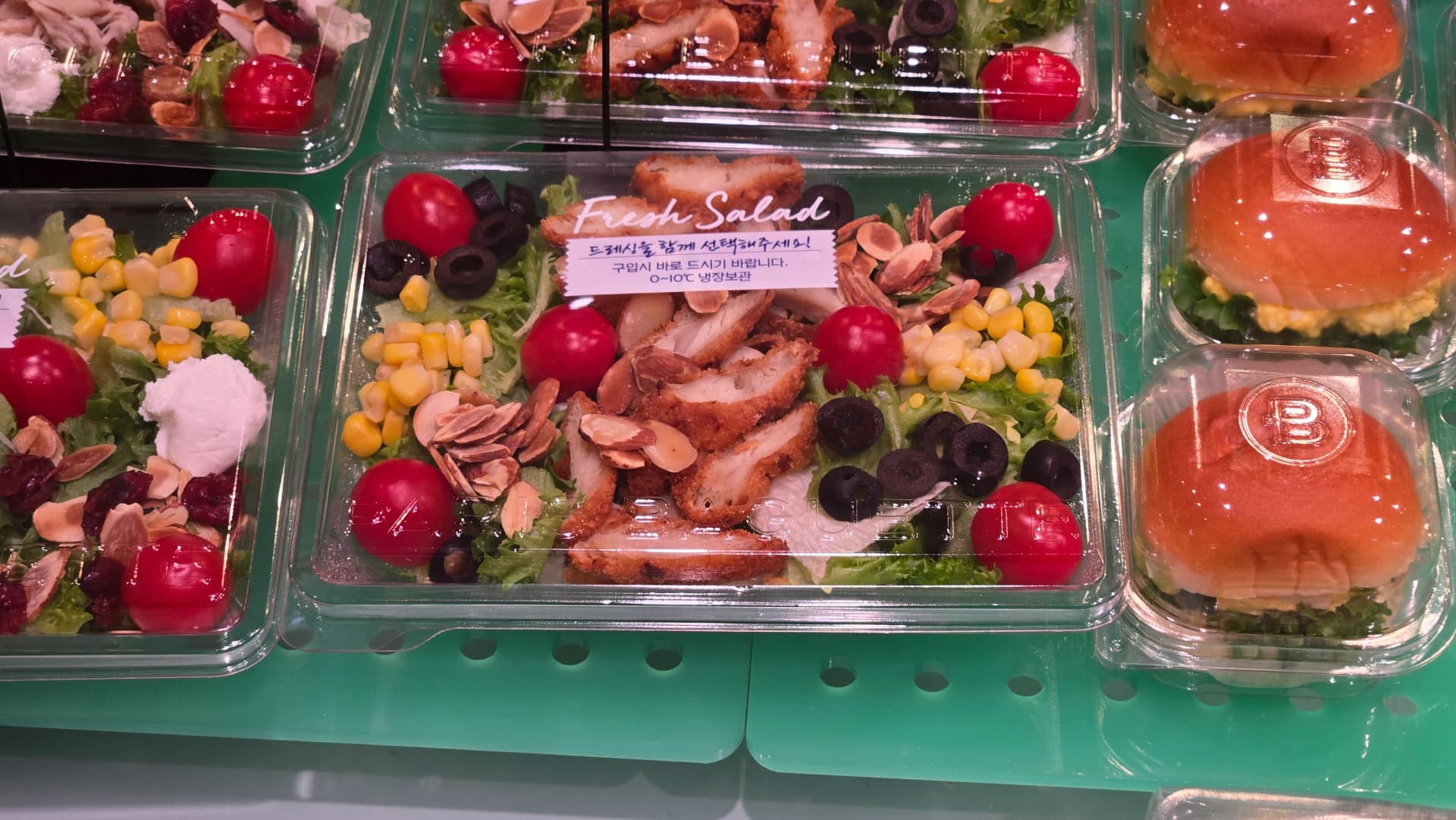
Fresh Salad (프레시 샐러드). Grilled chicken breast, cherry tomatoes, olives, sliced almonds, and corn. A salad at a bakery might seem unexpected, but Paris Baguette has fully positioned itself as a light-meal destination in Korea. It's not just a bread shop anymore.
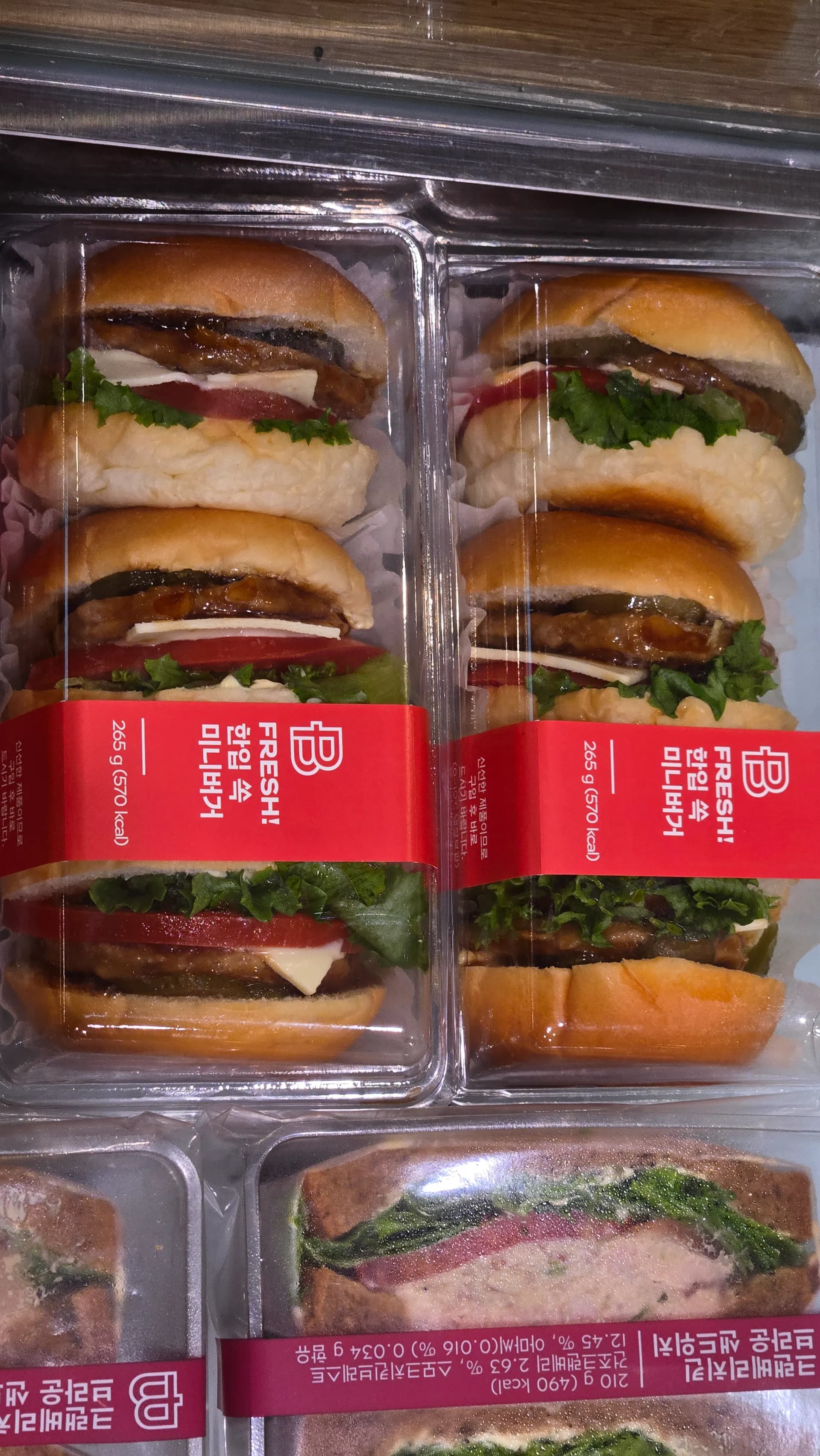
Mini Burger (미니버거). If you're expecting a fast-food-style burger, this will be different. The patty is thin — this leans more brunch than lunch. Fine as part of a spread, less satisfying as a standalone meal.
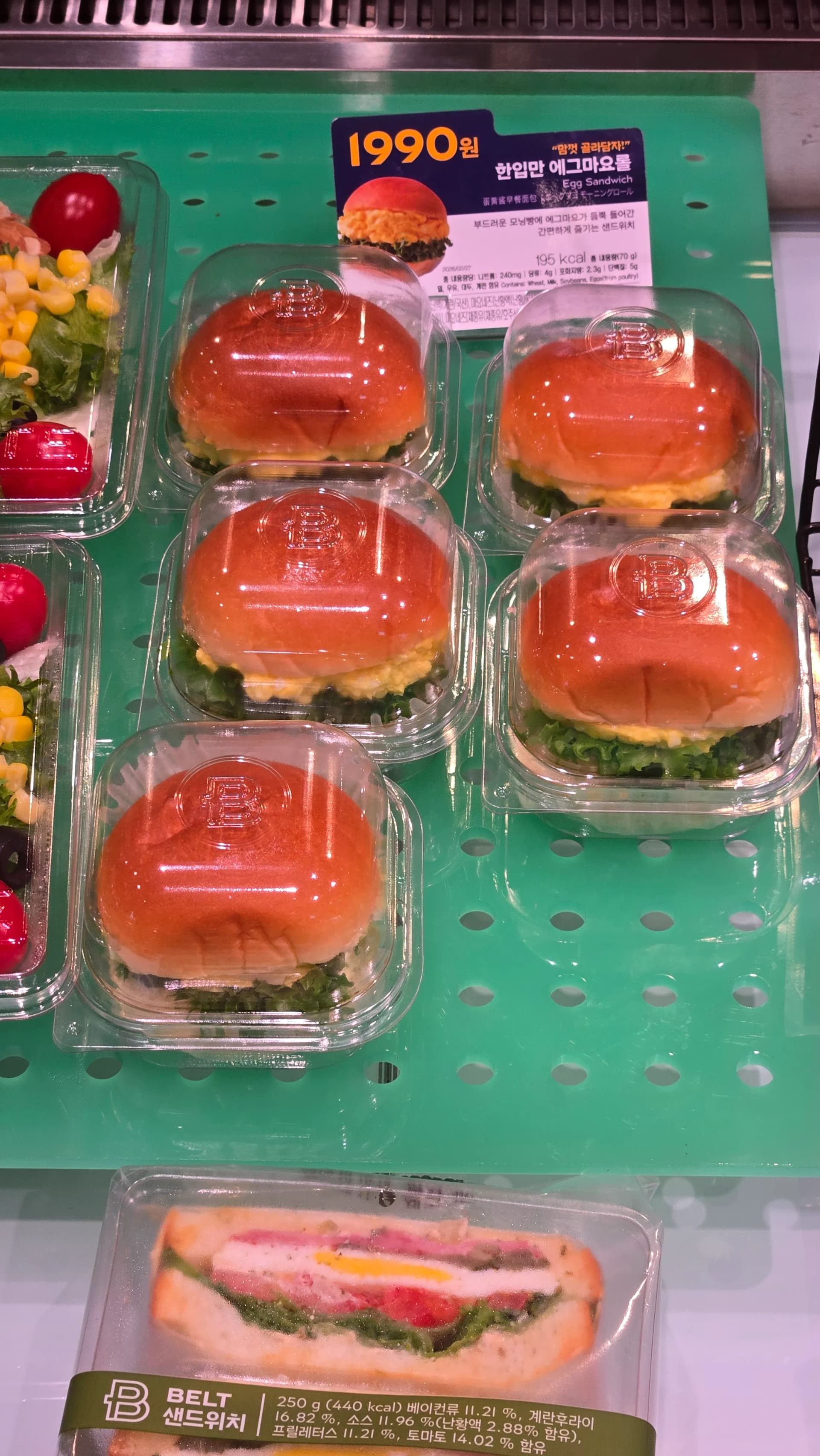
Egg Mayo Roll (한입만 에그마요롤). A round bun, egg mayo inside, nothing complicated. My wife's favorite thing in the entire store. Her exact words: "Simple is best." It's the perfect size for breakfast with a coffee, and I'd have to agree.
The Bread Loaf Section Is More Interesting Than It Looks
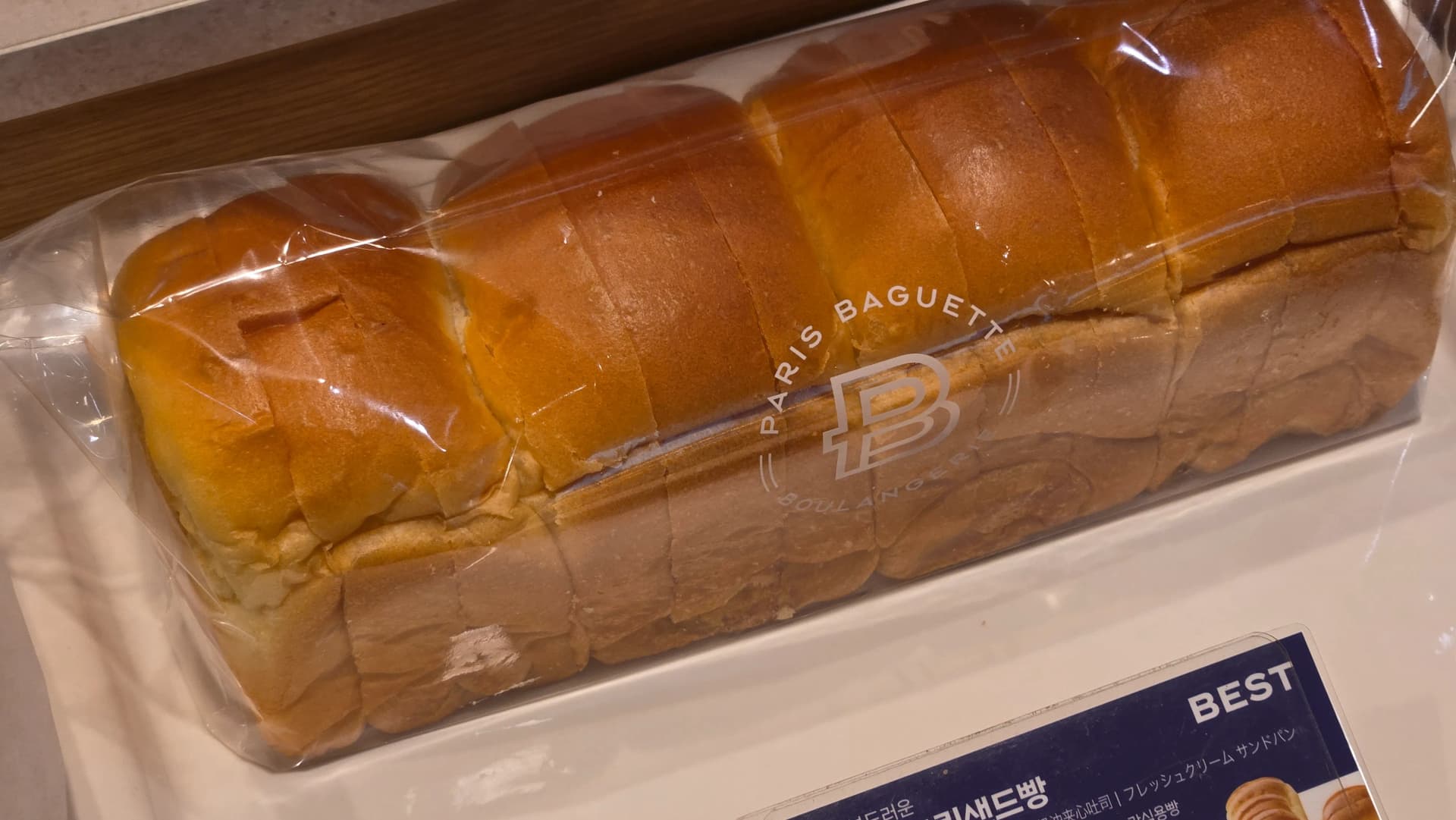
The standard white sandwich loaf (기본 식빵). The most classic item in the entire store. There's not much to say about it — it sells every single day, which is probably explanation enough.
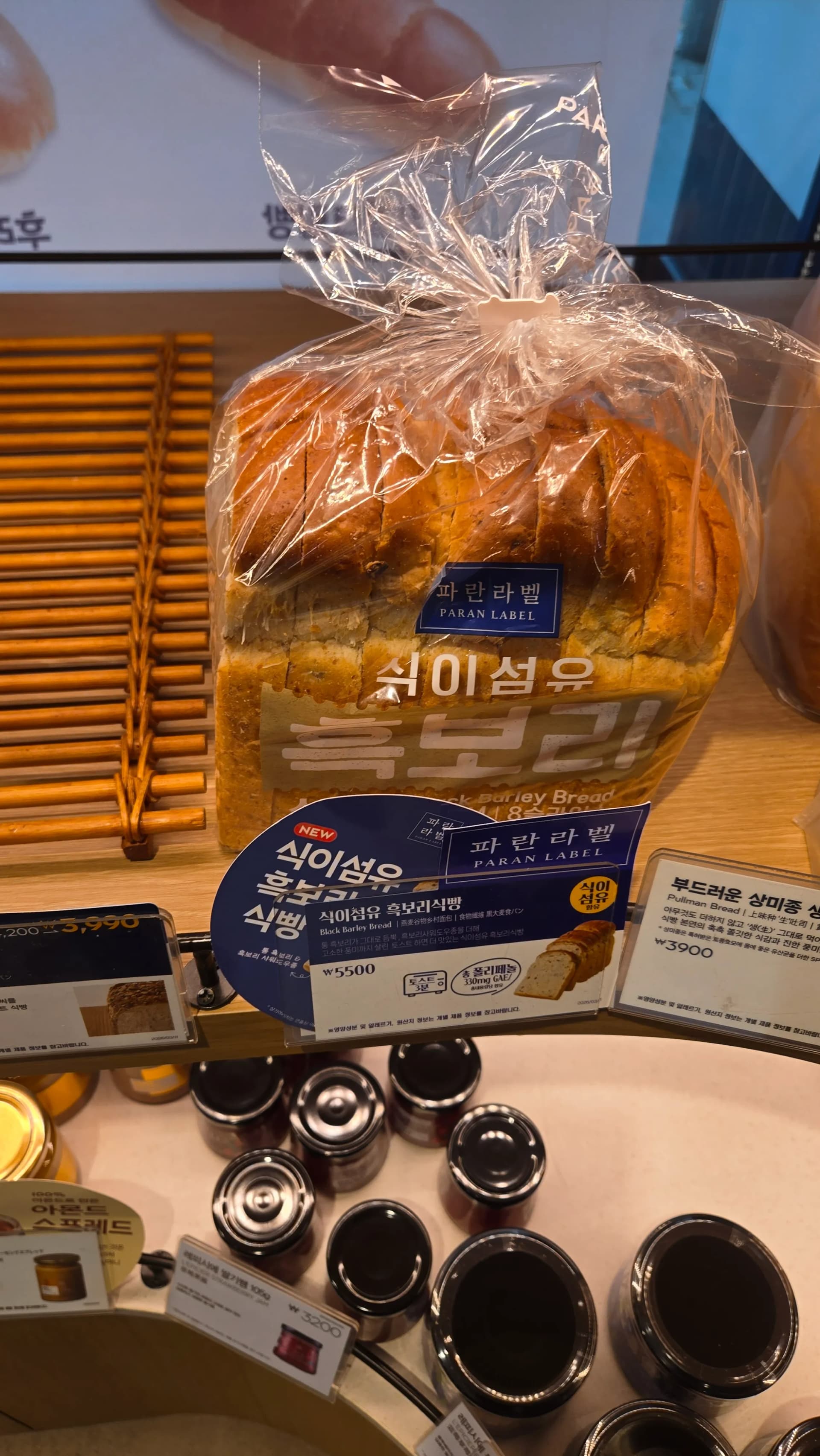
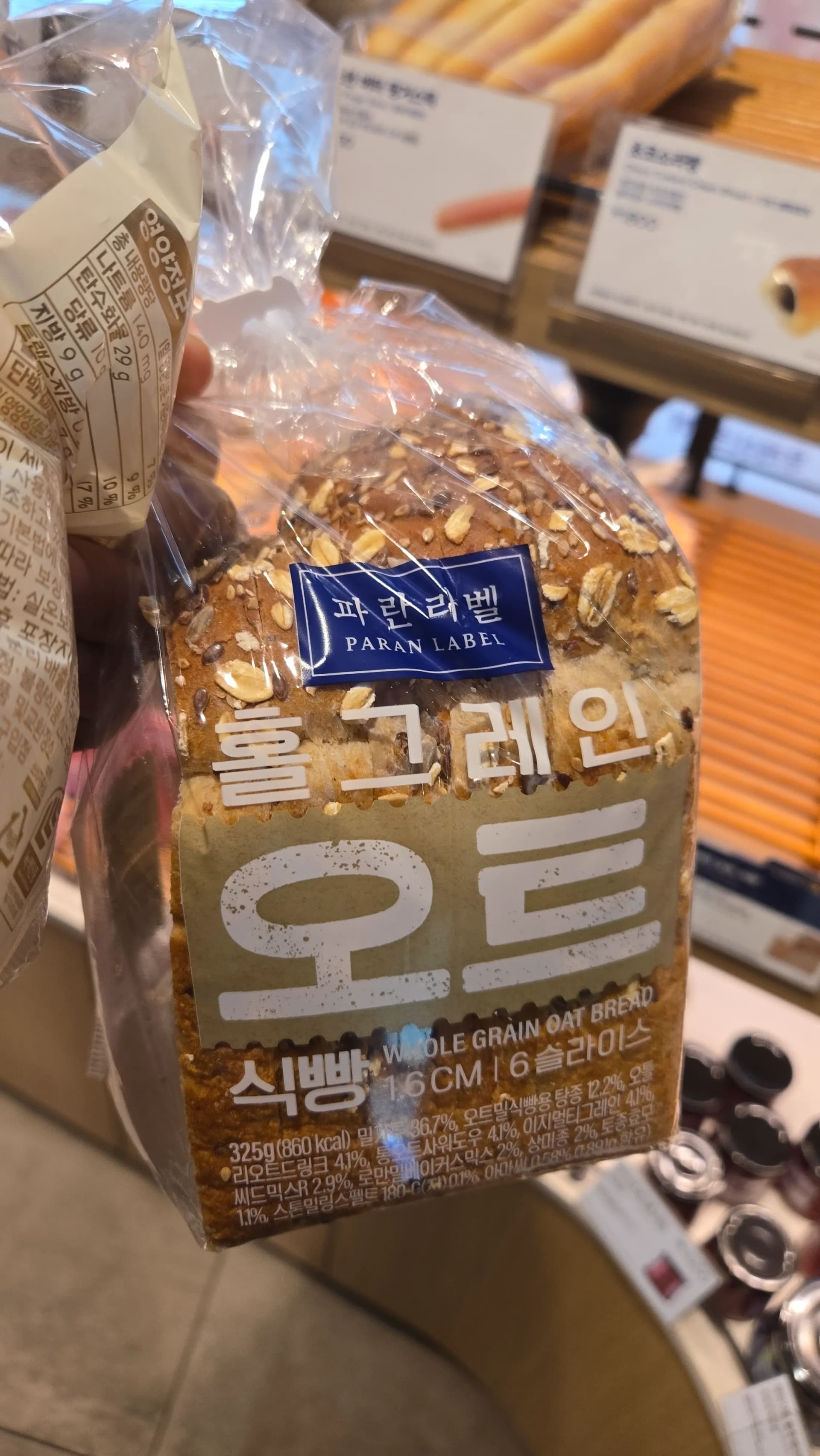
This is Paris Baguette's Blue Label line — their premium bread loaves. The Black Barley Fiber Bread (식이섬유 흑보리 식빵) is made with barley flour, giving it a deeper color and a nuttier, earthier flavor. The Whole Grain Oat Bread (홀그레인 오트 식빵) is coated in rolled oats on the outside and gets more complex and toasty the more you chew it. Both are aimed at people who want something a step above basic white bread. The store normally carries more variety in this line — today only these were available when we came through.
Is It Still a Bakery? Drinks, Frozen Meals, and Ice Cream Too
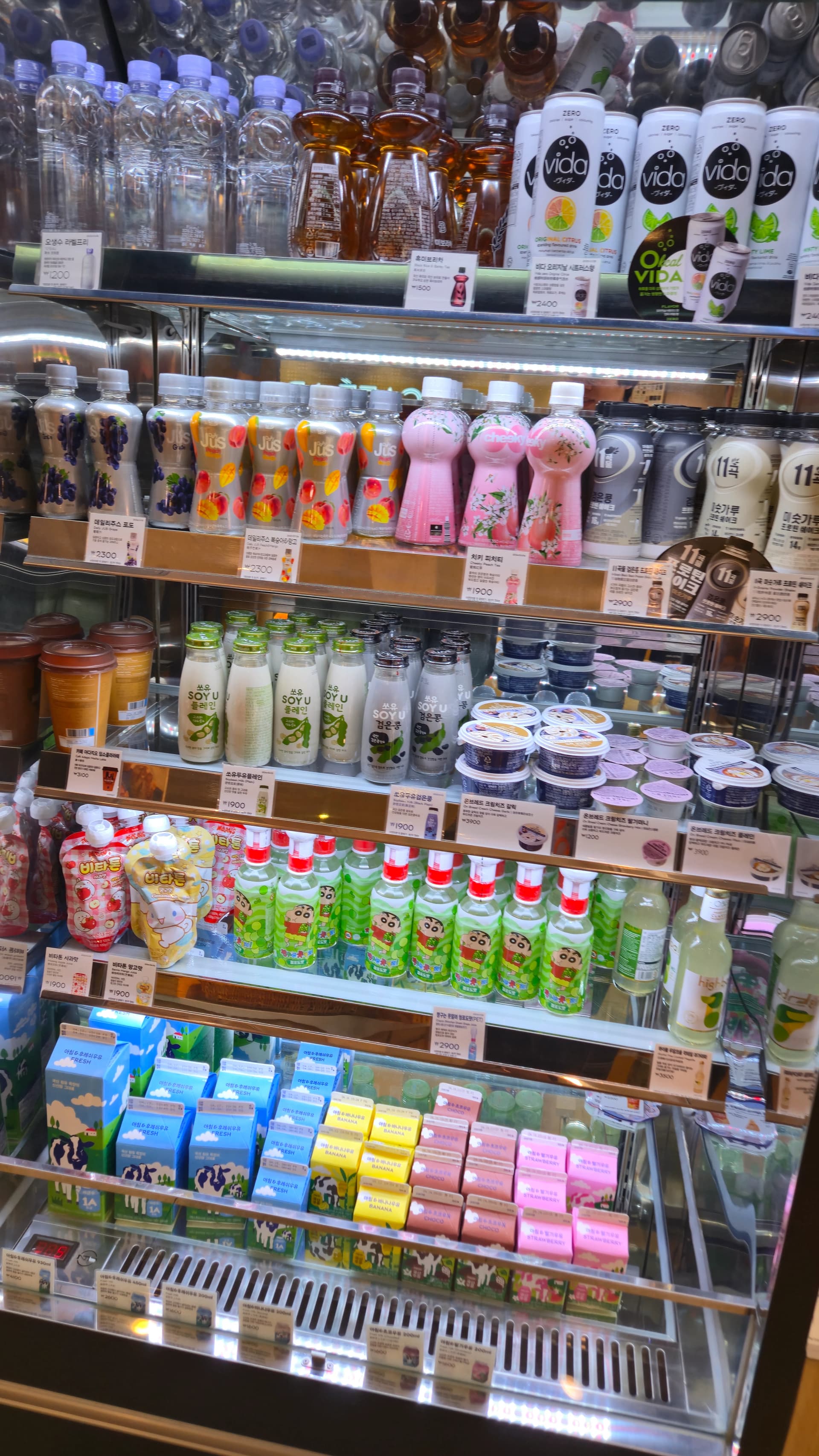
The drinks refrigerator. Juices, soy milk (두유, duyu), yogurt drinks, kids' drinks. Soy milk is extremely common in Korea — made from ground soybeans, plant-based, and very much a standard pairing with bread here. The combination of bread and soy milk has been a classic Korean snack format for decades. The bottom shelf has a row of small flavored milks sorted by color, which is a little more charming than it needs to be.
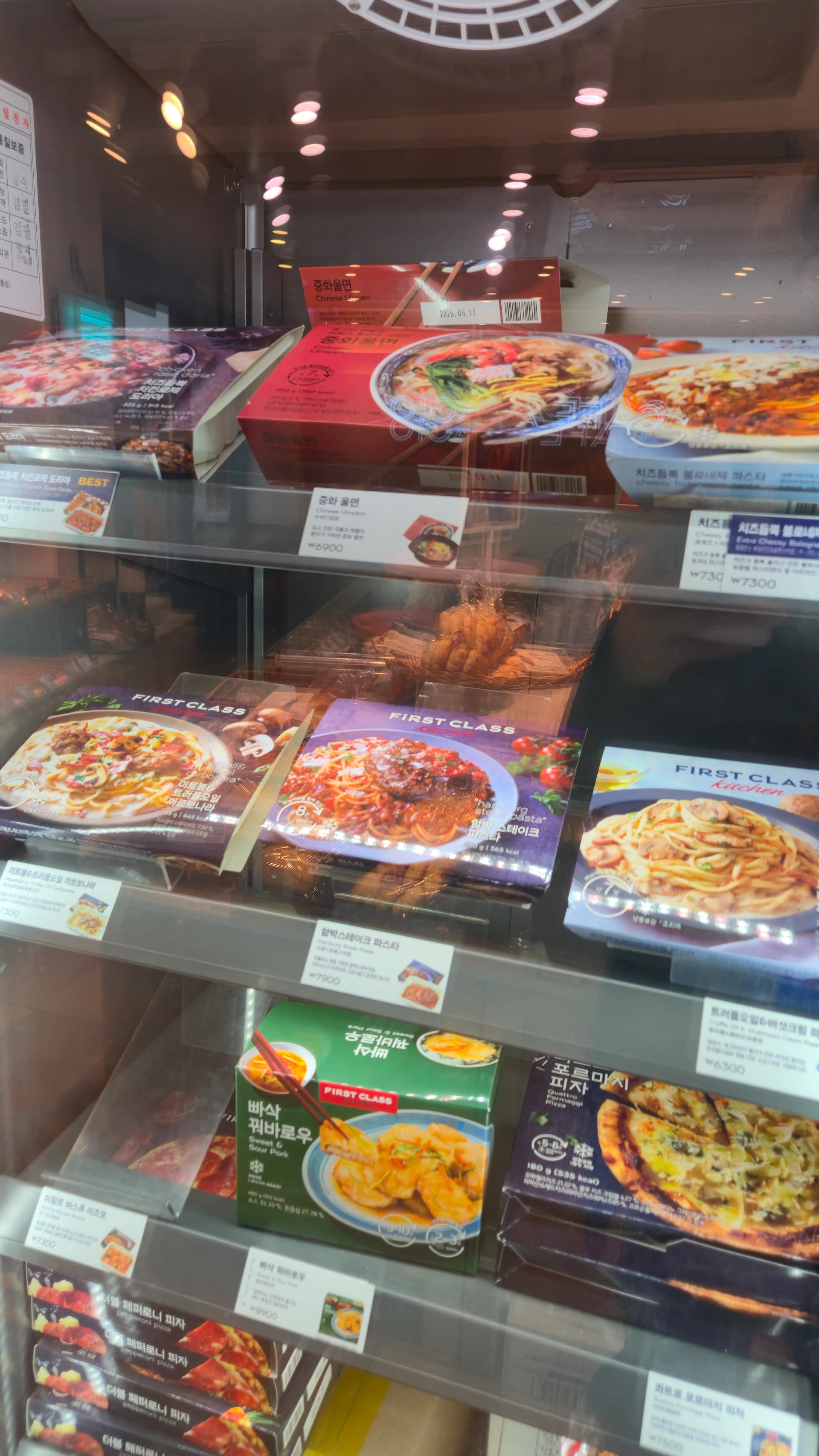
This section surprises first-time visitors. Paris Baguette sells frozen ready-meals. Pasta, jjambbong (짬뽕 — a spicy Korean-Chinese seafood noodle soup), pizza, gwibaro-u (귀바로우 — a Korean-Chinese sweet-and-sour pork dish similar to General Tso's). In a bakery. It sounds random, but Paris Baguette functions as a neighborhood grocery stop in Korea. I've walked in for bread and walked out with tomorrow's dinner. More than once.
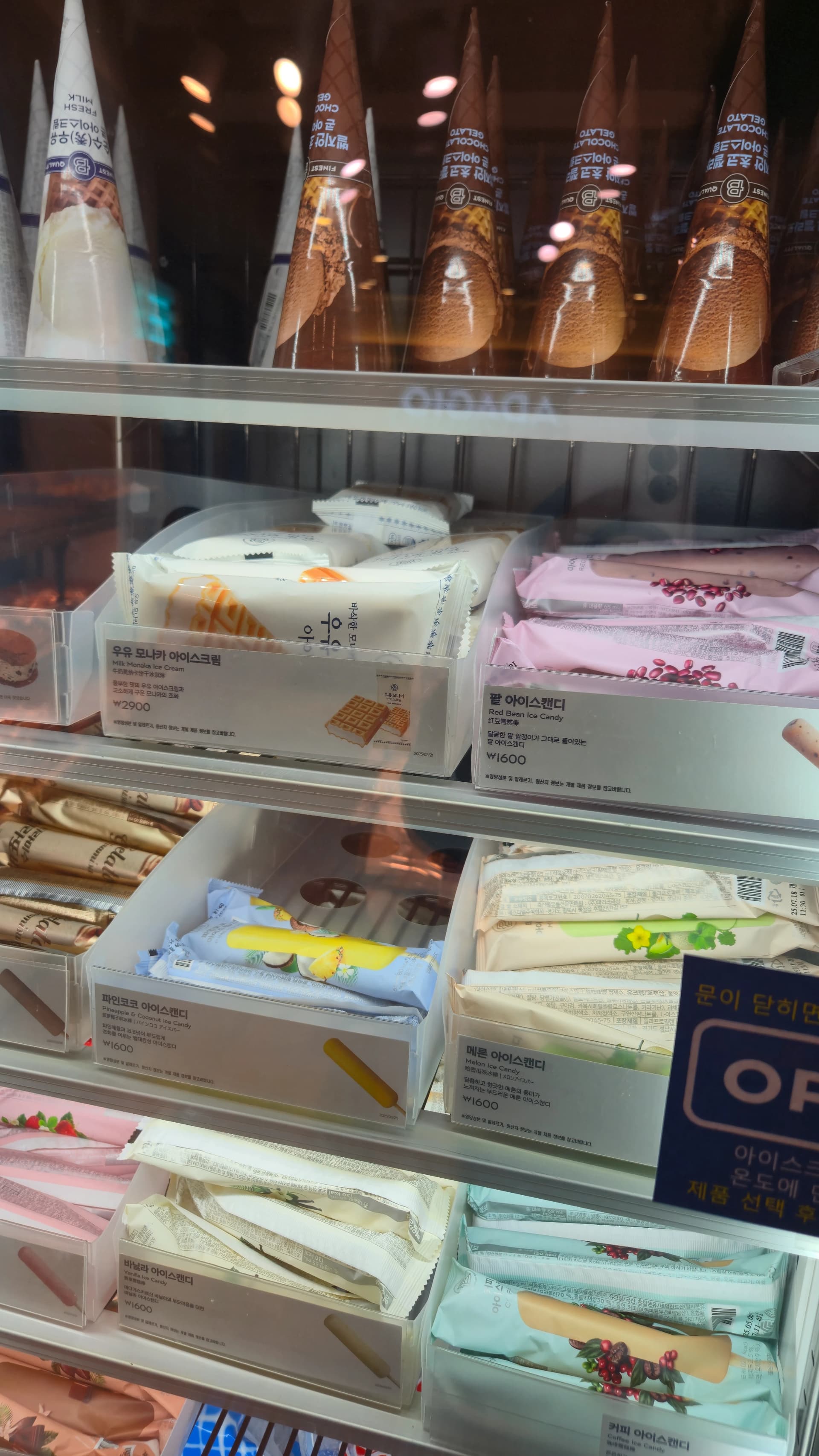
There's also an ice cream section. Milk monaka wafer sandwiches, red bean popsicles, banana popsicles, gelato cones. At some point, "bakery" starts to feel like the wrong word for what Paris Baguette actually is. Bread, cakes, sandwiches, salads, drinks, frozen meals, ice cream — all under one roof. I'm not sure what word fits better, but it works.
Café Adagio — There's a Sit-Down Café Attached
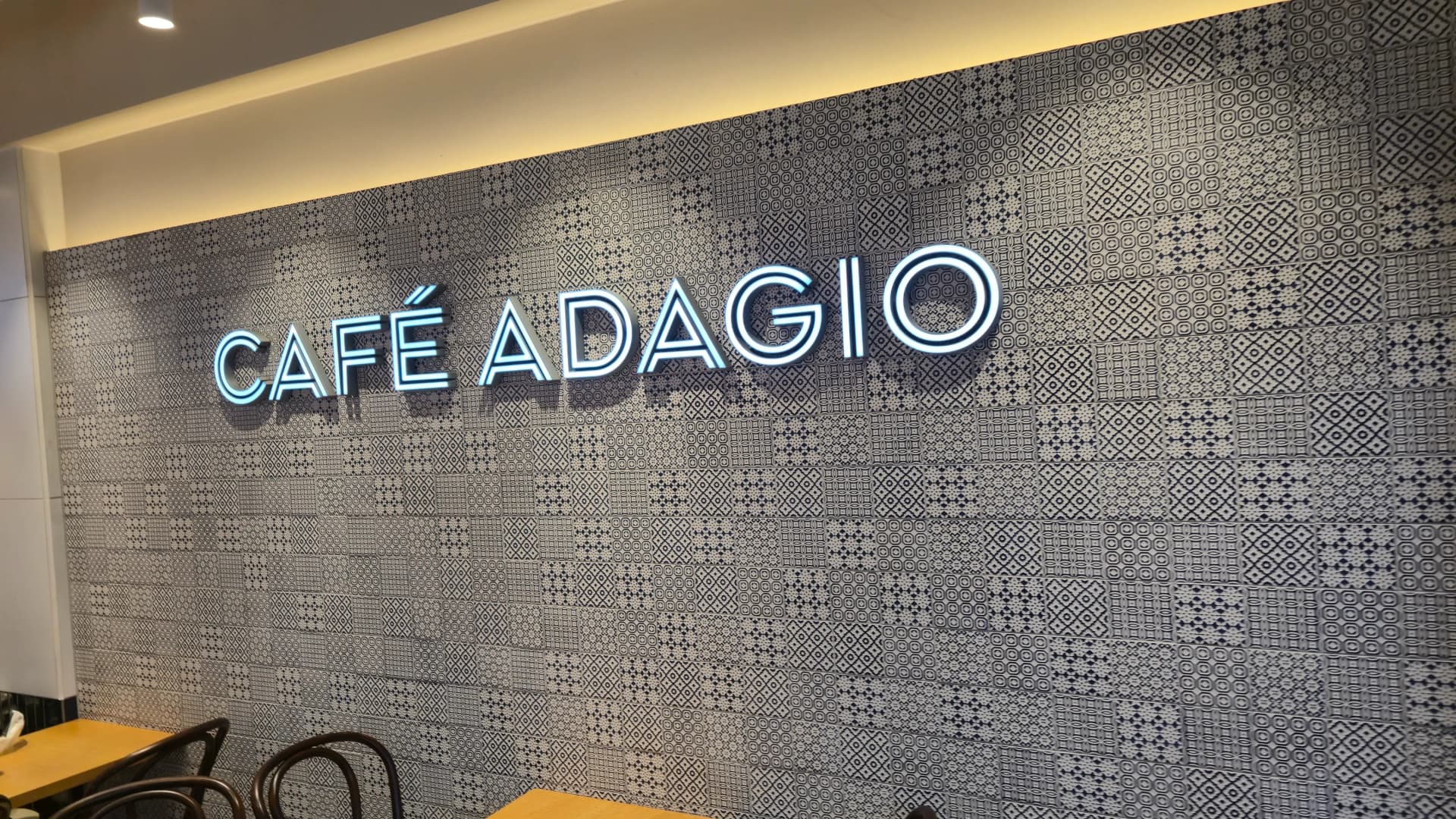
At the back of this location, there's a Café Adagio space. Café Adagio is a café brand operated by Paris Baguette — some locations have it built in, some don't. Paris Baguette used to be almost entirely takeout-focused; now you'll regularly see people sitting down with a coffee and a pastry, treating it like a café. I didn't photograph the menu board today, but they have the basics: Americano, lattes, standard espresso drinks.
What We Actually Bought Today
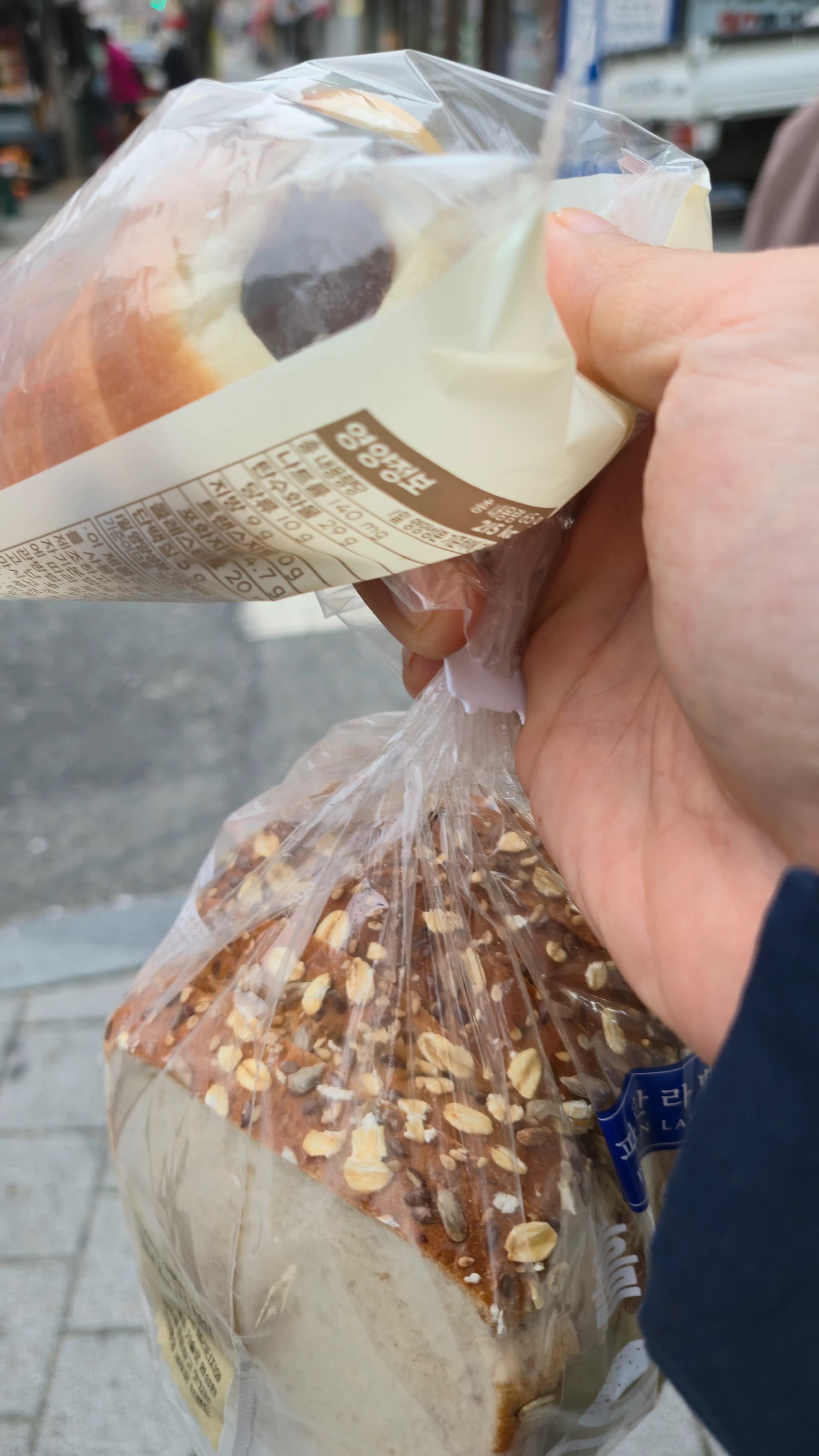
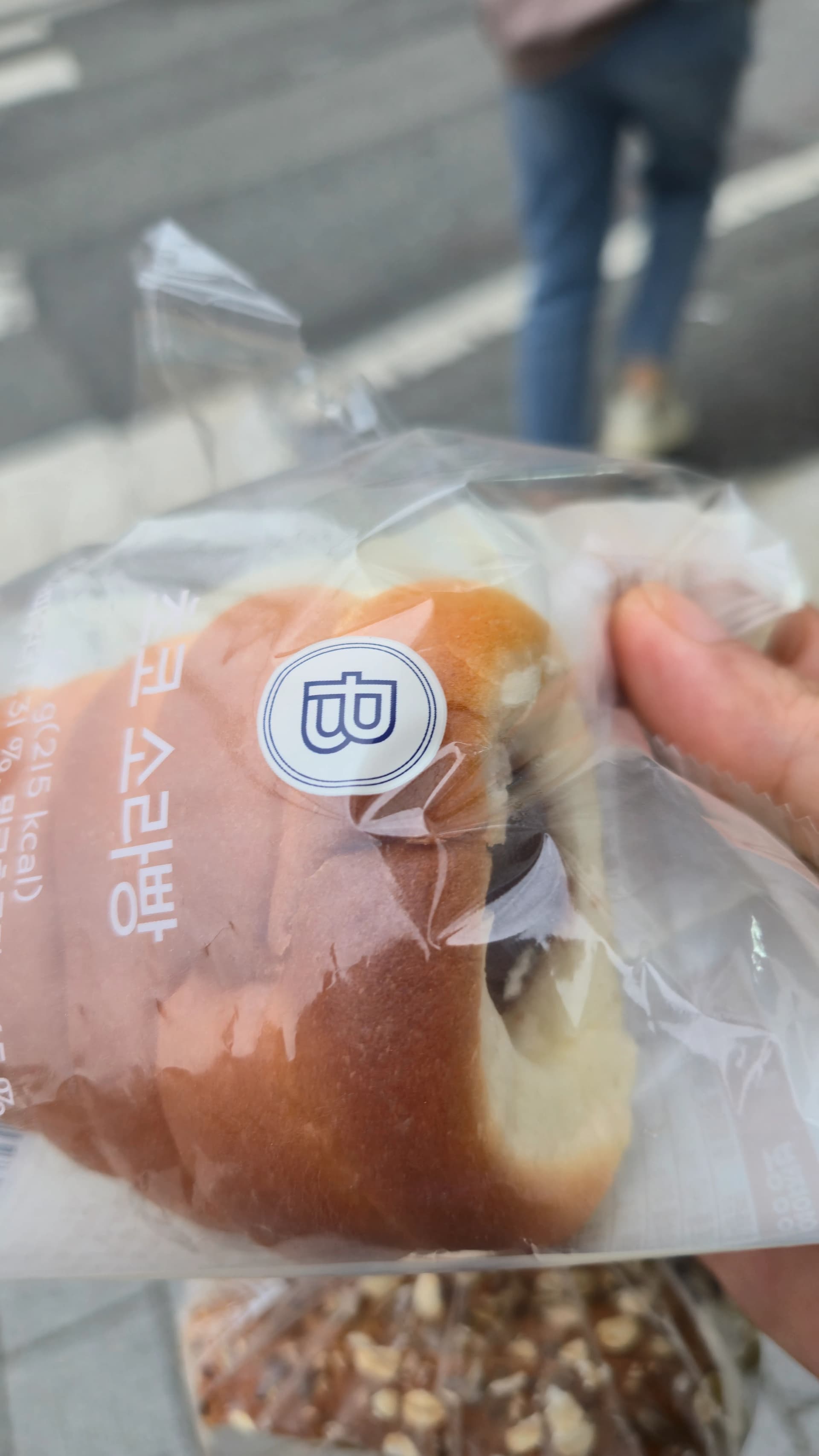
Today's haul: the Whole Grain Oat Loaf, a Choco Sorapang, and those two chapssal breads I mentioned earlier.
The Choco Sorapang (초코소라빵) was the last one in the store, and I grabbed it. Sorapang means "conch bread" — the dough is rolled in a spiral to look like a seashell, then baked. The chocolate version has chocolate cream inside the coils. The oat loaf is for tomorrow's breakfast. The chapssal breads are just... always. And the sorapang? The bag opened before we got home. Not me. My wife. The same one who asks "Again?" every time I walk into Paris Baguette.
Everything together came out to just over ₩10,000 — around $7 to $8. At Paris Baguette, that amount of money keeps your hands pretty busy.
You Don't Need to Seek It Out — It'll Find You
Paris Baguette is one of those places that's so present in everyday Korean life that you stop noticing it. Taking a camera through the whole store this time made me realize how much is actually there. We photographed a lot more than I expected, and my wife — who walks past these shops with me constantly — said "I didn't realize there was so much variety" by the time we reached the frozen meals section.
If you're visiting Korea, don't put Paris Baguette on your itinerary. You won't need to. Walk anywhere long enough and one will appear. Just step in and grab whatever catches your eye. That said, if it's your first time: chapssal donut, sausage bread, sweet potato cake. Those three will give you a solid read on what Korean bakery culture actually feels like.
One real tip: go in the morning. Afternoon visits mean the popular stuff is already gone. The croquette situation today — one variety left by 3 PM — is exactly what I mean.
This post was originally published on https://hi-jsb.blog.