Soy Marinated Raw Crab — Korea's Ultimate "Rice Thief"
Table of Contents
13 items
Last winter, my older brother rang me up and said, "I'm craving crab — my treat tonight." I didn't need to be asked twice. We ended up at a crab restaurant near Gasuwon in Daejeon, a major city about an hour and a half south of Seoul. We ordered one soy marinated raw crab and one spicy marinated crab, plus two bowls of rice to start with. To cut a long story short, between the two of us, we polished off nine bowls of rice.
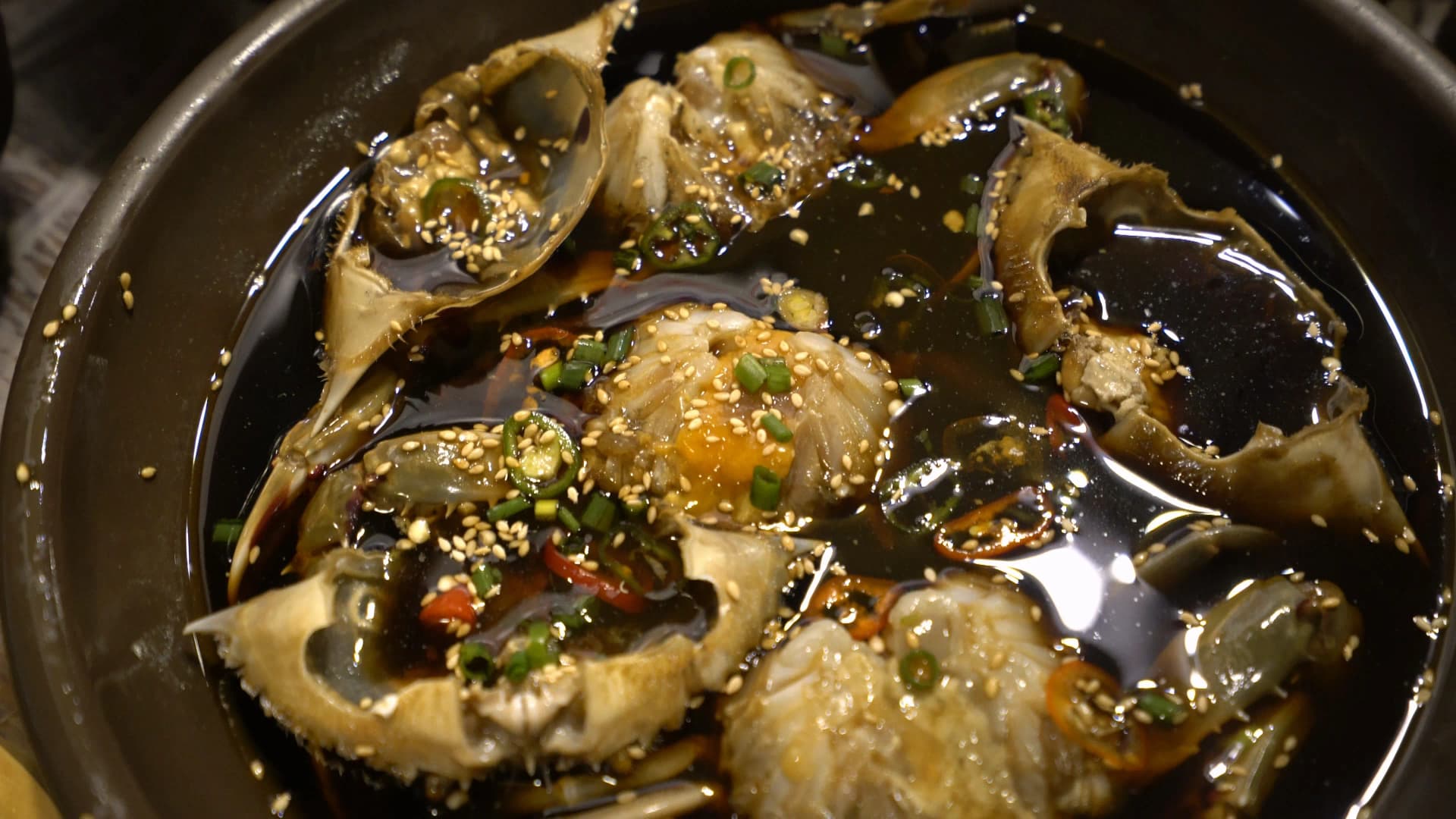
The first thing I noticed was the colour of the soy sauce
Soy marinated raw crab, or ganjang gejang, is a Korean seafood delicacy in which fresh raw blue crab is cured in a soy-based brine for several days. The moment the lid came off the earthenware pot, the deep, glossy colour of the soy sauce caught my eye — dark and shimmering, pooled generously around the crab, with sesame seeds and sliced spring onions scattered on top.
I lifted the shell slightly and there it was — bright orange roe packed tightly inside. Seeing all that roe, I knew we'd picked a good night. Ganjang gejang is eaten completely raw, which might seem startling if you've never encountered it before. But once you pick up a piece and suck the meat from the shell, this wave of savoury, umami-rich flavour washes over you — salty, slightly sweet, impossibly deep. Think of it a bit like the best oyster you've ever had, but richer and more complex, with the soy marinade doing what a good aged cheese does for a cracker. It's one of those flavours you simply can't convey in words. You have to taste it yourself.
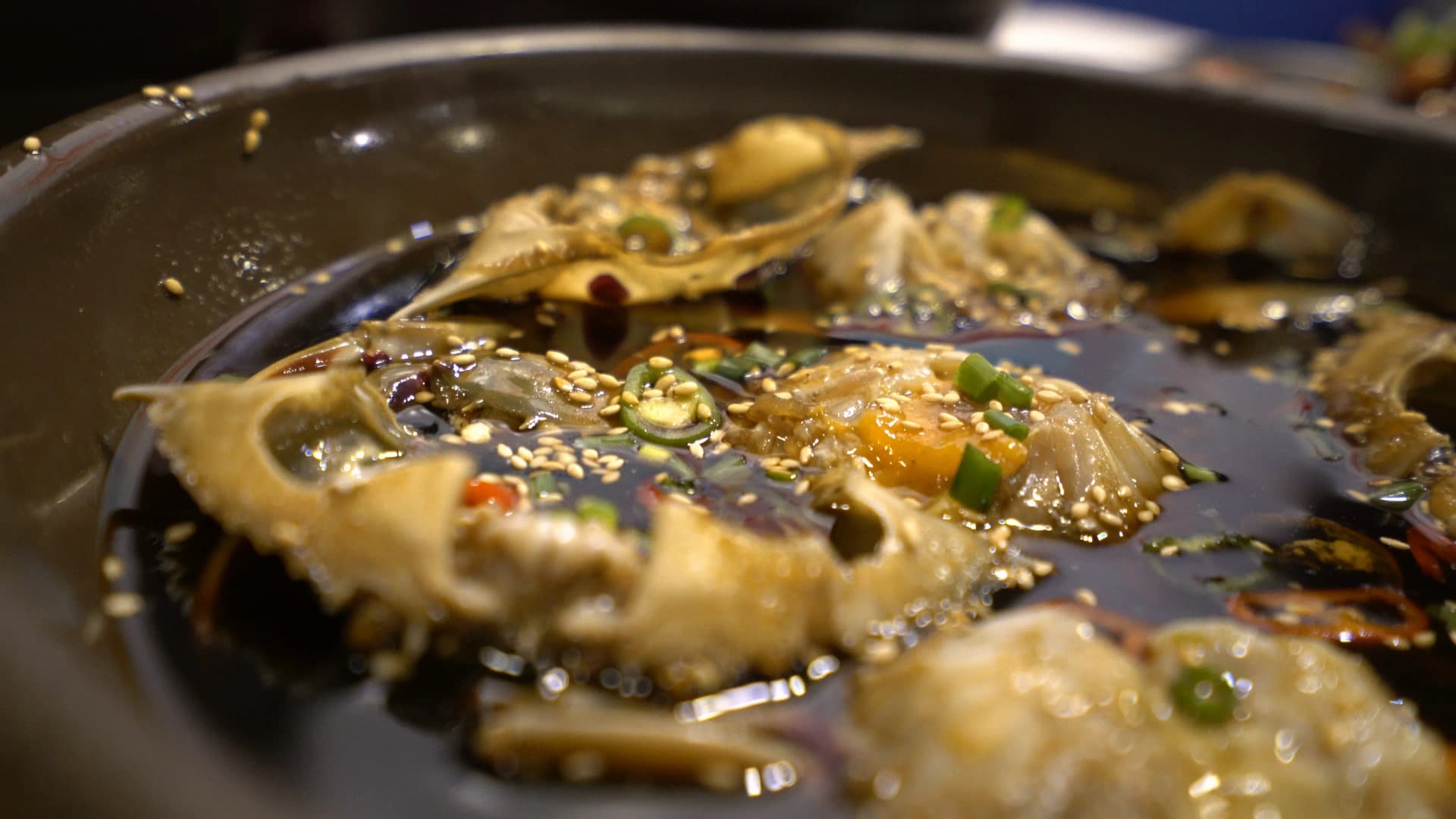
The quality of the cure makes or breaks the flavour
From the side, I could see just how generously the soy sauce pooled around the crab. It had crept right up to the edges of the shell, with sesame seeds floating gently on the surface. Looking more closely, the crab meat had absorbed the marinade and turned slightly translucent — a telltale sign of a proper cure.
I'll be honest: ganjang gejang varies wildly from restaurant to restaurant. Some places serve it reeking of fish, virtually inedible. Others will have you ordering your third bowl of rice before you even realise. The difference comes down to the curing process. If the crab hasn't been marinated long enough, the flesh stays tough and all you taste is salt. When it's done right, though, the meat practically falls away at the lightest touch of your chopsticks. This particular batch was so perfectly cured that the flesh slid off the moment my chopsticks made contact.
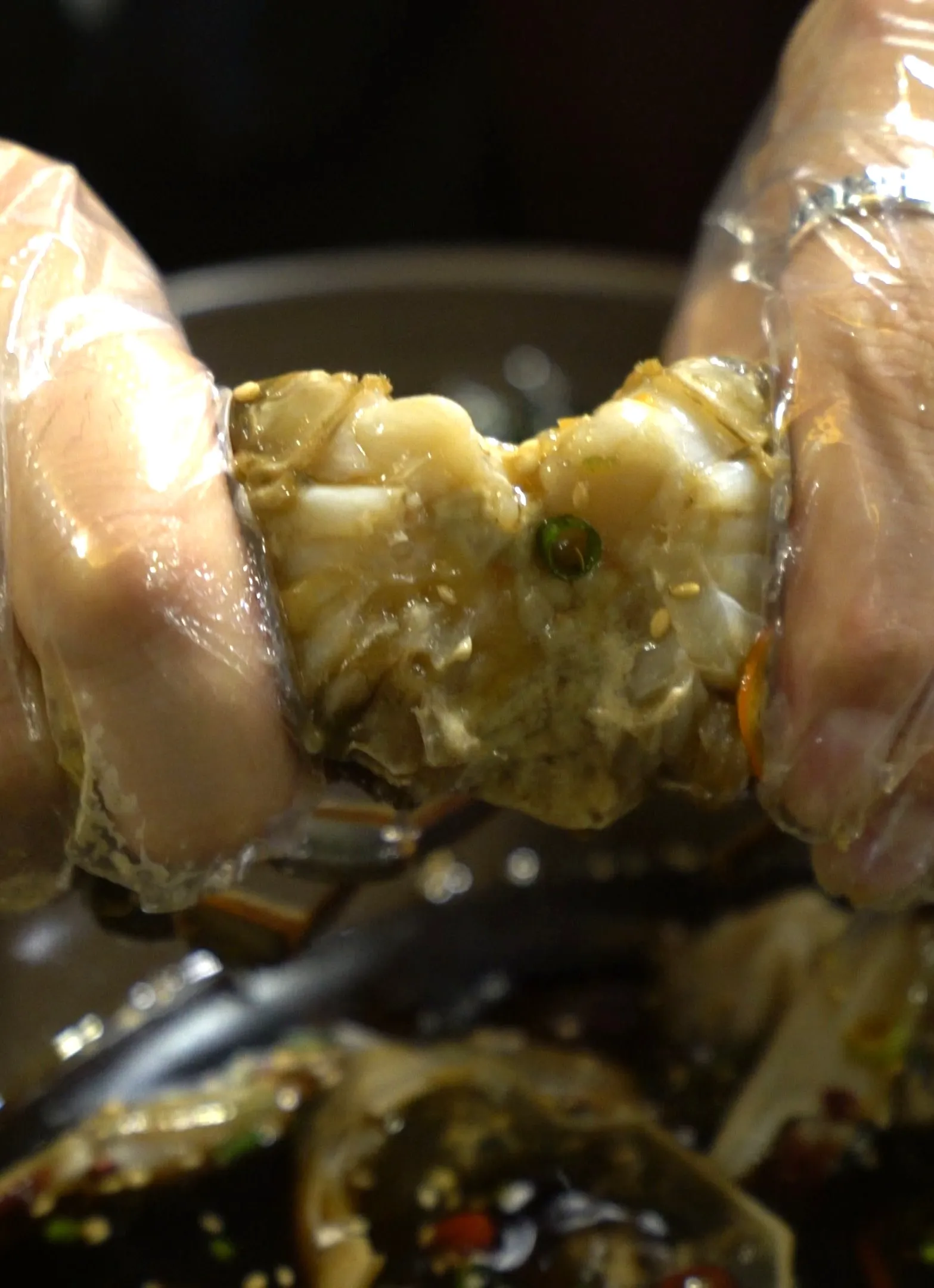
Soy marinated crab is a hands-on dish
Marinated crab isn't something you eat with a knife and fork — or even chopsticks, really. The meat clings to every crevice of the shell, so you need to crack it open with your bare hands and suck the flesh out directly. That's why every marinated crab restaurant in Korea hands you a pair of disposable plastic gloves the moment you sit down.
Snap a leg in half and you'll see the soy-brined meat packed tightly inside, ready to be sucked straight out. It might feel a bit awkward at first, but this is exactly how every Korean eats it — getting stuck in with your hands is not just normal, it's essential. If you try to be polite about it and use cutlery, you'll barely get half the meat out.
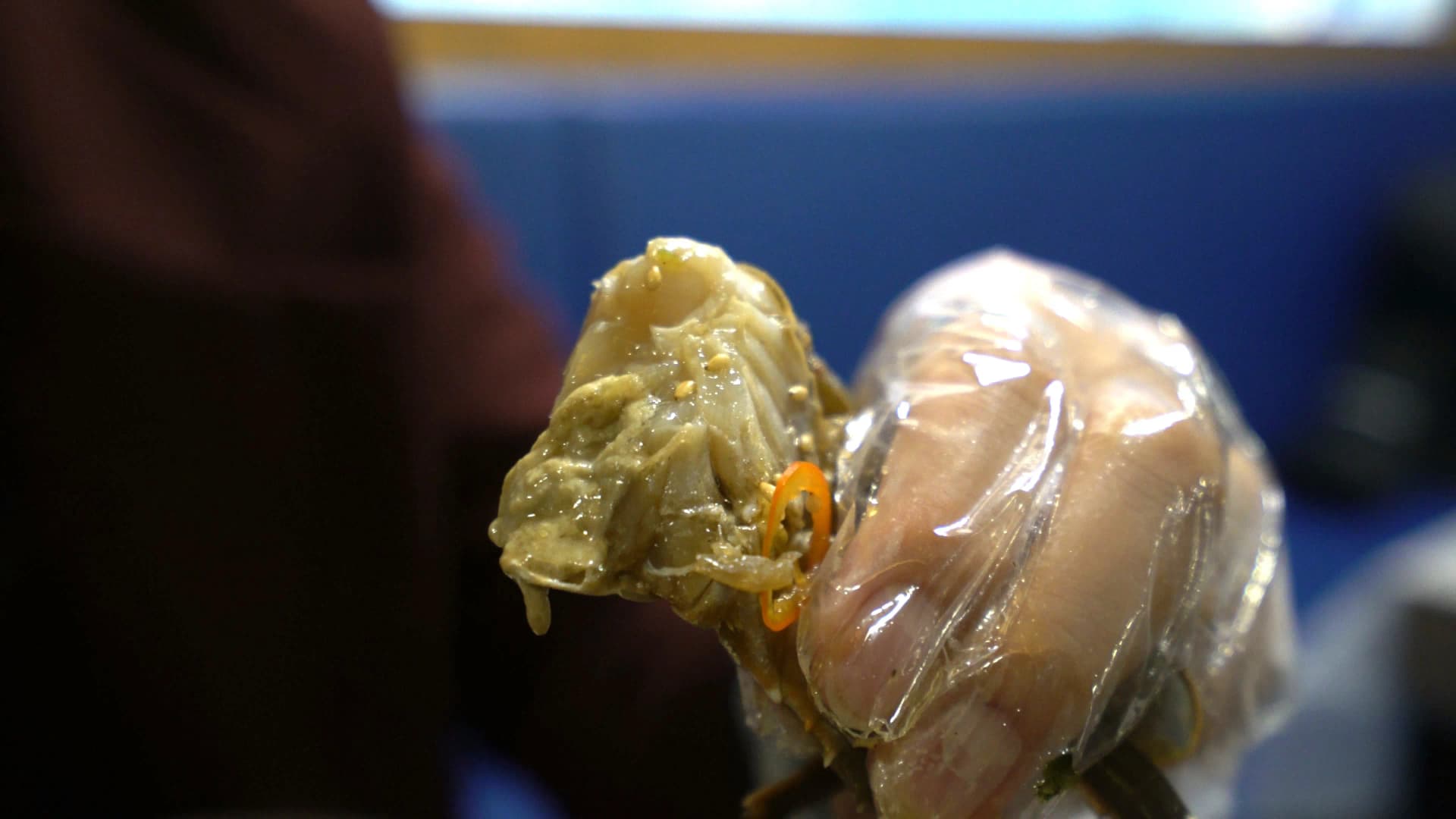
Press with your fingers and the meat slides right out
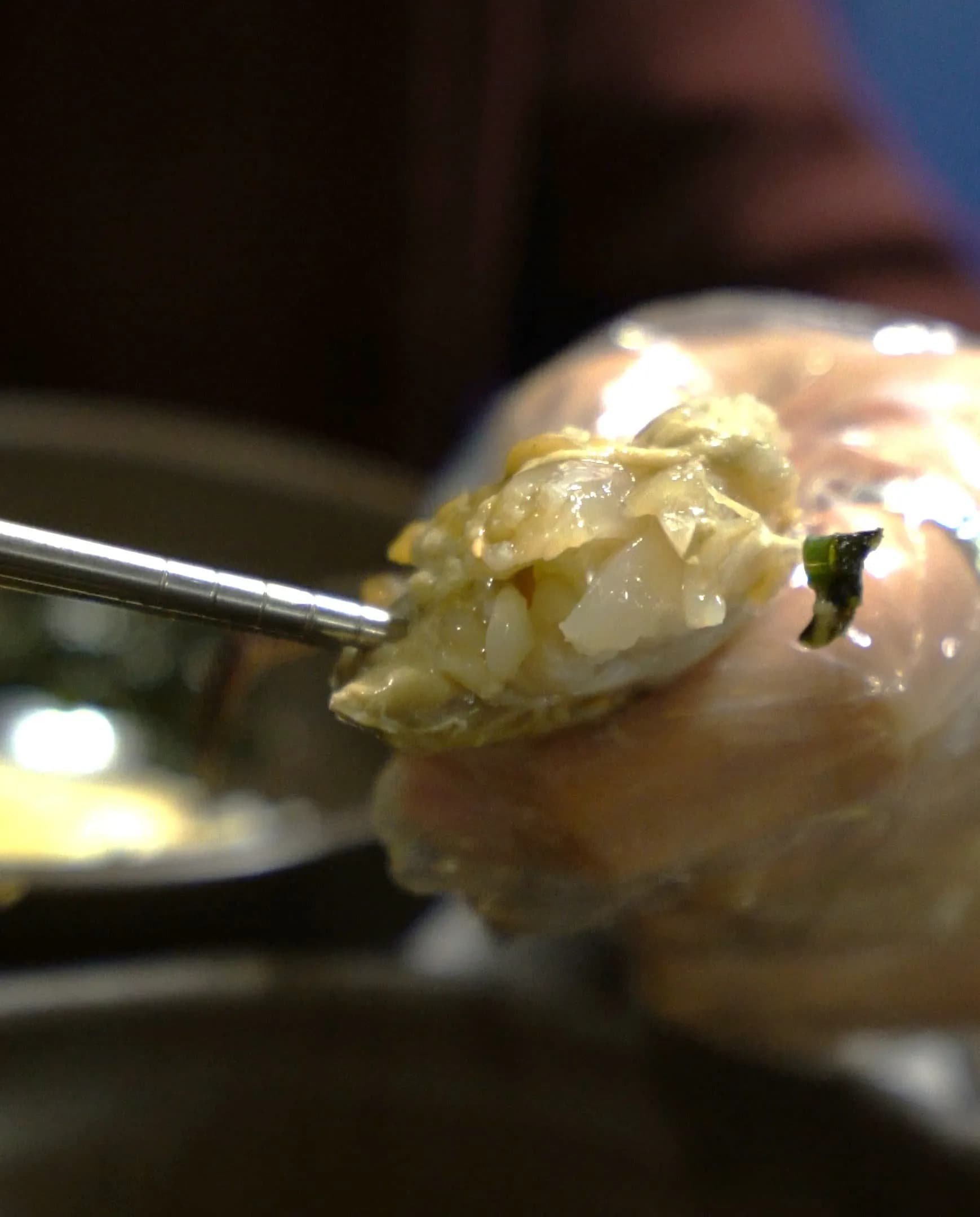
Give the crab leg a firm squeeze with your fingers and the meat comes out in one satisfying chunk. All the poking and prodding with chopsticks in the world won't achieve what a single squeeze of your fingers can. Because the soy marinade has soaked right through to the centre, there's no need to dip it in anything else. Pop it straight in your mouth and you get this soft, savoury, umami burst that's genuinely hard to stop eating.
Whatever you do, don't throw away the shell
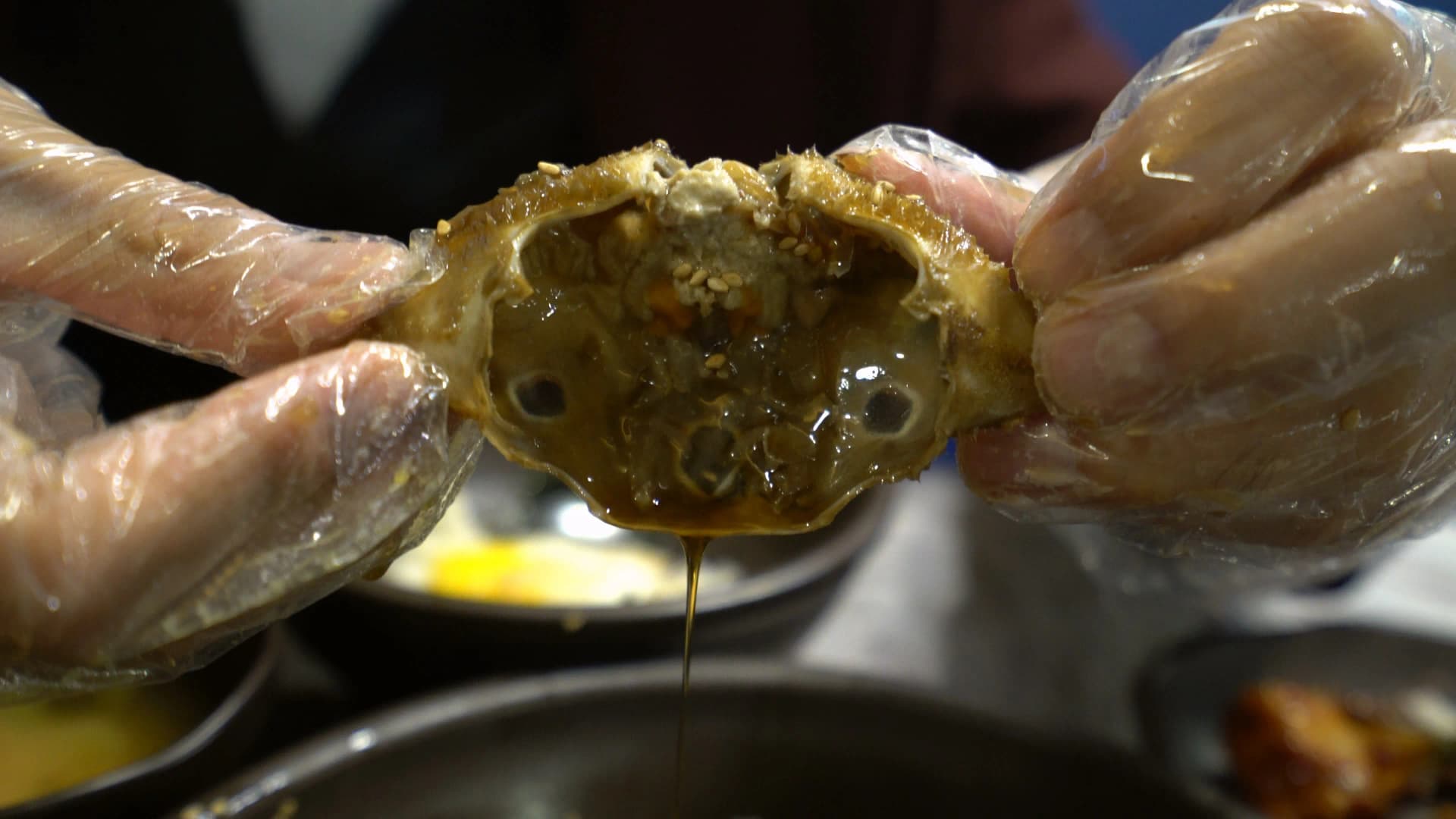
Once you've sucked every last bit of meat from the legs, you're left with the top shell — and this is the bit you absolutely must not bin. The real highlight of soy marinated raw crab starts right here. Flip the shell over and you'll find the crab's innards and roe, cured in the soy brine until they've turned thick and almost jam-like. The soy sauce practically drips off it, it's that moist. Now here's what you do: scoop a generous spoonful of plain steamed white rice into the shell, lay a sheet of dried seaweed on top, and mix it all together.
My brother told me, "Touch the shell first and you've already lost," insisting I finish the legs before going anywhere near it. He had a point. Once you start on the shell rice, you physically cannot stop.
Crab shell rice — the real reason they call it a "rice thief"
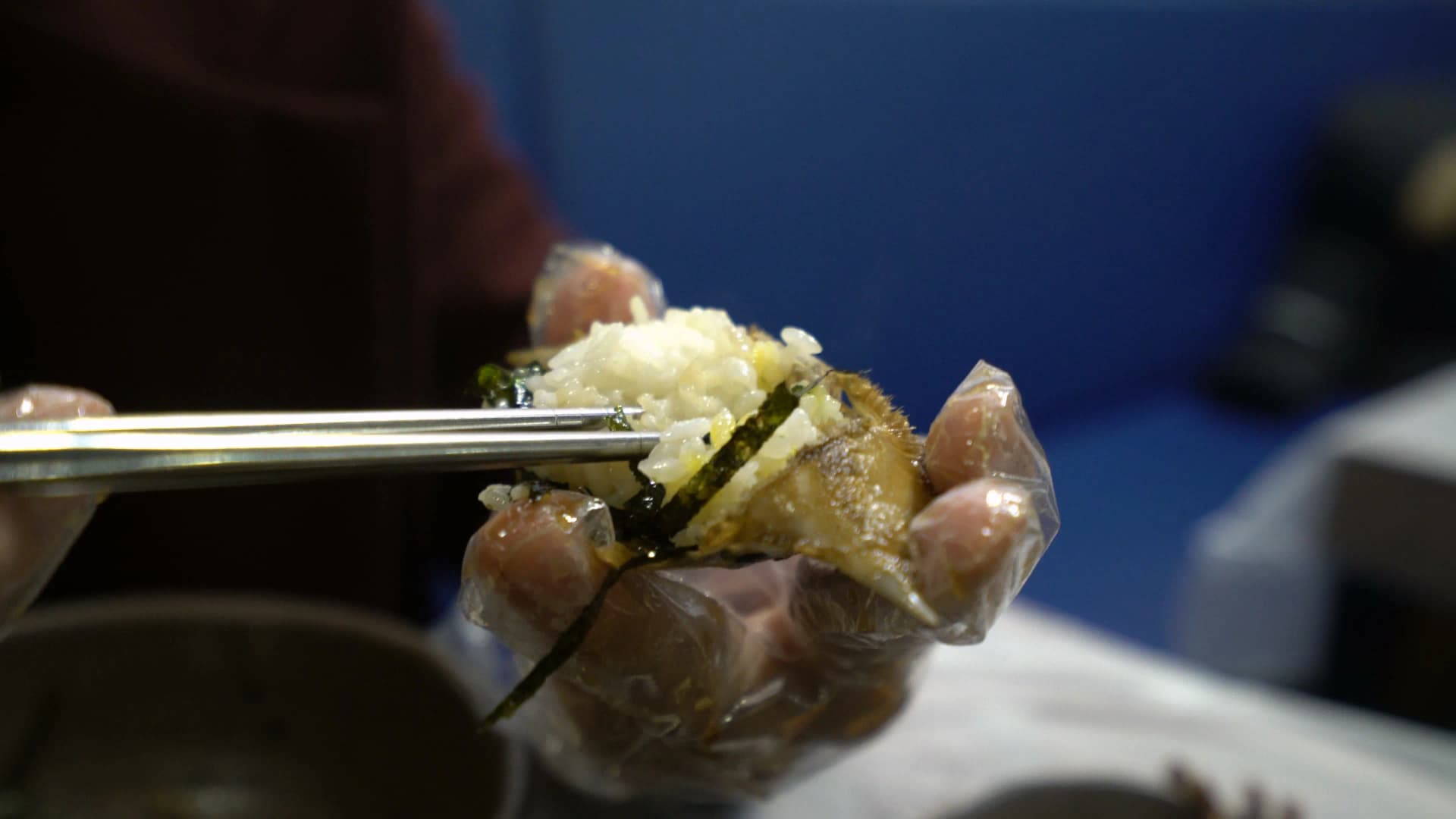
This is what Koreans call "crab shell bibimbap." You spoon rice into the shell and mix it with the soy-cured innards and roe, and every single grain of rice soaks up that rich, savoury, nutty flavour. It's extraordinary.
When I was eating the crab legs, I thought, "Yeah, this is tasty." But the moment I put the first spoonful of crab shell rice in my mouth, I genuinely went a bit blank. So this is what it's all about. This is why they call it "bap-doduk" — literally "rice thief" — because the rice vanishes before you even notice. One bowl of rice disappeared in seconds, and then I was ordering another. And another. From that evening onwards, I've been firmly in the "shell first" camp and I'm not going back.
Spicy marinated crab — same ingredient, completely different dish
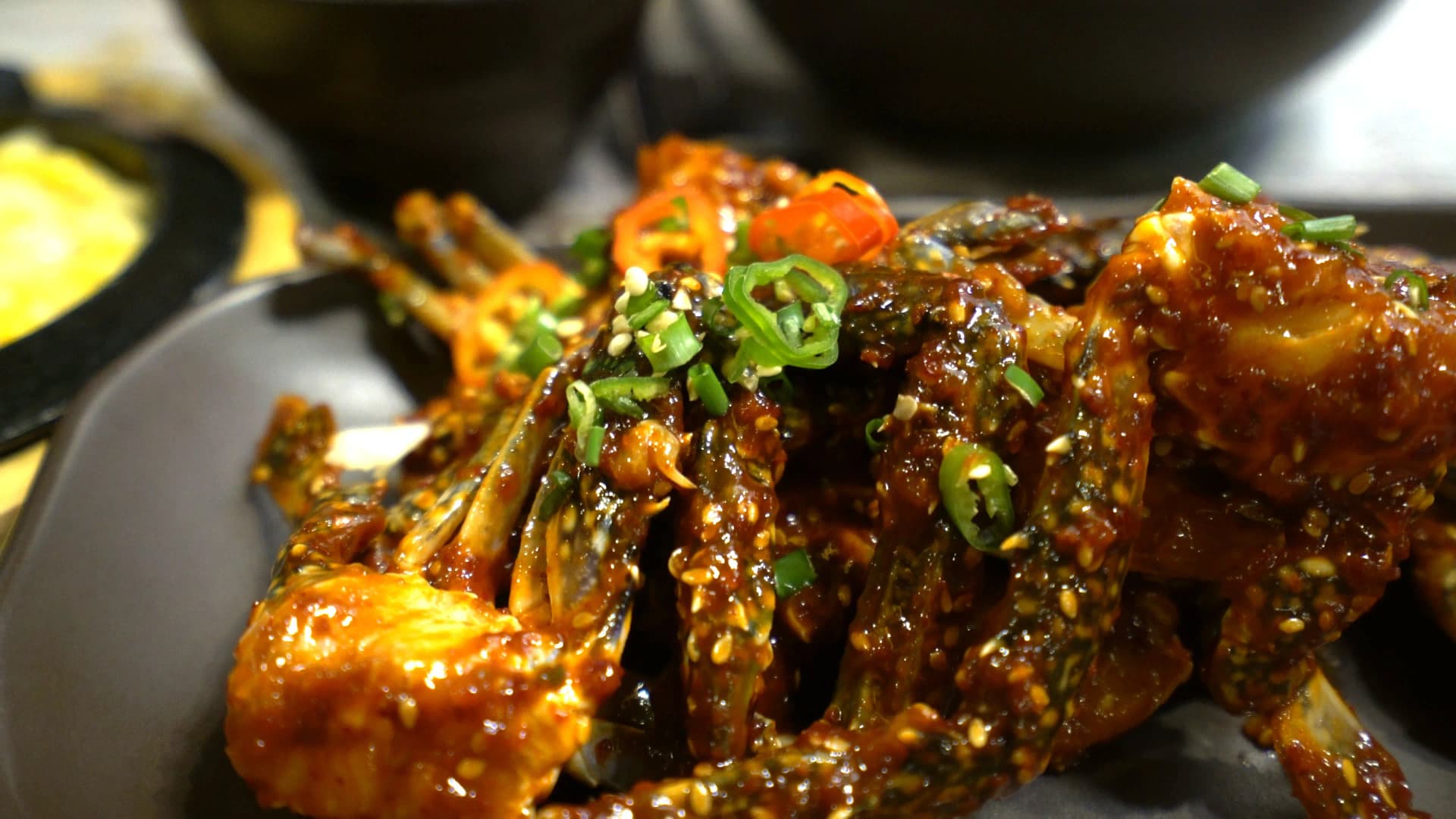
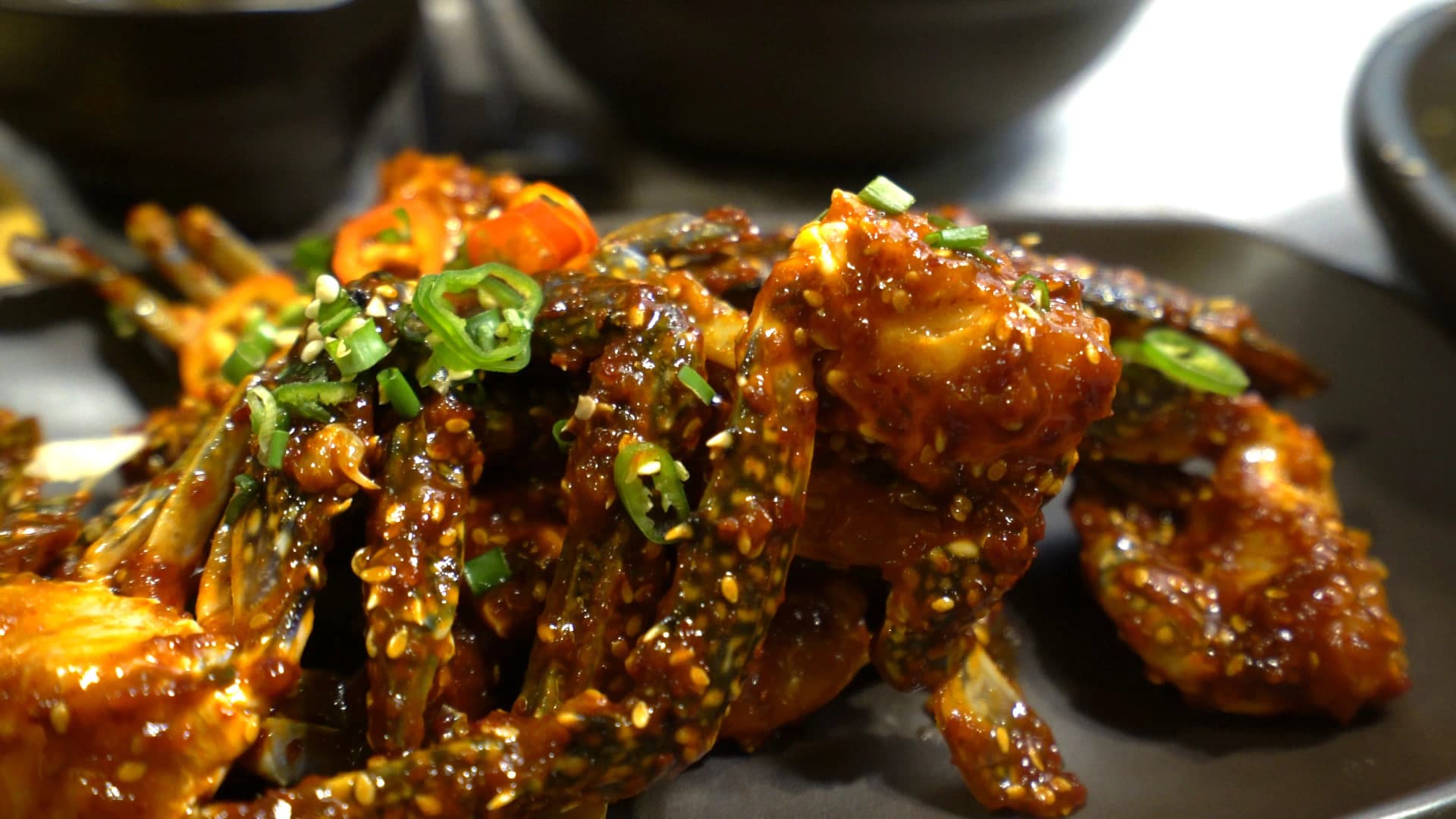
Yangnyeom gejang, or spicy marinated crab, uses the same fresh raw blue crab but dressed in a fiery red gochujang (chilli paste) sauce instead of soy. Despite sharing an ingredient, it's an entirely different eating experience. The red sauce coats every crevice of the crab legs, with sesame seeds and spring onions scattered on top — visually, it's a world apart from the dark, glossy soy version.
The flavour hits differently too. Soy marinated crab is a slow burn — a quiet, deep umami that builds gradually. Spicy marinated crab, on the other hand, punches you in the mouth straight away with heat and sweetness arriving at once. The way it steals your rice is different as well. With the soy version, it's the crab shell bibimbap that does the damage. With the spicy version, you pile the sauce-drenched crab meat on top of your rice and it instantly becomes a kind of fiery bibimbap on the spot. The moment that red sauce touches a bowl of white rice, it's game over.
There are loads of videos floating around social media of foreigners trying ganjang gejang for the first time, but honestly, if you've never had either, I'd recommend starting with the spicy version. Soy marinated crab is incredibly dependent on how well it's been cured — get unlucky and you might end up with something fishy and off-putting. Spicy marinated crab is far more forgiving; it's decent pretty much wherever you order it. Start with yangnyeom gejang, and if you enjoy it, work your way up to ganjang gejang. That way you're far less likely to be disappointed.
Close-up of the spicy crab — the sauce is seriously thick
Up close, you can really see how thickly the sauce is layered on. The red gochujang coats the shell like paint, and between the sauce you can see plump white crab meat peeking through. The flesh feels slightly firmer than the soy version, and because the spicy sauce wraps around the surface of the meat, you get the heat first when you bite in, followed by the natural sweetness of the crab coming through a moment later.
Spicy marinated crab is hands-on too
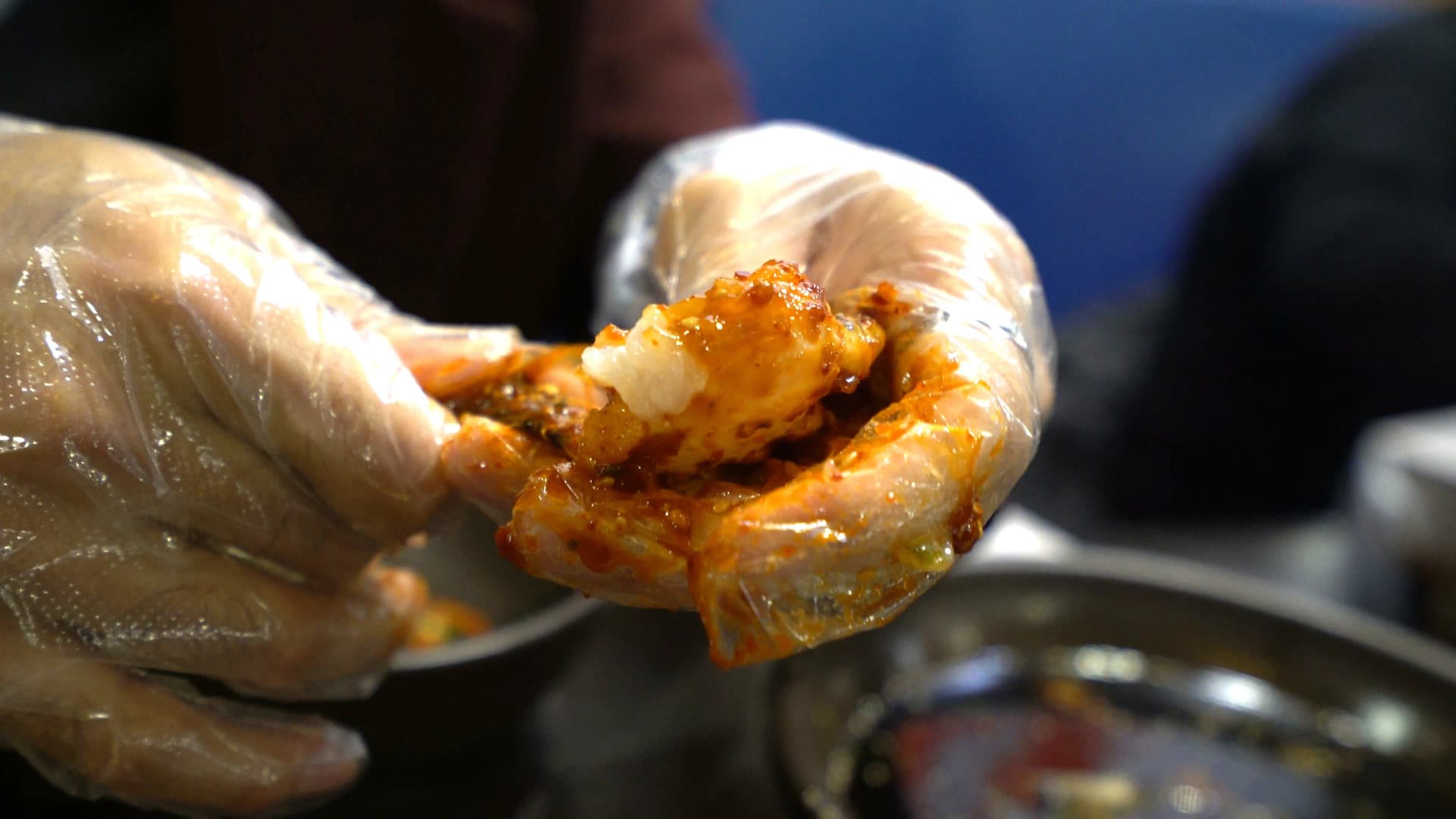
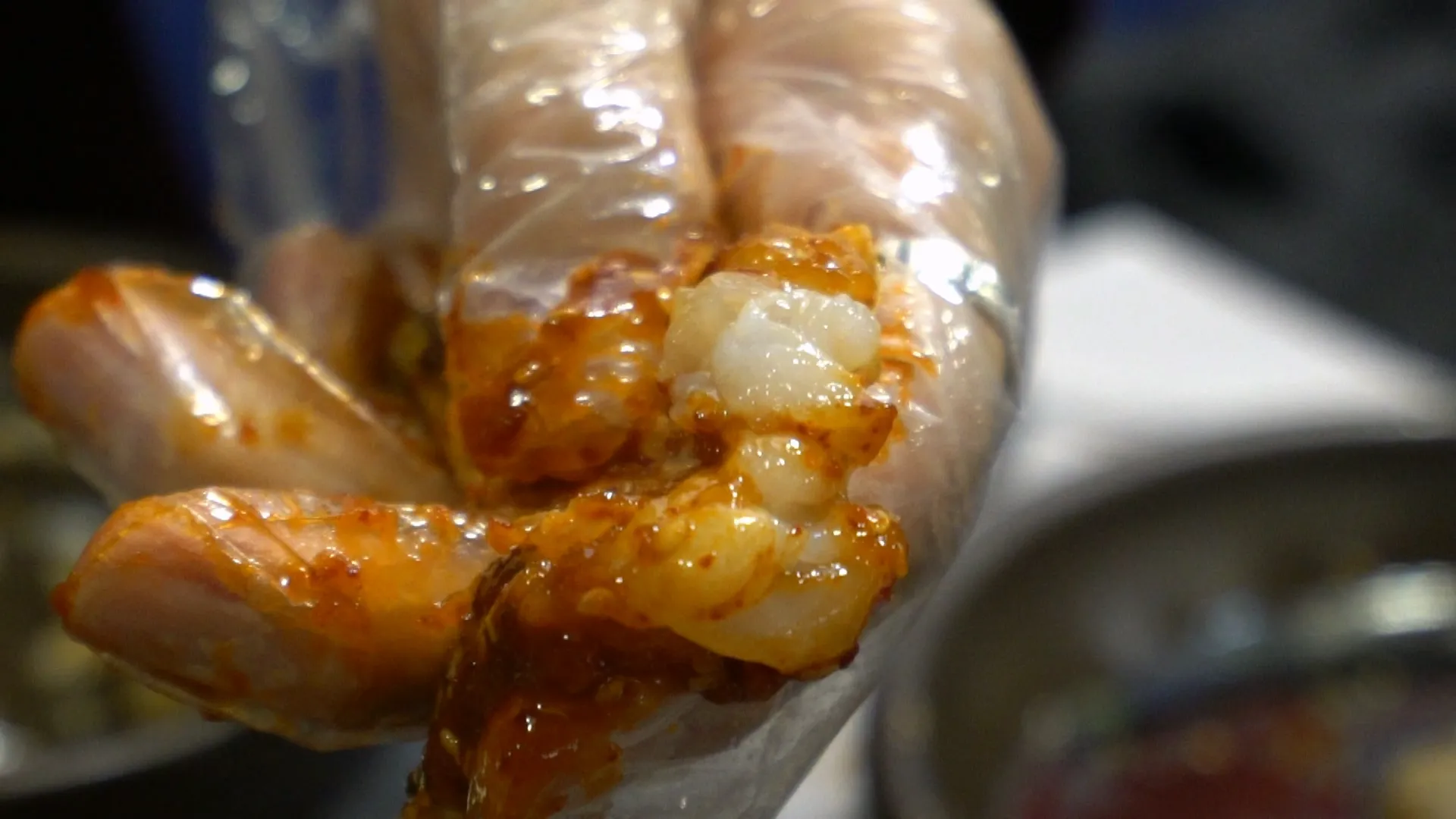
The eating method is exactly the same as the soy version — gloves on, crack it open, suck the meat out. But because the sauce is so thick, when you pull the meat free, the white flesh comes out absolutely smothered in red. If soy marinated crab is about appreciating the pure flavour of the crab itself, spicy marinated crab is about that collision of fiery sauce and sweet crab meat together. It's honestly brilliant even on its own as a drinking snack, but trying to resist ordering rice alongside it is a losing battle.
Here's a handy trick: if you switch from soy to spicy crab partway through, it completely resets your palate. And that means another bowl of rice goes down without a fight.
This is how the rice comes at a crab restaurant
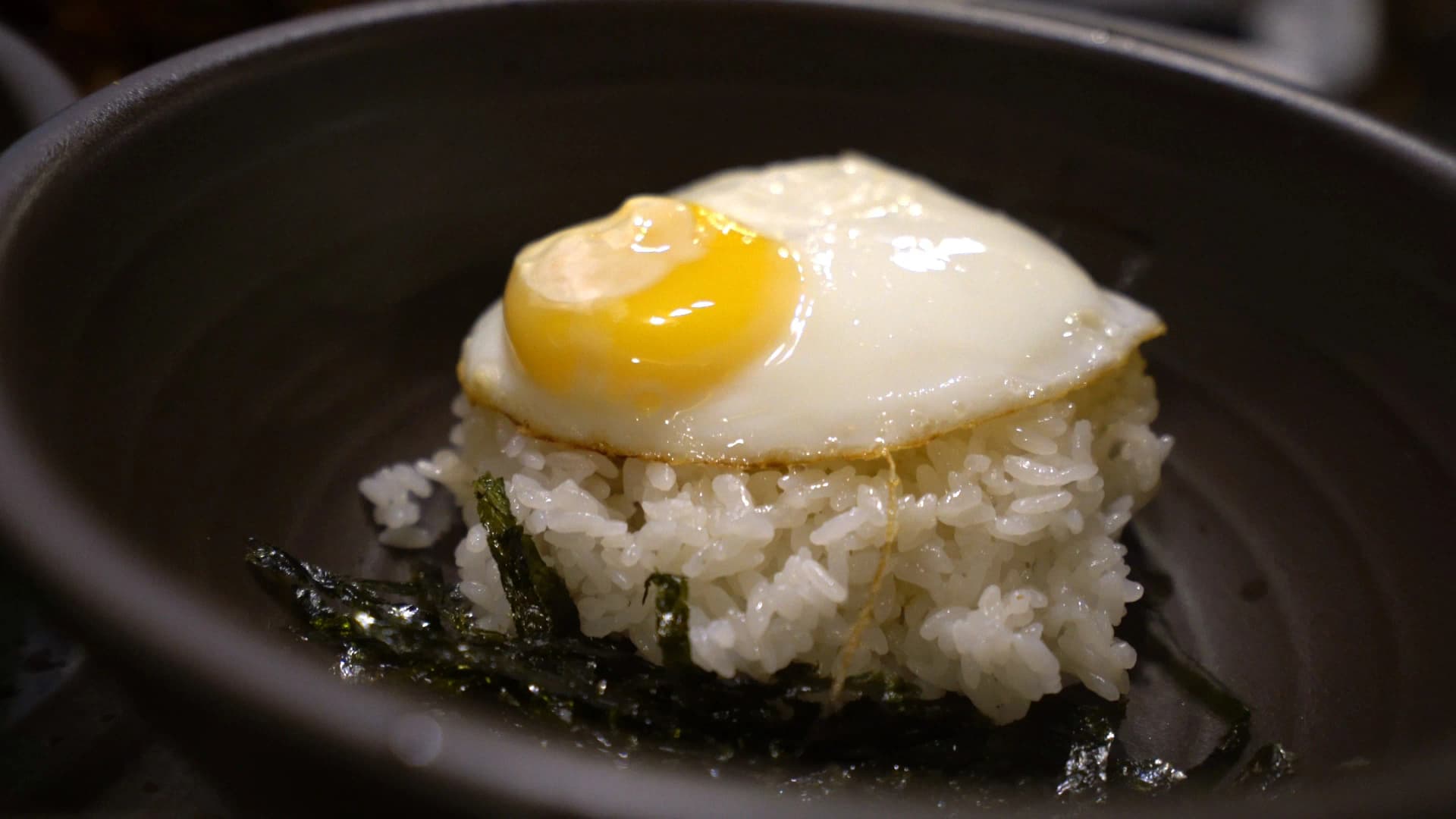
When you order rice at a marinated crab restaurant, it often arrives looking like this — not just plain white rice, but with a soft, runny fried egg on top and a layer of dried seaweed underneath. You can mix this straight into the leftover soy sauce from the crab, or scoop it into the shell for crab shell bibimbap. When the egg yolk bursts and mingles with the soy brine, the richness goes up another level entirely.
A few honest gripes
There were some downsides, mind. The side dishes at this particular restaurant were a bit lacklustre. Most well-known marinated crab spots will set you up with steamed egg, doenjang jjigae (fermented soybean stew), and a selection of pickled bits as standard — but this place was a bit thin on that front. The crab itself was excellent, but looking at the overall spread, it felt a touch sparse. Also worth mentioning: marinated crab is seriously high in sodium. A 250g serving of ganjang gejang contains roughly 3,221mg of sodium — well over the WHO's recommended daily limit of 2,000mg. If you're sensitive to salt, order plenty of extra rice to balance things out.
Whether it's soy or spicy marinated crab
If you come to Korea and leave without trying marinated raw crab, I genuinely think you'd be missing out on something special. Yes, the idea of eating raw crab might give you pause at first, but one single bite and you'll realise how daft that hesitation was.
Personally, I'm firmly in the soy marinated crab camp. Spicy marinated crab tastes fairly similar wherever you go, but a really well-made ganjang gejang has this deep, clean umami that, once you've experienced it, makes the spicy version seem almost one-dimensional. It's like the difference between a decent house wine and a properly aged bottle — once you know, you know.
As we were paying, my brother said, "Mate, the rice bill was more than the crab." Extra rice was about £0.50 a bowl — nine bowls comes to £4.50. But that's not a complaint. That's just proof of how dangerously good marinated raw crab is.
Sources referenced in this article
According to payment data published by BC Card in 2024, soy marinated crab ranked third among the most purchased dishes by foreign tourists in Korea. It had been in sixth place in 2022, and the sharp rise over two years has been largely attributed to the influence of mukbang (eating broadcast) videos on social media. (Kyunghyang Shinmun)
In a column published in the Chosun Ilbo (27 March 2025), Japanese journalist Enomoto Yasutaka noted that Japanese diners feel virtually no resistance to soy marinated crab, given that soy sauce is a staple condiment in Japanese cooking and raw seafood is a cultural norm. He observed a clear preference for ganjang gejang over the spicy version among Japanese visitors. (Chosun Ilbo)
In 2025, Tongyeong Nonghyup in Gyeongnam Province became the first agricultural cooperative in Korea to successfully export soy marinated crab and spicy marinated crab to the United States, as part of a supply project to H Mart stores. (Nongmin Shinmun)
According to a Korea Daily report (2 November 2025), ganjang gejang specialist restaurants in LA's Koreatown are thriving, with some reporting that over half their customers are Chinese. (Korea Daily)
Based on data from Korea's Ministry of Food and Drug Safety, a 250g serving of ganjang gejang contains 3,221mg of sodium. The WHO's recommended daily upper limit for sodium intake is 2,000mg, so it's worth being mindful of portions. (iNews24)
This post was originally published on https://hi-jsb.blog.