Spicy Braised Chicken Stew — Korean One-Pot Comfort
Table of Contents
13 items
The morning a spicy chicken stew craving took hold
One weekend earlier this year, my wife and I were dithering over what to have for lunch when she said, "I can't remember the last time we had dakbokkeumtang." The moment those words left her mouth, all I could picture was a bubbling pot of fiery red broth. Dakbokkeumtang is a Korean braised chicken stew — bone-in chicken pieces simmered with potatoes, carrots, onions and spring onions in a spicy gochujang (fermented chilli paste) sauce. You might also hear it called dakdoritang, which is an older name for the same dish. Plenty of people make it at home, but restaurant versions always seem to have that extra depth of seasoning you can never quite replicate in your own kitchen. We live in the Daejeon area — a mid-sized city south of Seoul — and there's a dakbokkeumtang restaurant on practically every other street, so we didn't need to go far. It was still properly chilly outside, the sort of weather that demands a steaming bowl of something. Among Korean dishes, dakbokkeumtang has that unmistakable home-cooked feel to it. A bowl of piping-hot broth with rice stirred through, and you're sorted for the day. So come lunchtime, I shuffled out the door in my slippers.
What arrives at the table
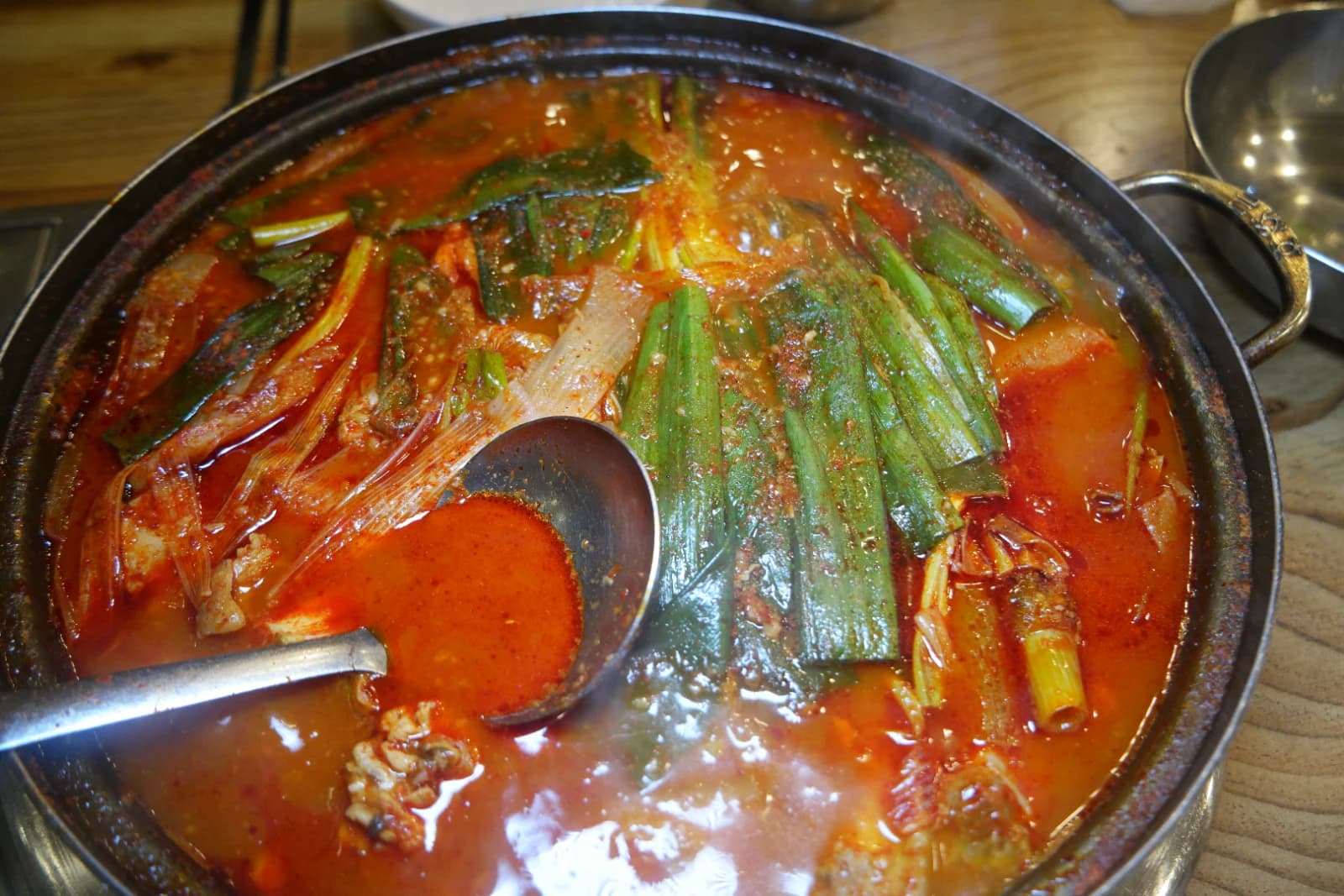
Dakbokkeumtang turns up like this — a large pot of vivid red stew. Long strips of spring onion sit across the top, while chunks of chicken, potatoes and carrots hide beneath the broth. The whole thing arrives on a tabletop gas burner so it keeps bubbling away while you eat. If you've visited Korea, you've probably tried the usual hits — barbecued pork belly, fried chicken, kimchi jjigae. But dakbokkeumtang is one of those dishes that flies under the radar for visitors. You rarely see specialist restaurants near the tourist spots, and the name alone doesn't exactly tell you what you're getting. Once you actually try it, though, there's a real pleasure in pulling tender meat off the bone with chopsticks while the spicy broth simmers away. The real highlight comes when the liquid reduces and you mix rice straight into the thick, sticky sauce — that's the whole point of this dish. You just ladle the broth over your rice and that's your meal done.
How to order — small, medium or large
The menu lists three sizes: small (소, so), medium (중, jung) and large (대, dae). Small serves two, medium three and large four. Order a small and you get an entire chicken, jointed into pieces, with potatoes and vegetables — a complete set. Rice and side dishes come included as standard; no need to order them separately. The two of us went for a small, and even that wasn't exactly modest. Plenty of people find there's food left over once the rice is factored in.
Before the boil — what makes the broth so red
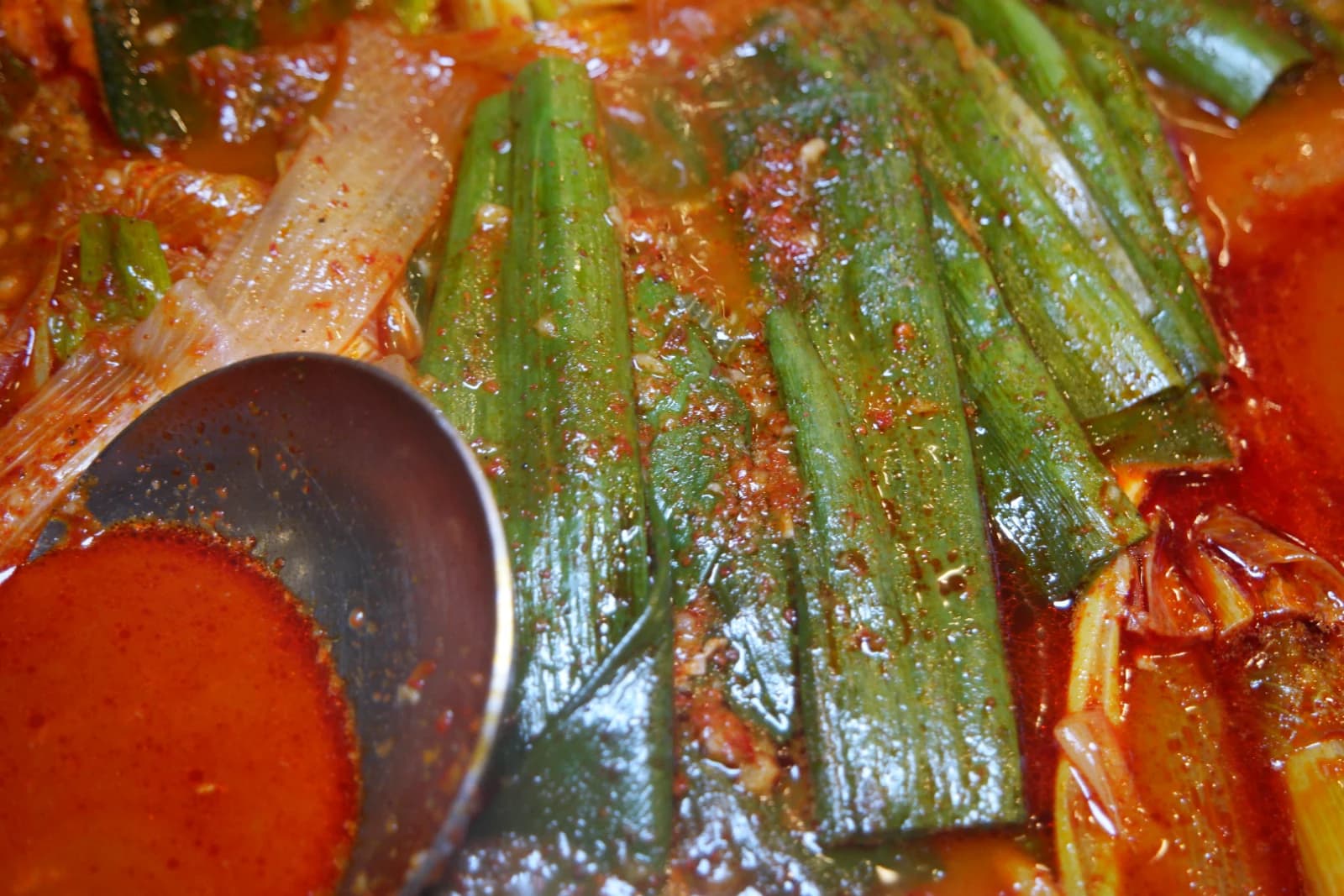
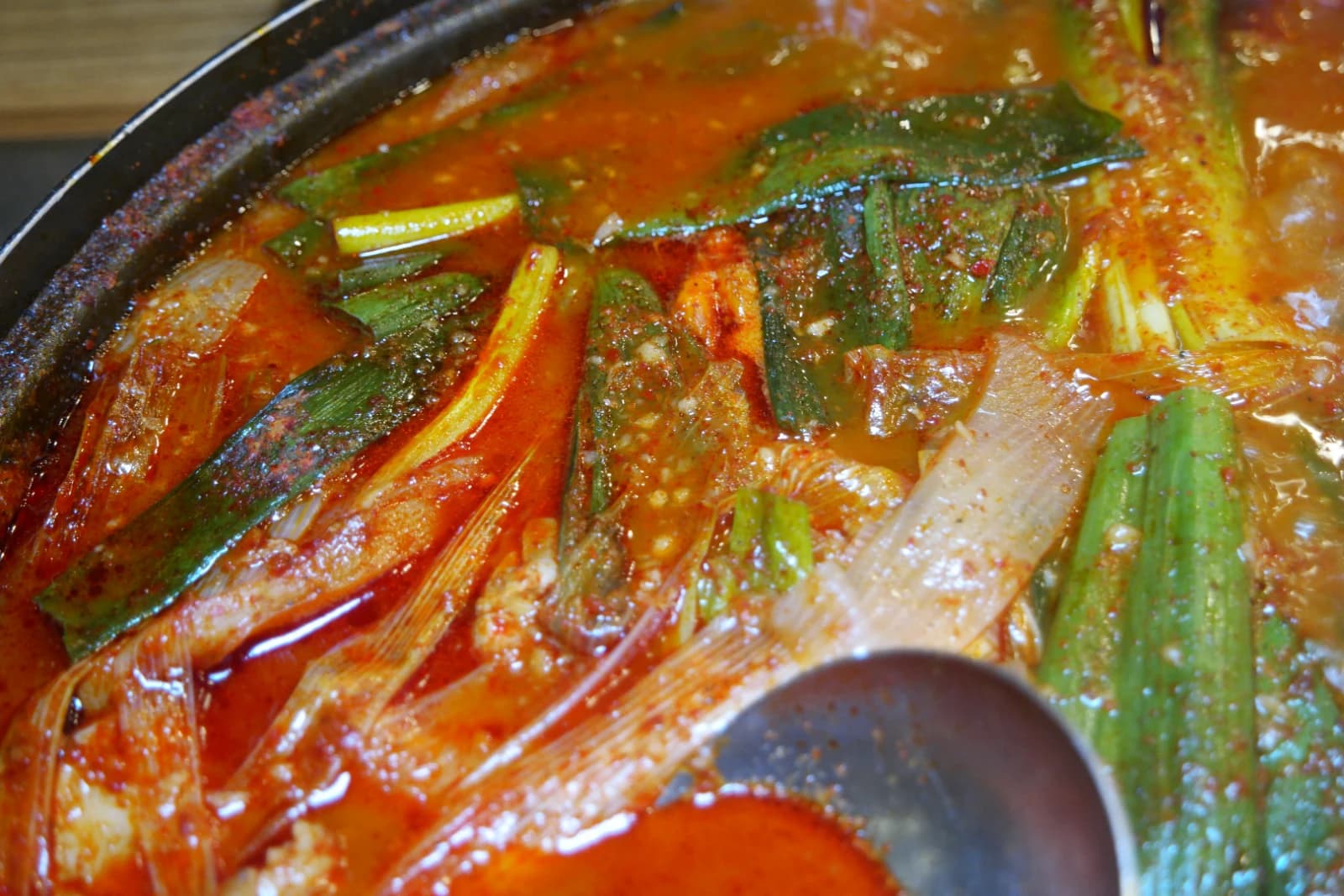
Up close, the broth is genuinely, startlingly red. Gochujang and chilli flakes blend with the cooking oil to form a layer of crimson across the surface, and as it starts to bubble, the spring onions drift about on top. We hadn't even picked up our chopsticks yet and the spicy aroma was already hitting us full force — my wife looked slightly alarmed and said, "This isn't going to be ridiculously hot, is it?" As with a lot of Korean food, that red broth looks far more intimidating than it actually tastes. Because dakbokkeumtang is gochujang-based, there's a noticeable sweetness running alongside the heat. At this stage the potatoes and chicken haven't fully absorbed the seasoning yet, so you don't tuck in straight away — another five minutes of simmering and everything will be properly infused.
The proper boil gets going
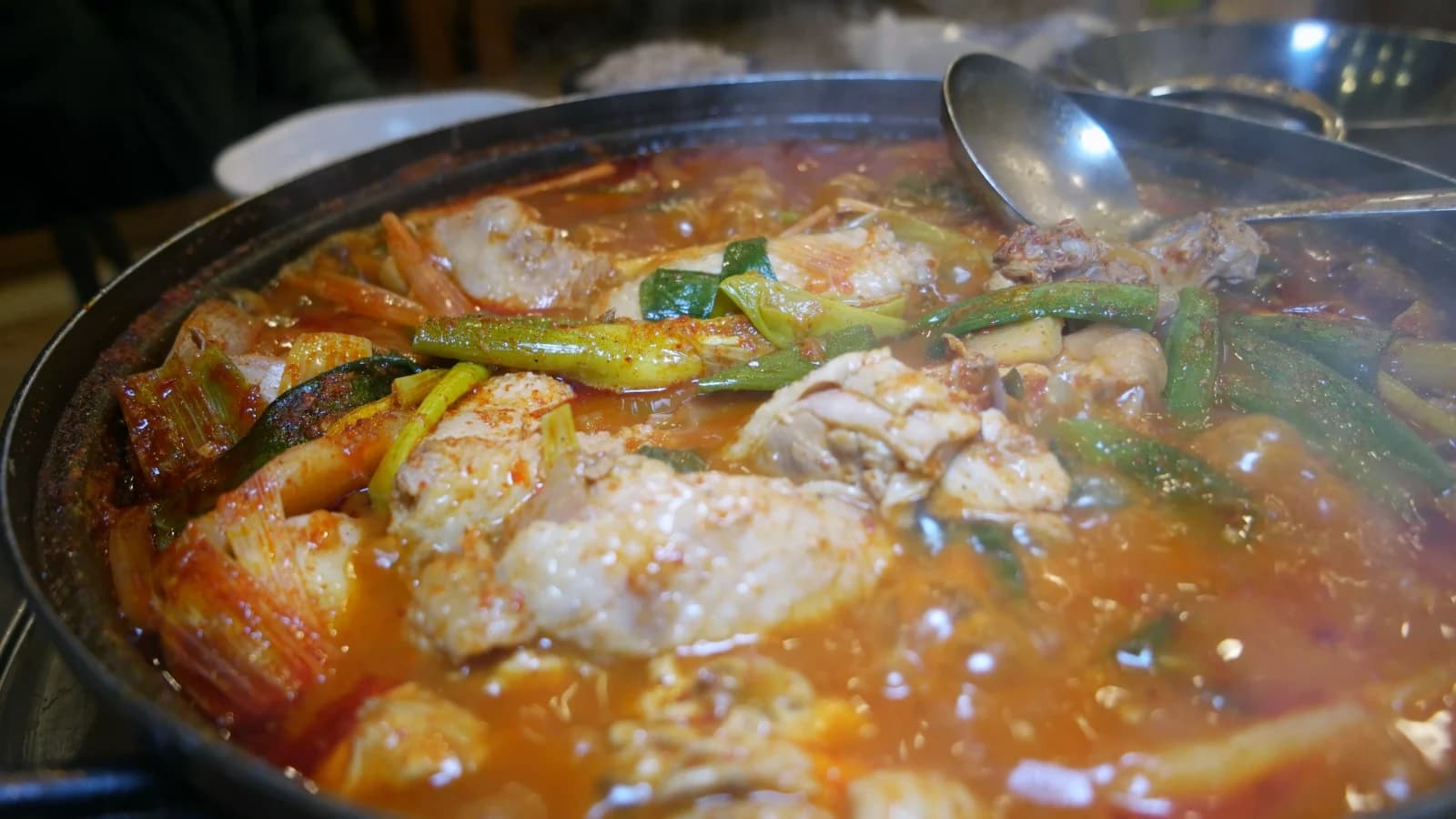
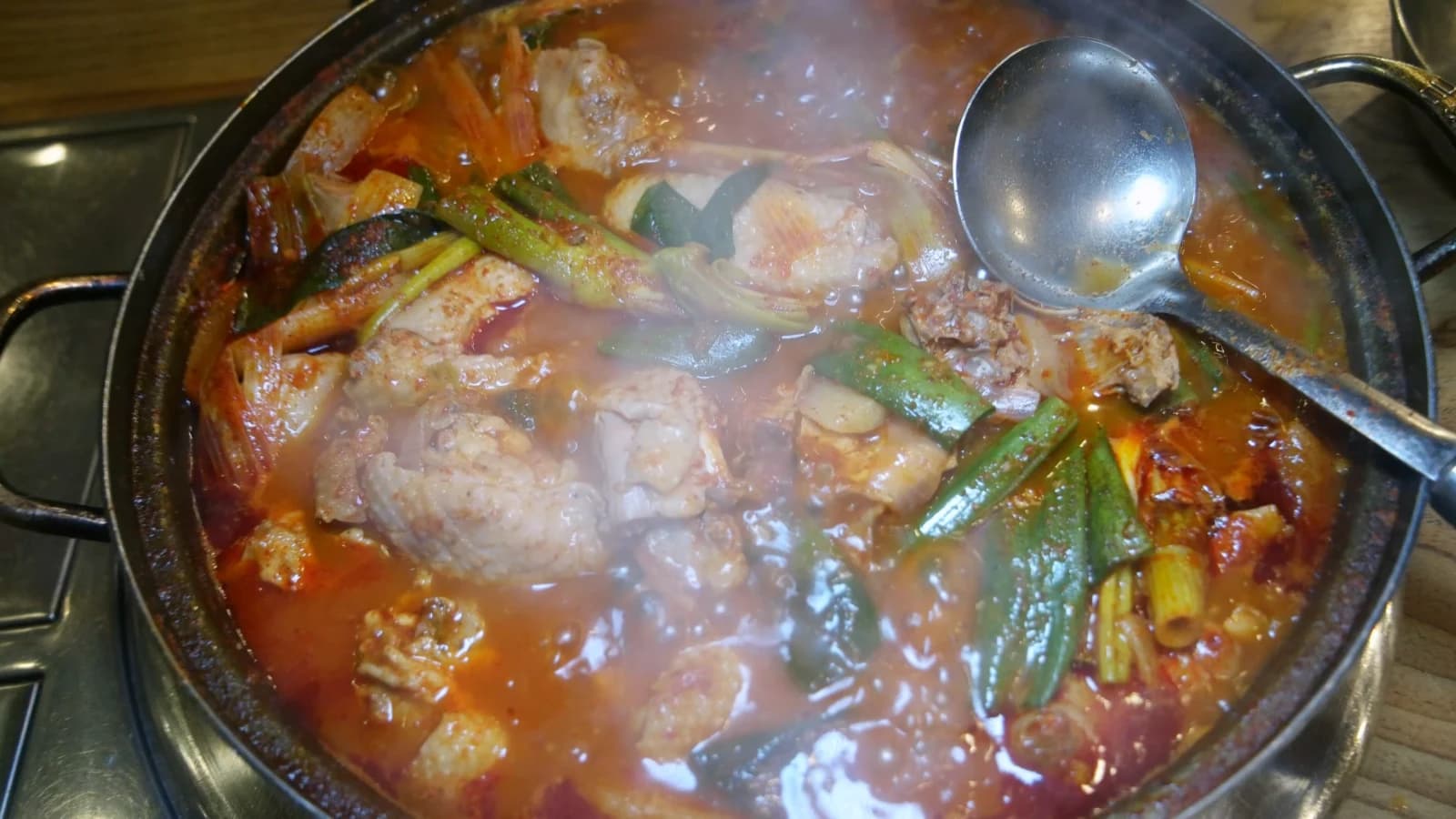
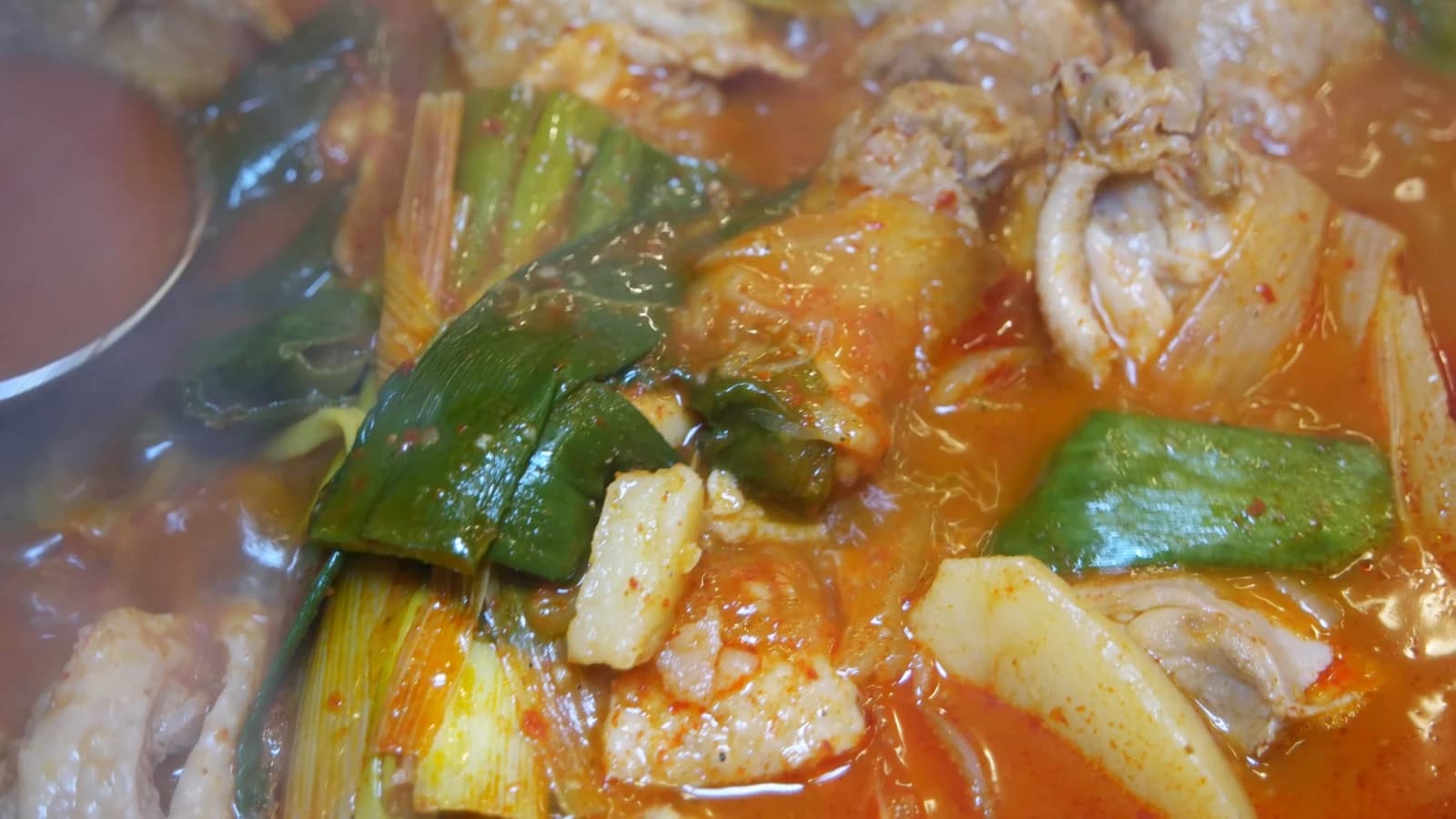
After about five minutes the stew hit a full, rolling boil. The chicken pieces that had been hiding under the spring onions started bobbing up to the surface. You could see three or four hefty drumstick portions, with potatoes and onions in between soaking up the sauce and turning a deeper shade of red by the minute. Steam was billowing off the pot and the spicy aroma had completely filled our corner of the restaurant — I caught the couple at the next table sneaking a glance at our pot. Up close, the chicken was coated in sauce almost like a glaze, and the meat around the bones was beginning to pull apart, which meant it was very nearly done. I gave it a stir with the ladle and up came carrot pieces and rice cakes that had been sitting at the bottom. My wife was next to me going, "Stop photographing it and eat," but honestly, how do you ignore a pot that looks like that?
Scooping out the chicken
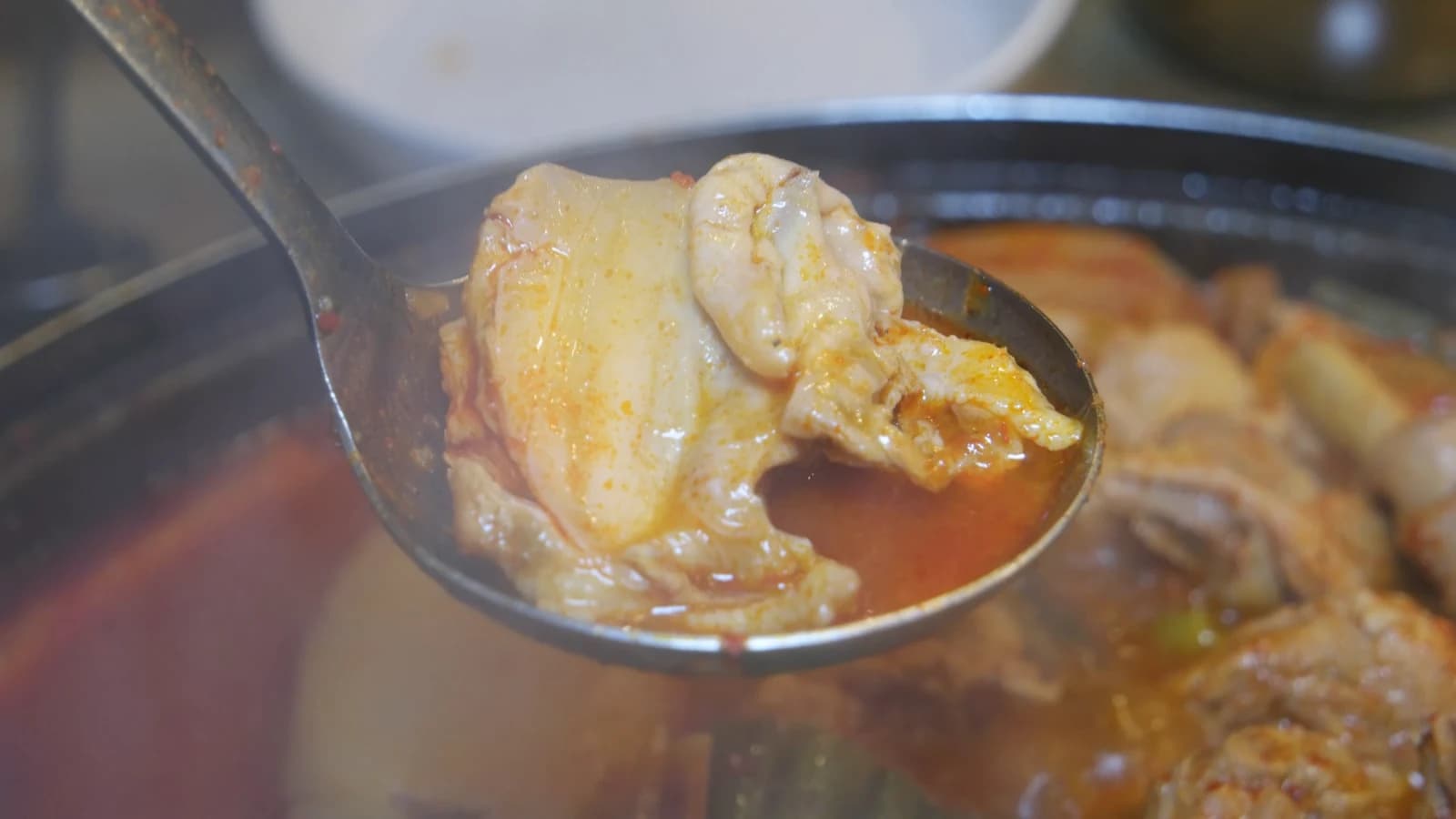
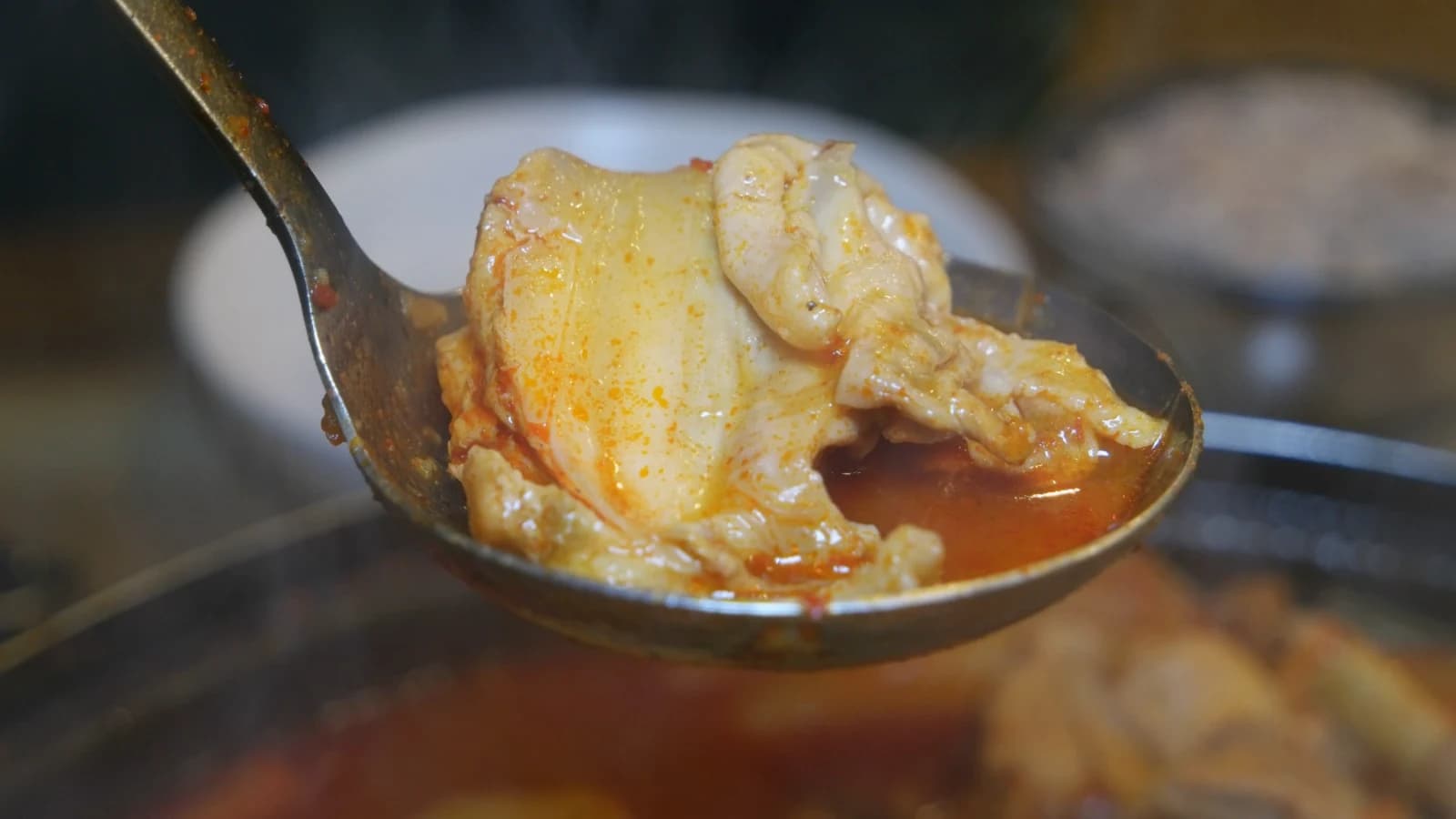
I lifted the ladle and up came an entire drumstick in one piece. It practically filled the ladle, spicy broth streaming off it, the meat already half-separated from the bone. At this point, the gentlest nudge with a chopstick and the flesh falls clean away. That's actually how you check whether dakbokkeumtang is properly done — if the meat comes apart on its own when you lift it out, it's ready. If it's still clinging tightly to the bone, give it a few more minutes. This time the seasoning had soaked right through: the outside was a deep red while the inside was a pale golden colour, nicely cooked. I served a piece onto my wife's plate first, only to look up and find her already fishing an even bigger chunk out of the pot with her own ladle.
How to eat dakbokkeumtang — plate it up individually
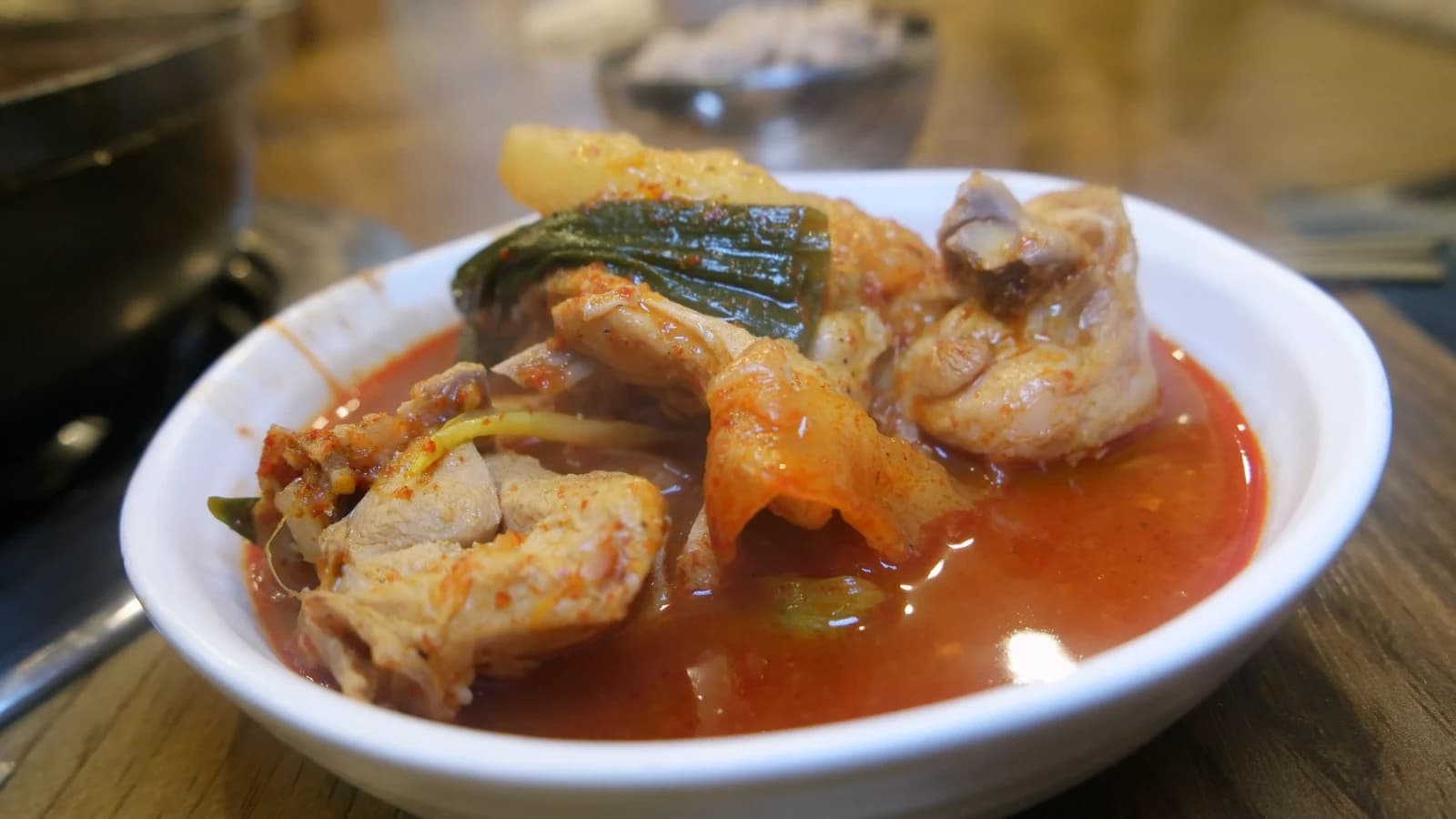
Here's how it looks once you've plated it up. You don't eat dakbokkeumtang straight from the communal pot — you fish out pieces onto your own plate, where the red broth pools at the bottom, and then pull the meat off the bone alongside your rice. Since the chicken is on the bone, quite a few people just pick it up and tear the meat off with their teeth. I prefer to use chopsticks and tease the meat away, but my wife went straight in bare-handed from the start. Said the meat closest to the bone is the best bit.
The longer it simmers, the better — reduced broth is everything
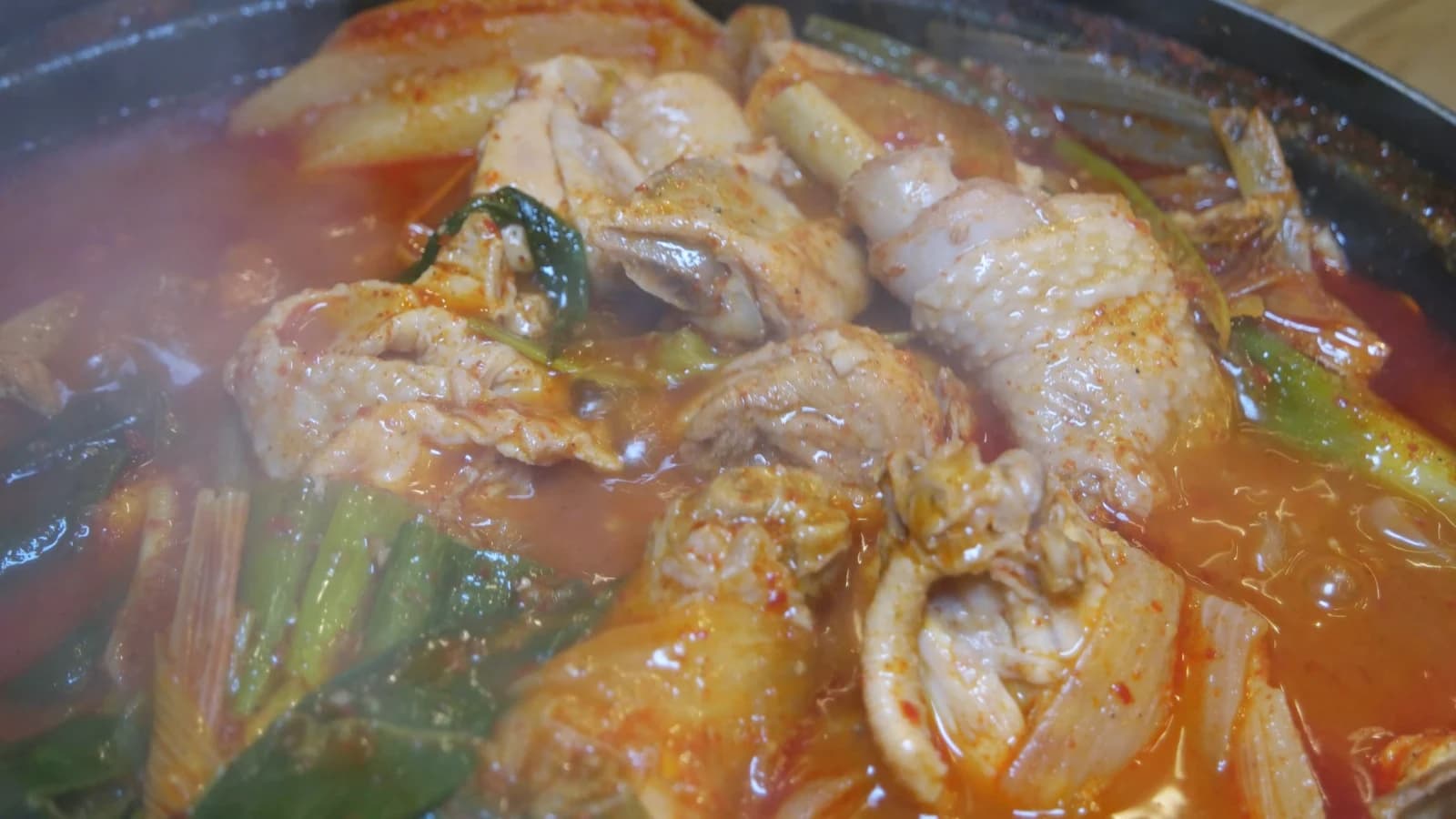
After we'd been eating for a while, the broth had reduced dramatically compared to how it started. Early on the chicken was completely submerged and invisible, but by this point the drumsticks and wings were poking out above the surface and the sauce had thickened into a sticky coating that clung to every piece of meat. This is the moment when dakbokkeumtang is at its absolute best. As the liquid reduces, the sweetness and spice concentrate, and the potatoes half-dissolve into the broth, adding even more body. The flavour at this stage is worlds apart from the first spoonful. I'll be honest — when it first arrived I thought it was a touch bland, but once it had cooked down, the seasoning was spot on. My wife agreed: "It's so much better now than it was at the start," she said, ladling more sauce onto her rice. Mixing rice into the reduced dakbokkeumtang broth is the proper way to finish the meal — the half-melted potato makes the sauce wonderfully thick, and it wraps around every grain of rice.
Side dishes — included and free to refill
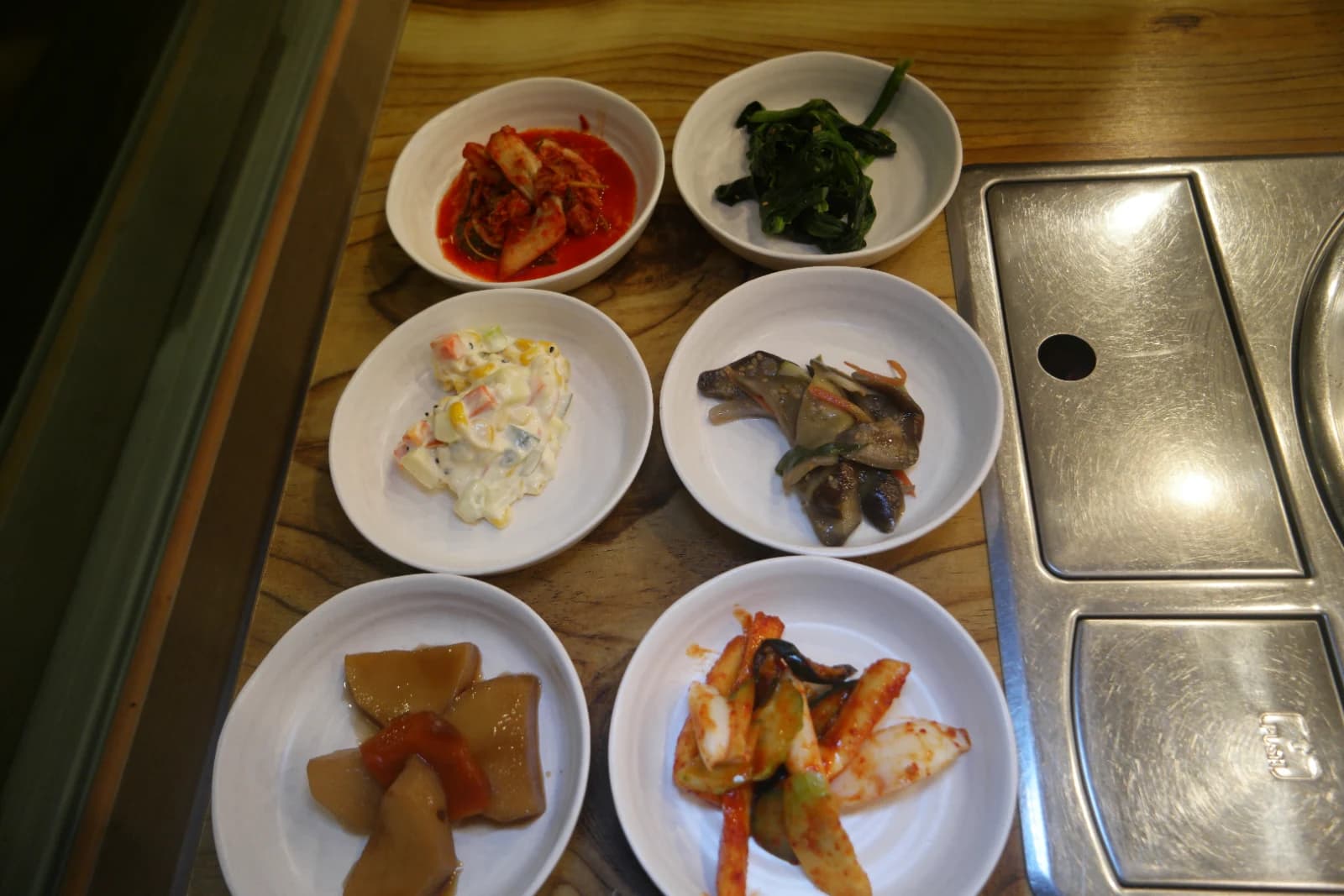
Dakbokkeumtang may be a single-dish order, but that doesn't mean you go without side dishes. We were given six little plates: kimchi, seasoned spinach, potato salad, dressed aubergine, pickled radish and stuffed cucumber kimchi. In Korean restaurants, when you order a main dish these small accompaniments — called banchan — come out automatically and are free to refill when you've finished them. No extra charge. The number and quality of banchan vary wildly from place to place; six dishes is a decent showing, to be fair. My only grumble was that the portions were a bit stingy. Some of the plates were practically empty after a couple of bites. You can ask for refills, of course, but having to flag someone down every few minutes gets a tad tiresome.
A closer look at the side dishes
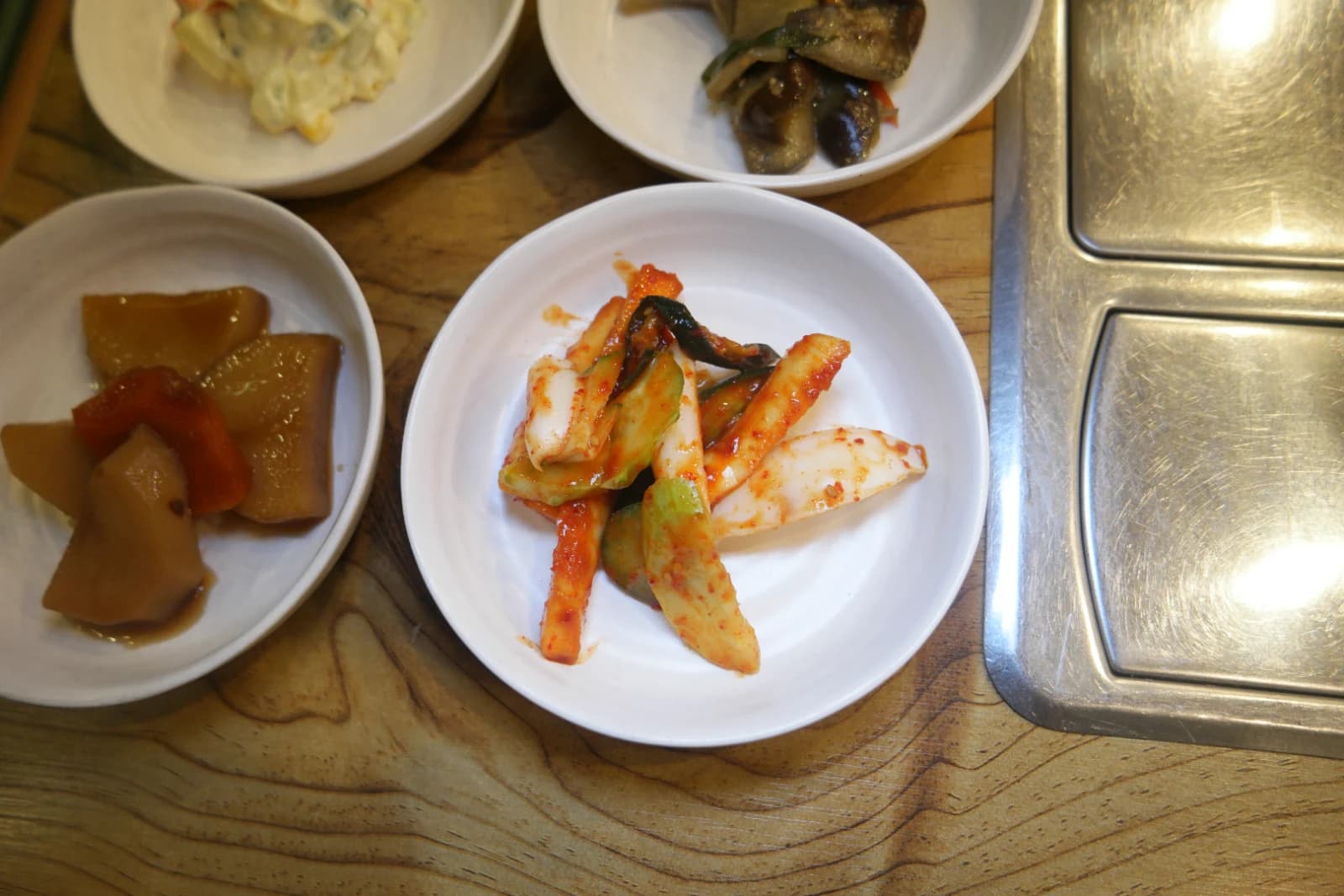
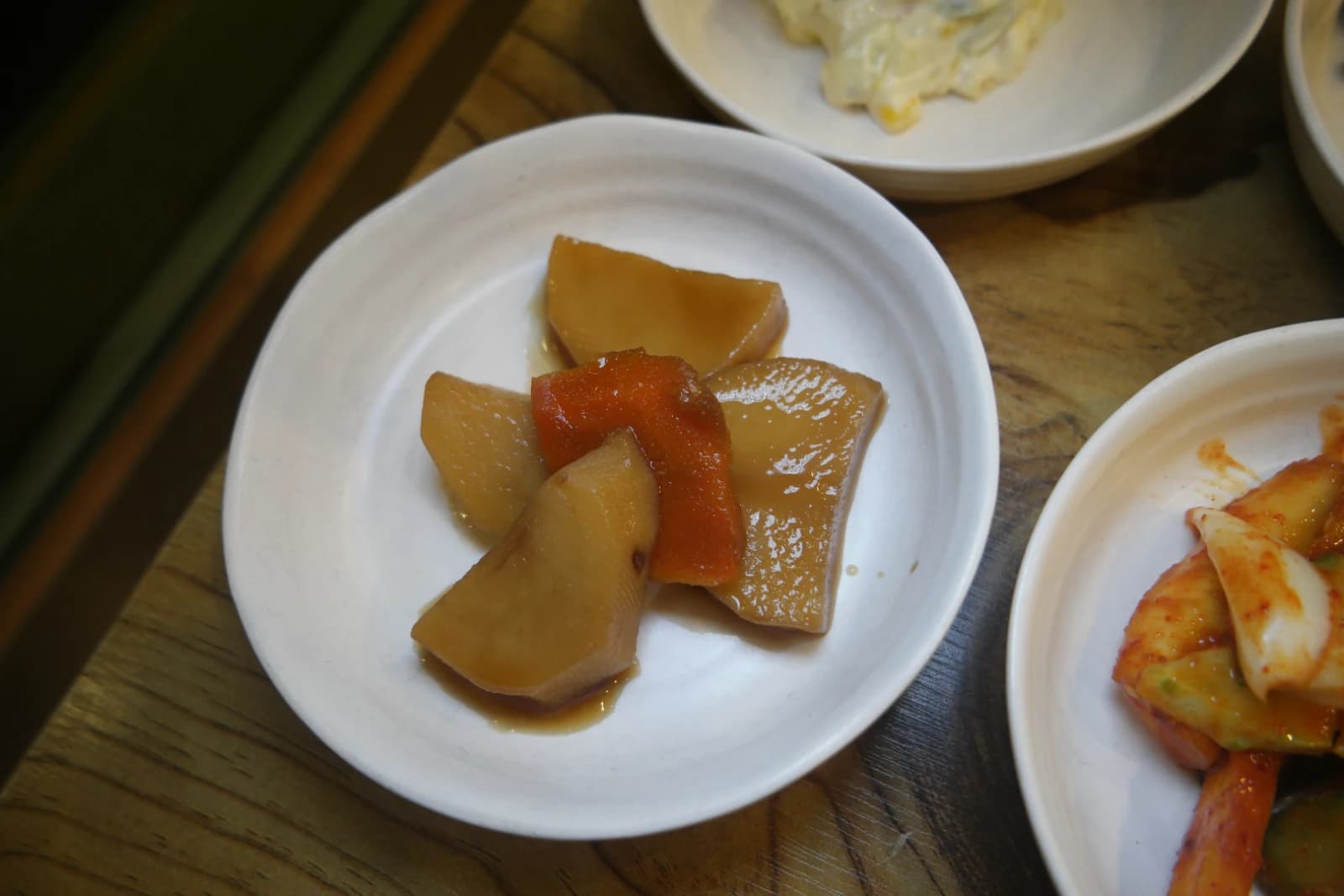
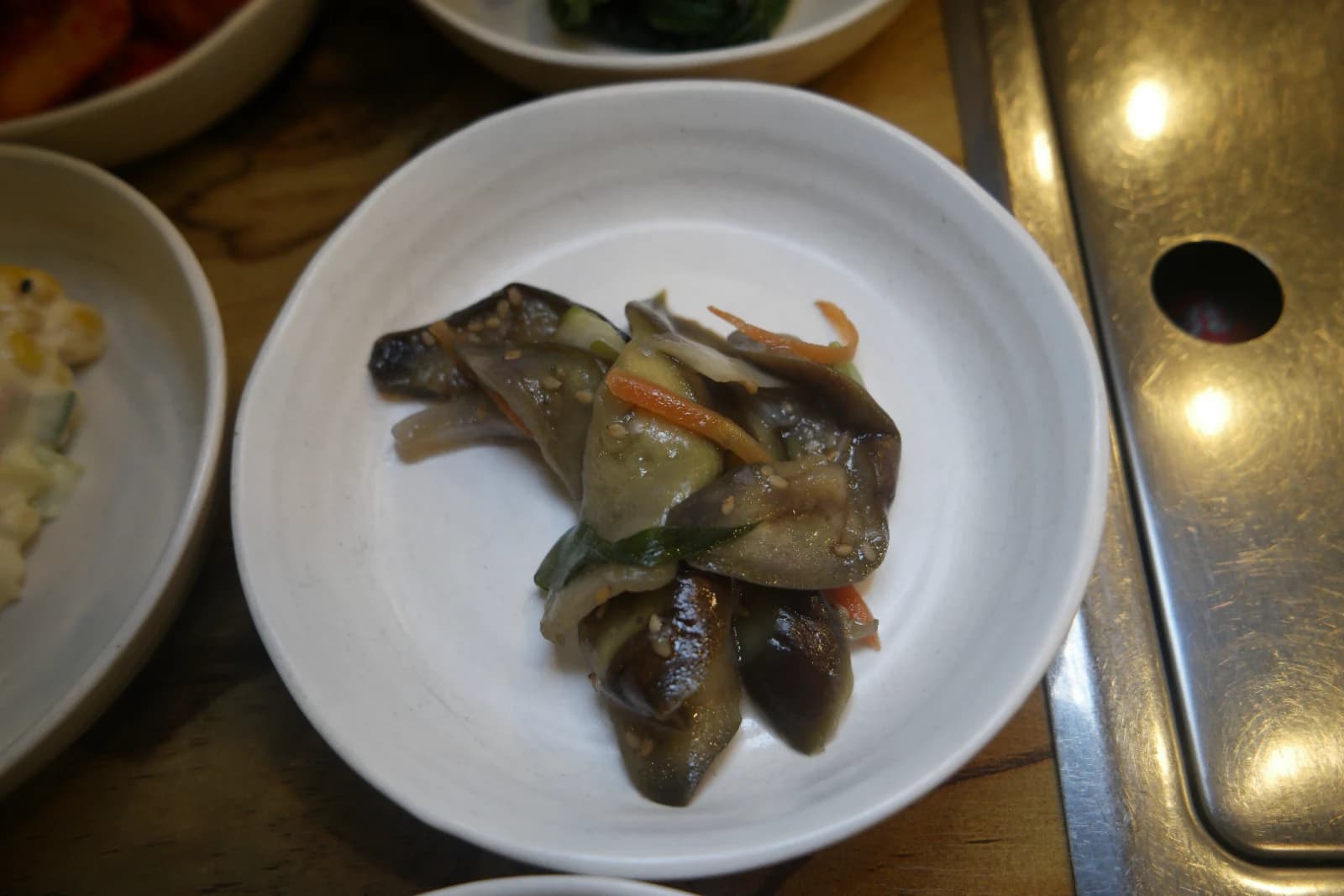
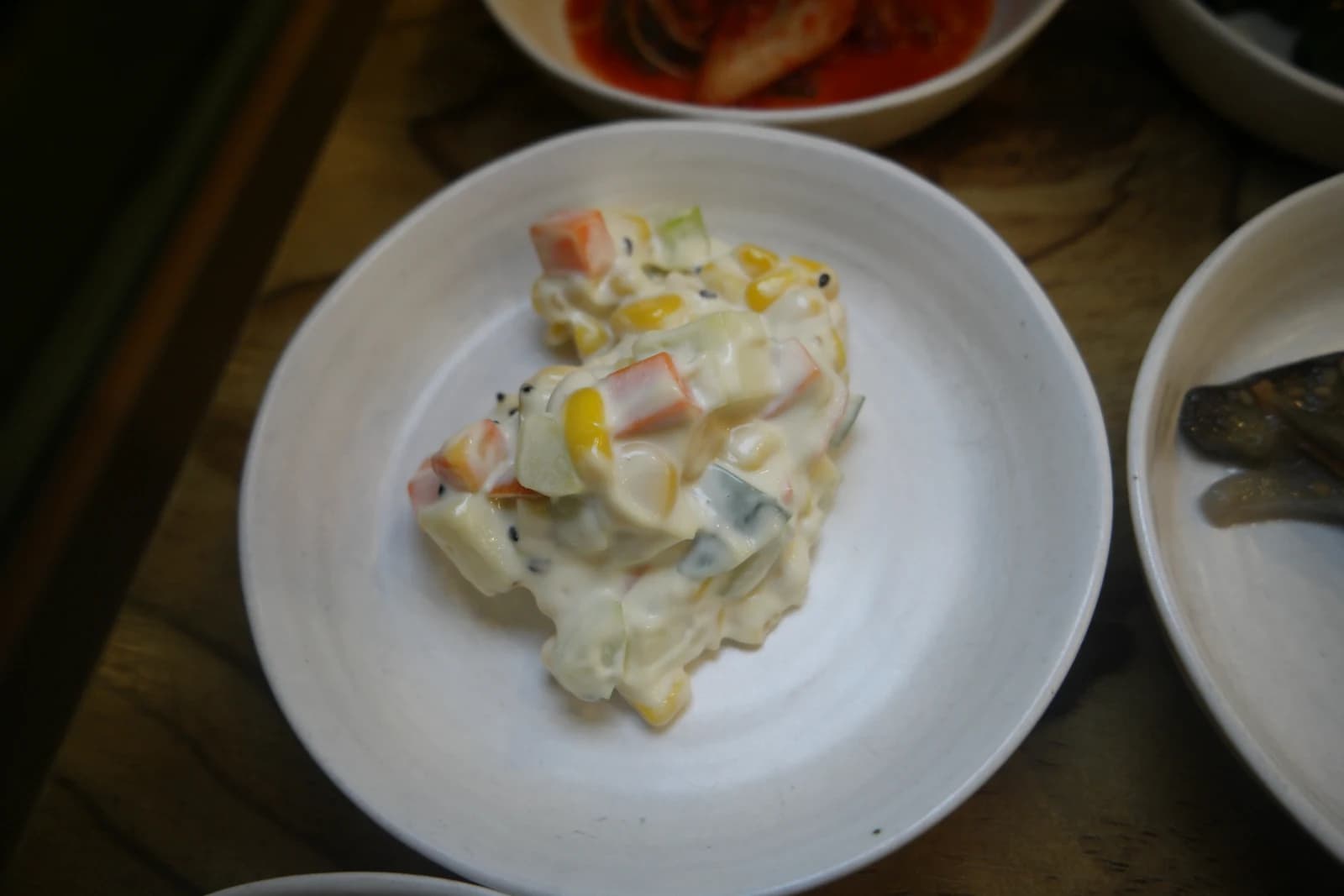
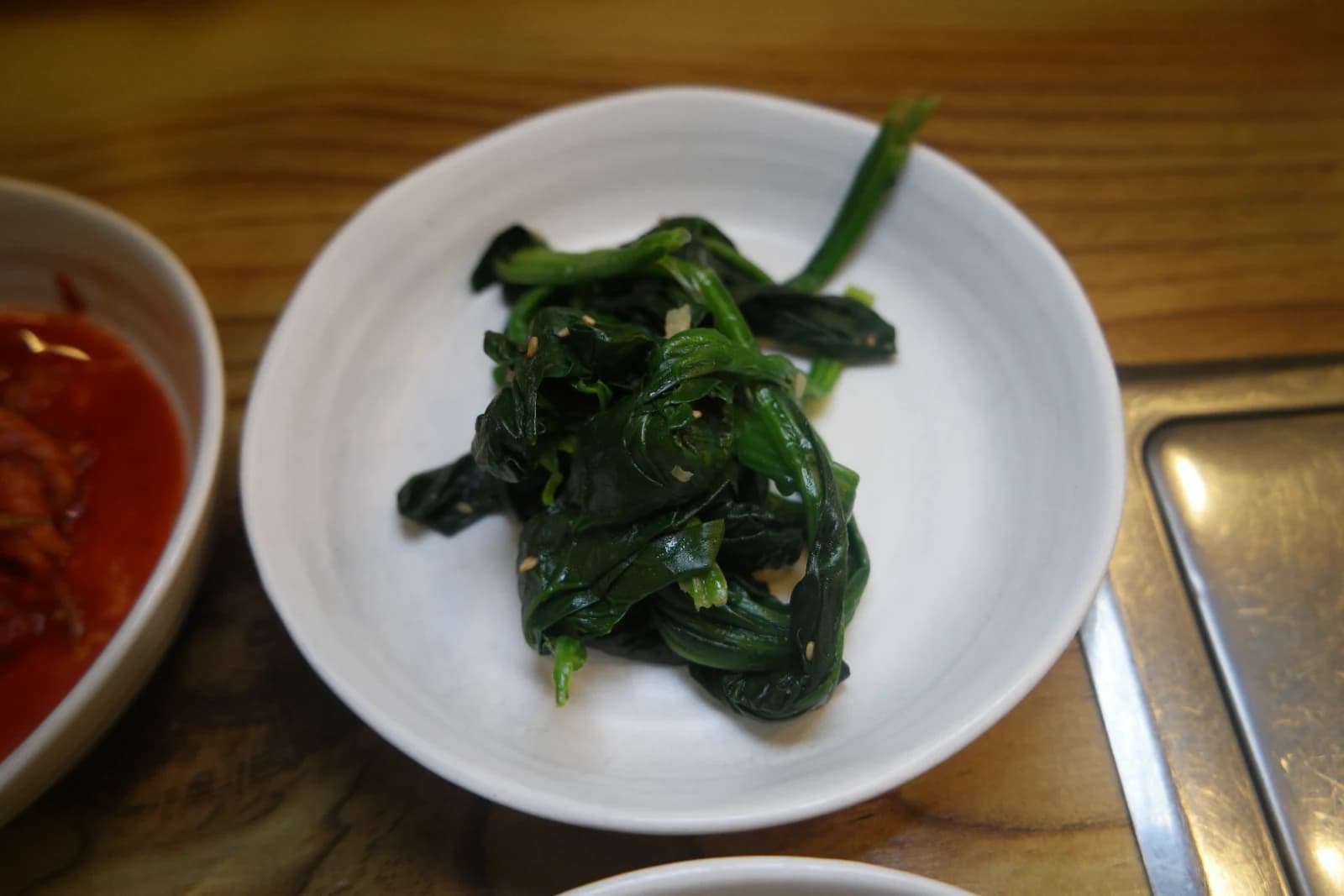
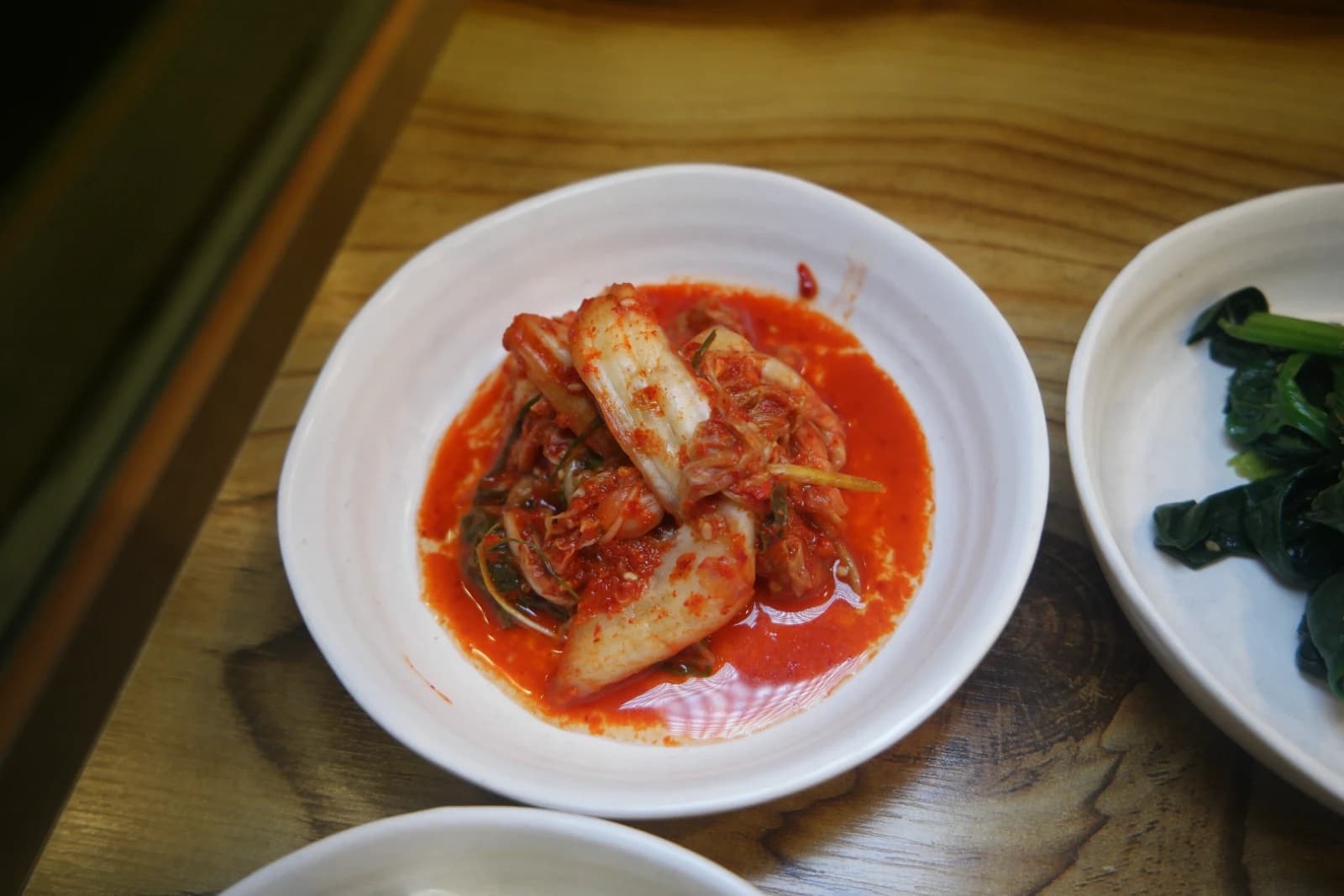
Taking them one by one: the oi-sobagi (stuffed cucumber kimchi) is cucumber scored down the middle and packed with spicy filling — the crunch gives your palate a nice reset when the stew's heat builds up. The danmuji (pickled radish) is radish preserved in a sweet soy brine, and this place cut it quite thick, which gave it a pleasantly chewy texture, though it was a bit on the sweet side for my taste. The gaji-namul (seasoned aubergine) was dressed with sesame oil and seeds and mixed with thin carrot strips — aubergine's soft texture is one of those love-it-or-hate-it things. My wife can't stand aubergine, so she didn't touch it. The potato salad is the Korean version — sweetcorn and crab sticks folded through mayonnaise — and it's a lovely contrast after a mouthful of something spicy. It's honestly my favourite side dish at any Korean meat restaurant, but the portion was so small it was gone in three spoonfuls. The spinach was dressed in sesame oil and nicely savoury, and the kimchi was well-fermented napa cabbage with a good amount of tangy brine pooled around it. You might think kimchi on top of an already spicy stew would be overkill, but the sourness of aged kimchi actually cuts through the oiliness of the broth rather brilliantly — I kept going back for more.
Cook it at home or eat it out?
On the way back, my wife said, "Shall we try making it at home next time?" On paper, dakbokkeumtang is fairly straightforward — the ingredients are nothing exotic. But if I'm honest, I doubt we'd get the same result in our own kitchen. There's something about the timing of the sauce reducing, and the whole ritual of sitting around a bubbling pot on the tabletop burner, that turns the restaurant version into a different experience altogether.
£17.50 for two — not the cheapest lunch
The bill for the two of us came to ₩35,000 (roughly £17.50), which is the price of one small dakbokkeumtang. Rice was included, so we didn't add anything extra. For a single dish — chicken, vegetables, rice and banchan all in — the starting price does feel a touch steep. Another minor downside: because the stew bubbles away right in front of you the entire time, the spicy sauce smell really gets into your clothes. My jacket absolutely reeked of it by the time we left, and I threw it straight in the washing machine when we got home. I should've taken my coat off before we started, but I just didn't think of it.
My wife was dozing off in the car on the way home and murmured, "Meat's always better when someone else cooks it." Never mind that she was the one who'd suggested making it at home not five minutes earlier — but, to be fair, I can't argue with the sentiment.
Dakbokkeumtang at a glance
First time trying dakbokkeumtang? Here's what you need to know
Are dakbokkeumtang and dakdoritang different dishes?
They're the same thing. The dish was originally called dakdoritang, but there was a long-running debate over the word "dori" — some argued it derived from the Japanese word "tori" (bird). In 1992, South Korea's National Institute of the Korean Language officially standardised the name as "dakbokkeumtang." In practice, restaurants still use both names on their signs and menus, and you'll get exactly the same dish whichever one you order.
How spicy is it?
It looks absolutely lethal thanks to that deep red colour, but in reality it's a solid medium. Because the base is gochujang, the sweetness and umami hit you before the heat does. By Korean standards, it's milder than tteokbokki and roughly on par with — or slightly gentler than — kimchi jjigae. Some restaurants will tone it down if you ask; just say "an maepge haeju-seyo" (not spicy, please) when you order.
How do you order?
Pick a size from the menu — small, medium or large — to match your group. "Dakbokkeumtang soja hana-yo" (one small dakbokkeumtang, please) is all you need to say. Rice and side dishes are included, so there's nothing else to order. A small starts at around ₩35,000 (roughly £17.50), which covers a whole chicken plus vegetables, rice and banchan — that works out at about £8.75 per person.
Is there a proper way to eat it?
When it first arrives, don't dive straight in — let it bubble away for about five minutes so the flavours develop. Then use the ladle to scoop chicken and potatoes onto your own plate and eat them with rice. The chicken is bone-in, so either pull the meat off with chopsticks or just use your hands — nobody will bat an eyelid. Once the broth has reduced, tip rice into the pot and mix it through the thick sauce for the grand finale.
Can you eat it on your own?
Honestly, it's a bit awkward. The minimum order is for two people, and paying £17.50 solo for a big pot of stew feels excessive. A handful of places do offer a single-serve portion, but they're few and far between. If you're dining alone and fancy chicken, you'll have an easier time finding a jjimdak (braised soy chicken) or dakhanmari (whole chicken soup) restaurant that does individual servings.
Does the smell cling to your clothes?
Absolutely. The stew bubbles away on the table right in front of you for the entire meal, so the spicy sauce smell works its way into your clothes good and proper. Take your coat off before you sit down, and if you've got long hair, tie it back. Some restaurants offer an apron — if they do, take them up on it.