Fresh Market Fruit Haul — 12 Seasonal Fruits in Korea
Table of Contents
15 items
Buying Seasonal Fruit at a Korean Traditional Market — Spring 2026 Wholesale Market Visit
This was genuinely my first proper wander through the fruit section of a Korean traditional market. In early April 2026, my wife and I headed out bright and early to the local wholesale produce market here in Daejeon, a mid-sized city in central South Korea. If you've ever been curious about Korean fruit prices, what's actually in season, or how traditional market culture works over here, this should give you a decent look. I've compared everything against supermarket prices and walked my legs off checking stall after stall — here's what I found.
Today's all about the fruit. I'll cover the veggie and seafood sections in a separate post.
The Morning Market Is Absolute Chaos

Korean wholesale produce markets are best tackled first thing in the morning if you want the best prices. Fruit is definitely cheaper than the supermarket, but the catch is the sheer volume of trucks rolling in and out at that hour. Delivery vehicles are constantly on the move, so parking is a nightmare and you've got to keep your wits about you when walking around. I reckon I told my wife to hold my hand and watch out about five times before we'd even made it through the entrance.
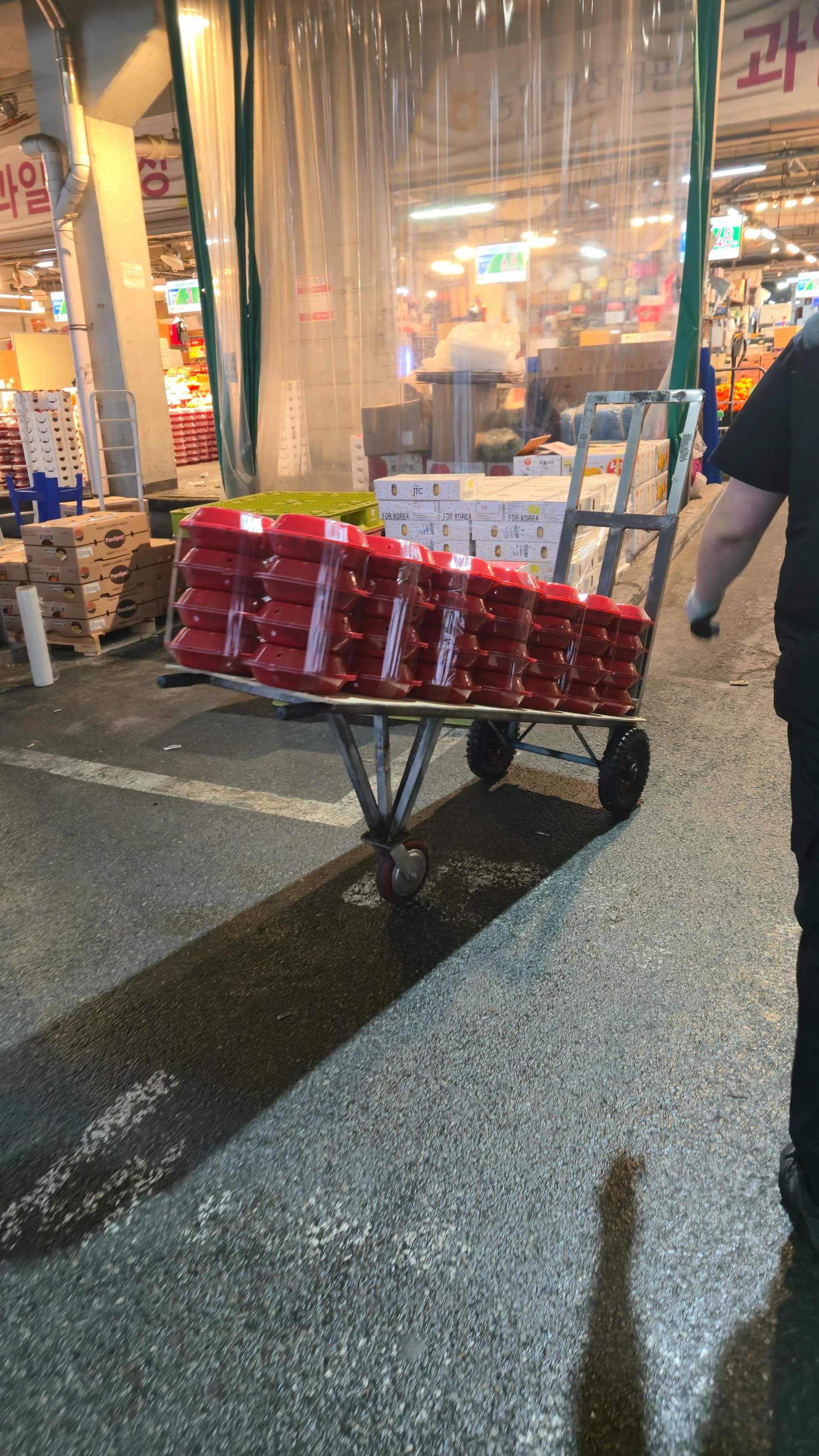
The second we stepped inside, a trolley piled high with red packing containers came barrelling past. At this hour, it's mostly traders rather than regular punters — small shop owners and grocers from around the area come here to buy in bulk and resell at their own stores. So the early morning market buzzes with working folks well before any casual shoppers rock up.
Korean Apples — Rough on the Outside, Brilliant on the Inside
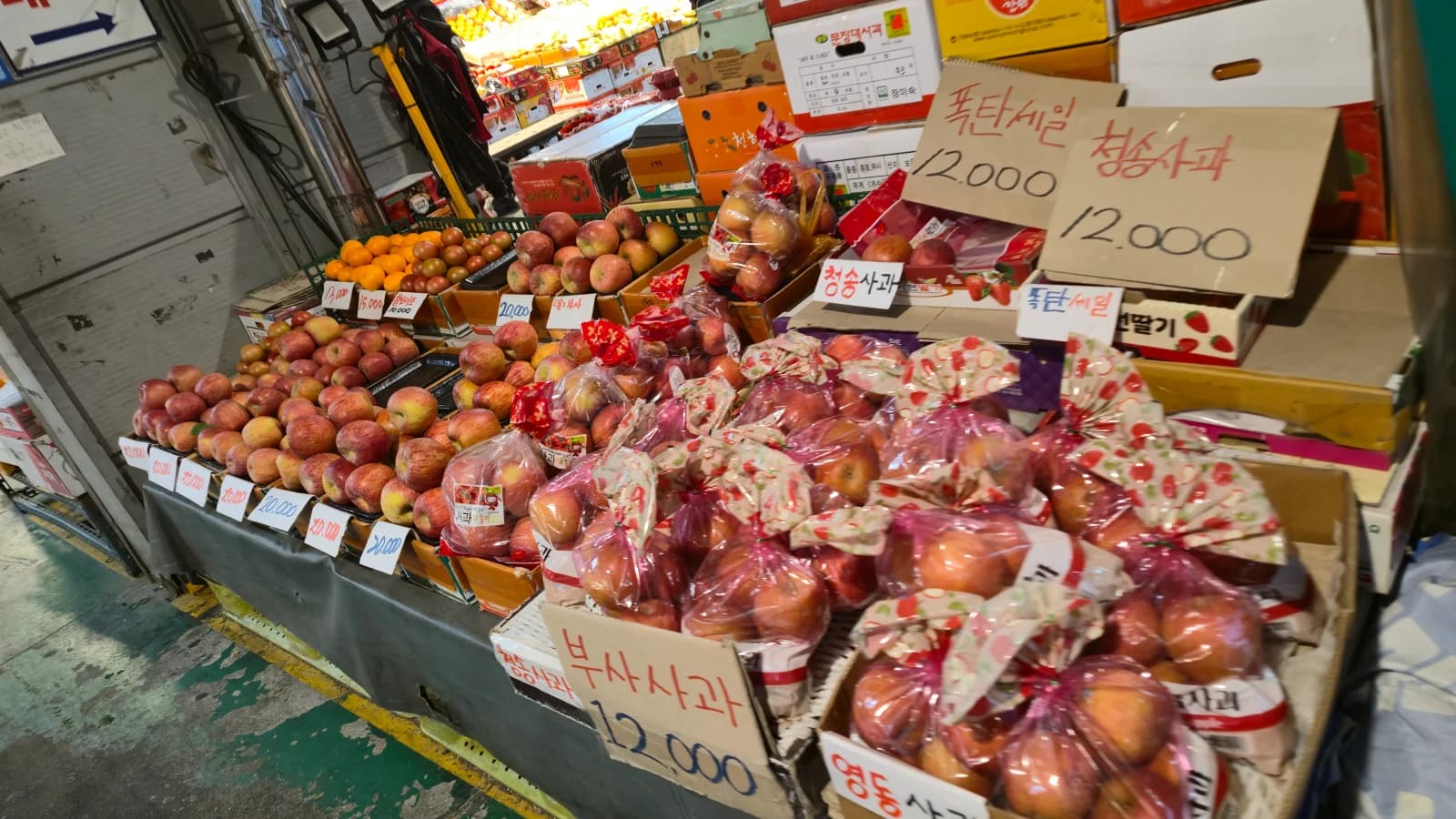
Apples are the first thing you spot when you walk in. They're stacked up in bags sorted by growing region — Cheongsong, Busa, Yeongdong — and at around A$12 a bag (₩12,000), they're noticeably cheaper than the supermarket. Korean apples aren't lookers, I'll be honest. They don't have that glossy, polished finish you'd see on imported apples back home. That's because most imported apples are coated with food-grade wax, whereas Korean apples generally skip that treatment entirely.
Bite into one skin-on and you get this incredible crunch followed by a burst of juice — they're genuinely delicious. Fuji varieties typically sit around 14–15 Brix for sweetness, and some premium cultivars like Gamhong can push up to 17 Brix. The top apple-growing regions in Korea are high-altitude areas where the day-to-night temperature difference is over 13°C, which makes the flesh firm and the sugar content seriously high. I remember once biting into a flashy-looking imported apple overseas and getting nothing but a dry, mealy disappointment — made me properly appreciate Korean apples after that.
Chamoe — A Fruit You Can Pretty Much Only Get in Korea
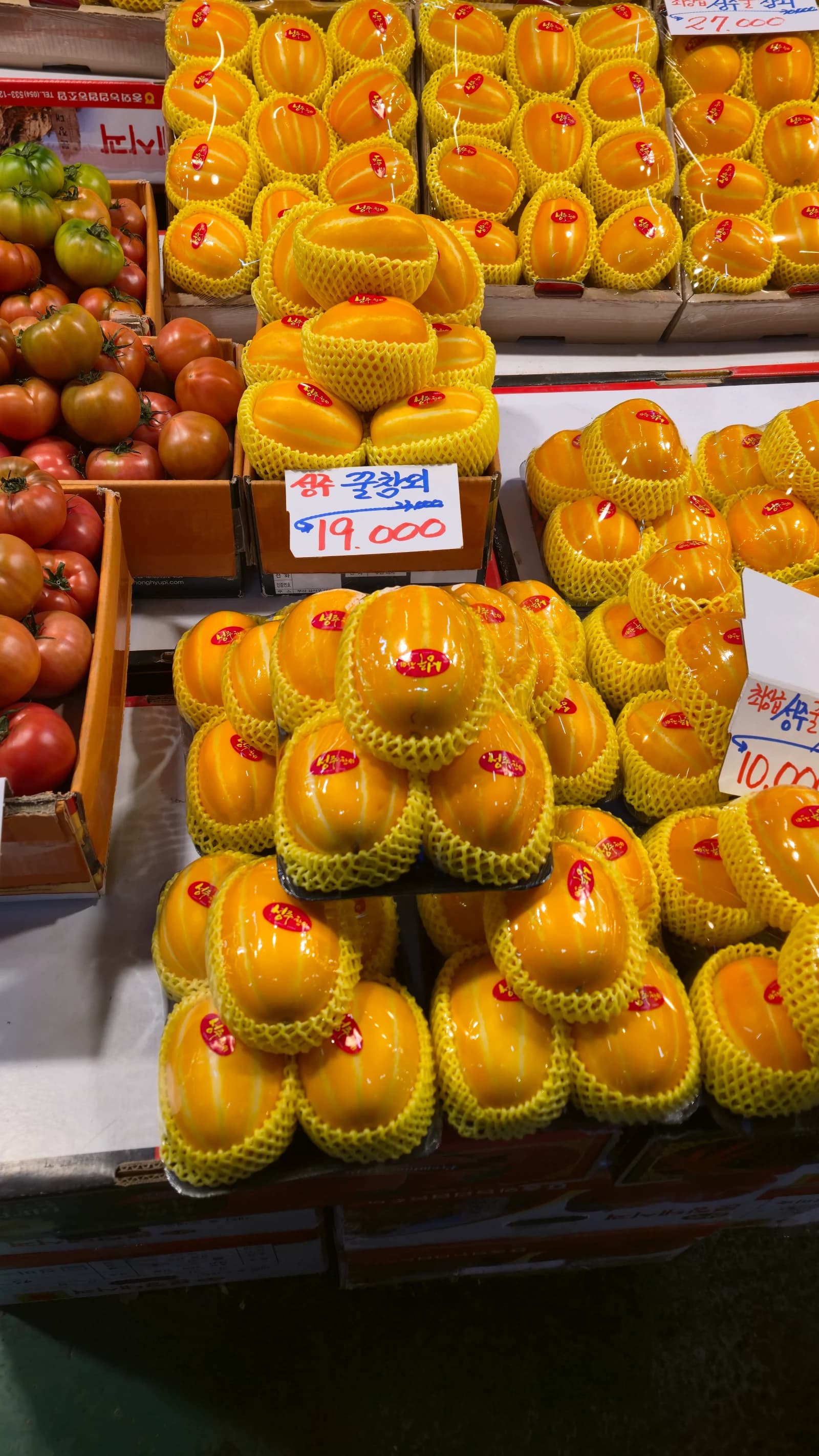
Right next to the apples was a massive stack of bright yellow chamoe. Originally from Africa and brought to East Asia via India, chamoe is now essentially grown only in Korea. China and Japan used to cultivate it too, but it's all but disappeared there. Its English name is literally Korean Melon — that's how uniquely Korean this fruit has become. A bag was going for about A$19 (₩19,000), with smaller ones next to it for around A$10. They're sweet with a crisp, crunchy bite that's quite unlike anything else — once you've tried one, it sticks with you.
The Spring Market Fruit Section in Full Swing
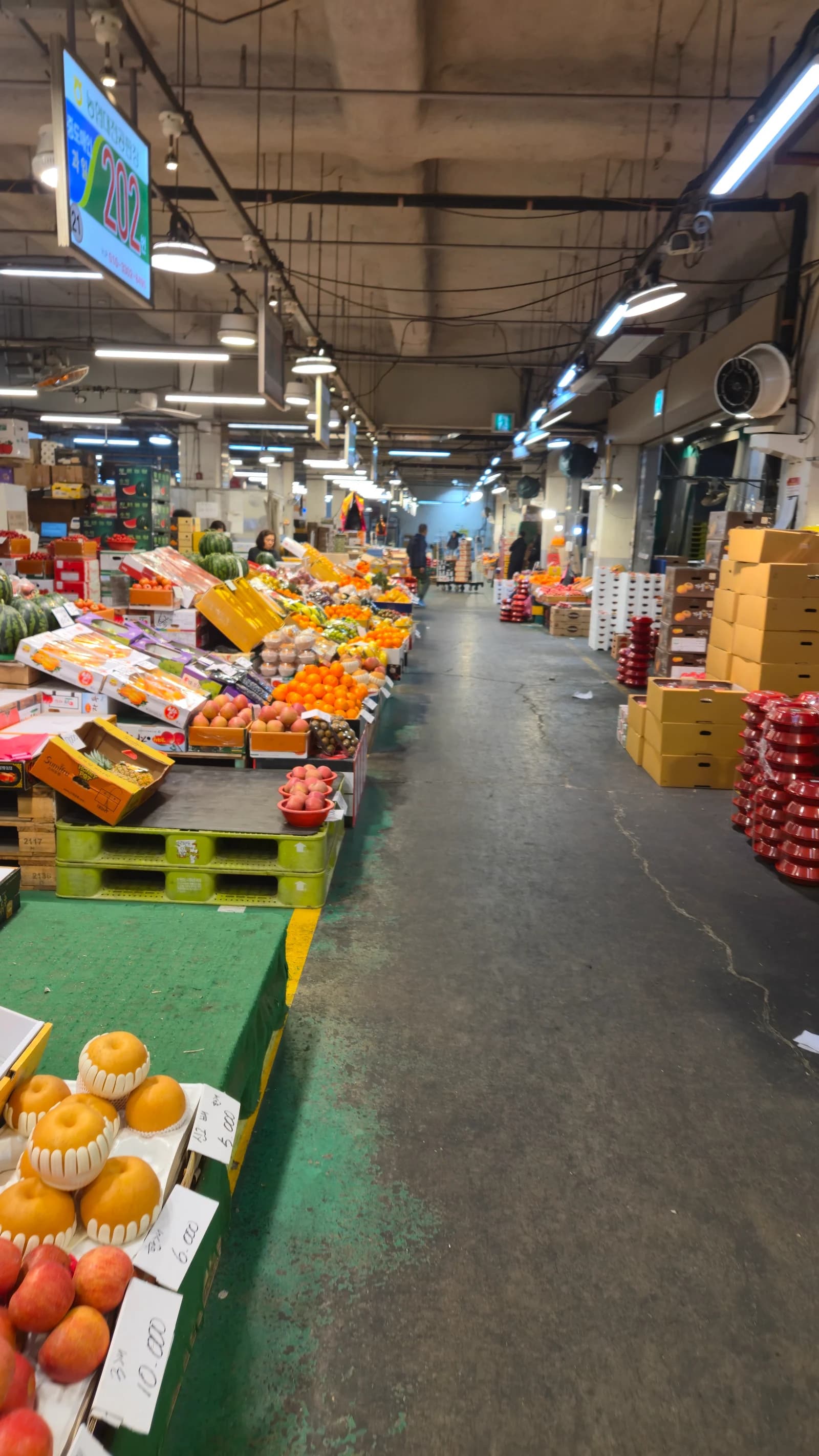
Here's a look at the whole fruit section. Watermelons, chamoe, apples, pears, mandarins, tomatoes — all lined up on both sides. It's not just one shop either; multiple stalls sit side by side, so you can compare as you go. With all the spring seasonal fruit on display, you could easily lose track of time just having a sticky beak. My wife was darting from one stall to the next, eyes going a million miles an hour.
Korean Pears — A Completely Different Beast to Western Pears
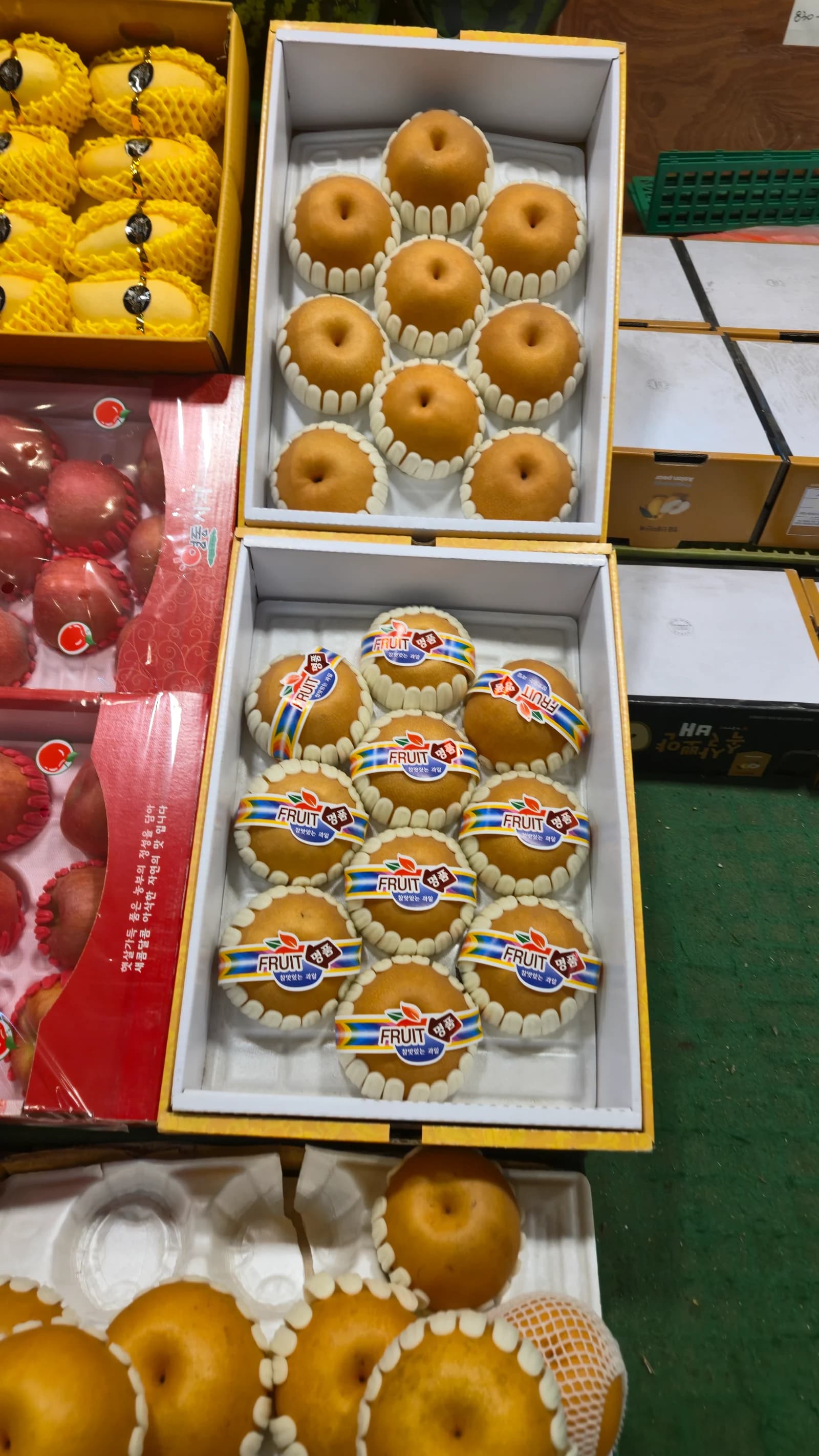
These are Korean pears, also known as nashi or Asian pears. Some were boxed up as gift sets and others were just stacked loose — and they're big. The pears most Aussies know are the European kind, shaped like a little gourd and soft when ripe. Korean pears are round, hefty, and seriously crunchy. One slice and your mouth is absolutely flooded with juice. In the West, pears tend to be a bit bland on their own, which is why they often end up baked or turned into perry. Korean pears are best eaten raw, freshly peeled — the sheer volume of juice is on another level entirely.
Strawberry Season — The Must-Eat Fruit If You Visit Korea in Spring
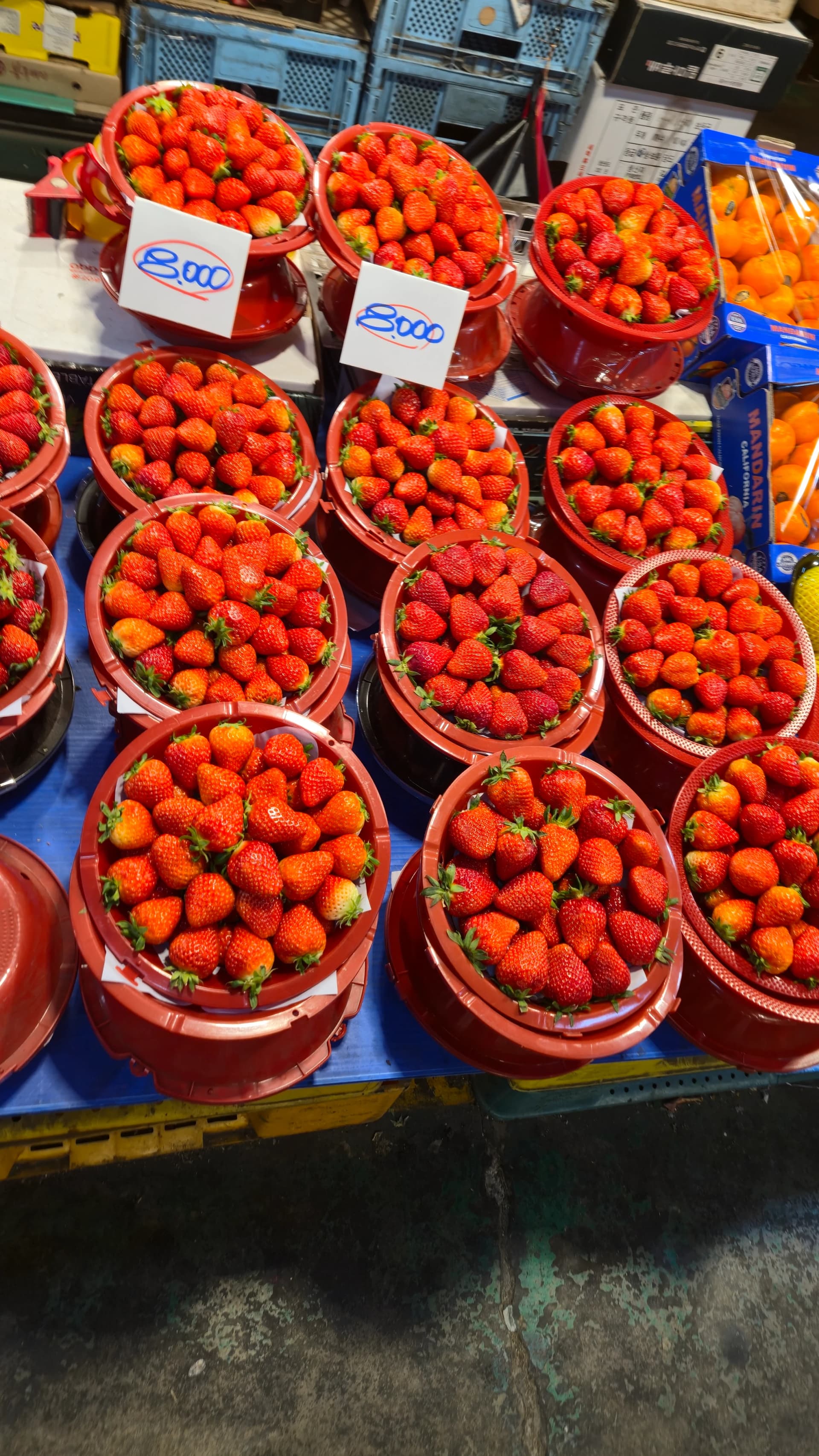
It's strawberry season in Korea right now. Come spring, every market you walk into has baskets of these gorgeous red strawberries stacked to the brim. At about A$8 a basket (₩8,000), that's roughly what you'd pay for a single punnet at the supermarket back home, but you get way more fruit for your money. If you're visiting Korea in spring, strawberries are an absolute must. You won't regret it.
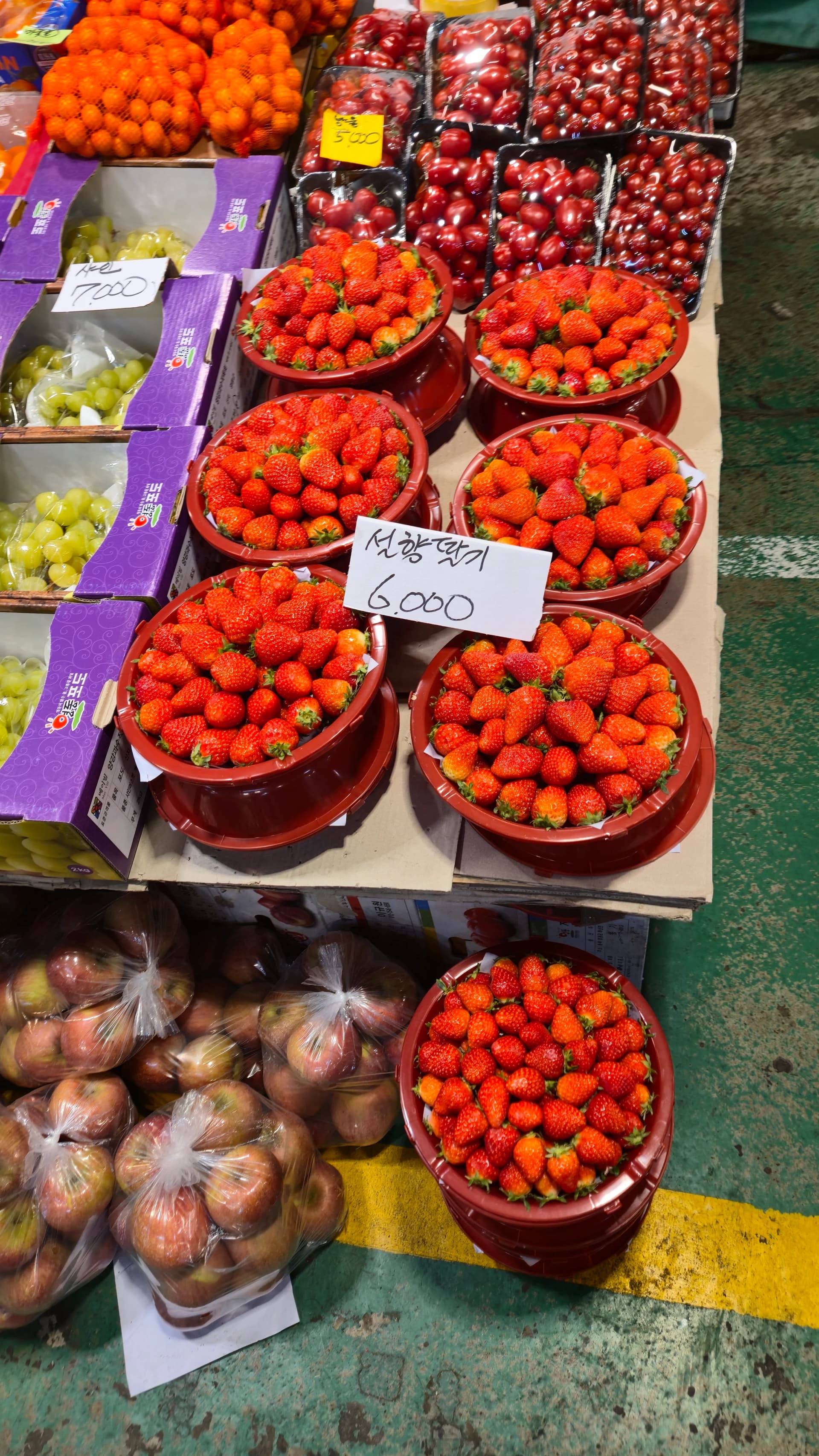
At the market, the same strawberries can be different prices depending on which stall you're at. This one had Seolhyang strawberries for about A$6 (₩6,000), while a stall we'd just passed was charging A$8 for a similar size. It genuinely happens that you'll pay A$10 at one place and then find better quality fruit for A$8 right next door. That's why you absolutely have to shop around at these markets. Putting in the legwork is non-negotiable.
Apple Green Grapes and Finger Grapes
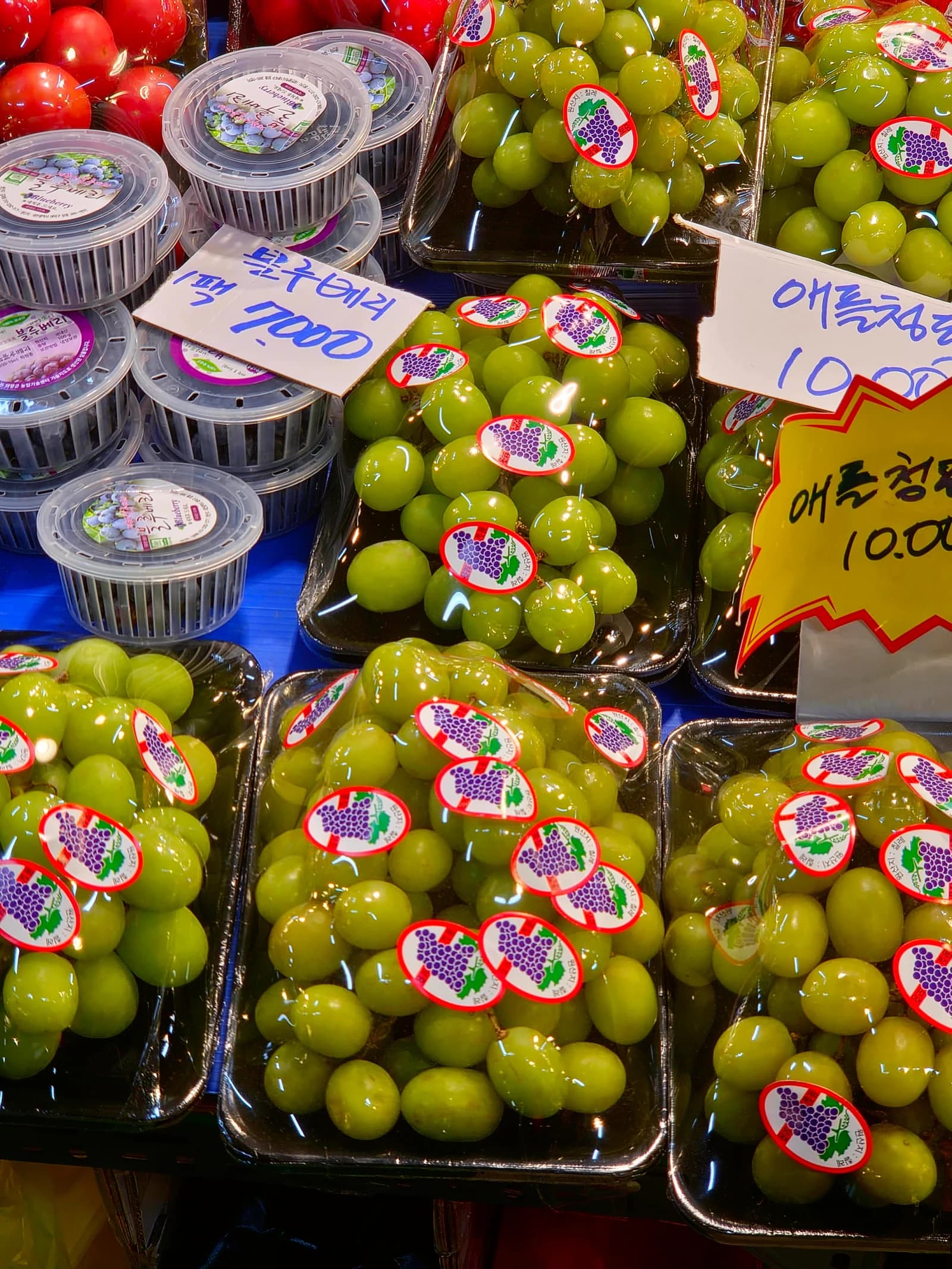
These are called apple green grapes — the official variety name is Autumn Crispy. They look a bit like Shine Muscat grapes, but they're a completely different cultivar. The defining feature is a crisp, apple-like crunch, and the flesh is much firmer than Shine Muscat. A pack was A$10 (₩10,000), and blueberries next to them were going for about A$7.
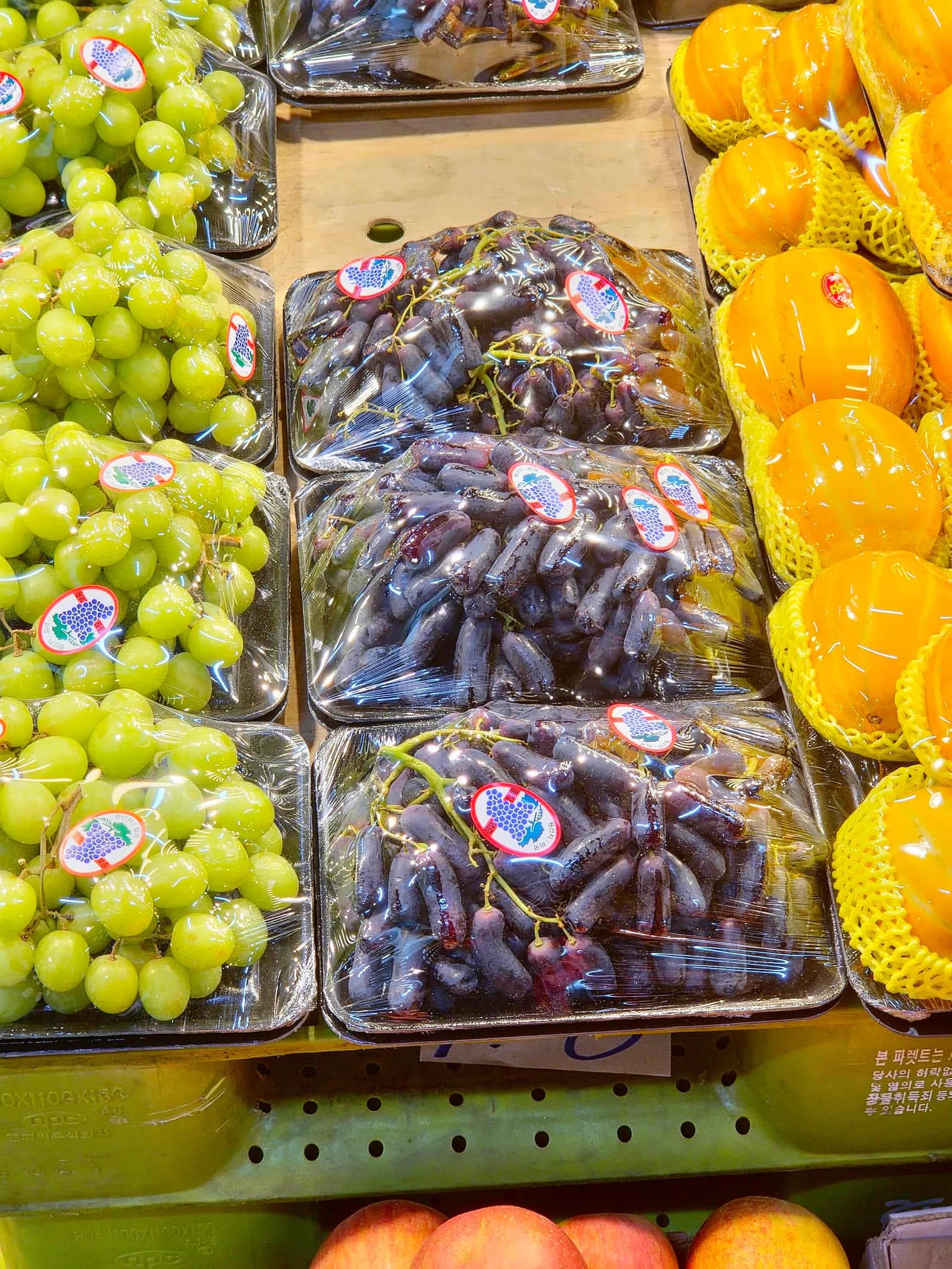
Those dark purple, elongated grapes in the middle are finger grapes — they're called that because they genuinely look like little eggplants (or fingers, depending on who you ask). The actual variety is Black Sapphire. They're seedless, so you eat them skin and all, and they've got a satisfying crunch with a rich sweetness. They've become quite trendy in Korea as an imported grape variety, so you'll often spot them sitting right next to the green grapes at the market.
Tomatoes — In Korea, They're Eaten Like Fruit
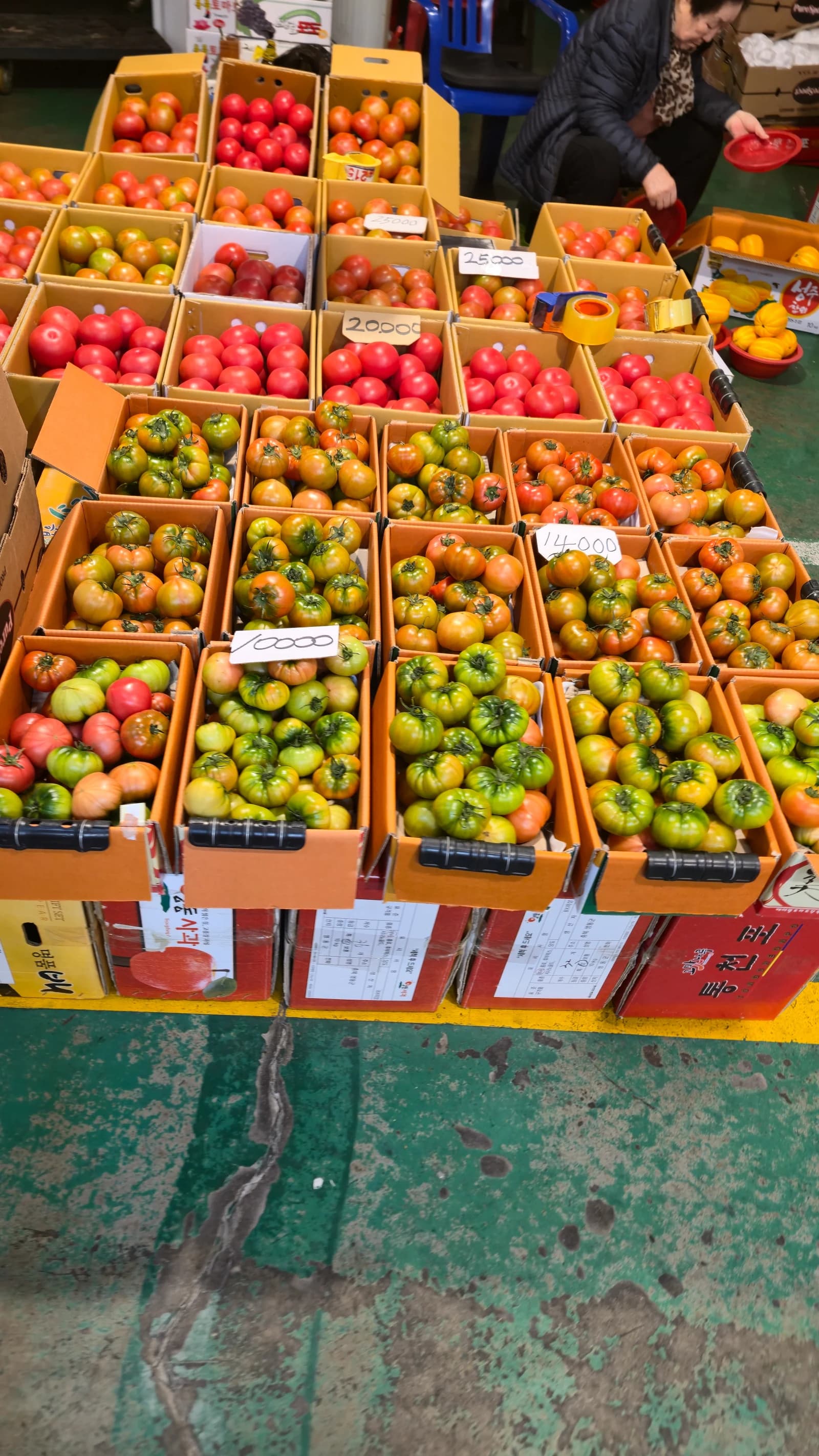
The tomato variety was impressive too. Ripe red tomatoes were going for about A$15–20 per box (₩15,000–20,000), and the greenish Daejer tomatoes — a famous variety from the southern coast — were around A$10–14. In Korea, tomatoes are treated much more like a fruit than a vegetable. Daejer tomatoes in particular have this unique savoury-sweet flavour that makes them wildly popular in spring. Some people dip them in sugar, others just rinse and bite straight in. Right now is peak season for them.
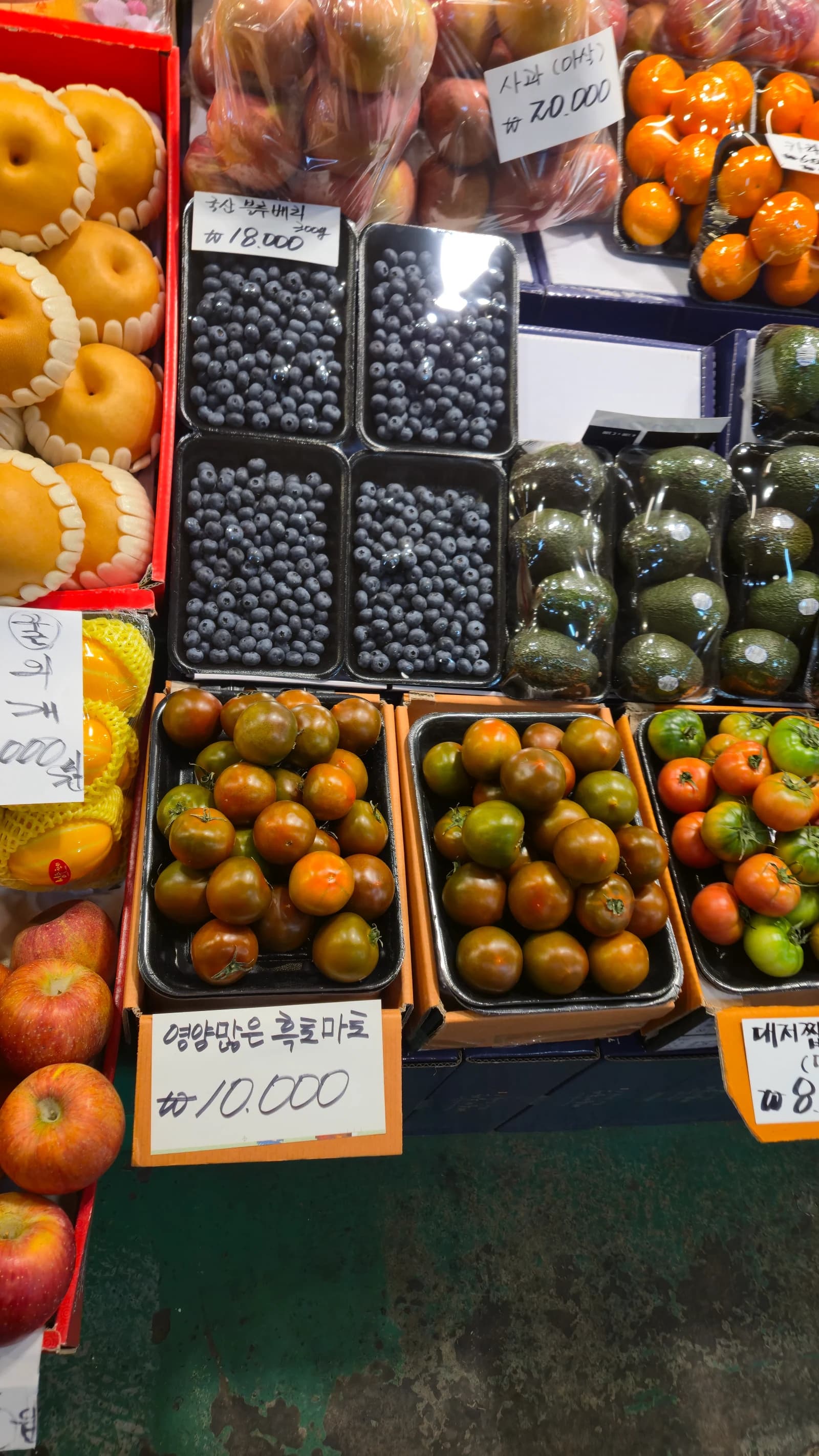
There were black tomatoes as well. About A$10 a pack (₩10,000), and they're noticeably darker than regular tomatoes. Next to them sat blueberries, avocados, mandarins, pears, and apples all crammed into one stall — being able to eyeball and compare everything in one spot is one of the real perks of shopping at a market like this.
Imported Fruit — Mangoes, Oranges, and Pineapples
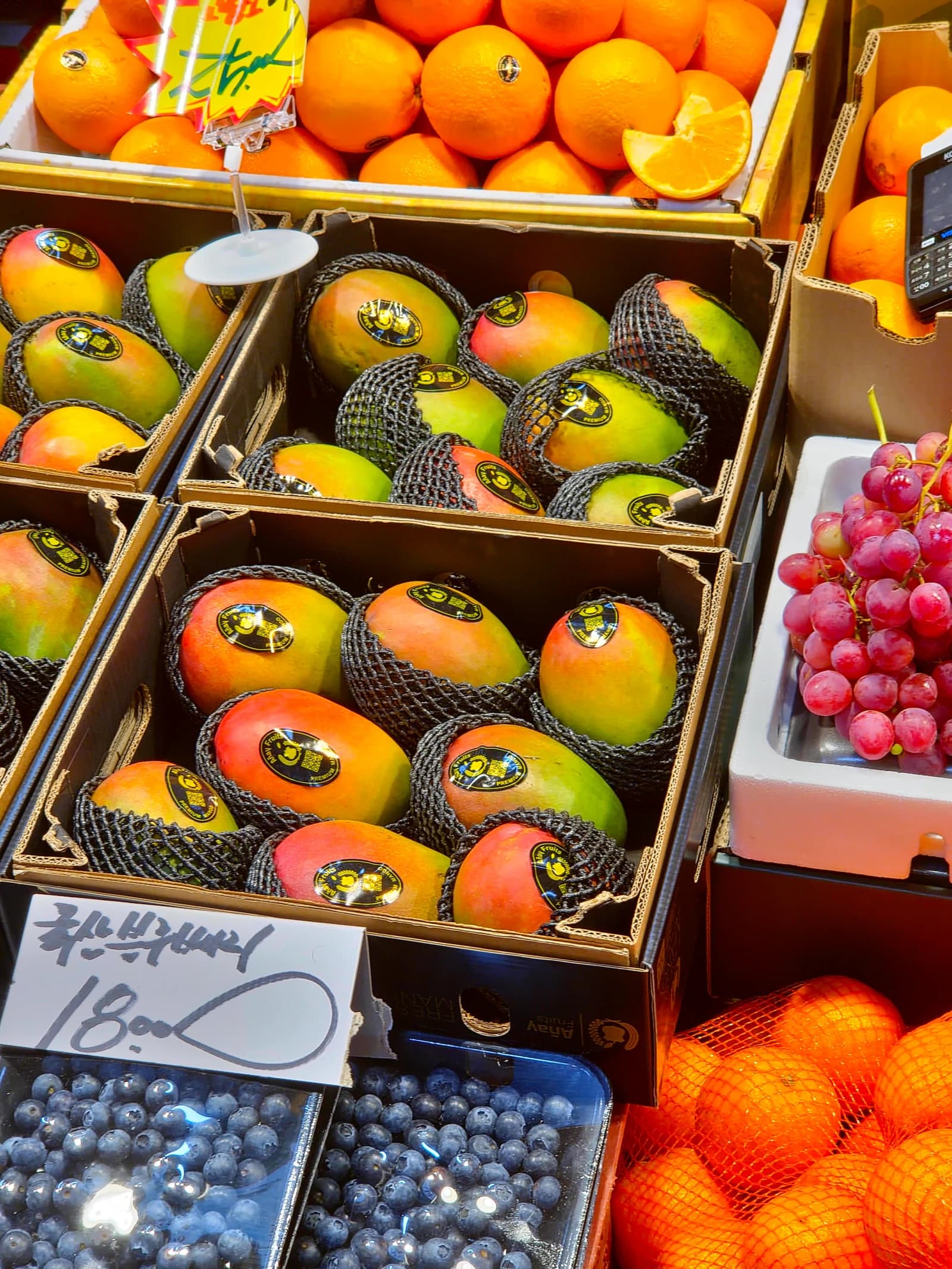
They had mangoes too. Most mangoes sold in Korea are imported — the climate just isn't right for tropical fruit, aside from small-scale greenhouse production on Jeju Island and a few spots down south. Because anything dodgy gets culled during the import process, the mangoes that make it to Korea are generally top quality. Flavour-wise, they deliver — but the price reflects it. At about A$18 a box (₩18,000), it's a fair whack compared to what you'd pay for apples or strawberries.
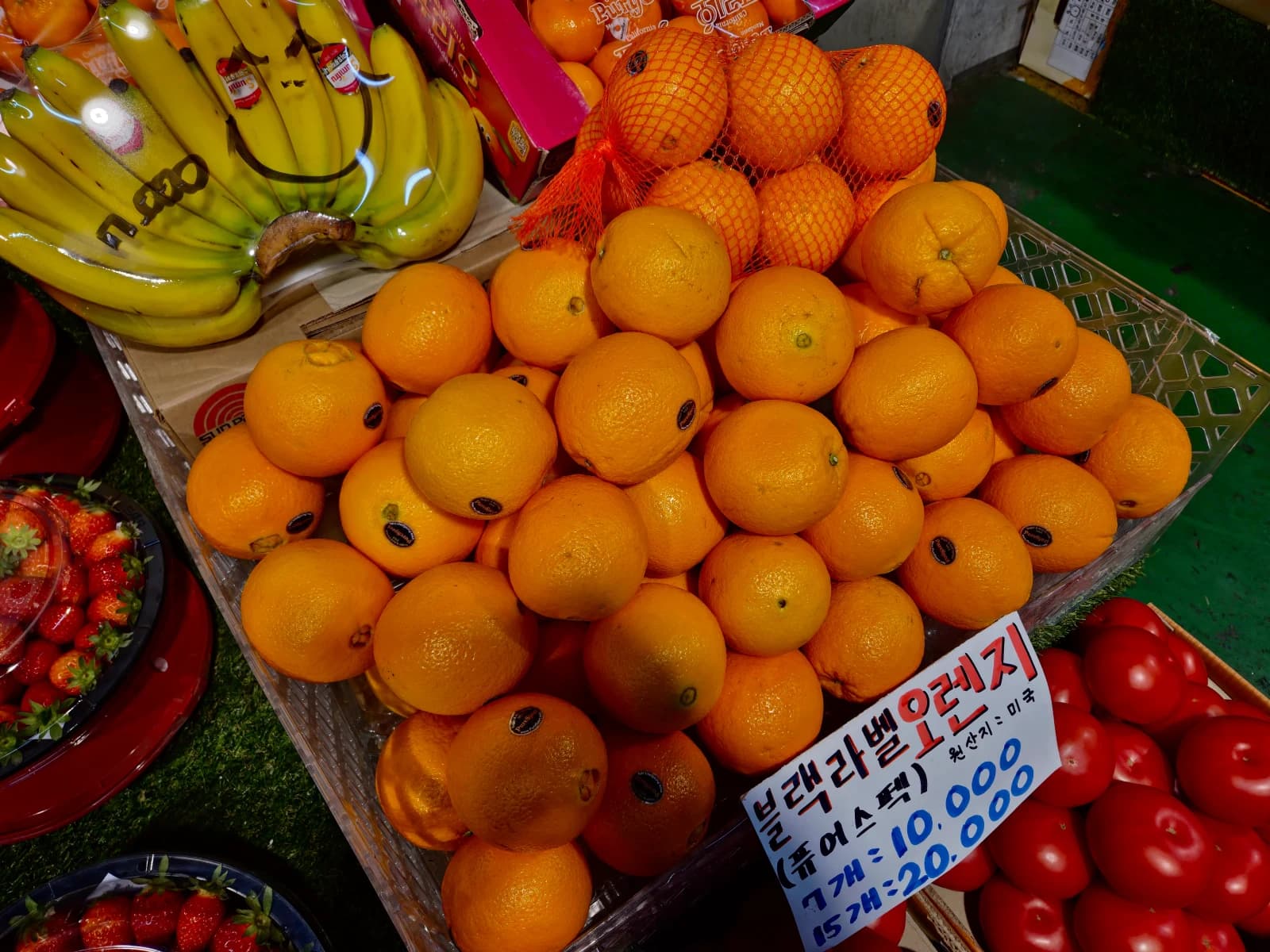
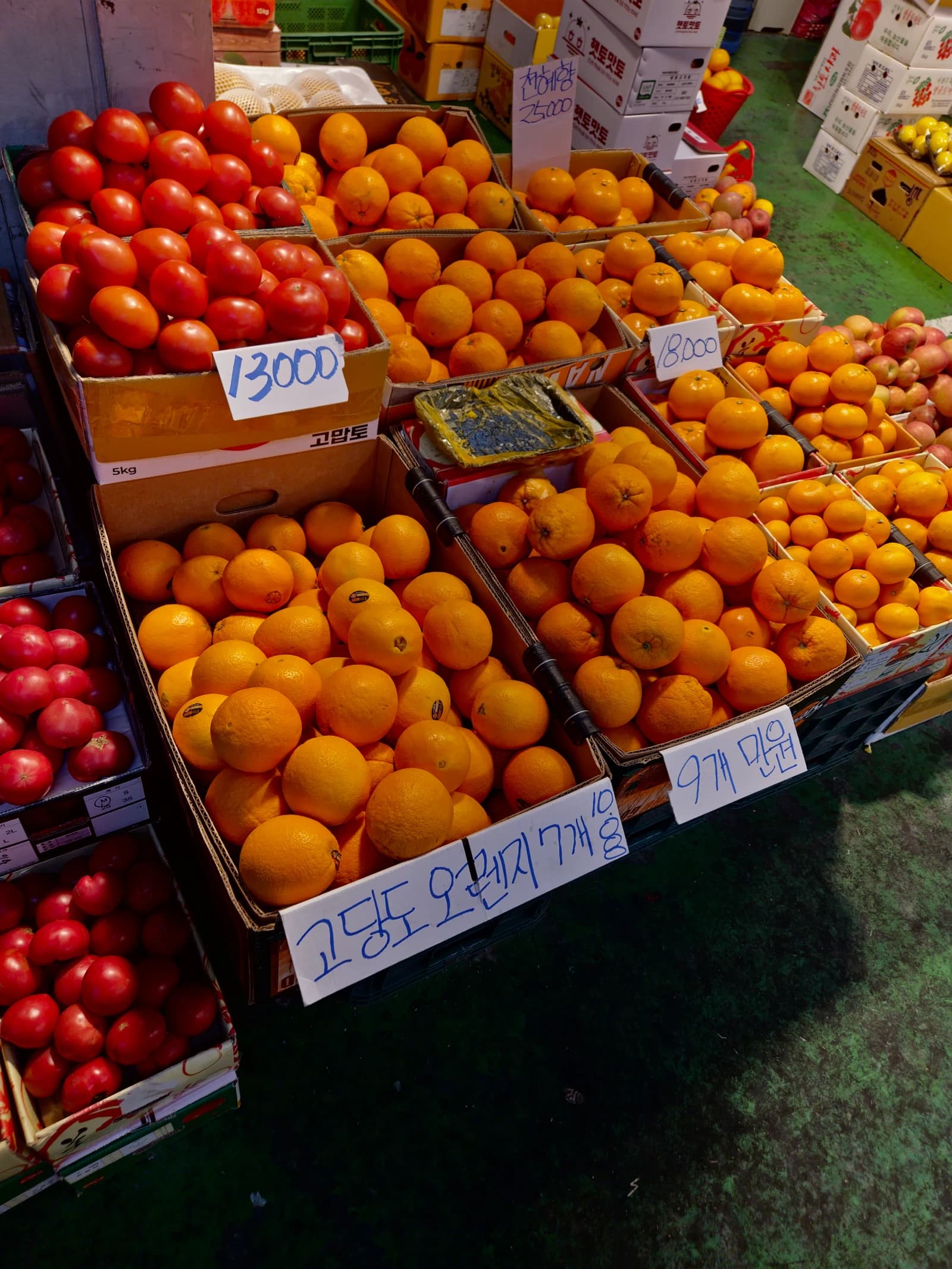
Oranges were stacked up along one side as well. Most oranges sold in Korea are imported from the US or Australia, and at the market they tend to be sold in bags rather than individually. Buying them one by one at the supermarket adds up quickly, so grabbing a bag at the market is way better value. They were sorted by size, and the vendor reckoned the bigger ones had more juice. My wife wanted to peel one open and try it on the spot, but they weren't offering samples so we moved on.
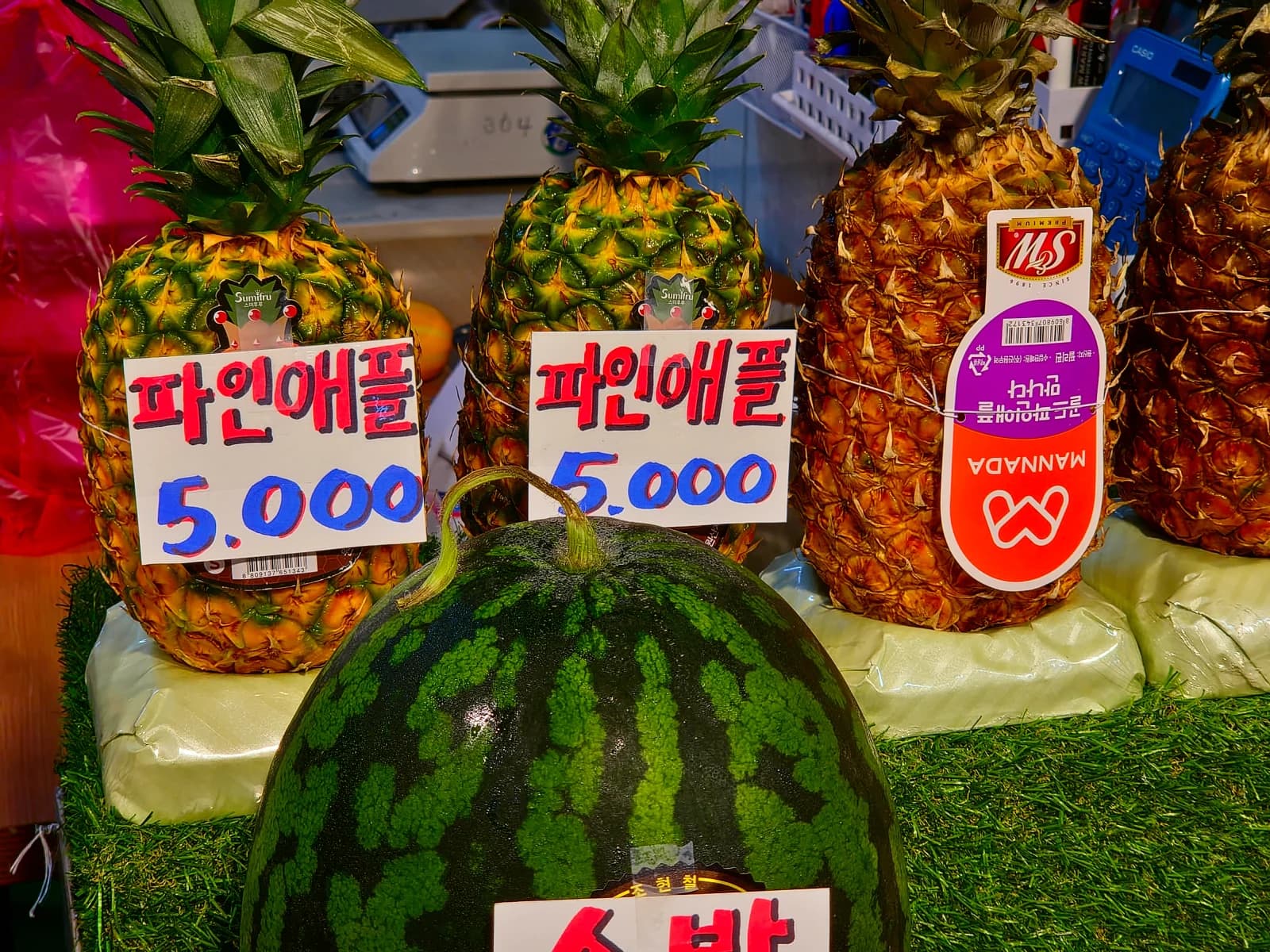
Pineapples were about A$5 each (₩5,000). They're imported, but buying them at the market is cheaper than the supermarket. The watermelons below are Korea's quintessential summer fruit, so being spring, prices were still on the higher side.
Special Finds — White Strawberries and Chilean Grapes
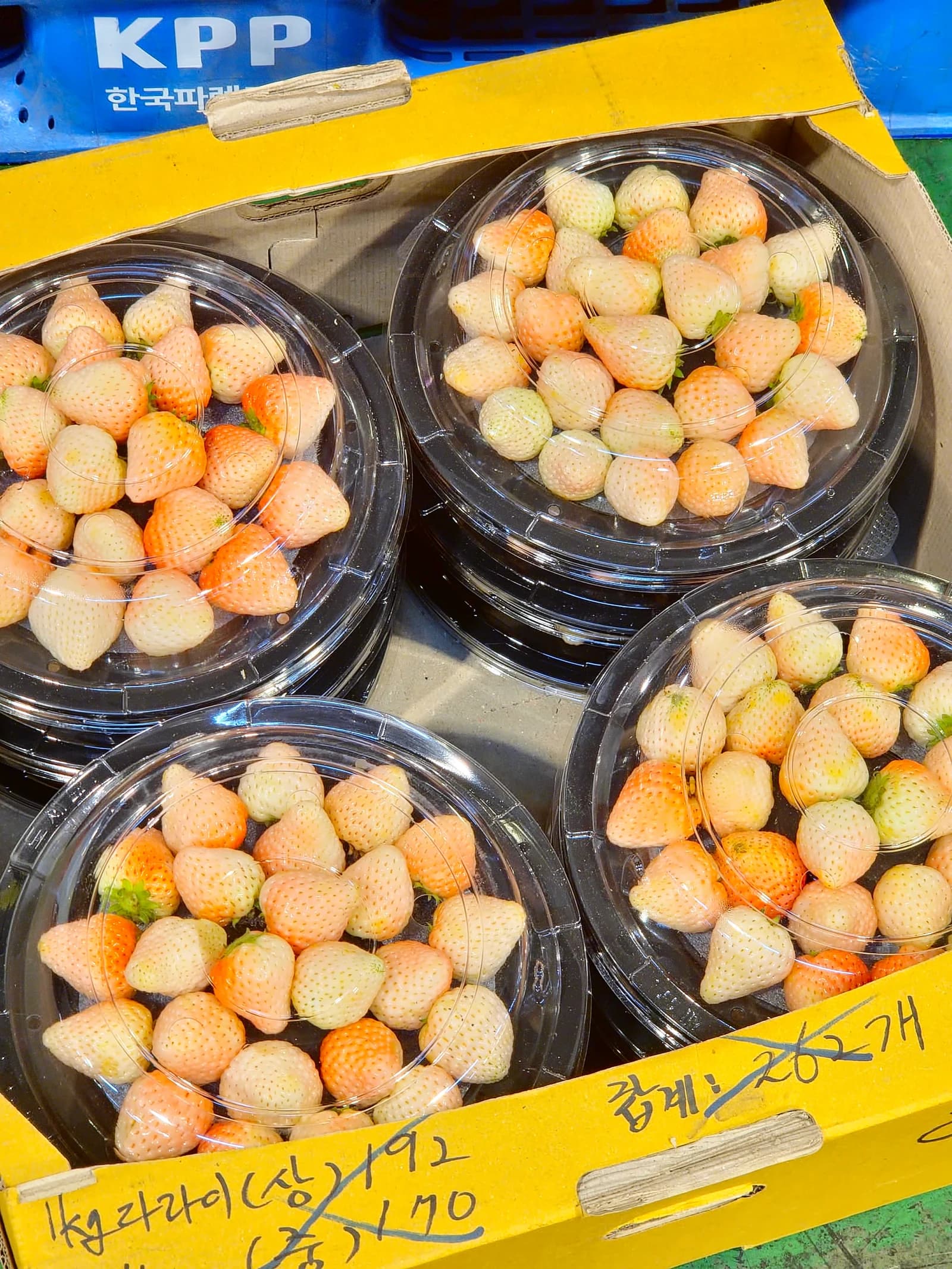
These are white strawberries. The variety is called Mannyeonseol, which translates to something like "eternal snow" — and yes, they're naturally white. Compared to regular red strawberries, they're about 20% sweeter with almost no tartness at all, just pure sweetness. Premium grade was about A$19 per kilo (₩19,000), with second-grade ones at around A$10. Definitely pricier than standard strawberries, but supply is limited, so if you spot them, they're worth a crack.
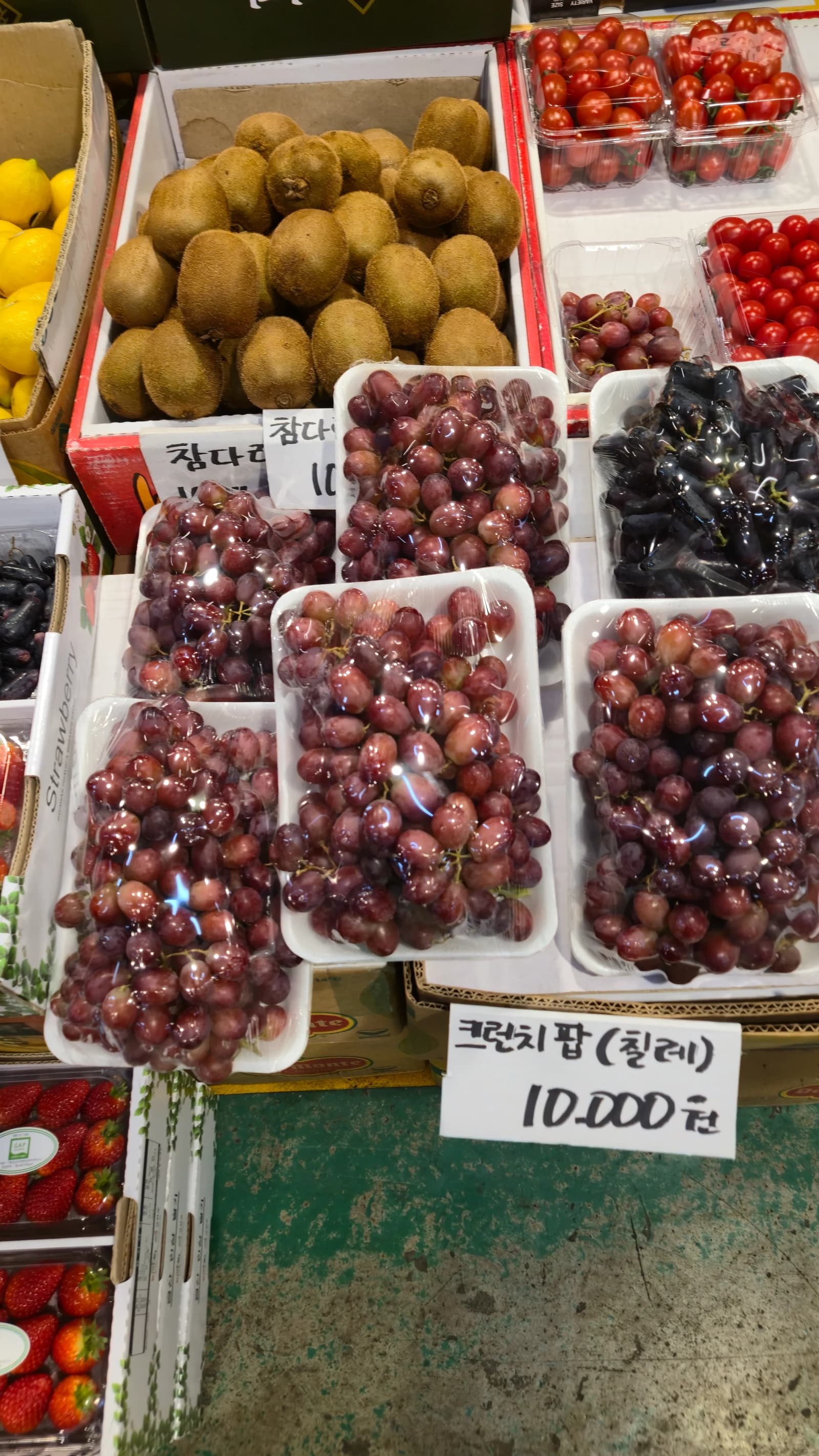
Chilean Crunch Farm grapes were also going for about A$10 a pack. When it's spring in Korea, it's autumn in Chile down in the Southern Hemisphere, so this is when freshly harvested Chilean grapes flood the Korean market. Behind them, kiwifruit, cherry tomatoes, strawberries, and finger grapes were all clustered together in one section — it felt more like a fruit exhibition than a market stall.
Kiwifruit, Cherry Tomatoes, and Bananas
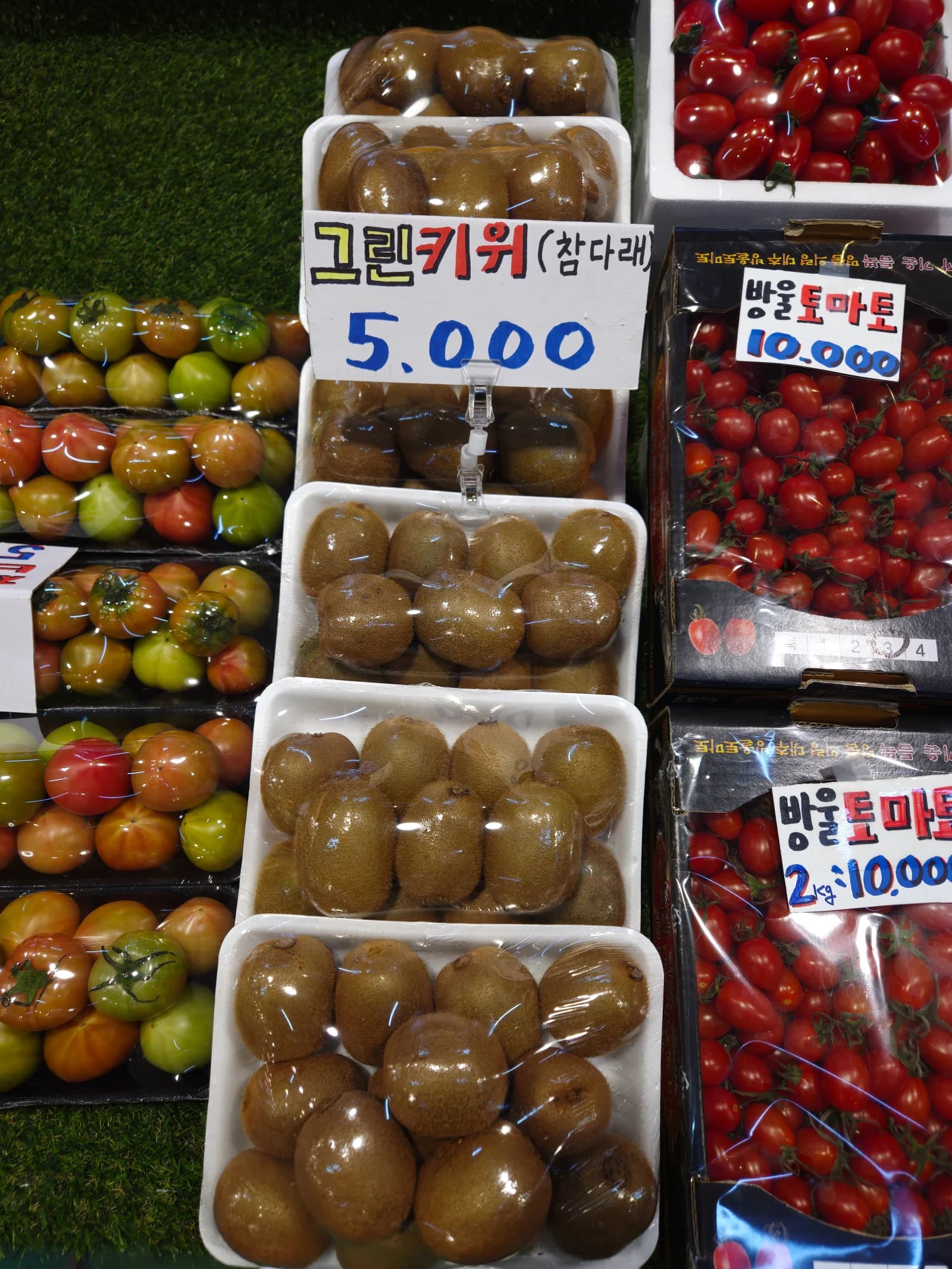
Green kiwifruit were about A$5 a pack, and cherry tomatoes were 2kg for around A$10. The greenish tomatoes on the left are the Daejer variety I mentioned earlier. At Korean markets, fruit and tomatoes are often displayed side by side — which pretty much sums up how strongly Koreans think of tomatoes as fruit.
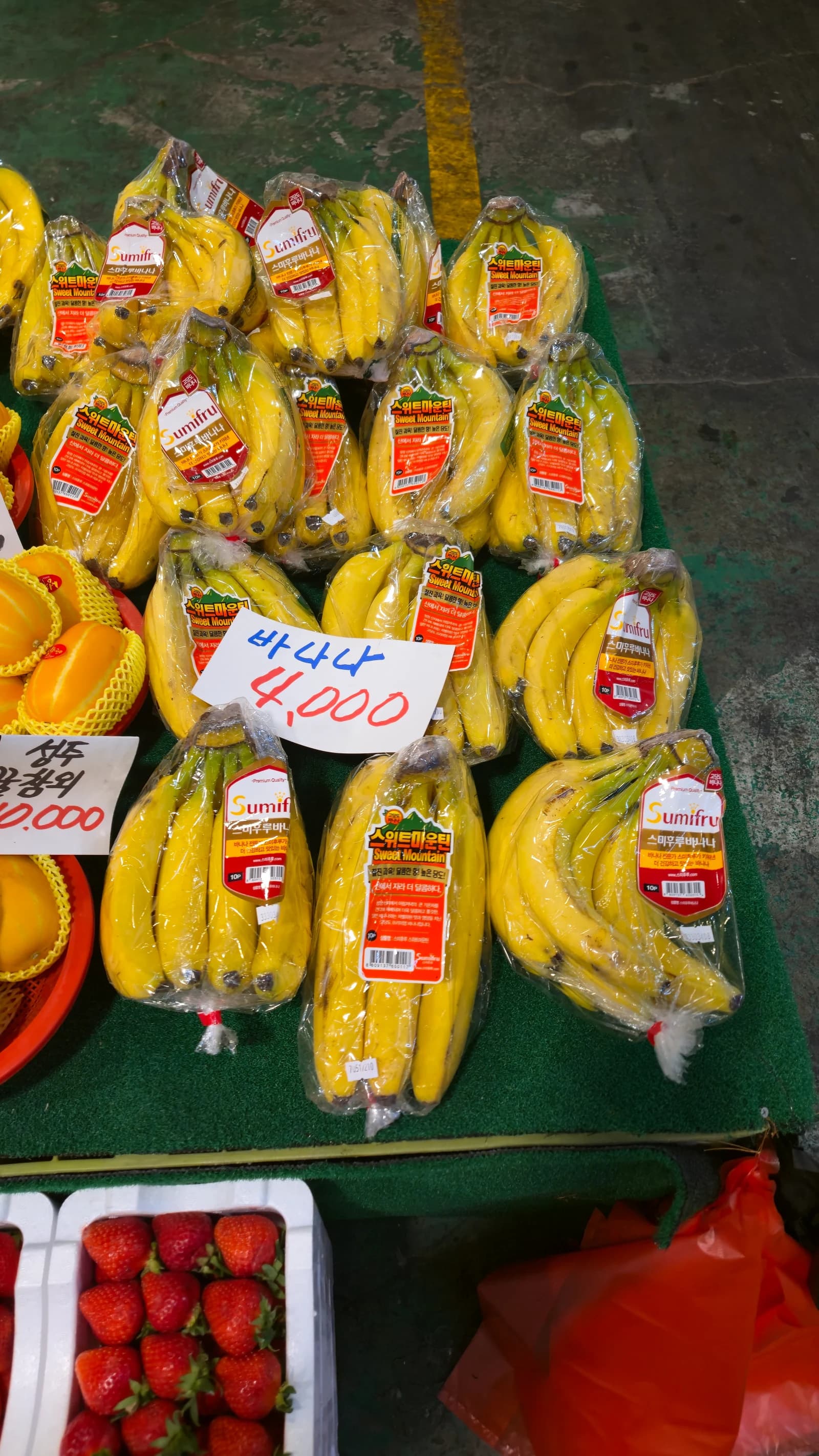
Bananas were about A$4 a bunch (₩4,000). Compared to what you'd pay in Southeast Asia, that's obviously dearer, but among imported fruit in Korea, bananas are easily the best bang for your buck. When you think about mangoes at A$18 a box or blueberries at A$15 a pack, bananas are an absolute bargain.
Domestic and Imported Side by Side — A Uniquely Korean Market Scene
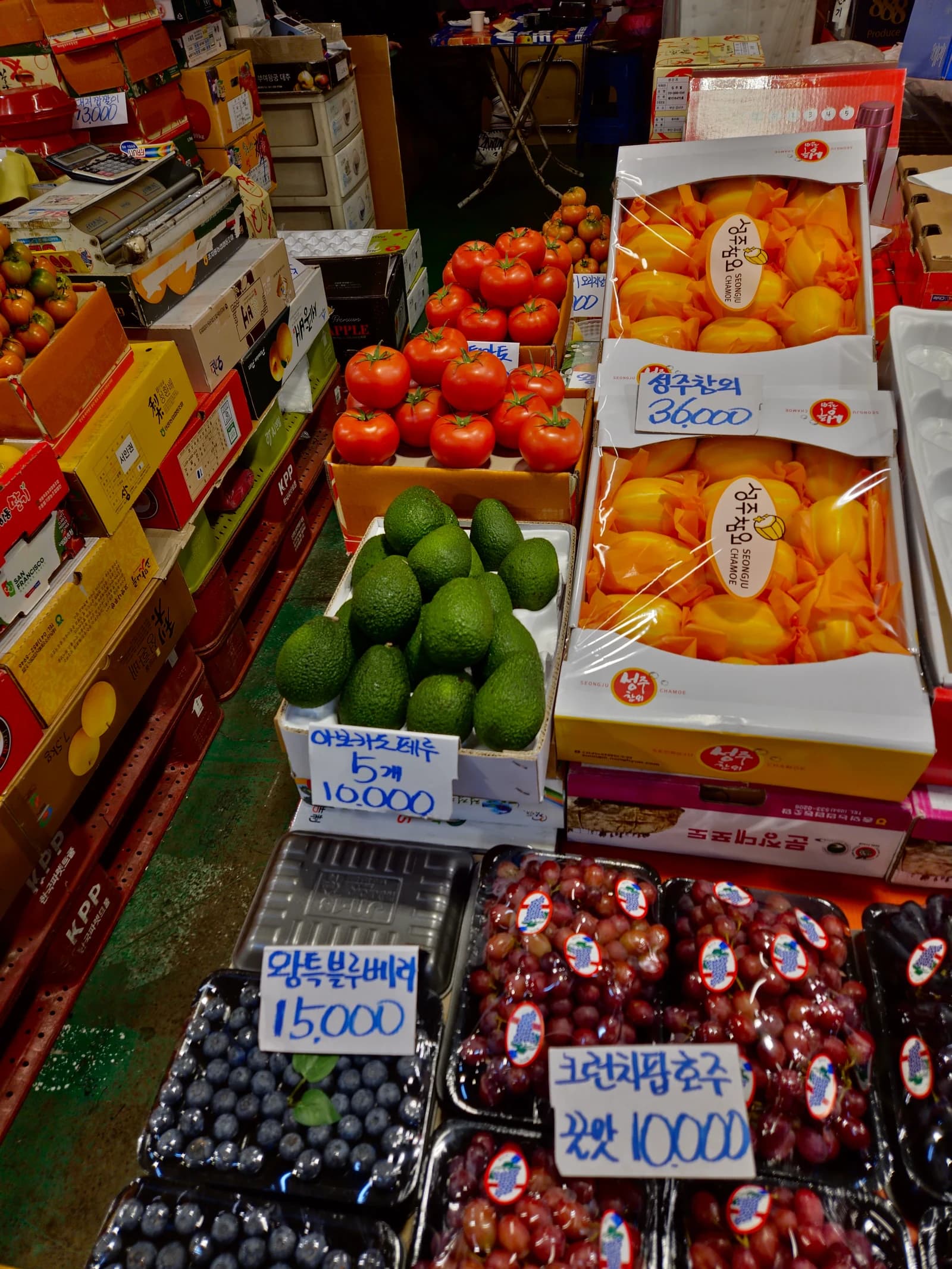
This stall had a Seongju chamoe gift set at about A$36 (₩36,000), five avocados for A$10, premium blueberries at A$15, and Crunch Farm grapes at A$10. What's brilliant about Korean traditional markets is exactly this — fruit from completely different origins all sitting together in one stall. And the handwritten price tags stuck on everything? That's a bit of market charm you just won't find at a supermarket.
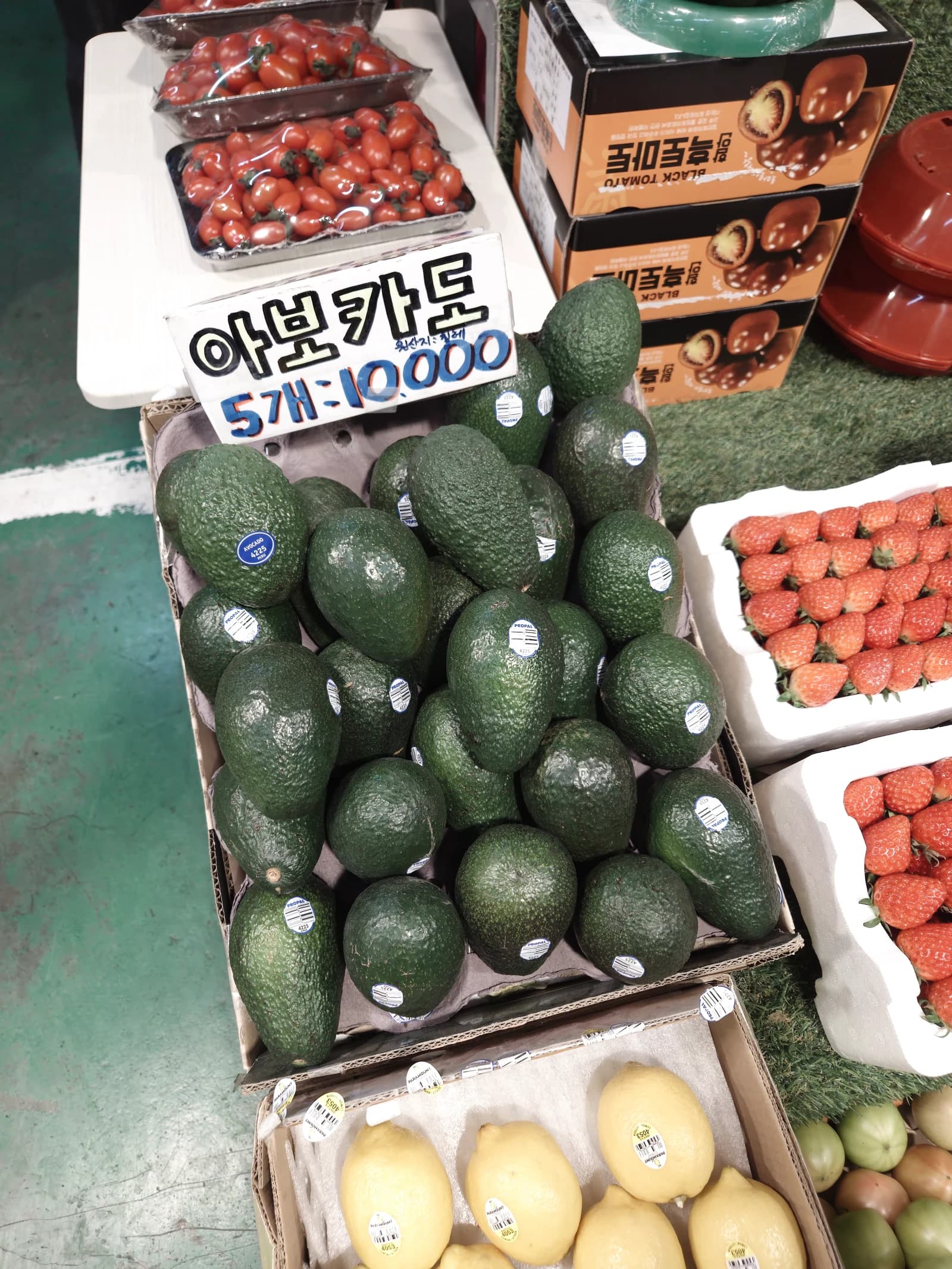
Five avocados for about A$10. Avocados aren't actually that popular as a household fruit in Korea. You'll find them at cafes and brunch spots all the time, but people buying them to eat at home is still pretty uncommon. My wife's a fan, but I'm not fussed, so we gave them a miss again this time. Grabbed three punnets of strawberries instead — no complaints there.
3 Punnets of Strawberries for A$10 — The Market Rewards Those Who Walk
What I Actually Bought
All that walking around and comparing prices paid off. I ended up scoring 3 punnets of strawberries for about A$10 (₩10,000). Each punnet was roughly 500g, so we're talking a serious haul. Got home, smashed through one punnet with my wife that arvo, and chucked the other two in the freezer. Glad I didn't buy at the first stall we saw. At the market, putting in the legwork is everything.
A Few Honest Downsides
The market is massive, so my legs were properly cooked by the end. We only did the fruit section and it still took well over an hour. Some stalls didn't have prices displayed either, which meant having to ask — and if you don't speak Korean, that could be a bit tricky.
That said, you'll find varieties here that supermarkets just don't stock, and since prices vary from stall to stall, there's a genuine thrill in hunting down a good deal. If you're travelling through Korea, swinging by a traditional market at least once makes for a ripper experience.
Next time I'm planning to cover the veggie section and the seafood section. A market visit doesn't end at fruit, after all.