Inside Korean Starbucks — Menu, Prices, Toy Story Merch & More
Table of Contents
13 items
Korean Starbucks menu, Korean Starbucks prices, Starbucks car park, Starbucks merchandise, Starbucks Toy Story collaboration, Starbucks Siren Order, Starbucks terrace, Starbucks drive-through, Korean cafe culture, Korean coffee prices, Korean desserts, Korean car park system, Korean kiosk payment, Korea cashless society
Killing Time at Starbucks While the Wife Gets Ready for Work
My wife didn't need to leave for work for another hour or so. Too long to just hang about at home, too short to go anywhere proper. She's from Thailand and was still getting ready, and I had absolutely nothing to do. So I drove three minutes down the road to Starbucks. No grand reason — it was close and easy.
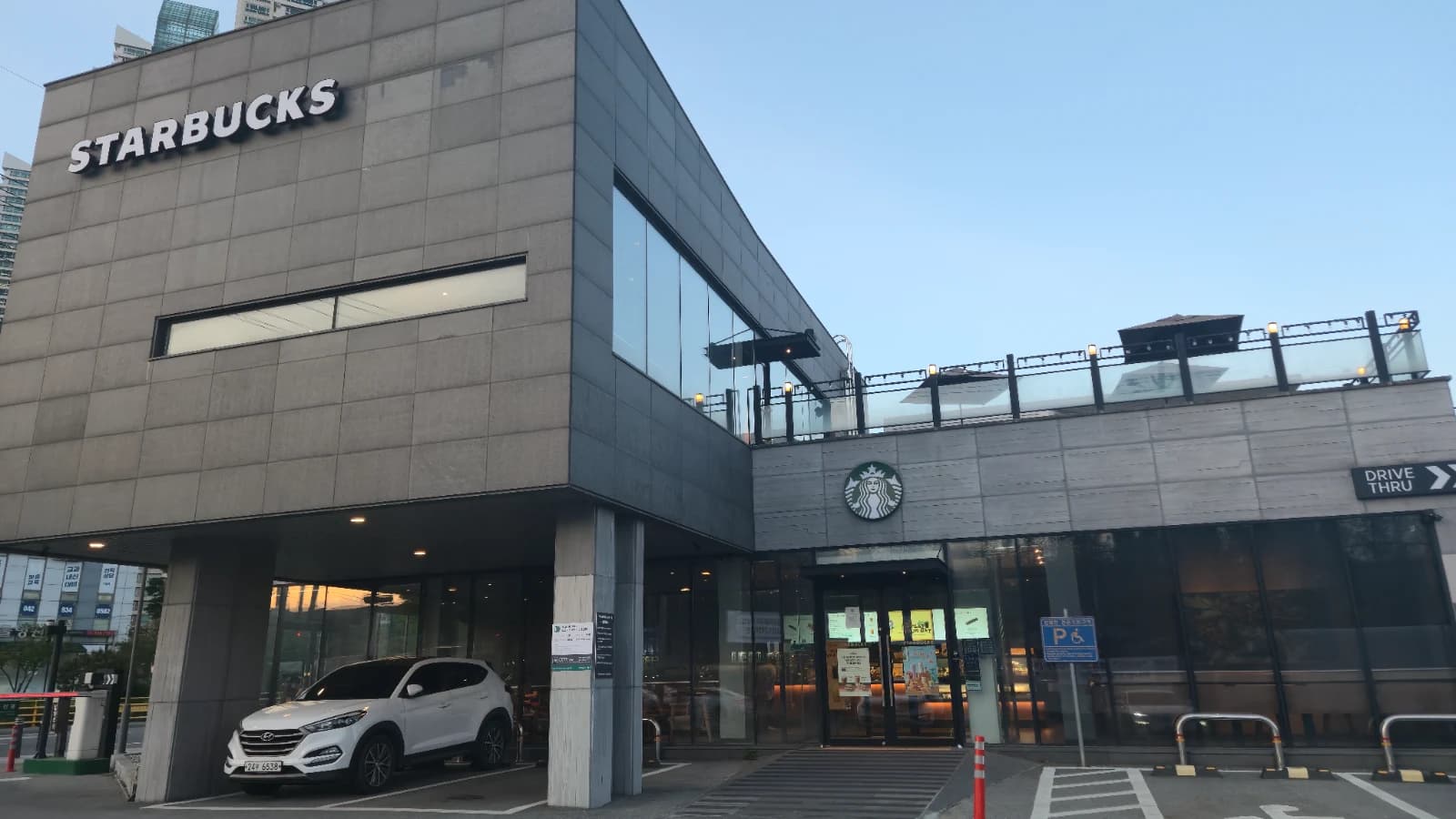
To give you a sense of just how many Starbucks there are in South Korea: as of April 2026, there are 2,131 branches nationwide. That puts the country third in the world, behind only the US (17,049) and China (7,689). For a nation of just 51 million people, that's frankly absurd — you can barely walk five minutes without spotting one. There are two Starbucks within a ten-minute walk of our flat alone.
Korean Starbucks Car Parks — They Charge Now
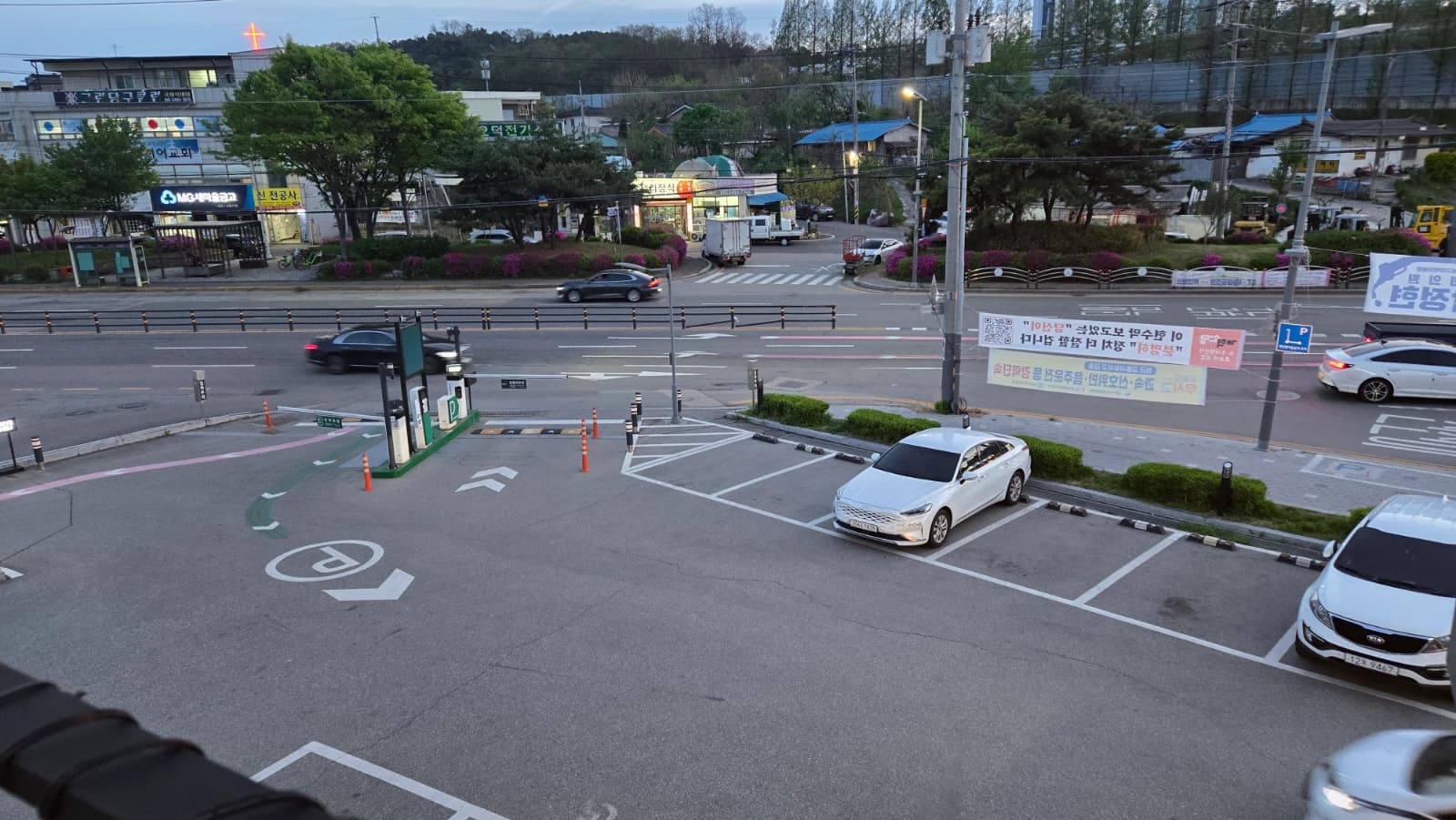
This branch had a fairly generous dedicated car park. These days, most Korean Starbucks locations have switched to paid parking — roughly 500 won (about 30p) per ten minutes. Honestly, it's actually better this way. Previously, parking was only meant for customers, which always felt a bit awkward. Now you're paying for the space, so you can nip off to run errands nearby and leave your car without any guilt whatsoever. Branches with drive-throughs tend to have car parks of a similar size to this one.
The Counter and Display Cases
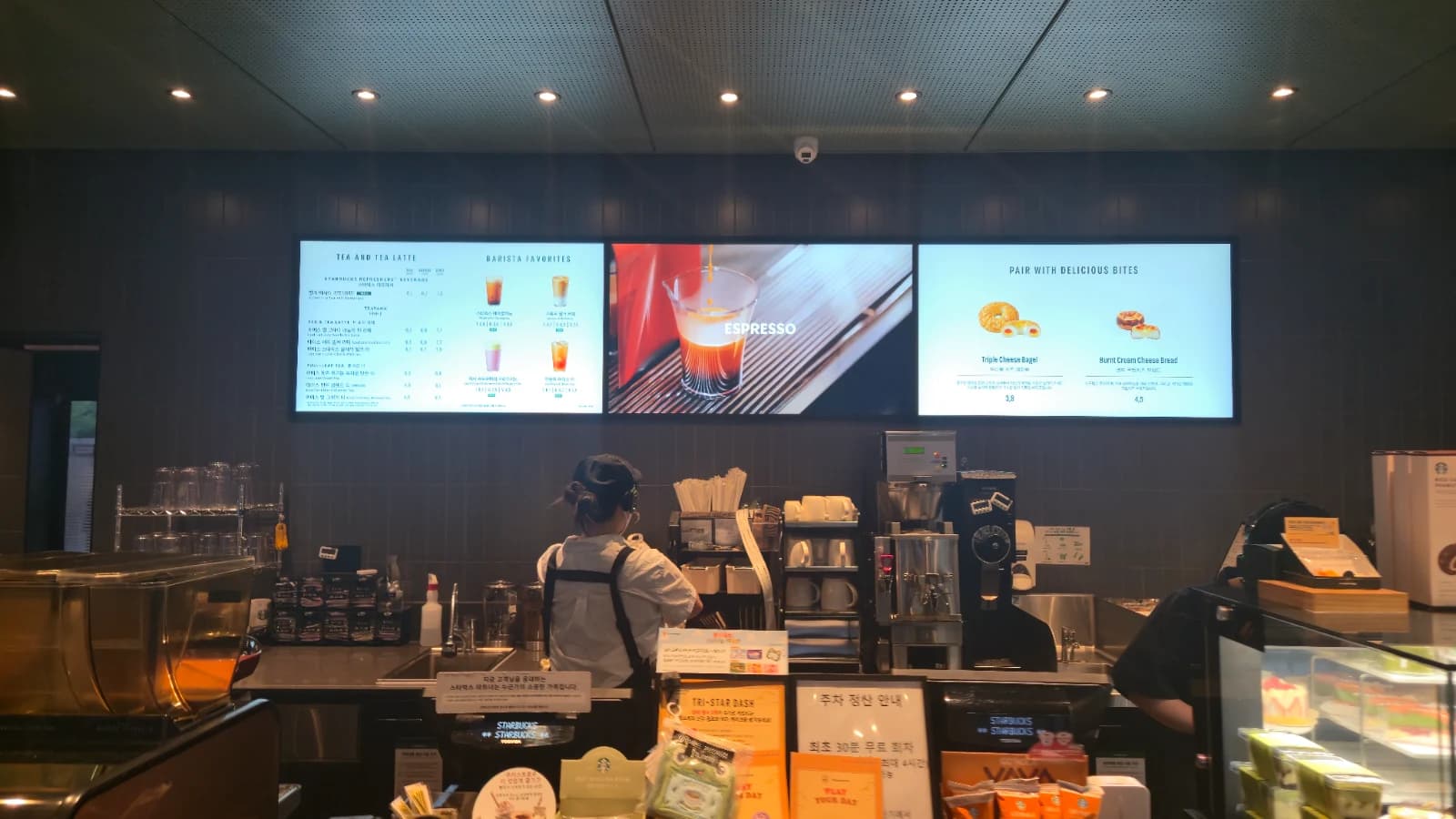
Three digital menu boards hung above the counter, and a member of staff wearing a headset was juggling drive-through orders and in-store orders at the same time. It was evening, so there was no queue. At Korean Starbucks, you don't actually need to order at the counter at all. There's a mobile ordering system called Siren Order — you place your order and pay through the app, then just collect your drink when you arrive. Even if there's a massive queue, it doesn't matter. You order remotely, get a pickup notification, and grab your drink. Done.
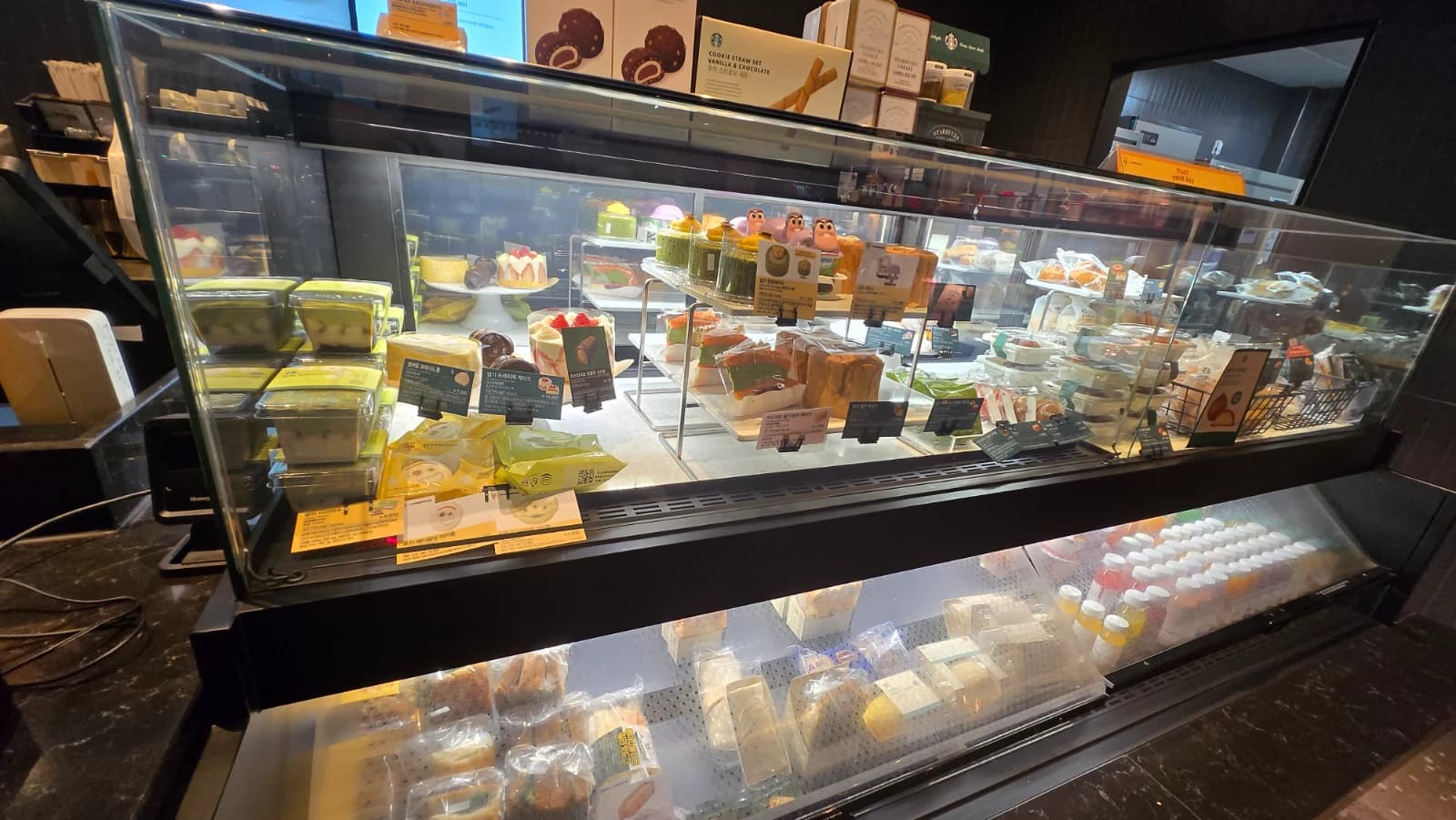
Next to the counter was a two-tier chilled display case. Cakes, sandwiches, salads and bottled drinks were crammed in tight. Korean Starbucks isn't just about coffee. Plenty of office workers pop in at lunchtime just for a sandwich or salad, and lots of people grab a cake to take to a birthday party. Ordering food without any coffee at all is completely normal here.
Bread, Desserts and the Cake Lineup
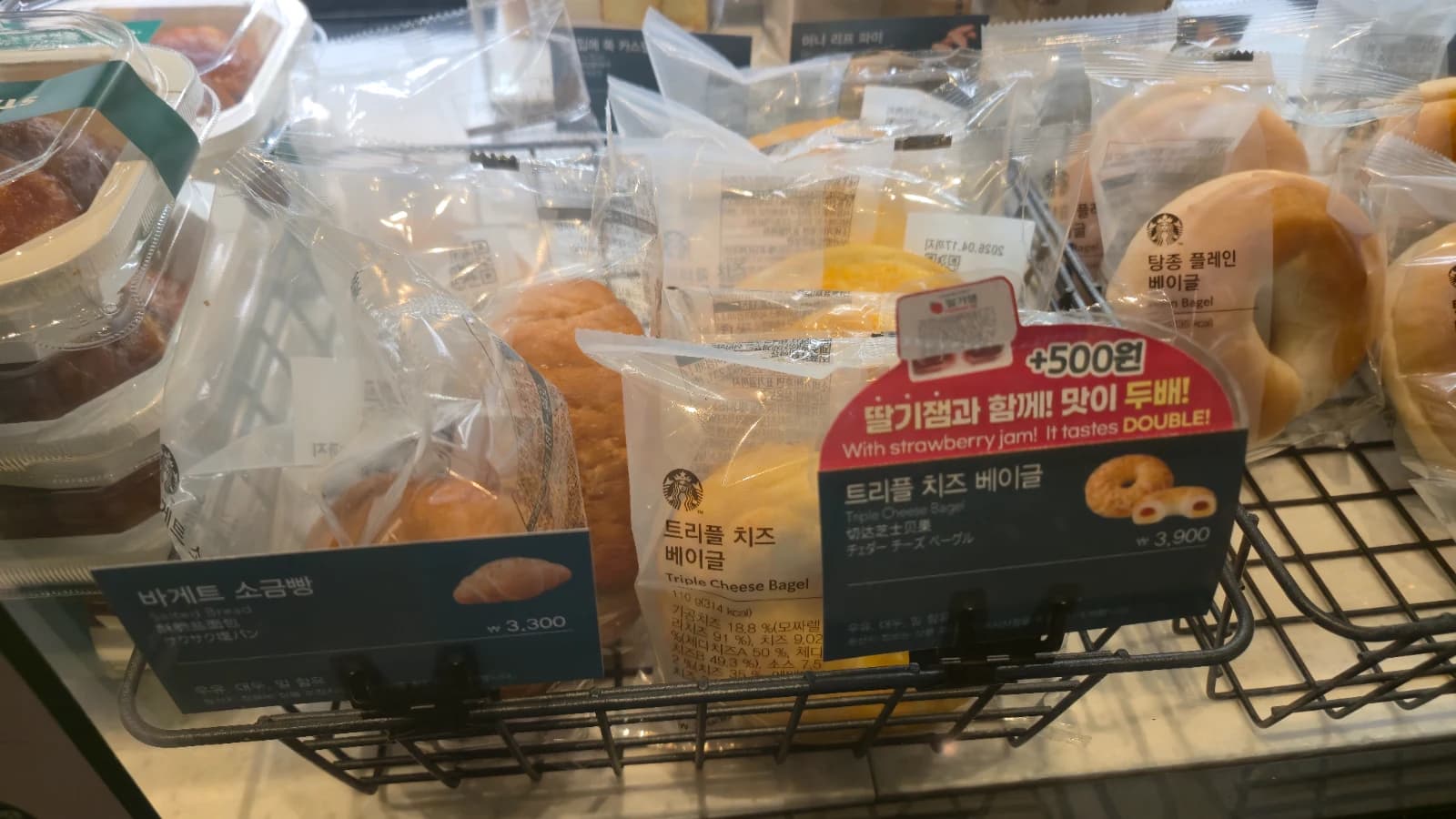
Up front were baked goods like the baguette salt bread (3,300 won / roughly £1.90) and a triple cheese bagel (3,900 won / about £2.20). Salt bread — a buttery, lightly salted roll — has been massively trendy in Korea over the past few years. The fact that Starbucks now stocks it tells you it's gone fully mainstream.
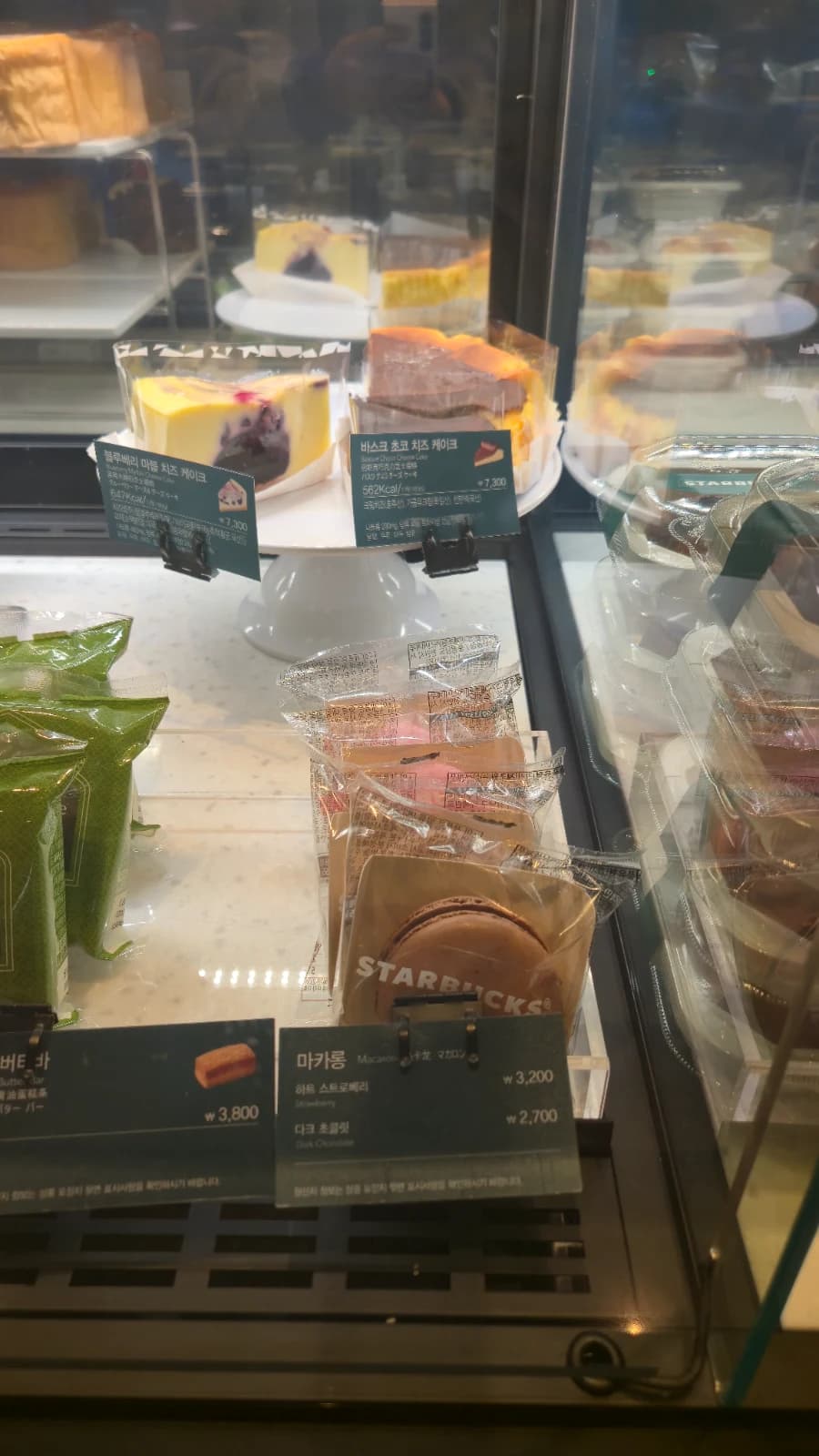
I spotted a Basque chocolate cheesecake (7,800 won / about £4.40), a heart-shaped strawberry macaron (3,200 won / £1.80), and a dark chocolate macaron (2,700 won / £1.50). Macarons are hugely popular as little gift-worthy treats in Korea. The Starbucks ones aren't quite patisserie-level, but they're a decent size for having alongside your coffee without it feeling like too much.
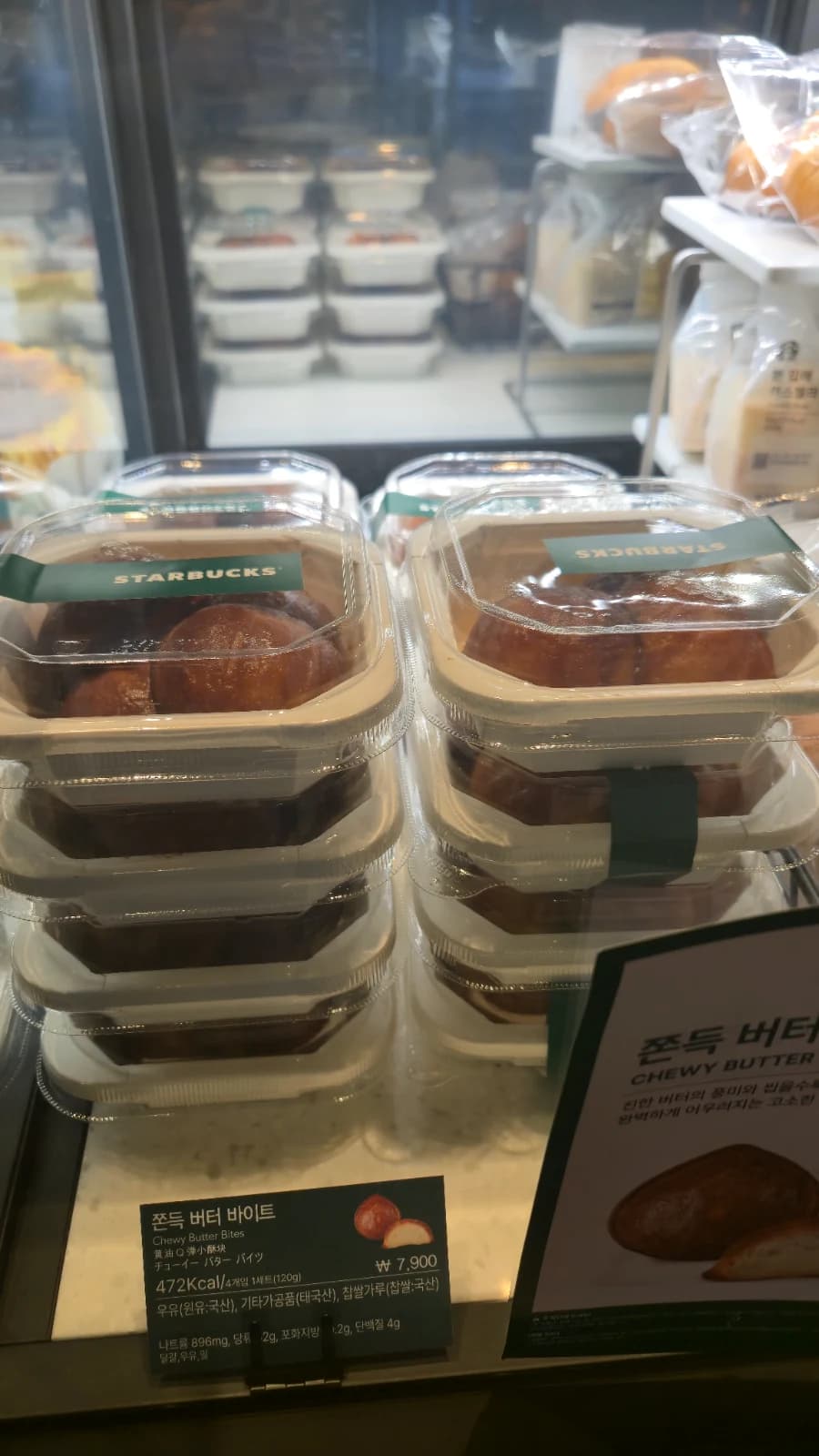
I usually just order a coffee and barely glance at the display, so this was the first time I'd had a proper look. Among the packaged items was something called chewy butter bites (7,900 won / about £4.50) — described as a buttery bake made with glutinous rice flour. Korean Starbucks is quite proactive about developing menu items tailored specifically to local tastes.
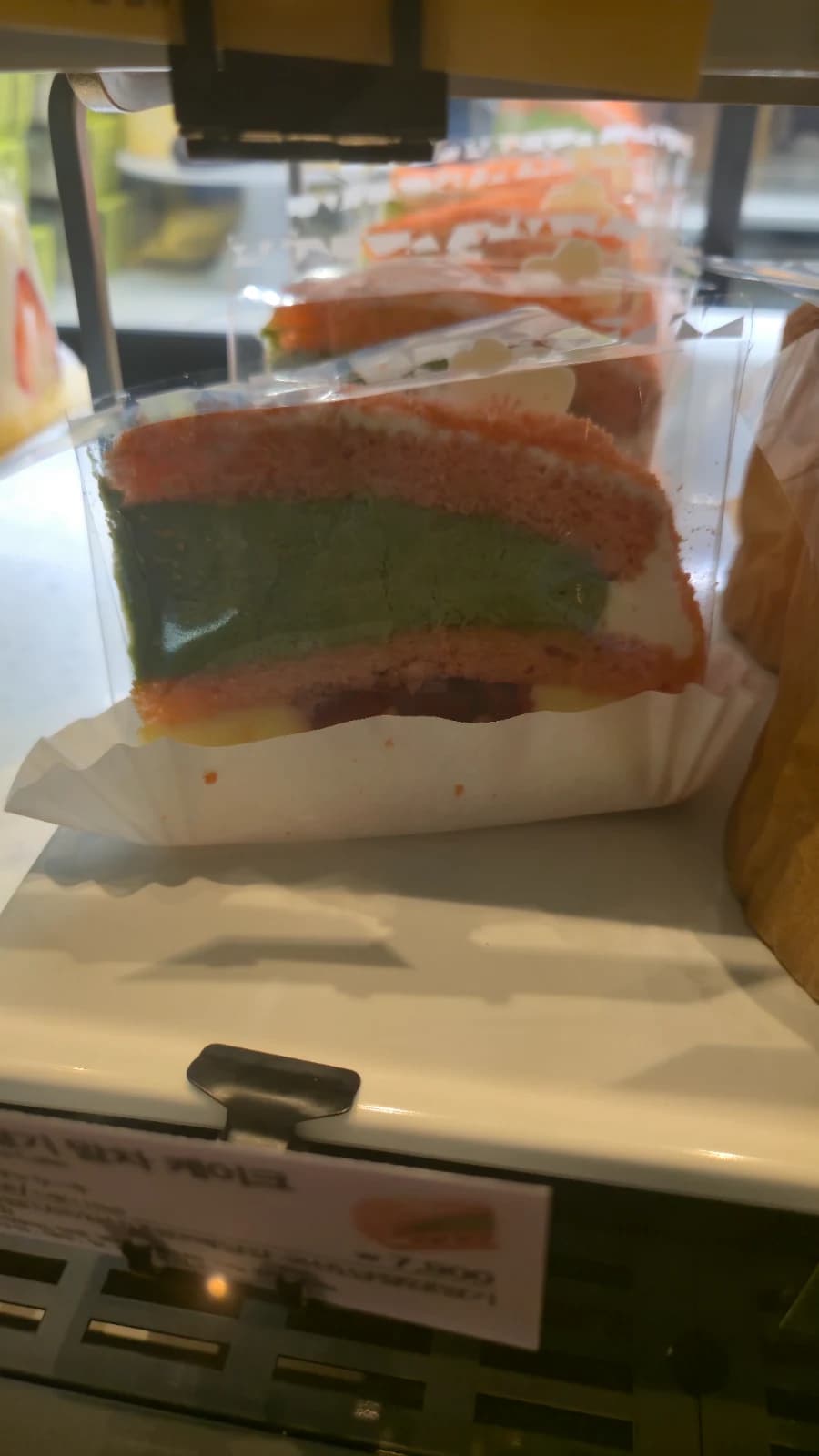
Moving along to the cakes, there was a strawberry moist chocolate cream cake (8,300 won / about £4.70) and a soft cream castella (4,500 won / roughly £2.50). The castella — a Japanese-style sponge cake — came wrapped in paper with quite a Japanese feel to the packaging.
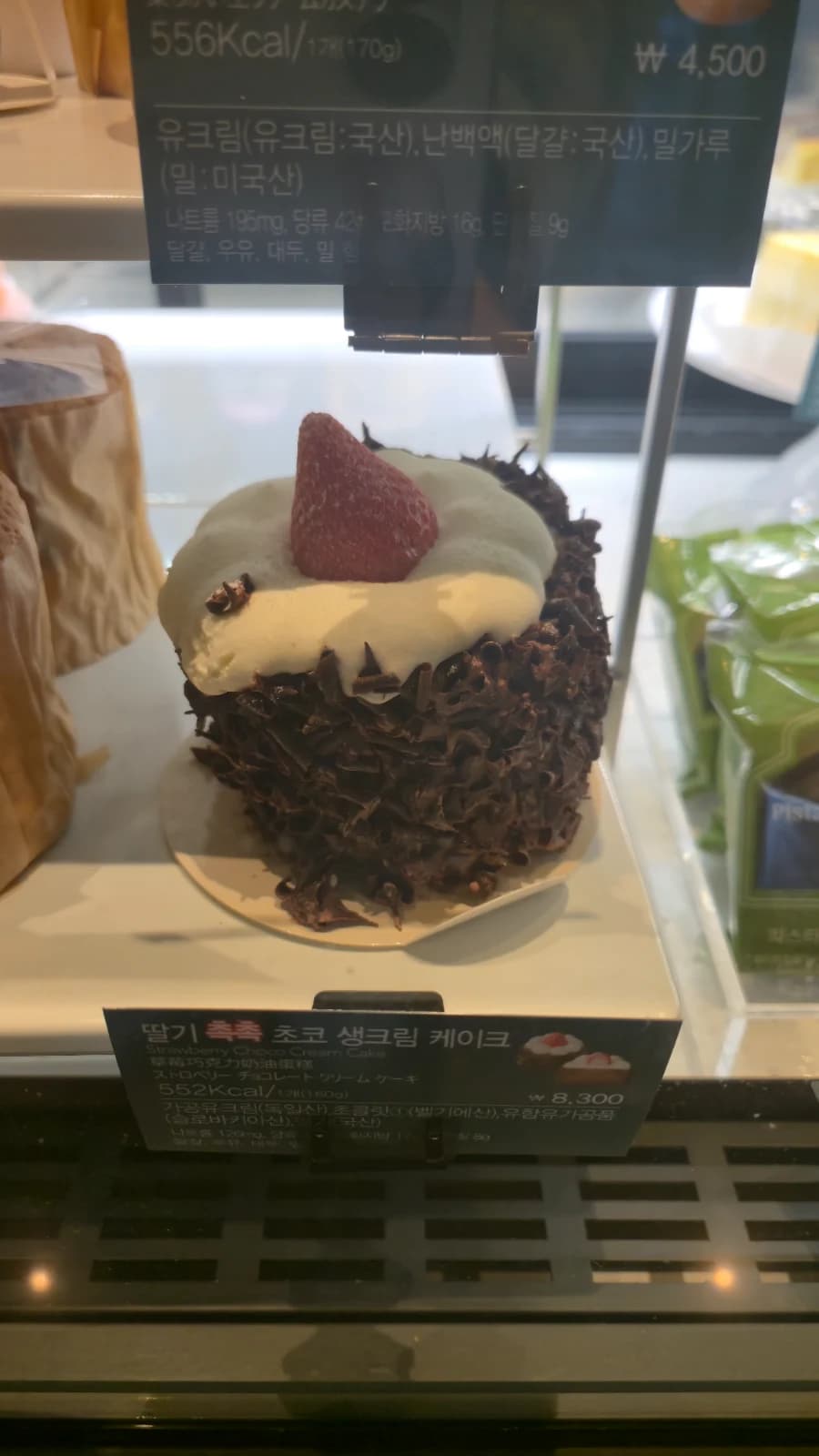
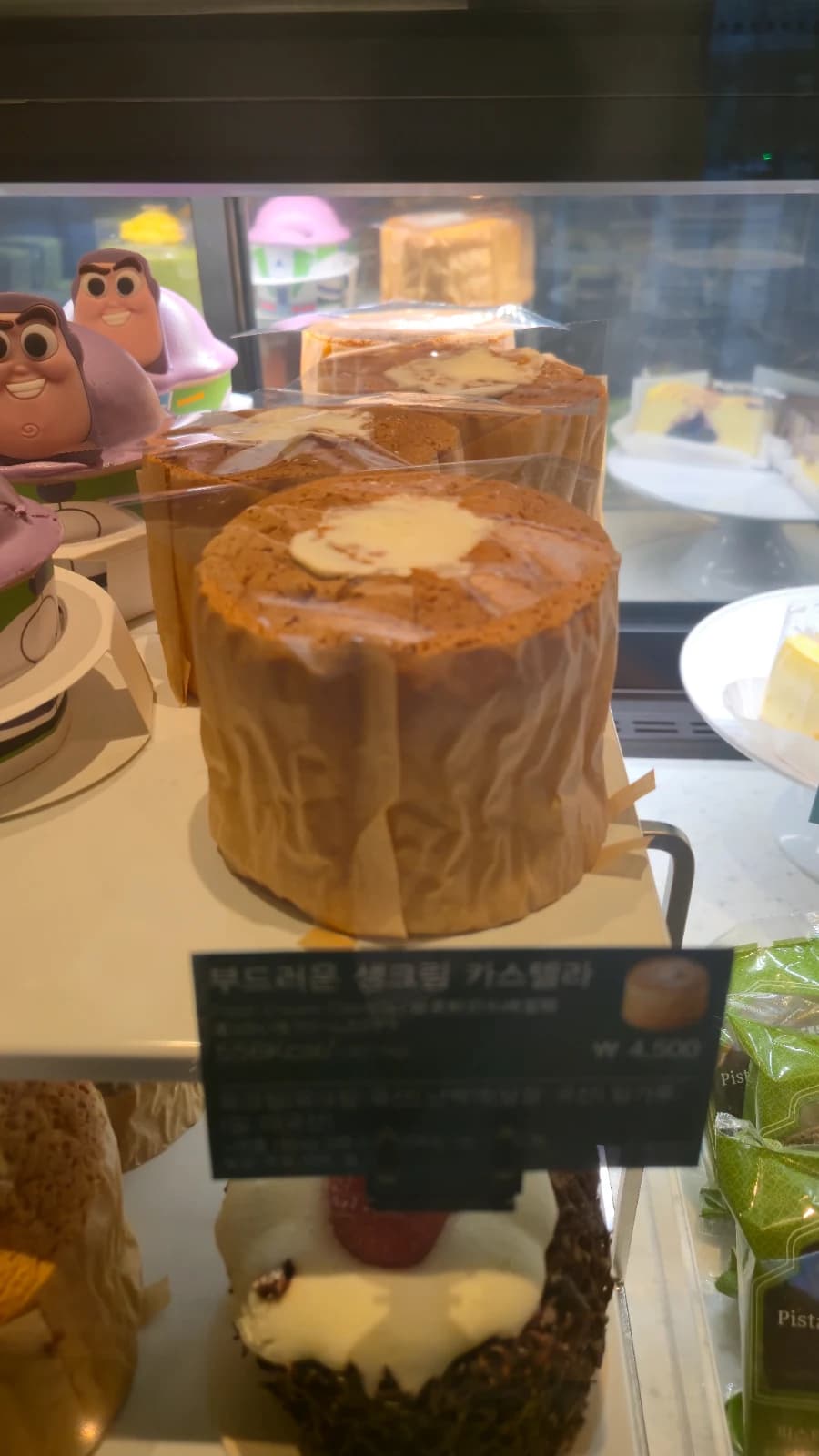
Further back on the shelf I could see a strawberry fresh cream cake as well. You can eat Korean Starbucks cakes in-store or have them boxed up to take away. At around 10,000 won (roughly £5.60) each, they sit in an interesting middle ground — cheaper than a proper cake shop but pricier than a convenience store dessert. That actually makes them perfect for a casual, spur-of-the-moment purchase.
Toy Story Collaboration — Limited-Edition Desserts
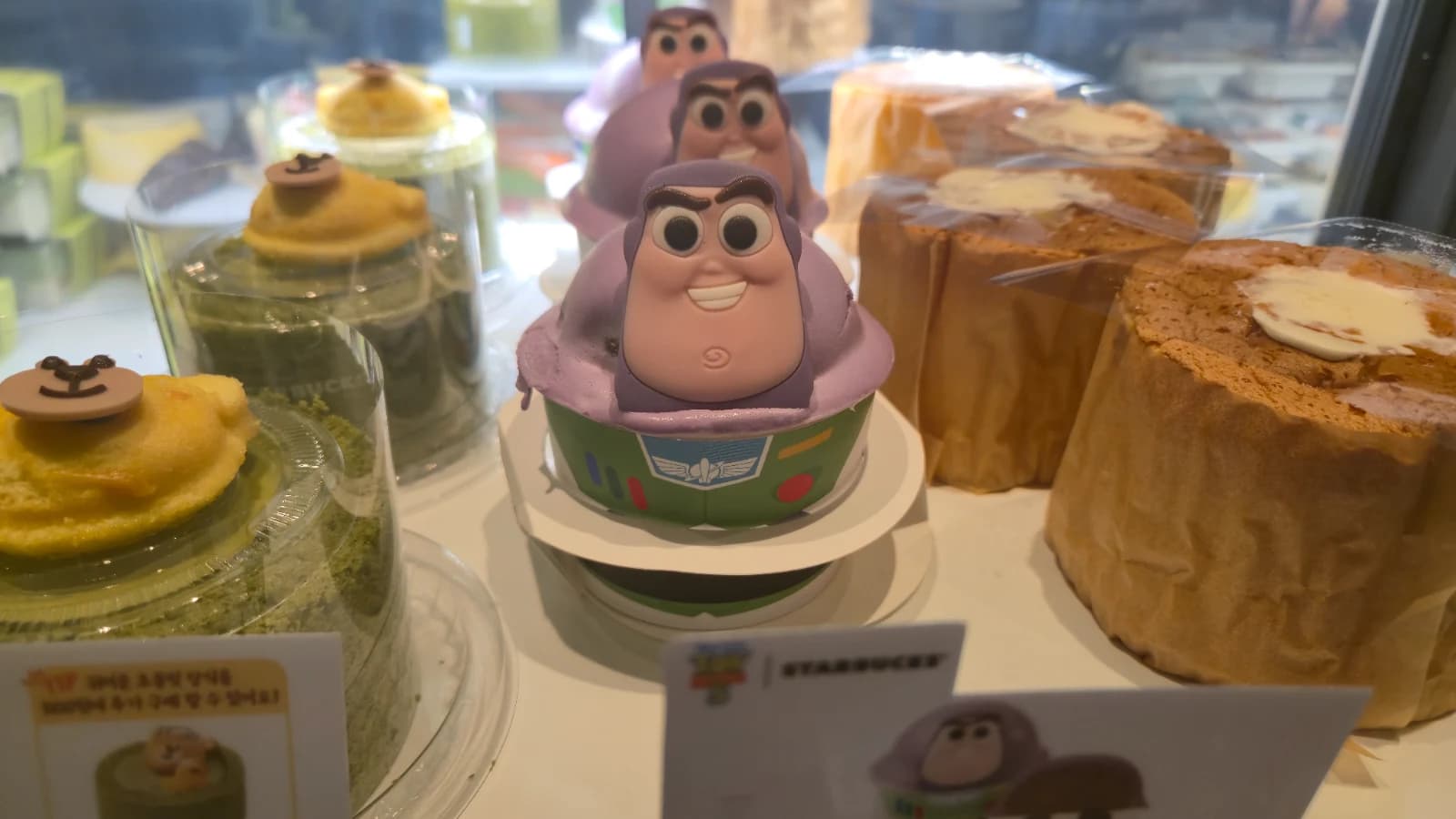
A Toy Story limited-edition collaboration cake. Shaped like Buzz Lightyear, with another two or three stacked behind it. Korean Starbucks rolls out character collaborations like this every season, and if you miss the window, they're gone. Previous tie-ins have included Line Friends and Warner Bros., and stock often sells out on launch day.
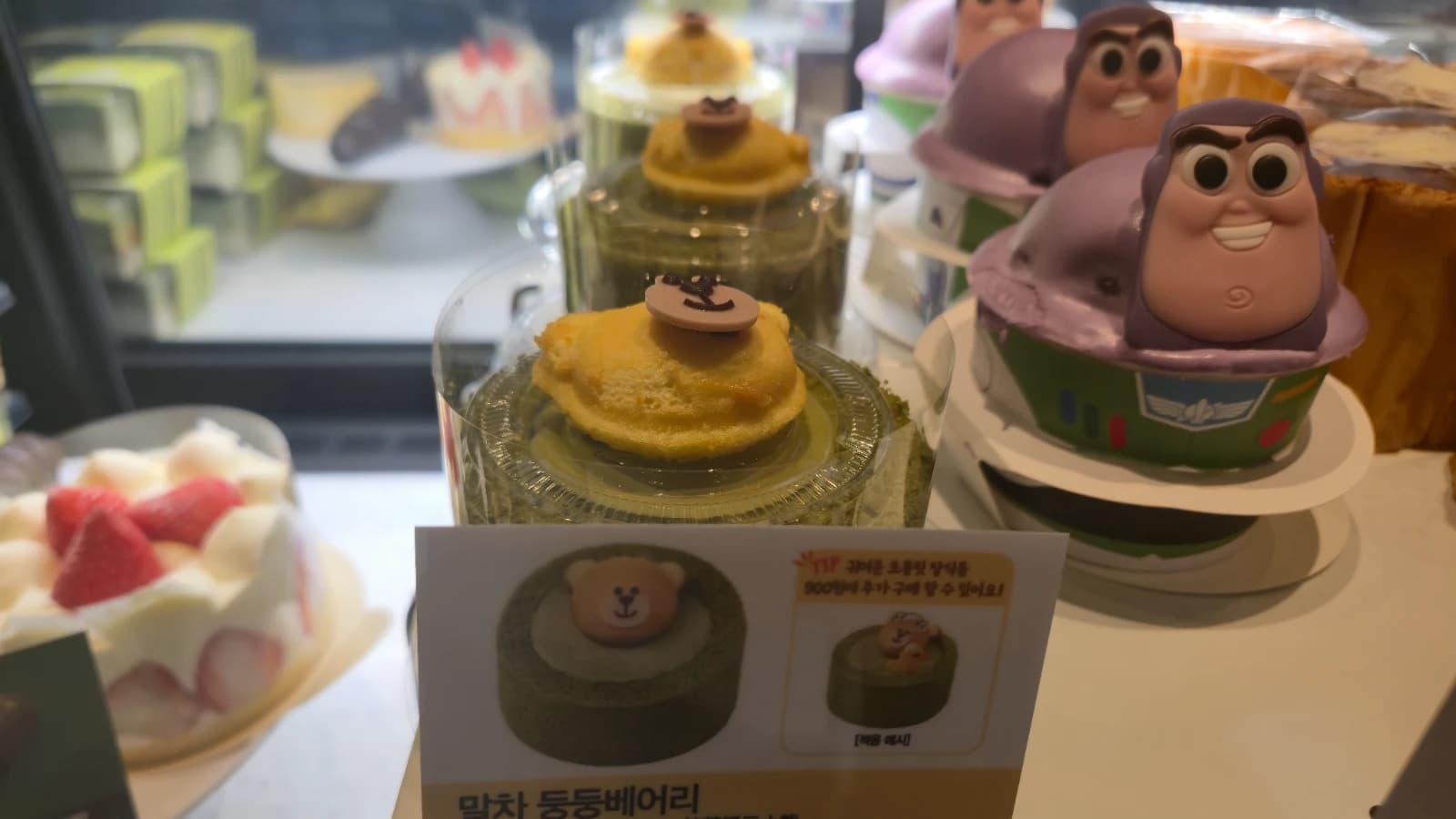
Then there was the matcha Dungdung Bearry — a cake dusted with matcha powder and topped with a little chocolate bear. A sign noted you could buy the chocolate decoration separately for an extra 500 won (about 30p). It's these small details that show just how seriously Korean Starbucks takes its merchandise and marketing.
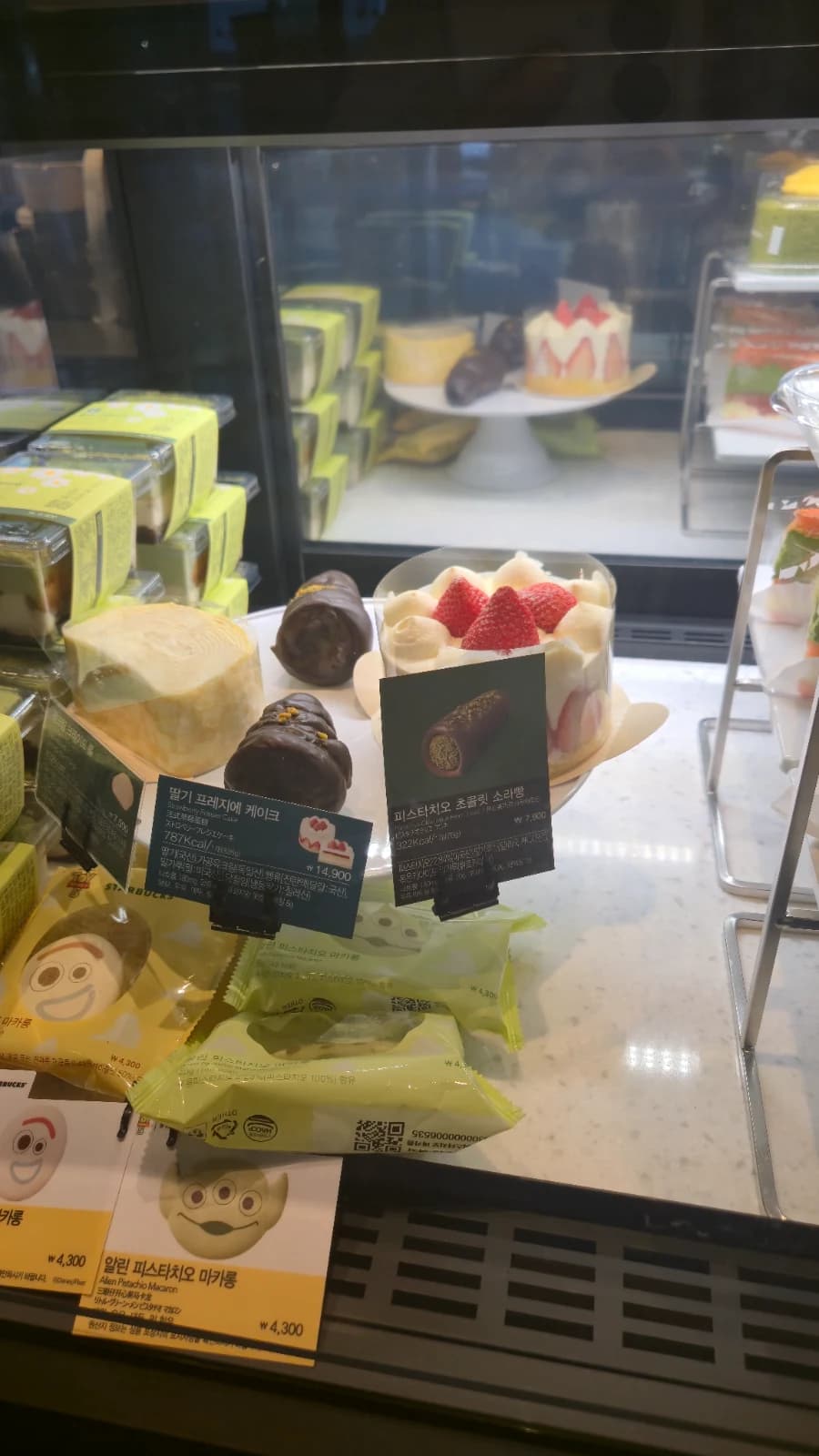
A strawberry fraisier cake (14,900 won / roughly £8.40), pistachio macarons (4,300 won / about £2.40), and chocolate desserts were clustered together on one side, with Toy Story collaboration snacks stacked below. The fraisier was on the pricey side at nearly 15,000 won, but it was a decent size — enough to share between two people comfortably.
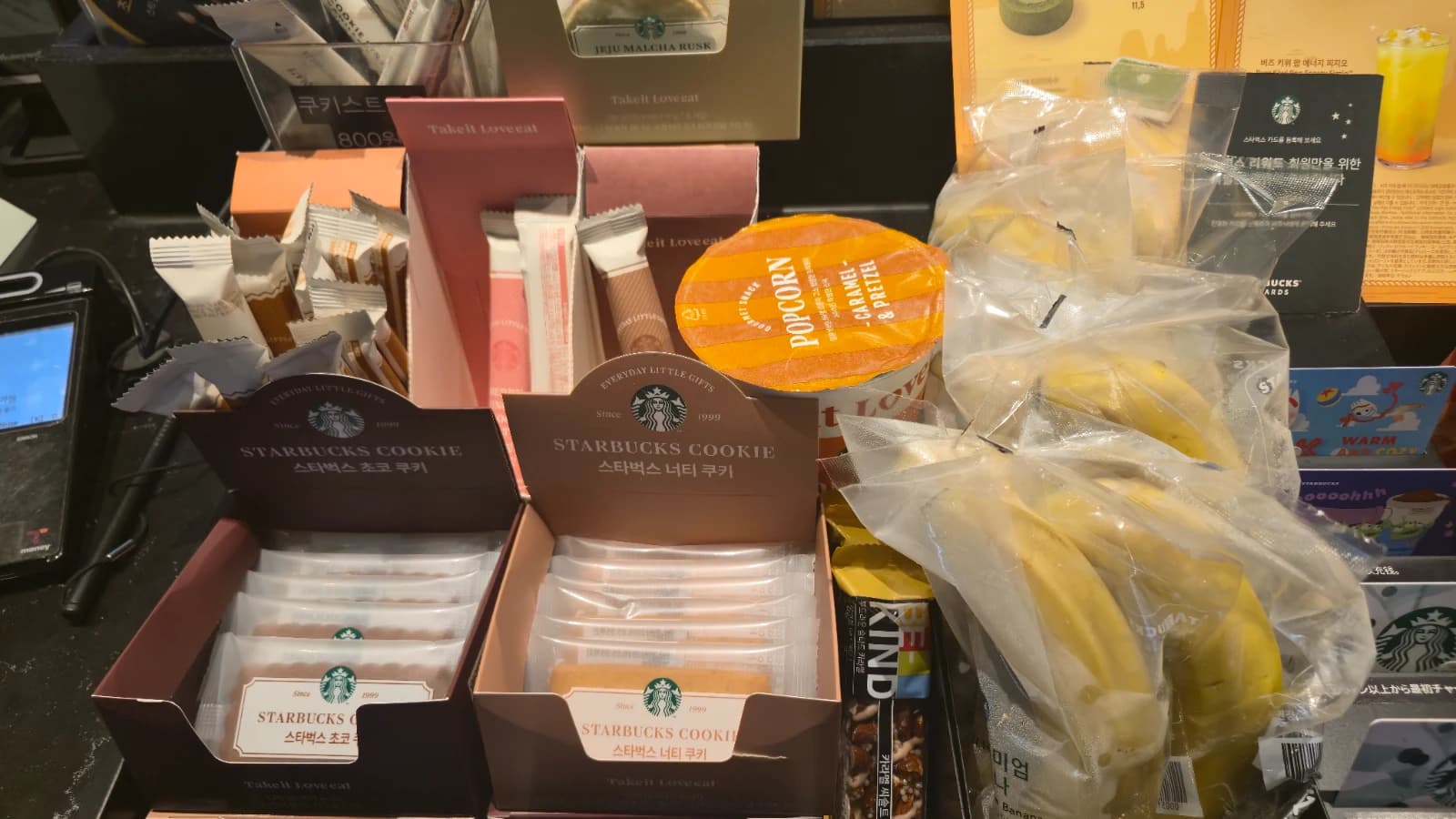
Beside the counter sat Starbucks cookies (chocolate and nutty flavours), Jeju matcha rusks, caramel pretzel popcorn, and — yes — bananas. Korean Starbucks actually sells fresh fruit. It's surprisingly common to see people grab a coffee and a banana on their way to work in the morning. At around 1,000 won (roughly 55p), it's hardly going to break the bank.
Inside the Branch
Let me take you through the interior. Starbucks branches do vary slightly in their decor, but once you sit down they all feel more or less the same — and honestly, that's part of the appeal. When my wife first came to Korea from Thailand, Starbucks was the first place I took her. Free Wi-Fi, plug sockets, clean toilets. When you're in an unfamiliar country, it's simply the most comfortable place to sit down and take a breath.
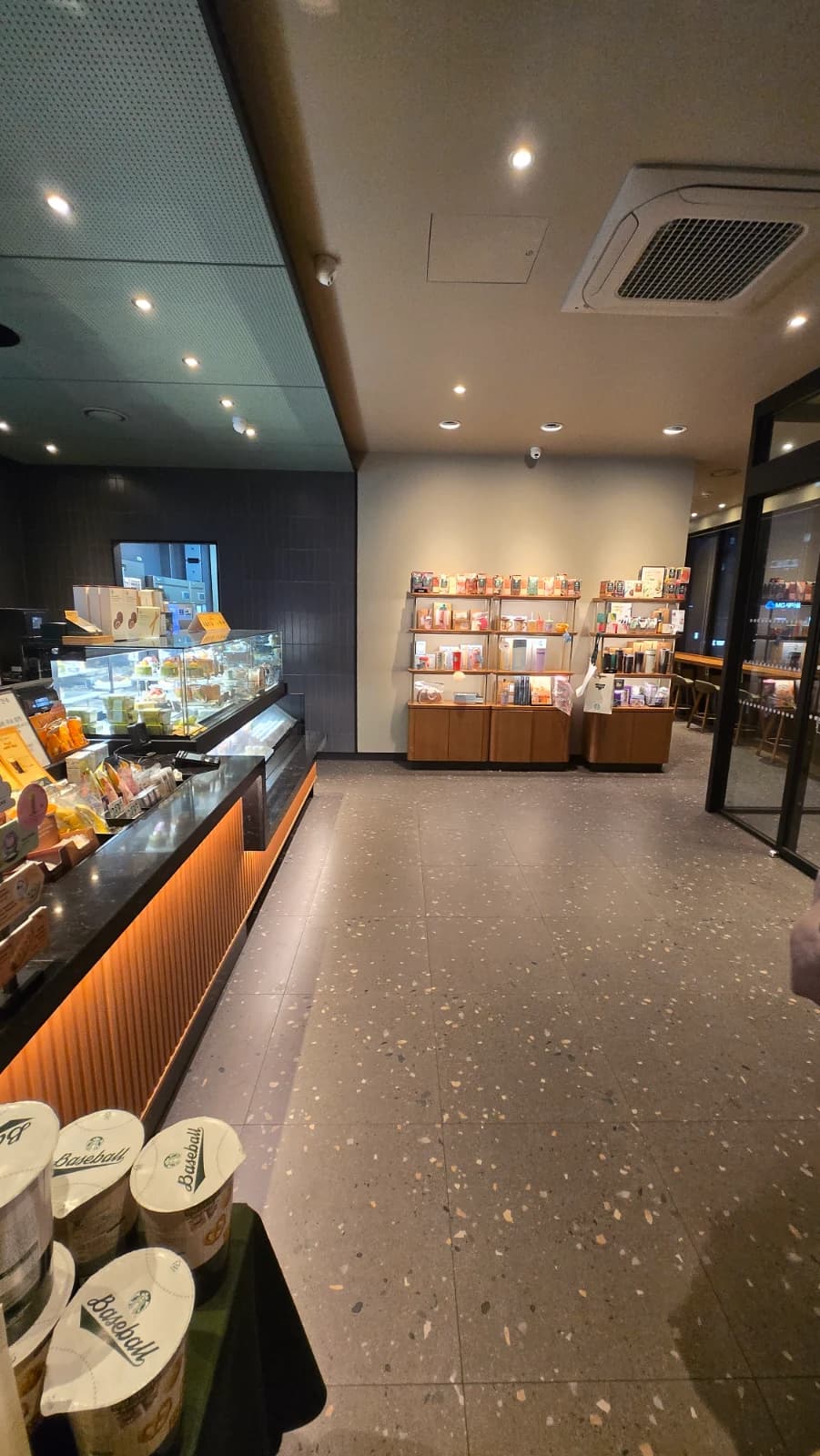
Here's the view from the counter side. Terrazzo flooring, recessed downlights, and one wall lined with merchandise — tumblers, coffee beans and the like. It was evening and fairly empty, so the space felt generous, but on a weekend afternoon you'd probably struggle to find a seat. Korean Starbucks is the kind of place where laptop workers, students revising, and office workers having meetings all coexist.
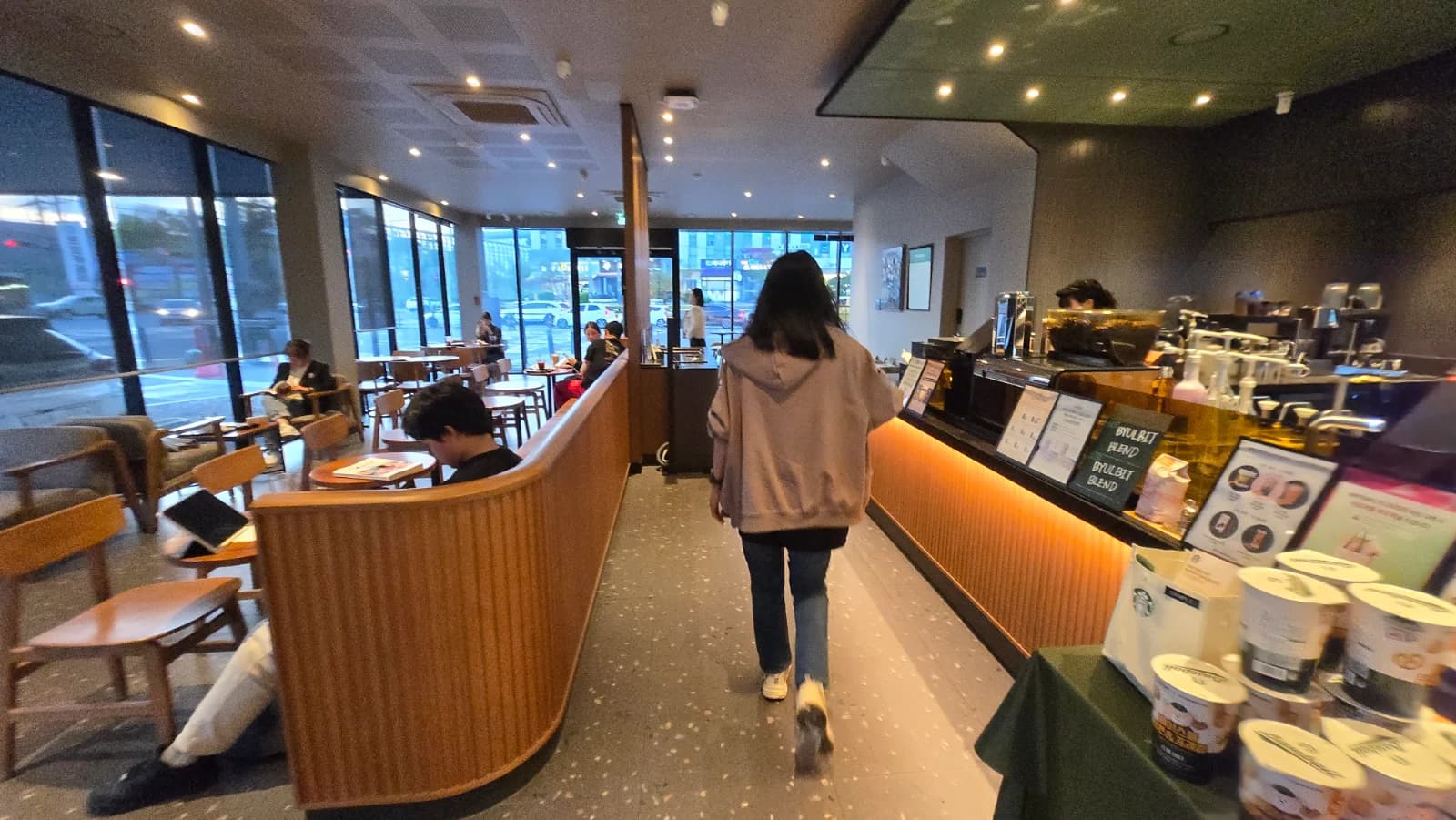
The ground floor had curved wooden partitions dividing up the seating areas, with a few people sat by the windows doing their own thing. The partitions mean you're not in anyone's line of sight, which makes it a perfectly comfortable spot if you're on your own.
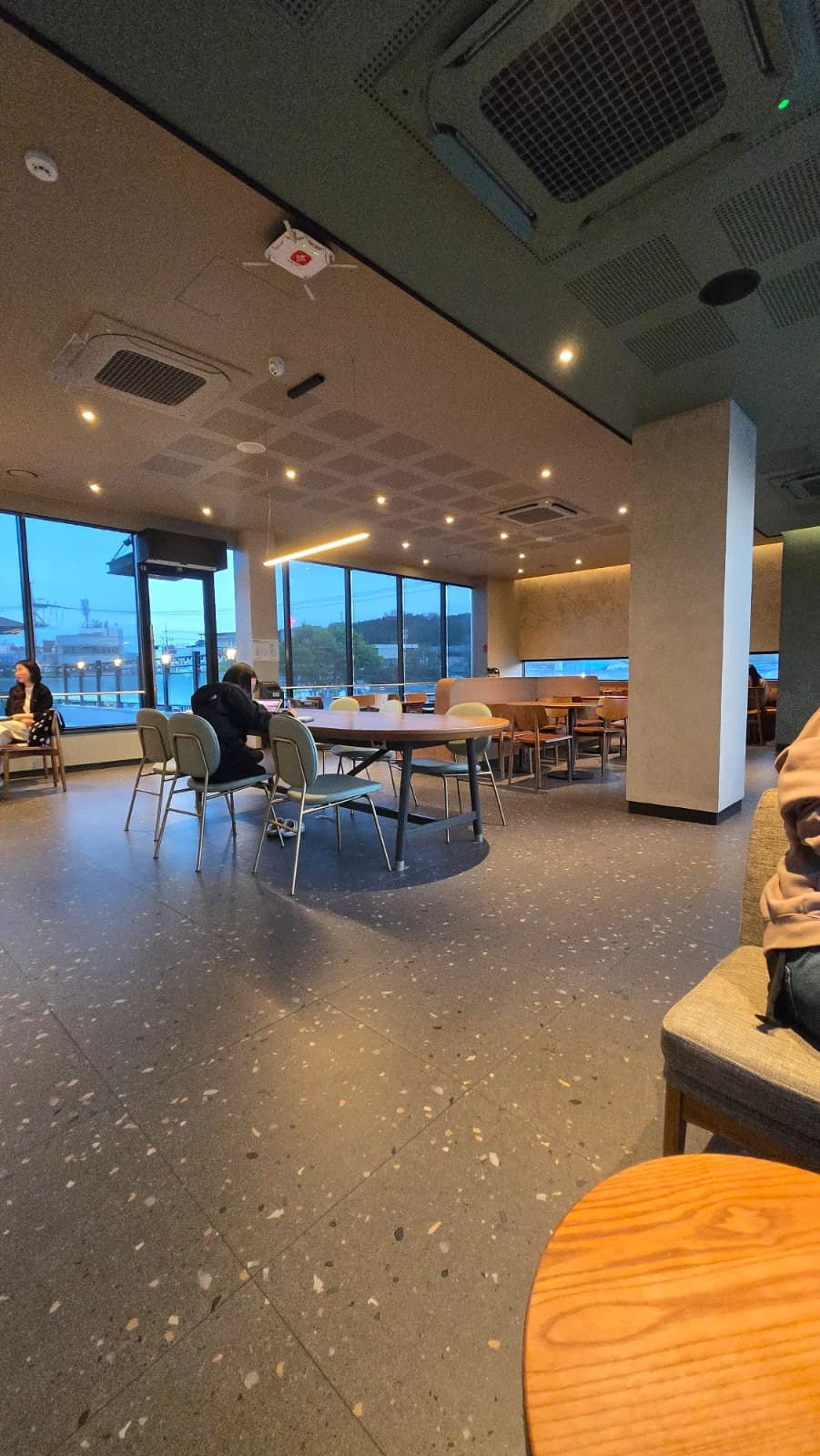
Upstairs opened up considerably — large round tables and window seats spaced generously apart, and noticeably quieter. Floor-to-ceiling windows gave a full view of the road outside, so I imagine the natural light during the day would be lovely.
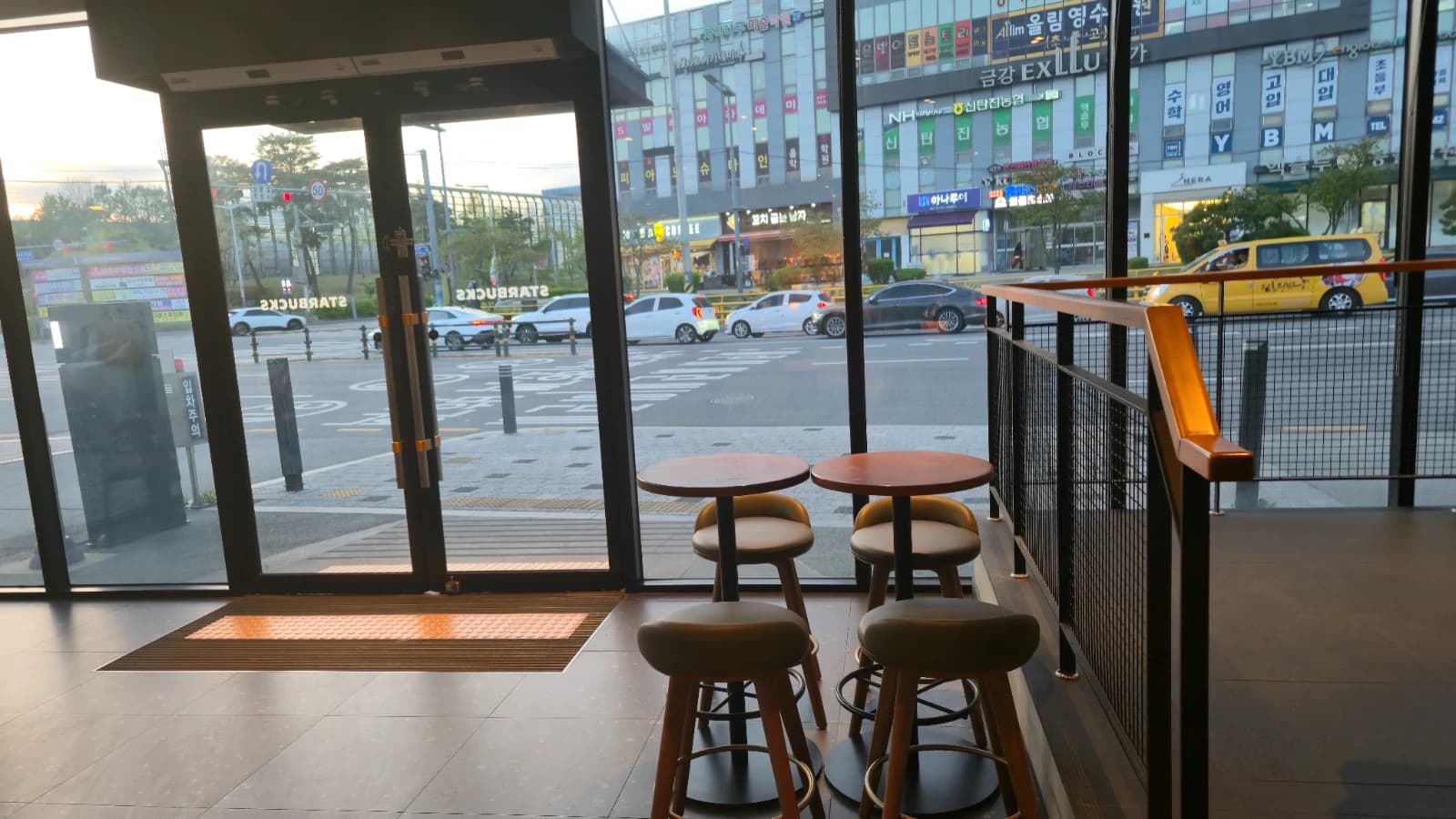
By the entrance there were three tall bar stools — the kind of spot for people who just want a quick coffee before heading off. Korean Starbucks tends to offer a good variety of seating: sofas, standard tables, bar-style perches, outdoor terraces. It depends on the size of the branch, but one this large gives you proper choice over where to sit.
South Korea has 38.6 Starbucks branches per million people. That's fewer than the US (51.7) but far more than Japan (15.9) or China (5.5). The upshot is that in Korea, Starbucks isn't somewhere you make a special trip to — it's just there, wherever you happen to be walking. Personally, I prefer independent cafés. They've got more character and are more interesting to explore. But for simply killing time, nowhere beats Starbucks. That much is true.
The Outdoor Terrace — When's Best to Visit?
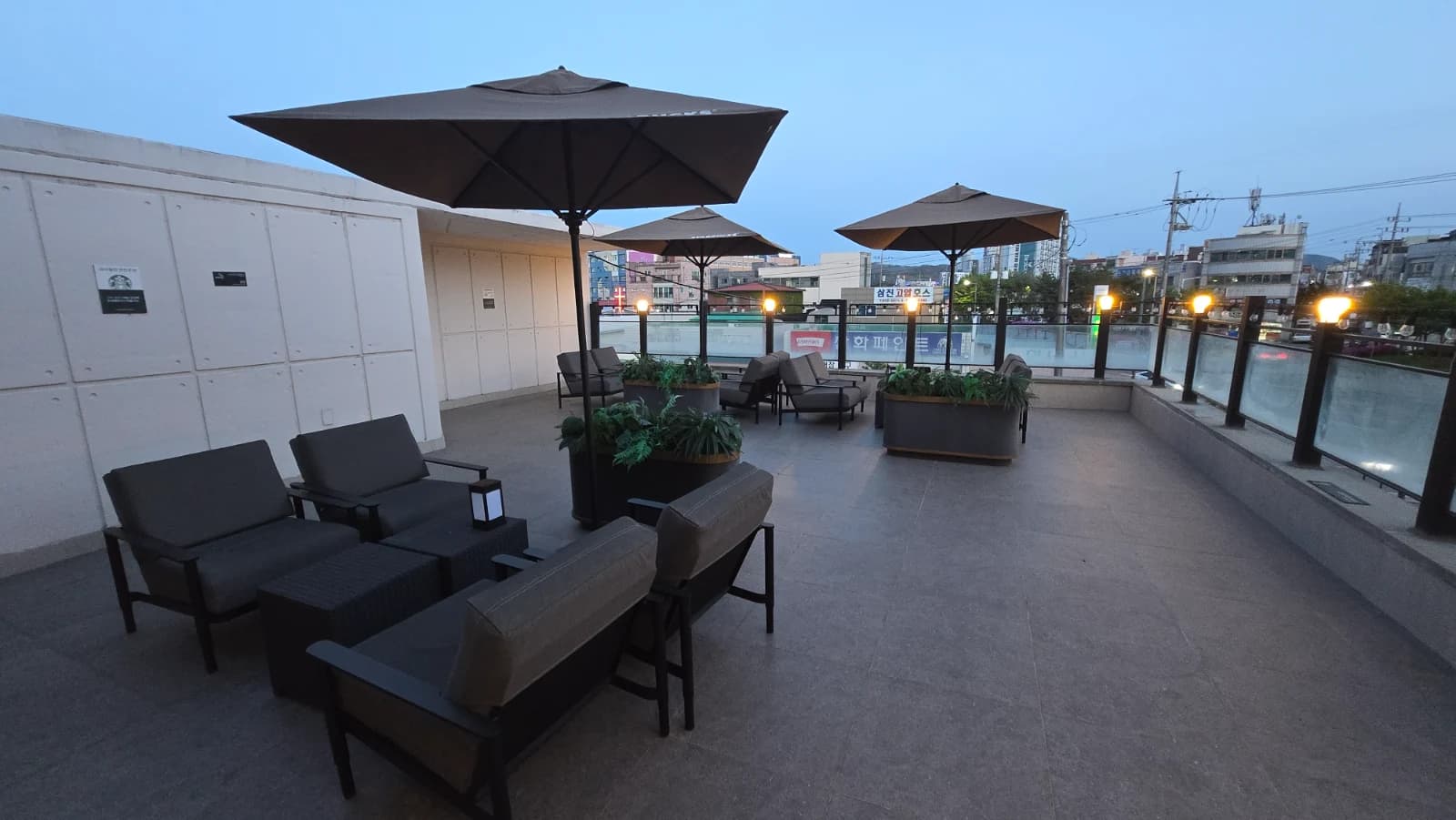
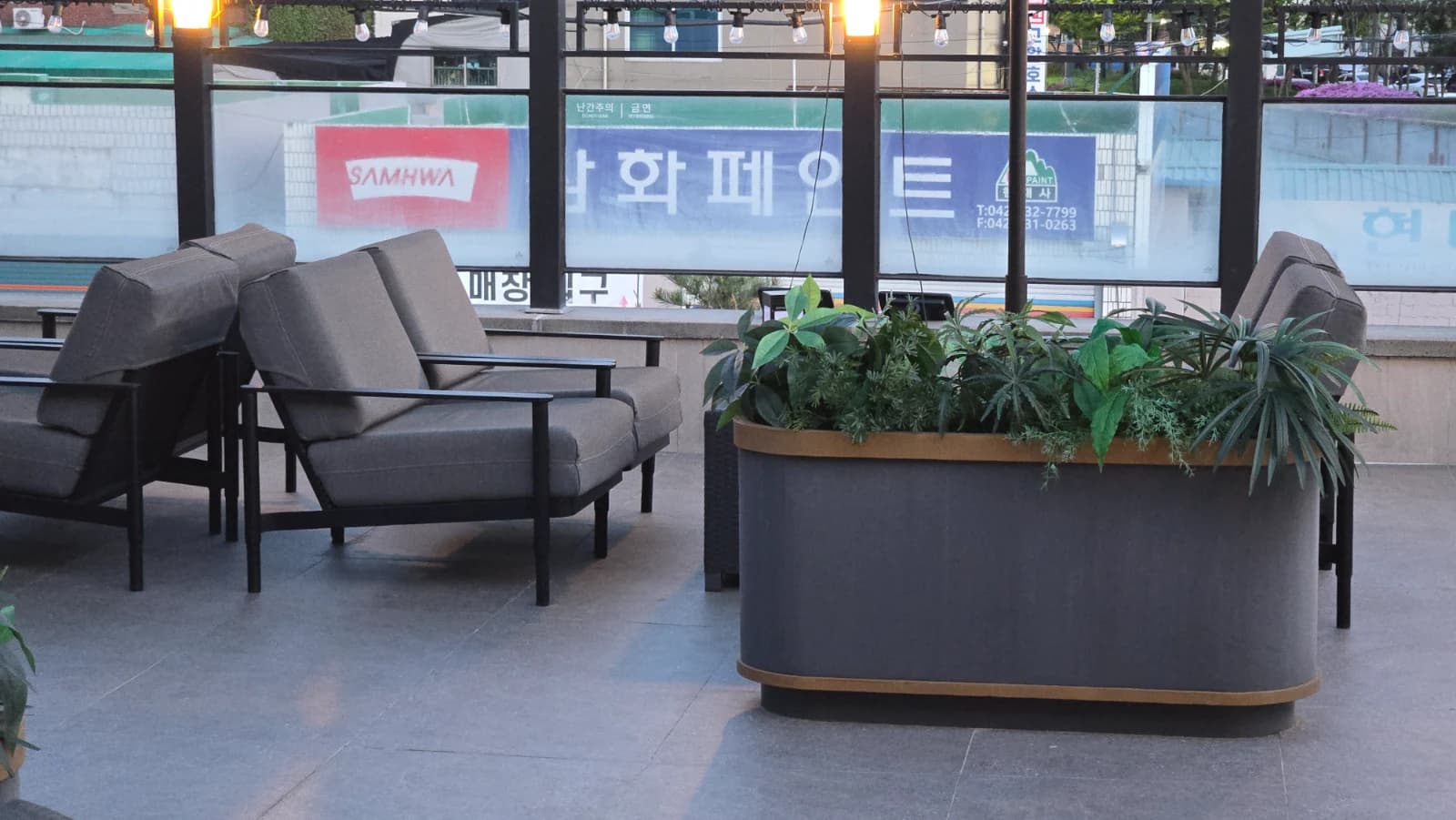
This branch had an outdoor terrace on the second floor. Sofa seating sets beneath parasols, with potted plants dotted in between — it felt more like a hotel lounge than a coffee shop. Nobody was out there in the evening, which made it ideal for photos. Not every Starbucks has a terrace; you tend to find them at larger branches like this one or at Starbucks Reserve locations.
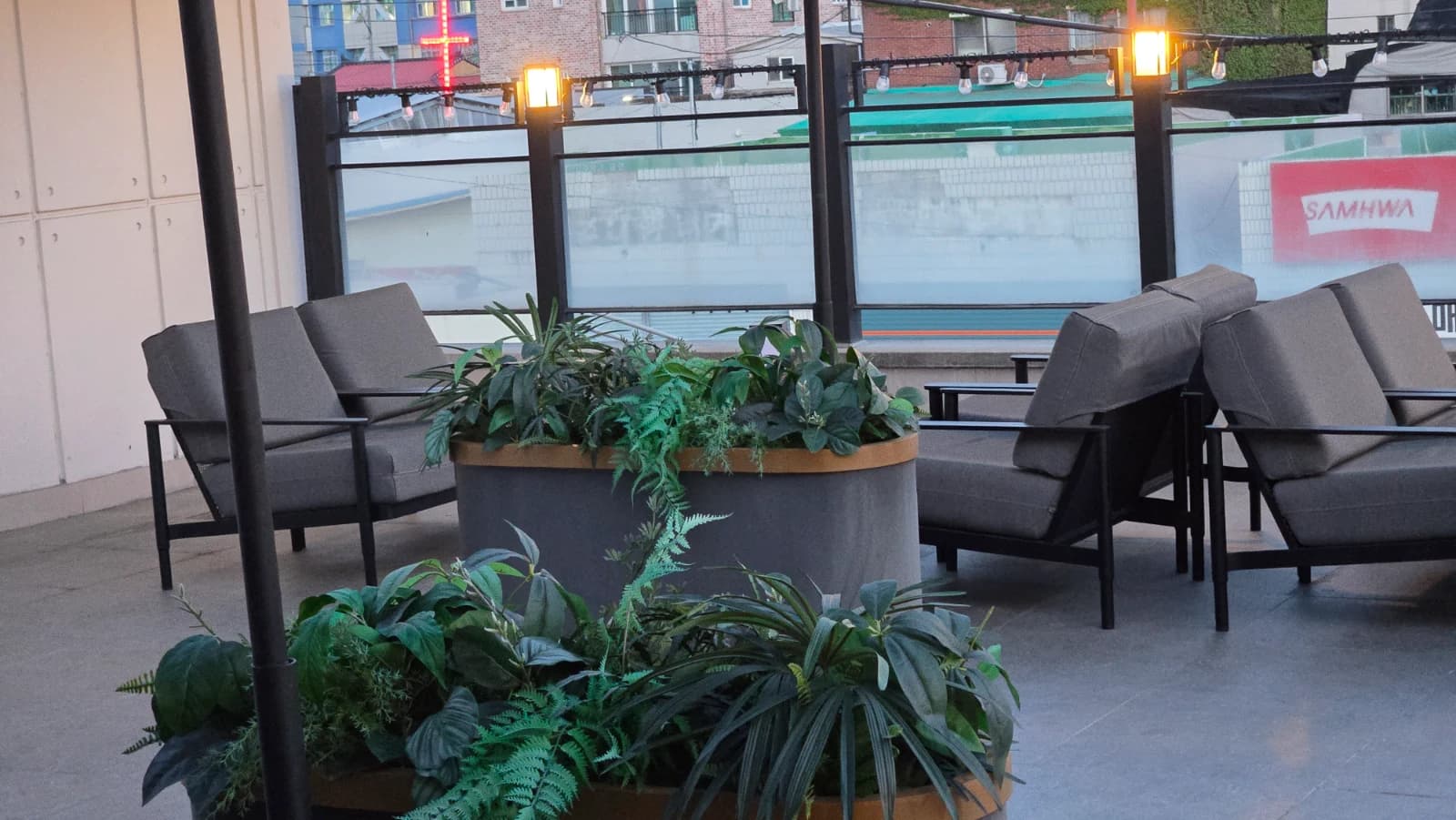
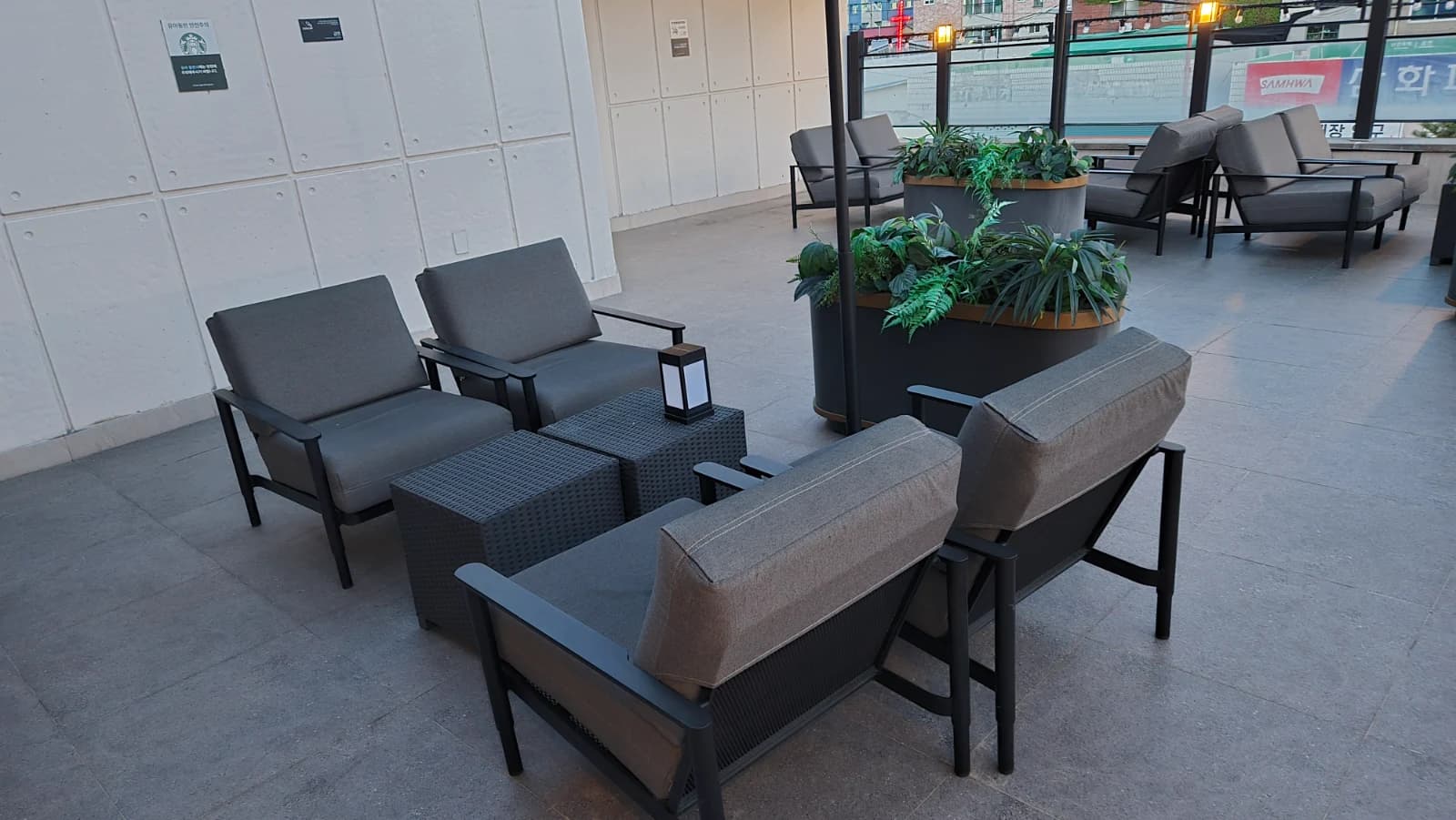
The best time of year to enjoy terrace seating in Korea is spring and autumn. Summer can work too, but during the day it's punishing — I'd recommend going after sunset instead. Oddly enough, mosquitoes seem to have all but disappeared in Korea lately, so sitting outside on a summer evening is surprisingly comfortable. Winter, though, is a write-off. Korea has very distinct seasons, and drinking a coffee outdoors in the dead of winter simply isn't realistic. The terrace season runs roughly from April to October. If you're planning a trip to Korea during those months, it's well worth seeking out a café with a terrace.
What We Ordered
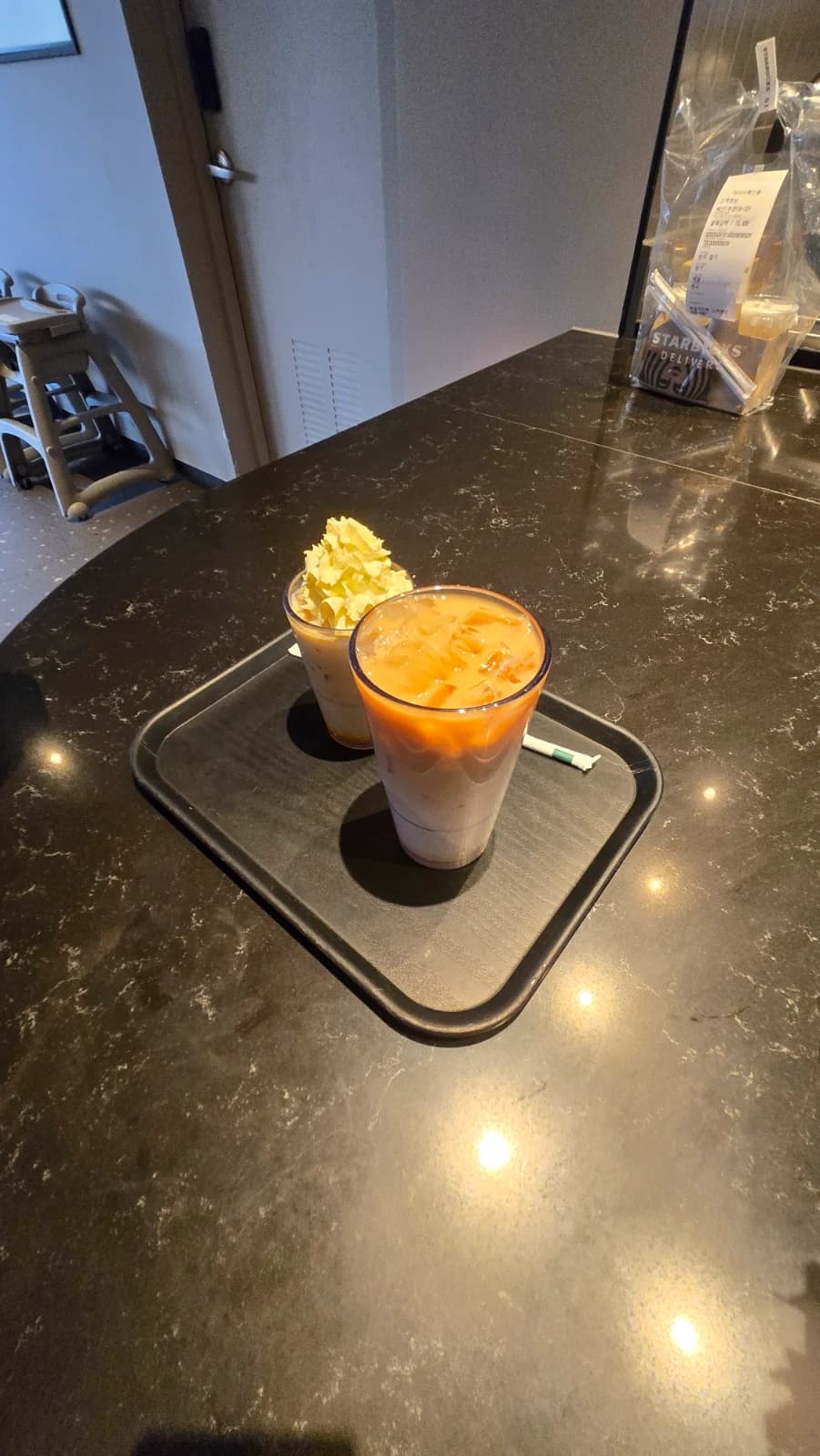
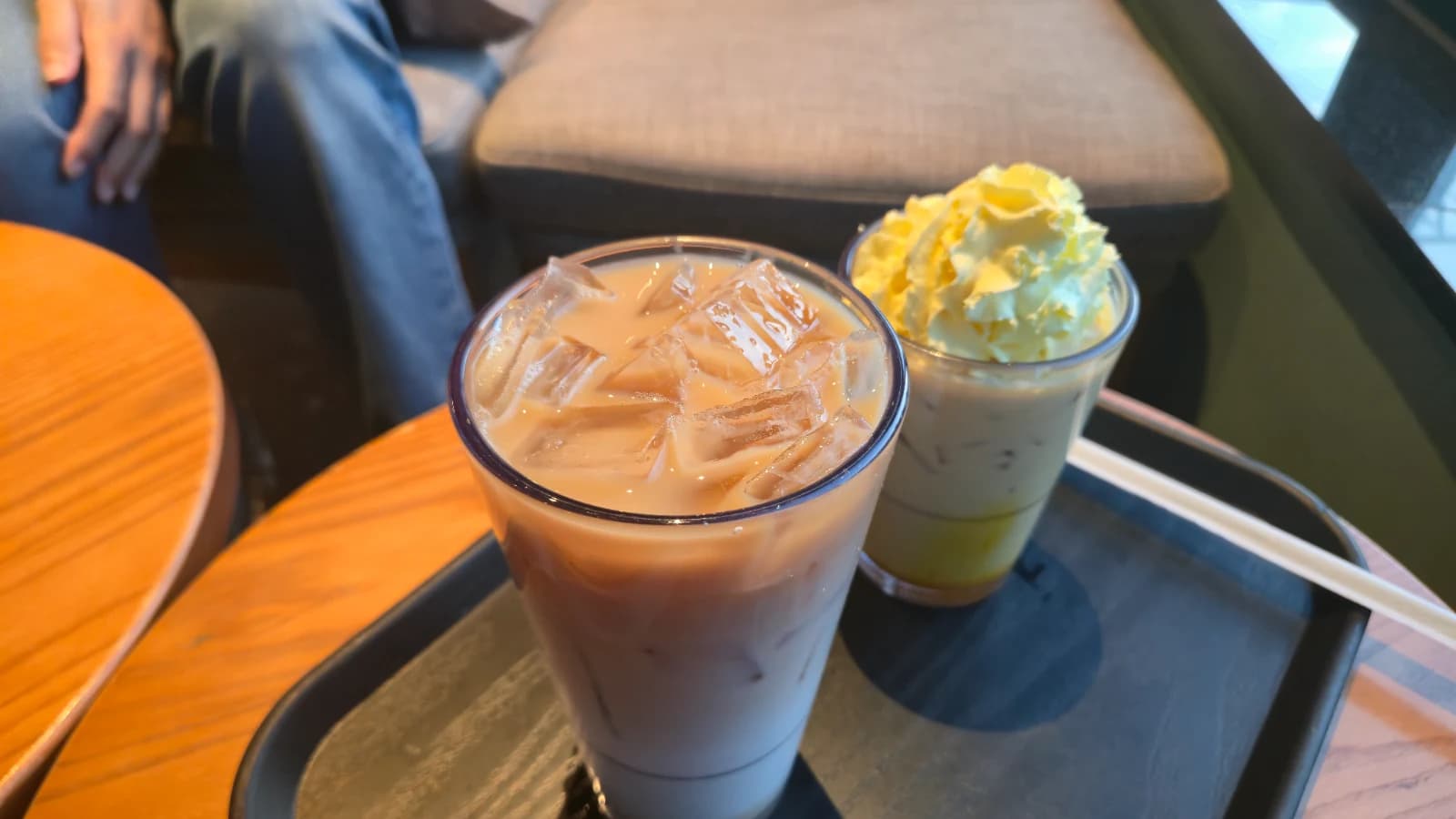
We found our seats and collected our drinks. I went for the choux cream latte; my wife had the sweet milk coffee.
Normally I order an iced dolce latte, or in winter a hot classic milk tea — that's my go-to combination. But today I fancied trying something different.
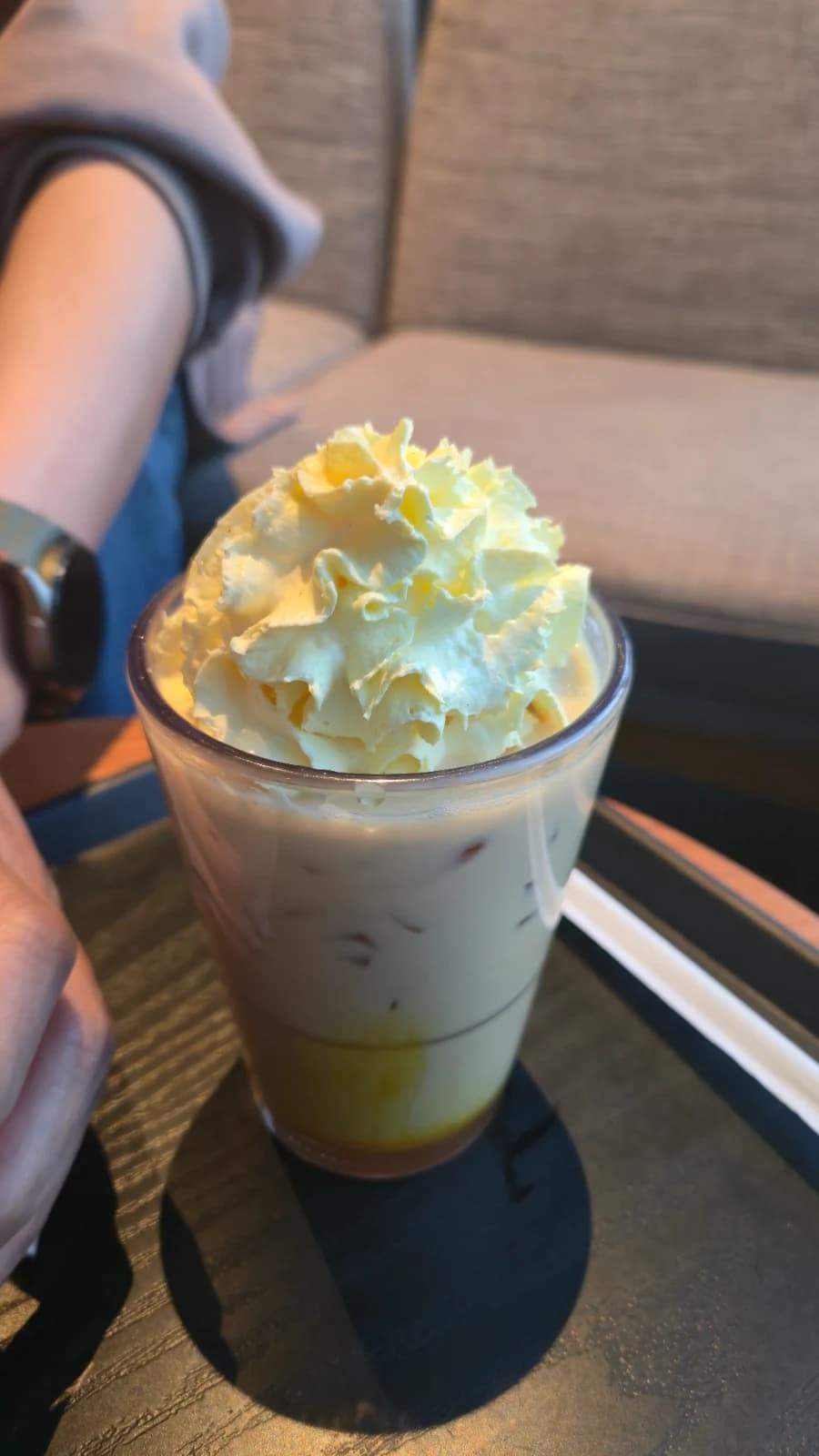
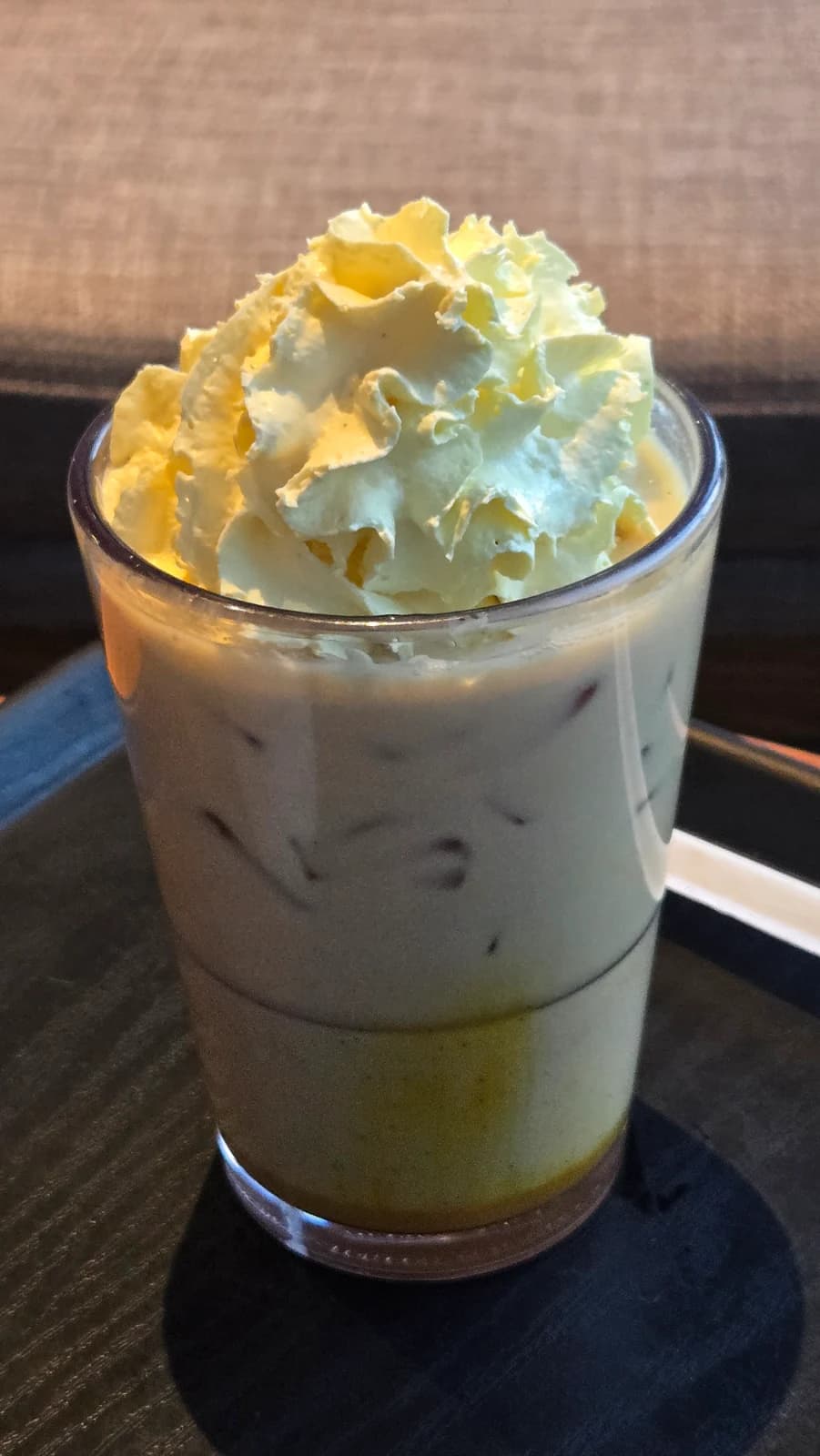
The choux cream latte had a generous mound of whipped cream on top with a layer of yellow custard sauce sitting at the bottom. Give it a stir and it genuinely tastes like drinking a cream puff — or so I'm told. I'll be honest: my nose was completely blocked, so I couldn't taste much of anything. I could tell it was sweet, but that was about it. I'll order it again when my sinuses have cleared. Korean Starbucks carries quite a few menu items you simply won't find in other countries. Seasonal limited drinks change regularly, and there are flavour combinations exclusive to Korea, so if you're visiting it's worth checking what's new at the time.
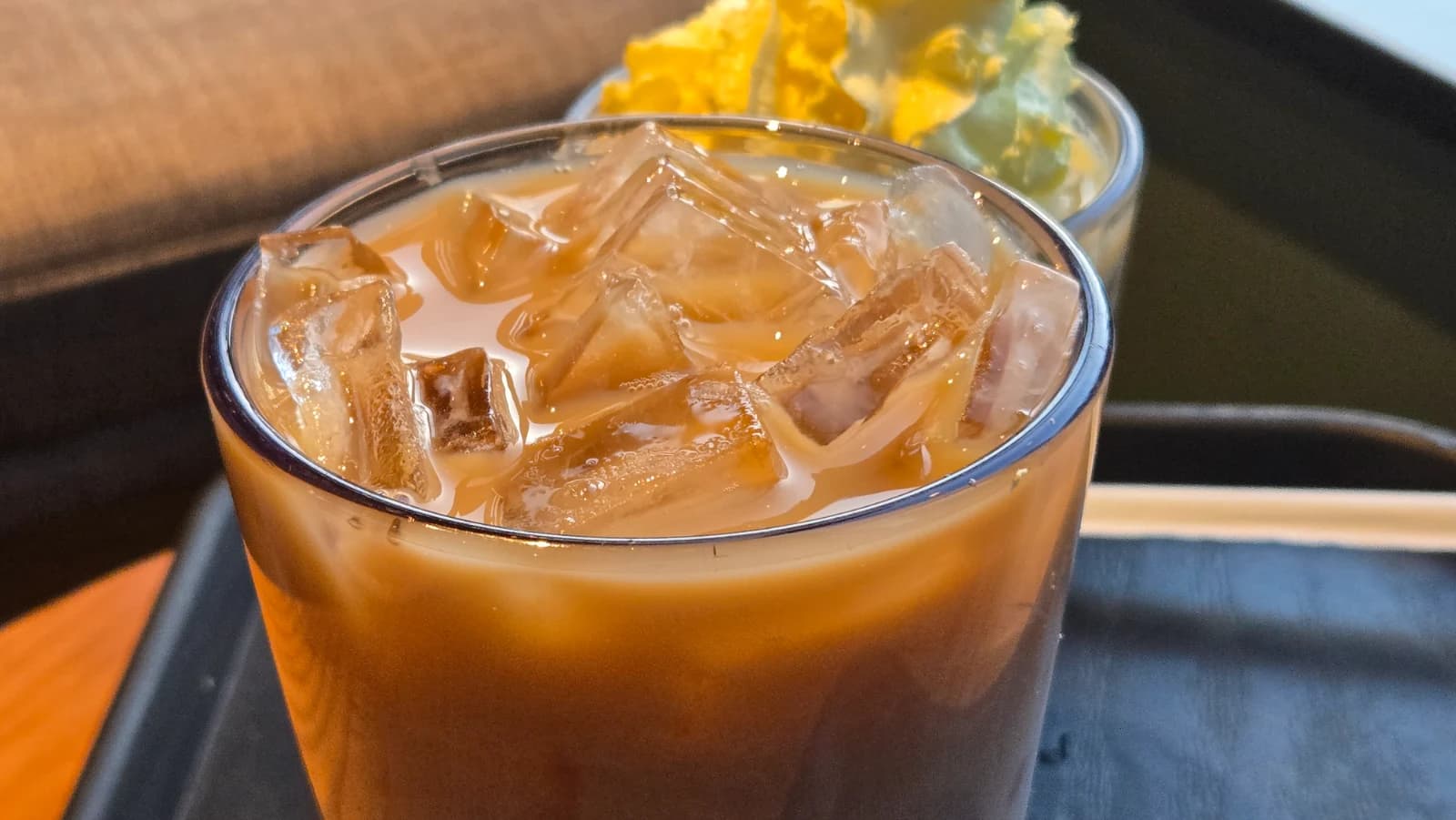
The sweet milk coffee was my wife's — it had an unusual orange-ish hue. I had a sip and it was sweet without being sickly. She said she liked it. The two drinks together came to 13,800 won (roughly £7.80). The choux cream latte (Large) was 6,700 won (about £3.80) and the sweet milk coffee (Venti) was 7,100 won (about £4.00). Korean Starbucks drink prices generally sit in the 5,000–7,000 won range (£2.80–£4.00), though Frappuccinos and speciality drinks can creep above 7,000 won.
Starbucks Toy Story Collaboration Merch
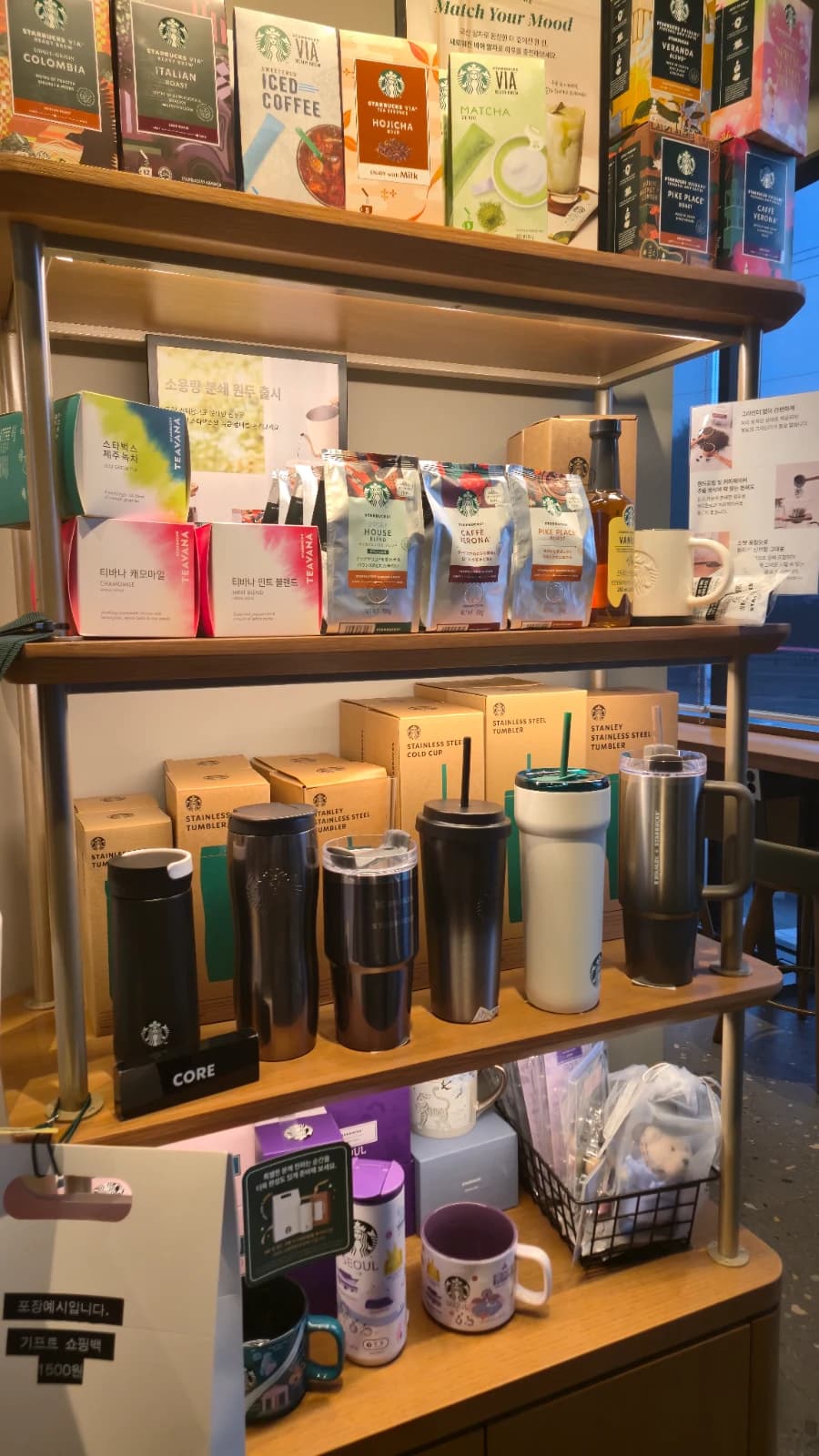
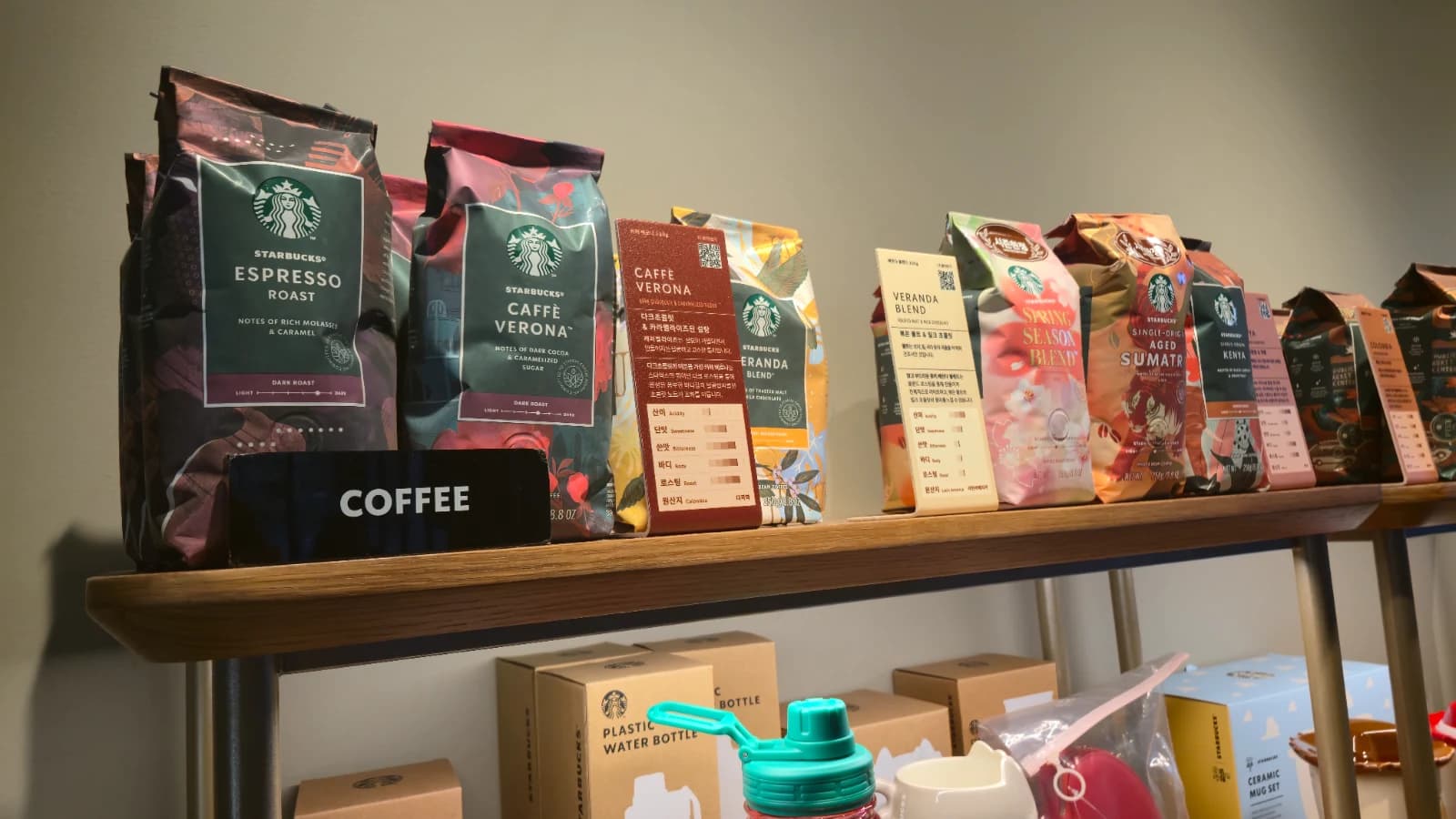
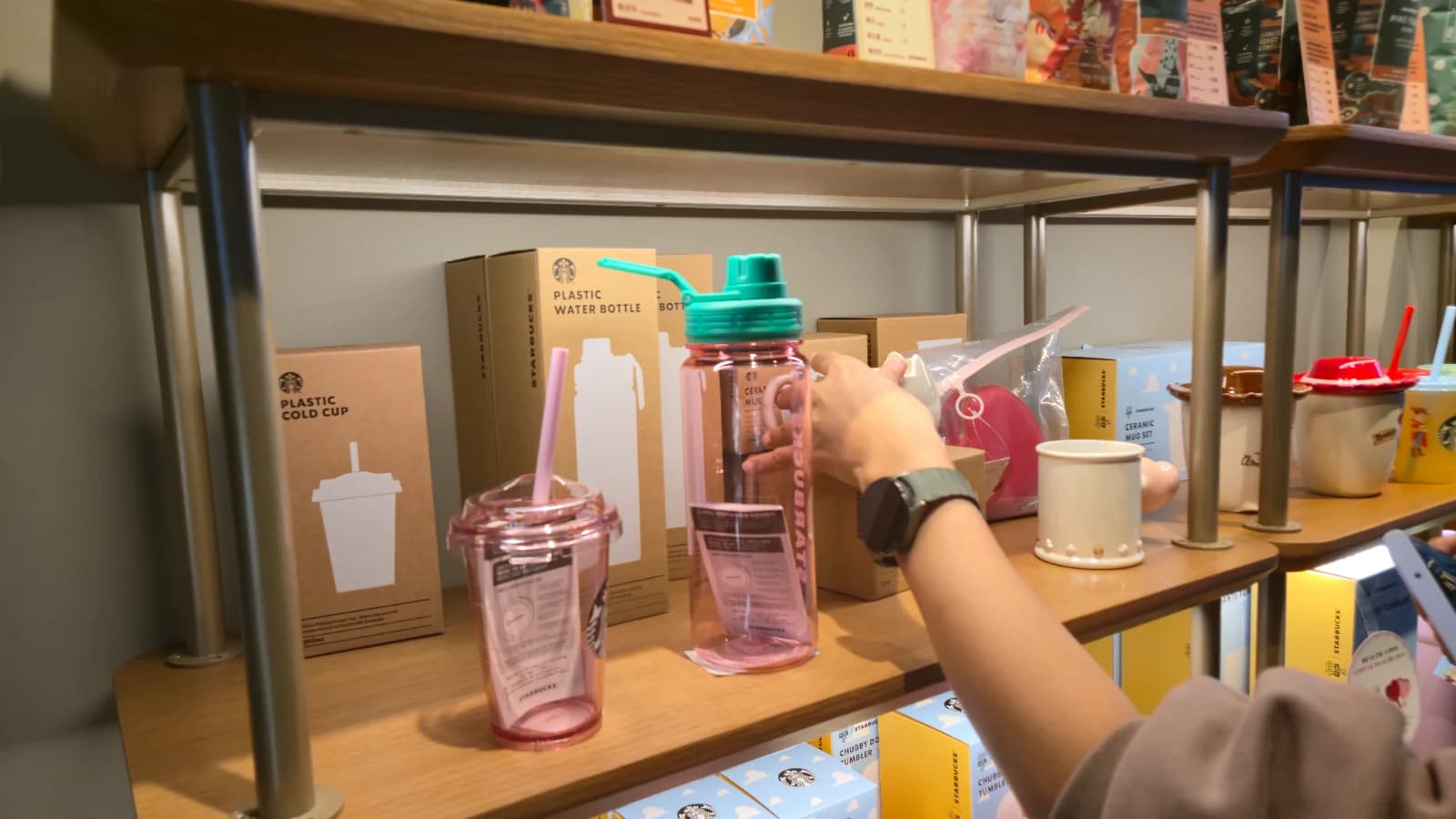
On the way out, I had a browse through the merch corner. One section had the standard lineup — stainless steel tumblers, cold cups, water bottles — while the upper shelves were lined with coffee bean packages: Espresso Roast, Caffè Verona, Veranda Blend, Spring Season Blend and so on. If you brew at home, it's not a bad place to pick some up. Korean Starbucks stocks the same global lineup as other countries, but also releases Korea-exclusive seasonal blends.
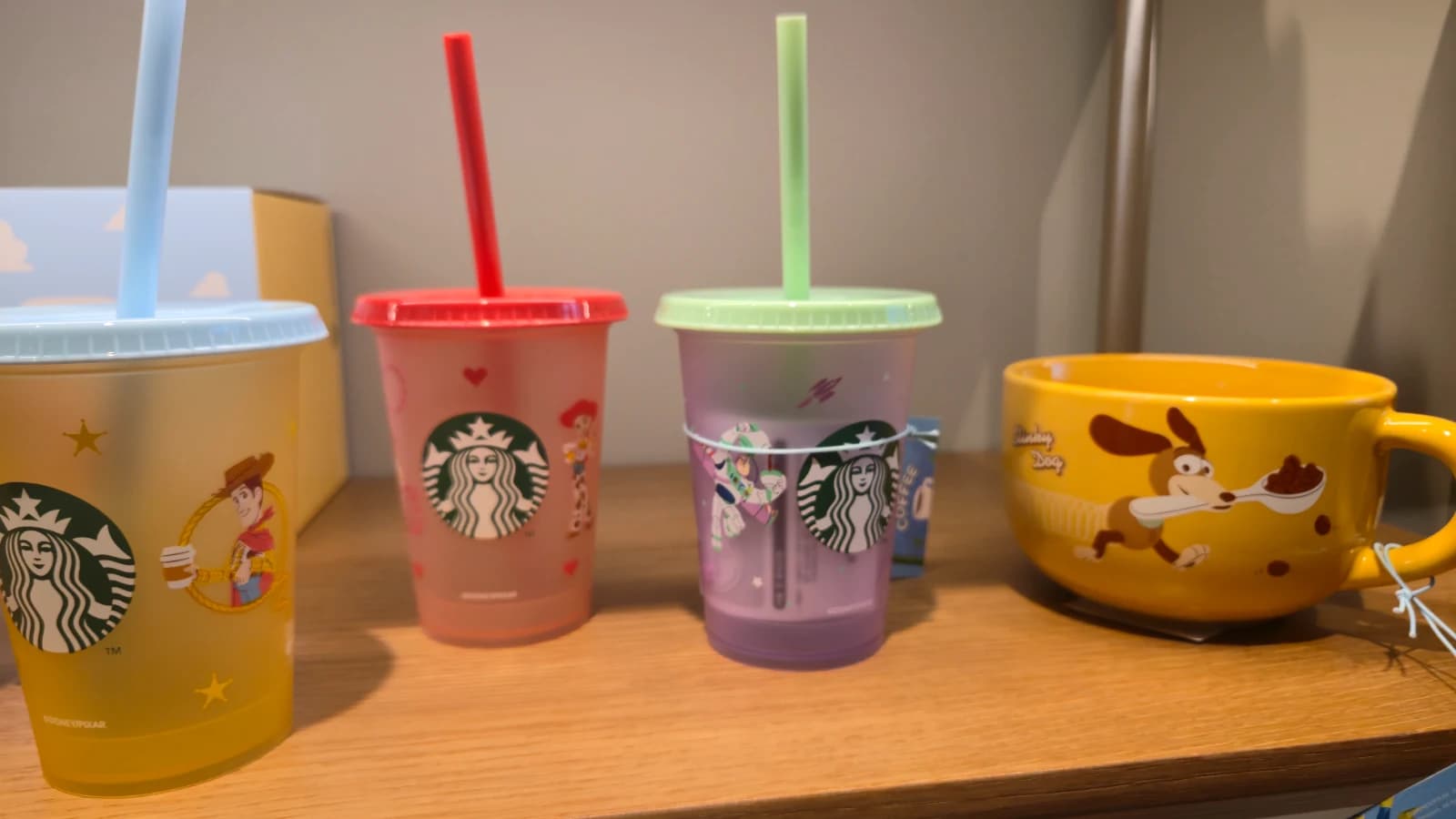
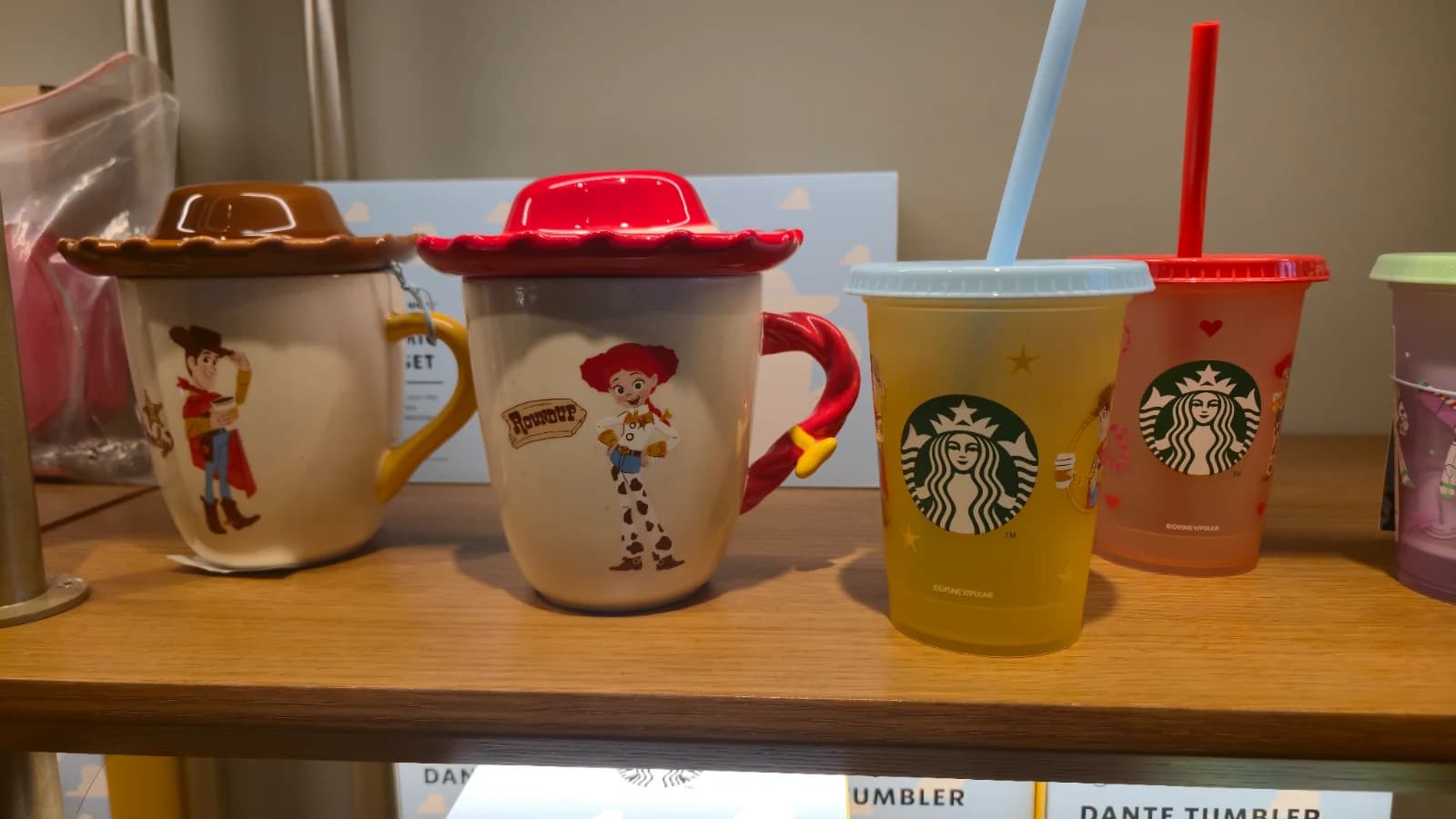
What really caught my eye, though, was the Toy Story collaboration merchandise. It had launched on 15 April 2026 — literally the day before — and the shop was full of it. The Woody and Jessie mugs had cowboy hats as lids, and there were reusable cups in Buzz Lightyear and Slinky Dog designs. Colour-coded too: yellow for Woody, pink for Jessie, purple for Buzz. The Slinky Dog mug was cute enough that I suspect most buyers would use it as an ornament rather than actually drink from it.
Toy Story Collaboration Merch Prices (April 2026)
Bearista keychain 27,000 won (≈£15) · Reusable cup set (3 cups) 29,000 won (≈£16) · Quinten tumbler (237ml) 40,000 won (≈£23) · Chubby dome tumbler (473ml) 49,000 won (≈£28) · Woody & Jessie mug set 59,000 won (≈£33) · Claw machine (online exclusive) 110,000 won (≈£62)
My wife picked up a water bottle, studied it for ages, and ultimately put it back. Korean Starbucks releases character collaborations every season, and once they're gone, they're gone. Apparently some items sold out online on launch day. Korean Starbucks merch even gets resold overseas at a markup, so if you're visiting Korea and something catches your eye, buy it there and then. Don't dither.
Paying for Parking and Heading Off
Kiosk Payment
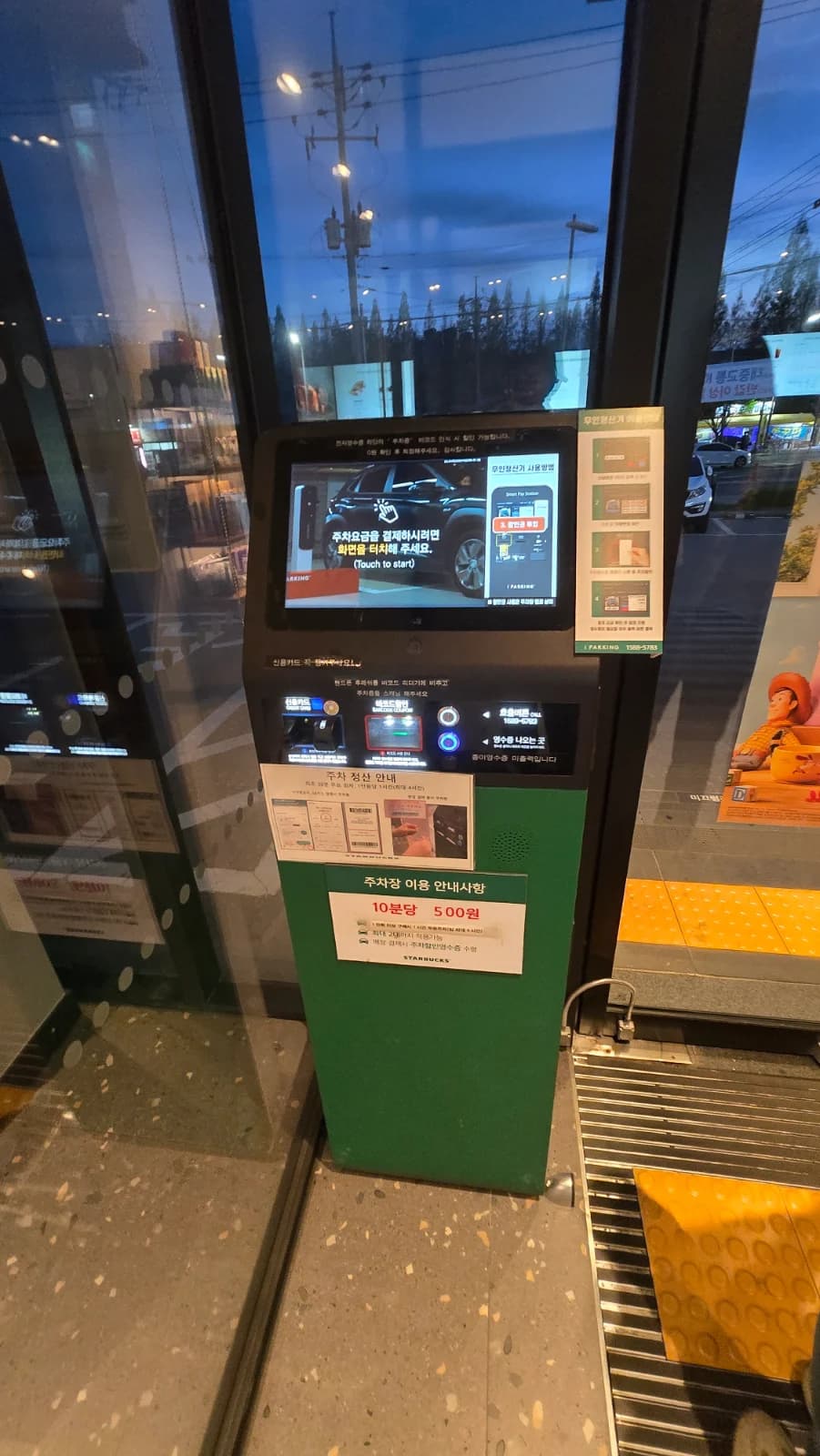
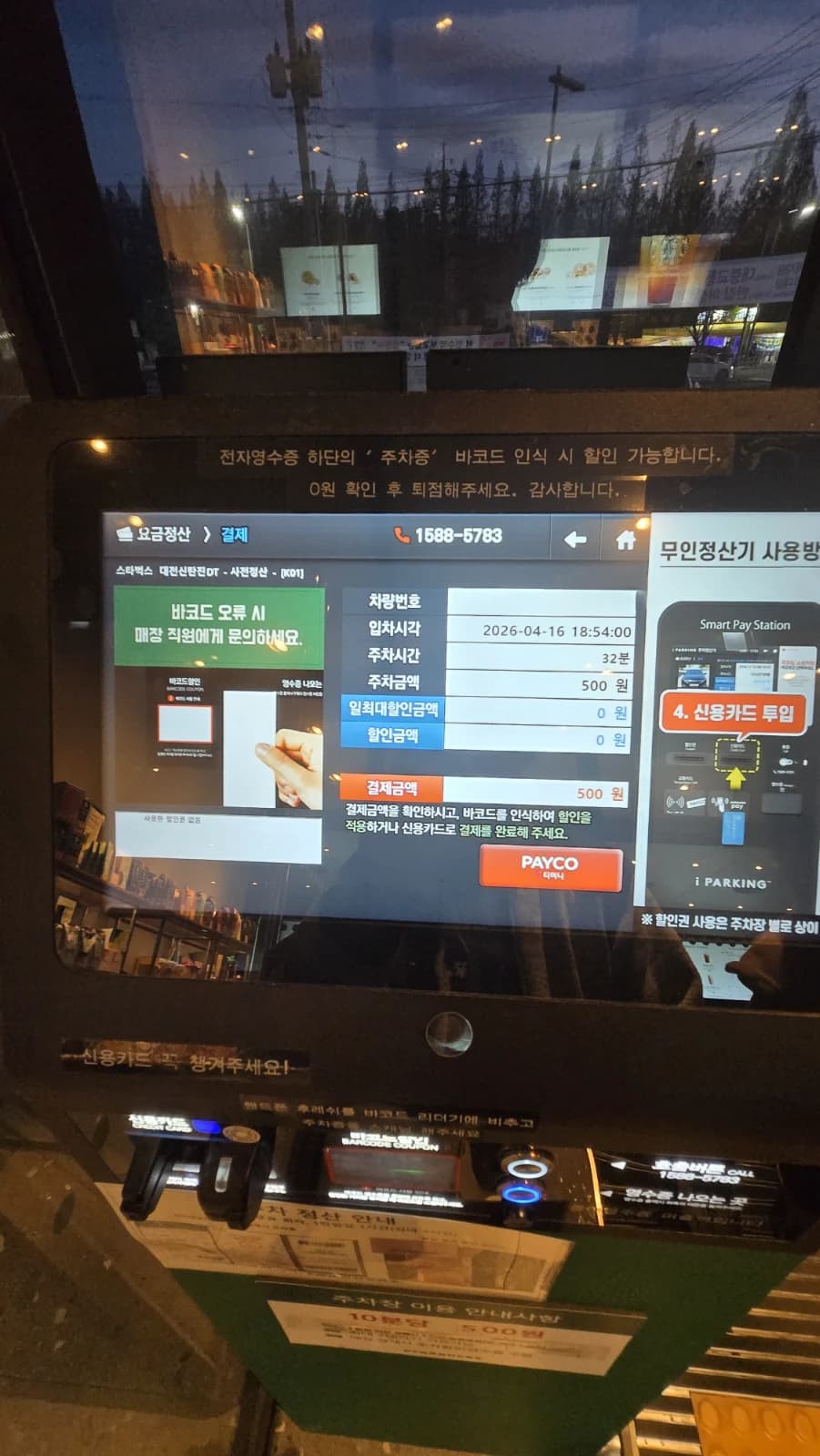
On the way out, I stopped at the parking payment kiosk by the entrance. At this branch, spending 10,000 won (about £5.60) or more gets you 90 minutes of free parking. You key in your registration number, scan the barcode printed on your receipt, and the discount is applied automatically. I'd been parked for 32 minutes and paid just 500 won (roughly 30p). Free parking allowances vary by branch, so it's worth checking before you visit. One important thing: you can't pay for parking with cash. It's card or mobile payment only. Korea in general has shifted heavily towards card-based payment systems, so if you're only carrying cash, you may run into awkward situations.
Receipt Barcode and Exiting
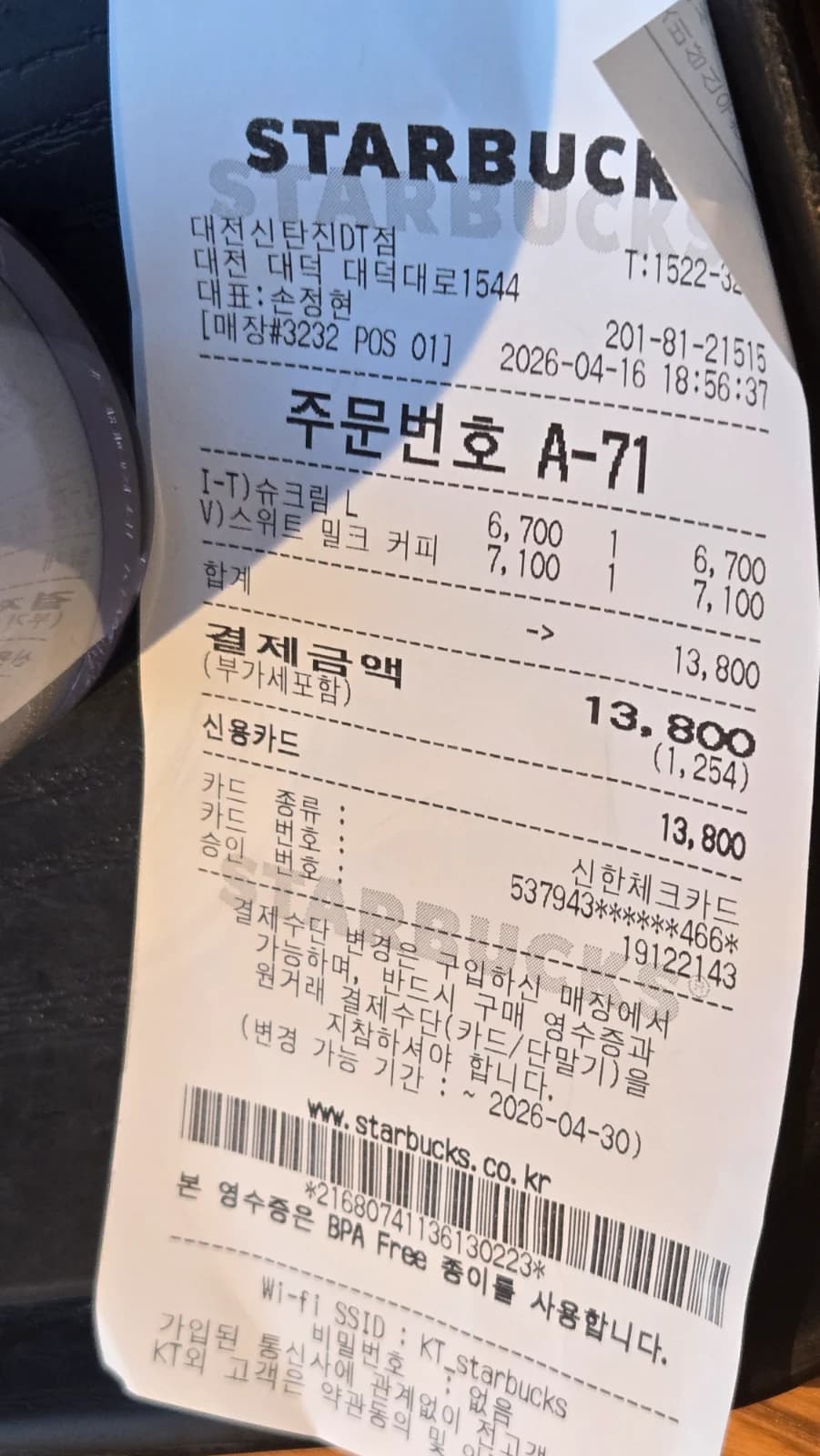
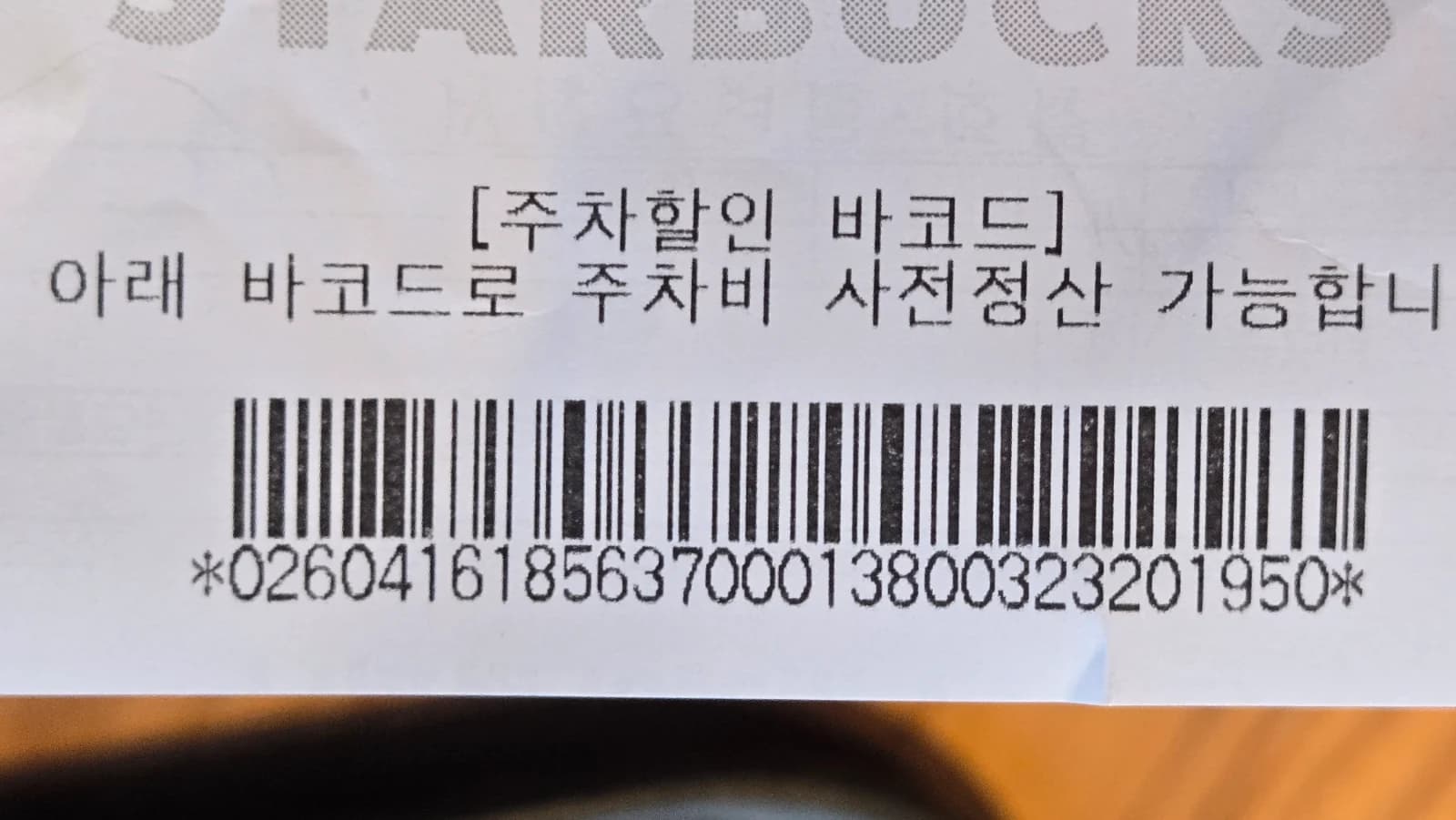
The parking discount barcode is printed at the bottom of your receipt. Scan it at the kiosk and leave within the allotted time, and parking is free. If you forget to scan it or overstay, you'll be charged 500 won per ten minutes. Don't forget on your way out. I once left without scanning the barcode and discovered the charges had accumulated when I came back the next time.
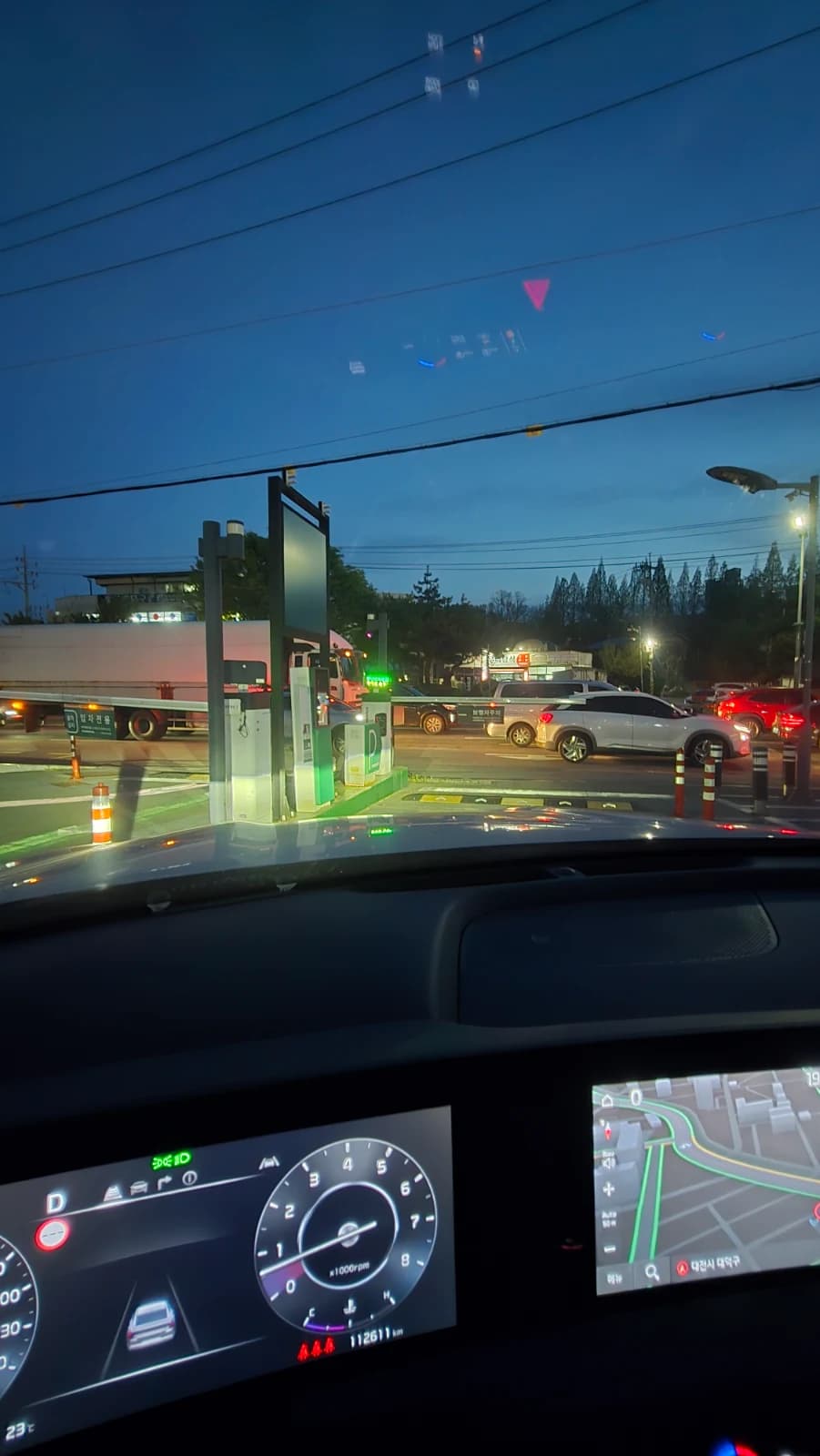
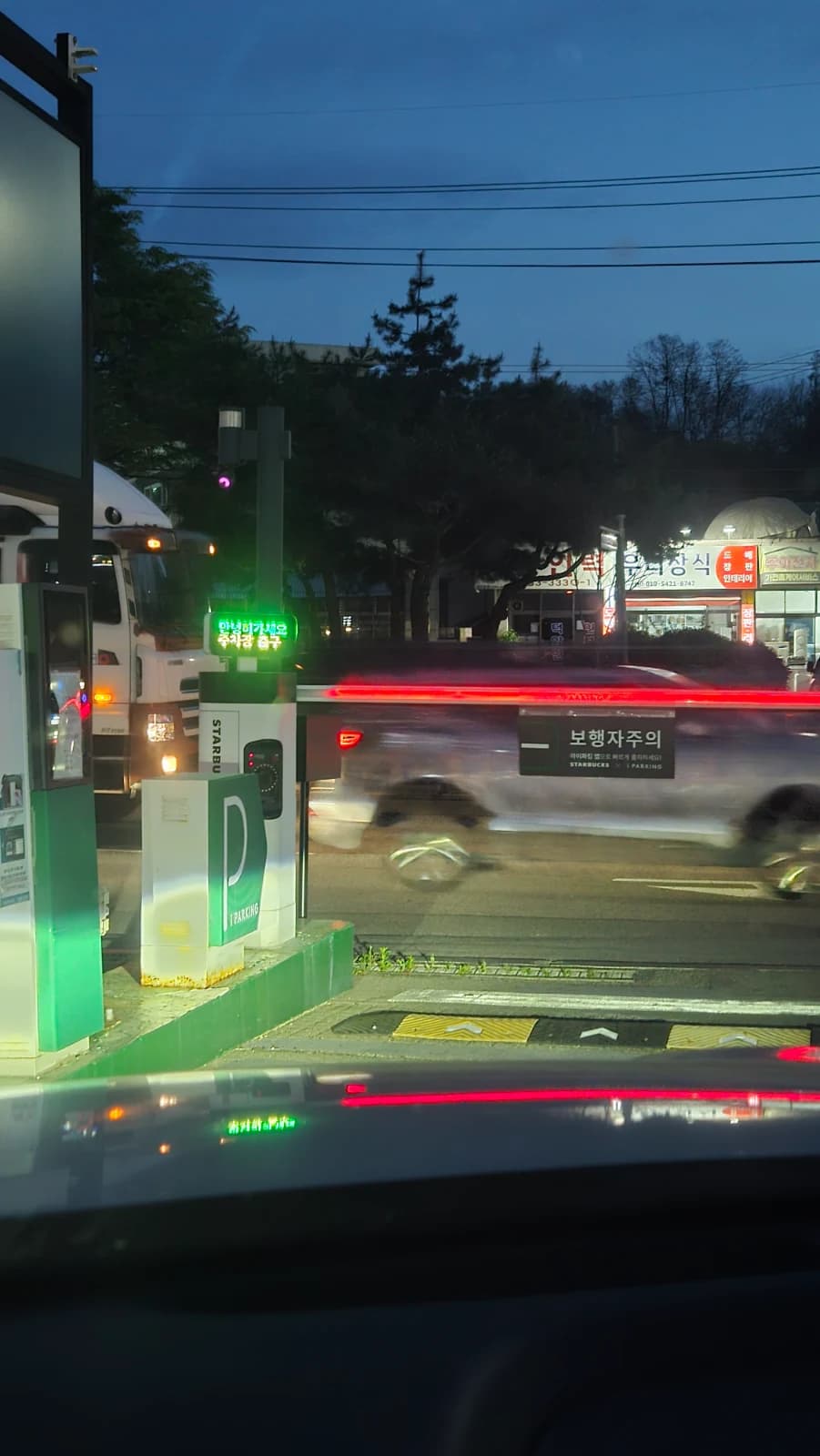
Leaving the car park is straightforward — you just drive out. Most car parks in Korea use automatic number plate recognition on entry and exit. There used to be paper tickets you'd hand to an attendant, but that's virtually disappeared now. Even if you haven't spent enough to qualify for the parking discount, most branches give you around 30 minutes free anyway — though the exact terms vary by location.
Korea has largely become a cashless society, and car park payment machines almost exclusively accept cards or mobile payments. There are even services where you register a specific app and parking charges are debited automatically from your card as you drive out — no need to queue at the machine at all. Once it's set up, it's genuinely convenient. If you're planning to hire a car in Korea, it's well worth getting familiar with how the parking systems work before you go.
£8 for an Hour's Wait — Not Bad at All
So that was my unplanned Starbucks visit while waiting for my wife to head off to work. I'd never properly looked through the display cases before, and it turned out there was more to see than I expected. The choux cream latte was wasted on my blocked nose, which is a shame, and my wife said she'd buy something from the Toy Story range next time — so we'll be back. Two coffees at 13,800 won plus 500 won for parking. That's 14,300 won — roughly £8 in total. For an hour of comfortable waiting, that's really not bad at all.
Branch Details
📍 Starbucks Daejeon Sintanjin DT · 1544 Daedeok-daero, Daedeok-gu, Daejeon (a city in central South Korea, roughly 150 km south of Seoul)
🕐 Open year-round
📞 +82-1522-3232 (Starbucks Korea customer service)
🅿️ Dedicated car park (paid, 500 won / ≈30p per 10 min · free for 90 min with purchases over 10,000 won / ≈£5.60)
💰 Choux cream latte (L) 6,700 won / ≈£3.80 · Sweet milk coffee (V) 7,100 won / ≈£4.00
📱 Siren Order (mobile ordering) available · Free Wi-Fi (KT_starbucks)