7 KFC Menu Items You Can't Get in the US — Korean KFC at 3 AM
Table of Contents
17 items
Korea-Exclusive KFC Menu Items You Won't Find in the US
If you've ever eaten at KFC in the United States, Canada, or Australia, the Korean menu will look almost unrecognizable. Here's a quick breakdown of what's different before we get into the full visit.
Korea-Only KFC Menu vs. US KFC Menu
Hot Crispy Chicken (핫크리스피치킨) — Extra-crunchy spicy fried chicken with aggressive red seasoning baked into every layer of batter. Not available in the US.
Gat-Yangnyeom Chicken (갓양념치킨) — Boneless fried chicken tossed in a sweet-and-spicy Korean yangnyeom sauce. Comes with disposable plastic gloves. Korea-exclusive.
Truffle Chirr Fries (트러플 치르 프라이) — Limited-edition seasoned fries coated in truffle-flavored powder with parsley. Not on any US KFC menu.
Zinger Burger — Available in some international markets but not standard in the US.
Kiosk ordering with multilingual support — Korean KFC kiosks support English, Japanese, Chinese, and Traditional Chinese. No cashier required.
Self-service drink refill station — One free refill, then 500 won (~$0.35) per additional refill. Straws are no longer provided due to single-use plastic regulations.
Customer self-cleanup — At all Korean fast food restaurants, customers are expected to return their own trays and sort their own waste before leaving.
Let Me Show You the Receipt First
There was no plan. One night in April 2026, my wife and I just suddenly craved fried chicken in the middle of the night, so we got in the car and drove. I'm Korean, living in Daejeon, a major city about an hour and a half south of Seoul, and I hit up Korean KFC pretty often. Here's the thing — Korean KFC has a completely different menu from what you'd find in the US. They've got Korean-style seasoned fried chicken, Korea-exclusive burgers, and even limited-edition seasoned fries. It's the same KFC brand, but the moment you walk into a Korean location, the menu board looks like a different restaurant entirely. I'll show you what Korean fried chicken culture looks like, how fast food restaurants actually work in Korea, and everything I ate at a 24-hour KFC — all with photos.
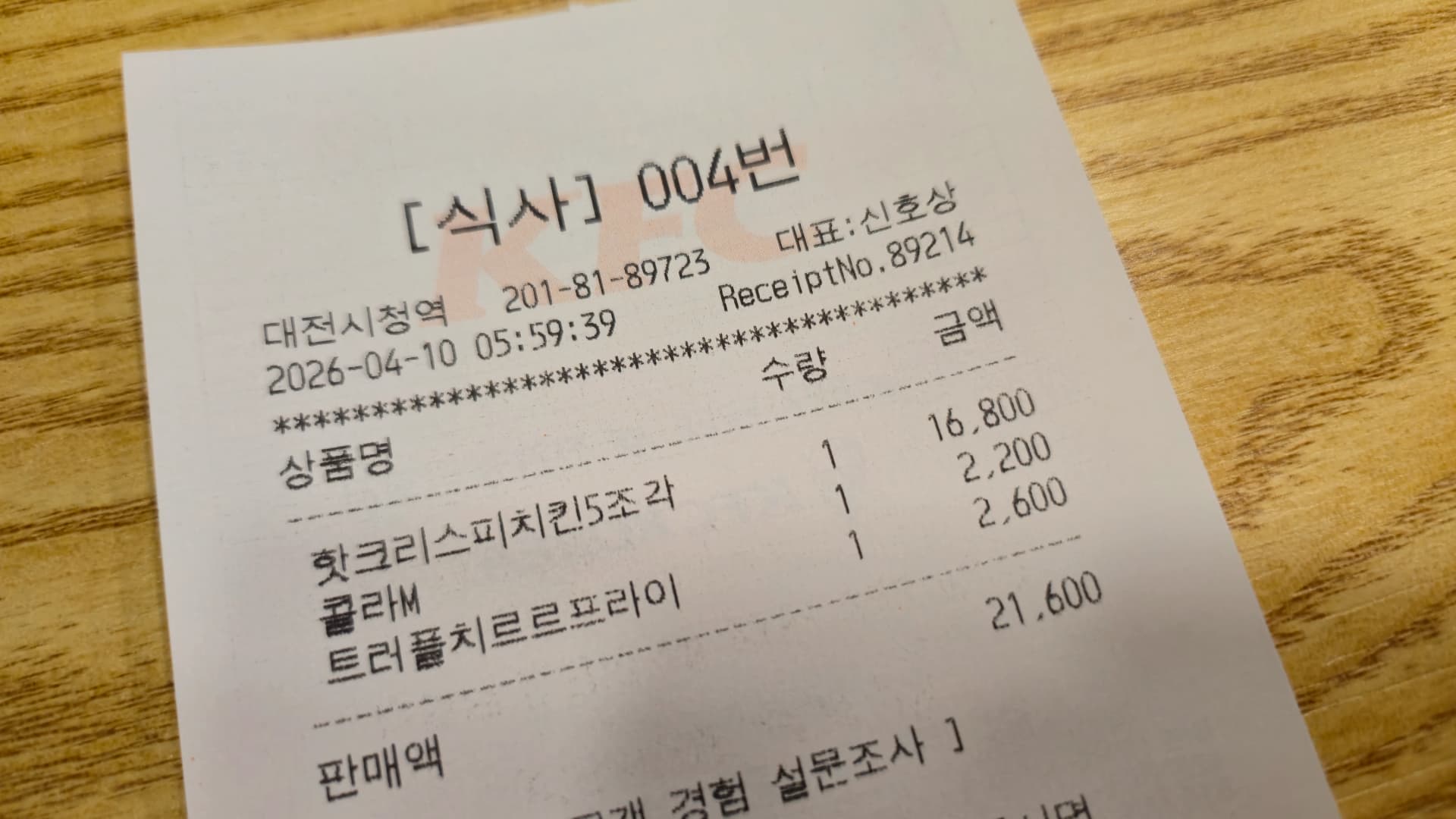
First up, the receipt. It's dated April 10, 2026, time-stamped at 5:59 AM. We left in the dead of night, drove there, ordered, ate, and before we knew it, it was practically sunrise. Hot Crispy Chicken 5 pieces came to 16,800 won (about $12), a medium Coke for 2,200 won ($1.60), and Truffle Chirr Fries for 2,600 won ($1.90) — totaling 21,600 won (roughly $15.50). On top of that, I ordered a Zinger Burger through an app sign-up promo for just 1,000 won (about $0.70), and Gat-Yangnyeom Chicken boneless for 3,800 won ($2.75). The whole bill came close to 30,000 won, about $22. For two people eating fried chicken before dawn — yeah, it's a little ridiculous. But when you're hungry, rational thinking doesn't exist.
Finding a 24-Hour KFC in Korea Before Dawn
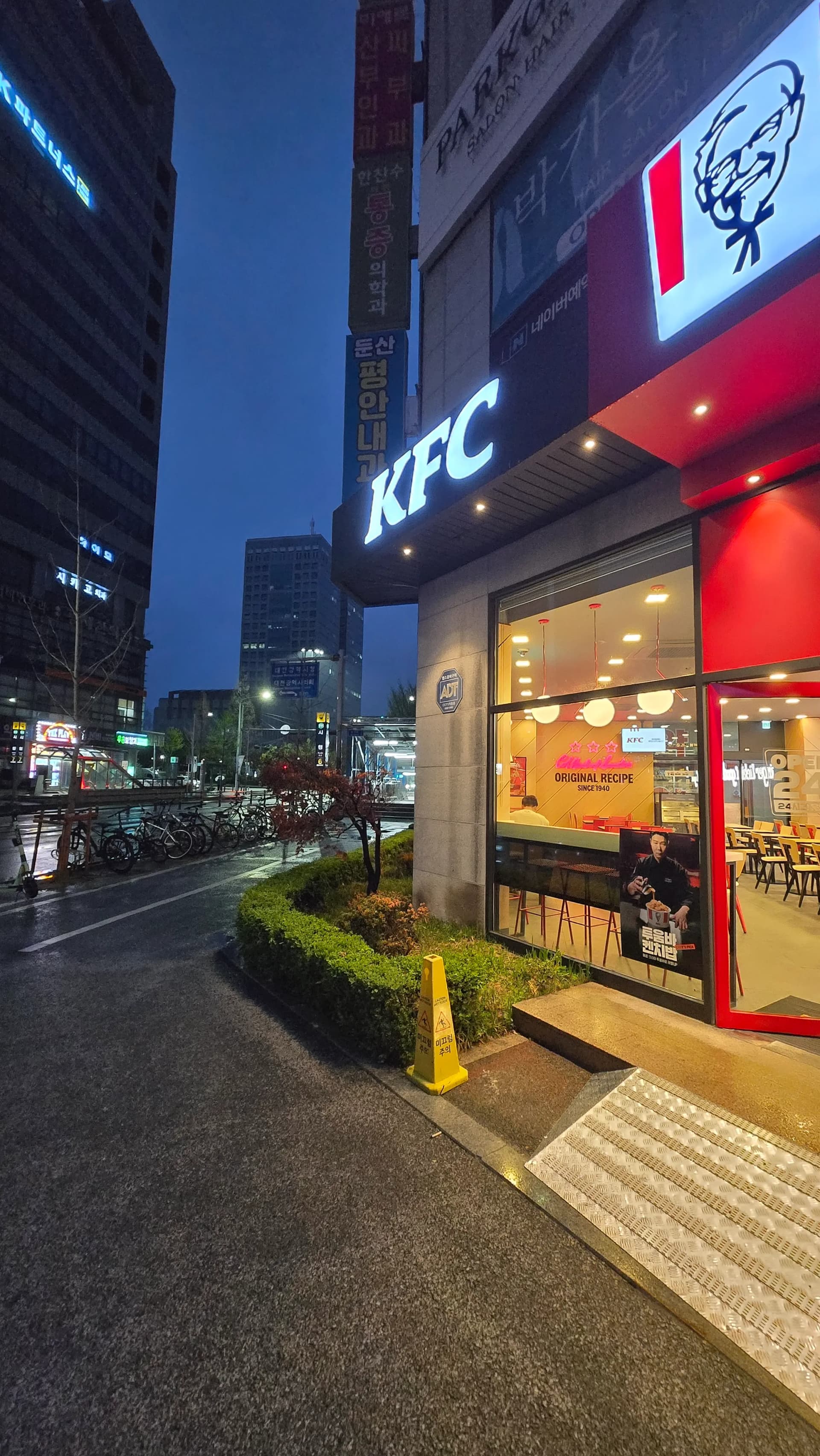
Not every KFC location in Korea is open 24 hours, but a handful of them stay open all night long. The one we went to was near Daejeon City Hall Station — about a 20-minute drive from our place. It was pitch black outside and there were barely any cars on the road. The only light cutting through the darkness was the KFC sign, and honestly, it was weirdly comforting. In Korea, when you get that late-night craving for fried chicken, it's called "yasik" (야식) — basically a midnight snack. Having a 24-hour location nearby means you can actually act on that impulse.
Kiosk Ordering in Korea — Cashiers Are Disappearing
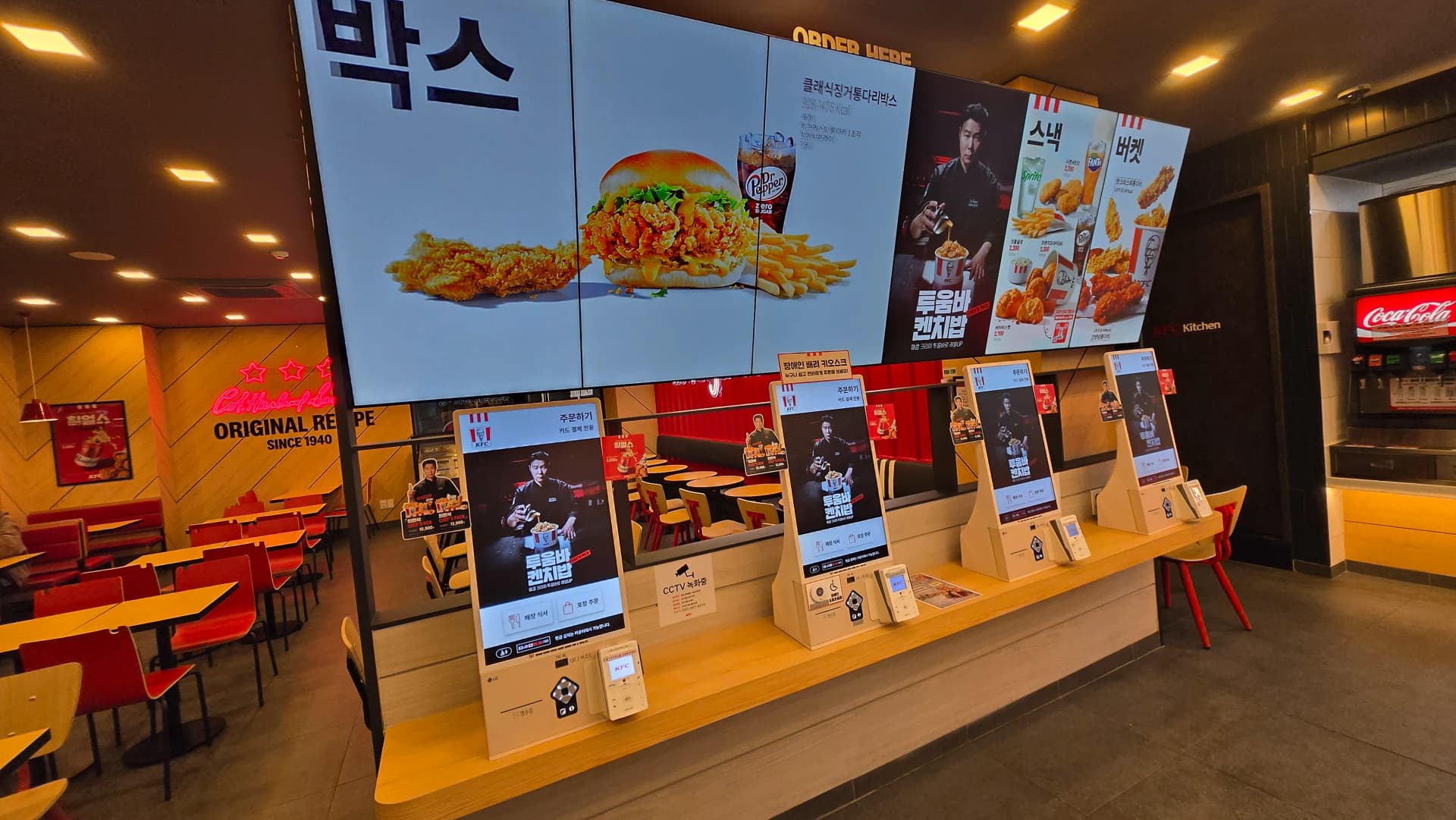
The moment you step inside a Korean KFC, the kiosks grab your attention before the counter does. These days, it's not just KFC — restaurants, cafés, movie theaters, pretty much everywhere in Korea has shifted to kiosk-based ordering. I honestly can't remember the last time I saw someone pay with cash, and I couldn't even tell you how much cash is in my own wallet right now. Korea has gone almost fully cashless, and it happened fast. You can still order at the counter if you want to pay with cash, but it almost feels like the exception rather than the rule.
Multi-Language Support on the Kiosk
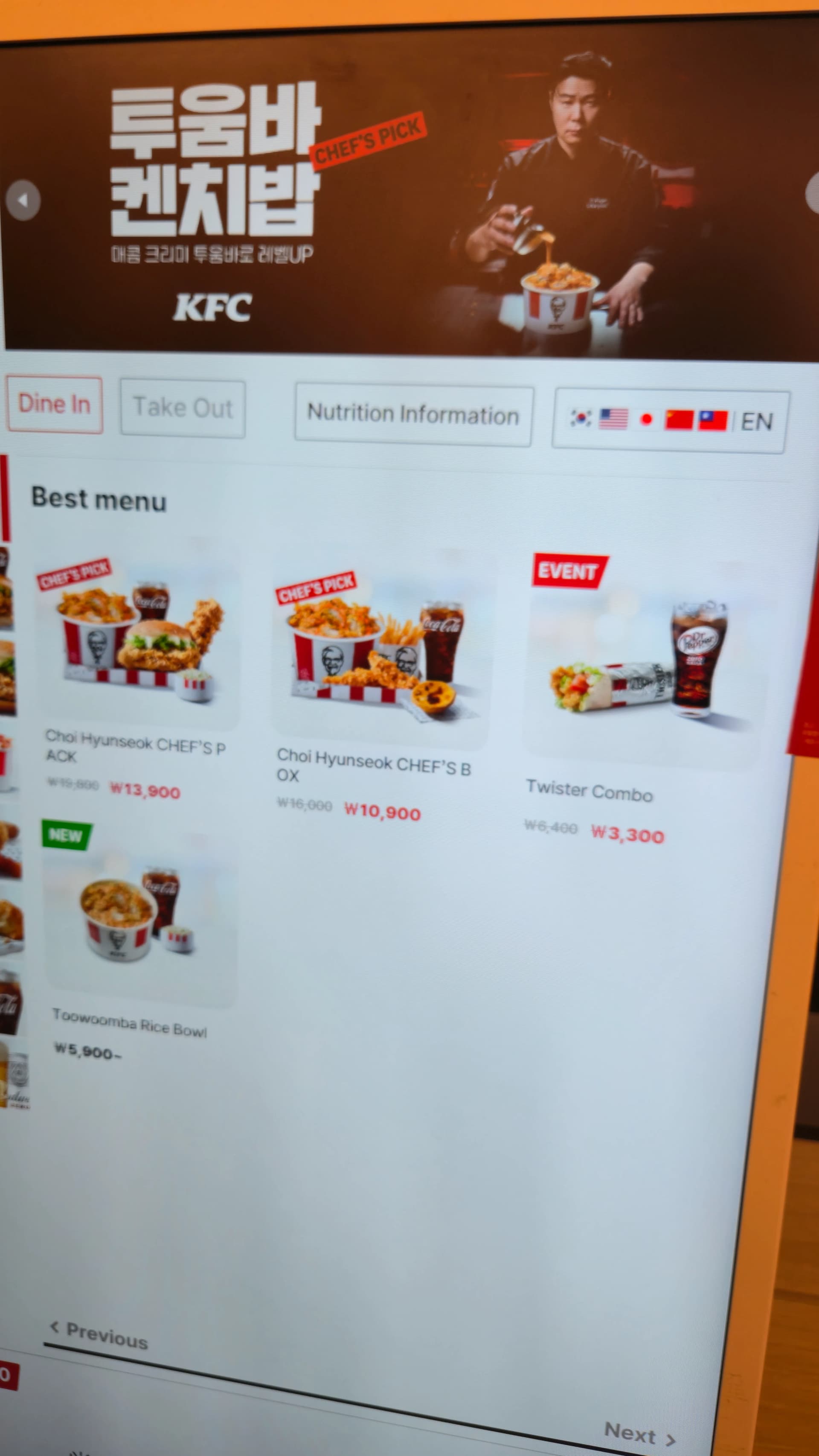
My wife handled the ordering that night. She noticed a row of flag icons in the upper-right corner of the kiosk screen and switched it to English — and everything, from menu names to descriptions, displayed in English. The kiosk supports five languages total: Korean, English, Japanese, Chinese, and Traditional Chinese (Taiwanese). Even if you can't read a word of Korean, ordering is totally doable.
Pay With Just Your Phone
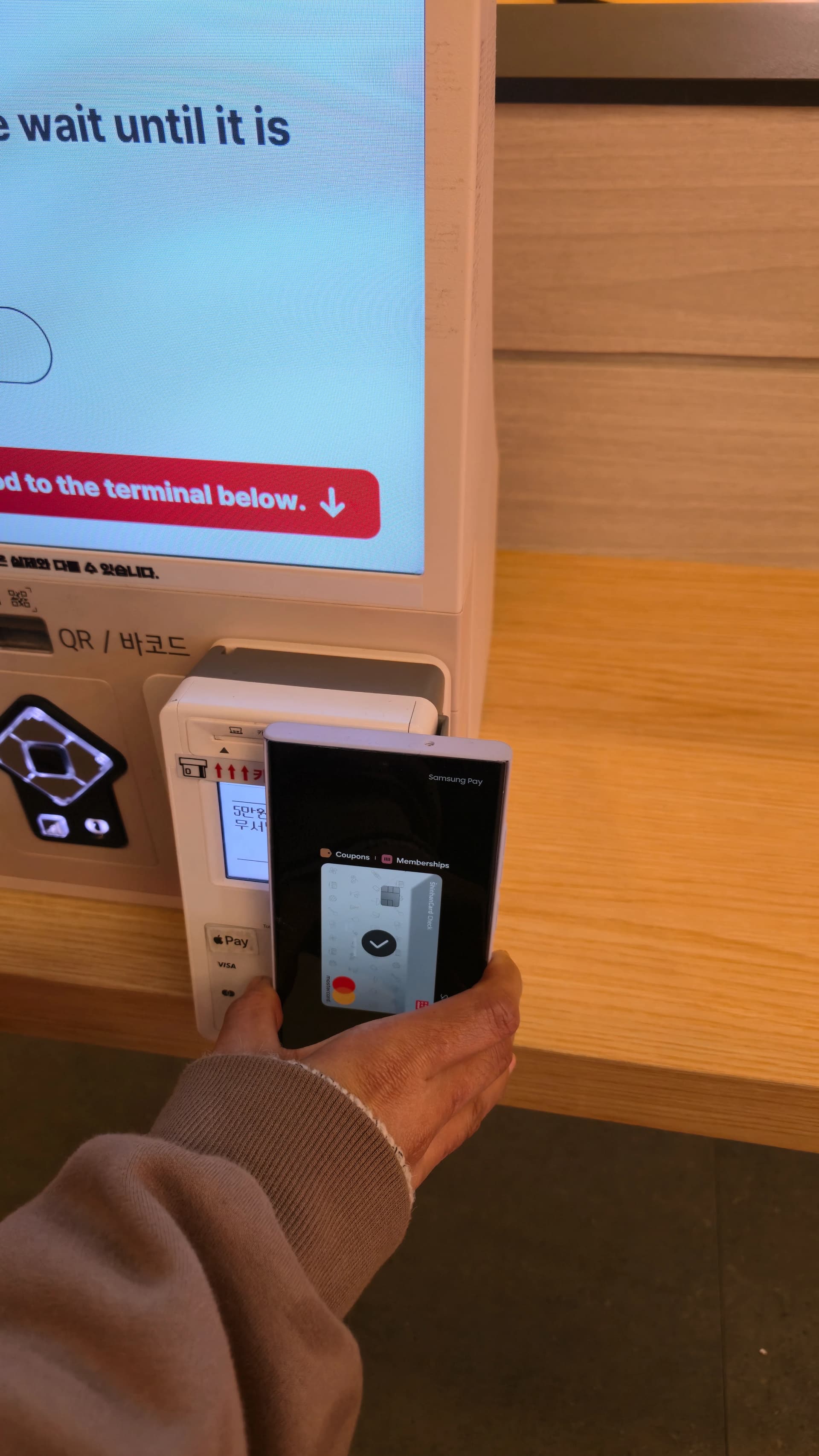
My wife paid too, and she didn't pull out a card — she just tapped her phone on the kiosk terminal. Samsung Pay, one tap, done. She hasn't carried an actual wallet in ages. Apple Pay works too, so it's the same deal for iPhone users. In Korea, a single phone covers everything: convenience stores, fast food joints, the subway, taxis — all of it. Once you get used to Korea's mobile payment system, there's really no going back to cash or cards.
The Vibe Inside a KFC at Dawn
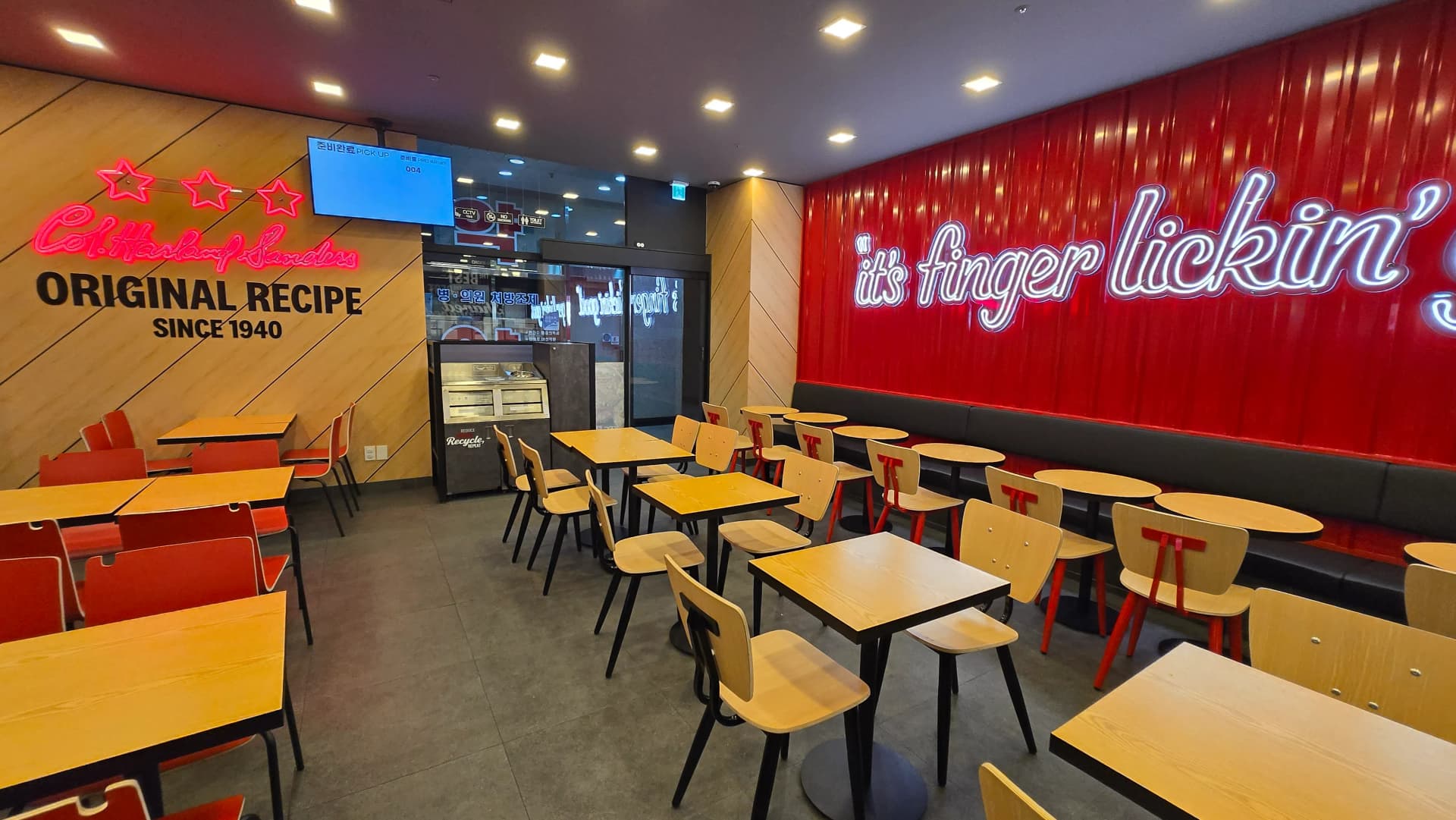
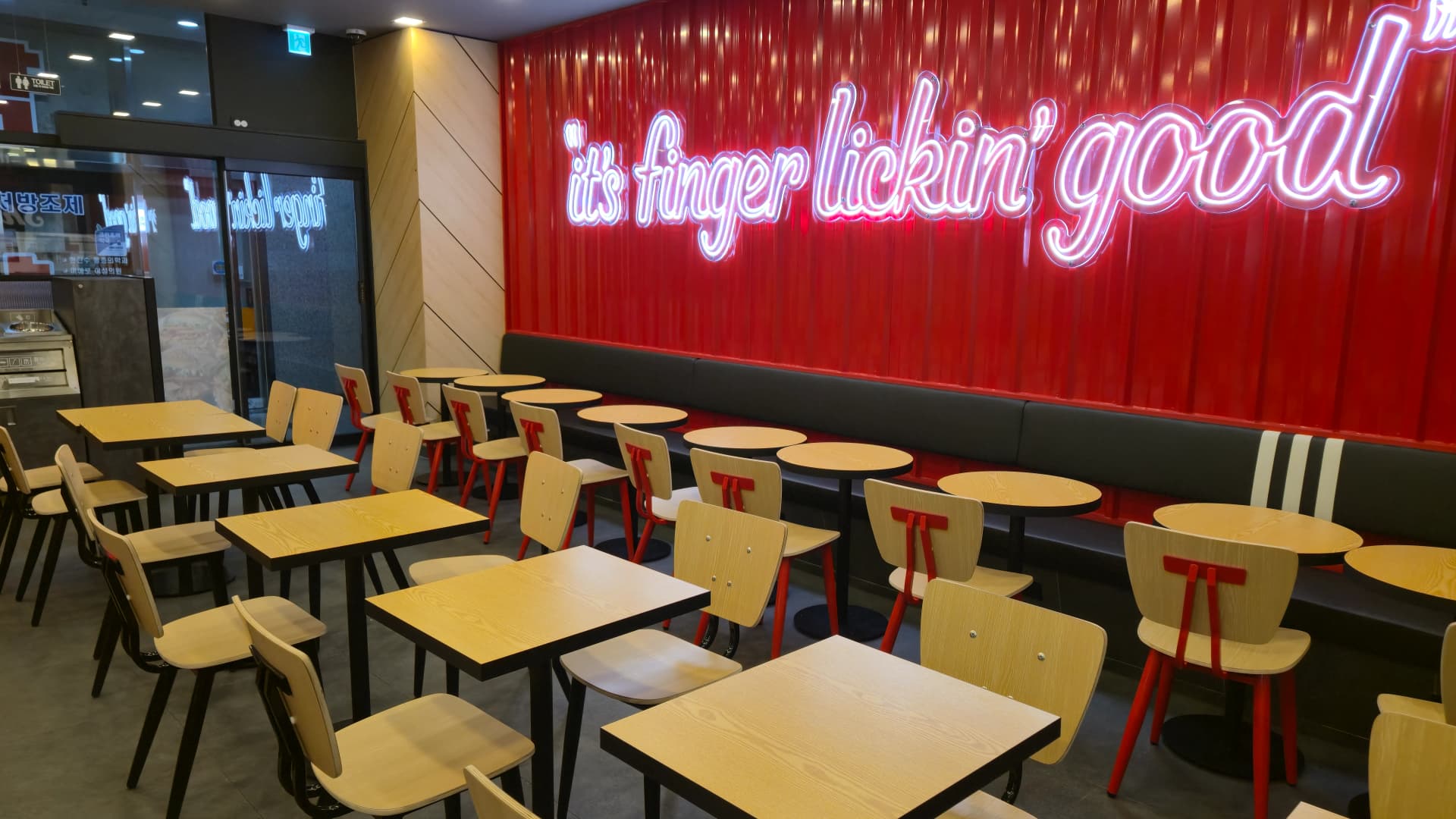
Since it was the middle of the night, the restaurant was completely empty — obviously. Red curtain walls, neon signs glowing, and not a single soul in sight. It gave the whole place this oddly cinematic vibe. If I'd been alone, it might've been a little creepy. But with my wife there, it was just funny. On the plus side, we could take as many photos as we wanted without worrying about bothering anyone.
Hot Crispy Chicken 5 Pieces — Korean KFC's Signature Item
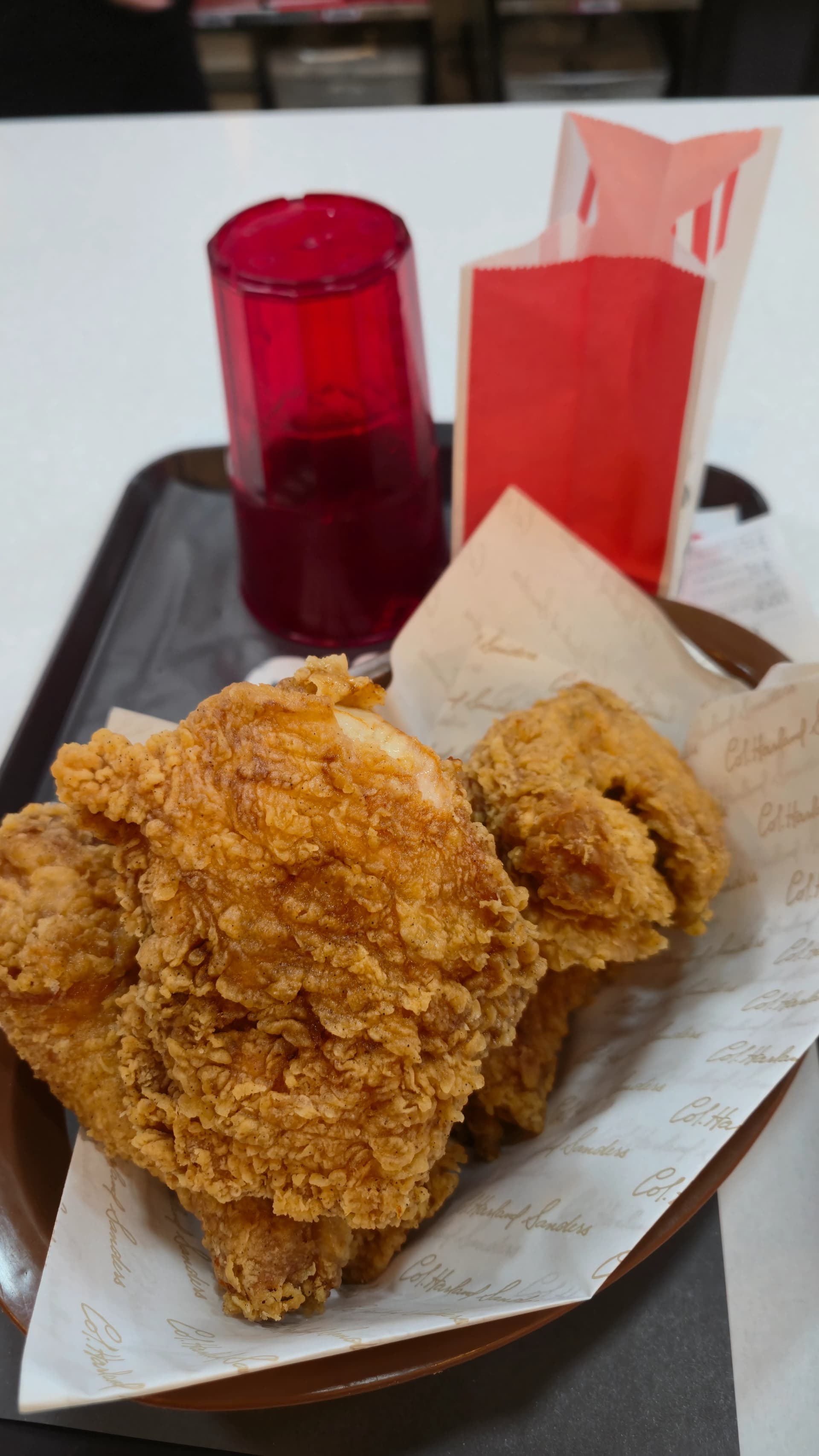
Korean KFC's Hot Crispy Chicken is a spicy, extra-crunchy fried chicken that's one of the chain's most popular items — and it's completely different from anything on the American KFC menu. Our first order was 5 pieces of that plus Truffle Chirr Fries, their limited-edition truffle-seasoned fries. When the tray arrived, the chicken pieces were surprisingly big. That said, 5 pieces for 16,800 won (about $12) is a bit steep. At a local Korean fried chicken shop, a whole chicken goes for about 18,000–20,000 won ($13–$14.50). So the value isn't exactly great. But the batter was perfectly crunchy and the spicy seasoning had soaked deep into every crevice — flavor-wise, it was absolutely worth dragging ourselves out of the house before sunrise.
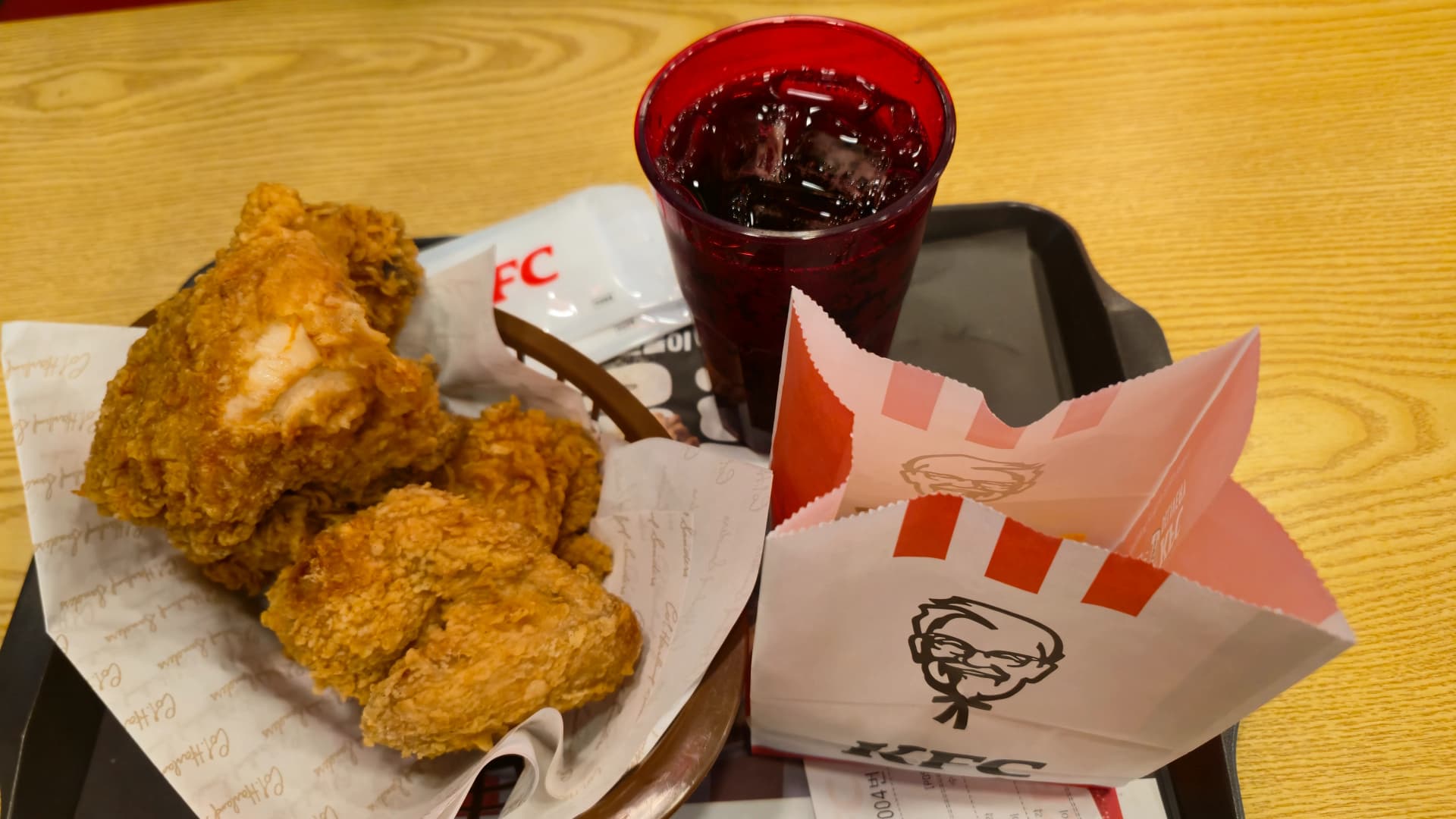
Once we sat down, this was the spread. Chicken, Coke, and Truffle Chirr Fries. Korean KFC serves drinks in these red branded cups, and refills are self-service — you just walk up to the drink station in the restaurant and pour your own.
The Batter Is on a Whole Different Level
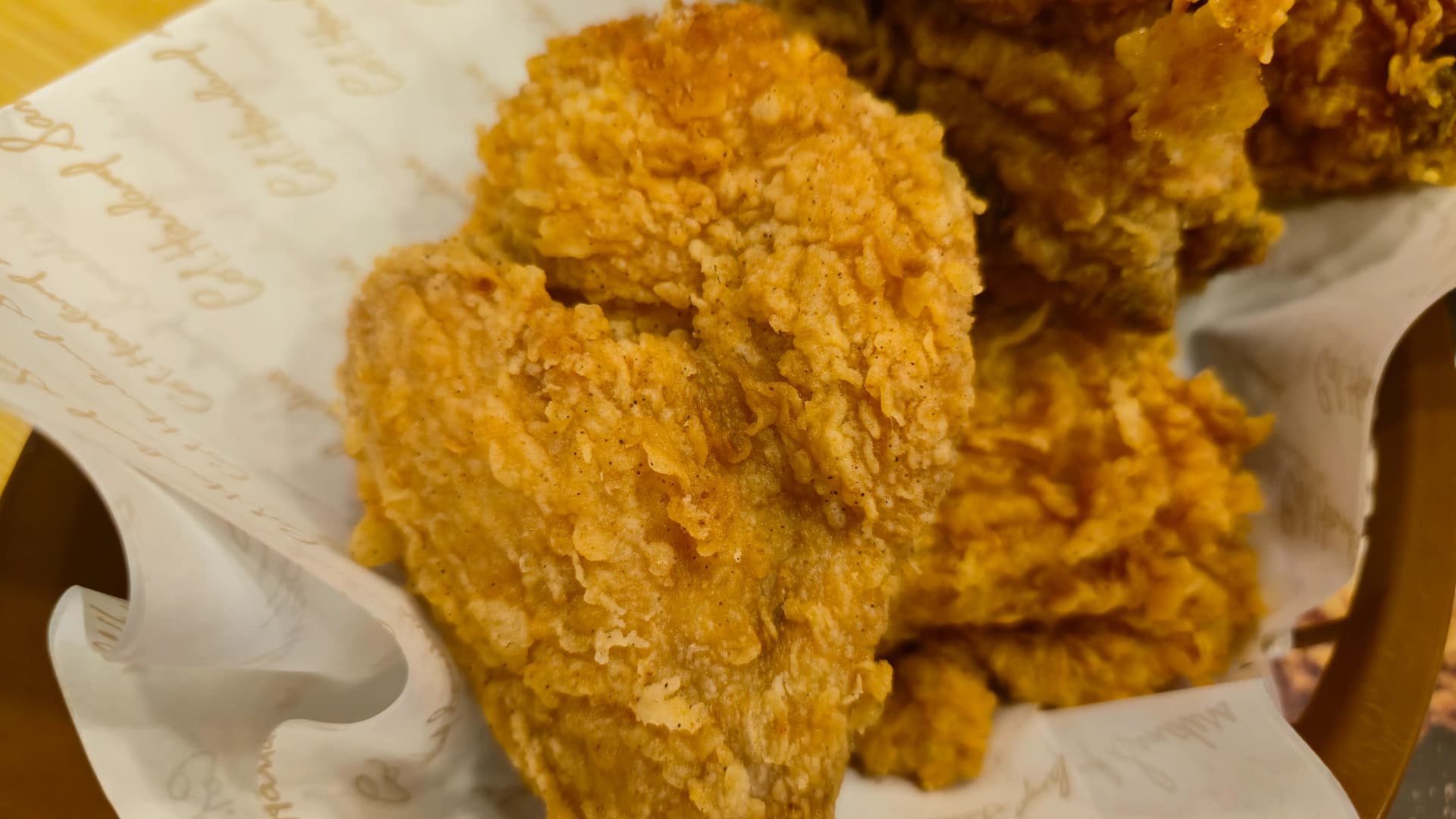
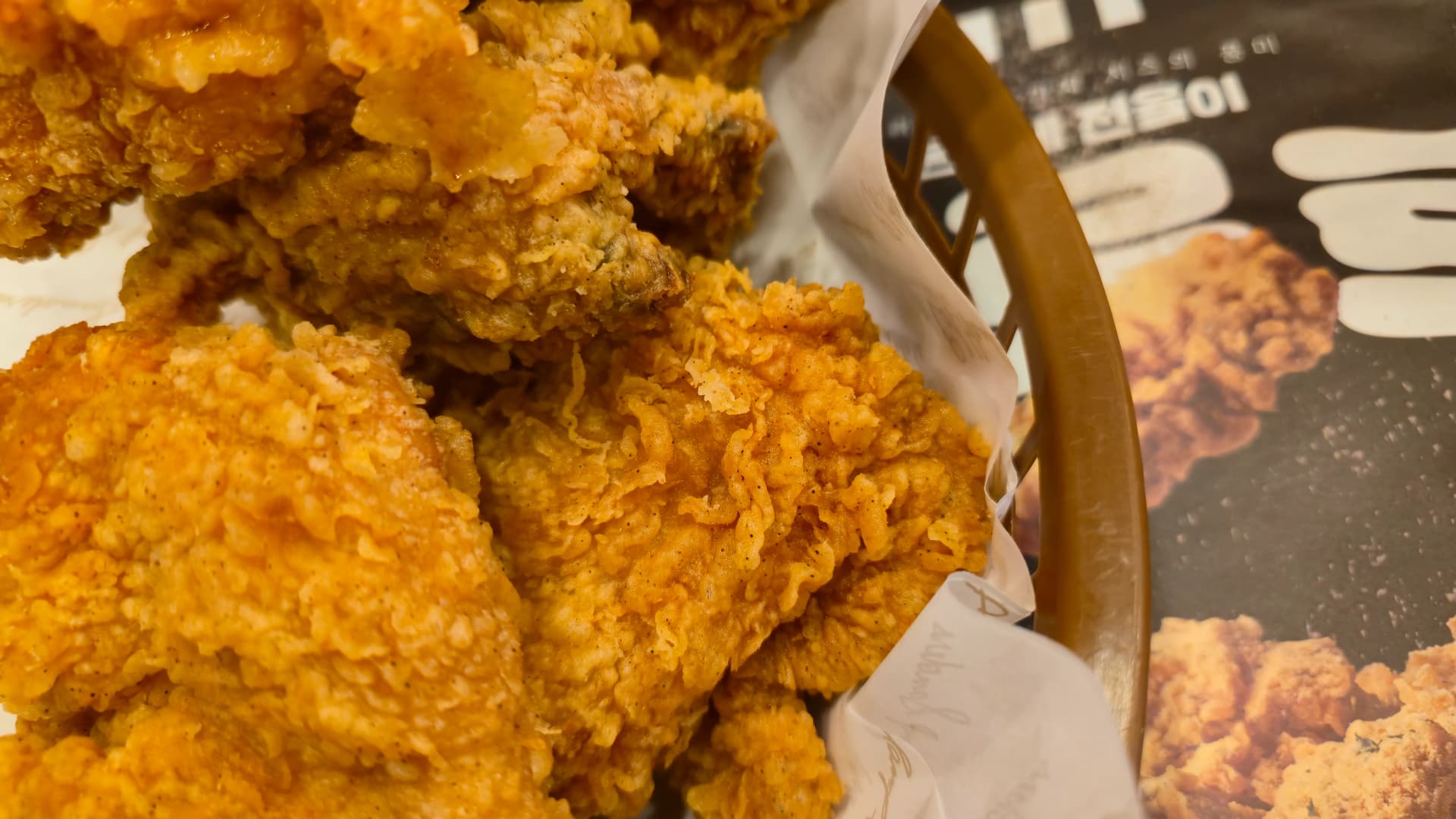
I got in close for these shots. You can see how the batter clings in thick, craggy ridges all over the surface — that's the signature look of Korean KFC's Hot Crispy Chicken. All those bumps and ridges mean way more crunchy surface area, so the moment you bite in, the crunch is audible. Crispy on the outside, juicy on the inside — it delivered on both. Since it was the middle of the night, this probably wasn't fresh out of the fryer, but honestly, I couldn't tell. The spicy seasoning is embedded between every layer of batter, and by the time you're done, your fingers are stained red. Think of it like Popeyes' spicy chicken taken up a notch — crunchier coating, more aggressive seasoning, and a heat that builds with every bite.
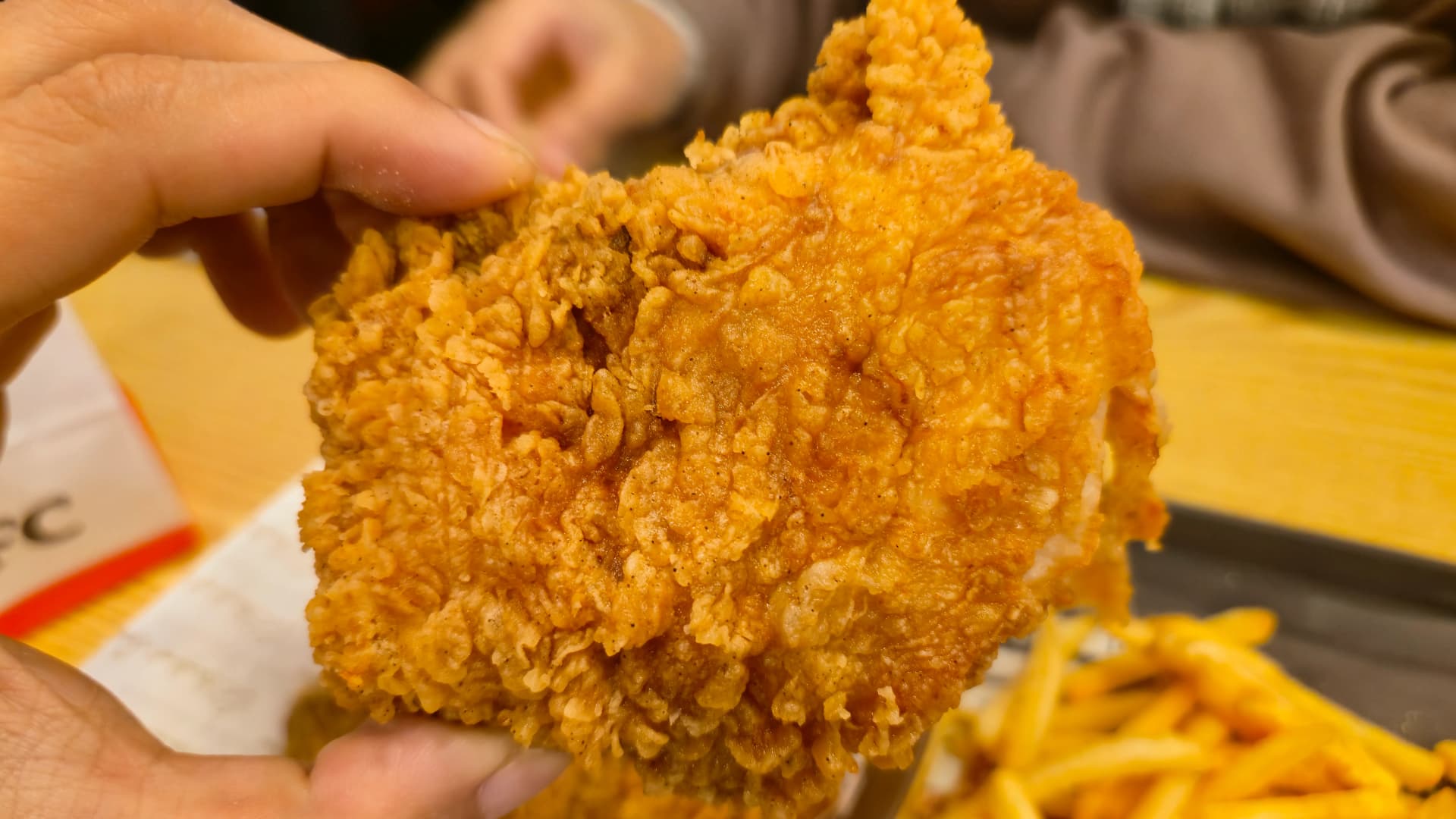
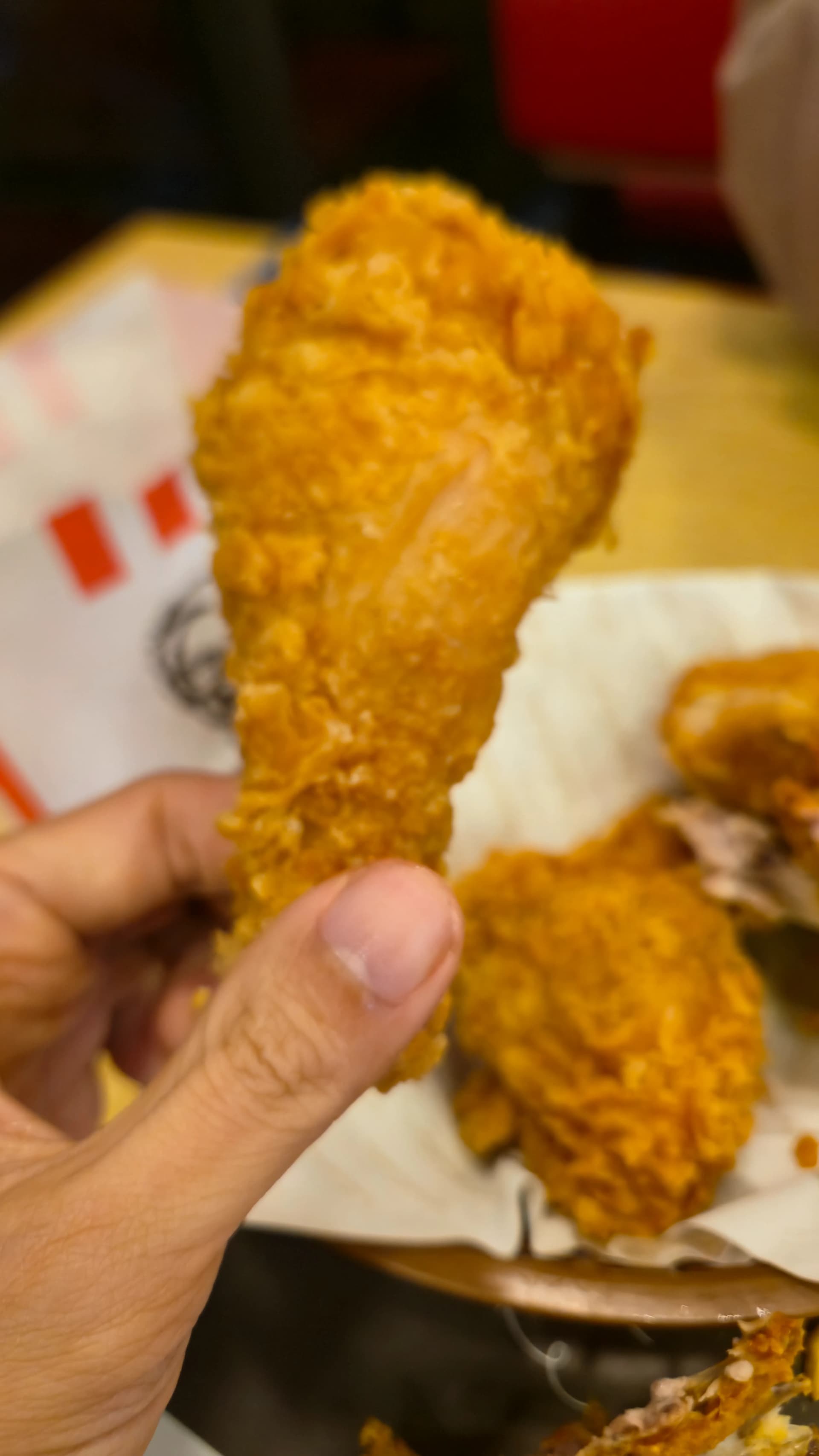
Hold one up and you immediately get a sense of the size. One piece was a breast that was bigger than my palm; another was a drumstick. Korean KFC is pretty generous with portion sizes, so 5 pieces was more than enough for two people. My wife only went for the drumsticks. She said eating bone-in Korean fried chicken with her hands felt weird at first, but now she's faster at it than I am.
Drinks and the Refill System at Korean KFC
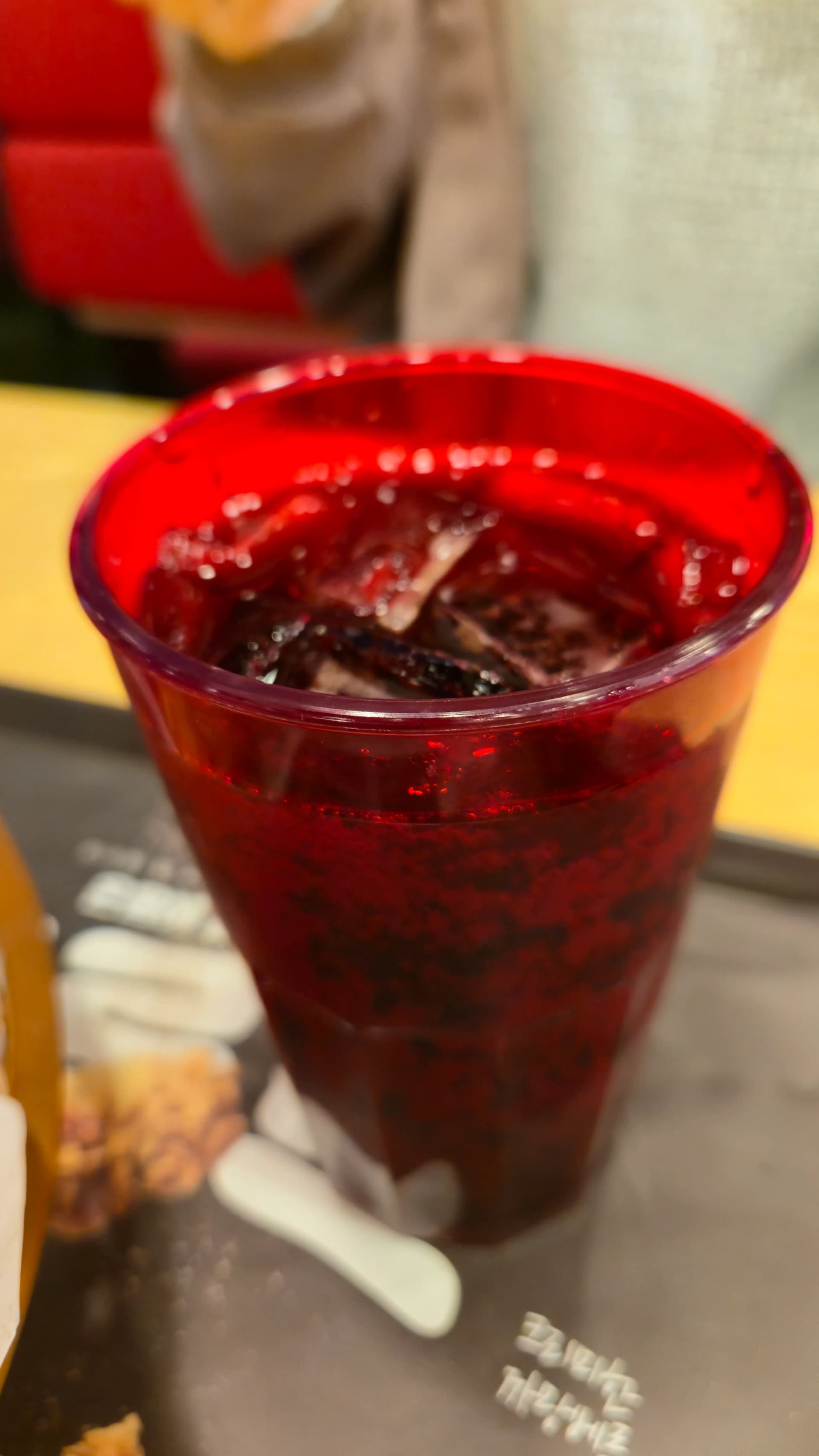
Drinks come in this red cup. They used to give out straws, but not anymore. Korea has been enforcing single-use plastic regulations pretty aggressively, so drinking straight from the cup — no straw — has become the default for dine-in.
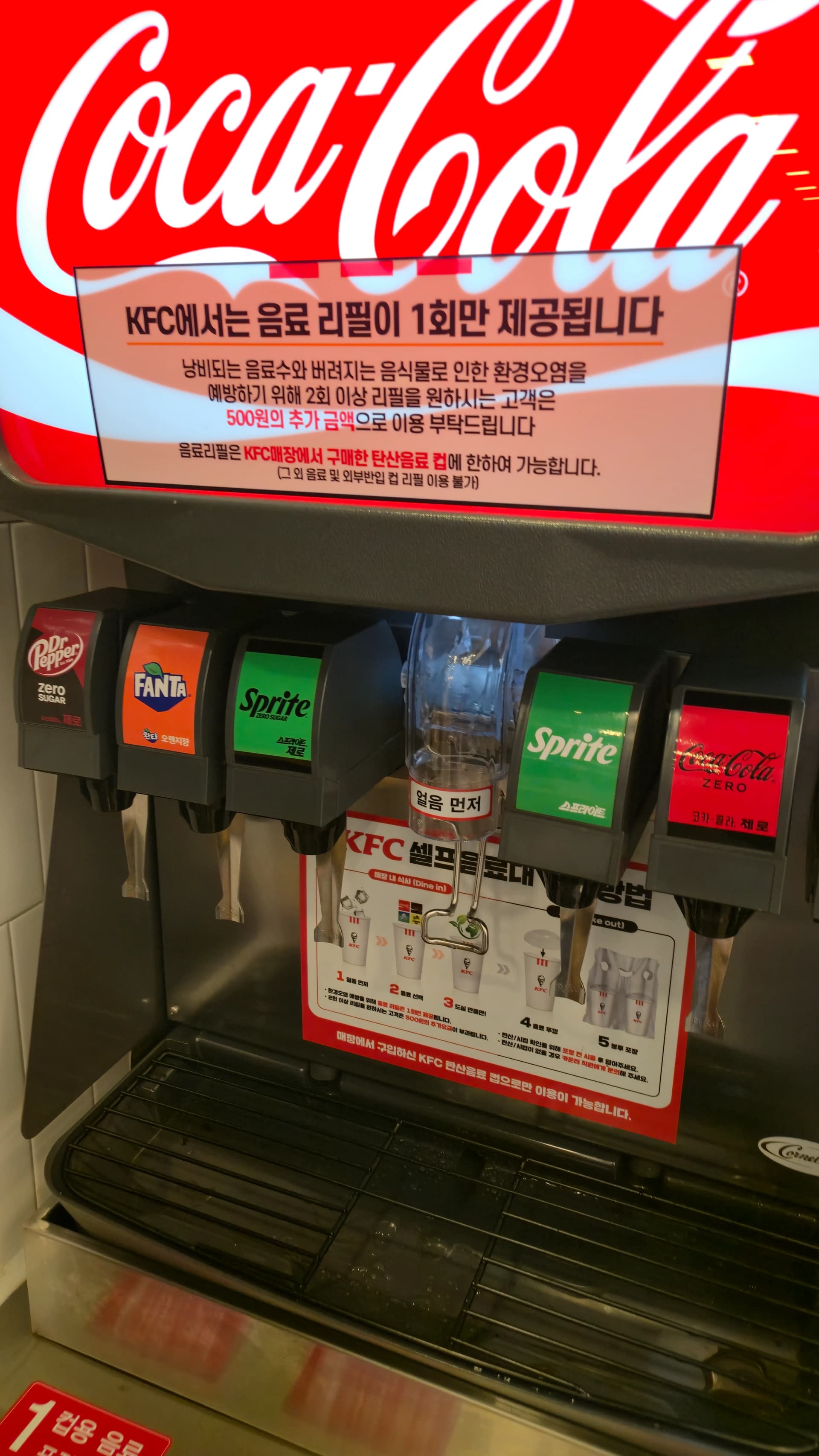
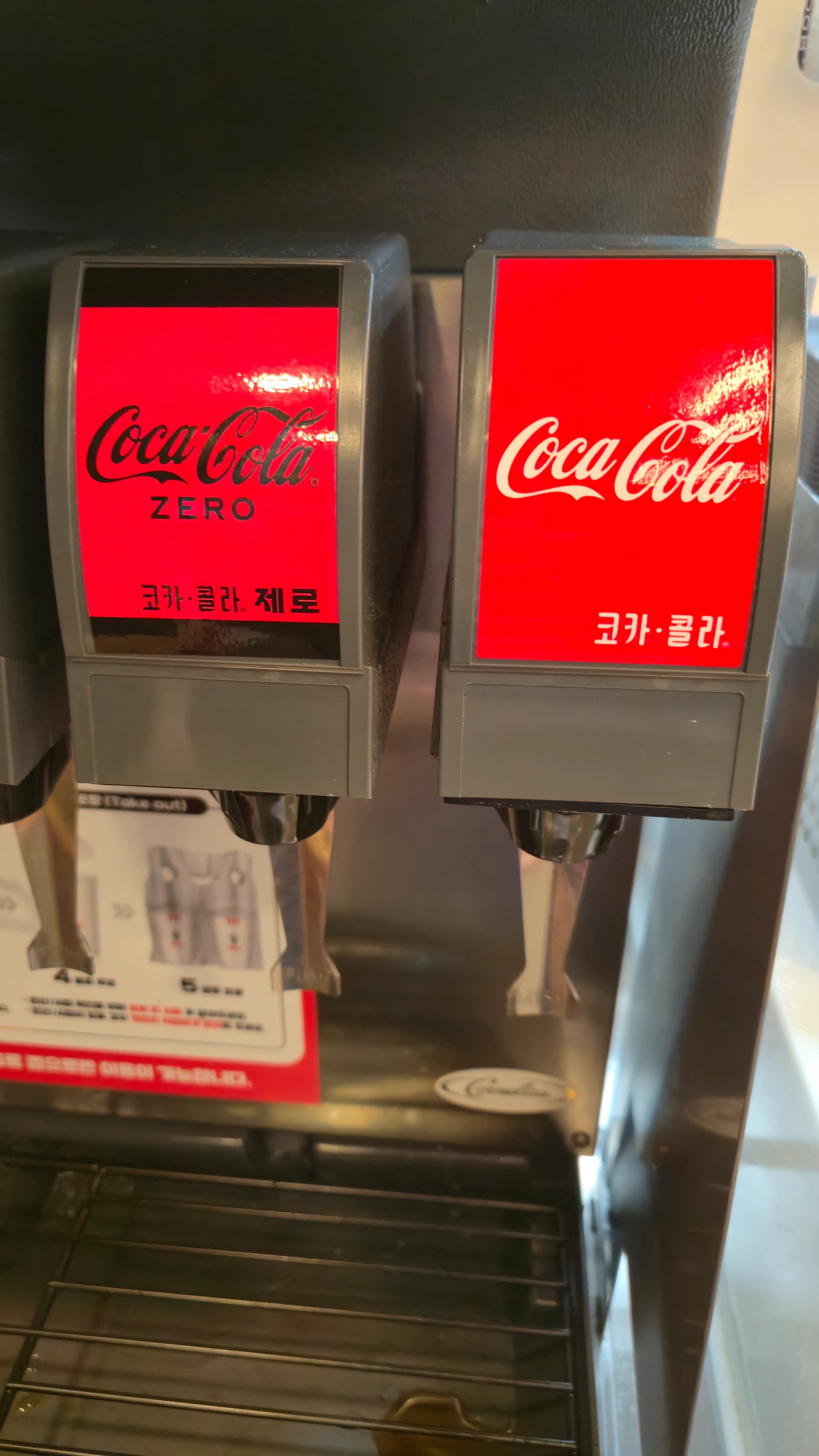
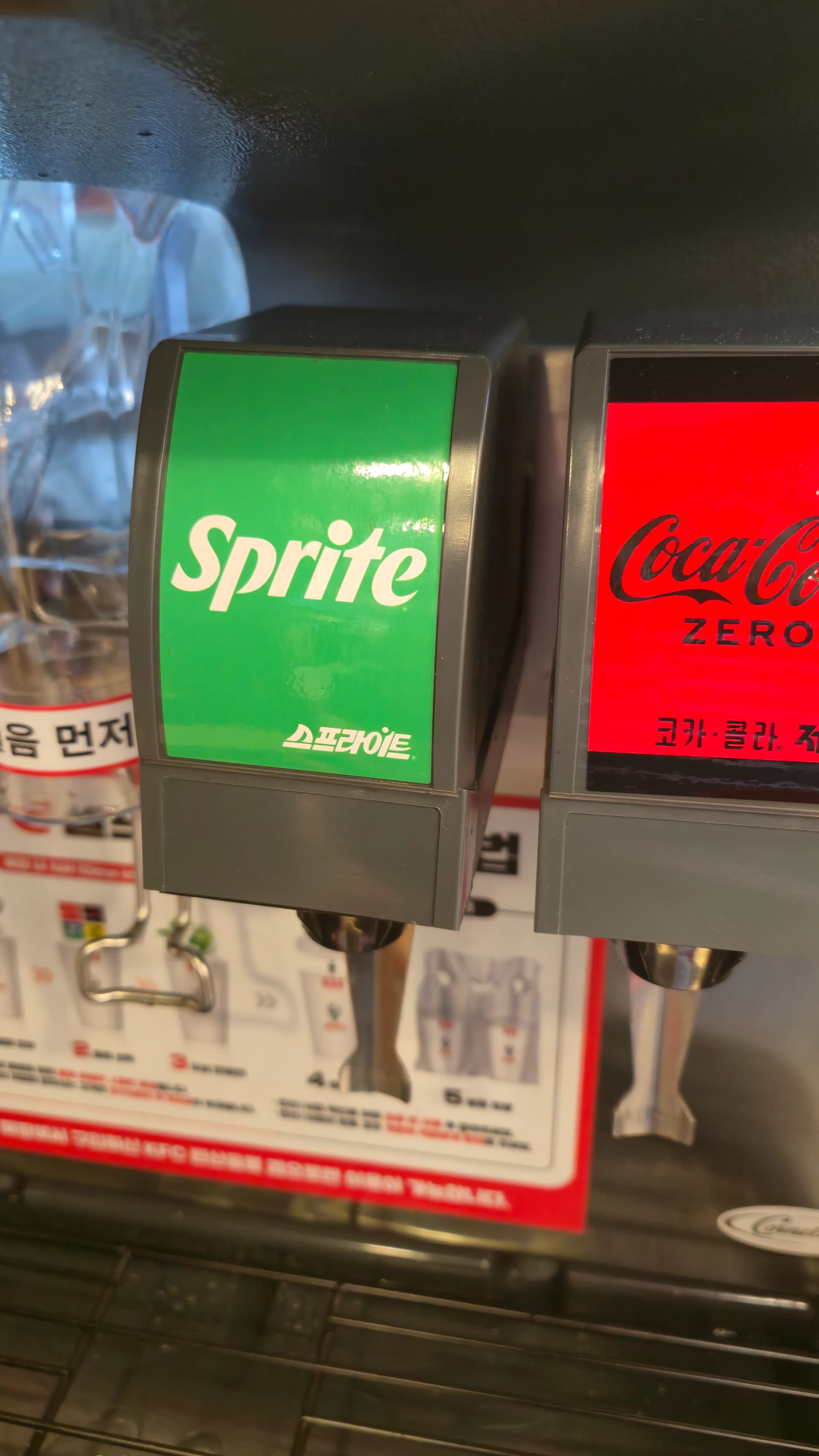
Here's the self-service drink station. It used to be unlimited refills, but that's changed. A posted notice says you get one free refill, and anything after that costs an extra 500 won (about $0.35). I'm not sure what the refill policy is at KFC in other countries, but in Korea, this is how it works now. The options are Coca-Cola, Coca-Cola Zero, Sprite, Fanta, and Dr Pepper Zero. I went with Dr Pepper Zero; my wife grabbed Coca-Cola Zero. Fried chicken without a fizzy drink? That's just not right.
Truffle Chirr Fries — A Korea-Exclusive Side
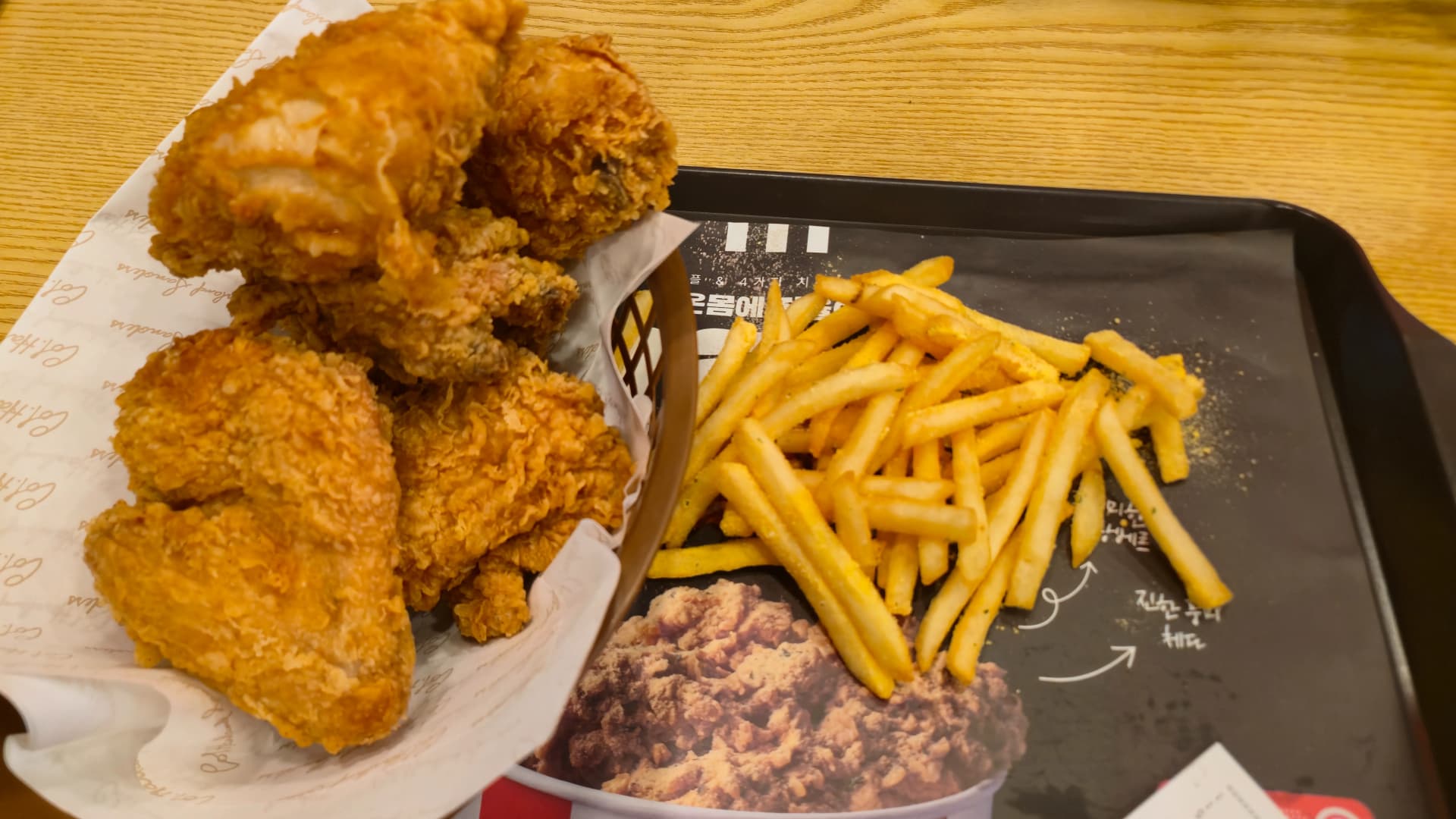
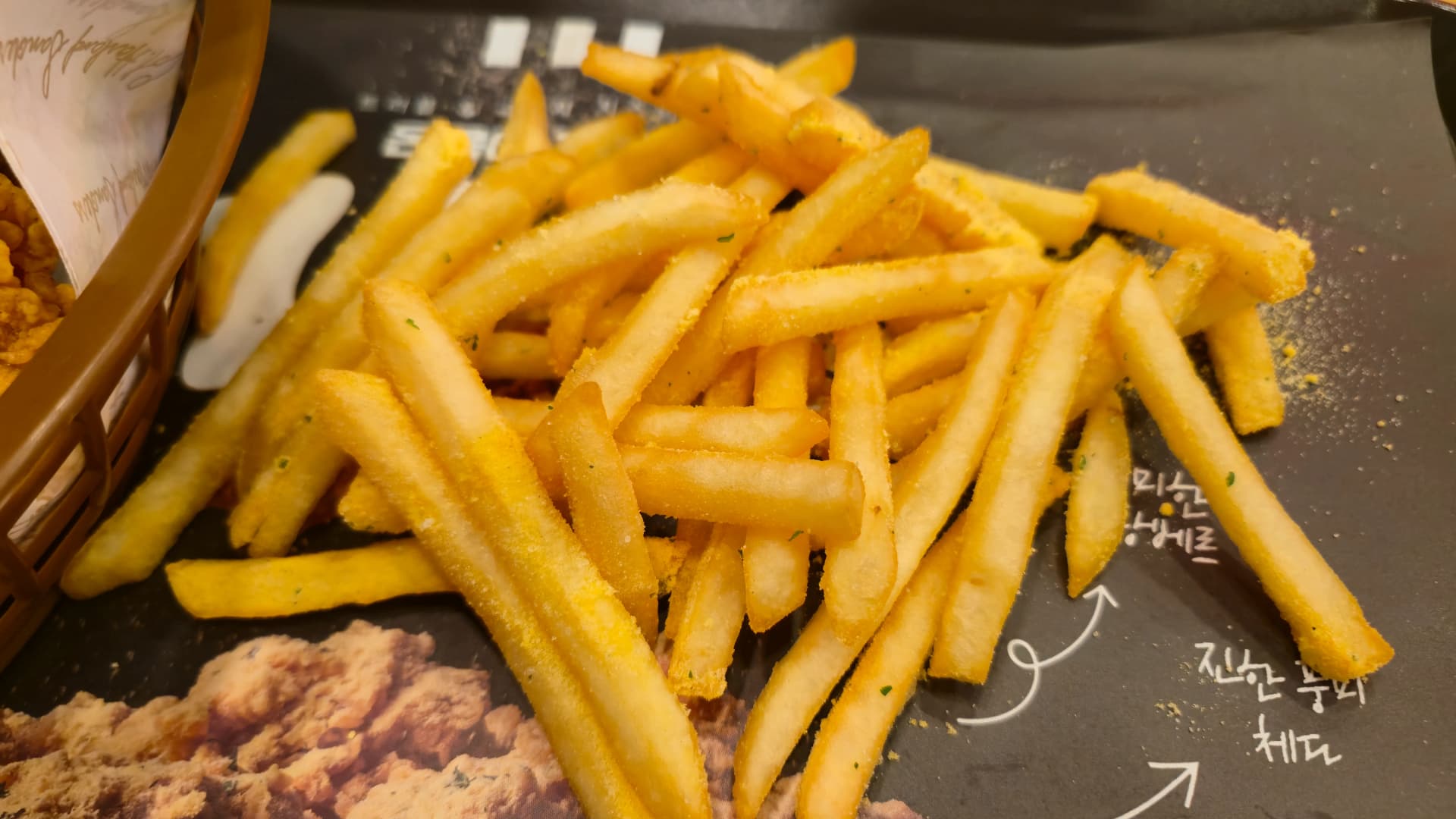
Truffle Chirr Fries are best enjoyed dumped out onto the tray. Eating them straight from the bag is fine, but spreading them out and alternating between fries and chicken is a way better experience. Up close, you can see the yellow seasoning powder and bits of parsley coating every fry. They come pre-seasoned, so no ketchup was included — and honestly, you don't need it. They're salty with a subtle cheesy flavor that creeps up on you. Adding ketchup would probably just mask the whole truffle thing. These aren't available at any KFC in the US, by the way — strictly a Korea-only menu item.
Second Order — Gat-Yangnyeom Chicken and Zinger Burger
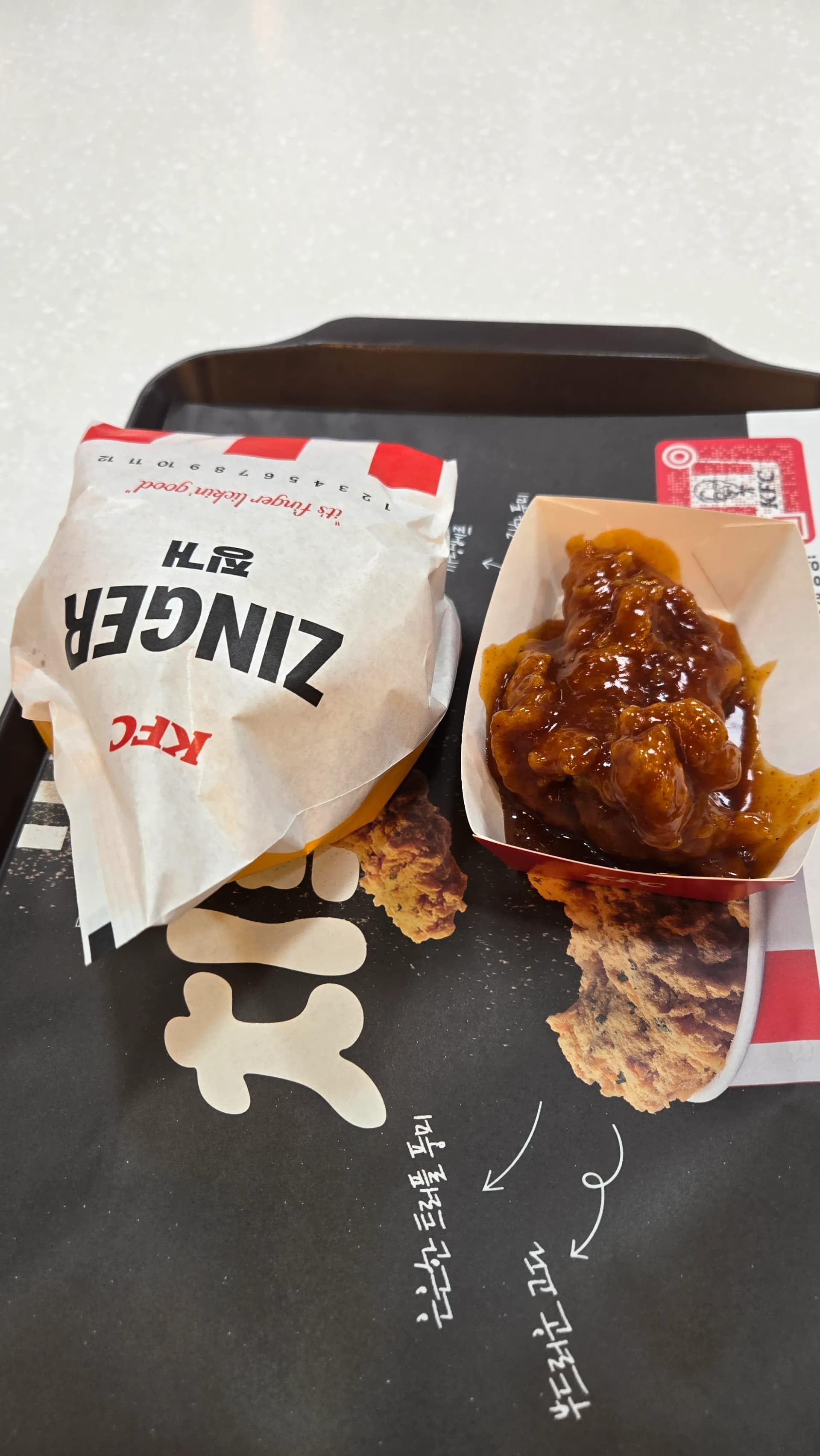
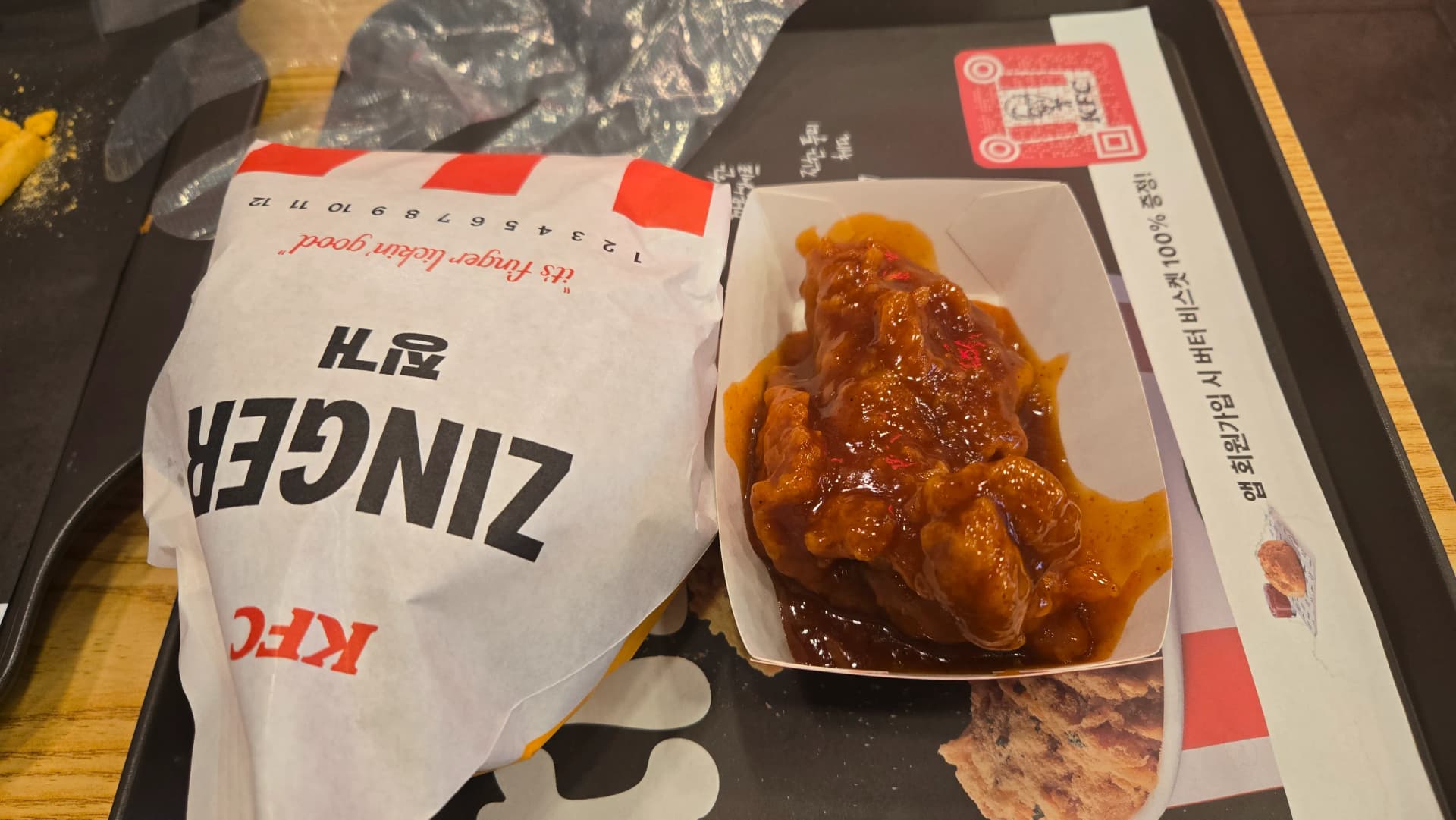
Five pieces wasn't enough, so we ordered more. A Zinger Burger — a chicken sandwich with a spicy fried chicken patty — and Gat-Yangnyeom Chicken (갓양념치킨), which is boneless fried chicken tossed in a sweet-and-spicy sauce. Gat-Yangnyeom Chicken is a Korea-exclusive item you won't find at any other KFC worldwide. When I opened the box, the sauce was dripping off every piece. It also came with disposable plastic gloves — that's standard in Korea whenever you're eating saucy chicken. The Zinger Burger was just 1,000 won (about $0.70) through an app sign-up deal, and the Gat-Yangnyeom Chicken was 3,800 won ($2.75).
Gat-Yangnyeom Chicken — Honestly, Not My Thing
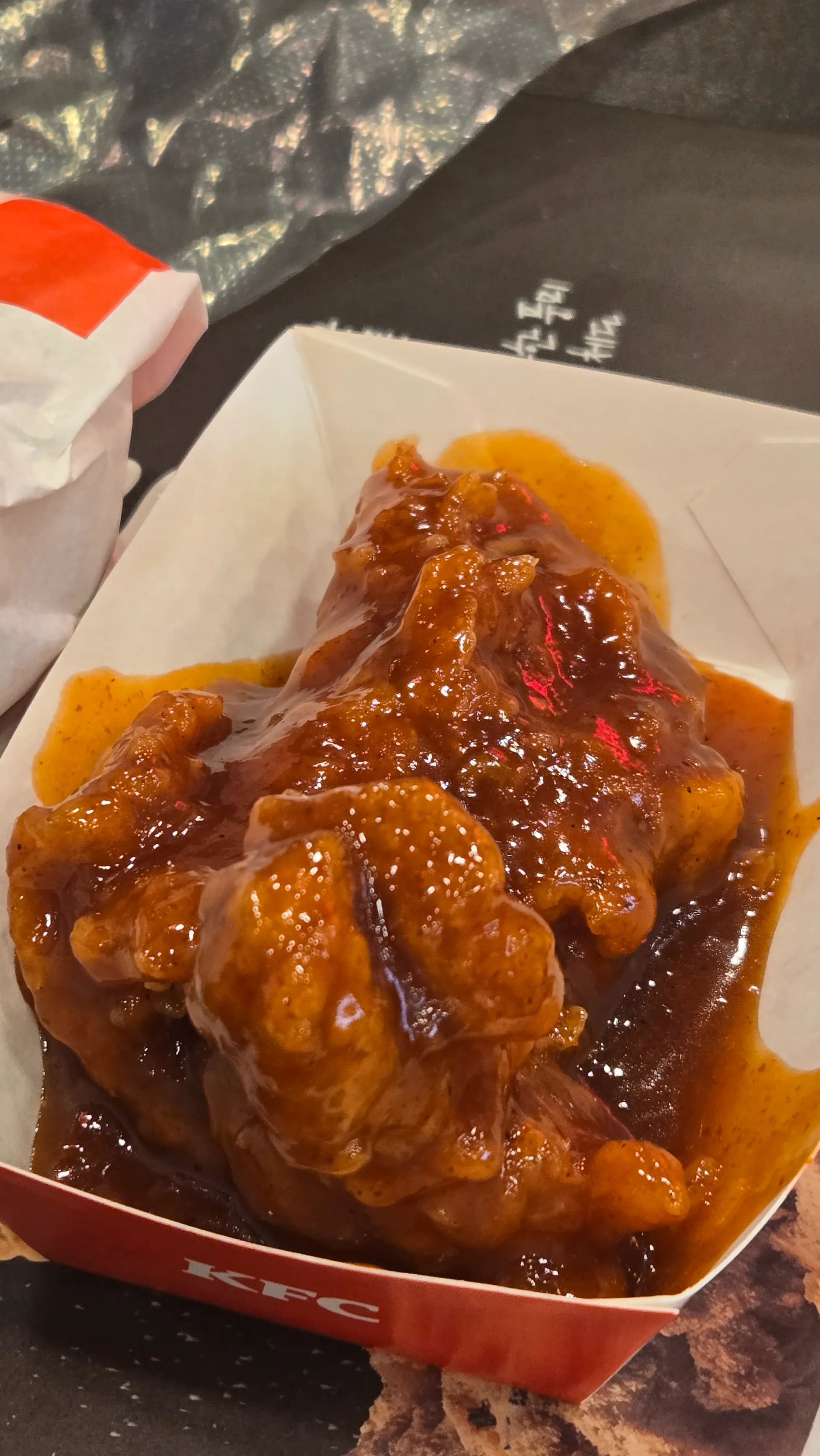
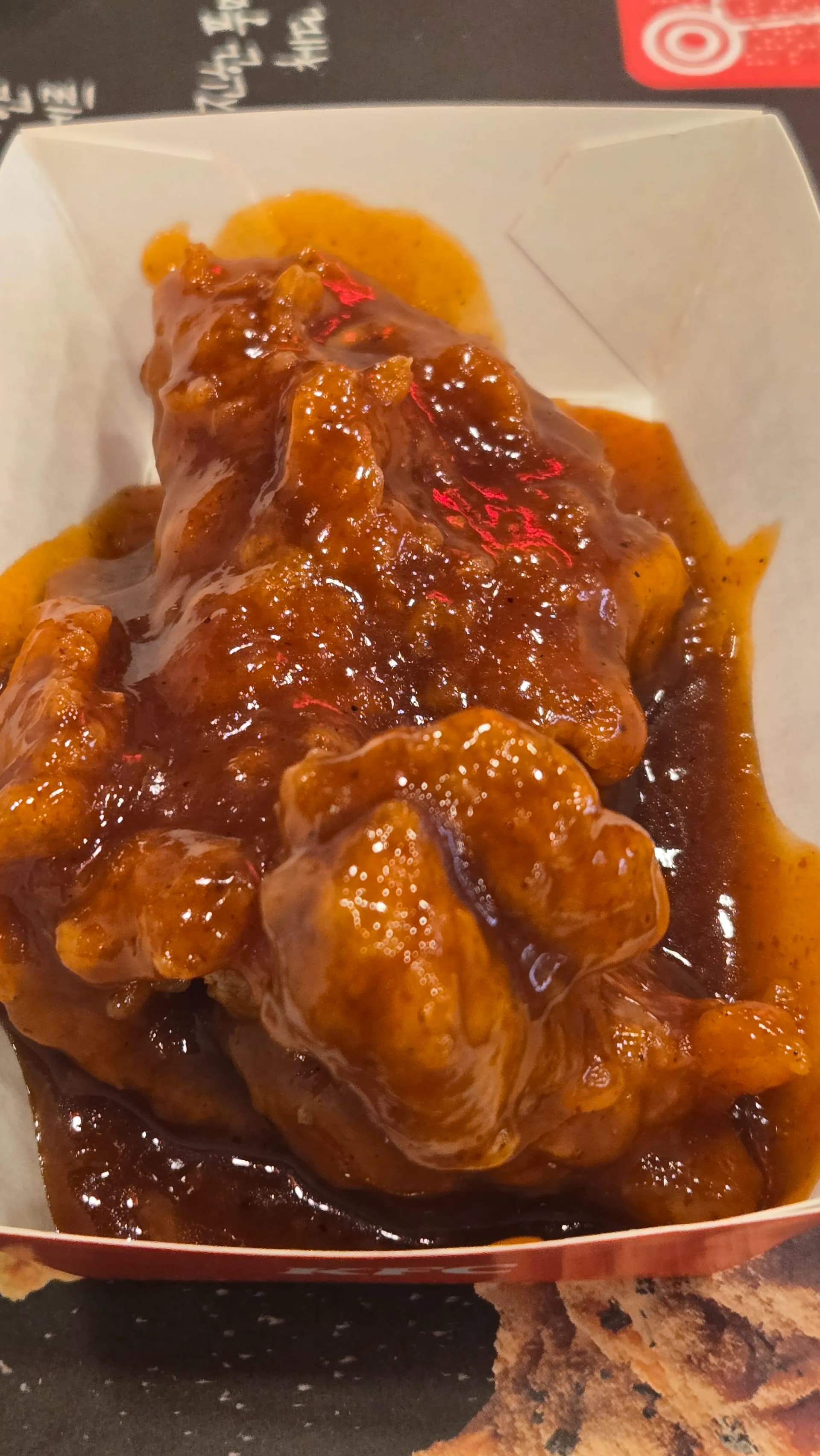
The sauce completely coated every piece. Glossy brown yangnyeom sauce pooled at the bottom of the box, with little red pepper flakes scattered throughout. When I bit in, the sweetness hit first — hard — followed by a mild spicy kick. Honestly? Not for me. The sauce was way too sweet. The Hot Crispy Chicken I'd had earlier was overwhelmingly better. I genuinely think it's the best thing on the Korean KFC menu — good enough to go head-to-head with any local Korean fried chicken spot, and win. If you like sweetness, Gat-Yangnyeom might work for you. But if you prefer crunchy and spicy, skip it.
Zinger Burger — Might Disappoint at Dawn
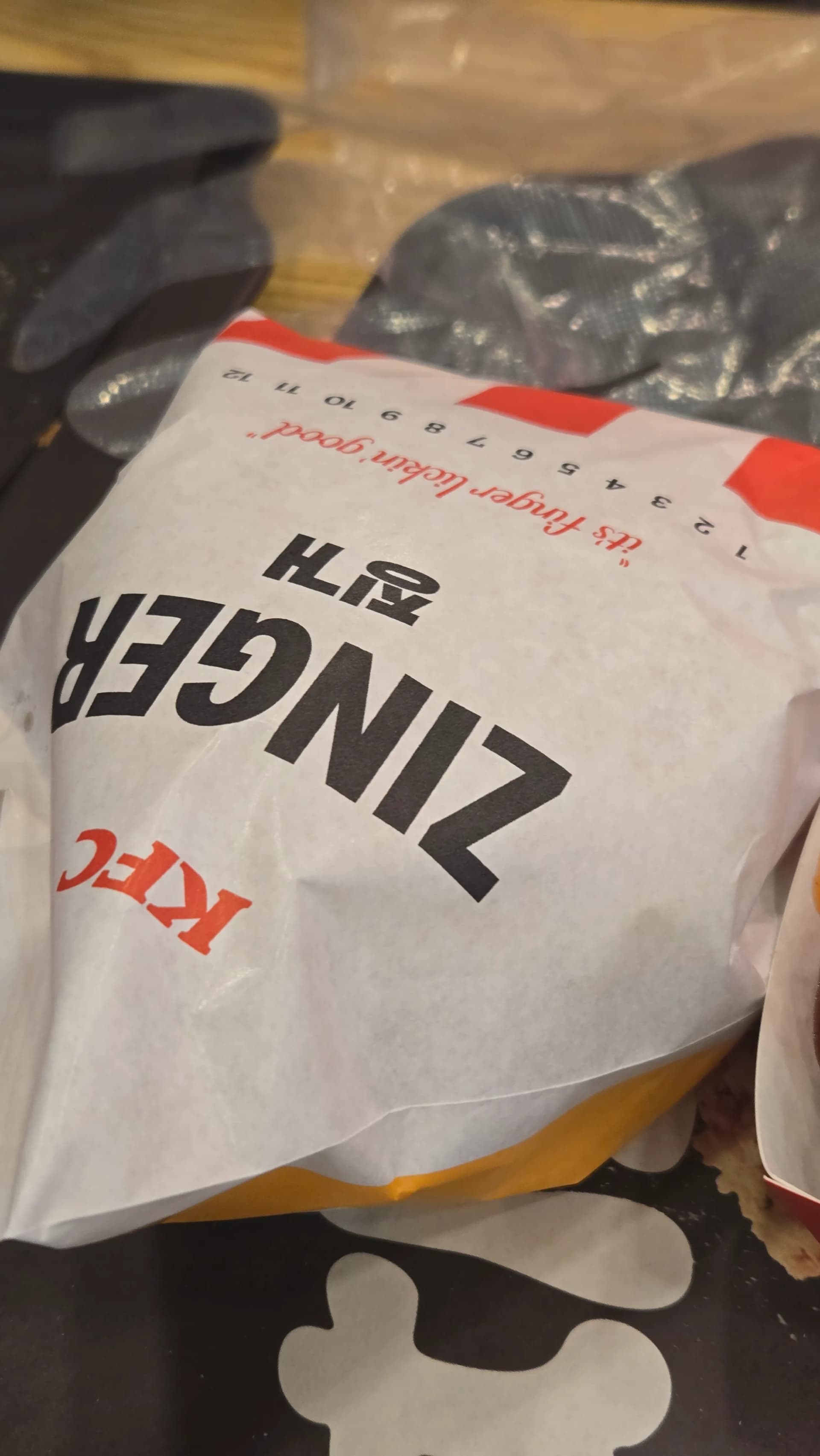
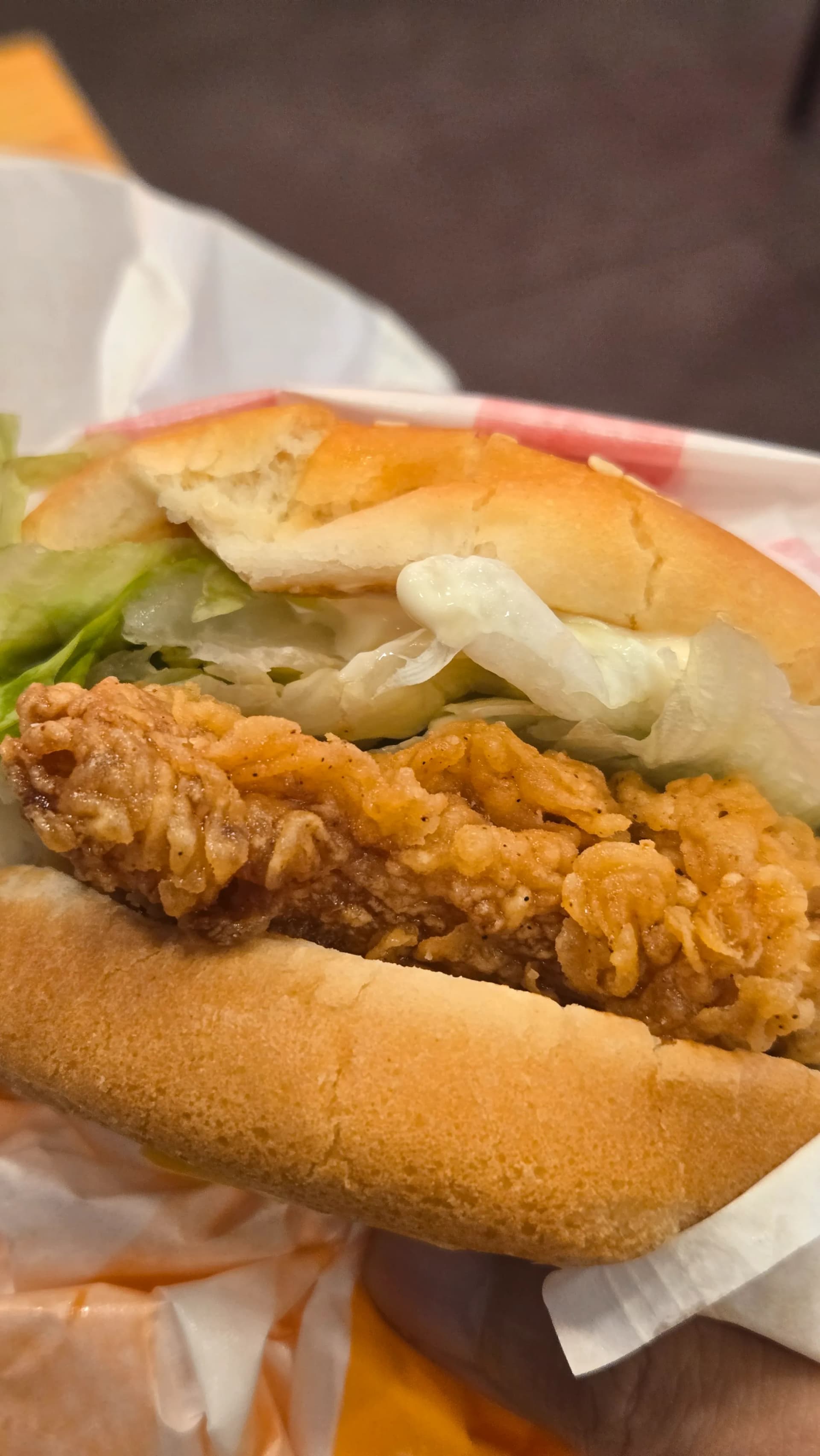
The Zinger Burger. The wrapper has "ZINGER" printed in big letters so you know exactly what it is. Unwrap it and you've got a crispy chicken patty, lettuce, and mayo — pretty straightforward. This one was also a letdown, though. I bit into it right away and it was barely warm. The patty was cooked through, but the temperature was lukewarm at best — felt like it had been sitting around. It's probably because it was the middle of the night and there weren't many orders coming in. If I'd gotten a freshly assembled one during peak hours, it would've been a totally different story. But hey, I paid 1,000 won ($0.70) through a promo, so I wasn't about to complain.
You Have to Clean Up After Yourself at Korean Fast Food Restaurants
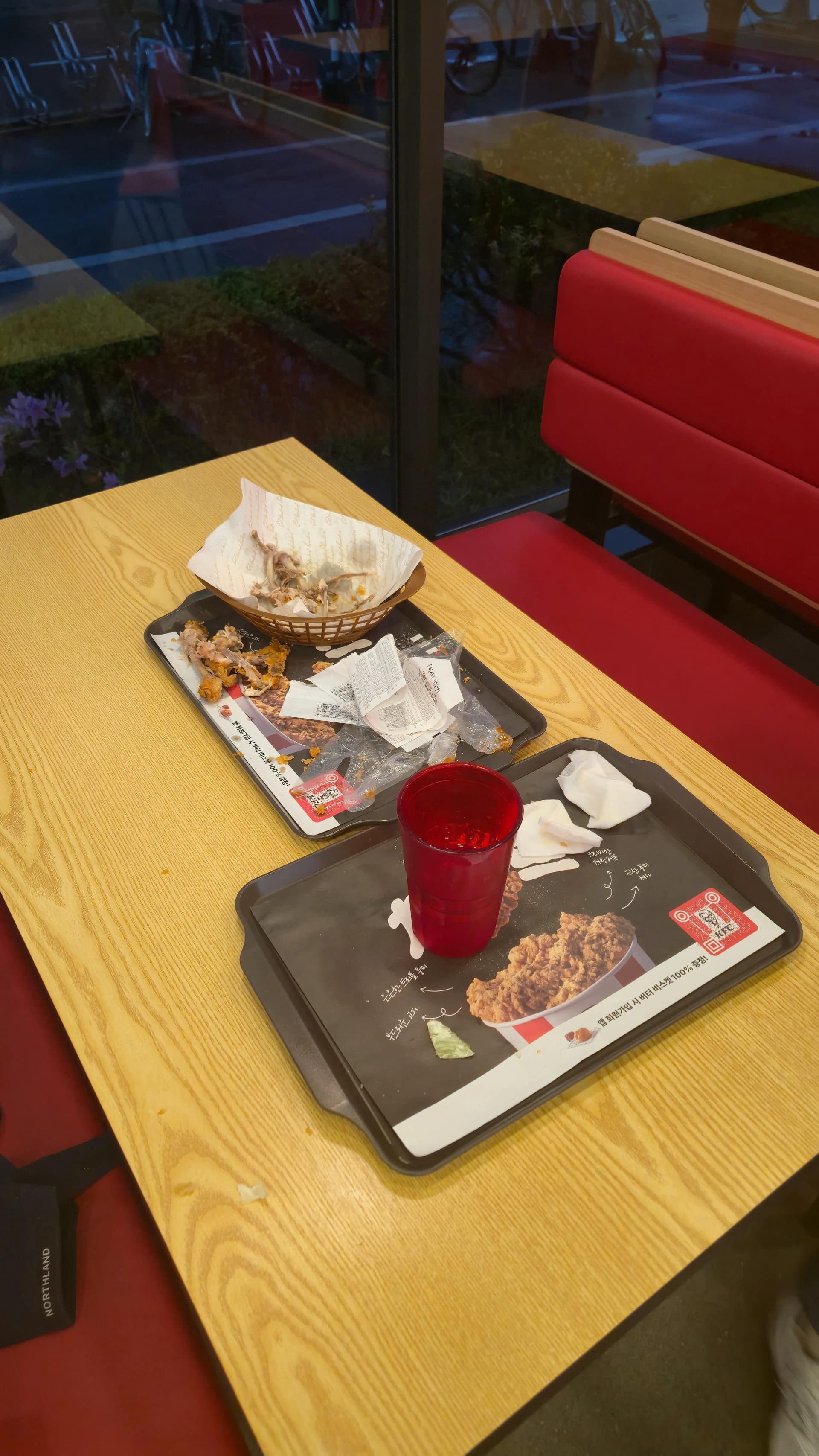
Don't just get up and leave when you're done
At fast food restaurants in Korea, you're expected to clean up after yourself. Grab your tray, dump food scraps into the food waste bin, toss paper items in the general trash, and place your tray on the return shelf. If you just leave your mess behind, you'll get some serious side-eye from everyone around you. This rule applies everywhere — not just KFC, but also McDonald's, Burger King, Lotteria (a Korean fast food chain), food courts, cafés, and any other self-service spot.
Looking at our tray with nothing but bones on it was oddly satisfying. Between the two of us, we'd demolished 5 pieces of fried chicken, Gat-Yangnyeom Chicken, a Zinger Burger, and Truffle Chirr Fries. It was still dark outside but our stomachs were completely full — all that was left to do was drive home and pass out.
How the Customer Cleanup Station Works
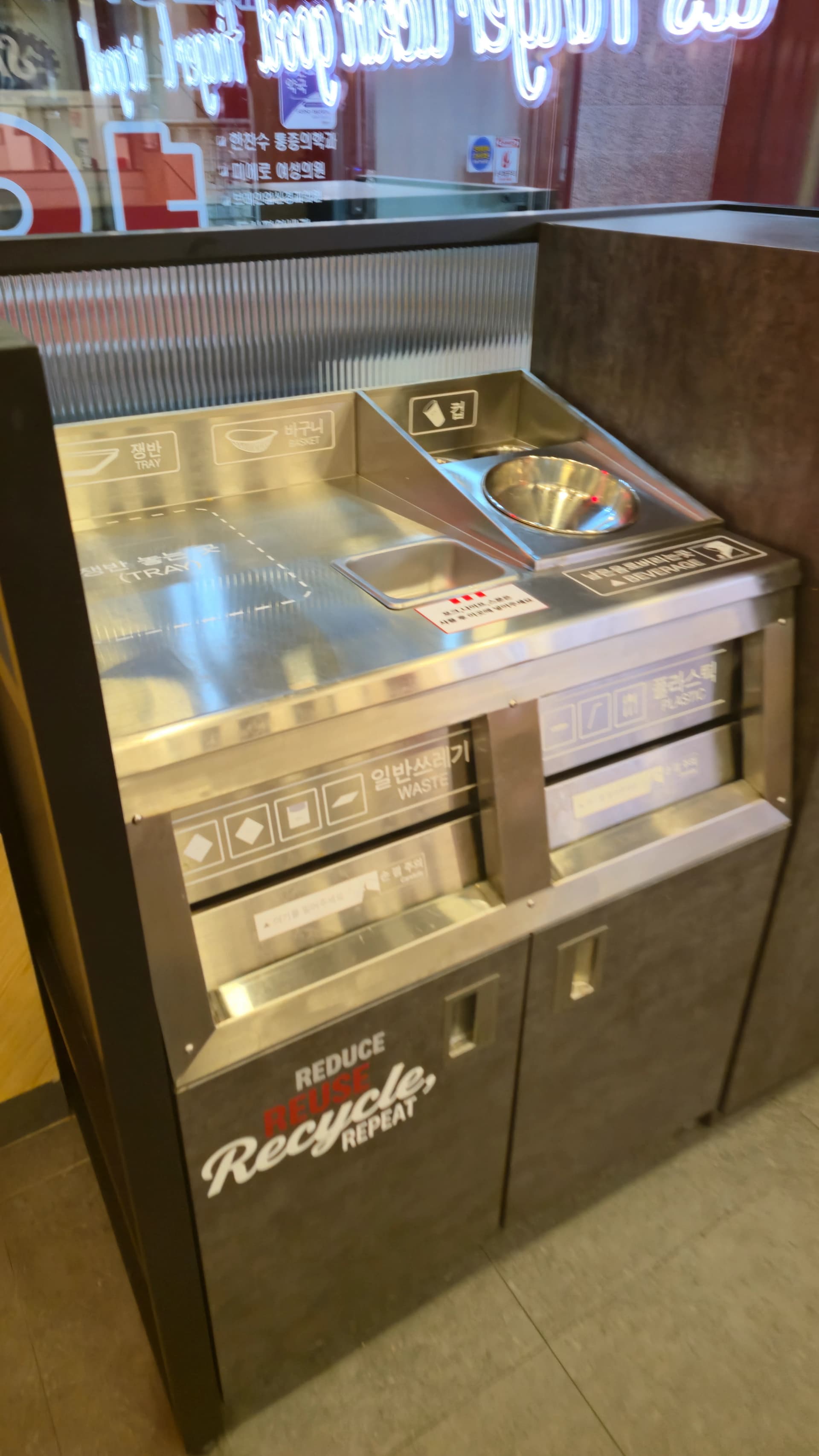
This is the customer cleanup station. You place your tray on the wide shelf to the left, dump leftover food scraps into the center hole, and slot cups into the right side. Underneath, there are separate bins for general waste and recyclable plastics. Every location looks slightly different, but the basic layout is pretty much the same across the board. In Korean fast food restaurants, staff don't come clear your table — customers bring everything here and sort it themselves.
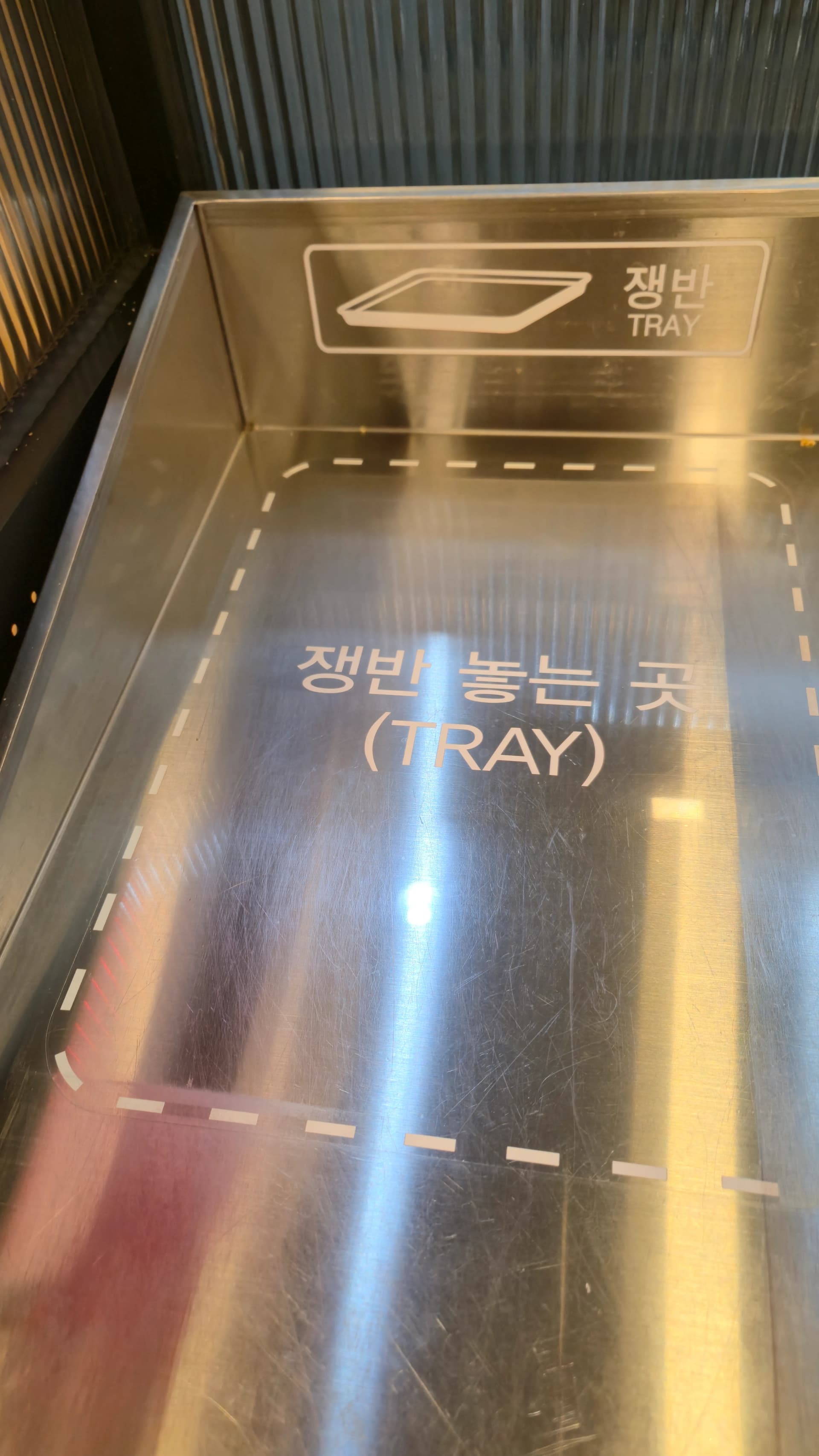
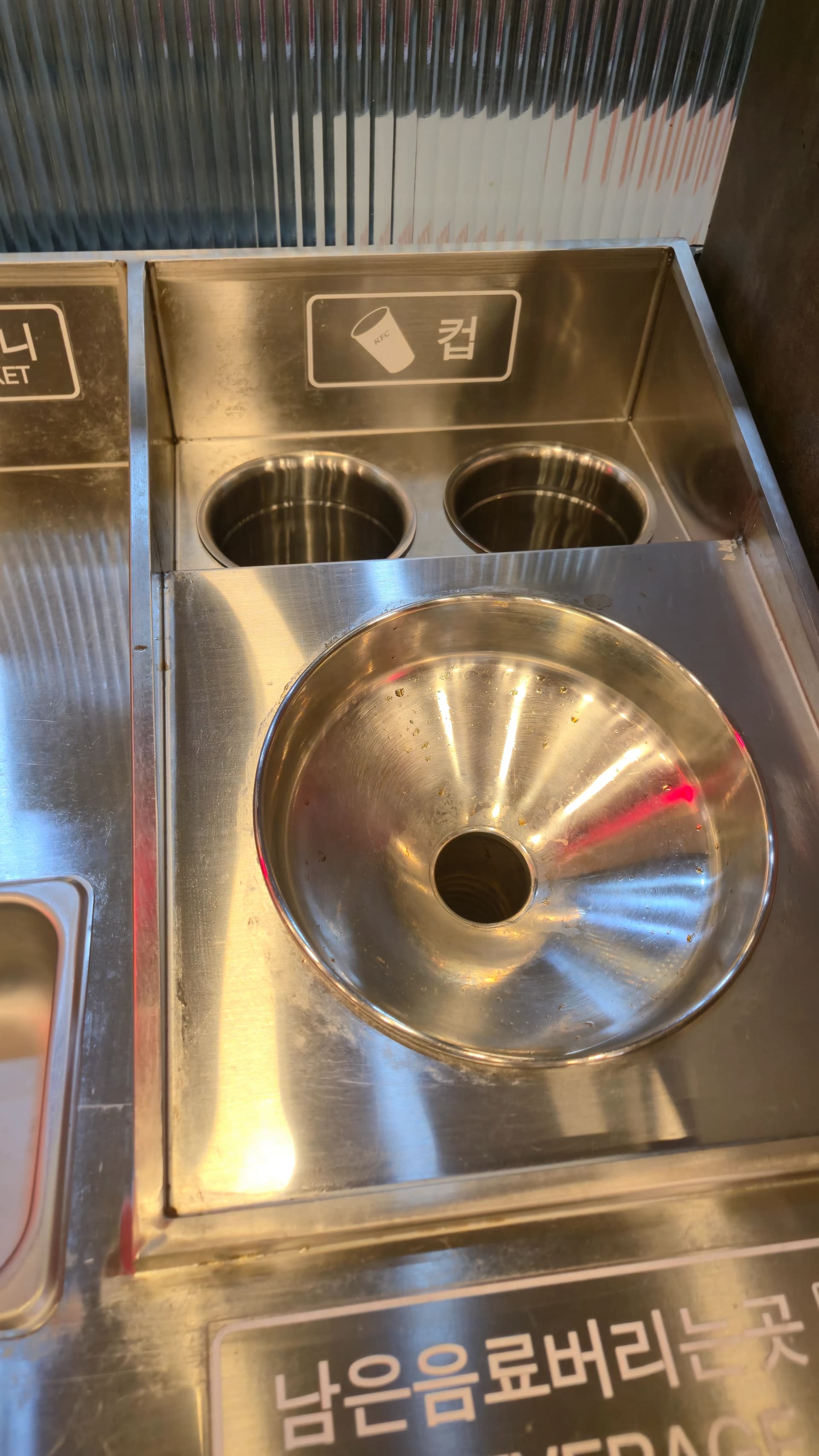
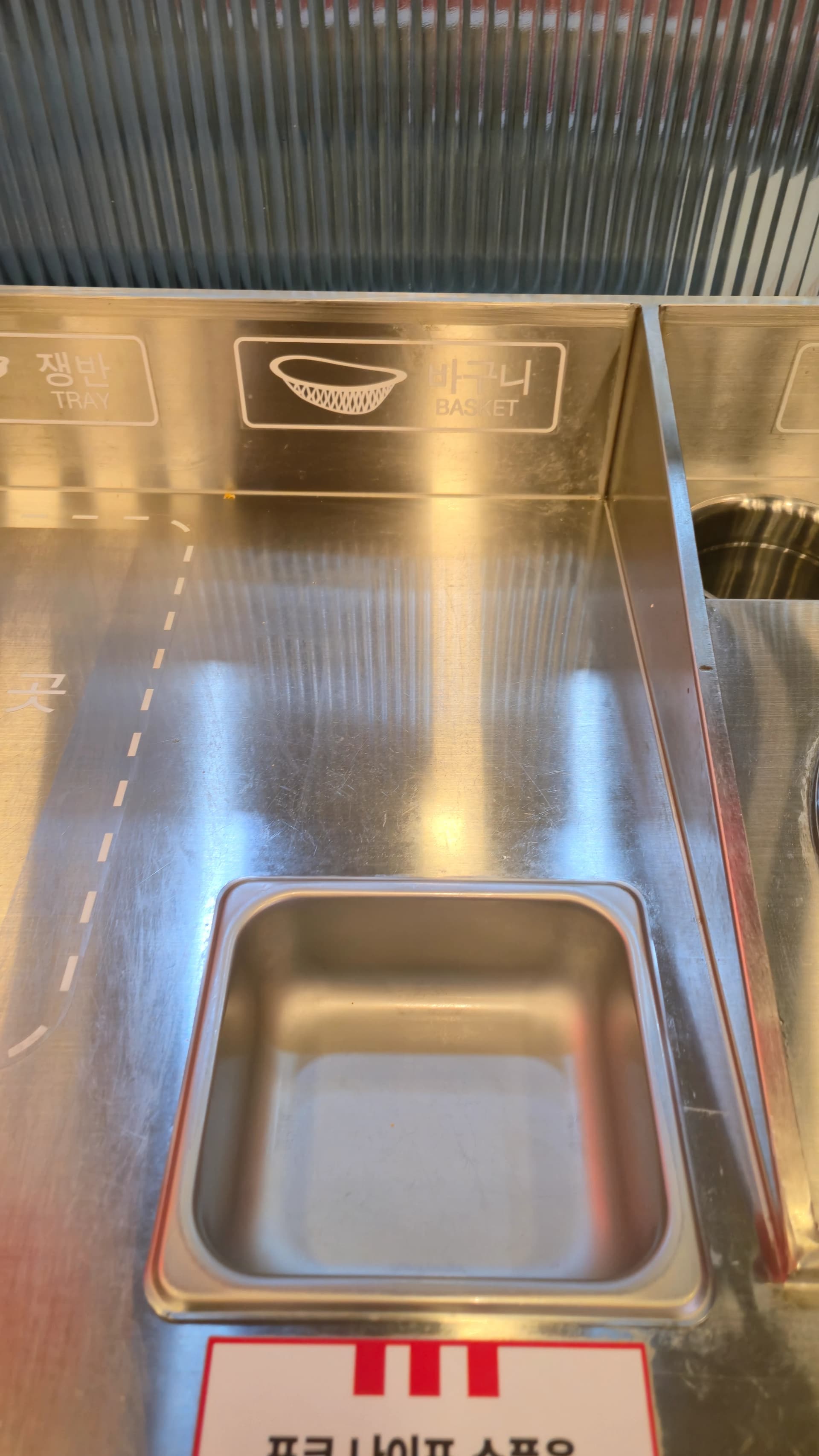
Each slot is clearly labeled with what goes where. "Tray," "Cup," "Leftover Drink Disposal," "Basket" — all written in Korean with English translations right next to them. Even if you can't read Korean, pictograms are included, so you'll figure it out the second you walk up to it.
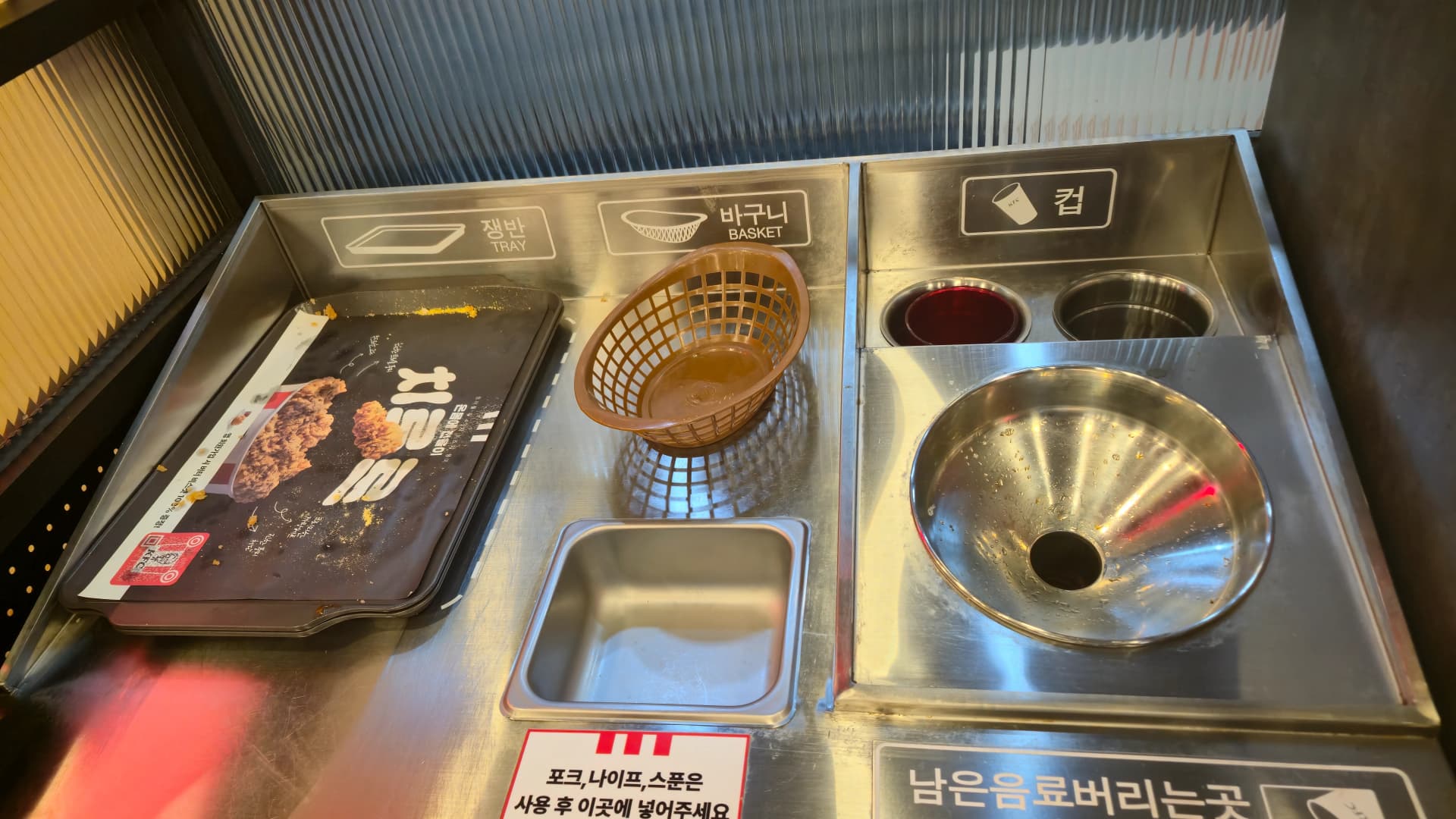
And this is what it looks like when you're done. Tray on the left, basket in the middle, red cup in the cup slot on the right. Takes about ten seconds.
Everything I Ate, Summed Up
Here's the rundown. Hot Crispy Chicken 5 pieces was 16,800 won (about $12) — spicy, crunchy, and easily the most satisfying item on the Korean KFC menu. Truffle Chirr Fries were 2,600 won ($1.90) — the seasoning alone was enough, no ketchup needed. Gat-Yangnyeom boneless chicken was 3,800 won ($2.75), but the sweet sauce was overpowering, and I probably won't order it again. The Zinger Burger was just 1,000 won ($0.70) thanks to the promo, so no loss there, but the lukewarm temperature at that hour was disappointing. I'll give it another shot during the daytime before making a final call.
We drove out in the middle of the night, ate Korean fried chicken, cleaned up our table, and headed home — zero regrets. If you're ever curious about Korean KFC, just walk up to the kiosk. It supports English, Japanese, and Chinese, and all you need is your phone to order and pay. All prices listed here are from April 2026.
This post was originally published on https://hi-jsb.blog.