Korean Convenience Store Lunchbox: A$6 GS25 Review
Table of Contents
14 items
Day Off, Empty Fridge, Properly Starving
Spring 2026 — the missus was at work and I had the day off. Slept in, woke up well past lunchtime absolutely starving, and the thought of actually cooking something? Yeah, nah. Cracked the fridge open and predictably there was bugger all in there. Days like this, a Korean convenience store lunchbox is the answer. Korea's got convenience stores on basically every corner — chuck on a pair of thongs and you'll find one within five minutes. So I shuffled down to the GS25 across the road from my place in Daejeon and grabbed a Hyejaroun Tongtong Soya & Soy Bulgogi lunchbox. Planning to throw up the odd convenience store food post when I'm eating solo like this — not every time, but here and there. This is the first one.
Cracking Open the Packaging
Before I peel off the label, here's what the packaging looks like.
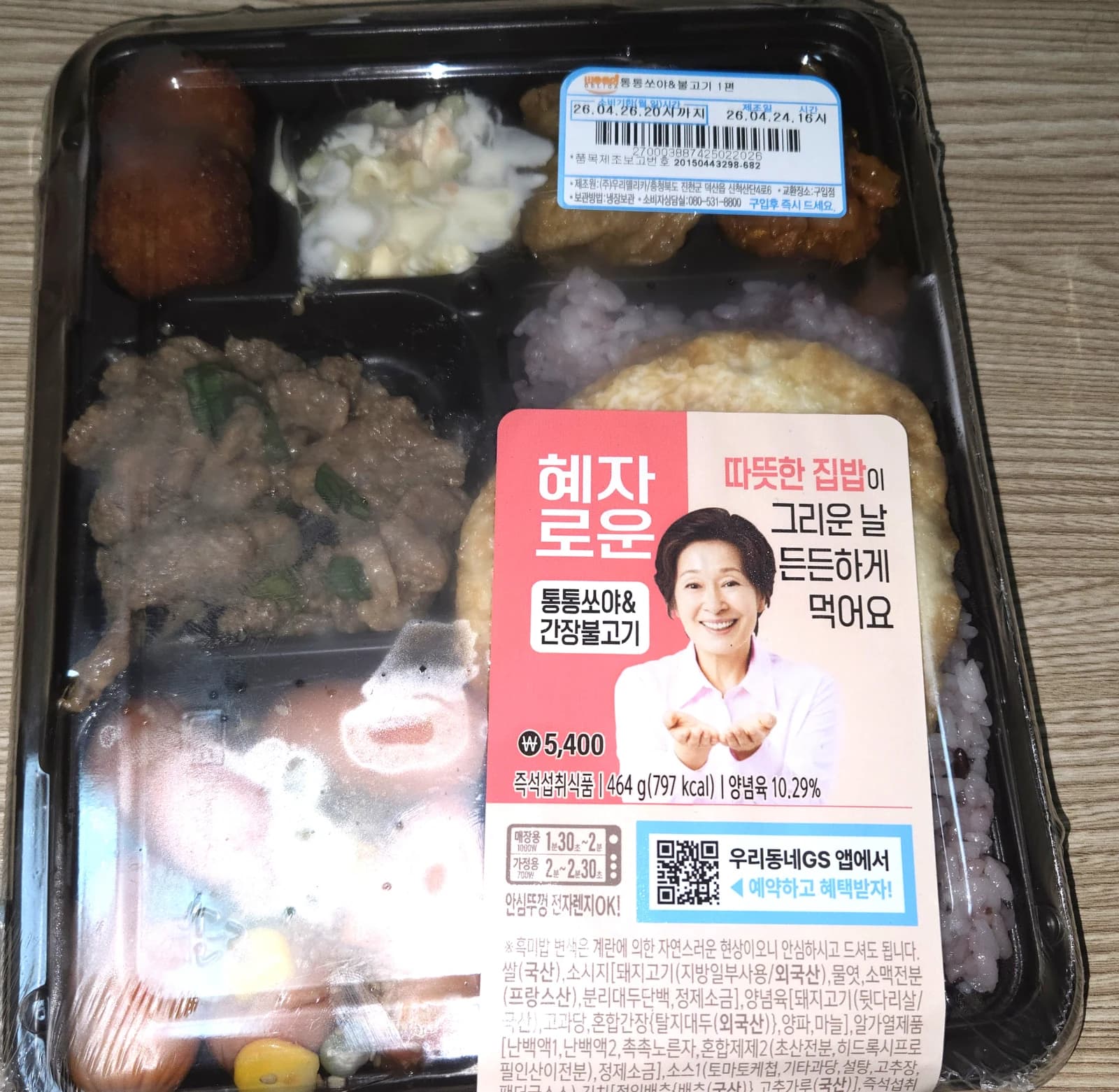
Black plastic tray divided into compartments with the sides slotted into each one, and a label slapped on the front featuring the face of Kim Hye-ja, a famous Korean actress. The Korean word "hyejaroun" has come to mean "great value" — it got coined off her name because she fronted a budget lunchbox campaign years back. This series is GS25's flagship lunchbox lineup with dozens of varieties, and pretty much every Korean knows it.
The label says "On days you miss a hot home-cooked meal, fill up on this" — which felt a bit cheeky reading at the counter on my day off home alone. Price was 5,400 won (about A$6) and it weighs 464g, packing 797 calories. That's pretty hefty for a convenience store lunchbox. Microwave times are printed on the label too — 700W home microwave, 2 to 2½ minutes, lid stays on. No transferring to a separate plate, just whack it in. Can't overstate how much of a win that is when you can't be stuffed.
Quick tip though — anything meant to be eaten cold, like the macaroni salad, should come out before you nuke it. This lunchbox doesn't have a separate cold compartment so I just heated the whole thing and the macaroni salad went lukewarm and weird. Next time I'll spoon it out first.
Use-By Date and How Korean Convenience Stores Manage Stock
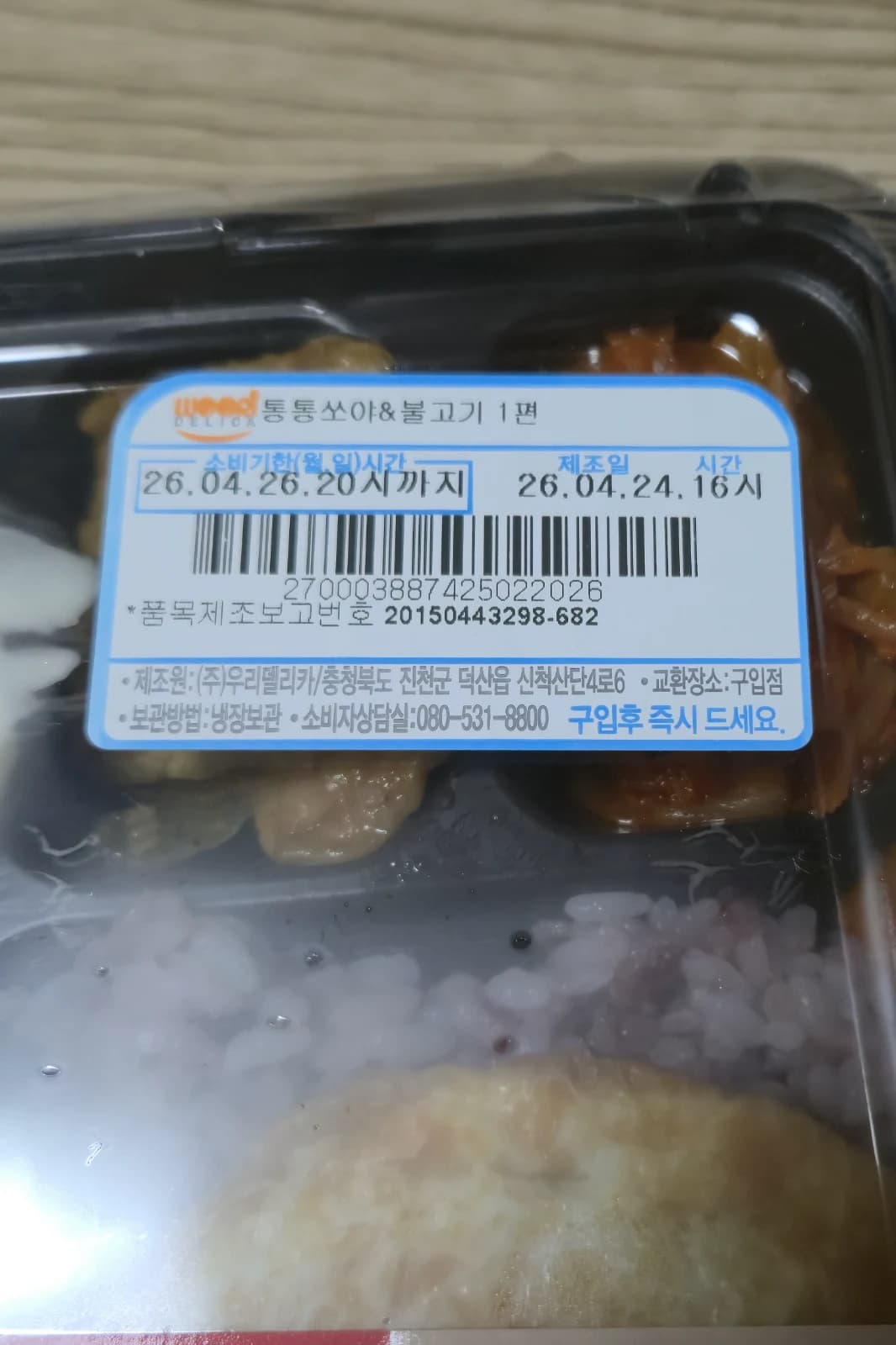
There's a second blue label stuck on top showing the manufacture date and use-by date. This one was made on April 24th at 4pm, with a use-by of 8pm on April 26th — about two days of leeway. Here's the thing though: this isn't just a guideline. Once that date passes, scanning the barcode at the till physically blocks the sale from going through. Even if the staff member wanted to sell it, the system shuts it down. Korean convenience stores manage all their fresh stuff — lunchboxes, triangle kimbap, sandwiches — this way, so if it's on the shelf, it's still in date. First-timers don't need to stress about freshness.
How to Eat It Inside the Convenience Store
Most Korean convenience stores have a microwave inside the shop. Buy a lunchbox and you can heat it up right there — not by asking the cashier, you do it yourself. There's chopsticks and spoons next to the microwave, and a fair few stores have tables where you can sit down and eat. Some don't, but I reckon over half do. Eating inside the store doesn't cost you anything — no service charge, no seating fee. Buy your stuff, eat, clean up after yourself, leave.
One more thing — Korea has rules around single-use plastics so they don't hand out cutlery for everything, but if you buy a lunchbox or cup noodle or any packaged ready-meal, chopsticks and a spoon are sorted. If they don't chuck them in the bag, just ask at the counter. I took mine home this time, but you can absolutely sort yourself out in the store if you're in a rush.
Lid Off — What's Inside
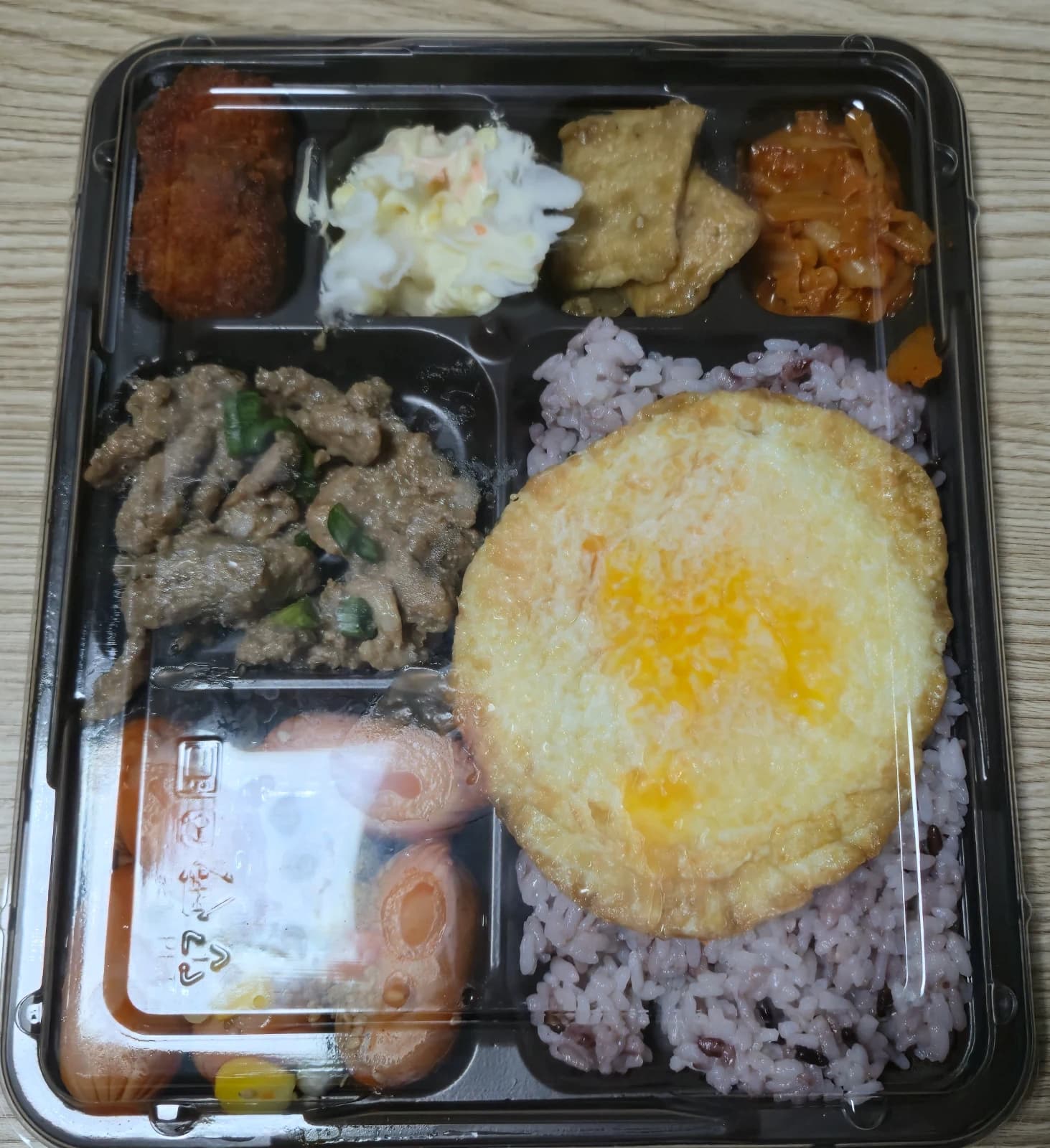
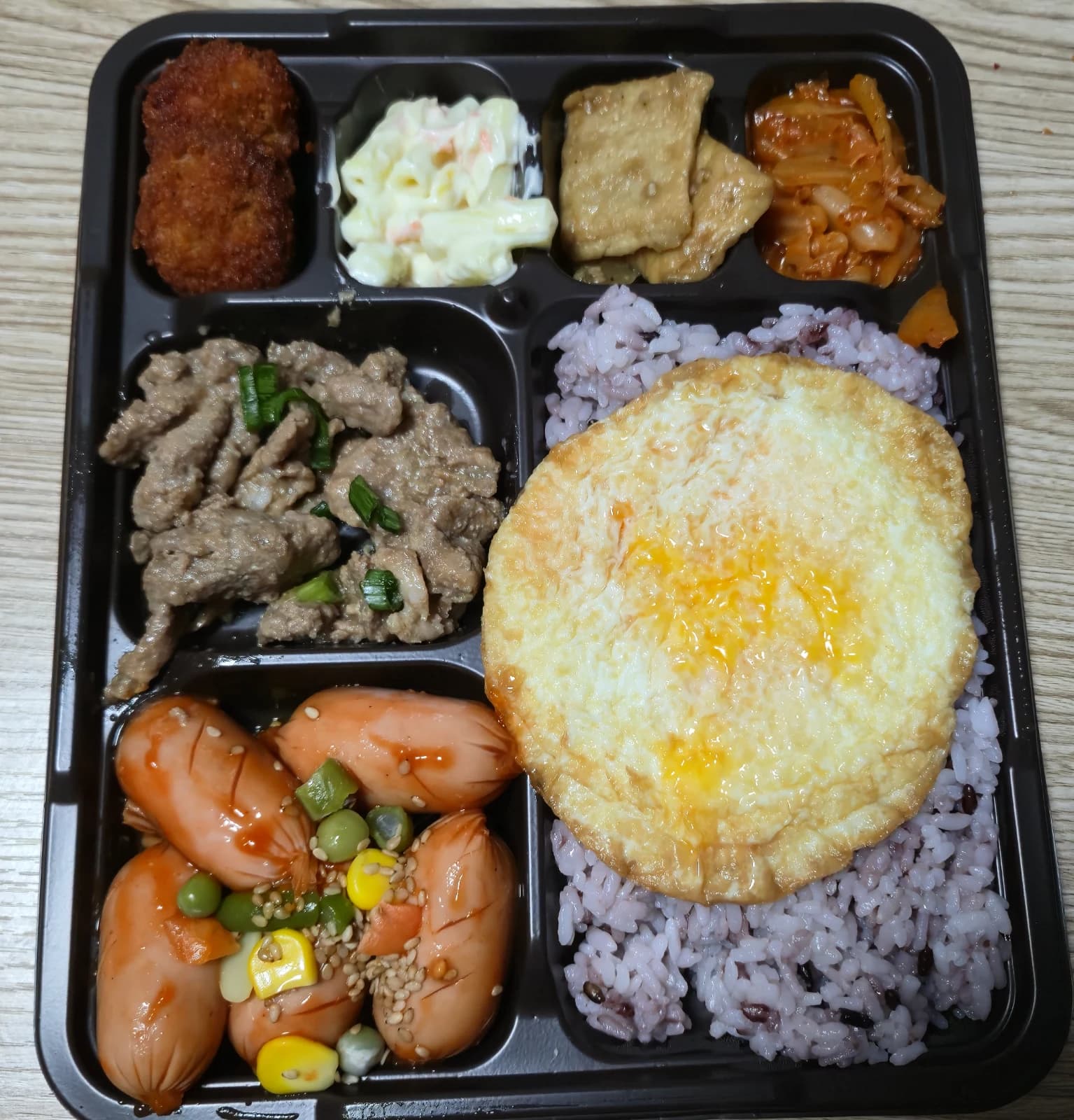
Label off, lid off, and here's what we've got. Big compartment on the right with black rice as the base and a round fried egg plonked on top. Left side has soy bulgogi with spring onion, and below that is the tongtong soya — basically stir-fried sausages with corn and peas mixed through. Up top in the smaller compartments there's a fried cutlet, macaroni salad, eomuk (fish cake) stir-fry, and kimchi. For an A$6 lunchbox, every compartment is full. Let me walk you through how each one tasted.
Going Through the Sides One by One
Tongtong Soya — Sausages in Ketchup Sauce
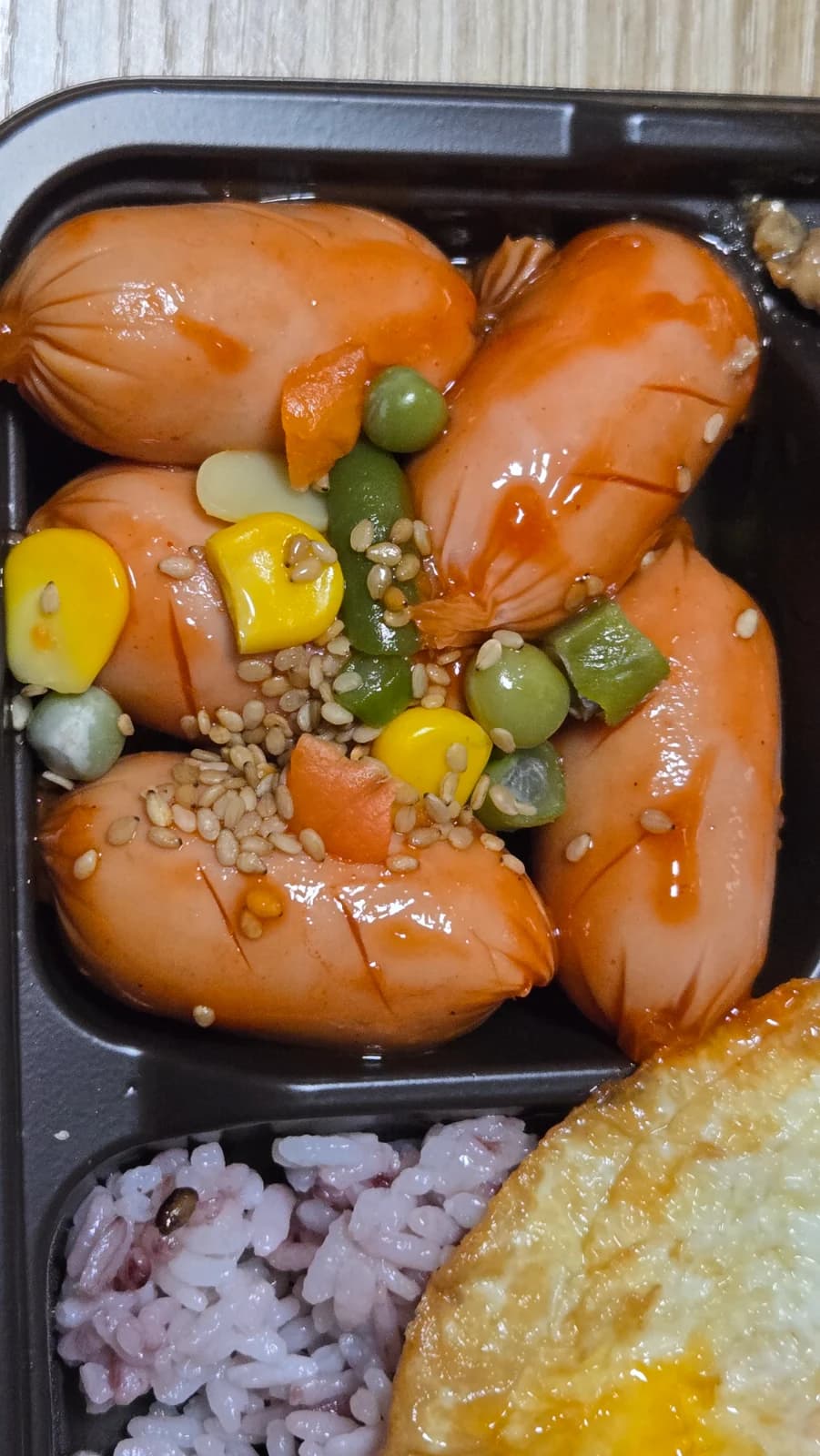
"Tongtong soya" basically means "plump sausage stir-fry." Up close you can see five little Vienna sausages tossed in a ketchup-based sauce with corn, peas and sesame seeds scattered over the top. The name has "soya" in it so I assumed it'd be a soy-based thing, but no — it's straight-up ketchup flavour. Sweet with a tiny bit of tang. The sausages themselves had that snappy skin where they go pop when you bite in. Honestly more of a beer snack than a proper rice side — a touch too sweet to pair with rice — but you keep reaching for them. Hard to stop at one.
Soy Bulgogi — Always Tastes Exactly the Same
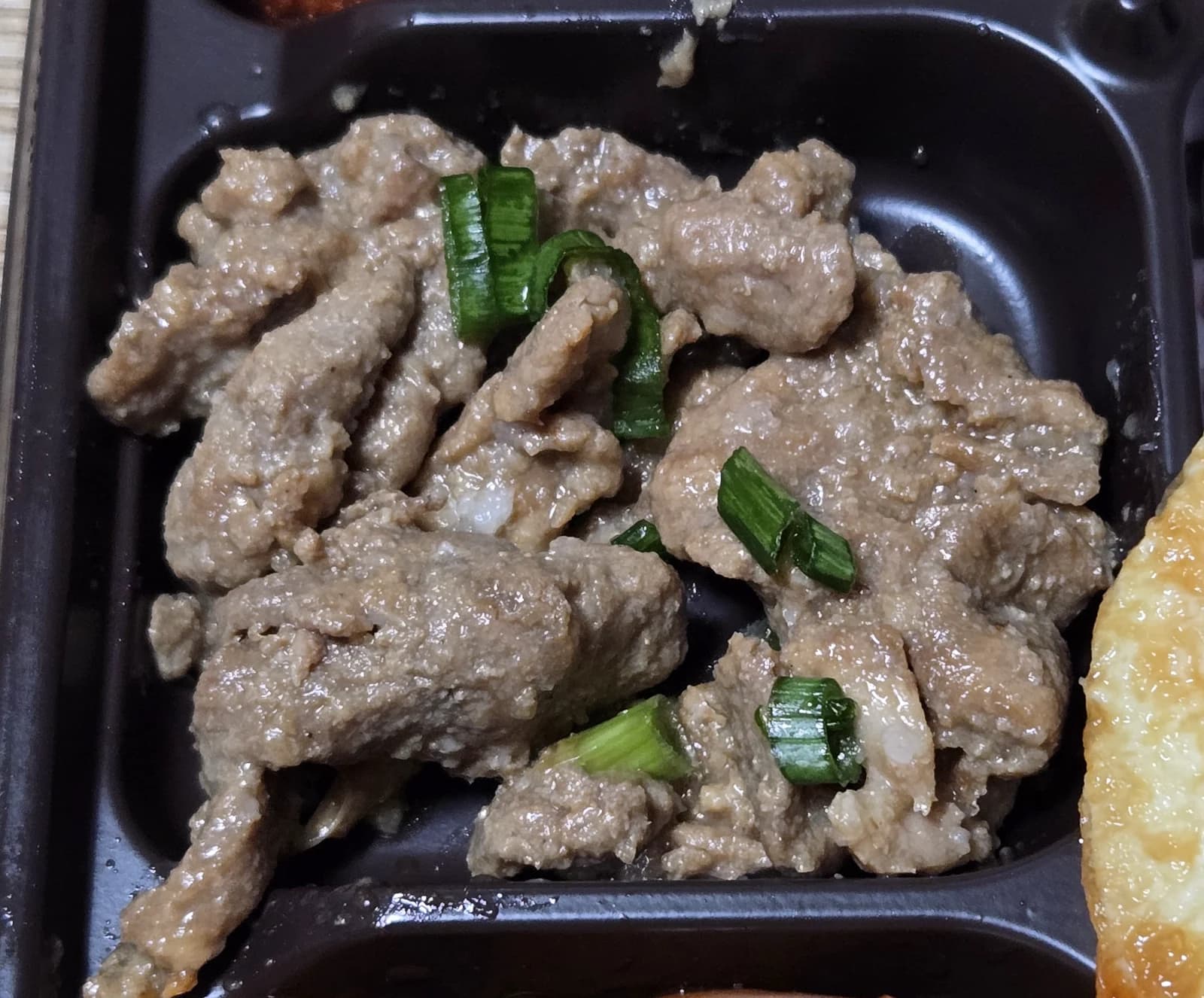
The soy bulgogi is pork marinated in a soy-based sauce and stir-fried, with chopped spring onion sprinkled on top. After microwaving, the meat had gone properly tender. Goes well piled onto rice as the main protein hit. The funny thing is, no matter which Korean convenience store you buy this from, it always tastes exactly the same. Bulgogi at home? Different every time depending on how heavy-handed you are with the soy sauce. This one? The version I ate last year and the one I ate today are identical down to the gram. Pure factory-grade consistency. Not bad-tasting, just zero surprises. Quantity is also smaller than the photo suggests — there's plenty of rice but the meat runs out first, so I had to ration it from the start.
The Fried Cutlet — Honestly Not Great
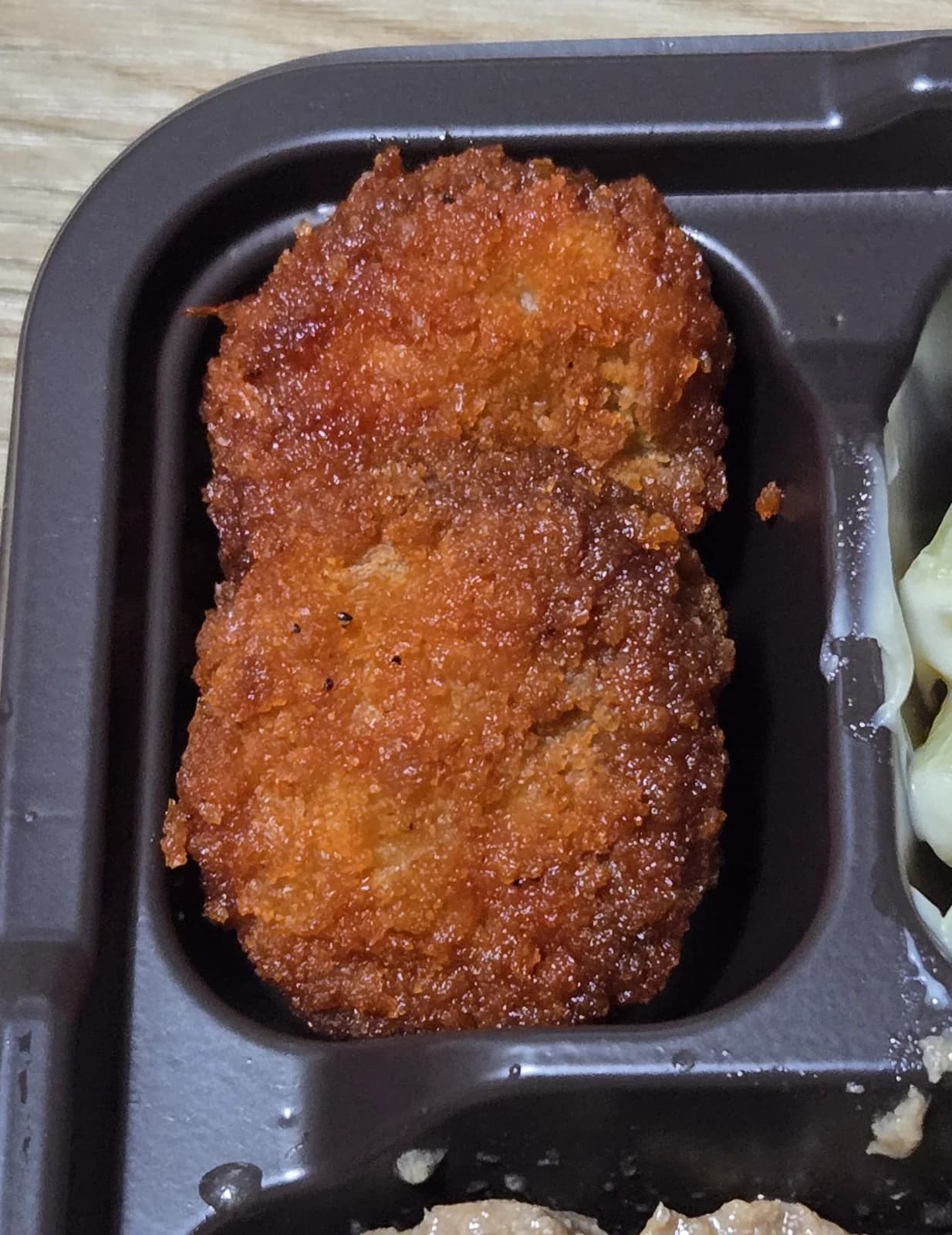
Not 100% sure what this is, but it looks like menchikatsu — minced meat coated in breadcrumbs and fried. Probably added during a recent menu refresh. Honestly, it was a let-down. Pretending to be crispy on the outside but soggy after a microwave session, and the meat inside was just chewy without much going for it flavour-wise. Could've been left out of the lunchbox and I reckon nobody would miss it.
Macaroni Salad, Fish Cake Stir-Fry, Stir-Fried Kimchi
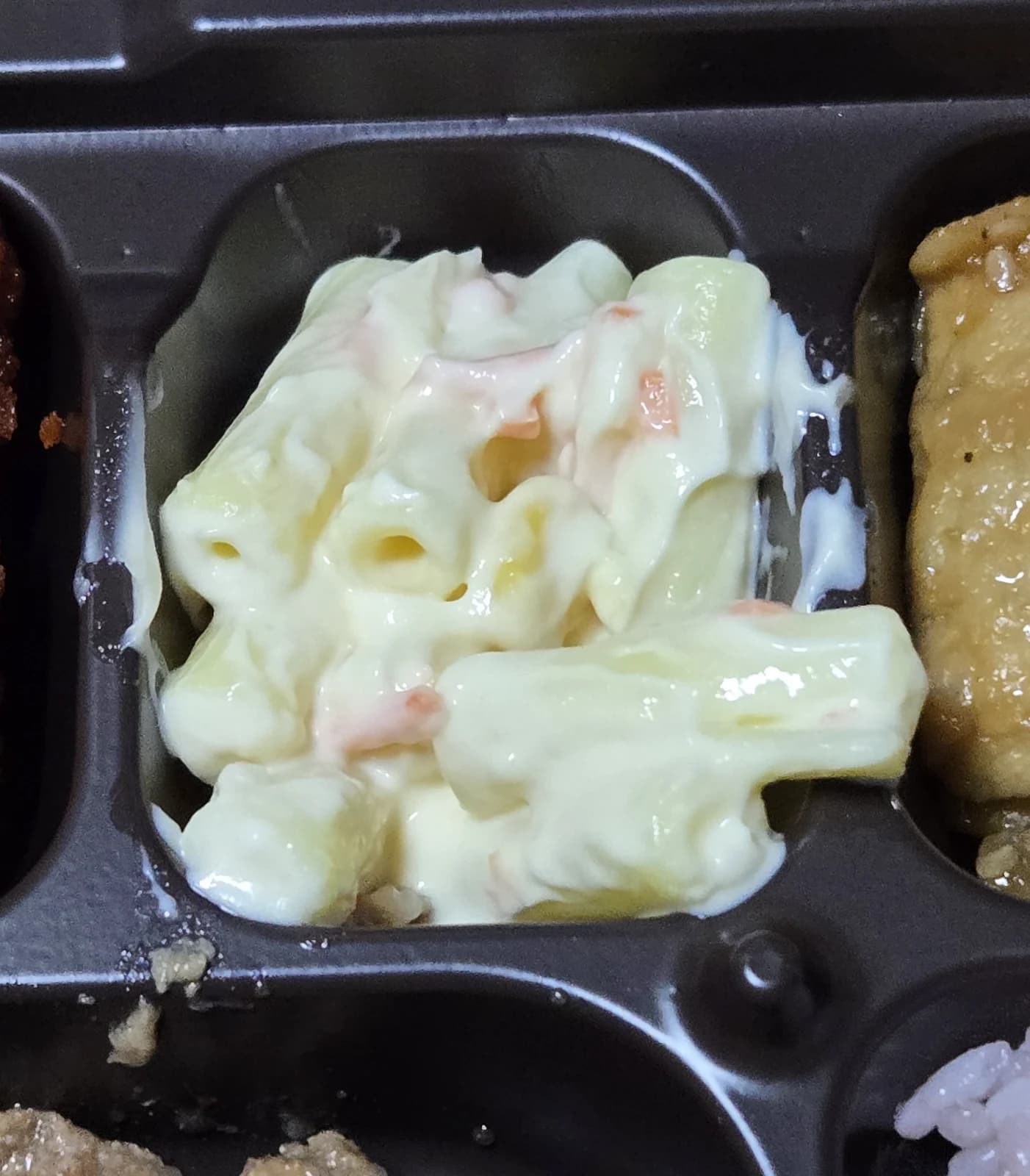
Macaroni salad. Mayo-coated macaroni with bits of crab stick and carrot mixed through. Like I mentioned earlier, I made the rookie mistake of nuking the whole tray, so this went lukewarm and a bit ordinary. Still, it does its job of cleansing the palate between the heavier savoury bits. Only a couple of spoonfuls' worth.
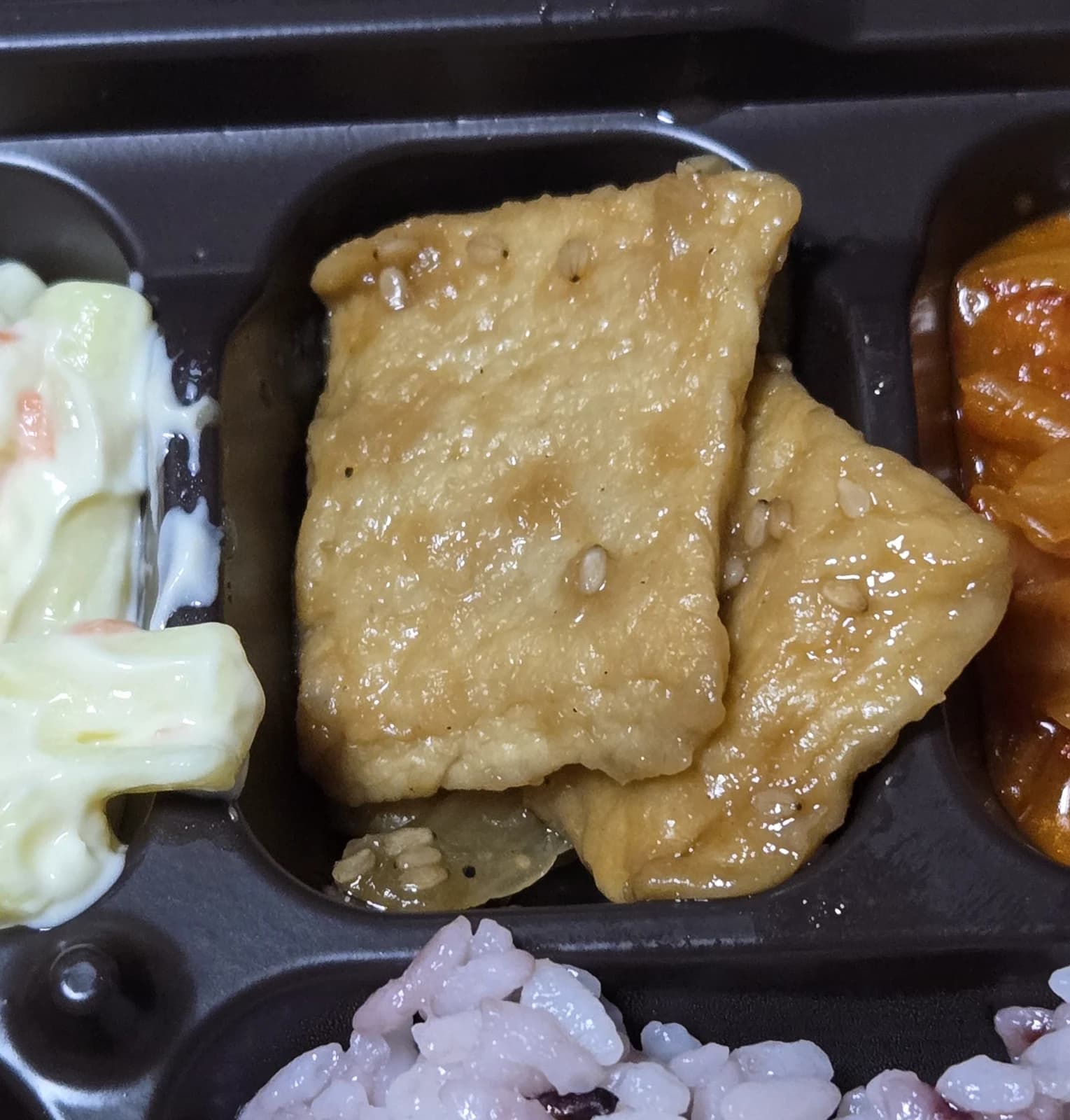
Eomuk stir-fry — two flat squares of Korean fish cake glazed in a soy-based sauce with sesame seeds. Eomuk is a processed food made by mashing fish flesh into a paste and forming it into sheets, and Koreans use it constantly in side dishes and broths. The flavour leans slightly sweet, which actually balances out the saltier sides. Problem is, two pieces means it's gone in two bites. Wanted more.
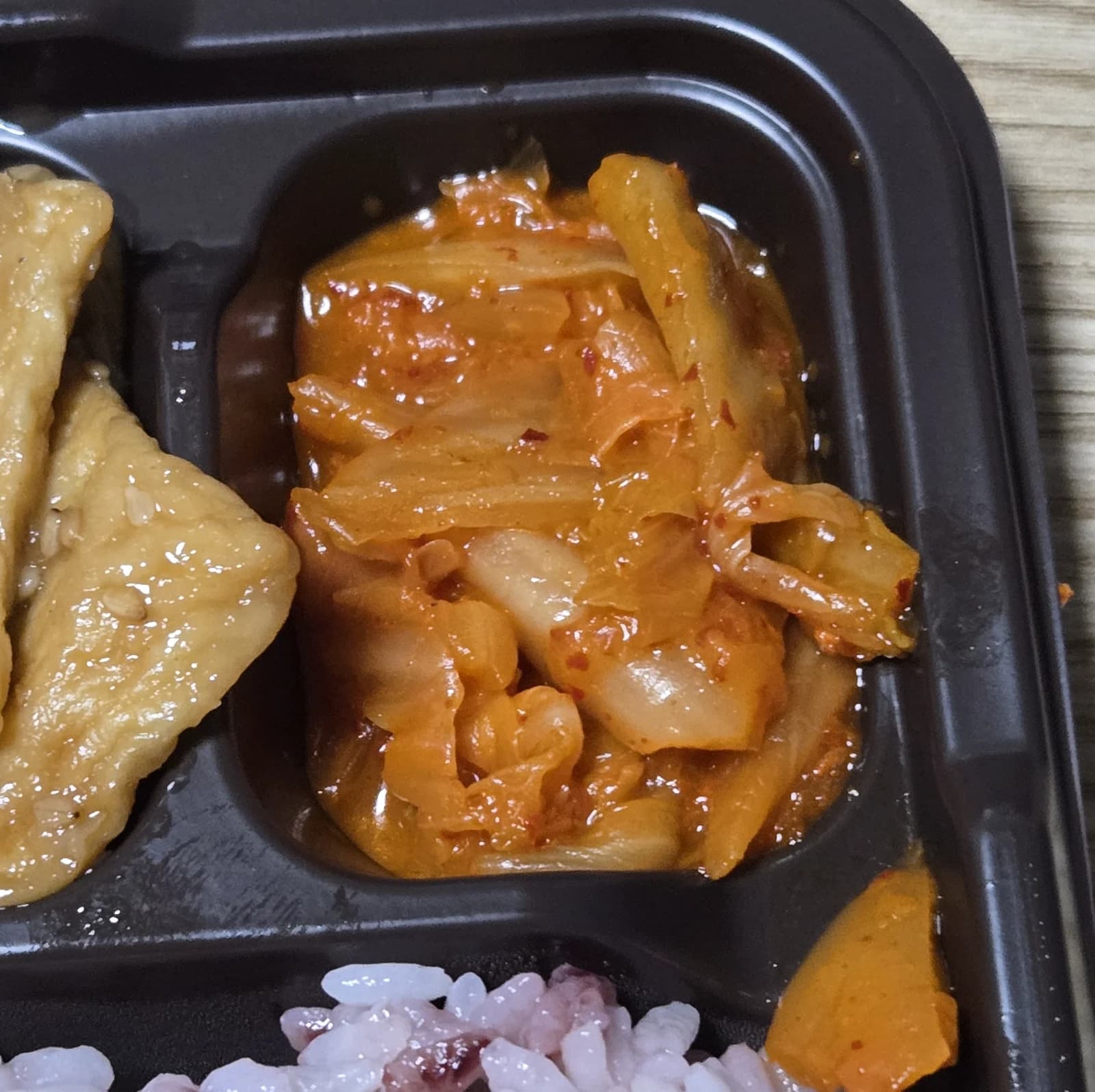
Bokkeumkimchi — stir-fried kimchi. Personally my favourite side in the whole lunchbox. Aged kimchi pan-fried in oil until the cabbage softens, and when you mix it through the rice it's genuinely brilliant. Sausages sweet, bulgogi sweet, fish cake sweet — this lunchbox leans heavy on sweet flavours overall. The stir-fried kimchi cuts through with a spicy kick and stops it getting boring before you finish.
Fried Egg and Black Rice
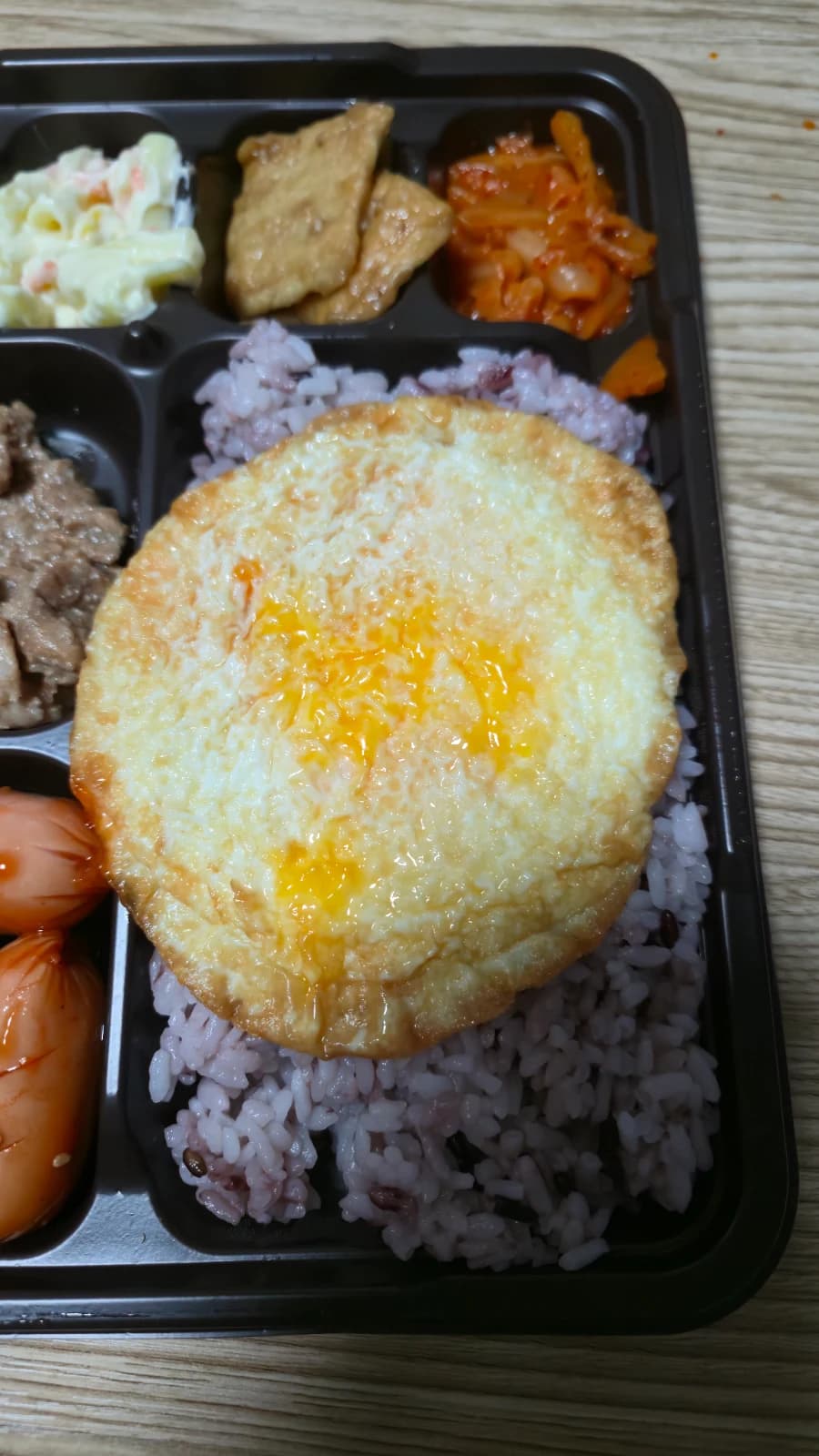
A round fried egg sits right on top of the black rice. It's basically the symbol of the Hyejaroun lunchbox series. Not fully cooked through, but not runny either — somewhere right in the middle. The yolk's still got a touch of moisture to it, which I reckon is the perfect doneness. Mix it through the rice and the yolk coats every grain, gives it this nutty richness.
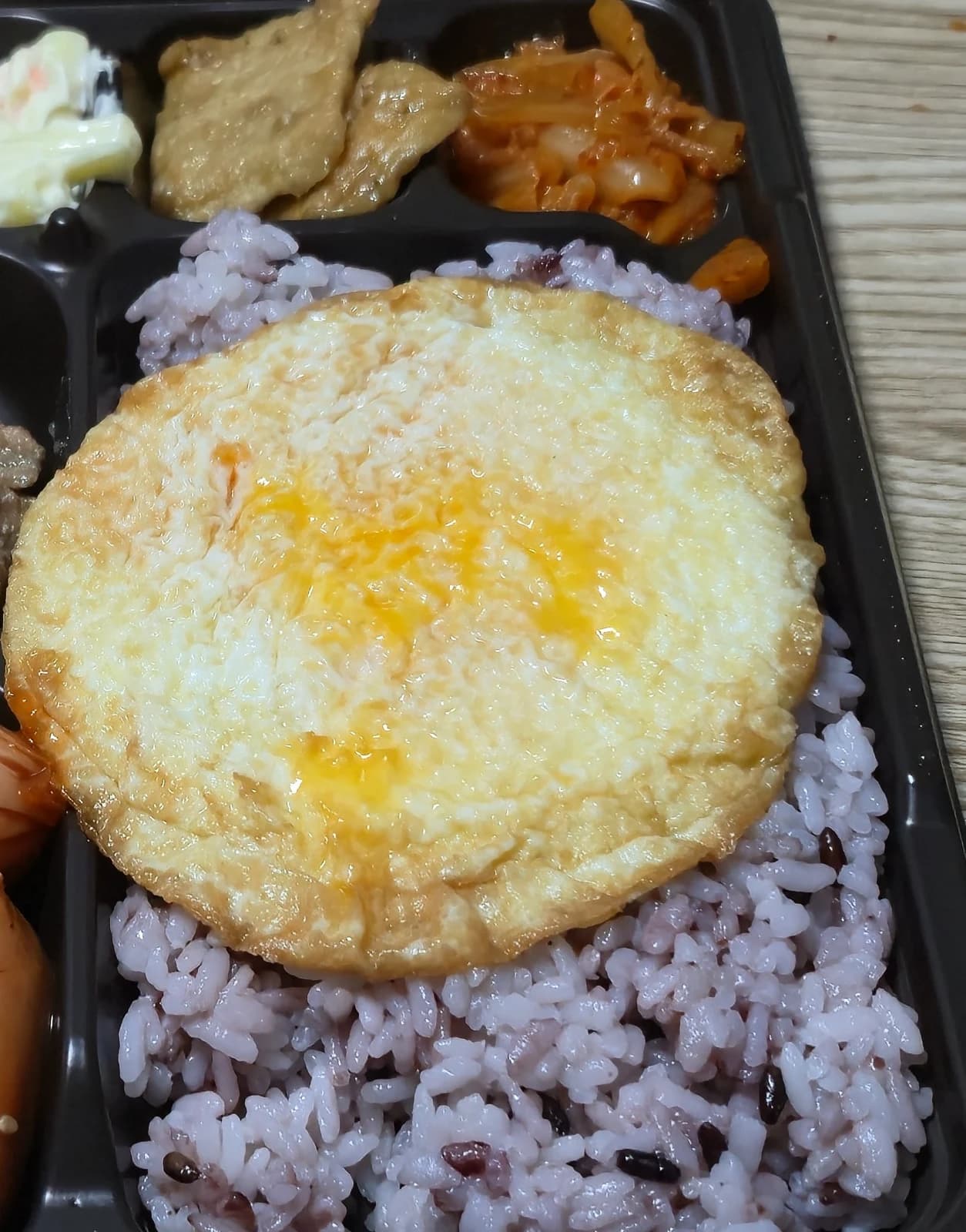
The rice is heuk-mi — black rice. Heuk-mi is a black-coloured grain that turns the rice a soft purple when mixed with white rice. The colour weirdly makes you hungrier. Texture-wise it's not mushy at all — slightly chewy, with proper bite. Convenience store rice that's gone too soft turns to mush the second you mix it with the sides. This stayed firm grain by grain, so whether I was piling bulgogi on top or mixing in stir-fried kimchi, the rice held its own. Apparently black rice is more nutritious than white rice too, but forget the health angle — the rice itself just has a nutty flavour to it.
Is A$6 Cheap or Pricey?
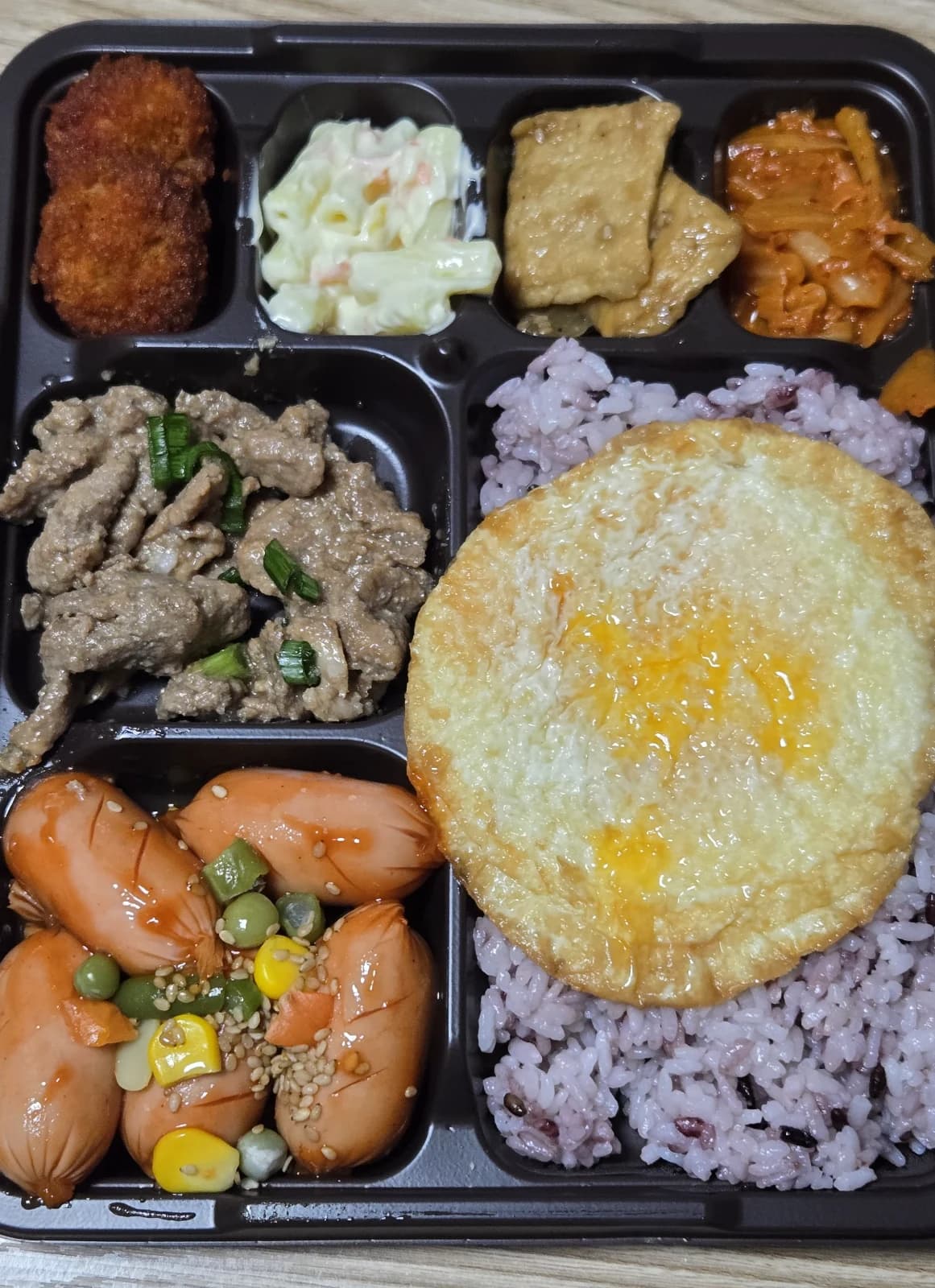
Looking at the whole thing again: soy bulgogi, tongtong soya, fried cutlet, macaroni salad, eomuk stir-fry, stir-fried kimchi, fried egg, black rice. Eight compartments, every single one filled. Overall it leaned a bit salty though. The bulgogi's soy-based, the eomuk's soy-based, the sausages are ketchup-sweet — it's a sweet-and-salty rotation, and without that stir-fried kimchi I reckon it would've felt repetitive.
Cost of living's gone through the roof here lately. A roll of kimbap at the pricier joints is now 3,000 won (about A$3.30), and adding a single topping like tuna or cheese pushes it past 4,000 won. A bowl of ramyeon at a sit-down spot starts at 4,000 won (about A$4.40) minimum these days. Convenience stores are obviously cheaper than restaurants, but factoring all that in, A$6 for this much food isn't a bad deal at all.
Why Korean Convenience Store Lunchboxes Are a Bit Special
One thing I notice every time I eat one of these — the format of having rice in one compartment and three or four sides in their own little compartments doesn't really exist in convenience stores in other countries. In most places, "convenience store ready meal" means a sandwich, a wrap, or a single pasta dish. One main with one side is generous. Having a meat dish, a veg dish, kimchi, an egg, and rice all packed into one container is genuinely a Korean convenience store thing. Cramming this many separate items into a single A$6 meal still surprises me sometimes, even after living here a fair while.
The Missus's Reaction, and the Next Lunchbox
When the missus got home from work and asked what I'd had for dinner, I told her convenience store lunchbox, and she went "Why are you always eating that stuff?" She's eaten a fair few of them with me since coming to Korea and secretly likes them, but she always says this. Honestly though, A$6 for seven sides plus rice is more than enough for a solo feed. Wasn't a glamorous meal, but I was full, and for a day where I genuinely couldn't be bothered cooking, it was a solid call.
CU has the Paik Jong-won range, 7-Eleven runs their own lineup, so Korean convenience store lunchboxes are basically endless. Oh, that reminds me — GS25 has its own app called Our Neighbourhood GS where they drop discount coupons on lunchboxes pretty regularly. Forgot to check the app this time and paid full price, which was a bit of a shame. Next time I'm too lazy to cook, I'll check the coupons first and grab a different variety.