7 Sides for £2.80 — Korean Convenience Store Lunchbox
Table of Contents
14 items
Day off, empty fridge, absolutely starving
Spring 2026 — my wife had gone to work and I had the day off. I'd slept in ridiculously late, woken up well past lunchtime, and was absolutely famished. Cooking something from scratch? Couldn't be bothered. I opened the fridge knowing full well there'd be nothing in it, and sure enough, it was bare. Days like these are exactly what convenience store lunchboxes were invented for. In Korea, there are so many corner shops that you can shuffle out in your slippers and find one within five minutes. So that's precisely what I did — dragged myself to the GS25 near our flat in Daejeon (a mid-sized city south of Seoul) and grabbed a Hyejarowun Tongtong Soya & Soy Sauce Bulgogi lunchbox. I'm planning to write about Korean convenience store food now and again — not every week, just whenever I'm eating solo and can't be arsed to cook. This is the first one.
A look at the packaging
Before I tear into anything, let me show you the packaging first.
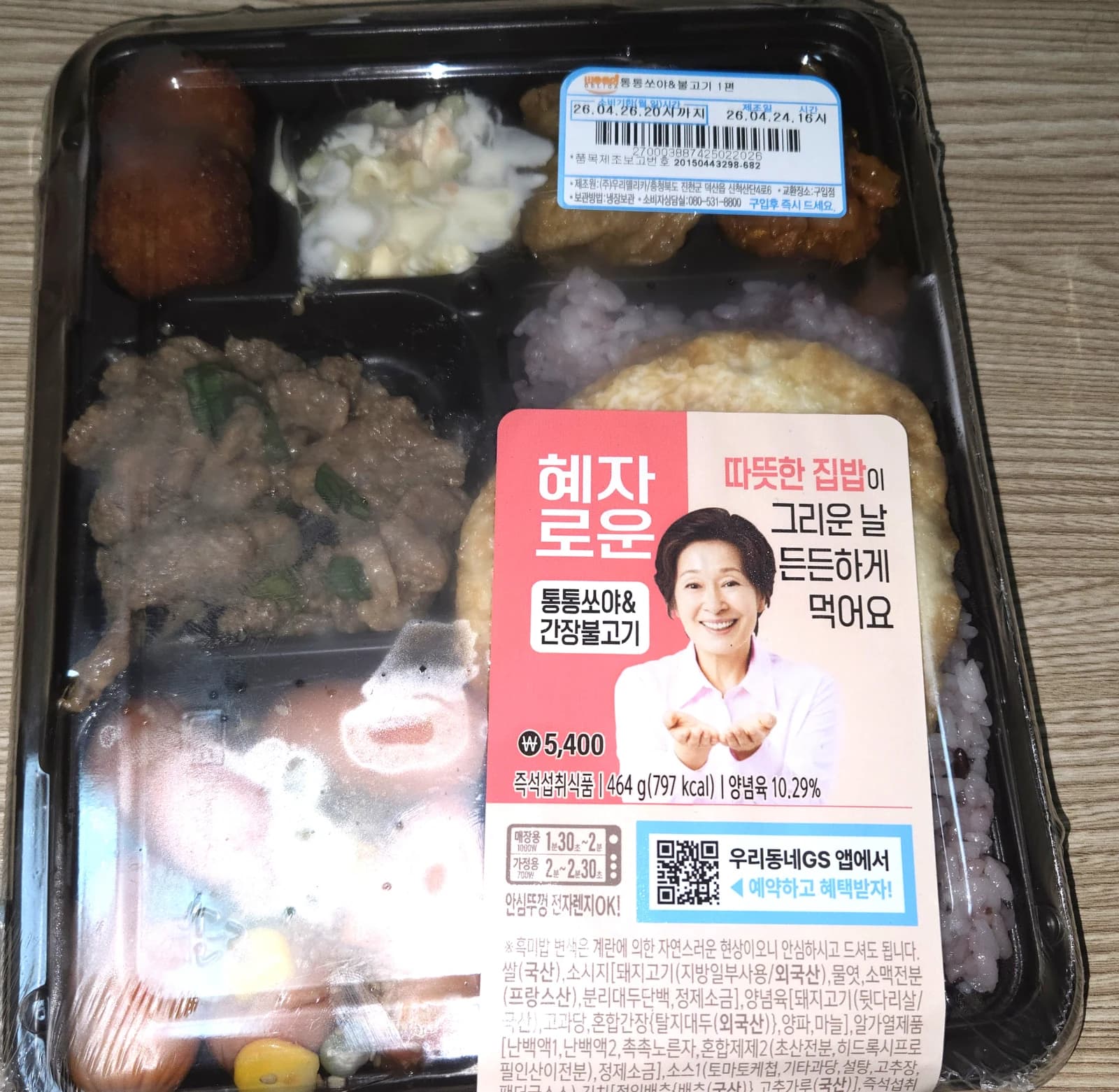
It's a black plastic tray with separate compartments for each side dish, and slapped across the front is a label featuring the face of Kim Hye-ja, a hugely famous Korean actress. The word "hyejarowun" has become Korean slang for brilliant value for money — the name comes directly from her, and the whole lunchbox series is built around that idea. It's GS25's flagship ready meal range with dozens of varieties, and practically everyone in Korea knows it.
There's a line on the label that roughly translates to "eat well on the days you miss a warm home-cooked meal" — standing at the till on my day off, alone, holding this thing, I did feel a tiny pang of guilt. The price was ₩5,400 (about £2.80), and it weighs in at 464g with 797 kcal. For a convenience store lunchbox, that's fairly hefty. The microwave instructions are printed in the corner: 2 to 2½ minutes at 700W, lid and all — you just pop the whole thing straight in. No decanting, no faffing about. When you truly cannot be bothered, that kind of simplicity is worth its weight in gold.
One tip, though: if there's a side that's meant to be eaten cold — like the macaroni salad in this one — scoop it out before you microwave the lot. The salad compartment isn't detachable here, so I heated everything together and the salad went lukewarm and a bit sad. Lesson learnt. Next time I'll spoon it out first.
Expiry dates and Korea's convenience store management system
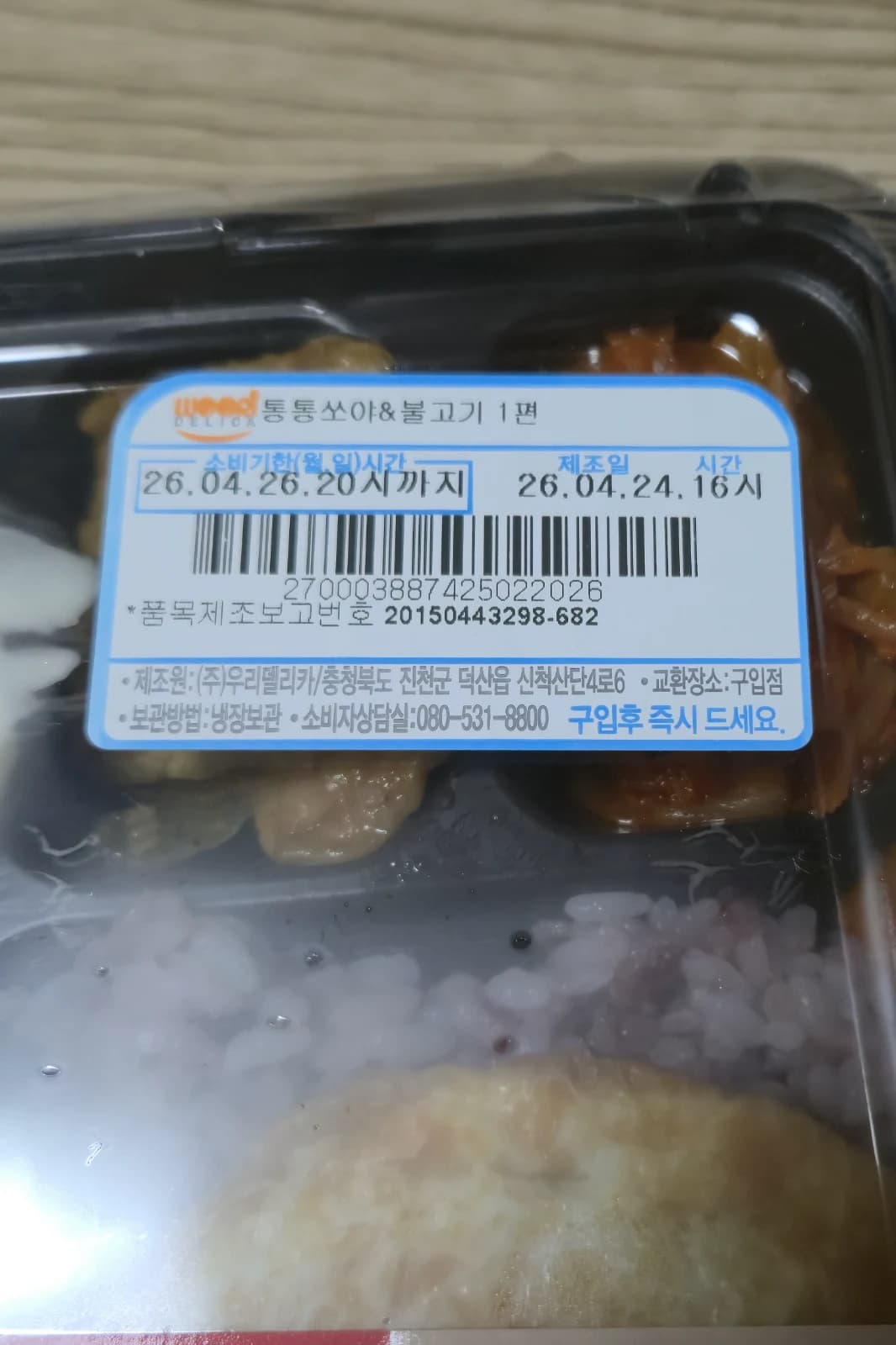
There's a second blue label on the top of the tray showing the production date and use-by date. This one was made on 24 April at 4 pm, with a use-by of 26 April at 8 pm — roughly two days of shelf life. But here's the clever bit: this isn't just an advisory. Once that date passes, the till physically blocks the sale. Even if the staff wanted to sell it, the system won't let them. Korean convenience stores manage all their fresh-prepared items — lunchboxes, onigiri, sandwiches — this way, so if something's on the shelf, you can trust it's within date. Even if it's your first time buying one, there's genuinely no need to worry.
Eating inside a Korean convenience store
Another thing worth knowing: most Korean convenience stores have a microwave on the shop floor. You buy your lunchbox and heat it up yourself right there — it's entirely self-service, not something you ask the staff to do. Next to the microwave you'll usually find disposable chopsticks and spoons, and a good number of shops have a small seating area with tables too. Not all of them, but I'd say well over half do. The best part? There's no service charge or seating fee whatsoever. You eat, tidy up after yourself, and off you go.
One more thing — Korea has single-use plastic regulations, so shops won't hand out cutlery willy-nilly, but if you buy a packaged ready meal or a pot noodle, they will give you chopsticks and a spoon. If they don't offer, just ask at the till. I took mine home that day, but if you're in a rush you can absolutely sort yourself out right there in the shop.
What's inside the box
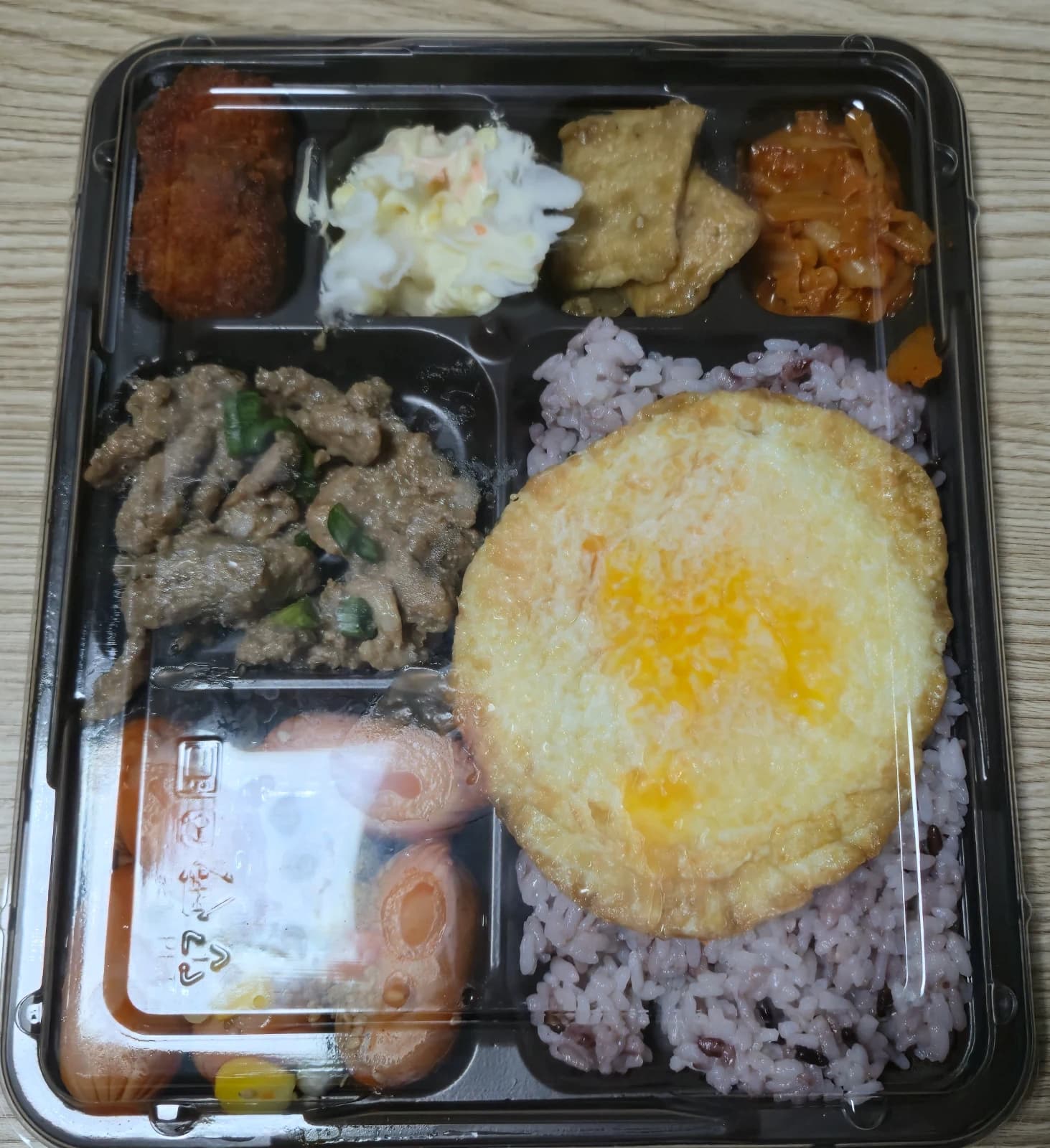
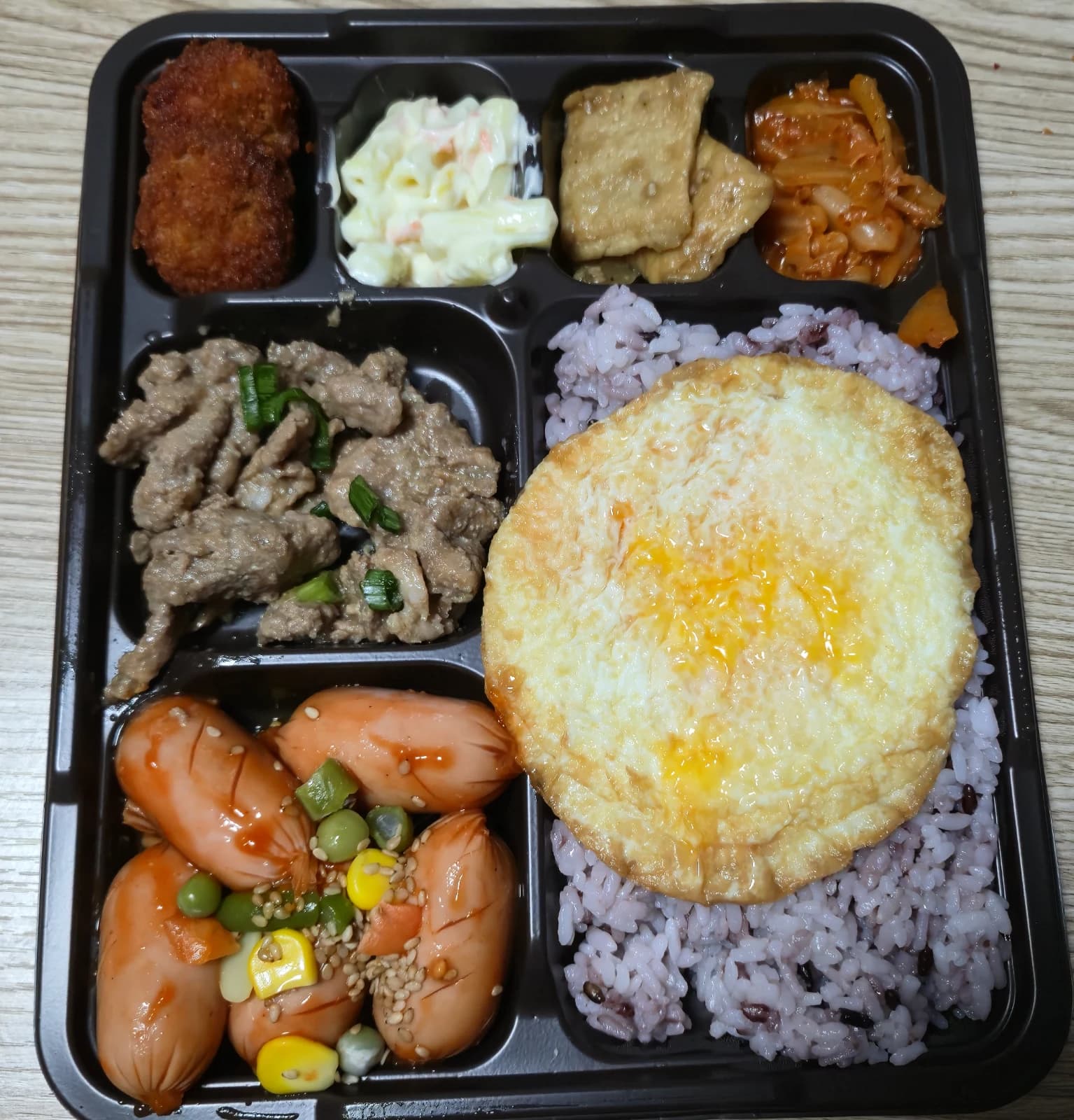
Label off, lid open, and here's what you get. The large compartment on the right is filled with black rice topped with a round fried egg sitting right in the centre. On the left there's soy sauce bulgogi with spring onion, and below that a section of stir-fried sausages called "tongtong soya" mixed up with sweetcorn and peas. The smaller compartments along the top hold a piece of fried cutlet, macaroni salad, stir-fried fish cake, and kimchi. For a lunchbox that costs about £2.80, every compartment is properly filled. Let me walk you through each one.
Breaking down each side dish
Tongtong Soya — ketchup-glazed sausages
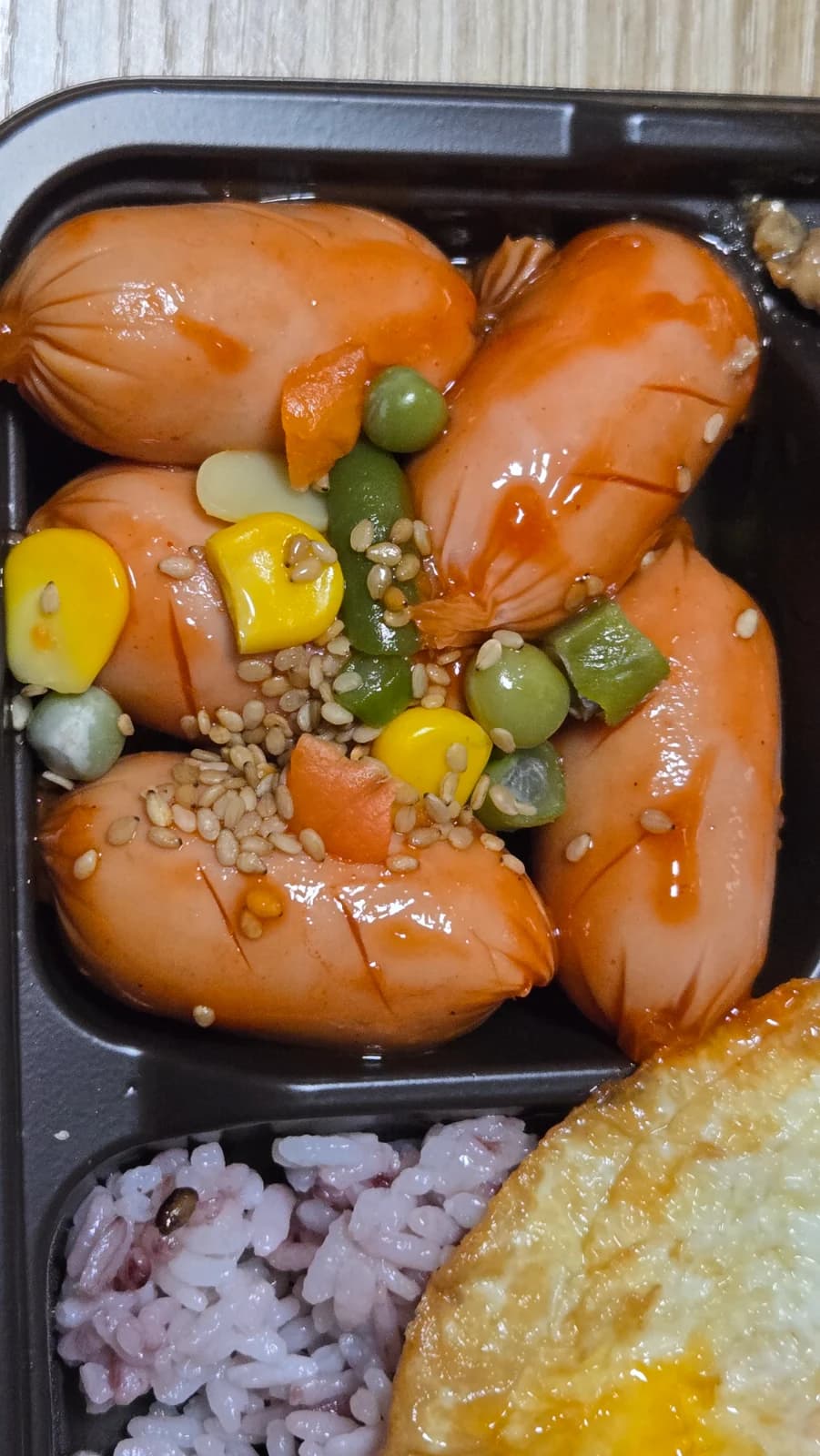
"Tongtong soya" roughly means plump stir-fried sausages. Up close, there are five little cocktail sausages coated in a ketchup-based sauce and scattered with sweetcorn, peas, and sesame seeds. The name includes "soya" so I expected a soy sauce base, but it's almost entirely ketchup — sweet with a slight tang. The sausages themselves have that taut snap when you bite through the casing, which was satisfying, though honestly it felt more like a pub snack than a proper side dish. A touch sweet to eat with rice, I thought, but once you start picking at them you genuinely can't stop.
Soy sauce bulgogi — always exactly the same
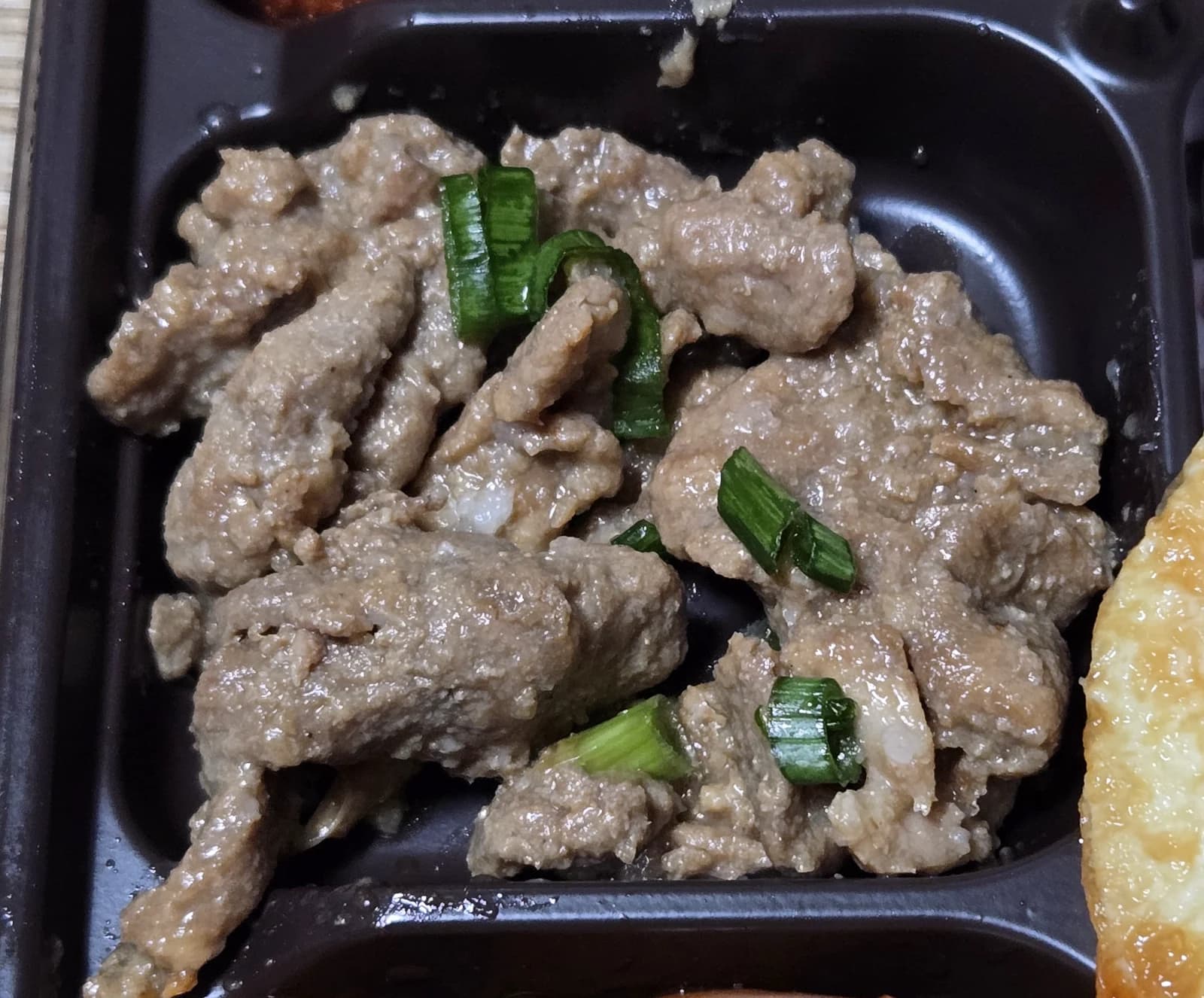
The bulgogi here is pork marinated in soy sauce and stir-fried, topped with sliced spring onion. After microwaving, the meat had gone nicely tender. Pile it on top of the rice and it does the job as the main protein, but here's the strange thing: no matter which convenience store you buy this from, it tastes identical every single time. Homemade bulgogi varies from one batch to the next — sometimes saltier, sometimes sweeter. This stuff, though? Same as last year, same as today, not a fraction of difference. It's unmistakably factory-line soy sauce marinade. It's not bad by any means, but there's no spark to it — that sort of flavour. The portion also looks more generous in photos than it actually is; the rice outlasts the meat by quite a margin, so you need to ration it from the start.
The fried cutlet — honestly, a let-down
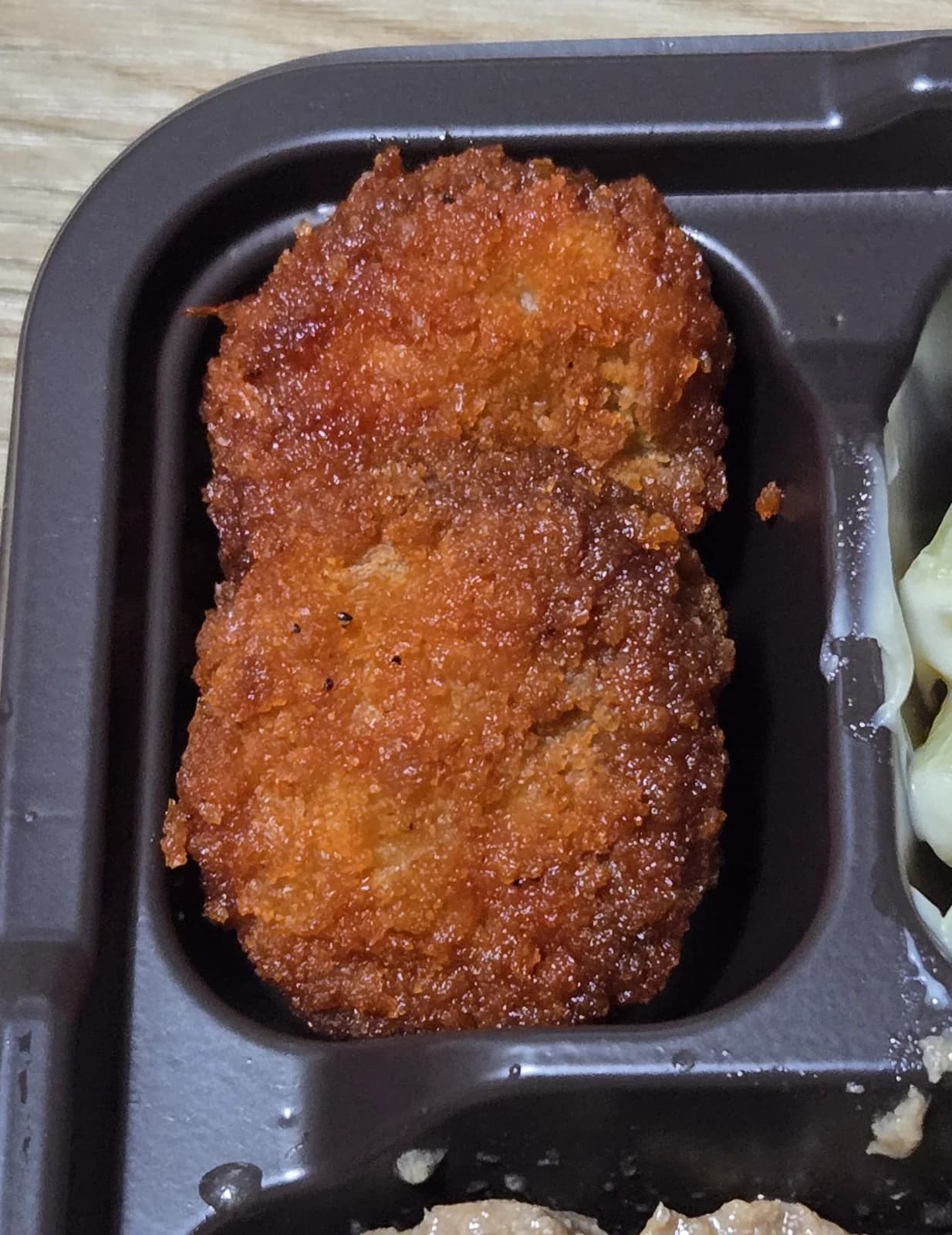
I'm not entirely sure what this one is, but it looks like minced meat coated in breadcrumbs and deep-fried — something along the lines of a menchi-katsu. I think it's a new addition from a recent menu refresh. Honestly, this was the weakest link. The outside pretends to be crispy, but the microwave had turned it soggy, and the filling inside didn't really taste of much — just something to chew. It felt like a compartment the lunchbox could have done without entirely.
Macaroni salad, fish cake, and stir-fried kimchi
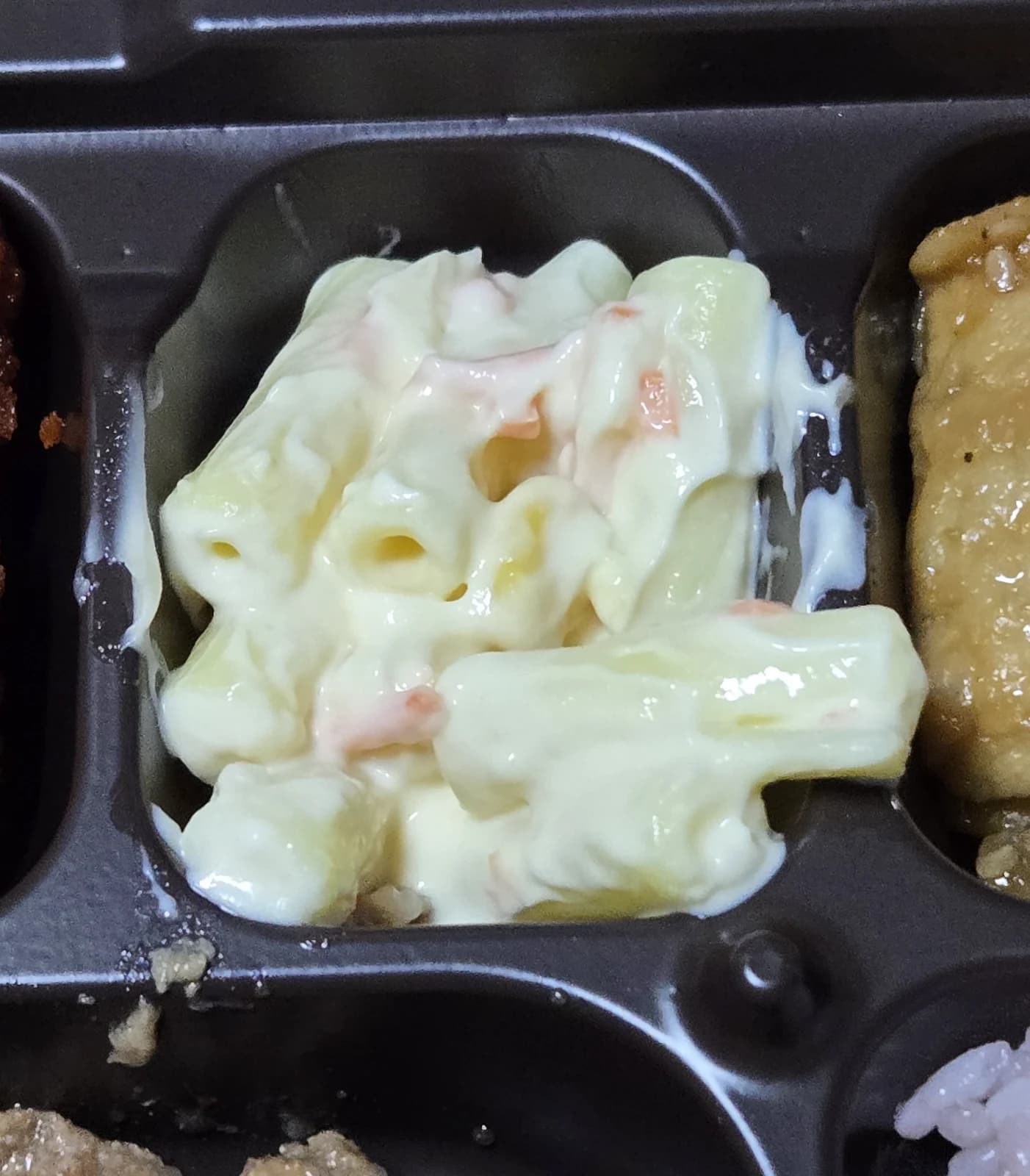
Macaroni salad — mayo-dressed pasta with little bits of crab stick and carrot mixed through. As I mentioned, I'd microwaved the whole thing so it had gone lukewarm, which was a shame. Even so, it served as a palate cleanser between the richer, greasier sides. The portion is tiny though — a spoonful or two and it's gone.
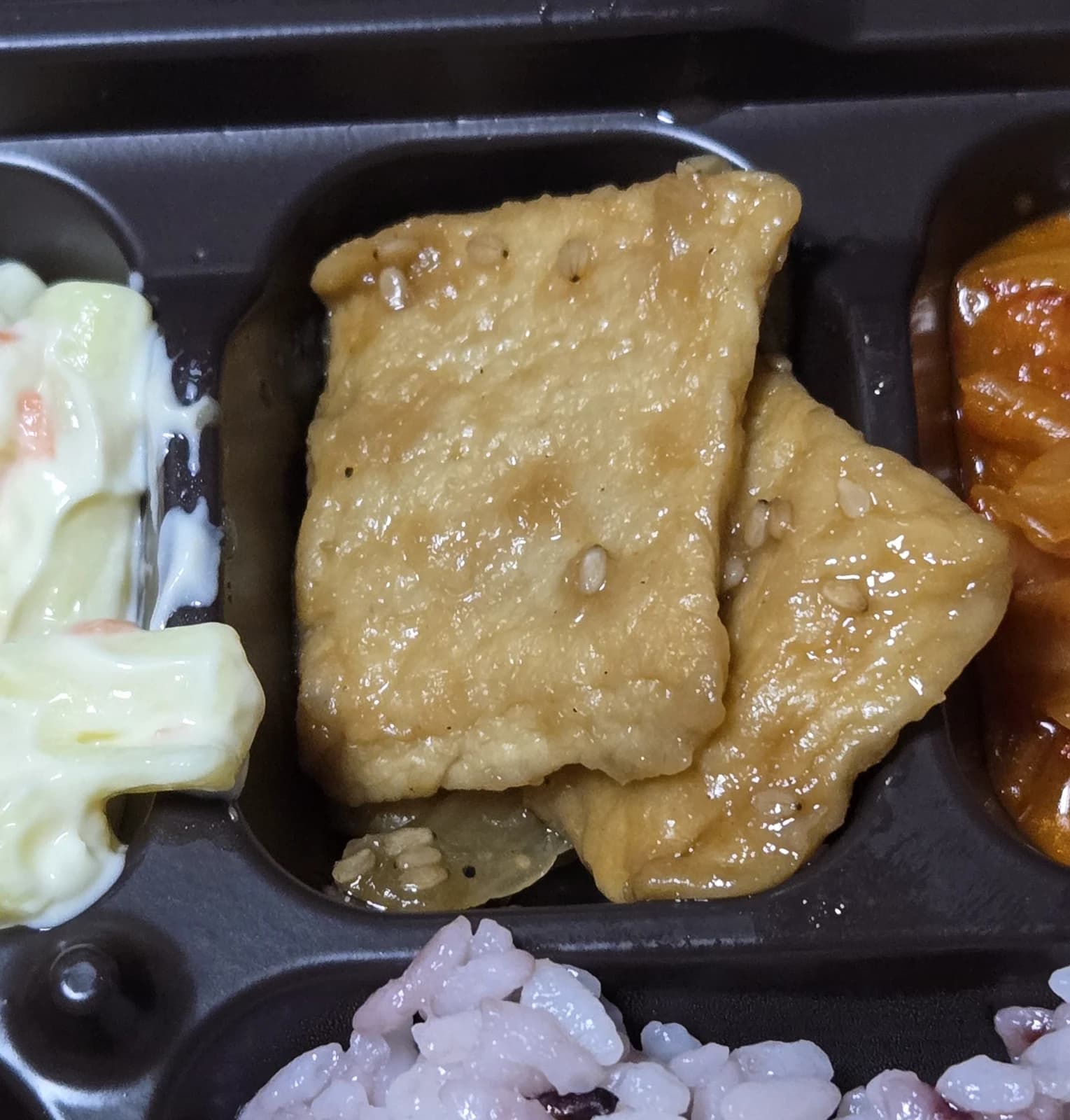
The stir-fried fish cake — two flat, square pieces of eomuk braised in soy sauce with a scattering of sesame seeds. Eomuk is a processed fish cake made from mashed fish paste pressed into flat sheets; it's incredibly common in Korean cooking, turning up in side dishes and soups alike. It has a gentle sweetness to it, which does provide a bit of balance among the saltier items. But there are literally only two pieces — one bite each and they're gone. I wished there'd been more.
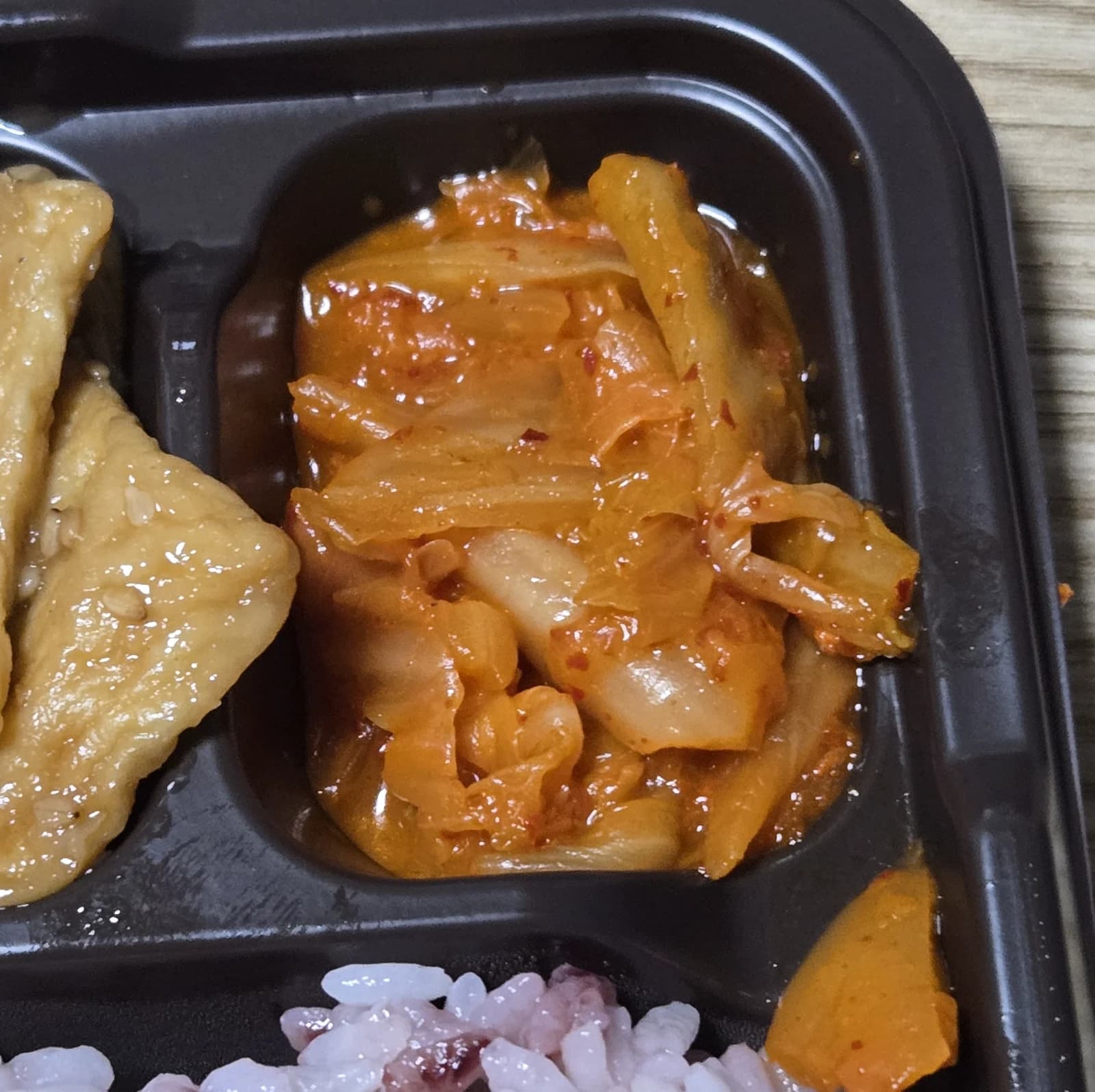
Stir-fried kimchi. Personally, this was my favourite side in the entire box. Well-fermented kimchi fried in oil, the napa cabbage gone beautifully soft and tender — mix it into the rice and it's genuinely lovely. The sausages are sweet, the bulgogi is sweet, the fish cake is sweet — there's a lot of sweetness running through this lunchbox overall, and this stir-fried kimchi cuts through it with a proper spicy kick every few mouthfuls, stopping the whole thing from becoming monotonous.
The fried egg and black rice
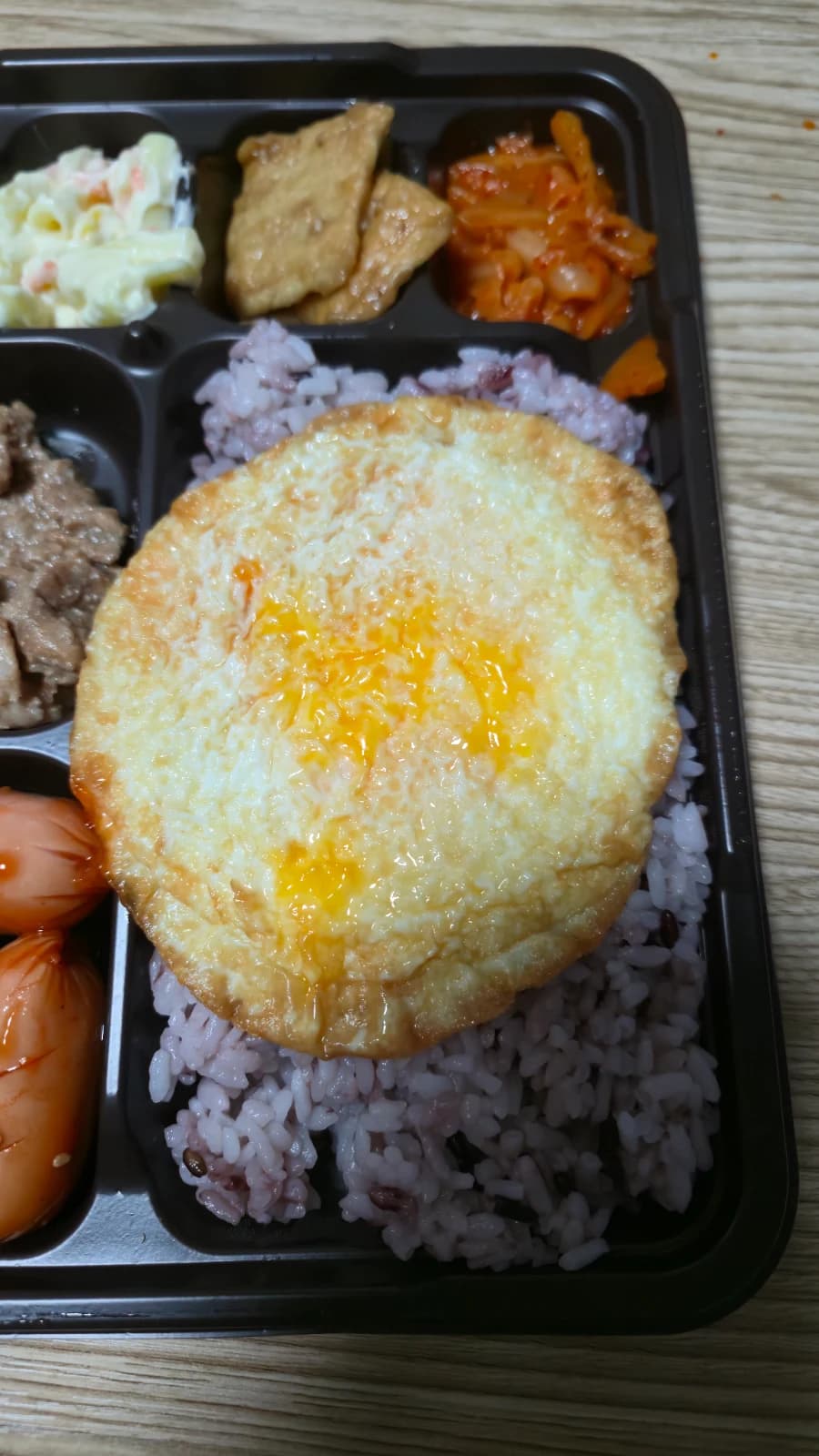
Sitting on top of the black rice is a round fried egg — it's practically the signature of the Hyejarowun lunchbox series. It's not fully set, but it's not a runny yolk either — right in that sweet spot between the two. The yolk still has a touch of moisture to it, which I personally thought was spot on. Mix it into the rice and the yolk coats the grains, bringing this lovely, rich savouriness to the whole thing.
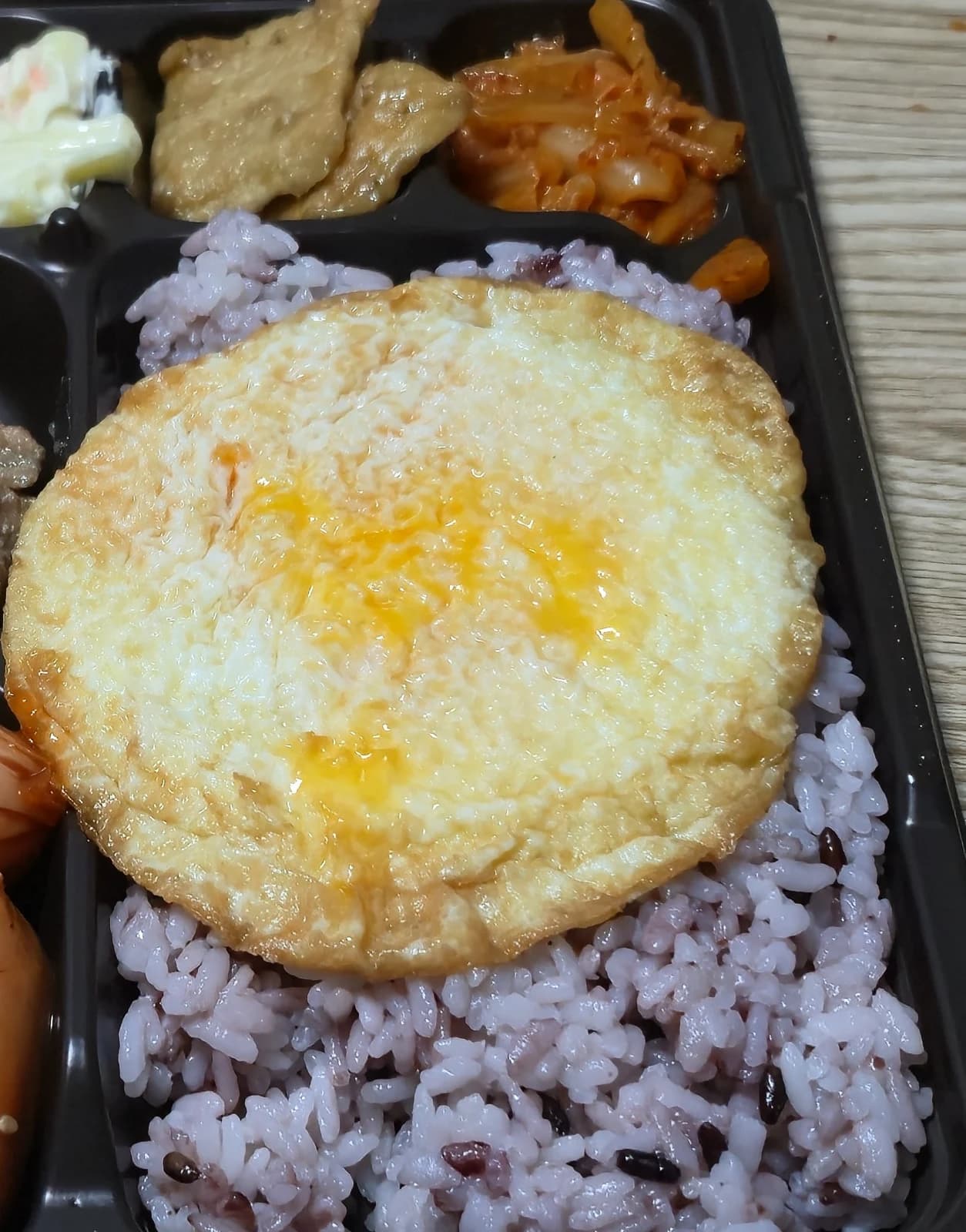
The rice is heukmi-bap — black rice. Heukmi is a dark-coloured grain that, when cooked with white rice, turns a subtle shade of purple. There's something about that colour that just makes it look more appetising. The texture isn't mushy at all — it's got a slight chewiness, each grain holding its shape properly. Ready meal rice that's gone too soft just collapses the moment you add side dishes, but this had proper bite. Whether I piled bulgogi on top or mixed in the stir-fried kimchi, the rice held its own. Black rice is supposedly more nutritious than white, but even setting that aside, the rice itself has a pleasant, slightly nutty flavour.
Is £2.80 actually good value?
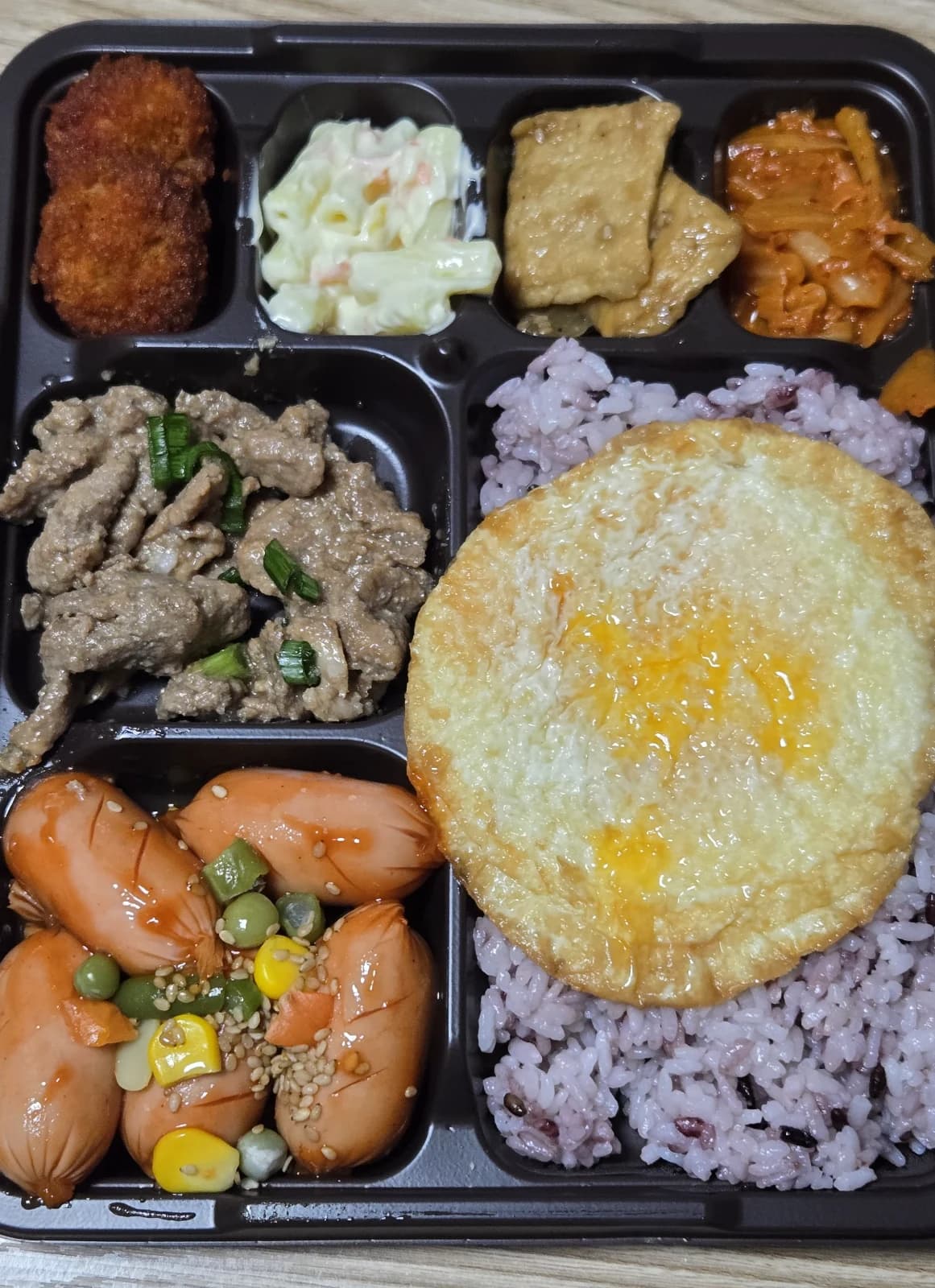
So looking at the full spread again: soy sauce bulgogi, tongtong soya sausages, fried cutlet, macaroni salad, fish cake, stir-fried kimchi, fried egg, and black rice. Eight compartments and not one of them empty. On the whole, though, it did lean salty. The bulgogi is soy-based, the fish cake is soy-based, the sausages are ketchup-coated — so it's a repeating cycle of sweet and salty, and without the stir-fried kimchi to break things up, I might have flagged halfway through.
Prices in Korea have gone up quite a lot recently. A single roll of kimbap (Korean sushi roll) can cost ₩3,000 (about £1.55) at the pricier places, and add a topping like tuna or cheese and you're past ₩4,000. Order a bowl of ramyeon at a restaurant and you're looking at a minimum of ₩4,000 (about £2.10). Convenience stores are obviously cheaper than restaurants, but even accounting for that, around £2.80 for this much food is genuinely not bad at all.
Why Korean convenience store lunchboxes are in a league of their own
Something I notice every time I eat one of these: having rice in one section and three or four different side dishes each in their own separate compartments — you simply don't get that at convenience stores in other countries. In most places, a ready meal from a corner shop means a sandwich, a wrap, or maybe a single pot of pasta. A main plus one side is considered generous. But meat, vegetables, kimchi, egg, and rice all in one container with this variety of items? That really is something uniquely Korean. The fact that you can get this many different components in a single meal for about £2.80 still impresses me, even living here.
The wife's reaction, and the next lunchbox
My wife got home from work and asked what I'd had for dinner. When I told her it was a convenience store lunchbox, she hit me with "why do you always eat stuff like that?" — which is rich, because she's tried them with me several times since coming to Korea and quietly tucks in just fine. But honestly, about £2.80 for seven side dishes plus rice is more than enough for a solo meal. It wasn't a fancy dinner by any stretch, but I was properly full, and for a day when I couldn't be bothered to cook, it was a perfectly solid choice.
CU has its own range fronted by celebrity chef Baek Jong-won, Seven Eleven has yet another line-up — the variety of Korean convenience store lunchboxes is genuinely endless. Oh, and I almost forgot: GS25 has an app called "Our Neighbourhood GS" that regularly drops discount coupons for lunchboxes. I'm a bit annoyed I didn't check it this time and ended up paying full price. Next time a lazy day rolls around, I'll grab a coupon first and bring home a different one to try.