Korean Chinese Food You Can't Find in China
Why You Need to Eat Chinese Food in Korea
It might sound weird that Chinese food would be on your must-eat list when visiting Korea. But the Chinese food we're talking about here is not the Chinese food you eat in China.
Order jjajangmyeon in China, and you won't get that sweet, jet-black sauce you'd find in Korea. Order jjamppong, and instead of a fiery red broth, you'll get a milky white one. Tangsuyuk tastes different too. When you actually feed Korean-style jjajangmyeon to a Chinese friend, they'll give you this look like, "Wait, this is supposed to be our food?"
Korean Chinese food traces back to the late 19th century, when Chinese immigrants brought their recipes to Korea. Over more than 100 years, those dishes morphed and evolved to fit Korean taste buds. Now they're not quite Chinese, not quite Korean — they're something that exists only in Korea.
That's exactly what jjajangmyeon, jjamppong, and tangsuyuk are. Born in China, completely reborn in Korea, and a flavor you can only experience here.
Let's dive into what makes them so special.
Jjajangmyeon — Korean Chinese Noodles That Don't Exist in China
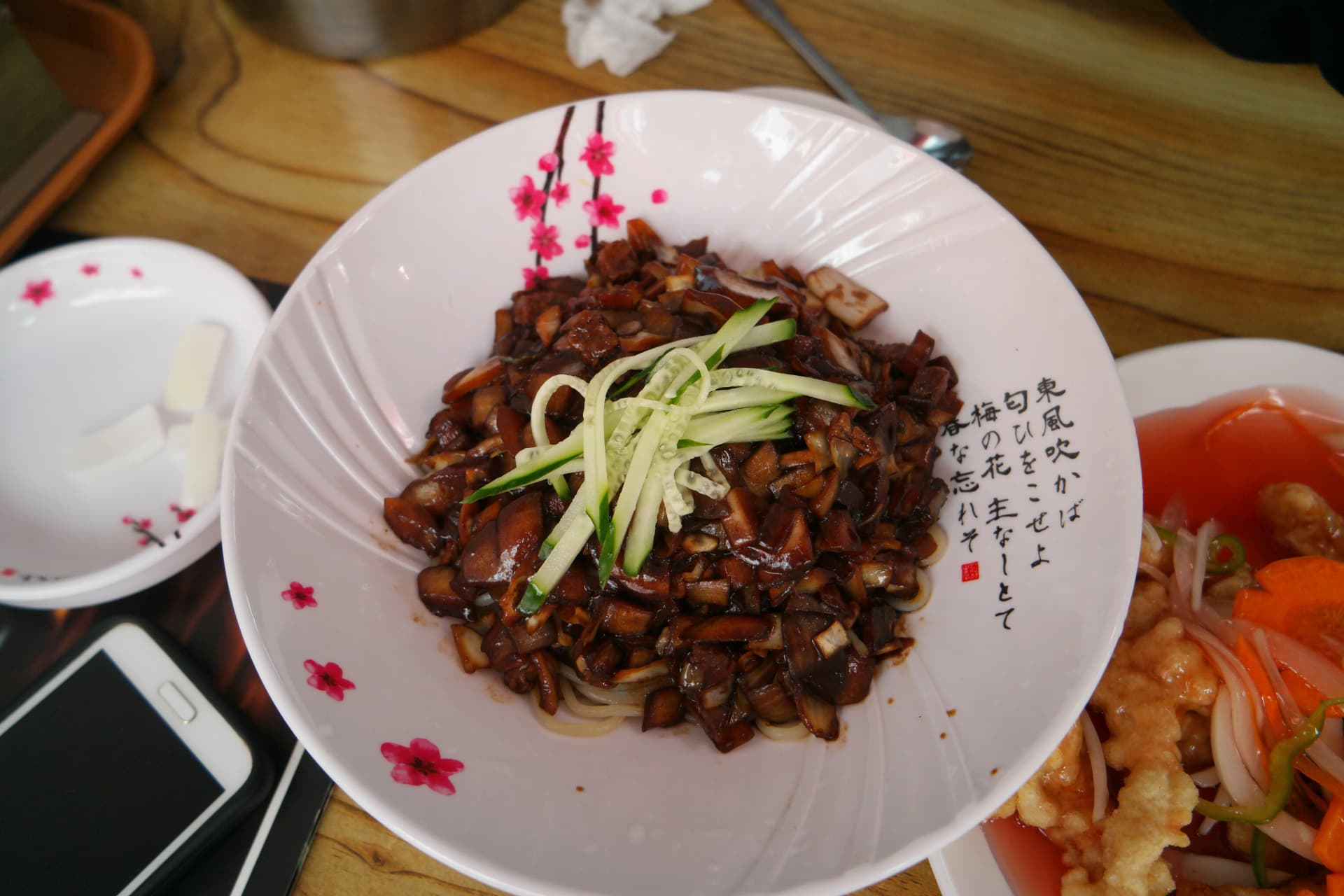
This is jjajangmyeon. And it doesn't exist in China.
If you order jjajangmyeon in China, you won't get this jet-black, sweet sauce. Korean jjajangmyeon uses chunjang (black bean paste) mixed with caramel to create a uniquely sweet flavor you can only find in Korea. Served in a cherry blossom patterned ceramic bowl with the dark chunjang sauce smothering the noodles and julienned cucumber on top — that's the iconic look of Korean-style black bean noodles.
The Sauce and Noodle Details Up Close
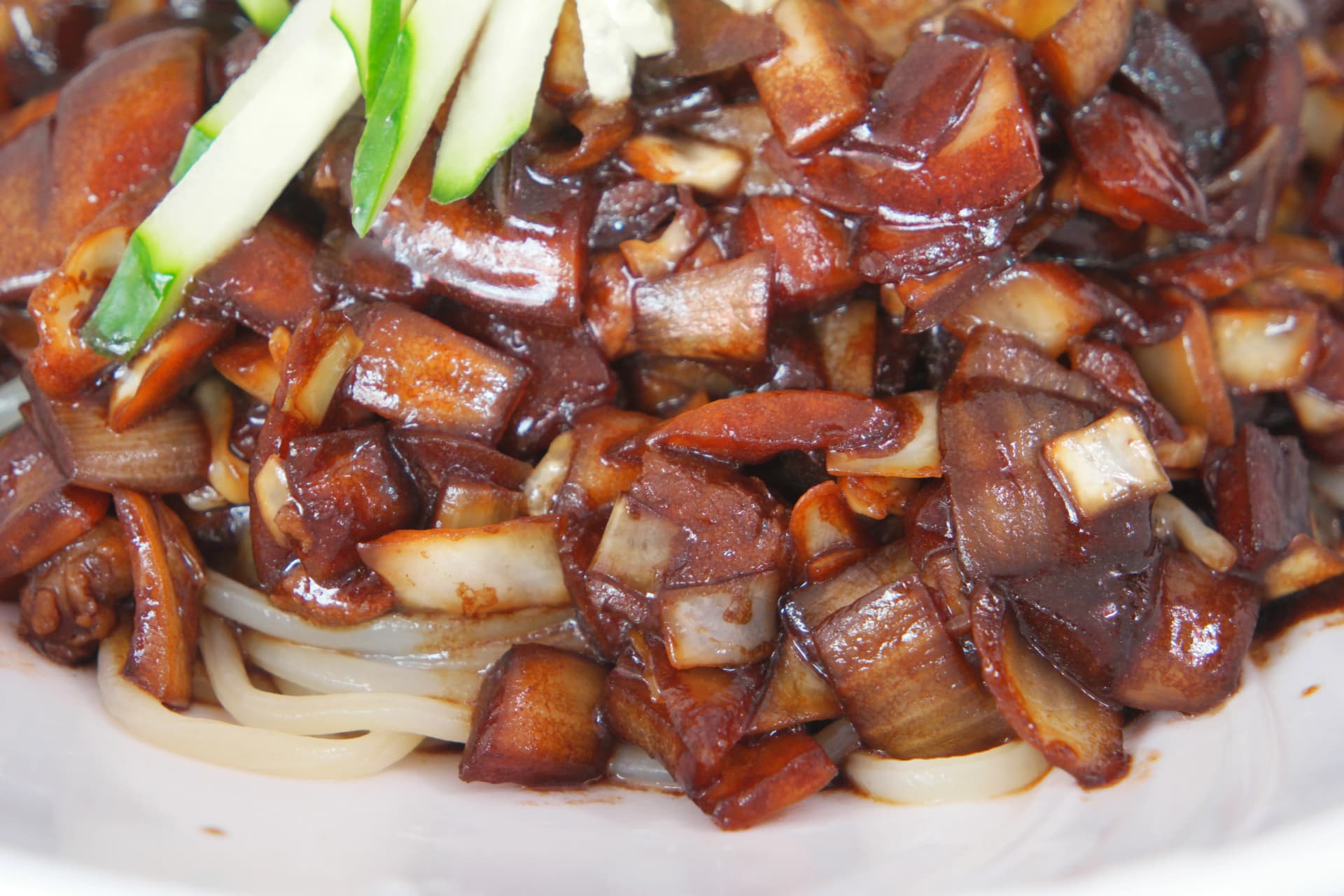
Up close, you can really see the noodles. The chunjang sauce has seeped between every single strand, and you can spot chunky pieces of pork and onion that have been stir-fried right into the sauce. The glossy sheen just makes you want to grab your chopsticks and start mixing immediately.
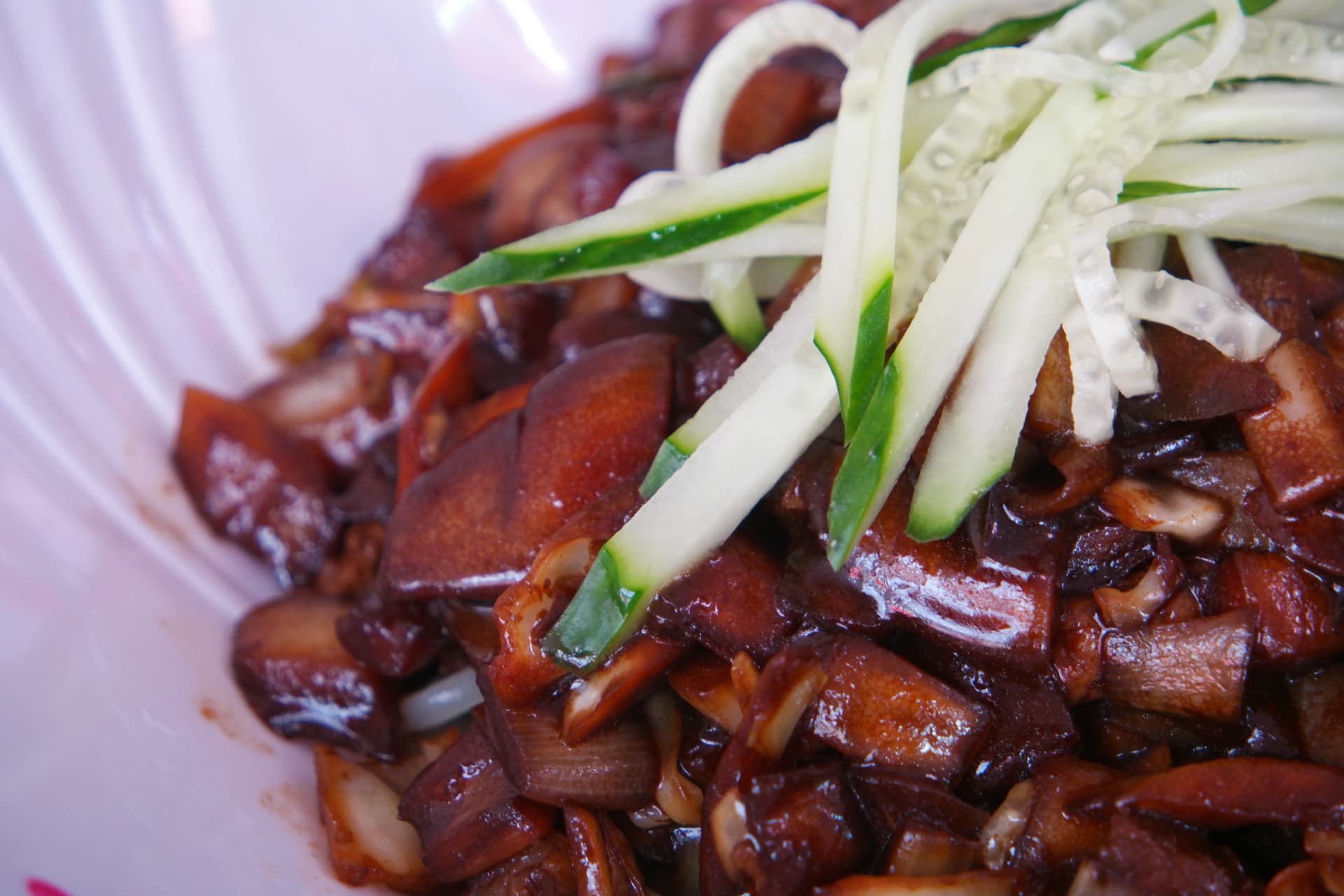
This angle really shows off the sauce details. The onions have caramelized into a deep brown, and the chunjang sauce coats every single ingredient like a glossy glaze. The julienned cucumber on top serves an actual purpose — it cuts through the richness and heaviness of that deep, dense sauce.
Jjajangmyeon vs Ganjjajang — What's the Difference?
Jjajangmyeon
짜장면
- Thickened with chunjang + water + starch
- Sauce is runny and smooth
- Served with sauce poured over noodles
- Relatively cheaper
- Recommended for first-timers
Ganjjajang
간짜장
- Stir-fried in oil with no water added
- Sauce is thick and intensely flavorful
- Noodles and sauce served separately
- Pricier than regular jjajangmyeon
- Recommended for seasoned jjajang fans
Gan (乾) means "dry" — so ganjjajang literally means "dry jjajang," as in jjajang with the moisture removed.
Mixing the Noodles — This Is the Highlight
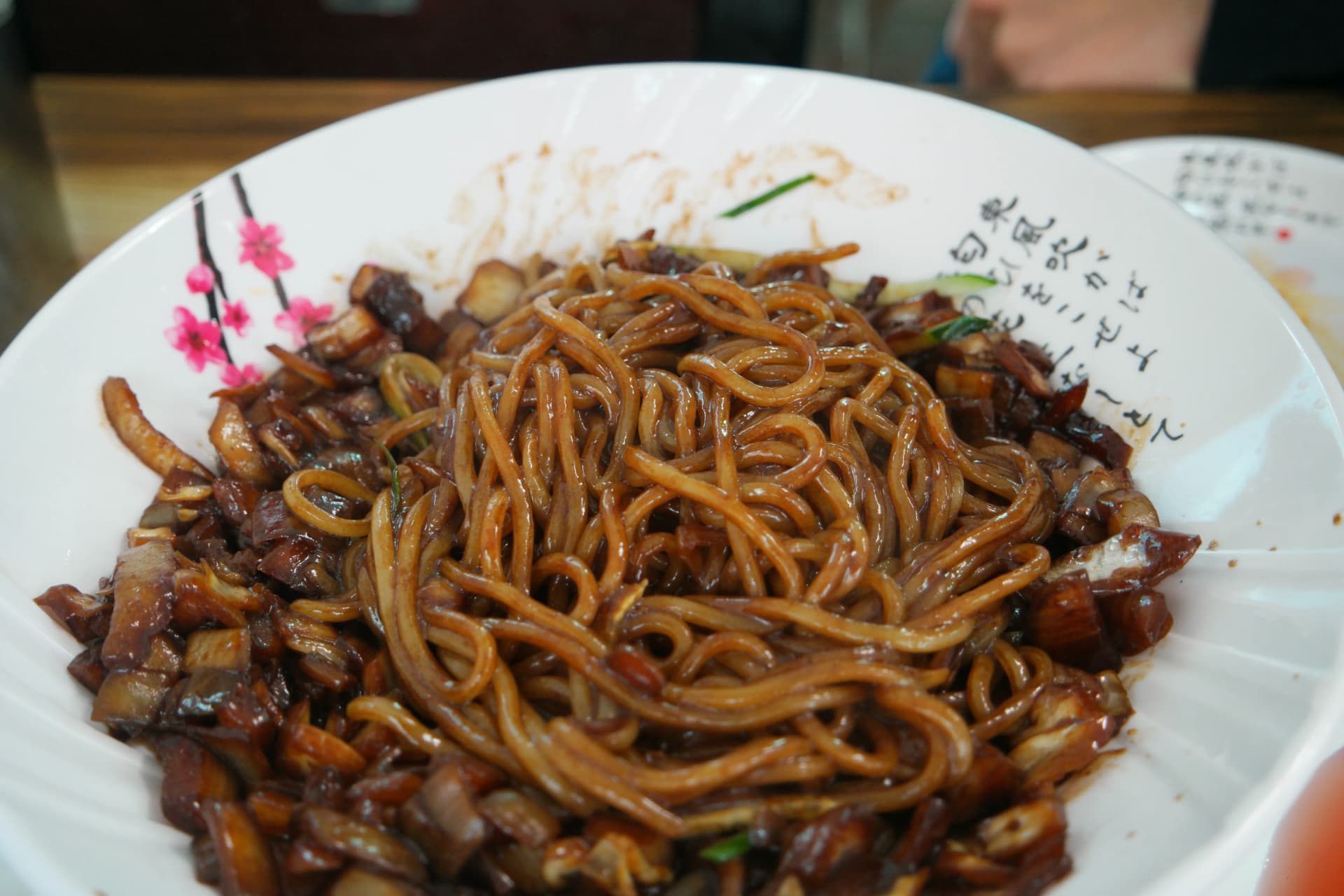
This is what jjajangmyeon looks like after you mix it. The sauce coats every noodle evenly, turning each strand that deep chunjang color. Watching those pure white noodles transform into this — that's the highlight of the whole jjajangmyeon experience. You've gotta mix fast though, or the noodles get soggy.
Similar Dishes from Around the World
🇨🇳
Zhájiàngmiàn 炸醬麵
China
The original version. Uses a salty bean paste sauce with no sweetness — it's savory and briny rather than sweet.
🇯🇵
Jājāmen ジャージャー麺
Japan
Japan's take on the Chinese original. Topped with a meat miso sauce and julienned cucumber.
🇮🇹
Bolognese
Italy
Similar concept of mixing a meat sauce into noodles. The only real difference is the tomato base.
🇹🇼
Luroufan 滷肉飯
Taiwan
Soy-based pork sauce ladled over rice. It's rice instead of noodles, but the sauce-over-starch structure is very similar.
Every culture has some version of meat sauce over noodles, but this sweet chunjang flavor? That only exists in Korea.
Jjamppong — The Truth Behind That Fiery Red Broth
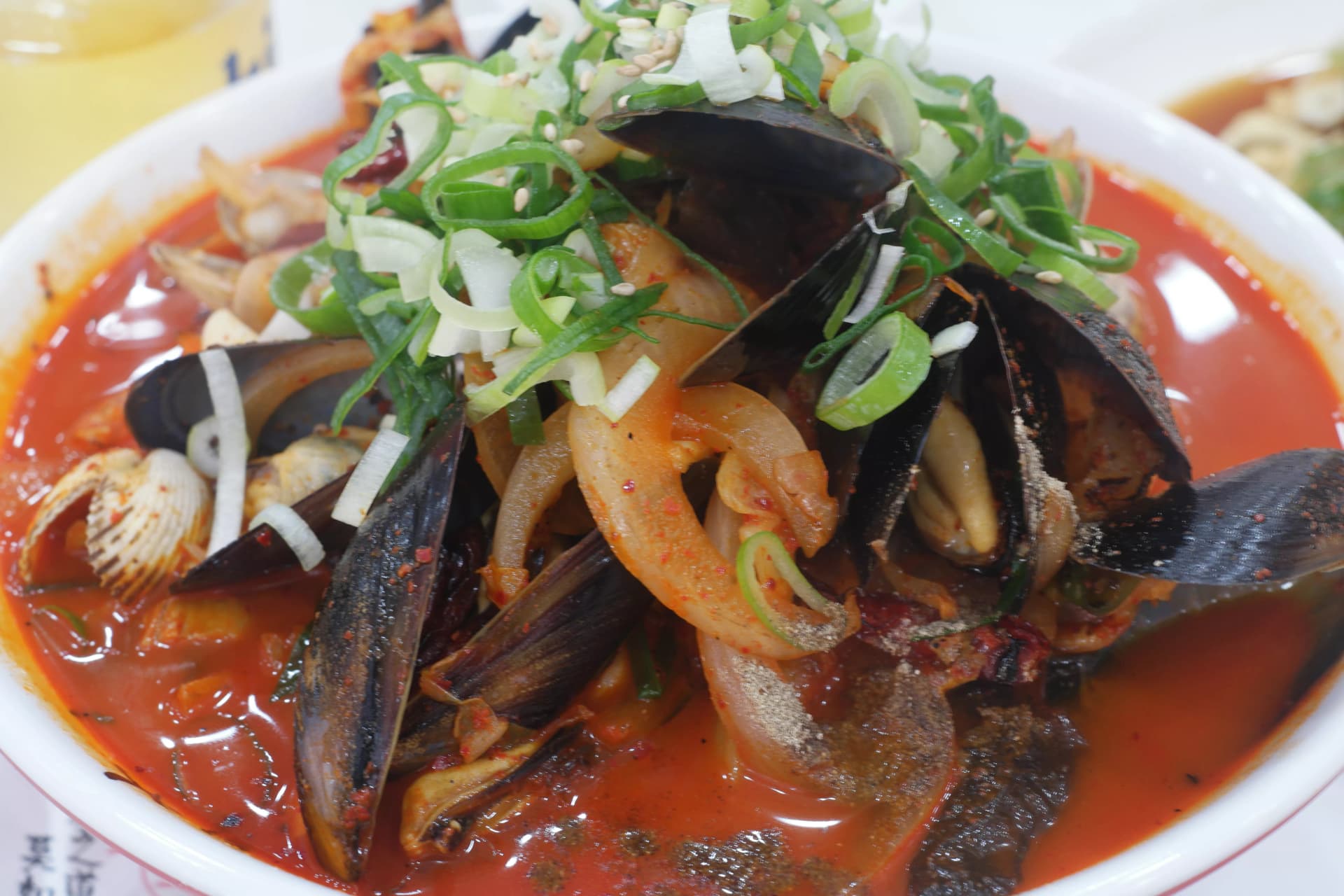
This is jjamppong. Fiery red broth loaded with mussels, squid, and clams, topped with green onions and sesame seeds. Just looking at it, you can practically smell the spicy, savory aroma rising from the bowl.
The name jjamppong actually comes from the Japanese word chanpon (ちゃんぽん). The dish originally traveled from China's Shandong province through Nagasaki, Japan, and then into Korea. When it hit Korea, red chili flakes got added, and that's how it became the fiery red broth we know today. Japanese champon is still milky white to this day. Same name, completely different dish — different from the very first glance.
Popular Types of Jjamppong
Haemul Jjamppong
Seafood Jjamppong
Packed with squid, shrimp, mussels, and more. This is the most classic, standard version of jjamppong.
Chadol Jjamppong
Beef Brisket Jjamppong
Made with thin-sliced beef brisket. The beef fat melts into the broth, creating a richer, deeper flavor.
Gul Jjamppong
Oyster Jjamppong
Loaded with winter-season oysters. Andongjang in Seoul's Euljiro district is famous as the originator.
Baek Jjamppong
White Jjamppong
Made without chili flakes, resulting in a milky white broth. Not spicy at all — great for people who can't handle heat.
Bul Jjamppong
Fire Jjamppong
Stir-fried over intense flames, giving it a distinctive smoky char. Way more intense than regular jjamppong.
Jjamppongbap
Jjamppong Rice
Rice instead of noodles dunked in the broth. The broth soaks into the rice, creating a whole different kind of magic.
Jjamppong Seafood and Broth Up Close
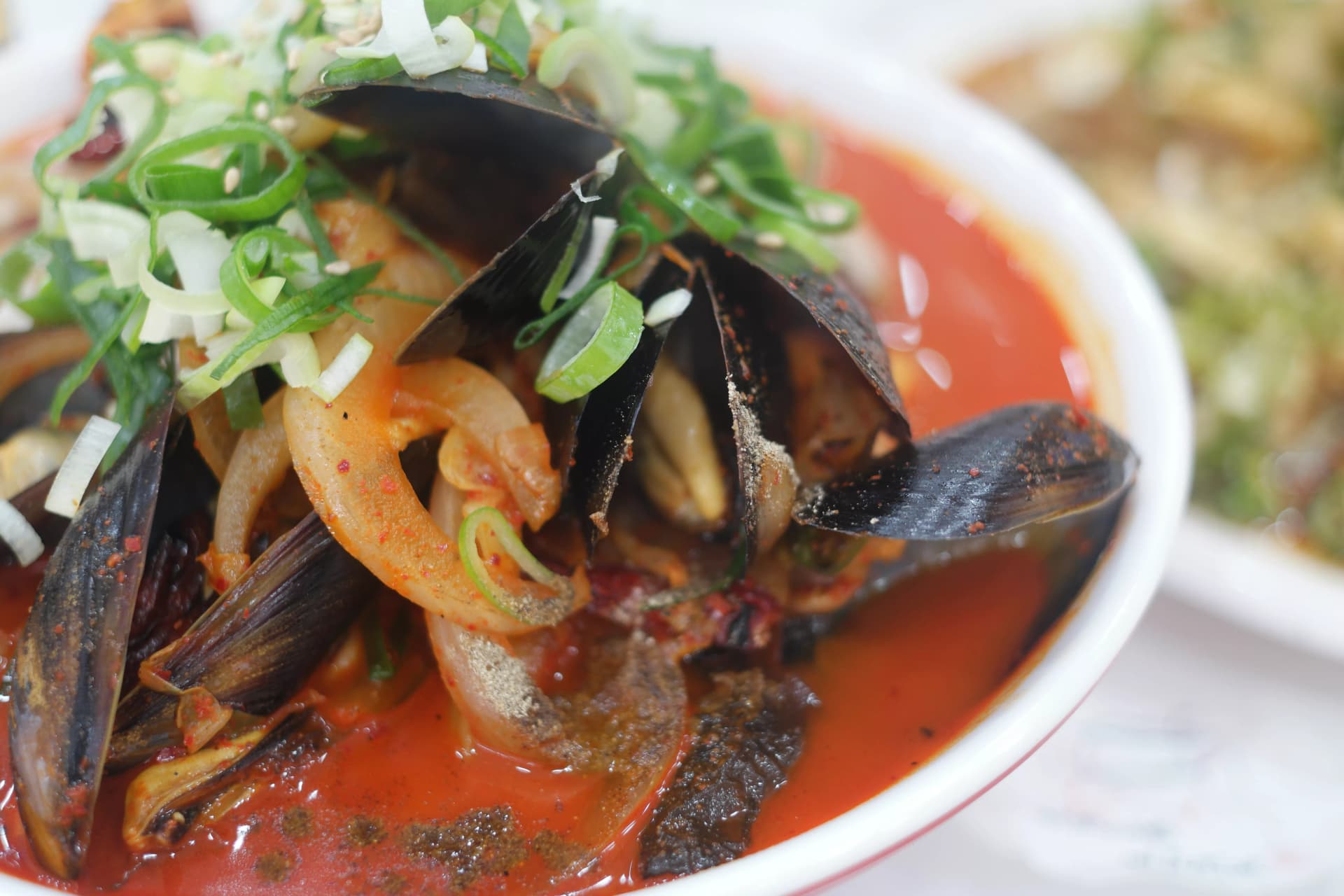
Mussels are piled high above the fiery red broth. Green onions and sesame seeds are scattered on top, and you can see squid peeking through. The noodles are still submerged beneath all that broth, but this visual alone tells you exactly how spicy and soul-warming this bowl is going to be.
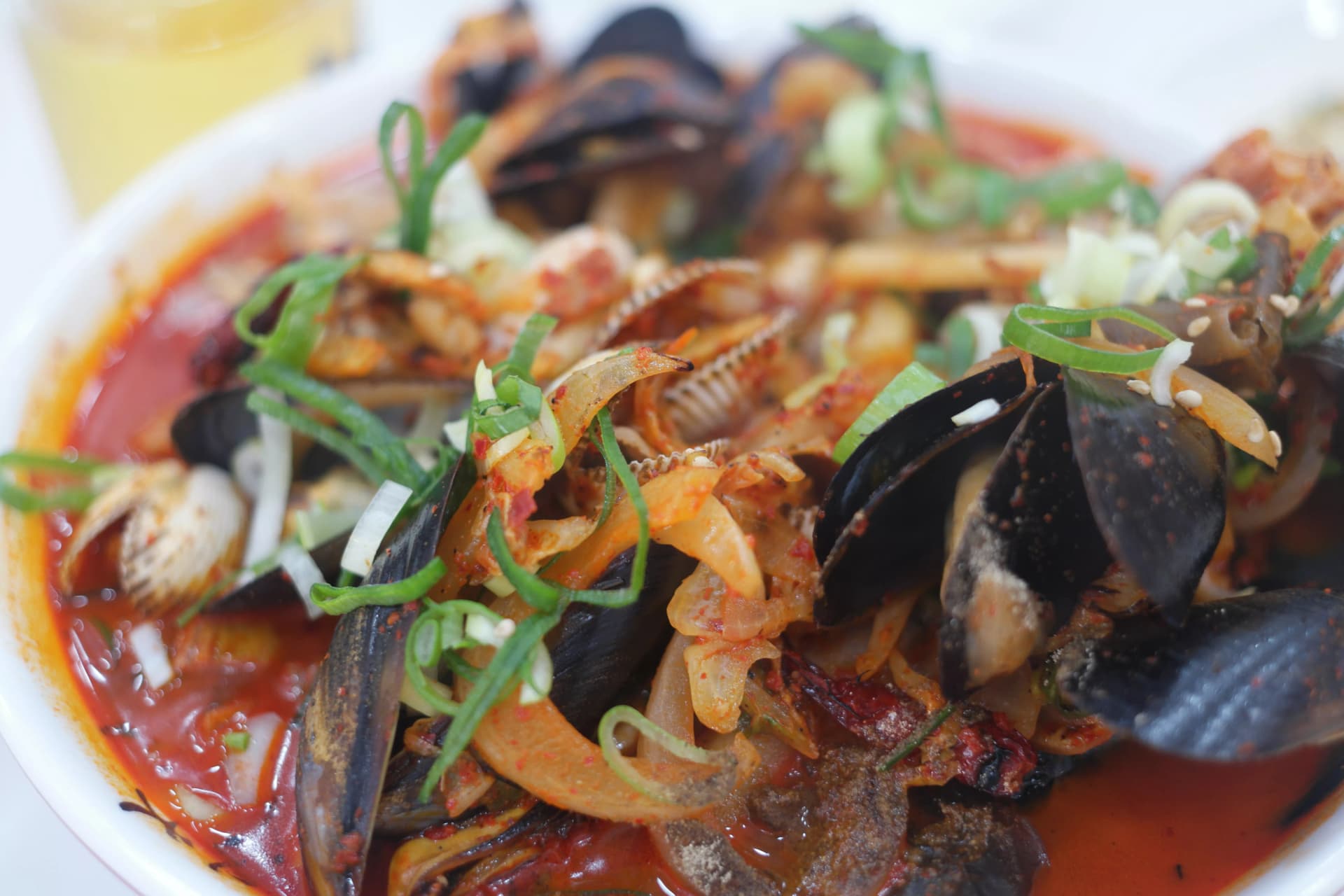
Even closer, you can see mussels, clams, and squid all packed into one bowl. The broth is a deep scarlet, but it's clean — no greasiness — which tells you the seafood stock has been properly extracted. You can spot chili flakes floating on the surface, and that's exactly what gives jjamppong its signature sharp, throat-hitting kick.
Tangsuyuk — To Dip or to Pour, That Is the Question
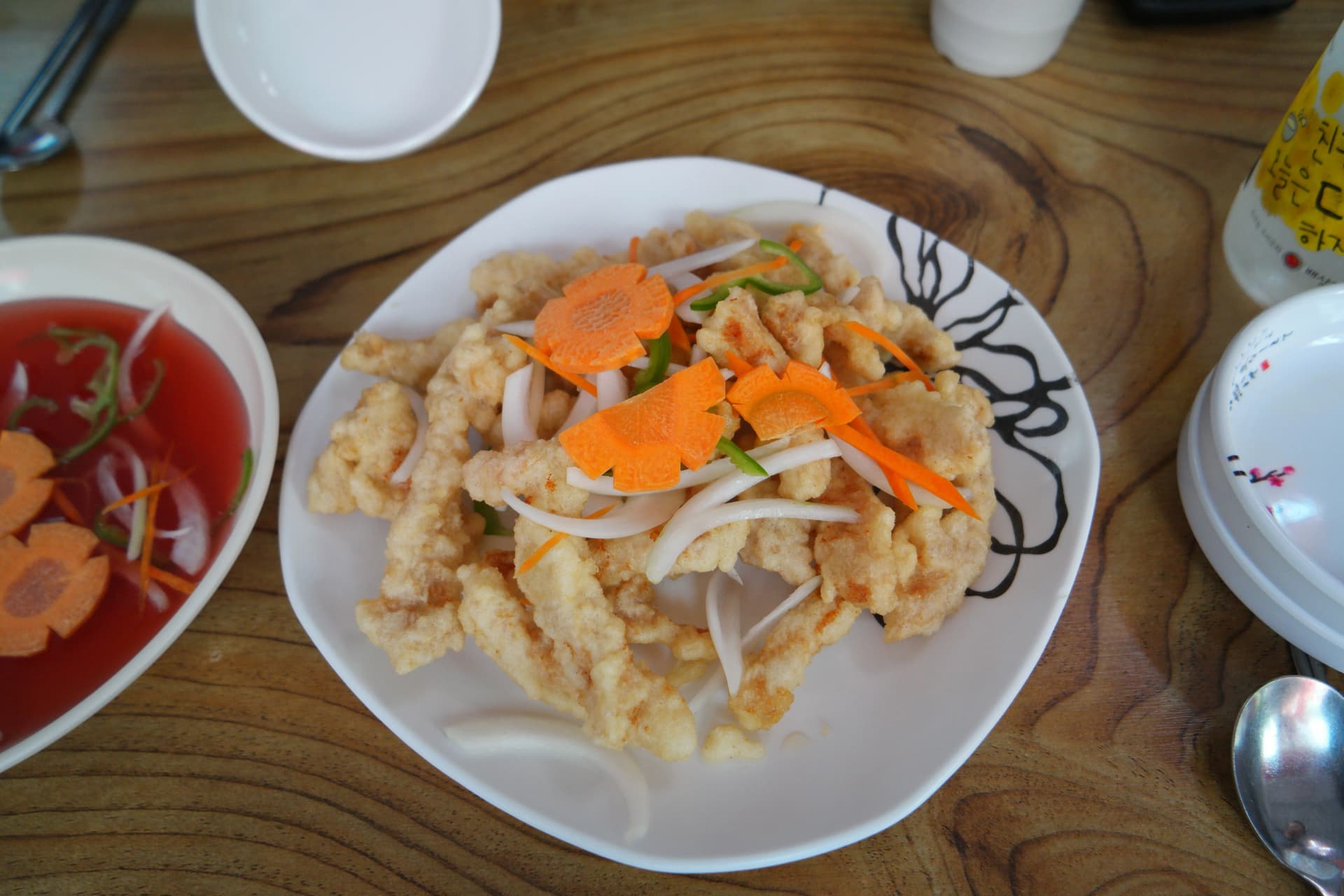
This is tangsuyuk — Korean sweet and sour pork. Crispy deep-fried pork pieces with carrots, cucumber, and onions on top, and that glossy sweet-and-sour sauce served separately on the left. Whether you pour the sauce over the pork or dip each piece individually is your call — but fair warning, this is a seriously heated debate in Korea.
The first bite hits you with a rush of sweetness. Sugar is the base, so the sweet flavor is strong, but it's not just sweet — there's vinegar working behind it to cut through any heaviness. That simultaneous sweet-and-sour punch is the whole identity of tangsuyuk sauce.
The more you chew, the more you notice the crunch of onions, the natural sweetness of carrots, and the fresh coolness of cucumber all mingling inside the sauce. The thick starch binder holds all these ingredients together in one cohesive bite. When it's hot, the sweetness dominates. As it cools, the vinegar's tartness starts to come forward — and honestly, that's not bad either.
The moment that sauce touches the crispy batter, the outside gets just slightly soft while merging with the juicy pork inside — that exact moment is what makes tangsuyuk, tangsuyuk. That's the magic right there.
Dip vs Pour
Korea's Most Serious Food Debate
Dip (Jjikmuk)
찍먹
Dipping each piece into the sauce separately. The batter stays crispy all the way to the last piece. You control exactly how much sauce goes on each bite for a cleaner, lighter experience.
Pour (Bumuk)
부먹
Pouring all the sauce over the entire plate at once. The batter absorbs the sauce and turns soft and moist. You get the full fusion of sauce and meat in every single bite.
There's no right answer. But if you're sharing, you'd better agree with your table first.
The Secret of the Tangsuyuk Batter
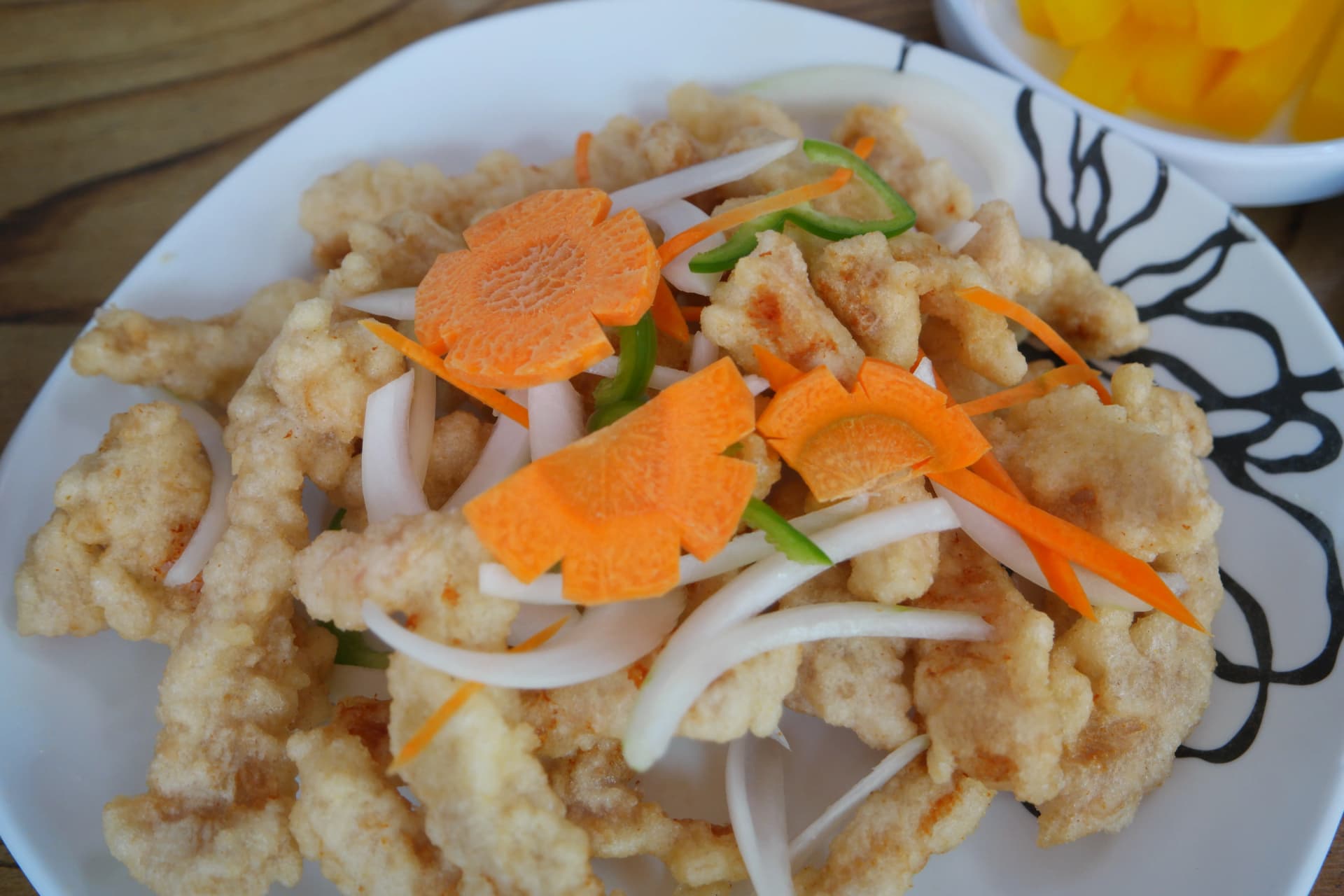
Here's the full plate of tangsuyuk. Thick-battered fried pork pieces are piled high on the plate, with flower-shaped carrots, sliced onions, and green peppers laid on top. This is the pre-sauce state — meaning the batter is at its absolute crispiest right now.
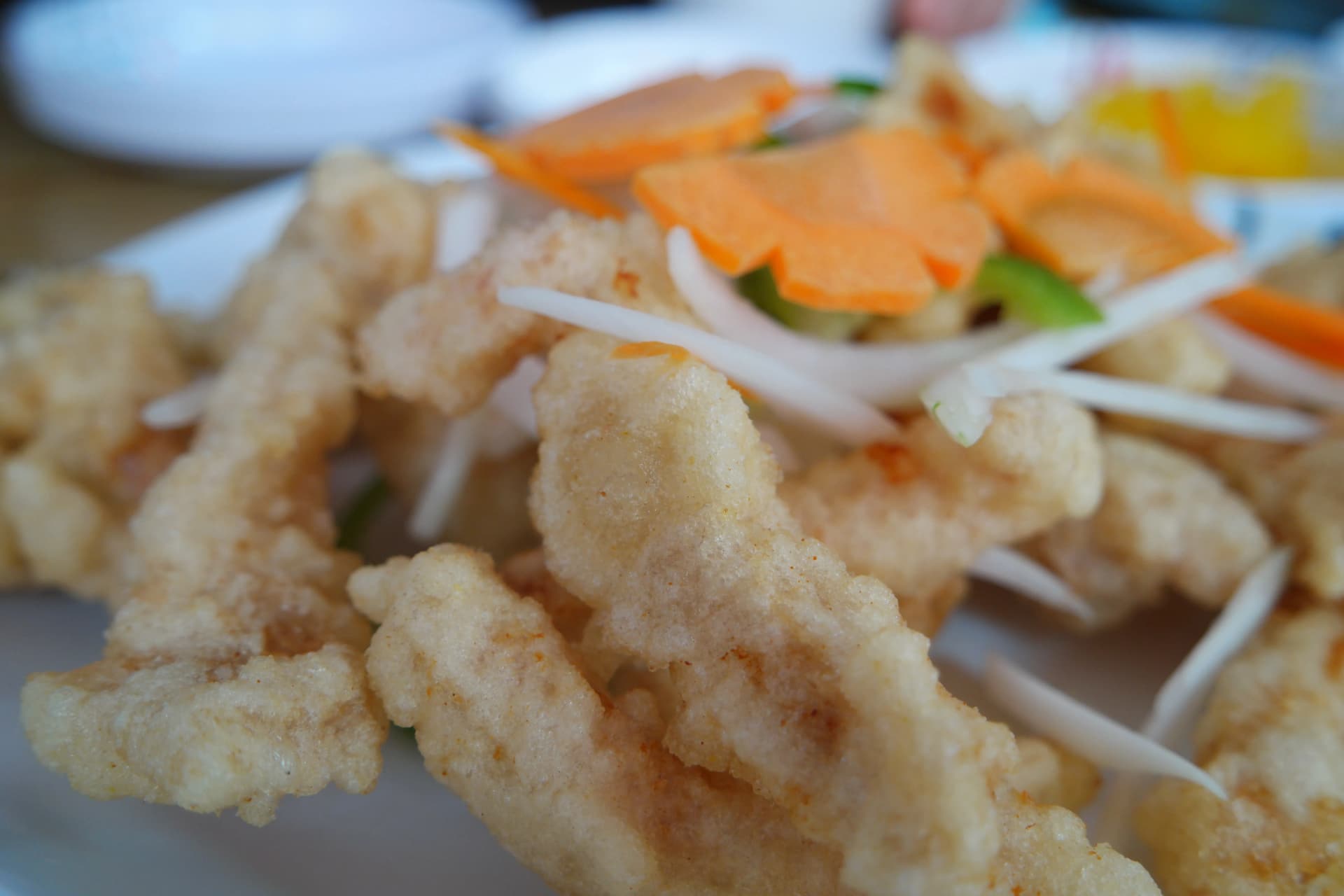
Get in close and you can see the batter surface is all rough and bumpy. That uneven, craggy texture is the whole point — it's what makes the sauce cling to each piece when you dip. You can practically see the crunch on the outside and the juiciness on the inside just from this angle alone.
Bumpy Batter Is the Sign of Legit Tangsuyuk
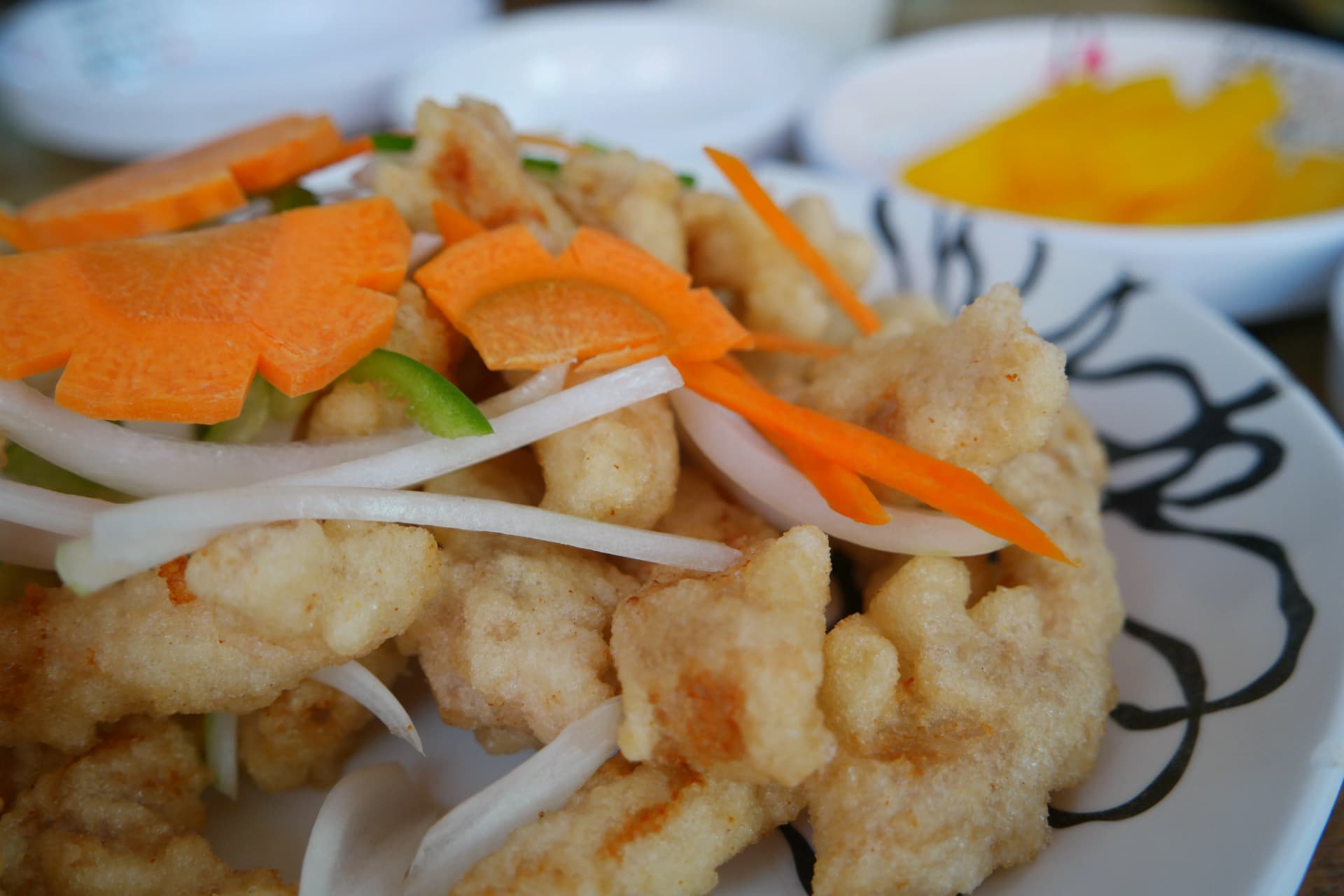
Looking at each individual piece, you can really see how rough and irregular the batter is. If it were smooth and even, it wouldn't be proper tangsuyuk. It has to be this bumpy and craggy. When the sauce gets poured over, it seeps into all those nooks and crannies, making the outside just slightly soft while the pork inside stays tender and juicy. The carrots and onions sitting alongside aren't just decoration — they actually serve as palate cleansers, cutting through the richness between bites.
Sauce Poured Over — The Pour Team's Moment of Glory
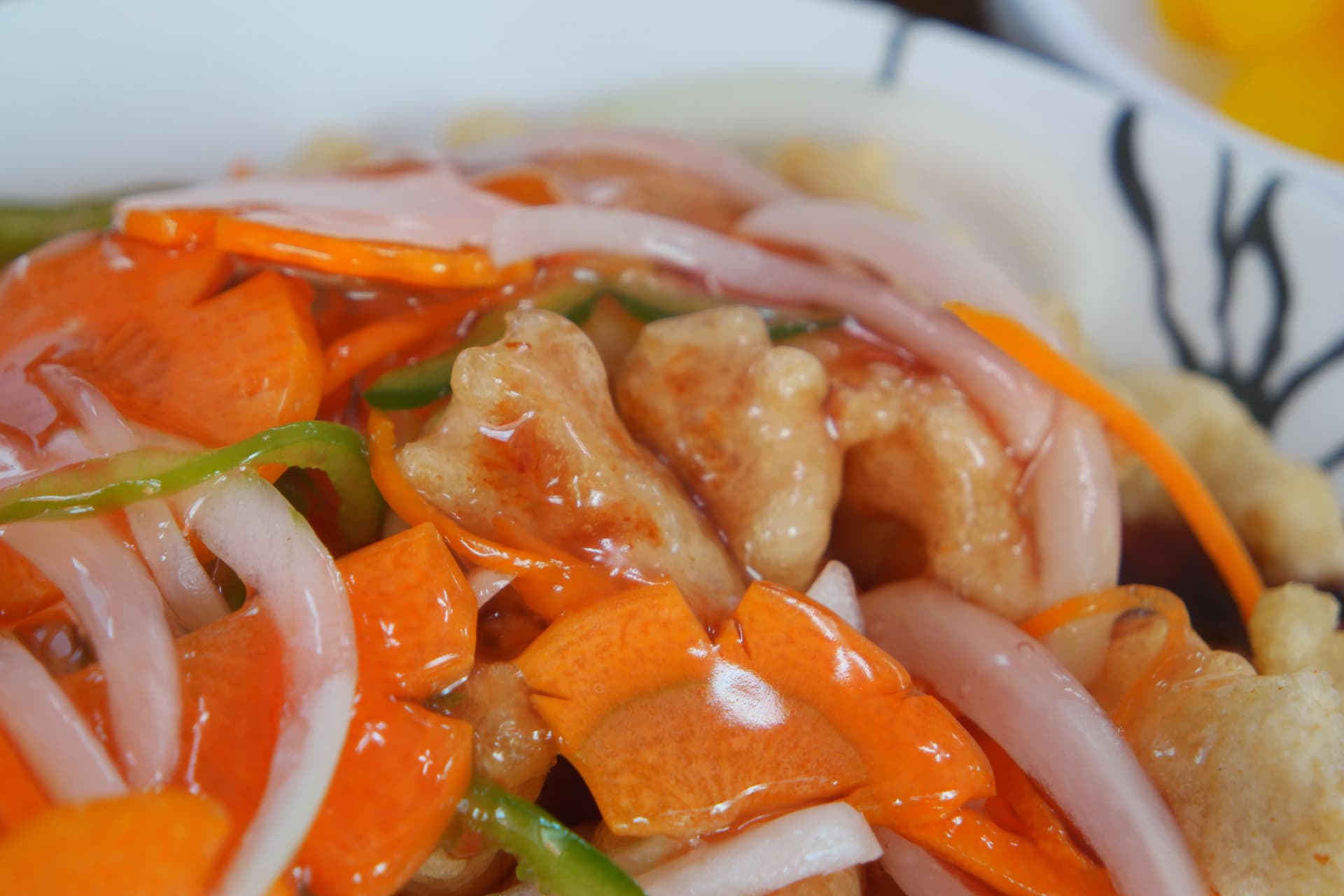
This is the moment the sauce gets poured. Carrots, green peppers, and onions are drenched in the orange sweet-and-sour sauce, glistening beautifully. The sauce is starting to seep into the fried batter, and this exact moment is what the pour-it-on crowd lives for. The vegetables and sauce all coming together — it looks absolutely mouthwatering just from the colors alone.
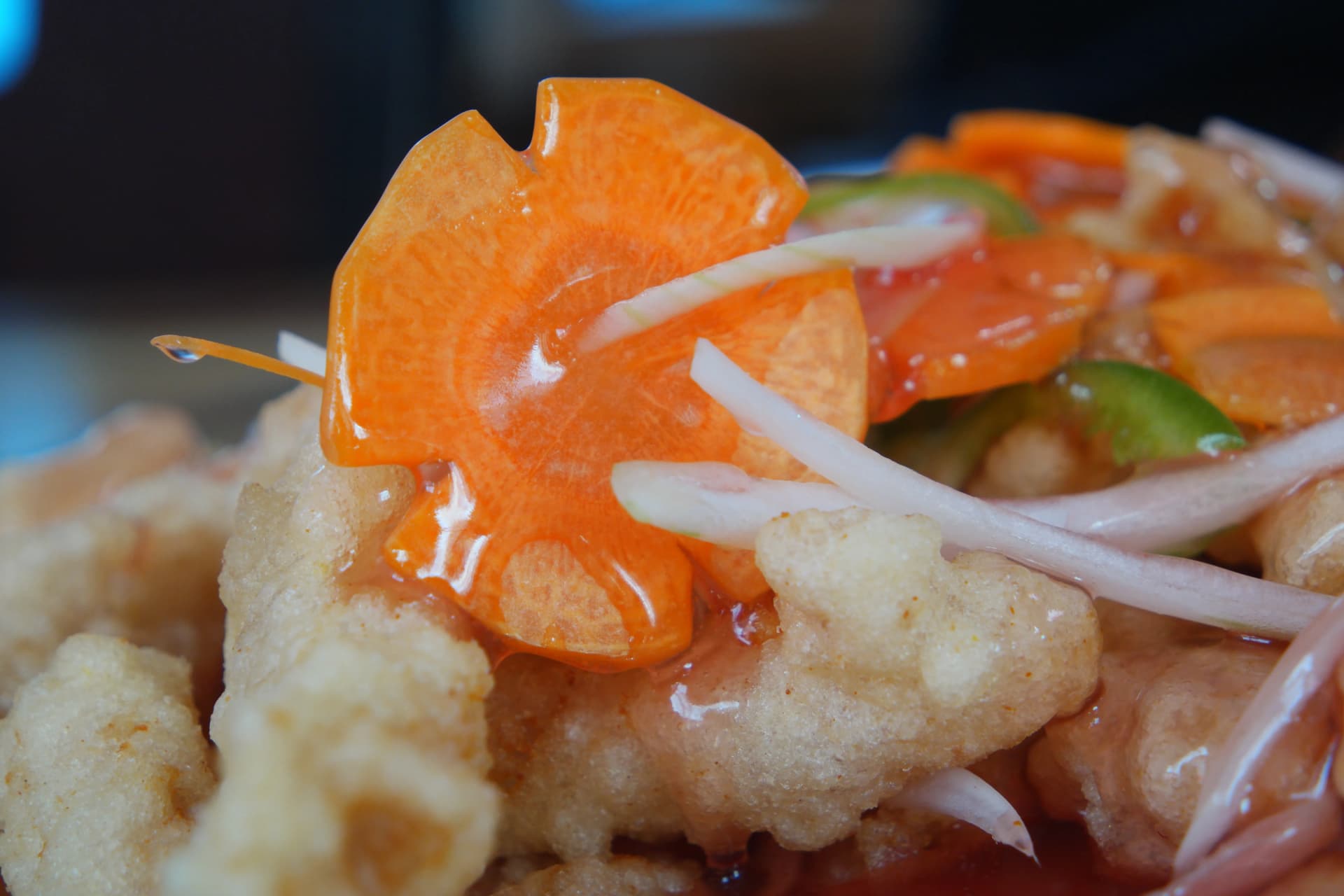
Sweet-and-sour sauce drizzles down over a flower-shaped carved carrot. There's real craftsmanship in that single carrot slice. Korean Chinese restaurants express the quality of their food through these little details — it's a scene that shows they put effort into not just flavor, but presentation too.
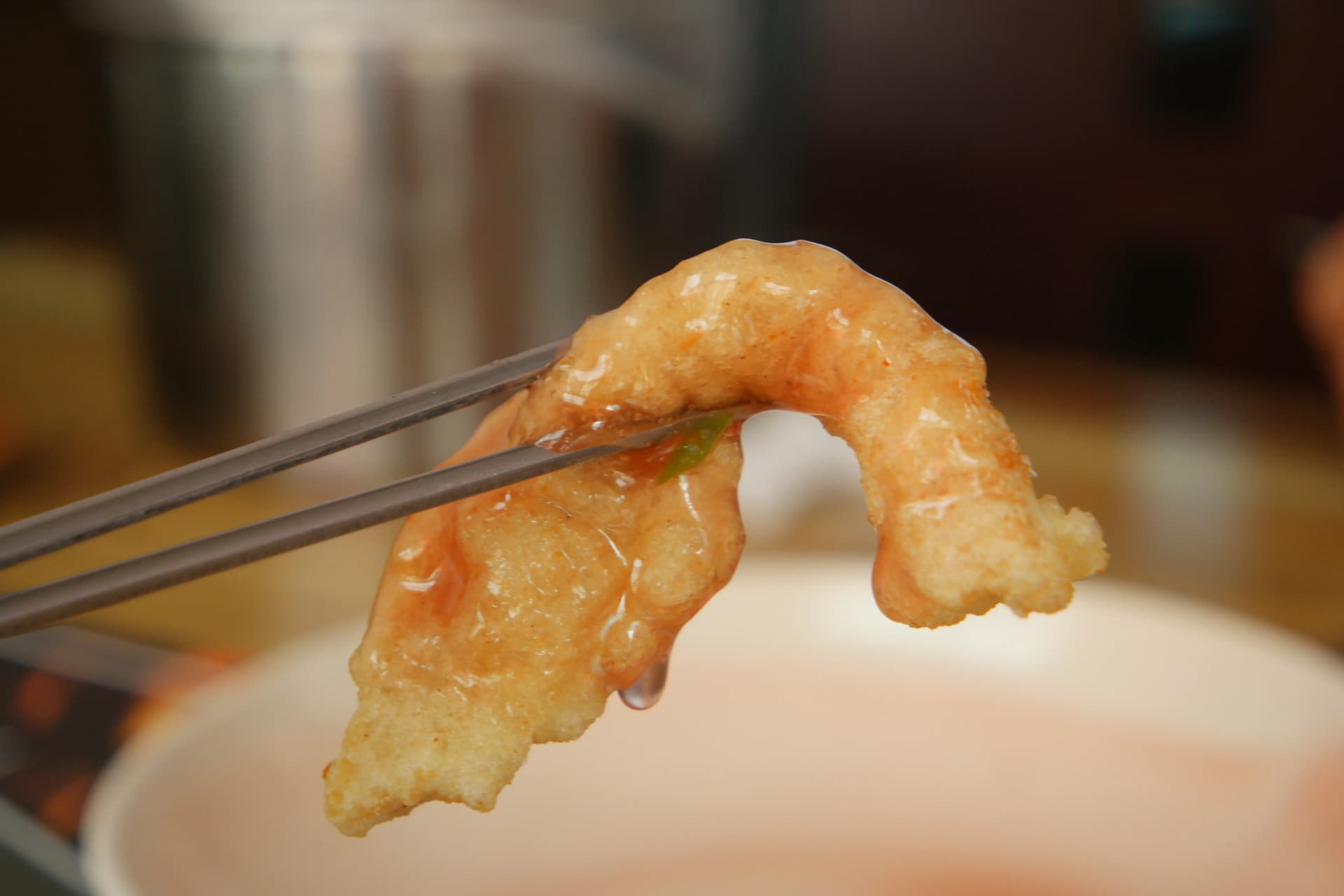
One piece of tangsuyuk lifted by chopsticks. Sauce dripping off — this right here is the money shot of tangsuyuk. The surface is coated in sauce as it rises from the plate, and the moment you bite into it, you get crunch and moisture simultaneously. That very moment is captured in this single photo.
Yuringi — The Hidden Gem on Korean Chinese Menus
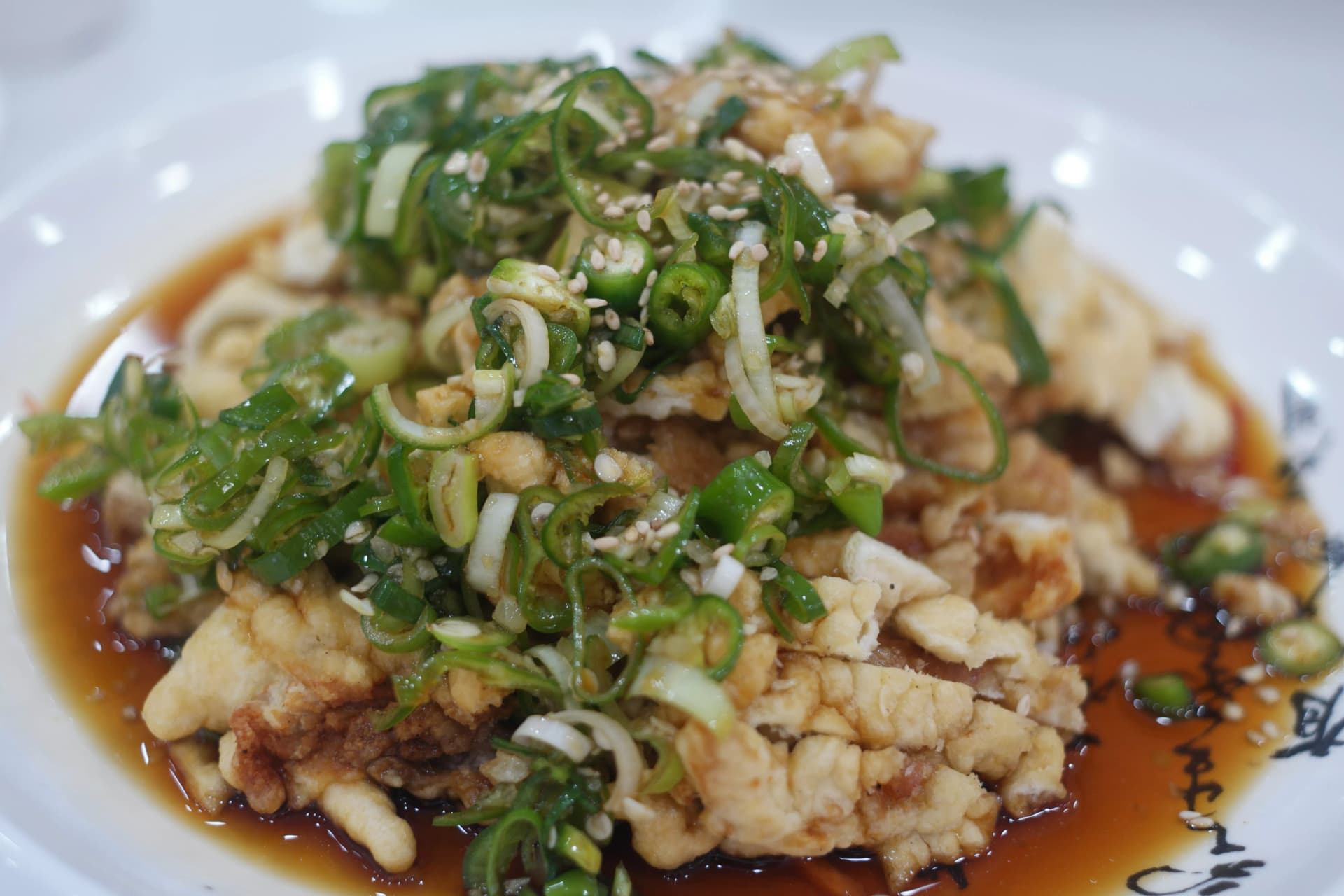
This is yuringi (油淋鷄, yóu lín jī). It's crispy deep-fried chicken piled high with green onions and chili peppers, then drizzled with a soy-based sauce. The name literally means "oil-drenched chicken" — oil (油), drench (淋), chicken (鷄). It's not a dish people order as commonly as jjajangmyeon or jjamppong, but any proper Korean Chinese restaurant will have it on the menu. Unlike jjajangmyeon, yuringi hasn't been fully "Koreanized" — it stays closer to its Cantonese Chinese roots. That actually makes it one of the closest things to authentic Chinese flavor you'll find on a Korean Chinese restaurant menu.
Yuringi Up Close
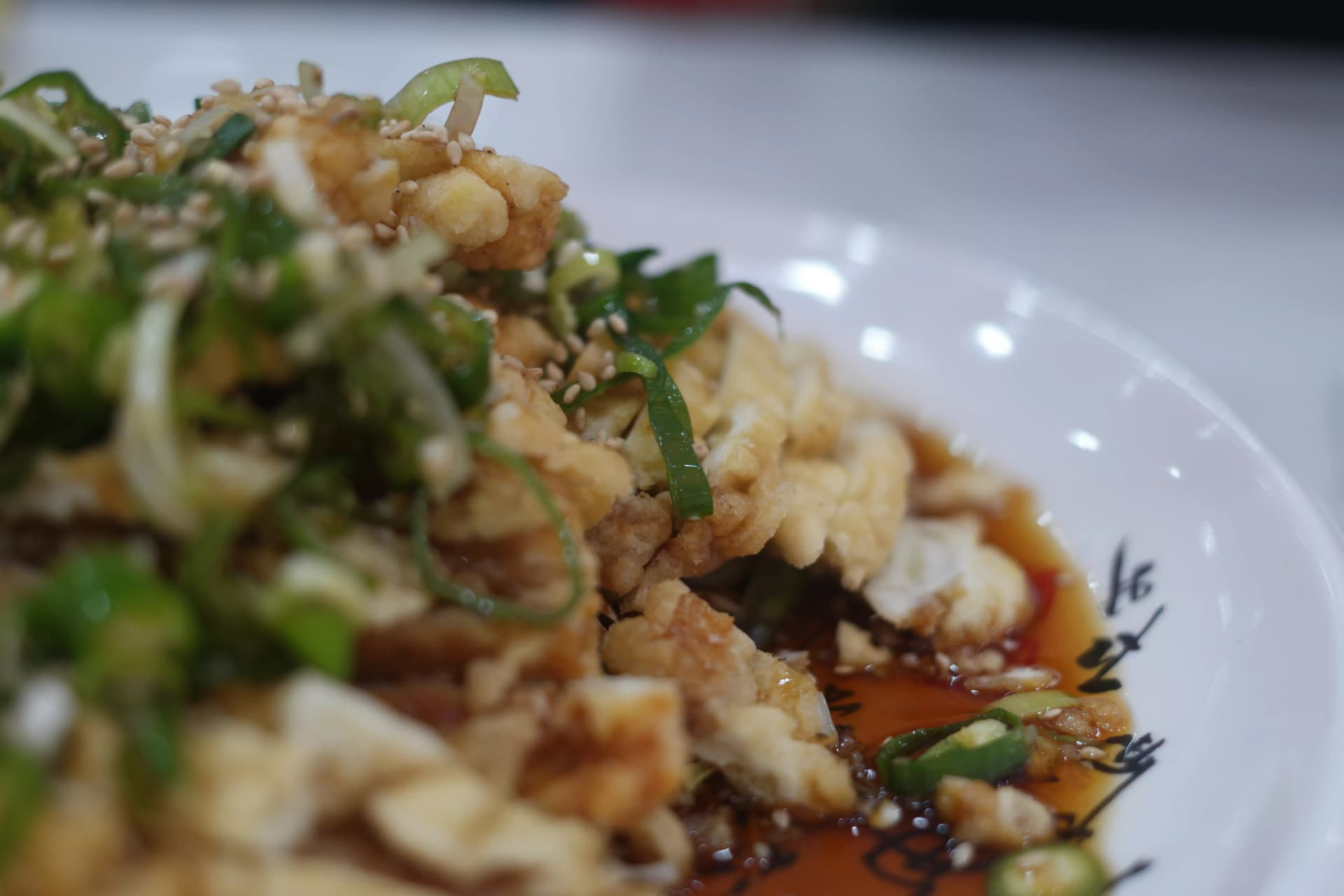
A close-up at the plate's edge. The chicken has that same craggy, uneven batter texture, with soy sauce pooled in a thin layer at the bottom. Shredded green onions and chili peppers are heaped on top like a mountain. Sesame seeds are scattered throughout, and the sauce looks like it's just about to seep into the ridges of the batter.
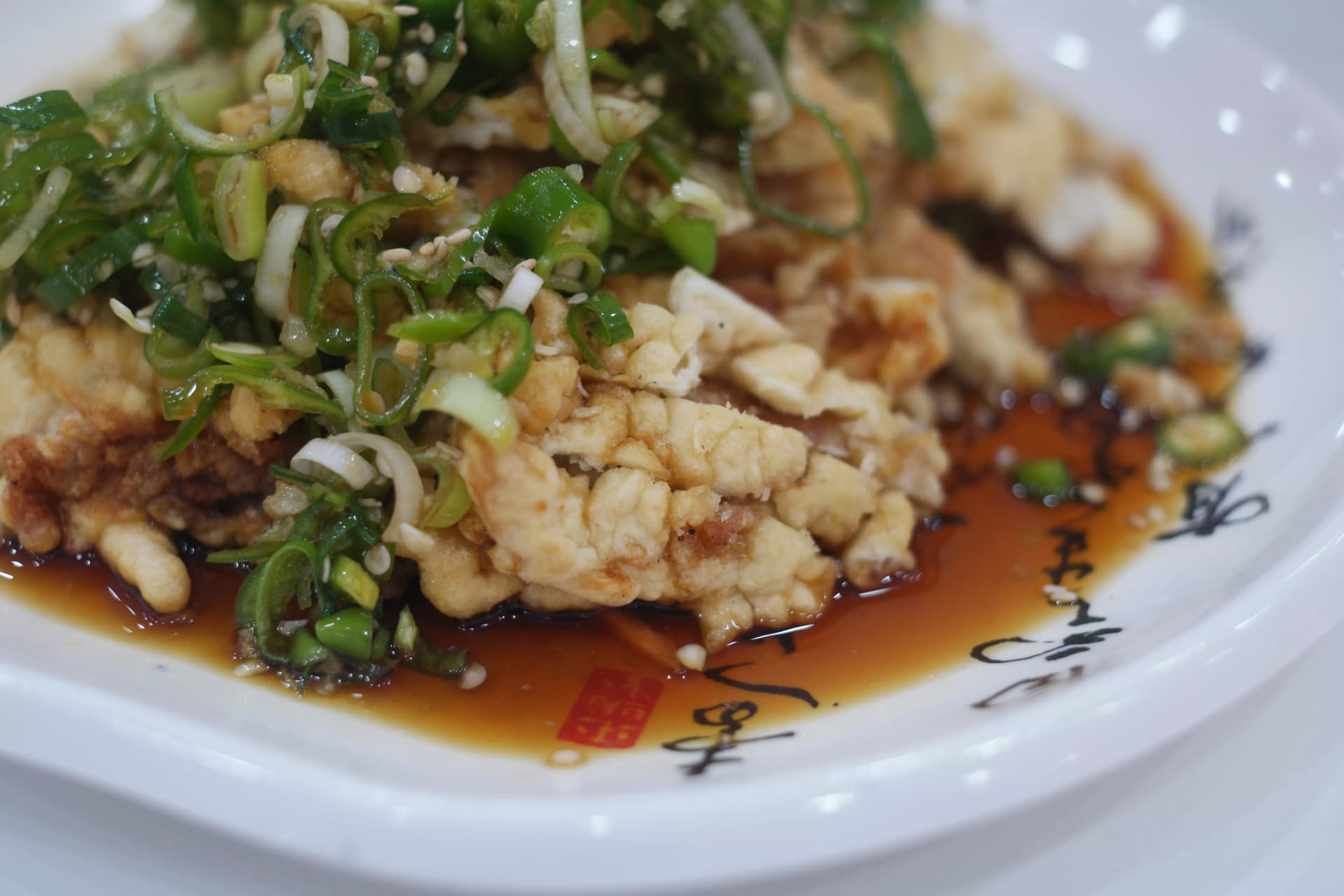
Pulling back to the wider shot, you get the full composition. Enough sauce has pooled at the bottom of the plate to soak the chicken from underneath, while green onions and chili peppers blanket the entire dish from above. The Chinese character pattern on the plate rim sets the whole Korean Chinese restaurant mood, and the glossy sheen of the sauce makes your appetite kick in immediately.
Korean Chinese Cuisine — A Flavor You Can Only Experience in Korea
Jjajangmyeon, jjamppong, tangsuyuk, yuringi. They all came from China, but after more than 100 years of adapting to Korean taste buds, they've become completely different dishes. Order the same names in China and you won't get these flavors. You have to come to Korea — you have to sit down in a Korean Chinese restaurant — to taste this.
The jjajangmyeon you'd order on your birthday as a kid. The jjamppong you crave on a freezing cold day when only a hot bowl of broth will do. The tangsuyuk that's sparked at least one dip-or-pour argument in every Korean's life. For Korean people, these aren't just meals you eat out — they're foods loaded with memories. If it's your first time visiting Korea, this is Korean Chinese food you absolutely need to try.
FAQ
Jjajangmyeon
Q. Which tastes better — jjajangmyeon or ganjjajang?
It's totally a matter of personal taste. Jjajangmyeon has a smoother, sweeter sauce that's more approachable for first-timers. Ganjjajang is stir-fried in oil without water, so the sauce is much thicker and more intensely flavorful. People who've had their fair share of jjajangmyeon tend to say ganjjajang is the better one.
Q. Why does jjajangmyeon always come with yellow pickled radish?
It's there to balance out the rich, salty sauce. The tangy crunch of the pickled radish resets your palate between bites so you don't get tired of the flavor before you finish. In Korean Chinese food, the pickled radish isn't just a freebie — it's part of the set.
Q. Is jjajangmyeon in China really that different?
Completely different. Chinese zhájiàngmiàn (炸醬麵) uses a salty fermented bean paste sauce with almost no sweetness. Instead of the jet-black, glossy sauce of Korean jjajangmyeon, you get a brownish, salty sauce. Totally different vibe.
Jjamppong
Q. Why is jjamppong broth red?
It wasn't always red. The dish originally traveled from China's Shandong province to Nagasaki, Japan, and then to Korea — where chili flakes got thrown into the mix. Japanese champon is still white to this day. The red broth is purely a Korean evolution.
Tangsuyuk
Q. Dip or pour — which is the right way?
There is no right way. Dipping keeps the batter crispy until the very end. Pouring lets the sauce soak into the batter for a moist, fully-coated bite. Just make sure you agree with whoever you're eating with before anyone makes a move.
General
Q. How is Korean Chinese food different from actual Chinese food?
Korean Chinese food started with Chinese immigrants who brought their recipes to Korea in the late 19th century. Over 100+ years, those dishes adapted to Korean taste buds until they became something entirely new — not quite Chinese, not quite Korean, but uniquely found only in Korea.
Q. What should I order on my first visit?
Jjajangmyeon + tangsuyuk is the safest combo. If you like spicy food, swap the jjajangmyeon for jjamppong. And for the tangsuyuk, start with dipping — lower risk of disappointment.
Q. Can I go alone? How big are the portions?
Jjajangmyeon or jjamppong are perfectly fine solo. Tangsuyuk usually comes in portions meant for 2 or more, so if you're alone, takeout is the better call. Same goes for yuringi. If there are 2 of you, one jjajangmyeon, one jjamppong, and a small tangsuyuk is the perfect order.
This post was originally published on https://hi-jsb.blog.